The post If the Flood Happened, How Did Animals Get Back to Australia? appeared first on Apologetics Press.
]]>(1) A Knife That Cuts Both Ways
First, it should be mentioned that migration of animals to islands and remote places before the Flood may be an interesting question, but it is not a potential problem for the Creation model. Creationists argue that the world as God created it may have been something of a supercontinent (called Rodinia),2 potentially making travel to places that are now isolated continents or islands much easier. More likely, however, God created animals across the planet already in their designed habitats during Creation week.
After the Flood, however, how can animal dispersion be explained if God was not miraculously involved (which seems to be the implication of the text—e.g., Genesis 8:17-11:9). First, it must be conceded that, ironically, animals in such remote places are as much a problem for the evolutionary model as they are for the biblical Flood model. Whether evolution or Creation is true, animals exist in Australia, have been there for some time, and their arrival must be explained. Whatever explanation the evolutionist uses to explain the existence of animals in Australia may very well be an option for creationists as well.
(2) Closer Continents
It is also important to realize that, as with the evolutionary model, the Creation model has no problem with the idea of plate tectonics—the theory that the Earth’s crust is broken into large pieces that move relative to each other, diverging, converging, and transforming. Therefore, creationists also have no reason to reject the concept of Pangaea—the idea that all of today’s continents were once joined together in one massive continent. In fact, it was a biblical Flood believer by the name of Antonio Snider-Pellegrini who was among the first to suggest that the continents may have once been joined together into one continent3—long before Alfred Wegener, often credited with “continental drift,” was even born. Snider-Pellegrini believed that the Flood may have been the cause of the break-up of the original supercontinent and subsequent rapid movement of its pieces.4
The Pangaea concept may even be implied by the description of God’s activities given in Genesis 1:9. As is often the case, however, the problem creationists have with the conventional version of geologic history concerning Pangaea comes from the assumption of uniformitarianism—in this case, the idea that the pieces of the Earth’s crust have always been moving at the rate we observe today. While the continents are spreading on the order of centimeters per year today, if the Flood occurred, and “all the fountains of the great deep [presumably, the ocean floor] were opened” (Genesis 7:11), surely including volcanic and significant tectonic activity, the separation rate could certainly have been much quicker for a period of time. Evidence for just such an accelerated separation rate has been documented.5 By implication, immediately after the Flood, remote destinations like Australia, Antarctica, and India could have been much closer together than they are today, in keeping with Pangaea models, allowing migration to islands and remote continents before the continents were too far apart.
(3) Frozen Channels
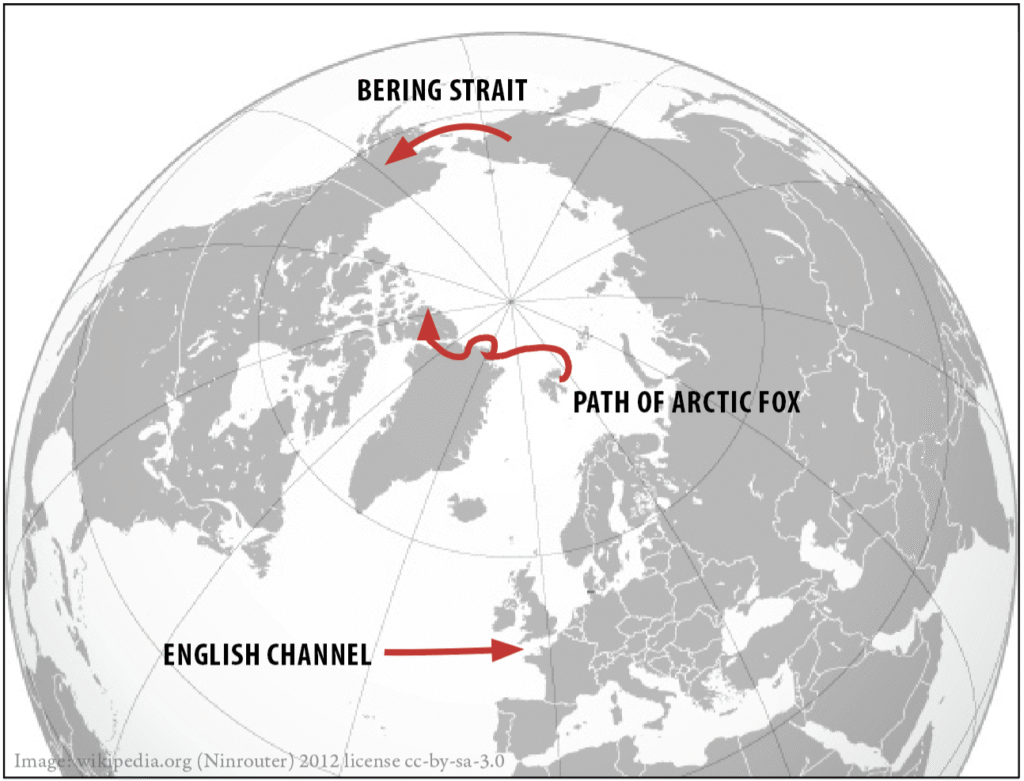
Other possibilities are also available which vindicate the biblical model. For example, according to the Flood model, a great Ice Age/Ice Advance commenced after the Flood,6 caused by warmer oceans (hence, greater precipitation) and increased volcanic activity (due to increased tectonic activity, causing cooler summers from increased volcanic aerosols and ash in the atmosphere). An Ice Age would have allowed animal migration from the Ark across frozen channels. The English Channel, as well as channels to Ireland, Iceland, and Greenland may have been frozen at the time. Significantly, a frozen channel from Russia to Alaska—the Bering Strait—would have allowed animal migration to North America. The water depth between the two is only 100-160 feet deep. With some 30% of the Earth’s continents covered with ice (as opposed to 10% today), the Earth’s sea level would have been significantly lowered making frozen channels common during the height of the Ice Age.
Ironically, in Origin of Species, glacier growth in the past was argued by Darwin to be how animals could have arrived in several remote places, including islands.7 As a modern example of animal movement across frozen channels, in 2018 scientists tracked an Arctic fox’s 76 day journey as it traveled from the far north Norway island group of Svalbard, across sea ice, the Greenland ice sheet, and Kane Basin to reach Ellesmere Island, Canada.8
(4) Land Bridges
Some Flood skeptics superficially observe on a map the location of Australia in comparison to Asia and summarily dismiss the idea of a land bridge nearly connecting Asia to Australia. However, thanks to modern technology, we know the depth of the ocean across the planet. A closer look at the water depth between the islands of the island chain that span the distance between mainland Asia and Australia reveals that the water depth is only dozens to hundreds of feet in many places along the path. Once again, during the post-Flood Ice Advance period, roughly 30% of the Earth’s land was covered with ice, significantly lowering sea level globally. In fact, secular scientists estimate that the Earth’s sea level may have been 400 feet lower at the peak of the Pleistocene Ice Age,9 which would have nearly completely opened a land path from Asia all the way to Australia.
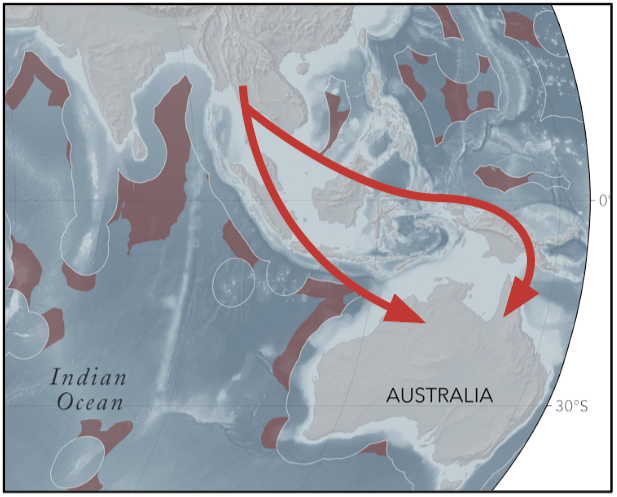
That fact has led evolutionary scientists to postulate that that is how humans reached Australia during the Ice Age.10 Gemma Tarlach, writing in Discover magazine, explained,
From the North Sea to the island-dotted tropics between Asia and Australia, from the frigid waters of the Bering Strait to the sunny Arabian Peninsula, now-submerged coastal landscapes were exposed and accessible to our ancestors at multiple times in prehistory, including key periods of human expansion across the globe. The square mileage of these areas now under the seas is equal to that of modern North America.11
Tarlach applies the same concept to the pathway between central Europe and England/Scotland during the Ice Age.
Look at a map of today’s Europe and its northern epicenters of population and commerce: London, Paris, Amsterdam, Copenhagen. Now consider that these hubs were once hinterland, mere fringes of an expanse rich in conifer forests, meadows, rivers and wetlands, all of it teeming with game. Prehistoric travelers could have walked from what’s now central Europe to northern Scotland without even seeing a coastline. As the massive glaciers and ice sheets of the…Ice Age began melting…, rising seas inundated this world. The North Sea was born.12
Bottom line: using the geography of today to draw conclusions about the past is unreliable at best, even according to many evolutionists. Humans and animals could have used land bridges to disperse after the Flood.
(5) Log “Islands”
It is also likely that for some time, remnants of the great forests of the pre-Flood period would have been floating on the receding waters of the Earth until their decay was completed. As is the case from localized floods today, small “land masses” composed of trees and debris are often found floating on the water (e.g., traveling down rivers). Much larger islands of plant material and debris are found associated with larger catastrophes as well. For example:
- Such a land mass of trees can still be seen on Spirit Lake, a result of the eruption of Mount Saint Helens volcano 45 years ago.
- After the 2011 Japan tsunami, an island of debris was spotted floating across the Pacific Ocean towards the U.S. west coast. The island was 69 miles in length and covered an expanse of over 2.2 million square feet.13
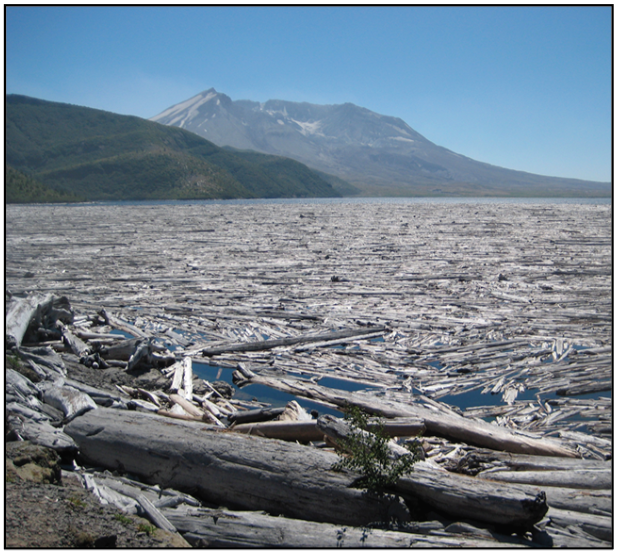
But is it likely that animals would be found floating on such debris islands? Some scoff at the idea, but they only do so out of ignorance. After all, three weeks after the 2011 Japan tsunami, the Japan Coast Guard found and rescued a dog that had been floating on one of the tsunami’s debris islands.14 Such a scenario may very well explain the existence of dingoes in Australia. Graham Lawton, writing in New Scientist, even noted that,
After the 2011 Tohoku earthquake and tsunami in Japan, around 300 Japanese marine species were found on the shoreline of British Columbia having been carried on artificial debris. Some larger vertebrates, such as tortoises, crocodilians and possibly even hippos, may be able to float or swim. Of course, sceptics can’t just pour cold water on the idea. The presence of particular animals in certain faraway places still requires an explanation, so what have they got?15
Paleontological and archaeological evidence indicates that humans made it to the continent of Australia after the Flood and before Abraham.16 Lawton explained that scientists have long thought that humans could have arrived there accidentally, assuming that
[p]eople must have arrived on the currents after being washed into the sea by a tsunami or flood, perhaps clinging to a mat of floating vegetation or a raft of pumice. This so-called “sweepstake colonization” is often invoked to explain how terrestrial reptiles and mammals make it onto distant tropical islands, and it could plausibly account for the peopling of Sahul. Prevailing ocean currents are favourable and any floating castaways caught in them would have found the vast Sahul “hard to miss”, according to archaeologist Jane Balme at the University of western Australia in Perth.17
Bruce Hardy, the chair of the Department of Anthropology at Kenyan College in Ohio, agreed about the plausibility of the rafting hypothesis for human migration to isolated locations, arguing that migration could have occurred by “natural rafts drifting and leading to human occupation of some of these islands.”18 They could have “drifted to islands atop natural vegetation mats.”19 If humans could drift in such an accidental manner, why not animals?
Lawton agreed, arguing that monkeys and other animals also could have “sailed across oceans on floating islands of vegetation.”20 Colin Barras, writing in New Scientist, said, “We know…that small monkeys somehow made it across the [strong current, dangerous Wallace—JM] line to Sulawesi and clearly they didn’t use boats—in all likelihood they floated over on mats of vegetation”—possibly even dozens of the monkeys.21 In fact, Lawton noted that,
The rafting hypothesis is as old as the theory of evolution itself. In On the Origin of Species, Charles Darwin pointed out that the flora and fauna of the Galapagos Islands were clearly related to those of South America, while Cape Verde’s were distinctly African…. His point was to discredit the belief that each species was a unique, divine creation, but he inadvertently launched the idea that the inhabitants of distant islands must have somehow blown in from the mainland.22
Concerning how species (e.g., plants, seeds, and invertebrates) dispersed to oceanic islands, Darwin suggested that they could have been transported by seaweed, “floating timber,” “drifted by the prevailing currents,” or could have “floated in chinks of drifted timber.”23 The Galapagos Conservancy, discussing the “raft theory” of how species arrived on the islands, acknowledged that many must have arrived by
sea while swimming or floating, sometimes with the aid of rafts of tangled vegetation. It is likely that the ancestors of present-day Galapagos animals that are good swimmers (sea lions, sea turtles, penguins) actually swam their way to the islands with the help of some swift ocean currents. On the other hand, it is believed that many of the reptiles and small mammals (rice rats) were carried to the islands from the South or Central American mainland on rafts of vegetation. The vast majority of such rafts would have sunk well before they ever reached Galapagos, but it would have only taken a handful of successful rafts to wash ashore to explain the present reptile diversity in Galapagos.24
Caccone, et al. add that “tortoises probably reached the [Galapagos—JM] islands by rafting from South America, 1000 km to the east” using the Humboldt Current.25 A BBC Documentary on the South Pacific reasoned, “As tsunamis strike the coast, rafts of vegetation can be cast adrift. Perhaps animals were caught up in those rafts, too. Could this have been the answer to how these animals [Fijian crested iguanas—JM] made it to Fiji? After all, they are the heartiest of their kind and could have survived long sea journeys.”26
Bottom line: evolutionists cannot “have their cake and eat it, too”—either raft travel is ridiculous or it’s reasonable. In truth, if evolutionists are right, it is not at all outlandish to suppose that massive debris islands would have been found worldwide after the Flood and that animals could have been found floating on them in the years immediately after the Flood.
Migration by Swimming?
Consider: if one believes animal migration by rafting to be a ludicrous idea, what must he think when he hears the evolutionary theory that dinosaurs may have crossed to islands by swimming? Smithsonian Magazine highlighted research published in Cretaceous Research in 2021, in which scientists concluded that, since (according to the evolutionary timeline) Africa was surrounded by water when it was colonized by dinosaurs, “Swimming would have been the only way for the dinosaur to reach prehistoric Africa from Europe or Asia, reinforcing the idea that exceptional events can help species move between distant continents.”27 Referring to the same research, Phys.org noted that dinosaurs must have arrived in Africa by “water-rafting on debris, floating, or swimming,” and added the following telling statement:
Ocean crossings are rare, improbable events, but have been observed in historic times. In one case, green iguanas travelled between Caribbean islands during a hurricane borne on debris. In another, a tortoise from the Seychelles floated hundreds of kilometres across the Indian Ocean to wash up in Africa. “Over millions of years,” said [Nicholas—JM] Longrich [of the Milner Centre for Evolution at the University of Bath—JM], “Once-in-a-century events are likely to happen many times. Ocean crossings are needed to explain how lemurs and hippos got to Madagascar, or how monkeys and rodents crossed from Africa to South America.”28
While creationists would interpret the data to which evolutionists are referring differently, nevertheless, evolutionists have conceded yet another possibility for how animals could have migrated to various isolated locations.
In a more recent example that gives plausibility to the swimming option, in 2019, a small tsunami that struck the eastern coast of the U.S. during Hurricane Dorian, swept 20 cows and 28 horses from Cedar Island into the Atlantic Ocean off the coast of North Carolina. Three of the cows were later found alive over four miles away on a barrier island in the Outer Banks National Park. Apparently, the cows survived by swimming. One of the cows was pregnant while adrift and later gave birth to a healthy calf.29
Tertiary Ocean Currents—Evidence of the Rafting Hypothesis?
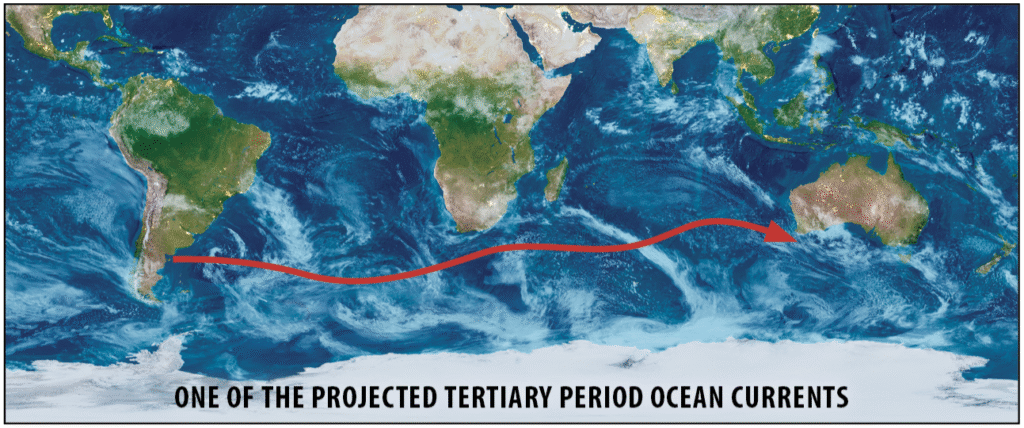
Could land animals have arrived on the Australian continent after the Flood via log mat? As added evidence of the legitimacy of that theory, recent genetic analysis suggests that Australian marsupials originated in South America before moving to Australia.30 When we look at the projections of what the ocean currents are thought to have been like during the Tertiary period (immediately after the Flood), we find that an ocean current was present, traveling directly from South America to Australia.31
Bottom line: if tsunamis are virtually certain to create floating islands of debris, what would be expected from a global Flood with rapid tectonic activity creating enormous earthquakes and subsequent tsunamis?32 If animals and humans are known to be able to travel aboard such makeshift vessels, who’s to say that such mini-“continents,” with various animals along for the ride, would not have been commonly spotted immediately following the Flood? A radically different terrestrial environment, with species clamoring to find food on the newly disheveled Earth, could have caused accelerated dispersal of the Ark’s population from Ararat to Australia before Australia had moved too far from the mainland.
One would want to be cautious not to be too quick to invoke supernatural explanations for proposed scientific problems with Bible teaching, since it can lead to scientific laziness and effectively halt scientific investigation into the great works of the Lord (Psalm 111:2).33 However, when the biblical text suggests that divine assistance may have played a role in a biblical event, it would be poor hermeneutics to dismiss the possibility without consideration. In this case, Genesis 6:20 suggests that God gathered the animals for Noah before the Flood. It is plausible, therefore, to postulate that God would have been involved, at the very least Providentially, in the dispersal of the animals after the Flood. Clearly, He had several reasonable avenues with which to do so that would not have required miraculous assistance.34
(6) Humans Brought Them
Of course, one final possibility as to how animals dispersed to remote islands like Australia would be that humans carried them. After all, evolutionists themselves argue that is precisely how some animals were able to populate certain islands.35 As noted earlier, physical evidence appears to place humans in Australia after the Flood and before Abraham, during the Babel dispersion period.36 Who’s to say they did not arrive with animals in tow?
Lawton argued: “Another option, at least for more recent animal crossings, is that small creatures such as lizards were accidentally or deliberately transported by prehistoric humans. We know that our Stone Age ancestors were skilled seafarers, navigating across hundreds of kilometres of ocean to reach Japan…and perhaps even sailing from South-East Asia to Australia….”37 Granted, human transportation of animals is not available to evolutionists as an option in many instances, since they do not believe humans were on the scene yet (for example, when dinosaurs roamed the Earth). From a biblical perspective, however, humans have been on the scene “from the beginning of the creation” (Mark 10:6).
Conclusion
While post-Flood migration from the Ark to remote places like Australia has often been a charge used by evolutionists against the Bible and its account of a global Deluge, ironically, evolutionists themselves answer their own challenges with plausible options at the creationists’ disposal. Such attacks merely provide the biblical model another opportunity to prove itself to be reliable. “[S]coffers will come in the last days, walking according to their own lusts…. For this they willfully forget: that by the word of God the heavens were of old and the earth standing out of water and in the water, by which the world that then existed perished, being flooded with water…. Therefore, since all these things will be dissolved, what manner of persons ought you to be in holy conduct and godliness, looking for and hastening the coming of the day of God…?” (2 Peter 3:3b-12).
Endnotes
1 E.g., Bill Nye and Ken Ham (2014), Uncensored Science: Bill Nye Debates Ken Ham (Petersburg, KY: Answers in Genesis); Janet Kellogg Ray (2021), Baby Dinosaurs on the Ark? The Bible and Modern Science and the Trouble of Making It All Fit (Grand Rapids, MI: Eerdmans), pp. 101-103.
2 Andrew A. Snelling (2014), “Noah’s Lost World,” Answers in Genesis, https://answersingenesis.org/geology/plate-tectonics/noahs-lost-world/.
3 A. Snider-Pellegrini (1858), La Création et Ses Mystères Dévoilés (Paris: A. Franck et E. Dentu).
4 Today, creationists argue that Pangaea formed and broke apart during the Flood and, therefore, only ever existed underwater. Rodinia is thought to have been the supercontinent of the pre-Flood world. See Snelling.
5 E.g., Ross N. Mitchell, David A.D. Evans, and Taylor M. Kilian (2010), “Rapid Early Cambrian Rotation of Gondwana,” Geology, 38[8]:755-758; Brian Thomas (2010), “Continents Didn’t Drift, They Raced,” Institute for Creation Research, http://www.icr.org/article/continents-didnt-drift-they-raced/; Steven Austin, John Baumgardner, D. Russell Humphreys, Andrew Snelling, Larry Vardiman, and Kurt Wise (1994), “Catastrophic Plate Tectonics: A Global Flood Model of Earth History,” Proceedings of the Third International Conference on Creationism, ed. R.E. Walsh (Pittsburgh, PA: Creation Science Fellowship), pp. 609-621; S.P. Grand (1994), “Mantle Shear Structure Beneath the Americas and Surrounding Oceans,” Journal of Geophysical Research, 99:11591-11621; J.E. Vidale (1994), “A Snapshot of Whole Mantle Flow,” Nature, 370:16-17.
6 Michael Oard (2004), “The Genesis Flood Caused the Ice Age,” Answers in Genesis, http://www.answersingenesis.org/articles/fit/flood-caused-ice-age.
7 Charles Darwin (1859), On the Origin of Species by Means of Natural Selection, or the Preservation of Favoured Races in the Struggle for Life (London: John Murray), https://darwin-online.org.uk/content/frameset?itemID=F373&viewtype=text&pageseq=2, pp. 346-410.
8 “Argos Used to Track Fox’s 2,700-mile Journey from Norway to Canada” (2019), NOAA NESDIS, July 17, https://www.nesdis.noaa.gov/news/argos-used-track-foxs-2700-mile-journey-norway-canada.
9 United States Geological Survey (2022), “How Does Present Glacier Extent and Sea Level Compare to the Extent of Glaciers and Global Sea Level During the Last Glacial Maximum (LGM)?” January 27, https://www.usgs.gov/faqs/how-does-present-glacier-extent-and-sea-level-compare-extent-glaciers-and-global-sea-level; see also Gemma Tarlach (2019), “Return to Aquaterra,” Discover, 40[5]:56, June.
10 See Graham Lawton (2020), “Finding Sahul,” New Scientist, 245[3266]:39, January 25—Due to lower sea levels during the Ice Age, “the Sahul coast would have been significantly closer to the easternmost of the south-eastern Asian islands”; also, Christopher Bae, Katerina Douka, and Michael Petraglia (2017), “On the Origin of Modern Humans: Asian Perspectives,” Science, 358[6368]:1269, December 8; Kate Ravilious (2017), “The First Australians,” Archaeology, 70[4]:49, July/August. Uncovered land bridges are also how scientists are postulating that dinosaurs migrated from North America to Africa [Vicky Just (2020), “The First Duckbill Dinosaur Fossil from Africa Hints at How Dinosaurs Once Crossed Oceans,” Phys.org, November 5, https://phys.org/news/2020-11-duckbill-dinosaur-fossil-africa-hints.html].
11 Tarlach, p. 56; see also Colin Barras (2018), “Stone Age Sailors,” New Scientist, 238[3180]:36-37, June 2.
12 Ibid., p. 62.
13 Danielle Demetriou (2011), “Massive Floating Rubbish Islands from Japan Tsunami Spotted on Pacific,” The Telegraph, April 8, http://www. telegraph.co.uk/news/worldnews/asia/japan/8437632/Massive-floating-rubbish-islands-from-Japan-tsunami-spotted-on-Pacific.html.
14 “Japan Earthquake: One Month Later” (2011), The Atlantic: Photo, April 7, http://www.theatlantic.com/photo/2011/04/japan-earthquake-one-month-later/100041/.
15 Graham L. Lawton (2021), “On a Raft and a Prayer,” New Scientist, 252[3365/3366]:52, December 18/25.
16 Lawton (2020), p. 39. Conventional dating methods suggest that humans arrived in Australia 65,000 years ago, during the Ice Age [Danielle Demetrioue (2011), “Massive Floating Rubbish Islands from Japan Tsunami Spotted on Pacific,” The Telegraph, April 8, http://www. telegraph.co.uk/news/worldnews/asia/japan/8437632/Massive-floating-rubbish-islands-from-Japan-tsunami-spotted-on-Pacific.html]. Accounting for the continuing, though diminishing, accelerated nuclear decay in the post-Flood years [Jeff Miller (2013), “Don’t Assume Too Much: Not All Assumptions in Science Are Bad,” Reason & Revelation, 33[6]:62-70], 65,000 years correlates to a pre-Abraham date ca. 2,200-2,100 B.C.
17 Lawton (2020), p. 38, emp. added.
18 As quoted in Sam Walters, et al. (2024), “Everything Worth Knowing About Neanderthals,” Discover, 45[3]:33, May/June.
19 Ibid.
20 Lawton (2021), p. 50.
21 Barras, pp. 38-39.
22 Lawton (2021).
23 Darwin, pp. 360,391,397,399.
24 “History of Galapagos” (no date), Galapagos Conservancy, accessed February 11, 2025, https://www.galapagos.org/about_galapagos/history/, emp. added.
25 Adalgisa Caccone, et al. (1999), “Origin and Evolutionary Relationships of Giant Galapagos Tortoises,” Proceedings of the National Academy of Sciences, 96[23]:13223, November 9, emp. added.
26 “South Pacific: Castaways (Episode 2)” (2009), BBC Studios: Natural History Unit, aired May 17. The documentary also postulates that geckos may have reached the Solomon Islands by vegetation raft.
27 Riley Black (2020), “The Top Ten Dinosaur Discoveries of 2020,” Smithsonian Magazine on-line, December 22, https://www.smithsonianmag.com/science-nature/top-ten-dinosaur-discoveries-2020-180976578, emp. added.
28 Just; The saltwater crocodile is thought to have swam 60 miles from New Guinea to the Solomon Islands (“South Pacific…”).
29 Mark Price (2020), “Cow That Swam 5 Miles to Outer Banks in a Hurricane Was Pregnant. It Just Gave Birth,” The News & Observer, February 20, https://www.newsobserver.com/news/local/article239953898.html.
30 Clara Moskowitz (2010), “Marsupials Not From Down Under After All,” LiveScience.com, July 27, https://www.livescience.com/6770-marsupials.html.
31 Warren D. Allmon (2023), “Tertiary Period,” Encyclopaedia Britannica on-line, https://www.britannica.com/science/Tertiary-Period. Note that an ocean current is also thought to have been present that led from the theorized location of Ararat to South America.
32 For more information about the modern biblical Flood model accepted by most Creation geologists, see Jeff Miller (2019), “Was the Flood Global? Testimony from Scripture and Science,” Reason & Revelation, 39[4]:38-47, https://apologeticspress.org/wp-content/uploads/2021/08/1904w.pdf.
33 Jeff Miller (2024), “Is it Ever Appropriate to Say ‘God Did It’ in Response to a Scientific Challenge?” Reason & Revelation, 44[6]:11, June, https://apologeticspress.org/wp-content/uploads/2024/05/2406-web.pdf.
34 An example of a supernatural option would be the miraculous transportation of animals to remote continents/islands.
35 “Enigmatic Falklands ‘Fox’ Might Have Hitched a Ride with Humans” (2021), Nature, 599[7883]:10, November 4.
36 Lawton (2020).
37 Lawton (2021), p. 52, emp. added.
The post If the Flood Happened, How Did Animals Get Back to Australia? appeared first on Apologetics Press.
]]>The post Quantum Mechanics: Unveiling the Creator’s Design in the Fabric of Reality appeared first on Apologetics Press.
]]>In December 2024, the world celebrated a groundbreaking leap in quantum technology as Google revealed its quantum computing chip.1 Today, innovations like Google’s “Willow” chip demonstrate how scientists leverage quantum principles to create unprecedented computational power. Yet, even as we marvel at these achievements, some crucial questions remain unasked: What does quantum technology truly reveal about the nature of the Universe, and what does it mean for Christians as science continues to uncover deeper layers of complexity and mystery? Quantum mechanics, the study of subatomic particles, emerged in the early 20th century through the work of pioneers like Max Planck, a man whose views stood in stark contrast to many who study quantum physics today.2 In as much as quantum mechanics correctly describes the processes of nature, these processes and their mathematical relations were not invented by scientists—they were discovered as a pre-existing framework governing the Universe. Far from diminishing the Christian faith, quantum discoveries invite believers to marvel at a Universe that reflects the fingerprints of its Creator, a God Whose wisdom and design can be seen in what we understand and must therefore extend beyond our current understanding.
Quantum mechanics reveals an intricate framework governing the Universe, a framework so precise and complex that it invites us to question its origins. From the principles of superposition and entanglement to the unprecedented computational potential of quantum technologies, these discoveries point to an underlying order beyond mere chance. Just as DNA serves as a powerful analogy for intelligent design, quantum mechanics unveils a reality far deeper than human comprehension. This article explores the implications of quantum mechanics for understanding the nature of the Universe and highlights the evidence of an intelligent Creator woven into the fabric of reality. By examining the limitations of naturalistic explanations and the necessity of design, we are invited to see the quantum world as a reflection of divine Intelligence.
Classical Physics vs. Quantum Physics
Classical physics governs the macroscopic domain, encompassing the behavior of everyday objects like cars, airplanes, and celestial bodies. Its laws, including Newton’s laws of motion, provide an intuitive framework for understanding motion, gravity, and forces on a scale we can observe and experience directly.
Quantum physics, on the other hand, delves into the subatomic world of atoms and subatomic particles, where the application of classical physics no longer applies. This divergence arises because quantum phenomena follow principles beyond the laws of classical physics and are unique from our conventional understanding of the macroscopic world. These principles,3 such as indeterminate states, probabilistic measurements, and non-local effects, challenge classical intuition but remain grounded in physical realities like energy conservation and the impossibility of faster-than-light travel. For instance, wave-particle duality reveals that particles such as electrons and photons can behave both as discrete particles and as waves, depending on how they are observed. Similarly, the uncertainty principle, a cornerstone of quantum mechanics, asserts that it is fundamentally impossible to simultaneously measure both the position and momentum of a particle with absolute precision. This limitation challenges the rigid framework of cause-and-effect in classical mechanics, which assumes perfect predictability given sufficient data.
Another defining feature of quantum mechanics is the principle of superposition, which describes how particles can exist in multiple states simultaneously until they are measured. This principle, while counterintuitive, forms the basis for groundbreaking technologies like quantum computing, where superposition allows quantum bits (qubits) to perform complex calculations far beyond the capacity of classical computers.4
The divergence between classical and quantum physics becomes even more pronounced when considering their respective limitations. Classical physics fails to accurately describe phenomena at the quantum level, such as the behavior of electrons within an atom. Unlike planets orbiting a star, electrons do not follow fixed trajectories but are better represented as probabilistic “clouds” of potential locations. This distinction underscores the necessity of quantum mechanics for understanding the building blocks of matter.
Despite these differences, classical and quantum physics are not entirely disconnected. At larger scales and higher energies, the probabilistic effects of quantum mechanics average out, allowing classical physics to emerge as a valid approximation of quantum behavior. This transition is known as the classical limit,5 illustrating how the two frameworks are complementary rather than contradictory. Modern physics has even merged these domains through quantum field theory, which integrates quantum mechanics with the principles of special relativity, offering a unified description of particles and forces.
Ultimately, while classical physics provides an accessible framework for understanding the macroscopic world, quantum mechanics reveals the intricate and often bewildering rules governing the Universe at its most fundamental level. Though complex, quantum physics is not a loophole for fantastical claims like perpetual motion or time travel. It is a predictive framework that must be understood with scientific rigor and not misused for pseudoscientific narratives. These discoveries challenge us to think beyond the familiar and to appreciate the profound complexity and order underlying all of creation. Far from diminishing the awe of scientific inquiry, quantum mechanics invites us to explore deeper truths about the Cosmos.
Quantum Computers
These precise principles allow humanity to harness them for groundbreaking technologies like quantum computers. Creating quantum computers requires solving immense engineering challenges. These machines rely on qubits, the building blocks of quantum computation. Qubits are highly sensitive and implemented using advanced methods such as superconducting circuits, trapped ions, or photons.6 For instance, superconducting qubits operate at temperatures near absolute zero to reduce noise and energy loss, while trapped ion qubits use electromagnetic fields to isolate and manipulate ions.
Despite the incredible potential of quantum computers to solve problems beyond the reach of classical machines—such as factoring large numbers exponentially faster with Shor’s algorithm,7 employing Grover’s algorithm8 for database searching, or simulating complex molecules for drug discovery—current systems remain highly unstable and face numerous limitations. Quantum systems require precision and careful engineering to function. Any disturbance—temperature, radiation, or interference—causes decoherence, rendering the system ineffective.9
High error rates further complicate computations, requiring sophisticated error correction methods that drastically increase the number of qubits needed for reliable results.10 Additionally, the scalability of qubit systems remains a major hurdle, as maintaining quantum entanglement across large-scale devices while minimizing noise is an immense engineering challenge.11 Practical quantum computers also face severe hardware constraints, including limited qubit connectivity and the need for cryogenic cooling near absolute zero, which imposes significant energy demands.12 Moreover, current NISQ (Noisy Intermediate-Scale Quantum) devices are limited in their computational power, capable of performing only small-scale tasks without demonstrating clear quantum advantage for practical applications.13 Finally, while quantum computing excels at certain problems, theoretical constraints suggest that not all computational tasks benefit from quantum speed-up, limiting its applicability.14 These challenges demonstrate the significant gap between the theoretical promise of quantum computing and its current, practical limitations.
While quantum computers are astonishingly powerful, their existence and operation depend entirely on human intelligence and effort. Despite their speed and complexity, they cannot create, program, or assemble themselves. Every part of the quantum computer—from hardware design to error correction—requires human ingenuity. Humans must write algorithms and design the systems that harness these principles. Without explicit input, quantum computers cannot determine which problems to solve, and they remain idle, incapable of autonomous operation. None of these advancements occurred spontaneously; they resulted from careful planning, experimentation, and deliberate effort. This limitation highlights the broader truth that intelligence is required to create systems of order and purpose—a concept that extends beyond quantum computing to the very foundation of life itself.
Quantum Mechanics and the Origin of Life
The exploration of quantum mechanics and its potential role in the origin of life has sparked fascination, speculation, and debate. Academics Johnjoe McFadden, a professor of molecular genetics, and Jim Al-Khalili, a theoretical physicist from the University of Surrey, stand at the forefront of this discussion. Together, they direct the world’s first doctoral training center dedicated to quantum biology, a field that seeks to integrate quantum mechanics into biological processes. McFadden and Al-Khalili present a hypothesis that leans more toward the fanciful—if not outright fantastical—and yet is hailed by some as “science” in today’s discourse: quantum mechanics may have mediated the search for a self-replicating molecule—a proto-enzyme—in the alleged primordial soup. At the heart of their hypothesis lies quantum coherence—a phenomenon in quantum mechanics where matter particles exhibit wave-like properties and exist in multiple states simultaneously. Their idea is that quantum coherence could have played a fundamental role in overcoming the insurmountable challenges of abiogenesis, the concept of life arising from non-living matter.
By leveraging these states, McFadden and Al-Khalili suggest that quantum processes might have accelerated the search for functional self-replicating molecules in the chaotic prebiotic world. In essence, they invoke the strange principles of the quantum realm as a kind of “search engine” to explain the improbable transition from inanimate chemistry to life. While their ideas are creative and intriguing, they rely heavily on conjecture rather than empirical evidence. As critics have rightly pointed out, quantum mechanics may explain processes within living organisms but falls far short of solving the fundamental question of life’s origin. Even McFadden and Al-Khalili concede: “Of course, any scenario involving quantum mechanics in the origin of life three billion years ago remains highly speculative.”15
Physicists working with quantum systems must cool their equipment to near absolute zero and isolate it from environmental noise to maintain coherence. In contrast, the hypothesized primordial soup—a chaotic, warm environment teeming with unstable chemicals—lacks the controlled conditions necessary to sustain quantum coherence. For McFadden and Al-Khalili’s hypothesis to hold, quantum processes would need to survive long enough to locate a functional self-replicating molecule.16 This stretches the boundaries of plausibility and ignores the physical realities of quantum systems.
McFadden and Al-Khalili’s reliance on quantum mechanics to explain abiogenesis represents a form of “naturalism-of-the-gaps.” Just as some invoke time as a “magic wand” to solve the improbabilities of Darwinian evolution, quantum coherence is presented as the catalyst for overcoming the challenges of abiogenesis. However, this approach is intellectually unsatisfying and scientifically unconvincing. The principles of quantum mechanics are fascinating and powerful, but they cannot be used as a placeholder for evidence.
Theoretical physicist David Griffiths offers a well-founded cynicism toward such speculative claims: “In general, when you hear a physicist invoke the uncertainty principle, keep a hand on your wallet.”17 Griffiths’s caution highlights the need for skepticism when quantum mechanics is invoked to explain the unexplainable. While quantum processes undoubtedly play roles in biological systems, extrapolating these processes to the prebiotic world without evidence is a leap too far.
The Problem of Abiogenesis
Abiogenesis— The theory that life arose from non-living chemicals—remains one of the most significant hurdles for naturalistic explanations of life’s origin. Proponents of abiogenesis face multiple challenges, including the instability of RNA, the improbability of self-replication, and the unresolved issue of homochirality.
The Instability of RNA
RNA, a central molecule in the RNA world hypothesis, is proposed to have acted as both a gene and an enzyme in the early stages of life. However, RNA is inherently unstable, degrading rapidly without repair mechanisms. Even DNA, which is far more stable, requires complex cellular machinery to maintain its integrity. Nobel Prize-winning research has shown that living cells rely on intricate repair systems to prevent DNA damage.18 RNA, which is 100 times less stable than DNA, could not have survived the harsh conditions of the primordial soup long enough to support the emergence of life. Without these repair mechanisms, RNA would quickly degrade, rendering abiogenesis implausible.19
The Improbability of Self-Replication
The RNA world hypothesis assumes that a self-replicating ribozyme emerged spontaneously from a pool of prebiotic chemicals. Chemist Graham Cairns-Smith calculates the probability of a single molecule converting into RNA by chance at 1 in 10¹⁰⁹—a number so astronomically large it exceeds the total number of particles in the Universe.20 McFadden and Al-Khalili acknowledge this problem, admitting, “Clearly, we cannot rely on pure chance alone.”21 Their solution—quantum coherence as a search mechanism—introduces more speculation without addressing the underlying improbability.
The Problem of Homochirality
Life depends on the exclusive use of left-handed amino acids and right-handed sugars, a phenomenon known as homochirality. In biologically unaided chemistry, molecules form in a 50:50 mixture of left- and right-handed forms. For life to exist, a system must achieve and maintain this chemical asymmetry. Quantum mechanics offers no explanation for how homochirality could arise spontaneously in a prebiotic environment. Without a mechanism to produce homochirality, the RNA world hypothesis collapses.22
Max Planck and the Role of God in Quantum Mechanics
The foundational contributions of Max Planck, widely regarded as the father of quantum theory, provide a critical perspective in understanding the origins of quantum mechanics and its implications. Planck’s groundbreaking proposal in 1900—that energy is quantized—paved the way for modern physics, revolutionizing our understanding of the subatomic realm. Yet, unlike many modern scientists who divorce science from faith, Planck’s discoveries deepened his conviction in a Creator.
Far from attributing the laws of the Universe to random, mindless processes, Planck saw divine Intelligence behind the order he observed. He famously stated:
All matter originates and exists only by virtue of a force which brings the particles of an atom to vibration and holds this most minute solar system of the atom together. We must assume behind this force the existence of a conscious and intelligent Mind. This mind is the matrix of all matter.23
For Planck, the Universe’s complexity and structure revealed the work of a Creator, not chance. He explicitly rejected the materialistic worldview that dismisses God’s role in the cosmos:
There can never be any real opposition between religion and science; for the one is the complement of the other. Every serious and reflective person realizes, I think, that the religious element in his nature must be recognized and cultivated if all the powers of the human soul are to act together in perfect balance and harmony.24
Planck believed that science and religion shared a common goal: the pursuit of truth. He observed that both disciplines ultimately lead to God—science revealing Him at the end of rational inquiry and religion affirming Him as the foundation of faith. In his lecture, “Religion and Natural Science,” Planck remarked, “Both religion and science need for their activities the belief in God, and moreover, God stands for the former in the beginning, and for the latter at the end of the whole thinking.”25 This perspective stands in stark contrast to the speculative claims of naturalism, which seek to explain the origin of life and the Universe without acknowledging a Creator.
While quantum mechanics reveals intricate principles governing the fabric of reality, Planck understood that such principles could not exist without a Lawgiver. As he poignantly noted:
That God existed before there were human beings on Earth, that He holds the entire world, believers and non-believers, in His omnipotent hand for eternity, and that He will remain enthroned on a level inaccessible to human comprehension long after the Earth and everything that is on it has gone to ruins; those who profess this faith and who, inspired by it, in veneration and complete confidence, feel secure from the dangers of life under protection of the Almighty, only those may number themselves among the truly religious.26
Thus, Planck’s work provides a powerful rebuttal to those who attempt to use quantum mechanics as an explanation for life’s origin. The very existence of quantum principles, finely tuned and intelligible, points—not to randomness—but to a purposeful and intelligent Creator.
The Case for Intelligent Design
The complexity and precision required for life suggest an intelligent cause rather than random, unguided processes. Quantum mechanics itself reveals a profound order and design at the subatomic level, hinting at something deeper within creation. Some have suggested that quantum physics exposes a connection between consciousness and the very fabric of reality. If consciousness were merely a product of evolution, it would arise naturally from physical processes in the brain, much like heat radiates from fire. However, consciousness does not emerge in this way, so it cannot be solely attributed to evolution.
If quantum reality truly depends on consciousness, then consciousness must already exist wherever atoms are present. This implies that the existence of atoms inherently points to the existence of consciousness. Therefore, consciousness is not a byproduct of evolution but an independent and fundamental aspect of reality itself. The principles of superposition, entanglement, and coherence demonstrate that the Universe operates under finely tuned parameters. If the Universe operates according to such intricate and discoverable principles, it is reasonable to ask: who or what established these principles?
DNA, Quantum Computing, and Evidence of Design
Consider DNA, the code of life. DNA is far more advanced than any manmade computational system, including quantum computers. It contains a four-letter code (A, T, C, G) that stores the instructions for building and sustaining all living organisms. A single gram of DNA can hold up to 215 petabytes27 of information, equivalent to billions of books, vastly surpassing the data density of any quantum computer.
To compute the probability of even one gram of DNA arising by chance is an exercise in absurdity. Statistical biology estimates that the odds of even a single functional protein forming randomly are one in 10164.28 Considering that there are only approximately 1080 elementary particles in the Universe and only about 1018 seconds since the alleged Big Bang, the probability of 1/10164 represents an astronomically small likelihood. Even if every particle in the Universe participated in a unique interaction every second since the beginning of time, the total number of events would only amount to 1098. This is still vastly smaller than the number of possible amino acid combinations required for a single functional protein, making the formation of such a protein through random processes effectively impossible within evolutionary timescales and models for the Universe.29 When extended to the complexity of DNA, the improbability becomes so vast that it defies comprehension.30
DNA has long been recognized for its unparalleled integration of storage, replication, and functionality. While quantum systems focus primarily on processing rather than long-term storage, DNA’s redundancy, self-replication, and built-in mechanisms for reading and writing its code set it apart as uniquely suited for life’s complex requirements. The staggering complexity of the quantum realm pales in comparison to DNA, making the notion of its random origins even more implausible.
This comparison underscores a stark truth: while quantum computers demand intelligent design and deliberate effort, DNA—infinitely more complex—is claimed by some to have arisen by random processes. Such a claim is impossible to reconcile with the observable necessity of intelligence in creating order and functionality. How absurd and utterly irrational it would be for the designers of a quantum chip to examine their intricate creation and declare that the complexity of their computer and its programming “merely appeared to be designed.” Yet, this is precisely the stance taken by contemporary neo-Darwinian biologists such as Richard Dawkins, Francis Crick, and Richard Lewontin, who insist that biological organisms, despite their breathtaking intricacy and functionality, only seem to have been designed.31 Such a claim not only defies common sense but also diminishes the profound ingenuity evident in the natural world.
Rather, DNA reveals evidence of infinite Intelligence. Unlike quantum computers, which require constant external guidance, DNA operates autonomously. It self-replicates, adapts, and executes instructions without ongoing external input. Its ability to create diversity within species demonstrates foresight and functionality that no human-engineered system can replicate. Evolutionary models often argue that random mutations produced DNA’s complexity, yet such assumptions conflict with the observable necessity of intelligence in creating intricate systems.
The advancements in quantum computing and the complexities of DNA both point to a deeper truth. Intelligence and design are essential for creating systems of order, whether in the quantum realm or in biological life. Quantum computers showcase humanity’s ability to harness the laws of physics, but DNA reflects an intelligence far beyond human capability.32 These systems, both technological and biological, highlight the fingerprints of infinite Intelligence—a Creator Who designed life with purpose and precision.
A Biblical Perspective on Quantum Mechanics
From a biblical perspective, the order and complexity observed in quantum mechanics align with the belief in a Creator Who designed the Universe with purpose. Genesis 1:1 declares, “In the beginning God created the heavens and the earth.” The discoverable laws of physics, including quantum principles, reflect the intentionality of their Creator. Far from being random or purposeless, the Universe reveals a consistent, ordered structure that allows for scientific exploration and discovery.
The Apostle Paul affirms this truth in Romans 1:20: “For since the creation of the world, his invisible attributes—his eternal power and divine nature—have been clearly seen, because they are understood through what has been made. So people are without excuse” (NEV). The beauty and complexity of quantum mechanics serve as evidence of God’s craftsmanship, inviting humanity to marvel at His creation rather than attributing it to blind chance.33
Faith, Science, and the Creator
The exploration of quantum mechanics and its potential role in the origin of life highlights the limitations of naturalistic explanations. While McFadden and Al-Khalili offer creative hypotheses, their reliance on quantum coherence to overcome the challenges of abiogenesis is speculative and unsupported by evidence. The instability of RNA, the improbability of self-replication, and the problem of homochirality remain insurmountable hurdles for naturalistic theories.
By contrast, the order and complexity observed in quantum mechanics and DNA point to an intelligent Creator Who designed life with purpose and precision. Quantum mechanics reveals the fingerprints of a divine Lawgiver, while DNA showcases His infinite wisdom. Rather than invoking quantum principles as a “magic wand” to explain the unexplainable, we can acknowledge a Creator who made all things in an ordered manner. As Psalm 19:1 declares, “The heavens declare the glory of God; and the firmament shows His handiwork.”
In the end, faith and science are not at odds. Scientific discovery reveals the intricacy and beauty of God’s creation, inviting us to stand in awe of the One Who created the Universe and all life within it. The quantum realm reveals a depth of beauty, design, and complexity so vast that it mirrors the immeasurable expanse of the Universe itself—like peering through a telescope into eternity. Every discovery at this level, from the behavior of subatomic particles to the not yet fully described forces holding all things together, points to an underlying order that transcends randomness. Yet, as scientists delve into these mysteries, many elevate themselves, claiming to hold the Universe’s secrets, when in reality they are only uncovering God’s design. As the Scriptures remind us, “Professing to be wise, they became fools” (Romans 1:22). Intelligence without humility blinds the mind to the obvious truth: such complexity demands a Creator.
No one enters a museum and ignores the artists behind its masterpieces. To gaze upon the intricate workings of the quantum world, the ocean’s depths, or the heart of a distant black hole, and deny the Creator, is a failure of both reason and purpose. God invites us to see His fingerprints in every layer of creation, to admire Him, and to fall in love with the One Who designed it all. To refuse this invitation is not just a travesty; it is a rejection of the truth and a degradation of the very minds He lovingly bestowed upon us. The words of Max Planck echo this notion:
Under these conditions it is no wonder, that the movement of atheists, which declares religion to be just a deliberate illusion, invented by power-seeking priests, and which has for the pious belief in a higher Power nothing but words of mockery, eagerly makes use of progressive scientific knowledge and in a presumed unity with it, expands in an ever faster pace its disintegrating action on all nations of the earth and on all social levels. I do not need to explain in any more detail that after its victory not only all the most precious treasures of our culture would vanish, but—which is even worse—also any prospects at a better future.34
Endnotes
1 Chris Vallance (December 10, 2024), “Google Unveils ‘Mind-Boggling’ Quantum Computing Chip,” BBC News, https://www.bbc.com/news/articles/c791ng0zvl3o.
2 Einstein was well-known for his reluctance to accept the more counterintuitive implications of quantum physics. Yet, he deeply recognized that genuine scientific inquiry assumes the existence of a guiding consciousness. He once remarked that “anyone who devotes themselves seriously to science cannot help but be convinced that a spirit reveals itself in the laws of the Universe—a spirit far greater than that of humanity, before which we must humbly stand in awe” [Max Jammer (1999), Einstein and Religion: Physics and Theology (Princeton University Press), pp 92-93].
3 The process of uncovering these principles is fundamentally similar: follow clues, develop models, test them rigorously, and discover that most initial ideas are incorrect. Despite its reputation for strangeness, quantum physics is no different in its methodology. For instance, the concept that “the sum of the masses of isolated objects multiplied by the derivative of their positions with respect to time remains constant” was not immediately obvious. It took years of mathematical refinement and experimentation before this principle was named and simplified as “conservation of momentum.”
4 See R. Shankar (2019), Principles of Quantum Mechanics (Princeton, NJ: Springer), second edition.
5 The classical limit in quantum physics refers to the transition where quantum systems begin to exhibit classical behavior as certain parameters (e.g., large masses, high quantum numbers, or macroscopic scales) are reached. This concept helps explain how classical mechanics emerges as a limiting case of quantum mechanics. A foundational discussion of the classical limit is found in P.A.M. Dirac (1958), The Principles of Quantum Mechanics (Oxford: Oxford University Press), fourth edition, pp. 105-108.
6 Classical bits and quantum bits (qubits) operate under fundamentally different principles. Classical bits can exist in only two distinct states, 0 or 1, and these states can be fully measured, copied, or erased without altering the bit itself. Measurement of a classical bit is straightforward and does not change its state, ensuring stability and reproducibility. In contrast, quantum bits can exist not only in state 0 or state 1 but also in a superposition—a linear combination of both states. Unlike classical bits, qubits can only be measured partially, with the outcome determined probabilistically. Measurement of a qubit fundamentally alters its state, collapsing it into a single definite state. Additionally, quantum mechanics imposes limitations that prevent qubits from being perfectly copied (due to the no-cloning theorem) or completely erased, further distinguishing them from their classical counterparts.
7 P. Shor (1997), “Polynomial-Time Algorithms for Prime Factorization and Discrete Logarithms on a Quantum Computer,” SIAM Journal on Computing, 26[5]:1484.
8 Lov Grover (1996), “A Fast Quantum Mechanical Algorithm for Database Search,” in Proceedings of 28th ACM Symposium on Theory of Computing, pp. 212-219.
9 Michael A. Nielsen and Isaac L. Chuang (2010), Quantum Computation and Quantum Information (Cambridge: Cambridge University Press), pp. 144-152.
10 John Preskill (2018), “Quantum Computing in the NISQ Era and Beyond,” Quantum, 2:79.
11 Phillip Kaye, Raymond Laflamme, and Michele Mosca (2007), An Introduction to Quantum Computing (Oxford: Oxford University Press), pp. 112-120.
12 David P. DiVincenzo (2000), “The Physical Implementation of Quantum Computation,” Fortschritte der Physik, 48[9-11]:771-783.
13 Scott Aaronson (2013), Quantum Computing Since Democritus (Cambridge: Cambridge University Press), pp. 239-246.
14 N.D. Mermin (2007), Quantum Computer Science: An Introduction (Cambridge: Cambridge University Press), pp. 185-192.
15 Johnjoe McFadden and Jim Al-Khalili (2014), Life on the Edge: The Coming of Age of Quantum Biology (New York: Broadway Books), p. 183, emp. added.
16 McFadden and Al-Khalili (2014), pp. 173-196.
17 David J. Griffiths (2005), Introduction to Quantum Mechanics (Upper Saddle River, NJ: Pearson Prentice Hall), second edition, p. 105.
18 Gerald F. Joyce (1989), “RNA Evolution and the Origins of Life,” Nature, 338[6212]:217-224.
19 Ibid.
20 In his book, Seven Clues to the Origin of Life: A Scientific Detective Story, Cairns-Smith discusses the improbability of RNA molecules forming spontaneously in a prebiotic environment. He estimates that the formation of RNA from simple organic compounds would require approximately 140 specific steps, with each step having about six possible reactions, only one of which leads toward forming RNA. Thus, the probability of a starting molecule eventually converting into RNA is comparable to rolling a six on a die 140 times consecutively, which equates to a probability of (1/6)¹⁴⁰ or roughly 1 in 10¹⁰⁹. See A.G. Cairns-Smith (1985), Seven Clues to the Origin of Life: A Scientific Detective Story (Cambridge: Cambridge University Press), pp. 44-45.
21 McFadden and Al-Khalili (2014), p. 280.
22 For more information about the problem of homochirality in the beginning of life, see Joe Deweese (2023), “Homochirality and the Origin of Life,” Reason & Revelation, 43[11]:122-124, November.
23 Planck as cited in Hans Joachim Eggenstein (1984), In the Beginning Was the Matrix: Max Planck and the Origins of Quantum Theory (Munich: Philosophical Publishing House).
24 Max Planck (1932), Where Is Science Going? trans. James Murphy (New York: W.W. Norton), p. 168.
25 Max Planck (1958), Religion und Naturwissenschaft (Leipzig: Johann Ambrosius Barth Verlag), p. 27.
26 Max Planck (1950), A Scientific Autobiography and Other Papers, trans. Frank Gaynor (London: Williams and Norgate), p. 167.
27 A petabyte (PB) is a unit of digital data storage. 1 petabyte = 1,000 terabytes (TB) = 1,000,000 gigabytes (GB).
28 In his book, Signature in the Cell,Stephen Meyer derives this probability using a hypothetical protein that is 150 amino acids long. He estimates the ratio of functional folds to the total number of possible sequences to be 1/1074. He then accounts for the requirement that each bond between amino acids must be a peptide bond, which he calculates as a probability of 1/1045. Additionally, he includes the necessity for each amino acid to be a “left-handed” optical isomer to enable proper folding, assigning the same probability of 1/1045 for this factor. Combining these probabilities, he multiplies 1074×1045×1045 resulting in a final improbability estimate of 1/10164. See Meyer (2009), Signature in the Cell: DNA and the Evidence for Intelligent Design (San Francisco: HarperOne).
29 Meyer (2009).
30 George M. Church, Yuan Gao, and Sriram Kosuri (2012), “Next-Generation Digital Information Storage in DNA,” Science, 337[6102]:1628.
31 Stephen C. Meyer (2013), Darwin’s Doubt: The Explosive Origin of Animal Life and the Case for Intelligent Design (New York: HarperOne), p. 218.
32 The DNA in a single human cell is about two meters (six feet) long when uncoiled. In all cells of the human body, the total DNA length would span approximately 10 billion miles, enough to travel to Pluto and back. See B. Alberts, A. Johnson, J. Lewis, et al. (2002), Molecular Biology of the Cell, 4th ed. (New York: Garland Science).
33 For more information on Creation and quantum mechanics, see Jeff Miller (2013), “Can Quantum Mechanics Produce a Universe from Nothing?” Reason & Revelation, 33[2]:14-21, February; Jeff Miller (2017), “Quantum Mechanics: ‘No Universal Cause Necessary’?” Reason & Revelation, 37[6]:64-65, June;
34 Max Planck (1958), p. 7.
The post Quantum Mechanics: Unveiling the Creator’s Design in the Fabric of Reality appeared first on Apologetics Press.
]]>The post The 100th Anniversary of the Scopes “Monkey” Trial appeared first on Apologetics Press.
]]>Background
What precipitated such an unprecedented court case? Why all the hysteria? In the 1920s, several state legislatures in the U.S. were contemplating banning some form of the Theory of Evolution from being taught in public schools. On March 21, 1925, Tennessee Governor Austin Peay signed into law the Butler Act, which was first introduced by Representative John Washington Butler two months earlier and was the first of its kind in the country. Specifically, the Butler Act stated:
That it shall be unlawful for any teacher in any of the universities, normals1 and all other public schools of the State which are supported in whole or in part by the public school funds of the state, to teach any theory that denies the story of the Divine Creation of man as taught in the Bible, and to teach instead that man has descended from a lower order of animals.2
When the American Civil Liberties Union (ACLU) learned of the passing of the Butler Act, they quickly began soliciting in newspapers for a willing Tennessee participant in hopes of testing the veracity of the Butler Act. The ACLU wanted to represent a science teacher who had taught evolution since the Butler Act became law in Tennessee. However, the teacher they ultimately represented was far from the ideal candidate and one of the first signs that the “Scopes” Trial should never have happened.
The Unprincipled Selection of Scopes
John Scopes was a first-year math and physics teacher and football coach at Rhea County High School in Dayton, Tennessee in 1924-25. He was not the school’s biology teacher. But Scopes did substitute for the regular biology teacher (Principal William Fergeson) for two weeks in April 1925 using the previously approved textbook A Civic Biology, which indeed contained material on human evolution.3
How did Scopes become the defendant in (what many have called) “the trial of the century”? Did one or more of his students accuse him of breaking the Butler Act? Was there a parent, school administrator, or a group of vile Christians out to get Scopes (as the terribly historically inaccurate 1960 movie Inherit the Wind vividly portrayed)?4 Not at all.
The school term was already over, and Scopes was enjoying some leisure time at the tennis courts in Dayton when a few leading community members summoned him to the local drugstore. They weren’t looking to tar and feather Scopes but rather to use him as a pawn in their plan to bring some excitement and commerce to their little town. They were hoping that he had taught human evolution so that they could contact the ACLU about representing Scopes in a trial in Dayton because “such a case would put Dayton on the map and benefit business.”5
Scopes admitted, “I had been tapped and trapped by the rush of events.” This young man, with only one year of teaching experience under his belt, agreed to stand trial, saying, “If you can prove that I’ve taught evolution, and that I can qualify as a defendant, then I’ll be willing to stand trial.” If? What did he mean, “If”? Scopes admitted in his memoirs, “To tell the truth, I wasn’t sure I had taught evolution.” But the townsmen “weren’t concerned about this technicality.”6
Scopes had “expressed willingness to stand trial. That was enough.” The owner of the drugstore proceeded to call the Chattanooga News: “‘This is F.E. Robinson in Dayton,’ he said. ‘I’m chairman of the school board here. We’ve just arrested a man for teaching evolution.’” And what was Scopes’ reaction to being “arrested”? He said: “I drank the fountain drink that had been handed me and I went back to the high school to finish playing tennis with the kids…. [T]hey [Robinson and the other men] would handle the technicalities of my ‘arrest’ and bond.”7 The next day, the Chattanooga News announced Scopes’ “arrest,” which was then picked up by the Associated Press, which then became a national story. Apparently, so unusual were the circumstances surrounding Scopes’ original “arrest” and subsequent indictment that when the Court initially convened for his actual trial in July, Tennessee’s Attorney General Tom Stewart suggested, “[I]n this case, we think a new indictment be returned…. [B]oth sides are anxious that the record be kept straight and regular….”8
Legendary Lawyers
As if the selection of Scopes as the defendant in this trial was not bizarre enough, the leading prosecutor selected was a three-time presidential candidate and former Secretary of State who had not tried a case in more than 30 years. William Jennings Bryan was a very intelligent, talented, articulate individual,9 but his selection as prosecuting attorney may have had more to do with his fame than an overall commitment to facts. Dayton lawyer Sue Hicks,10 who “just happened” to be present at Robinson’s drugstore the day of Scopes’ “arrest,” no doubt called upon Bryan (a Miami, Florida resident at the time) to serve on the prosecution team, in part because of his well-known advocacy for anti-evolution legislation, but also for his sheer iconic status, which would do exactly what the leading townsmen desired—“put Dayton on the map and benefit business.”11
Upon learning that the legendary William Jennings Bryan was selected to prosecute Scopes, nationally known agnostic and trial lawyer Clarence Darrow convinced the ACLU (of which he was a member) to allow him to join the defense team as lead defender. Darrow was a fierce critic of the Bible and Christianity.12 During the Scopes Trial, Darrow referred to Bryan’s Bible-believing, Christian religion as “fool religion.”13 And in his essay, “Why I Am An Agnostic,” Darrow made his thoughts about God and the Bible crystal clear: “The fear of God is not the beginning of wisdom. The fear of God is the death of wisdom.”14 Bryan referred to Darrow as “the greatest atheist or agnostic in the United States.”15
A Court Case or a Publicity Stunt?
In one sense, the Scopes Trial was cut and dry (or at least it should have been): Had John Scopes violated Tennessee law (i.e., the Butler Act)?16 This was the central question. Judge John T. Raulston instructed the Grand Jury on the first day of proceedings, saying:
Gentlemen of the grand jury, on May 25, 1925, John T. Scopes was indicted in this county for violating what is generally known as the anti-evolution statute…. [T]he vital question now involved for your consideration is, has the statute been violated by the said John T. Scopes or any other person by teaching a theory that denies the story of the Divine Creation of man as taught in the Bible, and in Rhea County since the passage of this act and prior to this investigation. If you find the statute has been thus violated, you should indict the guilty person or persons, as the case may be. You will bear in mind that in this investigation you are not interested to inquire into the policy or wisdom of this legislation.17
Throughout the trial, Judge Raulston similarly stated:
It is not within the province of the court under these issues to decide and determine which is true, the story of divine creation as taught in the Bible, or the story of the creation of man as taught by evolution…. [T]his court is not further concerned as to its policy, but is interested only in its proper interpretation and, if valid, its enforcement…. The question is whether or not Mr. Scopes taught men descended from the lower order of animals.18
Though technically Scopes was on trial, in reality, the defense, prosecution, and media made sure that it was more of a theatrical stage to banter about freedom and “fundamentalism,”19 the Bible and evolution, secularism and Christianity. How often does a defense attorney—whose client did not plead guilty at the beginning of the trial—argue a case for seven days and then abruptly conclude (as Darrow did), “I think to save time we will ask the court to bring in the jury and instruct the jury to find the defendant guilty. We make no objection to that and it will save a lot of time and I think that should be done.”20 In what reasonable trial does the defense (a) call the prosecuting attorney to take the stand and be cross-examined, (b) admit that the prosecuting attorney (Bryan in this case) would not be very valuable as a witness (in terms of what the trial was originally about), and (c) agree that they themselves may be cross-examined, but then never give the prosecution the opportunity to do so because the defense suddenly tells the jury and judge to find their client guilty, and the trial quickly comes to an end with no closing arguments?21
Prosecuting attorney Bryan seemed strangely eager to take the stand as an expert witness on the Bible. When asked, “Mr. Bryan, you are not objecting to going on the stand?” his response was, “Not at all.”22 Perhaps Bryan sincerely wanted to try to “give a defense” of the Bible and of the freedom of Tennesseans to teach creation to the exclusion of evolution? Maybe he was mostly motivated by the genuine expectation of cross-examining Darrow and the other defense lawyers?23 Perhaps Bryan allowed pride to get the best of him? Or maybe it was a combination of all three?
Though at one point in the trial the bailiff declared, “People, this is no circus. There are no monkeys up here,”24 the Scopes Trial might accurately be described as more spectacle than substance. (A case could be made that it was more unusual and bizarre than the infamous O.J. Simpson trial 70 years later.) The New York Times reported before the trial ever began that an actress offered “the use of a trained chimpanzee to combat the law” (i.e., the Butler Act). Renowned radio announcer Quinn Ryan, from WGN Chicago, “famous for creating broadcasts that were ‘almost as good as being there,’” comically portrayed Bryan’s entrance into the courtroom as if he was a heavyweight boxer, saying, “Here comes William Jennings Bryan.25 He enters now. His bald pate like a sunrise over Key West.”26 What’s more, while inside the court, Darrow was cited for “contempt and insult,”27 blatantly insulting the judge’s integrity multiple times in one day;28 one writer described the scene outside the courthouse (even as the trial was just getting started), as “half circus and half a revival meeting.”29
Much Bigger Than Scopes
While in one sense, the Scopes Trial was simply about a statute violation, in reality, it was about something much bigger: a battle between ideas of human origins and what should be taught in public schools. Did humans evolve from animals (as Darrow passionately believed), or are we the descendants of an original man and woman supernaturally created by God, to Whom we are accountable (as Bryan was convinced is true and literally taught in the Bible)?
At various times in the proceedings, both sides referred to the anticipated future trial in an appellate court, which was expected to focus on the constitutionality of the Butler Act.30 In fact, Darrow indicated during the Scopes Trial that going to a higher court was his only purpose, saying, “What we are interested in, counsel well knows what the judgment and verdict in this case will be. We have a right to present our case to another court and that is all we are after.”31 In his 1932 autobiography, Darrow went further in stating what his purpose had been in the Scopes Trial:
My object, and my only object, was to focus the attention of the country on the progamme of Mr. Bryan and the other fundamentalists in America. I knew that education was in danger from the source that has always hampered it—religious fanaticism. To me it was perfectly clear that the proceedings bore little semblance to a court case, but I realized that there was no limit to the mischief that might be accomplished unless the country was roused to the evil at hand. So I volunteered to go.32
Alleged Proofs of Evolution in the Scopes Trial
Since the Scopes Trial was technically about whether John Scopes had violated the Butler Act—and not about the legitimacy of the law itself—Judge Raulston was “not interested to inquire into the policy or wisdom of this legislation.”33 Thus, the judge ruled that testimony from evolutionary scientists was not germane to Scopes’ innocence or guilt and thus inadmissible evidence for the jury to consider. However, the judge did allow “expert testimony” (in the form of affidavits) to be read into the trial records (making up about 20% of the overall transcript of the trial) for the benefit of the appellate court in the event Scopes was found guilty and the defense appealed the case.34
So, what proof of evolution did the “experts” give that “religious fanatics” and “fundamentalist Christians” like William Jennings Bryan missed, willfully ignored, or outright rejected in 1925? Was the creationist’s dismissal of evolution (and especially human evolution, as stated in the Butler Act) inconsistent with the available facts? Should there be, as Darrow claimed during the trial, “no question among intelligent men about the fact of evolution”?35
Comparative Anatomy
The terms “similar,” “homology,” and “comparative anatomy”36 occur some 60 times in the testimony of the expert evolutionists filed into the official Scopes Trial record on day seven of the proceedings. Known as “homology,” the comparison of similar body structures of various living organisms allegedly proves evolution. Since, for example, the flipper of a whale, the wing of a bat, the forefoot of a dog, and the human arm and hand have certain similarities, supposedly they share the same ancestor from many millions of years ago. According to this line of argumentation, the first humans were not specially designed by the Creator, but evolved from animal ancestors.
Creationists rationally and unashamedly acknowledge the many similarities that exist among the various kinds of animal life on Earth, and even between animals and humans. (Millions of living things have eyes, ears, mouths, digestive systems, respiratory systems, etc.) In truth, similarities among living things fit perfectly with the Creation viewpoint. Such similarities should be expected among creatures designed to breathe the same air, drink the same water, eat the same food, live on the same land, and generally use the same five senses to function in our physical world. But homology neither proves creation nor evolution. Similar structures are just a fact. When evolutionists (like those in the Scopes Trial) contend that homology is evidence of evolution, they are not stating a fact but are making an unproven (and unprovable) assertion.37
Embryonic Recapitulation
The terms “embryo” or “embryonic development”38 appear 40 times in the expert evolutionists’ written testimony in the Scopes Trial. According to these men, “the facts of comparative embryology” are powerful evidence of evolution39 and had been recognized by evolutionists such as Ernst Haeckel for decades. Haeckel, for example, “believed that organisms retrace their evolution as embryos, when they ‘climb their own family tree.’”40 One evolutionary zoologist in the Scopes trial alleged:
In many instances certain early stages in the development of an advanced organism resemble in unmistakable ways the end stages of less advanced organisms. There is, in fact, in the long ontogeny of members of high groups, a sort of rough-and-ready repetition of the characteristic features of many lower groups. This fact has so impressed some biologists that they have embodied it into a law, the so-called biogenetic law: that ontogeny recapitulates phylogeny. In less technical language this means that the various stages in the development of the individual are like the various ancestral forms from which the species is descended, the earliest embryonic stages being like the most remote ancestors and the latter stages like the more recent ancestors. In still other words, the concept may be stated as follows: The developmental history of the individual may be regarded as an abbreviated resume of its ancestral history.41
Supposedly, the human embryo goes through evolutionary stages of growth—through a kind of “fish stage,” “salamander stage,” and even an animal-like tail stage. One evolutionary anthropologist in the Scopes Trial stated: “Going to the human embryo we find these vestiges of an earlier condition much more developed while others appear for a time and then vanish before birth. Such a case is the free tail possessed by every human embryo, a few weeks before its birth.”42
Interestingly, more than a decade prior to the Scopes Trial, prominent British evolutionary anatomist and physician Sir Arthur Keith, admitted in his book The Human Body, “It was expected that the embryo would recapitulate [retrace—EL] the features of its ancestors from the lowest to the highest forms in the animal kingdom. Now that the appearances of the embryo at all ages are known, the general feeling is one of disappointment; the human embryo at no stage is anthropoid in its appearance. The truth is, we expected too much.”43
And what have we learned in the last century? Renowned evolutionist Stephen J. Gould wrote in 2000 in Natural History magazine:
Haeckel remains most famous today as the chief architect and propagandist for a famous argument that science disproved long ago but that popular culture has never fully abandoned…. Once ensconced in textbooks, misleading information becomes cocooned and effectively permanent, because…textbooks copy from previous texts…. We should therefore not be surprised that Haeckel’s drawings entered nineteenth-century textbooks. But we do, I think, have the right to be both astonished and ashamed by the century of mindless recycling that has led to the persistence of these drawings in a large number, if not majority, of modern textbooks.44
The so-called biogenetic law (of embryonic recapitulation), which played such a prominent part in the written evolutionists’ testimony in the Scopes Trial, was and is a farce.45
Vestigial Organs
Two sections in the expert evolutionists’ written testimony dealt with vestigial organs46—the idea that animals and humans have previously functional, but now leftover, useless structures of evolution. Allegedly:
There are, according to Wiedersheim, no less than 180 vestigial structures in the human body,47 sufficient to make of a man a veritable walking museum of antiquities. Among these are the vermiform appendix, the abbreviated tail with its set of caudal muscles…. These and numerous other structures of the same sort can be reasonably interpreted as evidence that man has descended from ancestors in which these organs were functional. Man has never completely lost these characters; he continues to inherit them though he no longer has any use for them.48
Another Scopes Trial evolutionist alleged: “Man has a vestigial tail [i.e., the coccyx—EL] composed generally of about four vertebrae so small and so short as to be entirely concealed in the flesh and muscles at the base of the spine.”49
What is the truth of the matter? Once again, the “experts” in the Scopes Trial got it wrong—very wrong! The more that doctors have learned about the human body, the more they have recognized legitimate functions of the so-called “vestigial organs.” The appendix serves an “immunological function…in the developing embryo” and “continues to function even in the adult.”50 Furthermore, the appendix “acts like a bacteria factory, cultivating the good germs,”51 serving as “a reservoir of good gut bacteria.”52 And the human coccyx is extremely important. It serves as a point of attachment for several pelvic muscles that help us stand up. And, like the shocks on a car, the coccyx is also used as a shock absorber when we sit down.53 Although the evolutionary experts in 1925 confidently asserted, “All of the lines of evidence presented point strongly to organic evolution, and none are contrary to this principle,”54 real, observable, rational, operational science has proved them very wrong.
What’s more, while “vestigial” organs are not the useless organs that many have made them out to be, suppose (for the sake of argument) that scientists did discover one or more organs in the human body that had a reduced function—or no function at all? What if the particular organ functioned perfectly in the past but not so much today? Would this actually be evidence of evolution? Not at all. The human body is a marvelous thing to study and shows amazing, complex, functional design—which logically demands a Designer (and not accidental evolution over many millions of years). However, since the first humans were on Earth, much degeneration has taken place. Many diseases and mutations have been introduced into the human gene pool. Is it possible that there could be a loss of a gene for an organ at some point, which causes the organ not to function as well as it once did—or perhaps lose function altogether one day? If so, then even if it were ever proven that a “vestigial organ” exists, such an organ would not logically prove evolution to be true. In fact, wouldn’t the presence of “vestigial organs” actually be evidence of “devolution,” not “evolution,” with organisms being more complex the farther back in time we go?55
Once again, the “evolution-is-a-fact” hype surrounding the Scopes Trial was anything but factual.56 The more we continue to learn, the more erroneous and inadequate the impotent theory of evolution is demonstrated to be. Millions of people may still believe it, but they do so more out of a religious commitment to blind faith, rather than because the evidence demands such a verdict.
Alleged Human Evolution
The evolutionary scientists in the Scopes Trial also had much to say about “evidence” for human evolution, but as with all the other “proofs” they offered, their “evidence” was either irrelevant, deficient,57 or (eventually) disproven altogether. “The dawn man of Piltdown”58 (i.e., Piltdown Man) was determined to be a forgery in 1953. (Someone had combined the skull of a human and the jawbone of an ape.) The “Java ape-man,” as one Scopes Trial scientist called him,59 was “erroneously based on the skull cap of a gibbon and fossilized teeth and thigh bone of a modern human.”60 It was not some kind of missing link! What’s more, “Rhodesian man,” “Heidelberg man,” and “Neanderthal man” (all of which were brought up multiple times by the Scopes Trial evolutionists in their affidavits) were nothing more than varieties of past humans.61 (And if we look around the planet today, there is still a great amount of observable variety within humankind. Such diversity should also be expected from the fossil record: human bones of various shapes and sizes.)
Human Evolution’s Racist Implications
Though the Scopes Trial expert evolutionists may not have been racist in their affidavits, the textbook that Scopes used (or allegedly used) to teach evolutionary theory included racist language. Under consecutive sections titled “Evolution of Man” and “The Races of Man,” Scopes’ textbook taught impressionable minds the following:
Undoubtedly there once lived upon the earth races of men who were much lower in their mental organization than the present inhabitants. If we follow the early history of man upon the earth, we find that at first he must have been little better than one of the lower animals…. The beginnings of civilization were long ago, but even to-day the earth is not entirely civilized…. At the present time there exist upon the earth five races or varieties of man, each very different from the other in instincts, social customs, and, to an extent, in structure. These are the Ethiopian or negro type, originating in Africa; the Malay or brown race, from the islands of the Pacific; the American Indian; the Mongolian or yellow race, including the natives of China, Japan, and the Eskimos; and finally, the highest type of all, the Caucasians, represented by the civilized white inhabitants of Europe and America.62
Where would such racist ideas of white supremacy originate? Not from the Bible, not from the Creator and Christ, and not from pure Christianity, Whose Author and Namesake taught that everyone is created in the image of God and has a priceless immortal soul, which Jesus loves so much that He gave His life to save. The arrogant, destructive, repulsive teachings of Scopes’ textbook are the detestable logical effects of naturalistic evolutionary ideas, including the evolutionists’ beloved hero, Charles Darwin, who was mentioned more than 20 times in the trial by Scopes’ defense lawyers and expert evolutionists. What’s more, Darwin’s book The Origin of Species was referred to in the trial as “one of the epoch-making books of all time.”63 Readers would do well to acquaint themselves with the full title of Darwin’s book: The Origin of Species by Means of Natural Selection—or The Preservation of Favoured Races in the Struggle for Life.
The fact is, Darwinian evolution, so fiercely defended in the Scopes Trial, implies that some groups of humans are closer to our alleged ape-like ancestors in their mental faculties than others. Thus, some groups of humans are supposedly superior to others. The Bible teaches exactly the opposite. There are not different species or races of men; there is just one human race—an intelligent people—that God created “in His image” in the beginning (Genesis 1-2), both “male and female” (Genesis 1:27). According to the Bible, all of humanity descended from Adam and Eve, the first couple (1 Corinthians 15:45; Genesis 3:20), and later Noah, through whom the Earth was repopulated after the Flood (Genesis 6-10). Whatever the shades of our skin, whatever the shapes of our bodies, we share equal value as human beings (Genesis 1:26-28; cf. Romans 10:12)—but not according to Darwinian evolution and Scopes’ biology textbook.
The Bible on Trial
The climax of the eight-day Scopes Trial came near the end—at the latter part of day seven. Following the defense’s lengthy submission of expert evolutionary testimony, they abruptly called to the stand to testify, of all people, the world-famous prosecuting attorney and three-time presidential candidate William Jennings Bryan. “[E]ven if your honor thinks it is not admissible in general, so we wish to call him now,” said defense attorney Hayes.64 Against the other prosecuting attorneys’ better judgment,65 Bryan seemed eager to take the stand (though admittedly, from the beginning of his questioning and throughout, both Judge Raulston and the defense attorneys led Bryan to believe that he would have equal opportunity to put Darrow and the others on the stand).66 [Had Bryan known that he would actually never have an opportunity to question Darrow or the others, he may not have chosen to testify.]67
So, what happened during Darrow’s one-sided interrogation of Bryan? In short, the renowned agnostic tried to humiliate Bryan and discredit his literal interpretation of various biblical miracles, including (1) God creating Eve from Adam’s rib, (2) the Genesis Flood, (3) the extraordinarily long day during the time of Joshua,68 and (4) Jonah surviving for three days inside of a large sea creature.
Admittedly, if no supernatural God exists, then (a) the miracles of the Bible are make-believe, (b) the Bible itself is merely a work of fiction, and (c) Bible-believing Christians are very naïve (just as Darrow wanted the world to believe in 1925). However, if an omniscient, omnipotent, supernatural Being does exist,69 then He could work any number of supernatural miracles (which are in harmony with His divine will).
- If there were no Universe, and He chose to create one, He could simply speak it into existence (Psalm 33:6-9).
- If He wanted to miraculously create a grown man from the dust of the ground and a mature woman from the man’s rib,70 such a feat would seem quite simple for God after everything else He had previously made during the creation week.
- If the same God Who made light, as well as mornings and evenings on Earth without a Sun on days 1-3 of creation (Genesis 1:3-19),71 chose to make the Sun and Moon in Joshua’s day to “stand still” (at least in some sense), such an act by the Creator of the Universe would be simple—whether we understand exactly how He did it or not. (And we don’t!) Is it possible for the omnipotent Creator, Whom the Bible says currently “upholds the Universe by the word of His power” (Hebrews 1:3, ESV), to miraculously manipulate a day on Earth to His liking? Is it possible for God to perhaps refract light or to specially create some kind of light to illuminate a part of the Earth for a longer period of time than the normal daylight hours? Though skeptics (whether in 1925 or 2025) often ridicule the idea of miracles, in truth, if a supernatural God exists, then supernatural miracles are possible—including an astronomical miracle on behalf of the Israelites when they faced the armies of the Amorites.
- If the Creator of everything on Earth chose to (1) prepare “a great fish to swallow Jonah,” (2) keep Jonah safe inside the sea creature for three days, and then (3) speak to the fish to have it vomit Jonah onto dry land, an all-powerful God could do exactly that.
- And if there were no written revelation from the Creator to humankind, He could certainly make that happen (cf. 2 Peter 1:20-21). He could ensure that writers of His choosing penned what He wanted humanity to know. If He wanted mankind to know that He created the world and everything in it, He could tell them through His divinely inspired writers. If He wanted His human creation to know about some of the miracles He worked through the millennia, again, He could communicate such information through His chosen writers.
In reality, the highly irrational position is Darrow’s atheistic (or agnostic) evolution. Naturalistic atheism contends that matter came from nothing, life came from non-life, intelligence came from non-intelligence, and complex, functional design (like that found in everything from a honeybee to the human brain) had no designer. Such commitment to naturalism is a blind faith.72 Yet it’s “fundamentalist Christians” who are portrayed as irrational73—for believing that a supernatural God could create a “whale” (or some type of sea creature)74 that could swallow Jonah. Have we forgotten that evolutionists contend that non-fish evolved into fish, some of which left the water to become dog-like creatures, and some of those dog-like creatures eventually went back into the oceans to evolve flukes, baleen, blowholes, and much more—on their way to becoming gigantic whales? This is the only “factual” story about whales that children can hear in school today, despite (1) no real evidence (only imaginative interpretations of various fossils), and (2) the law of biogenesis, which observably indicates that life reproduces after its own kind75 (i.e., fish do not become land animals and land animals do not become fish or whales).
Eight TakeAways from the Scopes Trial
- Always look to the source material for the real story. The propaganda machine was hard at work in 1925, just as it is today. We should not simply read what an evolutionist or a creationist says about a matter. Examine the actual evidence for yourself and come to honest, informed, logical conclusions, whether about the Scopes Trial, the Bible, or anything else—but especially about eternally important matters!
- Neither Scopes’ lawyers nor their “expert” evolutionists proved evolution to be true. Everything they testified about evolution was erroneous, irrelevant, or very inadequate.76
- Darrow neither disproved the Bible nor any miracle of the Bible; he merely mocked it and those who believed the evidence for its Divine inspiration and reliability.77
- Though Christian-minded Tennessean lawmakers undoubtedly meant well in 1925 when passing the “anti-evolution” Butler Act, attempting to legislate various Bible teachings is probably not the wisest course of action. After all, how has that worked out for Christians when they find themselves in the minority in the U.S. and elsewhere around the world, in this century or some other?78 Perhaps the best course of action is to kindly encourage “free and just” legislation that allows for and promotes robust study and open, honest debate in schools and society at large.
- Christians should continually pray for strength and prepare themselves to endure mocking and misrepresentations from anyone, including media propaganda. Just as Bryan and “fundamentalist Christians” were mocked in 1925, and just as Jesus was unjustly scorned and misrepresented 2,000 years ago, Christians will (at least occasionally) be unfairly persecuted (Matthew 5:10-12; 1 Peter 4:14-16).
- Regardless of how disrespectful others may be when talking about God, the Bible, Jesus, or Christians, “[l]et your speech always be with grace, seasoned with salt” (Colossians 4:6). Give honest, reasonable answers to questions in a spirit of “gentleness and respect” (1 Peter 3:15, ESV). Drastically different than the way Inherit the Wind (1960) portrayed Tennessee Christians’ hateful treatment of Darrow, in truth, the agnostic admitted near the end of the trial just how well he had been treated: “[S]o far as the people of Tennessee are concerned…I don’t know as I was ever in a community in my life where my religious ideas differed as widely from the great mass as I have found them since I have been in Tennessee. Yet I came here a perfect stranger and I can say what I have said before that I have not found upon anybody’s part—any citizen here in this town or outside, the slightest discourtesy. I have been treated better, kindlier and more hospitably than I fancied would have been the case in the north, and that is due largely to the ideas that southern people have and they are, perhaps, more hospitable than we are up north.”79
- Christians must balance being courageous with being wise. Bryan may have appeared to bravely take the stand in the Scopes Trial, but it was a foolish move on that occasion (and not because the Bible cannot be logically defended).80 Jesus wants Christians to be courageous (Matthew 10:27-28), but He also taught His followers to “not give what is holy to the dogs; nor cast your pearls before swine, lest they trample them under their feet, and turn and tear you in pieces” (Matthew 7:6). Or as the wise man said: “Do not answer a fool according to his folly, lest you also be like him” (Proverbs 26:4).
- Anyone who is interested in more information on the Scopes Trial should read Bryan’s closing argument,81 which he was not allowed to deliver due to the trial’s unusual ending. Though imperfect, Bryan makes several fundamental points for both creationists and evolutionists to seriously consider, most notably regarding morality and the afterlife.
Conclusion
The Scopes Trial was more than a legal showdown—it was a cultural clash revealing a deep divide between naturalistic and theistic worldviews, one that still exists today. Though a century has passed, the lessons remain relevant: truth matters, civility counts, and genuine Christian faith requires both courage and discernment. Let us learn from history—not to mindlessly relive battles fought in 1925, but to be honest, think clearly, stand faithfully, and speak graciously as we have opportunity to do good in 2025.
Endnotes
1 Schools that trained teachers.
2 Butler Act (1925), Tennessee Virtual Archive, teva.contentdm.oclc.org/digital/collection/scopes/id/166.
3 George W. Hunter (1914), A Civic Biology (New York: American Book Company), librarycollections.law.umn.edu/documents/darrow/Hunter_Civic_Biology_1914.pdf, pp. 194-196.
4 The witch hunt, jailing, and burning in effigy of Scopes’ character portrayed in the award-winning 1960 movie Inherit the Wind is far from reality; it is a gross mischaracterization of the facts of history that seemingly few people know. Sadly, impressionable students in countless classrooms around the U.S. watch this classic. Like the General Theory of Evolution, the facts are not on the side of Inherit the Wind, yet most students will not hear the real story about the Scopes Trial.
5 John T. Scopes and James Presley (1967), Center of the Storm: Memoirs of John T. Scopes (New York: Holt, Rinehart, and Winston), p. 61.
6 Ibid., pp. 60-61, emp. added.
7 Ibid., pp. 60-61.
8 Scopes Trial Transcript in The World’s Most Famous Court Trial: Tennessee Evolution Case (1990), (Dayton, TN: Bryan College), p. 4. NOTE: The first 319 pages of this book are a “word-for-word report” of the Scopes Trial.
9 Regardless of how historically inaccurate the movie Inherit the Wind portrayed his character.
10 Apparently the same “Sue” whom Johnny Cash sang about in “A Boy Named Sue.”
11 Scopes and Presley, p. 61.
12 Clarence Darrow (no date), Absurdities of the Bible (Girard, KS: Haldeman-Julius Publications); see also Clarence Darrow (1929), Why I Am an Agnostic (Girard, KS: Haldeman-Julius), pp. 27-40, librarycollections.law.umn.edu/documents/darrow/why_I_am_an_agnostic.pdf. See also Scopes Trial Transcript, p. 99.
13 Scopes Trial Transcript, p. 288.
14 Darrow (1929), p. 40.
15 Scopes Trial Transcript, p. 299.
16 Ibid., pp. 4,6, emp. added.
17 Ibid., pp. 202,284.
18 By “fundamentalism,” Clarence Darrow, in essence, is referring to Christians who interpreted such things as the biblical creation account, Flood account, etc., literally rather than figuratively.
19 Scopes Trial Transcript, p. 306.
20 Ibid., p. 284.
21 Ibid.
22 Ibid.
23 Ibid., p. 282.
24 “Evolution Stirs Heat in Dayton, Tennessee; Citizens Protest Sharing Trial Publicity with Chattanooga—Meeting Ends in Fist Fight” (1925), The New York Times, May 20, www.nytimes.com/1925/05/20/archives/evolution-stirs-heat-in-dayton-tennessee-citizens-protest-sharing.html.
25 “WGN Broadcasts the Trial,” www.pbs.org/wgbh/americanexperience/features/monkeytrial-wgn-radio-broadcasts-trial/.
26 Scopes Trial Transcript, p. 211.
27 Ibid., pp. 206-207.
28 “Dayton Keyed Up for Opening Today of Trial of Scopes” (1925), The New York Times, July 10, https://www.nytimes.com/1925/07/10/archives/dayton-keyed-up-for-opening-today-of-trial-of-scopes-intense.html.
29 In reality, the Tennessee Supreme court overturned Scopes’ conviction on a technicality. “Under section 14 of article 6 of the Constitution of Tennessee, a fine in excess of $50 must be assessed by a jury…. Since the jury alone can impose the penalty this Act requires, and as a matter of course no different penalty can be inflicted, the trial judge exceeded his jurisdiction in levying this fine [of $100—EL], and we are without power to correct his error. The judgment must accordingly be reversed…. The Court is informed that the plaintiff in error is no longer in the service of the State. We see nothing to be gained by prolonging the life of this bizarre case” [“John Thomas Scopes v the State, Appeal from the Criminal Court of Rhea County” (1927), Supreme Court of Tennessee, January 17, https://famous-trials.com/scopesmonkey/2087-appealdecision].
30 Scopes Trial Transcript, p. 206, emp. added.
31 Clarence Darrow (1932), The Story of My Life (New York: Charles Scribner’s Sons), p. 249, emp. added, gutenberg.net.au/ebooks05/0500951h.html.
32 Scopes Trial Transcript, pp. 6, 202. Even on day seven of the trial, Judge Raulston reminded the defense, “The question is whether or not Mr. Scopes taught men descended from the lower order of animals” (p. 284).
33 Ibid., pp. 201-280. One scientist (Dr. Maynard Metcalf) was allowed to give testimony in person, though without the jury’s presence (pp. 133-143).
34 Ibid., p. 168, emp. added.
35 And derivatives thereof, e.g., similarity, homologous, and comparative anatomist(s).
36 For more information on homology, see Jerry Bergman (2001), “Does Homology Provide Evidence of Evolutionary Naturalism?” Journal of Creation, 15[1]:26-33, April 1, https://answersingenesis.org/theory-of-evolution/evidence/does-homology-provide-evidence-of-evolutionary-naturalism/.
37 Or derivatives thereof.
38 Scopes Trial Transcript, pp. 201-280.
39 Stephen Jay Gould (2000), “Abscheulich! (Atrocious!),” Natural History, 109[2]:43.
40 Scopes Trial Transcript, p. 273.
41 Ibid., p. 235, emp. added.
42 Sir Arthur Keith (1912), The Human Body (London: Williams and Norgate), pp. 94-95, emp. added.
43 Gould, pp. 44,45, emp. added.
44 For more information on embryonic recapitulation, see Trevor Major (1994), “Haeckel: The Legacy of a Lie,” https://apologeticspress.org/haeckel-the-legacy-of-a-lie-596/. See also Elizabeth Mitchell (2020), “Recapitulation Theory: How Embryology Does Not Prove Evolution,” September 5, https://answersingenesis.org/theory-of-evolution/recapitulation-does-embryology-prove-evolution/.
45 Scopes Trial Transcript, pp. 267-268. Vestigial structures were also discussed in other parts of the written affidavits.
46 The number of vestigial organs in the human body that Wiedersheim claimed was actually 86, not 180, as asserted in the Scopes Trial—Robert Wiedersheim, (1895), The Structure of Man: An Index to His Past History, trans. H. and M. Bernard (London: Macmillan).
47 Scopes Trial Transcript, p. 268, emp. added.
48 Ibid., pp. 246-247, emp. added.
49 “The Last Word” (2003), New Scientist, 177[2381]:65, February 8. See also Warwick Glover (1988), “The Human Vermiform Appendix: A General Surgeon’s Reflections,” Journal of Creation, 3[1]:34-35.
50 Duke surgery professor Bill Parker, as quoted in Seth Borenstein (2007), “Scientists: Appendix Protects Good Germs,” www.oklahoman.com/story/news/2007/10/06/scientists-appendix-protects-good-germs/61698570007/.
51 Midwestern University (2017), “Appendix May Have Important Function, New Research Suggests,” ScienceDaily, January 9, www.sciencedaily.com/releases/2017/01/170109162333.htm.
52 “Coccyx” (2018), Healthline, www.healthline.com/health/coccyx#1.
53 Scopes Trial Transcript, p. 280, emp. added.
54 For more information, see R.L. Wysong (1976), The Creation-Evolution Controversy (East Lansing, MI: Inquiry Press), pp. 397-399.
55 If macroevolution is true (i.e., large-scale changes of one kind of creature into another, which requires new genetic information), shouldn’t human bodies be producing new, never-before-seen organs? (Which is not happening!)
56 Not really proving what they claim to prove—that humans evolved from ape-like creatures.
57 Scopes Trial Transcript, p. 278.
58 Ibid., p. 237.
59 Jeff Miller (2023), “Does the Evidence REALLY Support Human Evolution? (Part 1),” Reason & Revelation, 43[8]:88, August, https://apologeticspress.org/does-the-evidence-really-support-human-evolution-part-i/.
60 For more information, see Miller (2023), 43[8]:86-89,92-93.
61 Hunter (1914), A Civic Biology, pp. 195-196.
62 Scopes Trial Transcript, p. 215.
63 Perhaps the defense knew earlier (or all along) that they wanted to try to get Bryan on the stand, but to Bryan it was a total surprise. Bryan testified during the questioning, saying, “I didn’t know I was to be called as a witness” (Ibid., p. 293).
64 Scopes Trial Transcript, p. 284.
65 As they let their objections be known several times before and during the questioning (Ibid., pp. 284,286,288,292,299).
66 Bryan responded to the request that he take the stand by saying, “If your honor please, I insist that Mr. Darrow can be put on the stand, and Mr. Malone and Mr. Hays.” Judge Raulston replied: “Call anybody you desire. Ask them any questions you wish.” To which Bryan said: “Then, we will call all three of them” (p. 284). At one point during the questioning of Bryan, he said to Darrow: “You testify to that when you get on the stand, I will give you a chance” (p. 287). Again, the judge was expecting Bryan to have an opportunity to question Darrow, saying, “He [Bryan] wants to ask the other gentleman [Darrow] questions along the same line” (p. 288). When Bryan was on the stand, even Darrow once implied that he [Darrow] would take the stand, too, saying, “Wait until you get to me” (Ibid., p. 293, emp. added).
67 Bryan never got an opportunity to question Darrow (or deliver his closing statement) because following the questioning of Bryan, the seventh day’s proceedings ended. When the trial resumed on day eight, Darrow abruptly threw in the towel, saying, “I think to save time we will ask the court to bring in the jury and instruct the jury to find the defendant guilty” (Ibid., p. 306).
68 Joshua 10:12-14.
69 And the evidence indicates He does. See Eric Lyons and Kyle Butt (2014), “7 Reasons to Believe in God,” Reason & Revelation, 34[10]:110-119, https://apologeticspress.org/7-reasons-to-believe-in-god-5045/. See also AP’s book Does God Exist? (www.apologeticspress.org/store/Product.aspx?pid=874), as well as the “Existence of God” section of the AP website (https://apologeticspress.org/category/existence-of-god/).
70 Cf. 1 Corinthians 11:8-12; 1 Timothy 2:13.
71 Keep in mind that “the Father of lights” (James 1:17), Who is “light” (1 John 1:5), could create light easily without first having to create the Sun, Moon, and stars. Just as God could produce a fruit-bearing tree on Day 3 without seed, He could produce light supernaturally on Day 1 without the “usual” light bearers (which subsequently were created on Day 4). For more information, see Eric Lyons (2006), “When Were the Sun, Moon, and Stars Created?” apologeticspress.org/when-were-the-sun-moon-and-stars-created-1990/.
72 For more information, see Jeff Miller (2014), “There’s No Such Thing as a Naturalist,” Apologetics Press, apologeticspress.org/theres-no-such-thing-as-a-naturalist-5050/.
73 Admittedly, many who wear the name “Christian” do not reason or act like Christ (e.g., John 10:37-38) nor seem to care about speaking words of “truth and reason” (Acts 26:25).
74 See Eric Lyons (2012), “Was Jonah Swallowed by a Fish or a Whale?” www.apologeticspress.org/was-jonah-swallowed-by-a-fish-or-a-whale-2830/. See also Dave Miller (2003), “Jonah and the ‘Whale’?” apologeticspress.org/jonah-and-the-whale-69/.
75 For more information, see Jeff Miller (2012), “The Law of Biogenesis—Parts 1-2, Reason & Revelation, 32[1-2]:2-11,14-17,20-22, January & February, apologeticspress.org/the-law-of-biogenesis-part-i-4165/; apologeticspress.org/the-law-of-biogenesis-part-ii-4178/.
76 For more information, see Jeff Miller (2024), “Four Reasons to Believe Evolution Is Not True,” Reason & Revelation, 44[8]:2-5,8-11, August, apologeticspress.org/4-reasons-to-believe-evolution-is-not-true/.
77 For evidence of the inspiration of the Bible, see Kyle Butt (2022), Is the Bible God’s Word? (Montgomery, AL: Apologetics Press). See also Dave Miller (2020), The Bible Is From God: A Sampling of Proofs (Montgomery, AL: Apologetics Press) and “The Inspiration of the Bible” section of www.apologeticspress.org.
78 In one memorable scene near the end of Inherit the Wind, Darrow’s character asks Bryan’s character to imagine if the tables were turned and someone like Scopes’ character had “the influence and the lung power to railroad through the state legislature a law saying that only Darwin could be taught in the schools?” Oh, how the tables have turned!
79 Scopes Trial Transcript, pp. 225-226.
80 Darrow was not interested in truth or in helping the world learn the truth through a fair investigation. He simply wanted to try to make fun of Bryan (and Christians who believe in the inerrancy of Scripture and a literal creation of Adam and Eve, etc.). Furthermore, Darrow “fought dirty” and strategically (and dishonestly) worked things out (by abruptly throwing in the towel on the next day and asking the court to find his client [Scopes] guilty) so that Darrow never had to take the stand himself (against Bryan)—and thus the questioning of Bryan was entirely one-sided.
81 William Jennings Bryan (1925), The Last Message of William Jennings Bryan, https://archive.org/details/cain-2009-william-jennings-bryan-last-message-9781906267162/mode/2up.
The post The 100th Anniversary of the Scopes “Monkey” Trial appeared first on Apologetics Press.
]]>The post Do Tree Rings Prove an Old Earth? appeared first on Apologetics Press.
]]>First, the oldest living bristlecone pine tree to date was announced in 2013 as being 5,062 years old (making it roughly 5,074 years old in 2025).2 However, notably, its location is being kept secret (allegedly somewhere in California’s White Mountains3) and its age has not been able to be confirmed by other scientists.4 The second oldest tree is also a bristlecone pine, nicknamed “Methuselah,” and is thought to be roughly 4,850 years old.5 The tree nicknamed “Prometheus” or the “Currey Tree” (HPN-114) was chopped down in 1964 by Donald Currey and was found to be 4,844 years old at the time, based on assessment of its tree rings,6 presumably making its germination date over 4,900 years ago. Do these trees disprove the biblical timeline?7
Sub-annual Tree Rings?
To answer that question, one must first understand some basic information about dendrochronology. Dendrochronology is the science of studying tree rings, assessing their ages as well as climates in the past. Tree ring counting is considered to be a very reliable science for dating wood since, today, one ring is generally known to form in a tree for every year that the tree has lived. However, when sub-annual tree ring growth occurs (i.e., more than one ring forming each year—called “false rings”8 or “intra-annual” rings), the ages of trees will be inflated and, thus, erroneous.9 Sub-annual tree ring growth is now understood by dendrochronologists to be common, especially in dry climate trees (like bristlecone pines).10 In fact, “in some trees of certain regions and in some years…the intra-annuals actually outnumber the annuals.”11 Based upon their study of some 67 trees from 25 species, they found that well over 63% of the trees revealed sub-annual tree ring growth.12 In fact, they revealed that in their “work, something like 99 percent of extremely thin, entire growth layers and lenses are intra-annual. The effect upon chronology of counting these thin, entire growth layers and lenses as true annual increments is quite obvious.”13 Sub-annual tree ring growth is not merely a strange, sporadic exception to the rule—it is quite common.
Sub-annual rings may, in fact, be even more common than is currently realized due to the inability to distinguish between annual and sub-annual rings in many cases. Years ago, writing in the Smithsonian Miscellaneous Collections, Glock, Studhalter, and Agerter explained that “a ‘false’ (intra-annual) ring might so closely approach the sharpness of a tree annual as to give a high degree of uncertainty in identification,” requiring crossdating to attempt to decipher the “true” age of the tree.14 They highlight that after years of study, they “failed to reveal any criteria by which” one could distinguish annual from sub-annual tree layers.15 In apparent exasperation, they exclaim when trying to distinguish sub-annuals in many cases, “how can one be certain of his interpretations?”16 “In fact, the whole of our work emphasizes the impossibility of distinguishing a sharp intra-annual from an equally sharp annual.”17
Notably, the understood cause of intra-annual tree rings is often unusual weather.18 Glock, et al. explain, “the nature of the growth layer, whether annual or intra-annual, depends upon the variations in the impact of growth factors, variations which may or may not be annual, and which may or may not be sufficiently intense to make either annual or intra-annual growth layers indistinguishable, one from the other.”19 “Certain species and certain years show extreme numbers of intra-annuals whereas others show only a few. In some species, it is impossible to find a year lacking multiple growth layers. The reason for such multiplicity has commonly been held to be large and repeated fluctuations of soil moisture.”20 In fact, Mirov acknowledged that in the pines of the White Mountains (where the bristlecones are found), “a semblance of annual rings is formed after every rather infrequent cloudburst.”21 Ricker, et al. explain that “intra-annual” rings are “caused by stressful climatic periods (for example, lack of soil moisture) that divide an annual tree-ring artificially into at least two.”22 They also highlight that, “Without crossdating or information on intra-annual climate variability, it may not be possible to distinguish annual and false boundaries.”23
While the work of the late dendrochronologists Valmore LaMarche and Thomas Harlan of the University of Arizona’s Laboratory of Tree-ring Research24 has prompted some to reject sub-annual tree ring growth as a possibility for bristlecone pines, not all scientists accept their conclusion. Gladwin believed that bristlecone pine tree growth patterns are too erratic for dating at all,25 and based on finding extra rings when studying bristlecone tree saplings, Lammerts argued that the bristlecone chronology could be lowered by at least 1,500 years.26 While it has been argued that statistical methods are available to help eliminate the human interpretation element from the equation, the statistical methods are still recommended more as port for human visual analysis, rather than replacement of human confirmation.27 Notably, LaMarche and Harlan’s study attempted to substantiate the assertion that the rings of the bristlecone pines are annual (i.e., not sub-annual) rings, coupling the tree ring chronology with radiocarbon dating. However, (1) creationists have shown that radiocarbon dating is unreliable at best,28 (2) evidence suggests that nuclear decay rates were significantly accelerated in the past (apparently due to the Flood and God’s activity during Creation week),29 making ancient trees date as older than they really are, and (3) the acceleration is believed to have continued until roughly 1500-2000 B.C. Radiocarbon dates prior to those dates, therefore, should be “telescoped,” increasing the number of tree rings in a “radiocarbon year.”
Bottom line: sub-annual tree ring growth is not uncommon, and the typical cause of such growth would be conditions that would have been necessitated by the post-Flood Ice Age. The biblical Creation model argues that, due to the Flood,30 the post-Flood ocean would have been much warmer, and the atmosphere would have had elevated volcanic aerosols, cloud cover, and precipitation for several decades (and possibly a few centuries), leading to an Ice “Age”31 with unusual cyclical weather patterns. The conditions were ideal for sub-annual tree ring growth. In the words of Creation scientist John Morris:
As it pertains to Flood model considerations, remember that the centuries immediately following the Flood witnessed the coming of the Ice Age. All trees growing on the continents were recently sprouted, actively growing trees. The still-warm oceans rapidly evaporated seawater, thus providing the raw material for major monsoonal-type storms. Earth was ravaged by frequent and wide-ranging atmospheric disturbances, dumping excessive snowfall in northern regions and rainfall to the south. If ever there was a time when multiple rings could develop in trees, this was it. Those centuries probably produced tree ring growth that was anything but annual. Thus, far from disproving biblical history, tree ring studies provide supportive and instructive information about true history.32
Tree ring counting cannot be used as proof that the Earth is older than biblical claims. Many of the tree rings in the oldest living trees may have formed sub-annually. But even if every tree ring was, in fact, an annual ring, a tree that is over 5,000 years old would still fall below some Flood date estimates, which can be as high as 3,000-4,000 B.C., based upon the implications of Moses’ wording in the Genesis 11 genealogies.33
Tree Rings and Crossdating
That said, while old-Earth advocates assert that there are living trees with over 5,000 tree rings, perhaps few people realize that the oldest trees—namely, the bristlecone pines discussed above—were actually not dated solely using tree ring counting but, instead, “crossdating.” Crossdating is the process of successively overlapping the tree ring patterns from living and dead trees (including fossilized trees and even beams from old houses) further back in history. Some scientists, however, have rightly argued that “[i]t is thus evident that the ‘art’ of cross-matching of tree-rings as thin as a thousandth of an inch or less is very subjective because of being dependent on the visual assessment of the investigator.”34 After all, trees growing in the same forest will not always display the same tree ring patterns.35 The renowned expert in dendrochronology, M.G.L. Baillie, warned:
As with conventional jig-saws, some people are better at pattern recognition than others and, if the analogy is not too brutal, there are those who recognise the problems, and those who might try to force the pieces together. It has to be remembered that there is only one correct pattern: each tree has grown only once and ultimately its ring pattern can only fit at one place in time. Simply because two pieces look alike does not necessarily mean that they fit together.36
The Survival of Pre-flood Trees?
Crossdating is an imprecise and often subjective method to be sure, yet it is incorrectly argued that this process can create a chronology reaching back over 8,000 years.37 In response, besides the above issue with crossdating, first we must understand that only living trees would potentially create a problem for the Creation/Flood model, and then, only if one assumes that all trees died in the Flood, which may not have been the case.38 The biblical text only says that “all flesh died that moved on the Earth” (Genesis 7:21), but plants are not flesh. In the case of trees, many would have been torn up by Flood processes and carried great distances (in some cases with their root systems still intact). After the Mount St. Helens eruption in 1980,39 trees from the surrounding area were torn down or uprooted by debris flows and transported to Spirit Lake, to be deposited as a giant floating log mat. Some of the trees still had their root ball intact. Thus, over the coming days and weeks, their saturated root ball sank, pulling the trees below the water, only to be “replanted” at the base of Spirit Lake below water. If uprooted pre-Flood trees with their root systems intact had been “replanted” late in the Flood and soon thereafter been uncovered as the waters of the Earth receded (unlike the trees of Mount St. Helens, which are still on and below Spirit Lake), could those trees have survived?
First, keep in mind that all pre-Flood era living species would be expected to be more robust than modern species, since less genetic mutation would have accumulated in their genomes, being much closer in time to Creation. Also, Bert Cregg of the Department of Horticulture and Forestry at Michigan State University noted that even today (after thousands of years of further genetic entropy), “[m]any tree species can survive months under water” in floods.40 Whitlow and Harris’ monumental work on the effect of flooding on trees revealed dozens of species that are tolerant (i.e., able to survive deep flooding for one growing season) and/or very tolerant to flooding (i.e., able to survive deep, prolonged flooding for more than one year).41 If some trees survived the Flood, then living trees with 6,000 or more rings would not be a problem for the Flood model.42 [NOTE: It is also possible that Noah brought trees on the Ark (especially those that would provide food for its passengers—Genesis 6:21).]
A “Mature” Creation
So, there are no living trees that can be known to be older than when the Flood occurred. The oldest bristlecone pine trees could very well be trees that began to grow immediately after the Flood. But even if cross dating reliably revealed a tree history with thousands upon thousands of tree rings—enough to cause one to question a recent Creation (i.e., six-to-eight thousand years ago)—we must recognize the fact that the biblical model calls for the supernatural creation of fully functional, mature trees from the first day of their existence (so that Adam and Eve, also fully grown, would be able to eat from them, Genesis 2:16-17). Those trees, no doubt, would have been equipped with tree rings since rings help provide strength for mature trees.43 The likelihood of sub-annual tree ring growth in unusual weather like that of the post-Flood Ice Age and a supernaturally created mature Earth dispense with tree ring arguments against a young Earth.
Tree Ages and Carbon Dating
What about “Old Tjikko,” which is estimated by some to be at least 9,500 years old? Old Tjikko was dated using carbon dating, not dendrochronology, and therefore tends not even to be listed among the verified oldest trees.44 In the words of Peter Brown, Director and President of Rocky Mountain Tree-Ring Research,
There has been a lot of focus on [sic] in the media recently about very old trees that are based on radiocarbon dating of a remnant piece of wood in association with a currently living tree that is assumed to have been an ancient stem that reproduced clonally. The most recent example is “Old Tjikko,” a Norway spruce (Picea abies) growing in Sweden. The living stem itself is only a few hundred years old, but there is a radiocarbon age of 9,500 years from dead wood present at its base. The living tree is argued to be only the most recent ramet of the much older individual tree genet. However, a 2016 study by G.L. Mackenthun instead argues that there is no evidence of genetic continuity between the dead and living wood portions of the tree, nor is there any evidence of clonal origination of Norway spruce in general. Thus, in the absence of any evidence of genetic continuity between dead and living portions of a stem, especially from a species otherwise not known to commonly reproduce clonally, I do not include such trees in Oldlist.45
Even beyond the issues listed above concerning radiocarbon dating, the method is a notoriously imprecise and suspect method due to its frequent anomalies, largely caused by its long-believed, foundational assumption that the ratio of 14C to 12C in the atmosphere has remained constant throughout history, as well as the effect of the Earth’s magnetic field on the production rate of 14C.46 Scientists now know that the ratio is not constant.47 So, they attempt to calibrate the 14C “clock” using other techniques that are largely ineffective beyond recorded history. Archaeologists today, therefore, cannot use 14C dating as conclusive evidence in dating ancient objects because of such anomalies. So much so that evolutionists admit concerning carbon dating, “[I]t is not infallible. In general, single dates should not be trusted.”48
Conclusion
As has been the case thousands of times throughout history, skeptics and scoffers will continue to try to chip away at the reliability of Scripture and its record of historical events. When a thorough investigation of their argument is completed, however, the Bible always stands unscathed. The latest charge against its accuracy inevitably collapses upon closer examination. And so it is in regard to tree rings allegedly casting doubt on the legitimacy of the Flood and the young age of the Earth implied by the biblical genealogies.
Endnotes
1 Bill Nye and Ken Ham (2014), Uncensored Science: Bill Nye Debates Ken Ham (Petersburg, KY: Answers in Genesis).
2 Joseph Castro (2013), “What is the Oldest Tree in the World?” Live Science, http://www.livescience.com/29152-oldest-tree-in-world.html.
3 “Pinus Longaeva” (2023), The Gymnosperm Database, ed. Christopher J. Earle, April 10, https://www.conifers.org/pi/Pinus_longaeva.php.
4 Peter Brown (no date), “OLDLIST, A Database Of Old Trees,” Rocky Mountain Tree-Ring Research, accessed 11/26/24, https://www.rmtrr.org/oldlist.htm.
5 Ibid.
6 Matthew Salzer and Christopher Baisan (2013), “Dendrochronology of the ‘Currey Tree,’” Second American Dendrochronology Conference, University of Arizona, Tucson, May 13-17, https://www.researchgate.net/publication/333058921_Dendrochronology_of_the_Currey_Tree.
7 Note that other trees are claimed to be extremely old as well, though unverified by dendrochronological examination (e.g., according to folklore, the Lebanese olive trees known as “The Sisters” are said to be the “source of that olive branch brought by the dove back to Noah heralding the end of the flood” [Tara Vassiliou (2012), “Epic Olive Trees,” Olive Oil Times On-line, June 10, https://www.oliveoiltimes.com/world/epic-olive-trees/26998].
8 Brown.
9 Ibid.
10 W.S. Glock, R.A. Studhalter, and S.R. Agerter (1960), “Classification and Multiplicity of Growth Patterns in the Branches of Trees,” Smithsonian Miscellaneous Collections, 140[1]:1-292.
11 Ibid., pp. 56-57, emp. added.
12 Ibid., pp. 121-122; see also Martin Ricker, et al. (2020), “Statistical Age Determination of Tree Rings,” PLOS One, 15[9], September 22, https://journals.plos.org/plosone/article?id=10.1371/journal.pone.0239052, who found 313 false rings in 29 Pinus oocarpa trees out of 1861 rings.
13 Glock, et al., p. 274, emp. added.
14 Ibid., p. 39, emp. added.
15 Ibid.
16 Ibid., p. 53.
17 Ibid., p. 57, emp. added.
18 E.g., Gerald E. Aardsma (1993), “Tree-Rings Dating and Multiple Growth Ring Per Year,” Creation Research Society Quarterly, 29:184-189, March; Walter E. Lammerts (1983), “Are the Bristlecone Pine Trees Really So Old?” Creation Research Society Quarterly, 20:108-115, September; Defoliation by insects and periodic infestations have also been shown to affect tree ring patterns—Friedrich, et al. (2004), “The 12,460-year Hohenheim Oak and Pine Tree-Ring Chronology From Central Europe—A Unique Annual Record of Radiocarbon Calibration and Paleoenvironment Reconstructions,” Radiocarbon, 46[3]:1111-1122, November.
19 Glock, et al., p. 257, emp. added.
20 Ibid., p. 273, emp. added.
21 N.T. Mirov (1967), The Genus Pinus (New York: Ronald Press Co.), p. 146, emp. added.
22 Ricker, et al, emp. added.
23 Ibid.
24 V.C. LaMarche, Jr. and T.P. Harlan (1973), “Accuracy of Tree Ring Dating of Bristlecone Pine For Calibration of the Radiocarbon Time Scale,” Journal of Geophysical Research, 78:8849-8858.
25 Harold S. Gladwin (1978), “Dendrochronology, Radiocarbon, and Bristlecones,” Creation Research Society Quarterly, 15:24-26, June.
26 Walter E. Lammerts (1983), “Are the Bristlecone Pine Trees Really So Old?” Creation Research Society Quarterly, 20:108-115, September.
27 Jake Hebert, Andrew Snelling, and Timothy Clarey (2016), “Do Varves, Tree-Rings, and Radiocarbon Measurements Prove an Old Earth? Refuting a Popular Argument by Old-Earth Geologists Gregg Davidson and Ken Wolgemuth,” Answers Research Journal, 9:349, https://assets.answersresearchjournal.org/doc/v9/varves_tree-rings_old_earth.pdf.
28 Michael G. Houts (2015), “Assumptions and the Age of the Earth,” Reason & Revelation, 35[3]:26-34, March, https://apologeticspress.org/wp-content/uploads/2021/08/1503w.pdf.
29 Don DeYoung (2005), Thousands…Not Billions (Green Forest, AR: Master Books); Elizabeth Gardner (2010), “Purdue-Stanford Team Finds Radioactive Decay Rates Vary With the Sun’s Rotation,” Purdue University News Service, http://www.purdue.edu/newsroom/research/2010/100830FischbachJenkinsDec.html; Steve Reucroft and J. Swain (2009), “Ultrasonic Cavitation of Water Speeds Up Thorium Decay,” CERN Courier, June 8, http://cerncourier.com/cws/article/cern/39158.
30 Jeff Miller (2019), “Was the Flood Global? Testimony from Scripture and Science,” Reason & Revelation, 39[4]:38-47, April, https://apologeticspress.org/wp-content/uploads/2021/08/1904w.pdf.
31 Michael Oard (2006), Frozen in Time (Green Forest, AR: Master Books).
32 J. Morris (2012), “Tree Ring Dating,” Acts & Facts, 41[10]:15.
33 Eric Lyons (2002), “When Did Terah Beget Abraham?” Apologetics Press, https://apologeticspress.org/when-did-terah-beget-abraham-624/.
34 Hebert, et al., p. 349, emp. added.
35 David K. Yamaguchi (1986), “Interpretation of Cross-Correlation Between Tree-Ring Series,” Tree-Ring Bulletin, 46:47-54, https://repository.arizona.edu/bitstream/handle/10150/261724/trb-46-047-054.pdf?sequence=1&isAllowed=y.
36 M.G.L. Baillie (1982), Tree-Ring Dating and Archaeology (Chicago: University of Chicago Press), p. 23.
37 C.W. Ferguson and D.A. Graybill (1985), “Dendrochronology of Bristlecone Pine,” Laboratory of Tree-Ring Research Final Technical Report, University of Arizona at Tucson, https://arizona.openrepository.com/arizona/bitstream/10150/246033/1/ltrr-0019.pdf.
38 David Wright (2012), “How Did Plants Survive the Flood?” Answers in Genesis, http://www.answersingenesis.org/articles/aid/v7/n1/how-did-plants-survive-flood.
39 John Morris and Steven A. Austin (2003), Footprints in the Ash (Green Forest, AR: Master Books), pp. 96-103.
40 Bert Cregg (2011), “Flood-Tolerant Trees,” Michigan State University: Extension, http://msue.anr.msu.edu/news/flood_tolerant_trees.
41 Thomas H. Whitlow and Richard W. Harris (1979), Flood Tolerance in Plants: A State-of-the-Art Review, Environmental & Water Quality Operational Studies Technical Report, pp. 68-129; see also: “9 Trees that Can Survive Flooding” (2019), Arbor Day Foundation, July 17, https://www.arborday.org/perspectives/9-trees-can-survive-flooding.
42 Would saltwater have killed any floating trees? Note that (1) the pre-Flood ocean likely had less salinity than present levels, and (2) many tree species are salt-tolerant today, including various species of pine (and many more could have been more salt-tolerant at the time of the Flood which have since either digressed due to genetic entropy or become more adapted to the present salinity level of their ecosystem). See: “Salt Tolerant Evergreen Trees (By Zone)” (2022), Davey: Proven Solutions for a Growing World, February 14, https://blog.davey.com/salt-tolerant-evergreen-trees-by-zone/; Yasmin Zinni (2022), “Trees That Grow in Saltwater,” Sciencing, March 24, https://www.sciencing.com/trees-that-grow-in-saltwater-13429031/; Jon M. (2024), “Salt Tolerant Trees (10 Trees That Can Tolerate Salt),” GreenUpside, Galois Digital Assets, https://greenupside.com/salt-tolerant-trees-10-trees-that-can-tolerate-salt/; Ahsen Soomro (n.d.), “7 Common Saltwater Trees that Thrive in the United States,” Environment Buddy, https://www.environmentbuddy.com/plants-and-trees/saltwater-trees/;
43 Jeff Miller (2011), “Did the Trees of the Garden of Eden Have Rings?” Reason & Revelation, 31[11]:116, https://apologeticspress.org/wp-content/uploads/2021/08/1111web.pdf.
44 Brown.
45 Ibid.
46 Houts.
47 George H. Michaels and Brian Fagan (2003), “Chronological Methods 8—Radiocarbon Dating,” University of California Santa Barbara Instructional Development, https://stsmith.faculty.anth.ucsb.edu/classes/anth3/courseware/Chronology/08_Radiocarbon_Dating.html.
48 Ibid.
The post Do Tree Rings Prove an Old Earth? appeared first on Apologetics Press.
]]>The post Studying Science From a Biblical Perspective appeared first on Apologetics Press.
]]>Many people simply do not like science. They could not stand Biology, Physics, Chemistry, and Earth Science in school. Believe it or not, even though I am now a scientist, I would have agreed with them for most of my education, prior to the final science course I took in high school. There were some key concepts missing from my public school education that would have changed everything. It is one of my goals in life to help youth to have the right perspective about science, because I believe a lack of that perspective is a key factor in why 40%, and possibly as high as 80%, of Christian youth are leaving Christianity behind when they leave home for college.1
The modern naturalistic monopoly on science—I’ll admit—put a bad taste in my mouth every time I was forced to study science as a younger student in junior high and high school in public school. It was natural to equate science with evolution and other false ideas that alarmed me and challenged my beliefs. No doubt many students shared my feelings and, over the years, it has caused many people to consider science and religion to be two separate domains that do not have anything to do with each other. “Trying to harmonize the two shouldn’t be done—and couldn’t be done even if you wanted to,” they claim. To attempt to do so would be like, in the words of famous skeptic Michael Shermer, trying “to squeeze the round peg of science into the square hole of religion.” It would be a “logical absurdity” to do that, he said.2 The result of such thinking has been to convince youth that the claims of Scripture (especially those that have scientific implications, like Creation and the Flood) are “unscientific” and require a “blind,” evidence-less faith to accept them.3 Many rational-minded youth, therefore, are finding (what they assume to be) more support for a natural explanation of the Universe (rather than a supernatural one), since that’s the only “side” they hear being argued from virtually every academic mountain top. “The first one to plead his cause seems right, until his neighbor comes and examines him” (Proverbs 18:17), but few are having the opportunity to hear the case of the neighbor.
The truth of the matter is that God owns science: He is actually the One Who initially instituted and defined science and now endorses, encourages—even commands—scientific study.4 A person must conduct science, however, from the right perspective—the biblical perspective—or his results and conclusions will often be incorrect.
As most of us studied science in school, progressing from year to year, the classes and texts tended to be divided into general categories, like “Life Science,” “Earth Science,” or “Physical Science.” As we moved into high school, we probably took “Biology,” “Chemistry,” and “Physics,” and if we pursued science in college, perhaps “Geology,” “Astronomy,” “Genetics,” “Thermal Science,” etc. While it can be convenient to use such distinctions as we teach science, there is a serious drawback to doing so if we fail to step back and keep in mind the “big picture”: the ultimate purposes of science from a biblical perspective, as God intended. Having the right frame of mind about the God-given purposes of science will affect our emphasis of the subject in our lives and the lives of the youth we mentor. It will also affect the way we evangelize in some cases, and may even affect the eternal destinies of individuals in our sphere of influence.
It is important that Christian-minded parents and teachers not merely exclude un-Christian concepts while teaching (which is what many Christian schools do), but actually teach students the subjects from a Christian perspective. So, what should that look like in science?
Teaching Science from a Christian Worldview
Authority and Mandate for Scientific Study
First, keep in mind that if God does not want us to use time doing something, we should not do it (1 Corinthians 4:6)! He has objectives in mind for His followers, and we will give an account of how we use our time (Ephesians 5:16; Colossians 4:5). And so, we should consider whether God even wants us to teach our children science. Whatever we do, “in word or deed,” should be authorized by God (Colossians 3:17; Acts 4:7). Do we have God’s authority to engage in and teach science to our students?
Absolutely. In fact, according to the Bible, God Himself instituted the field of science.
- When God created human beings on Day Six and told them to “have dominion” over the Earth and “subdue” it (Genesis 1:28; Psalm 8:6-8), He was commanding mankind to do something that would require extensive scientific investigation and experimentation.
- When God, through His servant Paul, said in Romans 1:20 that His existence and some of His attributes could be learned from studying His creation, He was putting His stamp of approval on the scientific study of creation—“the things that are made.”
- When He said in 1 Thessalonians 5:21 to “[t]est all things; hold fast what is good,” He was essentially summarizing the scientific method.
- By encouraging humans to study “the works of the Lord” (i.e., the things God has done, such as Creation and the Flood of Genesis 6-9), He was endorsing science (Psalm 111:2; cf. 66:5).
Scientific Disciplines Delineated in Scripture
- When God instructed Adam to name the animals, He instituted the fields of biology and zoology (Genesis 2:19).
- When He highlighted to Job the natural laws that govern the Universe, He was encouraging the study of physics (Job 38:33; cf. Jeremiah 33:25-26; Psalm 148:5-8). Several laws of science are alluded to by implication in Scripture, including the Law of Causality (Hebrews 3:4), Law of Biogenesis (Acts 17:25; 1 Timothy 6:13; Galatians 6:7), First Law of Thermodynamics (Genesis 2:1-3; Exodus 20:11; Hebrews 4:3), and Second Law of Thermodynamics (Psalm 102:25-27).
- Job 12:8-10 emphasizes geology.
- Psalm 19:1 and Genesis 15:5 encourage astronomy.
- Numbers 19 even delineates a basic recipe for antibacterial soap—chemistry in action.
- Solomon, in his inspired wisdom, endorsed the study of biological science, encouraging the study of eagles and serpents (Proverbs 30:18-19), as well as ants, badgers, locusts, and spiders (Proverbs 30:25-28).
- Jesus encouraged botany when drawing His audience’s attention to the lilies of the field (Matthew 6:28), seeds (Matthew 13:1-9,24-30), trees and vines (Matthew 7:16-20), and grass (Matthew 6:30); ornithology by pointing to the birds of the air as an illustration (Matthew 6:26); entomology when mentioning moths (Matthew 6:19-20); and zoology when discussing sheep, dogs, and swine (Luke 15:3-7; Matthew 7:6).
- In God’s sermon to Job in chapters 38-41, He chose to humble Job and instruct him by giving him, not a Bible lesson, but a science lesson covering geology, cosmology, astronomy, physics, oceanography, nomology, optics, meteorology, and biology, including zoology, ornithology, entomology, herpetology, botany, and marine biology.
- Similarly, in Psalm 104 the psalmist used beautiful figurative language to present a science lesson covering astronomy, meteorology, geology, physics, oceanography, and biology, including mammalogy, ornithology, botany, and marine biology.
Bottom line: God founded, endorsed, and encourages science. As an educator, you are a key factor in ensuring that God’s desire (that we engage in science) is carried out—and that it is carried out with the right perspective and purpose in mind.
The Definition and Purpose of Science, According to Scripture
What is science? There are probably as many definitions as there are scientific subjects (since humans determine word definitions), but a basic definition would be, “the acquisition of knowledge through study of the natural world/Universe.” Naturalists argue that science seeks to determine natural explanations for those things we observe in nature (eliminating even the possibility of God’s miraculous intervention in any aspect of the Universe throughout history). Such a diminished perspective, however, was not how science has been viewed throughout history,5 because it neglects the definitive evidence for God,6 is irrational, and even self-contradictory.7 Instead, science seeks to acquire explanations—whether natural or supernatural—for those things we observe in nature.
The ultimate purposes of science are more important to Christian educators, since at least three of those are, first and foremost, defined by God, not man. The purpose of science is to gain knowledge (Proverbs 8:10) from observations of the natural realm (i.e., “the things that are made”—Romans 1:20) that will help humans to:
(1) subdue and have dominion over the Earth (Genesis 1:28; 9:2) so that they can live a good life (Ecclesiastes 2:24) in service to God (Ecclesiastes 12:13-14), helping others (Ecclesiastes 3:12; Galatians 6:10; 1 Timothy 6:188);
(2) learn about God—His existence and nature (Romans 1:20; Hebrews 11:6; Psalm 19:1)—by studying the things He has done (Psalm 111:2; Romans 1:20); and
(3) defend the truth against those who would seek to discredit it (1 Peter 3:15; Jude 3).
Logically, therefore, Creation and Flood Science should be the foundations upon which a student’s study of science is built, since they are the two greatest physical works God has authored throughout Earth history. Although few scientists think about their mission in such terms, most science disciplines today are focused more on the first purpose above (at least, a portion of it): subduing and having dominion over the Earth in order to live a good life. The second and third extremely important purposes are, sadly, often completely neglected, even in our Christian schools. Our parents and science teachers are charged with the critically important task of making sure our students/children can defend the truth, and know and do not forget about the great works of the Lord as exhibited through physical evidence in the Universe (like the Flood—Genesis 9:12-17). Yet, oftentimes, we fall down on the job, allowing the world around us—our children/students—to forget (2 Peter 3:3-9).
- Psalm 111:2—“The works of the Lord are great, studied by all who have pleasure in them.”
- 2 Peter 3:5-9—“For this they willfully forget: that by the word of God the heavens were of old, and the earth standing out of water and in the water, by which the world that then existed perished, being flooded with water. But the heavens and the earth which are now preserved by the same word, are reserved for fire until the day of judgment and perdition of ungodly men. But, beloved, do not forget this one thing, that with the Lord one day is as a thousand years, and a thousand years as one day. The Lord is not slack concerning His promise, as some count slackness, but is longsuffering toward us, not willing that any should perish but that all should come to repentance.”
Are you ready to teach youth science the way God intended? Do you have any high school age children, students, grandchildren, nieces/nephews, neighbors, or members of your church youth group who would benefit from a study of the biblical foundations of science in the Flood, solidifying their faith, preparing them for evangelism, and helping them to know more about God, all the while receiving course credit? Have them join me in Arizona for a life-changing experience.
Endnotes
1 Flavil Yeakley (2012), Why They Left (Gospel Advocate), p. 39; Kevin Cain (2019), “Why Are We Losing Them When They Leave For College?” Apologetics Press, https://apologeticspress.org/why-are-we-losing-them-when-they-leave-for-college-5738/.
2 Michael Shermer (2007), Why Darwin Matters: The Case Against Intelligent Design (New York: Henry Holt), Kindle edition, p. 162.
3 Contrary to the teachings of Scripture. See Dave Miller (2003), “Blind Faith,” Apologetics Press, https://apologeticspress.org/blind-faith-444/.
4 Note: While conducting science (i.e., the study of “the things that are made”) is necessary to fulfill God’s expectations, there are certainly different levels/depths of scientific study in which a person could engage. Virtually every person engages in science in various ways, even if doing so is often an unconscious decision and at a very basic level. We are not suggesting that God expects every person to become a full-time, credentialed scientist.
5 For examples of famous scientists, considered the “fathers” of various scientific disciplines, who were biblical creationists, see Jeff Miller (2012), “‘You Creationists Are Not Qualified to Discuss Such Matters!’” Reason & Revelation, 32[12]:141-143, December, https://apologeticspress.org/wp-content/uploads/2021/08/1212.pdf.
6 Dave Miller, ed. (2017), Does God Exist? (Montgomery, AL: Apologetics Press).
7 Jeff Miller (2017), Science vs. Evolution (Montgomery, AL: Apologetics Press), 2nd edition.
8 See also James 4:17 and Mark 10:45.
The post Studying Science From a Biblical Perspective appeared first on Apologetics Press.
]]>The post Living Light: The Mechanisms and Diversity of Bioluminescence appeared first on Apologetics Press.
]]>[EDITOR’S NOTE: The following article was co-authored by AP auxiliary staff scientist Dr. Joe Deweese and two of his talented undergraduate research assistants, Luke Sullivan and Caleb Hammond, both of whom are former Apologetics Press camp attendees. Dr. Deweese holds a Ph.D. in Biochemistry from Vanderbilt University and serves as Professor of Biochemistry and Director of Undergraduate Research at Freed-Hardeman University.]
Introduction
On a summer night, one of nature’s most captivating sights is the flickering of fireflies (Figure 1). These glowing insects, like many other organisms, exhibit bioluminescence—the ability to produce light through chemical reactions in their bodies. Bioluminescence can be found in various creatures, from land-based fungi to ocean-dwelling bacteria. In fact, approximately 76% of all marine organisms are bioluminescent.1

Bioluminescence occurs in three main ways. The first mechanism is the luciferin-luciferase system, which involves molecular oxygen, a light-producing molecule called luciferin, and an enzyme called luciferase. Luciferase helps oxygen react with luciferin, which leads to light production (Figure 2).2 While the structures and chemical compositions of luciferins and luciferases vary across species, many organisms, such as fireflies and marine plankton, use a form of this system (Figure 3).3


The second form of bioluminescence uses fluorescent proteins, which absorb one wavelength of light and emit another. While the green fluorescent protein (GFP) from jellyfish has greatly benefitted the scientific community, its mechanism is different from other luminescent proteins.4 The chromophore, the part that absorbs and re-emits light, is located in the primary structure of the protein, which depends upon its amino acid sequence.5 Researchers have modified GFPs to use in research applications, altering the wavelengths of light that are absorbed and emitted.
Finally, there are the photoproteins. These molecules are similar to luciferin in that they react with oxygen to emit light, but the reaction does not require a luciferase. Interestingly, photoproteins and GFP have been discovered as working together in jellyfish.6 It is unclear how widespread photoproteins are among living organisms.
In some cases, bioluminescence is found in organisms that do not generate the light but instead exist in a symbiotic relationship with bioluminescent bacteria. For example, the Anglerfish produces light through a specialized organ, called the esca, that houses bioluminescent bacteria.7 These bacteria use a luciferin-luciferase type system, but it is very distinct from that found in fireflies and other eukaryotic organisms. The remainder of this article aims to explore examples of the diversity of the luciferin-luciferase bioluminescent systems.
Diversity of Luciferin-Luciferase Systems
Luciferin-luciferase systems vary significantly across organisms. The term “luciferin” broadly refers to any molecule that reacts with oxygen to generate light. Examples of different luciferins are shown in Figure 4. Organisms must not only produce luciferin but also create enzymes to regulate its production and control the timing of light production.8

There is also great diversity in luciferases.9 Examples of bacterial and eukaryotic luciferases are shown in Figure 5. The amino acid sequences of these enzymes are highly diverse, illustrating that these enzymes are structurally unique across species.

Some evolutionary scientists suggest that luciferases evolved independently in different organisms. For example, the luciferase system in fireflies is believed to have evolved separately from the marine systems. Each system has unique biochemical pathways, supporting the idea that these systems are highly specialized.10
Bacterial Luciferin-Luciferase System
Though bacteria are simple organisms, their bioluminescent systems are complex. Bioluminescent bacteria contain genes that encode the proteins necessary for light production. Some evolutionists believe these genes evolved independently in many species, while others argue that they spread through horizontal gene transfer (i.e., the ability of some organisms to transfer genetic information to other organisms).11
In bacteria, two proteins, LuxA and LuxB, form a complex called LuxAB. This complex converts aldehydes into acids, using FMNH2 as an electron source. There is debate over the precise nature of the chemicals involved in the reaction, but long-chain aldehydes are generally accepted as the substrates.12 Several other reactants and genes regulate the light’s intensity and other aspects of the system.13 Despite the continued exploration of bacterial bioluminescence, much remains to be discovered about how all the components work together.14
Fungal Luciferin-Luciferase System
Bioluminescent fungi, which can be found worldwide, have fascinated scientists for centuries. Approximately 80 species of glowing fungi have been identified (see Figure 6 for an example). However, it was only in 2015 that the luciferin responsible for fungal bioluminescence was discovered. Researchers found that the molecule 3-hydroxyhispidin acts as luciferin in fungi, a molecule also found in some plants.15

Fungal bioluminescence seems to be a by-product of metabolism, as the light is constantly produced. The intensity of the light varies with the time of day, suggesting a connection to circadian rhythms.16
The process of light production in fungi involves two steps. First, a precursor molecule, hispidin, is converted into 3-hydroxyhispidin by an enzyme. This luciferin is then activated to produce light. Although researchers are still working to fully understand the genetic mechanisms behind this process, the general reaction has been established.17
Dinoflagellate Luciferin-Luciferase System
Dinoflagellates, tiny single-celled organisms that are a type of phytoplankton, produce one of the most stunning forms of bioluminescence and are responsible for the glowing ocean waters often observed at night (Figures 3 and 7). Unlike other systems, dinoflagellates produce light in specialized organelles called scintillons, which contain luciferin, luciferase, and sometimes a protein that binds to luciferin.18

The luciferin in dinoflagellates is structurally similar to chlorophyll, the pigment that helps plants photosynthesize. While the exact structure of luciferin in most dinoflagellates is still unknown, the luciferin from P. lunula has been studied extensively and is thought to react with the luciferase of other dinoflagellates. The entire system is regulated by the day-night cycle. In some species, scintillons are destroyed at dawn and recreated at dusk, while in others, the molecules are simply relocated to different parts of the cell.19 Dinoflagellates also have Luciferin Binding Protein (LBP), which is suspected to hold onto the luciferin under normal conditions and release it when the acidity of the cell changes. However, the exact function and mechanism is not known.20 Though much remains unknown about the function of dinoflagellate bioluminescence, it continues to intrigue scientists for its complexity and beauty.
Key Observations and Reflections
The diversity among bioluminescent organisms is remarkable, particularly within the luciferin-luciferase systems. Each organism has its own specific luciferin and luciferase, which are not interchangeable between different groups of organisms (e.g., bacterial luciferin cannot substitute for fungal luciferin). Furthermore, the luciferin-luciferase mechanism is dependent upon several components, including genetic information, light-producing luciferin, luciferase enzyme, oxygen, various cofactors, and environmental conditions. Considering the immense diversity and intricate complexity, we must ask a fundamental question: how did these organisms develop this ability to produce light? There are only two options: unguided evolution or intentional design.
Within the evolutionary framework, there are a few postulated possibilities. First, bioluminescence could have originated from an ancestral organism with a primitive luciferin-luciferase system, which evolved into the diverse systems we see today. However, the vast diversity between systems makes it difficult to attribute them all to a common ancestor.21 Thus, most evolutionary scientists propose that these systems evolved independently in different organisms multiple times!22 Again, however, this is problematic. The statistical probability of this complex system evolving one time is low enough; the likelihood of these mechanisms arising across all bioluminescent organisms is practically null.
Therefore, intentional design is the best explanation for the origin of this diverse, complex phenomenon. And because that Designer must be supernatural in order to invent nature, and because the Bible must be the work of a perfect Being in Whom is no flaw, we can humbly and confidently join the Psalmist in professing that all of creation is “the work of [the LORD’s] fingers,” including this fascinating mechanism of bioluminescence (Psalm 8:3).23 Furthermore, let’s praise Him because the same God who designed the glowing dinoflagellates is “mindful” of us (v. 4). As verse 9 so beautifully says, “O LORD, our Lord, how excellent is Your name in all the earth!”
Conclusion
Bioluminescence represents a diverse set of mechanisms in a broad spectrum of organisms. Even within the mechanisms known as “luciferin-luciferase” systems, the degree of diversity is staggering. The natural origin of these mechanisms would require multiple evolutionary miracles in order to develop the genes and control mechanisms needed to carry out these functions. These complex systems and their elaborate control systems are best explained by means of a supernatural Creator.
Endnotes
1 Séverine Martini and Steven H.D. Haddock (2017), “Quantification of bioluminescence from the surface to the deep sea demonstrates its predominance as an ecological trait,” Scientific Reports, 7:1-11, April.
2 Osamu Shimomura (2012), Bioluminescence: Chemical Principles and Methods (Singapore: World Scientific), revised edition.
3 Ibid.
4 Osamu Shimomura, Frank H. Johnson, and Yo Saiga (1962), “Extraction, Purification and Properties of Aequorin, a Bioluminescent Protein from the Luminous Hydromedusan, Aequorea,” Journal of Cellular and Comparative Physiology, 59[3]:223-239, June; Osamu Shimomura (1979), “Structure of the chromophore of Aequorea green fluorescent protein,” FEBS Letters, 104[2]:220-222, August; Shimomura (2012); Sowmya Swaminathan (2009), “GFP: the green revolution,” Nature Cell Biology, 11[1]:S20, October.
5 Shimomura (1979).
6 Shimomura (1962).
7 Lindsay L. Freed, Cole Easson, Lydia J. Baker, Danté Fenolio, Tracey T. Sutton, Yasmin Khan, Patricia Blackwelder, Tory A. Hendry, and Jose V. Lopez (2019), “Characterization of the microbiome and bioluminescent symbionts across life stages of Ceratioid Anglerfishes of the Gulf of Mexico,” FEMS Microbiology Ecology, 95[10]:1-11, September.
8 Eveline Brodl, Andreas Winkler, and Peter Macheroux (2018), “Molecular Mechanisms of Bacterial Bioluminescence,” Computational and Structural Biotechnology Journal, 16:551-564, November; David Morse, A.M. Pappenheimer, Jr., and J. Woodland Hastings (1989), “Role of a luciferin-binding protein in the circadian bioluminescent reaction of Gonyaulax polyedra,” Journal of Biological Chemistry, 264[20]:11822-11826, July; Konstantin V. Purtov, Valentin N. Petushkov, et al. (2015), “The Chemical Basis of Fungal Bioluminescence,” Angewandte Chemie International Edition, 54[28]:8124-8128, July; R.L. Airth and G. Elizabeth Foerster (1962), Archives of Biochemistry and Biophysics, 97[3]:567-573, June.
9 Shimomura (2012).
10 Aubin Fleiss and Karen S. Sarkisyan (2019), “A brief review of bioluminescent systems,” Current Genetics, 65:877-882, March; Asiri N. Dunuweera, Shashiprabha P. Dunuweera, and K. Ranganathan (2024), “A Comprehensive Exploration of Bioluminescence Systems, Mechanisms, and Advanced Assays for Versatile Applications,” Biochemistry Research International, 1-22, February; Thérèse Wilson, and J. Woodland Hastings (1998), “Biolumiscence,” Annual Review of Cell and Developmental Biology, 14:197-230, November.
11 Eveline Brodl, Andreas Winkler, and Peter Macheroux (2018), “Molecular Mechanisms of Bacterial Bioluminescence,” Comput Struct Biotechnol J., November. For a response, see Joe Deweese (2015), “What Is Horizontal Gene Transfer, and Does It Support Evolution?” Reason & Revelation, 35[9]:100-105, September.
12 Ibid.
13 Ibid; Edward Meighen (1989), “Bacterial bioluminescence: organization, regulation, and application of the lux genes,” Federation of American Societies for Experimental Biology Journal, 7[11]:1016-1022, August.
14 Brodl, Winkler, and Macheroux (2018).
15 Audrey Chew, Dennis Desjardin, Yee-Shin Tan, Md Yusuf Musa, and Vikineswary Sabaratnam (2014), “Bioluminescent Fungi from Peninsular Malaysia—a Taxonomic and Phylogenetic Overview,” Fungal Diversity, September; Konstantin Purtov, Valentin Petushkov, et al. (2015), “The Chemical Basis of Fungal Bioluminescence,” Angewandte Chemie International Edition, 54(28):8124-8128, July.
16 Konstantin Purtov, Valentin Petushkov, et al. (2015), “The Chemical Basis of Fungal Bioluminescence,” Angewandte Chemie International Edition, 54[28]:8124-8128, July; Anderson Oliveira, Cassius Stevani, et al. (2015), Current biology, 25[7]:964-968, March.
17 Ibid; R.L. Airth and G. Elizabeth Foerster (1962), “The Isolation of Catalytic Components Required for Cell-Free Fungal Bioluminescence,” Archives of Biochemistry and Biophysics, 97:567-573, January; Alexey Kotlobay, Karen Sarkisyan, et al. (2018), “Genetically encodable bioluminescent system from fungi,” Proceedings of the National Academy of Sciences of the United States of America, 115[50]:12728-12732, November; Kseniia Palkina, Anastasia Balakireva, et al. (2023), “Domain Truncation in Hispidin Synthase Orthologs from Non-Bioluminescent Fungi Does Not Lead to Hispidin Biosynthesis,” International Journal of Molecular Sciences, 24[2]:1317, January.
18 Martha Valiadi and Debora Iglesias-Rodriguez (2013), “Understanding Bioluminescence in Dinoflagellates—How Far Have We Come?,” Microorganisms, 1,1 3-25.5, September.
19 Michel Desjardins and David Morse (1993), “The Polypeptide Components of Scintillons, the Bioluminescence Organelles of the Dinoflagellate Gonyaulax Polyedra,” Biochemistry and Cell Biology, 71[3-4]:176-182, March; Valiadi and Iglesias-Rodriguez (2013).
20 Valiadi and Iglesias-Rodriguez (2013); D. Morse, A.M. Pappenheimer Jr, and J.W. Hastings (1989), “Role of a luciferin-binding protein in the circadian bioluminescent reaction of Gonyaulax polyedra,” The Journal of Biological Chemistry, 264[20]:11822-11826, July.
21 Shimomura (2012)
22 Fleiss and Sarkisyan (2019).
23 Eric Lyons and Kyle Butt (2014), “7 Reasons to Believe in God,” Reason & Revelation, 34[10]:110-119, October.
The post Living Light: The Mechanisms and Diversity of Bioluminescence appeared first on Apologetics Press.
]]>The post A Logical Argument for Literal Days of Creation appeared first on Apologetics Press.
]]>If the “days” of Creation in Genesis 1…
(a) are defined as an “evening” and a “morning,”
(b) are preceded by cardinal or ordinal numbers,
(c) are characterized by alternating periods of “day/light” and “night/darkness” (which facilitated photosynthesis, photoperiodism, and pollination),
(d) are mentioned alongside of “years” (and thus one can understand the difference),
(e) require symbiotic relationships among species created on separate “days,”
(f) entailed the creation of man and woman “from the beginning of the creation” who then witnessed the things God created “since the creation of the world,”
(g) and are identified by God/Moses as “six days” followed by the “seventh day” as the day of Sabbath rest,
Then the “days” of Creation in Genesis 1 were literal, 24-hour days.
Premise 2:
The “days” of Creation in Genesis 1…
(a) are defined as an “evening” and a “morning” (Genesis 1:5,8,13,19,23,31),
(b) are preceded by cardinal/ordinal numbers (1:5,8,13,19,23,31),
(c) are characterized by alternating periods of “day/light” and “night/darkness” (1:3-5),
(d) are mentioned alongside of “years” (1:14),
(e) require symbiotic relationships among species created on separate “days” (e.g., yucca plant/yucca moth; Emerald Wasp/cockroach; Leafcutter ant and fungus; etc.),
(f) entailed the creation of man and woman “from the beginning of the creation” (Mark 10:6) who then witnessed the things God created “since the creation of the world” (Romans 1:20),
(g) are identified by God/Moses as “six days” followed by the “seventh day” as the day of Sabbath rest (Exodus 20:11).
Conclusion:
Therefore, the “days” of Creation in Genesis 1 were literal, 24-hour days.
The post A Logical Argument for Literal Days of Creation appeared first on Apologetics Press.
]]>The post Refuting the Miller-Urey Experiment appeared first on Apologetics Press.
]]>What Is Life?
Before we consider this experiment about the origin of life, let’s consider the definition for “life.” Morris, et al. give four essential characteristics for living things: an archive of information, a barrier that separates the living thing from the environment, capacity to regulate cell interiors, and the ability to gather materials and harness energy from the environment.5 Urry, et al. gave examples of some of the properties of life: order, evolutionary adaptation, regulation, energy processing, growth and development, response to the environment, and reproduction.6 These characteristics or properties of life must exist together for something to be considered a living organism. The information about how any living organism is constructed is contained inside the organism’s cells on strands of DNA (deoxyribonucleic acid) and RNA (ribonucleic acid), which consist of specific arrangements of five nucleic acids: adenine, guanine, cytosine, thymine (found only in DNA) and uracil (found only in RNA). This information is used by the cell to construct and organize proteins, which are made from molecules called amino acids and are arranged in specific sequences and three-dimensional patterns. Proteins are necessary for the structural arrangement of the cell and the many metabolic processes required for life. Science magazine attributed the explanation for the origin of this complexity to the discovery by Miller and Urey, specifically the origin of the amino acids that are the basis for the proteins in the cell.7
Miller’s Experiment
It was originally supposed that organic compounds, those compounds that contain the element carbon and are found in living organisms (for example, DNA or proteins), were only able to be made, or synthesized, by living organisms themselves. In the same way, inorganic molecules—those molecules that do not contain carbon—were only able to originate from non-living sources. However, in an essay published in Science magazine, Bada and Lezcano8 state that the scientist who first reported synthesizing a simple organic compound from inorganic molecules was F. Wöhler in 1828.9 Bada and Lezcano also stated that, in 1913, W. Löb reported that he had synthesized the first simple amino acids using wet formamide, a silent discharge of electricity, and ultraviolet light. In 1950, Melvin Calvin attempted to synthesize organic compounds in oxidizing atmospheric conditions.10 He was able to synthesize a high volume of formic acid,11 however, he demonstrated the necessity of running these experiments in a reducing atmosphere.12 In 1951, Harold Urey presented his concept of a prebiotic, reducing atmosphere from his studies of the origin of the Universe. In 1953, Miller,13 a graduate student at the University of Chicago, developed an apparatus to form basic organic compounds. He used CH4 (methane), NH3 (ammonia), H2O (water), and H2 (hydrogen) and circulated them through an electrical discharge for a week. After the experiment was run, he added HgCl2 (mercuric chloride) to prevent the growth of living organisms, distilled the results, and positively identified the amino acids glycine, 𝛼-alanine, â-alanine and less certainly identified some other amino acids. These amino acids provide part of the foundation for proteins, the building blocks of life. Later analysis of samples from Miller’s work revealed over 40 different amino acids and amines.14 If the conclusions from Miller’s experiment violated established laws of science, however, or if he based the experiment upon faulty assumptions, then his experiment is invalid evidence for abiogenesis.15 While Miller made a profound discovery, the unsubstantiated conclusion that he and others drew from his work ignored established science and made several assumptions that cannot be supported.
Contradiction of Scientific Laws
The purpose, conclusion, and application of Miller’s experiment contradicted firmly established laws of science: theories that have “been tested by and [are] consistent with generations of data.”16 Even now, more than half a century after Miller’s experiment, these are still considered law. One is the Law of Biogenesis: the fact that life cannot come from non-life—there must be pre-existing life. This thought was expressed by Rudolf Virchow in 1855: “Omnis cellula e cellula,” or, “Every cell from a cell.”17 The Law of Biogenesis is based on work by Francesco Redi, Lazzaro Spallanzani, and Louis Pasteur. The hypothesis that Miller was testing was in contradiction to this already established Law and therefore, as expected, the experiment failed to support his hypothesis. This is a law based upon exclusion: abiogenesis has never been observed. Scientists do not know exactly how life could have come about from non-life. They have never replicated it in a laboratory. They have never seen signs of abiogenesis inside or outside the lab. So, there is no evidence for life coming from anything other than life. Does Miller’s experiment nullify the Law of Biogenesis? No, it only strengthens it. Even in the orderly and precise conditions found in a laboratory, scientists have not been able to create life from non-life, and yet it is assumed by naturalists that it happened in the disorganized prebiotic world.
Another scientific law that is ignored by Miller’s experiment is the Second Law of Thermodynamics. This law states that, “in any chemical or physical process, the entropy of the Universe tends to increase.”18 To put it another way, the Universe is continuing to become more disorganized. An analogy of this scientific law is a tornado going through a plane graveyard: instead of making new planes, it will cause greater damage to the junked planes. The objective of Miller’s experiment was to provide evidence that the Universe, at one point, went from disorder (prebiotic soup) to order (amino acids, DNA, then life), which would seem to break this Law. While it is true that, in an open system (like Earth), useful energy can be added from without, allowing entropy to be countered locally in some cases, that energy has to be of such a nature that it can, in fact, counter entropy in the particular system under consideration (rather than increasing entropy). No evidence has been presented to substantiate the conjecture that entropy was countered at the molecular and genetic level at the beginning of life (or each of the evolutionary jumps thereafter).19 Instead, genetic entropy is the rule.20 The contradiction of Miller’s results with these two scientific laws were not addressed.
False Conclusions and Assumptions
Miller addressed the hypothesis of early formation of organic compounds that would serve as the basis of life. However, it must be understood that his experiment resulted in forming only some of the clay to make the house of life. Amino acids are the foundation for proteins, the building blocks of life. The amino acids must be combined in a precise way and be able to replicate themselves perfectly, following the genetic code of DNA. The DNA is transcribed into RNA, which is translated into a protein. Some of the proteins are required for the maintenance and replication of DNA. You cannot have functional DNA without proteins, nor vice versa.
Irreducible complexity is a concept that has been suggested by Michael Behe, a professor of biochemistry at Lehigh University. It is the idea that a living organism must have a minimum number of working processes. If the organism was ever missing one of these processes, or if one was faulty, the organism could not live.21 If the amino acids did not combine in the right order (and, therefore, did not produce that minimum number of working processes), then they would not be able to continue replicating themselves. Miller addressed this concept in a response to Sidney W. Fox’s letter to Science magazine in 1959 by saying, “it would be convenient for the investigator if the primitive pathways followed the present ones, but surely this is not necessary…. If we choose the pathway of the more primitive organism, then why should not even more primitive organisms have used pathways different from these?”22 Miller is implying that there are reducibly complex organisms with simpler and simpler metabolic pathways until you just have a string of random amino acids. These reducibly complex organisms and simpler metabolic pathways are ideas conceived only in the human mind, and do not have any scientific evidence for their existence. So, even though Miller’s experiment resulted in some of the building blocks (amino acids) for the building of life (proteins), his experiment did not create life itself, nor show how it could have evolved from the random amino acids.
Additionally, the amino acids made in Miller’s apparatus were a racemic, or equal proportions, mixture of right- and left-handed amino acids, specific orientations that are mirror images of each other.23 Miller and Urey bring this to light in their defense against bacterial contamination. However, life is comprised almost entirely of left-handed amino acids.24 The results of this experiment show that abiotic synthesis of organic molecules does not produce the necessary configuration for life, nor does it explain how life is comprised mainly of only one orientation of amino acids.
A different problem with Miller’s experiment is the assumption that was made based on the uniformitarian25 concept of the Universe. Miller and Urey co-authored an article that brought out several uniformitarian assumptions that they made—assumptions that would directly affect the plausibility of the abiogenesis hypothesis. For instance, they said, “there is no reason to suppose that the same temperature [we experience on Earth today—JK] was not present in the past.”26 Looking at the geological record, however, we find that there have been cycles of cooling and warming. The varying temperatures would affect the composition of the prebiotic atmosphere as well as the stability of any organic molecules formed. The assumption of uniformitarian conditions cannot be validated.
Miller and Urey further attempted to explain the current buffer systems of the ocean to show that the pH level of the ocean in the past was suitable for life to originate. The pH of the ocean at the time is argued to have been 8, making it ideal for the stability of ammonia that allows for hydrogen to escape the atmosphere, which allows for a reducing atmosphere. They present their calculations as sound, yet proceed to admit that they are invalid:
It is evident that the calculations do not have a quantitative validity because of many uncertainties with respect to temperature, the processes by which equilibrium could be approached, the atmospheric level at which such processes would be effective, and the partial pressure of hydrogen required to provide the necessary rate of escape. In view of these uncertainties, further calculations are unprofitable at the present time. However, we can conclude from this discussion that a reducing atmosphere containing low partial pressures of hydrogen and ammonia and a moderate pressure of methane and nitrogen constitutes a reasonable atmosphere for the primitive earth. That this was the case is not proved by our arguments….27
Miller and Urey conclude that nothing can be determined about the oceanic and atmospheric conditions because of a lack of evidence.
A final problem with Miller’s experiment is the composition of the atmospheric conditions that he used. Miller used methane, ammonia, water, and hydrogen as the assumed atmospheric composition when life originated, based on the works of Urey and Oparin. Miller and Urey said that only by using a reducing atmosphere could amino acids be synthesized. They affirmed that, “if the conditions were oxidizing, no amino acids were synthesized.”28 Miller and Urey also concluded that oxygen was not necessary to the early atmosphere because it is not essential for life. Regarding the experimental synthesis of life in an oxidizing atmosphere, they said that the experiments could “be interpreted to mean that it would not have been possible to synthesize organic compounds nonbiologically as long as oxidizing conditions were present on the earth.”29 So, was the prebiotic atmosphere a reducing atmosphere or an oxidizing atmosphere?
In their book, The Origins of Life on Earth, Stanley L. Miller and Leslie E. Orgel described their reasoning behind having a prebiotic, reducing atmosphere: “We believe that there must have been a period when the earth’s atmosphere was reducing, because the synthesis of compounds of biological interest takes place only under reducing conditions.”30 They continue to say that there is some geological and geophysical evidence that suggests that the early atmosphere was reducing and conclude, “Fortunately, everyone agrees that although the primitive atmosphere may not have been strongly reducing, it certainly did not contain more than a trace of molecular oxygen.”31 Their circular reasoning is that life originated in a reducing atmosphere and that we know there is a reducing atmosphere because life had to originate in it. However, Philip H. Abelson of the Geophysical Laboratory asked, and answered, “What is the evidence for a primitive methane-ammonia atmosphere on earth? The answer is that there is no evidence for it, but much against it.”32 He references Rubey, a member of the U.S. Geological Survey, in saying that volcanic gases, which are thought to have been abundant when life originated, would be similar to the composition of the atmosphere near the Earth: water, carbon dioxide, and nitrogen. Abelson continues, stating that the early atmosphere was reducing, but not to the extent to which Miller believed. It is thought that there was carbon monoxide (oxidizing agent) from the outgassing that was transformed into formate.33 However, the partial pressure of the carbon monoxide would still be high enough to interact with any amino acids that were developed. So, there were oxidizing agents in the prebiotic air. However, we cannot know for certain what the partial pressure was in the early atmosphere. Jonathan Wells, a molecular and cell biologist with a doctorate from the University of California at Berkeley, was quoted in an interview with Lee Strobel discussing the effects of the Miller experiment using the atmosphere presumed now to be the prebiotic atmosphere (carbon dioxide, nitrogen, and water vapor). Wells stated that the results of such an atmosphere would be formaldehyde and cyanide: a poison and embalming fluid.34 The end result is not anything like what Miller proposed.
Conclusion
Does the Miller experiment show that life can come from non-life? No, it only shows that some of the basic building blocks of life can be made in a specifically designed experimental apparatus. The evidence is too great against the assumptions made in Miller’s experiment. For Miller and Urey to describe their own work as uncertain on many levels, unproven by their arguments, and unprofitable to continue studying, it establishes the truth that there is not a reason to believe the validity or soundness of Miller’s proposition. Since Miller’s experiment proposed the violation of established laws of science and was based upon faulty assumptions, his experiment is invalid evidence for abiogenesis. The rational conclusion from the evidence is still as clear as it was before the Miller-Urey Experiment: the existence of life demands a Creator.
Endnotes
1 Prebiotic: “Of or relating to the conditions prevailing on earth before the appearance of living things”—The American Heritage Medical Dictionary (2022), https://ahdictionary.com/word/search.html?q=prebiological.
2 Jeffrey L. Bada and Antonio Lazcano (2003), “Perceptions of Science: Prebiotic Soup—Revisiting the Miller Experiment,” Science, 300[5620]:745-746.
3 T.W. Graham Solomons and Craig B. Fryhle (2011), Organic Chemistry (Hoboken, NJ: Wiley Publishing Company), 10th edition, p. 30.
4 James Morris, et al. (2019), Biology: How Life Works (New York: MacMillan Learning), p. 45.
5 Ibid., p. 25.
6 Lisa A. Urry, et al. (2014), Biology (Hoboken, NJ: Pearson Education), p. 3.
7 Bada and Lazcano, p. 746.
8 Ibid, p. 745.
9 Friedrich Wöhler (1828), “Ueber Kunstliche Bildung Des Harnstoffs,” Annalen Der Physik Und Chemie, 88[2]:253-256.
10 Oxidizing atmospheric conditions: current atmospheric conditions, containing free oxygen and hydroxide ions.
11 Formic acid: “a colourless, corrosive, fuming liquid with a pungent smell…Formula: HCOOH” (W.G. Hale, V.A. Saunders, and J.P. Margham (2005), Collins Dictionary of Biology (London: Collins),3rd edition.
12 Reducing atmosphere: an atmosphere with a lessened amount of oxygen, or other oxidizing gases, and contains a higher amount of reducing gases, such as hydrogen and carbon monoxide. This is different from the oxidizing atmosphere in the world today.
13 Stanley L. Miller (1953), “A Production of Amino Acids under Possible Primitive Earth Conditions,” Science, 117[3046]:528-529.
14 Jeffrey L. Bada (2013), “New insights into prebiotic chemistry from Stanley Miller’s spark discharge experiments,” Chemical Society Reviews, 42:2186.
15 Abiogenesis: “The supposed development of living organisms from nonliving matter”—The American Heritage Medical Dictionary (2022), https://ahdictionary.com/word/search.html?q=abiogenesis.
16 Jay L. Wile and Marilyn F. Durnell (2002), Exploring Creation with Biology (Cincinnati, OH: Apologia Educational Ministries, Inc.), p. 559.
17 Urry, et al., p. 234.
18 David L. Nelson and Michael M. Cox (2008), Principles of Biochemistry (New York: W.H. Freeman), 5th edition, p. G-14.
19 Jeff Miller (2013), “Can’t Order Come from Disorder Due to the Sun?” Reason & Revelation, 34[2]:22-23.
20 Jeff Miller (2014), “God and the Laws of Science: Genetics vs. Evolution (Part 2),” Reason & Revelation, 34[2]:14-22.
21 Michael J. Behe (1996), Darwin’s Black Box: The Biochemical Challenge to Evolution (New York: Free Press), p. 39.
22 Sidney W. Fox, et al. (1959), “Origin of Life,” Science, 130[3389]:1624.
23 Stanley L. Miller and Harold C. Urey (1959), “Organic Compound Synthesis on the Primitive Earth,” Science, 130[3370]:248.
24 Solomons and Fryhle (2011), p. 8.
25 Uniformitarianism: “Principle that geologic processes operating at present are the same processes that operated in the past”—Charles C. Plummer, Diane H. Carlson, and David McGeary (2007), Physical Geology (New York: McGraw-Hill), 11th edition, p. G-10.
26 Miller and Urey, p. 246.
27 Ibid., p. 247.
28 Ibid., p. 248.
29 Ibid., p. 245.
30 Stanley L. Miller and Leslie E. Orgel (1974), The Origins of Life on Earth (Englewood Cliffs, NJ: Prentice-Hall, Inc.), p. 33.
31 Ibid.
32 P.H. Abelson (1966), “Chemical Events on the Primitive Earth,” Proceedings of the National Academy of Sciences, 55[6]:1365, italics in orig.
33 Ibid., p. 1367.
34 Lee Strobel (2004), The Case for a Creator (Grand Rapids, MI: Zondervan Publishing House), pp. 37-38.
The post Refuting the Miller-Urey Experiment appeared first on Apologetics Press.
]]>The post 4 Reasons to Believe Evolution is NOT True appeared first on Apologetics Press.
]]>The problems with evolutionary theory, however, do not stop with the origin, age, and evolution of the Universe itself. Biological evolution (or “macroevolution”) is just as much a problem as is cosmic evolution.5 At some point(s) in the past, if evolution is true, life must have arisen from lifelessness and somehow changed into all species which have ever roamed planet Earth. Does the evidence support biological evolution?
Problem #1: Life from Non-life
Before life can evolve, life has to exist. If evolution is true, that first life had to come about from non-life, a phenomenon called “abiogenesis” or “spontaneous generation.” Abiogenesis, however, has long been acknowledged to be an unprovable, though necessary, part of evolution. In 1960 G.A. Kerkut published The Implications of Evolution. Therein he listed seven non-provable assumptions upon which evolution is based. “The first assumption is that non-living things gave rise to living material, i.e., spontaneous generation occurred.”6 In spite of the admission that evolution is based on non-provable assumptions, many today in the evolutionary community boldly assert that their theory is a scientific fact. However, the unbiased observer must ask: what does the scientific evidence actually have to say about the origin of life?
The work of various scientists over the centuries disproved the superstitious idea that life can come from non-life (e.g., Francesco Redi and Lazzaro Spallanzani). Louis Pasteur is generally acknowledged to be the scientist whose experiments drove nails into the proverbial abiogenesis coffin. Even standard evolution-based high school biology textbooks have historically acknowledged that fact. For example, one such popular textbook stated, “It was not until 1864, and the elegant experiment of French scientist Louis Pasteur, that the hypothesis of spontaneous generation was finally disproved.”7 They acknowledged that, “Pasteur, like Redi and Spallanzani before him, had shown that life comes only from life.”8 This truth is so absolute that it has been deemed a scientific law: the Law of Biogenesis. Evolutionist George G. Simpson, one of the most influential paleontologists of the 20th century, articulated well the findings of science: “[T]here is no serious doubt that biogenesis is the rule, that life comes only from other life, that a cell, the unit of life, is always and exclusively the product or offspring of another cell.”9 Though many attempts have since been made to initiate life from non-life, none have succeeded. Leading evolutionary biologists have been forced to acknowledge, therefore, that abiogenesis is “impossible,” “absurd,” and an “obsolete concept,”10 but without it, evolution cannot even get started!
Notice the following acknowledgements by leading evolutionists over the years. Evolutionist and Nobel Laureate, George Wald, of Harvard University wrote: “As for spontaneous generation, it continued to find acceptance until finally disposed of by the work of Louis Pasteur.”11 He further admitted, “One has only to contemplate the magnitude of this task to concede that the spontaneous generation of a living organism is impossible. Yet here we are, as a result, I believe, of spontaneous generation.”12 Notice that his belief in spontaneous generation is not based on the actual evidence but, instead, on blind faith in evolution in spite of the evidence. In the lecture series, Origins of Life,13 evolutionary geologist Robert Hazen made notable admissions: “The origin of life is a subject of immense complexity, and I have to tell you right up front, we don’t know how life began.” “How can I tell you about the origin of life when we are so woefully ignorant of that history?” Evolutionists do not know how life could emerge from non-life within their naturalistic theory, but they believe in it anyway.
Evolutionist Paul Davies, theoretical physicist, cosmologist, astrobiologist, and professor at Arizona State University, writing in New Scientist, said, “One of the great outstanding scientific mysteries is the origin of life. How did it happen?…The truth is, nobody has a clue.”14 Evolutionist John Horgan did not even try to veil his admission within an article. He titled one of his articles, “Pssst! Don’t Tell the Creationists, but Scientists Don’t Have a Clue How Life Began.”15 Such admissions are quite telling, albeit incorrect. What Davies and Horgan mean is, no naturalistic evolutionist “has a clue.” Biblical supernaturalists, on the other hand, know exactly how life originated, and the answer harmonizes perfectly with the Law of Biogenesis—unlike evolution’s life-origins fairytale. If one sticks with the evidence, he must conclude that to believe life can come from non-life would be irrational, unscientific, and requires blind faith in evolution.16
Problem #2: The Nature of the First Life
Life coming from non-life, in actuality, is the “easy” part. The difficulty of getting life from non-life is so overwhelming that we usually fail to realize other daunting aspects of the equation that compound the difficulty of the problem for evolutionists. The distinguished British astronomer, Sir Fred Hoyle, once highlighted the gravity of the abiogenesis problem.
At all events, anyone with even a nodding acquaintance with the Rubik’s cube will concede the near-impossibility of a solution being obtained by a blind person moving the cubic faces at random. Now imagine 1050 blind persons each with a scrambled Rubik’s cube, and try to conceive of the chance of them all simultaneously arriving at the solved form. You then have the chance of arriving by random shuffling at just one of the many biopolymers on which life depends. The notion that not only biopolymers but the operating programme of a living cell could be arrived at by chance in a primordial organic soup here on the Earth is evidently nonsense of a high order.17
The arrival of life on Earth from non-life is problematic enough, but life cannot exist without an actual “operating program” that tells it how to function once it exists.
The problem does not stop there, either. What would happen to the first life if it could not reproduce itself? Famous evolutionary biologist Richard Dawkins stated in an interview with Ben Stein regarding the origin of life, “Nobody knows how it got started. We know the kind of event that it must have been. We know the sort of event that must have happened for the origin of life. It was the origin of the first self-replicating molecule.” Obviously, the first life had to already have the functionality to reproduce: yet another hurdle that would be impossible for evolution to jump. Stein asked Dawkins, “Right. And how did that happen?” Dawkins replied, “I’ve told you. We don’t know.” Stein then said, “So, you have no idea how it started?” Dawkins replied, “No. Nor has anybody.”18 John Keosian, biology professor at Rutgers University, said, “Even conceptually, it is difficult to see how a system satisfying the minimum criteria for a living thing can arise by chance and, simultaneously, include a mechanism containing the suitable information for its own replication.”19 We agree.
Another problem exists when considering what would have to occur for abiogenesis to be possible. The biomolecules of life generally are only found in one (out of two) of the main three-dimensional biomolecule configurations—a scenario called homochirality. However, as biochemist Joe Deweese of Freed-Hardeman University noted, “in a pre-biotic system (one where life does not yet exist) there is no clear mechanism for preferentially causing the formation of one chiral form over another. This means there is no homochirality. Instead, when chemicals react in experimental systems, researchers tend to get mixtures of L- and D- [i.e., “right-handed” and “left-handed”—JM] forms of molecules,”20 a dilemma called the “homochirality problem” by origin-of-life scientists. Experimental evidence does not support the contention that abiogenesis occurred.
No wonder abiogenesis is deemed by many evolutionists to require a “miracle” that requires blind faith on the part of the evolutionist to accept.21 But the problem for evolutionists does not stop there, either. Evolutionist John Maddox, writing in Nature, said, “[I]t is disappointing that the origin of the genetic code is still as obscure as the origin of life itself.”22
Problem #3: The Origin of Genetic Information
Darwin believed that “natural selection” would serve as a mechanism to make evolution happen. However, in the immortal words of Dutch evolutionary botanist Hugo de Vries, “Natural selection may explain the survival of the fittest, but it cannot explain the arrival of the fittest.”23 Natural selection is simply a “filtering mechanism” that eliminates those species that are not as well suited to an environment as another species. Those species must already exist, however, in order for them to be filtered. What natural mechanism could create the species in the first place?
Mainstream evolutionary thinking today is that genetic mutations coupled with natural selection will create the best fit species, a belief known as “Neo-Darwinism.” Once again, however, genes must already exist in order for them to be mutated. Where did the first, “simple” genome come from? And how could new genetic information (i.e., new “raw material”) be subsequently spontaneously created naturally as the original life forms morphed into other life forms? In the words of the late, famous evolutionary paleontologist of Harvard University, Stephen Jay Gould, “A mutation doesn’t produce major new raw material. You don’t make a new species by mutating the species…. That’s a common idea people have; that evolution is due to random mutations. A mutation is not the cause of evolutionary change.”24 If a living thing does not already have the genetic code to grow new parts, it cannot grow them, because that would require new raw material.
Consider the analogy of making a digital copy of a file from a computer onto a flash drive. When a file is copied, “mutations” can sometimes occur. The file does not always copy properly. The final copy is not always exactly like the original. Codon errors, duplications, translocations, deletions, and other mutations exist in genetics—errors that cause the final copy to be “mutated.” Do such mutations add new raw material? Do they “write a new sentence” in the file? No. A mutation might cause a fly to have extra wings (homeotic mutations) or a person to have an extra toe (polydactyly), but mutations do not create a new feature or a new creature. A mutation would not cause a wing to appear on a creature, for example, unless the creature already had wings in its genome.
Why? Because when the structure of the DNA molecule was discovered in the twentieth century, James Watson and Francis Crick “discovered that DNA stores information using a four-character chemical alphabet. Strings of precisely sequenced chemicals called nucleotide bases store and transmit the assembly instructions—the information—for building the crucial protein molecules and machines the cell needs to survive.”25 Information is packed into our genes, and yet, in the words of information scientist Werner Gitt of the Federal Institute of Physics and Technology, “There is no known law of nature, no known process, and no known sequence of events which can cause information to originate by itself in matter.”26 Bottom line: evolution has no way of getting life from non-life, and no way to evolve it into something different when it arrives. Once again, the evolutionist must rely on blind faith to hold his position.27
Problem #4: Insufficient Evidence for Evolution
In order for a belief to be “rational,” it must have sufficient supporting evidence. After all, the Law of Rationality states that one should only draw those conclusions that are warranted by the evidence.28 Biblical creation is rational, since it is based on evidence that the Bible is of divine origin.29 Is belief in evolution a rational belief or a blind faith? Where is the evidence for evolution?
When a student takes “Biology” class in public high school or college, he will most likely find a section in his textbook listing alleged evidences for evolution. Upon closer examination, without exception, these evidences can be categorized as being one of three possibilities: erroneous, irrelevant, or inadequate. Consider the following commonly listed evidences for macroevolution:
Category 1: Erroneous Evidences
- Embryonic recapitulation: Ernst Haeckel, living at the turn of the 19th century, asserted that embryos in their development in the womb repeat the evolutionary history of their species. Though his idea quickly became embedded in evolution-friendly textbooks, his claims were not only found to be inaccurate,30 but eventually found to be a hoax.31 Upon confrontation, Haeckel eventually acknowledged that several of the charts he used to promote his theory were fabricated to support his theory. He said, “I should feel utterly condemned and annihilated by the admission, were it not that hundreds of the best observers and biologists lie under the same charge. The great majority of all morphological, anatomical, histological, and embryological diagrams are not true to nature, but are more or less doctored, schematized and reconstructed.”32
- Horse evolution charts: Textbooks often have charts allegedly documenting the evolution of horses from the small, fox-like creature known as eohippus or hyracotherium. Several decades ago, however, leading paleontologists acknowledged that the “uniform, continuous transformation of hyracotherium into equus [modern horses—JM], so dear to the hearts of generations of textbook writers, never happened in nature.”33 Perhaps the leading paleontologist of the twentieth century, Harvard professor Stephen Jay Gould, subtly chided those who spread misinformation by using horse evolution as proof of evolution:
Once ensconced in textbooks, misinformation becomes cocooned and effectively permanent, because, as stated above, textbooks copy from previous texts. (I have written two essays on this lamentable practice: one on the amusingly perennial description of the eohippus, or “dawn horse,” as the size of a fox terrier, even though most authors, including yours truly, have no idea of the dimensions or appearance of this breed…).34
Keep in mind that even if some or all of the animals on the typical horse charts were, in fact, part of the ancestry of modern horses, hyracotherium (the first animal on the horse evolution chart) is still acknowledged by evolutionists to be a “horse” and, therefore, is argued by some creationists to be part of the “horse kind” which left the Ark. If so, horse evolution charts would be evidence of microevolution (not macroevolution) and would, therefore, constitute inadequate evidence of macroevolution (category three below). Bottom line: evidence for macroevolution cannot be found among the horses.35
- Whale evolution charts: Whale evolution has been called “one of the best documented examples of mammal evolution,”36 and yet the entire timeline of whale evolution is now being revamped (again). Whales were historically argued by many to be descended from hippos, until 1979 when pakicetus became the believed ancestor of the whales. Discovery of more bones over the years caused scientists to completely change their portraits of pakicetus to look something like a land-dwelling, wolf-like mammal, with only a slight resemblance to the whale in its teeth. As would be expected, after further discoveries, pakicetus is now being abandoned and scientists are changing the evolutionary story of whales again. They now suggest that carnivorous whales may have descended from a tiny, deer-like, herbivorous, aquatic creature known as indohyus—a big shift, to say the least, in spite of the supposed documentation of whale evolution. What will be the new supposed evolutionary ancestor of whales in the coming years?
- Transitional fossils: As we have shown elsewhere, the fossil record is, perhaps, one of the strongest evidences in favor of Creation, not evolution.37 Abrupt appearance, stasis, and mass extinction characterize the fossil record from bottom to top, exactly as creationists would predict and exactly the opposite of what evolution would predict. While there should be billions of transitional fossils linking all life forms to previous ancestors if Darwin was correct, in truth, there are no undisputed transitional forms.38 While change should characterize the fossil record, leading paleontologists have long acknowledged instead that stasis is the rule.39 If Darwinian evolution actually happened, transitional forms would be prevalent, especially among the invertebrates which fossilize more easily and make up most of the fossils on the planet by far. However, few if any alleged transitional forms among the invertebrates have even been uncovered by evolutionists. Even among the few alleged vertebrate transitional forms, as time passes, the fossil is ultimately re-considered and marked off the list of supposed evidences for evolution. To illustrate, perhaps the two most oft-cited alleged transitional creatures in the animal kingdom would be tiktaalik and archaeopteryx.
Tiktaalik has been hailed as the transitional creature linking fish and amphibians, a creature whose pelvic fins (its front fins) are thought to have been evolving into legs. However, in 2010 researchers40 in Poland discovered four-limbed animal tracks in fossil strata believed to be nine million years older than the tiktaalik strata. How could tiktaalik be the transition from fish to legged amphibians if four-legged creatures were already around and fully-functional “nine million years” before tiktaalik was on the scene?
Archaeopteryx is thought to be the creature that linked dinosaurs to their descendants, the birds. Equipped with teeth and claws, but also sporting feathers, a wishbone, and a beak, archaeopteryx looked to scientists as though it was not quite bird and was not quite dinosaur. Some admittedly modern birds and birds within the fossil record, however, have claws41 and teeth42 as well, proving that having them does not imply they descended from dinosaurs. Further, acknowledged birds have been found in fossil strata thought to be “millions of years” older than the strata in which archaeopteryx was found,43 and the supposed feathered dinosaurs do not arrive in the fossil strata until “millions of years” after the strata in which archaeopteryx is found. In the words of British paleontologist and senior editor of Nature, Henry Gee, concerning the “dethronement of Archaeopteryx,” “Archaeopteryx is just another dinosaur with feathers.”44 Bottom line: archaeopteryx is now considered by most to be a true bird. It is not transitional.45
Category 2: Irrelevant Evidences
The logical Fallacy of Equivocation occurs when the same word is used in at least two unclear ways in an argument, and the two are treated as though they are one and the same.46 “Trees have branches. My bank has branches. Therefore, my bank is a tree.” Richard Dawkins was no doubt referring to this category of evidence when he claimed that evolution is a “fact that is proved utterly beyond reasonable doubt.” He claimed, “It is absolutely safe to say that if you meet somebody who claims not to believe in evolution, that person is ignorant, stupid or insane (or wicked, but I’d rather not consider that).”47 If, by “evolution” is meant the concept that change happens over time (e.g., we are not exactly the same as our parents), then perhaps only “ignorant, stupid or insane” people reject evolution. If, however, by “evolution” Dawkins is referring to molecules-to-man evolution, then evolution certainly is not a “fact that is proved utterly beyond reasonable doubt.” However, without clarification, many students fall victim to the Fallacy of Equivocation, assuming that since change happens, (Darwinian) evolution must be true.
With that in mind, the Biology student should be careful not to be swayed by this category of alleged evidences for evolution—a category which is, perhaps, proclaimed the loudest. This category contains, for example, instances of “evolution” which are not disputed by creationists (i.e., microevolution), but which do not provide evidence for the form of evolution accepted by mainstream secular scientists today (i.e., macroevolution)—“molecules-to-man” naturalistic evolution.
- Natural selection: When a species is not as well-suited to a particular habitat as another species, if the less “fit” species does not migrate to a different environment for which it is more suited, the more fit species will tend to thrive and the less fit species will tend to die out. That is natural selection, and it is not rejected by creationists. However, natural selection in no way supports the idea that a fish can turn into an amphibian or a dinosaur can turn into a bird. As discussed earlier, natural selection is merely a filtering mechanism which cannot act until a species already exists. Evolution requires the appearance of a new creature before natural selection can do its work. Natural selection, therefore, is an irrelevant evidence in regard to macroevolution—it neither supports it nor refutes it.
- Geographic distribution and finches: Charles Darwin, in his travels, noted that animals that were slightly different from one another, but clearly still related, would often be found in a single local area, but in different habitats (e.g., slightly different climates). He saw this as evidence that those animals descended from a common ancestor in the area and that natural selection caused certain varieties to thrive in different habitats. He observed varieties of finches (as well as tortoises, iguanas, and plants), for example, with different colored feathers and different sized or shaped beaks. These varieties, he postulated, must have descended from a single ancestor in South America.
However, while variety existed among the finches, they all were still acknowledged to be finches. Further, as biologists Peter and Rosemary Grant of Princeton, who spent 35 years studying the Darwin Galapagos finches, acknowledged, “for beak size and shape to evolve, there must be enough heritable variation in those traits to provide raw material for natural selection.”48 In other words, the possible variation seen among the finches was all inherited from the original ancestor—it was not spontaneously generated from thin air. The variation was already built into the species. Nothing new came about, but macroevolution requires new material. Again, therefore, geographic distribution is an irrelevant evidence for macroevolution. Heritable variation within animals implies (1) an initial Creator of the genetic information that was inherited by offspring, and (2) variation is limited by the genetic package that the original ancestor is equipped with. Evolution across phylogenic boundaries from one kind of animal to another, therefore, cannot happen if the ancestor was not already equipped with the genetic information to allow such a change. Since the original, simple single-celled organisms thought by evolutionists to have launched life on Earth would not have been equipped with the genetic information to bring about all of the species on the planet, macroevolution is not possible.
Darwin also acknowledged cases where there were animals in similar habitats across the world that were apparently not descended from the same ancestors but that had similarities in structure anyway. He considered these examples to be evidence of natural selection: that the pressures of natural selection cause certain body characteristics to appear and thrive in certain environments, while other characteristics less suited to the environment die out. This, once again, is merely evidence of natural selection, not macroevolution—an irrelevant evidence.
- Evidences of microevolution: Darwin’s finches are a classic example of microevolutionary change—small changes under the umbrella of the general kind of creature that God originally created (Genesis 1:24). Microevolution is not proof of macroevolution, however, since all available evidence supports a hard reproductive boundary, beyond which an animal cannot evolve. Evolutionary paleontologist Steven Stanley explained: “The known fossil record fails to document a single example of phyletic evolution [i.e., evolution of a new phylum—JM] accomplishing a major morphological transition and hence offers no evidence that the gradualistic model can be valid.”49 Change between species seems only to be capable at roughly the genus or family level (e.g., speciation from wolves to dogs). The original kinds that God created had the potential for a certain amount of diversity within them, but not enough to change the kinds into a different kind. Other often cited examples of microevolutionary change would include peppered moth varieties, bacteria “evolving” resistance to antibiotics, and fruit fly varieties. Mutated flies are still flies, resistant bacteria are still bacteria, and dark peppered moths are every bit as much moths as are light colored peppered moths. Microevolutionary evidences are irrelevant evidences in trying to prove that single-celled organisms can evolve into humans over millions of years.50
Category 3: Inadequate Evidences
Admittedly, one category of alleged evidence for evolution stands as unrefuted potential evidence for evolution. The evidence is not adequate evidence, however, considering that the same evidence can be used with better consistency in support of biblical Creation as well.
- Homologous structures: Evolutionists argue that similarities in different life are every bit as much evidence for our relation to them as is our similarities to our human ancestors. It is true that if we are related to someone, we would predict there to be similarities between us (we share similarities with our parents, for example). However, as Darwin himself observed (see Geographic distribution above), similarities are often seen in species that clearly share no common ancestor. That concession begs the question: how do evolutionists really know which species are actually related and which are not? Similar bone structures between birds and dinosaurs, or chimps and humans, for example, do not necessarily suggest relationship. Could there be a different explanation? Actually, yes: there is a perfect explanation that fits the evidence better.
If Creation, rather than evolution, is true, then similarities seen between different kinds would suggest a common Designer, rather than a common ancestor. Car manufacturers often use the same features and car parts on multiple models (e.g., tires, brake systems, windshield wipers, bolts, light bulbs, etc.), rather than “re-inventing the wheel” with each model. If a particular part has proven to be the most effective part and it can be used multiple times in other applications, it would be extremely inefficient of an engineer to use a different part or design a new part in all new designs. Car manufacturers often even design their various car models with a similar “look” that distinguishes their brand from others.
Similarly, one would expect God, if He is an efficient Engineer, to use similar structures in many life forms on Earth, since they were all designed to live on the same planet. Those designed to live in similar environments on Earth and do similar things would be expected to be even more similar than other species. Those creatures who would be breathing air would be expected to have similar lungs. Many of those creatures designed for swimming in water would be expected to have fins, and so on. If the same Designer was behind the different kinds of animals of the Earth, one would expect similarities between them—and, of course, there are.
Which view—common ancestry or common design—fits the evidence better and more consistently? Several evidences could be highlighted which reveal the superiority of the Creation model in explaining the evidence, but let’s look at one. Recall again the above section on “Geographic distribution.” While similarities between those species living in the same relative environment—species that are distinctive from those found elsewhere—is admittedly suggestive of possible common ancestry (though, once again, not macroevolutionary ancestry), the second category of similarity observed by Darwin (i.e., creatures similar though not related) is a problem for macroevolution. In the case of descent from a common ancestor, the genetic potential for similarities between descendants is at least possible (though Someone would have to create the “heritable variation” in the first place), but when common ancestry has been ruled out, there is no means of creating the observed similar features between creatures. A common Designer, therefore, is the reasonable conclusion from the evidence for both of Darwin’s observations.51
Conclusion
Even if the Big Bang could create the Universe and explain away all of the inconsistencies we see when studying the cosmos, at some point, in order for biological evolution to occur, life had to come from non-life. If that feat was not difficult enough, that life had to be extremely complex—more complex than we might typically even realize. It had to have an operating program that told it how to function. It had to be able to replicate itself and be homochiral. It had to be equipped with the necessary genome to allow life to continue. That pool of genetic information had to be continually increased spontaneously over millions of years in order to allow that single-celled organism to turn into all of the species on the planet, ending with the genetically complex species we call homo sapiens. The pool had to increase in spite of the fact that there is no known way to spontaneously generate such information in a natural way.
With such facts established, it should come as no surprise to find that evolution has never been able to be substantiated by solid evidence. Its alleged evidences are always, without exception, erroneous, irrelevant or, at the very least, inadequate. Belief in evolution, therefore, requires one to hold a blind “faith” in a superstitious fairytale. It’s no wonder that the late Colin Patterson, senior paleontologist at the British Museum of Natural History in London, said about evolution, “One morning I woke up and something had happened in the night, and it struck me that I had been working on this stuff for twenty years and there was not one thing I knew about it. That’s quite a shock to learn that one can be misled so long. Either there was something wrong with me, or there was something wrong with evolutionary theory.”52
Endnotes
1 See Jeff Miller (2022), “Should Christians Accept Evolution and an Old Earth to Win Converts?” Reason & Revelation, 42[4]:38-44, April.
2 See Jeff Miller (2017), Science vs. Evolution (Montgomery, AL: Apologetics Press), 2nd edition, pp. 9-38.
3 See Jeff Miller (2019), “21 Reasons to Believe the Earth is Young,” Reason & Revelation, 39[1]:2-11, January.
4 Ibid.
5 Biological evolution, macroevolution, and Darwinian evolution all refer to the theory that all species on the planet evolved from previous species, leading back to original common ancestors of all life.
6 Gerald A. Kerkut (1960), The Implications of Evolution (London: Pergamon), p. 6.
7 Kenneth R. Miller and Joseph Levine (1991), Biology (Englewood Cliffs, NJ: Prentice Hall), p. 341, emp. added.
8 Ibid.
9 George G. Simpson and William Beck (1965), Life: An Introduction to Biology (New York: Harcourt, Brace, & World), 2nd edition, p. 144, emp. added.
10 See Jeff Miller (2017), Science vs. Evolution (Montgomery, AL: Apologetics Press), pp. 61-109.
11 George Wald (1962), “Theories on the Origin of Life” in Frontiers of Modern Biology (Boston, MA: Houghton-Mifflin), p. 187, emp. added.
12 George Wald (1954), “The Origin of Life,” Scientific American, 191[2]:44-53, August, p. 47, emp. added.
13 Robert Hazen (2005), Origins of Life (Chantilly, VA: The Teaching Company).
14 Paul Davies (2006), New Scientist, 192[2578]:35, November 18, emp. added.
15 John Horgan (2011), “Pssst! Don’t Tell the Creationists, but Scientists Don’t Have a Clue How Life Began,” Scientific American, http://www.scientificamerican.com/blog/post.cfm?id=pssst-dont-tell-the-creationists-bu-2011-02-28, emp. added.
16 For an in depth study on the Law of Biogenesis and its implications, see Miller, 2017, pp. 61-109.
17 Fred Hoyle (1981), “The Big Bang in Astronomy,” New Scientist, 92:527, November 19, first emp. in orig.
18 Ben Stein and Kevin Miller (2008), Expelled: No Intelligence Allowed (Premise Media), emp. added.
19 John Keosian (1964), The Origin of Life (New York: Reinhold), pp. 69-70, emp. added.
20 Joe Deweese (2023), “Homochirality and the Origin of Life,” Reason & Revelation, 43[11]:122-124, November, emp. added.
21 See Miller (2017), pp. 61-109.
22 John Maddox (1994), “The Genesis Code by Numbers,” Nature, 367:111, January 13, emp. added.
23 Hugo De Vries (1905), Species and Varieties: Their Origin by Mutation, ed. Daniel Trembly MacDougal (Chicago, IL: Open Court), pp. 825-826, emp. added.
24 Stephen J. Gould (1980), “Is a New and General Theory of Evolution Emerging?,” Hobart College speech, 2-14-80; quoted in Luther Sunderland (1984), Darwin’s Enigma (San Diego, CA: Master Books).
25 Stephen C. Meyer (2009), Signature in the Cell (New York: Harper Collins), Kindle file, Ch. 1, emp. added.
26 Werner Gitt (2007), In the Beginning was Information (Green Forest, AR: Master Books), Kindle file, Ch. 6.
27 For an in depth study of the problem of the origin of genetic information, see Miller (2017), pp. 111-132.
28 Lionel Ruby (1960), Logic: An Introduction (Chicago, IL: J.B. Lippincott), pp. 130-131.
29 See Kyle Butt (2022), Is the Bible God’s Word? (Montgomery, AL: Apologetics Press); Dave Miller (2020), The Bible is from God: A Sampling of Proofs (Montgomery, AL: Apologetics Press).
30 Aaron O. Wasserman (1973), Biology (New York: Appleton-Century-Crofts), p. 497; George G. Simpson and William S. Beck (1965), Life: An Introduction to Biology (New York: Harcourt, Brace, & World), pp. 240-241; Erich Blechschmidt (1977), The Beginnings of Human Life (New York: Sringer-Verlag), p. 32; Sir Arthur Keith (1932), The Human Body (London: Thornton and Butterworth), p. 94.
31 W.R. Thompson (1956), “Introduction,” Origin of Species, by Charles Darwin (London: Dent, Everyman’s Library edition), p. xvi; Jane M. Oppenheimer (1988), “Haeckel’s Variations on Darwin,” Biological Metaphor and Cladistic Classification, ed. H.M. Hoenigswald and L.F. Wiener (Pittsburgh, PA: University of Pennsylvania Press), p. 134; Kenneth R. Miller and Joseph S. Levine (2006), Biology (Upper Saddle River, NJ: Prentice Hall), p. 385.
32 As quoted in Malcolm Bowden (1977), Ape-Men: Fact or Fallacy? (Bromley, England: Sovereign Publications), p. 76.
33 George Gaylord Simpson (1953), Life of the Past (New Haven, CT: Yale University Press), p. 125, emp. added.
34 Stephen Jay Gould (2000), “Abscheulich! (Atrocious),” Natural History, 109[2]:42-50, March, paren. in orig., p. 45.
35 See also D. Raup (1979), “Conflicts Between Darwin and Paleontology,” Field Museum of Natural History Bulletin, 50[1]:24-25.
36 “Whales Descended from Tiny Deer-like Creature” (2007), ScienceDaily, http://www.sciencedaily.com/releases/2007/12/071220220241.htm.
37 Jeff Miller (2019), “Does the Fossil Record Support Creation and the Flood?” Reason & Revelation, 39[7]:74-80.
38 Colin Patterson (1979), Letter of April 10, 1979 to Luther Sunderland: reprinted in Bible-Science Newsletter, 19[8]:8, August, 1981, emp. added.
39 E.g., Stephen Jay Gould (1980), The Panda’s Thumb (New York: W.W. Norton & Co.), pp. 181-182.
40 “Ancient Four-Legged Beasts Leave Their Mark” (2010), Science on-line, January 6, http://news.sciencemag.org/evolution/2010/01/ancient-four-legged-beasts-leave-their-mark.
41 E.g., the ostrich, African Turaco, and young South American Hoatzin.
42 E.g., Ichthyornis [see The Editors of Encyclopaedia, “Ichthyornis” (2020), Encyclopedia Britannica, March 4, https://www.britannica.com/animal/Ichthyornis.], Hesperornis [The Editors of Encyclopaedia, “Hesperornis” (2021), Encyclopedia Britannica, December 16, https://www.britannica.com/animal/Hesperornis.], Hongshanornis [Riley Black (2014), “Feathery Fossil Offers Insights into the Flight and Diet of an Early Bird,” National Geographic on-line, January 8, https://www.nationalgeographic.com/science/article/feathery-fossil-offers-insights-into-the-flight-and-diet-of-an-early-bird.], and Sulcavis [see Riley Black (2013), “Fossil Bird Had Tough Teeth,” National Geographic on-line, January 13, https://www.nationalgeographic.com/science/article/fossil-bird-had-tough-teeth.]. See also the descriptions of Deinonychus and Cryptovolans in “Feathered Dinosaurs and the Origins of Flight” (2024), Arizona Museum of Natural History, https://www.arizonamuseumofnaturalhistory.org/explore-the-museum/exhibitions/previous-exhibitions/feathered-dinosaurs-and-the-origins-of-flight. See also “Pictures: Giant Fossil Bird Found With Spiky ‘Teeth’” (2010), National Geographic on-line, September 16, https://www.nationalgeographic.com/history/article/100915-giant-bird-wingspan-science-chilensis-teeth-pictures.
43 E.g., Anchiornis (see Black, 2014) and Protoavis [see Sankar Chatterjee (1999), “Protoavis and the Early Evolution of Birds,” Palaeontographica A, 254:1-100].
44 Henry Gee (1999), In Search of Deep Time (New York: The Free Press), pp. 195,197.
45 In regard to human evolution in particular, typical inadequate evidences would include the lack of necessary transitional forms to substantiate Darwinian evolution [see Jeff Miller (2023a), “Does the Evidence REALLY Support Human Evolution? (Part 1),” Reason & Revelation, 43[8]86-88, August]. Other inadequate evidences would include human-chimp DNA similarities [see Jeff Miller (2023b), “Does the Evidence REALLY Support Human Evolution? (Part 2),” Reason & Revelation, 43[9]:99, September].
46 Hans Hansen (2015), “Fallacies,” The Stanford Encyclopedia of Philosophy, ed. Edward N. Zalta & Uri Nodelman, https://plato.stanford.edu/entries/fallacies/.
47 Richard Dawkins (1989), “In Short: Nonfiction,” The New York Times, April 9, https://www.nytimes.com/1989/04/09/books/in-short-nonfiction.html.
48 Kenneth R. Miller and Joseph S. Levine (2010), Biology (Boston, MA: Pearson), p. 472.
49 Steven Stanley (1977), Macroevolution (San Francisco, CA: Freeman), p. 39, emp. added.
50 In regard to human evolution in particular, typical irrelevant evidences would include the examples of species among the Australopithecines, which are now regarded as belonging on a side branch of the human evolutionary tree, rather than being our ancestors. Also included among the irrelevant evidences would be species from the genus Homo, which are generally all regarded as being varieties of human and, therefore, examples of micro-, not macroevolution (see Miller (2023a), pp. 89-92).
51 In regard to human evolution in particular, typical erroneous evidences would include the many rash claims of transitional forms from the fossil record that have proved to be hoaxes and blunders (see Miller (2023a), pp. 88-89). Another erroneous evidence would include vestigial organs and genes, human-chimp chromosome fusion, mitochondrial DNA and “Eve” (see Miller (2023b), pp. 98-100).
52 Colin Patterson (1981), Written transcript made from audio tape of lecture presented at the American Museum of Natural History, November, emp. added.
Science vs. Evolution
The post 4 Reasons to Believe Evolution is NOT True appeared first on Apologetics Press.
]]>The post Is It Ever Appropriate to Say “God Did It” in Response to a Scientific Challenge? appeared first on Apologetics Press.
]]>Of course, the most obvious time that it is appropriate to say “God did it” as a response to a proposed scientific difficulty with Creation is when the Bible explicitly says He did something. From time to time, however, we might come across a new quibble, about which Scripture is silent, and to which we cannot immediately give a reasonable answer. It would be easy to respond to such quibbles by simply saying “God did it” as our answer to the problem. Such an answer, however, becomes a form of the “God of the Gaps” argument, where God is inserted to solve a problem (or as proof that God must exist in order for the problem to be solved). As we have shown elsewhere,1 the God of the Gaps Argument is not a good argument to use in favor of God’s existence.2 Quickly using “God did it” as our explanation for new quibbles could be claiming that God did things that He did not do, bearing false witness against Him (1 Corinthians 15:15; Job 13:7, ESV). It also encourages scientific laziness, when God wants us to study to be able to find and defend the truth (1 Peter 3:15; 2 Timothy 2:15), including doing science and learning about the great things He has done (Psalm 111:2), only drawing conclusions that follow from the evidence we gather (1 Thessalonians 5:21). So, how should we respond to new quibbles about which Scripture is silent?
First, we should keep in mind that, regardless of the new quibble, there is no single quibble that is capable of disproving the many evidences for the existence of God or the inspiration of the Bible. Those two fundamental planks of our faith still stand on mountains of evidence,3 regardless of any new, for example, Creation or Flood quibbles. Since the Bible is inspired by God, we know that it is true, and it clearly teaches, for example, that a global Flood occurred. So, while we may not immediately have an answer to the new Flood quibble, we know that there is an answer. We should not, therefore, allow it to concern us. Instead, we should study the subject to learn about God and His amazing work in the Flood.
Now, it is true that God can do anything as long as it is in harmony with His perfect nature. So, sometimes the answer to an unknown quibble may be that He did choose to miraculously involve Himself in the process (as He did many times throughout Bible history, according to Scripture), but we should not be too quick to assume that option if there is not scriptural evidence that would suggest it. In some biblical contexts (e.g., Genesis 1), it is clear that God is miraculously involved. So, it would be appropriate to suggest “God did it” as a possible answer to a quibble (e.g., starlight from distant stars reaching Earth rapidly during Creation week4).
Concerning Flood-related quibbles, one example of an important textual clue in the Flood narrative that suggests God’s miraculous involvement in the event is found in Genesis 8:1, where the text says that “God made a wind to pass over the earth”—suggesting that God created a wind that was not a “natural” wind during the Flood. Creation scientists and Flood critics alike have questioned how anything could have survived the Flood (creatures in the water or on the Ark) due to the amount of heat that was being generated by lava, meteorite activity, and accelerated nuclear decay. Since wind is an extremely effective way to transfer heat from an object (through convection), it is possible that the wind God made was a miraculous one that cooled the Earth during the Flood. While Creation scientists are studying other possible explanations for that particular quibble, Genesis 8:1 provides a prime example of a case where Scripture implicitly provides a Bible believer with justification for suggesting as an answer that “God did it.”
Endnotes
1 Kyle Butt (2024), “The ‘God of the Gaps’ Argument: A Refutation,” Reason & Revelation, 44[2]:2-4, February.
2 If nothing else because, as science reveals natural answers to various quibbles, God would be viewed as less and less “necessary” in the Universe.
3 See, for example, Dave Miller, ed. (2017), Does God Exist? (Montgomery, AL: Apologetics Press) and Kyle Butt (2022), Is the Bible God’s Word? (Montgomery, AL: Apologetics Press).
4 Jeff Miller (2019), “Does Distant Starlight Prove an Old Universe?” Reason & Revelation, 39[5]:58-59, May.
Does God Exist?
The post Is It Ever Appropriate to Say “God Did It” in Response to a Scientific Challenge? appeared first on Apologetics Press.
]]>The post When You’ve Heard a Lie a Thousand Times… appeared first on Apologetics Press.
]]>I suppose, more than any other question that Apologetics Press tackles, we get more criticism from atheists, evolutionists, and even many Christians from our articles and books on, and (especially!) our illustrations2 of, dinosaurs. The impression we have gotten from some through the years is: “How can you talk about God creating these animals with human beings thousands (and not millions) of years ago? Don’t you know that these animals prove evolution to be true?” Then there have been those puzzling times when Christians have been in full agreement that God indeed created dinosaurs and dinosaur-like aerial and aquatic creatures on days five and six of Creation; but then, the moment that we show an illustration of what that may have looked like, they think we’ve lost our minds.
“You can’t show a picture of a dinosaur along with a human being.”
“Wait. I thought you said you believed that God made dinosaurs during the same Creation week in which He made elephants, alligators, and human beings?”
“I do believe that. But such illustrations look silly.”
“Why do they look silly?”
“I’ve just never seen anything like that…. Plus, you don’t just show humans and dinosaurs in the same picture—you show them close together. You sometimes show people killing them or even taming them. That surely never happened.”
“Why do you think that?”
“They were terrifying creatures that humans couldn’t have gotten close to.”
“What makes you think that?”
“Everything I’ve ever read and watched.”
“I would ask that you consider two things. First, remember that ‘it’s easier to believe a lie that you’ve heard a thousand times than the truth that you’ve only heard once.’ And second, ponder on the following evidence. Then ask yourself: What should we believe and teach, and what kind of artwork should we use to illustrate biblical and historical truth?”
A Summary of the Evidence That God Made Dinosaurs Along with Human Beings
1. An omnipotent, omniscient God exists.
If a person does not believe this most-important, foundational truth, talking about the subject of dinosaurs and humans will likely be unproductive. If a person comes to believe in God based upon the evidence for His existence3, he should consider that God would have the power to create dinosaurs alongside human beings during the Creation week, if He so chose.
2. The Bible is the Word of God.
If a person does not believe this second foundational truth, a discussion of dinosaurs might be somewhat beneficial (if the unbeliever could be shown that the biblical account of Creation, etc., does not contradict true history and science), but the unbeliever would likely be much better served if he were first presented with the evidence for the inspiration of the Bible.4
3. The Bible indicates God made everything in six days (including all animals and humans).
According to Exodus 20:11, “[I]n six days the Lord made the heavens and the earth, the sea, and all that is in them, and rested the seventh day.” This statement harmonizes perfectly with Genesis 1 and everything else in Scripture. The all-powerful God of the Universe could have created the Universe in any way He desired, in whatever order He wanted, and in whatever time frame He chose. He could have created the world and everything in it in six billion years, six minutes, or in one millisecond—He is, after all, God Almighty (Genesis 17:1). But the question is not what God could have done; it is what He said He did. And He said that He created everything in six days.5 According to the inerrant, inspired Word of God, the Creator made dinosaurs and humans on the same day of Creation. Indeed, at one period in history, they lived on Earth at the same time.
4. The biblical truth that dinosaurs and humans once lived together is supported by history.
Even evolutionists have admitted that people all over the world throughout history talked about seeing reptilian creatures with scaly, hard, elongated bodies, long, serpentine necks, long tails, horned, knobby, or crested heads, some with bat-like wings, and some that went on two legs, while others on four. Although undoubtedly many of these “dragon” stories were exaggerated through the centuries (just as our adrenaline-rushing fishing or hunting stories are often exaggerated), these descriptions of “dragons” sound like dinosaurs or dinosaur-like reptilian creatures. But modern man only began learning about dinosaurs from the fossil record in the past 200 years. How could so many people from all over the world throughout history have so accurately described seeing animals that sound like dinosaurs, if they never actually did? The truth is, biblical history, including the existence of Leviathan in the days of Job (chapter 41), is in perfect harmony with what history has recorded.6
5. The biblical truth that dinosaurs and humans once lived together is supported by physical evidence.
Not only did people talk about seeing dinosaurs and dinosaur-like creatures (referred to as “dragons”) for thousands of years,7 they also illustrated these animals in drawings and carvings found all over the world.8 How could they have illustrated such animals hundreds or thousands of years before modern man ever learned about these creatures from the fossil record? Once again, the evidence supports the biblical truth that God made everything (including dinosaurs and humans) in six days.
6. Dinosaur bones have been discovered with soft tissue in them.
In the last 20 years, numerous scientists have reported unearthing a variety of dinosaur bones from around the world that contain intact protein fragments, including collagen, hemoglobin, elastin, and laminin.9 Such findings fit perfectly with the Creation model: God created dinosaurs and humans, not millions of years ago, but thousands of years ago, on the same day of Creation.
7. All million (or billion)-year-old ages of rocks and fossils are based on unproven (and unprovable) assumptions.
Evolutionists have never proved that dinosaur fossils are many millions of years old, and they certainly haven’t demonstrated that certain rocks are billions of years old. Such dates are all constructed from various assumption-based dating methods.10 They are part of evolution’s story, and are not a physical fact. Bones and fossils are physical realities; evolution’s billion-year timeline has always been just an unproven theory (and a bad one at that).
8. Human beings have interacted with all sorts of animals throughout history, so why is it so hard to believe that they also interacted with dinosaurs?
Draw a picture of a small man riding a 15,000-pound elephant, and no one has a problem with it. Publish a photograph of a woman at Sea World sticking her head inside the mouth of a massive, 6,000-pound killer whale, and most everyone today understands the reality of the situation, however dangerous. Tell your friend about the man at the circus who has tamed lions, tigers, and bears, or that you watched a TV show of a man playing with crocodiles, and that is nothing but old news. After all, Jesus’ brother James wrote 2,000 years ago what his readers knew all too well: “[E]very kind of beast and bird, of reptile and creature of the sea, is tamed and has been tamed by mankind” (3:7). Yet still, many Christians have a problem with the ancients being pictured anywhere near various dinosaurs.
Should Apologetics Press refrain from publishing illustrations of dinosaurs and humans together because “it makes us look silly”? On the contrary, since “a picture is worth a thousand words,” and since the “thousand words” upon which this picture is based are true and extremely relevant to the creation/evolution debate,11 then we believe it is very appropriate (and important) for people to hear and see the truth. May God help us to share the facts fairly, kindly, and humbly, but also boldly. Truth has nothing to fear.
Endnotes
1 Robert Lynd (1921), The Passion of Labour (New York: Charles Scribner’s Sons), p. 67.
2 https://store.apologeticspress.org/collections/promotion/posters.
3 See Dave Miller, ed. (2017), Does God Exist? (Montgomery, AL: Apologetics Press), as well as “The Existence of God” section at www.apologeticspress.org.
4 See Kyle Butt (2022), Is the Bible God’s Word? (Montgomery, AL: Apologetics Press). See also Dave Miller (2020), The Bible Is From God: A Sampling of Proofs (Montgomery, AL: Apologetics Press) and “The Inspiration of the Bible” section of www.apologeticspress.org.
5 See Eric Lyons (2014), “Creation and the Age of the Earth,” Reason & Revelation, 34[7]:86-94, July, https://apologeticspress.org/creation-and-the-age-of-the-earth-500/. For much more information on this subject, see the Creation vs. Evolution section of www.apologeticspress.org.
6 For more information on dinosaurs, dragons, history, and the Bible, see Eric Lyons (2007), “Historical Support for the Coexistence of Dinosaurs and Humans [Parts 1 & 2],” Reason & Revelation, 27[9-10]:65-68,69-71,73-76,77-79, https://apologeticspress.org/historical-support-for-the-coexistence-of-dinosaurs-and-humans-part-i-743/.
7 Keep in mind that the word “dinosaur” was not coined until the early 1840s by Richard Owen.
8 See Kyle Butt and Eric Lyons (2008), “Physical Evidence for the Coexistence of Dinosaurs and Humans [Part 1]”, Reason & Revelation, 28[3]:17-23, https://apologeticspress.org/physical-evidence-for-the-coexistence-of-dinosaurs-and-humans-part-i-2416/.
9 For more information, see Brian Thomas (2015), “Solid Answers on Soft Tissue,” Answers in Genesis, https://answersingenesis.org/dinosaurs/when-did-dinosaurs-live/solid-answers-soft-tissue/.
10 See Jeff Miller (2013), “Don’t Assume Too Much: Not All Assumptions in Science Are Bad,” Reason & Revelation, 33[6]:62-64,69-70; see also Michael Houts (2015), “Assumptions and the Age of the Earth,” Reason & Revelation, 35[3]:26-29,32-33, https://apologeticspress.org/assumptions-and-the-age-of-the-earth-5126/.
11 Dinosaurs are, after all, the “poster children” of evolution. That is, they are used as much or more than any other animal to teach and promote the errors of atheistic evolution.
The post When You’ve Heard a Lie a Thousand Times… appeared first on Apologetics Press.
]]>The post More Concerning Stats on the Apparent Effect of Theistic Evolution appeared first on Apologetics Press.
]]>For decades, Apologetics Press has documented the dangers of evolutionary thinking being widespread in a society2 and in the Church.3 Indeed, it seems clear that belief in theistic evolution can have a tendency to erode one’s confidence in a straightforward reading of the biblical text, which could affect one’s eternal destiny.4 GALLUP polls have revealed that young Earth creationists tend to be more “religious.”5 “[T]he most religious Americans are most likely to be [young Earth—JM] creationists.”6 Young Earth creationists, for example, are 42% more likely than theistic evolutionists to attend worship services faithfully.7 Does belief in theistic evolution actually lead to forsaking the worship assemblies? Are the coupling of the two circumstances a result of a separate underlying factor? It is uncertain. However, since the free gift of salvation is contingent upon obedience to God’s instructions (Hebrews 5:9), if it is the case that a person is less likely to obey God’s commands if he accepts theistic evolution, then one’s belief with regard to evolution would become an important decision.
A poll by Pew Research Center, titled “Views about Human Evolution,”8 further highlighted that young Earth creationists are undeniably more likely to be zealous and faithful to the Word of God. The poll found that among theists in the U.S. (over 85% of whom would self-classify as Christian),9 creationists, compared to theistic evolutionists, are much more likely to:
- believe that their Scripture is the Word of God—and, as such, believe that it should be taken literally;
- look to their religion to determine right and wrong [62% of theistic evolutionists look to science, philosophy, and “common sense” over Scripture];
- consider religion to be very important in their lives;
- pray regularly;
- participate in prayer/Scripture study groups;
- regularly read Scripture;
- believe in absolute morality [65% of theistic evolutionists believe the situation determines right and wrong in many cases, rather than Scripture].
Such results are concerning, to say the least. Why does there appear to be a connection between less zeal for religion and theistic evolution? Is it the case that theistic evolution leads such individuals to become less religious in these ways? Or is it the case that such individuals were already less religious and, subsequently, more easily accepted theistic evolution? Neither option would bode well for theistic evolutionary implications.
Is the connection merely a coincidence that should be disregarded? That suggestion seems unlikely, considering that (1) the trend holds through every one of the categories studied by the pollsters and (2) such a result of theistic evolutionary thinking would be predicted to occur. After all, if a person feels he cannot trust what the Bible says about our origin, why would he study it? Why would he trust it when it tells us about right and wrong? Why would he take it seriously when it says to worship, pray, and study Scripture regularly? If he has accepted evolution, which has naturalistic (as opposed to supernaturalistic) implications, is he more or less likely to view God as being at work in the world today—answering prayers, for instance?
When seeing such statistics that speak to the spiritual state of many of those who have accepted theistic evolution, should it be surprising if they are much more likely than are creationists to ultimately leave their faith behind? After all, faith comes from hearing the Word of God (Romans 10:17) and the statistics reveal that theistic evolutionists are less interested in studying God’s Word—which will cause their faith to crumble over time. Such statistics highlight the importance of continuing to refute evolution, both biblically and scientifically, and emphasizing the many evidences for biblical Creation.
Endnotes
1 Cf. Jeff Miller (2020), “Latest Stats on Creationists and Evolutionists in the U.S.,” Reason & Revelation, 40[7]:80-83.
2 E.g., Kyle Butt (2008), “Implications of Atheism [Parts 1-2],” Apologetics Press, https://apologeticspress.org/implications-of-atheism-part-i-911/.
3 E.g., Eric Lyons (2008), “Why Address the Age of the Earth?” Apologetics Press, https://apologeticspress.org/why-address-the-age-of-the-earth-2507/; Kyle Butt (2010), “A Soul’s Salvation Could Hinge On the Earth’s Age,” Apologetics Press, https://apologeticspress.org/a-souls-salvation-could-hinge-on-the-earths-age-3792/; Dave Miller (2004), “The Implications of Rejecting the Literal Days of Genesis 1,” Apologetics Press, https://apologeticspress.org/the-implications-of-rejecting-the-literal-days-of-genesis-1-1200/; Jeff Miller (2022), “Should Christians Accept Evolution and an Old Earth to Win Converts?” Reason & Revelation, 42[4]:38-44.
4 Jeff Miller (2012), “Literal Creationists Holding Their Ground in the Polls,” Reason & Revelation, 32[9]:94.
5 While being “religious” does not necessarily mean that a person is right with God (Romans 10:2-3), living one’s life in complete submission to Christ and His will (i.e., living the Christian faith/religion) is a requirement by God (Romans 1:5; 16:26; Acts 6:7; Matthew 6:33; Matthew 16:24; etc.).
6 Frank Newport (2012), “In U.S., 46% Hold Creationist View of Human Origins,” GALLUP Politics, June 1, http://www.gallup.com/poll/155003/Hold-Creationist-View-Human-Origins.aspx, emp. added.
7 Megan Brenan (2019), “40% of Americans Believe in Creationism,” Gallup News On-line, July 26, https://news.gallup.com/poll/261680/americans-believe-creationism.aspx.
8 “Views about Human Evolution” (2014), Pew Research Center, http://www.pewforum.org/religious-landscape-study/views-about-human-evolution/.
9 “Religious Landscape Study” (2014), Pew Research Center, http://www.pewforum.org/religious-landscape-study/.
Science vs. Evolution
The post More Concerning Stats on the Apparent Effect of Theistic Evolution appeared first on Apologetics Press.
]]>The post Homochirality and the Origin of Life appeared first on Apologetics Press.
]]>[EDITOR’S NOTE: The following article was written by A.P. auxiliary staff scientist Dr. Joe Deweese, who holds a Ph.D. in Biochemistry from Vanderbilt University and serves as Professor of Biochemistry and Director of Undergraduate Research at Freed-Hardeman University.]
What would it take to make a living organism from a mixture of chemicals? Researchers interested in pursuing a naturalistic origin of life (i.e., origin of life without supernatural intervention) have been exploring this question for decades. Most school students learn about Miller-Urey experiments and the mixtures of molecules formed under presumed conditions upon the early Earth.1
The general story of these experiments is that the researchers start with purified chemical components and mix them together combined with various forms of energy (e.g., sparks or light), and the chemicals are allowed to react for a time before being isolated and examined. What is the result? Yes, some molecules relevant to life can be formed, like amino acids, carbohydrates, and nucleotide bases.2 But that is not the whole story because these building blocks alone are only one piece of the puzzle.
In their book, Stairway to Life, Change Tan and Rob Stadler identify a series of 12 steps that would be required to go from non-living chemicals to a living organism.3 The steps are illustrated as a progressively complex staircase that is not simply traversed by time and chance. After the initial step of forming the building blocks of life, they point out the issue of homochirality and the challenge that it presents to the formation of complex biological molecules needed for living systems. What is homochirality and why does it matter?
To understand homochirality, one must take a quick detour into the chemistry of organic molecules. In science, organic molecules are carbon-based molecules involved in living organisms including amino acids, nucleotides,4 lipids, and carbohydrates. Organic molecules utilize carbon as the backbone element. Carbon has some very interesting properties such as the ability to bind to four different atoms at the same time in a tetrahedral structure (Figure 1A).

One of the consequences of being able to bind to four different atoms is that there can be molecules that have the same atoms but different arrangements of those atoms in 3D space (Figure 1B). This is the concept of chirality (kai-RAL-it-ee). When carbon is bound to four different atoms or groups, the carbon is known as a stereocenter, and there are rules for how these molecules are named to distinguish between “stereoisomers” or versions of the molecule that differ based upon the connections in 3D space. For instance, there are “left-handed” and “right-handed” versions of molecules like amino acids, sugars, and nucleotides. One convention for naming uses “L” and “D” to denote the two forms. The left-handed are denoted with an “L” (from levo, from the Latin laevus for left) before the name while the right-handed are denoted with a “D” (for dextro from the Latin dexter for right). For those familiar with medicine, dextrose is a common sugar solution given in IVs and is made of D-glucose (also called dextrose).
Why does this matter? L-amino acids are what are built and used by living organisms. D-ribose and D-deoxyribose (Figure 2)5 are the forms of sugar found in nucleotides (RNA and DNA, respectively) in living organisms. Thus, homochirality (i.e., the abundance of a single form like D- or L- for a given molecule) appears to be a rule for these fundamental biochemical molecules. The issue here is that in a pre-biotic system (one where life does not yet exist) there is no clear mechanism for preferentially causing the formation of one chiral form over another. This means there is no homochirality. Instead, when chemicals react in experimental systems, researchers tend to get mixtures of L- and D- forms of molecules. These mixtures are called racemic (rah-SEE-mick).
Recent work by origin of life researchers has suggested that L- and D- forms of chiral molecules have distinct magnetic properties.6 Could magnetism in the planet or in specific material deposits on the surface influence the formation of specific forms of chiral molecules? The researchers found that under intense magnetic conditions, they did see some preference in formation of crystals of a molecule in either the L- or D-form. Of course, this seems to support the possibility that magnetism can influence the formation of either L- or D-form chiral molecules. But is that the whole story?
The scenario the researchers propose for their experiment is one of a shallow lake with magnetic deposits where these RAO crystals could form being in a state where the lake could alternately dry up and refill along with deposits of minerals, sediments, and other molecules combined with the influence of magnetic fields and solar radiation.7 What the researchers did in their study was to take ribo-aminooxazoline (RAO), which can be used as a precursor of pyrimidine nucleotides, and allow it to form crystals under intense magnetic field (Figure 2). Interestingly, their approach found that even though the RAO was a mixture of L- and D- forms, they could use magnetism and get a solution where 80% (or more with certain enrichment steps) of the molecules that crystallized were of one chiral form.8
There are a few things that need to be considered here. First, the researchers start with completely pure chemicals formed under specific laboratory conditions that did not exist in any presumed pre-biotic Earth. Additionally, they used purified chemicals and a tightly controlled reaction to form the starting materials. In this case, they formed a racemic mixture of L- and D-RAO.
Second, most of what they demonstrated was a preferential crystallization under magnetic conditions. While not a perfect solution, it does get to an 80%/20% mixture. This is a 60% enantiomeric excess (ee) where ee is calculated by subtracting the minor form from the major form (80%-20% = 60% ee). They found they could further enrich this form and get the percentage to 100%, but this required carefully designed steps, which they claim could have resulted from a series of drying and refilling events of the hypothesized lake combined with other events.9
Third, the reactions are tightly controlled laboratory reactions that do not account for variables of a presumed early Earth. For a detailed discussion of the problems, see Tan and Stadler.10 One issue that needs to be pointed out is that the authors claim RAO is a key precursor in the formation of RNA nucleotides.11 While it is true that RAO can be used to form nucleotides in a laboratory setting, RNA nucleotides are not formed like this in nature.
Fourth, the magnetic field used in these experiments was ~6,000 times the magnetic field found on the Earth. The authors recognize this but suggest the key here is not the field strength but the effects of the surface used in the study, which they claim is prebiotically feasible.12
Fifth, note that no nucleosides were formed—just a crystal of a potential nucleoside precursor. Nucleosides are bases attached to the sugar ribose without a phosphate group (Figure 2). The nucleosides under consideration are the “simpler” of the nucleosides, uridine and cytidine—called pyrimidines (Figure 2). Adenosine and guanosine are known as purines, and these would likely require another synthetic pathway.13 Nucleosides that have a phosphate group attached to the sugar are called nucleotides. In living organisms, nucleotides are connected in long chains with a phosphate between each ribose for RNA or deoxyribose for DNA.

The intention here isn’t to disparage the work—it is, in fact, very relevant and interesting to explore the magnetic properties of chiral molecules. Magnetic properties of molecules have been known for a long time and serve as the basis for analytical chemistry methods like nuclear magnetic resonance (NMR) and medical applications like magnetic resonance imaging (MRI). Thus, the more we understand magnetic properties in molecules, the more potential there is to impact human health and understand the creation.
Taken together, the authors of a recent study examine a compound called RAO that can form two of the RNA nucleosides and found that with magnetism they could influence which stereoisomer of RAO formed a crystal.14 This is interesting but still does not solve the problem of homochirality or of the origin of biomolecules in living systems. Homochirality represents one among several significant chemistry challenges in the “stairway to life.”
Figure Legends:
Figure 1: Carbon Atoms and Stereochemistry. A: Ball and stick model for a molecule of methane (CH4) is shown. Carbon is in grey with hydrogen in white. There is a fixed angle between all four hydrogen atoms giving this molecule a tetrahedral structure. B: Carbon is attached to four different atoms (white, green, purple, and maroon). With four different groups, the carbon atom is chiral and can form stereoisomers or non-superimposeable mirror images. These molecules have the same components, but a different arrangement of atoms in 3D space.
Figure 2: Structures of Relevant Molecules. Structures for RAO, ribose, and some nucleosides are shown with symbols indicating stereochemistry. The solid black wedges represent groups that point toward the viewer (out of the page) while hashed wedges are groups that point away from the viewer (into the page). Red circles are meant to draw attention to an example of where molecules differ.
Endnotes
1 S. L. Miller (1953), “A Production of Amino Acids under Possible Primitive Earth Conditions,” Science, 117[3046]:528-529; S. L. Miller and H. C. Urey (1959), “Organic Compound Synthesis on the Primitive Earth,” Science, 130[3370]:245-251.
2 Norio Kitadai and Shigenori Maruyama (2018), “Origins of Building Blocks of Life: A Review,” Geoscience Frontiers, 9[4]:1117-1153, ISSN 1674-9871, https://doi.org/10.1016/j.gsf.2017.07.007.
3 C.L. Tan and R. Stadler (2020), The Stairway to Life (Minneapolis, MN: EvoRevo Books).
4 S.F. Ozturk and D.D. Sasselov (2022), “On the Origins of Life’s Homochirality: Inducing Enantiomeric Excess with Spin-Polarized Electrons,” Proceedings of the National Academy of Sciences of the United States of America, 119[28]:e2204765119.
5 S.F. Ozturk, Z. Liu, J.D. Sutherland, and D.D. Sasselov (2023), “Origin of Biological Homochirality by Crystallization of an RNA Precursor on a Magnetic Surface,” Science Advances, 9[23], DOI: 10.1126/sciadv.adg8274.
6 C. Anastasi, M.A. Crowe, M.W. Powner, and J.D. Sutherland (2006), “Direct Assembly of Nucleoside Precursors from Two- and Three-Carbon Units,” Angewandte International Edition Chemie, 45[37]:6176-6179; M.W. Powner, B. Gerland, and J.D. Sutherland (2009), “Synthesis of Activated Pyrimidine Ribonucleotides in Prebiotically Plausible Conditions,” Nature, 459[7244]:239-242.
7 Ozturk, et al.
8 Ibid.
9 Ibid.
10 Tan and Stadler.
11 Ozturk, et al.; Anastasi, et al.; Powner, et al.
12 Ozturk, et al.
13 J. Xu, N.J. Green, D.A. Russell, Z. Liu, and J.D. Sutherland (2021), “Prebiotic Photochemical Coproduction of Purine Ribo- and Deoxyribonucleosides,” Journal of the American Chemical Society, 143[36]:14482-14486.
14 Ozturk, et al.
The post Homochirality and the Origin of Life appeared first on Apologetics Press.
]]>The post Decisive Evidence of Design in Turtles appeared first on Apologetics Press.
]]>[EDITORS’ NOTE: Abby Mitchell holds a B.S. in Environmental Science from Freed-Hardeman University as well as an M.S. in Biology from the University of West Florida. As a previous intern for Apologetics Press, we asked her to write an article discussing some of the evidences of design she observed in her graduate studies on turtles.]
The plethora of diversity in nature is astonishing, and it is also eye-opening how each special characteristic demonstrates God’s creativity and power. We get a glimpse of God’s unique designs when we undertake the study of turtles, categorized under class Reptilia (where snakes, crocodiles, and lizards are found) in the order Testudines. Within that order, there are three basic divisions: sea turtles, tortoises, and freshwater turtles.
Sea turtles are found exclusively in the ocean and can be characterized by their large, front, paddle-like limbs and enormous size—ranging from 3 to 9.5 feet, depending on the species. (There are only seven different species alive today.) Despite their low numbers, no reptile receives quite as much attention and affection as do sea turtles. Perhaps a part of their popularity stems from their beautiful shell patterns, gentle nature, or even the inspirational journey the babies take from hatchlings to full-sized adults.
Tortoises can’t claim quite the fanbase as sea turtles, possibly in part due to their rugged, tank-like appearance. They are generally unable to swim but instead live fully on land with stumpy, elephant-like feet and a high dome-shaped shell to help protect them from predators.
Freshwater turtles, on the other hand, are the smallest individuals on average—reaching the size of a large dinner plate at most. They spend the majority of their lives in or close to freshwater, whether that be in seasonal ponds and creeks or lakes and rivers.
There is an incredible abundance of diverse traits to explore among turtles, even in such a seemingly small order of God’s creatures. By looking at how their traits and abilities are crafted specifically for how they breathe in water, for surviving in their specific environments, and especially in ways that remain mysterious to scientists even today, it is easy to see that turtles could only be fashioned by the hand of God.
Breathing Mechanisms: Proof of Design
Both sea turtles and freshwater turtles are air-breathers yet live in and around water their whole lives. As a result, they exhibit diverse adaptations1 to help them thrive in this environment. Just like marine mammals, sea turtles breathe air using lungs and yet spend almost their entire lives in the water. In order to survive in an aquatic environment, sea turtles have lungs that are “subdivided to a degree much greater than any other reptile, and the enhanced surface area results in a lung oxygen diffusivity that approaches that of the mammal.”2 While evolutionists consider this to be an example of “convergent evolution,” we can appreciate the evidence of God’s consistency in design. This lung feature is a trait sea turtles share with marine mammals; however, at least one aspect of their oxygen control sets them apart from marine mammals. Unlike marine mammals, the amount of time they spend in a dive is not restricted by the brain’s oxygen supply. Rather, “the brain is able to function in the complete absence of oxygen allowing the turtle to endure long periods of total anoxia [lack of oxygen—AM].”3 This trait provides sea turtles with more control over their breathing without the potential of losing consciousness. By allowing air to exit their lungs as needed, sea turtles can control their descent in water.
Freshwater turtles, on the other hand, have a different adaptation for staying underwater for long periods of time: the ability to “breathe” under water without any need of their lungs. Research has found that there are three main ways turtles absorb oxygen from water: their skin, their mouths, and their intestinal opening at the end of the digestive tract called the cloaca. The cloaca accounts for almost 50% of the oxygen that turtles absorb from water.4 This opening is lined with skin formations that increase its surface area and are filled with blood vessels to absorb as much oxygen as possible. By contracting the muscles of the cloaca in a rhythmic way, oxygen-filled water continually flows over the skin, enabling oxygen to be absorbed. Although the ability may seem odd to us, this specialized design allows freshwater turtles to remain fully submerged in water for a very extended period of time. Such a unique, pre-planned design could only come from an all-knowing Designer.
Specialized Adaptations: Proof of Design
Turtles are found on every continent except Antarctica, as well as every ocean on the planet, meaning they have a wide range of adaptations to accommodate the varying climates they inhabit. Sea turtles, being confined to the deep oceans for their entire lives except for laying eggs, must be able to sense their surroundings even while underwater. Most air-breathing animals that live in the water such as blue whales or sea lions, have what is called a nasal plug that seals off the nose to keep water out when diving. Sea turtles, on the other hand, have no visible nasal plug, but rather water freely enters the nasal cavity in order to allow sea turtles to sense—we could say “smell”—chemicals around them. Their nasal cavity “significantly differs from those of other animals, including terrestrial and semi-aquatic turtles.”5 While most reptiles have separate chemical sensing organs from their nasal cavities, sea turtles have sensory organs inside the nasal cavity. Due to the shape and structure of the nasal cavity, water cannot flow all the way through it but still enters far enough for “smelling.” This special design allows them to sense the world around them while keeping seawater from entering their lungs in a way that is specialized and unique to sea turtles.
Tortoises also have specialized functions tailored to their environment. They are mainly found in desert and arid environments, which means plants—their primary source of food—are sporadic and often extremely fibrous. While this would spell disaster for most digestive systems, tortoises are able to gain a large concentration of nutrients from the food they digest due to their specially designed “hindgut”—the latter half of the digestive tract—that holds food for digestion over extended periods of time, up to 49 days.6 Their guts are also occupied by specialized bacteria capable of breaking down highly fibrous food.7 This feature is one of the reasons tortoises are so long-lived, as their metabolism is extremely slow but consistent throughout their lives.8
Freshwater turtles—like sea turtles—spend most of their lives in water, mainly leaving water to lay eggs, yet also exhibit adaptations fit specifically for their freshwater habitats. While sea turtles limit their habitats to more tropical climates, freshwater turtles inhabit a much wider climate range. During winter months, adult freshwater turtles of northern species brumate—the reptile form of hibernation—by burrowing into the soil at the bottom of ponds, leaving their shallowly buried nests to fend for themselves in the freezing temperatures. How do the hatchlings survive? Many of the northern species are specially equipped for overwintering in the freezing topsoil and are what is considered “freeze tolerant,” allowing some hatchlings to survive temperatures down to -4˚C for an extended period.9 Other species can survive winter as hatchlings by “supercooling.” This term refers to cooling below the freezing point of water without the water forming ice crystals. In this way, these northern freshwater turtle species possess a special design to prevent ice crystals from forming, helping them avoid frostbite and survive freezing temperatures unharmed.10 In both cases, these baby turtles exhibit an incredible ability to survive in extreme conditions. If evolution were true, how could the first northern freshwater turtles have survived if they were not already equipped with these necessary survival abilities? God is amazing in His foreknowledge, and characteristics such as these show His care for His creation.
Mysterious Complexity: Proof of Design
Despite advances that have been made in science and studies that have been done on turtles, there are still many mysteries surrounding them by which evolutionists are stumped. One of these traits is the “Rathke’s gland,” which can be found in all freshwater and sea turtles but is absent in tortoises. Rathke’s glands excrete a brown, very foul-smelling liquid. Though scientists are unsure of their function, they are hypothesized to be used for both repelling predators and communicating with other turtles.11 The intriguing fact about this particular gland is that there is “general similarity in the anatomy of the glands among extant species and fossils,” meaning this specialized communication gland has remained seemingly unchanged for supposed hundreds of millions of years as required by evolutionary thinking.12 In contrast, it makes more sense to conclude that these animals appeared on Earth much more recently than evolution requires, created by an all-knowing Designer Who left hints of His handiwork all around us.
Another trait still shrouded in mystery is the navigation ability of sea turtles. “The total distances certain green turtles (Chelonia mydas) and loggerheads (Caretta caretta) traverse over the span of their lifetimes exceed tens of thousands of kilometers.”13 These journeys include returning to the beaches where they hatched to lay eggs and small feeding grounds. How is it possible that they can travel such distances without a map? Researchers have found that sea turtles seem to utilize two main methods of navigation. Sea turtles can detect chemical cues in the water, and it is hypothesized that they are able to utilize distinct variations in those chemical cues to help orient themselves to their location. Second, sea turtles have what could be called a “magnetic compass sense” that allows them to utilize variations in Earth’s geomagnetic field to navigate across the faceless ocean. Even with all the years of research and tagging of sea turtles to monitor their movements, at the end of the day, “how adults navigate across vast expanses of seemingly featureless ocean, however, remains an enduring mystery.”14
Conclusion
The beautiful sea turtles of the ocean inspire awe in many, with nasal cavities unique even among the reptiles, lungs and brains designed for deep dives, and the ability to navigate across the expanse of the ocean without maps. Tortoises were designed like tanks inside and out, with a thick, domed shell and strong legs to carry them on land, and the inner gut designed to digest whatever food the tortoise comes across. Meanwhile, freshwater turtles exhibit some incredible specialized abilities mirroring that of their seawater relatives, able to withstand freezing temperatures and extract oxygen from water around them. Both sea and freshwater turtles are also able to communicate in ways that confound scientists with their highly advanced communication glands—clearly designed by a Being more intelligent than modern scientists.
God has truly designed an incredible creation filled with mysteries we may never find the answers to, and often the more we explore and learn, the more complex the picture becomes. Isn’t it hard to fathom how, according to evolutionists, “[f]rom the Triassic the turtles have come down to present times practically unchanged,”15 yet we still understand so little about them? Is it reasonable to suggest that such complex, intentional features could emerge by pure accident over millions of years? Truly, only an omniscient Designer could have created such complex and specialized designs.
But now ask the beasts, and they will teach you; and the birds of the air, and they will tell you; or speak to the earth, and it will teach you; and the fish of the sea will explain to you. Who among all these does not know that the hand of the LORD has done this, in whose hand is the life of every living thing, and the breath of all mankind? (Job 12:7-10).
Endnotes
1 By using the term “adaptations,” we are not endorsing the Darwinian evolutionary idea that, through adaptation, one form of life can evolve into a completely different kind of life. Rather, we are referring to the heritable genetic variability with which creatures have been designed that allows a narrow limit of offspring varieties, some more suited to various habitats than others (i.e., microevolutionary change, not Darwinian macroevolutionary change across phylogenic boundaries).
2 M.E. Lutcavage, P.L. Lutz, and H. Baier (1987), “Gas Exchange in the Loggerhead Sea Turtle,” Journal of Experimental Biology, 131:365-372.
3 P.L. Lutz, J.C. LaManna, M.R. Adams, and M. Rosenthal (1980), “Cerebral Resistance To Anoxia in the Marine Turtle,” Respiration Physiology, 41:241-251; P.L. Lutz, M. Rosenthal, and T. Sick (1985), “Living without Oxygen: Turtle Brain as a Model of Anaerobic Metabolism,” Molecular Physiology, 8:411-425.
4 S. FitzGibbon & C. Franklin (2010), “The Importance of the Cloacal Bursae as the Primary Site of Aquatic Respiration in the Freshwater Turtle, Elseya albagula,” Australian Zoologist, 35[2]:276-282.
5 D. Kondoh, C. Kitayama, & Y.K. Kawai (2021), “The Nasal Cavity in Sea Turtles: Adaptation to Olfaction and Seawater Flow,” Cell and Tissue Research, 383:347-352, https://doi.org/10.1007/s00441-020-03353-z.
6 E. Sadeghayobi, et al. (2011), “Digesta retention time in the Galápagos tortoise (Chelonoidis nigra),” Comparative Biochemistry and Physiology Part A: Molecular & Integrative Physiology, 160[4]:493-497.
7 P.S. Barboza (1995), “Digesta Passage and Functional Anatomy of the Digestive Tract in the Desert Tortoise (Xerobates agassizii),” Journal of Comparative Physiology B, 165:193-202, https://doi.org/10.1007/BF00260810.
8 T.K. Brown, K.A. Nagy, and D.J. Morafka (2005), “Costs of Growth in Tortoises,” Journal of Herpetology, https://doi.org/10.1670/0022-, 39[1]:19-23.
9 J.P. Baker, et al. (2003), “Adaptations to Terrestrial Overwintering of Hatchling Northern Map Turtles, Graphtemys geographica,” Journal of Comparative Physiology B, 173:643-651, DOI 10.1007/s00360-003-0373-5.
10 Ibid.
11 A.M. Bezerra, et al. (2020), “Anatomical, Histological, and Histochemical Analyses of the Scent Glands of the Scorpion Mud Turtle (Kinosternon scorpioides scorpioides),” The Anatomical Record, 303[5]: 1489-1500.
12 Ibid.
13 K. Lohman, J. Hester, & C. Lohman (1999), “Long-Distance Navigation in Sea Turtles,” Ethology Ecology & Evolution, 11:1-23.
14 Ibid.
15 A.S. Romer (1933), Vertebrate paleontology (Chicago, IL: The University of Chicago Press), p. 133.
The post Decisive Evidence of Design in Turtles appeared first on Apologetics Press.
]]>The post Does the Evidence REALLY Support Human Evolution? (Part II) appeared first on Apologetics Press.
]]>[EDITORS’ NOTE: Part I of this two-part series appeared in the August issue. Part II follows below and continues, without introductory comments, where the first article ended.]
What About Other Alleged Evidences of Human Evolution?
Even if the fossil record doesn’t support human evolution, what about the other evidences discussed in textbooks?
Vestigial Organs—Erroneous Evidence
“Vestigial” organs are parts of the human body that, in many cases, were once thought by many evolutionists to be virtually useless leftovers from previous species in the human evolutionary ancestry that have yet to be eliminated from the body. In 1895, German anatomist Robert Wiedersheim made a list of 86 organs that he considered “wholly” or at least “in part functionless,” which have subsequently been shown to be useful as more study has been conducted on those organs over the decades.1 Evolutionary theory long argued that such vestigial organs exist and are proof of evolution (i.e., such organs would be expected to exist, if evolution were true), and yet, after well over a century of further investigation since Wiedersheim, not one organ on the human body can be argued not to have a legitimate function.
Vestigial organs are still listed among the alleged evidences for human evolution in most textbooks, even though the examples given have, long ago, been shown to be useful components of the human body. For example:
- Wisdom teeth—useful in cultures with a less processed diet2
- Tonsils—useful for fighting off germs3
- Coccyx—serves as a shock absorber and connection point for pelvic muscles4
- Appendix—important aspect of immune system, especially when young;5 also serves “as a reservoir for beneficial gut bacteria”6
- Parathyroid—regulates calcium intake7
- Hair—useful for protection (from, for example, solar radiation, temperature extremes, and potentially harmful insects)8
- Male nipple—a product of embryological development (not evolutionary development) that is equipped with sensitive nervous tissue, it is a useful component of the human reproductive system during intercourse9
“Junk” DNA: Vestigial Genes—Erroneous Evidence
As the 20th-century vestigial organ evidence for human evolution has fallen on hard times, many evolutionists have replaced it with a 21st-century version. Evolutionists argue:
[W]hen a trait is no longer used, or becomes reduced, the genes that make it don’t instantly disappear from the genome: Evolution stops their action by inactivating them, not snipping them out of the DNA. From this we can make a prediction. We expect to find, in the genomes of many species, silenced, or “dead,” genes: genes that once were useful but are no longer intact or expressed. In other words, there should be vestigial genes.10
As with the vestigial organ argument, the vestigial gene argument is now falling on hard times as well. Jonathan Wells is a molecular and cell biologist of the Center for Science and Culture at the Discovery Institute in Seattle. In his book, The Myth of Junk DNA, he cites several prominent evolutionists who use the “Junk DNA” argument. He responded:
The arguments by Dawkins, Miller, Shermer, Collins, Kitcher, Coyne and Avise rest on the premise that most non-protein-coding DNA is junk, without any significant biological function. Yet a virtual flood of recent evidence shows that they are mistaken: Much of the DNA they claim to be “junk” actually performs important functions in living cells. The following chapters cite hundreds of scientific articles…that testify to those functions—and those articles are only a small sample of a large and growing body of literature on the subject.11
The evidence for the usefulness of supposed “junk” DNA has continued to pour in over the past decade.12 Don’t miss the significance of this point: evolutionists predicted that there should be vestigial genes if evolution is true. While verified predictions do not necessarily prove a theory, if the predictions are found to be false upon examination of the evidence, the theory is falsified (at least, that version of the theory). The evidence for vestigial genes is evaporating, falsifying evolutionary theory yet again.
Human/Chimp Chromosome Fusion—Erroneous Evidence
Humans have 46 chromosomes while apes have 48. However, when we look closely at human chromosomes, chromosome 2 appears to be a hybrid of two different ape chromosomes, suggesting to some the possibility that humans evolved from a common 48-chromosome ancestor with apes. Chromosome 2 is claimed to be due to an “end-to-end” fusion of two small, ape-like chromosomes, forming one human chromosome, allegedly explaining why we have 46 (23 pairs) and apes have 48 (24 pairs). However, geneticists have now discovered that the alleged fusion site is in the incorrect location for it to have occurred and that the DNA sequences between chimps and humans do not match at the fusion site.13 Human-chimp chromosome fusion did not occur.
Human-Chimp DNA Similarities—Inadequate Evidence
Evolutionists have long argued that humans and chimpanzees have DNA sequences that are 98-99% identical, supposedly suggesting our close evolutionary relationship. However, Jonathan Marks, evolutionary anthropologist, geneticist, and professor at the University of North Carolina at Charlotte, warns evolutionists about the dangers of misinterpreting the genetic evidence and reading too much into the DNA similarities between chimps and humans. In his book, What it Means to Be 98% Chimpanzee, he discusses the misleading tendency to compare long chains of genetic subunits in DNA. He explains that “such comparisons of DNA sequence ignore qualitative differences, those of kind rather than amount.”14 In other words, the reported chimp-human DNA comparisons are like comparing two side-by-side lines of people, only counting the order in which men and women appear in the lines, with no consideration for any distinguishing characteristics of those men and women (e.g., whether they are dark skinned, light skinned, tall, short, red-haired, blue-eyed, underweight, overweight, etc.).
He also explains,
Because DNA is a linear array of those four bases—A,G,C, and T—only four possibilities exist at any specific point in a DNA sequence. The laws of chance tell us that two random sequences from species that have no ancestry in common will match at about one in every four sites. Thus even two unrelated DNA sequences will be 25 percent identical, not 0 percent identical.15
In other words, the DNA of a human and any other creature that has DNA (e.g., a daffodil) will be at least 25% identical, even though they share no common ancestry.
Further, geneticists have highlighted the fact that previous human-chimp DNA comparisons have not accounted for unalignable regions of the compared genomes and also fail to account for human DNA contamination that is common in sequencing. Accounting for these issues, the human-chimp DNA similarity is roughly 84%, not 98-99%.16 Clearly, human-chimp DNA comparisons often are misleading.
That said, certain genetic similarities between humans and chimps should be completely expected given similarities between our body structures, physiologies, biochemistries, intended diets, and habitats. Humans and chimps are both mammals and have similar types of internal organs. We both eat fruits and vegetables, which means our mouths and digestive systems have some similar characteristics. We both have eyes, ears, noses, mouths, and fingers, and get sensory information from these body structures. Thus, there is little doubt that there will be many similarities between human and chimp DNA. However, such similarities are better explained as indicative of a common Designer, not common ancestor. Further, such DNA similarities do not consider the most important distinction between humans and chimps: the fact that humans, unlike chimps, have an immortal soul.17
Mitochondrial DNA and “Eve”—Erroneous Evidence
DNA in humans is stored in the nucleus and mitochondria of a cell. The DNA in a nucleus comes from both the father and the mother, but the DNA in mitochondria is usually passed down only from the mother.18 As the DNA is copied and passed on, genetic mutations happen.
The first female (Eve) would have had an original DNA sequence. Over time, however, the DNA that was copied and passed on would have gathered more and more mutations. By comparing the variations of mitochondrial DNA that we see in many different nationalities of people, scientists used an estimated mutation rate to make a “molecular clock” to try to trace our genetic lines back in history to a single common ancestor of all of the human nationalities—an ancestor that didn’t have any of those variations from mutations.
Beginning in the 1980s, evolutionary scientists argued that they had proven that all humans could trace their genetic ancestry back to a single woman in Africa that lived 180,000-200,000 years ago—a far cry from the Bible’s timeline, but matching the evolutionary timeframe regarding when homo sapiens evolved onto the scene.19 However, in order to estimate when “Eve” lived, evolutionists estimated a mutation rate—not using actual data—but using the assumed evolutionary timescale. Obviously, using the evolutionary time frame to prove the evolutionary time frame is circular reasoning.
If we instead use the actual, observed rate that human mitochondria mutate20 and the actual, average number of mitochondrial mutations there are in humans, we can calculate a more likely estimate for when Eve lived. We find that it was less than 10,000 years ago, just like the Bible implies.21
The Problem Is Worse Than That
The idea of a human somehow emerging from a non-human is a tall order, in and of itself. After all, according to the Law of Biogenesis, in nature, life comes only from life of its kind. Non-humans don’t give rise to humans—a problem for evolution. But, once again, the problem for evolution is actually much larger than the evolution of a single human.
It’s not merely a single human that had to come into existence from a non-human giving birth to or transforming into a human. Neither is it the case that merely two human beings had to evolve onto the scene. Rather, at least one male and one distinctly different human being—the female, equipped with a significantly different anatomy—had to evolve simultaneously on the Earth in order for the human species to propagate itself. In other words, one male human could not have randomly come into existence one day, and a female two hundred years later. No, there had to be representatives of both genders on the Earth simultaneously, doubling the impossibility of the event. Notable is the fact that evolutionists argue for the necessity of an even larger initial pool of humans—compounding the problem even more.
Further, those male and female human bodies had to also contain the fully functional reproductive components that would be necessary to replicate humanity. And even further, those male and female human beings had to find each other on planet Earth—a sphere with a surface area of 196,900,000 square miles. They had to find each other in what is thought to have been a very hostile and primitive earthly environment as well—without first starving or being eaten by the ferocious animals that evolutionary images of early man portray.
They had to find each other while they were in the childbearing years, as well—not too old or young to reproduce before the other individual died. Assuming the two were able to find each other at the right time (and were willing and able to reproduce with each other), mother and child then had to survive the ordeal of childbirth in those allegedly primitive circumstances—a time and situation when, most certainly, miscarriage would be highly likely.
Running into any one of these significant barriers to success would have killed off humans before we got started. If the accidental emergence of a single human being from a non-human being seems untenable to you, surely the other requirements necessary to make the species continue reveals the evolutionary proposition to be beyond implausible. Simply put, human evolution would require a miracle.
Endnotes
1 Cf. Jeff Miller (2022), “More Evidence that the ‘Junk’ DNA Argument is Junk,” Reason & Revelation, 42[2]:14-15, February, https://apologeticspress.org/wp-content/uploads/2022/02/2202-web.pdf. As discussed therein, note that even if there were examples of organs which do not have a function today, it is possible that the pre-Flood world was so different from the post-Flood world that some features of the human body or genome do not function in the way they were originally designed to function due to an environment change. In other words, some aspects of the human body may be corrupted remnants of original humans, not evolutionary ancestors. Also, some alleged vestigial organs are thought to have a diminished or changed, rather than non-existent, function. If they have a function at all, however, regardless of how important those functions may seem to scientists today, they are not evidence of poor design or pointless, evolutionary leftovers. The existence of organs that are apparently not as important/essential in function today compared to other organs does not prove that those organs were once more functional than they are now. They may have always had the same functionality they do today. For example, while a “pinkie” finger may not be as “useful” or essential as a heart (or index finger), that does not mean that the pinkie is unimportant or proof of diminished function. Does the fact that carpet in the floorboard of a car is not as useful/important as a car motor mean that floorboard carpet has a diminished function compared to an alleged evolutionary ancestor of that car model? Or, rather, is floorboard carpet evidence that engineers include non-essential components in their designs that are still useful for other purposes (e.g., aesthetics, comfort, convenience, etc.)?
2 V. Lombardi (1982), “The Adaptive Value of Dental Crowding: A Consideration of the Biologic Basis of Malocclusion,” American Journal of Orthodontics, [81]:38-42 January; Cf. Jerry Bergman (2000), “Do Any Vestigial Organs Exist in Humans?,” Answers in Genesis, https://answersingenesis.org/human-body/vestigial-organs/do-any-vestigial-organs-exist-in-humans/; David Menton (2014), “Vestigial Organs—Evidence for Evolution?,” Answers in Genesis, https://answersingenesis.org/human-body/vestigial-organs/vestigial-organs-evidence-for-evolution/; “Wisdom Teeth” (2019), Healthline.com, Accessed 4/6/23, https://www.healthline.com/health/why-do-we-have-wisdom-teeth.
3 Bergman; “Tonsils” (2022), Cleveland Clinic, Accessed 4/6/23, https://my.clevelandclinic.org/health/body/23459-tonsils.
4 Eric Lyons (2008), “Leftovers…Again!,” Apologetics Press, https://apologeticspress.org/leftovers-again-2500/; Menton; “Coccyx” (2018), Healthline.com, Accessed 4/6/23, https://www.healthline.com/human-body-maps/coccyx#1.
5 Warwick Glover (1988), “The Human Vermiform Appendix: A General Surgeon’s Reflections,” Journal of Creation, 3[1]:34-35; “Appendicitis” (n.d.), Johns Hopkins Medicine on-line, Accessed 4/6/23, https://www.hopkinsmedicine.org/health/conditions-and-diseases/appendicitis.
6 Midwestern University (2017), “Appendix May Have Important Function, New Research Suggests,” ScienceDaily, January 9, https://www.sciencedaily.com/releases/2017/01/170109162333.htm.
7 “The Parathyroid Glands” (n.d.), Johns Hopkins Medicine on-line, Accessed 4/6/23, https://www.hopkinsmedicine.org/health/conditions-and-diseases/the-parathyroid-glands.
8 Menton.
9 Ibid; Jerry Bergman (2001), “Is the Human Male Nipple Vestigial?,” Journal of Creation, 15[2]:38-41, August, http://creation.com/is-the-human-male-nipple-vestigial#txtRef4.
10 Jerry A. Coyne (2009), Why Evolution is True (New York: Viking), pp. 66-67.
11 Jonathan Wells (2011), The Myth of Junk DNA (Seattle, WA: Discovery Institute in Seattle), Kindle file, Chapter 2.
12 Cf. Miller, 2022.
13 Jeffrey P. Tomkins (2020), “Human Chromosome 2 Fusion Never Happened,” Acts & Facts, 49[5], https://www.icr.org/article/human-chromosome-2-fusion-never-happened.
14 Jonathan Marks (2002), What it Means to Be 98% Chimpanzee (Los Angeles, CA: University of California Press), pp. 25-27.
15 Jonathan Marks (2000), “98% Alike? (What Similarity to Apes Tells Us About Our Understanding of Genetics),” The Chronicle of Higher Education, May 12, p. B-7, emp. added.
16 Jeffrey P. Tomkins (2018), “Comparison of 18,000 De Novo Assembled Chimpanzee Contigs to the Human Genome Yields Average BLASTN Alignment Identities of 84%,” Answers Research Journal, 11:205-209, https://answersresearchjournal.org/comparison-chimp-contigs-human-genome/.
17 A truth to which both science and Scripture testify. Cf. Eric Lyons and AP Staff (2002), “In the ‘Image and Likeness of God,’” Reason & Revelation, 22[3]:17-23, https://apologeticspress.org/wp-content/uploads/2021/08/0203.pdf; Bert Thompson and Brad Harrub (2004), “The Origin of Consciousness [Part 1],” Reason & Revelation, 24[4]:25-39.
18 Although there are rare occasions where a father contributes Mitochondrial DNA as well [cf. Anna Asvolinski (2018), “Fathers Can Pass Mitochondrial DNA to Children,” The Scientist, https://www.the-scientist.com/news-opinion/fathers-can-pass-mitochondrial-dna-to-children-65165; Brad Harrub and Bert Thompson (2003), The Truth About Human Origins (Montgomery, AL: Apologetics Press), pp. 116-120], adding further uncertainty to evolutionary claims about Mitochondrial DNA.
19 Note that evolutionists argue the genus Homo evolved onto the scene two-to-three million years ago (i.e., Homo habilis). Homo sapiens, however, did not arrive until 180,000-200,000 years ago, according to the evolutionary timeline.
20 And assume the rate has been constant. It may have been faster immediately after the Flood, however, which would decrease the timespan between when Eve lived and today, causing it to fit with Scripture even better.
21 Nathaniel T. Jeanson and Jeffrey P. Tomkins (2018), “Genetics Confirms the Recent, Supernatural Creation of Adam and Eve,” Answers in Genesis, https://answersingenesis.org/adam-and-eve/genetics-confirms-recent-supernatural-creation-adam-and-eve/.
The post Does the Evidence REALLY Support Human Evolution? (Part II) appeared first on Apologetics Press.
]]>The post Does the Evidence REALLY Support Human Evolution? (Part I) appeared first on Apologetics Press.
]]>[EDITORS’ NOTE: This article is the first installment in a two-part series. Part II will follow next month.]
Macroevolution1 is the belief that all extant species emerged from previous species, beginning with a simple, single-celled organism. Macroevolution is accepted as true by the bulk of mainstream scientists, even though, without a God, it does not even have the means to get started on its path from single-celled organisms to humans. No sufficient evidence exists to support the blind belief that life could come from non-life, much less life that is equipped with an operating program, genetic information, and the ability to reproduce itself. The evidences which are claimed to support biological evolution, without fail, end up being irrelevant, inadequate, or even erroneous upon deeper investigation. But what about these supposed evidences of human evolution?
We as humans tend to have a special interest in human evolution, since the subject directly pertains to us. This truth no doubt explains why much of the hype over new alleged evidences for evolution focuses on human evolution, in particular. Upon deeper examination, are the oft-used evidences in support of human evolution legitimate?
Does the Fossil Record Support Human Evolution?
The fossil record is proclaimed by many to be decisive proof of human evolution. However, while evolution would predict the existence of billions of transitional fossils connecting all species (including humans) to their evolutionary precursors,2 that evidence is conspicuously absent in the fossil record. Each new fossil thought to be a potential candidate for a transitional form is, without exception, heavily debated amongst evolutionists themselves. Eventually, once other paleontologists have examined the fossil, and other fossils have been discovered that shed more light on previous fossils, the fossil is often agreed upon by evolutionists themselves not to be a transitional form towards humans. As in the case of alleged evidences for macroevolution in general, proclaimed fossil record evidences of human evolution are either inadequate, erroneous, or irrelevant in nature.
Inadequate Evidence
As we discuss elsewhere,3 the fossil evidence for Darwinian evolution in general, much less human evolution, simply is not available. If evolution happened, there should be fossil evidence of the transition of the original single-celled organism into its evolutionary descendants—i.e., there should be transitional fossils between the supposed common ancestors of all species on the planet. However, the late, well-known Harvard University evolutionary paleontologist Stephen Jay Gould admitted years ago that evolutionists “have no direct evidence for smooth transitions.” He acknowledged: “All paleontologists know that the fossil record contains precious little in the way of intermediate forms; transitions between major groups are characteristically abrupt.”4 Writing in Paleobiology he explained: “The absence of fossil evidence for intermediary stages between major transitions in organic design, indeed our inability, even in our imagination, to construct functional intermediates in many cases, has been a persistent and nagging problem for gradualistic accounts of evolution.”5 “[T]he extreme rarity of transitional forms in the fossil record persists as the trade secret of paleontology. The evolutionary trees that adorn our textbooks have data only at the tips and nodes of their branches: the rest is inference, however reasonable, not the evidence of the fossils.”6
Colin Patterson literally “wrote the textbook” on evolution. He was the paleontologist who served as the editor of the professional journal published by the British Museum of Natural History in London. In response to a letter asking why he did not include examples of transitional fossils in his book, he responded,
I fully agree with your comments on the lack of direct illustration of evolutionary transitions in my book. If I knew of any, fossil or living, I would certainly have included them…. Yet [Stephen Jay] Gould and the American Museum people are hard to contradict when they say there are no transitional fossils…. I will lay it on the line—there is not one such fossil for which one could make a watertight argument.7
Even after over a century of searching for homo fossils, one evolutionary scientist admitted several years ago, “The fossils that decorate our family tree are so scarce that there are still more scientists than specimens. The remarkable fact is that all the physical evidence we have for human evolution can still be placed, with room to spare, inside a single coffin.”8 According to evolutionists, themselves, the fossil evidence for human evolution is meager at best. Kate Wong, evolutionist and senior science writer for Scientific American, said, “The origin of our genus, Homo, is one of the biggest mysteries facing scholars of human evolution. Based on the meager evidence available, scientists have surmised that Homo arose in East Africa…”9 Paleontologists often rely on a few isolated fossil bones (or bone fragments), found here and there around the world, to construct their alleged tree of human evolutionary proof. Wong went on to say:
For decades paleoanthropologists have combed remote corners of Africa on hand and knee for fossils of Homo’s earliest representatives…. Their efforts have brought only modest gains—a jawbone here, and handful of teeth there. Most of the recovered fossils instead belong to either ancestral australopithecines or later members of Homo—creatures too advanced to illuminate the order in which our distinctive traits arose…. [W]ith so little to go on, the origin of our genus has remained as mysterious as ever.10
Mariette DiChristina, editor-in-chief of Scientific American, also admitted that “[p]ieces of our ancient forebears generally are hard to come by…. Scientists working to interpret our evolution often have had to make do with studying a fossil toe bone here or a jaw there.”11 New Scientist described the available fossil evidence for humans as “part of a face here” or “a jawbone fragment there.”12 Supposed human evolution fossils “generally amount to just a few fragments rather than complete skeletons.”13 Are fragments of toe bones, faces, and jawbones sufficient evidence to substantiate human evolution?
In their 2023 article in American Scientist, “The Inevitably Incomplete Story of Human Evolution,” Bernard Wood, a paleoanthropologist and professor at George Washington University, as well as adjunct senior scientist at the National Museum of Natural History, and paleoanthropologist Alexis Uluutku of George Washington University, acknowledged: “Reconstructing that braided rope [of human evolutionary lineage—JM] would be a scientific challenge in any case, but it is all the more difficult because of major gaps in the fossil record.”14 Warning all modern paleoanthropologists, they explain that, “the existing human fossil record is incomplete in almost all respects, with little chance that any narrative explanation offered today can be the right one.”15 Mentioning creationists as capitalizing on evolutionary paleoanthropologist blunders over the years, they explain, “Accounts based on incomplete data sets can sometimes, misleadingly sound definitive,” and yet,
It is accepted practice in paleoanthropology to present detailed reconstructions of human evolutionary history that rarely acknowledge the extent to which they are incomplete and bound to change. But this practice does a disservice to all concerned. It would be more helpful as well as more accurate, to acknowledge that the hominin fossil record is incomplete and that there are therefore limits to what can be said about it.16
“The bottom line,” they explain, “is that taxonomic proposals, phylogenetic reconstructions, and classifications are all hypotheses. They are all subject to testing and will inevitably be corroborated or revised as new evidence accumulates.”17 Sadly, although the typical fossil evidences for human evolution are based on very few samples and, therefore, are inconclusive, mainstream evolutionists proclaim their scant evidence as though it is authoritative. However, Wood and Uluutku warn: “The smaller the sample, the greater the opportunity for the observed value of a trait to be biased by random sampling and measurement error,” which disallows results from being “reproduced by others” and causes “mistrust between scientists and the public.”18
They further acknowledge: “Hypotheses involving extinct taxa inevitably rest on evidence from the bones and teeth that are preserved in the fossil record. Unfortunately, the hard tissues of some types of living monkeys and apes can look so similar that it is almost impossible to tell which bone or tooth comes from which species.”19 Which species does the fossil belong to: an extinct hominid or a living ape or monkey? Oftentimes, according to Wood and Uluutku, the selected interpretation is the result of “confirmation bias”—
the all-too-human tendency to see what we expect (or hope) to see, sometimes at the cost of seeing accurately. Rarely operating at a conscious level, confirmation bias involves focusing on and giving excessive weight to evidence that supports an already-favored conclusion while overlooking or devaluing evidence to the contrary. Probably the best known example of confirmation bias in this field centers on a fossil that eventually proved to be no more than a hoax, the notorious Piltdown Man…. One of the dangers of confirmation bias is that it can lead individuals, including researchers, to reach conclusions prematurely, stopping the search for objective evidence because they perceive the case for an outcome…to be stronger than it actually is. The result can be to prop up incorrect hypotheses or to promote overconfidence in a hypothesis…20
The evidence for human evolution is inadequate at best. Does that truth dissuade many evolutionists from accepting evolution? Since their acceptance of evolution is already based on blind, evidence-less faith in many other areas,21 why would it? Evolutionary paleoanthropologist Lee Berger, from the University of the Witwatersrand in Johannesburg, South Africa, has become famous over the past decade for discovering hominid fossils (e.g., Australopithecus sediba and Homo naledi). He admitted that there is a lack of human evolutionary evidence in the fossil record. However, his blind faith in evolution isn’t shaken by the fossil record’s failure to provide necessary evidence. He baselessly stated: “[W]e really need a better record—and it’s out there.”22
Erroneous Evidence
Notably, to his credit, Berger subtly chided other paleontologists for their standard practice of assigning fossil fragments to a particular genus, since isolated bones are not enough evidence to know where a species belongs. He explained that his fossil discoveries show “that one can no longer assign isolated bones to a genus.”23 He said that “you can’t take a mandible [lower jaw], a maxilla [upper jaw] or a collection of teeth and try to predict what the rest of the body looks like.”24 If a paleontologist does so, he is likely to make a mistake. Bernard Wood, again, agreed that Berger is “absolutely right.”25 One should not expect the paleoanthropology community to stop such unwise practices, since the human evolutionary “tree” would have to be essentially cut down and used as firewood, considering that the bulk of the evidence for human evolution is comprised of such isolated bones.
One would suspect that, if Berger and Wood are right, evolutionists might be prone to misidentification of fossils at first glance. Enter the parade of human evolution blunders and hoaxes that have been championed over the past two centuries. Here are but a few:26
- Java Man—a supposed human ancestor later found to have been erroneously based on the skull cap of a gibbon and fossilized teeth and thigh bone of a modern human
- Piltdown Man—mentioned earlier, was originally thought to be a human evolutionary ancestor, but later found to be a forgery using a modified orangutan jawbone and a portion of a modern human skull
- Nebraska Man—an alleged human ancestor based on a single tooth, later found to be from a wild pig
- Flipper Man—another alleged human evolutionary ancestor based on what was later acknowledged to be a fossilized rib of a dolphin
- Orce Man—an alleged ancestor based on a skull cap, later found to be from a donkey
- Java Man 2—A few years after the Java Man find, but before the mistake had been discovered, in 1926, Professor Heberlein of the Dutch Medical Service, found what appeared to be a complete Java Man cranium in the same area that Java Man had been discovered. Again, the fossil was hailed as more evidence of this transitional creature—until Time magazine ran a retraction in 1927. In the retraction, the Smithsonian Institute said that the cranium was actually the kneecap of an elephant.27
- Southwestern Colorado Man—In the same Java Man 2 retraction, Dr. Ales Hrdlicka of the Smithsonian Institution noted that, “The ‘Southwestern Colorado Man,’ lately deduced from a set of Eocene teeth, was a myth, the teeth having proved to be those of an antique horse.”28
- Calaveras Man—In July of 1866, Josiah Whitney, the head of California’s geological survey, unveiled his discovery of a skull that had been found in Calaveras County, presenting a paper to the California Academy of Natural Sciences. It was discovered in a mineshaft beneath volcanic deposits believed to be a million years old—making it, at the time, the oldest known human ancestor on the continent. Eventually, once again, it was determined to be a hoax—planted by local miners in the mine. Carbon dating revealed that the skull was approximately 1,000 years old.29
- Neanderthal Man—Neanderthals are often depicted as having sub-human intelligence: cave men grunting and hitting things with clubs. However, in the words of evolutionary anthropologist of Washington University in St. Louis (one of the world’s foremost authorities on the Neanderthals), “Detailed comparisons of Neanderthal skeletal remains with those of modern humans have shown that there is nothing in Neanderthal anatomy that conclusively indicates locomotor, manipulative, intellectual or linguistic abilities inferior to those of modern humans.”30 Further, genetic evidence suggests that modern humans (i.e., Homo sapiens), Neanderthals, and Denisovans all had children together in the past, proving that they are all human (i.e., part of the “human kind”).31 Concerning the results of sequencing the Neanderthal Genome, Ed Green (Assistant Professor of Biomolecular Engineering at UC Santa Cruz) explained: “Two chimpanzees are roughly as different in DNA sequence as a human and a Neanderthal.”32 In other words, a human and Neanderthal are both just as much human as two chimpanzees are chimpanzee.
- Hobbit Man—In 2004, paleontologists discovered bones from seven individuals on the island of Flores. By giving “Hobbit Man” (Homo floresiensis) a name that distinguishes him from a normal man, evolutionists leave the impression with the public that another ancient “sub-human” has been discovered. More recent evidence, however, has revealed that Homo floresiensis is likely merely another human, possibly even merely a human suffering from Down Syndrome.33
- Cro-Magnon Man—Once again, by giving 1868 Cro-Magnon fossils a special name, evolutionists leave the impression that primitive, “sub-human” missing links have been found, substantiating evolution. Further analysis of Cro-Magnon fossils, however, has revealed that Cro-Magnon Man is both anatomically and even genetically like modern man.34 If it walks like a duck, talks like a duck, looks like a duck…and, in this case, bleeds like a duck, it’s a duck.
Are creationists making these instances up? Hardly. In the words of famous skeptic Michael Shermer, executive director of the Skeptics Society and prior monthly contributor to Scientific American, “Hoaxes like Piltdown Man and honest mistakes like Nebraska Man, Calaveras Man, and Hesperopithecus are in time exposed. In fact, it was not creationists who exposed these errors, it was scientists who did so.”35 While we disagree with his implication that creationists are not scientists, we very much agree that it is generally evolutionists themselves, to their credit, who uncover their own fossil blunders and hoaxes. Since they are unwilling to change their practices, expect more such mistakes as the years roll by.
Irrelevant Evidence
What about the many supposed “species” found on human evolutionary trees in textbooks and museums that are not (yet) acknowledged to be hoaxes and mistakes? Are they proof of evolution?
Human evolutionary ancestry trees generally include the hominins, species whose Latin names begin with “homo” or “australopithecus” (i.e., the “australopithecines”). Many evolutionists believe that the australopithecines are the transitional species in the ancestry of humans, connecting us back to the common ancestor we supposedly shared with modern apes. As you study these charts, you will likely see in the human “family tree,” for example:
- Homo erectus
- Homo neanderthalensis
- Homo habilis
- Homo naledi
- Homo floresiensis
- Homo heidelbergensis
- Homo rudolfensis
- Homo sapiens
- Homo ergaster
- Australopithecus africanus
- Australopithecus afarensis
- Australopithecus (or Paranthropus) robustus
- Australopithecus (or Paranthropus) boisei
- Australopithecus anamensis
- Australopithecus sediba
Upon closer examination of these species and others, creationists have determined from statistical analysis that virtually all of the Homo species36 are likely varieties of humans that have walked the Earth in the past.37 While they are related to one another, the Homo varieties provide no evidence of having evolved from non-humans (e.g., the australopithecines). Notable is the fact that the creationist classification system (called baraminology) is more likely to detect true relationship, since it is designed to detect both similarities and distinctions between creatures. Evolutionary classification (e.g., cladistics), on the other hand, assumes all life to be related through common descent and, therefore, only detects similarities between species, even if the species have separate lineages in reality.
When God created “kinds” of life during Creation week (not to be confused with the modern term “species”—a biblical “kind” is thought to roughly correlate to the modern taxonomic category of “family” or “genus”), He created their genomes with enough potential variability to bring about immense diversity within each kind over time. For example, modern foxes, wolves, jackals, coyotes, dingoes, and all varieties of domestic dogs are thought to be descended from the originally created single “dog kind” that was created on Day 6 of Creation week. That “kind” would have been represented by two individuals on the Ark during the Flood. Similarly, the bulk of the many Homo varieties group together statistically in similarity and are thought to have descended from Noah and his family after the Flood.
The australopithecines, on the other hand, are found by Creation studies to group together, but separately from the Homo varieties—apparently their own created kind, with no ancestral relationship to humans.38 This prediction and subsequent verification by creationists is being acknowledged by more and more of the evolutionary community as well. Years ago, many in the evolutionary community began to reject all australopithecines as being ancestral to man at all: they are their own, separate group. Lord Solly Zuckerman, the famous British anatomist who studied australopithecines for over 15 years, concluded that if man did descend from an ape-like ancestor, he did so “without leaving any fossil traces of the steps of the transformation.”39 The late evolutionist, Ashley Montagu, said, “[T]he skull form of all australopithecines shows too many specialized and ape-like characters to be either the direct ancestor of man or of the line that led to man.”40 Based largely on the nature of Orrorin tugenensis teeth, Martin Pickford, evolutionary geologist from the College de France in Paris, and Brigitte Senut, French evolutionary paleontologist of France’s National Museum of Natural History, believe that all australopithecines should be placed in a side branch of the “evolutionary tree” leading to Orrorin tugenensis and dying out 1.5 million years ago, rather than in the evolutionary line leading to Homo sapiens.41
Today, this acknowledgement has become accepted to the point that the Smithsonian National Museum of Natural History in Washington, D.C. now depicts the australopithecines as being their own, separate branch from Homo in their depiction of the human evolutionary tree.42 Dembo, et al. demonstrated using statistical analysis of cranial features that the australopithecines group separately from members of Homo, rather than being their ancestors.43 Anthropologist Paul Szpak of McMaster University noted: “Determining which species of australopithecine (if any) is ancestral to the genus Homo is a question that is a top priority for many paleoanthropologists, but one that will likely elude any conclusive answers for years to come. Nearly every possible species has been suggested as a likely candidate, but none are overwhelmingly convincing.”44 Simply put, many evolutionists acknowledge that the evidence simply does not support the contention that humans descended from the australopithecines. So, the gap of evidence linking humans to an alleged ape-like ancestor is now more like a chasm. To believe in evolution requires, once again, a blind faith.
Bottom line: fossils which have long been used by evolutionists to provide evidence of the macroevolution of humans, bridging the gap between humans and the supposed human-ape common ancestor, are actually mere evidences of microevolution in the case of the Homo varieties (i.e., diversification within a single kind), and not evidence of human evolutionary ancestry at all in the case of the australopithecines. Ultimately, therefore, they are irrelevant evidences in determining the validity of human evolution.
Endnotes
1 Or the General Theory of Evolution/Darwinian Evolution.
2 Jeff Miller (2019), “Does the Fossil Record Support Creation and the Flood?” Reason & Revelation, 39[7]:74-80, https://apologeticspress.org/wp-content/uploads/2021/08/1907w.pdf.
3 Cf. Ibid.
4 Stephen Jay Gould (1977), “Evolution’s Erratic Pace,” Natural History, 86[6]:24, emp. added.
5 Stephen Jay Gould (1980), “Is a New and General Theory of Evolution Emerging?,” Paleobiology, 6[1]:119-130, Winter, p. 127, emp. added.
6 Gould (1977), p. 13, emp. added.
7 Colin Patterson (1979), Letter of April 10, 1979 to Luther Sunderland: reprinted in Bible-Science Newsletter, 19[8]:8, August, 1981, emp. added.
8 Lyall Watson (1982), “The Water People,” Science Digest, 90[5]:44, May, emp. added.
9 Kate Wong (2012), “First of Our Kind,” Scientific American, 306[4]:30-39, April, p. 31, emp. added.
10 Ibid., p. 32, emp. added.
11 Mariette DiChristina (2012), “The Story Begins,” Scientific American, 306[4]:4, April, emp. added.
12 Colin Barras (2015), “New Species of Extinct Human Found in Cave May Rewrite History,” NewScientist.com, September 10, https://www.newscientist.com/article/mg22730383-700-new-species-extinct-human-found-in-cave-may-rewrite-history/.
13 Ibid., emp. added.
14 Bernard Wood and Alexis Uluutku (2023), “The Inevitably Incomplete Story of Human Evolution,” American Scientist, 111[2]:108, March-April, emp. added.
15 Ibid., 111[2]:106, emp. added.
16 Ibid., 111[2]:113, emp. added.
17 Ibid., 111[2]:112, emp. added.
18 Ibid., 111[2]:113, emp. added.
19 Ibid., 111[2]:109, emp. added.
20 Ibid., 111[2]:111, emp. added.
21 Jeff Miller (2017), “Evolutionists Have a Blind Faith,” Reason & Revelation, 37[11]:131, https://apologeticspress.org/wp-content/uploads/2021/08/1711w.pdf.
22 As quoted in Wong, p. 39, emp. added.
23 Ibid., p. 34.
24 As quoted in Barras.
25 Wong, p. 36.
26 Bert Thompson and Brad Harrub (2003), The Truth About Human Origins (Montgomery, AL: Apologetics Press), pp. 88-91; I. Anderson (1983), “Humanoid Collarbone Exposed as Dolphin’s Rib,” New Scientist, April 28, p. 199; Miquel Carandell Baruzzi (2020), The Orce Man (Leiden, Netherlands: Koninklijke Brill NV).
27 “Science: A.A.A.S.” (1927), Time, January 10, https://content.time.com/time/subscriber/article/0,33009,881620-2,00.html.
28 Ibid.
29 “The Notorious Calaveras Skull” (2009), Archaeology on-line, https://archive.archaeology.org/online/features/hoaxes/calaveras.html.
30 Erik Trinkaus (1978), “Hard Times Among the Neanderthals,” Natural History, 87[10]:58-63, December, p. 58.
31 Cf. Kate Wong (2010), “Neandertal Genome Study Reveals that We Have a Little Caveman in Us,” Scientific American, 6 May, https://www.scientificamerican.com/article/neandertal-genome-study-r/; V. Slon, et al. (2018), “The Genome of the Offspring of a Neanderthal Mother and a Denisovan Father,” Nature, 561:113-116, 22 August, https://www.nature.com/articles/s41586-018-0455-x.
32 “Neanderthals: Expert Q&A” (2012), NOVA ScienceNOW, October 4, http://www.pbs.org/wgbh/nova/evolution/green-neanderthals.html.
33 Jeff Miller (2015), “Hobbit Man: Another Blunder…And An Insult,” Reason & Revelation, 35[4]:46-47, April, https://apologeticspress.org/wp-content/uploads/2021/08/1504_ws.pdf; note that Creation scientists are still in disagreement about the placement of Homo floresiensis.
34 Jeff Miller (2011), “Cro-Magnon Man: Nothing but a ‘Modern’ Man,” Apologetics Press, https://apologeticspress.org/cro-magnon-man-nothing-but-a-modern-man-3501/.
35 Michael Shermer (2007), Why Darwin Matters: The Case Against Intelligent Design (New York: Henry Holt), Kindle edition, p. 85.
36 There is debate over whether or not Homo habilis actually exists as a distinct species.
37 T.C. Wood (2016), “An Evaluation of Homo naledi and ‘Early’ Homo from a Young-Age Creationist Perspective,” Journal of Creation Theology and Science Series B: Life Sciences, 6:14-30; note that the Australopithecus sediba, Homo naledi, and Homo floresiensis discoveries are still too recent to know with certainty where they belong.
38 Ibid.
39 Solly Zuckerman (1970), Beyond the Ivory Tower (New York: Taplinger), p. 64.
40 Ashley Montagu (1957), Man: His First Two Million Years (Yonkers, NY: World Publishers), emp. added.
41 Cf. Brigitte Senut, Martin Pickford, Dominique Gommery, Pierre Mein, Kiptalam Cheboi, Yves Coppens (2001), “First Hominid From the Miocene,” Comptes Rendus de l’Academie des Science, Series IIA-Earth and Planetary Science, 332[2]:137-144, January 30; cf. Michael Balter (2001), “Early Hominid Sows Division,” ScienceNOW, February 22, http://news.sciencemag.org/sciencenow/2001/02/22-03.html, and Angela M.H. Schuster (2001), “Special Report: Ancient Ancestors?,” Archaeology, 54[4]:24-25, July/August.
42 “Human Family Tree” (2020), What Does It Mean to Be Human?, Smithsonian National Museum of Natural History on-line, https://humanorigins.si.edu/evidence/human-family-tree. The American Museum of Natural History in New York does as well [cf. “Anne and Bernard Spitzer Hall of Human Origins Educator’s Guide” (2007), American Museum of Natural History, https://www.amnh.org/content/download/58856/954173/version/5/file/human_origins_educators_guide.pdf, p. 5].
43 Mana Dembo, et al. (2016), “The Evolutionary Relationships and Age of Homo naledi: An Assessment Using Dated Bayesian Phylogenic Methods,” Journal of Human Evolution, 97:22. Again, Australopithecus sediba is the exception. The authors found that it may or may not group with Homo—insufficient evidence is currently available. Note also that the authors considered only cranial characters in their analysis.
44 Paul Szpak (2007), “Evolution of the Australopithecines,” Tree of Life Web Project, http://tolweb.org/treehouses/?treehouse_id=4438#AboutThisPage, emp. added: Specifically concerning the famous Australopithecus africanus, the Australian Museum admits that it “was once considered to be a direct ancestor of modern humans but new finds have challenged this position. Many scientists now believe this species represents a side branch in our evolutionary family tree but there is disagreement about its exact relationship to other species” [Fran Dorey (2018), “Australopithecus africanus,” Australian Museum on-line, 11 November, https://australian.museum/learn/science/human-evolution/australopithecus-africanus/]. Concerning the robust australopithecine species (robustus and boisei), the Encyclopedia Britannica explains that Robert Broom was the first to discover their existence: “Broom’s choice of the name Paranthropus (meaning ‘to the side of humans’) reflects his view that this genus was not directly ancestral to later hominins, and it has long been viewed as a distant side branch on the human evolutionary tree” [Donald C. Johanson and Henry McHenry (2018), “Australopithecus: Fossil Hominin Genus,” Encyclopedia Britannica on-line, https://www.britannica.com/topic/Australopithecus].
The post Does the Evidence REALLY Support Human Evolution? (Part I) appeared first on Apologetics Press.
]]>The post Darwin’s Contemporaries appeared first on Apologetics Press.
]]>On the other hand, new ideas have also been foisted upon humanity that have been negative, harmful, and even destructive to human progress and well-being. Such has been the case with various false religions—like those that advocate the extermination of those who disagree (e.g., ISIS), or those that practiced child-sacrifice (conduct vehemently condemned by the God of the Bible as an abomination—Jeremiah 32:35), or those that have perpetuated class distinctions/castes (e.g., Hinduism). And think of the economic ideologies that have brought untold hardship, misery, and even world war into the lives of countless millions who have groaned under their oppressions, including communism, socialism, and fascism.
What of Darwinian evolution? Has the teaching of atheistic evolution exerted a positive influence on society? Have people been enriched, elevated, and ennobled by the teaching of evolution? Has evolution fostered the discovery of new vaccines, better surgery techniques, or advancement in technologies? The truth is that evolution qualifies as one of those sinister beliefs that has degraded human beings and stifled the progress of scientific investigation. Like all false religion, the secular religion of evolution has left a long and ugly trail of damage in its wake.2 Even an atheistic evolutionist of the stature of Richard Dawkins conceded: “My own feeling is that a human society based simply on the gene’s law of universal ruthless selfishness would be a very nasty society in which to live.”3
It is hard to believe that such patently ludicrous, outlandish, false ideas can make such headway, literally sweeping the intellectual field, dominating the scientific community, completely saturating the public school systems of entire nations, and permeating much of society, including the entertainment industry. Yet, it is also true that many honest, informed, sensible people remain committed to truth to the extent that they are undaunted and unaffected by the widespread, unilateral propaganda. Indeed, even at the time when Darwin published on The Origin of Species in 1859, when others in the scientific and theological communities offered theories that challenged the biblical view of the origin of man and the animals,4 a host of reputable, knowledgeable British scientists felt compelled to express their concern with Darwin’s theory. While desiring unfettered5 scientific investigation, they were concerned with unproven theories that conflicted with rational belief in the Bible. While some scientists dismissed divine revelation and essentially adopted atheistic views, other scientists saw no incompatibility between science and an accurate interpretation of the Bible. In fact, in 1863—four years after Darwin’s theory was published—over 700 highly credentialed scientists, doctors, and academicians committed their names to a declaration that expressed their united conviction that true science cannot and will not conflict with the Bible. It reads:
We, the undersigned Students of the Natural Sciences, desire to express our sincere regret, that researches into scientific truth are perverted by some in our own times into occasion for casting doubt upon the Truth and Authenticity of the Holy Scriptures. We conceive that it is impossible for the Word of God, as written in the book of nature, and God’s Word written in Holy Scripture, to contradict one another, however much they may appear to differ. We are not forgetful that Physical Science is not complete, but is only in a condition of progress, and that at present our finite reason enables us only to see as through a glass darkly; and we confidently believe, that a time will come when the two records will be seen to agree in every particular. We cannot but deplore that Natural Science should be looked upon with suspicion by many who do not make a study of it, merely on account of the unadvised manner in which some are placing it in opposition to Holy Writ. We believe that it is the duty of every Scientific Student to investigate nature simply for the purpose of elucidating truth, and that if he finds that some of his results appear to be in contradiction to the Written Word, or rather to his own interpretations of it, which may be erroneous, he should not presumptuously affirm that his own conclusions must be right, and the statements of Scripture wrong; rather, leave the two side by side till it shall please God to allow us to see the manner in which they may be reconciled; and, instead of insisting upon the seeming differences between Science and the Scriptures, it would be as well to rest in faith upon the points in which they agree.6
Looking back on this event over a century and a half ago, Darwinian thinking has made exceptional strides in drawing adherents. But truth has never been established by the number of those who accept error. It has always been the case throughout world history that when error, resistance to truth, the denial of spiritual reality, and the acceptance of false religion prevail—even in the name of “science”—there are those who do “not follow a crowd to do evil” (Exodus 23:2), who “keep their wits about them” and are able to withstand the peer pressure to remain fixed on truth and the knowledge of the one true God. No wonder the Bible repeatedly warns of the absolute need to follow the truth wherever it leads—and to defend it. Consider these admonitions:
- Jesus declared, “you shall know the truth, and the truth shall make you free” (John 8:32).
- Isaiah invited, “Come now, and let us reason together” (Isaiah 1:18).
- Paul insisted, “Test all things; hold fast what is good” (1 Thessalonians 5:21).
- John echoed, “Beloved, do not believe every spirit, but test the spirits, whether they are of God; because many false prophets have gone out into the world” (1 John 4:1).
- Peter stated, “[B]e ready to give a defense to everyone who asks you a reason for the hope that is in you, with meekness and fear” (1 Peter 3:15).
- Paul rebutted Roman procurator Antonius Fetus Felix’s allegation that Paul was speaking nonsense: “I am not mad, most noble Festus, but speak the words of truth and reason” (Acts 26:25).
- Paul urged Timothy to “wage the good warfare” and to “[f]ight the good fight of faith” (1 Timothy 1:18; 6:12).
The spiritual battle for the souls of human beings will continue until the Master of the Universe calls earthly existence to a close. God help us to remain faithful even amid spiritual turbulance.
Endnotes
1 Kyle Butt (2022), Is the Bible God’s Word? (Montgomery, AL: Apologetics Press), pp. 129 ff.
2 Kyle Butt (2002), “Hitler—The Ultimate Evolutionist,” Apologetics Press, http://apologeticspress.org/APContent.aspx?category=9&article=866; Kyle Butt (2008), “The Bitter Fruits of Atheism (Parts I&II),” Reason & Revelation, 28[7/8]:49-55,57-63, July/August; Mike Houts (2007), “Evolution is Religion—Not Science [Parts I&II],” Reason & Revelation, 27[11/12]:81-87,89-95, November/December; Eric Lyons (2005), “Atheism or Christianity: Whose Fruit is Sweeter?,” Apologetics Press, http://apologeticspress.org/APContent.aspx?category=9&article=1576; Eric Lyons (2004), “Atheism and Liberal, Missouri,” Apologetics Press, http://apologeticspress.org/APContent.aspx?category=9&article=1447; Trevor Major (1999), “Ethics and Darwinism [Parts I&II],” Reason & Revelation, 19[1/2]:1-6,9-13, January/February; Kathleen Hawkins (2014), “Richard Dawkins: ‘Immoral’ Not to Abort Down’s Fetuses,” BBC News Ouch, August 21, http://www.bbc.com/news/blogs-ouch-28879659.
3 Richard Dawkins (1989), The Selfish Gene (Oxford: Oxford University Press), p. 3, emp. added.
4 For example Sir Charles Lyell (1863), The Geological Evidences of the Antiquity of Man (Philadelphia, PA: George Childs); C.W. Goodwin (1860), “On the Mosaic Cosmogony” in Essays and Reviews (London: John Parker & Son), second edition.
5 I.E., unfettered by church dogma.
6 The Declaration of Students of the Natural and Physical Sciences (1865), (London: Simpkin, Marshall, & Co.), https://archive.org/details/b22371382/mode/2up.
The post Darwin’s Contemporaries appeared first on Apologetics Press.
]]>The post Does the Biblical Flood Require 11 New Species to Evolve Daily Afterward? appeared first on Apologetics Press.
]]>Critics of the biblical Flood have argued that the implications of the Flood make its reality implausible. For instance, Bill Nye has argued that there are some 16,000,000 species on the planet today.1 If there was a Flood only 4,000 years ago, only 7,000 representative species on the Ark to start with, and all of the planet’s other species were wiped out by the Flood, those 7,000 representative species would have to turn into 16,000,000 species in only 4,000 years. That would mean that 11 new species have evolved every day over the last 4,000 years since the Flood. Does such an implication prove the biblical Flood narrative to be unreliable at best and mythical at worst?
One Aspect of the Flood that Nye Got Right
First, note that critics who highlight the implausibility of the Flood model in this instance are correct in one aspect. The Creation/Flood model does in fact propose that not all modern species were on the Ark, since the word “kind” in the Bible (e.g., Genesis 6:20) is not equivalent to the modern nomenclature of “species,” but might be closer to the modern taxonomic group “family.” On the Ark, therefore, there would have been representative species (the biblical word, “kind”) of, for example, the “dog kind,” equipped with the genetic capability to produce all other species within that kind (e.g., coyotes, foxes, wolves, domestic dogs, etc.2). Speciation (i.e., the appearance of new species) would have occurred through various means, including inter-breeding and microevolution (i.e., evolution involving only minor changes within kinds, such as beak size and color changes, staying within narrow genetic boundaries; as opposed to macroevolution/Darwinian evolution, an unobserved phenomenon which involves change across phylogenic boundaries between “kinds”).
Though the original number of “kinds” was much smaller than the modern taxonomic term “species,” it is true that whatever the number of kinds was on the Ark, they were also the only species of those kinds in existence when they left the Ark. All other species today had to descend from those original representative species. Based on recent creationist studies of the subject, it is unlikely that 7,000 is a good estimate of the number of those proto-species. Creation biologists currently estimate that fewer than 2,000 kinds were represented on the Ark.3 It is true, then, that a Flood believer must be able to explain how the few animal varieties on the Ark could have given rise to the multitude of species on the planet today. According to Bill Nye:
So you’d go out into your yard. You wouldn’t just find a different bird: a new bird. You’d find a different kind of bird. A whole new species of bird, every day…. This would be enormous news. I mean, the last 4,000 years? People would have seen these changes among us…. We see no evidence of that. There’s no evidence of these species.4
Does the Number of Species on the Planet Today Disprove the Flood?
In response, we first must ask where Nye and others are getting their information when they argue that there are 16,000,000 species on the planet. Some studies have species counts as low as 2-3,000,000.5 A projected estimate of species on the planet published by Public Library of Science Biology (PLoSB) including the Plantae, Fungi, Protozoa, Chromista, Animalia, Archaea, and Bacteria Kingdoms (i.e., including beetles and bacteria, which Nye implied were not in his estimate), is 10,960,000,6 not 16,000,000. [NOTE: This is an estimate, which fluctuates based on those variables being considered by the researchers. The scientific community does not agree on how many species may exist and many competing methods of calculating those estimates are available. The actual catalogued number of living species on the Earth at the time of the study was 1,438,769.7]
All marine creatures, of course, though they are included in the 10,960,000 estimate, were not on the Ark, and their diversification would have continued without being filtered by the animal kinds brought on the Ark. That brings the estimate down to 8,750,000 species in existence today that came from the creatures on the Ark, based on the PLoSB study. More could most certainly be removed, considering that the estimated number of those creatures designated as “ocean dwelling” species in the study did not include other creatures that can survive in water (e.g., amphibians and freshwater creatures8), but are not defined as “ocean dwelling” in the study.9 Many such creatures would not have been on the Ark.
The biblical text also does not mention Noah carrying plants onto the Ark to save them from destruction (except those that the animals and Noah and his family ate, Genesis 6:21), since they are not “flesh” (Genesis 6:19). Removing plants from the list of species brings our count down to 8,435,400, based on the PLoSB study. Incidentally, while Nye insinuated that the plants of the Earth would have died in the Flood, and it is certainly true that many would have, it is also true that (1) Noah could have brought seeds on the Ark; and (2) most of the world’s vegetation is underwater, and survives well in that environment. Scientists estimate that 50% to 85% of Earth’s oxygen comes from ocean plants.10 Further, many dead plants (with their seeds intact) would have been floating in piles on the surface of the Flood waters. It is also true that studies show that seeds can survive submersion in salt water for extended periods of time.11 Ironically, Darwin, himself, verified several ways in which seeds can survive and be viable after extended travel in and on salt water. 12
It is also virtually certain that the number of current species on the planet could be significantly reduced due to the inevitability of synonymous species (e.g., two names given to the same species—creatures originally thought to be two distinct species that are now considered one and the same, or one creature whose name has changed over time and yet both names have been counted). The PLoSB study noted this weakness in species estimates, explaining that “[a] survey of 2,938 taxonomists with expertise across all major domains of life…revealed that synonyms are a major problem at the species level.”13 They believe that 17.9% of species could be synonyms, and possibly much more (as much as 46.6%). The World Register of Marine Species documents that 44.5% of all accepted marine species are synonyms.14 If we, for the sake of argument, accept the smaller average amount given by the PLoSB study, that only 17.9% of the remaining species are indeed synonyms, that would take 8,435,400 species down to 6,869,150 species on the Earth today and 6,862,000 new species since the Flood, based on the supposition that there were 7,000 kinds on the Ark. Such an estimate is a far cry from Nye’s estimated 16,000,000.
Further, if the Flood was 4,500 years ago (which is closer to our estimate of the biblical timeline), that would bring Nye’s total from 11 new species per day down to 4 (and some estimates push the Flood back farther than 5,000 years ago). If there are indeed fewer species on the planet than the researchers’ projections, more synonyms, more years since the Flood, more species that could survive outside of the Ark, and more representative kinds on the Ark—all of which are possible and even highly likely in some cases—this number decreases even more.15
Further, consider the fact that about half of the remaining species are insects,16 including the many beetles Nye mentioned, many of which are known to reproduce quickly. Flies (Drosophila melanogaster), for example, can lay as many as 100 eggs each day, and up to 2,000 eggs in their lifetimes.17 Bacteria, also included in the list of species, can reproduce even quicker. According to the American Society for Microbiology, in only 10 hours, one bacterium can propagate through binary fusion and produce ten billion bacteria.18 Rapid reproductive rates make the potential for rapid microevolutionary speciation more plausible, especially in the centuries immediately following the Flood. The proto-species on the Ark would have likely been chosen by God due to their immense genetic variability, which would have lent itself to rapid speciation immediately after the Flood. The speciation rate may have gradually been hampered through the localization of species communities, creating what evolutionists call niche conservatism.19 Note that it is also possible that many insects, other invertebrates (which comprise “95 to 99 percent of the planet’s animal species”20), fungi, protozoa, and bacteria species could survive outside of the Ark and therefore, could be removed from the list—decreasing the number of species in the PLoSB study list by as much as 4,500,000.
Also, according to the Creation model, human lifespans were longer for several centuries following the Flood and, as with the pre-Flood era, the childbearing age ranges appear to have been longer (e.g., Genesis 11:10). The genealogies of Genesis 11 show an apparent exponential decay rate in life spans in the centuries immediately following the Flood, while the genealogies of Genesis 5 show consistently high life spans before the Flood. This seems to indicate that the Flood dramatically changed the Earth in a way that affected its population’s health (2 Peter 3:6 describes the pre-Flood world, “the world that then existed,” as having “perished”). If the health, reproductive capacity, and lifespans of animals on Earth paralleled those of humans—and it is reasonable to assume that they did for the same reasons—then animal productivity could have also been higher before the Flood and immediately after the Flood, allowing for quicker diversification (i.e., quicker speciation). Many new species were likely coming about throughout the world every day for centuries after the Flood, though that rate would have slowed significantly over time.21
Conclusion
In summary, skeptics argue that the Flood model requires the emergence of 15,993,000 new species in the 4,000 years since the Flood. However:
- More kinds may have been represented on the Ark.
- More years could have passed between the Flood and today.
- It is highly unlikely that there are anywhere near 16,000,000 species on the planet—there may be far fewer than 5,000,000.
- Marine creatures (as well as other water dwelling animals) should be subtracted from the list of those animals that must emerge since the Flood.
- The kingdoms Plantae, Fungi, Protozoa, Chromista, Archaea, and Bacteria should be subtracted.
- Other species could be subtracted which could survive outside of the Ark (e.g., various insects and invertebrates).
- Synonymous species must be subtracted.
Bottom line: it is not far-fetched to argue that there could have been (and could be) multiple new species appearing around the world every day after the Flood, especially among the smaller creatures on the planet that reproduce faster. In fact, Science magazine published an article in 1988 highlighting the correlation between smaller sized creatures being represented by more species on Earth, which supports this hypothesis.22 As opposed to Nye’s claim, mankind simply would not tend to notice the introduction of many of these new species, since they would be smaller life forms. The Earth is enormous, with many things proceeding unnoticed by mankind. If, for example, four new species were to appear every day somewhere on (or in) this enormous planet (with a volume of 1,083,210,000,000 cubic kilometers),23 at least three of the four would likely be tiny: not birds or fish as Nye suggested. The odds that any of them would happen to be in your yard, much less that you would notice them, are basically zero.
Keep in mind, in spite of that fact, scientists are still consistently documenting 15,000 new species each year that we had not noticed before—an average of 41 new species found every day.24 While many of those newly discovered species are certainly already existing species that scientists are now simply discovering and documenting (i.e., they are likely not newly evolved species), who’s to say how many of them are not also newly evolved species (in the microevolutionary sense)? Regardless, contrary to Nye’s claim that humans would have (but have not) noticed 11 new species emerging every day, the newly discovered species being identified today are new to mankind, they are being noticed, and many are making the news somewhere in the world—ironically, exactly what Mr. Nye said should be the case if the Flood happened. The catch, however, is that the number of newly discovered species each day is 41—not 11.
Endnotes
1 Bill Nye and Ken Ham (2014), Uncensored Science: Bill Nye Debates Ken Ham (Petersburg, KY: Answers in Genesis).
2 Cf. Brian Thomas (2012), “On the Origin of Dogs,” Acts & Facts, 41[1]:16, http://www.icr.org/article/origin-dogs/; Katarina Ahlfort (2011), “Genetic Study Confirms: First Dogs Came from East Asia,” KTH Royal Institute of Technology, November 11, http://www.kth.se/en/aktuellt/nyheter/vargen-tamjdes-till-hund-i-sydostra-asien-1.269636.
3 Nathaniel T. Jeanson (2016), “Which Animals Were On the Ark with Noah?,” Answers in Genesis, https://answersingenesis.org/creation-science/baraminology/which-animals-were-on-the-ark-with-noah/; Michael Belknap and Tim Chaffey (2019), “How Could All the Animals Fit on the Ark?,” Answers in Depth, April 2, https://answersingenesis.org/noahs-ark/how-could-all-animals-fit-ark/.
4 Nye and Ham, emp. added.
5 Mark J. Costello, et al. (2013), “Can We Name Earth’s Species Before They Go Extinct?” Science, 339[6118]:413-416; Carl Zimmer (2011), “How Many Species? A Study Says 8.7 Million, but It’s Tricky,” The New York Times, August 23, http://www.nytimes.com/2011/08/30/science/30species.html?_r=0.
6 Camilo Mora, et al. (2011), “How Many Species Are There on Earth and in the Ocean?,” PLoS Biology, 9[8]:e1001127, http://www.plosbiology.org/article/info%3Adoi%2F10.1371%2Fjournal.pbio.1001127#pbio.1001127-Appeltans1.
7 Ibid. Since 2011, roughly 1,000,000 more species are thought to have been identified [“Summary Statistics” (2022), IUCN Red List, Table 1a, https://www.iucnredlist.org/resources/summary-statistics. (Note that the IUCN Red List does not include prokaryotes.)].
8 For a discussion of how freshwater/saltwater fish could have survived the Flood, see: Andrew Snelling (2014), “How Could Fish Survive the Genesis Flood?,” AnswersinGenesis.org, June 16, https://answersingenesis.org/the-flood/how-could-fish-survive-the-genesis-flood/.
9 “WoRMS Taxon Tree” (2014), WoRMS, http://www.marinespecies.org/aphia.php?p=browser.
10 “How Much Do Oceans Add to World’s Oxygen?” (2013), Earthsky, http://earthsky.org/earth/how-much-do-oceans-add-to-worlds-oxygen.
11 George F. Howe (1968), “Seed Germination, Sea Water, and Plant Survival in the Great Flood,” Creation Research Society Quarterly, December, pp. 105-112, http://www.creationbotany.org/12_Plant_survival_and_the_great_Flood.pdf.
12 Charles Darwin (1979), The Origin of Species by Means of Natural Selection or the Preservation of Favoured Races in the Struggle for Life (New York: Avenel Books), pp. 352-359; see the following for an in depth discussion of plant survival in the Flood, including the effect of salinity on seeds: David Wright (2012), “How Did Plants Survive the Flood?,” Answers in Genesis, http://www.answersingenesis.org/articles/aid/v7/n1/how-did-plants-survive-flood. See also: Jeff Miller (2014), “Tying Up Really Loose Ends,” Reason & Revelation, 34[4]:43-44, https://apologeticspress.org/wp-content/uploads/2021/08/1404w.pdf.
13 Mora, et al.
14 “World Register of Marine Species” (2014), WoRMS, http://www.marinespecies.org/.
15 NOTE: Though Nye did not mention it, the Creation model must also account for species that have descended from the original proto-species, but that are now extinct. It is unknown how many extinct species are in the fossil record. (Evolutionists assume there are billions because of the need for transitional creatures under the evolutionary model. That prediction has thus far been shown to be false.) It is estimated from the fossil record that “one species per million species per year” goes extinct [“The Current Mass Extinction” (2001), PBS: Evolution—Library, WGBH Educational Foundation, http://www.pbs.org/wgbh/evolution/library/03/2/l_032_04.html]. If all 7,000,000 current “land” species have been in existence since the Flood (which would not be the case), that would only add 31,500 extinct species to the count, which is negligible in our estimates. Creationist Kurt Wise, whose Ph.D. in Paleontology is from Harvard University, cites research indicating that at least 75% of the 250,000 species identified in the fossil record are still living, meaning that, at most, 62,500 extinct species exist in the fossil record, and likely, far less [Wise, Kurt (2009), “Completeness of the Fossil Record,” Answers in Genesis, http://www.answersingenesis.org/articles/am/v5/n1/completeness-fossil-record]. Some of those would also be marine species and thus not added to our count. Regardless, again, this number is negligible in our calculations. Keep in mind also that much of the fossil record represents species that were in existence at the time of the Flood and before (i.e., that were killed in the Flood), but that would not have necessarily developed since the Flood. So, the actual number of species that has evolved since the Flood but have gone extinct is no doubt much smaller.
16 Andrew J. Hamilton, et al. (2010), “Quantifying Uncertainty in Estimation of Tropical Arthropod Species Richness,” The American Naturalist, 176[1]:90-95, July.
17 E.C. Reeve and Isobel Black, eds. (2001), Encyclopedia of Genetics, http://books.google.com/books?id=JjLWYKqehRsC&pg=PA157&lpg=PA157&dq=Drosophila+Fruit+fly+mutations&source=web&ots=V5yPPBPE6h&sig=fOkUSqLsARelWNDqpe5uhq70mI&hl=en.
18 “Microbial Reproduction” (2012), Microbe World, http://www.microbeworld.org/interesting-facts/microbial-reproduction.
19 Robert D. Holt and Richard Gomulkiewicz (1997), “How Does Immigration Influence Local Adaptation? A Reexamination of a Familiar Paradigm,” The American Naturalist, 149[3]:563-572; John J. Wiens, et al. (2010), “Niche Conservatism as an Emerging Principle in Ecology and Conservation Biology,” Ecology Letters, 13:1310-1324.
20 “Meet Our Animals: Facts” (2014), Smithsonian National Zoological Park, http://nationalzoo.si.edu/animals/invertebrates/facts/.
21 For thorough discussions of the plausibility of rapid, post-Flood speciation see: John Woodmorappe (1996), Noah’s Ark: A Feasibility Study (Santee, CA: Institute for Creation Research), pp. 180-213, and Daniel Criswell (2009), “Speciation and the Animals on the Ark,” Acts & Facts, 38[4]:10, http://www.icr.org/article/speciation-animals-ark/. For a discussion of research involving rapidly changing bird species, see: Brian Thomas (2011), “Study Shows Bird Species Change Fast,” Institute for Creation Research, http://www.icr.org/article/study-shows-bird-species-change-fast/.
22 Robert M. May (1988), “How Many Species Are There on Earth?,” Science, 241[4872]:1441-1449.
23 “Earth Fact Sheet” (2013), NASA, http://nssdc.gsfc.nasa.gov/planetary/factsheet/earthfact.html.
24 Zimmer.
Flooded
The post Does the Biblical Flood Require 11 New Species to Evolve Daily Afterward? appeared first on Apologetics Press.
]]>The post Seeing Vision’s Marvelous Process appeared first on Apologetics Press.
]]>[EDITOR’S NOTE: Dr. Ethan Wright holds an M.D. from the University of Missouri-Columbia. He completed his internship and residency at Texas A & M/ Scott & White Hospital. He has been practicing Ophthalmology in Arkansas since 2008 and is a Diplomate, American Board of Ophthalmology.]
The human eye is, perhaps, one of the most obvious examples of design which defies the theory of naturalistic, unintelligent evolution. The more we learn about the eye the more unreasonable it is to suggest that it would originate in some kind of natural way.
It is often said that a chain is only as strong as its weakest link. In many ways, vision is like a chain. It is a sequence of events where each step is dependent on every other complex component. If one single step is impaired, then vision as a whole suffers.
Consider a brief overview of the fascinating, seemingly instantaneous vision process, beginning with the first link of the chain—light rays traveling towards the eye—to the final step of the process where the brain interprets signals it receives.
When focusing on a distant object, light rays enter the eye in a parallel fashion. Objects that are closer emit light rays that are spreading (diverging). For eyes to fuse on an object—whether far, near, moving, or peripheral to where one is focusing—they must be coordinated perfectly through an extremely complex process. Multiple motor neurons throughout the brain communicate with each eye’s six muscles. For example, if one muscle pulls an eye to the right, the muscle that opposes it (designed to pull the eye to the left) must relax just the right amount to allow accurate fixation. When fully functional, this process appears to be instantaneous to the viewer. Both eyes must be precisely coordinated, or incapacitating double vision can result. Consider how quickly and smoothly one can read a line from this article and instantly jump to the next line below what was just read. These eye movements can be so powerful, they generate G-forces. In certain diseases, eye movement must be limited as these forces can negatively affect the eye’s health (i.e., hyphema).
As light reaches the eye, it encounters two lenses. The first and most powerful is the cornea. If the cornea has any abnormalities, such as scarring or being misshapen, there can be a significant effect on the clarity of vision. Even dryness of the corneal surface will commonly cause visual impairment. After the cornea, light travels through a fluid-filled chamber and then through the continually adjusting pupil, where it then reaches the native lens. The shape of the lens is constantly adjusted depending on if the light rays originate from a far object (parallel rays) or from a near object (diverging rays). Incidentally, when this lens loses its clarity and becomes hazy, it is called a cataract. If vision deteriorates enough to be problematic, the cataract is surgically replaced with an artificial lens, referred to as cataract surgery. Interestingly, the lens inverts and reverses images before they fall on the retina. The brain later compensates for this, so the images are perceived in the proper orientation.
After light leaves the lens, it travels to its final destination, the retina. The retina has some eight layers. Each layer must be fully functioning or vision is impaired. A single layer of pigmented support cells is just outside the retina (RPE). This layer appears to support the retina in at least six ways:
- Absorb light
- Maintain the anatomical shape under the retina
- Discard (phagocytosis) the spent rod and cone outer segments
- Metabolize the retinal fatty acids
- Form the essential barrier between blood and eye
- The repair and formation of scars
Again, if this single layer of cells (RPE) is not functioning, the overlying retina will suffer.
Traveling just beyond this pigment layer is the most densely vascular part of the human body, the choriocapillaris. This significant blood flow is believed to serve as a heat sink to remove thermal energy from the light absorption. Once light energy has reached the deepest layer of the retina (rods and cones), the energy converts to a neural impulse. Impulses are then carried to the brain by roughly 1.2 million fibers. All nerve fibers leave the eye through a small opening (optic disc) about 1.5 mm in diameter. This small opening can be damaged from elevated eye pressures, a disease known as glaucoma.
The visual impulses now leave each eye by means of its own optic nerve. Ultimately, these will both reach their destination in the back of the brain, the visual cortex. Not far after leaving the eye, the right and left optic nerves join briefly at a central location called the optic chiasm. Here, about 53% of these fibers cross to the opposite side of the brain, while the remaining 47% stay on the same side from which they started. Next, the fibers travel along the sides of the brain—splitting again, but vertically this time—until they reach the visual cortex (occipital lobe). Here, complex visual impulses are processed into meaningful information by which so many decisions are made. These nerves can sometimes be disrupted by strokes and tumors that occur along their path leaving permanent vision loss.
Our Creator’s design is evident in our vision. Every aspect of this chain of events must function precisely at all times for us to enjoy the vision with which God has blessed us. Macroevolution suggests each individual link of vision—each being entirely dependent on all the other links—would have to independently (and by chance) evolve without the influence from other yet-to-be-formed visual components. Yet, if one link is not present, the others provide no benefit. How could one part of the system develop where the other parts have not yet arisen?
The alleged evolution of vision is nothing more than an imaginary mirage, where people are “seeing” what they want to see rather than what is actually there. In truth, complex, functional design demands a Designer. Yes, the vision process has been fearfully and wonderfully made (Psalm 139:14)—a gift from the Creator.
The post Seeing Vision’s Marvelous Process appeared first on Apologetics Press.
]]>The post Should “Science” Trump Scripture? appeared first on Apologetics Press.
]]>Are creationists “science deniers,” as some contend?1 While we cannot speak for all Christians, we love science. The amazing things that science has done for mankind, the evidence science provides for the existence and defense of God, the things that we can learn about God and the things He has done, the value that Scripture places on science, and the pure fun of engaging in science compel us to use it and encourage others to do so as well. As would be expected by Creation scientists, legitimate scientific findings never contradict a proper understanding of Scripture. But what about those cases where modern scientists arrive at conclusions that are diametrically opposed to the pronouncements of Scripture? Should the supposed “findings” of science (e.g., evolutionary or deep time science) supersede the proclamations of Scripture when the two are in disagreement? Should the research and conclusions of scientists be trusted over the writings of the Bible’s penmen?
Among Bible believers, the answer to the question in the title of this article probably seems obvious, at least on the surface. “Of course, Scripture should supersede science!” However, to most of us in the 21st century, science has a special place of authority in our hearts—perhaps too prominent a place if we are being completely honest with ourselves. Whether subconsciously or consciously, science often takes precedence over Scripture in the minds of many Christians today. Should it?
Should physics trump Scripture when it says someone cannot walk on liquid water and, therefore, Jesus could not have done so? Does archaeology trump Scripture in our minds when it provides no evidence of over a million wandering Jews in the 1440s B.C., prompting a “re-interpretation” of Scripture? Does archaeology outweigh the Bible when Scripture mentions the existence of ancient nations or individuals for which archaeologists have not discovered physical evidence? Should contemporary cosmology trump Scripture when it says the Big Bang, not Creation, explains the Universe? Should the claims of conventional paleontologists trump Scripture when they claim that the fossil record proves humans evolved from non-human, ape-like creatures or that humans and dinosaurs never co-existed? Should modern astronomy trump Scripture when it says the Universe must be billions of years old in order for distant starlight to have reached Earth? Should chemistry trump Scripture when it claims rocks are billions of years old? Should conventional geology supersede the Bible when it claims that a global Flood did not happen? Should biology trump Scripture when it “substantiates” that life cannot come from non-life, and therefore Jesus’ resurrection did not occur? Should naturalistic biology be accepted as the ultimate authority if it claims that humans evolved from single-celled organisms over millions of years rather than having been created by God fully functional and mature in a single day? If science does not support something which we believe, how likely are we to adjust our belief and reinterpret Scripture accordingly? Should science trump the Bible when it is said to “prove” something to be or not to be the case?
First, note that we have thoroughly addressed the issues above (and continue to do so), illustrating that true science in fact always (without exception) harmonizes with Scripture. Science is a great tool in the Christian’s workshop. Once the underlying, erroneous assumptions of each of the above conclusions are exposed and assessed for their validity, one is forced to conclude that the Bible is perfectly reliable and should be trusted in what it forthrightly teaches. Rest assured, however, that other “issues” will arise in the future that will, no doubt, pressure Christians to question and reinterpret Scripture. How, then, should the Christian respond to such issues when they arise? Should the “findings” of conventional (i.e., naturalistic2) science be favored over the teachings of Scripture?
In Science We (Dis)trust?
A study of 10,000 Internet users from 24 countries was reported in Nature in 2022. They found that, “People are more likely to believe a cryptic claim if it comes from a scientist than from a spiritual guru…. The researchers found that regardless of their country or level of religiosity, participants regarded absurd claims from a scientist as more credible than those from a spiritual leader.”3 Our world increasingly puts its trust in the claims of modern science, even though the bulk of the scientific community today is naturalistic (i.e., anti-supernatural) in its thinking, pro-evolution, and its leaders even openly anti-God. And yet, from outright fraud4 to bumbling blunder5, evolutionary theory has been riddled with reminders that its findings should not be taken as “gospel,” no matter how much “consensus” or lack thereof favors or disfavors a position. Famous skeptic Michael Shermer, ex-monthly columnist for Scientific American, acknowledged the hoaxes and blunders that have been made by evolutionists over the years. “Hoaxes like Piltdown Man and honest mistakes like Nebraska Man, Calaveras Man, and Hesperopithecus are in time exposed. In fact…, it was scientists who did so.”6 He explained one of the reasons mistakes have been made (intentionally or unintentionally) in evolutionary paleoanthropology sometimes comes down to a scientist’s desire to make a big find.
If you want to get your fossil find published in Science or Nature, and you want the cover illustration, you cannot conclude that your fossil is yet another Australopithecus africanus, for example. You had better come up with an interpretation indicating that this new find you are revealing to the world for the first time is the most spectacular discovery of the last century and that it promises to overturn hominid phylogeny and send everyone back to the drawing board to reconfigure the human evolutionary tree. Training a more skeptical eye on these fossils, however, shows that many of them belong in already well established categories.7
Whether a scientist’s mistake was intentional or not, and whether or not “a more skeptical eye” later uncovers bad science, the problem is that society at large has often been too quick to “accept evolutionists’ word for it,” trusting their claims long before those claims have been thoroughly vetted. By the time the truth surfaces, society has accepted the initial claims as true, oftentimes publishing the false information in textbooks, where society is influenced by the false information for decades. In the words of famous Harvard evolutionary paleontologist, Stephen Jay Gould, concerning the false information about horse evolution found in textbooks to prop up evolution:
Once ensconced in textbooks, misinformation becomes cocooned and effectively permanent, because, as stated above, textbooks copy from previous texts. (I have written two essays on this lamentable practice: one on the amusingly perennial description of the eohippus, or “dawn horse,” as the size of a fox terrier, even though most authors, including yours truly, have no idea of the dimensions or appearance of this breed…).8
Concerning the lack of transitional fossils needed to prove the validity of evolution, he admitted, “[T]he extreme rarity of transitional forms in the fossil record persists as the trade secret of paleontology. The evolutionary trees that adorn our textbooks have data only at the tips and nodes of their branches: the rest is inference, however reasonable, not the evidence of the fossils.”9 Given the significance of such testimony by perhaps the leading evolutionary paleontologist of the 20th century, which effectively falsifies Darwinian evolution, the critically minded, rational person should question how many other “trade secrets” exist in evolutionary science. How many people have been convinced that evolution and deep time are true and biblical Creation is false by erroneous claims made by naturalistic scientists over the decades, from Ernst Haeckel’s fabricated embryonic recapitulation to the forged fossils of Piltdown Man?
JWST: A Recent Example of the Fallibility of Evolutionary Science
The latest highlight of mainstream science’s fallibility with regard to cosmic evolutionary theories (e.g., the Big Bang Theory) is seen in the explosive images being made by the new, extremely powerful James Webb Space Telescope, which is taking pictures of distant galaxies from space. The discoveries of “mature” galaxies that should be infant galaxies if the standard Big Bang model were true “challenge existing ideas about the earliest galaxies.”10 If the findings are correct, according to New Scientist, they could “break our models of galaxy formation and evolution.”11
Under the article title “Breaking Cosmology,” Scientific American reported that “theorists and observers have been scrambling to explain” the unexpected results. The discovery of massive galaxies, which would have had to have formed less than 500 million years after the supposed Big Bang based on their distance from Earth, “defies expectations set by cosmologists’ standard model of the universe’s evolution…. ‘Even if you took everything that was available to form stars and snapped your fingers instantaneously, you still wouldn’t be able to get that big that early,’ says Michael Boylan-Kolchin, a cosmologist at the University of Texas at Austin.”12
In 2022, four galaxies thought to date “to about 350 [million] years after the big bang”13 were found, which was explosive news since galaxies are thought to have taken a billion years or so to start forming after the Big Bang. Those galaxies, however, “were far smaller” than the more recent discoveries. The telescope has now “detected what appear to be six massive ancient galaxies, which astronomers are calling ‘universe breakers’ because their existence could upend current theories of cosmology…. If confirmed, the findings would call into question scientists’ understanding of how the earliest galaxies formed.”14 “‘These objects are way more massive than anyone expected,’ said Joel Leja, an assistant professor of astronomy and astrophysics at Penn State University…. ‘We expected [i.e., predicted—JM] only to find tiny, young, baby galaxies at this point in time, but we’ve discovered galaxies as mature as our own in what was previously understood to be the dawn of the universe.’”15 According to astrophysicist of the University of Colorado Boulder, Erica Nelson, “These galaxies should not have had time to form.”16
“The most startling explanation” for the discovery of mature galaxies that are so far away, Scientific American explains, “is that the…[standard] cosmological model is wrong and requires revision. ‘These results are very surprising and hard to get in our standard model of cosmology,’ Boylan-Kolchin says. ‘And it’s probably not a small change. We’d have to go back to the drawing board.’”17 Admittedly, the results are still relatively new and must be confirmed, but the “sheer number” of discovered early, mature galaxies is compelling. The lead scientist of the Cosmic Evolution Early Release Science Survey, Steven Finkelstein (University of Texas at Austin), said, “The odds are small that we’re all wrong.”18 Any way we look at the results, something in modern cosmological theories appears to be broken in this case.
Retractions and Reproducibility: A Continuing Crisis
But the propensity for errors is not a problem that is quarantined to evolutionary sciences. The problem is much broader, affecting modern science in general. If a scientific study has been completed honestly, unbiasedly, and correctly, a separate group of scientists should be able to follow the same steps as the first group and arrive at the same results and conclusions. If a different result follows the study, it calls into question the validity of at least one of the studies. Reproducibility, therefore, is one of the most powerful tools the scientific community has at its disposal to weed out bad science. “Replicability is the basis of all good science…. ‘When you publish a paper, it is your ethical duty to make sure other people can reproduce it,’” says Regius professor of chemistry at the University of Glasgow, Lee Cronin.19 Alarmingly, however, as we have documented extensively in a separate article,20 the scientific community has in recent years acknowledged that a surprisingly small number of scientific studies are able to be reproduced by other laboratories—possibly far fewer than 50%. Whether because of fraud, bias, bad science, insufficient information, or accidental mistakes, the conclusion is the same: scientists are fallible and their work and findings should not even begin to be accepted without serious investigation and, even then, should almost always be viewed as tentative (as will be discussed later).
Bottom line, scientists are not as impartial, dispassionate, and perfection prone as they might like the world to believe. In the words of Sonia Cooke, writing in New Scientist concerning scientists and irreproducible research:
Science is often thought of as a dispassionate search for the truth. But, of course, we are all only human. And most people want to climb the professional ladder. The main way to do that if you’re a scientist is to get grants and publish lots of papers. The problem is that journals have a clear preference for research showing strong, positive relationships—between a particular medical treatment and improved health, for example. This means researchers often try to find those sorts of results. A few go as far as making things up. But a huge number tinker with their research in ways they think are harmless, but which can bias the outcome. This tinkering can take many forms…. You peek at the results and stop an experiment when it shows what you were expecting. You throw out data points that don’t fit your hypothesis—something could be wrong with those results, you reason. Or you run several types of statistical analysis and end up using the one that shows the strongest effect. “It can be very hard to even see that biases might be entering your reasoning,” says psychologist Brian Nosek at the University of Virginia in Charlottesville, who led the team trying to replicate 100 psychology studies…. You might think that journals, which get peers from the same scientific field to review papers, would pick up on such practices. But, say critics, the system isn’t up to the task [since reviewers do not generally dig into the nitty-gritty details of the research—JM]…. All this helps explain why so many studies don’t hold up when others try to replicate them.21
Atheistic evolutionist, prominent science writer, and director of the Knight Science Journalism Fellowship at M.I.T., Boyce Rensberger, admitted:
At this point, it is necessary to reveal a little inside information about how scientists work, something the textbooks don’t usually tell you. The fact is that scientists are not really as objective and dispassionate in their work as they would like you to think. Most scientists first get their ideas about how the world works not through rigorously logical processes but through hunches and wild guesses. As individuals they often come to believe something to be true long before they assemble the hard evidence that will convince somebody else that it is. Motivated by faith in his own ideas and a desire for acceptance by his peers, a scientist will labor for years knowing in his heart that his theory is correct but devising experiment after experiment whose results he hopes will support his position.22
With such an arrogant, blind faith in one’s own ideas, is it surprising that mistakes will be made in science? Christians: should science trump Scripture?
If the reproducibility crisis in the scientific community does not cause a person to question the supposed infallible conclusions of the scientific community, he is revealing his own blind faith—that he is not interested in truth arrived at by evidence. Keep in mind that many of the claims of today’s God-less scientists—that must be true in order to prove Darwinian evolutionary theory, the Big Bang Theory, and old Earth theory—are not based on studies where reproducibility has been achieved. Why? Because, by their very nature, such cannot be achieved.
For instance, a scientist may hypothesize a way to cause laws of science, matter/energy/life/genetic information to originate on their own in nature, but such goals cannot be repeated in a laboratory, because there is no evidence that they can happen at all, much less that they can be replicated by others!23 Consider: have the claims of the Big Bang Theory been witnessed, much less replicated? Has Big Bang Inflation, a necessary invention to solve other Big Bang issues,24 been observed? Have scientists witnessed anything coming from nothing before it could expand in the Big Bang?25 Have scientists witnessed the spontaneous formation of a galaxy or even a star, which would have to be able to happen if the Big Bang were true? Have scientists witnessed one type of lifeform morph into or give birth to another type of life form, as Darwinian evolution claims has happened millions of times?26 No, on every count. Replicability is essential to helping the scientific community arrive at truth in science. Yet many of the most important claims of evolutionary science, that provide the very foundation of the entire model, indeed have no evidence to substantiate them, much less having been replicated by scientists. Should the findings of secular science—which are often mere claims, hypotheses, and conjectures—be taken as “gospel” by the Christian? To ask is to answer.
The Very Nature of Science
Even where scientists have not been intentionally deceptive, made grandiose, baseless assumptions that underlie their theories, or made inadvertent mistakes in their research or experimentation, few today seem to realize that, according to modern naturalistic scientists themselves, observational or experimental science carries with it an inherent “tentativeness.” Those things scientists discover, explore, and “determine” are always understood to be uncertain. In other words, it is recognized that current scientists may be found at a later point to have been wrong in their current scientific interpretations and conclusions, because they are always working with limited information. Scientists are not omniscient. We recognize that there may be a set of unknown circumstances or new evidence that could, for example, disprove a current theory27—which is why it is a “theory.”
Especially tentative are those theories that scientists have developed that pertain to historical science (science as it relates to events of the distant past that we were unable to witness or study). The process of experimental or observational science requires observation or experiment in the present, so those things that are in the past or might happen in the future generally cannot be known with certainty.28 In the observational science championed by naturalists, all conclusions about the past and future must be based on circumstances in the present, which may or may not have applied in the past or will apply in the future.29 Understanding that fact makes using naturalistic science as the ultimate standard of “truth” a dangerous prospect. That concept is precisely what famous Harvard evolutionist of the 20th century, George Gaylord Simpson, was alluding to concerning the nature of science, when he said:
We speak in terms of “acceptance,” “confidence,” and “probability,” not “proof.” If by proof is meant the establishment of eternal and absolute truth, open to no possible exception or modification, then proof has no place in the natural sciences. Alternatively, proof in a natural science, such as biology, must be defined as the attainment of a high degree of confidence.30
Naturalistic science deals in levels of confidence—not certainty. Scientific conclusions about what happened in the distant past, what will happen in the future, and why that is the case can never be known with certainty. The only way to know with certainty that a scientific conclusion about the distant past is correct is if there is an ultimate source of truth that can validate the conclusion. The only source capable of such a feat is called the Bible. Accepting that source of authority, however, would (1) acknowledge that Scripture should supersede modern, naturalistic scientific interpretation and (2) acknowledge that naturalistic science is fundamentally false.
Scientists are not inspired by God to give perfect truth to the world, but the Bible writers were inspired by the omniscient Creator of the Universe to articulate perfectly absolute truth.31 Everything they wrote down, therefore, can be known to be accurate, unlike the limited, tentative findings of science. “[K]nowing this first of all, that no prophecy of Scripture comes from someone’s own interpretation. For no prophecy was ever produced by the will of man, but men spoke from God as they were carried along by the Holy Spirit” (2 Peter 1:20-21, ESV). Scientists must rely on their own imperfect interpretation of the limited evidence they have examined, but the teachings of Scripture do not rely on human interpretation. In other words, man, not being the originator of prophetic material, does not establish its meaning/interpretation. The teachings of Scripture are the absolute truth: all of them (2 Timothy 3:16-17).
But Can the Bible Be Correctly Interpreted?
Development of the heliocentric model of the solar system is often credited to the work of the famous astronomer and mathematician Nicolaus Copernicus in the 1500s.32 The Catholic Church at the time championed the belief that Scripture teaches that our solar system operates geocentrically, i.e., the Earth, not the Sun, is the center of the solar system. When Galileo signed on as a believer in Copernicus’ model in the 1600s, the Catholic Church convicted him of heresy.33 According to some, the Galileo incident is an example of how Scripture can be misinterpreted34 and must sometimes be re-interpreted to stay in keeping with science—i.e., science should override Scripture.
Can Scripture be properly interpreted, or are we left to guess its meaning, or adjust it to suit the times in which we live or our whims? We have thoroughly addressed this question elsewhere,35 and will only summarize the subject here. As mentioned earlier, 2 Peter 1:20-21 states in no uncertain terms that the meaning of the information in Scripture is based on the intended meaning of its Author, the Holy Spirit. It does not originate in the minds of man. Peter goes on to warn in the following verse, however, that “false prophets” and “false teachers” would arise that would not accept that truth, but would originate “destructive heresies” and “bring on themselves swift destruction” (2:1). Unfortunately, he warned that “many will follow their destructive ways, because of whom the way of truth will be blasphemed” (2:2). That sad truth immediately calls to our minds those self-proclaimed Christians who have sometimes been our most outspoken critics. Because they have joined forces with the God-less scientists around them against Christians, they cause “the way of truth” to be “blasphemed,” playing into the hands of the ultimate enemy, who no doubt glories in yet another victory.
Consider, why would Jesus tell the Pharisees to go learn what Hosea 6:6 means if one cannot do so or if there was not a single meaning they needed to ascertain (Matthew 9:13)? Why, if God’s Word cannot be properly interpreted, would Jesus state that anyone who wants to do His will can “know concerning the doctrine, whether it is from God or whether I speak on My own authority” (John 7:17)? Paul highlighted in 2 Timothy 2:15 that the “word of truth” can be “rightly divid[ed]” or handled rightly/correctly/accurately (ESV, NIV, NASB), and in 1 Thessalonians 5:21 stated that truth can be proved through testing (ASV), which the Bereans demonstrated through diligent examination of the Scriptures for doctrinal accuracy (Acts 17:11). Jesus and Paul explicitly stated (John 8:32; 2 Timothy 3:7; 1 Timothy 2:4) that the truth can be and must be known—not made up to suit our personal beliefs. If we are incapable of properly interpreting God’s Word, why would such statements be found in the Bible? How could God’s Law have a “lawful” way to handle it, if it cannot even be known with certainty (1 Timothy 1:8)?
It is certainly the case that the Bible can be misinterpreted and misused by mankind if we fail to apply the appropriate diligence to ascertaining God’s meaning (2 Timothy 2:15), which takes extensive study (Acts 17:11). God’s Word can be handled deceitfully (2 Corinthians 4:2; 1 John 4:1), perversely (Acts 20:30; Galatians 1:7), with resistance to its message (2 Timothy 3:7-8) and distortion of its truths (2 Peter 3:16). Scripture warns the interpreter not to go beyond its message,36 which implies that it has a particular message that we can know and must not go beyond. We are tasked with having authority from the Lord (gained from His Word) for what we do and say in life (Colossians 3:17; Acts 4:7), again implying that we must be able to understand and properly interpret its truths in order for it to govern our lives.
The Catholic Church doubtlessly twisted certain passages beyond their meaning or went beyond what was written in its adamance that the Earth is the center of the solar system (binding where God had not bound), but their violation of Scripture at the time does not mean that God’s Word cannot be understood and properly interpreted. Indeed it can. Man can “come to the knowledge of the truth” (1 Timothy 2:4) about many things.
Scripture Overrules Scientific Assertions
Scientific hypotheses and theories are regularly disproved and adjusted to fit with the ever-expanding compendium of information gained through scientific investigation. While science is valuable, unlike the words of scientists, however, God’s Word “cannot be broken” (John 10:35). It is God’s Word that will judge us in the last day—not the ever-changing words and theories of naturalistic scientists (John 12:48). The Bible is what will save us in the end, not science (James 1:21).37 Obedience to God’s Word, not the findings of science, will save a person in the end (Hebrews 5:9). So, which should be prioritized? It is God, through His Word—not secular scientists, through their tentative theories—that provides mankind “all things that pertain to life and godliness” (2 Peter 1:2-3). Scripture should always trump the claims of naturalistic science when the two are irrevocably in contradiction. Our lives must be lived based on the authority of God in His Word (Colossians 3:17), not the condescending edicts of fallible scientists. Allowing the scientific pronouncements of worldly scientists to supersede Scripture in our beliefs is a failure to heed the warning of Paul:
For the time will come when they will not endure sound doctrine, but according to their own desires, because they have itching ears, they will heap up for themselves teachers; and they will turn their ears away from the truth, and be turned aside to fables. But you be watchful in all things, endure afflictions, do the work of an evangelist, fulfill your ministry (2 Timothy 4:3-5).
The teachers (e.g., professors) who have been “heaped up” by unbelievers that allow them to “follow their own desires” are many, influential, authoritative, intimidating, and, by the world’s standards, “mighty,” causing many a Christian to begin questioning Scripture when it contradicts the latest scientific “consensus.”38 This often leads the believer to “bow” to modern naturalistic science and twist Scripture to accede to the mighty word of scientific consensus. But to do so invites “destruction,” according to the infallible Word of God (2 Peter 3:16). The one who builds his house on the shaky sands of naturalistic science will watch his house fall, but the one who builds his home on the rock of God’s Word will enjoy a house unscathed by the same storms of life that obliterate the houses built on the words of fallible men (Matthew 7:24-27).
Does that mean that Christians should disregard science—that it has no value? Should science be a consideration at all, biblically speaking? Certainly. God has revealed a portion of Himself to us through creation (Romans 1:20; Psalm 19:1)—a form of revelation we term “general revelation” (as opposed to Scripture, which is “special revelation”). By studying the things He has done in creation (i.e., engaging in science), we can learn about Him (Acts 14:17) and the amazing things He has done. He expects us to do so (Psalm 111:2). We must learn about Him to be able to defend His cause (1 Peter 3:15; 1 Thessalonians 5:21). We must learn to subdue and have dominion over the Earth (Genesis 1:28), so that we can be good stewards of the things with which God has entrusted us (Genesis 2:15; Luke 12:41-48; Proverbs 12:10).39 Science can be very valuable to the Christian, but where “science” and “Scripture” are at odds, assuming the Bible has been studied sufficiently to ensure its proper meaning in that instance, Scripture must take precedence, and the science should be re-assessed for its validity. After all, once again, while the Bible can be known with certainty to be true, observational/experimental science is extremely limited in what it can know about occurrences in the distant, unobserved past. If accepting the teaching of Scripture leads to a denial of scientific “consensus,” the faithful follower of Christ must take His side over that of the World. After all, 3,500 years ago, God, through Moses, warned about the potential dangers of “consensus” thinking: “You shall not follow a crowd to do evil; nor shall you testify in a dispute so as to turn aside after many to pervert justice” (Exodus 23:2). In the continual conflict between the world and the Church, the non-believer and the Christian, Satan and God, the believer must be extremely careful how he testifies in the dispute. In the words of the prophet Jehu, spoken to King Jehoshaphat of Judah in the ninth century B.C., “Should you help the wicked and love those who hate the Lord? Therefore the wrath of the Lord is upon you” (2 Chronicles 19:2).
Unfortunately, God hasn’t revealed everything to us that we might want to know about the Universe’s past, present, or future (Deuteronomy 29:29). He has given us what we need to know to get to heaven (2 Peter 1:3). If we want to know more about the Universe, science can be a valuable tool to try to answer certain questions and fill in information gaps. Once again, however, experimental science generally must do so without certainty in those cases. We cannot formally validate or invalidate every theory in science by going to God’s Word, but through His Word, He has revealed truth and extensive information that has scientific implications. We know that the truths of Scripture, not science, can set us free (John 8:32). So if conventional geology—the science of rocks—claims to disprove the Word of God, the Christian should remember the words of God in Jeremiah 23:29. “‘Is not My word like a fire?’ says the Lord, ‘And like a hammer that breaks the rock in pieces?’” Ultimately, a deeper study of the geologic claim will uncover the truth and result in the realization that true geology always supports Scripture. Science seeks to study heaven and Earth, but Jesus warned, “Heaven and earth will pass away, but My words will by no means pass away” (Matthew 24:35).
“All flesh is as grass, and all the glory of man as the flower of the grass. The grass withers, and its flower falls away, but the word of the Lord endures forever.” Now this is the word which by the gospel was preached to you. Therefore, laying aside all malice, all deceit, hypocrisy, envy, and all evil speaking, as newborn babes, desire the pure milk of the word, that you may grow thereby, if indeed you have tasted that the Lord is gracious (1 Peter 1:24b-2:3).
Endnotes
1 E.g., Lee McIntyre (2019), “Flat Earthers, and the Rise of Science Denial in America,” Newsweek on-line, February 28, https://www.newsweek.com/flat-earth-science-denial-america-1421936.
2 By “naturalistic” science, we mean science that disregards the possibility of supernatural involvement in the Universe. Naturalistic science is the “consensus” perspective in the scientific community and, therefore, is often used today interchangeably with the word “science.” We would argue that science is not synonymous with naturalistic science. Scripture does not trump true science since they will always harmonize. Scripture trumps naturalistic science.
3 “Credibility Score: People Put Their Trust in Scientists” (2022), Nature, 602[7897]:365, February 17.
4 E.g., Ernst Haeckel’s faked embryos to prove embryonic recapitulation; the “Piltdown Man” creation to provide an evolutionary missing link [Wayne Jackson (2009), “Frauds in Science,” Apologetics Press, https://apologeticspress.org/frauds-in-science-312/].
5 E.g., Java Man, Nebraska Man, Flipper Man, Orce Man, Java Man 2, Southwestern Colorado Man, Calaveras Man, disproven Big Bang Inflation evidence, etc. [Bert Thompson and Brad Harrub (2003), The Truth About Human Origins (Montgomery, AL: Apologetics Press), pp. 88-91; I. Anderson (1983), “Humanoid Collarbone Exposed as Dolphin’s Rib,” New Scientist, April 28, p. 199; Miquel Carandell Baruzzi (2020), The Orce Man (Leiden, Netherlands: Koninklijke Brill NV); Jeff Miller (2015), “Big Bang Inflation Officially Bites the Dust,” Reason & Revelation, 35[6]:62-65, https://apologeticspress.org/wp-content/uploads/2021/08/1506w1.pdf].
6 Michael Shermer (2007), Why Darwin Matters: The Case Against Intelligent Design (New York: Henry Holt), Kindle edition, p. 85.
7 Ibid., p. 147.
8 Stephen Jay Gould (2000), “Abscheulich! (Atrocious),” Natural History, 109[2]:42-50, March, paren. in orig., emp. added, p. 45.
9 Stephen Jay Gould (1977), “Evolution’s Erratic Pace,” Natural History, 86[5]:12-16, May, p. 13, emp. added.
10 Stephen Ornes (2023), “A Fresh Eye on the Beginning of Time,” Discover Magazine, 44[1]:28, January/February.
11 Leah Crane (2022), “Cosmic Celebration,” New Scientist, 256[3417/3418]:27, December 17/24.
12 Jonathan O’Callaghan (2022), “Breaking Cosmology,” Scientific American, 327[6]:36, December.
13 Hannah Devlin (2023), “James Webb Telescope Detects Evidence of Ancient ‘Universe Breaker’ Galaxies,” The Guardian on-line, February 22, https://www.theguardian.com/science/2023/feb/22/universe-breakers-james-webb-telescope-detects-six-ancient-galaxies?mibextid=unz460.
14 Ibid., emp. added.
15 Ibid.
16 As quoted in Devlin, emp. added.
17 O’Callaghan, p. 38, emp. added.
18 As quoted in O’Callaghan, p. 38.
19 Jonathon Keats (2021), “Life Hack,” Discover, 42[7]:36, November, December, emp. added.
20 Jeff Miller (2023), “In Science Should We Trust? The On-going Reproducibility Crisis,” Reason & Revelation, 43[5]:50-59, May, https://apologeticspress.org/wp-content/uploads/2023/05/2305-web.pdf.
21 Sonia van Gilder Cooke (2016), “The Unscientific Method,” New Scientist, 230[3069]:40-41, April 16-22, emp. added.
22 Boyce Rensberger (1986), How the World Works (New York: William Morrow), pp. 17-18, emp. added.
23 Jeff Miller (2017), Science vs. Evolution (Apologetics Press: Montgomery, AL), revised and expanded.
24 Jeff Miller (2015), “Big Bang Inflation Officially Bites the Dust,” Reason & Revelation, 35[6]:62-65, https://apologeticspress.org/wp-content/uploads/2021/08/1506w1.pdf.
25 Jeff Miller (2013), “Evolution and the Laws of Science: The Laws of Thermodynamics,” Apologetics Press, https://apologeticspress.org/evolution-and-the-laws-of-science-the-laws-of-thermodynamics-2786/.
26 Jeff Miller (2014), “God and the Laws of Science: Genetics vs. Evolution [Parts 1-2],” Reason & Revelation, 34[1-2]:2-10, https://apologeticspress.org/wp-content/uploads/2021/08/1401ww.pdf.
27 Or even our current definition of a scientific “law.”
28 A rare exception would be the logical, evidence-based conclusion in the present that the Universe exhibits design features, implying a prior Designer of those features at some point in the past (Romans 1:20), although that process was not observed.
29 To claim the circumstances applied or will apply is an assumption that cannot be known with certainty.
30 George G. Simpson and William S. Beck (1965), Life: An Introduction to Biology (New York: Harcourt, Brace & World), p. 16, emp. added.
31 Cf. Kyle Butt (2022), Is the Bible God’s Word? (Montgomery, AL: Apologetics Press); Dave Miller (2020), The Bible Is From God: A Sampling of Proofs (Montgomery, AL: Apologetics Press); and the “Inspiration of the Bible” section of the Apologetics Press website.
32 Although ancient Greek astronomer Aristarchus of Samos hypothesized such a system in the third century B.C.
33 History.com Editors (2022), “Galileo Is Accused of Heresy,” History.com, April 12, https://www.history.com/this-day-in-history/galileo-is-accused-of-heresy.
34 Mario Livio (2020), “When Galileo Stood Trial for Defending Science,” History.com, May 19, https://www.history.com/news/galileo-copernicus-earth-sun-heresy-church.
35 Dave Miller (2003), “Hermeneutical Principles in the Old Testament,” Apologetics Press, https://apologeticspress.org/hermeneutical-principles-in-the-old-testament-967/.
36 Cf. Deuteronomy 4:2;12:32; Proverbs 30:5-6; 1 Corinthians 4:6; Galatians 1:6-8; 2 John 9; Revelation 22:18-19.
37 Cf. Acts 11:14; 1 Corinthians 15:1-2; Ephesians 1:13; John 8:51.
38 For a response to the argument that scientific consensus should be accepted, see Jeff Miller (2012), “‘Evolution Is the Scientific Consensus—So You Should Believe It!’” Apologetics Press, https://apologeticspress.org/evolution-is-the-scientific-consensusso-you-should-believe-it-4518/.
39 Cf. Jeff Miller (2012), “Science: Instituted by God,” Reason & Revelation, 32[4]:46, https://apologeticspress.org/wp-content/uploads/2021/08/1204r.pdf.
The post Should “Science” Trump Scripture? appeared first on Apologetics Press.
]]>