The post Jerusalem’s Newly Discovered Siloam Dam Confirms Biblical Engineering from Joash to Jesus appeared first on Apologetics Press.
]]>1. The Pool of Siloam in the Time of Jesus (1st Century A.D.)
In John 9:1-11, the Gospel writer recounts how the Lord Jesus anointed the eyes of a blind man with clay and told him to “Go, wash in the Pool of Siloam.” For centuries, the pool’s exact location was uncertain. Many assumed it was the small Byzantine basin near the Church of St. Saviour until 2004, when workers repairing a water pipe in the southern City of David uncovered stone steps descending into a vast plastered pool. Archaeologists Ronny Reich and Eli Shukron soon identified this as the authentic Second-Temple Pool of Siloam, the very site referenced in the New Testament.2
The stepped pool—roughly 225 feet long and 15 feet deep—was constructed during the reign of Herod the Great in the late first century B.C., at the height of Jerusalem’s expansion.3 Fed by the ancient Siloam Tunnel, the pool collected water from the Gihon Spring and served both as a public reservoir and as a massive mikveh (ritual bath) for pilgrims ascending the Pilgrimage Road toward the Temple Mount.4 Its architectural grandeur reflects Herod’s vast building program, which included the Temple complex itself. When Jesus performed His miracle there, He stood amid a system that had already been serving God’s people for over seven centuries—a line of hydraulic continuity stretching back to the time of Judah’s earliest kings.
2. Hezekiah’s Tunnel: Engineering Under Siege (Late 8th Century B.C.)
Long before Herod’s reconstruction, the same spring that fed the Siloam Pool had already been secured by one of the Bible’s most famous engineers: King Hezekiah. Facing the Assyrian invasion in 701 B.C., Hezekiah ordered the diversion of Jerusalem’s water supply into the fortified city. As 2 Kings 20:20 records, “He made the pool and the conduit and brought water into the city.” Archaeology confirms this in the Siloam Tunnel, an underground passage roughly 1,750 feet long that connects the Gihon Spring on the east to the lower valley on the west.5
Cut through bedrock, the tunnel winds in an S-shaped path and terminates near the location of the later Herodian pool. Its ancient Hebrew inscription—carved near the southern exit—commemorates the meeting of the two work crews who tunneled toward one another.6 The engineering precision required to complete such a project testifies to the royal resources and administrative capacity of Hezekiah’s reign.
By channeling water inside Jerusalem’s walls, Hezekiah effectively replaced an earlier open reservoir, transforming an external valley dam into a protected, internal water source. His system not only supplied the city during siege but also paved the way for the later Herodian expansions that pilgrims of Jesus’ day would see.
3. The Newly Discovered Siloam Dam of King Joash (Early 8th Century B.C.)
Beneath these familiar works lies an even older foundation. In 2025, Johanna Regev, Nahshon Szanton, Filip Vukosavović, Itamar Berko, Yosef Shalev, Joe Uziel, and Elisabetta Boaretto published the results of their radiocarbon analysis of mortar samples from a massive stone wall at the southern mouth of the Tyropoeon Valley.7 The results—calibrated to between 805 and 795 B.C.—place the wall firmly within the reign of King Joash (r. ca. 835-796 B.C.).8
The wall, more than 40 feet high and 26 feet thick, sealed the valley and impounded both runoff and overflow from the Gihon Spring, forming an enormous open reservoir—the earliest known Pool of Siloam. Excavations revealed that this dam and its reservoir lay within the southern extent of ancient Jerusalem, inside what became the lower City of David. By Hezekiah’s time, the area was fully fortified, ensuring that the reservoir stood within the city’s defensive walls, precisely where the later Herodian pool would be expanded in the first century B.C. This confirms a continuous chain of hydraulic development at the same site—from Joash’s dam to Hezekiah’s tunnel to Herod’s monumental pool.9
Radiocarbon dating of embedded twigs and straw produced a tight 10-year range, while paleo-climatic data from Dead Sea cores and Soreq Cave stalagmites confirmed that Jerusalem faced alternating drought and flash floods during this era. The construction of such a dam provided both flood control and long-term water storage, demonstrating advanced planning under royal oversight. In every sense, the Joash dam anticipates the later biblical account of Hezekiah’s engineering reforms.
Its discovery vindicates the biblical portrayal of Judah’s early monarchy as organized, literate, and technologically capable—precisely the kind of kingdom that could undertake monumental civic works consistent with the historical books of 2 Kings and 2 Chronicles.
4. Canaanite Foundations: Jebus, the Water Systems Before Israel
Long before Israelite kings ruled Jerusalem, the Canaanite city of Jebus—the stronghold later conquered by King David (2 Samuel 5:6-9)—had already fortified the Gihon Spring with towers, tunnels, and a rock-cut pool inside its wall. Excavations by Kathleen Kenyon in the 1960s and Ronny Reich and Eli Shukron in the 1990s revealed a monumental Spring Tower—a defensive structure enclosing access to the spring from within the city.10 This earliest water system included a stepped tunnel descending to a protected pool, ensuring access to water during siege. Although the Bronze-Age pool differs in scale and purpose from the later Siloam installations, it set the hydraulic pattern that successive builders—Joash, Hezekiah, and finally Herod—would each adapt for their generation.11
Moreover, the biblical book of Genesis identifies the city as Salem when Melchizedek is called “king of Salem” (Genesis 14:18-20), and Psalm 76:2 equates Salem with Zion, reinforcing the view that Jerusalem’s geographical identity stretches back into the early patriarchal period.
5. Continuity and Theological Significance
From the Bronze-Age foundations to the Herodian expansion, the Pool of Siloam embodies the continuity of Divine provision in Jerusalem’s history. Through every era, God’s people found both physical and spiritual refreshment in the same flowing waters of the Gihon Spring. Isaiah warned those who “refused the waters of Shiloah that flow gently” (Isaiah 8:6), while later prophets spoke of “drawing water from the wells of salvation” (Isaiah 12:3). Hezekiah’s tunnel fulfilled this prophecy in physical form—securing the city’s lifeline amid peril.
Centuries later, Jesus transformed that physical image into spiritual truth: “If anyone thirsts, let him come to Me and drink” (John 7:37). The Siloam Pool thus stands as both a technological marvel and a living parable of redemption. The recent discovery of the Joash-era dam reinforces that Scripture’s record of royal infrastructure was not theological metaphor but historical reality—its stones still bearing witness to the ingenuity and faith of ancient Judah.
Conclusion
The unveiling of the Siloam Dam beneath Jerusalem’s City of David represents one of the most significant discoveries in decades—an engineering bridge linking Joash, Hezekiah, Herod, and Jesus. Each generation modified the same life-giving spring: Joash contained it with a massive dam; Hezekiah redirected it with a tunnel; Herod adorned it with stone steps; and Jesus sanctified it with a miracle.
Modern science has now dated the earliest phase of this system with remarkable precision, confirming that Judah’s kings were capable of large-scale, organized public works as the Bible describes. The stones cry out in testimony that the biblical narrative stands—not on myth—but on measurable history. In the Pool of Siloam—past and present—the waters still proclaim the truth of God’s Word: “With joy you will draw water from the wells of salvation” (Isaiah 12:3).
[Dr. Jonathan Moore—Field Archaeologist with the Shiloh Excavation, Israel; Adjunct Faculty at Freed-Hardeman University; and Founder of Seeing His World, a missions-based educational nonprofit dedicated to providing academically grounded yet spiritually transformative guided experiences throughout the Bible lands (www.seeinghisworld.com).]
Endnotes
1 King Joash (Jehoash) reigned in Judah ca. 835-796 B.C. following a period of protection and oversight by Jehoiada the priest (see 2 Kings 11-12; 2 Chronicles 24). Crowned at age seven, he initially “did what was right in the eyes of the LORD” under Jehoiada’s guidance but later turned from faithfulness, permitting idolatry and ordering the death of the prophet Zechariah (2 Chronicles 24:20-22). He was assassinated by his servants and succeeded by his son Amaziah.
2 Ronny Reich and Eli Shukron (2005), “The Second-Temple Period Pool of Siloam in Jerusalem,” Israel Exploration Journal, 55:153-167.
3 “The Siloam Pool: Where Jesus Healed the Blind Man,” Biblical Archaeology Society, www.biblicalarchaeology.org/daily/biblical-sites-places/biblical-archaeology-sites/the-siloam-pool-where-jesus-healed-the-blind-man/.
4 Nahshon Szanton and Joe Uziel (2019), “The Pilgrimage Road: Jerusalem’s Ascent from the Pool of Siloam to the Temple,” City of David Studies.
5 Dan Gill (1983), “The Siloam Tunnel Reconsidered,” Nature 305:515-517.
6 James B. Pritchard (1969), Ancient Near Eastern Texts Relating to the Old Testament (Princeton University
7 Johanna Regev, et al. (2025), “Radiocarbon Dating of Jerusalem’s Siloam Dam Links Climate Data and Major Waterworks,” Proceedings of the National Academy of Sciences of the United States of America, 122[35], https://doi.org/10.1073/pnas.2510396122.
8 Note that radiocarbon dating does, in fact, sometimes result in ages of materials that exceed 10,000 years. Radiocarbon dating, however, is understood to be suspect for objects thought to be older than roughly 3,000-4,000 years old [cf. George H. Michaels and Brian Fagan (2013), “Chronological Methods 8—Radiocarbon Dating,” University of California Santa Barbara Instructional Development.]. Further, biblical creationists argue that radioactive decay rates were apparently accelerated during the Flood and afterward, possibly up to 1,500-1,000 B.C., making all dating techniques unreliable for ages beyond that time. For evidence of accelerated radioactive decay in the past, see Don DeYoung (2008), Thousands…Not Billions (Green Forest, AR: Master Books).
9 City of David Foundation (2025), “Monumental Dam from the Time of Biblical Kings Uncovered,” August 29.
10 Kathleen M. Kenyon (1967), Jerusalem: Excavating 2000 Years of History (New York: McGraw-Hill), pp. 31-45.
11 See “Salem (Bible),” Wikipedia, en.wikipedia.org/wiki/Salem_(Bible) (accessed September 2025); Armstrong Institute, “The Incredible Origins of Ancient Jerusalem,” armstronginstitute.org/843-the-incredible-origins-of-ancient-jerusalem/ (accessed September 2025).
The post Jerusalem’s Newly Discovered Siloam Dam Confirms Biblical Engineering from Joash to Jesus appeared first on Apologetics Press.
]]>The post Echoes of Empire: The Jerusalem Cuneiform Fragment and the Biblical Record of Hezekiah and Isaiah appeared first on Apologetics Press.
]]>A Clay Echo from the Assyrian Empire
Preliminary translation suggests the fragment recorded an official financial demand—possibly a warning of overdue tribute—issued from Assyria to a Judahite administrator. Petrographic testing showed the clay was not local but originated from the Tigris basin, the Assyrian heartland, indicating the tablet had traveled to Judah as part of imperial correspondence.2
According to Haaretz, the inscription even references the “month of Av,” a dating formula characteristic of Assyrian bureaucratic tablets, and may allude to “delay of payment,” implying Judah was falling behind on its obligations.3 If so, the fragment captures a precise historical moment when Hezekiah began resisting Assyrian domination, exactly as described in Scripture: “Hezekiah rebelled against the king of Assyria and would not serve him” (2 Kings 18:7).
What makes this discovery remarkable is not only its antiquity but its context. It surfaced in soil from near the Temple Mount—the very administrative heart of Hezekiah’s Jerusalem—and dates to the same decades when prophets like Isaiah thundered warnings against political compromise.
Hezekiah’s Reign: The Historical Framework
Biblically, Hezekiah (ca. 715-686 B.C.) stands at the crossroads of faith and foreign policy. His reforms centralized worship in Jerusalem, purged idolatry, and reasserted reliance on Yahweh. Yet he ruled in the shadow of Assyria, whose kings—from Tiglath-pileser III to Sennacherib—extended their control across the Levant.
Archaeology reveals how Hezekiah’s spiritual resolve was matched by logistical preparedness. During this same period, two monumental engineering projects transformed Jerusalem’s defenses:
- Hezekiah’s Tunnel, a 1,750-foot conduit carved through bedrock to redirect the Gihon Spring into the city, securing its water during siege (2 Chronicles 32:2-4).
- The Broad Wall, a massive fortification up to 23 feet thick, unearthed in Jerusalem’s Jewish Quarter, likely built in anticipation of the Assyrian invasion.
Both align perfectly with the Bible’s description of Hezekiah’s fortifications: “He strengthened himself, built up all the wall that was broken, and raised it up to the towers” (2 Chronicles 32:5). These structures, still visible today, are physical testimonies to Judah’s crisis-driven expansion during the reign of a king facing Assyria’s wrath.
Seals from a Turbulent City: Hezekiah and Isaiah
Within sight of the Temple Mount, archaeologists also discovered two clay seal impressions (bullae) that connect directly to the Hezekiah narrative.
- The Hezekiah Bulla—unearthed in the Ophel excavations—reads “Belonging to Hezekiah [son of] Ahaz king of Judah.” Its imagery includes a sun disk flanked by ankh symbols, reflecting both royal and religious motifs.4
- The Isaiah Bulla—found just ten feet away—bears the inscription “[Belonging to] Isaiah nvy […],” possibly short for navi (prophet). Though partly broken, it dates to the same stratigraphic layer and suggests the prophet’s physical presence in Jerusalem’s royal quarter.5
Together, these two sealings embody the relationship between the prophet and the king described in Isaiah 36-39. Their proximity is not coincidence; they were likely impressed in the same administrative complex that managed correspondence like the newly discovered Assyrian tablet.
The Assyrian Side: The Taylor Prism
While Jerusalem yields Judah’s voice, Assyria speaks through its own clay. The Taylor Prism, one of three prisms inscribed by Sennacherib (701 B.C.), chronicles his western campaigns and his siege of Jerusalem. In elegant Akkadian, the king boasts: “As for Hezekiah the Judean, who did not submit to my yoke, I shut him up like a bird in a cage in Jerusalem, his royal city.” This inscription6 perfectly matches the events of 2 Kings 18-19 and Isaiah 36-37, except that the Assyrian record omits the outcome—the miraculous deliverance of Jerusalem. Scripture records that 185,000 Assyrian soldiers perished overnight (2 Kings 19:35), and even Sennacherib’s annals admit that Jerusalem remained unconquered—a rare omission for the empire that prided itself on total subjugation.
Faith and Deliverance
The convergence of evidence paints a vivid picture.
- The new Assyrian fragment reveals an administrative relationship between Judah and Assyria consistent with the period of tribute and rebellion.
- The Hezekiah and Isaiah bullae testify to the historical figures at the heart of that rebellion.
- The Tunnel and Wall illustrate the practical measures taken in response to the threat.
- The Taylor Prism provides Assyria’s own corroboration of the campaign, siege, and Hezekiah’s resistance.
These independent lines of evidence converge with stunning precision on the late 8th century B.C.—the exact era of the biblical narrative.
Historical Tension, Prophetic Clarity
Isaiah’s counsel during this period was clear: trust not in Egypt, nor in silver sent to Assyria, but in the Lord. The prophet warned that reliance on foreign powers would invite destruction, yet faith would bring deliverance (Isaiah 30-31). When Hezekiah humbled himself and sought God’s guidance, Jerusalem was spared.
This moment of mercy, however, was fleeting. The Bible presents the later kings—Manasseh, Amon, and Josiah’s sons—as reversing Hezekiah’s faithfulness. By the time of Nebuchadnezzar II, Judah’s unfaithfulness reached its climax in 586 B.C. with the Babylonian destruction of Jerusalem. The contrast is theological and historical: the generation that trusted was preserved; the generations that forsook were judged.
Why This Discovery Matters
From an evidential standpoint, the cuneiform fragment represents the first tangible Assyrian document found in Jerusalem. It bridges the worlds of archaeology and Scripture, showing that the city was indeed part of Assyria’s bureaucratic orbit. The convergence with the prophetic books gives fresh weight to the Bible’s historical memory:
- The language is Akkadian, exactly as expected.
- The location aligns with Hezekiah’s administrative center.
- The theme—tribute and defiance—mirrors the biblical account.
Each artifact alone might be intriguing; together, they form a mosaic of historical credibility. As The Times of Israel observed, this inscription “adds an Assyrian voice to Jerusalem’s First Temple history.”7
A Voice from the Dust
In the end, the clay that once bore imperial demands now speaks for Scripture’s authenticity. The kings and empires that threatened Judah have crumbled, but their tablets, seals, and tunnels endure to testify that the events described in Kings and Isaiah were not mythic abstractions—they were lived history.
Hezekiah’s faith and Isaiah’s prophecy stand vindicated not only by the text but by the stones and shards beneath Jerusalem’s soil. The Assyrian scribe who pressed his stylus into that clay could not have known he was recording more than a bureaucratic transaction; he was leaving a fragment of evidence that, nearly three millennia later, would confirm the faithfulness of the God who delivers.
Endnotes
1 See Dario Radley (2025), “Rare Assyrian Inscription Found in Jerusalem,” Archaeology Magazine, October, archaeologymag.com/2025/10/rare-assyrian-inscription-found-in-jerusalem/.
2 Christopher Eames (2025), “A 2,700-Year-Old Assyrian Inscription Demanding Tribute Found in Jerusalem,” Armstrong Institute of Biblical Archaeology, October 21, armstronginstitute.org/1353-a-2700-year-old-assyrian-inscription-demanding-tribute-found-in-jerusalem.
3 Ruth Schuster (2025), “Assyrian Cuneiform Hinting at Tax Dodging Found in First Temple Jerusalem,” Haaretz, October 22, www.haaretz.com/archaeology/2025-10-22/ty-article/assyrian-cuneiform-hinting-at-tax-dodging-found-in-first-temple-jerusalem/0000019a-0b0b-d44f-ab9e-9b2b54e60000.
4 “King Hezekiah’s Seal Comes to Light” (2015), Biblical Archaeology Review.
5 “Does This Seal Show the Signature of the Prophet Isaiah?” (2018), National Geographic.
6 “Sennacherib’s Annals—The Taylor Prism” (1680), British Museum K.
7 “Biblical Tax Notice: 1st-Ever Assyrian Inscription Found Near Jerusalem’s Temple Mount” (2025), The Times of Israel, October 22.
The post Echoes of Empire: The Jerusalem Cuneiform Fragment and the Biblical Record of Hezekiah and Isaiah appeared first on Apologetics Press.
]]>The post Could New Dead Sea Scrolls Research Help to Confirm the Reliability of the Bible? appeared first on Apologetics Press.
]]>Regarding the critical dating of the book of Daniel, even the discoveries of the Dead Sea Scrolls did not seem to challenge the consensus. For example, Frank Moore Cross, a longtime professor at Harvard University and one of the first experts on the Dead Sea Scrolls, dated the oldest of the Daniel manuscripts (4QDanc) to “the late second century,” “no more than about a half century younger than the autograph.”4 This is a remarkable claim since we have no other manuscript of the Bible so close to a book’s date of composition. Cross reached his date on paleographic grounds. (Paleography is a science that attempts to date manuscripts based on the style of handwriting.)
Scholars who followed Cross’s paleographic dating were not quite as confident about the date of the manuscript. A leading Scrolls scholar, Eugene Ulrich, dates 4QDanc to the late second or early first century.5 This offers a little more wiggle room between the liberal scholarly reckoning of the book’s composition in the 160s B.C. However, newly published research forces a reevaluation of the paleographic dating of the Scrolls in general, and of 4QDanc in particular.
How Has the Critical Consensus Been Challenged?
A team of researchers led by world-renowned Scrolls expert Mladen Papović combines new methods of Carbon-14 dating with Artificial Intelligence programming to redate a number of Scrolls. Since the Dead Sea Scrolls corpus consists of more than 900 manuscripts, further research must be done to draw conclusions more broadly, but the current results seem promising. Using new developments in technology, the Carbon-14 dating method was employed to reevaluate the standard theories about ancient Semitic paleography.
The Artificial Intelligence model, termed “Enoch,” utilizes “Bayesian ridge regression” to predict the dates of manuscripts based on “binarized” images of the scrolls. The Enoch Model’s paleographic analysis validates the Carbon-14 dating in more than 85% of cases. This result was deemed good enough to apply to 135 other Dead Sea Scrolls manuscripts whose dates are in doubt. The work of the Enoch Model was checked against the sentiments of human experts in ancient Hebrew and Aramaic paleography, and the human experts deemed 79% of its predictions to be reliable. In other words, the researchers attempt to bring together old and trusted methods with exciting new leaps forward in technology to triple-check the credibility of scholarly claims.
The practical takeaway from this study is that some of the Scrolls are much older than previously thought. First, the new Carbon-14 dating tests and AI paleographic analysis allow us to push back the date of some manuscripts by 50 years or more. This news is significant on its own. But the study also demonstrates that the Hebrew and Aramaic scripts used in the period, typically termed the “Hasmonean” and “Herodian” scripts, respectively, are older than previously thought. Scholars have long believed that these scripts were in transition around the mid-first century B.C. In other words, previous paleographers have been inclined to date a manuscript with the “Herodian” script to the late first century B.C. at the earliest, while the “Hasmonean” script manuscripts could be dated earlier. The new research suggests that the two scripts actually coexisted from a much earlier period, making previous paleographic theories about the Dead Sea Scrolls unreliable.
How Does This Apply to Daniel?
One of the sample manuscripts analyzed is the oldest known copy of the book of Daniel. As we have previously mentioned, Cross (and those who follow him) have comfortably dated this manuscript, on paleographic grounds, to the late second century B.C. Ulrich might push this date even further forward, to the first half of the first century B.C. These dates allow the original composition of the book of Daniel to fall in the 160s, as liberal scholars have traditionally maintained. However, Popović and his collaborators conclude their reanalysis of the Carbon-14 and paleographic evidence as follows: “Sample 4Q114 [i.e., 4QDanc] is one of the most significant findings of the 14C results. The manuscript preserves Daniel 8-11, which scholars date on literary-historical grounds to the 160s BCE. The accepted 2σ calibrated range for 4Q114, 230-160 BCE, overlaps with the period in which the final part of the biblical book of Daniel was presumably authored.”6
This statement is hard to believe. The authors do not wish to dismiss the scholarly consensus, so they suggest that 4QDanc dates to the book’s exact time of composition. In other words, they do not claim that the manuscript is an original copy of Daniel, but certainly contemporary with the original copies. To put it mildly, this claim is unlikely to be true. Still, the researchers allow the manuscript to be authored in “the 160s BCE,” which is decades older than Cross and Ulrich previously thought. This alone is significant.
Moreover, we should note that the authors bias the interpretation of their evidence. Since liberal scholars require the book of Daniel to have reached its final form in the 160s, any potential date earlier than that threatens to upend the consensus. The dates “230-160 BCE” are obviously broader than most scholars would call “the period in which the final part of the biblical book of Daniel was presumably authored.” I understand that these date ranges are intended to account for a margin of error, but they include what scholars usually call the terminus post quem (“the date after which”) and the terminus ante quem (“the date before which”), respectively. While Popović and his collaborators are cautious to allow room for the scholarly consensus, their data suggest the possibility that the consensus date of Daniel is objectively wrong.
Scholars believe that the book of Daniel had to be composed prior to 164 B.C. because it does not clearly mention the death of the anti-Jewish tyrant Antiochus IV Epiphanes. However, the book does mention atrocities committed during his reign, specifically ones dating during the years 167-164 B.C. Daniel chapters 8-11 refer to Antiochus as the “little horn” (8:9), and mention with great specificity the events of his reign, such as interrupting Temple sacrifice (8:11-12), his war with the Ptolemies (11:20-35), and his exaltation of himself as a god (11:36-45). These incredibly detailed passages match precisely the historical realities as documented in the books of 1-2 Maccabees and in Greek historians such as Polybius. Yet, Antiochus’s death is only obliquely referred to (11:45). Thus, the critical assumption emerges that the book was composed during the reign of, but prior to the death of, Antiochus IV.
To be clear, one of the primary reasons liberal scholars deny the book of Daniel a sixth-century date is that they assume it is impossible for the biblical authors to know the future with precision. Predictive prophecies like those found in Daniel 8-11 must be regarded, as the German critic Otto Eissfeldt once called them, vaticinia ex eventu, or “prophecies after the event.”7 In other words, the so-called “prophecies” of Daniel are really no prophecies at all, but historical reflections on events that occurred in recent memory. This is the scholarly consensus. If Popović and his collaborators are correct, the new dates assigned to the oldest manuscript of Daniel might force a change in how scholars date the book of Daniel.
Conclusion
The historical accuracy of the book of Daniel regarding the anti-Jewish persecutions of Antiochus IV is virtually uncontested. Critical scholars usually explain this accuracy by simply arguing that the authorwas not a prophet of the sixth century, but an eyewitness to the events of the 160s B.C. The possibility that a manuscript of the book (4QDanc) could be older than the events it records forces a reevaluation of the predictive power of Scripture. Whether Daniel was composed in circa 530 B.C. (as Bible believers traditionally maintain) or in circa 230 B.C. (the oldest possible date of 4QDanc) is irrelevant. Any date prior to the reign of Antiochus IV not only means the critical consensus is wrong, but also that the predictive prophecy of Scripture is right.
Endnotes
1 Popović Mladen, Maruf A. Dhali, Lambert Schomaker, Kaare Lund Rasmussen, Jacopo La Nasa, Ilaria Degano, Maria Perla Colombini, and Eibert Tigchelaar (2025), “Dating Ancient Manuscripts Using Radiocarbon and AI-based Writing Style Analysis,” PLoS One 20[6], e0323185, https://doi.org/10.1371/journal.pone.0323185.
2 Justin Rogers (2016), “The Date of Daniel: Does It Matter?” Reason & Revelation, 36[12]:134-137,141-143, December.
3 John J. Collins (1993), Daniel: A Commentary on the Book of Daniel in Hermeneia Old Testament Commentary (Minneapolis: Fortress), p. 1.
4 Frank Moore Cross (1961), The Ancient Library of Qumran (Garden City, NY: Doubleday), p. 43.
5 Eugene Ulrich (2001), “The Text of Daniel From Qumran,” in The Book of Daniel: Composition and Reception, ed. John J. Collins and Peter W. Flint (Leiden: Brill), 2:574.
6 Popović, et al., 20[6]:3.
7 Otto Eissfeldt (1965), The Old Testament: An Introduction, trans. Peter R. Ackroyd (New York: Harper and Row), p. 517.
The post Could New Dead Sea Scrolls Research Help to Confirm the Reliability of the Bible? appeared first on Apologetics Press.
]]>The post Burn Layers: Traces of Judgment, Echoes of Grace appeared first on Apologetics Press.
]]>Burn Layers: What the Ashes Reveal
The ruins of ancient cities often whisper a grim and powerful story. Among the most compelling voices in archaeology are what scholars call “burn layers”—literal strata of ash, charred debris, and collapsed walls embedded in the Earth. These layers are not just discolorations in sediment. They are fixed points in time—clear markers of when destruction fell upon a people or place. Whether caused by conquest, divine judgment, or civil unrest, a burn layer says with quiet certainty: something ended here.
Time is a cruel editor. These once-vivid scars fade, weathered by erosion, obscured by rebuilding, or dismissed by those who no longer remember. Even when archaeology uncovers them, interpretation is not neutral.
One of the most debated burn layers in biblical archaeology is at Jericho. Scholars like Bryant Wood and earlier John Garstang found remarkable correspondence between the site’s destruction and the biblical account in Joshua 6. Their excavations uncovered large storage jars filled with charred grain—evidence of a sudden conquest during spring harvest, not a prolonged siege. Mudbrick walls had collapsed outward, consistent with the biblical account that the walls fell “flat” and the people went “up” into Jericho. Houses built against the city wall, like Rahab’s, were also found. The city had been consumed by fire—exactly as the text says.
Yet Kathleen Kenyon, and more recently Lorenzo Nigro, rejected this alignment. Kenyon dismissed Garstang’s findings, arguing there were no city walls standing at the time of Joshua, based in part on her claim that imported Cypriot pottery was absent. But that pottery was found by Garstang and confirmed by others. Nigro, following Kenyon’s flawed framework, ignored the broader material record, including the stratigraphy and scarabs. Notably, a series of Egyptian scarabs, ending with one from the reign of Amenhotep III (ca. 1390-1352 B.C.), clearly suggests occupation during the Late Bronze Age—around the time of the conquest if one follows a biblical timeline.
This tells us something deeper about archaeology: facts can be reinterpreted, or even ignored, when they challenge dominant assumptions. In today’s climate, any evidence aligning with Scripture is suspect by default. But burn layers don’t care about academic fashion—they remain silent witnesses of destruction and judgment. Those who dismiss what lies beneath do so while treading unknowingly atop fragile ground, suspended above the ashes of forgotten judgment. Like the civilizations they study, they too may one day become a burn layer—testimony to the cost of ignoring truth.
Burn layers tie us to a specific point in the past when civilization collapsed. Shiloh, for example, has a burn layer dating to around the rise of the Philistines in the 11th century B.C., likely corresponding with the events of 1 Samuel 4. But Shiloh was later rebuilt. New generations lived on top of the destruction, unaware or unconcerned with what had come before. The layers beneath their feet were forgotten—and so were the warnings they held.
Would we live differently if we could see the burn layers beneath our feet? Would it change our trajectory if we remembered what lies just below the surface—the remains of cities destroyed by pride, violence, and the rejection of God? The Bible says, “They have not known nor understood: for he hath shut their eyes, that they cannot see; and their hearts, that they cannot understand” (Isaiah 44:18, KJV). Generations walked above the ruins of their ancestors with no recollection of the judgment that once came. And so they repeated it.
Hazor, Lachish, Ai, and Gezer all show burn layers. In many cases, these align with moments of divine intervention or judgment as recorded in Scripture. At Hazor, a massive destruction layer has been found in the palace—dated by many to the time of Joshua. At Lachish, arrowheads and ash speak to the firestorm brought by Sennacherib in 701 B.C. But not every site has a burn layer that survives. Natural forces erase them. Cities are paved over. And in some cases, God may choose to let the memory fade. Even so, their stories remain in Scripture.
What will our own civilization leave behind? Rome left marble. Babylon left bricks. Greece left amphitheaters. But all of them left burn layers, too. Every empire burns—whether by foreign armies, internal collapse, or divine decree. Burn layers are what remain when the illusion of permanence is shattered. They are the buried sermons of history.
As wars rage and bombs fall in the modern world, we ask: what burn layers are being created now? What will archaeologists one day find beneath our cities? More importantly, what will they say about who we were—and what we worshiped?
Burn layers matter. They are more than scientific evidence. They are reminders. Archaeology can reveal them. Only Scripture can interpret them. “[T]he Most High rules in the kingdom of men” (Daniel 4:17). Jericho’s ash still speaks. So does Jerusalem’s. And maybe one day, ours will too.
Burn Layers Beneath Our Feet
In every age, there are those who refuse to see the warning signs—those who walk confidently over glass floors stretched thin across the flames of the past. But burn layers do not lie. They record the fall of kingdoms, the arrogance of empires, and the finality of divine justice.
Yet sometimes, even within the soot and ash of destruction, the grace of God still glimmers. At Jericho, where the walls fell in terrifying collapse and the city burned in judgment, one household stood untouched. Amid embers and ruin, a scarlet cord hung from a window. Rahab, a woman once far from righteousness, was saved—she and her family—because she believed, and obeyed. Her deliverance was not an accident of war, but an act of grace. She trusted the word of the Lord, and in the middle of judgment, she found mercy.
Sometimes, within the burned layers of ash and soot, the grace of God can be found. This is the paradox of divine justice—that while nations fall and cities are consumed, God still sees the faithful. And He still saves.
Jeremiah was branded a traitor for urging surrender to Babylon. But he saw the destruction coming. He could already smell the smoke. When his cries went unheeded, Jerusalem was reduced to rubble and ash—a burn layer beneath a once-golden city.
One day, all human kingdoms will fall. Their legacies will lie buried beneath the dust of time. But in that day, may we be found not among the ruins—but among the redeemed. For there is a kingdom that will never fall, a city that will never burn. And there is One whose grace can save us—even from the fire.
What will our generation leave behind? Perhaps not a layer of ash, but a headstone. A fossilized echo of misplaced trust and spiritual neglect. Yet for those who listen, burn layers are not just about endings. They are a call to choose what will never burn. The kingdoms of this world fall. But “we are receiving a kingdom which cannot be shaken” (Hebrews 12:28). There is only one foundation that will never become a layer of ruin: the one built on the eternal King.
Let the ashes remind us—not only of what was lost—but of what remains unshakable.

The post Burn Layers: Traces of Judgment, Echoes of Grace appeared first on Apologetics Press.
]]>The post Shechem: A Crossroads of Covenant, Calamity, and Redemption appeared first on Apologetics Press.
]]>ABRAHAM AT SHECHEM
The Bible introduces Shechem in Genesis 12 with an aura of profound promise and significance. It was the first place Abraham entered upon arriving in the land God had destined for him (ca. 1875 B.C.), and it was here that God appeared to him for the first time in a vision:
Abram passed through the land to the place at Shechem, to the oak of Moreh. At that time the Canaanites were in the land. Then the LORD appeared to Abram and said, “To your offspring I will give this land.” So he built there an altar to the LORD, who had appeared to him (Genesis 12:6-7, ESV).
This encounter between Abraham and Shechem resonates as deeply as the moment when a groom carries his bride across the threshold, marking the beginning of a new and transformative chapter. Standing on the fertile plain between two mountains, God assured Abraham, “To your seed I will give this land,” turning a vision into a concrete reality. This moment inaugurated the enduring relationship between Abraham’s family and the land of Canaan, setting the stage for Shechem to be remembered as a place of covenant, redemption, and divine promise.
The tree of Moreh may have been a gathering place for the local Canaanite population, possibly used for communal decision-making, worship, or oracular consultations. Yet, as Abram stood beneath its shade, the tree was transformed. What may have been a place of pagan ritual or human deliberation became a site where the true God appeared and revealed His covenant. The Hebrew name Moreh (מוֹרֶה) is derived from a root meaning “to teach” or “to instruct.” This suggests that the tree was more than a geographical landmark—it was a site of revelation and guidance. As Abram journeyed through the land God had promised, his arrival at Shechem by the great tree of Moreh seems imbued with meaning, as though the tree were a symbol of divine teaching, preparing Abram to receive the promise that would shape the destiny of his descendants. Abram’s decision to build an altar here was no coincidence. His act reclaimed a site most certainly tied to Canaanite worship and reoriented it toward Yahweh, marking it as a place where God appeared and made His covenantal promises known.
Archaeology of Shechem and Abraham’s Sojourn
The earliest non-biblical written reference to Shechem dates to the Middle Bronze Age. It appears on a stele—a standing stone—belonging to Khu-Sebek, an Egyptian nobleman serving in the court of a pharaoh. Discovered in 1901 at Abydos, Egypt by archaeologist John Garstang, the stele describes a military campaign in a foreign region referred to as “Sekmem,” widely identified as Shechem. According to the inscription, “Sekmem fell,” indicating a successful Egyptian campaign in the area.1
Though the Khu-Sebek Stele does not explicitly name the Pharaoh under whom Khu-Sebek served, if it was Sesostris III/Senusret III (ca. 1880-1840 B.C.) or his successor Amenemhat III,2 this timeframe is consistent with Abraham’s potential journey to Egypt (ca. 1851 B.C.) and his interactions with Shechem (ca. 1875 B.C.) (using the High Chronology).3 This timeline reinforces the idea that Shechem was already a strategically important location, attracting the attention of both local patriarchs like Abraham and powerful empires like Egypt, as early as the 19th century B.C.
Though some, like Edward Campbell,4 argue that Shechem was not an established city during Abraham’s life, archaeological excavations at Shechem indicate that urbanization began during the Middle Bronze Age I (Levels XXII-XXI; ca. 1900-1750 B.C.).5 This timeframe coincides with the period when Abraham arrives (ca. 1875 B.C.). Prior to the arrival of Abraham there may or may not have been fortification walls at Shechem, but in either event, Shechem was populated and constituted a settlement.
JACOB AT SHECHEM
Around 200 years later (ca. 1700 B.C.), the Bible records that Jacob, Abraham’s grandson, “camped within sight of the city” (Genesis 33:18, NIV). While the biblical account does not explicitly describe Shechem as fortified during Abraham’s time, it had undoubtedly grown into a significant settlement by the time Jacob arrived. In Genesis 33:20, Jacob built his own altar at Shechem, calling it “El Elohe Israel” (“God, the God of Israel”) and reaffirming the covenantal legacy tied to this sacred location. Jacob’s actions suggest he was aware of the sacred history of the site, where his grandfather Abraham had built an altar.
Here, Jacob also demonstrated the exclusivity of Israel’s worship of Yahweh when he gathered all the idols and pagan items still hidden within his household and buried them “underneath the elah tree6 in Shechem” (Genesis 35:4). Instead of destroying these objects, he chose to inter them, seemingly to desecrate the very foundation of this city marked by betrayal and ruin. This act of purifying his household symbolized a rejection of idolatry and recommitment to the God of his fathers, a profound statement against the corruption of Shechem and the polytheistic practices of the surrounding Canaanite culture.
JOSHUA AT SHECHEM
Shechem’s significance does not end with Abraham and Jacob. Centuries later, it would become a place of covenant renewal. Following Moses’ instructions (Deuteronomy 11:29-32; 27), the Israelites journeyed to Shechem shortly after entering the Promised Land.7 In Joshua 8, Israel gathered at Shechem to affirm their commitment to Yahweh, standing in the valley between Mount Gerizim and Mount Ebal, the mountains of blessing and cursing. There, they renewed their covenant with God, redefining and deepening their commitment to the divine relationship. This covenant was both profound and perilous, marking a collective acceptance of mutual accountability within Israel. After crossing the Jordan and enacting the covenant of Blessings and Curses at Mount Gerizim and Mount Ebal, the nation became responsible for one another’s actions.
The geography of Shechem reinforced the solemnity of this covenant. The two mountains flanking the plain created a natural setting reminiscent of the halved animals in the Covenant of the Pieces (Genesis 15), where divine fire and smoke passed between the sacrifices. Despite the modest heights of Mount Ebal (3,083 ft.) and Mount Gerizim (2,890 ft.), their unique acoustics make it possible for voices spoken on the slopes to be heard clearly in the valley below. This natural amphitheater likely amplified the voices of Joshua and the Israelites when they proclaimed the Law from these mountains.
This covenant ceremony inverted the imagery of Sinai. Instead of standing at the base of Mount Sinai looking upward toward God’s revelation, the tribes of Israel were divided between Mount Gerizim and Mount Ebal, gazing down at the Ark of the Covenant positioned in Shechem’s plain below. This arrangement accentuated the nation’s unity and shared obligations as they stood over the Ark and the ancient city of Shechem—a place steeped in divine promise. This ceremony completed the circle Abraham began, connecting the nation’s origins to its new role in the Promised Land.
The Book of Joshua also highlights the inclusive nature of this gathering, noting that “all Israel, aliens and citizens alike” were present to hear the words of the Law (Joshua 8:33,35). The Hebrew word for “aliens” (gerim) refers to non-Israelites who lived among the people of Israel. These individuals were often foreigners who had joined the Israelite community, possibly because of their belief in Yahweh or because of practical circumstances (e.g., Rahab, Ruth the Moabite).
Based on an early Exodus date of 1446 B.C., this event would have occurred around 1406 B.C. during the Late Bronze IB period, corresponding to Level XIV at Tell Balata.8 Archaeological evidence shows Shechem’s earlier destruction around 1540 B.C., likely by the Egyptian armies of Ahmose I or Amenhotep I, with subsequent rebuilding beginning around 1450 B.C. The reconstructed city at Level XIV featured fortifications, residential structures, and a fortress-like temple, representing the Shechem where Joshua read the Law to the Israelites and the local population.
Later, Joshua assembled the Israelites at Shechem a second time to renew their covenant with God, urging them to reaffirm their commitment to serve Him:
And Joshua wrote these words in the Book of the Law of God. And he took a large stone and set it up there under the terebinth that was by the sanctuary of the LORD. And Joshua said to all the people, “Behold, this stone shall be a witness against us, for it has heard all the words of the LORD that he spoke to us. Therefore it shall be a witness against you, lest you deal falsely with your God.” So Joshua sent the people away, every man to his inheritance (Joshua 24:26-28, ESV).
The connection to Abram’s experience under the tree of Moreh (the terebinth) is unmistakable—Shechem had been, and would continue to be, a place where God instructed His people and invited them into covenantal relationship. With unmistakable symbolism, Joshua mounted a stone, a symbol of the covenant with God, in the very same place that Jacob had interred the family idols, centuries earlier. Thus, this ceremony reiterated God’s promises to Abraham (Genesis 12:7; 17:7-8), Jacob, and Israel through the covenant at Sinai (Exodus 24:8), tying Shechem’s history of covenant renewal to the larger biblical narrative of faith and divine promise.
Was the symbolic stone meant to counter the idols? To cancel them? To remind Israel that idolatry dogged them from their very inception as a people, and they must always be on guard against it? We cannot know—we do not even know if Joshua knew of the buried idols—but we do feel the weight of both of those legacies echoed in the same place.
JOSEPH BURIED AT SHECHEM
The Bible next highlights Shechem as the site where Joseph’s burial fulfilled a long-held promise. Before his death in Egypt, Joseph made his brothers swear to return his body to the land God had promised to Abraham, Isaac, and Jacob after Israel’s deliverance from Egypt (Genesis 50:24-25). True to his request, Joseph’s remains were eventually interred at Shechem in the land Jacob had purchased from the sons of Hamor for one hundred pieces of silver. This land was designated as the inheritance of Joseph’s descendants (Joshua 24:32).
Shechem held profound significance for Joseph, both as part of his family’s covenantal legacy and as a site of personal transformation. It was the first land Jacob purchased in Canaan (Genesis 33:18-20), symbolizing his commitment to establishing a permanent presence in the Promised Land in accordance with God’s promises to Abraham (Genesis 12:6-7) and Isaac. By choosing to be buried at Shechem, Joseph anchored himself in this legacy, affirming his faith in God’s covenant and expressing confidence in Israel’s ultimate inheritance of the land. Joseph’s burial demonstrates his forward-looking hope, tying his personal story to the broader redemptive narrative of the Israelites’ eventual possession of Canaan.
At the same time, Shechem also bore a deeply personal significance for Joseph, as it was near the site where he was betrayed and sold into slavery by his brothers (Genesis 37:12-28).9 His choice of burial location may reflect a reconciliation with this painful chapter of his life, transforming a place of treachery into one of covenantal fulfillment and divine restoration. Joseph’s burial in Shechem may in some way symbolize a redemptive act, reclaiming a space once associated with betrayal as a testament to God’s providence. This decision would convey Joseph’s theological understanding of suffering and redemption, encapsulated in his declaration that what his brothers intended for harm, God used for good (Genesis 50:20). In this way, Shechem becomes both a personal and theological statement of faith, serving as a bridge between Joseph’s story of forgiveness and the enduring promises of God to His people.
The burial of Joseph at Shechem clearly implies a peaceful relationship between the Israelites and the inhabitants of the region during this time. The land at Shechem, originally purchased by Jacob and willed to Joseph (Genesis 48:22), likely passed to Joseph’s son, Manasseh. This inheritance may explain why the tribes of Manasseh and Ephraim settled in the area surrounding Shechem (Joshua 16-17). The absence of military activity within their allotted territory during the period of consolidation following the Conquest further underscores this harmonious coexistence. Instead, their campaigns focused on areas at the borders of their inheritance, such as Bethel (Judges 1:22-29,35). This evidence points to a significant period of stability and cooperation between the Israelites and Shechem’s inhabitants.
THE CALAMITY OF SHECHEM
While Shechem is a place marked by covenant renewal, it was also a site of profound calamity. Dinah was violated within its boundaries,10 and as previously noted, Joseph was sold into slavery by his brothers on its outskirts. This juxtaposition of covenant and catastrophe underscores Shechem’s theological significance. It is a place where divine promises are proclaimed and human failures are exposed—a microcosm of the tension between God’s faithfulness and human frailty. Each of Shechem’s tragic stories begins with hope, yet spirals into rupture, reflecting the fragility of human relationships and the consequences of moral and spiritual disobedience. Still, its enduring association with covenant renewal suggests that even in the midst of calamity, Shechem remains a witness to God’s unwavering commitment to His people and His ability to bring redemption from ruin.
Shechem in the Judges Period
Shechem’s history of calamity reaches another dark chapter with the story of Abimelech, a figure whose ambition and treachery corrupted the land of promise. After the death of Gideon, Abimelech manipulated his Shechemite heritage to gain the trust of the city’s leaders, using funds from the temple of Baal-Berith to consolidate his power.11 His name, meaning “My Father is King,” reflected his ruthless pursuit of authority, culminating in the brutal murder of his seventy brothers to eliminate rivals and secure his dominion (Judges 9:1-6).
Abimelech’s rule, however, was built on a foundation of betrayal and bloodshed, and his leadership quickly descended into chaos. When the people of Shechem turned against him, Abimelech’s response was catastrophic. He razed the city, slaughtered its inhabitants, and burned alive those who sought refuge in the temple of Baal-Berith—a site that had already become a symbol of idolatry and desecration (Judges 9:46-49). His violent end, crushed beneath a millstone dropped by a woman, fulfilled Jotham’s prophetic curse and underscored God’s judgment on his corruption and tyranny (Judges 9:53-57).
Archaeologists, including Edward Campbell, Benjamin Mazar, George Earnest Wright, and Lawrence Stager, identify the “tower of Shechem” mentioned in Judges 9 as the Fortress-Temple or Tower Temple of Shechem.12 This massive Canaanite structure, excavated by Wright in 1926 and later reexamined by Stager, is known as “Temple 1.” Measuring 70 feet (21 meters) wide and 86 feet (26 meters) long, with foundation walls 17 feet (5.1 meters) thick, it is the largest Canaanite temple discovered in Israel. The structure featured a multistory mudbrick and timber superstructure with a grand entrance flanked by two towers. Stager proposed that its courtyard may have been the site where Joshua set up a large stone under the oak near the holy place of the Lord (Joshua 24:26). The destruction of this Fortress-Temple is dated to approximately 1100 B.C., consistent with Level XI at Shechem and correlated with the events described in Judges 9.13 Campbell cautiously supports this connection, noting that the archaeological evidence aligns plausibly with the biblical narrative of Abimelech’s attack.14
Shechem in the United Kingdom
Later, in the period of the divided monarchy, Rehoboam’s ill-fated attempt to assert his rule in Shechem ended in humiliation and the fracturing of his kingdom. His harsh demands were rejected, and he fled to Jerusalem, leaving behind a shattered monarchy and the seeds of national division (1 Kings 12:16).
Afterwards, Jeroboam made Shechem the capital of the northern kingdom (1 Kings 12:25). Its central location and historical importance made it a natural choice for political power, but Jeroboam’s actions quickly turned Shechem into a center of apostasy. Jeroboam established rival worship centers in Bethel and Dan, erecting golden calves to prevent his people from worshiping in Jerusalem. His use of Shechem as a political base emphasizes how human ambition continually corrupts places of divine significance. What had been a city of covenant renewal became a launching point for spiritual rebellion.
Archaeological evidence from Levels X and IX at Tell Balata reflect the period of Jeroboam I (920–810 B.C.), during which the city was rebuilt and elevated to prominence. Carefully constructed stone houses with foundations for stairs suggest the prosperity and architectural advancements of this time, consistent with the biblical account of Jeroboam fortifying Shechem (1 Kings 12:25). Yet, even this period of restoration could not shield Shechem from the consequences of disobedience.
God’s judgment came swiftly with the Assyrian invasion of 724 B.C. (2 Kings 17:5-6)15. Level VII reveals the city’s devastation, reduced to rubble and ash by the invading forces. The thoroughness of the destruction, described as “a heap of ruins” covered in burned beams and collapsed brickwork, is a sobering reminder of the fate that awaited those who turned away from God’s covenant.16 Following the destruction, the Assyrians repopulated the area with exiled peoples, who merged their own beliefs with a form of Yahwistic worship (2 Kings 17:23-24). This syncretism gave rise to the Samaritans, a community whose worship centered on Mount Gerizim and mirrored elements of Judaism. Even in the New Testament, the Samaritans’ distinct religious identity is highlighted (Luke 9:52; John 4:7-22; Acts 8:25), underscoring the long-lasting consequences of Israel’s apostasy.
Shechem’s layered history demonstrates how a site so intertwined with God’s covenant and acts of divine revelation could still fall victim to ruin due to the disobedience of its people. Its rise and fall serve as a solemn reminder that no place, regardless of its past sanctity, is immune to judgment when God’s commands are forsaken. Yet, the survival of the Samaritan community on Mount Gerizim reflects God’s ongoing narrative of redemption, even amid human failure.
SHECHEM IN THE INTER-BIBLICAL PERIOD
During the Hellenistic period (ca. 330-107 B.C.), Shechem experienced a modest revival, marked by the construction of significant buildings and the establishment of a large Samaritan temple and sacrificial platform on Mount Gerizim. This temple, whose remnants were visible during Jesus’ time (John 4:20), became central to Samaritan worship. However, the ongoing conflict between the Ptolemies and Seleucids brought decline to Shechem, culminating in its destruction by John Hyrcanus around 126 B.C. Hyrcanus razed the Samaritan temple and leveled Shechem by 107 B.C., leaving the city in ruins until its identification in A.D. 1901.
In the Roman period, Samaritans continued to inhabit the region. Archaeological evidence, such as burials on Mount Ebal, confirms their presence.17 Although the Samaritans attempted to restore their cult worship on Mount Gerizim, the Romans suppressed these efforts and, in A.D. 72, constructed a new city, Flavia-Neapolis, about one mile west of Tell Balata. This Roman city, later known as Nablus, remains a thriving urban center.
JESUS AT SHECHEM
Centuries after Abraham, Jacob, and Joshua, Jesus sat at Jacob’s well near Shechem, now called Sychar. The well’s location at the base of Mount Gerizim, southeast of Tell Balata, is historically significant, as it lies at a crossroads connecting Jerusalem to the Jordan Valley and Galilee. While not mentioned in the Old Testament, its authenticity is supported by Jewish, Samaritan, Christian, and Muslim traditions.18 Today, the well lies beneath a Greek Orthodox church, accessible via steps from the apse.
This setting provides the backdrop for Jesus’ interaction with the Samaritan woman in John 4, where He declared Himself the Messiah. This moment, rich with theological depth, connects the old covenant to the new. The well, dug by Jacob in the land he had purchased, symbolizes God’s provision. But Jesus points to a deeper fulfillment, where worship is no longer tied to a mountain, temple, or city, but to spirit and truth.
The Samaritan woman’s presence at the well reflects Shechem’s fractured history. Her ancestors, the Samaritans, worshiped on Mount Gerizim, a site they regarded as holy. This division between Jews and Samaritans, rooted in centuries of conflict, is healed through Jesus’ words. In Him, the promises first made to Abraham are fulfilled—not just for one people, but for all nations.
The story of Jesus sitting at Jacob’s well constitutes perhaps a redeeming moment for the city’s legacy, transforming it from a place of division and idolatry into a symbol of restoration and hope. Jesus’ conversation with the woman transcends the geographic and ethnic divides that had fractured the region for centuries. In offering her living water, He inaugurates a new covenant—one that fulfills God’s promises to Abraham and extends grace to all humanity. This profound moment, at a site steeped in historical and theological resonance, underscores Shechem’s enduring role as a place of divine encounter and revelation.
CONCLUSION: SHECHEM AS A MICROCOSM OF REDEMPTION
Shechem, with its fertile valleys and towering mountains, is a place of profound beauty and deep spiritual significance. Shechem’s position between Mount Gerizim and Mount Ebal serves as a physical manifestation of the covenant blessings and curses God gave Israel in Deuteronomy 27-28. The visual power of these two mountains underscores the weight of the decision Israel faced in this place. This dramatic moment reinforces the binary choice God presents to His people: obedience leading to life and blessing, or rebellion leading to death and curse. It is a choice that echoes through the Scriptures, from Joshua’s declaration to “choose this day whom you will serve” (Joshua 24:15, ESV) to Jesus’ invitation to worship in spirit and truth at Jacob’s well.
Shechem’s history also reveals humanity’s tendency to corrupt what God has declared holy. What should have been a city of promise and reconciliation became infamous for its association with conflict and catastrophe. In Shechem, the tension between divine promise and human failure is written into its very soil, a tragic emblem of Israel’s fractured history.
Yet, through the brokenness, Shechem points to the faithfulness of God. It is also a place of hope—a hope fulfilled in Jesus Christ, who offers living water to a thirsty world. Shechem is a reminder of the unshakable nature of God’s promises, His grace, and His covenantal love.19
At Shechem, God validated His covenant with Abraham, promising to bear the consequences of its violation Himself. At Calvary, He fulfilled that promise in Jesus Christ, taking on the sin of humanity and walking the path of sacrifice that no one else could endure. Shechem is not just a city of the past; it is a testament to the God who walks with His people, through valleys of promise and ruin, and leads them into redemption.
ENDNOTES
1 Lawrence E. Toombs (1992), “Shechem,” in The Anchor Bible Dictionary, ed. David N. Freedman (New York: Doubleday), 5:1179.
2 Scarabs bearing Amenemhat III’s cartouche have been found at Canaanite sites, such as Gezer and Megiddo, indicating Egyptian presence and interaction. See E.D. Oren (1984), The Role of the Sea Peoples in Canaanite History: Studies in the Archaeology of the Late Bronze Age.
3 The High Chronology argues that the Late Bronze Age (ca. 1550) ended in roughly 1200 B.C., the Iron Age I lasted from 1200-1000 BC, and the Iron Age IIA from 1000 BC through Shoshenq I’s invasion of the southern Levant. See T.E. Levy and T.F.G. Higham, eds. (2005), “Introduction: Radiocarbon dating and the Iron Age of the Southern Levant: Problems and potentials for the Oxford conference,” in The Bible and Radiocarbon Dating: Archaeology, Text and Science (London: Equinox).
4 Edward F. Campbell (1993), “Shechem,” in The New Encyclopedia of Archaeological Excavations in the Holy Land, ed. Ephraim Stern (New York: Simon & Schuster), 4:1347.
5 Toombs, 5:1179.
6 The Elah tree is generally associated with the Quercus calliprinos, or the Palestine Oak. The Hebrew word אֵלָה (Elah) is also sometimes translated as “terebinth,” which leads to overlap in biblical interpretations. This tree is robust and evergreen, common in the highlands of Israel, and often symbolizes strength and endurance.
7 The journey to Shechem took the Israelites through the central hill country, an area they had yet to conquer. Remarkably, women and children participated in this peaceful trek, emphasizing its non-military nature (Joshua 8:35). This event was not a spontaneous act but a fulfillment of Moses’ earlier instructions to the Israelites (Deuteronomy 11:29-30; 27:4-13; Joshua 8:33). The Shechem gathering was clearly preordained, planned long before the Israelites entered the Promised Land or initiated any military campaigns in Canaan.
8 Campbell, 4:1345-54; Toombs, 5:1174-86.
9 Dothan, where Joseph was sold into slavery (Genesis 37:17-28), is located approximately 13 miles north of Shechem in a fertile plain along ancient trade routes. Its proximity to Shechem highlights the trajectory of Joseph’s journey and its connection to significant biblical events at both sites.
10 The rape of Dinah is recounted in Genesis 34:1–2, where Shechem, the son of Hamor the Hivite, takes and violates Dinah, the daughter of Jacob and Leah, while she visits the local women.
11 Baal-Berith, meaning “Lord of the Covenant,” was a Canaanite deity worshiped in Shechem, as referenced in Judges 8:33 and Judges 9:4. Archaeological findings at Shechem, including a large temple (Temple 1) identified as the “Temple of Baal-Berith,” support its role as a center of worship.
12 Campbell, 4:1345-54; Lawrence E. Stager (2003), “The Shechem Temple where Abimelech Massacred a Thousand,” Biblical Archaeological Review, 28[4]:26-35,68-69.
13 Stager, 28[4]:26-35,68-69; Joe D. Seger (1997), “Shechem,” in The Oxford Encyclopedia of Archaeology in the Near East, ed. Eric M. Myers (New York: Oxford University Press), 5:19-23.
14 Campbell, 4:1345-54.
15 Shechem was likely destroyed by the Assyrians in 724-721 B.C., around the time Samaria, the capital of the northern kingdom of Israel, fell to the Assyrian king Shalmaneser V (completed under Sargon II; 2 Kings 17:5-6). This marked the eradication of the northern tribes of Israel and their exile, coinciding with Assyria’s broader campaign of conquest and resettlement.
16 Toombs, 5:1174-86.
17 Itzhak Magen (1993), “Neapolis,” in The New Encyclopedia of Archaeological Excavations in the Holy Land, ed. Ephraim Stern (New York: Simon & Schuster), 4:1354-59.
18 Zdravko Stefanovic (1992), “Jacob’s Well,” in The Anchor Bible Dictionary, ed. David N. Freedman (New York: Doubleday), 3:608-609.
19 The concept of Hebrew covenantal love, often expressed by the term chesed (חֶסֶד), encapsulates God’s steadfast, loyal love and faithfulness to His covenant people. It implies a commitment that goes beyond obligation, rooted in mercy, grace, and enduring devotion. This term frequently appears in the Hebrew Bible, emphasizing God’s relational fidelity (e.g., Exodus 34:6-7; Psalm 136). Chesed also calls for reciprocal loyalty and love among God’s people, reflecting their covenant relationship with Him.
The post Shechem: A Crossroads of Covenant, Calamity, and Redemption appeared first on Apologetics Press.
]]>The post When and Where Was Israel’s Sojourn in Egypt? The Long and Short of It (Part 2) appeared first on Apologetics Press.
]]>[EDITOR’S NOTE: Part I of this two-part series appeared in the February issue of R&R. Part II follows below and continues, without introductory comments, where the first article ended.]
Understanding the Time Spans
Considering the above passages, do the 400 and 430-year periods correlate or contradict? Although both periods end with the Exodus, one must consider their beginnings to understand these time spans fully. As Paul indicates in Galatians 3:16-18, the 430-year period began with the Lord’s promise to Abraham. Genesis 15:13-16 conveys that the 400-year period began with the affliction upon Abraham’s descendants, namely, Isaac’s first affliction.
Although Abraham received several divine calls as recorded in Genesis, pinpointing the precise timing of the initial promise is challenging. Genesis 12:1-4 states that when Abraham was called out of Haran to Canaan, he was 75 years old—but it is unclear if the initial promise was made the same year or some time before. Abraham was 100 years old (Genesis 21:5) when Isaac was born. If the divine promise was imparted to Abraham 30 years before Isaac’s birth, this elucidates the periods of 400 and 430 years. Alternatively, if the promise was given when Abraham was 75 years old and if Isaac was five years old when he was weaned and began to be mocked by Ishmael (Genesis 21:9), then there is no discrepancy. (Add 25 years from the promise to Isaac’s birth and five more until Isaac’s first affliction to account for the 30 years.1)
Thus, upon the writing of Genesis 15, the 400 years of affliction would have started with the weaning of Abraham’s first descendant, Isaac (430 years minus 30 years), not upon the initial promise made to Abraham when he was 75. So, both the 430 years and the 400 years are correct but have different starting points. The time between the promise to Abraham (at 75) and the Exodus leads to 430 years, and the time span between the weaning and affliction of Isaac (Genesis 21:9) and the Exodus results in 400 years.
Fourth Generation
Genesis 15:16 also records that the Lord told Abraham that “in the fourth generation they shall return here” to Canaan. Numbers 14:33-34 records that the older generation would be left to die in the wilderness due to their disobedience to God. The question is whether this fourth-generation reference best fits within a 430-year span or 215 years. Again, this issue continues to be hotly debated, but for our purposes, we will be succinct.
This passage is part of God’s covenant with Abraham, where God is telling Abraham about the future of his descendants. It is generally understood that the “fourth generation” mentioned here refers to the actual descendants of Abraham, not the number of generations (i.e., time) that passed after they entered Egypt. In other words, God is telling Abraham that his descendants will return to the land promised to him after four generations of living in a foreign land, which is later revealed to be Egypt.
Though “in the fourth generation” sounds ambiguous or even theologically symbolic, it would be impossible to count these four generations from Abraham as this only gets you to around the time Jacob and his family entered Egypt. From Jacob, however, it is only four generations to Moses (though he did not enter Canaan) and only four generations from the sons and/or grandsons of Jacob who went down into Egypt and then returned to Canaan. Yet, this would preclude missing generations and only works in the short sojourn model.
Based on the scope of this analysis, it is important to acknowledge that while the initial generation designated to return to Canaan was the fourth, the fifth generation—descendants of the fourth—were also present upon arrival in Canaan. The primary constraint from the given text is that the fourth generation was the earliest generation to make the return to Canaan. Nevertheless, their progeny, who lived during the same period, were going to be arriving at the same time.
One striking example of how these chronologies demonstrate real problems for those who support the long sojourn position is the generation of Levi. Detailed information regarding their ages at death and birthplaces allows us to construct a chronological timeline. According to the biblical account, Levi was born in Haran well before the Israelites’ arrival in Egypt, as documented in Genesis 29. Notably, Levi’s grandson Amram married Levi’s daughter, Jochebed (Amram’s aunt), as stated in Exodus 6:20, thus making Levi both the grandfather and great-grandfather of Moses and his siblings. Following the pattern set forth above, the fourth generation of Levi’s descendants that came into Canaan includes Moses’ sons Gershom and Eliezer (1 Chronicles 23:14-17). Moving backward, Moses, their father, died at 120; Moses’ father, Amram, died at around 137; and Kohath, the son of Levi, died at around 133.
Kohath, son of Levi, to Gershom and Eliezer (four generations)
1st Kohath (death at age 133)
2nd Amram (death at age 137)
3rd Moses (80 years old at Exodus; death at 120)
4th Gershom and Eliezer (generation that entered Canaan)
Even if one stretches the available data to its maximum limits, this timeline does not work in the context of a 430-year-long Egyptian sojourn. The provided genealogy suggests that even if Levi arrived in Goshen at the age of 50 with his newborn son Kohath (as mentioned in Genesis 46:11), and if Kohath had his son Amram at the old age of 133—the year he died—Amram’s lifespan of 137 years would still not bridge the gap to 400 or 430 years since Moses was 80 at the time of the Exodus. The most you can get out of Moses’ genealogy is 350 years (133 plus 137 plus 80), leaving an unaccounted 70 to 80-year gap.
The dilemma of the generational timeline deepens upon closer scrutiny. First, it is exceedingly unlikely that these men had children the year of their death. So, since they likely sired their children younger in life, the overall available time span would decrease further. Additionally, taking into account that Jochebed would have eventually reached menopause, her lifespan would not be enough to cover the gap to her own children, especially if it mirrored that of her contemporaries. If one adheres to the view that the Israelites endured 400 years of Egyptian oppression, this period could not commence before Joseph’s death. This leads to the implication that the 400-year countdown began with the onset of oppression during Moses’ generation and ended with the Exodus. However, this poses a chronological challenge because Moses only lived to be 120 years old, making it unfeasible for him to span the entire 430 years.
It is, therefore, impossible for a 430-year sojourn to fit within the four generations unless one claims gaps in the genealogy, which is what long sojourn advocates must do out of necessity.2 Robert Carter and Lita Sanders correctly state, “[T]he biblical genealogy would be incredibly opaque if the people recording the data were skipping over random people. It would not even be easy to do if they were skipping over only specific people, because so many siblings, uncles, nieces, etc., are mentioned.”3 On the other hand, when we consider a shorter sojourn period of 215 years, the available data aligns much better without the need for interjecting missing names or families. In this scenario, it is plausible that Miriam, who nearly lived through the 40-year Exodus, could have had early memories of Kohath, who was born prior to the Israelites’ arrival in Egypt. A shorter sojourn is simply better substantiated by the available data.
Dating the Sojourn
The Pharaoh of Joseph’s Time: Sesostris III or the Hyksos?
For those that support a long sojourn along with an early-date Exodus, ca. 1446/1445 B.C., the full 430 years is added, resulting in ca. 1876/1875 B.C. as the year Jacob would have entered Egypt in the United Middle Kingdom during the reign of Sesostris III.4 However, as noted previously, if the 400-year affliction of Genesis 15 started 71 years after Jacob arrived in Egypt, when Joseph died and the people were enslaved, that would lead to an Exodus at the end of this period occurring ca. 1406 B.C. (1876/1875 B.C. + 70 years = 1805 B.C. + 400 years of affliction = 1406 B.C.). However, an Exodus date of 1406 B.C. is not consistent with the biblical text.
According to supporters of the short sojourn along with an early-date Exodus, Jacob entered Egypt in 1660 B.C. (1446/1445 B.C. + 215 years). If Jacob entered Egypt ca. 1660 B.C., he would have arrived during the Egyptian 2nd Intermediate period when the Hyksos ruled a divided Egypt (ca. 1650-1550 B.C.). The Hyksos people were a Semitic people, like the Israelites, not native Egyptians, which may explain the willingness of the pharaoh of Joseph’s time to place him in a position of power.
Additionally, the narrative of Joseph rising to power is well articulated within the biblical text. Kenneth Kitchen,5 who maintains a mild degree of ambiguity on this particular issue, seems to support the notion of Joseph’s ascension during the Hyksos era ca. 1650 B.C. He further remarks on the introduction of chariots during the Hyksos reign, which seems to affirm that the Hyksos period, rather than the Middle Kingdom era, is a more suitable context for the events of Genesis 41:42-43:
Then Pharaoh took his signet ring from his finger and put it on Joseph’s finger. He dressed him in robes of fine linen and put a gold chain around his neck. He had him ride in a chariot as his second-in-command, and people shouted before him, “Make way!” Thus he put him in charge of the whole land of Egypt.
Kitchen acknowledges that the type of war chariot referred to in Genesis 41 did not exist before the Hyksos period.
The Pharaoh Who Knew Not Joseph: Ahmose I or the Hyksos?
Due to the prosperity of the Israelites in Egypt during Joseph’s time, the affliction referenced in Genesis 15 must have started after the rise of a pharaoh who did not know Joseph. After Joseph’s death, we have recorded:
And the Egyptians were in dread of the people of Israel. So they ruthlessly made the people of Israel work as slaves and made their lives bitter with hard service, in mortar and brick, and in all kinds of work in the field. In all their work they ruthlessly made them work as slaves (Exodus 1:12b-14, ESV).
Following the short sojourn dating, Jacob’s death 17 years after his arrival in ca. 1660 B.C., as well as the death of his son Joseph years after that, would place the enslaving of the Israelites after ca. 1590 B.C., only 64 years before the birth of Moses. The maximum period of hard bondage was less than 130 years. (Joseph’s death year minus the year of the Exodus, ca. 1573 B.C. – 1446 B.C. = 127 years.) The minimum length of hard bondage was 80 years, from Moses’ birth to the Exodus, at which time he was 80 years old (Exodus 2:1-12; cf. 7:7).
The best evidence points to Ahmose I (ca. 1550-1525 B.C.) as the pharaoh who knew not Joseph (Exodus 1:8). During the beginning of his reign, ca. 1550-1540, the Hyksos rulers were defeated and expelled from Egypt. However, those of Jacob’s lineage who lived in and around Goshen did not leave. Instead, they stayed in their rich surroundings, ultimately finding themselves enslaved and hated by their native Egyptian conquerors, who likely perceived the Hebrews as being aligned with their enemies, the Hyksos.
In Exodus 1:8, the “new king” “arose…over Egypt.” In Hebrew the verb qum plus the preposition ‘al often has the meaning “to rise against” (e.g., Deuteronomy 19:11; 28:7; Judges 9:18; 20:5; 2 Samuel 18:31; 2 Kings 16:7)—inferring a violent military overthrow. This interpretation fits well with Ahmose I who defeated the Hyksos militarily. However, it could not be said of the Hyksos who assumed rule over a long period of time without an invasion or violence.6
The statement found in Exodus 1:10 becomes more comprehensible within this framework: “come, let us deal shrewdly with them, lest they multiply, and it happen, in the event of war, that they also join our enemies and fight against us, and so go up out of the land.” Which adversaries could the Egyptians have been wary of as they observed the burgeoning numbers of the Hebrews? The context provided by this verse is particularly cogent if the foes in question were a group that had been recently expelled from Egypt after a century of dominion: the Hyksos. This pharaoh’s concern was not only that the Hebrews had become too numerous but that with their numbers, along with their prior rulers, the Hyksos could retake control of lower Egypt.
Some have questioned how Ahmose I (the native Egyptian King who began the 18th Egyptian Dynasty), if he were the “new King who knew not Joseph” according to Exodus 1:8, could truthfully say that the Israelites were more and mightier than the Egyptians. In answering this question, it is essential to understand that verse 7 of Exodus 1 indicates that the Israelites were exceedingly fruitful, and they multiplied greatly, such that the land was filled with them. The Israelite people who remained after the Hyksos were removed would have certainly outnumbered by far the native Egyptians.
Some advocates of the long sojourn believe that with Jacob/Joseph having arrived well before the Hyksos (ca. 1875 B.C.), the “new king who did not know Joseph” was indeed the inaugural Hyksos ruler.7 This view posits that a Semitic Hyksos king enslaved and persecuted a kindred Semitic group who had been granted land in the same region where the Hyksos earlier established their capital Avaris. This line of reasoning stretches the bounds of credulity. Additionally, proponents of the long sojourn theory face the challenge of identifying a plausible enemy that could have allied with Israel to mount an offensive against Egypt.
Conclusion
The duration of the Israelites’ sojourn in Egypt is a topic of intense debate among scholars due to varying approaches to Egyptian chronology and the biblical text. Despite this, a consensus tending toward the short sojourn perspective is quite evident reaching back from the earliest Jewish chronologists (Hillel) to John Calvin, Ussher, Newton, and Hoffmeier, along with a host of other scholars. Though there is a considerable amount of data that was not discussed in this article, numerous aspects of the biblical texts and Egyptian history corroborate the short sojourn hypothesis:
- Adhering to the long sojourn interpretation complicates our understanding of passages like Galatians 3:17, which unequivocally declares that the interval from the covenant with Abraham to the giving of the Law at Sinai was 430 years.
- The concept of a short sojourn aligns with the scriptural records, especially when considering various ancient texts (LXX) that refer to the sojourn encompassing both Egypt and Canaan.
- Many places in Scripture (Exodus 12:40; Genesis 17:8; 28:4; and Exodus 6:4) indicate that Canaan was considered part of the sojourning of Abraham and his descendants—not Egypt alone.
- The 430-year timeframe does not conflict with the 400-year affliction. Rather, the 430 years encompasses the period from Abraham’s covenant in Genesis 12 to the giving of the Law after the Exodus. Within this timeframe, there is a 400-year period where Abraham’s descendants, starting with Isaac’s oppression by Ishmael, experienced adversity, leading up to the final afflictions in Egypt preceding the Exodus.
- The genealogies among those who entered Egypt and were involved in the Exodus better support the 215-year sojourn, and in some ways function against 430 years.8
- Under the premise of the short sojourn, Joseph would have risen to power under the Hyksos (15th Dynasty, ca. 1650-1550 B.C.) and not during the time of native Egyptian pharaohs (long sojourn). Numerous synchronizations exist that better explain the Joseph narrative including that he is depicted using a chariot (Genesis 41:43; 46:29). This aligns with the historical understanding that chariots did not exist in Egypt prior to the Hyksos, consistent with the short sojourn.
- Ahmose I’s military defeat of the Hyksos fits well with the Hebrew language describing the pharaoh who did not know Joseph in Exodus 1:8, implying a military conquest. This description does not fit with long sojourn advocates’ suggestion that the new king was a Hyksos pharaoh.
When the biblical narrative is interpreted holistically and rationally, the perceived discrepancies typically associated with the sojourn’s duration are resolved. While one should remain non-dogmatic on every detail regarding the genealogies and Egyptian chronology (which seems to change daily), evidence for the short sojourn is extremely well-supported and makes much more sense textually and historically, especially when it comes to the narrative of Joseph.9
Endnotes
1 See Martin Anstey (1913), The Romance of Bible Chronology (London: Marshall Brothers), pp. 114,117.
2 See Paul J. Ray (2012), “The Duration of the Israelite Sojourn In Egypt,” Associates for Biblical Research, January 5; Karl F. Keil and Franz Delitzsch (1952) “The Pentateuch 1,” in Biblical Commentary on the Old Testament, trans. by James Martin (Grand Rapids MI: Eerdmans), p. 469.
3 Robert Carter and Lita Sanders (2021), “How Long were the Israelites in Egypt? Using their own Family Tree to Resolve a Debate,” Creation, https://creation.com/how-long-were-the-israelites-in-egypt.
4 Thiele argues that by adding the 430 years mentioned in Exodus 12:40 to the date of the Exodus (1446 B.C.), we arrive around 1875 B.C. See Edwin R. Thiele (1965), The Mysterious Numbers of the Hebrew Kings, revised edition (Grand Rapids: Eerdmans), p. 52. This period, specifically 1878-1843 B.C., corresponds to the reign of Sesostris III, who is thought to be contemporary with Abraham (Genesis 12). Whitcomb, Payne, and Wood hold that it was Jacob, referenced in Genesis 47, who arrived during the reign of Sesostris III, not Abraham. See J. Barton Payne (1954), An Outline of Hebrew History (Grand Rapids: Baker), p. 47; John C. Whitcomb, Jr. (1968), “Old Testament Patriarchs and Judges” (Chicago: Moody Press), explanatory sheet; Leon Wood (1970), A Survey of Israel’s History (Grand Rapids: Zondervan), p. 114. Long Sojourn advocates must maintain that the 430 years of sojourning according to Exodus 12 and Galatians 3 must be accounted for entirely within Egypt. However, their rationale, as detailed in their scholarly work, fails to persuade.
5 Kenneth Kitchen (2003), On the Reliability of the Old Testament (Grand Rapids: Eerdmans), p. 349.
6 John Rea (1961), “The Time of the Oppression and the Exodus,” Grace Journal, 2[1]:5-14, Winter.
7 See John Rea (1960), “The Time of the Oppression and the Exodus,” Bulletin of the Evangelical Theological Society, 3[3]:58-66, Summer.
8 See B. Hodge (2016), “Long or Short Sojourn by Chronological Derivation Strictly via the Biblical Text,” Biblical Authority Ministries, July 15, https://biblicalauthorityministries.wordpress.com/2016/07/15/long-or-short-sojourn-by-chronological-derivation-strictly-via-the-biblical-text/.
9 Many critics of the short sojourn approach erroneously assume that all supporters of the short sojourn theory also endorse Rohl’s “new chronology” perspective. Rohl suggests that the sojourn began around 1662 B.C. (a date likely incorrect) and connects it to Amenemhat III’s reign during Dynasty 12 (a connection also considered to be inaccurate). As a proponent of the short sojourn theory, I want to clarify that I do not endorse Rohl’s new chronology or his theology, nor do I see the need to compress Egyptian history to defend our position.
The post When and Where Was Israel’s Sojourn in Egypt? The Long and Short of It (Part 2) appeared first on Apologetics Press.
]]>The post When and Where Was Israel’s Sojourn in Egypt? The Long and Short of It (Part 1) appeared first on Apologetics Press.
]]>[EDITOR’S NOTE: Dr. Jonathan Moore is a board-certified podiatric physician and surgeon. Moore also holds Masters degrees in Medical Education and Biblical Studies and completed a Ph.D. at Amridge University in Biblical Studies with an emphasis in Biblical Archaeology. In addition to practicing medicine part-time, Moore teaches, guides, and provides intensive biblical education around the world. Moore is an adjunct faculty member in the Freed-Hardeman University Graduate School of Theology and has been a square supervisor for the Associates of Biblical Research excavating in Shiloh for the past four years.]
For centuries, scholars have debated the length of the Israelite sojourn inEgyptwith considerable implications for our understanding of the chronology of the patriarchs and the Exodus. While the Bible seems to answer this question in Exodus 12:40-41 and in Galatians 3:17, there remains contention among many about both the length and location of the sojourn.
The 400 vs. 430 Years Debate
There are two key passages that reference a 430-year sojourn. Exodus 12:40-41 states, “Now the sojourn of the children of Israel who lived in Egypt was four hundred and thirty years. And it came to pass at the end of the four hundred and thirty years—on that very same day—it came to pass that all the armies of the LORD went out from the land of Egypt.” Paul notes in Galatians 3:17, “And this I say, that the law, which was four hundred and thirty years later, cannot annul the covenant that was confirmed before by God in Christ.”
However, two other passages refer to a 400-year period. Genesis 15:13 records, “Then He said to Abram: ‘Know certainly that your descendants will be strangers in a land that is not theirs, and will serve them, and they will afflict them four hundred years.’” Acts 7:6 adds, “But God spoke in this way: that his descendants would dwell in a foreign land, and that they would bring them into bondage and oppress them four hundred years.”
So, from the above four texts, we have 430 years (Genesis 12:40; Galatians 3:16-18) and 400 years (Genesis 15:13-16; Acts 7). Which is the correct number of years? There is no doubt that these authors knew their dates well enough to make a historical statement. Paul certainly knew about the 400 years mentioned in Genesis 15 and the 430 years of Genesis 12. How then can one explain the 400 years of Genesis 15?
While some commentators claim that Moses may have been rounding the numbers whereby 430 becomes 400, the argument is unconvincing. Petrovich1 argues that both numbers have the same interval in view. The 400 years is cast as a round figure looking into the future, while the 430 years is the elapsed time span for that period. According to this perspective, the 400 years should be interpreted as simply a rough or round number, not an exact number. Thus, according to some, the exact length of the sojourn should not be sought in Genesis 15:13.2
The potential source of confusion concerning these time spans might arise from the fact that both periods concluded simultaneously with the Exodus. However, careful analysis of these passages indicates that Moses was calculating the 430 years of Exodus 12 from a completely different starting point than the 400 years of Genesis 15.
The Significance of the Sojourn
The question of the length of the Egyptian sojourn corresponds to our understanding of which pharaoh promoted Joseph and which pharaoh came along that “did not know Joseph” (Exodus 1:8). This question also provides important insights to help us understand the approximate date of Abraham’s journey into Egypt during the famine of Genesis 12:10-12. In other words, how scholars date the length of the sojourn correlates to how they date the patriarchs.
Long vs. Short Sojourn
There exist two main approaches to the length of the Egyptian Sojourn. The majority of the debate surrounds where the clock started for the sojourn. Advocates of the long sojourn contend that the 430 years took place entirely in Egypt. Among those who support a long sojourn placing Jacob/Joseph during the Middle Kingdom period include Gleason Archer,3 Merrill Unger,4 John Rea,5 Leon Wood,6 and Doug Petrovich,7 among others.8
The short sojourn approach holds that the 430 years began with Abraham in Canaan and, thus, the period of Israel’s sojourn in Egypt was much shorter, approximately 215 years. Advocates of the short sojourn calculate a period of 215 years, starting with the moment Abram, at 75 years of age, received the divine covenant (Galatians 3:17).[9] Following this, Isaac’s birth occurs 25 years later. Jacob is born when Isaac reaches 60 years old (as per Genesis 25:26), and subsequently, Jacob descends into Egypt at the age of 130 (referenced in Genesis 47:9). The sum total of these years—25 plus 60 plus 130—equates to 215 years from the time of Abraham receiving the covenant to Jacob’s arrival in Egypt. The remaining 215 years consequently occur in Egypt. Among those who support a short sojourn are a bevy of biblical scholars as well as archaeologists including John Calvin,10 Joseph Bensen,11 William Albright,12 and Floyd Nolen Jones,13 among a host of others.14
While this controversy is not new, it possesses intricacies that necessitate a measured approach. The evidence better aligns with the short sojourn. Additional evidence may alter current conclusions. On the other hand, the timing of the Exodus is an entirely different question for which the Bible is much clearer. Previous articles15 have established that the best approach to identifying the date of the Exodus is to use the Hebrew text, which plainly points to a 15th-century Exodus. Those who defend the late date, such as William Albright, H.H. Rowley, and James Hoffmeier, placing the Exodus ca. 1290, ca. 1225, and ca. 1270 B.C. respectively, do so by rejecting the 480 years of 1 Kings 6:1, deeming it unreliable or not to be taken literally.16 We consider the 480-year statement to be not only correct, as does Hillel, Ussher, Petrovich, Unger, Stripling, and Wood among a host of others,17 but essential to accurate and proper biblical chronology.
Key Passages for Discussion
Exodus 12:40-41 (430 Years)
Now the sojourn of the children of Israel who lived in Egypt was four hundred and thirty years. And it came to pass at the end of the four hundred and thirty years—on that very same day—it came to pass that all the armies of the LORD went out from the land of Egypt.
While on the surface, this passage, derived from the Hebrew Masoretic Text, seems to imply that the children of Israel spent the entire 430 years of their sojourn in Egypt, other passages shed additional light on this verse. Though we are provided the entire length of the sojourn of Israel in 430 years, the text doesnot indicate when the sojourning started. However, the text is clear when this time ended: when “all the armies of the LORD went out from the land of Egypt.” Thus, Israel was in Egypt when the 430 years was coming to an end ca. 1446 B.C. and the phrase, “who lived in Egypt” (Exodus 12:40), should be interpreted, as “who dwelt at that time in Egypt.” Vilis Lietuvietis18 suggests that the Hebrew grammar in Exodus 12:40 of the Masoretic Text emphasizes the completion of the 430-year period, rather than indicating that the Hebrews resided in Egypt for the entire duration. Another possible translation is, “The duration of the Israelites’ stay, which included time in Egypt, was 430 years.” Therefore, Exodus 12:40 does not necessarily conflict with the notion of a shorter stay in Egypt since the reference to Egypt simply acknowledges when they ended their sojourn and does not indicate when the sojourn began.
The text in no way demands that the 430 years of the sojourn of Israel took place entirely in Egypt. The Greek LXX19 (translated centuries before the Masoretic Text) and the Samaritan Pentateuch (SP; which also predates the Masoretic Text) include an important difference in Exodus 12:40, as follows: “Now the sojourning of the children of Israel and of their fathers, which they sojourned in the land of Canaan and in the land of Egypt was 430 years.”20 Of the three major textual traditions, two (the LXX and SP) provide support for some of the sojourn occurring outside of Egypt (short sojourn). Though these textual traditions indicate that the sojourning also took place in Canaan, no doubt need be attributed to the Masoretic Text. While much more could be written about the reliability and historicity of our Bibles, the argument in favor of the short sojourn does not depend on this variant of Exodus 12 text found in the LXX. The text clearly indicates that there was sojourning occurring before Egypt.21
It has been proposed by some that the term “sons of Israel” in Exodus 12:40 implies the period of sojourn could only begin with the arrival of Jacob’s descendants in Egypt, excluding Abraham, Isaac, and even Jacob himself from this timeline.22 However, this interpretation does not hold up under scrutiny. The phrase “sons of Israel” in this passage refers to the Israelites poised to depart Egypt. If we consider the narrative’s broader context, it becomes evident that this term is used with precision, as Jacob’s descendants were the ones who first settled in Egypt. The scripture does not say, “The sojourning of the children of Israel in Egypt was four hundred and thirty years,” but the “sojourning of the children of Israel, who dwelt in Egypt.”
Also, Canaan is referenced at least five times as a land of “sojourning” for the descendants of Abraham (Genesis 17:8; 28:4; 36:7; 37:1; Exodus 6:4). Genesis 17:8 records a reiteration of the promise to Abraham which implies that Canaan is a land of sojourning: “I will give to you and to your descendants after you, the land of your sojournings, all the land of Canaan, for an everlasting possession; and I will be their God” (NASB). The same connection is made in the Lord’s promise to Isaac: “May He also give you the blessing of Abraham, to you and to your descendants with you, that you may possess the land of your sojournings, which God gave to Abraham” (Genesis 28:4, NASB). Also consider Genesis 37:1 (ESV): “Jacob lived in the land of his father’s sojournings, in the land of Canaan.” God repeats the promise to Moses: “I also established my covenant with them, to give them the land of Canaan, the land in which they lived as sojourners” (Exodus 6:4, ESV). If there were any doubts regarding whether the period of sojourning encompassed Canaan, these doubts are dispelled when we harmonize different passages of Scripture. For instance, when we compare Exodus 12:40 with other relevant verses like Genesis 17:8, 28:4, and Exodus 6:4, it becomes evident that Canaan was indeed regarded as an integral part of the sojourning experience of Abraham and his descendants. This understanding is further emphasized by Jacob himself, who acknowledged that his sojourning extended beyond Egypt: “The days of the years of my sojourning are 130 years” (Genesis 47:9, ESV). His response to Pharaoh is worded in such a way as to communicate that he considered himself to have already been “sojourning” (מָגוּר) before his time in Egypt. The root word גּוּר (gur) gives rise to both גֵּר (ger) and מָגוּר (magur). Ger focuses on the person who is sojourning, emphasizing their status as a foreigner or temporary resident while magur highlights the place or act of sojourning, emphasizing the temporary or dependent nature of the dwelling. The use of magur (מָגוּר) in Genesis 17:8 and 28:4 highlights that Abraham and Jacob were already considered sojourners in Canaan, living temporarily in a land not yet fully theirs. This term underscores their transient status, emphasizing their reliance on God’s covenant promise of eventual ownership.23
Galatians 3:16-18 (430 Years)
Now to Abraham and his Seed were the promises made. He does not say, “And to seeds,” as of many, but as of one, “And to your Seed,” who is Christ. And this I say, that the law, which was four hundred and thirty years later, cannot annul the covenant that was confirmed before by God in Christ, that it should make the promise of no effect. For if the inheritance is of the law, it is no longer of promise; but God gave it to Abraham by promise (Galatians 3:16-18).
In this text, Paul seems to advocate that the 430-year clock started ticking when God made His promise to Abraham as per verse 16. Furthermore, this text does not appear to be an indication that God’s promise to Abraham occurred after they got to Egypt. It would be approximately 450 years from the start of the years of affliction until Israel received the land as their inheritance according to Acts 13:17-20:
The God of this people Israel chose our fathers and made the people great during their stay in the land of Egypt, and with uplifted arm he led them out of it. And for about forty years he put up with them in the wilderness. And after destroying seven nations in the land of Canaan, he gave them their land as an inheritance. All this took about 450 years. And after that he gave them judges until Samuel the prophet (ESV).
Paul in this passage is simply summarizing the period including the 400 years of affliction (starting with Abraham’s seed) and adding the 40 years of wandering in the desert after the Exodus and “about” 10 years to complete the conquest of Canaan under Joshua.
Though Paul is clearly aligned with the LXX, Wood24 argues that in this passage Paul was intentionally attempting to be equivocal or ambiguous. As a scholar well-versed in both the Hebrew scriptures and the LXX, Paul was acutely aware of the textual variances and the surrounding discourse around this time period. So, arguing that Paul was purposefully attempting to be ambiguous is not convincing. Arguing that Paul aimed to use a figure that would “not be distracting yet historically accurate”25 is unpersuasive. Petrovich26 argues that the LXX’s mention of Israel and Canaan in Exodus 12:40 is dubious and not to be trusted.
To say that Paul would not have been familiar with the reading in the Greek LXX and the Hebrew with regards to his comment in Galatians 3:17 is an untenable stretch. There is little debate about the authors of the New Testament, in their references to Old Testament texts, often utilizing the LXX as their source. This is exemplified in the apostle Paul’s declaration in Galatians that the Law was instituted 430 years after the promise bestowed upon Abraham, not upon entering into Egypt. Though Paul’s statement unequivocally aligns with the Septuagint’s rendition, it is not to be suggested that Paul intended to endorse any particular clause or rendition of Exodus 12:40. Furthermore, it is critical to remember that the paramount intent of Paul’s discourse is to direct attention towards Christ and not the length of the sojourn.27
Some advocates of the long sojourn contend that Galatians 3:17 does not refer to when the covenant was given but, instead, when it was “confirmed.” Thus, according to them, the “final confirmation” could have been just before Jacob and his family entered Egypt, thus allowing for the entirety of the 430 years to have occurred in Egypt. The problem with this argument is that nowhere in Galatians is Isaac or Jacob mentioned concerning the 430 years. Paul specifically refers to the promise “made” to Abram. Even if the text meant “confirmation” of the promise to Abram, the legal ratification of the covenant occurred soon after Abram entered Canaan at or around 75 years old (Genesis 15:8-21).
Nonetheless, by including this perspective in his epistles, Paul effectively integrated it into the scriptural canon. His scholarly stature and proficiency are well-documented (see Acts 5:34; 22:3), and his capability to comprehend both Hebrew and Greek texts is beyond dispute (not to mention the fact that Paul’s words are inspired by God28). Hence, it is reasonable to conclude that Paul was thoroughly convinced of the historical veracity of his writings. The notion of his purposefully striving to be ambiguous does not “hold water.”
Moreover, it is worth emphasizing that the conjunction “and” in the phrase “to Abraham and to his offspring” suggests that Paul perceived the commencement of this temporal duration to be with Abraham, rather than with Jacob. Paul seems to be saying the 430-year sojourn (the same number of years noted in Exodus 12:41), started with Abraham when he said that the (Mosaic) Law came 430 years after the promise to Abraham. This passage alone, even without the LXX reference to Canaan, is the most powerful argument in favor of the short sojourn.
It was this passage that convinced many of the most influential chronologists of the Bible including James Ussher29 and Sir Isaac Newton.30 Ussher was convinced that Galatians 3:17 provided the linchpin to estimating Israel’s actual time in Egypt, which he estimated to be closer to 215 years rather than the full 430 years. Since then, many influential scholars including Calvin,31 Albright,32 and Floyd Nolen Jones33 among many others have advocated the shorter Egyptian sojourn.
Genesis 15 (400 years)
Then He said to Abram: “Know certainly that your descendants will be strangers in a land that is not theirs, and will serve them, and they will afflict them four hundred years. And also the nation whom they serve I will judge; afterward they shall come out with great possessions. Now as for you, you shall go to your fathers in peace; you shall be buried at a good old age. But in the fourth generation they shall return here, for the iniquity of the Amorites is not yet complete” (vss. 13-16).
Genesis 15:13-16 identifies specifically that it was Abraham’s offspring (Isaac and his descendants) that would be sojourners and afflicted for 400 years. They were in Canaan first (Psalm 105:12-13), and afterward in Egypt. This persecution, which started with mockery when Ishmael, the son of an Egyptian, taunted Isaac as described in Genesis 21:9, eventually escalated to the most heinous form of murder—the killing of newborn children. This pattern of persecution persisted in various forms for 400 years. However, God would bring judgment upon the nation they serve, and Abraham’s family would return to Canaan in the fourth generation (a final point that is discussed later in this article).
When did Abram’s descendants begin to be “afflicted” for 400 years? While some may assert that this affliction started upon Israel’s entry into Egypt, this cannot be the case as Joseph and his family initially lived in the richest part of the Delta under the special favor of the pharaoh until his death at least 71 years34 after the arrival of Jacob and his brothers. That is, there was first a time of favor and then a time of affliction for the Israelites in Egypt. Joseph was about 39 when his family arrived in Egypt (compare Genesis 41:46,47,53; 45:6,11) and he died at 110 (Genesis 50:22). Thus, the Israelites were peacefully living in Egypt for at least 71 years before the persecution erupted. These 71 years without affliction must be added to the 400 years of affliction in Egypt, so the sojourn would have to be at least 470 years. But this reckoning cannot be true, for the maximum time given for the sojourn was 430 years according to Exodus 12:40-41. What can be said with certainty is that Israel’s arrival in Egypt did not start the clock of affliction per Genesis 15.
Long sojourn advocates often argue against the short sojourn approach by claiming that the Israelites could not have been under obvious persecution until they arrived in Egypt—but this is not necessarily the case. Furthermore, the text in no way demands that this affliction or oppression entailed slavery or physical harm. In fact, the Hebrew word used for “affliction” in Genesis 15:13-16 is the same Hebrew word used in Genesis 16:6 describing how Sarai treated Hagar when she forced her to flee. In other words, the “affliction” of Abraham’s descendants may refer to any kind of adversity, humility, or weakening. Thus, the short sojourn approach asserts that both wandering and persecution were occurring to Abraham’s descendants before they settled in Egypt. Accordingly, the affliction of Genesis 15 would begin with the mistreatment of Isaac by Ishmael, Hagar’s son, who had Egyptian lineage.35 Isaac also faced persecution by the Philistines (Genesis 26:17-22), and Jacob faced affliction in the service of Laban. As an example, Jacob says in Genesis 31:42,
Unless the God of my father, the God of Abraham and the Fear of Isaac, had been with me, surely now you would have sent me away empty-handed. God has seen my affliction and the labor of my hands, and rebuked you last night.
Instead of continuous oppression, the 400 years establish a timeframe from the initial persecution to the final persecution under consideration.
Furthermore, the concept of servitude (vss. 13-14) certainly conjures images of Israel being enslaved by the Egyptians, but it may also include other examples of Abraham’s descendants serving others in foreign lands. One prominent example is Jacob’s years of service to Laban.
Although verse 14 denotes a single nation (“the nation whom they serve”), Egypt, receiving the Lord’s judgment, this reference does not preclude verse 13 from referring to affliction within Canaan as well as Egypt. Instead, verse 13 refers to sojourning in “a land,” not the land of Egypt specifically. It is clear that while verse 14 focuses more on Egypt, verse 13 is more general and, therefore, logically includes sojourning, serving, and affliction in both Canaan and Egypt.
Acts 7:6-7 (400 years)
But God spoke in this way: that his descendants would dwell in a foreign land, and that they would bring them into bondage and oppress them four hundred years. “And the nation to whom they will be in bondage I will judge,” said God, “and after that they shall come out and serve Me in this place.”
In this passage, Luke records Stephen’s speech referring to the subsequent clarification/reiteration of the promise to Abraham. In the promise, God foretells the affliction of Abraham’s progeny, a detail that was absent in the initial promise found in Genesis 12 but was later introduced during the reaffirmations in Genesis 15 and 17. Hence, Stephen’s mention of 400 years of tribulation is not only remarkably precise but also incredibly accurate. Both Genesis 15 and Stephen aimed to convey historical information regarding the duration of persecution endured by Abraham’s descendants. Again, it is essential to clarify that this timeframe does not solely encompass the time spent in Egypt or the entire sojourn period. However, upon closer examination of the text, it becomes evident that there is remarkable precision in this narrative.
[Part two of this article will appear in next month’s issue of R&R.]
Endnotes
1 D.N. Petrovitch (2019), “Determining the Precise Length of the Israelite Sojourn in Egypt,” Near Eastern Archaeological Society Bulletin, 64:21-41. See also Douglas Petrovich (2006), “Amenhotep II and the Historicity of the Exodus Pharaoh,” The Master’s Seminary Journal, 17[1]:81-110, Spring.
2 Kenneth Kitchen (2003), On the Reliability of the Old Testament (Grand Rapids, MI: Eerdmans), pp. 355-356; Gordon J. Wenham (1987), Genesis 1-15, Word Biblical Commentary (Waco, TX: Word), 1:332.
3 Gleason L. Archer, Jr. (1964), A Survey of Old Testament Introduction (Chicago, IL: Moody Press), p. 205.
4 Merrill F. Unger (1964), Archaeology and the Old Testament (Grand Rapids, MI: Zondervan), p. 134.
5 John Rea (1961), “The Time of the Oppression and the Exodus,” Grace Theological Journal, Winter, 2.1:7.
6 Leon Wood (1970), A Survey of Israel’s History (Grand Rapids, MI: Zondervan), p. 114.
7 D.N. Petrovitch (2019), “Determining the Precise Length of the Israelite Sojourn in Egypt,” Near Eastern Archaeological Society Bulletin, 64:21-41.
8 Jack R. Riggs (1971), “The Length of Israel’s Sojourn in Egypt,” Grace Theological Journal, Winter, 12[1]:32; Paul J. Ray, Jr. (1986), “The Duration of the Israelite Sojourn in Egypt,” Andrews University Seminary Studies, 24[3]:231-248, Autumn; Eugene H. Merrill (2008), Kingdom of Priests: A History of Old Testament Israel, 2nd ed. (Grand Rapids, MI: Baker), pp. 92-96; Douglas K. Stuart (2006), Exodus, New American Commentary (Nashville, TN: Broadman & Holman), 2:305; Andrew E. Steinmann (2011), From Abraham to Paul: A Biblical Chronology (St. Louis, MO: Concordia), pp. 68-70; Richard S. Hess (2018), “The Ancestral Period,” in Behind the Scenes of the Old Testament: Cultural, Social, and Historical Contexts, ed. Johnathan S. Greer, John W. Hilber, and John H. Walton (Grand Rapids, MI: Baker), p. 187; Rodger C. Young (2018), “Ussher Explained and Corrected,” Bible and Spade, 47, Spring.
9 The giving of the law at Mount Sinai, just a few months after the Exodus from Egypt, dates to ca. 1446 B.C. while Abraham at the moment that he received the promise according to Galatians 3:17 is around ca. 1875/76 B.C. Thus, 1876 B.C.-1446 B.C. = 430 years. See the later section on “Dating the Sojourn” for more details.
10 John Calvin (1554), Calvin’s Commentaries, Genesis, translated from the Calvin Translation Society Edition, Christian Classics Ethereal Library, https://ccel.org/ccel/calvin/commentaries.i.html.
11 Joseph Benson (1811), “Commentary on the Old and New Testaments,” Bible Hub, www.biblehub.com/commentaries/benson/.
12 William F. Albright (1969), Yahweh and the Gods of Canaan (Garden City, NY: Doubleday), pp. 153-54; William F. Albright (1963), The Biblical Period from Abraham to Ezra, revised and expanded (New York, NY: Harper and Row), p. 11.
13 Floyd Nolen Jones (2009), The Chronology of the Old Testament, rev. edition (Green Forest, AR: Master Books).
14 Matthew Henry (1706), Matthew Henry’s Concise Commentary on the Whole Bible, Bible Study Tools, www.biblestudytools.com/commentaries/matthew-henry-concise/; Robert Jamieson, A.R. Fausset, and David Brown (1871), Commentary Critical and Explanatory on the Whole Bible, StudyLight, www.studylight.org/commentaries/jfb.html; John Gill (1980), Exposition of the Entire Bible, Bible Study Tools, https://www.biblestudytools.com/commentaries/gills-exposition-of-the-bible/; H.N. Orlinsky (1960), Ancient Israel (Ithaca, NY: Cornell University Press), p. 34; Merrill F. Unger (1964), Archaeology and the Old Testament (Grand Rapids, MI: Zondervan), p. 144; Martin Anstey (1913), The Romance of Bible Chronology (London: Marshall Brothers), p. 114; H.A.W. Meyer (1873), The Epistle to the Galatians (Edinburgh: T. & T. Clark), p. 167; John Eadie (1869), A Commentary on the Greek Text of the Epistle of Paul to the Galatians (Edinburgh: T. & T. Clark), p. 260; Henry Alford (1958), The Greek Testament (Chicago, IL: Moody Press), p. 31; Donald McDonald (1887), “Chronology,” The Imperial Bible Dictionary, ed. Patrick Fairbairn (London: Blackie and Son), p. 31; Tertullian (1885), “Answer to the Jews 2,” Ante-Nicene Fathers, 3:153; S. Olam 3 (210 years)—see Heinrich W. Guggenheimer (1998), Seder Olam: The Rabbinic View of Biblical Chronology (Lanham, MD: Jason Aronson, Inc.), p. 24; J. Ussher (2003), The Annals of the World (Green Forest, AR: Master Books); James G. Murphy (1866), A Critical and Exegetical Commentary on the Book of Exodus (Edinburgh: T. & T. Clark), p. 134; George Bush (1859), Commentary on Exodus, reprint (Grand Rapids, MI: Kregel), p. 150; James K. Hoffmeier (2007), “What Is the Biblical Date for the Exodus? A Response to Bryant Wood,” Journal of the Evangelical Theological Society, 50[2]:226, June; Robert T. Anderson and Terry Giles (2012), “The Samaritan Pentateuch: An Introduction to Its Origin, History, and Significance for Biblical Studies,” Resources for Biblical Studies (Atlanta, GA: Society of Biblical Literature), 72:81; Edwin R. Thiele (1963), “Chronology, Old Testament,” The Zondervan Pictorial Bible Dictionary, ed. Merrill C. Tenney (Grand Rapids, MI; Zondervan), p. 167. Thiele contends that providing a definitive response regarding all aspects of the 430-year sojourn is challenging. However, he suggests that, according to Galatians 3:16-17, the sojourn likely encompassed both Canaan and Egypt.
15 Jonathan Moore (2023), “Current Perspectives on the Historicity and Timing of the Conquest of Canaan,” Reason & Revelation 43[10]; Jonathan Moore (2023), “The Biblical Conquest: Myth or History?” Bible & Spade, 36[3]; Jonathan Moore (2024), “The Date of the Exodus: What Does the Bible Say and Why Does It Matter? Part 1,” Reason & Revelation, 44[6]:2-10; Jonathan Moore (2024), “The Date of the Exodus: What Does the Bible Say and Why Does It Matter? Part 2,” Reason & Revelation, 44[7]:2-10.
16 Though some late-date (ca. 1290 B.C.) Exodus advocates support the short sojourn, including Kitchen and Hoffmeier, this shared viewpoint on the sojourn does not in any way alter my views on the date of the Exodus. Many early-date (1446 B.C.) Exodus advocates also support the short sojourn as these views are not incompatible.
17 Hillel was the father of modern-day Jewish chronology from the 1st century B.C. See Leonard Kravitz and Kerry M. Olitzky (1999), Pirkei Avot: A Modern Commentary on Jewish Ethics (Millburn, NJ: Behrman House). See also Ussher (2003); Douglas Petrovich (2006), “Amenhotep II and The Historicity of the Exodus Pharaoh,” The Master’s Seminary Journal, 17[1]:81-110, Spring; Merrill F. Unger (1981), Commentary on the Old Testament, 2 vols. (Chicago, IL: Moody Press); Bryant G. Wood (2005), “The Rise and Fall of the 13th-Century Exodus-Conquest Theory,” Journal of the Evangelical Theological Society, 48[3]:475-489, September; Rodger C. Young (2003), “When Did Solomon Die?” Journal of the Evangelical Theological Society, 46[4]:60, December; David M. Howard (1998), Joshua: An Exegetical and Theological Exposition of Holy Scripture (Nashvill, TN: B&H Publishing Group), p. 37; Walter C. Kaiser, Jr. (1998), A History of Israel from the Bronze Age Through the Jewish Wars (Nashville, TN: Broadman & Holman), pp. 104-111; Walter C. Kaiser, Jr. (1990), The Expositor’s Bible Commentary: Exodus, ed. Frank E. Gaebelein (Grand Rapids, MI: Zondervan), 2:288-291; Eugene H. Merrill (1996), Kingdom of Priests: A History of Old Testament Israel (Grand Rapids, MI: Baker), pp. 66-75; Scott Stripling (2021), “The Early Date: The Exodus Took Place in the Fifteenth Century B.C.,” in Five Views on the Exodus: Historicity, Chronology, and Theological Implications, ed. Mark Jansen (Grand Rapids, MI: Zondervan Academic), pp. 1-42; Bryant Wood (2007), “The Biblical Date for the Exodus is 1446 B.C.: A Response to James Hoffmeier,” Journal of the Evangelical Theological Society, 50:249-258; Bryant Wood (2003), “From Rameses to Shiloh: Archaeological Discoveries Bearing on the Exodus-Judges Period,” in Giving the Sense: Understanding and Using Old Testament Historical Texts, ed. David M. Howard Jr. and Michael A. Grisanti (Grand Rapids, MI: Kregel), pp. 256-262; William H. Shea (2003), “The Date of the Exodus,” in Giving the Sense (Grand Rapids, MI: Kregel), pp. 236-255.
18 Vilis Lietuvietis (2020), Was the Masoretic Text’s Ex. 12:40 430 years sojourn to the Exodus begun by Abraham or Jacob?: Hyksos Dyn. 15 Khyan and Khamudi; Dyn. 18 Ahmose, Amenhotep I, Thutmose I, Hatshepsut, Thutmose III, and Exodus Pharaoh Amenhotep II attest. Thoroughly Perfected Final Edition (7 May 2020), https://www.researchgate.net/publication/341215041_Was_the_Masoretic_Text’s_Ex_1240_430_years_sojourn_to_the_Exodus_begun_by_Abraham_or_Jacob_Hyksos_Dyn_15_Khyan_and_Khamudi_Dyn_18_Ahmose_Amenhotep_I_Thutmose_I_Hatshepsut_Thutmose_III_and_Exodus_Phara.
19 The term “LXX” symbolizes the 70 or, more precisely, 72 scholars who were engaged in the translation of the Hebrew Pentateuch into Greek during the third century B.C. Each of the 12 tribes of Israel contributed six translators to this task. The Septuagint, rather than being a single uniform text, represents an anthology of Greek translations, the work of numerous scribes, likely compiled over several centuries and possibly originating from various locales. See Karen H. Jobes and Moisés Silva (2015), Invitation to the Septuagint, 2nd ed. (Grand Rapids, MI: Baker Academic).
20 All emphases in Scripture references are added by the author.
21 For additional source material in support of the short sojourn and the LXX, see Ussher (2003); compare No. 139, p. 31, with No. 192, p. 39, and also with No. 72, p. 25; D. Down (2001), “Reply to Letter, Biblical Chronology,” Journal of Creation, 18[1]:58; W.M. Viccary (2007), “Biblical chronology—Our Times are in His Hands,” Journal of Creation, 21[1]:62-67; P. Mauro (1987), The Wonders of Bible Chronology (Sterling, VA: Grace Abounding Ministries), pp. 1-5.
22 D.N. Petrovitch (2019), “Determining the Precise Length of the Israelite Sojourn in Egypt,” Near Eastern Archaeological Society Bulletin, 64:26.
23 Magur (מָגוּר), noun [masc.], refers to “sojourning place” or “dwelling place,” often in the plural. Found in contexts like God’s covenant with Abraham (Genesis 17:8; 28:4; Exodus 6:4), it denotes transience (e.g., Genesis 47:9) and metaphorically represents life as a sojourner (Psalm 119:54). Francis Brown, S. R. Driver, and Charles A. Briggs (1996), The Brown-Driver-Briggs Hebrew and English Lexicon (Peabody, MA: Hendrickson Publishers), S.v. “H4033. magor.”
24 Leon Wood (1986), A Survey of Israel’s History (Grand Rapids, MI: Zondervan), p. 66.
25 Ibid.
26 Petrovitch (2019), pp. 21-41; Petrovich (2006), pp. 81-110.
27 Meyer (1873), p. 167; Alford (1958), p. 31.
28 Eric Lyons (2009), “The New Testament: A Product of Man or God?” Apologetics Press, https://apologeticspress.org/the-new-testament-a-product-of-man-or-god-830/.
29 Ussher (2003). Originally published in 1658.
30 Jed Z. Buchwald and Mordechai Feingold (2013), Newton and the Origin of Civilization (Princeton, NJ: Princeton University Press).
31 Calvin.
32 Albright (1963).
33 Jones (2009).
34 Joseph was 17 when he had his first two dreams (Genesis 37:2), and his brothers sold him into slavery. He was 30 when he entered Pharaoh’s household (Genesis 41:46). Jacob arrived in the early part of the famine (Genesis 45:6), which started after seven years of plenty, so Joseph was around 40 years old. Jacob arrived in Egypt at the age of 130 (Genesis 47:9) and then died at the age of 147 (Genesis 47:28). Joseph died at 110 (Genesis 50:22).
35 Interestingly, Ishmael mocks young Isaac, therefore he was cast out. Before this moment, Ishmael was called Abraham’s son (Genesis 17:25) but, afterward, he was called the “son of the Egyptian” (Genesis 21:9), “son of the bondwoman,” and “lad.”
The post When and Where Was Israel’s Sojourn in Egypt? The Long and Short of It (Part 1) appeared first on Apologetics Press.
]]>The post Unicorns, Satyrs, and Cockatrices…in the Bible? appeared first on Apologetics Press.
]]>Satyrs
Ancient Greek art depicted these nature spirits in various forms, but most people think of them as half-man, half-goat creatures. They were known for their love of women, wine, and music. Early English versions such as the KJV and the Geneva Bible include the term, but later versions wisely remove it because the Hebrew word sa`ir means “male goat.”2 The KJV contains two misleading translations for this term: “satyr” (Isaiah 13:21; 34:14) and “devil” (Leviticus 17:7; 2 Chronicles 11:15). In the latter two instances, these occurrences may be referring to goat-shaped idols.3
The term sa`ir appears more than 50 times in the Hebrew Bible, usually referring to a male goat. All but a handful of occurrences appear in the Pentateuch, three-fourths of which describe the animal as a sin offering (e.g., Leviticus 16; Numbers 7; 29).4 After four centuries of advancements in biblical scholarship, we can see that the word describes a goat, not a creature from Greek mythology.
Unicorns
Legends about these animals appear in the writings of ancient authors such as Strabo (Geography 15.1), Pliny the Elder (Natural History 8.31), and Aelian (On Animals 3.41; 4.52). Their descriptions vary in specific details, but sources typically describe this animal as a creature resembling a horse with a single horn protruding from its forehead. English translations as early as the 1300s mistakenly include this creature in the biblical text. However, some people try to defend its inclusion in the King James Version by saying it refers to the rhinoceros (rhinoceros unicornis) or real animals with rare deformities.5 Based on the uses of the term in various Semitic languages, as well as in the Hebrew Bible, this connection simply is not possible.
The Hebrew word translated as “unicorn” is re’em, which is related to the Assyrian word rīmu and the Ugaritic word r’m,6 all of which mean “wild ox.” It appears in several places in the Bible, the first of which describes the strength of Israel (Numbers 23:22; 24:8). Other texts make it clear that the re’em is an ox when it uses the term in parallel statements referring to calves (Psalm 29:6) and bulls (Isaiah 34:7), which also makes it unlikely to be referring to a rhinoceros—a species which existed in India and Africa but does not appear to have been native to the ancient Near East in biblical times.
Several problems occur with other references, however, as the Hebrew text of Deuteronomy 33:17 makes it clear that the re’em (singular) has more than one horn. The KJV translators incorrectly rendered the singular term “ox” as the plural “unicorns,” perhaps in an attempt to harmonize the elements of the passage. The book of Job depicts the re’em as a draft animal used for harrowing or plowing (Hebrew sadad; Job 39:10; cf. Hosea 10:11), which is fitting for oxen but not whimsical, magical creatures.7
Cockatrices
According to various sources, the mythical cockatrice is born from a chicken egg incubated by a toad or serpent. This creature is depicted with both avian and reptilian features, with the ability to kill other animals with a single glance (what Shakespeare called “the death-darting eye of Cockatrice”8). The Hebrew term translated as “cockatrice” by both the KJV and the Geneva Bible is tsip`oni, meaning “poisonous serpent.” The term appears in parallel with other Hebrew words referring to serpents (Proverbs 23:32; Isaiah 11:8; 59:5; Jeremiah 8:17), making it clear that the term does not refer to a mythological creature.
The history of the cockatrice creates an additional problem for those who target older English translations in their criticism of the Bible: it appears that the creature’s origins only go back as far as the medieval period. The word first appeared in the English language in the Late Middle Ages when John Wyclif included it in his translation (1382), which heavily influenced the King James Version. It seems that the creature first emerged in European mythology as early as the twelfth century,9 making it an extremely anachronistic translation of the original Hebrew term.
Conclusion
Although English translations in the past have included the names of mythical creatures, this appears to have been because of human tradition rather than actual scholarship. Satyrs and unicorns may appear in Greco-Roman and early English literature, but their origins do not appear to extend back into the ancient Near East. The same can be said of the cockatrice, which does not seem to predate the medieval period. We cannot fault the biblical authors if their work was not translated accurately by scholars many centuries later.
While critics frequently condemn the biblical authors for mentioning mythical creatures, they do not appear to recognize that these references are often erroneous renderings on the part of fallible translators who could not benefit from the advancements in Hebrew scholarship that modern experts have at their disposal today. Now that scholars have a better grasp of ancient languages and the relevant literature, we can see that anyone looking for fantastic beasts in the Bible will have to go elsewhere to find them.
Endnotes
1 The prophet Isaiah sometimes uses mythical language in a nonliteral manner—this is clear when he says that Egypt is like Leviathan (or Lotan, the “twisting serpent”), a monster from Ugaritic literature (Isaiah 27:1; although it has the same name, this is different from the animal mentioned in Job 41). A modern-day equivalent might be like calling a complaining woman a “harpy,” a brutish or abusive man an “ogre,” or the CEO of a large corporation a “titan” in the business world. We often use mythological references in colloquial language, such as saying that a person with a notable weakness has an Achilles’ heel, that a perennially successful entrepreneur has the Midas touch, or that someone can expect trouble because he has opened Pandora’s box. Similarly, the biblical writers occasionally used such figures of speech without validating the pagan ideas behind them.
2 R. Laird Harris (1999), “śāʿîr” in Theological Wordbook of the Old Testament, R. Laird Harris, ed. Gleason L. Archer, Jr., & Bruce K. Waltke (Chicago, IL: Moody Press), p. 881.
3 Mark F. Rooker (2000), Leviticus (Nashville, TN: Broadman & Holman), p. 234.
4 See references in John R. Kohlenberger III and James A. Swanson (1998), The Hebrew English Concordance to the Old Testament with the New International Version (Grand Rapids, MI: Zondervan), p. 1514.
5 Jason Bittel, “Real-Life ‘Unicorn’ Found; Deer Has Extremely Rare Deformity,” https://www.nationalgeographic.com/news/2014/11/141112-unicorn-deer-slovenia-antlers-science-animals/.
6 J. Tropper and H. P. Müller (2004), “re’em,” in Theological Dictionary of the Old Testament, ed. G. Johannes Botterweck and Helmer Ringgren (Grand Rapids, MI: Eerdmans), 13:244.
7 See a fuller discussion in Douglas Mangum (2011), “Chasing Unicorns in the Bible,” Bible Study Magazine, pp. 32-33, Jan-Feb.
8 Romeo and Juliet, 3.2.47.
9 See discussion in Laurence A. Breiner (1979), “The Career of the Cockatrice,” Isis, 70[1]:30-47, March.
The post Unicorns, Satyrs, and Cockatrices…in the Bible? appeared first on Apologetics Press.
]]>The post Two Sacred Hills: Why Golgotha, Not Moriah, Was Chosen for Christ’s Sacrifice appeared first on Apologetics Press.
]]>Many within Christianity have attempted to assert that Golgotha, “the place of the skull” and site of Jesus’ crucifixion, was, in fact, part of Mount Moriah, conflating the two significant locations. Yet, when it comes to Jesus’ crucifixion, Scripture offers no indication that Golgotha was situated on Mount Moriah itself. Though Golgotha was near the city and close to the Temple (John 19:20), it was distinctly outside the city walls (Hebrews 13:12) and separate from the sacred site of Abraham’s altar. This geographical distinction emphasizes God’s intent for the crucifixion of Christ to take place in a different location—near, but not on Mount Moriah.
Geographical and Topographical Differences
The geographical and topographical differences between Mount Moriah and Golgotha serve as a compelling introduction to the profound theological reasons for God’s choice of Golgotha as the site of Christ’s sacrifice. Mount Moriah, rising approximately 2,428 feet (740 meters) above sea level, was not only geographically central but symbolically the heart of Jewish worship. This elevated location was significant in Israel’s history, serving as the place where Abraham was tested with the near-sacrifice of his son Isaac (Genesis 22).1 Surely the provision of the ram in Isaac’s place foreshadowed Jesus, the ultimate sacrificial Lamb, Who would later come to fulfill God’s redemptive plan. Additionally, Moriah was where Abraham met Melchizedek, king of Salem, who blessed him and offered bread and wine, another typological pointer to Christ’s priestly role (Hebrews 7). Furthermore, it was on this mountain that Solomon built the Temple, which became the center of worship and sacrifices for the Jewish people for centuries (2 Chronicles 3:1).
In contrast, Golgotha, where Jesus was crucified, lies outside the city walls of Jerusalem to the west, approximately 600 yards (about a third of a mile) from the Temple. Topographically, Golgotha was part of an old limestone quarry that had been abandoned and eventually converted into a garden in the early first century. This location, once used for extracting building materials, later became a notorious execution site under Roman rule. It was a public, shameful place, not a hallowed ground of religious significance like the Temple Mount.
The height differences between the Temple Mount and Golgotha are also noteworthy. The Temple Mount stood higher, symbolic of its revered status in Jewish religious life. The grandeur of Herod’s Temple would have dominated the skyline, towering over the surrounding city and making it the focal point of worship, pilgrimage, and sacrifice. In contrast, Golgotha was a less distinguished, more isolated place of death, chosen deliberately by the Romans for public executions outside the city walls to maximize humiliation and warning.
Yet, it is precisely in these geographical and topographical differences that we find theological depth. As the following exploration reveals, the distinction between Golgotha and Mount Moriah seems intentional and deeply significant in God’s redemptive plan.
Golgotha Outside the City: A Fulfillment of the Sin Offering
One of the most profound reasons Jesus was crucified outside the city of Jerusalem on Golgotha, rather than on Mount Moriah, lies in the symbolism of the sin offering. According to the Mosaic Law, sin offerings were to be taken outside the camp to be burned, representing the removal of sin from the community (Leviticus 16:27). Hebrews 13:11-12 directly ties this to Jesus’ crucifixion:
The high priest carries the blood of animals into the Most Holy Place as a sin offering, but the bodies are burned outside the camp. And so Jesus also suffered outside the city gate to make the people holy through his own blood (NIV).
By being crucified outside the city, Jesus fulfilled the role of the sin offering, bearing the sins of humanity. If Jesus had been sacrificed on the Temple Mount, this crucial symbolism would be lost. His sacrifice was not just another offering within the Jewish system—it was something entirely new and greater. It was a sacrifice for sin that removed the need for any further sacrifices, as Hebrews 10:10 says, “We have been made holy through the sacrifice of the body of Jesus Christ once for all.”
Separation from the Jewish Sacrificial System
The Temple on Mount Moriah was the heart of the Jewish sacrificial system, which was the central means through which Jews maintained their covenant relationship with God. The sacrifices offered there were temporary, designed to point forward to something greater. Jesus’ death brought that system to its fulfillment and end (Hebrews 10:1-4). Hebrews 10:12 tells us that Christ offered a single sacrifice for sins and then sat down at the right hand of God. His death being geographically distinct from the Temple reinforces that His sacrifice was not merely a continuation of the old system, but a completion and replacement of it.
In a sense, God was drawing a theological line between the Old and the New Covenants. Jesus’ crucifixion on Golgotha symbolizes the end of the old sacrificial system and the establishment of a New Covenant, one based on His blood (Luke 22:20). This separation is essential to the message of the Gospel, which is that salvation is no longer mediated through animal sacrifices but through the once-for-all sacrifice of Jesus Christ (Hebrews 9:26-28).
The Temple’s Role as a Symbol of the Old Covenant
The Temple itself was a symbol of the Old Covenant and its temporary nature. Jesus prophesied the destruction of the Temple (Matthew 24:2), which would happen in A.D. 70. His crucifixion outside the Temple signifies the passing of the Old Covenant and the impending end of the Temple’s role as the center of worship. The curtain of the Temple was torn in two at the moment of Jesus’ death (Matthew 27:51), symbolizing that the separation between God and humanity had been removed. Worship was no longer tied to the Temple but to Jesus Himself.
Theologically, placing Jesus’ sacrifice on Golgotha emphasizes that the new way of relating to God—through Christ—is separate from the old Temple system. If Jesus had been crucified on Mount Moriah, it would have kept the Temple system too central in the New Covenant. By choosing Golgotha, God made it clear that the Temple system was being replaced by Christ’s body, which is the true Temple (John 2:19-21).
Avoiding Syncretism and Confusion
Imagine if Jesus had been crucified on Mount Moriah, where the Jewish Temple stood. This location was not only sacred to Jews but also significant to Christians. Mount Moriah had long been associated with the Mosaic covenant, the priesthood, and the sacrificial system established under the Law. If Christ had died there, it would have been easy for Christians to mistakenly elevate the Temple sacrifices as eternally binding, rather than understanding that Christ was the ultimate fulfillment of all that those sacrifices foreshadowed. The theological implications would have been disastrous. Instead of the clear break that Christianity needed to distinguish itself as the fulfillment of Judaism, the association between Jesus’ sacrifice and the Jewish Temple sacrifices would have led to confusion and potentially syncretism, where people might blend the old Jewish system with the New Covenant.
By separating the locations, God ensured that the two systems—the Mosaic system centered on the Temple and the New Covenant centered on Christ—would remain distinct. Had Golgotha and Mount Moriah overlapped, there might have been a temptation for early Christians (and later followers) to continue to hold the Jewish sacrifices as sacred, alongside Jesus’ ultimate sacrifice. This would have undermined the complete sufficiency of Jesus’ atonement and perpetuated reliance on the Temple system that Jesus came to replace.
Jesus, the Sacrifice for All Nations
Mount Moriah, and by extension, the Temple, was the focal point for Jewish worship. It was where Jews believed God’s presence dwelled, and only the high priest could enter the Holy of Holies once a year on the Day of Atonement (Leviticus 16). By sacrificing Jesus outside the city, God signaled that the sacrifice of His Son was not just for Jews but for the whole world.
As a public place for executions, Golgotha was accessible and visible to all—Jews, Gentiles, Romans, and foreigners alike. This underscores that Jesus’ sacrifice was for “every tribe, language, people, and nation” (Revelation 5:9). If Jesus had been sacrificed within the Temple precincts, the message might have been seen as exclusive to Jews, reinforcing the idea that salvation was only through the Jewish system.
Conclusion
Therefore, the distinct separation between Mount Moriah and Golgotha was no accident. Golgotha, a place of rejection, became the site of salvation, while Moriah, with all its ancient significance, remains the heart of the Old Covenant, which Christ came to fulfill. By choosing Golgotha for the sacrifice of Jesus rather than Mount Moriah, God demonstrated the distinctiveness of Jesus’ sacrifice from the old system. Golgotha symbolizes Jesus as the ultimate sin offering, fulfilling the Law but establishing a New Covenant that transcends the Jewish Temple and its rituals.
Jesus was not sacrificed where kings ruled or priests labored. God, in His wisdom, chose for the ultimate sacrifice to take place in a place of rejection—a place reserved for the cursed and the despised. This site was far more fitting for the One Who came “to seek and save the lost” (Luke 19:10) and to bear the sins of the world. The separation of these two sites prevents any syncretism and keeps the focus on Christ’s sacrifice for all nations, rather than allowing it to be tied to the Jewish sacrificial system. This separation preserves the truth that Jesus’ sacrifice is the end of all sacrifices, and that in Him, all peoples—Jews and Gentiles alike—find their way to God.
Endnotes
1 However, it is crucial to note that when God directed Abraham to offer Isaac in Genesis 22:2, He specified “the land of Moriah,” not necessarily Mount Moriah. This phrase may imply that the broader region in which Jerusalem sits, including Mount Moriah and other nearby elevations, was encompassed within the “land of Moriah.” While some may argue this point, Scripture specifically connects the building of Solomon’s Temple on the threshing floor of Araunah the Jebusite with the exact site of Abraham’s offering of Isaac. These two events—Abraham’s near-sacrifice of Isaac and Solomon’s Temple construction—are indelibly linked in Scripture (see Genesis 22:2 and 2 Chronicles 3:1). These verses bridge the geographical and theological significance of Mount Moriah as the site for Israel’s Temple and the place of Abraham’s test of faith.
The post Two Sacred Hills: Why Golgotha, Not Moriah, Was Chosen for Christ’s Sacrifice appeared first on Apologetics Press.
]]>The post The Historical David in Ancient Inscriptions appeared first on Apologetics Press.
]]>Christians may hear claims that David is no more real than the legendary King Arthur. As with many other biblical persons, the king has come under assault by those who would consign him to the realm of legend, if not fiction. Critics known as “biblical minimalists” question the historical value of the Bible, generally dismissing all of the claims made by the text unless they can be corroborated by indisputable physical evidence. To them, David and his son Solomon were nothing more than a couple of petty chieftains occupying a tiny piece of hill country. Two famous monuments offer evidence that refutes popular attempts to deny the historicity of David and his kingdom.
The first artifact is the Mesha Stele. This black basalt victory monument commemorates Moab’s successful rebellion against the Northern Kingdom of Israel around 850 B.C. Discovered in Dhiban, Jordan in 1868, the Mesha Stele records the achievements of the Moabite king Mesha. This monarch established his capital city at Dibon, asserted his independence from the northern kingdom of Israel after Ahab’s death, defeated the Israelite army, and captured or reclaimed several cities under Israelite control. The inscription includes several details that align with the biblical account in 2 Kings 3, as well as numerous references to biblical figures, including Omri, the tribe of Gad, and the covenant name of God, Yahweh.1
The Mesha Stele refers to the “house of dwd,” which scholars have interpreted as the “House of David.” The renowned epigrapher André Lemaire (among others) reads the inscription this way.2 The phrase is a reference to the Southern Kingdom of Judah (“house” meaning “dynasty”) and thus identifies David as the founder of the ruling dynasty at the time. Although the reference seems straightforward, biblical minimalists have proposed alternate interpretations. One suggestion is that the term could refer to an as-yet-undiscovered “temple of Dwd,”3 while another posits that the word dwd refers to an otherwise unknown deity named Dod.4 Others claim that the phrase refers to a town5 or city-state.6 These suggestions have no supporting evidence, and most members of the scholarly community have dismissed them.7
Biblical minimalist Philip Davies argued that the term dwd could be translated as “beloved,” “uncle,” or “kettle,” calling these suggestions more “plausible” than translating the term as the name David.8 The vast majority of scholars roundly disagree with Davies’ bizarre suggestion. The late Anson Rainey, a giant in the academic field of ancient epigraphy (the study of ancient inscriptions), stated that Davies was an “amateur” in this area who could “safely be ignored.”9
The second significant mention of the historical David is found in the Tel Dan inscription, which was discovered in 1993 in excavations at the biblical city of Dan. Surveyor Gila Cook, working under the renowned Israeli archaeologist Avraham Biran, discovered the first fragment of the inscription by chance. She noticed it on a stone fragment from a monument smashed in antiquity and reused as building material for a wall outside the city gate. Efforts to locate additional fragments uncovered two more pieces in the summer of 1994.
The Tel Dan inscription is one of the most significant discoveries in the history of biblical archaeology. It appears to have been authored by Hazael of Aram-Damascus (842-796 B.C.), although his name does not appear in the inscription.10 Some of the text is damaged, but the most significant portion may be reconstructed as, “[I killed Jeho]ram son [of Ahab] king of Israel, and [I] killed [Ahaz]yahu son of [Jehoram kin]g of the House of David.” This interpretation fits with the biblical timeline, although the Bible says Jehu was responsible for the demise of the two monarchs (2 Kings 9:14-28). Given that ancient kings tended to exaggerate or even propagandize their accomplishments, Hazael likely attempted to claim credit for Jehoram’s and Ahaziah’s deaths. André Lemaire points out that at least one Assyrian king did something very similar, taking credit for killing someone when another source ascribed the deed to a group of Assyrian nobles.11 This is just one of several such examples known to scholars.12 Hazael was neither the first nor the last politician to take credit for someone else’s work.
At a time when skeptics in academia had made significant attacks on the historicity of biblical figures, the Tel Dan inscription helped establish David’s existence as a fact of history. It is significant enough that even Israeli archaeologist Israel Finkelstein, who often displays considerable skepticism toward the Bible’s reliability, would write, “The mention of the ‘House of David’ in the Tel Dan inscription from the ninth century B.C.E. leaves no doubt that David and Solomon were historical figures.”13 Elsewhere, he says, “the Tel Dan inscription provides an independent witness to the historical existence of a dynasty founded by a ruler named David, from just a few generations after the era in which he presumably lived.”14
The “House of X” (with “X” representing the name of a dynasty’s founder) was a common way of referring to Semitic kingdoms in the early first millennium B.C. In contemporary examples, Assyrian records referred to the Northern Kingdom as the “House of Omri” for well over a century when the Omride dynasty held power in Israel. Additional examples of the same practice appear in ancient Aram and Babylon.15 Still other examples include the North Syrian kingdom of Arpad (the “House of Agusi”) and the kingdom of Damascus (the “House of Hazael”).16 The Mesha Stele and Tel Dan Inscriptions follow standard practice in their references to the Southern Kingdom and the Davidic dynasty.
Attempts to interpret the “House of David” as anything other than the kingdom of the biblical monarch go against the clear meaning of the inscriptions and essentially function as arguments from silence. There is no temple of Dwd, no deity named Dod, and no urban center identified as “Beth-Dwd” known to scholars. These suggestions are flawed attempts to avoid the obvious implications of the name, which is that a real king named David ruled a small but important kingdom in the Levant and that the dynasty he founded continued to rule in Judah for many years after his death.
Ancient people were in a far better position to comment on the existence of the historical David than contemporary scholars. Inscriptions mentioning the “House of David” were carved when the Davidic dynasty still ruled in Judah. Modern authors are two and a half millennia removed from that time and have only limited evidence. Furthermore, the most vocal critics exhibit easily-detected prejudices against the biblical text. Although the references to David’s dynasty do not mention specific events of his life, they do indicate that the ancients saw him as a historical figure.
Scholars make no attempt to discover the birthplaces of Uther or Merlin. They do not search for Avalon or try to determine where Arthur held court at Camelot. Excavators do not entertain any notions of finding the remains of the Round Table or the stone that held the fabled Excalibur. All of these things are the stuff of fantasy. By contrast, archaeologists can identify the town of David’s birth, excavate the city where he ruled, and read his name in ancient inscriptions. Unlike the legendary king of the Britons, scholars have convincingly shown David to be a man of history. To argue otherwise says less about the Israelite king and more about the biases of the modern critic.
Endnotes
1 K.A.D. Smelik, trans. (2000), “The Inscription of King Mesha,” in The Context of Scripture, ed. William W. Hallo and K. Lawson Younger (Leiden: Brill), pp. 137-138.
2 See André Lemaire (1994), “‘House of David’ Restored in Moabite Inscription,” Biblical Archaeology Review, 20:30-37.
3 Thomas L. Thompson (2004), The Mythic Past: Biblical Archaeology and the Myth of Israel (New York: Basic Books), p. 204. See also Thompson (1995), “‘House of David’: An Eponymic Reference to Yahweh as Godfather,” Scandinavian Journal of the Old Testament, 9:74.
4 See Kenneth A. Kitchen (1997), “A Possible Mention of David in the Late Tenth Century BCE, and Deity *Dod as Dead as the Dodo?” Journal for the Study of the Old Testament, 76:29-44.
5 Philip R. Davies (1994), “‘House of David’ Built on Sand: The Sins of the Biblical Maximizers,” Biblical Archaeology Review, 20[4]:54-55.
6 F.H. Cryer (1994), “On the Recently Discovered ‘House of David’ Inscription,” Scandinavian Journal of the Old Testament,8[1]:3-19.
7 See James K. Hoffmeier (1995), “Current Issues in Archaeology; The Recently Discovered Tell Dan Inscription: Controversy & Confirmation,” Archaeology in the Biblical World, 3:14, Summer.
8 Davies, 20[4]:54-55.
9 Anson F. Rainey (1994), “The ‘House of David’ and the House of the Deconstructionists,” Biblical Archaeology Review, 20[6]:47.
10 Alan Millard, trans. (2000), “The Tel Dan Stele,” in The Context of Scripture, ed. William W. Hallo and K. Lawson Younger (Leiden: Brill), pp. 161-162.
11 André Lemaire (1998), “The Tel Dan Stela as a Piece of Royal Historiography,” Journal for the Study of the Old Testament, 81:10.
12 Kenneth A. Kitchen (2003), On the Reliability of the Old Testament (Grand Rapids, MI: Eerdmans), p. 510, n.77.
13 Israel Finkelstein (2007), “King Solomon’s Golden Age: History or Myth?,” in The Quest for the Historical Israel, ed. Brian B. Schmidt (Leiden: Brill), pp. 114-115.
14 Israel Finkelstein and Neil Asher Silberman (2006), David and Solomon: In Search of the Bible’s Sacred Kings and the Roots of the Western Tradition (New York: Free Press), p. 266.
15 Gary A. Rendsburg (1995), “On the Writing bytdwd in the Aramaic Inscription from Tel Dan,” Israel Exploration Journal, 45[1]:22-25.
16 Nadav Na’aman (1995), “Beth-David in the Aramaic Stela from Tel Dan,” Biblische Notizen, 79:17-24.
The post The Historical David in Ancient Inscriptions appeared first on Apologetics Press.
]]>The post The Date of the Exodus: What Does the Bible Say and Why Does it Matter? Part 2 appeared first on Apologetics Press.
]]>[EDITOR’S NOTE: Part I of this two-part series appeared in the June issue of R&R. Part II follows below and continues, without introductory comments, where the first article ended.]
Exodus 1:11 and Rameses
Exodus 1:11 is one of the most crucial passages in studying the Exodus-Conquest date. According to the passage, “they [the Egyptians] set taskmasters over them [the Israelites] to afflict them with heavy burdens. They built for Pharaoh store cities, Pithom and Rameses.” For those examining the Exodus, identifying these cities’ location and time of building is key to establishing a potential date for Israelite presence in Egypt and Exodus from Egypt. The major problem and source of debate for scholars concerning this passage is that neither of these cities has been convincingly identified.
For many scholars, the search for the “Rameses” or “Ramesses” in this verse has been founded on the belief that the name is connected to pharaohs of the nearly identical moniker, and thus, the city must have been named after a pharaoh named Rameses. This belief has resulted in a search for the remains of a store city built while Rameses II ruled (1279-1213 B.C.). Those, like Hoffmeier, who begin their examination upon this premise find it impossible for the Exodus to have occurred prior to the reign of a pharaoh named Rameses.1 In addition, proponents of this theory note that most of the significant archaeological findings as well as extrabiblical sources referencing Pithom and Rameses are from the 12th-13th centuries.2
Several scholars have associated the Rameses of Exodus 1:11 with Pi-Ramesses. The area of Pi-Ramesses was comprised of several cities that possessed different names throughout different periods in Egyptian history.3 The name Pi-Ramesses was used from the time of Rameses II onward until ca. 1130 B.C. when the site was abandoned for a new capital in Tanis.4 Kenneth Kitchen notes that Seti I constructed a palace there, and Rameses II built the store city referenced in this verse.5 Hoffmeier adds that Pi-Ramesses was likely started around 1270 B.C.6 However, Hoffmeier acknowledges that the site was built upon earlier remains, likely as far back as the reign of Horemheb (1323-1295 B.C.) and maybe even before.7
Many scholars have raised serious doubts as to whether Rameses II named the Rameses of Exodus 1:11 after himself. Robert I. Vasholz is unconvinced that a pharaoh would name after himself sites that “were basically depots for the storage of supplies and taxes paid in terms of foodstuffs.”8 Vasholz points out that pharaohs typically did not name cities after themselves but after their gods. He notes, for example, Menfe (Memphis), which was later renamed Hitpuah, meaning “spirit of [the god] Ptah.”9 The name Rameses means “begotten by Ra,” the god of the Sun. So, if Rameses did name the city of Exodus 1:11 after himself during his reign, then there are some major textual problems that must be overcome. Starting in Exodus 1:11 and reading through to the Exodus event itself in Exodus 12, there spans a substantial amount of time as indicated below:
- Oppression—including the building of Pithom and Rameses (Exodus 1:11)
- Growth in Israelite population (Exodus 1:12a)
- Distress of the Israelites on the part of the Egyptians (Exodus 1:12b)
- Murder of all newborn Israelite males (Exodus 1:16)
- Moses is born (Exodus 2:2)
- The king of Egypt dies while Moses is in Midian (Exodus 2:23)
- Eighty-year-old Moses confronts the next pharaoh (Exodus 7:7)
- The Exodus event (Exodus 12)
So, if Pharaoh Rameses II built Pi-Ramesses in Exodus 1 and then died in chapter 2, while Moses was in hiding, he could not have been the pharaoh of the Exodus. Also, Moses was 80 years of age at the time of the Exodus (Exodus 7:7), and the building of Rameses (Exodus 1:11) would have occurred before Moses’ birth (Exodus 2:2). Additionally, construction would have happened long before even Rameses came to the throne.10 Advocates of the late date, like Hoffmeier, however, contend that Hebrew slaves were involved in the construction of the new capital of Rameses II beginning ca. 1270 B.C. (long after Moses would have been born),11 followed by the Exodus just three years later in ca. 1267 B.C.!12 It does not seem feasible to fit the events of Exodus 1:11-12:36 in a three-year timespan.
Archer summarizes this conundrum for late date advocates: “If the exodus took place around 1290 (as most modern scholars suppose), and if Moses was 80 at that time, his birth took place in 1370, or a good 60 years before a Nineteenth Dynasty Rameses ever sat on the throne of Egypt. Therefore, it could not have been at a city named after Rameses II (1299-1232 B.C.) that the Israelites worked (prior to the birth of Moses).”13 Unger also observes:
[I]t is by no means certain that the city of Rameses was named after the Pharaoh of that name. In fact, Genesis 47:11 states that Jacob and his family settled in the land of Rameses when they entered Egypt…unless we postulate an anachronism, for which there is not the slightest proof, we must conclude that there was an area by that name before there was ever a Pharaoh Rameses. It could well be that there had been an ancient Ramesside dynasty long ages before and the Ramessides of the Nineteenth Dynasty were named for them, the city also having taken this name. In any case, there is no need to assume that the mention of the city of Rameses proves that the Exodus must have taken place during the reign of Rameses II.14
Even if Pi-Ramesses is the city of “Rameses” of Exodus 1:11, no one has clearly demonstrated that the events of this passage took place during the reign of Rameses II. Dyer argues that establishing the late dating on similar names does not make a strong case for their theory.15
Early-date scholars, however, have suggested that the name of the store city Rameses is an inspired editorial updating (e.g., by Samuel16) of an older name (Avaris). Many conservative scholars and archaeologists such as John Bimson, Bryant Wood, Gleason Archer, Michael Grisanti, Douglas Petrovich, and Scott Stripling hold to the view that the scriptural name Rameses was an inspired editorial updating for the purpose of helping the original readers of Exodus locate the city as its original name (Avaris) had faded into obscurity.17 The Bible contains several examples of names that appear to be updated by an inspired writer before the completion of the final work with the goal of enhancing the level of specificity and detail of the reference. Inspired editorial updating of a text is not in any way surrendering to the Documentary Hypothesis, Source Criticism, or any other such liberal scholarship.18 One of the more interesting examples of an inspired editorial update is found in Genesis 47:11, where Moses refers to Jacob becoming settled in “the land of Rameses.” This was hundreds of years before the Exodus and well before Rameses II was born. Genesis 12:8 and 13:3 reference Bethel proleptically many years before it was given its name by Jacob in Genesis 28:19. Likewise, Genesis 14:14 references Dan, prior to its naming by the Danites in Judges 18:29, and 1 Kings 13:32 mentions Samaria in anticipation of the name given by Omri in 1 Kings 16:24.19
In summary, it may be the case, considering the examples cited above, that the name “Raamses” of Exodus 1:11 was a later name used to describe an earlier, lesser-known location. The original location, Avaris (Tell el-Dab’a), corresponds well with the testimony of our earliest Egyptian record of 3rd Century B.C. historian and priest Manetho as quoted by Josephus’s Against Apion, Book 1. While there are many other supposed examples of inspired editorial updating in the Old Testament, I do believe that there is evidence that there could have been an inspired editor of Exodus (Samuel, Ezra, or some other unknown inspired author) and that such an editor may have changed the name from Avaris or Peru-nefer to Rameses and did so with good reason. Since Moses had written Exodus, the name of that entire site had changed. So, under the guidance of the Holy Spirit, the name only (not the message or any other part of the text) was updated to the name generations would later be able to identify. This phenomenon does not in any way challenge the notion that the Pentateuch was anything less than fully inspired, authoritative, and inerrant.20
Exodus 2:23 and the Sequence of Pharaohs
As referenced previously, Exodus 2:23 describes a critical event to scholars studying the chronology of the Exodus. While Moses was hiding in Midian, “it happened in the process of time that the king of Egypt died.” If the late-date advocates are correct in concluding that the Israelites built Pi-Ramesses for Pharaoh Rameses II (1279–1213 B.C.), then it was Rameses II who died while Moses was in Midian, thereby creating an opportunity for his return to Egypt. Obviously, if Rameses died before Moses made his way from Midian to Egypt, Moses must have confronted some other Pharaoh. While it may be said that Rameses may have occupied the role of one of the prior oppressing pharaohs, he could not have been both the pharaoh of the oppression and the pharaoh of the Exodus if Exodus 2:23 is conveying historical reality.
Was Rameses II’s son and successor, Merneptah (1213-1203 B.C.), the pharaoh of the Exodus? This is entirely unlikely due to one of the most important archaeological discoveries of the 19th century. The Merneptah Stele, discovered in 1896 by William Petrie, dates to the first part of Merneptah’s reign.21 It contains the earliest confirmed reference to the nation-state “Israel.” About the alignment of a late-date Exodus with the Merneptah Stele, Stripling writes: “An exodus in the mid-thirteenth century followed by a forty-year wilderness sojourn and an initial conquest of six years does not allow adequate time for the development and recognition of national Israel at the end of the same century.”22 Thus, setting aside the chronological problems late-date proponents face elsewhere in the Bible (1 Kings 6:1), this popular shift to Rameses II, as a pharaoh of the Exodus, stands in direct contradiction to the chronology contained within the first two chapters of Exodus.
It has been argued by late-date advocates that it is possible that the pharaoh of Exodus 1:11 and his building efforts are out of place chronologically—that the verses prior (8-10) describe a different, earlier pharaoh to verse 11. This shifting, however, only highlights the weakness of the 13th century-date and the Rameses II theory centered around this verse. A.S. Yahuda summarizes the problems with the Rameses-Exodus 1 connection:
I personally can see no strong ground why “the land of Rameses” or the City of Raamses must necessarily be associated with the name of Rameses II, only because it happened that we do not know another previous king of the same name. There are about seventy kings who reigned 400 years before Rameses II, between 1900 and 1600 BC, many of whom are not known to us by name…. Who will venture to say with absolute certainty that there was not among them also a king of the name of Rameses? And after all, must the city and the land of Rameses be connected by all means with the name of a king?23
In contrast, an early-date Exodus ca. 1446 B.C. aligns with Exodus 2:23 and the timing of the pharaohs. If Amenhotep II (ca. 1455-1418 B.C.) was the Pharoah of the Exodus (which we contend), then his predecessor (Thutmose III) must have reigned over 40 years before he died according to Exodus 2:23. Adhering to the high chronology of Egyptian history, the reign of Thutmose III was ca. 1504-1450 B.C. (reigning over 50 years).24 Additionally, Exodus 12:29-32 indicates that the Exodus pharaoh survived the 10th plague, implying that he must not have been a firstborn son. Amenhotep II in fact had an older brother named Amenemhat who apparently died before he could assume the throne.
Also, per Exodus 12, the Exodus pharaoh’s firstborn died in the 10th plague, thus necessitating that the one who succeeded him could not be his first born. Amenhotep II’s successor was Thutmose IV (ca. 1401-1391 B.C.) who claimed himself to have come into power only after the death of his older brother, the apparent heir to the throne.25
Judges 11:26 and the 300 Years
According to Judges 11:26, Jephthah declares to the Ammonite king, “For three hundred years Israel occupied Heshbon, Aroer, the surrounding settlements and all the towns along the Arnon. Why didn’t you retake them during that time?” Though it is difficult to know the exact date of Jephthah, most scholars estimate that his dealings with the Ammonites happened sometime from 1130 to 1073 B.C. Stripling places this event around 1100 B.C.,26 and if this date holds true, 1100 + 300 = 1400 B.C.27 Importantly, the date aligns well with 1 Kings 6:1 as the Israelites conquered Ammon at the end of their 40 years in the wilderness.28 Thus, if the Israelites had been in the land for 300 years, that would correlate to a time frame ca. 1400 B.C., synchronizing well with the early date of the Exodus. Furthermore, the number of years in the book of Judges representing the cycles of oppression and peace comes to 301 years, not counting the Ammonite oppression of Jephthah.29
Nevertheless, some scholars reject this interpretation of Judges 11:26, including Boling30 and Kitchen, who suggest that Jephthah was a simpleton incapable of conveying chronological information, much less accurate historical details.31 Kitchen goes on to write that Jephthah was nothing more than “a roughneck, an outcast” whose words are “nothing more than a brave but ignorant man’s bold bluster in favor of his people.”32 Kitchen believes that the biblical writers were correct in recording what Jephthah said, but Jephthah’s response was ignorant. Either he was unable to know the facts or perhaps he intentionally lied about them to make the case for his own people, certainly not the last time a leader would have done so. Despite the boldness of Kitchen’s assertions, his treatment of Judges 11:26 clearly diminishes the truthfulness of Jephthah,33 unnecessarily calling into question his ability to recall what was likely well-known information. Davis summarizes this point well:
It is scarcely possible, however, that Jephthah should make such a blunder in the midst of important international negotiations. His knowledge of the Torah is evident from the context of Chapter 11 of Judges. It is doubtful that Jephthah could have exaggerated this number as it was used in the argument to the king…. The King of Ammon had some knowledge of the historical precedence involved in Israel’s occupation of the territory of Transjordan (cf. Judges 11:13). Again it would be well to point out that numerical information given in the passage under question does not appear in a poetic section and therefore probably reflects sober fact.34
Lastly, a late-date Conquest of Canaan dated to ca. 1290 B.C. leaves merely 150 years before the rise of King Saul, which was ca. 1050 B.C. Howard summarizes the incongruity of the late-date Exodus in relation to the book of Judges, pointing out that it “seem[s] to be an unreasonably short time frame for these [events] all to have occurred. In an early-date scheme, the numbers in Judges still need to be considered to have overlapped somewhat, but not nearly so drastically as under a late-date scheme.”35
However, the 480 years of elapsed time indicated in 1 Kings 6:1 is entirely consistent with the chronology of the book of Judges.36 They are not, however, compatible with an entry into the land in the late 13th or early 12th century B.C. Hebrew scholar and professor Dr. Justin Rogers notes:
The traditional date of 1446 B.C.E for the Exodus and 1406 for the Conquest of Canaan makes sense of the numbers given in both of these texts, literally reckoned…. Even if we grant that 1 Kings 6:1 expresses a symbolic chronology, the 300 years of Judges 11:26 is impossible to overcome. Many Evangelical scholars respond by dismissing the chronology and arguing that we can’t trust a wicked man who killed his daughter. This seems to me a clear case of special pleading. Even killers can tell time, and there is a good case to be made that Jephthah wasn’t wicked after all (see Hebrews 11:32). It is important to note that the number 300 cannot be schematized, so those who defend a 13th century date of the Exodus must ignore or reject Judges 11:26.37
1 Chronicles 6:33-37 and the Generations
First Chronicles 6:33-37 indicates there were 18 generations from the time of Korah (Numbers 16) to the time of Heman, a leading musician from the time of David. Adding one more generation to get to Solomon’s era would constitute 19 generations from the Exodus to Solomon. If one accepts what is widely supported in the literature, in that 25 years represents one generation, then the equation is as follows: 19 generations × 25 years = 475 years.38 Stripling summarizes the significance of this equation:
When 475 is added to 967 B.C. (Solomon’s fourth regnal year), we land in the mid-fifteenth century (1442 B.C.). If the exodus occurred in the mid-thirteenth century, the average length of the nineteen generations from Korah to Solomon would be approximately 15.2 years. This is highly improbable, especially since not all the ancestors of Heman would have been firstborn.39
Thus, 1 Chronicles 6:33-37 correlates well with the 480 years of 1 Kings 6:1.
Ezekiel 40:1 and the Jubilee Year
Ezekiel 40:1 represents another compelling argument for the early date of the Exodus as this passage seems to indicate that it was Rosh Hashanah40 and also the tenth of the month when Ezekiel saw his vision in 574 B.C. Knowing that Rosh Hashanah was known to be on the tenth of the month only at the start of the Jubilee Year (Leviticus 25:9-10), both the Talmud (‘Arakin 12b) and the Seder Olam 1141 record 17 cycles from Israel’s entry into Canaan until the last Jubilee in 574 B.C., 13 years after Jerusalem’s destruction.42 A Sabbatical year was due to begin in Tishri of 588 B.C. based upon Zedekiah’s release of slaves in that year (Jeremiah 34:8-10). Later Jewish practice was to associate a Sabbatical year with the release of slaves, in keeping with that year being called a year of release in Deuteronomy 15:9. This was fourteen years (two Sabbatical cycles) before Ezekiel’s Jubilee. If the high priests began counting years when they entered the land in 1406 B.C. (cf. Leviticus 25:2-10), then these Jubilee cycles appear to agree exactly with that date.43 This approach to establishing the date of the Exodus corroborates the 1406 B.C. date and stands on its own, irrespective of the plain reading of 1 Kings 6:1.
Young notes that Israel’s priests would have begun counting the Sabbatical and Jubilee cycles when they entered the land in Nisan of 1406 as they were commanded to do in Leviticus 25:1-10.44 This alone could explain how Ezekiel, as a priest, would have known when Sabbatical and Jubilee Years were appointed. According to Stripling, Tishri 10 of 574 B.C. was the Day of Atonement.45 Since the Jubilee year was identical to the seventh Sabbatical year, the first year of this cycle must have been 48 years earlier, starting in 622 B.C.46 Stripling summarizes the importance of this text:
The Seder Olam, ch. 11, and the Babylonian Talmud record that Ezekiel’s vision was at the end of the seventeenth Jubilee cycle and that another Jubilee was due in the eighteenth year of Josiah (623/22 B.C. by modern scholarship). Both figures place the start of counting for the Sabbatical and Jubilee Years in 1406 B.C., in agreement with the 1446 date for the exodus calculated from 1 Kgs 6:1 and the subsequent forty years in the wilderness.47
Taking 1406 B.C. as the year that Israel entered Canaan, substantiation of this date can be affirmed not only from the chronological note of 1 Kings 6:1, but also from the 17 Jubilee cycles spanning the time from 574 B.C. to the first Jubilee celebrated upon Israel’s entry into Canaan (17 cycles × 49 years = 833 years + 574 [end of the 17th Jubilee] = 1407 B.C.). This date supports an entry into Canaan in that year since Israel was to start counting the cycles when they entered the land of Canaan (Leviticus 25:1-10).48 Wood and Young summarize the implications of this data:
[T]he information in 1 Kgs 6:1 could not have originated in exilic or post-exilic times, as held by Wellhausen, Burney, Hawkins, and a host of other scholars. Only a writer that had access to genuine chronological data could have calculated a time from the exodus to the start of Temple construction that was compatible with the Jubilee calendar as constructed from the Jubilees in the days of Josiah and Ezekiel. It is this calendar that provides a date for the entry into Canaan that is in precise agreement with the 480th-year datum of 1 Kgs 6:1. When Thiele’s date for the division of the kingdom is combined with a literal reading of 1 Kgs 6:1, the resulting dates for the exodus and conquest are in perfect accord with the multiple phenomena that have been cited related to the Jubilees and Sabbatical years. All this is explained by a hypothesis that is the quintessence of simplicity: Israel entered the Promised Land in 1406 B.C. with the only credible source for the Jubilee and Sabbatical-year legislation that has ever been postulated, the book of Leviticus, in its possession.49
While Wood and Young advocate that Ezekiel 40:1 was at “the beginning of the year” as a reference to the seventh month of the year, Tishri, some disagree with this interpretation noting instead this is a reference to Abib (Nisan). Fishbane asserts that the assignment of a seventeenth Jubilee to the Ezekiel 40 passage is a back-assessment and midrashic speculation.50 According to Hawkins, the Torah stipulated that the New Year was to be inaugurated with Abib (Nisan), not Tishri.51 During the instructions about the departure from Egypt and the Passover, Exodus 12:2 states that “this month shall mark for you the beginning of the months; it shall be the first month of the year for you.” While many of the identified Sabbatical years noted in Young’s argument are contested,52 if the Seder Olam and the Babylonian Talmud accurately indicate that Ezekiel’s vision was at the end of the 17th Jubilee cycle and that another Jubilee was due in the eighteenth year of Josiah, this supports the hypothesis that the counting for the Sabbatical and Jubilee Years started in 1406 B.C., in agreement with the 1446 date for the exodus calculated: see 1 Kings 6:1 and then add 40 years in the wilderness.53 Despite many attempts to nullify the plain meaning of 1 Kings 6:1 and the denial that Ezekiel saw the beginning of a Jubilee on Tishri 10 of 574 B.C., as Stripling notes, no exegetes have been able to provide an adequate response to this amazing “coincidence.”54
CONCLUSION
In the case of the Exodus, the Bible serves as the most complete ancient written source, and it should be read as a historically reliable account. As Stripling aptly points out, “Any proposed discrepancy must be evidence-based, not an argument from silence.”55 Whenever an alleged textual discrepancy occurs, it is understandable for one to seek extrabiblical elucidation; however, while many claim contradictions exist within the biblical texts, none hold up to scrutiny.
Though dubious hermeneutics and biased archaeological interpretations continue to engender doubts and uncertainty about the historicity of the Exodus and Conquest, the veracity and reliability of the biblical text is preeminent over any chronological challenges. Based on the witness of the above biblical passages, the data clearly point to the 15th century. The two most unequivocal passages from the HB concerning the Exodus include the “480 years” in 1 Kings 6:1 and “300 years” in Judges 11:26—both pointing to an early Exodus.
While dating the Exodus to the 13th century B.C. is currently mainstream among biblical scholars and archaeologists, reinterpreting or rejecting the plain reading of numerous biblical passages undermines the validity of the biblical text. Though these scholars continue to promote a late-date Exodus based upon questionable exegesis of 1 Kings 6:1 among other passages, nowhere in the Bible is a large number (such as “480 years”) used to symbolize a certain number of generations, and nowhere in the Bible is it hinted that a “full” or ideal generation was 40 years in length. Likewise, late-date adherents cannot sufficiently resolve Jephthah’s 300 years and the timeframe of Judges. And while Rameses II is often identified as the pharaoh of the Exodus based on Exodus 1:11, this too requires manipulation of the biblical text—specifically Exodus 2:23, indicating the death of the pharaoh of Exodus 1:11 before Moses’ return to Egypt.
While debate will certainly continue concerning nearly every line of argumentation regarding the date of the Exodus, the problems that exist for late-date advocates far outweigh those faced by advocates of the early date. Moreover, those who defend the late date cannot explain why the early date harmonizes perfectly with so many scriptural passages, clearly placing the Exodus in the 15th century B.C.56
Endnotes
1 Rameses I had a brief reign in the 1290s B.C., which still precludes the possibility of an earlier date Exodus for those who support this viewpoint.
2 Hoffmeier (2007), pp. 234-235.
3 Bryant G. Wood (2003), “From Ramesses to Shiloh: Archaeological Discoveries Bearing on the Exodus-Judges Period,” in Giving the Sense: Understanding and Using Old Testament Historical Texts, ed. David M. Howard, Jr. and Michael A. Grisanti (Grand Rapids, MI: Kregel), pp. 260-262.
4 Kenneth Kitchen (2003), On the Reliability of the Old Testament (Grand Rapids, MI: Eerdmans), p. 255.
5 Ibid., p. 256.
6 Hoffmeier (2007), pp. 233-234.
7 Ibid., p. 233; Pi-Ramesses was considered the greatest city in Egypt, rivaling even Thebes to the south. It has been hypothesized that the name could mean “House of Rameses” (also given as “City of Rameses”) and was constructed close by the older city of Avaris.
8 Robert I. Vasholz (2006), “On the Dating of the Exodus,” Presbyterion, 32:111.
9 Ibid.
10 Carl G. Rasmussen (2003), “Conquest, Infiltration, Revolt, or Resettlement?” in Giving the Sense: Understanding and Using Old Testament Historical Texts, ed. David M. Howard, Jr. and Michael A. Grisanti (Grand Rapids, MI: Kregel), pp. 143-44; Peter A. Clayton (1994), Chronicles of the Pharaohs (New York: Thames & Hudson), p. 145.
11 Kitchen dates the Exodus to ca. 1260 B.C. making Moses’ birth ca. 1340 B.C. According to Kitchen, Rameses reigned (starting at the age of 25) from ca. 1279-1213 B.C. See Kitchen, pp. 159,307,359.
12 Hoffmeier (2007), pp. 225-247.
13 Gleason L. Archer (1998), A Survey of Old Testament Introduction, 3rd ed. (Chicago, IL: Moody), pp. 231-232.
14 Unger (1966), p. 107.
15 Charles H. Dyer (1983), “The Date of the Exodus Reexamined,” Bibliotheca Sacra, 140[559]:226.
16 It is traditionally held that Samuel wrote the book of Judges, with particular attentiveness to explaining to his own population the geographical names as they were “this day.” It is possible Samuel may have updated the names in Genesis post Ramesside 19th Dynasty ca. 11th century B.C. [C.J. Gosling (1986), Joshua, Judges, Ruth (Grand Rapids, MI: Zondervan), The Bible Student’s Commentary, trans. R. Togtman, pp. 217-23].
17 See Christopher Eames (2022), “The ‘Rameses’ of Exodus 1:11: Timestamp of Authorship? Or Anachronism?,” https://armstronginstitute.org; John J. Bimson (1981), Redating the Exodus and Conquest, Journal for the Study of the Old Testament: Supplement Series (Sheffield: Almond Press, second ed.), 5:30-60; D.M. Rohl (1995), “A Test of Time,” The Bible—From Myth to History (London: Century), 1:299-325; Bryant G. Wood (September 2005), “The Rise and Fall of the 13th Century Exodus-Conquest Theory,” Journal of the Evangelical Theological Society, 48[3]:479; Douglas Petrovich (2006), “Amenhotep II and the Historicity of the Exodus-Pharaoh,” The Master’s Seminary Journal, 17[1]:81-110; Stripling, p. 53.
18 Inspired editorial updating could include the reference to the death of Moses [Deuteronomy 34; see John William McGarvey (1902), The Authorship of the Book of Deuteronomy (Montgomery, AL: Alabama Christian School of Religion), p. 199—“We have now reached the end of the book, with the exception of the account of the death of Moses, and some comments on his career, all of which undoubtedly came from the pen of some later writer or writers.”], the death of Joshua (Joshua 24:29-33), as well as the arrangement and transitional verses between the books of the Psalms (Psalms 41:13; 72:19; 89:52; 106:48), including the phrase, “The prayers of David the son of Jesse are ended” (Psalm 72:20). The occurrences of the phrases, “until this day,” “to this day,” and other variations (Genesis 32:32; Deuteronomy 3:14; 10:8; 29:28; Joshua 7:26; 8:28; 9:27; et al.) could be included among examples of inspired editorial updating.
19 It is possible that Dan refers to land named in Moses’ day, which later contained a city by the same name.
20 Gleason Archer contends that the final chapter of Deuteronomy is “demonstrably post-Mosaic.” Gleason Archer, Jr., A Survey of Old Testament Introduction, updated and rev. ed. (Chicago: Moody, 1994), p. 276. Thus, an unnamed inspired author added ch. 34 sometime after Moses completed his work on the Pentateuch and both prior to and after the addition of ch. 34, the Pentateuch was fully inspired, authoritative, and inerrant.
21 William M. Flinders Petrie (1896), Six Temples at Thebes (London), p. 13.
22 Scott Stripling (2021), “The Early Date: The Exodus Took Place in the Fifteenth Century B.C.,” in Five Views on the Exodus: Historicity, Chronology, and Theological Implications, ed. by Mark D. Janzen (Grand Rapids, MI: Zondervan Academic), p. 42.
23 A.S. Yahuda (1935), The Accuracy of the Bible: The Stories of Joseph, the Exodus and Genesis Confirmed and Illustrated by Egyptian Monuments and Language (Boston: E.P. Dutton & Co).
24 There is significant disagreement among Egyptologists over the year of Thutmose III’s accession, with three prevalent views: the “high chronology” dates it to ca. 1504 B.C.; the “middle chronology” dates it to ca. 1490 B.C.; and the “low chronology” dates it to ca. 1479 B.C. The high chronology is preferred by Shea (1982, pp. 230-238), Petrovich (2006, pp. 81-110), and Stripling (pp. 34-35) because of its agreement with the Ebers Papyrus and with the timing of the second Palestinian campaign of Amenhotep II. It is my contention that the high chronology better matches the biblical literature along with the astronomical date in the Ebers Papyrus: Thutmose I (ca. 1529-1516 B.C.), Thutmose II (ca. 1516-1506 B.C.), Queen Hatshepsut (ca. 1504-1484 B.C.), Thutmose III (ca.1506-1452 B.C.), and Amenhotep II (ca. 1455-1418 B.C.).
25 Erected during the first year of Thutmose IV’s reign, the Dream Stele is a granite inscription fitted between the paws of the Great Sphinx of Giza. Commissioned by Thutmose IV himself, the inscription essentially publicly declares his divinely inaugurated reign while also admitting that he was not the firstborn who was heir to the throne.
26 Stripling, pp. 24-25.
27 Unger (2008), p. 148; Kitchen, p. 207; Eugene H. Merrill (2008), Kingdom of Priests (Ada, MI: Baker Academic, second ed.), p. 103.
28 Stripling, p. 25.
29 T.J. Betts (2008), “Dating the Exodus,” The Southern Baptist Journal of Theology, 12[3]:86.
30 Boling (1975), p. 204 claims that the “300 years” is a gloss.
31 Kitchen, p. 209.
32 Ibid.
33 Ibid.
34 John J. Davis (1971), Moses and the Gods of Egypt (Grand Rapids, MI: Baker), p. 31.
35 David M. Howard (1998), Joshua: An Exegetical and Theological Exposition of Holy Scripture (Broadman & Holman Publishers), p. 39.
36 As Paul Ray (2005, pp. 93-104), Andrew Steinmann (2005, pp. 491-500), and other authors have identified, there is some degree of overlap among some of the judgeships; they seem generally to view the appearance of the judgeships in the book of Judges as occurring mostly in chronological order. Based on his determinations of which judgeships overlap and which do not, Steinmann (2005), pp. 491-500 even reconstructs an “absolute” chronology.
37 Justin Rogers (October 3, 2023), personal correspondence.
38 See Betts, p. 85.
39 Stripling, p. 25.
40 Rosh Hashanah, also known as the Day of Trumpets, was one of the “appointed feasts of the LORD” given to Israel in the HB. The Hebrew word, teruah literally means “to shout or make a noise”. This feast falls on the first day of the Hebrew month of Tishri corresponding to September or October. “And the LORD spoke to Moses, saying, ‘Speak to the people of Israel, saying, In the seventh month, on the first day of the month, you shall observe a day of solemn rest, a memorial proclaimed with blast of trumpets, a holy convocation. You shall not do any ordinary work, and you shall present a food offering to the LORD’” (Leviticus 23:23-25). Rosh Hashanah always falls on the seventh new moon of the Jewish year and begins a ten-day period preceding the holiest day of the Jewish calendar, the Day of Atonement.
41 The Seder Olam, “Book of the Order of the World,” is an ancient history of Israel written in Hebrew by Babylonian talmudists about A.D. 160. It contains a chronology of the history of the Jewish people from Adam until the revolt of Bar Kokba in the reign of emperor Hadrian. Although many other works have based their work on the Seder Olam chronology, there are areas that need revision and correction. Later updated in Seder Olam Zutta in the 8th century A.D., Seder Olam remains a valuable historical resource, though it is not inspired.
42 Ibid., p. 34.
43 Ibid.
44 Rodger C. Young (2006a), “Seder Olam and the Sabbaticals Associated with the Two Destructions of Jerusalem: Part II,” Jewish Bible Quarterly, 34:252-254.
45 Stripling, p. 34.
46 Wood and Young, 51[2]:225-243.
47 Stripling.
48 Rodger C. Young (December 2003), “When Did Solomon Die?,” Journal of the Evangelical Theological Society, 46[4]:602.
49 Wood and Young, 51[2]:242.
50 Michael A. Fishbane (2016), Midrash Unbound: Transformations and Innovations, ed. Joanna Weinberg (The Littman Library of Jewish Civilization in association with Liverpool University Press), p. 121.
51 Ralph K. Hawkins (2008), “The Date of the Exodus-Conquest is Still an Open Question: A Response to Rodger Young and Bryant Wood,” Journal of the Evangelical Theological Society, 51[2]:245-266.
52 Hoffmeier (2021), p. 40-44.
53 Rodger C. Young (2006b), “The Talmud’s Two Jubilees and Their Relevance to the Date of the Exodus,” Westminster Theological Journal, 68:77-82; Andrew E. Steinmann (2011), From Abraham to Paul: A Biblical Chronology (St. Louis: Concordia), p. 51.
54 Stripling, p. 56.
55 Ibid., p. 22.
56 Special thanks to Dr. Scott Stripling, provost and professor of biblical archaeology at The Bible Seminary in Katy, Texas, for taking the time to review and provide feedback on this article. As always, your input is invaluable.
The post The Date of the Exodus: What Does the Bible Say and Why Does it Matter? Part 2 appeared first on Apologetics Press.
]]>The post The Date of the Exodus: What Does the Bible Say and Why Does it Matter? (Part 1) appeared first on Apologetics Press.
]]>[EDITOR’S NOTE: Dr. Jonathan Moore is a board-certified podiatric physician and surgeon. Moore also holds Masters degrees in Medical Education and Biblical Studies and completed a Ph.D. at Amridge University in Biblical Studies with an emphasis in Biblical Archaeology. In addition to practicing medicine part-time, Moore teaches, guides, and provides intensive biblical education around the world. Moore is an adjunct faculty member in the Freed-Hardeman University Graduate School of Theology and has been a square supervisor for the Associates of Biblical Research excavating in Shiloh for the past four years.]
Background
Until the 1960s, the discussion concerning the date of the Exodus was a battle between the critical, textual studies of the Bible and archaeological studies.1 Today, however, most scholars question the historicity of the Exodus, the Conquest, and even the existence of Moses. The minimalist school claims that the final biblical text was written in the Hellenistic period, only 700 years after the time of David and Solomon, and therefore, they claim the biblical history of the Exodus and subsequent Conquest are purely literary. 2
Constant speculative, historical reconstruction of the Exodus event seems to be ever present even among Jewish scholars. A front-page story in The Los Angeles Times reports an interview with a Jewish rabbi who said, “The truth is, that virtually every modern archaeologist who has investigated the story of the Exodus, with very few exceptions, agrees that the way the Bible describes the Exodus is not the way it happened, if it happened at all.”3
The data in archaeological surveys of recent decades have not been disputed in the sense of the existence of sites, the dating of pottery, etc. But the interpretations have changed regarding several questions, e.g., dating of material finds, ethnicity of inhabitants, and continuity and discontinuity between the Late Bronze Age and the Iron Age. There remains a deep division between the post-modern, rationalist-critical reading of the biblical text and the traditional grammatical-historical reading of the text.
When it comes to the historicity of the Exodus, the stakes could not be higher, and skeptics and liberal scholars alike know this all too well. If the people, places, and events of the Exodus are not historical but, instead, are legend, then the trustworthiness of biblical revelation is seriously undermined.
Early vs. Late-Date Exodus
Is the evidence against the biblical dating so muddled that one should throw out all attempts to identify the date of the Exodus? Historical matters are seldom simple. While the material culture at these sites illuminates the biblical text, it often raises more questions than it settles.
As of this writing, even among those scholars who hold to a historical Exodus, there is no consensus concerning its exact timing. However, most biblical scholars and experts generally agree that the Exodus account is framed within Egypt’s “New Kingdom” period (ca. 1570-1040 B.C.), immediately prior to the period of Israel’s monarchy. This window of time encompasses the entire period of the Exodus, Israel’s sojourn in the wilderness, and the period of the judges. Considering that the Torah is replete with references, phraseology, and language like that of the New Kingdom era, this chronology fits well with the events surrounding the biblical Exodus.4
Most proponents of the early date of the Exodus hold that the biblical and archaeological data indicate it happened during the 18th Egyptian Dynasty in the 15th century B.C., about 1447/46 B.C. (Late Bronze Age I B).5 Late-date advocates maintain that the archaeological record holds little to no evidence of a Conquest at the end of the 15th century B.C. Proponents of the late date believe the data discovered so far indicate the Exodus happened in the 13th century B.C., sometime around 1250 B.C. in the 19th Dynasty, 20 years or so into the reign of Pharaoh Rameses II (1279-1213 B.C.). Essentially, late-date advocates give preference to archaeological findings while early-date proponents trust the accuracy of the Hebrew Bible (HB) first and foremost.6
While modern scholarship remains skeptical about the whole prospect of writing a history of anything, much less a history of Israel, some believe that history emerges from a particular perception of reality (usually that of educated, upper-class male scribes) that may not be in line with contemporary concerns of the underclasses, ethnic minorities, or feminist groups. As a result, these skeptics often view a religious document (though it contains verifiable historical information) as unreliable. According to some, the Bible should not be trusted as a spiritual manuscript as it proliferates a “privileged point of view” rather than representing fairly the real situation of all concerned parties.7
While many scholars are inclined to attribute the destructions of Jericho, Ai, and Hazor to a myriad of different invaders,8 written historical records (HB) plainly attribute those destructions to Israel. It is my contention that the history recorded in the HB corresponds extremely well with the material evidence. The growing inclination among some that archaeology is more reliably “scientific,” in contrast to the biblical texts which constitute unreliable historical data, blatantly disregards that Christianity is a historical faith based on actual events recorded in a historical document. William Brown summarizes this view of Israel’s history:
On the one hand, Israel’s story is no imaginative construct severed from the harsh realities of historical experience. The Bible is about a particular people who embodied a particular history. For all its ambiguity, archaeology anchors Israel’s story in history. Moreover, the archaeological picture underscores the social and theological struggles the ancient community faced as it developed those traditions that came to comprise scripture. On the other hand, Israel’s history cannot be severed from Israel’s faith in the God who delivered, sustained, and constituted Israel as a people.9
The germane question is, “Can written sources and archaeological remnants together establish the historicity of the Exodus?” Scott Stripling affirms this when he writes: “It is critical that we assign proper weight to these written sources and the material remains. Proper epistemology enables reliable historiography…the written text is less subjective than human interpretations of the material culture, and therefore it ought to receive primacy in our considerations.”10
Though archaeology can and does play a key role in biblical studies and Christian apologetics, we must keep in mind the limits of archaeology. Archaeology can confirm, enlighten, and illuminate, but it cannot prove the divine inspiration of the Bible. While archaeologists study and interpret the evidence left behind by those who inhabited and destroyed biblical sites, how the evidence is understood and applied depends on the interpreter’s presuppositions and worldview. There was a time when minimalist scholars famously questioned the existence of King David, that is, until 1993 with the discovery of the “House of David” inscription at Tel Dan. Likewise, although many ground their arguments in the absence of evidence regarding the Exodus event, the ancient Egyptians almost never recorded events which portrayed them unfavorably, so one should not expect to find an engraving or a statue bearing the name “Moses” or a monument depicting the 10 plagues.
Despite the challenges in interpreting the biblical and archaeological material together, an ever-growing body of evidence demonstrates localized destruction of prominent Canaanite cities at the Late Bronze Age I B-II A horizon consistent with a ca. 1446 B.C. Exodus and a ca. 1406 B.C. Conquest.
Methodology
The logical beginning for those examining the historicity of the biblical Exodus is the text itself. Though the biblical evidence seems clear, it should also be considered in light of the archaeological evidence. For our purposes, we will first examine the chronological clues as presented in the biblical text. From a methodological standpoint, I will be approaching the biblical text in the following manner as adapted from Walter Kaiser, Jr. and Paul Wegner:11
- History CAN include the unique, the miraculous, and the intervention of the divine.
- History CAN include anything that does not have external documentation.
- History CAN include narratives about individuals, but most focus on nations instead.12
- History CAN focus on individuals as shapers of the times, not only upon the sociological factors that influence historical change.
- Historical writing CAN give logical and necessary priority to written evidence over material culture.
While archaeology, oftentimes working under the false guise of “science,” is valuable for helping us to understand the material culture behind the text, Scripture remains the primary source of authority. One must not elevate archaeology to the point that it becomes the judge for the validity of Scripture. Randall Price emphasizes this point:
There are indeed instances where the information needed to resolve a historical or chronological question is lacking from both archaeology and the Bible, but it is unwarranted to assume the material evidence taken from the more limited content of archaeological excavations can be used to dispute the literary evidence from the more complete content of the canonical scriptures.13
Although I believe that strong archaeological evidence exists to support the early date, the most powerful case for an early date Exodus begins with Scripture. Stripling expresses this concept perfectly when he says, “Archaeological excavation, properly conducted, illuminates the written word of God, and vice versa, but if the two appear to conflict, early-date advocates defer to the biblical text.”14
The Biblical Texts
1 Kings 6:1
The most literal interpretation of the biblical sources begins with the date given for the building of Solomon’s Temple in 1 Kings 6:1 (NASB): “Now it came about in the four hundred and eightieth year after the sons of Israel came out of the land of Egypt, in the fourth year of Solomon’s reign over Israel…he began to build the house of the Lord.” Several Assyrian artifacts from specific periods mention Israelite and Judean kings, allowing one to date Solomon’s reign precisely. Those artifacts include a reference to Ahab on the Kurkh Monolith at the time of the ca. 853 B.C. Battle of Qarqar and a reference to Jehu on the Black Obelisk, paying tribute in ca. 841 B.C.15 Using internal biblical data and archaeology, Edwin Thiele was able to apply these regnal counting methods to create a timeline for the reign of Solomon, aligning his fourth year referenced in 1 Kings 6:1 with 967 B.C.16 Basic addition then places the Exodus around 1446 B.C. and the Conquest around 1406 B.C. This date also accords well with extrabiblical evidence to be discussed in a later article.17
The 480-year timeframe as conveyed in 1 Kings 6 comports well with other biblical evidence. Robert Boling has totaled “the first 4 years of Solomon’s rule, the 42 regnal years of Saul and David, the 136 years from Tola to Eli, the 200 years of peace under the saviors, the 53 years of oppression, and the 45 years implied in Josh 14:1. The total is 480.”18 Paul Ray,19 Andrew Steinmann,20 and others, upon examining the chronology of Judges, have determined that 480 years concisely fits the span of time found within the text. Advocates for a 13th century Conquest, on the other hand, have not been able to explain convincingly the chronology in Judges.
Late-date adherents have more mathematical work to do to explain their chronology in light of the biblical record. Unambiguously, neither 480 nor 44021 fits with a 13th-century Exodus and, as a result, for late-date proponents, this number represents a symbolic number not to be interpreted literally. James Hoffmeier and Ralph Hawkins identify two possible options that late-date advocates propose for explaining the 480 years of 1 Kings 6:1 in their shorter timeframe. The first is that the 480 years constitute what Assyriologists call a Distanzangaben, a given distance, or an approximation relating to the distant past. Hoffmeier argues that Assyrian rulers cite large numbers, like 720 years, between the founding of a temple or temple renovations and some important past event.22
The second option, which is the chief argument for advocates of a late Exodus during the 13th (or even 12th) century, is that the “480 years” of 1 Kings 6:1 is a symbolic generational number. They hypothesize that the author of 1 Kings was referring to 12 idealized generations of 40 years when he arrived at the number 480. Both 12 and 40 are some of the most significant and oft-repeated numbers in the Bible. Nevertheless, Wood and Young have this to say about this convention:
Some numbers in the Bible clearly are not to be taken in a strictly literal sense (the “seventy times seven” of Matt 18:22, for example). The context and literary convention being followed are usually plain enough in such cases, however, to show that a non-literal interpretation is intended. For 1 Kgs 6:1, similarly, the context and literary convention being followed dictate that the 480 years must be taken as literal in intention. There is no indication that ancient readers would have understood it in any other sense. To treat it as other than literal would open the door to the radical revisionism that no interpreter with a high view of the inspiration of Scripture could accept: the forty years of Israel in the desert would not be literal, nor the forty days of the temptation of Jesus, nor his three days in the tomb, and so on without end, so that we would no longer be able to understand the plain meaning of any factual statement in Scripture.23
Although there are no passages in the Bible directly communicating that 40 years is the ideal or full generation, scholars such as David van Daalen24 often use the following passages to support their argument that a generation is equivalent to 40 years: Exodus 16:35; Numbers 14:33; 32:13; Ezekiel 4:6; 29:11; Deuteronomy 2:14; Psalm 95:10; and Hebrews 3:9-10. For example, Numbers 32:13 (ESV) states: “And the Lord’s anger was kindled against Israel, and he made them wander in the wilderness forty years, until all the generation that had done evil in the sight of the Lord was gone.” Although the passage does not state that a generation equated 40 years of time, late-date proponents infer a connection. However, it is more likely that the 40 years referred to in Numbers 32:13 are the allotted amount of time needed for the generation (except those under 20) to die.
The word for generation in Numbers 32:13 is dōr דּוֹר) in Hebrew and genea (γενεά) in Greek. Dōr does not indicate the passage of time between the birth of a father and son in these verses concerning 40 years, though it is used as such in some other passages. Even if such a meaning was attempted here, it would not fit the context of the events since technically two generations died in the wilderness (parents and their children older than 20). Another interpretation for dōr is “contemporaries.” In Genesis 6:9, Noah was righteous among his dōr. The writer of Hebrews refers to the genea that tempted God in the wilderness (Hebrews 3:10), and Matthew notes the genea that sought a sign (Matthew 12:39). These examples connect to a group of people, not a time period.
Hoffmeier observes that the connection may have been formed by such passages as Joshua 5:6, “For the people of Israel walked forty years in the wilderness, till all the nation, the men of war that came forth out of Egypt, perished,” or Psalm 95:10, “For forty years I loathed that generation.”25 Yet, neither of these passages explicitly equate the length of a generation with 40 years. More likely, over time, the number 40, which was undoubtedly a significant number for the Israelites, came to mean a long period of time.
The problem with associating 40 years to a generation is the lack of precedents or clear examples of such an interpretation within the Bible. It can be soundly argued that this false association constitutes a derived assumption to fit with the theory, an approach on par with circular reasoning. Ronald Hendel, a secular Jewish scholar, remarks:
[The 480 years] is unambiguous biblical testimony for the date of the exodus. Yet distinguished evangelical scholars will fiddle with this date, since it does not correspond with what archaeological and historical evidence tells us about the time of Israel’s emergence…. In my view, this concession to historical and archaeological evidence is admirable. But it is also a departure from the plain sense of the Bible…. Identifying the Bible’s errors and replacing them with historically plausible reconstructions is a curious strategy for evangelical scholars. It clearly departs from the traditional doctrine of inerrancy.26
Even if the 480 years of 1 Kings 6:1 is symbolic, connecting monumentally important stages of time in Israel’s history, it in no way demands or suggests that it should not also be taken literally. Artificially reducing this number to create verisimilitude with highly debatable and, oftentimes, conflicting archaeological evidence seems unnecessary and harmful to the biblical text.27 Stripling aptly notes that with “this approach to dating, late-date advocates would have us believe that the biblical writer was either confused or practicing hyperbole. I find both of these unlikely.”28
Overall, the 12 generations interpretation of the 1 Kings passage requires a great deal of mathematical sleuthing and hoop-jumping to understand a number that does not suggest a secret meaning. If the 1 Kings writer had intended to express a different amount of time or convey the passage of time in terms of generations, it would certainly have been simple and logical for him to state the allotted time in a different way, rather than utilize a coded system not outlined elsewhere. The purpose of 1 Kings is to record the history of the Israelites, an aim that generally favors clarity over mystery. Thus, the intention of 1 Kings 6:1 is plainly stated—to describe that 480 years had passed between the Exodus and the building of the first Temple. Sadly, too many scholars have missed or muddled the simplicity of this passage.
Exodus 12:40 and the Hyksos
There is considerable debate surrounding Exodus 12:40 and the actual length of the Israelite sojourn in Egypt. While this topic is too broad to cover extensively in this article, it is important to note that there is a textual variant that exists in Exodus 12:40 between the Hebrew Masoretic text and the Greek Septuagint (LXX). The Masoretic text is a reliable, more recent Hebrew text (9th century A.D.) while the LXX is an ancient Greek translation of the Hebrew Bible (ca. 250-150 B.C.). The difference between the two traditions is italicized below:
Masoretic (Hebrew text):
40 Now the sojourn of the children of Israel who lived in Egypt was four hundred and thirty years.
41 And it came to pass at the end of the four hundred and thirty years—on that very same day—it came to pass that all the armies of the LORD went out from the land of Egypt.
Septuagint (Ancient Greek text):
40 Now the sojourn of the children of Israel who lived in the land of Egypt and in the land of Canaan was four hundred and thirty years.
41 And it came to pass at the end of the four hundred and thirty years—on that very same day—it came to pass that all the armies of the LORD went out from the land of Egypt.
Combining this verse in Exodus to Paul’s parallel statement in Galatians 3:16-18, Paul seems to lend support to the LXX reading of the text as he denotes the 430 years of sojourning beginning with the promise given to Abraham (in Canaan). Those who advocate for the 430 years of Exodus 12 to have started in Canaan with Abraham (in support of the LXX and Galatians 3:17) would allow for only 215 actual years of Israelite sojourn in Egypt (short sojourn), with the other 215 years representing the sojourn in Canaan. Advocates of the long Egyptian sojourn take the time from Joseph and his brothers in Egypt until the Exodus to be 430 years and then add extra time to go back to the Promise of Abraham (well over 600 years). While the Hebrew Masoretic text has demonstrated reliability despite its more recent transmission, the omission of “the land of Canaan” in this verse seems to be inconsistent with Galatians 3:17 and creates problems elsewhere in the text, including Genesis 15:15-16. While both long and short sojourn advocates can arrive at a 15th century Exodus (which we support), the short sojourn comports better with Galatians 3:1729 along with a considerable amount of extrabiblical evidence including Josephus.30 Furthermore, taking into account Exodus 1:8 regarding the rise of a king “who knew not Joseph,” this best intersects with the arrival of Ahmose I of the 18th Egyptian Dynasty ca. 1570 B.C.31
This timing supports an early-date Exodus, placing the Israelites in Egypt during the Hyksos dynasty (ca. 1670-1550 B.C.). According to the Turin Royal Canon, the Hyksos ruled for 108 years from their capital at Avaris.32 Thus, the Hebrews’ arrival in Egypt would date to approximately ca. 1661 B.C., around 7-10 years after the Hyksos had arrived. The reigns of these Hyksos rulers fit well with a 215-year sojourn whereby Joseph was made vizier by a Hyksos pharaoh, not a native Egyptian pharaoh. The Hyksos were a heterogenous ethnic group which included Semitic/Asiatic peoples who likely migrated from Canaan.33 The following are only a few indicators that may support the hypothesis that the Pharaoh of Joseph’s day may not have been a native Egyptian, but instead, Hyksos:
- Most Egyptologists and experts would agree that it would be entirely unthinkable for a native Egyptian pharaoh to give up land (much less the most fertile land of the Delta) to a group of foreigners (Genesis 47:6).
- Appointing a foreigner to rule over the land would have been a massive undermining of the priestly religious system and highly improbable. Such a promotion of a Hebrew as vizier over the whole country would legitimize Joseph’s God instead of one of the many Egyptian gods.
- If Joseph’s Pharaoh was a native Egyptian, why does Scripture on four occasions emphasize that Potiphar was an Egyptian, but not Pharaoh? The Hyksos adopted Egyptian culture and incorporated the worship of Egyptian gods into their own religious beliefs alongside their chief gods Baal and Anat. The Hyksos also would have promoted native Egyptians into significant positions of authority (Genesis 39:7-20).
- The single horse battle chariot was introduced during the Hyksos rule of Egypt.34 Genesis 41:43 and 46:29 indicate Joseph rode in a chariot. If Joseph lived in the Middle Kingdom (long sojourn) this detail would seem to be an anachronism or an error.35
- Genesis 41:38-40 indicates that Pharoah said, “Can we find a man like this, in whom is the Spirit of God?” This positive statement about an outsider from the North would be wildly inconsistent with what we see later among the native 17th/18th Dynasty pharaohs like Kamose who swore to “smite” and “rip open the belly” of his Asiatic enemies to the North.36
- In Genesis 46:31-34, Joseph says to his brothers and to his father’s household:
- “I will go up and tell Pharaoh and will say to him, ‘My brothers and my father’s household, who were in the land of Canaan, have come to me. And the men are shepherds, for they have been keepers of livestock, and they have brought their flocks and their herds and all that they have.’ When Pharaoh calls you and says, ‘What is your occupation?’ you shall say, ‘Your servants have been keepers of livestock from our youth even until now, both we and our fathers,’ in order that you may dwell in the land of Goshen, for every shepherd is an abomination to the Egyptians.”
- The only logical reason as to why Joseph must coach his brothers what to say to Pharaoh was that Pharaoh was not an Egyptian. As the Hyksos were a Semitic people, much like the Israelites, Joseph told his father to tell the king that they were shepherds, unlike the Egyptians, to gain their favor.37
- In Genesis 41:41,Pharaoh said to Joseph, “I hereby put you in charge of the entire land of Egypt.” Although the Hyksos did not rule over a unified Egypt, their influence and power extended throughout Egypt including the southern Egyptian capital of Thebes. Seventeenth Dynasty King Kamose indicates this with an inscription bemoaning taxation imposed by the “Asiatics”:
- I should like to know what serves this strength of mine, when a chieftain in Avaris, and another in Kush, and I sit united with an Asiatic and a Nubian, each in possession of his slice of Egypt, and I cannot pass by him as far as Memphis…. No man can settle down, when despoiled by the taxes of the Asiatics. I will grapple with him, that I may rip open his belly! My wish is to save Egypt and to smite the Asiatic!38
- It would be entirely plausible for a Hyksos pharaoh, ruling over a divided country, to desire to consolidate the priests, whose political influence was significant. For this cause, the Pharaoh ruling over Joseph selected for him a wife, “Asenath, the daughter of Potiphera, priest of On” (Genesis 41:45). Suggesting this pairing would have only been arranged by a native pharaoh of Egypt would constitute special pleading.
The Hyksos were eventually driven out of power by Ahmose I, the founder of the 18th Dynasty.39 The 18th Dynasty was proud of its native Egyptian heritage and its southern (Thebes) roots and likely soon gained enough power and influence to enslave the foreign Israelites (Exodus 1:8), who did not flee from Egypt with the Hyksos (ca. 1550 B.C.), as soon as the latter had been driven out of the Delta.40 Exodus 1:8 synchronizes perfectly with the ethnic friction between the native Egyptians and the remnant Hyksos still resident in Northern Egypt.
A careful reading of Exodus 12:40 not only aligns the verse with other biblical and extrabiblical evidence as noted above, inferring that the sojourn in Egypt lasted 215 years, but this dating and the reign of the Hyksos also correlate well with the account of Joseph, the later enslavement of the Israelites under an Egyptian pharaoh and, ultimately, an early-date Exodus.41
[Part two of this article will appear in next month’s issue of R&R.]
Endnotes
1 See Julius Wellhausen, Albrecht Alt, and Martin Noth for examples of textual studies of the dating of the Exodus versus William F. Albright, G. Ernest Wright, and John Garstang’s archaeological approach.
2 See Ayelet Gilboa and Ilan Sharon (2003), “An Archaeological Contribution to the Early Iron Age Chronological Debate: Alternative Chronologies for Phoenicia and Their Effects on the Levant, Cyprus and Greece,” Bulletin of the American Schools of Oriental Research, 332:7-80.
3 T. Watanabe (2001), “Doubting the Story of Exodus,” The Los Angeles Times, April 13.
4 See Christopher Eames (2022), “Searching for Egypt in Israel,” https://armstronginstitute.org/680-searching-for-egypt-in-israel. Deuteronomy is very similar to New Kingdom suzerainty treaties common during this period.
5 James K. Hoffmeier (2007), “What is the Biblical Date of the Exodus?” Journal of the Evangelical Theological Society, 50[2]:236; Late Bronze (LB) Age I A corresponds to ca. 1446-1400 B.C. [Mount Sinai ca. 1446 B.C.; Wilderness Wanderings ca. 1446-1406 B.C.; Conquest ca. 1406-1400 B.C.]. LB II A = ca. 1400-1305; LB II B= ca. 1305-1173.
6 Scott Stripling (2021), “The Early Date: The Exodus Took Place in the Fifteenth Century B.C.,” in Five Views on the Exodus: Historicity, Chronology, and Theological Implications, ed. Mark D. Janzen (Grand Rapids, MI: Zondervan Academic); Andrew E. Hill (2009), “Exodus,” in A Survey of the Old Testament, ed. Andrew E. Hill and John H. Walton, 3rd ed. (Grand Rapids, MI: Zondervan), p. 106.
7 Keith Whitelam (1997), The Invention of Ancient Israel: The Silencing of Palestinian History (Abingdon: Routledge), pp. 12-17, 22-23; Philip R. Davies (1992), “In Search of ‘Ancient Israel,’” Journal for the Study of the Old Testament: Supplement Series (Sheffield, UK: Sheffield Academic), pp. 94-112.
8 E.g., recent excavations at Gezer conducted by Ortiz have concluded that its destruction in the late 13th century should be attributed to Egyptians, most likely Pharoah Merneptah. Merneptah may have also been involved with the destruction of Hazor’s upper city Stratum XIII (Stratum 1A in the lower city), dating to Late Bronze IIB. See Stripling, p. 32.
9 John Bright (2000), A History of Israel, 4th ed. (London, UK: Westminster John Knox), pp. 21-22.
10 Stripling, p. 22.
11 Walter C. Kaiser, Jr. and Paul D. Wegner (2017), A History of Israel: From the Bronze Age through the Jewish Wars (Nashville: B&H Academic, revised ed.), pp. 65-73.
12 E. Yamauchi’s counterapproach to modern scholars who argue against biblical history is valuable. See E. Yamauchi (1994), “The Current State of Old Testament Historiography,” in Faith, Tradition, and History, ed. A.R. Millard, J.K. Hoffmeier, and D.W. Baker (Winona Lake, IN: Eisenbrauns), pp. 1-36, esp. 25-36.
13 Randall Price (1997), The Stones Cry Out (Eugene, OR: Harvest House Publishers), p. 46.
14 Stripling, p. 29, emp. added.
15 James B. Pritchard (1969), Ancient Near Eastern Texts Relating to the Old Testament (Princeton, NJ: Princeton University Press).
16 Adopting the final year of Ahab’s reign as the Battle of Qarqar in 853 B.C., the start of his reign over Israel 22 years earlier could be associated with the 38th year of Judean King Asa (1 Kings 16:29). This places the start of Asa’s reign at 911 B.C., and by adding together the reigns of Asa’s predecessors—Abijam (3 years), Rehoboam (17 years), and Solomon (40 years)—the first year of Solomon’s reign can be traced back to 971 B.C. with the Temple construction beginning in Solomon’s fourth year (1 Kings 6:1)—thus, ca. 967 B.C. Edwin R. Thiele (1944), “The Chronology of the Kings of Judah and Israel,” Journal of Near Eastern Studies, 3:137-186.
17 Early archaeological data correspond with this dating including John Garstang’s (1941) excavation of Jericho during which he discovered evidence of severe destruction around 1400 B.C.
18 Robert G. Boling (1975), Judges: Introduction, Translation, and Commentary (New York: Doubleday), p. 23.
19 Paul J. Ray (2005), “Another Look at the Period of the Judges,” in Beyond the Jordan, ed. Glenn A. Carnagey, Sr. (Eugene, OR: Wipf & Stock), pp. 93-104.
20 Andrew E. Steinmann (2005), “The Mysterious Numbers of the Book of Judges,” Journal of the Evangelical Theological Society, 48:491-500.
21 The LXX records the building of the Temple as happening in the 440th year following the Exodus. As a result, some, like Steven Collins, support 1406 B.C. as the date of the Exodus. Nevertheless, either date places the Exodus in the 15th century B.C. See Steven Collins (2019), The Harvest Handbook of Bible Lands: A Panoramic Survey of the History, Geography and Culture of the Scriptures (Eugene, OR: Harvest House Publishers), p. 89.
22 James K. Hoffmeier (2021), “Late Date: A Historical Exodus in the Thirteenth Century B.C.,” in Five Views on the Exodus: Historicity, Chronology, and Theological Implications, ed. Mark D. Janzen (Grand Rapids, MI: Zondervan Academic), p. 41.
23 Bryant G. Wood and Robert Young (2008), “A Critical Analysis of the Evidence from Ralph Hawkins for a Late-Date Exodus Conquest,” Journal of the Evangelical Theological Society, 51[2]:234, June.
24 David H. van Daalen (1993), “Number Symbolism,” in The Oxford Companion to the Bible, ed. Bruce M. Metzger and Michael D. Coogen (New York: Oxford University Press), pp. 561-563.
25 James K. Hoffmeier (2007), “What is the Biblical Date of the Exodus?” Journal of the Evangelical Theological Society, 50[2]:237.
26 Ronald Hendel (2001), “The Exodus in Biblical Memory,” Journal of Biblical Literature, 120:601-622.
27 See Christopher Eames (2022), “The ‘480 Years’ of 1 Kings 6:1: Just a Symbolic Number?” https://armstronginstitute.org/762-the-480-years-of-1-kings-6-1-just-a-symbolic-number/print.
28 Stripling, p. 30.
29 Paul’s reference to 430 years in Galatians 3:17 indicates that this sojourning period started with the covenant of Abraham, not Jacob’s arrival in Egypt.
30 Josephus, Antiquities of the Jews, II.15.2.
31 If the sojourn of Exodus began with literal oppression in Egypt, then one should not start the 430 years of Exodus 12 until the death of Joseph (ca. 1590 B.C.). If Moses was 120 when he died, it would be a challenge for anyone to fill 430 years from this chronology. A span of 215 years in Egypt makes this scenario workable.
32 Avaris was later expanded and renamed Rameses by Rameses II. Today it is called Tell el Dab’a.
33 Daniel Candelora (no date), “The Hyksos,” American Research Center in Egypt, https://arce.org/resource/hyksos/.
34 Roberto A. Díaz Hernández (2014), “The Role of the War Chariot in the Formation of the Egyptian Empire in the Early 18th Dynasty,” Studien zur Altägyptischen Kultur, 43:109-122.
35 See G. Cox (2022), “Shunning the Shishak/Shoshenq Synchrony?” Creation.com, https://creation.com/shunning-shishak-shoshenq-synchrony, where it is noted that there was not a word for chariot before the 18th Dynasty.
36 Alan Gardiner (1979), Egypt of the Pharaohs (Oxford: Oxford University Press), p. 166.
37 Third-century Egyptian historian Manetho identified the Hyksos as “shepherd kings” (repeated by Josephus). His claim implies a historical reality in that the Hyksos were friendly to other sheep herders like Jacob’s descendants. Scripture clearly indicates that shepherds were not an abomination to the pharaoh of Joseph’s time. See Robert Carter’s article titled, “A Response to a Long Sojourn Advocate,” at creation.com/long-sojourn-response.
38 Gardiner (1979), p. 166.
39 Candelora; see also M. Bietak (2010), “Where Did the Hyksos Come from and Where Did They Go?,” in The Second Intermediate Period (Thirteenth-Seventeenth Dynasties): Current Research, Future Prospects, ed. Marcel Marée, Orientalia Lovaniensia Analecta 192 (Leuven: Peeters), pp. 139-181.
40 See H.N. Orlinsky (1960), Ancient Israel (New York: Cornell University Press), p. 34; Merrill Unger (1966), Archaeology and the Old Testament (Grand Rapids, MI: Zondervan), p. 144; et al.
41 See Kyle Butt (1995), “How Long was the Israelites’ Egyptian Sojourn?,” Reason & Revelation, 21[7]; I do not support David Rohl’s new chronology hypothesis as often quoted on this topic in various publications. Rohl’s radical new chronology places the biblical conquest in the Middle Bronze IIB period and the Amarna period contemporary with the United Monarchy. See David M. Rohl (1995), Pharaohs and Kings: A Biblical Quest (New York: Crown Publishers); David M. Rohl, (1995), “A Test of Time,” The Bible: From Myth to History (London: Century), 1:299-325. I agree with Wood when he notes: “Rather than enhancing the connections between archaeology and the Bible, his [Rohl’s] new chronology would destroy the many strong correlations that exist when the standard chronology is followed.” See biblearchaeology.org/research/conquest-of-canaan/3196-david-rohls-revised-egyptian-chronology-a-view-from-palestine.
The post The Date of the Exodus: What Does the Bible Say and Why Does it Matter? (Part 1) appeared first on Apologetics Press.
]]>The post Current Perspectives on the Historicity and Timing of the Conquest of Canaan appeared first on Apologetics Press.
]]>[Editor’s Note: Dr. Jonathan Moore is a board-certified podiatric physician and surgeon. Moore also holds Masters degrees in Medical Education and Biblical Studies and completed a Ph.D. at Amridge University in Biblical Studies with an emphasis in Biblical Archaeology. In addition to practicing medicine part-time, Moore teaches, guides, and provides intensive biblical education around the world. Moore is an adjunct faculty member within the Freed-Hardeman University Graduate School of Theology and has been a square supervisor for the Associates of Biblical Research excavating in Shiloh for the past four years.]
For the last century, scholars have been debating Israelite occupation in Canaan with much division over where they came from and how they came to form a nation. As Eliezer D. Oren notes, “The origin of ancient Israel, their settlement in the land of Canaan and transformation into an organized kingdom is one of the most stimulating and, at the same time, most controversial chapters in the history of early Israel.”[1]
Stemming back to the turn of this century, marked “revisionism”[2] and biblical skepticism have created a widespread loss of confidence in the historical reliability of the biblical text. These postmodernists claim that there are no real facts, but only interpretations. Modern revisionist scholars have rejected much of the biblical narrative as “too late” to be reliable. In fact, according to these scholars, the Hebrew Bible was entirely a product of the Persian/Hellenistic period. In short, the Hebrew Bible was not composed by eyewitnesses but instead was a late “foundation myth” of a defeated and beset Jewish community in the Hellenistic-Roman era, seeking some sort of self-identity.[3] Among some biblical scholars, the concept of “cultural memory” is becoming popular, noting that, as we do not have reliable sources for writing any real history of events, we must instead rely on how these supposed “events” were remembered—the story or the tradition. This scholarly, nonsensical construct can be illustrated by a theory conjured by Lorenzo Nigro, the latest secular archaeologist who excavated the ancient city of Jericho:
One may imagine that the terrible destructions suffered by the Canaanite city both in the 3rd and 2nd millennium B.C. had surely become part of the local shared memory, and possibly were narrated as the Jerichoans had been able to overcome them almost every time. There is no way, however, to link them directly to the Bible, except for the fact that the biblical author may have reused one of these stories to validate the historicity of his narration.[4]
According to the biblical account, after 40 years of wandering in the wilderness, the Israelites’ arrival in the Promised Land marked a pivotal moment for the nation that tested their mettle and faithfulness to God and His instructions. God had explicitly directed Moses and the people to cast out the Canaanite nations and obliterate their idols and areas of worship:
When you have crossed the Jordan into the land of Canaan, then you shall drive out all the inhabitants of the land from before you, destroy all their engraved stones, destroy all their molded images, and demolish all their high places; you shall dispossess the inhabitants of the land and dwell in it, for I have given you the land to possess (Numbers 33:51-53).
Although the Israelites successfully overthrew many cities under Joshua’s leadership, toward the end of Joshua’s life, the Lord told him, “You are old, advanced in years, and there remains very much land yet to be possessed” (Joshua 13:1). He then went on to list the regions still under Canaanite control (Joshua 13:2-6). Judges 1:27-35 records the cities that the Israelites had not conquered. Manasseh had neglected to conquer Beth-shean, Taanach, Dor, Ibleam, and Megiddo (Judges 1:27-28). Ephraim did not drive out the Canaanites of Gezer (Judges 1:29). Zebulon was still living among the inhabitants of Kitron and Nahalol, using them for labor (Judges 1:30). Asher had not conquered Acco, Sidon, Ahlab, Achzib, Helbah, Aphik, or Rehob (Judges 1:31-32). Naphtali subjected the Canaanites of Beth-shemesh and Beth-anath to forced labor (Judges 1:33). And in Dan’s allotted land, Mount Heres, Aijalon, and Shaalbim were still occupied by the Amorites (Judges 1:34-35). It was not until the time of David that the land was subjugated by the Israelites, and even during this time, the Philistines remained.
For many modern scholars, however, these biblical accounts of the Exodus and Conquest are simply myths created to rationalize theological beliefs. Within this anti-biblical perspective, scholars have suggested many theories to explain the emergence of the Israelite people in Canaan. This article focuses on a few of the more significant hypotheses: the peaceful infiltration model, the revolt model, the collapse model, and the cyclic model. Of these theories, only the peaceful infiltration model is an exogenous model, viewing Israel as entering from outside Canaan. The others are all endogenous models, proposing that the Israelites were formed in various ways from inhabitants within Canaan.
Even those scholars who support the biblical account of the Conquest are divided between a 13th and 15th century Exodus. Late date (13th century) supporters assert various dates between ca. 1240 and 1290 B.C., while most early date (15th century) advocates place the Exodus in 1446 B.C.[5] The theories concerning Israel’s arrival in Canaan have been expounded upon in detail in many publications, so the sections that follow will focus on the most pertinent aspects of each model.
Peaceful Infiltration Model
The peaceful infiltration model espoused by German scholars Albrecht Alt and Martin Noth and Israeli archaeologist Yohanan Aharoni envisages groups with diverse origins settling at different times in various areas of Canaan. Alt proposed that these nomadic groups peacefully immigrated to Canaan over a considerable length of time—maybe even a few centuries. In this model, only after the settlement of these disparate groups did they coalesce into the entity known as Israel. The infiltration theory relegates clashes with the Canaanites to a later stage in the process of Israel’s formation. Though Alt first described the infiltration model, it was later supported and developed by Noth, who used literary-critical approaches to the text to reconstruct the complex process of tribal settlement. Noth saw the book of Joshua as an etiological tale—a myth told to justify the existence of customs, beliefs, or aspects of the natural world. Neither Alt nor Noth focused on the archaeological findings.
Although the infiltration theory does make use of specific biblical traditions, it clearly rejects the overall picture of Israel’s origins found in the hexateuch.[6] The theory has been critiqued for a flawed portrayal of nomadic life.[7]
(Peasant) Revolt Model
George Mendenhall proposed this first endogenous model. He suggested that the nation of Israel was not formed from an outside Conquest but through an internal sociocultural revolution among native Canaanite peasants who sought to overthrow their political overlords, the rulers of the Late Bronze Age city-states. The catalyst for change did, however, begin with a population of outsiders: “A group of slave-labor captives succeeded in escaping an intolerable situation in Egypt. Without any other community upon which they could rely for protection and support, they established a relationship with a deity, Yahweh.”[8] In Mendenhall’s view, the influence of this small group of religious zealots encouraged some indigenous Canaanites to join them in their religious movement to overthrow the kings of the region and become part of this newly-formed community with “common loyalty to a single Overlord,” which ultimately granted them “deliverance from bondage.”[9] In this interpretation of the formation of Israel, the nation coalesced around a shared religion but not ethnicity as descendants of Abraham, as the biblical account describes.
Mendenhall acknowledged that his anthropological theory was an “ideal model” that lacked evidence but stood to reason because of parallel examples within other societies throughout world history. He rejected the biblical texts’ historicity because of the theological component, noting, “[t]his biblical emphasis on the ‘acts of God’ seems to modern man the very antithesis of history, for it is within the framework of economic, sociological and political organizations that we of today seek understanding of ourselves and consequently of ancient man.”[10]
Scholars have expressed a great deal of criticism for the revolt theory. Some, like Niels Peter Lemche, have discussed the model’s substantial lack of evidence and understanding of nomadic societies.[11] On Mendenhall’s viewpoint of the biblical text, Provan, Long, and Longman note, “Reductionism, however, is a charge from which Mendenhall himself is not immune—both in his dismissal of the biblical evidence…and in his assumption that human understanding can and must be sought first and foremost in…‘economic, sociological, and political organizations.’”[12] Concerning Mendenhall’s claim that Israel was a nation bound by religion and not ethnicity, Provan, Long, and Longman argue that “Mendenhall’s insistence on the former to the exclusion of the latter seems unfounded and unnecessary” as “[t]here is nothing inherently improbable in the notion that Israel began as a family, which, as it grew, became the core into which other people were incorporated.”[13]
Collapse Model
Archaeologist William Dever has suggested that the Israelite nation emerged endogenously following a collapse of Canaanite civilization in the lowland region. Dever’s theory relies on evidence of a shift between the Late Bronze Age (LB) and the Iron Age (IA) I period in which populations expanded in the mostly uninhabited hill country. He observes that “in the heartland of ancient Israel about 300 small agricultural villages were founded de novo in the late 13th-12th centuries.”[14] According to Dever, archaeological findings of silos, cisterns, and hill terracing indicate that a group of rural Canaanites moved to the hill country.[15] Unlike Mendenhall, Dever sees these findings as well as the dearth of pig bones and temple structures as indications of the group’s ethnic ties.[16] However, Dever does share Mendenhall’s viewpoint that the larger group of indigenous Canaanites included a smaller group with Egyptian origins. Like most supporters of endogenous models Dever views the accounts of the Exodus and Conquest as myths. However, he does acknowledge that this connection to Egypt might signify some truth within the biblical texts, but views it as a distorted truth wrongly applied to “all Israel” when the larger group was comprised of native Canaanites.[17]
Cyclic Model
Archaeologist Israel Finkelstein has also written extensively on the emergence of Israel. Like Dever, Finkelstein reinterprets the biblical text when it does not harmonize with his understanding of the archaeological evidence:
Theoretically speaking, scholars can use two tools to decipher these riddles: text and archaeology. The importance of the biblical source, which dominated past research on the rise of Early Israel, has been dramatically diminished in recent years. The relatively late date of the text and/or its compilation—in the 7th century B.C.E and later—and its theological/ideological/political agenda, make it irrelevant as direct historical testimony. Of course, though it reflects the religious convictions and interests of people who lived centuries after the alleged events took place, some historical germs may be disguised in it.[18]
With scant evidence for his assertion, Finkelstein believes that the late date of the biblical text and/or its compilation (7th century B.C. and later) along with its theological, ideological, and political agenda make it “irrelevant as direct historical testimony.”[19] Unlike Dever, Finkelstein does not believe that Israel emerged from societal collapse, rejecting the idea that their origin may be sought in the lowlands of Canaan. Instead, Finkelstein contends that “recent studies have shown beyond doubt that the lowland population had never reached close to a ‘carrying capacity’ point, and hence there were no land-hungry population surpluses eager to expand into new frontiers.”[20] He further notes that the lowlands lack archaeological evidence of a surplus population that would necessitate moving elsewhere. Instead, he theorizes that the Iron Age I hill-country villages are indications of a period in which the people settled into agrarian life. In this period, natives alternated between subsistence on herding and farming, which spread over the course of many centuries. Finkelstein observes “plow-agriculture subsistence (more cattle) in the periods of settlement expansion—Middle Bronze (MB) II-III and Iron I—and pastoral oriented society (more sheep/goats) in the crisis years—Intermediate Bronze and Late Bronze Ages.”[21] Finkelstein maintains that these shifts are not related to immigration of new cultural groups as “the material culture of these regions shows clear local features with no clue for large-scale migration of new groups from without.”[22] For Finkelstein, this lack of a distinct material culture also precludes the idea that these Iron Age I highland settlers were ethnically distinct from the local Canaanites. He does note the absence of pig bones, though, which he concedes may be an indication of a distinct ethnic group.[23]
Finkelstein’s model presents serious concerns for some scholars. One major point of contention is his claim that Israelite culture should be recognizable due to distinct material evidence. In contrast, Richard S. Hess asserts that “material culture is distinctive to a particular region (i.e., the hill country), not necessarily to a particular ethnic group (e.g., Israelite rather than Canaanite)” and “the assumption that every ethnic group must have a distinct, archaeologically observable culture is not well founded.”[24]Finkelstein himself has previously acknowledged as much:
[T]he material culture of a given group of people mirrors the environment in which they live; their socio-economic conditions; the influence of neighboring cultures; the influence of previous cultures; in cases of migration, traditions which are brought from the country of origin; and equally important, their cognitive world.[25]
Provan, Long, and Longman point out that, “By these criteria, one would expect early Israel to have left little archaeological mark, except perhaps in terms of their ‘traditions’ and ‘cognitive world,’” such as the tradition of a pig taboo.[26] Nevertheless, the revisionist picture painted by Dever’s and Finkelstein’s deconstructions of the biblical text remains unproven and merely theoretical.
Biblical critics also take issue with Finkelstein’s evaluation of the biblical texts. Provan, Long, and Longman argue that his claim on “the late datings of biblical texts, including Joshua and Judges are based upon unmerited pre-suppositions [that] build upon the minimalistic underpinnings of modern scholarship with the goal of invalidating the text’s capacity to carry historical information” and that “theological slant need not vitiate the historical usefulness of the texts, so long as that slant is understood and allowance is made for it.”[27]
Conquest Model
This model is aptly named for the Israelite’s use of military force in conquering Canaan (see Numbers 32:20-22; Deuteronomy 2:5,9,19,24; Joshua 1:14; 10:40-42; 11:23; and 12:7, among many others). Although advocates of this model generally agree with the biblical account of Israel’s Conquest, they are divided into two camps concerning the dating with most proponents supporting a “late” Conquest in the 13th century B.C. and a smaller group favoring an “early” 15th-century Conquest.
This divide began within the first few decades of archaeological work in Israel. John Garstang was one of the first archaeologists who conducted excavations at Jericho in the 1930s. His findings aligned with the biblical account of Joshua’s siege of the city, including Canaanite pottery and large ash deposits from the LB IB/IIA horizon.[28] However, when Garstang’s colleague Kathleen Kenyon took over the Jericho excavations in the 1950s, she concluded that evidence for the destruction of the city had occurred in 1550 B.C., 150 years before the purported arrival of the Israelites. Most within the scholarly community adopted Kenyon’s analysis. At the time, some, like William Albright, had been searching for tell-tale signs of Conquest: destruction, a population surge, and evidence of a new—and in this case distinctly Israelite—culture. When the findings did not align with their expectations, those like James Hoffmeier[29] proposed that the Israelites must have arrived in the 13th-century B.C.[30] Despite the work of archaeologist Bryant Wood and Scott Stripling, which pointed out serious errors in Kenyon’s dating and analysis processes, most modern scholars have not been deterred from unwavering support of her conclusions.
The Late Conquest Model (13th Century B.C.)
The late Conquest model is most closely attributed to American scholar William F. Albright and his disciple, Israeli archaeologist Yigael Yadin. Many other archaeologists have also adopted this viewpoint including the excavators of Hazor and Gezer, Amnon Ben-Tor and Steve Ortiz respectively, and Egyptologists Kenneth Kitchen and James Hoffmeier. Many of the late date supporters have attempted to align the Israelites’ arrival (and the Bible itself) with archaeological evidence dated to the 13th century B.C. G. Ernest Wright, for instance, concludes that “the manifold evidence for the terrific destruction suffered by the cities of Bethel, Lachish, Eglon, Debir, and Hazor during the 13th century certainly suggests that a planned campaign such as that depicted in Joshua 10-11 was carried out.”[31] This dating, however, does not align with the dates outlined in Scripture. First Kings 6:1 is often referenced as an explicit piece of textual evidence concerning the dating of the Exodus: “Now it came about in the four hundred and eightieth year after the sons of Israel came out of the land of Egypt, in the fourth year of Solomon’s reign over Israel…he began to build the house of the Lord.” The year Solomon began construction on the Temple is commonly recognized as 966-967 B.C.[32] Basic addition then places the Exodus at 1446 B.C. and the Conquest at 1406 B.C. To account for this discrepancy, Wright suggests that the 480 years must not be literal years but a figurative number representing 12 generations of 40 years each. He then explains that 40 was an idealized number and that generations were more likely 20-25 years long, which means that Solomon’s fourth year occurred around 300 years after the Exodus, and the Israelite’s arrived in Canaan around 1270 B.C. Another piece of textual evidence often discussed is Judges 11:26 in which Jephthah states that Israel had been living in Canaan for 300 years: “While Israel dwelt in Heshbon and its villages, in Aroer and its villages, and in all the cities along the banks of the Arnon, for three hundred years, why did you not recover them within that time?” Using the Solomonic date as a starting point and tracing back the time periods recorded for David, Saul, Samuel, Eli, and the judges, Jephthah likely lived in the early 11th century,[33] again placing the Israelites already in Canaan by the 14th century—long before the supposed Exodus championed by late date advocates.
For many scholars, the 13th-century Conquest model presents several concerns. The foremost of these problems for biblically minded researchers is misinterpretation of the biblical text in both overanalyzing (by hypothesizing figurative interpretations to justify the dating conflict with 1 Kings) and under-analyzing (by disregarding crucial details concerning Joshua’s account of the Conquest). In response to the figurative explanation of the 40-year generations, Wood observes that such an interpretation has no precedent or parallel elsewhere in the Bible. Forty years is often seen as a typical period in biblical texts, though not challenged as being literal elsewhere.[34] As for issues of insufficient analysis, advocates have assumed that a militaristic takeover must have involved widespread destruction of cities in Canaan. On the contrary, the book of Joshua simply lists 31 Canaanite kings who were “defeated” (Joshua 12:7-24), without any reference to the destruction of property. The only exceptions are three burned cities—Jericho, Ai, and Hazor.[35] While it would be logical to search for evidence of destruction in these three cities, as Provan, Long, and Longman aptly state, “to insist on wide-scale destruction in Canaan as evidence of an Israelite Conquest is a misguided quest based on misread texts.”[36]
Those who have completely discounted the historicity of the Israelite Conquest, such as Finkelstein and Silberman, state that “archaeology has uncovered a dramatic discrepancy between the Bible and the situation within Canaan at the suggested date of the conquest, between 1230 and 1220 B.C.E.”[37] This may be entirely correct—that the account of the Israelite Conquest under Joshua is quite different than the archaeological picture of Canaan near the end of the 13th century B.C. The reason for this is that if a series of events is considered to be partially historical, and the search for supporting evidence is sought in the wrong time period or geographical location, then the correct data will not be discovered. As a result, this lack of evidence or incorrect data will then be added, as it has been, to the argument that the events are unhistorical or partially historical at best. If a series of events is assumed to be unhistorical because of earlier interpretation errors, then any data that may relate to it will not be associated with the supposed mythical event. Thus, when new data comes to light, it has minimal chance of being evaluated as relevant to the Israelite Conquest because of the a priori assumption that any possible data must fit a 13th-century B.C. Conquest theory or a no Conquest theory. Conversely, if a series of events written of in antiquity and passed on is examined at face value and allowed the possibility of being historically accurate, relevant archaeological and historical data may be discovered and applied.
The Early Conquest Model (15th Century B.C.)
On the other side of the argument, the number of archaeologists who regard the Israelite Conquest as an historical event beginning in ca. 1400 B.C. has dwindled since the 1950s. Garstang believed the evidence pointed to an Israelite Conquest beginning in ca. 1400 B.C.[38] More recently, Wood and Scott Stripling are among the few archaeologists currently excavating in Israel and Palestine arguing for an historical Israelite Conquest beginning in ca. 1400 B.C.[39] This is a view that has not sufficiently been addressed with the volume of new archaeological evidence uncovered in recent decades. Though secular archaeologists like Finkelstein continue to assert that the evidence for the historical Conquest of Canaan by the Israelites is weak, Finkelstein and Silberman importantly note that archaeological data can clarify history:
Did the conquest of Canaan really happen? Is this central saga of the Bible—and of the subsequent history of Israel—history, or myth? Despite the fact that the ancient cities of Jericho, Ai, Gibeon, Lachish, Hazor, and nearly all the others mentioned in the conquest story have been located and excavated, the evidence for a historical conquest of Canaan by the Israelites is, as we will see, weak. Here too, archaeological evidence can help disentangle the events of history from the powerful images of an enduring biblical tale.[40]
This question of whether the Conquest of Canaan really happened can help us add evidence that supports the historical reliability of the Bible, and to do this the archaeological evidence related to the Conquest must be impartially explored. As more sites have been excavated and as more previously excavated sites have been re-examined, evidence has mounted in favor of a 15th century Exodus/Conquest. Among the sites of the Conquest referred to in Scripture, all have been previously excavated by those who either hold a late date Exodus or no Exodus at all, but with closer examination of these sites with fresh eyes and new technology, serious discrepancies have arisen. With a more comprehensive library and knowledge of Late Bronze Age pottery along with new and better techniques in excavation, time will tell if more scholars and archaeologists will be willing to let go of firmly held dogma that have influenced generations of thought leaders in biblical archaeology. [NOTE: We plan to explore many of these evidences in future articles.]
Conclusion
The debate among the scholarly community concerning these Conquest models underscores the problem of interpretation errors and binary reasoning that leads to faulty conclusions that often suppress alternative approaches. To summarize the issues concisely (albeit imperfectly), many archaeologists and historians who believe in at least part of the biblical Conquest have either sought evidence in the wrong time or at the wrong site leading to erroneous and or confusing conclusions.
The methodology of minimalist archaeologists[41] is chiefly based on the false assumption that archaeology is completely objective without any prejudices or assumptions. In fact, many of these secularists sustain their “factual” propositions using “negative” evidence. This “nothing” evidence has been called “silent” evidence by Amihai Mazar,[42] while Miller calls it “negative archaeological evidence.”[43] Miller perfectly illustrates the fallacy of thinking that interpretation and evidence are one and the same: “If the Bible and archaeology are to be correlated vis-à-vis the conquest, the claims of the biblical account will have to be modified in some fashion and/or some of the archaeological evidence will have to be explained away.”[44]
It is our contention that making something out of nothing in archaeology is poor methodology. Thus, finding nothing is nothing, not something. David Merling notes that “to assume that one has disproved a specific point of ancient literary account because one does not know of, or cannot find any evidence of, its historicity, is a historical fallacy. To admit that one has found nothing is only proof that one has found nothing.”[45]
Although many skeptics and Bible critics have raised doubts about the historicity of the Bible, their challenges may not be evidence of incongruities or fabrications within the biblical account. Rather, it is evidence of presuppositional bias against the biblical date. The Bible should be treated like any other ancient source, but unfortunately it often is not. Biblical texts are commonly rejected as tendentious, theological, and ideological, while ancient non-biblical texts, which are tendentious, theological, and ideological, escape the “hermeneutics of suspicion” and are readily accepted without question as historical evidence.[46] Finally, there could not be a better illustration of post-modern self-absorption than to assume that ancient writers would or could leave the evidence for which scholars seek or else they are justified in concluding that those stories are fiction. As Merling points out, in many places the biblical writers provided us precious little detail, but instead recorded what was necessary to convey their message.[47] It was not their objective to write what their future audience needed in order to “prove” their point.
In truth, at the heart of the debate over the historicity of the Conquest is the question of the Bible’s inspiration and, therefore, reliability. Can the Bible truly be trusted? Is it really a product of the mind of God? A preponderance of evidence is available to substantiate the inspiration of Scripture.[48] The Conquest, therefore, happened, and yet the claims of many leaders in the archaeological community over the past several decades have caused many to reject the Bible’s inspiration without further investigation into its many proofs.
Archaeology and Apologetics
Postmodernism and biblical minimalism constitute a dangerous cocktail that, if left unchecked, will result in the disintegration of the very foundation of the Christian faith, casting doubt upon the truth of Scripture in the minds of many. Like Darwinian evolution, this approach to history and the Bible has become the “enlightened” and “scholarly” approach touted in universities, seminaries, and schools of higher learning across the world. It is imperative for the Church today to defend the veracity and historicity of Scripture and continue to reach the lost through the Gospel. While there are several tools at our disposal to defend God’s Word, archaeology is one of the most powerful. Though many today use archaeology to seed doubt in the historical reliability of Scripture, the material evidence continues to mount in favor of the amazing accuracy and truthfulness of the Bible.
Without a doubt, archaeology together with a proper reading of the biblical text can quickly silence the minimalist agenda. With a profound number of new and exciting archaeological discoveries over the last 20 years, it is our view that biblical revisionism and extreme minimalism will eventually crumble under the weight of the accumulating archaeological data being discovered in Israel. In the meantime, those of us who are serious about the historical reliability of the Bible must equip ourselves with the evidence so we can properly handle the questions and doubts that may arise and stand up to those who seek to undermine our faith.
Endnotes
1 Eliezer D. Oren (1998), “Opening Remarks,” in The Origin of Early Israel—Current Debate: Biblical, Historical and Archaeological Perspectives: Irene Levi-Sala Seminar, 1997, eds. Shmuel Aituv and Eliezer D. Oren (London: Institute of Archaeology, Institute of Jewish Studies, University College), p. 1.
2 By “revisionists,” we mean those who compromise or distort biblical or historical truth in order to uphold a secular, modern theology or agenda.
3 William G. Dever (2018), “Hershel’s Crusade, No. 2: For King and Country: Chronology and Minimalist,” Biblical Archaeology Review, 44[2].
4 Lorenzo Nigro (2020), “Sapienza, The Italian-Palestinian Expedition to Tell es-Sultan, Ancient Jericho (1997-2015): Archaeology and Valorisation of Material and Immaterial Heritage,” in Digging Up Jericho Past, Present and Future, eds. Rachael Thyrza Sparks, Bill Finlayson, Bart Wagemakers and Josef Mario Briffa (Oxford: Archaeopress Archaeology), p. 202.
5 For the latest research, see Five Views on the Exodus: Historicity, Chronology, and Theological Implications (2021), ed. Mark D. Janzen (Grand Rapids, MI: Zondervan Academic).
6 I.E., the first six books of the Old Testament.
7 K. Lawson Younger, Jr. (1999), “Early Israel in Recent Biblical Scholarship,” in The Face of Old Testament Studies: A Survey of Contemporary Approaches, eds. David W. Baker and Bill T. Arnold (Grand Rapids, MI: Baker), pp. 180-181.
8 George E. Mendenhall (1962), “The Hebrew Conquest of Palestine,” Biblical Archaeology, 25[3]:73-74.
9 Ibid., p. 74.
10 Ibid., p. 66.
11 Niels Peter Lemche (1985), “Early Israel: Anthropological and Historical Studies on the Israelite Society before the Monarchy,” Vetus Testamentum, Supplements (Leiden: E.J. Brill), p. 37.
12 Iain Provan, V. Philips Long, and Tremper Longman III (2015), A Biblical History of Israel, second edition (Louisville, KY: Westminster John Knox Press), p. 196.
13 Ibid., p. 196.
14 William G. Dever (2001), What Did the Biblical Writers Know, and When Did They Know It?: What Archaeology Can Tell Us about the Reality of Ancient Israel (Grand Rapids, MI: Eerdmans), p. 110.
15 William Dever (1992), “Israel, History of (Archaeology and the ‘Conquest’),” Anchor Bible Dictionary, Vol. 3, ed. David Noel Freedman (New York: Doubleday), p. 548.
16 Ibid., pp. 549-550.
17 Dever (2001), p. 121.
18 Israel Finkelstein (1998), “The Rise of Early Israel: Archaeology and Long-Term History,” in The Origin of Early Israel—Current Debate: Biblical, Historical and Archaeological Perspectives: Irene Levi-Sala Seminar, 1997, eds. Shmuel Aituv and Eliezer D. Oren (London: Institute of Archaeology, Institute of Jewish Studies, University College), pp. 9-10.
19 Ibid., pp. 9-10.
20 Ibid., pp. 24-25.
21 Ibid., p. 26.
22 Ibid., p. 25.
23 Ibid., p. 16.
24 Richard S. Hess (1993), “Early Israel in Canaan: A Survey of Recent Evidence and Interpretations,” Palestine Exploration Quarterly, 125:129-130.
25 Finkelstein (1998), p. 16.
26 Provan, Long, and Longman (2015), p. 146.
27 Ibid., p. 200.
28 John Garstang (1941), “The Story of Jericho: Further Light on the Biblical Narrative,”The American Journal of Semitic Languages and Literatures, 58[4]:368-372.
29 James K. Hoffmeier (2021), “Late Date: A Historical Exodus in the Thirteenth Century BC,” in Five Views on the Exodus: Historicity, Chronology, and Theological Implications, ed. Mark D. Janzen (Grand Rapids, MI: Zondervan Academic). He notes that, “If one limits biblical chronology to 1 Kings 6:1 (480 years from Solomon’s third year [967 B.C.] back to the exodus) and Judges 11:26 (300 years since arrival of Israelite settlers in Transjordan), then a fifteenth-century date seems obvious.” As Hoffmeier does not accept a straight-forward reading of the text, he believes that early date advocates hyperbolize the 480th year mentioned in 1 Kings 6:1 despite the fact that the 1446 B.C. date remarkably synchronizes with other biblical passages and archaeological evidence.
30 Bryant G. Wood (2005), “The Rise and Fall of the 13th Century Exodus-Conquest Theory,” Journal of the Evangelical Theological Society, 48[3]:475, September.
31 G. Ernest Wright (1962), Biblical Archaeology, new and rev. ed. (London: Gerald Duckworth), p. 84.
32 For an in-depth defense of this date, see Rodger C. Young (2003), “When Did Solomon Die?,” Journal of the Evangelical Theological Society, 46[4]:589-603.
33 Although it is difficult to calculate precise dates for Jephthah, various scholars have estimated the beginning of his judgeship to be ca. 1100 B.C. So, the inference is that the tribe of Reuben had been occupying the land from the Wadi Hesban to the Arnon River since ca. 1400 B.C. By adding another 40 years for the wilderness wandering, this leaves a date of approximately 1440 B.C for the Exodus. This area was conquered in the last year of the wilderness period, just months before the entry into the land. If the conquest of this area, therefore, was late 1406 B.C., 300 years later would be 1106 B.C. This time reference, along with the one in 1 Kings 6:1, again suggests that the Exodus took place about 1446 B.C. rather than about 1280 B.C. Advocates of the 1280 B.C. date of the Exodus usually take the 300 years as a round number indicating several generations, as they also interpret 1 Kings 6:1, or as a total of overlapping periods. See also Kenneth A. Kitchen and T. C. Mitchell, “Chronology of the Old Testament,” New Bible Dictionary, pp. 186-193.
34 For example, the duration of the Flood (Genesis 7:4,12) was 40 days; Israel wandered in the wilderness for 40 years (Exodus 16:35); and the reigns of both David and Solomon were each 40 years long (1 Kings 2:11; 11:42).
35 See Joshua 6:24 for Jericho, Joshua 8:28 for Ai, and Joshua 11:11,13 for Hazor.
36 Provan, Long, and Longman, p. 140. Note that, according to Deuteronomy 6:10-11, when the Israelites conquered Canaan, they would inherit cities, wells, vineyards, and olive trees, implying that many areas of Canaan would not be decimated.
37 Israel Finkelstein and Neil Asher Silberman (2002), The Bible Unearthed: Archaeology’s New Vision of Ancient Israel and the Origin of Its Ancient Texts (New York: Simon & Schuster), p. 76.
38 Garstang, pp. 368-372.
39 Bryant G. Wood (March-April 1990a), “Did the Israelites Conquer Jericho? A New Look at the Archaeological Evidence,” Biblical Archaeological Review, 16[2]:44-58; Scott Stripling (2021), “The Early Date: The Exodus Took Place in the Fifteenth Century BC,” in Five Views on the Exodus: Historicity, Chronology, and Theological Implications, ed. Mark D. Janzen (Grand Rapids, MI: Zondervan Academic).
40 Finkelstein and Silberman, p. 73.
41 Biblical minimalists argue that the Bible is not a reliable guide to ancient Israelite history and that, in fact, the concept of “Israel” itself is historically dubious. Lemche exemplifies this dogma when he notes, “The Israelite nation as explained by the biblical writers has little in the way of a historical background. It is a highly ideological construct created by ancient scholars of Jewish tradition in order to legitimize their own religious community and its religio-political claims on land and religious exclusivity.” See Niels Lemche (1998), The Israelites in History and Tradition (Westminster: John Knox Press), pp. 165-166.
42 Amihai Mazar (1992), Archaeology of the Land of the Bible: 10,000-586 BCE (New York: Doubleday), p. 281.
43 J.M. Miller (1977), “Archaeology and the Israelite Conquest of Canaan: Some Methodological Observations,” Palestine Exploration Quarterly, 109:88.
44 Ibid., p. 88.
45 David Merling (2004), “The Relationship Between Archaeology and the Bible,” in The Future of Biblical Archaeology: Reassessing Methodologies and Assumptions, eds. James K. Hoffmeier and Alan Millard (Grand Rapids, MI: William B. Eerdmans), p. 34.
46 James K. Hoffmeier (2005), Ancient Israel in Sinai: The Evidence for the Authenticity of the Wilderness Tradition (Oxford: Oxford University Press), pp. 20-21.
47 Merling (2004), p. 237.
48 Kyle Butt (2022), Is the Bible God’s Word? (Montgomery, AL: Apologetics Press).
The post Current Perspectives on the Historicity and Timing of the Conquest of Canaan appeared first on Apologetics Press.
]]>The post The Birth of the Book (Part 2) appeared first on Apologetics Press.
]]>[Editor’s Note: This article is the second installment in a three-part series pertaining to the integrity of the biblical text through the centuries. AP auxiliary writer Dr. Rogers serves as an Associate Professor of Bible at Freed-Hardeman University. He holds an M.A. in New Testament from FHU as well as an M.Phil. and Ph.D. in Hebraic, Judaic, and Cognate Studies from Hebrew Union College-Jewish Institute of Religion.]
Long before Johannes Gutenberg (1400-1468) introduced movable type and printed the Bible (a copy of the Latin Vulgate) in the 1450s, the biblical text had already been copied by hand for centuries. The word “manuscript” itself means “hand-written” and reflects a reality that many Christians—especially after the Printing Revolution of the 15th century and the 19th-century Industrial Revolution—have forgotten, namely, that the Bible was hand copied until recent history.1 But what was this copying process like? What can one know about the scribes who copied the Old and New Testaments? How good a job did they do in copying the text? What kinds of variations in copying are evident from the manuscript tradition? Has the text of Scripture been faithfully and accurately copied through the years? There is great debate over these questions, thus in this article attention will be given to each question, especially with regard to both testaments and each historical period.
The Copying Process: A Brief Historical Overview
Before the actual copying of the text could occur, one would had to have first found a suitable exemplar (the manuscript from which the copy was being made). Interestingly, one of the more recent developments in the study of biblical manuscripts is the development of stemmata (family trees), which illustrate the relationships that exist between manuscripts and their ancestors, which might even include their exemplars.2 Then papyrus, parchment, or paper materials, the ink, and writing instrument(s) had to either be made or purchased. Once the scroll or codex was assembled and prepared for writing, the scribe would begin to copy. In preparation the selected material would be ruled both horizontally and vertically to designate rows and columns.3
The Renaissance-like setting that many have imagined of scribes sitting in a scriptorium with good light, nice desks, fresh ink with quill pens, and constant efforts to correct the text is not an accurate picture of the conditions in which many of the scribes labored. While transmission eventually leads to standardization (as evidenced by the Vulgate [4th cent.] in Latin, or Peshitta [5th cent.] in Syriac), the transmission of the biblical text was not generally standardized until a later period. For the Old Testament this would have been around A.D. 500 with the Masoretes and, for the New Testament later, with the development of the Byzantine text tradition around A.D. 700-800.4 Historically, the standardization of the text in a New Testament setting would have also been made difficult before the early 4th century because of the status of Christianity as illegal, which the emperor Constantine (A.D. 274-337) would change.
The variety of exemplars and scribes is evident even in the manuscripts themselves, given the differences between the illumination of manuscripts (the way they were decorated), calligraphy (handwriting styles), marginal glossa (notes that became much more frequent in the Middle Ages), ligatures (the joining of two or more letters into a single sign), and other paleographic figures. Furthermore, the size of manuscripts varied from personal amulet-like copies of Scripture to large manuscripts like the 12th-century Codex Gigas (36″ long x 20″ wide x 8.7″ thick).

Picture of Codex Gigas with Illumination of Devil on One of Its Folios. Source: Wikimedia Commons (Creative Commons license)
With the variation of scribes, exemplars, skill levels, and contexts, unintentional errors sometimes resulted from a misreading of the text of the exemplar. In both the Old and New Testament text traditions, errors of the eye seem to be more common than errors from mishearing the text being read aloud. With all of these variables, those interested in the transmission of the text of Scripture would be well served to speak of the characteristics of particular manuscripts, scribes, and correctors, rather than assuming universal qualities that all of these facets of the transmission of the text shared. In both the Old and New Testaments, the earlier the period, the less one can know definitively about scribes or the copying process.
The vastness of the time and the sheer volume of material is much greater for the Old Testament than the New. Beginning with the first Old Testament books to be written, the text was hand-copied for nearly 3,000 years.5 Scribal interest likely arose after the Babylonian exile, in the days of Ezra and Nehemiah, when an emphasis on the Law led to a need to know and teach the Law. While it is possible that “the (Jewish) scribes” referenced in the New Testament arose out of the leadership and influence of these sopherim (scribes), there is little textual evidence for the Old Testament before 300 B.C. From 300 B.C. to A.D. 135, there is extant manuscript evidence, including biblical manuscripts from Qumran. It is in this time period that those examining the manuscripts themselves can begin to see evidence of varying text families.6
While some manuscripts align in style with the later standardized Masoretic text, not every manuscript fits this style. Likely, there were concurrent texts at this time of Samaritan and Babylonian origin that were still read and revered in certain settings. Most significantly, the Old Testament text was divided into paragraphs and verses early in this period, which along with other adaptations aided readers in using the Old Testament text in liturgical settings. It was later during the textual activity of the Masoretes (5th-9th centuries A.D.) that the Old Testament text became more standardized, including the development of written vowel pointing, written symbols for pronunciation, and other specialized notes. Scribes sought to preserve the text as evident through the changes made. The period from A.D. 1000-1450 was basically a time to preserve and maintain Masoretic readings.7 All printed editions of the Old Testament contain the Masoretic text, though it differs from the Samaritan Pentateuch and many other texts from the Judean desert.
While the history of the text of the New Testament is not as long, it does follow a similar pattern. Not much is known about scribal practices among the first Christians—given the lack of many extant witnesses from the 1st and 2nd centuries (there are a few fragmentary witnesses like p52 dating back to A.D. 125-150). But beginning in the 3rd century, the nature of textual transmission becomes much clearer. From the time the New Testament writings were first produced, until the time of the “conversion” of the emperor Constantine (around A.D. 325), the text was freely copied in a number of diverse ways. This diversity was due in large part to the varieties of copying processes, scribes, materials, exemplars, and perhaps even the emerging recognition of Scripture by Christians throughout the Mediterranean world. Most variant readings (a place where manuscripts present at least two options for a reading in a given text) in the New Testament come about in this earliest period because of a lack of a professional copy process. Furthermore, oral tradition was still strong and, as late as the middle of the second century, some still preferred the oral tradition in a setting only one generation removed from an apostle. Certain scribal traits were already being developed at this time which one can see in the Alexandrian text that took shape around the end of the second century in Egypt, as evident in the text of p4 (A.D. 200), p75 (A.D. 200), and Codex Vaticanus (A.D. 325-350). Professional scribal activity arose after Christianity was legalized, while most copies of Scripture in this earliest period were transmitted through the hands of scribes who wanted to copy Scripture as carefully as possible.
After Christianity was legalized, there is a period in which the text of the New Testament text began to converge from A.D. 325-700. The emperor Constantine unified the Roman empire politically through his move towards Christianity, but also ushered in a period where many religious structures were built, aspects of the faith were discussed in open council meetings, and Christians found themselves benefitting from more political freedoms than ever before. One illustration of the benefits of this Constantinian shift comes when the emperor ordered 50 copies of Scripture, which resulted in a limited number of standard copies for urban churches throughout the empire.
As noted earlier, at this same time translations of the New Testament in other languages began to be standardized as with Jerome’s Vulgate and the Peshitta for the Syriac versions. The Greek manuscripts did not consistently carry a text tradition form of the New Testament text at this point, though textual traditions like the Alexandrian, Western, and Byzantine began to be more pronounced at this time. While a lot of evidence points to Egypt as the primary consolidation point (namely, through the influence of Alexandria), John Chrysostom (A.D. 349-407) is a major figure in pushing the Byzantine text to the forefront, which became the standard form by A.D. 700-800. The influence of the Byzantine text tradition and the natural movement towards standardization really defines the history of the transmission of the New Testament text from A.D. 700-1500.
The Scribes
In greater Greco-Roman society the task of copying texts was not an honorable one.8 There was a wide range of scribal training and experience in the New Testament world. Literary copyists worked for the book trade in producing, reproducing, and disseminating the texts. Bookstores would keep exemplars on hand and literary scribes would copy them as requested. While ancient libraries employed these literary copyists, private copyists were also prevalent as personal libraries were frequently a way of demonstrating one’s social status. Private scribes were contracted by those who could not read or write. Public administrative scribes maintained official archives, oversaw financial and agricultural workings, religious temple documents, and legal documents. Some scribes were not highly literate. Thus, a distinction existed between those scribes who could simply copy as compared to those who could actually compose. Some scribes were multifunctional and could take dictation, edit, and keep copies of letters. Nonprofessional copies were also common as they were made by those who used the text themselves. In the 4th century, the evidence for the copying and dissemination of texts increased dramatically. There was a notable shift as scribes went from being viewed as low class to highly spiritual for displaying their religious stature. It is highly possible that scribes of all kinds of training converted to Christianity and used their skills to copy the biblical text.
To summarize, scribes differ in their abilities and tendencies as they represent a diverse group, ranging from professionals, who were paid by the line for what was copied (stichometry was the practice of counting lines in the text to measure the length of a book and sometimes to calculate the payment for a scribe), to novices who wanted to copy the text of Scripture but were barely literate enough to copy it—much less read the text. Gamble recommended that in the tumultuous pre-Constantine setting of the church, manuscript production in Christian settings was not about profit, but rather about simply distributing writings that were readable and usable. He also recommended—by means of internal evidence from the letters of Paul, the Gospel accounts, and Revelation—that Christian materials were widely distributed through private channels as well.9
Female scribes were also present in antiquity. While female copyists most often worked for female masters, they were more than mere secretarial help. Eleven Latin inscriptions from Rome identify women as scribes.10 While some female scribes were free and some slaves, it seems that all of these scribes primarily worked in urban areas. In early Christianity, the scribe Melania the Younger (A.D. 383-439) was raised as a scribe in a monastic setting. An Arabic note ascribes the copying of Codex Alexandrinus to a certain female scribe named Thecla.11 Nowhere in the ancient traditions is the possibility of a female scribe questioned, though there was generally a gender separation with males working for males and females working for females.
The scribes of the Old and New Testaments were predominantly those who believed they were copying holy words and sought to give careful attention to the sacred task before them. Their familiarity with the text is evident based on their tendency to harmonize the text not only to the immediate context, but also to parallel contexts. They desired to copy the text for accuracy and readability. Human error was inevitable (as with parablepsis “eye jumps”) but, in general, Old and New Testament scribes were trustworthy in the task set before them.
Westcott and Hort recognized the introduction into the text of accidental, or “clerical,” errors by scribes even when transcribers were attempting to copy accurately the text. In their discussion of the value of internal evidence for evaluating manuscripts, they argued that a knowledge of the manuscripts themselves (based on external and internal criteria) would provide a “sure foundation” for determining the “original” reading. Westcott and Hort also suggested that sometimes manuscripts are affected “by the blunders of a careless scribe,” but one must be sure to evaluate scribal traits as associated with particular manuscripts, rather than ascribing traits to “scribes as a class.”12 Readers should be thankful for scribal devotion to the task and the apparent success with which they handled the Word of God. And we must also avoid the tendency to describe these diverse scribes, who copied manuscripts of varying texts in different historical contexts, as all being the same.
An Overview of the Types of Variations
The primary goal for God-fearing scribes was to copy the biblical text accurately, but none of them did so perfectly. Their number one problem was that they were human. Old Testament scribes sometimes accidentally erred because of the confusion that resulted from the similarities between Paleo-Hebrew letters, or with the square letters that eventually replaced them.13 In the Hebrew, the consonantal nature (the lack of vowels) of the language likely led to variations, since divisions between words in the text were sometimes not easily discerned. Similar sounding vowels led to many “errors of ear” (orthographical shifts) in the copying of the New Testament text as well. Of course, illegible handwriting, colophons (omitted text), and damage to exemplars could have also contributed to changes in the Old and New Testament texts. Tov correctly noted that these types of variations are evident in both the proto-Masoretic and Masoretic text traditions of the Old Testament, while New Testament textual critics observe the same pattern in manuscripts of all text traditions from the 3rd to 16th centuries. 14
Scribes of the Old and New Testaments sometimes accidentally omitted material (minuses), added material (pluses), confused letters for one another, while also unintentionally missing word divisions, vowels, or abbreviations. These same scribes sometimes committed homoeoteleuton and homoeoarkton (commonly called parablepsis), which occurred when the identical ending or beginning of words caused material to be skipped due to an eye-jump. Similarly, scribes occasionally were guilty of haplography (“writing once”) which omitted neighboring words or letters that were similar, or dittography (“writing twice”) which doubled letter(s) or word(s) in the text that should have only been written once, while also transposing words on occasion which reversed or rearranged words in a clause or phrase. Sometimes scribes created “doublets” or “harmonization” because, in their familiarity with the text, they conflated more than one reading.
Are there occasions when scribes intentionally altered (emended) the text? Yes, but rarely if ever with malicious intent. Bart Ehrman famously challenged the historicity of the New Testament because of a tendency of scribes to expand divine names out of reverence (for example, from “Jesus” to “Lord Jesus Christ”). Ehrman argued that on occasion scribes made changes to the text in order to make readings more orthodox so that the text would be more difficult to use by Christians with differing perspectives.15 On other occasions scribes attempted to “correct” difficult readings as with the difficult expression “unique God” (μονογενὴς θεὸς) in John 1:18, which many scribes changed to the more familiar “unique Son” (μονογενὴς υἱὸς). Ehrman used Walter Bauer’s (1877-1960) perspective on the history of early Christianity to argue that textual emendations before the 4th century resulted from an opposition to teachings labeled as heretical by the “winners” of these theological battles.16 Ehrman argued many variants in the text that resulted from an intentional “corruption” introduced by proto-orthodox scribes. Most of the “corruptions” that Ehrman noted, however, have little manuscript support.
In the copying of the New Testament text, Dan Wallace estimated that there are 300,000 to 400,000 variations existing in a testament that only has 140,000 words total.17 The sheer number of variants can be discouraging until one considers the nature of the variants. If one focuses on the number of variants, without also considering the number of variables, this number can be misleading. When the number of manuscripts and text traditions, the diverse training of scribes, and other contextual factors are taken into account, it is obvious that the number of textual variants will naturally increase based on the number of manuscripts and scribes. Furthermore, it is comforting to consider that no human organization oversaw or had control of the copying process, which might have lessened the number of variants but also could have prevented the autograph texts from being represented more fully in the manuscripts themselves.18
Conclusion
As noted above, in recent years, Bart Ehrman and others have begun to suggest that these copies of the text indicate that the process of copying Scripture points to both a lack of standard text and set of scribal controls in the earliest period of Christian history. Though one cannot know everything about the copying process of the Old and New Testaments, through the careful evaluation and comparison of manuscripts, the text of Scripture can be established. The copying process was diverse depending on the qualifications of scribes and the qualities of their exemplars, but there is no evidence of a widespread effort to “corrupt” the biblical text. Most scribal errors were accidental or intended to “correct” a reading that could be misunderstood because of thematic, grammatical, or theological difficulties. The scribes who copied the text of the Old and New Testaments were not perfect, but the texts they were handling reflected perfect autographs. In other words, most of these scribes believed that they were copying a holy text that communicated God’s will for those who would read the text of the scrolls or codices or hear it read. When one weighs the evidence, evaluating the types of textual variations that have been introduced into the text as it has been transmitted, it is difficult not to see that the text has been faithfully transmitted. Are there differences between biblical manuscripts? Yes, but these differences have resulted from the work of human scribes, not the God who inspired the autograph text when it was first written.
The reader is urged to sit down sometime and try to write out by hand a biblical book, a group of books, or even a testament. Sixty-five members of the Concord Rd. church of Christ in Brentwood, TN recently copied the New Testament by hand. In the preface to their work (“The 260 Project,” which began in 2008), it was acknowledged how copying the text of Scripture helped them to read, review, and remember the biblical text, while also developing a greater appreciation for those who sacrificed so much to copy the Word of God by hand. Let us never forget the simple blessings of having a copy of the Bible that we did not have to write out—in our own language—that we can read. The transmission of the text shows that the demand for the Word was high even when the supply was low. Some apologists for world religions have used textual variants as an opportunity to attack the credibility of the Bible, while having destroyed the discordant copies of the books they value to avoid the same critique. Yet, these copies of Scripture are an opportunity to praise God for His faithfulness, while acknowledging the tireless efforts and sacrifices of so many to transmit the Word of God faithfully from generation to generation.
Endnotes
1 Though handwritten manuscripts drastically slowed down in production with the printing press, a few manuscripts from the 16th and 17th centuries exist as well.
2 In his work The Profile Method for Classifying and Evaluating Manuscript Evidence (Studies and Documents) [(1982), ed. Irving Sparks (Grand Rapids, MI: Eerdmans), Vol. 44], Frederick Wisse argued that when several hundred witnesses of a text exist, the best way to group them is to select test passages, select significant test readings from those test passages, collate the test readings against a Majority Text base, classify them according to agreement, and choose representative texts to be represented in critical apparatuses. Gerd Mink’s Coherence-Based Genealogical Method (CBGM) was generated in an effort to improve a stemmatic understanding of the genealogical tradition. In response to the circular nature of the witness-variant discussion, adherents of this method seek to establish a hypothetical reconstruction of an “initial text” (Ausgangstext) by which textual influences in certain text streams are evaluated. For more on the CBGM, see Gerd Mink, “The Coherence-Based Genealogical Method—What Is It All About?” University of Münster Institute for New Testament Textual Research, http://www.unimuenster.de/INTF/ Genealogical_method.html.
3 Emanuel Tov (2001), Textual Criticism of the Hebrew Bible (Minneapolis, MN: Fortress Press, second revised edition), p. 206.
4 Porter and Pitts state that there is no evidence of the Byzantine text tradition nor citations of the Byzantine text by church fathers earlier than the fourth century. See Stanley E. Porter and Andrew W. Pitts (2015), Fundamentals of New Testament Textual Criticism (Grand Rapids, MI: Eerdmans), p. 78.
5 Ellis Brotzman (1994), Old Testament Textual Criticism: A Practical Introduction (Grand Rapids, MI: Baker), p. 38.
6 Brotzman, p. 43.
7 One should note that the Masoretic text tradition (which was solidified as a single text-tradition in the Middle Ages), much like the Byzantine text tradition in the Greek New Testament, is not uniform. Thus, to argue that this is the original text tradition that should be used to establish the biblical text, one must first decide which readings of the Masoretic or Byzantine texts are to be preferred. For more on this reality, see Tov’s discussion of the “editions” of the Masoretic text on pp. 22-49,77-79.
8 Kim Haines-Eitzen (2000), Guardians of Letters: Literacy, Power, and the Transmitters of Early Christian Literature (New York: Oxford University Press), pp. 22-23.
9 Harry Y. Gamble (1995), Books and Readers in the Early Church: A History of Early Christian Texts (New Haven: Yale University Press), pp. 140-143.
10 Haines-Eitzen, pp. 41-52.
11 Garrick Allen (2016), “The Apocalypse in Codex Alexandrinus: Exegetical Reasoning and Singular Readings in New Testament Greek Manuscripts,” Journal of Biblical Literature, 135:869, n. 39.
12 Brooke Foss Westcott and Fenton John Anthony Hort (1882), Introduction to the New Testament in Original Greek (Peabody, MA.: Hendrickson, 1988 reprint), pp. 230-50. See especially pp. 231-32.
13 Tov, p. 8; Brotzman, p. 39.
14 Tov, p. 9. For more on global patterns of scribal traits in New Testament manuscripts, see Doug Burleson (2012), “Case Studies in Closely Related Manuscripts for Determining Scribal Traits.” PhD Diss. New Orleans, LΑ: New Orleans Baptist Theological Seminary.
15 Bart Ehrman (1993), The Orthodox Corruption of Scripture (New York: Oxford University Press), p. xi.
16 Walter Bauer (1971), Orthodoxy and Heresy in Earliest Christianity, ed. Robert Craft and Gerhard Krudel (Philadelphia, PA: Fortress).
17 Daniel B. Wallace (2011), Revisiting the Corruption of the New Testament: Manuscript, Patristic, and Apocryphal Evidence (Grand Rapids, MI: Kregel), p. 26.
18 Wallace, p. 39.
The post The Birth of the Book (Part 2) appeared first on Apologetics Press.
]]>The post The Birth of the Book (Part 1) appeared first on Apologetics Press.
]]>[Editor’s Note: This article is the first installment in a three-part series pertaining to the integrity of the biblical text through the centuries. AP auxiliary writer Dr. Rogers serves as an Associate Professor of Bible at Freed-Hardeman University. He holds an M.A. in New Testament from FHU as well as an M.Phil. and Ph.D. in Hebraic, Judaic, and Cognate Studies from Hebrew Union College-Jewish Institute of Religion.]
One could argue the invention of the book is the most important technological development in Christian history. What we today call a “book” is also referred to by the Latin word codex, or a series of pages bound together on one side. Although we take this innovation for granted today, it was, at one point, as cutting edge as the newest modern smartphone. Christianity’s readiness to embrace the new technology, along with Judaism’s apparent reticence to it, was among the most important reasons for the growth of the church and the spread of the Gospel in the early centuries of the Common Era. Since the term “Bible” means “book,” either in the form of a scroll or a codex, it is imperative that we consider the production of books in the ancient world in determining how, indeed, we got the Bible.
Before the Book
The “book” in the form of the codex is a relatively recent development. Apparently invented by the Romans, none of the Old Testament characters ever saw a codex. Thus we should not imagine Moses, Isaiah, or Daniel reading a book as we would today. Other, less convenient writing mediums were used. By the time of the New Testament, however, the codex had made its way into the world. Consider various writing materials and mediums before the book, as we know it, was born.
Clay Tablets
The earliest known writing material is the clay tablet. Typical of Assyria and Babylonia, wet clay tablets would be inscribed with a stylus and usually placed in the Sun to dry. The Bible only contains one reference to such a writing surface. Ezekiel, in Babylonian exile, is instructed, “You also, son of man, take a clay tablet and lay it before you, and portray on it a city, Jerusalem” (Ezekiel 4:1). Although Ezekiel is not being commanded to write words here, the process of drawing a picture is the same. The Hebrew word for “writing tablet” (levēnāh) is likely borrowed from an Akkadian word meaning “baked,” Akkadian being the language of the Assyrians and Babylonians. The same word describes dried bricks elsewhere used for building materials (e.g., Genesis 11:3; Exodus 1:14).
Ostraca
Israel had its own version of baked mud. Broken pieces of pottery, known by the Greek word ostraca, served as the ancient equivalent to scrap paper. Although the Bible never mentions ostraca as a writing surface, hundreds of ostraca have been discovered in Palestine from many periods of history. The “Samaria Ostraca” collection, probably dating no later than the eighth century B.C., includes over 100 documents relating to agriculture. The Lachish Letters, written in the early sixth century B.C. when Judea was under Babylonian attack, record communications between the strategic military fortresses in the midst of the Babylonian siege.
Stone
Stone was readily available in ancient Israel. A heavy and durable material, stone was apparently the writing material for the earliest parts of the Scriptures (Exodus 32:19; Deuteronomy 9:17). Although no Scripture engraved in stone has survived from the Old Testament period, a number of secular inscriptions have survived, two of which mention the “house of David,” and date to the ninth century B.C. (the Tel Dan inscription and the Mesha inscription). In Figure 1, an artistic reconstruction of the Tel Dan inscription, I have highlighted the expressions “king of Israel” in line eight, and “house of David” in line nine.

Figure 1: Artist’s reconstruction of Tel Dan inscription. Credit: Wikimedia Commons (Creative Commons license)
Plaster
The Israelites also used plaster as a writing surface. Painted onto stone, the Israelites could inscribe the wet plaster with images and writing. This writing material had the advantage of being cheap and easy to erase. Of course, it was limited to indoor use. The Bible refers only once to this kind of medium (Deuteronomy 27:2-3), but many secular examples survive that are of interest to the student of the Bible. One was found in the Jordanian town of Tel Deir ‘Alla and dates to the late ninth century B.C. This plaster inscription mentions the biblical character “Balaam son of Beor” (cf. Numbers 22-24). Another, dating from around 800 B.C. from Kuntillet ‘Ajrud, raised an academic sensation because of its proposed translation, “To Yahweh of Teiman and to his Asherah.” This latter inscription provides archaeological support for what the Bible tells us: Israel worshipped the Lord alongside of other gods (Exodus 20:3; Judges 3:7; 2 Kings 21:7). Whether the reference to Asherah, a female goddess, represents the mistaken belief that God had a wife is disputed among scholars.
Wax Tablets
Whereas the Mesopotamians preferred the clay tablet, the Greeks generally used the wax tablet. Two flat pieces of wood were held together on one side with a hinge or series of cords through drilled holes. The wooden pieces were slightly hollowed to receive a thin coat of wax which the author could inscribe with the desired message. The resulting product resembles in appearance a modern laptop computer (see Figure 2). It would be possible to adjoin several additional wooden plates so that the product began to take on an accordion shape. It is from this accordion-style series of tablets that we receive the word “codex,” and probably the concept as well. The wax tablet proved to be popular among students and note-takers alike because it could be quickly erased and reused.

Figure 2: Ancient scribe with wax tablet. Credit: Wikimedia Commons (Creative Commons license)
Metal
Metal was occasionally used as a writing material. The earliest copy we possess of any part of the biblical text is found on two small silver scrolls that were discovered in a tomb dating to the late seventh century B.C. These scrolls contain the so-called “priestly blessing” (Numbers 6:23-26). Gold is mentioned as a writing material in Exodus 28:36 where God orders a plate to be worn by the High Priest engraved with “holy to the Lord.” This engraving, however, represents an exceptional case for an important spiritual office. Metal otherwise would have been impractical as a normal writing surface.
Papyrus
Papyrus does not appear to have been common in ancient Israel, but the Bible does reference the papyrus plant twice (Job 8:11; 35:7). Interestingly, the Hebrew word translated “papyrus” (gōmeh) describes the boat made by the mother of Moses (Exodus 2:3), but the term is translated “bulrushes” in the New King James Version (cf. Isaiah 18:2 where the word is used in a similar context). An aquatic plant native to Egypt, papyrus became the dominant writing material in Egypt for centuries. Our first example is conventionally dated to around 3000 B.C., although the papyrus is, unfortunately, blank.
To manufacture a papyrus page, one starts by peeling away the papyrus bark to expose the pith. Then the pith is cut into uniform thin strips which are laid beside one another. A second identical layer is then placed horizontally across the vertical strips at a right angle. A light, wooden hammer pounds the two layers together until they merge to form a relatively durable page. Finally, the papyrus is dried and scrubbed with a pumice stone so as to create a smooth, light writing surface. Multiple pages are then glued together on one edge to form a continuous scroll.
Because the papyrus was native to Egypt, the first “Israelite” papyri that survive are the Elephantine papyri dating to the fifth century B.C. These documents reveal a Jewish community living on Elephantine Island in southern Egypt, but still retaining contact with the homeland. The community sent letters both to the Persian authorities and to the Jerusalem priests requesting permission to rebuild their Temple to the Lord and asking to observe the Passover.
Animal Skin
The most durable and expensive writing surface in antiquity was parchment. Still used for valuable archival documents today (the Declaration of Independence is written on parchment), parchment is carefully produced from animal skins. “Vellum” is the term used to describe the best parchment in antiquity, and our finest manuscripts of the New Testament are written on this material. The rise of the codex is at least partially responsible for the popularity of parchment.
The production of parchment is extremely involved. After the skin was cut away from the animal, it was scraped to remove as much hair, epidermis, and flesh as possible. Then it was soaked in slaked lime for several days and re-scraped to remove any excess hair or flesh. The skin was soaked again in a bath of lime to cleanse it, after which it was stretched onto a wooden frame to dry. After a lengthy and repetitious process of wetting and scraping, the skin would then be smoothed with a pumice stone and whitened with chalk, yielding a smooth and durable writing surface. Paul mentions his “parchments,” probably referring to part of the Bible (2 Timothy 4:13). Such a copy would have been extremely valuable, and it is understandable why Paul would desire to possess such an object in the days leading up to his death.
Parchment was preferred to papyrus as time went on (especially by the fourth century A.D.). This was due to its strength, durability, versatility, and beauty. As Colin Roberts and T.C. Skeat recognize,
even the strongest supporters of papyrus would not deny that parchment of good quality is the finest writing material ever devised by man. It is immensely strong, remains flexible indefinitely under normal conditions, does not deteriorate with age, and possesses a smooth, even surface which is both pleasant to the eye and provides unlimited scope for the finest writing and illumination.1
The Production and Cost of Books
The modern book industry is big business, generating over 27 billion dollars worldwide in 2013.2 The largest printing houses can produce over one million printed pages per day! Trade paperbacks can be widely purchased for less than a dollar, and specialized reference sets rarely exceed $500. Furthermore, over 84% of the world’s modern population is functionally literate.3 These figures stand in stark contrast to the reality in the ancient world.
First of all, the production of books is tremendously tedious. We have already spoken of the labor that would go into producing a single sheet of writing material. Then one has to locate a scribe, purchase the proper concoction of ink, and dictate the material. Then follows the “binding” in the case of a codex or rolling the sheets onto a wooden rod in the case of a scroll. Such a process yields one copy of one work, which was proofread before additional copies were made. The next step is to make multiple copies for dispersion. Dispersing copies is literally called “giving out” (ekdosis in Greek; editio in Latin, from which we derive the word “edition”), and is the equivalent to what we today call “publication.”
Second, books were expensive. Each of the aforementioned steps costs money. Scribes charged by the line, and their fee represented the bulk of the cost of production. The Edict of Diocletian to fix prices (issued A.D. 301) states, “To a scribe for best writing, 25 denarii per 100 lines; for second quality writing, 20 denarii per 100 lines; to a notary for writing a petition or legal document, 10 denarii per 100 lines.”4 The fact that the emperor felt the need to fix prices indicates that inflation had run rampant in his day. Scribal fees in the first century would have been much less, but books were by no means cheap. Martial records that a high-quality book of approximately 40 pages (a total of ca. 120 lines) would cost five denarii, or nearly a week’s pay for a day laborer.5 Slightly later, Pliny the Younger (ca. A.D. 61-115) informs us that his uncle’s library of common books could have been sold for 400,000 sesterces (approximately 16,000 denarii).6
As expensive as books were, money did not pile up in the lap of the author. No author of the early centuries of our era expected to receive substantial compensation for his writing. This was the business of booksellers. When Greek became the lingua franca of the classical world after the conquests of Alexander, the world witnessed the construction of a number of public libraries. These public collections spawned private libraries, which were guarded as precious treasures. Of course, book collectors required booksellers. We have the names of several from Rome who maintained prestigious bookstores from the first century B.C. through the second century A.D.: the Sosii brothers, Dorus, Tryphon, Quintus Pollius Valerianus, Secundus, and Atrectus.7
Most of these individuals would have been responsible for copying the books they sold. After all, librarius is a term both for “bookseller” and “copyist.” How they copied books we do not know. Some have imagined a lector (“reader”) surrounded by dozens of scribes taking down the text at his dictation, but no direct evidence of such large-scale production exists.8 In any case, it is true that booksellers were not responsible for books of the finest quality. Wealthy collectors and scholars preferred to keep slaves trained as scribes.9 The example of Cicero (106-43 B.C.) is exceptional, but his book distributer, Atticus, had a private scribal army sufficient to meet demand after Cicero’s death.
We should pause here to mention that the preceding paragraphs represent exceptional cases. Most people in the ancient world could not read, and most of those who did could not afford books. Public readings thus became an important element of informal public education. The desire on the part of pagans to learn about the Jews or Christians doubtless drove many to attend synagogues and, later, churches, where it seems the chief aim from the beginning was the reading of Scripture. Literate or not, all had the opportunity to be educated in the Word of God.
From Scroll to Codex
Judaism preferred the scroll. The huge archive of Dead Sea Scrolls discovered in the 1940s and 1950s turned up over 1,000 scrolls of both biblical and non-biblical material. Not a single codex was found. Judaism’s preference for the scroll is based on a long-established tradition of understanding the original Scriptures to be written on scrolls. The Hebrew words, however, admit other possibilities. The term usually translated “write” (kātav) can also mean “inscribe,” and the term translated “scroll” or “book” can also mean “inscription.” The earliest evidence we have for the existence of scrolls does not predate the first millennium B.C., and thus we have no evidence placing the invention of the scroll to the time of the earliest biblical books. Nevertheless, it cannot be denied that Judaism adopted the scroll from a very early time, and used it exclusively, at least for biblical writings, throughout their ancient history.
The Christians, by contrast, seem to have adopted the codex at least by the second century, and probably as early as the first century A.D. This move stands in stark contrast to the general trend. Of all the books we possess from the second century A.D., scrolls still account for 90% of the whole! So Christians countered the book culture as it was then known. Even more important, since Christian copies of the Old Testament were made from Jewish ones, we must conclude that Christians conscientiously changed the medium of Scripturefrom scroll to codex. This would have been very much “against the grain.” So why did the Christians make the move?
The codex had a number of advantages, which explain its eventual triumph over the scroll in the fourth century A.D.:
- The codex had a greater capacity than the scroll. It could accommodate almost twice as much material as the scroll, allowing the scribe to copy both front and back (recto and verso).10 The Gospel accounts were circulating together, as were the letters of Paul, by the late second century. They would have occupied about 130 pages or 260 leaves.11 The typical scroll, by contrast, is only about 20 pages long.12 In other words, a scroll containing all four Gospel accounts would be 13 times longer than a scroll of normal length!
- The codex was cheaper. One estimate is that it would cost about 25% less than a scroll of the same required length.13 This does not mean the codex was cheap. The Edict of Diocletian fixed the price of a luxury codex of Vergil at 2500 denarii. Again, the Edict is not representative, nor is the codex in question typical, but if the average price in earlier times were even a tenth of that inflated value, a codex would be out of the price range of most. Imagine, then, how much more expensive the scroll would be.
- The codex was more portable. Because it required approximately half the length of the scroll, the codex was much lighter to transport. Also, to keep scrolls from rolling away and unwinding their contents, boxes (capsae) were used as storage containers. These only added to the weight and bulk of the roll.
- The codex was easier to use. To look up a reference earlier in the codex one need only flip back through the pages. To do the same with a scroll one would require incessantly unwinding and rewinding. If a reference should happen to be at the end of the scroll, one could repeat the process for a considerable length of time. Then, if one dropped the handle, the scroll went rolling across the room, unspooling as it traveled. Such mistakes could cause the scroll to twist and tear. Pliny the Younger tells the story of the Roman consul, Verginius Rufus, who slipped and broke his collarbone chasing after a runaway papyrus scroll.14
- The codex was more durable. The outer side of the scroll was most always exposed. Every time it was unwound or rubbed or squashed it was prone to damage and required repair. Papyrus especially grows more fragile over time, and all preceding pages are exposed every time the document is unrolled. The codex, on the other hand, featured a wooden cover to protect the contents, especially at the beginning of works—the very place where scrolls would be most vulnerable. This does not mean, however, that the codex was superior in every way. While a cover did offer additional protection, the original covers of codices are almost always missing. Frequently, both the beginning and ending of works, which best inform us about the author and recipient, are missing as a result.
Conclusion
The painstaking efforts responsible for the production of an ancient book ought to cause us to appreciate the desire to read, to learn, and to disseminate information. This is especially true of our brothers and sisters in the early centuries. The Bible was not copied and bound because the process was easy or cheap. We should assume most churches in the early centuries felt fortunate to possess even one codex of the Gospel accounts, of Paul’s epistles, or of the books of Moses. Few churches were wealthy enough to acquire the entire Bible in the multiple volumes such a product would require. Individual Christians, as a rule, would not have owned private copies of any complete biblical books.
Contrast the ancient reality with the contemporary one. Consider that you likely possess dozens if not hundreds of bound books in your home. You are probably not without access to a Bible in its complete form. How we got the Bible depends in large measure on the invention of the book, for the very word “Bible” (biblos) means “book.”
Endnotes
1 Colin H. Roberts and T.C. Skeat (1983), The Birth of the Codex (Oxford: Oxford University Press), pp. 7-8.
2 http://www.publishers.org/press/138/.
3 http://www.uis.unesco.org/literacy/Documents/fs26-2013-literacy-en.pdf.
4 See William A. Johnson (2009), “The Ancient Book” in The Oxford Handbook of Papyrology, ed. Roger Bagnall (Oxford: Oxford University Press), p. 263.
5 Martial, Epigrams 1.117, referring to a bookstore featuring Martial’s own works in a copy “scraped with pumice stone and adorned with purple for five denarii” (my translation).
6 Pliny the Younger, Epistles 3.5.
7 See Jérôme Carcopino (1940), Daily Life in Ancient Rome, trans. E.O. Lorimer, ed. Henry Rowell (New Haven: Yale University Press, 2003 edition), p. 194.
8 See the criticisms of Gamble in (1995), Books and Readers in the Early Church: A History of Early Christian Texts (New Haven: Yale University Press), pp. 88-89.
9 Atticus, friend of Cicero, is one example (Cornelius Nepos, Life of Atticus 13).
10 On a papyrus page, the recto represents the side on which the fibers of the papyrus run horizontally whereas the verso, not usually considered suitable for copying in the case of a scroll, represents the side on which the fibers run vertically.
11 See Roberts and Skeat, p. 66.
12 On the typical length of a roll, see Roberts and Skeat, pp. 169-72.
13 Gamble, p. 55.
14 Pliny the Younger, Epistle 2.1.
The post The Birth of the Book (Part 1) appeared first on Apologetics Press.
]]>The post "A Book of Jewish Fables"? appeared first on Apologetics Press.
]]>
With the widespread deterioration of interest in and respect for the Bible in the last half century in America, outspoken ridicule of the inspiration of the Bible has become commonplace in universities, the entertainment industry, and beyond. One such dismissal of the credibility of the Bible is seen in the smug exclamation: “The Bible is simply a book of Jewish fables and fairy tales.” Apart from the heartbreaking sadness in the heart of any Christian who hears such a brazen statement, the level of ignorance possessed by the speaker is appalling. After all, the United States of America was founded in the bosom of the Bible and it exerted a profound influence on American culture for nearly two centuries before it came under relentless attack by sinister forces in education, politics, entertainment, and organizations formed to undermine its influence. Nevertheless, the Bible deserves a fair consideration before being subjected to such a cavalier, unstudied dismissal.
Consider the dictionary definition of a “fable”:
- Merriam-Webster: “a fictitious narrative or statement: such as (a) a legendary story of supernatural happenings, (b) a narration intended to enforce a useful truth especially one in which animals speak and act like human beings”
- Cambridge Dictionary: “a short story that tells a moral truth, often using animals as characters.”
- Webster’s New World College Dictionary: “1. a fictitious story meant to teach a moral lesson: the characters are usually talking animals; 2. a myth or legend; 3. a story that is not true; falsehood.”
- Collins Dictionary defines “fairy tale” as “a story for children involving magical events and imaginary creatures.”
One cannot help but be reminded of the famed Aesop’s fables or the folktales of Uncle Remus and the Brothers Grimm. However, to suggest that the Bible as a literary entity may be largely characterized as fable betrays either a deep commitment to bias or an abject unacquaintance with the contents of the Bible.1
Overwhelming Evidence
An incredible array of evidences exists to demonstrate the supernatural origin of the Bible. For example, unlike fable, biblical literature is saturated with references to specific people and places that have been historically authenticated. Time and time again, when skeptics have challenged its historical claims, the Bible has been consistently vindicated. This brief article will provide the reader with a few examples (out of many) of amazing accuracy in each of six categories: history, geography, topography, science, medicine, and prophecy.
Historical Accuracy
At one time, skeptics insisted that the nation of the Hittites, mentioned so frequently in the Old Testament (nearly 60 occurrences of the term, e.g., Genesis 23:10; 26:34; Joshua 1:4), never existed. No known evidence was available to verify their historicity. This circumstance provided fodder for those who dismissed the divine authenticity of the Bible. As Wright explained in his 1884 volume The Empire of the Hittites:
Now, although the Bible is not a mere compendium of history, its veracity is deeply involved in the historic accuracy of its statements; but the Hittites had no place in classic history, and therefore it was supposed by some that the Bible references to them could not be true. There was a strong presumption that an important people could scarcely have dropped completely out of history, but the strong presumption did not warrant the unscientific conclusion that the Bible narrative was untrue. It was just possible that classic history might be defective regarding a people of whom sacred history had much to say…. The arguments against the historic accuracy of the Bible, based on its references to the Hittites, are never likely to appear again in English literature. The increasing light from Egypt and Assyria reveals to us, in broad outline and in incidental detail, a series of facts, with reference to the Hittites, in perfect harmony with the narratives of the Bible.2
It was Hugo Winckler who in 1906 excavated Bogazkale—the ancient capital of the Hittite Empire—an expansive site of over 400 acres.3 Since that time, studies of the ancient Hittites have proliferated. A veritable host of comparable discoveries could be cited that reinforce the same conclusion, including the fact that at least 63 people mentioned in the Old and New Testaments have been verified by actual inscriptional evidence.4 The New Testament writer Luke mentions 32 countries, 54 cities, and 9 Mediterranean islands, most of which have been historically verified. He even alludes to 95 people, 62 of whom are not mentioned elsewhere in Scripture, and 27 of whom were civil or military leaders.5 The Bible has repeatedly demonstrated itself to be historically accurate.
Geographically
The man who has gone down in history as the “Father of Biblical Geography” is Edward Robinson. He is credited with instigating the first serious and extensive explorations of Palestine in order to verify the Bible’s geographical accuracy.6 He succeeded in identifying nearly 200 biblical sites. Since that time, literally thousands more have been verified. For example, some scholars once considered the account of the Queen of Sheba’s visit to Solomon to be a bit of fictitious romance. However, not only has Sheba been located in southern Arabia, the Sabaean people were known for their trade exploits as reflected in the Queen’s camel caravan of spices, gold, and precious stones (1 Kings 10:2). As a book from antiquity, the Bible stands alone in the extent to which its geographical accuracy has been substantiated.
Topographically
Topography refers to the layout of land, i.e., the three-dimensional surface configuration of its physical features, including mountains, valleys, plains, elevations, etc. Incredibly, the Bible has shown itself to be topographically accurate. For example, we are informed in Genesis 12:8 that when Abraham moved from Moreh to the mountain east of Bethel, “he pitched his tent with Bethel on the west and Ai on the east.” Any map of Bible lands will confirm this configuration. In Joshua 7:2, “Joshua sent men from Jericho to Ai, which is beside Beth Aven, on the east side of Bethel.” This topographical arrangement is also easily verified. In Acts 8:26, Phillip was commanded to “go toward the south along the road which goes down from Jerusalem to Gaza.” Not only is Gaza southwesterly from Jerusalem, the elevation literally descends from Jerusalem to Gaza, from approximately 700 meters (2,300 feet) to 35 meters (115 feet). Such examples could be multiplied endlessly. The Bible is topographically accurate.
Scientifically
The Bible is also scientifically accurate—though it was never intended to function as a science book. While not written in modern scientific jargon, its passing allusions to scientific realities are represented accurately. Note the following listing of but a few scientific facts:
- The Laws of Thermodynamics: Genesis 2:1; 2:2; Isaiah 51:6; Psalm 102:26; Hebrews 1:11
- The water cycle (condensation-precipitation-evaporation): Ecclesiastes 1:7; 11:3; Amos 9:6
- Innumerable stars: Genesis 15:5; Jeremiah 33:22
- The parting of light: Job 38:24
- Trenches on the ocean floor: Job 38:16
These are but a small sampling of the Bible’s uncanny accuracy in matters of science.
Medically
The Bible manifests supernatural acquaintance with modern medical procedures that were far ahead of their time. Ancient civilizations certainly had their notions of medical thinking. But for the most part, their ideas are associated with superstition and ignorance. Not so with the Author of the Law of Moses. Consider just five:
- Avoiding communicable disease from dead bodies: Numbers 19:12
- The principle of quarantine: Leviticus 13:45-46
- Necessity of human waste disposal: Deuteronomy 23:12
- Optimum time for circumcision surgery: Leviticus 12:3
- Blood as the key to life: Leviticus 17:11-14
Prophetically
The Bible’s divine origin is particularly on display when one examines its predictive prophetic utterances. The general timeframe of the creation of the books of the Bible has been well established. A host of prophecies in the Old Testament can be demonstrated to have been spoken hundreds of years before their fulfillment. Again, here is a listing of only a few:
- The fall of Tyre: Ezekiel 26
- Zedekiah would not see Babylon: Ezekiel 12:8-13
- The destruction of Jerusalem in A.D. 70: Daniel 9:26
- The fall of Babylon: Isaiah 13-14; Jeremiah 50-51; et al.
- Babylon would be conquered by a man named Cyrus: Isaiah 44:28; 45:1-7
- The rise and fall of Alexander the Great: Daniel 8:5-8
Again, these are only a handful of the incredible number of inspired predictions that riddle the Bible, particularly the Old Testament. The Bible, in fact, contains hundreds of prophecies. Over 300 pertain to the life of Christ on Earth.
Summary
A “book of Jewish fables” or “fairy tales”? Such characterizations cannot—and never will be—sustained. No archaeologist’s spade will ever uncover the home of the seven dwarves or the palace of the wicked queen. But King Ahab’s ivory palace has been discovered and excavated (1 Kings 22:39).7 The location of the briar patch into which Brer Bear tossed Brer Rabbit never existed. But Hezekiah’s water tunnel really exists (2 Kings 20:20).8 Rumpelstiltskin, Hansel, and Gretel were not actual historical personages. But the Assyrian King Sargon II, whose historicity was initially questioned since his name occurred nowhere else in ancient literature, was found to have actually lived (Isaiah 20:1).9 Indeed, the Bible surpasses all other books in human history—which is precisely what one would expect if its Author is God. The great tragedy is that so many have dismissed the Bible on the flimsy ground of popular hearsay, depriving themselves of the marvelous self-authentication provided within its pages. Here, indeed, is the Word of God—a message from Deity Himself—announcing His desire that all people be saved in order to be with Him in heaven for all eternity, thereby avoiding the only possible alternative of endless suffering in hell.
Endnotes
1 Some have asserted that Balaam’s talking donkey in Numbers 22:28 is evidence of fable in the Bible. However, see Dave Miller and Jeff Miller (2019), “Does Balaam’s Talking Donkey Prove that the Bible is a Book of Fables?” Apologetics Press, http://apologeticspress.org/APContent.aspx?category=13&article=5660.
2 William Wright (1884), The Empire of the Hittites (New York: Scribner & Welford), pp. viii-ix. See also Sir Frederic Kenyon (1940), The Bible and Archaeology (London: George Harrap), pp. 81ff.
3 Joseph Free (1992), Archaeology and Bible History (Grand Rapids, MI: Zondervan, revised edition), p. 108.
4 Jack Lewis (1971), Historical Backgrounds of Bible History (Grand Rapids, MI: Baker), p. 178.
5 Bruce M. Metzger (2003), The New Testament: Its Background, Growth, Content (Nashville, TN: Abingdon Press), p. 171.
6 Frederick Bliss (1903), The Development of Palestine Exploration (London: Hodder & Stoughton), pp. 184-223, https://apologetcspress.page.link/The-Development-of-Palestine-Exploration.
7 Director of the British School of Archaeology in Jerusalem, John Crowfoot, directed the expedition that excavated the ancient city of Samaria from 1931 to 1935. Ahab reigned during the first half of the 9th century B.C.
8 Hezekiah lived from 715 to 687 B.C. Anticipating a possible siege of Jerusalem by the Assyrians, his engineers blocked the Gihon spring’s water outside the city and diverted it to the Pool of Siloam via a channel which they cut through stone beneath the city. An inscription verifying the work was found within the tunnel.
9 It was the French Consul General at Mosul, Paul-Émile Botta, who excavated Sargon’s palace at Khorsabad (Arabic-Dur-Sharrukin) from 1842 to 1844, bringing to light the existence of this Assyrian monarch. Sargon II reigned from 722 to 705 B.C. Cf. Jack Lewis (1999), Archaeology and the Bible (Henderson, TN: Hester Publications), p. 54.
The post "A Book of Jewish Fables"? appeared first on Apologetics Press.
]]>The post The Bible and Archaeology appeared first on Apologetics Press.
]]>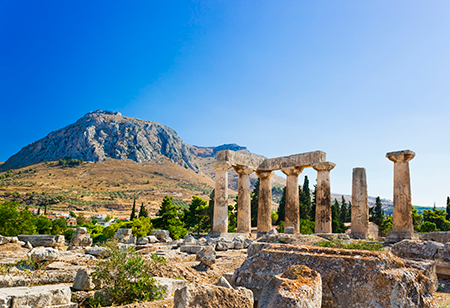 Archaeology [ARE-key-AH-low-jee] is a big word. It means the study of physical remains from the lives of people who lived in the past. Archaeologists are scientists who practice archaeology. They study things such as stone tablets, ancient houses, and historic cities that have been buried for many years. Archaeology can be very exciting. Sometimes archaeologists uncover amazing treasures that were buried by kings hundreds or even thousands of years ago. At other times, “treasures” like ancient writing tablets or inscriptions are found that describe events in the past. Archaeology is important because it helps us see how things were in the past, and it helps us know what really happened.
Archaeology is also very important because it helps to show that the Bible writers always told the truth and wrote about people who really lived. The Bible writers were inspired by God to record history exactly as it occurred. While this might not sound that amazing, it is. You see, most historic books are filled with errors. That is why history books are rewritten every few years, so that the errors in them can be corrected. There is only one book that reports ancient history that has every fact exactly right—the Bible.
 |
| Hezekiah’s Tunnel |
How can archaeology help us know that the Bible is true? Suppose the Bible tells about a king in Judah who dug a large tunnel under the city of Jerusalem. If this really did happen, we would expect to see the tunnel still there, or at least see signs that it was dug at one time. Or suppose the Bible mentions ancient kings who ruled other nations. When we find inscriptions and documents from those nations, we would expect them to have the names of the kings mentioned in the Bible. In this issue of Discovery, we are going to look at some interesting archaeological finds. We are going to see that thousands of archaeological finds have shown that the Bible writers always wrote the truth. There has never been a single discovery that disproves anything in the Bible. Truly, the Bible is the perfect Word of God.
The post The Bible and Archaeology appeared first on Apologetics Press.
]]>The post The Cyrus Cylinder appeared first on Apologetics Press.
]]>|
Image Credit: www.wikimedia.org(prioryman) 2013 CC-by-sa-3.0 |
 Image Credit: www.wikimedia.org (Prioryman) 2013 CC-by-sa-3.0 |
 Image Credit: www.wikimedia.org (Prioryman) 2013 CC-by-sa-3.0 |
|
Cyrus Cylinder |
In 1879, an archaeologist named Hormoz Rasam found a small clay cylinder (about nine inches long) in the ancient city of Babylon. (This cylinder is now in the British Museum). Upon the clay cylinder, King Cyrus wrote about his victory over the
 |
| Image Credit: www.wikimedia.org |
city of Babylon and his policy toward the nations he had captured. He also detailed his policy toward their various gods and religions. Cyrus explained that he sent back all the idols to the various nations. He also wrote that he rebuilt their temples. His decree that is written on the cylinder matches perfectly what the Bible predicted he would do. Cyrus decreed that the temple in Jerusalem should be rebuilt and all the exiled Israelites who wished to return had his permission and blessing to do so (Ezra 1:1-11). This little nine-inch clay cylinder is strong evidence that the Bible is 100% accurate and inspired by God.
The post The Cyrus Cylinder appeared first on Apologetics Press.
]]>The post The Tiny Town of Nazareth appeared first on Apologetics Press.
]]>the Basilica of the Annunciation pictured below.
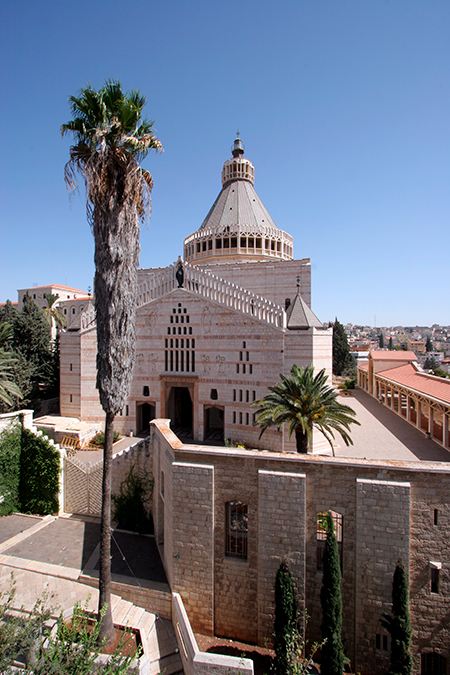
Have you ever driven through a very small town? Maybe you even saw a sign that gave the name of the town and told how many people lived there. It might have said somethinglike, Sullivan POP 688. The letters POP stand for the word “population,” which means the number of people who live there. A town that only has 688 people is very small. In fact, many churches have more people than that during a Sunday worship service. In the past, some villages were even smaller than that. They had only about 100 people or less.
When we look in the Bible, we read about a little town named Nazareth. The Bible does not tell us how many people lived there, but it was very small. In fact, it was so small that people did not think anything important could come out of the town. It did not have big crops to export to other cities. It did not have large numbers of fishermen who sold fish. Nazareth did not have rich merchants who traded goods or big businesses that made nice clothes or jewelry.
We recognize the name of this tiny village because Jesus was from there. Even though Jesus was born in Bethlehem, He grew up in Nazareth. When He began His ministry, people wondered about His hometown. How could such an amazing teacher come from such a tiny town? Philip, one of His original followers, was trying to explain to his friend Nathanael that he found the Messiah. He told Nathanael that Jesus was from the town of Nazareth. Nazareth was so unimportant that Nathanael did not think the Messiah could be from there. He said, “Can anything good come out of Nazareth?” (John 1:46). He quickly found out he was wrong, and something very good did come out of Nazareth: the Lord Jesus Christ.
| Herodian lamps, similar to the one pictured below, helped archaeologists to determine the time period of the Nazareth house. |
 |
Because Nazareth was so small, archaeologists did not find any remains of the houses or buildings for many years. Some people even said that the Bible was wrong when it mentioned Nazareth. They taught that there was no village called Nazareth during the time of Jesus. These people went on to say that the writings about Jesus in the New Testament could not be true, because they claimed Jesus could not be from a town that did not exist.
In December of 2009, however, the way the world looked at Nazareth changed. An archaeologist named Yardena Alexandre announced the discovery of a house that dated to the time of Jesus in the little town of Nazareth. This house was just where the Bible suggested the town should be. The house had two rooms and a courtyard that totaled about 900 square feet. Many houses in the USA are four or five times that large. In fact, some of you reading this article may live in homes where one big playroom is 900 square feet. The artifacts found in the house, such as pieces of pottery, show us that the people who lived there were most likely poor.
Those people who doubted the Bible were put to shame. They claimed that the Bible made a mistake when writing about Jesus being from Nazareth. They were wrong. The discovery of the small Nazareth house helped to show that the Bible does not make mistakes. Once again, archaeology provided us with even more evidence to prove that the Bible is God’s Word.
The post The Tiny Town of Nazareth appeared first on Apologetics Press.
]]>The post Gallio the Proconsul of Achaia appeared first on Apologetics Press.
]]>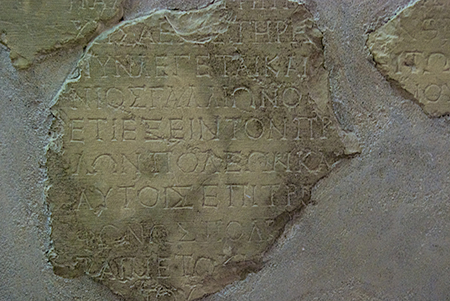 A fragment of the Gallio Inscription found in the City of Delphi
 Ruins of the Delphi Amphitheater
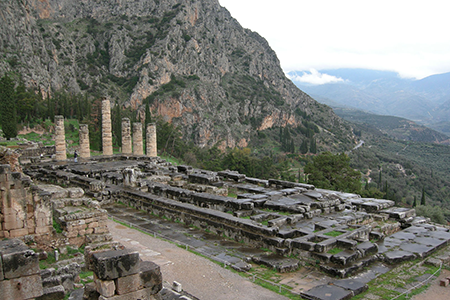 Ruins of the Apollo Temple in Delphi, Greece
In Acts 18:12, the Bibletells us that there was a man named Gallio who was the proconsul of the area of Achaia during the ministry of Paul. A proconsul is a government official similar to a governor or mayor. This piece of information is important because of a letter sent by the Roman Emperor during this time. In the city of Delphi, archaeologists found four different fragments of a letter sent by Emperor Claudius. When they pieced them together, the Emperor said in the letter that it was to “Lucius Junius Gallio, my friend, and the proconsul of Achaia.” Not only did Luke record the name of Gallio accurately, but he also recorded his political office exactly as the Emperor wrote it.
The importance of the Gallio inscription goes even deeper than that. This particular find shows how archaeology can give us a better understanding of the biblical text, especially in giving us dates and times that things happened. Because of this letter, it is possible to date the time that Gallio was a proconsul to about A.D. 51. That would mean that Paul arrived in the city of Corinth in about the year A.D. 49-50. By being able to date this part of Paul’s work, we can get a good understanding of when Paul visited other churches during his missionary journeys. Once again, not only does archaeology help show that the Bible is accurate, it also helps us to understand more about what was going on during Bible times.
The post Gallio the Proconsul of Achaia appeared first on Apologetics Press.
]]>