The post The “God of the Gaps” Argument: A Refutation appeared first on Apologetics Press.
]]>One can easily see the problem with using a God-of-the-gaps argument to reasonably or logically establish any idea. First, a gap in knowledge never proves anything other than that the person in the discussion does not know something. As those in archaeological circles are fond of saying, “The absence of evidence is not the evidence of absence.” An idea cannot be proven to be true simply because we do not currently know the answer. This is a form of a logical fallacy known as an “argument from ignorance.” Imagine using this kind of reasoning in a criminal case. We do not know who committed the murder of the company CEO, so we conclude it must have been the janitor. What evidence do we have for the janitor? None, but someone had to do it, so we just plug in a janitor-of-the-gaps argument and whisk the poor cleaning professional off to jail. Without adequate evidence, we cannot reasonably assert that we know what is the cause of something just because all our attempts to explain it have failed.
Another obvious problem with the God-of-the-gaps argument is that all it takes to disprove it is to provide a piece of positive evidence that shows another answer to be correct. Since the ancients did not understand thunder, they claimed it was proof that a sky god was angry. As modern science has advanced, we now have an excellent understanding of the physical causes of thunder and sky god activity is unnecessary to explain it. The field of archaeology provides many excellent examples that illustrate this type of failure of arguments from ignorance. In 2008, a skeptic named René Salm wrote a book that claimed the Bible could not be inspired and Jesus was not a real person, because no archaeological evidence existed that proved that the town of Nazareth was inhabited during the first century.1 He was using a lack of evidence to prove a positive assertion. The next year, in 2009, archaeologists working in the area of ancient Nazareth uncovered a home that dated back to the first century. This discovery completely refuted Salm’s incorrect thesis. Similarly, the God-of-the-gaps argument is a logical fallacy that should not be used by anyone who is trying to make a reasonable case for the existence of God.
We stated, however, that the God-of-the-gaps is an argument and an accusation. It fails miserably as a legitimate argument that can validate any conclusion. Most often, however, when it appears in the writings of skeptics and unbelievers, it is being used as an accusation. The gist of the accusation is that those who believe in God do not have evidence for God’s existence, they just see concepts and phenomena in nature that scientists have not yet explained, and they insert the idea of God as the explanation. For instance, when Michael Shermer, well-known unbeliever and founder of Skeptic magazine, was asked, “What are the fallacies that people use to supposedly prove that there is a God,” he responded by saying, “Probably one of the most common ones is God-of-the-gaps argument, ‘You scientists can’t explain x, therefore x must not have a natural explanation, ergo there must be a super natural explanation.’”2 In a video titled “Scientist Destroys the God of the Gaps,” atheist Richard Dawkins was asked, “How would you respond when people say, ‘Look, we don’t understand the origin of life on Earth, and therefore God must have done it.’” Dawkins responded by saying, “Even theologians don’t buy that, at least sophisticated theologians. It’s what they call a God-of-the-gaps argument. It’s pushing God into the few remaining gaps in our understanding…. [I]t would be bad logic, bad science, and bad philosophy to say, ‘Oh, I don’t understand it, therefore God did it.’”3 Dawkins is correct, most theologians and Christian apologists do not argue this way. But, as the reader can see from Michael Shermer’s statement and the title of the video of Dawkins, skeptics and unbelievers accuse theists of using the God-of-the-gaps argument as one of their primary approaches to establishing the existence of God. How can Christians answer the accusation that belief in God rests upon the fallacious God-of-the-gaps idea?
Answering the God-of-the-Gaps Accusation
In 2021, Stephen Meyer authored a book titled Return of the God Hypothesis.4 Dr. Meyer received his Ph.D. from the University of Cambridge in the philosophy of science. He is the director of the Center for Science and Culture at the Discovery Institute in Seattle. He titled chapter 20 of his book, “Acts of God or God of the Gaps?” And, while we at Apologetics Press would disagree with his old-Earth conclusions and his acceptance of certain aspects of evolution, his discussion about how to answer the God-of-the-gaps accusation is one of the best I have read. He begins by showing what an actual, incorrect logical fallacy and “argument from ignorance” would look like. He stated, “Arguments from ignorance occur when evidence against one proposition is offered as the sole grounds for accepting an alternative. Thus they have the following form:
Premise: Cause A cannot produce or explain evidence E.
Conclusion: Therefore, cause B produced or explains E.”5
He notes how easy it is to identify this type of fallacy and how unreasonable it would be to use such thinking to try to prove any conclusion. He states that skeptics often claim that the argument for God’s existence based on intelligent design is guilty of this type of illogical thought. How can the theist who is using the design argument show that it is not a God-of-the-gaps argument from ignorance? Meyer states: “To depict proponents of the theory of intelligent design as committing the GOTG fallacy, critics must misrepresent the case for it.” He summarizes this misrepresentation by showing that skeptics are claiming that the theistic argument looks like this:
“Premise: Material causes cannot produce or explain specified information.
Conclusion: Therefore, an intelligent cause produced the specified information in life.”
If this were how the design argument actually worked, there would be serious problems with it, and the skeptic would be right to challenge it as false. Meyer points out, however, that this misrepresentation of the design argument leaves out a very important premise. Meyer reconstructs the design argument to include the positive evidence that it implies:
“Premise One: Despite a thorough search, no materialistic causes have been discovered with the power to produce large amounts of specified information necessary to produce the first cell.
Premise Two: Intelligent causes have demonstrated the power to produce large amounts of specified information.
Premise Three: Intelligent design constitutes the best, most causally adequate explanation for the origin of the specified information in the cell.”6
Notice that there is no gap in the properly stated form of the design argument. We have been doing scientific research for hundreds of years. We have discovered that intelligence is the only entity capable of producing large amounts of specified information. We see large amounts of specified information in cells. Therefore, we are forced by what we know about intelligence from centuries of scientific research to conclude that the specified information in cells is the product of an intelligent Creator. On the other hand, we also know enough about how matter behaves to conclude that it is impossible to get the specified information from materialistic causes. Origin-of-life experiments have been done for decades that have shown how matter does and does not behave. In every single experiment done to date, we have seen that natural processes not only do not produce life, but they cannot produce life. This is not a gap in our knowledge. The argument for design is based on what we know to be scientifically valid in every instance.
Why, then, are so many skeptics convinced that the design argument is a God-of-the-gaps logical fallacy? The reason for this is a prior commitment to naturalism. If a person begins by assuming that there has to be a naturalistic process that brought about life, then that person is forced to see a gap in our current knowledge, since no naturalistic processes have ever (in any experiment under any circumstances) even come close to producing a living cell. As Meyer explained, the question is often posed, “What chemical process first produced life?” Since no such chemical process has been discovered, we are told this is simply a gap in our current knowledge that will be filled in the future. But, as Meyer notes,
Nevertheless, our present lack of knowledge of any such chemical process entails a “gap” in our knowledge of the actual process by which life arose only if some materialistic chemical evolutionary process actually did produce the first life. Yet if life did not evolve via a strictly materialistic process but was, for example, intelligently designed, then our absence of knowledge of a materialistic process does not represent “a gap” in knowledge of an actual process.7
Meyer offers a great illustration of the point that a “gap” only exists if a person begins by assuming that all scientific explanations must be materialistic. He writes:
Imagine someone mistakenly enters an art gallery expecting to find croissants for sale. That is, he thinks the gallery is actually a fancy bakery. Observing the absence of pastries and rolls, such a person may think that he has encountered a gap in the services provided by the gallery. He may even think that he has encountered a gap in the staff’s knowledge of what must definitely be present somewhere in the gallery. Based on his assumptions, the visitor may stubbornly cling to his perception of a gap, badgering the gallery staff to “bring out the croissants already,” until with exasperation they show him the exit. The moral of the vignette? The gallery visitor’s perception of a gap in service or in knowledge of the location of the croissants derives from a false assumption about the nature of this establishment or about art galleries in general and what they typically offer to visitors.8
There is only a gap if a person will not accept what we know scientifically to be true. We “do have extensive experience of intelligent agents producing finely tuned systems such as Swiss watches, fine recipes, integrated circuits, written texts, and computer programs.”9 Furthermore, “intelligence or mind or what philosophers call ‘agent causation’ now stands as the only known cause capable of generating large amounts of specified information.”10 And “it takes a mind to generate specified or functional information, whether in ordinary experience, computer simulations, origin-of-life simulation experiments, the production of new forms of life, or, as we now see, in modeling the design of the universe.”11
Conclusion
The design argument for the existence of God is not an argument from what we do not know or we do not understand about the Universe and life in it, but instead is an argument based on the aspects of nature that we know to be true. As John Lennox stated in his debate with Michael Shermer, “I see God not in the bits of the Universe that I don’t understand, but in the bits that I do.”12 “For since the creation of the world His invisible attributes are clearly seen, being understood by the things that are made, even His eternal power and Godhead…” (Romans 1:20).
Endnotes
1 René Salm (2008), The Myth of Nazareth: The Invented Town of Jesus (Cranford, NJ: American Atheist Press).
2 Michael Shermer (2022), “Fallacies in Proving God Exists,” https://www.youtube.com/watch?v=d-_Tlsj4i-k.
3 Richard Dawkins, “Scientist Destroys the God of the Gaps,” https://www.facebook.com/watch/?v=1707548059332046.
4 Stephen C. Meyer (2021), Return of the God Hypothesis: Three Scientific Discoveries that Reveal the Mind Behind the Universe (New York, NY: HarperOne).
5 Ibid., p. 414.
6 Ibid., p. 415.
7 Ibid., p. 424.
8 Ibid., p. 424.
9 Ibid., p. 338.
10 Ibid., p. 187.
11 Ibid., p. 385.
12 Debate between Michael Shermer and John Lennox at the Wesley Centre in Sydney, Australia, 2009, https://www.youtube.com/watch?v=y_OPWiXbSDA&t=112s.
The post The “God of the Gaps” Argument: A Refutation appeared first on Apologetics Press.
]]>The post The Anthropic Principle: The Universe Is Designed for Us appeared first on Apologetics Press.
]]>The Anthropic Principles in cosmology states that the Universe as a whole appears to have been designed for humans to inhabit it. The existence of a Universe Designer still stands as the most logical explanation for its origin, and the naturalistic community cannot help but concede it.
| Image credit: NASA/JPL-Caltech |
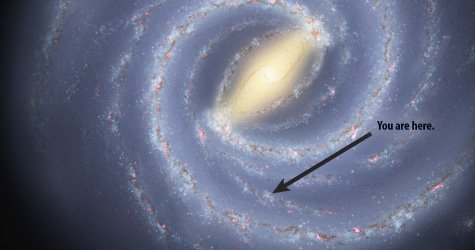 |
The Anthropic Principle in secular cosmology is a recognition by scientists that the Universe appears to be just right for life, and specifically, humans.1 Stephen Battersby, writing in New Scientist, discusses the anthropic principle and our “Goldilocks universe,” asking, “Why does the universe have properties that are ‘just right’…?”2 In the words of Princeton professor emeritus and theoretical physicist Freeman Dyson, “As we look into the universe and identify the many accidents of physics and astronomy that have worked together to our benefit, it almost seems as if the universe must in some sense have known that we were coming.”3 Bottom line: the Universe appears to be designed for us to live in it.
Atheistic philosopher Paul Ricci summed up the Teleological Argument for the Existence of God well when he said, “[I]t’s true that everything designed has a designer…. ‘Everything designed has a designer’ is an analytically true statement.”4 There are an infinite number of examples of design that present themselves to us when we study the natural realm—a problem for Ricci and his atheistic colleagues, to be sure. While we typically examine evidences of design on Earth and our solar system, when we look at the design in the Universe as a whole, the number of evidences increases.
Naturalists: “The Universe Looks Designed!”
Consider the following points in addition to the many specific examples of design we see in the Universe. It is one thing for theists to provide positive evidences for the existence of design in the Universe, but it makes the job much simpler for theists when naturalists themselves admit evidences for design. A positive acknowledgement from hostile witnesses is powerful testimony to the truth of the theists’ position.
According to cosmologist Bernard Carr of Queen Mary University in London, when the evidence in the Universe is examined, a supernatural explanation is demanded. He warned cosmologists to accept the inevitable implications of the evidence: “If you don’t want God, you’d better have a multiverse.”5 The multiverse has, therefore, been latched onto by many naturalists to try to explain away the “difficulties” facing physicists without resorting to God. Among other issues with the multiverse idea: (1) belief in the multiverse is belief in unseen realms beyond the known, natural Universe—i.e., belief in the supernatural. How can a person be a “naturalist” and yet believe in a supernatural realm? (2) there is absolutely no evidence for the existence of the multiverse.6 Theoretical physicist, faculty member at the Perimeter Institute for Theoretical Physics, and adjunct Professor of Physics at the University of Waterloo, Lee Smolin, said, “We had to invent the multiverse,”7 and according to Lawson Parker, writing in National Geographic, it was from our “imagination.”8 The use of our imagination to determine where we came from certainly sounds like today’s “science” is moving ever further into the realm of fiction.
What kind of “difficulties” are physicists encountering that are forcing them to conclude that something outside of the Universe exists, and therefore, that they need to “invent” the multiverse to avoid God? Many have articulated well the problem. Read on to see a great lesson by naturalists on the need for a supernatural Designer of the Universe.
According to Tim Folger, writing in Discover magazine, “The idea that the universe was made just for us—known as the anthropic principle—debuted in 1973.”9 Since then, the mountain of evidence supporting the principle has drastically grown in elevation. Consider the following examples:10
- In a 2011 article, under the heading “Seven Questionable Arguments” for the multiverse, cosmologist George F.R. Ellis of the University of Cape Town, co-author with Stephen Hawking of the book The Large Scale Structure of Space-Time, discussed argument number four: “A remarkable fact about our universe is that physical constants have just the right values needed to allow for complex structures, including living things…. I agree that the multiverse is a possible valid explanation for [fine tuning examples—JM]…; arguably, it is the only scientifically based option we have right now. But we have no hope of testing it observationally.”11 [Notice that the multiverse is “the only scientifically based option,” and yet “we have no hope of testing it observationally.” Doesn’t the inability to test observationally make the theory unscientific?]
- By 2014, Ellis and Professor of Physics and Astronomy at Johns Hopkins University Joseph Silk went even further:
The multiverse is motivated by a puzzle: why fundamental constants of nature, such as the fine-structure constant that characterizes the strength of electromagnetic interactions between particles and the cosmological constant associated with the acceleration of the expansion of the Universe, have values that lie in the small range that allows life to exist…. Some physicists consider that the multiverse has no challenger as an explanation of many otherwise bizarre coincidences. The low value of the cosmological constant—known to be 120 factors of 10 smaller than the value predicted by quantum field theory—is difficult to explain, for instance.12
- John Rennie, the editor for Scientific American, noted, “The basic laws of physics work equally well forward or backward in time, yet we perceive time to move in one direction only—toward the future. Why?”13 Cosmologist and Professor of Physics at California Institute of Technology Sean Carroll, along the same lines, noted that “[i]f the observable universe were all that existed, it would be nearly impossible to account for the arrow of time in a natural way.”14 Apparently, according to naturalists, Something beyond the “observable universe” exists.
- According to Smolin,
Everything we know suggests that the universe is unusual. It is flatter, smoother, larger and emptier than a “typical” universe predicted by the known laws of physics. If we reached into a hat filled with pieces of paper, each with the specifications of a possible universe written on it, it is exceedingly unlikely that we would get a universe anything like ours in one pick—or even a billion. The challenge that cosmologists face is to make sense of thisspecialness. One approach to this question is inflation—the hypothesis that the early universe went through a phase of exponentially fast expansion. At first, inflation seemed to do the trick. A simple version of the idea gave correct predictions for the spectrum of fluctuations in the cosmic microwave background. But a closer look shows that we have just moved the problem further back in time. To make inflation happen at all requires us to fine-tune the initial conditions of the universe.15
- Tim Folger quotes cosmologist and Professor of Physics at Stanford University Andrei Linde in Discover magazine:
“We have a lot of really, really strange coincidences, and all of these coincidences are such that they make life possible,” Linde says. Physicists don’t like coincidences. They like even less the notion that life is somehow central to the universe, and yet recent discoveries are forcing them to confront that very idea…. Call it a fluke, a mystery, a miracle. Or call it the biggest problem in physics. Short of invoking a benevolent creator, many physicists see only one possible explanation: Our universe may be but one of perhaps infinitely many universes in an inconceivably vast multiverse…. Advocates argue that, like it or not, the multiverse may well be the only viable non-religious explanation for what is often called the “fine-tuning problem”—the baffling observation that the laws of the universe seem custom-tailored to favor the emergence of life…. [Andrei Linde:] “And if we double the mass of the electron, life as we know it will disappear. If we change the strength of the interaction between protons and electrons, life will disappear. Why are there three space dimensions and one time dimension? If we had four space dimensions and one time dimension, then planetary systems would be unstable and our version of life would be impossible. If we had two space dimensions and one time dimension, we would not exist,” he says…. [I]f there is no multiverse, where does that leave physicists? “If there is only one universe,” Carr says, “you might have to have a fine-tuner. If you don’t want God, you’d better have a multiverse.”16
- Stuart Clark and Richard Webb, writing in New Scientist, said,
We can’t explain the numbers that rule the universe…the different strengths of weak, strong and electromagnetic forces, for example, or the masses of the particles it introduces…. Were any of them to have even marginally different values, the universe would look very different. The Higgs boson’s mass, for example, is just about the smallest it can be without the universe’s matter becoming unstable. Similar “fine-tuning” problems bedevil cosmology…. Why is the carbon atom structured so precisely as to allow enough carbon for life to exist in the universe.17
- Theoretical physicist and professor at Columbia University Brian Greene, commenting on Professor of Theoretical Physics at Stanford University Leonard Susskind’s thinking about the multiverse, said,
[The] multiverse is a highly controversial schema, and deservedly so. It not only recasts the landscape of reality, but shifts the scientific goal posts. Questions once deemed profoundly puzzling—why do nature’s numbers, from particle masses to force strengths to the energy suffusing space, have the particular values they do?—would be answered with a shrug…. Most physicists, string theorists among them, agree that the multiverse is an option of last resort…. Looking back, I’m gratified at how far we’ve come but disappointed that a connection to experiment continues to elude us.18
- Mary-Jane Rubenstein, writing in New Scientist, said,
Here’s the dilemma: if the universe began with a quantum particle blipping into existence, inflating godlessly into space-time and a whole zoo of materials, then why is it so well suited for life? For medieval philosophers, the purported perfection of the universe was the key to proving the existence of God. The universe is so fit for intelligent life that it must be the product of a powerful, benevolent external deity. Or, as popular theology might put it today: all this can’t be an accident. Modern physics has also wrestled with this “fine-tuning problem,” and supplies its own answer. If only one universe exists, then it is strange to find it so hospitable to life, when nearly any other value for the gravitational or cosmological constants would have produced nothing at all. But if there is a “multiverse” of many universes, all with different constants, the problem vanishes: we’re here because we happen to be in one of the universes that works. No miracles, no plan, no creator.19
- The eminent atheistic, theoretical physicist, cosmologist, and astrobiologist of Arizona State University, Paul Davies, said, “How did stupid atoms spontaneously write their own software…?”20 In a more extensive discourse on the subject in The New York Times, Davies said,
[W]here do these laws come from? And why do they have the form that they do?When I was a student, the laws of physics were regarded as completely off limits. The job of the scientist, we were told, is to discover the laws and apply them, not inquire into their provenance. The laws were treated as “given”—imprinted on the universe like a maker’s mark at the moment of cosmic birth—and fixed forevermore…. Over the years I have often asked my physicist colleagues why the laws of physics are what they are. The answers vary from “that’s not a scientific question” to “nobody knows.” The favorite reply is, “There is no reason they are what they are—they just are.” The idea that the laws exist reasonlessly is deeply anti-rational. After all, the very essence of a scientific explanation of some phenomenon is that the world is ordered logically and that there are reasons things are as they are. If one traces these reasons all the way down to the bedrock of reality—the laws of physics—only to find that reason then deserts us, it makes a mockery of science. Can the mighty edifice of physical order we perceive in the world about us ultimately be rooted in reasonless absurdity? If so, then nature is a fiendishly clever bit of trickery: meaninglessness and absurdity somehow masquerading as ingenious order and rationality…. Clearly, then, both religion and science are founded on faith—namely, on belief in the existence of something outside the universe, like an unexplained God or an unexplained set of physical laws.21
In conclusion, Davies highlighted the fact that naturalists have a blind faith when assuming that the laws of science could create themselves free from an “external agency”: “[U]ntil science comes up with a testable theory of the laws of the universe, its claim to be free of faith is manifestly bogus.”22 Bottom line: there must be a rational origin of the laws of science, and there is no natural explanation for them.
In a 2014 interview with Scientific American, George Ellis gave a stinging response to theoretical physicist Lawrence Krauss of Arizona State University, who argues in his book, A Universe from Nothing, that physics has ultimately answered the question of why there is something rather than nothing. Among other criticisms, Ellis said,
And above all Krauss does not address why the laws of physics exist, why they have the form they have, or in what kind of manifestation they existed before the universe existed (which he must believe if he believes they brought the universe into existence). Who or what dreamt up symmetry principles, Lagrangians, specific symmetry groups, gauge theories, and so on? He does not begin to answer these questions.23
Quantum physicist Michael Brooks agreed with Ellis in his criticisms of Krauss’ book. Writing in New Scientist, he said, “[T]he laws of physics can’t be conjured from nothing…. Krauss contends that the multiverse makes the question of what determined our laws of nature ‘less significant.’ Truthfully, it just puts the question beyond science—for now, at least.”24 The laws of science are evidence of a supernatural Mind—a grand Law Writer.
- In Expelled: No Intelligence Allowed, Richard Dawkins said concerning the possibility of intelligent design:
It could be that at some earlier time, somewhere in the Universe, a civilization evolved by, probably, some kind of Darwinian means, to a very, very high level of technology, and designed a form of life that they seeded onto, perhaps, this planet. Now that is a possibility, and an intriguing possibility. And I suppose it’s possible that you might find evidence for that, if you look at the details of our chemistry, molecular biology, you might find a signature of some kind of designer. And that designer could well be a higher intelligence from elsewhere in the Universe.25
So, according to Dawkins, when we look at our chemistry—our molecular biology—(1) there could be evidence of design there, and (2) that design would imply the existence of a designer—a direct admission of the validity of the Teleological Argument. Granted, Dawkins does not directly endorse God as that Designer. Instead, he irrationally postulates the existence of aliens.
Ultimately, since there is no evidence for the existence of aliens, there can hardly be any evidence for their establishing life on Earth. Such an idea can hardly be in keeping with the evolutionist’s own beliefs about the importance of direct observation and experiment in science. Such a theory does nothing but tacitly admit (1) the truth of the Law of Biogenesis—in nature, life comes only from life (in this case, aliens); and (2) the necessity of a creator/designer in the equation.
However, notice: since aliens are beings of nature, they too must be governed by the laws of nature. Stephen Hawking acknowledged that the laws of physics “are universal. They apply not just to the flight of the ball, but to the motion of a planet and everything else in the Universe.”26 Evolutionary physicist Victor Stenger submitted his belief that the “basic laws” of science “hold true in the most distant observed galaxy and in the cosmic microwave background, implying that these laws have been valid for over thirteen billion years.”27 In the interview with Stein, Dawkins went on to say concerning the supposed alien creators, “But that higher intelligence would, itself, had to have come about by some ultimately explicable process. It couldn’t have just jumped into existence spontaneously.”28 So, the alien creators, according to Dawkins, have been strapped with the laws of nature as well. Thus, the problem of abiogenesis is merely shifted to the alien’s abode, where the question of the origin of life must still be answered.
Bottom line: life is evidence of design, and by implication, an intelligent designer. Writing in New Scientist, Dawkins admitted, “The more statistically improbable a thing is, the less we can believe that it just happened by blind chance. Superficially the obvious alternative to chance is an intelligent Designer.”29 Sadly, the atheist simply cannot bring himself to accept the clear cut, “obvious alternative” that is staring him in the face.
Notice: Physicists cannot help but acknowledge the evidence that undergirds the Teleological Argument for the existence of God. The Universe seems to have been perfectly designed—with detailed fine-tuning—just for us. Design demands a designer. Resorting to belief in the multiverse is a concession by naturalists that we have been right all along: there exists an “unseen realm.” But rather than concede God, naturalists invent the evidence-less, imaginary multiverse. Ironically, all the while, the multiverse is itself a supernatural option—albeit, one without any rules concerning how we should behave, making it attractive to many.
Naturalists: “The Design Around Us is Amazing—Let’s Copy It.”
One area of scientific study where scientists are, many times unconsciously but forcefully, admitting the presence of design in the Universe, is in the field of biomimetics, or biomimcry—as well as the related field known as bio-inspired design. Biomimicry is an attempt to engineer something—design something—using the natural world as the blue print. Engineers are becoming more and more aware of the fact that the world around us is already filled with fully functional, superior designs in comparison to what the engineering community has been able to develop to date.
The Web page for George Washington University’s Center for Biomimetics and Bioinspired Engineering admits, “[D]espite our seeming prowess in these component technologies, we find it hard to outperform Nature in this arena; Nature’s solutions are smarter, more energy-efficient, agile, adaptable, fault-tolerant, environmentally friendly and multifunctional. Thus, there is much that we as engineers can learn from Nature as we develop the next generation machines and technologies.”30
It would be difficult to better summarize the decisive evidence for design that is clearly evident to professional designers (engineers) when they look at the natural realm. This same mindset about nature’s design, however, is becoming widespread in the engineering community. So consequently, biomimicry is becoming a major engineering pursuit. The field of biomimicry is growing by leaps and bounds, with research centers being established all over the world, with their express purpose being to mimic the design of nature.
Some engineers are going even further. Realizing that nature’s designs are so impressive that many times we simply cannot mimic them, they are attempting instead to control nature to use it as they wish, rather than mimic it.31 Animals, for instance, possess amazing detection, tracking, and maneuvering capabilities which are far beyond the knowledge of today’s engineering minds, and likely will be for many decades, if not forever. An insect neurobiologist, John Hildebrand, from the University of Arizona in Tucson, admitted, “There’s a long history of trying to develop microrobots that could be sent out as autonomous devices, but I think many engineers have realised [sic] that they can’t improve on Mother Nature.”32 Of course, “Mother Nature” is not capable of designing anything, since “she” is mindless—but notice that the desire to personify nature and give it design abilities is telling. While mindless nature has no ability to design anything, the Chief Engineer, the God of the Bible, on the other hand, can be counted on to have the best possible engineering designs. Who, after all, could out-design the Grand Designer? In spite of the deterioration of the world and the entrance of disease and mutations into the created order, after several millennia, His designs still stand out as the best—unsurpassed by human wisdom.
Do not miss the implication of practicing biomimicry and autonomous biological control. They are a tacit concession by the scientific community that nature exhibits design. Engineers are the designers of the scientific community. When we engage in biomimicry, we are, whether consciously or not, endorsing the concept that there is design in nature. It would be totally senseless to try to design something useful by mimicking something that was random and chaotic. For the highly educated, brilliant designers of the scientific community to copy nature, proves that nature must be much more than the product of random chance and accidents.33
Design Without a Designer?
Famous skeptic and science writer Michael Shermer, who has a monthly column in Scientific American, admitted that “we perceive nature to be intelligently designed.”34 To most people, the preponderance of evidence makes that design conclusion obvious. Shermer said, “Since the most common reason people give for why they believe in God is the good design of the world, Intelligent Design creationists are tapping into the intuitive understanding most people hold about life and the universe.”35 The acknowledgement of universal design is so widespread that well-known British evolutionary biologist Richard Dawkins even admitted, “It is almost as if the human brain were specifically designed to…find [Darwinism] hard to believe.”36 Psychologist Paul Bloom of Yale University and University of Pennsylvania acknowledged, “There is by now a large body of research suggesting that humans are natural-born creationists. When we see nonrandom structure and design, we assume that it was created by an intelligent being.”37 We can’t help it, of course; as rational beings we must concede that the available evidence indicates that “nonrandom structure and design” are, without exception, the products of a designer.
With that in mind, a casual perusal of nearly any article by evolutionary biologists that discusses the complexity of various species reveals that they cannot help but intuitively acknowledge a designer. Such writings are riddled with the term “design,” apparently without the naturalistic writers following out the implications of that term. Phrases like, “This feature of the salamander is designed to do this,” are common place. Is it not true that the moment one acknowledges the existence of design, he is admitting the existence of a designer at some point—just as acknowledging a poem implies the existence of a poet? We simply cannot escape the evidence for design in nature and the reasoning ability that God has put within us that presses us to acknowledge His existence, ensuring that those who wish to find Him will (Acts 17:26-28).
Some atheists have apparently noticed the tendency of naturalists to use such terminology. So, rather than try to rectify atheistic terminology, they embrace it and simply try to redefine the word “design.” Kenneth Miller is an evolutionary biologist at Brown University and co-author of the popular Prentice Hall high school biology textbook that is used extensively in the United States. In his 2008 book, Only a Theory: Evolution and the Battle for America’s Soul, he admits that structural and molecular biologists, as they study the natural order, routinely mention the presence of design in their explorations. He, himself, though a naturalist, admits that the human body shows evidence of design, pointing out examples like the design of the ball and socket joints of the human hips and shoulders, and the “s” curve of the human spine that allows us to walk upright. In spite of such admissions, he irrationally claims that they should not be considered to be self-defeating for naturalists. According to Miller, the evidence for design in nature should be embraced. In an article published by Brown University, he said, “There is, indeed, a design to life—an evolutionary design.”38 Merriam-Webster defines an oxymoron as “a combination of contradictory or incongruous words (such as cruel kindness).”39 Another example: “naturalistic evolutionary design.”
If there is a painting, there must have been a painter. If there is a fingerprint, there must have been a finger that made it. If there is a building, there must have been a builder. If there is an engine, there must have been an engineer. If there is a creation of some sort, there must have been a creator for it. And if there is design, there must have been a…. If a person completes that sentence with any other word besides “designer,” is he not being the epitome of irrational? While we understand Miller’s dilemma as a naturalist and his desire to find a way to dismiss the incessant, forceful, ironic admissions of design by his naturalistic colleagues, he must attempt to do so through some other avenue besides merely attempting to redefine the word “design” in such a way that it does not require intent and purpose—a mind.
The silliness of irrationally postulating that the clearly designed Universe could have designed itself through evolution has not been lost to many in the engineering community. Typically, in the first semester of engineering school, an introductory course presents broad concepts about engineering. Students may learn the basic differences in the engineering fields (e.g., civil, electrical, mechanical, chemical, structural, etc.). They may spend some time considering ethical dilemmas that engineers have often faced in their careers. First-year students also usually give consideration to the design process. Even in its basic form, the design process proves to be very complex, even before considering the specialized scientific knowledge required to design a given item.
Many steps are necessary in order to get a product to the public. Consider one introductory engineering textbook’s template for the design process:40
1. Problem symptom or expression; definition of product need; marketing information
2. Problem definition, including statement of desired outcome
3. Conceptual design and evaluation; feasibility study
4. Design analysis; codes/standards review; physical and analytical models
5. Synthesis of alternative solutions (back to design analysis for iterations)
6. Decision (selection of one alternative)
7. Prototype production; testing and evaluation (back to design analysis for more iterations)
8. Production drawings; instruction manuals
9. Material specification; process and equipment selection; safety review
10. Pilot production
11. Production
12. Inspection and quality assurance
13. Packaging; marketing and sales literature
14. Product
The design process is unquestionably lengthy, technical, complex, and calculated. To claim that an efficient design could be developed without a designer is insulting to the engineering community. Where there is design—complexity, purpose, planning, intent—there is a designer.
Conclusion
Truly, the Universe is replete with decisive evidences of design. So much so, that even atheists cannot help but concede that truth. It is noteworthy that leading naturalists are unwilling to suggest that the laws of nature could create themselves.
- Physicists know there must be a supernatural origin for physics laws.41
Similarly, more and more leading scientists are acknowledging that the existence of life is no accident either.
- Biologists know there must be an intelligence behind it.42
- Engineers are so awed by the clear-cut evidences for design on the Earth that they have developed entire centers devoted to biomimicry—copying the designs that are evident in nature, effectively plagiarizing the work of God when they fail to give Him due credit as the Chief Engineer.
- Cosmologists gush with incredulity when they see the perfection of the created order as well, knowing that the “fine-tuning”43 that is evident in the Universe seems to have resulted in it being “custom tailored”44 for humans.
But how can there be “fine-tuning” if no One exists to tune in the first place? How can the Universe be “custom tailored,” and yet there be no Tailor? The Anthropic Principle—defined by cosmologists—is a blatant admission by the naturalistic community that theists have been right all along: the Universe is replete with evidences of design. If one is to be rational—drawing appropriate conclusions from the evidence—he must recognize that there are implications to realizing that the Universe is finely tuned and tailor made. The design in the Universe demands the existence of a Universal Designer and, further, the Universe was designed, specifically, with humans in mind.
Endnotes
1 Robert Lamb (2010), “What Is the Anthropic Principle?” HowStuffWorks, https://science.howstuffworks.com/science-vs-myth/everyday-myths/anthropic-principle.htm.
2 Stephen Battersby (2006), “Top 10: Weirdest Cosmology Theories,” New Scientist, August 9.
3 Freeman J. Dyson (1971), “Energy in the Universe,” Scientific American, 224[3]:59.
4 Paul Ricci (1986), Fundamentals of Critical Thinking (Lexington, MA: Ginn Press), p. 190.
5 As quoted in Tim Folger (2008), “Science’s Alternative to an Intelligent Creator: the Multiverse Theory,” DiscoverMagazine.com, November 10, http://discovermagazine.com/2008/dec/10-sciences-alternative-to-an-intelligent-creator.
6 cf. Jeff Miller (2017), “7 Reasons the Multiverse Is Not a Valid Alternative to God [Part I],” Reason & Revelation, 37[4]:38-47, http://apologeticspress.org/pub_rar/37_4/1704w.pdf.
7 Lee Smolin (2015), “You Think There’s a Multiverse? Get Real,” New Scientist, 225[3004]:25, January 17.
8 Lawson Parker (2014), “Cosmic Questions,” National Geographic, 225[4], April, center tearout.
9 Folger, emp. added.
10 Much of the following material appeared also in Jeff Miller (2017), “Atheists’ Design Admissions,” Reason & Revelation, 37[12]:134-143, http://apologeticspress.org/apPubPage.aspx?pub=1&issue=1261.
11 George F.R. Ellis (2011), “Does the Multiverse Really Exist?” Scientific American, 305[2]:42.
12 George Ellis and Joe Silk (2014), “Defend the Integrity of Physics,” Nature, 516[7531]:322, December, emp. added.
13 “Editor’s Note” in Sean M. Carroll (2008), “The Cosmic Origins of Time’s Arrow,” Scientific American, 298[6]:48, June.
14 Sean M. Carroll (2008), “The Cosmic Origins of Time’s Arrow,” Scientific American, 298[6]:57, June.
15 Smolin, p. 24, emp. added.
16 Folger, emp. added.
17 Stuart Clark and Richard Webb (2016), “Six Principles/Six Problems/Six Solutions,” New Scientist, 231[3092]:33, emp. added.
18 Brian Greene (2015), “Why String Theory Still Offers Hope We Can Unify Physics,” Smithsonian Magazine, January, http://www.smithsonianmag.com/science-nature/string-theory-about-unravel-180953637/?no-ist, emp. added.
19 Mary-Jane Rubenstein (2015), “God vs. the Multiverse,” New Scientist, 228[3052/3053]:64, December 19/26, emp. added.
20 Paul Davies (1999), “Life Force,” New Scientist on-line, 163[2204]:26-30, September 18.
21 Paul Davies (2007), “Taking Science on Faith,” The New York Times, November 24, emp. added, http://www.nytimes.com/2007/11/24/opinion/24davies.html?_r=0.
22 Ibid.
23 As quoted in John Horgan (2014), “Physicist George Ellis Knocks Physicists for Knocking Philosophy, Falsification, Free Will,” Scientific American Blog Network, July 22, emp. added, http://blogs.scientificamerican.com/cross-check/physicist-george-ellis-knocks-physicists-for-knocking-philosophy-falsification-free-will/.
24 Michael Brooks (2012), “The Paradox of Nothing,” New Scientist, 213[2847]:46, January 11, emp. added.
25 Ben Stein and Kevin Miller (2008), Expelled: No Intelligence Allowed (Premise Media), emp. added.
26 “Curiosity…,” emp. added.
27 Victor J. Stenger (2007), God: The Failed Hypothesis (Amherst, NY: Prometheus Books), p. 115.
28 Stein and Miller, emp. added.
29 Richard Dawkins (1982), “The Necessity of Darwinism,” New Scientist, 94:130, April 15, emp. added.
30 “Center for Biomimetics and Bioinspired Engineering: COBRE” (2012), George Washington University, emp. added, http://cobre.seas.gwu.edu/.
31 Jeff Miller (2011), “Autonomous Control of Creation,” Reason & Revelation, 31[12]:129-131.
32 J. Marshall (2008), “The Cyborg Animal Spies Hatching in the Lab,” New Scientist, 2646:41, March 6.
33 For specific examples of biomimicry and bio-inspired engineering, see http://apologeticspress.org/APContent.aspx?category=12&topic=66.
34 Michael Shermer (2007), Why Darwin Matters: The Case Against Intelligent Design (New York, NY: Henry Holt), Kindle edition, p. 61.
35 Ibid. pp. 39-40.
36 Richard Dawkins (1986), The Blind Watchmaker (New York: W.W. Norton), p. xi.
37 Paul Bloom (2009), “In Science We Trust: Beliefs About the Natural World that are Present in Infancy Influence People’s Response to Evolutionary Theory,” Natural History Magazine, 118[4]:18-19.
38 As quoted in: Brown University (2008), “There is ‘Design’ in Nature, Biologist Argues,” ScienceDaily, http://www.sciencedaily.com/releases/2008/02/080217143838.htm.
39 “Oxymoron” (2017), Merriam-Webster On-line, https://www.merriam-webster.com/dictionary/oxymoron/.
40 cf. Introduction to Engineering at Auburn University: Manufacturing—Industrial and Systems Engineering (2004), (Boston, MA: Pearson Custom Publishing), pp. 10,32.
41 cf. Miller, 2017.
42 cf. Jeff Miller (2013), “Directed Panspermia and Little, Green (Non-Existent) Men from Outer Space,” Apologetics Press, http://apologeticspress.org/APContent.aspx?category=9&article=4620&topic=93.
43 Folger; Clark and Webb, p. 33; Rubenstein, p. 64.
44 Folger.
 |
 |
| Suggested Resources | |
The post The Anthropic Principle: The Universe Is Designed for Us appeared first on Apologetics Press.
]]>The post The Teleological Argument for the Existence of God [Part 2] appeared first on Apologetics Press.
]]>[EDITOR’S NOTE: Part 1 of this two-part series appeared in the February issue. Part 2 follows below and continues, without introductory comments, where the first article ended. Both articles are excerpted from our volume Does God Exist?]
It is disturbing to contemplate the fact that 100 years ago, more Americans believed in the God of the Bible. The universal teaching of the public schools was Creation as depicted in the Bible. In stark contrast, we have lived to see an unbelievable transformation in which the universal teaching of the public schools is evolution, we have filled our university faculties with atheists, and we have banned God from the public square under the guise of “separation of church and state.” The impact on the thinking of children who are now adults has been catastrophic.
But on the Day of Judgment, there will be no excuses. Every accountable human being on the planet can know that God exists. The created order possesses characteristics that inherently demand the existence of a transcendent, supernatural Creator. As a matter of fact, the evidence that exists in the material order—the Universe/cosmos, the planet Earth, the animals, the plants, and the human body—communicate the clear message that all owe their origin to the divine Creator. This message is being continually communicated all over the planet regardless of geographical location, time of day, and language spoken (Psalm 19:1-3).
In the previous article, we mentioned very briefly several marvelous, convincing evidences for the existence of God as seen in the remarkable human body and some of the features of the created order—phenomena inexplicable apart from Almighty God. We now turn to more of “the things that are made” (Romans 1:20)—additional decisive evidence—that also offers amazing proof of the great Governor of the Universe.
Symbiosis and Mutualism
One feature of the Earth that proves the existence of the God of the Bible involves symbiotic relationships. Although definitions and distinctions abound, generally speaking, symbiosis refers to a close, usually obligatory, association of two or more plants or animals of different species that depend on each other to survive. Each gains benefits from the other. These include both mutualistic and parasitic species. Obligate interactions exhibit considerable specificity and typically involve interaction with only a single species or genus.
For example, a large percentage of herbivores have mutualistic gut fauna that help them digest plant matter, which is more difficult to digest than animal prey. One species of butterfly employs complex chemical and acoustical signals to manipulate ants. Coral reefs are the result of mutualisms between coral organisms and various types of algae that live inside them. Most land plants and land ecosystems rely on mutualisms. Plants convert carbon from the air. Fungi help in extracting minerals from the soil. Many types of tropical and sub-tropical ants have complex relationships with certain tree species.
Those plants and animals that both need each other to survive would have had to come into existence close in time to each other. They most certainly could not have been separated from each other by millions or billions of years of alleged evolutionary adjustments. They would have had to have been created by the Creator to function precisely the way they function. Such massive complexity, interdependency, and sophisticated diversity scream divine design.
The Human Mouth1
 Take, for example, the interior of the human mouth. Setting aside the incredible design necessary for the mouth to function, including teeth, gums, tongue, lips, muscles, nerves, cells, etc., all of which must work together from the beginning if the individual is going to receive nourishment to survive, evolution simply cannot provide a credible explanation for the condition of the human mouth on a microscopic level.
Microbiologists estimate that over 700 distinct bacterial species are present in the mouth. How could 700 separate creatures come together in one place to create a complex ecosystem of mixed organisms that co-exist with each other to perform marvelous feats of chemical engineering—from breaking down food particles and mopping up shed body cells, to competing with intruder organisms to protect us from infection? The complexity is inexplicable in terms of evolution. This sophisticated arrangement had to have been created by God.
The Nile Crocodile and the Egyptian Plover2
 Another amazing proof that divine Creation is true and evolution is false is seen in the relationship sustained by the Egyptian Plover bird and the Nile crocodile. Africa’s largest crocodilian, these primordial brutes can reach 20 feet in length and weigh up to 1,650 pounds. Their diet entails mainly fish, but they will attack almost anything: zebras, small hippos, birds, porcupines, and other crocs. They are ambush hunters—they wait for fish or land animals to come close, and then rush out to attack. They are vicious man-eaters: up to 200 people die each year in the jaws of a Nile croc.
Despite these facts regarding the deadly nature of the Nile crocodile, it is absolutely astounding to learn that the Egyptian Plover bird has a symbiotic relationship with this creature that entails entering the croc’s mouth for the purpose of cleaning its teeth and gums. The croc will open its mouth and allow the bird to enter, sometimes keeping it open and sometimes closing it gently with the bird still inside. The bird then uses its beak to remove parasites, leeches, worms, and bits of food that infest the crocodile’s mouth. The Plover enjoys a ready source of food, and the crocodile gets a valuable teeth cleaning to promote health and minimize disease. Such an arrangement could not have evolved. No crocodile could have gradually decided it was in its best interest to let a bird clean its mouth. Such sophisticated relationships among diverse creatures prove pre-planning and programming—intelligent design by the Master Designer and Creator.
The Emerald Wasp and the Cockroach3
 |
| Wikimedia.org (Chiswick Chap) 2018 license CC-by-sa-4.0 |
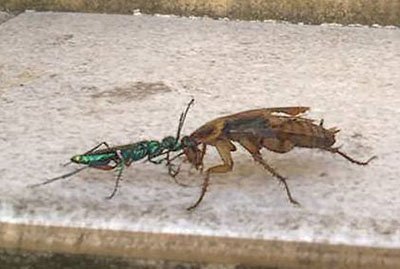
Another astounding example of symbiosis that demonstrates the existence of God pertains to the Emerald Cockroach Wasp and the American cockroach. The latter insect is six times larger than the Emerald Wasp. Yet, the wasp enacts a brilliantly strategic sting into the central nervous system of the cockroach to cause temporary paralysis of the front legs. This temporary paralysis allows the wasp to deliver a second sting into a carefully chosen spot in the brain ganglia to control the escape reflex. The brain sting causes a dramatic behavioral change: the cockroach becomes passive and zombie-like. Its breathing slows, and it makes no attempt to escape. As a result of this sting, the roach will groom itself, become sluggish, and fail to show normal escape responses.
The wasp then leads the cockroach by its antennae, like a leash, to the wasp’s burrow. The wasp does not have to drag the cockroach, since the roach willingly walks on its own legs. Inside the burrow, the wasp lays a white egg, about two millimeters long, on the roach’s abdomen. It then exits and uses debris to barricade the defenseless roach inside the burrow (to keep other predators out). With its escape reflex disabled, the stung roach remains calm and complacent as the wasp’s egg hatches after about three days. The hatched larva drills a hole into the leg of the cockroach to retrieve nutrition from the blood system of the roach for four to five days. Then the larva burrows into the abdomen of the cockroach, crawls inside, and over a period of eight days, consumes the roach’s internal organs in an order which guarantees that the roach will stay alive, at least until the larva enters the pupal stage and forms a cocoon inside the roach’s body. Six weeks from the first sting, a new adult wasp emerges from the hollowed out dead body of the roach.
The venom of the Emerald Wasp is carefully calibrated to shut down signals carried by a key neurotransmitter brain chemical called dopamine. The wasp delivers the sting with the precision of microscopic brain surgery. This remarkable skill could not have evolved. Nor was it learned. It was hardwired by the Creator into each wasp—making it a natural born neurosurgeon. The offspring of the wasp literally depend on the perfect execution of the mother’s sting. Too much venom, and the cockroach would immediately die, eliminating the wasp offspring’s fresh food source. Too little (or poorly aimed) venom, and the roach would escape. Millions of years of trial and error cannot be the source of this relationship. Failure of any one step in this complex process would prevent reproduction—and terminate the species. Can such design, complexity, order, purpose, and intelligence come out of mindless, evolutionary chaos? Absolutely not. The Emerald Wasp and the American cockroach were created by the Creator to function precisely as they do. “O Lord, how manifold are your works! In wisdom have you made them all; the earth is full of your creatures” (Psalm 104:24). The Creation declares the reality of the Creator.
The Leafcutter Ant and Fungus4
 Leafcutter ants nest in underground chambers in the Amazonian rain forest of Brazil. They regularly leave their nests to forage hundreds of feet into the forest. Most tropical plants are permeated by toxic chemicals to deter foragers. So, using specially designed “mouth cutters,” the ants cut out portions of the leaves they find, being careful not to ingest any of the poisonous chemicals. They then transport their cargo back to the nests and deliver it to smaller worker ants. These ants clean the leaves and chew them into pulpy mulch—again, being careful not to “swallow.” They then feed the mulch to another organism that the ants actually cultivate—a fungus. This fungus breaks down the toxins in the leaves while generating proteins and sugars. These proteins and sugars constitute the food that the ants eat. The ants need the fungus for food—and will die without the fungus. The fungus, on the other hand, cannot live without the ants, since they are dependent on the ant to bring the leaves. This is a mutual co-dependency that could not have evolved.
Incredibly, this particular fungus grows only in the underground chambers of the Leafcutter ant’s nest. And the fungus will not consume all leaves, since some are toxic to the fungus. The Leafcutter ants are sensitive enough to adapt to the fungi’s preferences and, hence, cease collecting those leaves. Scientists think that the ants can detect chemical signals from the fungus which communicate the preferences of the fungus.
What’s more, researchers have identified an aggressive mold that threatens the fungus. When the researchers remove the ants from the nest, the mold destroys the fungus. Entomologists have discovered that the ants—especially the ones that tend the fungus—have a white, waxy coating on their body. The coating, which fights the mold for the fungus, has been identified as tangled mats of bacteria that produce many of the antibiotics that humans use for medicine. The ants are essentially wearing portable antimicrobials. Yet humans only discovered antibiotics within the last century. No wonder Solomon observed: “Go to the ant…consider her ways and be wise, which, having no captain, overseer or ruler, provides her supplies in the summer, and gathers her food in the harvest” (Proverbs 6:6-8).
The Yucca Moth and the Yucca5
 About 50 species of yucca plant grace the planet. Incredibly, the yucca plant is completely unable to pollinate itself in order to grow more seeds and reproduce. It is wholly dependent on the genetically programmed yucca moth to facilitate reproduction and perpetuate the species.
From their subterranean cocoons in spring, male and female yucca moths crawl to the surface and fly to nearby yucca plants. Yucca plants are just opening their flowers. The female yucca moth collects pollen from the yucca flower and fashions it into a sticky ball, using a pair of long, curved “claws” (proboscis) protruding from her mouth area, to collect, form, compact, and carry the golden pollen ball. The yucca’s pollen is in a curved region of the plant. Only the yucca moth has the specially curved proboscis to gather the pollen from the plant’s male reproductive organs.
Having collected the pollen, she then flies to another plant where she inserts a moth egg into the ovary wall of the yucca plant, using her ovipositor—itself a marvel of engineering design. Still carrying the pollen ball in her facial claws, she climbs to the top of the ovary. She presses the pollen into the stigma, fertilizing hundreds of immature seeds inside. When the moth larvae hatch, they feed on the seeds of the yucca. If they were to eat all the seeds, the yucca plants would stop reproducing, and both they and the moths would cease to exist. God designed the moth to calibrate the number of larvae growing inside each flower so that all the yucca seeds will not be consumed.
The life cycle of the yucca moth is timed so the adult moths emerge in the spring exactly when the yucca plants are in flower. The yucca moth and yucca plant were designed to function together. They had to have been created in close temporal proximity. No wonder evolutionary biologist Dr. Chris Smith conceded: “It is pretty mind-boggling to imagine how this arose. It’s very strange.”6 “Mind-boggling”? Absolutely. “Strange or inexplicable”? No—unless you ignore, reject, or dismiss the obvious.
The Black Wasp and the Aphid7
 When plants in the southeastern United States are besieged by aphids—small sap-sucking, extremely destructive insect pests—they release a chemical mist that signals black wasps to come to their rescue. Upon arrival, wasps do not kill the aphids outright. With clinical precision, the wasps inject a single egg into each aphid’s body. Each wasp can inject eggs into 200 aphids. The aphid’s body then serves as the incubator for the offspring of its predator. As the ravenous wasp larvae grow, they literally eat the aphid alive from the inside out until they are ready to emerge and begin the process all over again.
Observe that this divinely designed means of controlling the aphid population is simply one marvelous system among others. The diversity and complexity of a variety of systems, all working in concert in the natural order, imply an overarching, overruling master plan to ensure the ongoing perpetuation of the created order. In addition to the black wasp, ants also participate in controlling aphids.
The Ant and the Aphid8
 Aphids sustain another complicated relationship. They are equipped with special, syringe-like mouth parts to pierce plants and retrieve fluid from them. Some species of ants literally “cultivate” the aphids by “milking” them without harm to the insect. Ants stroke the aphids with their antennae, causing the aphids to secrete honeydew which the ants can then consume. The aphids, therefore, provide a ready food supply for the ants. In exchange, the aphids receive protection since the ants act as a team to fight off invaders and predators, like ladybugs.
But this interrelationship goes even deeper. The sap which the aphids retrieve from plants is rich in carbohydrates, but lacks essential amino acids—which aphids cannot synthesize. Enter a third actor in this mutualistic drama: tiny endosymbiont bacteria (Buchnera aphidicola). These bacteria live in the aphid’s special cells called bacteriocytes. The amino acids are supplied by these bacteria. Neither the bacteria nor the aphid can exist without the other.
Amazing: the ant depends on the aphid for food; the aphid depends on the ant for protection; the aphid depends on internal bacteria for amino acids; the aphid provides the bacteria with energy, carbon, and shelter inside specialized cells. Symbiosis within symbiosis—decisive proof of divine design!
Evolutionary Explanation?
Such remarkable examples of divine design could be multiplied endlessly. They absolutely point to God. But, of course, evolutionists attempt to offer an “explanation” for symbiosis among the wondrous organisms that grace our planet. It goes something like this:9 “Organisms that depend on each other for survival co-evolved, gradually becoming dependent on each other by means of minute changes over millions of years.” Such a claim is then liberally peppered with nullifying qualifications: “Surprisingly little is known about how mutualistic symbioses evolved and persist.” “Despite their ubiquity and importance, we understand little about how mutualistic symbioses form between previously free-living organisms.” “The evolutionary sequence of events in most lineages is unknown.” “Exactly how these associations evolve remains unclear.” “Much remains to be learned about the mechanisms that maintain mutualism as an evolutionarily stable interaction.” Rationally-thinking Christians have a responsibility before God to train themselves to recognize nonsensical gobbledygook when they hear it. The fact is that any alleged “transitions” or “minute changes”—when pinpointed and examined as moments in time—are seen to be unworkable, imaginary, impossible, and nonexistent. Both organisms needed each other from the beginning of their existence. How did these creatures gain nourishment before becoming dependent? Each of these organisms possesses concise design variables that prove the inability of gradual mutation and natural selection as effectual causative agents.
Recall the debate conducted in 1976 on the campus of North Texas State University in Denton, Texas, when Thomas B. Warren debated Antony G.N. Flew—at the time, arguably the foremost atheistic philosopher in the world. Flew’s attempt to substantiate the credibility of evolution is seen in this statement: “[I]t is, it seems to me, a consequence of evolutionary theory that species shade off into one another.”10 “Shade off into one another”? Evolutionists attempt to cloud the mind by implying that all organisms came into existence as a result of very slow, almost imperceptible changes over time. But where on the planet are these alleged increments or “shades” from one kind of animal to another? We know chimps exist. We know humans exist. We know nothing of any alleged “shades.” Nor does true science.
Warren challenged Flew to face the fact that even if evolution theorizes numerous pre-human ancestors, there had to be a first human being to arrive on the scene. Where did he/she come from? The very first human being on the planet had to come into existence somehow. But how? Was this first human being a male or female? A baby or an adult? In reality, there are only two possibilities: (1) either a nonhuman had to transform into a human during its lifetime, or (2) a nonhuman had to give birth to a human. Philosophically and scientifically, these are the only two possibilities—and neither is tenable. Evolution is not only scientifically unfeasible; it is logical and philosophical nonsense! Indeed, evolution is false, and there is a God.
The smaller and deeper we go in examining God’s creation, the more complex, sophisticated, and astounding the discoveries.11 One would have to be prejudiced and deliberately determined to deny God to brush aside the overwhelming evidence of Him in His creation. “The fool has said in his heart, ‘There is no God’” (Psalm 14:1; 53:1). “Stand still and consider the wondrous works of God” (Job 37:14).
Conclusion
If you were to toss a stick of dynamite into a print shop, and do so every day for a million years, would a dictionary ever be the result? Can such design, complexity, order, purpose, and intelligence ever come out of mindless, evolutionary chaos? The answer is an unequivocal “No!” The late British evolutionist Sir Fred Hoyle addressed specifically the many problems faced by those who defend the idea of a naturalistic origin of life on Earth. In fact, Dr. Hoyle described the atheistic concept that disorder gives rise to order in a rather picturesque manner when he observed that “the chance that higher forms have emerged in this way is comparable with the chance that a tornado sweeping through a junk-yard might assemble a Boeing 747 from the materials therein.”12 Dr. Hoyle, even went so far as to draw the following conclusion:
Once we see, however, that the probability of life originating at random is so utterly miniscule as to make the random concept absurd, it becomes sensible to think that the favourable properties of physics on which life depends, are in every respect deliberate…. It is therefore almost inevitable that our own measure of intelligence must reflect in a valid way the higher intelligences…even to the extreme idealized limit of God.13
Or as Dawkins conceded:
The more statistically improbable a thing is, the less we can believe that it just happened by blind chance. Superficially, the obvious alternative to chance is an intelligent Designer.14
Indeed, the interdependent, interconnected, interpenetrating features of God’s creation are beyond the capability of man to trace out—let alone to “manage” or “assist.” Neither a pine tree nor a pinecone is sentient. They have no thinking capacity or consciousness. They possess no personhood, soul, or spirit. Pine trees did not get together and discuss the threat of forest fires to their future survival, and then decide to produce pinecones that would remain closed during a fire only to open afterwards. No crocodile convention was ever held in which crocs decided it was in their best health interests to refrain from chomping down on Plover birds while all other animals remained “fair game.” The standard explanations by evolutionists for such wonders of creation are incoherent, nonsensical, and just plain pitiful. Elihu reminded Job: “Behold, God is exalted in His power; Who is a teacher like Him? Who has appointed Him His way, and who has said, ‘You have done wrong’? Remember that you should exalt His work, of which men have sung. All men have seen it; man beholds from afar” (Job 36:22-25, NASB).
Indeed, the realm of nature literally shouts forth the reality of the all-powerful Maker Who alone accounts for the intelligent design of the created order. As the psalmist so eloquently affirmed: “The heavens declare the glory of God; and the firmament shows His handiwork…. There is no speech, nor language where their voice is not heard. Their line has gone out through all the earth, and their words to the end of the world” (Psalm 19:1-4). Only a foolish person would conclude there is no God (Psalm 14:1).
The only plausible explanation for the Universe and the entire created order is “the great God who formed everything” (Proverbs 26:10). “O Lord, how manifold are Your works! In wisdom You have made them all. The earth is full of Your possessions” (Psalm 104:24). We can know there is a God. The Creation declares the reality of the Creator. To repeat Paul’s declaration in Romans: “For since the creation of the world His invisible attributes are clearly seen, being understood by the things that are made, even His eternal power and Godhead, so that they are without excuse” (1:20).
Endnotes
1 See Jørn Aas, et al. (2005), “Defining the Normal Bacterial Flora of the Oral Cavity,” Journal of Clinical Microbiology, 43(11):5721-5732, November; Human Oral Microbiome Database (2015), http://www.homd.org/.
2 See Leo Africanus (1896 reprint), The History and Description of Africa, trans. John Pory (London: Hakluyt Society), 3:951-952, https://archive.org/details/historyanddescr02porygoog; Robert Curzon (1851), A Visit to the Monasteries in the Levant (New York: George P. Putnam), 1:131, https://goo.gl/PRGnsJ; “Egyptian Plover” (2014), Bird Forum, http://www.birdforum.net/opus/Egyptian_Plover; “Endangered Crocodiles and Caimen” (no date), 50 Birds, http://www.50birds.com/animals/endangered-alligators-2.htm; Thomas Howell (1979), Breeding Biology of the Egyptian Plover, Pluvianus Aegyptius (Berkeley, CA: University of California), pp. 3ff., https://goo.gl/n6WCRn; Richard Meinertzhagen (1959), Pirates and Predators: The Piratical and Predatory Habits of Birds (London: Oliver & Boyd); “Nature in Egypt” (no date), http://traditionalegypt.co.uk/egypt/nature-in-egypt.php; Alfred Newton (1899), A Dictionary of Birds (London: Adam & Charles Black), pp. 442,732-733, https://goo.gl/1y0MbY; “Nile Crocodile” (no date), MediaLibrary.org, http://medlibrary.org/medwiki/Nile_crocodile#cite_note-26; “Nile Crocodile” (2015), National Geographic, http://animals.nationalgeographic.com/animals/reptiles/nile-crocodile/; “Nile Crocodile (Crocodylus niloticus), 2010” (2015), San Diego Zoo Global Library, http://ielc.libguides.com/sdzg/factsheets/nile_crocodile; Grace Norton, ed. (1908) The Spirit of Montaigne (Boston, MA: Houghton, Mifflin & Company), p. 78, https://goo.gl/KwULiY; Henry Scherren (1907), Popular Natural History (New York: Cassel & Company), pp. 268-269, https://goo.gl/9DLqQy; Philip Sclater (1893), The Ibis (London: Gurney and Jackson), vol. 5, 6th series, pp. 275-276, https://archive.org/details/ibis10uniogoog.
3 See Ram Gal and Frederic Libersat (2008), “A Parasitoid Wasp Manipulates the Drive for Walking of its Cockroach Prey,” Current Biology, 18[1]:877-82, June 24; Ram Gal and Frederic Libersat (2010), “A Wasp Manipulates Neuronal Activity in the Sub-Esophageal Ganglion to Decrease the Drive for Walking in Its Cockroach Prey,” PLoS One, 5[4]:e10019, http://www.ncbi.nlm.nih.gov/pmc/articles/PMC2850919/; G. Haspel, L.A. Rosenberg, and F. Libersat (2003), “Direct Injection of Venom by a Predatory Wasp into Cockroach Brain,” Journal of Neurobiology, 56[3]:287-92, September 5, http://www.ncbi.nlm.nih.gov/pubmed/12884267/; G. Haspel, E. Gefen, et al. (2005), “Parasitoid Wasp Affects Metabolism of Cockroach Host to Favor Food Preservation for its Offspring,” Journal of Comparative Physiology, 191[6]:529-34, June, http://www.ncbi.nlm.nih.gov/pubmed/15864597/; Frederic Libersat (2003), “Wasp Uses Venom Cocktail to Manipulate the Behavior of Its Cockroach Prey,” Journal of Comparative Physiology, 189[7]:497-508, July, http://www.bgu.ac.il/life/Faculty/Libersat/pdf/JCP.2003.pdf; Eugene Moore, Gal Haspel, Frederic Libersat, Michael Adams (2006), “Parasitoid Wasp Sting: A Cocktail of GABA, Taurine, and -alanine Opens Chloride Channels for Central Synaptic Block and Transient Paralysis of a Cockroach Host,” Journal of Neurobiology, 66[8]:811-820, July, http://onlinelibrary.wiley.com/doi/10.1002/neu.20254/abstract.
4 See Frank Aylward, Kristin Burnum-Johnson, et al. (2013), “Leucoagaricus gongylophorus Produces Diverse Enzymes for the Degradation of Recalcitrant Plant Polymers in Leaf-Cutter Ant Fungus Gardens,” Applied and Environmental Microbiology, 79[12]:3770-3778, June, http://aem.asm.org/content/79/12/3770.full.pdf+html; Matias Cafaro, et al. (2011), “Specificity in the Symbiotic Association Between Fungus-Growing Ants and Protective Pseudonocardia Bacteria,” Proceedings of the Royal Society B, 278:1814-1822, http://rspb.royalsocietypublishing.org/content/royprsb/278/1713/1814.full.pdf; Eric Caldera, et al. (2009), “Insect Symbioses: A Case Study of Past, Present, and Future Fungus-Growing Ant Research,” Environmental Entomology, 38[1]:78-92, February, http://ee.oxfordjournals.org/content/38/1/78; Cameron Currie, Ulrich Mueller, and David Malloch (1999), “The Agricultural Pathology of Ant Fungus Gardens,” Proceedings of the National Academy of Sciences USA, 96:7998-8002, July, http://www.pnas.org/content/96/14/7998.full.pdf; Cameron Currie, Michael Poulsen, et al. (2006), “Coevolved Crypts and Exocrine Glands Support Mutualistic Bacteria in Fungus-Growing Ants,” Science, 311[5757]:81-83, January 6, http://www.sciencemag.org/content/311/5757/81.abstract; Hermógenes Fernández-Marín, Jess Zimmerman, et al. (2006), “Active Use of the Metapleural Glands by Ants in Controlling Fungal Infection,” Proceedings of the Royal Society B, 273:1689-1695, March, http://rspb.royalsocietypublishing.org/content/royprsb/273/1594/1689.full.pdf; Hermógenes Fernández-Marín, David Nash, et al. (2015), “Functional Role of Phenylacetic Acid from Metapleural Gland Secretions in Controlling Fungal Pathogens in Evolutionarily Derived Leaf-Cutting Ants,” Proceedings B, 282[1807]:20150212, April 29, http://rspb.royalsocietypublishing.org/content/282/1807/20150212; Susanne Haedera, Rainer Wirthb, et al. (2009), “Candicidin-Producing Streptomyces Support Leaf-Cutting Ants to Protect Their Fungus Garden against the Pathogenic Fungus Escovopsis,” Proceedings of the National Academy of Sciences USA, 106[12]:4742-4746, http://www.pnas.org/content/106/12/4742.full.pdf; Ainslie Little, Takahiro Murakami, et al. (2006), “Defending against Parasites: Fungus-Growing Ants Combine Specialized Behaviours and Microbial Symbionts to Protect Their Fungus Gardens,” Biology Letters, 2:12-16, August, http://rsbl.royalsocietypublishing.org/content/roybiolett/2/1/12.full.pdf; Ainslie Little and Cameron Currie (2007), “Symbiotic Complexity: Discovery of a Fifth Symbiont in the Attine Ant-Microbe Symbiosis,” Biology Letters, 3:501-504, August, http://rsbl.royalsocietypublishing.org/content/roybiolett/3/5/501.full.pdf; Lucas Meirelles, Scott Solomon, et al. (2015), “Shared Escovopsis Parasites Between Leaf-Cutting and Non-Leaf-Cutting Ants in the Higher Attine Fungus-Growing Ant Symbiosis,” Royal Society Open Science, 2:150257, http://rsos.royalsocietypublishing.org/content/royopensci/2/9/150257.full.pdf; Ulrich Mueller and Nicole Gerardo (2002), “Fungus-Farming Insects: Multiple Origins and Diverse Evolutionary Histories,” Proceedings of the National Academy of Sciences USA, 99[24]:15247-15249, November 26, http://www.pnas.org/content/99/24/15247.full.pdf; Hannah Reynolds and Cameron Currie (2004), “Pathogenicity of Escovopsis weberi: The Parasite of the Attine Ant-Microbe Symbiosis Directly Consumes the Ant-Cultivated Fungus,” Mycologia, 96[5]:955-959, September/October, http://www.mycologia.org/content/96/5/955.abstract; Andre Rodrigues, Ulrich Mueller, et al. (2011), “Ecology of Microfungal Communities in Gardens of Fungus-Growing Ants (Hymenoptera: Formicidae): A Year-Long Survey of Three Species of Attine Ants in Central Texas,” FEMS Microbiological Ecology, 78[2]:244-255, http://femsec.oxfordjournals.org/content/femsec/78/2/244.full.pdf; Hassan Salem, Laura Florez, et al. (2015), “An Out-of-Body Experience: The Extracellular Dimension for the Transmission of Mutualistic Bacteria in Insects,” Proceedings of the Royal Society B, 282[1804]:20142957; Christopher Trantera, Lauren LeFevreb, et al. (2015), “Threat Detection: Contextual Recognition and Response to Parasites by Ants,” Behavioral Ecology, 26[2]:396-405, http://beheco.oxfordjournals.org/content/26/2/396.abstract; Mingzi Zhang, Michael Poulsen, and Cameron Currie (2007), “Symbiont Recognition of Mutualistic Bacteria by Acromyrmex Leaf-Cutting Ants,” The ISME Journal, 1:313–320, June, http://www.nature.com/ismej/journal/v1/n4/full/ismej200741a.html.
5 See W.P. Armstrong (1999), “The Yucca and Its Moth,” Zoonooz, 72[4]:28-31, April, http://waynesword.palomar.edu/ww0902a.htm; Henry Brean (2011), “Joshua Tree, Yucca Moth Co-Evolution Fascinates Researchers,” Las Vegas Review-Journal, April 18, http://www.reviewjournal.com/news/water-environment/joshua-tree-yucca-moth-co-evolution-fascinates-researchers; Beatriz Moisset (no date), “Yucca Moths (Tegeticula sp.),” United States Department of Agriculture Forest Service, http://www.fs.fed.us/wildflowers/pollinators/pollinator-of-the-month/yucca_moths.shtml; Olle Pellmyr (1997), “Prodoxidae: The Yucca Moth Family (Version 13),” The Tree of Life Web Project, http://tolweb.org/Prodoxidae/11872/1997.01.13; Olle Pellmyr and John Thompson (1992), “Multiple Occurrences of Mutualism in the Yucca Moth Lineage,” Proceedings of the National Academy of Sciences USA, 89:2927-2929, April, http://www.pnas.org/content/89/7/2927.full.pdf; Olle Pellmyr, John Thompson, et al. (1996), “Evolution of Pollination and Mutualism in the Yucca Moth Lineage,” The American Naturalist, 148[5]:827-847, November, http://www.jstor.org/stable/2463408?seq=1#page_scan_tab_contents; Marylee Ramsay and John Richard Schrock (1995), “The Yucca Plant and the Yucca Moth,” The Kansas School Naturalist, 41[2], June, http://www.emporia.edu/ksn/v41n2-june1995/; Carol Sheppard and Richard Oliver (2004), “Yucca Moths and Yucca Plants: Discovery of ‘the Most Wonderful Case of Fertilisation,’” American Entomologist, 50[1]:32-46, Spring, http://entomology.wsu.edu/wp-content/uploads/2012/02/yucca2.pdf; J. Arthur Thomson (1922), The Outline of Science (New York: G.P. Putnam’s Sons), 1:76,79; “Yucca Moth” (no date), DesertUSA, http://www.desertusa.com/animals/yucca-moth.html.
6 As quoted in Brean.
7 See “Aphid Control with Aphidius & Aphelinus Parasites” (2015), Greenmethods.com, https://greenmethods.com/aphidius/; “Cunning Super-Parasitic Wasps Sniff Out Protected Aphids and Overwhelm Their Defenses” (2012), ScienceDaily, 24, February, BioMed Central Limited, www.sciencedaily.com/releases/2012/02/120224110739.htm; B.M. Drees and J. Jackman (1999), Parasitic Wasp. Field Guide to Texas Insects (Houston, TX: Gulf Publishing Company); Lukas Gehrer and Christoph Vorburger (2012), “Parasitoids as Vectors of Facultative Bacterial Endosymbionts in Aphids,” Biology Letters, 8:613–615, March 14, http://rsbl.royalsocietypublishing.org/content/8/4/613; Paul Gross (1993), “Insect Behavioral and Morphological Defenses Against Parasitoids, Annual Review of Entomology,” 38:251-27, January; Kerry Oliver, J.A. Russell, N.A. Moran, M.S. Hunter (2003), “Facultative Bacterial Symbionts in Aphids Confer Resistance to Parasitic Wasps,” Proceedings of the National Academy of Sciences, 100[4]:1803; Kerry Oliver, Koji Noge, Emma Huang, Jamie Campos, Judith Becerra, and Martha Hunter (2012), “Parasitic Wasp Responses to Symbiont-Based Defense in Aphids,” BMC Biology, 10:11, http://www.biomedcentral.com/1741-7007/10/11; “Parasitic Wasps & Aphids” (no date), National Geographic, Youtube, https://www.youtube.com/watch?v=rLtUk-W5Gpk; “Parasitic Wasps, Order Hymenoptera” (no date), Symbiont, http://www.drmcbug.com/parasitic.htm; E. Wajnberg, C. Bernstein, and J. Van Alphen (2008), Behavioral Ecology of Insect Parasitoids—From Theoretical Approaches to Field Applications (UK: Blackwell Publishing).
8 See N. Bluthgen, N.E. Stork, and K. Fiedler (2004), “Bottom-Up Control and Co-Occurrence in Complex Communities: Honeydew and Nectar Determine a Rainforest Ant Mosaic,” Oikos, 106:344-358; M. Doebeli and N. Knowlton (1998), “The Evolution of Interspecific Mutualisms,” Proceedings of the National Academy of Sciences of the United States of America, 95:8676-8680; B. Holldobler and E.O. Wilson (1990), The Ants (Cambridge, MA: The Belknap Press of Harvard University Press); B. Holldobler and E.O. Wilson (1994), Journey to the Ants (Cambridge, MA: The Belknap Press of Harvard University Press); Naomi Pierce, Michael Braby, et al. (2002), “The Ecology and Evolution of Ant Association in the Lycaenidae (Lepidoptera),” Annual Review of Entomology, 47:733-771; V. Rico-Gray and P. Oliveira (2007), The Ecology and Evolution of Ant-Plant Interactions (Chicago, IL: University of Chicago Press); Bernhard Stadler and Anthony F.G. Dixon (2008), Mutualism: Ants and Their Insect Partners (Cambridge: Cambridge University Press); J.J. Stachowicz (2001), “Mutualism, Facilitation, and the Structure of Ecological Communities,” BioScience, 51:235-246, March.
9 Cf. Ed Grabianowski (2008), “How Symbiosis Works,” HowStuffWorks.com., March 7, http://science.howstuffworks.com/life/evolution/symbiosis2.htm; Durr Aanen and Ton Bisseling (2014), “The Birth of Cooperation,” Science, 345[6192]:29; Erik Hom and Andrew Murray (2014), “Niche Engineering Demonstrates a Latent Capacity for Fungal-Algal Mutualism,” Science, 345[6192]:94.
10 Antony G.N. Flew and Thomas B. Warren (1976), The Warren-Flew Debate on the Existence of God (Jonesboro, AR: National Christian Press), p. 25.
11 Jerry Fausz (2007), “Design Rules,” Reason & Revelation, 27[7]:49-52, http://apologeticspress.org/apPubPage.aspx?pub=1&issue=591.
12 Fred Hoyle (1981), “Hoyle on Evolution,” Nature, 294:105, November 12.
13 Fred Hoyle and Chandra Wickramasinghe (1981), Evolution from Space (London: J.M. Dent & Sons), pp. 141,144, emp. in orig.
14 Richard Dawkins (1982), “The Necessity of Darwinism,” New Scientist, 94:130, April 15, emp. added.
The post The Teleological Argument for the Existence of God [Part 2] appeared first on Apologetics Press.
]]>The post The Teleological Argument for the Existence of God [Part 1] appeared first on Apologetics Press.
]]>[EDITOR’S NOTE: This is the first in a two-part series on the teleological argument for the existence of God. Part II will appear in the March issue.]
Several years ago, astronomers from more than 30 research institutions in 15 countries worked together to select a site for a giant telescope that they hoped would read TV or radio signals from alien civilizations. Slated to cost one billion dollars, the Square Kilometer Array, or SKA, would be the world’s most powerful radio telescope. Speaking at a conference of the International Society for Optical Engineering in Orlando, Florida, project astronomers said they hoped to find “immediate and direct evidence of life elsewhere in the Universe.”1
Despite this bold venture, the scientists admitted that “such a search would have distinct limitations, to be sure.” “Distinct limitations”? Like what? For one, the scientists “aren’t sure how to recognize such signals, if they do turn up. The hope is that the signals would consist of organized patterns suggestive of intelligence, and not attributable to any known celestial sources.”2 Wait a minute. Evolutionary scientists are renowned for their condescending ridicule of creationists because those who believe in God assert that evidence of intelligent design in the Universe is proof of an Intelligent Designer. No, the evolutionists counter, the Universe got here by accident through random chance, mindless trial and error, and the blind, mechanistic forces of nature. They maintain that life on Earth owes its ultimate origin to dead, non-purposive, unconscious, non-intelligent matter. Yet they were perfectly willing to squander one billion dollars on a telescope with the speculative idea that solid proof—hard evidence—for the existence of alien life would reside in undecipherable radio or TV signals that convey “organized patterns suggestive of intelligence.”3 Atheistic evolutionists want it both ways: organized patterns prove the existence of intelligent alien design and organized patterns do not prove the existence of an Intelligent Designer. Philosophers and logicians refer to such duplicitous posturing as irrational and “logical contradiction.” Apparently, evolutionists call it “science.” Nevertheless, the basic thrust of the teleological argument for the existence of God is self-evident.
THE UNIVERSE—A “Waste of Space”?
“The cosmos is all that is or ever was or ever will be.”4 So began Carl Sagan’s immensely popular book and PBStelevision series: Cosmos. A more atheistic, humanistic, materialistic declaration could not be spoken. Sagan (1934-1996), who was an astronomer at Cornell University who lived his entire life resistant to the possibility of God and an afterlife, maintained his unbelief—in the words of his third wife—“unflinching” to the end.5 She, herself, finds comfort after his passing “without resorting to the supernatural.”6
When people reject or avoid the implications of the design in the created order—i.e., that it is logically the result of a Supreme Creator—they have inevitably “exchanged the truth of God for a lie, and worshiped and served the creature rather than the Creator” (Romans 1:25). Skeptical of the survival of the Earth at the mercy of Homo sapiens, Sagan turned his attention to an almost obsessive dedication to finding answers and solutions from life forms beyond Earth. In his own words: “In a very real sense this search for extraterrestrial intelligence is a search for a cosmic context for mankind, a search for who we are, where we have come from, and what possibilities there are for our future—in a universe vaster both in extent and duration than our forefathers ever dreamed of.”7
Less than a year after his death, Hollywood released a movie on July 11, 1997 based on Sagan’s novel Contact.8 The film’s central character, Dr. Eleanor Arroway (played by Jodie Foster), was surely the embodiment of the formative experiences, philosophical perspectives, and spiritual beliefs of Sagan himself. On three separate occasions in the film, a pseudo-intellectual remark, obviously designed to defend the naturalistic explanation of the existence of the Universe while ridiculing the Christian viewpoint, is offered up to viewers. As a child, “Ellie” asks her father if life exists out in the Universe, to which he responds: “Well, if there wasn’t, it’d be an awful waste of space.” As an adult, she converses with Palmer Joss (played by Matthew McConaughey), and, staring up at the starry Puerto Rican sky, expresses her confidence in the evolution of other life forms elsewhere in the Universe: “If just one in a million of those stars has planets, and if only one in a million of those has life, and if just one in a million of those has intelligent life, then there are millions of civilizations out there.”9 Ellie is pleasantly stunned when Joss repeats the same line that her father uttered to her when she was a child. Near the close of the film, Ellie speaks the line again to a group of school children when asked if life exists in space.
This triple declaration was obviously intended to offer a “logical” proof that, rather than looking to some supernatural Being Who is transcendent of the Universe, humans had best recognize that the only life beyond planet Earth are those life forms that have evolved (like our own) on other planets in far off galaxies. The materialist is forced to follow Sagan’s presupposition: life must exist elsewhere in the Universe since there is no God. If there is a God Who created life only on Earth, then He was guilty of poor teleological design—creating a vast physical realm that serves absolutely no purpose—and thus producing a nearly infinite realm of “wasted space.”
But wait! The Bible long ago anticipated the skepticism of the materialist astronomer. At the creation of the Universe, God said: “Let there be lights in the firmament of the heavens to divide the day from the night; and let them be for signs and seasons, and for days and years; and let them be for lights in the firmament of the heavens to give light on the earth” (Genesis 1:14-15). The luminaries that God made included the stars: “God set them in the firmament of the heavens to give light on the earth, and to rule over the day and over the night” (vss. 17-18). One very specific function of the stars that occupy space far beyond our solar system is illumination (cf. Psalm 136:9). They are “light-bearers.”10
Another very specific purpose of the vastness of space is seen in the multiple declarations regarding the infinitude of God and the evidence that points to His existence, His glory, His eternality, and His power. Paul affirmed very confidently that “since the creation of the world His invisible attributes are clearly seen, being understood by the things that are made, even His eternal power and Godhead, so that they are without excuse” (Romans 1:20). It is absolutely incredible—and, according to Paul, inexcusable—for a rational human being to contemplate the magnitude of the Universe and the vastness of space, and then to reject the only logical, plausible explanation for it all: God. We simply have no excuse for rejecting God when we are surrounded by such an overwhelming display of wonders and marvels in the created order. Indeed, atheism, evolution, and humanism are simply more sophisticated forms of the polytheism that has plagued humanity for millennia. Moses warned the Israelites of this very thing: “[T]ake heed, lest you lift your eyes to heaven, and when you see the sun, the moon, and the stars, all the host of heaven, you feel driven to worship them and serve them, which the Lord your God has given to all the peoples under the whole heaven as a heritage” (Deuteronomy 4:19). Evolutionary astronomy assigns an inflated value to the vastness of space by postulating that it can provide mankind with an alternative explanation for the existence of life—an explanation that absents God. Any such postulation ultimately amounts to idolatry.
David, too, paid homage to the glory of the Creator, as evidenced by the eloquent symphony of the majestic Universe that is played perpetually—24 hours a day:
The heavens declare the glory of God; and the firmament shows His handiwork. Day unto day utters speech, and night unto night reveals knowledge. There is no speech nor language where their voice is not heard. Their line has gone out through all the earth, and their words to the end of the world. In them He has set a tabernacle for the sun, which is like a bridegroom coming out of his chamber, and rejoices like a strong man to run its race. Its rising is from one end of heaven, and its circuit to the other end; and there is nothing hidden from its heat (Psalm 19:1-6; cf. 74:16-17; 136:7-8).
Separate and apart from the latest evidence that confirms the movement of the Sun through space,11 these verses reaffirm the fact that the created Universe loudly announces the existence of the Universe-Maker. David also declared: “O Lord, our Lord, how excellent is Your name in all the earth, You have set Your glory above the heavens! …When I consider Your heavens, the work of Your fingers, the moon and the stars, which You have ordained, what is man that You are mindful of him?” (Psalm 8:1,3). God “stretched out the heavens like a curtain” (Psalm 104:2). No wonder even a philosopher on the order of Immanuel Kant observed: “Two things fill the mind with ever new and increasing admiration and awe, the oftener and more steadily we reflect on them: the starry heavens above me and the moral law within me.”12
A third biblical explanation for the creation of the vast Universe was hinted at by God Himself in the attitude-adjusting lecture He delivered to Job: “Can you bind the cluster of the Pleiades, or loose the belt of Orion? Can you lead forth a constellation in its season? Or can you guide the Great Bear with its cubs? Do you know the laws of the heavens? Can you fix their rule over the earth?” (Job 38:31-33). Notice the action terms that are used to refer to the movement of the constellations: bind, loose, lead forth, and guide. Observe also the “laws of the heavens” and their relationship to “ruling over the earth.”13 These verses imply that the heavenly bodies, and the laws that govern them, have been deliberately orchestrated, modulated, and regulated by the Creator to serve a purpose or purposes far beyond our present understanding. The text seems to hint that Earth’s status, with its living beings, is somehow affected by the phenomena of the cosmic bodies. Even as the comprehension of scientists has been lacking through the centuries on many features of the physical realm, only eventually to discover the meaning that lay behind observable phenomena, even so our present comprehension of space is woefully inadequate to justify passing judgment on the intentionality and teleology that lie behind many astronomical phenomena.
Evolutionists have far better arguments with which to attempt to prop up their atheistic stance (the “problem of evil” being the strongest, though refutable14). The “wasted space” argument is anemic, pitiful, and hardly worthy of rebuttal. However, since they brought it to our attention, the Christian is once again reminded of the unfathomable attributes of the great God Who stands above and beyond this vast physical realm. The immensity and vastness of the Universe only spurs the rational mind to marvel at the One whose own metaphysical transcendence surpasses the visible. In the words of the psalmist: “I will meditate on the glorious splendor of Your majesty, and on Your wondrous works. Men shall speak of the might of Your awesome acts, and I will declare Your greatness” (145:5-6). “He counts the number of the stars; He calls them all by name. Great is our Lord, and mighty in power; His understanding is infinite” (Psalm 147:4-5). Isaiah agreed: “Lift up your eyes on high, and see who has created these things, who brings out their host by number; He calls them all by name, by the greatness of His might and the strength of His power” (40:26). Indeed, “the twenty-four elders fall down before Him who sits on the throne and worship Him who lives forever and ever, and cast their crowns before the throne, saying: ‘You are worthy, O Lord, to receive glory and honor and power; for You created all things, and by Your will they exist and were created’” (Revelation 4:10-11). The vast cosmos points directly and unmistakably to an awesome God.
The Revelation of God
You see, the infinite God of the Bible has revealed Himself to the human race by means of two forms of revelation: natural (or generic) and supernatural (or special). Special revelation consists of the Bible—the self-authenticating, supernatural book that God imparted to humanity by miraculously directing human writers to record His will (2 Timothy 3:16; 2 Peter 1:21).
Natural revelation consists of nature: the material realm, the created order. Since God created the heavens and the Earth, His “fingerprints” are all over it. Humans can easily recognize these fingerprints—if they are unbiased, honest, and willing to follow the evidence to its logical conclusion.
Sadly, the number of those who reject the obvious is legion. Why? They are generally unwilling to accept the implications of the existence of God: the need to bring one’s fleshly appetites and actions into harmony with the will of the Creator. But that fact does not lessen the magnitude of the evidence and its availability. Indeed, the psalmist said there is no language where the evidence for God is unavailable (Psalm 19:1-2).
Teleology
The word “teleology” comes from the Greek term teleios, meaning “complete, perfect,” taken from telos which means “end,” “outcome, result.”15 The teleological argument maintains that one proof for God’s existence is the fact that the Universe is the result or outcome of intentional design, order, and purpose. The characteristics of design in the Universe demonstrate the existence of a Designer. In addition to the passages given previously, the Bible also articulates this principle when the Hebrews writer stated this rationale succinctly in Hebrews 3:4—“For every house is built by someone, but He who built all things is God.” If houses with their sophisticated designs cannot just happen or evolve over millions of years, how could worlds? If a watch cannot occur by chance, neither can the systematic chronometers of the Universe. Their geometric precision is so superior to human invention that eclipses, planetary movements, and other astronomical phenomena can be predicted centuries in advance. The Universe is literally a finely tuned, organized machine. If we readily recognize that intelligent planning is behind all ordered design, how could nature’s intricate networks have no Planner? To observe the fantastic design in nature and then conclude there is no Supreme Designer is to behave irrationally. The evidence that surrounds us in the material Universe demands the conclusion that God exists.
Decisive Evidence
Do cars just happen? Of course not. Their multiple systems are interactive and integrated with each other in order for the automobile to operate. A mind—no, multiple minds—lie behind the creation of a car. Yet, compared to the Universe, or compared to the human body, or even compared to the inner workings of one tree leaf, a car is a crude and primitive invention. If the creation of a car demands the existence of the remarkable human brain/mind, what must be required for the creation of the human brain/mind? Obviously, something or Someone far superior to the human mind would be needed for its creation. Logically, that Someone must be the powerful, transcendent Creator: the God of the Bible.
The naturalistic explanation given by evolutionists for the existence of the created order cannot meet the dictates of logic that characterize the unencumbered, unprejudiced human mind. The more one investigates the intricacies and complexities of the natural realm, the more self-evident it is that a grand and great Designer is responsible for the existence of the Universe. In fact, the evidence is overwhelming and decisive.
The Human Body16
Take, for example, the human body, which possesses such complexity that it simply could not have evolved. Its amazing intricacies absolutely demand a mind—a higher intelligence—behind them. The development of the camera was based upon the human eye. Yet, for all we have accomplished with video and sophisticated photographic equipment, the living, full color optical system of the human eye is unsurpassed. What’s more, we possess a self-restoring, self-repairing healing system; a sensitive stereophonic auditory system; tireless muscular-connecting tissue systems; a well-engineered skeletal framework; a computerized memory-bank brain; a ventilation-insulation skin envelope which constitutes an efficient cooling system of 2000 pores per square inch of skin; and a cardiovascular system that constantly oxygenates our blood with every breath. The human body is absolute proof of God. Atheism cannot explain it. Evolution cannot logically account for it. Scientists have yet to fully understand it. Multiple lifetimes would be necessary even to begin to grasp the massive amount of evidence inherent in the human body.
The psalmist also stated, “I will praise You, for I am fearfully and wonderfully made; marvelous are Your works, and that my soul knows very well” (Psalm 139:14). Indeed, the human body itself is sufficient proof of the existence of the Divine Creator. Right now, your body is performing amazing feats of engineering, chemistry, and physics that no machine designed by man can duplicate. Great human minds have applied themselves to the task of duplicating the various capabilities of the human body. Some incredible things have been accomplished in their efforts to copy God’s Creation, but they simply cannot compare with the marvel of God’s design.
The Flagellum17
Consider yet another among the millions of amazing proofs of the reality of the Creator. Bacteria, like salmonella, have as part of their anatomy several flagella filaments extending from their cell body. These flagella are marvels of engineering—bio-nanomachines—that appear to possess the remarkable ability of self-assembly. The bacterium’s flagellum assembly process begins with the formation of an MS ring in the cytoplasmic membrane. Then a switch complex called a “C” ring is assembled on its cytoplasmic side, followed by integration of the protein export apparatus inside the ring. The export apparatus sends out flagellar proteins from the cell body to the distal end of the flagellum to grow the structure.
 Next, the “hook,” working as an efficient universal joint, extends to the outside of the cell. Then two junction proteins, Hap1 and Hap3, are attached, followed by the binding of the cap protein, Hap2, to form a capping structure under which the assembly of flagellum molecules begins to grow the flagellar filament. Flagellum molecules are then inserted successively just below the cap, and the flagellar filament continues to grow. All of the flagellar axial proteins produced in the cell body are sent into the central channel of the flagellum and transported to and polymerized at its growing end. Some 20 to 30,000 flagellum molecules polymerize to construct a 10 to 15 micrometer long filament.
The flagellar motor is similar to manmade motors—since both were built on fundamental principles set in place by the Creator. The flagellum consists of rotor and stator units in the cell membrane, including switching unit, bushing, universal joint, and helical screw propeller. To generate thrust, the rotary motor is driven by protons flowing into the cell body. The motor then drives the rotation of the flagellum at around 300 Hz, at a power level of 10-16 W, with energy conversion efficiency close to 100%. The resulting speed is up to 20,000 rpms—faster than the speed of Formula 1 race car engines. This highly efficient, flagellar motor is far beyond the capabilities of manmade, artificial motors. It is so sophisticated, that to suggest that it evolved is the height of irrationality and blind prejudice. Indeed, the evidence is decisive: there is a Designer.
The Pine Tree18
Consider the pine tree. Some 120 species and subspecies of the pine tree exist worldwide. The Ponderosa pine tree (pinus ponderosa) is one of America’s abundant tree species, covering approximately 27 million acres of land. A young Ponderosa pine has brownish-black bark that changes to a distinctive orange-brown color as the tree grows older. The bark is segmented into large, plate-like structures whose appearance has been likened to a jigsaw puzzle. This unusual design has a purpose. If the tree catches fire, these plates pop off as the bark burns. The tree, in effect, sheds its burning bark! This design, along with the great thickness of the bark, allows the tree to be very resistant to low intensity fires. Since design demands a designer, Who is responsible for this intricate design?
Another species of pine tree is the Lodgepole Pine (pinus contorta), so named since Native Americans used Lodgepole pine for the “lodge poles” in their tepees. This amazing pine tree grows cones that are slightly smaller than a golf ball, are tan when fresh, but turn gray with age. These serotinous cones remain closed until the heat of a forest fire prompts them to open. After the fire, the cones open and reseed the forest. The species literally regenerates itself—even though the forest fire kills the tree itself. Since such design demands a designer, Who is responsible for this ingenious design?
Yet another species of pine tree is the Whitebark Pine (pinus albicaulis). This tree possesses a symbiotic relationship with a bird species known as the Clark’s Nutcracker. The tree is dependent on this bird for reproduction, while the seed of the tree is a major source of food for the bird. This mutualistic relationship is further seen in the fact that Whitebark pinecones do not open and cast seed when they are ripe. The cones remain closed until the Nutcracker comes along, pries the cone open with its bill, and stores the seed within a pouch beneath its tongue. The bird then caches the seed to be used later as a food supply. Some of these seed caches are forgotten, or are not needed, thus enabling the tree to reproduce. Such amazing design—with no Mind behind it? Illogical!
Seed: The Dandelion, Tipuana tipu, and the Alsomitra macrocarpa19
When the Creator created the Universe in six literal days, He created seed on the third day:
Then God said, “Let the earth bring forth grass, the herb that yields seed, and the fruit tree that yields fruit according to its kind, whose seed is in itself, on the earth”; and it was so. And the earth brought forth grass, the herb that yields seed according to its kind, and the tree that yields fruit, whose seed is in itself according to its kind. And God saw that it was good. So the evening and the morning were the third day (Genesis 1:11-13).
God designed three main mechanisms for seed dispersal: (1) via animals (e.g., a bird eating a piece of fruit containing seed, and flying to another location where the seed passes out of its body), (2) drifting in ocean and fresh water, and (3) floating with the wind. Incredibly, each of these mechanisms points to the orchestration of a Mastermind.
Consider the ordinary dandelion. It possesses a magnificent crown of plumose hairs forming a symmetrical sphere. Upon closer investigation, this sphere is composed of numerous shafts, each equipped with its own umbrella-like canopy of intricately branched hairs. At the base of each shaft is a single seed. Each individual shaft with its canopy and single seed closely resemble the same design as that utilized in parachutes.
 As breezes blow across the surface of the dandelion, the canopy of hairs catch the wind which tugs at the shaft with its host of attached seeds, gently pulling them free from the dandelion head. The parachute-like canopy of hairs then allows the entire assembly to drift with the wind. In fact, the canopy of hairs is precisely designed to achieve flight. The length of the shaft is just right to enable aerodynamic positioning of the canopy to enable it to come to a landing in another location. The attached seed can then take root and start the process all over again. The dandelion is absolute, undeniable proof of God.
Then there is the Tipuana tipu tree (also called Rosewood), originally from South America, but now planted as a shade tree throughout the world. This tree produces achenes—a type of fruit consisting of a dry, membranous sheath that surrounds a seed. The tipu tree has a unique type of achene called a samara, which facilitates a specialized form of wind dispersal. It possesses a fan-shaped wing with a slight pitch (like a propeller or fan blade) which causes it to spin like the auto-rotation of helicopter blades when it falls. The spinning creates lift that slows descent, giving more opportunity to be carried a substantial distance from the tree by the wind, depending on wind velocity and distance above the ground. The decomposed seed spirals down to the ground to become established and perpetuate the species—an unmistakable example of flawless aerodynamic wing design.
 Also known for its ingenious aerodynamic configuration is the seed of a tenacious tropical climbing vine identified as Alsomitra macrocarpa. Also called the Javan cucumber, it hangs from trees high in the rain forest canopy in the Sunda Islands of the Malay Archipelago and the Indonesian islands. Each football-sized fruit/gourd is densely packed with large numbers of winged “Stealth Bomber” seeds. A single seed is enveloped by two transparent, papery wings, about five inches across, angled slightly back from and extending either side of the seed. Upon ripening, the wings become dry and the long edge opposite the seed curls slightly upwards.
Each one becomes airborne when released through a hole at the bottom of the gourd and sails through the air, majestically spiraling downward in 20 foot circles. The carefully designed aerodynamic features of the seed are such that it can glide great distances from its point of origin—a classic example of mechanical dispersal in the forest. Moving through the air like a butterfly in flight, it gains height, stalls, dips, and accelerates, once again producing lift—a maneuver known as phugoid oscillation. The seed’s stability in pitch and roll inspired the early aviation pioneer Igo Etrich. Scientists studying this amazing plant describe its lift-to-drag ratio and the rate of descent in these terms: “flight was so stable that samples were seen to take their optimal trimmed angle of attack with a value between the maximum gliding ratio and the minimum rate of descent.”
Evolutionists are confident in their conviction that their explanations for such marvels demonstrate nature’s independent, autonomous existence to the exclusion of God. They virtually “jump through hoops” and engage in “scientific ventriloquism” in their quest to achieve legitimacy for their atheistic bent. However, when all relevant evidence eventually comes to light, it fits “hand in glove” with the presence of the God of the Bible.
Wood20
Prior to the invention of modern plastics, what would the Creator have humans to use for suitable containers? Wood, stone, or clay, and eventually metal, pretty much exhausted the possibilities. Yet, government agencies, like the USDA and the FDA, generally have advocated the use of plastic for cutting boards and other surfaces that sustain food contact, on the grounds that the micropores and knife cuts in wood provide hidden havens for deadly bacterial organisms. As one Extension Specialist from the Department of Human Nutrition stated: “for cleanability and control of microorganisms, plastic is the better choice.”
However, the best research available on the subject suggests otherwise. Dr. Dean Cliver, microbiologist formerly with the Food Safety Laboratory and World Health Organization Collaborating Center for Food Virology at the University of California-Davis, disputed the oft’-repeated claim regarding the superiority of plastic over wood. His research findings, conducted over a period of several years, consistently demonstrated the remarkable antibacterial properties of wood.
Dr. Cliver and his research associates tested five life-threatening bacteria (Escherichia coli, Salmonella, Campylobacter jejuni, Listeria monocytogenes, and Staphylococcus aureus) on four plastic polymers and more than 10 species of hardwood, including hard maple, birch, beech, black cherry, basswood, butternut, and American black walnut. Within three minutes of inoculating wooden boards with cultures of the food-poisoning agents, 99.9% of the bacteria were “unrecoverable.” On the other hand, none of the bacteria tested under similar conditions on plastic died. In fact, leaving microbe populations on the two surfaces overnight resulted in microbial growth on the plastic boards, while no live bacteria were recovered from wood the next morning. Interestingly, bacteria are absorbed into the wood, but evidently do not multiply, and rarely if ever thrive again. In contrast, bacteria in knife scars in plastic boards remain viable (even after a hot-water-and-soap wash) and maintain their ability to surface later and contaminate foods. Treating wood cutting boards with oils and other finishes to make them more impermeable actually retards wood’s bactericidal activity. Microbiologists remain mystified by their inability to isolate a mechanism or agent responsible for wood’s antibacterial properties. Incredible, divine design.
Do these research findings bear any resemblance to Mosaic injunctions 3,500 years ago which required the destruction of pottery that had become contaminated—while wood was simply to be rinsed (Leviticus 6:28; 11:32-33; 15:12)? Dr. Cliver concluded: “I have no idea where the image of plastic’s superiority came from; but I have spent 40 years promoting food safety, and I would go with plastic if the science supported it. I don’t necessarily trust ‘nature,’ but I do trust laboratory research.” Kudos to Dr. Cliver’s honesty. What about trusting nature’s God?
Summary
Founding Father Thomas Paine was among the small handful of Founders who rejected Christianity. Yet he was not an atheist. He believed that the created order proves God exists. In fact, he considered atheists to be “fools” for their rejection of the plain evidence of creation. In Age of Reason, he explained:
Deism, then, teaches us, without the possibility of being deceived, all that is necessary or proper to be known. The creation is the Bible of the Deist. He there reads, in the handwriting of the Creator himself, the certainty of his existence and the immutability of his power, and all other Bibles and Testaments are to him forgeries. The probability that we may be called to account hereafter will, to a reflecting mind, have the influence of belief; for it is not our belief or disbelief that can make or unmake the fact. As this is the state we are in, and which it is proper we should be in, as free agents, it is the fool only, and not the philosopher, or even the prudent man, that would live as if there were no God.21
Don’t be foolish. The evidence for the marvelous, creative handiwork of God is simply staggering. The only plausible, rational explanation for the existence of human beings on this planet is God. The intricacies of the created order attest to that living God.
[to be continued]
Endnotes
1 “Sites Under Review for Telescope that Could Detect Alien TV” (2006), World Science, July 10, http://www.world-science.net/exclusives/060711_ska.htm.
2 Ibid., emp. added.
3 One is reminded of NASA’s Viking mission to Mars in the mid-seventies in which scientists eagerly declared evidence for life on Mars based on initial photos that appeared to show a “B” or even a face on a rock. Such judgments soon were deemed premature and incorrect. Cf. “‘Life’ on Mars” (2006), http://burro.astr.cwru.edu/stu/mars_life.html. Also Thomas Warren and Antony Flew (1976), The Warren-Flew Debate (Jonesboro, AR: National Christian Press), pp. 112,156.
4 Carl Sagan (1980), Cosmos (New York: Random House), p. 4.
5 Carl Sagan (1997), Billions and Billions (New York: Random House), p. 225.
6 Ibid., p. 228.
7 Carl Sagan, ed. (1973), “Introduction,” Communication with Extraterrestrial Intelligence [CETI] (MIT Press), pp. ix-x.
8 Carl Sagan (1985), Contact (New York: Simon and Schuster).
9 As cited in Ray Bohlin (1998), “Contact: A Eulogy to Carl Sagan,” http://www.probe.org/docs/contact.html. Of course, the scientific evidence does not support this conclusion—see Ray Bohlin (2002), “Are We Alone in the Universe?” http://www.probe.org/docs/lifemars.html.
10 C.F. Keil and F. Delitzsch (1976 reprint), Commentary on the Old Testament: The Pentateuch (Grand Rapids, MI: Eerdmans), 1:56; Herbert Leupold (1950 reprint), Exposition of Genesis (Grand Rapids, MI: Baker), p. 71.
11 See “StarChild Question of the Month for February 2000,” High Energy Astrophysics Science Archive Research Center (HEASARC), Astrophysics Science Division (ASD) at NASA/GSFC, https://starchild.gsfc.nasa.gov/docs/StarChild/questions/question18.html: “[T]he Sun—in fact, our whole solar system—orbits around the center of the Milky Way Galaxy. We are moving at an average velocity of 828,000 km/hr. But even at that high rate, it still takes us about 230 million years to make one complete orbit around the Milky Way!”
12 As quoted in Norman Geisler (1983), Cosmos: Carl Sagan’s Religion for the Scientific Mind (Dallas, TX: Quest), p. 59.
13 See Frank Gaebelein, ed. (1988), The Expositor’s Bible Dictionary (Grand Rapids, MI: Zondervan), 4:1037,1042.
14 See Thomas Warren (1972), Have Atheists Proved There Is No God? (Jonesboro, AR: National Christian Press). Also Dave Miller (2015), Why People Suffer (Montgomery, AL: Apologetics Press); Kyle Butt (2010), A Christian’s Guide to Refuting Modern Atheism (Montgomery, AL: Apologetics Press).
15 Barclay Newman (1971), A Concise Greek-English Dictionary of the New Testament (London: United Bible Societies), p. 180.
16 The following details were gleaned from: “The Brain Initiative” (2015), National Institutes of Health, http://www.braininitiative.nih.gov/index.htm; “The Cardiovascular System” (2008), SUNY Downstate Medical Center, http://ect.downstate.edu/courseware/histomanual/cardiovascular.html; D.D. Clark and L. Sokoloff (1999), Basic Neurochemistry: Molecular, Cellular and Medical Aspects, ed. G.J. Siegel, B.W. Agranoff, R.W. Albers, S.K. Fisher, M.D. Uhler (Philadelphia, PA: Lippincott), pp. 637–670; Brian Clegg (2013), “20 Amazing Facts about the Human Body,” The Guardian, January 26, http://www.theguardian.com/science/2013/jan/27/20-human-body-facts-science; “Fantastic Facts about the Human Body” (2008), DiscoveryHealth.com writers, HowStuffWorks.com, August 12, http://health.howstuffworks.com/human-body/parts/facts-about-the-human-body.htm; Henry Gray (1918), Anatomy of the Human Body (Philadelphia, PA: Lea & Febiger); Bartleby.com, 2000, www.bartleby.com/107/; “Human Anatomy” (2015), http://www.innerbody.com/; “Human Body” (2015), National Geographic, http://science.nationalgeographic.com/science/health-and-human-body/human-body/; Tanya Lewis (2015), “Human Brain: Facts, Anatomy & Mapping Project,” LiveScience, March 26, http://www.livescience.com/29365-human-brain.html; Marcus E. Raichle and Debra A. Gusnard (2002), “Appraising the Brain’s Energy Budget,” Proceedings of the National Academy of Sciences of the United States of America, 99[16]:10237-10239, August 6, http://www.pnas.org/content/99/16/10237; Nikhil Swaminathan (2008), “Why Does the Brain Need So Much Power?” Scientific American, April 29, http://www.scientificamerican.com/article/why-does-the-brain-need-s/; “Understanding the Brain” (no date), The National Science Foundation, http://www.nsf.gov/news/special_reports/brain/; Carl Zimmer (2004), Soul Made Flesh: The Discovery of the Brain—and How It Changed the World (New York: Free Press).
17 See Anton Arkhipov, Peter L. Freddolino, Katsumi Imada, Keiichi Namba, and Klaus Schulten (2006), “Coarse-Grained Molecular Dynamics Simulations of a Rotating Bacterial Flagellum,” Biophysical Journal, 91:4589-4597; Anton Arkhipov, Peter Freddolino, and Klaus Schulten (2014), “Bacterial Flagellum,” Theoretical and Computational Biophysics Group, NIH Center for Macromolecular Modeling & Bioinformatics, University of Illinois at Urbana-Champaign, http://www.ks.uiuc.edu/Research/flagellum/; Howard Berg (2000), “Motile Behavior of Bacteria,” Physics Today, 53[1]:24, January, http://scitation.aip.org/docserver/fulltext/aip/magazine/physicstoday/53/1/1.882934.pdf?expires=1447448109&id=id&accname=guest&checksum=4DB7CE4D03EA780CE104B9A03A1CD811; “‘Clutch’ Stops Flagella” (2008), Photonics.com, June 23, http://www.photonics.com/Article.aspx?PID=6&VID=35&IID=258&AID=34236; Tim Dean (2010), “Inside Nature’s Most Efficient Motor: The Flagellar,” Australian Life Scientist, August 2, http://www.lifescientist.com.au/content/molecular-biology/news/inside-nature-s-most-efficient-motor-the-flagellar-1216235209; Zoltán Diószeghy, Péter Závodszky, Keiichi Namba, and Ferenc Vonderviszt (2004), “Stabilization of Flagellar Filaments by HAP2 Capping,” FEBS Letters, 568[1-3]:105-109, June 18, http://www.febsletters.org/article/S0014-5793(04)00623-4/abstract; Erato Protonic Nanomachine Project, Graduate School of Frontier Biosciences, Osaka University, http://www.fbs.osaka-u.ac.jp/labs/namba/npn/index.html; Vitold Galkin, Xiong Yu, Jacob Bielnick, et al. (2008), “Divergence of Quaternary Structures among Bacterial Flagellar Filaments,” Science, 320[5874]:382-385, http://www.sciencemag.org/content/320/5874/382, http://www.sciencemag.org/content/320/5874/382; Abhrajyoti Ghosh and Sonja-Verena Albers (2011), “Assembly and Function of the Archaeal Flagellum,” Biochemical Society Transactions, 39[1]:64-69, February 1, http://www.biochemsoctrans.org/content/39/1/64#fn-group-1; Ken Jarrell, Douglas Bayley, and Alla Kostyukova (1996), “The Archaeal Flagellum: a Unique Motility Structure,” Journal of Bacteriology, 178[17]:5057-5064, September, http://jb.asm.org/content/178/17/5057?ijkey=bb6062450f68ce38ff0bb584daab03fe3ff79f1b&keytype2=tf_ipsecsha; H. Lodish, A. Berk, S.L. Zipursky, et al. (2000), “Cilia and Flagella: Structure and Movement” (Section 19.4), Molecular Cell Biology (New York: W.H. Freeman), fourth edition, http://www.ncbi.nlm.nih.gov/books/NBK21698/; Robert Macnab (2003), “How Bacteria Assemble Flagella,” Annual Review of Microbiology, 57:77-100, October, http://www.annualreviews.org/doi/abs/10.1146/annurev.micro.57.030502.090832; Saori Maki-Yonekura, Koji Yonekura, and Keiichi Namba (2010), “Conformational Change of Flagellin for Polymorphic Supercoiling of the Flagellar Filament,” Nature Structural & Molecular Biology, 17:417-422, March 14, http://www.nature.com/nsmb/journal/v17/n4/full/nsmb.1774.html; G.L.M. Meister and H.C. Berg (1987), “Rapid Rotation of Flagellar Bundles in Swimming Bacteria,” Nature, 325[6105]:637-640; Yoshio Nagata (2014), “Unlocking the Secrets of Nature’s Nanomotor,” Nikkei Asian Review, June 2, http://asia.nikkei.com/Tech-Science/Tech/Unlocking-the-secrets-of-nature-s-nanomotor; Fadel Samatey, Katsumi Imada, et al. (2001), “Structure of the Bacterial Flagellar Protofilament and Implications for a Switch for Supercoiling,” Nature, 410[15]:331-337; “Self-Assembly NanoMachine” (2008), ICORP Dynamic NanoMachine Project, Japan Science and Technology Agency, NHK Joho Network, Research Director Keiichi Namba, https://www.youtube.com/watch?v=uw0-MHI_248.
18 “Lodgepole Pine” (no date), USDA Forest Service, http://www.fs.fed.us/r1/helena/resources/trees/LodgepolePine.shtml; “Ponderosa Pine” (no date), USDA Forest Service, http://www.fs.fed.us/r1/helena/resources/trees/PonderosaPine.shtml; “Ponderosa Pine” (1995), Western Wood Products Association, http://www.wwpa.org/ppine.htm; “What Are Pine Trees?” (no date), The Lovett Pinetum Charitable Foundation, http://www.lovett-pinetum.org/1whatare.htm; “Whitebark Pine” (no date), USDA Forest Service, http://www.fs.fed.us/r1/helena/resources/trees/WhitebarkPine.shtml.
19 Trevor Armstrong, et al. (2003), “Rosewood or tipuana tree (Tipuana tipu),” Weed Management Guide, CRC Weed Management, https://www.environment.gov.au/biodiversity/invasive/weeds/publications/guidelines/alert/pubs/t-tipu.pdf; W.P. Armstrong (1999), “Blowing in the Wind: Seeds & Fruits Dispersed By Wind,” Wayne’s Word, http://waynesword.palomar.edu/plfeb99.htm#helicopters; Akira Azuma and Yoshinori Okuno (1987), “Flight of a Samara, Alsomitra macrocarpa,” Journal of Theoretical Biology, 129[3]:263-274, December 7, http://www.sciencedirect.com/science/article/pii/S0022519387800012; Y. Bar-Cohen (2012), “Biologically Inspired Technologies for Aeronautics,” in Innovation in Aeronautics, ed. Trevor Young and Mike Hirst (Philadelphia, PA: Woodhead Publishing); J.W. Dunne (1913), “The Theory of the Dunne Aeroplane,” The Aeronautical Journal, April, 83-102; “Helicopter Seed Dispersal—Tipuana tipu Samara” (2012), TheNerdyGardener, YouTube, https://www.youtube.com/watch?v=caGTvw-CRaA; J. Hutchinson (1942), “Macrozanonia Cogn. and Alsomitra Roem,” Annals of Botany, 6[1]:95-102, http://aob.oxfordjournals.org/content/6/1/95.full.pdf; K. Jones (1995), Pau d’Arco: Immune Power From the Rain Forest (Rochester, VT: Healing Arts Press); Ch’ien Lee (2015), “Alsomitra macrocarpa,” Image # cld06121913, from East Kalimantan, Indonesia, Nature Photography of Southeast Asia, http://www.wildborneo.com.my/photo.php?k=East Kalimantan, Indonesia&p=1&i=7; P. Loewer (1995), Seeds: The Definitive Guide to Growing, History, and Lore (New York: Macmillan Company), R.A. Rolfe (1920), “Macrozanonia Macrocarpa,” Bulletin of Miscellaneous Information (Royal Botanic Gardens, Kew), 6:197-199, http://www.jstor.org/stable/4118666?seq=1#page_scan_tab_contents; Tipuana tipu (no date), The Australian Government,http://www.environment.gov.au/cgi-bin/biodiversity/invasive/weeds/weeddetails.pl?taxon_id=67959; Percy Walker (1974), Early Aviation at Farnborough Volume II: The First Aeroplanes (London: Macdonald), 2:174-175.
20 Dean Cliver (2002), “Plastic and Wooden Cutting Boards,” Unpublished manuscript; Dean Cliver (2002), personal letter; Karen Penner (1994), “Plastic vs. Wood Cutting Boards,” Timely Topics, Department of Human Nutrition, K-State Research and Extension; Janet Raloff (1993), “Wood Wins, Plastic Trashed for Cutting Meat,” Science News, 143[6]:84-85, February 6; Janet Raloff (1997), “Cutting Through the Cutting Board Brouhaha,” Science News Online, Food For Thought, July 11.
21 Thomas Paine (1794), Age of Reason, Part II, Section 21, emp. added, http://www.ushistory.org/paine/reason/singlehtml.htm.
The post The Teleological Argument for the Existence of God [Part 1] appeared first on Apologetics Press.
]]>The post “Only Science” Should be Taught in Science Classrooms appeared first on Apologetics Press.
]]>Silva and his evolutionary colleagues subscribe to the notion that “science” only allows natural, observable, experimental phenomena2—no supernatural realm with a God Who miraculously created the Universe allowed. The problem with such thinking, as we have noted elsewhere,3 is that it is impossible to explain the Universe without resorting to supernatural activity—and even many naturalists acknowledge that fact.4 The origin of the laws of science, the matter/energy of the Universe, life, and genetic information, for example, have no rational explanations from a purely naturalistic perspective. They require a supernatural Cause.5 So Silva and any other naturalists who agree with him in their belief that science should only allow for natural phenomena must inevitably contradict their own position when attempting to explain several characteristics of the Universe.
Bottom line: if the scientific evidence demands the existence of a supernatural Creator, why would scientists define science in such a way that a Designer/Creator is precluded? And further, why would acknowledging that the evidence points to an intelligent Designer of the Universe “endanger” children? There are certainly answers to those questions—but it is certain that they are not rational answers, because they cannot be, according to the evidence. “For every house is built by someone, but He who built all things is God” (Hebrews 3:4).
Endnotes
1 Heslley Machado Silva (2017), “Intelligent Design Endangers Education,” Science, 357[6354]:880.
2 Teaching About Evolution and the Nature of Science (1998), National Academy of Sciences (Washington, DC: National Academy Press).
3 Jeff Miller (2012), “The Atheistic Naturalist’s Self-Contradiction,” Reason & Revelation, 31[5]:53.
4 Jeff Miller (2017), “Atheists’ Design Admissions,” Reason & Revelation, 37[12]:134-143.
5 Jeff Miller (2017), Science vs. Evolution (Apologetics Press: Montgomery, AL), revised and expanded.
|
|
| Suggested Resources | |
The post “Only Science” Should be Taught in Science Classrooms appeared first on Apologetics Press.
]]>The post Saturn: A Ringed World appeared first on Apologetics Press.
]]>[Editor’s Note: Alana holds a Master’s degree in Astrophysics from the University of Alabama.]
Saturn
 Saturn is probably the most recognizable planet in our Solar System with large, bright rings encircling it. It is the sixth planet from the Sun, the second largest Gas Giant planet, and about twice as far from the Sun as Jupiter. Saturn is an intriguing planet—from its size, to its wide rings, to its diverse moons.
The Creation account in Genesis tells us that all heavenly bodies were created on the fourth day of Creation (Genesis 1:14-19). When the Bible says that God created the stars on the fourth day, this description includes all the other objects in space that we can observe, including the planets. The term “light” (vs. 14) simply means “luminous body or luminary.” To the ancient astronomers, Mercury, Venus, Mars, Jupiter, and Saturn were known as “wandering stars.” Since they appeared as lights in the sky, they were called stars, and since their relative motions differed from the majority of other objects, they were described as wandering. Actually, the Greek term translated “wandering” is where we get our English word “planet.”
The Migration Problem
Saturn, the ringed beauty, attests to God’s greatness and splendor, but it also speaks loudly against evolution. In studying distant objects, astronomers often create computer simulations to test their theories. They must take into account the physical properties of the system in question and apply the physical laws of the Universe to predict how the objects might behave.
One of these models that astronomers use is how a solar system might form. A simplified view of the evolutionary planetary theory goes something like this: Gas and dust particles surrounding a star are gravitationally bound in a protoplanetary disk. Over millions of years, these particles coalesce into planetesimals, which continue to acquire more particles over millions of years, and eventually form into full planets.1
However, when trying to explain the formation of the solar system from an evolutionary standpoint, the models fail to explain why a gas giant like Saturn has not merged or migrated into its host star before the planet had time to form. Evolutionary astronomers call this the “migration problem,” which basically states that the gravitational interaction between the protoplanetary disk and the massive gas giant cores would cause them to move rapidly toward and merge into the central star.2
The Rings of Saturn
In October of 1997, the Cassini-Huygens spacecraft was launched on its mission to Saturn. It was loaded with a multitude of equipment, cameras, and other scientific instruments that astronomers hoped would help us learn more about Saturn and its moons. By July of 2004, Cassini-Huygens had made the 890 million-mile journey to Saturn. The Cassini mission allowed astronomers to get an amazing, up close look at Saturn, its rings, and moons. In April of 2017, Cassini started its “Grand Finale” mission, making weekly passes of Saturn’s rings, and diving through a 1,200 mile space between the planet and rings, until it made its final descent into Saturn’s atmosphere on September 15, 2017.3
While all of the Gas Giants have a ring system, Saturn’s is by far the most prominent. Saturn’s rings are not solid, uniform structures, but are made of billions of particles. Looking at Saturn’s rings face-on reveals gaps within the rings. These divisions have been classified among the ring groups and labeled alphabetically in the order they were discovered. Each ring grouping orbits Saturn at a different speed.
The width of Saturn’s rings varies. At the thickest point, the main rings are just over a half mile thick, where the thinnest point can be just 30 feet. Saturn’s rings extend outward away from the planet a distance of approximately 175,000 miles, which is equal to three-fourths of the distance between Earth and the Moon.4
The ring material also varies greatly in size. The smallest particles can be tiny clumps of ice, while the largest can be bigger than an automobile. While the ring structure of Saturn is amazing to behold, the origins of the structure have continually stumped the modern scientific community. Based on their evolutionary timetables and long periods of time, evolutionary astronomers have not been able to satisfactorily answer the question of where the rings came from and cannot reconcile the rings’ “youthful” appearance and reflectivity.5 Based on their evolutionary models and constraints, the ring structure should have dissipated long ago, and the rings should be much darker than they are due to dust and particles settling on the icy chunks that make up the rings.
God’s Design
Everything God created is meant to reflect His glory. Saturn is an excellent example, as we see magnificent beauty in this Gas Giant planet and order in the structure of its rings. Evolution cannot explain the origin of the majestic planet. The only reasonable answer is that God, the Grand Designer, created this stunning planet. “Come and see the works of God; He is awesome in His doing toward the sons of men” (Psalm 66:5).
ENDNOTES
1 “Discovering Planets Beyond” (no date), Hubblesite (Baltimore, MD: Space Telescope Science Institute), http://hubblesite.org/hubble_discoveries/discovering_planets_beyond/how-do-planets-form.
2 “The Locked Migration of Giant Protoplanets” (2006), Journal Astronomy and Astrophysics, March 21, https://phys.org/news/2006-03-migration-giant-protoplanets.html.
3 “The Grand Finale Toolkit” (no date), Cassini Science Communications Team,
NASA’s Jet Propulsion Laboratory, California Institute of Technology, https://saturn.jpl.nasa.gov/mission/grand-finale/overview/.
4 Bill Dunford (no date), “Saturn: Rings,” NASA, http://solarsystem.nasa.gov/planets/profile.cfm?Object=Saturn&Display=Rings.
5 Sébastien Charnoz, et al. (2009), The Origin and Evolution of Saturn’s Rings,” in Saturn After Cassini-Huygens, ed. M.K. Dougherty, L.W. Esposito, S.M. Krimigis, pp. 537-535, https://arxiv.org/ftp/arxiv/papers/0912/0912.3017.pdf; https://www.universetoday.com/107353/where-did-saturns-rings-come-from/.
The post Saturn: A Ringed World appeared first on Apologetics Press.
]]>The post The Aesthetic Argument for the Existence of God appeared first on Apologetics Press.
]]>Charles Darwin recognized the Aesthetic Argument as a threat to evolutionary theory. In the Origin of Species, he said, “Some authors believe that many structures have been created for the sake of beauty, to delight man or the Creator…or for the sake of mere variety…. Such doctrines, if true, would be absolutely fatal to my theory.”1 Why? Because naturalistic evolution cannot explain why something would become beautiful for the sole benefit of others. According to Darwin, “Natural selection cannot possibly produce any modification in any one species exclusively for the good of another species…. But natural selection can and does often produce structures for the direct injury of other species.”2 Evolution is “survival of the fittest” and “the strong survive.” It is the selfish, bloody battle of the strong for survival. It is not about benefitting others. So if naturalistic evolution (i.e., atheism) is true, evolving a trait must have a selfish benefit—not for the benefit of others.
So Darwin conceded, “If it could be proved that any part of the structure of any one species had been formed for the exclusive good of another species, it would annihilate my theory, for such could not have been produced through natural selection.”3 In the same breath, however, he made a critical admission: “I fully admit that many structures are of no direct use to their possessors.”4 In other words, contrary to evolutionary predictions, “many structures” are possessed by creatures which are not useful at all to them! His response to the “problem” of beauty was to blindly conjecture that beautiful features must have just accidentally happened or perhaps were useful to a creature in some way at some point in the past, though not today.
Atheists today seem to acknowledge that Darwin’s response to the Aesthetic Argument was not satisfactory. They often respond to the beauty “problem” by claiming that beauty evolved accidentally in various creatures and then remained in those creatures because it helped them personally in getting mates—sexual selection. Those beautiful creatures would tend to reproduce more often, keeping the “beautiful” genes “alive.” Darwin, however, disagreed with this reasoning. He said, “The effects of sexual selection, when displayed in beauty to charm the females, can be called useful only in rather a forced sense…. [M]any structures now have no direct relation to the habits of life of each species.”5 In other words, Darwin recognized that, while sexual selection might help explain some cases of beauty, it does not even nearly explain all of the examples of beauty we see in the animal kingdom. And that admission highlights the fact that atheists still have not adequately answered the Aesthetic Argument.
Besides that fact, consider: sexual selection attempts to explain why beautiful animals would tend to “stick around,” but should not the opposite also be true? Should not the “ugly” animals have died out since they were less “pleasing to the eyes”? Why isn’t the animal kingdom more beautiful all around, after “millions of years” of tweaking? According to the fossil record, many “ugly” creatures have existed since they originally came onto the scene and have not changed—in many cases, over “millions of years,” according to the evolutionary time line. They have not changed, and yet they have not died out, as evolution would predict they should. Bible believers can explain why “ugly” things would exist (e.g., the effects of sin, Genesis 3:18; on-going genetic entropy as a consequence of being banished from the Tree of Life, Genesis 3:22-24). But would not evolution predict much more beauty in the animal kingdom if sexual selection is the powerful, beauty-generating mechanism it is espoused to be?
Further, keep in mind that sexual selection cannot work until beauty exists in the first place. Darwin was not able to provide a mechanism through which an animal would “grow” a new trait that would make it beautiful. Random mutations, for example, cannot generate new genetic information—and new genetic information is necessary to explain beauty where there once was no beauty. In other words, even if his response to the Aesthetic Argument could explain why beauty exists in the animal kingdom, he did not explain how evolution could create beauty in the first place. He attempted to explain how beauty would be in harmony with “survival of the fittest,” but he did not explain the arrival of the fittest in the first place. Although we are now some 150 years removed from Darwin, evolutionists still have no answer to that pivotal question.6
Also notice that modern atheists only attempt to respond to one “finger” of the Aesthetic Argument—namely why some of the beautiful animals exist. Sexual selection does not adequately explain why an orchestra playing Johann Pachelbel’s Canon in D Major is so beautiful that it can create an emotional response; why certain things that are not inherently good for you (and are sometimes even bad for you) taste good or smell good; why some things feel good—again, even when they are not always beneficial to you; why looking at a sunrise, waterfall, or ocean can give us such pleasure. Such examples of beauty highlight a more fundamental component of the Aesthetic Argument. Atheists scramble to try to explain why various creatures are beautiful, but the underlying question is, why do we perceive something as beautiful in the first place? Even if a beautiful trait could accidentally evolve in one creature, another creature, simultaneously, must also evolve an appreciation of that beauty. Even if natural selection could adequately explain why something beautiful tends to survive, it does not explain why we would see that thing as beautiful in the first place. Though “beauty is in the eye of the beholder” and therefore everyone differs somewhat on what constitutes “beauty,” nevertheless, everyone possesses the inbuilt faculty that causes them to conceptualize the characteristic of beauty.
Why does beauty exist? Because an omnibenevolent God exists Who wants to give His children good things, as any decent parent would; Who wants humans to experience joy and pleasure. So, He has “made everything beautiful in its time” (Ecclesiastes 3:11)—things “pleasant for the eyes” (Ecclesiastes 11:7); people that have a “pleasant voice and can play well on an instrument” (Ezekiel 33:32); things which are “sweet to your taste” (Proverbs 24:13) and “give a good smell” (Song of Solomon 2:13); things that make a “joyful sound” (Psalm 89:15). “Oh, taste and see that the Lord is good; blessed is the man who trusts in Him!” (Psalm 34:8).
Endnotes
1 Charles Darwin (1998), The Origin of Species (New York: Grammercy), p. 146.
2 Ibid.
3 Ibid., emp. added.
4 Ibid.
5 Ibid., emp. added.
6 Jeff Miller (2013), Science vs. Evolution (Montgomery, AL: Apologetics Press), revised edition.
The post The Aesthetic Argument for the Existence of God appeared first on Apologetics Press.
]]>The post Eclipses and the Totality of 2017 appeared first on Apologetics Press.
]]>So what causes an eclipse? Although the Sun is physically 400 times larger than the Moon, it is also 400 times farther away. The Moon is approximately 240,000 miles from Earth, while the Sun is 93 million miles away. Yet from our view on Earth, the Sun and the Moon appear to be about the same angular size. This correspondence in apparent size is why we on Earth are able to experience solar eclipses. This type of eclipse (solar) is when the Moon passes exactly through our view toward the Sun, and it blocks the Sun’s light casting a shadow of darkness on Earth during the daytime.
When we consider this amazing event, we find Earth is the only planet where life can view a total solar eclipse. Mars is the only other terrestrial planet with moons. However, they are irregularly shaped and too small to eclipse the Sun. The Gas Giant planets cannot host life to view any possible eclipses. God’s design of the Earth-Moon-Sun system includes the precise correspondence necessary for such a rare and unique event to occur. Humanity has made use of eclipses throughout history to mark time and probe further the details of the Sun and Moon.
The post Eclipses and the Totality of 2017 appeared first on Apologetics Press.
]]>The post God, Design, and Natural Selection appeared first on Apologetics Press.
]]>Sadly, many people will naively take Lawton at his word and assume, “He must be right. I guess we can’t prove that God exists.” The simple fact is, however, his “refutation” of the design argument is nothing of the sort. First, the design argument for God’s existence is an actual logical argument.
Premise 1: Anything that exhibits complex, functional design demands an intelligent designer.
Premise 2: The Universe exhibits complex, functional design.
Conclusion: Therefore, the Universe must have an intelligent Designer.
This argument for God is logically sound and observationally true. Even atheists frequently testify to the “design” in nature. For example, Australian atheistic astrophysicist Paul Davies has admitted that the Universe is “uniquely hospitable,” “remarkable,” and “ordered in an intelligible way.” He even confessed to the “fine-tuned properties” of the Universe.5 The simple fact is, to deny either premise of the design argument is to deny reality, while to deny the conclusion is to deny logic.
Second, “Evolution by natural selection, working over vast lengths of time, is [not!]6 all you need.” Certainly the fit adapt and survive, and pass along their advantageous genetic traits [example: longer legs in some animals] to their offspring, but such processes (1) cannot create complex, functional design from nothing, (2) cannot change non-design into design, and (3) do not (and cannot) change one kind of animal into another. The simple fact is, natural selection does not design anything. As evolutionist Hugo de Vries admitted long ago, “Natural selection may explain the survival of the fittest, but it cannot explain the arrival of the fittest.”7 It cannot explain the arrival of the perfectly designed “bomb-producing” bombardier beetle anymore than it can rationally explain the communication skills of the “sophisticated,” “intelligent,” “tailor-made,” color-changing Cuttlefish.8
Atheistic evolution is simply inept to deal with the reasonable arguments for the existence of God, including the logically sound design argument. To say that the design argument has “turned out to be very refutable” is simply false. And to act as if natural selection over long periods of time is the answer to the design observed in nature is equally fallacious. Such talk may sound nice in theoretical circles, but the evidence on a real observational and philosophically sound level still points to design that demands a designer. In truth, regardless of what Lawton and New Scientist say, we can know that God exists.9
Endnotes
1 Graham Lawton (2016), “Can We Ever Know If God Exists?” New Scientist, 231[3089]:39, September 3.
2 An agnostic is “a person who holds the view that any ultimate reality (as God) is unknown and probably unknowable”—Merriam-Webster On-line Dictionary (2016), http://www.merriam-webster.com/dictionary/agnostic, emp. added.
3 Lawton, p. 39, emp. added.
4 Ibid.
5 Paul Davies (2007), “Laying Down the Laws,” New Scientist, 194[2610]:30,34, June 30.
6 Parenthetical comment added.
7 Hugo De Vries (1905), Species and Varieties: Their Origin by Mutation, ed. Daniel Trembly MacDougal (Chicago, IL: Open Court), pp. 825-826, emp. added.
8 Eric Lyons (2008), “The Cause of the Cuttlefish,” Apologetics Press, http://apologeticspress.org/APContent.aspx?category=9&article=2505&topic=328.
9 See the Existence of God section of ApologeticsPress.org for a plethora of articles on this subject: http://apologeticspress.org/APContent.aspx?category=12.
The post God, Design, and Natural Selection appeared first on Apologetics Press.
]]>The post 7 Reasons the Multiverse Is Not a Valid Alternative to God [Part 1] appeared first on Apologetics Press.
]]>
If the laws of thermodynamics indicate that the Universe could not have created itself or existed forever,1 where did the Universe come from? If the laws themselves cannot write themselves into existence,2 where did they come from? A growing number of naturalists are, ironically, recognizing that there has to be something outside of nature to explain the existence of the Universe. As we have shown elsewhere, there really is no such thing as a naturalist.3 Unnatural events—things which have not been shown to be able to occur in nature—must have occurred in the past in order to explain the natural realm (e.g., abiogenesis, laws of science writing themselves, matter/energy spontaneously generating, non-designed design, etc., had to occur).
In order to avoid admitting that a supernatural Being exists, the theory being invoked by a growing number of naturalists is that a supernatural (though apparently God-less) realm exists called the multiverse. This multiverse is thought to explain where matter, energy, the laws of physics, and even the “mysterious” examples of “fine-tuning” we see in the Universe came from, all without resorting to the existence of God as the explanation. In the words of cosmologist Bernard Carr of Queen Mary University of London, “If you don’t want God, you’d better have a multiverse.”4 So, what is the multiverse? Is there evidence for the existence of such a place?
String Theory: Alleged Support for the Multiverse
The multiverse is the idea that the Universe is not the only Universe that exists: other Universes exist (10500, according to string theory5) outside our own, and those Universes can collide, creating Big Bangs of their own.6 Cosmologist and Professor of Physics at California Institute of Technology Sean Carroll explained: “If conditions are just right…[parts of one Universe—JM] can undergo inflation and pinch off to form a separate universe all its own—a baby universe. Our universe may be the offspring of some other universe.”7
Though the multiverse is not demanded by string theory, some cosmologists attempt to find support for it through string theory. Cosmologist and distinguished emeritus Professor of Mathematics and Applied Mathematics at the University of Cape Town in South Africa George Ellis, and Professor of Physics and Astronomy at Johns Hopkins University Joseph Silk said, “Fundamentally, the multiverse explanation relies on string theory.”8 So before responding to the multiverse theory, what is string theory?
Modern physics is comprised of two branches: general relativity—physics that governs the “large” realm that we can generally see (e.g., astronomy, astrophysics, and cosmology), and a distinctly different physics that governs the “tiny” realm—namely, at the level of particles, atoms, and what makes up matter (i.e., quantum mechanics). The problem is that the physics of these two separate branches do not work together when joined. They apply only to their separate domains—not to the domain of the other. “This [realization—JM] set the stage for more than a half-century of despair as physicists valiantly struggled, but repeatedly failed, to meld general relativity and quantum mechanics, the laws of the large and small, into a single all-encompassing description”9—the so-called “theory of everything.”
While the concept of “string theory” has been around for several decades, persistent problems with the theory made it unpopular as a candidate for the “theory of everything.” Then in 1984, John Schwarz and Michael Green made discoveries that re-energized hope that string theory could bridge the divide between general relativity and quantum mechanics. Writing in Discover magazine, Steve Nadis explained, “[T]his theory attempted to unify all the known forces into a single, elegant package. Some physicists hailed string theory as the long-sought ‘theory of everything.’”10 Before string theory, the smallest, most fundamental “stuff” that were thought to make up matter (e.g., electrons, protons, neutrons, and photons) were infinitesimal, dimensionless particles—tiny dots that, unlike everything else, could not be broken down or divided into anything else and without any “internal machinery” of their own. In string theory, however, a change in the composition of the fundamental particles is hypothesized. Instead, the particles that make up matter are thought to be tiny, one dimensional, vibrating strings. How those strings vibrate determines what kind of particle something is (its mass, electric charge, nuclear properties, etc.). That might not necessarily sound far-fetched, but the fact that string theory requires the existence of six or seven unobserved dimensions—dimensions beyond those that we can perceive (i.e., length, width, height, and time)—in order for it to work,11 definitely causes some physicists to scratch their heads in concern. Regardless, according to cosmologists and physicists Paul Steinhardt,12 Justin Khoury,13 Burt Ovrut,14 and Neil Turok,15 the “inspiration” for their belief in the multiverse
came from string theory, the most widespread approach to get Einstein’s general theory of relativity, which best describes space and time, to play nicely with quantum mechanics, which best describes everything else. String theory proposes that the various particles that make up matter and transmit forces are vibrations of tiny quantum-mechanical strings, including one that produces a “graviton,” an as-yet-undetected particle that transmits gravity. It also predicts the existence of extra dimensions beyond the four [i.e., length, width, height, and time—JM] of space and time we see.16
According to Ellis, “If we had proof that string theory is correct, its theoretical predictions could be a legitimate, experimentally based argument for a multiverse.”17
The Multiverse: Seven Problems for the Naturalist
Is the multiverse theory true? Is it even science? Does it have any supporting evidence? Does it solve the naturalist’s problem of explaining the Universe without God?
Problem #1: String Theory
Recall that, while string theory does not necessarily imply that the multiverse is true, the multiverse “relies on string theory.”18 The first problem, then, with the multiverse hypothesis is that string theory, upon which the multiverse relies, still has no tangible evidence to substantiate it. Many physicists since Green’s and Schwarz’s discoveries
hailed string theory as the long-sought “theory of everything.” Harvard University physicist Andrew Strominger, a leader in string theory for decades…[knew] that such assertions were overblown. And, sure enough, skepticism has seeped in over the years. No one has yet conceived of an experiment that could definitively verify or refute string theory. The backlash may have peaked in 2006, when several high-profile books and articles attacked the theory.19
Regarding string theory as it relates to the multiverse, George Ellis said, “String theory has moved from being a theory that explains everything to a theory where almost anything is possible…. But string theory is not a tried-and-tested theory; it is not even a complete theory.”20 Theoretical physicist and cosmologist of Arizona State University Lawrence Krauss admitted, “[W]e have, as of yet, no well-defined quantum theory of gravity—that is, a theory that describes gravity using the rules governing the behavior of matter and energy at the tiniest scales. String theory is perhaps the best attempt so far, but there is no evidence that it is correct or that it can consistently resolve all the problems that a complete quantum theory of gravity must address.”21 Astrophysicist Eric Chaison of the Harvard-Smithsonian Center for Astrophysics said, “Although the theory of superstrings is now causing great excitement in the physics community, there is to date not a shred of experimental or observational evidence to support it.”22 Tim Folger, writing in Discover magazine, admitted that “[a]lthough experimental evidence for string theory is still lacking, many physicists believe it to be their best candidate for a theory of everything.”23 Stuart Clark and Richard Webb, writing in New Scientist, acknowledged that “string theory has yet to make a single testable prediction.”24
So in spite of the lack of evidence for string theory, many physicists are still holding on to hope. Notice Strominger’s optimism: “String theory may not be the fabled theory of everything…, ‘but it is definitely a theory of something.’”25 But Silk and Ellis went further, acknowledging that string theory is “as yet unverified…. It is not, in our opinion, robust, let alone testable.”26 Notice that according to Silk and Ellis, not only is string theory unverified, it is not even testable. If it is not testable, how can it be scientific? And if other dimensions exist according to string theory, and we cannot even observe them, how can string theory qualify as a legitimate scientific theory? To ask is to answer.
Such problems have not gone unnoticed by some physicists. In 2014 in Nature, Ellis and Silk wrote an article titled “Defend the Integrity of Physics,” in which they rebuked theoretical physicists for the direction they have turned in their scientific endeavors regarding string theory. The need for tangible evidence before accepting a theory is becoming a thing of the past:
This year, debates in physics circles took a worrying turn. Faced with difficulties in applying fundamental theories to the observed Universe, some researchers called for a change in how theoretical physics is done. They began to argue—explicitly—that if a theory is sufficiently elegant and explanatory, it need not be tested experimentally, breaking with centuries of philosophical tradition of defining scientific knowledge as empirical. We disagree. As the philosopher of science Karl Popper argued: a theory must be falsifiable to be scientific. Chief among the “elegance will suffice” advocates are some string theorists [who rely on unobservable entities to validate their theories—JM]…. These unprovable hypotheses [i.e., string theory and the multiverse—JM] are quite different from those that related directly to the real world and that are testable through observations…. As we see it, theoretical physics risks becoming a no-man’s land between mathematics, physics and philosophy that does not truly meet the requirements of any. The issue of testability has been lurking for a decade. String theory and multiverse theory have been criticized in popular books and articles.27
So, string theorists are moving away from the long-standing definition of what constitutes “science.” Davide Castelvecchi, writing in Nature in 2015, said:
String theory is at the heart of a debate over the integrity of the scientific method itself. Is string theory science? Physicists and cosmologists have been debating the question for the past decade…. For a scientific theory to be considered valid, scientists often require that there be an experiment that could, in principle, rule the theory out—or “falsify” it, as the philosopher of science Karl Popper put it in the 1930s….28
According to Castelvecchi, string theory is the “principal example” of theoretical physicists straying “from this guiding principle—even arguing for it to be relaxed…. The strings are too tiny to detect using today’s technology—but some argue that string theory is worth pursuing whether or not experiments will ever be able to measure its effects, simply because it seems to be the ‘right’ solution to many quandaries.”29
String theory is not science. It is evidence-less speculation and conjecture. And some physicists recognize that the problem is even worse than a lack of evidence for string theory:
Joe Polchinski at the University of California at Santa Barbara and Raphael Bousso at the University of California at Berkeley calculated that the basic equations of string theory have an astronomical number of different possible solutions, perhaps as many as 101,000. Each solution represents a unique way to describe the universe. This meant that almost any experimental result would be consistent with string theory; the theory could never be proved right or wrong. Some critics say this realization dooms string theory as a scientific enterprise…. String theory is still very much a work in progress.30
Notice that scientists have correctly relied heavily on the ability to test, observe, and falsify scientific theories. Sadly, many scientists have moved to the extreme in their interpretation of that principle, claiming that since the supernatural realm cannot be empirically tested or observed, the existence of God or the Creation model should not be considered on the table of scientific discussion: it is essentially false by scientific definition, and pure naturalism is defined as true. The above scientists, however, are highlighting the fact that with regard to string theory, many scientists are now openly contradicting that long-held belief. But if supernatural options are now allowed in the discussion, why will these same scientists not allow the biblical explanation to be considered in the discussion, considering that the Bible has supernatural attributes and therefore provides positive evidence of the existence of the supernatural realm and its Ruler?31
To be clear, some physicists draw a marked distinction between string theory and the multiverse, arguing that string theory is “testable ‘in principle’ and thus perfectly scientific, because the strings are potentially detectable.”32 It may be that string theory will one day be verified, but the point is that, until it is verified, those who wish to point to the multiverse as “evidence” that God need not exist have absolutely no scientific foundation upon which to launch a campaign for the existence of the multiverse. Proponents of the multiverse hold to a belief in it without evidence—their faith is blind. Further, keep in mind, once again, even if string theory were true, it still would not mean that the multiverse is true. If string theory is not true, however, then the small shred of hope some naturalists have that string theory could provide a starting point based in fact for proving the existence of a multiverse disappears.
Problem #2: Inflation
According to cosmologist and Professor of Physics at Stanford University Andrei Linde, and cosmologist, physicist, and director of the Institute of Cosmology at Tufts University Alex Vilenkin, during Big Bang inflation33 (which they believe is still on-going) “different regions of the cosmos are budding off, undergoing inflation, and evolving into essentially separate universes. The same process will occur in each of those new universes in turn.”34 The multiverse theory is tied to inflation, as is Big Bang Theory, but as we have shown elsewhere, inflation has no evidence to support it.35 Writing in Nature in 2014, Paul Steinhardt, “who helped develop inflationary theory but is now a scathing critic of it,”36 wrote a stinging critique of inflation. His article was in response to the lack of evidence for Big Bang inflation after the then newly discovered alleged evidence for it (the discovery of Big Bang gravitational waves) was found to be false.37 In the article, titled “Big Bang Blunder Bursts the Multiverse Bubble,” he argued that “[p]remature hype over gravitational waves highlights gaping holes in models for the origins and evolution of the Universe.”38 He noted that the “progeny” of inflation is the multiverse, but said,
The BICEP2 incident [i.e., the erroneously hailed discovery of Big Bang inflation gravitational waves—JM] has also revealed a truth about inflationary theory. The common view is that it is a highly predictive theory. If that was the case and the detection of gravitational waves was the “smoking gun” proof of inflation, one would think that non-detection means that the theory fails. Such is the nature of normal science. Yet some proponents of inflation who celebrated the BICEP2 announcement already insist that the theory is equally valid whether or not gravitational waves are detected. How is this possible? The answer given by proponents is alarming: the inflationary paradigm is so flexible that it is immune to experimental and observational tests…. [I]nflation does not end with a universe with uniform properties, but almost inevitably leads to a multiverse with an infinite number of bubbles, in which the cosmic and physical properties vary from bubble to bubble [i.e., inflation implies a multiverse—the two stand or fall together—JM]. Scanning over all possible bubbles in the multiverse, everything that can physically happen does happen an infinite number of times. No experiment can rule out a theory that allows for all possible outcomes. Hence, the paradigm of inflation [and subsequently, the multiverse—JM] is unfalsifiable…. [I]t is clear that the inflationary paradigm is fundamentally untestable, and hence scientifically meaningless.39
Problem #2 for the multiverse, therefore, is that even if string theory were true, there is no evidence for Big Bang inflation—another necessary puzzle piece in multiverse theory.
Problem #3: No Evidence for the Multiverse
Even if string theory and inflation had evidence to substantiate their veracity, neither theory demands that the multiverse is a reality. The multiverse needs evidence of its own to substantiate it, and it has none. That means that, by definition, belief in the multiverse (like Big Bang inflation) is irrational, according to the Law of Rationality,40 and another example of naturalists’ blind “faith” in naturalism.
Ellis acknowledged concerning the multiverse: “We just do not know what actually happens, for we have no information about these regionsand never will…. All in all, the case for the multiverse is inconclusive. The basic reason is the extreme flexibility of the proposal: it is more a concept than a well-defined theory…. The key step in justifying a multiverse is extrapolation from the known to the unknown, from the testable to the untestable.”41 Ellis and Silk noted that “[f]undamentally, the multiverse explanation relies on string theory, which is as yet unverified, and on speculative mechanisms for realizing different physics in different sister universes.”42
Hugh Everett is credited with first proposing the popular “Many-Worlds Interpretation” of quantum physics: “a quantum ‘multiverse’ in which all possible outcomes are realized in a vast array of parallel worlds.” But after over 50 years since his proposal, according to theoretical physicist and professor at Columbia University Brian Greene, “we still do not know if his approach is right.”43 Evidence is still lacking. Michael Finkel, writing in National Geographic, said,
In recent years it’s become increasingly accepted among theoretical physicists that our universe is not all there is. We live, rather, in what’s known as the multiverse—a vast collection of universes, each a separate bubble in the Swiss cheese of reality. This is all highly speculative, but it’s possible that to give birth to a new universe you first need to take a bunch of matter from an existing universe, crunch it down, and seal it off.44
Theoretical physicist and cosmologist of the University of Cambridge Stephen Hawking has advanced the multiverse idea as well, but admits that it is “still just a theory. It’s yet to be confirmed by any evidence.”45 Astrophysicst Gregory Benford of the University of California at Irvine wrote in his book, What We Believe but Cannot Prove, “This ‘multiverse’ view represents the failure of our grand agenda and seems to me contrary to the prescribed simplicity of Occam’s Razor, solving our lack of understanding by multiplyingunseen entities into infinity.”46 Physicist Mark Buchanan, writing in New Scientist, authored an article titled “When Does Multiverse Speculation Cross into Fantasy?” Responding to Max Tegmark’s claims about the multiverse in Our Mathematical Universe, Buchanan said,
Tegmark tries hard to make the seemingly outlandish sound almost obvious and unavoidable, and offers taxonomy to help organize a zoo of imagined parallel universes…. These other domains—or “universes”—could well exist, although we currently have no observational evidence for them…. [T]here does seem to be something a little questionable with this vast multiplication of multiverses…. Multiverse champions seem quite happy, even eager, to invoke infinite numbers of other universes as mechanisms for explaining things we see in our own universe. In a sense, multiverse enthusiasts take a “leap of faith” every bit as big as the leap to believing in a creator, as physicist Paul Davies put it in an article in The New York Times.47
Philosopher Richard Dawid of Ludwig Maximillian University notes concerning the multiverse that “physicists have begun to use purely theoretical factors, such as the internal consistency of a theory or the absence of credible alternatives, to update estimates, instead of basing those revisions on actual data.”48 It is bewildering why scientists would not see Creation as a “credible alternative,” considering that it is based on evidence.49 Instead, they choose to throw out reason and make up imaginary realms without evidence. Is it possible that there is widespread bias against God in the scientific community?
There is no evidence for the multiverse, but that’s not the worst of it. Not only is there no evidence, but apparently, there can be no evidence. Theoretical physicist at the University of California, Santa Barbara, David Gross makes a distinction between string theory and the multiverse and sees multiverse theory as much more troubling than string theory, “because the other universes that it postulates probably cannot be observed from our own,even in principle.”50 Stephen Battersby, writing in New Scientist, stated in despair concerning the multiverse,
Our standard cosmology also says that space was stretched into shape just a split second after the big bang by a third dark and unknown entity called the inflation field. That might imply the existence of a multiverse of countless other universes hidden from our view, most of them unimaginably alien—just to make models of our own universe work. Are these weighty phantoms too great a burden for our observations to bear—a wholesale return of conjecture out of a trifling investment of fact, as Mark Twain put it?51
Notice: the other Universes of the multiverse are “hidden from our view”—unobservable “phantoms”—and yet the multiverse is needed “just to make models of our own universe work.” In other words, the existence of a supernatural realm—an unobservable reality beyond our Universe—is demanded in order to make sense of the Universe (more on that subject later).
Ellis explained:
The notion of parallel universes leapt out of the pages of fiction into scientific journals in the 1990s. Many scientists claim that megamillions of other universes, each with its own laws of physics, lie out there, beyond our visual horizon. They are collectively known as the multiverse. The trouble is that no possible astronomical observations can ever see those other universes. The arguments are indirect at best. And even if the multiverse exists, it leaves the deep mysteries of nature [e.g., why does anything exist?—JM] unexplained…. All the parallel universes lie outside our horizon and remain beyond our capacity to see, now or ever, no matter how technology evolves. In fact, they are too far away to have had any influence on our universe whatsoever. That is why none of the claims made by multiverse enthusiasts can be directly substantiated.52
Notice: according to Ellis, the multiverse is beyond our ability to see “now or ever, no matter how technology evolves.” “[N]one of the claims made by multiverse enthusiasts can be directly substantiated.” Recall that Ellis and Silk called the multiverse (and string theory) “imperceptible domains” and “unprovable hypotheses.”53 In the multiverse, they say, “Billions of universes—and of galaxies and copies of each of us—accumulate with no possibility of communication between them or of testing their reality.”54 Folger said, “For many physicists, the multiverse remains a desperate measure, ruled out by the impossibility of confirmation.”55 One would think such admissions would give more scientists pause, but those bent on blindly rejecting God seem to be, literally, beyond reason on the matter.
Joshua Sokol, writing in New Scientist, said concerning “neighbouring universe[s] leaking into ours,” “Sadly, if they do exist, other bubbles are nigh on impossible to learn about.”56 Amanda Gefter, also writing in New Scientist, discussed making predictions and testing them through observations in the Universe.“That’s not possible in an infinite multiverse: there are no definite predictions, only probabilities.”57 Clark and Webb discuss various difficulties with the idea that there are many Universes: “The second is how you get convincing evidence for the existence of any of them.”58 Lawson Parker, writing in National Geographic, explained that “[i]nflation theory says our universe exploded from…[a quantum energy] fluctuation—a random event that, odds are, had happened many times before. Our cosmos may be one in a sea of others just like ours—or nothing like ours. These other cosmos will very likely remain forever inaccessible to observation, their possibilities limited only by our imagination.”59 How convenient for naturalists to be able to propose a theory to explain away God, and that theory be immune to falsification since it is known from the start to be “forever inaccessible to observation.”
Endnotes
1 Jeff Miller (2013a), “Evolution and the Laws of Science: The Laws of Thermodynamics,” Apologetics Press, http://apologeticspress.org/APContent.aspx?category=9&article=2786&topic=57.
2 Jeff Miller (2012), “The Laws of Science—by God,” Reason & Revelation, 32[12]:137-140, http://apologeticspress.org/apPubPage.aspx?pub=1&issue=1103&article=2072.
3 Jeff Miller (2014), “There’s No Such Thing as a Naturalist,” Apologetics Press, http://apologeticspress.org/apcontent.aspx?category=12&article=5050.
4 As quoted in Tim Folger (2008), “Science’s Alternative to an Intelligent Creator: the Multiverse Theory,” DiscoverMagazine.com, November 10, http://discovermagazine.com/2008/dec/10-sciences-alternative-to-an-intelligent-creator.
5 Amanda Gefter (2009), “Multiplying Universes: How Many is the Multiverse?” NewScientist.com, October 31, https://www.newscientist.com/article/mg20427323-700-multiplying-universes-how-many-is-the-multiverse/.
6 Michio Kaku (n.d.), “Michio Kaku Explains String Theory,” YouTube.com, https://www.youtube.com/watch?v=kYAdwS5MFjQ.
7 Sean M. Carroll (2008), “The Cosmic Origins of Time’s Arrow,” Scientific American, 298[6]:56, June.
8 George Ellis and Joe Silk (2014), “Defend the Integrity of Physics,” Nature, 516[7531]:322, December, emp. added.
9 Brian Greene (2015), “Why String Theory Still Offers Hope We Can Unify Physics,” Smithsonian Magazine, January, http://www.smithsonianmag.com/science-nature/string-theory-about-unravel-180953637/?no-ist.
10 Steve Nadis (2016), “The Fall and Rise of String Theory,” Discover, 37[5]:18, June.
11 Nadis, p. 19.
12 Theoretical physicist, cosmologist, and Professor of Physics at Princeton University.
13 Particle physicist, cosmologist, and Associate Professor and Chair of Physics and Astronomy at the University of Pennsylvania.
14 High energy particle physicist, cosmologist, and Professor of Physics at the University of Pennsylvania.
15 Cosmologist, physicist, and Director of the Perimeter Institute for Theoretical Physics.
16 As noted in Amanda Gefter (2012), “Bang Goes the Theory,” New Scientist, 214[2871]:35, June 30, emp. added.
17 George F.R. Ellis (2011), “Does the Multiverse Really Exist?” Scientific American, 305[2]:42.
18 Ellis and Silk, p. 322.
19 Nadis, p. 18, emp. added.
20 Ellis, p. 42, emp. added.
21 Lawrence M. Krauss (2014), “A Beacon from the Big Bang,” Scientific American, 311[4]:67, emp. added.
22 Eric J. Chaison (2001), Cosmic Evolution (Cambridge, MA: Harvard University Press), p. 246, emp. added.
23 Folger, emp. added.
24 Stuart Clark and Richard Webb (2016), “Six Principles/Six Problems/Six Solutions,” New Scientist, 231[3092]:28-35, p. 35, emp. added.
25 As quoted in Nadis, p. 18.
26 Ellis and Silk, p. 322, emp. added.
27 Ellis and Silk, p. 321, emp. added.
28 Davide Castelvecchi (2015), “Feuding Physicists Turn to Philosophy,” Nature, 528[7583]:446, December 24, emp. added.
29 Ibid.
30 Tim Folger (2008), “Science’s Alternative to an Intelligent Creator: the Multiverse Theory,” DiscoverMagazine.com, November 10, emp. added.
31 Kyle Butt (2007), Behold! The Word of God (Montgomery, AL: Apologetics Press), /pdfs/e-books_pdf/ Behold%20the%20Word%20of%20God.pdf.
32 Castelvecchi, p. 447.
33 Inflation is generally understood to be the brief period of time at the beginning of the alleged Big Bang where the Universe is thought to have expanded faster than the speed of light.
34 As noted in Folger.
35 Jeff Miller (2015a), “Big Bang Inflation Officially Bites the Dust,” Reason & Revelation, 35[6]:62-65.
36 Michael Slezak (2014), “The Rise and Fall of Cosmic Inflation,” New Scientist, 224[2989]:8, October 4.
37 Miller, 2015a.
38 Paul Steinhardt (2014), “Big Bang Blunder Bursts the Multiverse Bubble,” Nature on-line, 510[7503]:9, June 5, http://www.nature.com/news/big-bang-blunder-bursts-the-multiverse-bubble-1.15346.
39 Ibid., emp. added.
40 Lionel Ruby (1960), Logic: An Introduction (Chicago, IL: J.B. Lippincott), pp. 126-127.
41 Ellis, pp. 41-43, emp. added.
42 Ellis and Silk, p. 322, emp. added.
43 Brian Greene (2013), “Roots of Reality,” New Scientist, 217[2906]:39, March 2.
44 Michael Finkel (2014), “Our Star, The Sun, Will Die A Quiet Death,” National Geographic, 225[3]:102, March, emp. added.
45 As quoted in David Shukman (2010), “Professor Stephen Hawking Says No God Created Universe,” BBC News, September 2, emp. added, http://www.bbc.co.uk/news/uk-11172158.
46 Gregory Benford (2006), What We Believe But Cannot Prove, ed. John Brockman (New York: Harper Perennial), p. 226, emp. added.
47 Mark Buchanan (2014), “When Does Multiverse Speculation Cross into Fantasy?” New Scientist, 221[2952]:46-47, January 18, emp. added, https://www.newscientist.com/article/mg22129 520-900-when-does-multiverse-speculation-cross-into-fantasy/.
48 As quoted in Castelvecchi, p. 447, emp. added.
49 Eric Lyons and Kyle Butt (2014), “7 Reasons to Believe in God,” Reason & Revelation, 34[10]:110-119, http://apologeticspress.org/apPubPage.aspx?pub=1&issue=1175; Jeff Miller (2015b), “How Can a Person Know Which God Exists?” Reason & Revelation, 35[5]:52-53, http://apologeticspress.org/apPubPage.aspx?pub=1&issue=1189&article=2506.
50 As noted in Castelvecchi, p. 447, emp. added.
51 Stephen Battersby (2013), “The Dark Side,” New Scientist, 217[2906]:41, March 2, emp. added.
52 Ellis, pp. 39-41, emp. added.
53 Ellis and Silk, p. 321.
54 Ibid., p. 322.
55 Folger.
56 Joshua Sokol (2015), “A Brush with a Universe Next Door,” New Scientist, 228[3045]:8, October 31, emp. added.
57 Gefter, 2012, p. 34, emp. added.
58 Clark and Webb, p. 35, emp. added.
59 Lawson Parker (2014), “Cosmic Questions,” , 225[4], April, center tearout, emp. added.
The post 7 Reasons the Multiverse Is Not a Valid Alternative to God [Part 1] appeared first on Apologetics Press.
]]>The post In Science We Trust appeared first on Apologetics Press.
]]>[EDITOR’S NOTE: A.P. auxillary staff scientist Dr. Fausz holds a Ph.D. in Aerospace Engineering from Georgia Tech.]
Our society places a great deal of faith and trust in Science. The reverence that many in our society grant to Science is clearly illustrated in a 1998 article published in Science magazine. The article is a compilation of essays and poetry submitted by the students of Holmdel High School in New Jersey: writings which were, in fact, solicited by the 150th anniversary committee of Science (Jackel, et al., 1998).
For example, a young lady named Megan McIlroy begins her essay, titled “What Science Means to Society,” with the words, “In a society where all aspects of our lives are dictated by scientific advances in technology, science is the essence of our existence” (Jackel, et al., emp. added). The following is a poem written by Brian Sze in the same article:
“Seesaw of the Spirit”
As science develops, religion declines,
Because religion begins where science ends.
As more and more knowledge fills our minds,
Religious influence lessens.
Religion was based on assumed claims,
Which through time have been proved wrong.
But the Church has been too strict to change,
Which has been its downfall all along.
Creation gives us an account
Of man and woman’s first acts,
But evolution seems paramount,
Because it is supported by facts.
So now we are presented with a choice.
Scientific knowledge or conviction?
Everybody has a voice
In answering this controversial question
(Jackel, et al., emp. added).
In one additional example, Jenitta Kwong begins her essay, titled “Science as Livesaver,” with “Science is everything to me,” and in her concluding remarks suggests that, without science, “Life would be meaningless” (Jackel, et al.).
How is it that high school children come to the conclusion that Science dictates all aspects of our lives to the extent that life would have no meaning without Science? From what do they deduce that a presumed “seesaw” between science and religion culminates in a controversial question? It is difficult to believe that very many individual scientists or technologists would suggest such a philosophy regarding science and religion. Most likely, these sentiments reflect values that have been passed on to these children by certain educators, their parents, and/or various friends or mentors with whom they may have associated. In short, our society has in some way conveyed to these children that Science has a position of ultimate importance in their lives that is, sadly (and mistakenly), terminally at odds with faith and religion. Perhaps most strikingly, this misconception has also occurred with very little, if any, input from Science itself.
No doubt, science and technology have given us many conveniences that seem, at least in a shallow sense, to have vastly improved the quality of human existence, but is that enough to suggest that Science is everything? Is the importance placed on Science by our society warranted? More important, does Science pose a better explanation for the meaning of life than religion? To add context to these questions, it is useful to examine the statements and writings of those who hold a preeminent position in the scientific arena.
The fact is, Science goes farther than just claiming preeminence over religion and belief in God in many of these statements. In 2006, several scientists at a conference in La Jolla, California advocated militant eradication of God and religion from society to be replaced completely with the precepts of science. At this conference, cosmologist Stephen Weinberg stated: “The world needs to wake up from the long nightmare of religion…. Anything we scientists can do to weaken the hold of religion should be done, and may in fact be our greatest contribution to civilization.” And celebrated evolutionist Richard Dawkins said: “There’s a certain sort of negativity you get from people who say ‘I don’t like religion but you can’t do anything about it.’ That’s a real counsel of defeatism. We should roll our sleeves up and get on with it” (as quoted in Lyons and Butt, 2007).
Others have simply approached the debate by claiming that science makes God and religion irrelevant. Famous theoretical physicist Stephen Hawking recently wrote: “Because there is a law such as gravity, the Universe can and will create itself from nothing. Spontaneous creation is the reason there is something rather than nothing, why the Universe exists, why we exist,” adding, “It is not necessary to invoke God to light the blue touch paper and set the Universe going.” These statements appear in Hawking’s 2010 book titled, ironically, The Grand Design (Hawking and Mlodinow, p. 181). Hawking goes on to explain:
The question is: is the way the universe began chosen by God for reasons we can’t understand, or was it determined by a law of science? I believe the second. If you like, you can call the laws of science “God,” but it wouldn’t be a personal God that you could meet, and ask questions (p. xx).
Here Hawking again attempts to de-emphasize God in favor of Science. Even more, there is a subtle attempt in the last statement to replace God with Science in suggesting that the “laws of science” might be called “God.”
Accomplished scientists such as Hawking and Weinberg, high profile evolutionist Dawkins, and a group of high school students from New Jersey seem to be in agreement that Science holds a place of preeminence over everything, even overshadowing religious conviction. They present science as an omniscient benefactor that gives us everything we need and tells us everything we need to know—very much as many relate to God.
Science, though, has a few things to say about its own “omniscience” that have a direct bearing on the question of whether or not it has eliminated the need for God. Furthermore, these observations have much to say regarding the supposed preeminence of science in our society.
Scientifically Uncertain
Prior to the 20th century, science and the Universe were believed to be strictly and objectively “deterministic,” meaning that all constituent elements of the Universe could be uniquely characterized and even predicted by fixed natural laws with straightforward (though sometimes complex) closed-form mathematical representations or models. For example, mathematical equations can be formulated for the motion of an object in space using Newton’s Laws of Motion and for the orbits of planets and artificial satellites using Kepler’s Laws of Planetary Motion. This deterministic way of looking at the cosmos is often referred to as “classical physics” or “classical mechanics.” Interestingly, while many of the results of classical mechanics have been shown to have a limited domain of validity, engineers still successfully use the concepts daily in building bridges, designing automobiles, navigating aircraft, and launching satellites into near Earth orbit.
During the past century, however, the theory of relativity and theorems accompanying the birth and growth of the emerging field of quantum mechanics cast doubt on this view of determinism in the minds of many scientists. Most notably, the Heisenberg Uncertainty Principle of 1927 stipulated that the position and momentum of sub-atomic particles could not both be uniquely determined to an arbitrary degree of accuracy. That is, there will always be uncertainty in the measurement of at least one of these values that severely limits accuracy when one tries to measure both. Heisenberg’s result has since been extended to other pairs of measurements for subatomic particles, such as energy and spin. These momentous results present a fundamental limitation on the ability of Science to uniquely determine the complete state of the Universe at any given time.
Scientists initially believed that the uncertainty phenomenon was simply a consequence of taking measurements. For example, one might bounce a photon of light off of a subatomic particle and measure its position based on the return speed of the photon. In doing so, however, the momentum of the subatomic particle is changed and can no longer be determined accurately. Thus, the observer and his measurements have a profound effect on the resulting observation (Davies, 1984, p. 49). Dean Overman states: “What one observes depends to some extent on how one observes. The observer cannot be removed from the subject of the observation” (Overman, 1997, p. 29).
On the other hand, many scientists have interpreted the results of quantum mechanics to imply that the Universe itself is inherently non-deterministic. Scientific philosopher Paul Davies refers to this interpretation as “the ‘party line’ which maintains that quantum fuzziness is inherent in nature, and irreducible” (1984, p. 42). Thus, these scientists believe that quantum theory is an apt description of the reality of the Universe, rather than simply describing the effect the scientist has on the system when trying to take measurements. Notably, Albert Einstein, who helped formulate quantum theory, militantly disagreed with this interpretation as we see from one of his most well-known quotes, “God does not play dice.” Einstein believed that
behind the quantum world of unpredictable fuzziness and disorder lay a familiar classical world of concrete reality in which objects really possess well-defined properties such as location and speed and move according to deterministic laws of cause and effect (Davies, 1984, p. 42).
While scientists clearly do not agree on the correct interpretation of quantum theory, one thing that both sides agree on is that the uncertainty of the theory is inescapable and “irreducible,” as Davies describes it. The Uncertainty principle has a profound effect on the ability of Science to fully characterize the Universe. The “fuzziness” of quantum mechanics ensures that Science will remain unable to explain the Universe at its most basic level. Perhaps this can most readily be seen in the inability of Science to even determine the underlying meaning of its own quantum theory.
Mathematically Incomplete
In 1931, an Austrian mathematician named Kurt Gödel formulated and proved a theorem that stipulated “for any consistent mathematical system there exists within the system a well-formed statement that is not provable under the rules of the system” (Overman, p. 27). This result, known as Gödel’s First Incompleteness Theorem, implies that a mathematical system can be shown to be consistent, but will be unable to prove its own consistency within the rules of the system, thus cannot be shown to be “complete.” This fact has serious implications for scientific investigation, since mathematics is almost always utilized as a framework for organizing scientific thought and making application of resulting scientific principles. Scientific laws can be very often recognized more by their mathematical formulation than their narrative text. For instance, while many recognize the equation E=mc2 as a statement from the Relativity Theory of Albert Einstein, few would recognize the statements of the theory underlying that famous formulation.
Certainly, mathematical research subsequent to the work of Gödel has identified very specific, limited mathematical systems that are “self-consistent,” that is, they are both consistent and complete. However, these limited results are not relevant to consideration of the First Incompleteness Theorem in a context that involves formulating scientific understanding and characterization of the entire Universe as opposed to a limited mathematical system. Thus, Gödel’s theory presents a critical impediment to the idea that Science can ever remove the possibility of God from a full understanding of the Universe. As Overman explains:
Gödel’s theorem demonstrates that mathematics is incomplete because the system leaves unanswered the truth or falsity of certain mathematical propositions which are the logical results of valid mathematical inferences (p. 28).
Since Science relies almost entirely on mathematics for developing and expressing its premises and results, Gödel’s theorem and proof should give great pause to anyone placing their total confidence in Science. Mathematical incompleteness will not pervasively limit scientific endeavor since mathematical constructions of closed systems can be both consistent and complete. However, as Science continues to pursue an explanation and corresponding model of the Universe as a whole, “at any moment a contradiction could arise and shake the system down to its foundations” (Overman, p. 28) due to the inability to show both consistency and completeness of the mathematical framework involved.
The Unknowable
Related to the idea of “incompleteness” formulated by Gödel is the concept of “undecidability.” Researchers have conceived many undecidable problems in mathematics and logic. A well-known example from logic is the so called “liar’s paradox,” which is
contained in the statement by Epimenides, a Cretan, who asserts, “all Cretans are liars.” If one assumes that Epimenides is telling the truth, then he is lying. But he cannot be lying because we have assumed he is telling the truth (Overman, p. 26).
Conversely, if we assume Epimenides is lying, then his statement becomes self-contradictory. The liar’s paradox is a logically undecidable proposition.
As for mathematics, mathematician Gregory Chaitin formulated an uncomputable number known as Omega (Ω), which represents the probability that a computer program will halt when its input is a random string of binary numbers. In general, probabilities fall between 0 and 1, where zero represents an event having no chance of occurring (zero probability) and 1 represents certainty. Davies suggests that Ω is “close to 1, because most random inputs will appear as garbage to the computer” and cause it to crash (1992, p. 133). However, Davies goes on to point out that the expansion of Ω beyond the first few digits is totally random, which implies there can be no algorithmic means to generate Ω.
What is most interesting, though, about Chaitin’s result is that Ω is representative of “halting” problems for computer programs, in general, which have been shown to be mathematically undecidable. This prompts Davies to suggest: “So knowing merely the first few thousand digits of omega would give us access to a solution of all outstanding mathematical problems of this type” (1984, p. 134). However, since Ω is completely random beyond the first few digits, it is uncomputable. The implications of this fact are further discussed by Davies:
Unfortunately, being an uncomputable number, omega can never be revealed by constructive means, however long we work at it. Thus, short of a mystical revelation, omega can never be known to us. And even if we were to be given omega by divine transmission, we would not recognize it for what it was, because, being a random number, it would not commend itself to us as special in any respect (1992, p. 134).
This quote is truly remarkable. Of course, we might argue quite reasonably that if such a number were to be given “by divine transmission,” such a transmission might likely include an indication of the meaning and importance of the data. That would certainly be the proper way to view divine revelation.
However, Davies’ statements raise an engaging question regarding that which is unknowable. In some sense, all of nature is a form of divine transmission (“The heavens declare the glory of God; and the firmament shows His handiwork”—Psalm 19:1). Yet there is so much we do not understand and, it appears, can never understand. Perhaps it is true that the heavens also declare the boundaries of scientific knowledge. It certainly appears to be true that mathematics and science pose a hard limit on the extent of what Science can ultimately “know.”
Behold the Great and Powerful…Science?
In the movie classic The Wizard of Oz, there is the familiar, seminal moment when the true “Wizard of Oz” is about to be discovered by Dorothy and her companions. At that moment, the “Wizard” desperately and frantically states: “Pay no attention to that man behind the curtain!” (Fleming, 1939). Certainly, scientists are aware of the limitations implied by results such as the Incompleteness Theorems, the Uncertainty Principle, and the incomputable problems of mathematics. But this awareness does not stop Science, or at least certain of its most prominent representatives, from continuing to present Science as the omniscient benefactor that so many believe it to be. When scientific beliefs and theories, like manmade global warming and Darwinian evolution, are challenged, often the scientific community will attack the challenger, instead of addressing the merits of the challenge itself, almost as if to say, “Pay no attention to that man behind the curtain.”
But scientific achievement is replete with modern examples of its own limitations. Overman comments:
The limits of our reasoning powers raise the question whether scientific explanations for the origin of the laws of physics, the Big Bang, or the origin of life are issues which fall into…the indeterminate category represented by Gödel’s Incompleteness theorem (p. 28).
Origin of Universe
Scientists continue to be conflicted regarding how the entire Universe came into existence in the first place. The longest prevailing theory (besides divine Creation), of course, is the so-called Big Bang theory—still the front-runner according to many scientists. However, researchers like Stephen Hawking have exerted significant effort to replace the Big Bang Theory due to their inability to explain the Big Bang singularity and how it came into existence. In fact, Hawking once observed that, at the Big Bang singularity, “the laws of science and our ability to predict the future would break down” (1988, p. 117).
The difficulties with the Big Bang theory are, at least in part, a consequence of quantum theory and the Uncertainty Principle. As noted, the Uncertainty Principle limits accuracy in making measurements at a sub-atomic level. This limit, however, has an exact numerical characterization known as Planck’s constant, a physical constant associated with quantum mechanics that was first derived as the proportionality constant between the energy of a photon and the frequency of the photon’s wave form. In short, light can be treated as a particle (photon) or a wave, and Planck’s constant helps define the relationship between the two. As it turns out, Planck’s constant also happens to be the minimum amount of uncertainty that exists between the product of the momentum and position of a subatomic particle. It thus sets the boundary on the accuracy of those measurements in the formulation of the Uncertainty Principle.
This factor is related to uncertainty at the beginning of the Universe (according to the Big Bang model) due to another constant known as Planck time (Williams, 2010). Planck time is the time required for light to travel the distance of one Planck length. Both Planck time and Planck length are derived from Planck’s constant, the gravitational constant, and the speed of light. Remember that Planck’s constant provides a numerical limit on how accurately Science can characterize sub-atomic behavior. Thus, it might come as no surprise that Planck time imposes a hard limit on theoretical, naturalistic models of the beginning of the Universe. These models are unable to “predict” in any way what may have been occurring in the first 5.39×10-44 seconds (Planck time) of the Big Bang model. If you are not familiar with scientific notation, this number can be written as a decimal point followed by 43 zeros followed by 539. This is an extremely small amount of time, but large enough to befuddle scientists concerned with promoting the Big Bang theory. [NOTE: We are not claiming that scientists actually know what happened from Planck time onward, but merely noting that they cannot know what happened before.]
One of the most prominent theories on the beginning of the Universe in recent years suggests that our Universe is just one of a large number of possible universes brought about by quantum fluctuation. Hawking describes the theory this way:
One picture of the spontaneous quantum creation of the universe is then a bit like the formation of bubbles of steam in boiling water. Many tiny bubbles appear, and then disappear again. These represent mini-universes that expand but collapse again while still of microscopic size…. A few of the little bubbles, however, will grow large enough so that they will be safe from recollapse. They will continue to expand at an ever increasing rate…. These correspond to universes…in a state of inflation (Hawking and Mlodinow, 2010, pp. 136-137).
Note here that our own Universe is considered to be “in a state of inflation.” It is theorized that with such a large number of universes to “select” from, it is possible that a universe such as ours would exist. Specifically, Hawking says:
There seems to be a vast landscape of possible universes. However…universes in which life like us can exist are rare. We live in one which life is possible, but if the universe were only slightly different, beings like us could not exist (2010, p. 144).
This idea has mathematical tractability, subject of course to mathematical incompleteness and the potential of undecidability. With the inherent limitations of mathematics and logic, as well as the self-admitted impotence of Science with respect to predicting anything inside of Planck time, one might wonder how Professor Hawking can state with such certainty that universes like ours would be “rare.” In truth, we would have no way to know if every universe emerging from this hypothetical fluctuation wasn’t exactly like ours. Generally speaking, given the scientifically determined inability of Science to fully characterize our own Universe, verifying the existence and characterizing the nature of other possible universes seems quite a chore—pay no attention to that man behind the curtain.
Medical Science
Advances in medicine are often held up as some of the most impressive accomplishments of Science. Many of the essays in the Science article (mentioned at the beginning of this article—Jackel, et al., 1998) included references to advancements in the field of medicine. Eradicating Small Pox and treatment advances brought on by the Germ Theory of medicine are certainly some of the most impressive accomplishments of mankind. Even in the field of medicine, however, serious limitations in the ability to achieve desired results can be seen.
For example, the U.S. government claims that in 2013 it will spend $29.7 billion on AIDS research, and that at least $25 billion has been spent on AIDS research per year starting in 2009 (Kaiser…, 2013). That amounts to over $100 billion spent on AIDS research in the last five years without finding a cure. Certainly, new life-extending treatments have been developed as a result of this research. But the primary objective of scientific endeavors in AIDS research, that is, a final cure for the viral infection, remains unrealized with no indication that it is likely to come anytime soon.
Similarly, cancer research has been carried on throughout most of our lifetimes with enormous levels of government and private funding. Furthermore, it cannot be said that the money is simply spent by bureaucrats with Science having little say. A 1999 report on sources of cancer research funding indicates that one of the top funding agencies for cancer research publishes its results in the “open scientific literature” and “reviews its strategic research plan with the research community each year and publishes it” (McGeary and Burstein, 1999, p. 4) Again, many new treatments continue to be discovered, but a basic understanding of cancer, allowing for a cure instead of physically grueling treatments, still eludes researchers.
The science of medicine may one day cure AIDS, cancer, diabetes, heart disease, and maybe even the common cold. However, when Science is unable to design a camera that can remotely compare to the human eye, or a microphone that performs as well as the human ear, it is no surprise that Science doesn’t have sufficient understanding of the human body to cure a disease, even with incredible amounts of funding being poured into research. Until those goals of modern medicine are achieved, Science as a whole might prefer for us to pay no attention to that man behind the curtain.
Conclusion
Science is neither omniscient nor omnipotent. Gödel’s Incompleteness Theorem, the Uncertainty Principle of Quantum Mechanics, and the undecidable and uncomputable problems of mathematics and logic show us that scientific omniscience is impossible—which further implies that scientific omnipotence is unachievable.
Mathematical incompleteness tells us that facts from outside of the system are required to prove the system to be both consistent and complete. Science relies implicitly on mathematics for the useful formulation of scientific or natural laws. Furthermore, anything outside of the system (i.e., the physical Universe) is irrelevant to science since it cannot be observed and therefore cannot be measured and/or modeled. Perhaps even more fundamental, the uncertainty principle limits the ability of Science to characterize or measure that which is observable. Thus, in actuality, Science is impotent in the ability to understand even that which is in its purview.
Quantum theory is fundamental to one model of the beginning of our Universe, which suggests that many universes bubbled out of a quantum fluctuation and one of those bubbles grew into everything we can observe. This is ironic because it is the uncertainty principle of quantum theory and the concept of Planck time that places impassable limitations on the ability of Science to understand such a phenomenon. Thus, in order to formulate its model, Science is using the very tools that place some of the elements of the model outside of its bounds.
Hopefully, the answers to the questions at the beginning of this article are clear. Science as an omniscient benefactor is a non sequitur. Science is certainly not omniscient and has no hope of ever being so. It also follows that, while Science has shown much success in meeting some apparent needs of society, it is ultimately incapable of providing everything we need—such as cures for some of our most prevalent infirmities.
The true contributions of Science to our society should never be discounted. Society, though, should take much greater care in where it decides to place its trust. Conversely, Science would only make itself that much more of a boon to society by embracing its limitations and operating more fully within them, instead of hiding behind the wizard’s curtain and pretending to be the omniscient benefactor that society wants to make it.
In the biblical Old Testament, God challenged Job, saying, “Where were you when I laid the foundations of the Earth? Tell me, if you have understanding” (Job 38:4). The origin of our Universe represents one of the pursuits of Science that is, in fact, outside the normal bounds of scientific endeavor. It cannot be empirically modeled, no physical measurements can be made and, as God points out to Job, no man was there to make direct observation.
More to the point, God inspired Solomon, king of the Jews, to write: “He has made everything beautiful in its time. Also He has put eternity in their hearts, except that no one can find out the work that God does from beginning to end” (Ecclesiastes 3:11). Here we see that God not only wants us to understand that we were not there at the beginning of the Universe and have no basis of understanding that event, but also that He has created the Universe with built-in limitations on the extent of man’s ability to characterize it. He has made us fundamentally a part of the system. As Overman states: “[T]he observer cannot be removed from the subject of the observation” (p. 29). Paul Davies also discusses the profound impact that the observer has on the system being observed, as a consequence of quantum effects (1984, p. 49). Being part of the system, we have no hope of characterizing what we observe to its most fundamental level and, as Solomon relates to us, that is a direct consequence of God’s design.
So as we discuss the limitations of Science illustrated by scientific laws like the Uncertainty Principle and the Incompleteness Theorem, we see that we are merely discovering manifestations of design constraints that God Himself placed on the Universe when He created it. These principles were put in place by God’s design as sure as Newton’s Laws, Kepler’s Laws of Planetary Motion, or Einstein’s Relativity Theories were, providing further evidence for the existence of design in the Universe and the God Who developed that design. Furthermore, we see this all the more clearly through a realization of our own inherent limitations to understand His work “from beginning to end.”
[NOTE: Although neither God nor His creative activity can be directly observed, indirect evidence for His existence can be gathered through scientific observation (e.g., evidence of design that leads to the conclusion that He exists).]
REFERENCES
Davies, Paul (1984), Superforce: The Search for a Grand Unified Theory of Nature (New York: Simon & Schuster).
Davies, Paul (1992), The Mind of God: The Scientific Basis for a Rational World (New York: Simon & Schuster).
Fleming, Victor, Dir. (1939), The Wizard of Oz (Hollywood, CA: Warner Brothers Pictures).
Hawking, Stephen (1988), A Brief History of Time: From the Big Bang to Black Holes (New York: Bantam Books).
Hawking, Stephen and Leonard Mlodinow (2010), The Grand Design (New York: Bantam Books).
Jackel, Robert, et. al. (1998), “Science—Far More Than Required High School Coursework,” Science, 20:1858-1860, March.
Kaiser Family Foundation (2013), “U.S. Federal Funding for HIV/AIDS: The President’s FY 2014 Budget Request,” http://kff.org/hivaids/fact-sheet/u-s-federal-funding-for-hivaids-the-presidents-fy-2014-budget-request/.
Lyons, Eric and Kyle Butt (2007), “Militant Atheism,” Apologetics Press, http://www.apologeticspress.org/APContent.aspx?category=12&article=2051&topic=24.
McGeary, Michael and Michael Burstein (1999), “Sources of Cancer Research Funding in the United States,” National Cancer Policy Board, Institute of Medicine, http://www.iom.edu/~/media/Files/Activity%20Files/Disease/NCPF/Fund.pdf.
Overman, Dean (1997), A Case Against Accident and Self-Organization (Lanham, MD: Rowman & Littlefield).
Williams, Matthew (2010), “Planck Time,” Universe Today, http://www.universetoday.com/79418/planck-time/.
The post In Science We Trust appeared first on Apologetics Press.
]]>The post The Law of Causality and the Uncaused Cause appeared first on Apologetics Press.
]]>First, notice that this statement is based on a misunderstanding of what the Law of Cause and Effect claims concerning the Universe. The law states that every material effect must have an adequate antecedent or simultaneous cause. A law of science is determined through the observation of nature—not supernature. The laws of nature do not apply to non-material entities. The God of the Bible is a spiritual Being (John 4:24), and therefore is not governed by physical law. In 1934, professor of philosophy at Princeton University, W.T. Stace, wrote in A Critical History of Greek Philosophy concerning causality: “[E]verything which has a beginning has a cause” (1934, p. 6, emp. added). God, according to the Bible, had no beginning. Psalm 90:2 says concerning God, “Before the mountains were brought forth, or ever You had formed the earth and the world, even from everlasting to everlasting, You are God” (emp. added). The Bible describes God as a Being Who has always been and always will be—“from everlasting to everlasting.” He, therefore, had no beginning. Hebrews 3:4 again states, “every house is built by someone, but He who built all things is God,” indicating that God is not constrained by the Law of Cause and Effect as are houses, but rather, is the Chief Builder—the Uncaused Causer—the Being who initially set all effects into motion.
Further, scientists and philosophers recognize that, logically, there must be an initial, uncaused Cause of the Universe. [Those who attempt to argue the eternality of the Universe are in direct contradiction to the Law of Causality (since the Universe is a physical effect that demands a cause), as well as the Second Law of Thermodynamics, which indicates that nothing physical lasts forever (see Miller, 2007).] Aristotle, in Physics, discusses the logical line of reasoning that leads to the conclusion that the initial cause of motion must be something that is not, itself, in motion—an unmoved mover (1984, 1:428). Thomas Aquinas built on Aristotle’s reasoning and said:
Now whatever is in motion is put in motion by another…. For motion is nothing else than the reduction of something from potentiality to actuality…. It is therefore impossible that in the same respect and in the same way a thing should be both mover and moved, i.e., that it should move itself. If that by which it is put in motion be itself put in motion, then this also must needs be put in motion by another, and that by another again. But this cannot go on to infinity, because then there would be no first mover, and, consequently, no other mover…. Therefore it is necessary to admit a first efficient cause, to which everyone gives the name of God (1952, 19:12,13, emp. added).
God, not being a physical, finite being, but an eternal, spiritual being (by definition), would not be subject to the condition of requiring a beginning. Therefore, the law does not apply to Him. Concerning the Law of Causality, renowned German philosopher, Immanuel Kant, said that “everything which is contingent has a cause, which, if itself contingent, must also have a cause; and so on, till the series of subordinated causes must end with an absolutely necessary cause, without which it would not possess completeness” (Kant, 2008, p. 284, emp. added). An uncaused Cause is necessary. Only God sufficiently fills that void.
Consider: if there ever were a time in history, when absolutely nothing existed—not even God—then nothing would exist today, since nothing comes from nothing (in keeping with common sense and the Law of Thermodynamics, Miller, 2007). However, something exists (e.g., the Universe)—which means something had to exist eternally. That something could not be physical or material, since such things do not last forever (cf. Second Law of Thermodynamics, Miller, 2007). It follows that the eternal something must be non-physical or non-material. It must be mind rather than matter. Logically, there must be a Mind that has existed forever. That Mind, according to the Bible (which has characteristics proving it to be of supernatural origin, cf. Butt, 2007), is God. He, being spirit, is not subject to the Second Law of Thermodynamics.
Of old You laid the foundation of the earth, and the heavens are the work of Your hands. They will perish, but You will endure; yes, they will all grow old like a garment; like a cloak You will change them, and they will be changed. But You are the same, and Your years will have no end (Psalm 102:25-27, emp. added).
The point stands. The Law of Cause and Effect supports the creation model, not the atheistic evolutionary model. [NOTE: For more on the subject of an Uncaused Cause, see Colley, 2010; Lyons, 2007]
REFERENCES
Aquinas, Thomas (1952), Summa Theologica, trans. Fathers of the English Dominican Province (Chicago, IL: University of Chicago).
Aristotle (1984), Physics, in The Complete Works of Aristotle, ed. Jonathan Barnes (Princeton, NJ: Princeton University Press).
Butt, Kyle (2007), Behold! The Word of God (Montgomery, AL: Apologetics Press), http://www.apologeticspress.org/pdfs/e-books_pdf/Behold%20the%20Word%20of%20God.pdf.
Colley, Caleb (2010), “Aristotle’s ‘Unmoved Mover’ and Those Who Are ‘Without Excuse,” Apologetics Press, http://www.apologeticspress.org/APContent.aspx?category=12&article=3795.
Kant, Immanuel (2008), Kant’s Critiques: The Critique of Pure Reason, the Critique of Practical Reason, the Critique of Judgment (Radford, VA: Wilder Publications).
Lyons, Eric (2007), “What Caused God?,” Apologetics Press, http://www.apologeticspress.org/APContent.aspx?category=12&article=2216&topic=93.
Miller, Jeff (2007), “God and the Laws of Thermodynamics: A Mechanical Engineer’s Perspective,” Reason & Revelation, 27[4]:25-31, April, http://www.apologeticspress.org/articles/3293.
Miller, Jeff (2011), “God and the Laws of Science: The Law of Causality,” Apologetics Press, http://www.apologeticspress.org/article/3716.
Stace, W.T. (1934), A Critical History of Greek Philosophy (London: Macmillan).
The post The Law of Causality and the Uncaused Cause appeared first on Apologetics Press.
]]>The post Considering Our Cosmic Home: Reflections from the 2012 Venus Transit appeared first on Apologetics Press.
]]> Time lapse image of the
2012 Venus transit
Recently, humanity was treated to a rare event in the heavens; from our vantage point on Earth we were able to see the transit of the planet, Venus, across the visible disk of the Sun. A planetary transit is analogous to an eclipse, because it involves one object passing through the line of sight between two other objects. Similar to a solar eclipse, especially a partial solar eclipse, where the Moon passes between Earth and the Sun and blocks a portion of the Sun’s light, a transit of Venus occurs when Venus passes between Earth and the Sun blocking our view of a region of the Sun’s disk. Since this type of event requires a very precise alignment of the Sun, Venus, and Earth, it is quite rare. Although the previous alignment occurred only 8 years ago, in 2004, you have to look back historically to 1882 to find the next previous alignment, and looking to the future it will not be until the year 2117 before the alignment happens again (Espenak, 2012). Thus, in all likelihood, being 105 years in the future, there will be no one alive in 2117 who saw or was old enough to remember this year’s transit of Venus. (For those who may have missed seeing any of the event or press coverage, see the links at the end of the article for more images and videos.) At this point, let’s pause and contemplate some unique considerations this recent transit event offers.
Astronomically, the Sun and Venus are the brightest and third brightest celestial objects in Earth’s skies (the Moon being second), and historically are two of the most studied celestial objects. Ancient records dating back to the Babylonian civilization around 3000 B.C., reference this bright celestial object, and other civilizations such as the Chinese, Egyptian, and Greek civilizations include observations and cultural lore about Venus. Interestingly, historical references sometimes called Venus the “morning star” or “evening star,” and specifically the ancient Greeks called Venus by two names (Phosphorus and Hesperus) supposing it to be two different objects (Squyres, 2012). The two-object idea isn’t completely unreasonable, since for a portion of our year Venus precedes the Sun in the sky and for the other portion of the year it seems to follow the Sun across the sky. In fact, Venus is never more than about 48 degrees from the Sun in the sky (termed its greatest elongation, and is due to its orbit being inside Earth’s orbit). In fact, 2 Peter 1:19 makes reference to the “day star,” which is translated from the Greek word for phosphorus.
Commonly called “Earth’s Twin” or our “Sister Planet,” Venus is not only the planet that travels in its orbit closest to Earth’s orbit, but has such nicknames because it is nearly identical in size and mass. (Actually, the time of the transit of Venus represents the period of time for closest approach to Earth). When we consider this comparison it brings to mind the question, “What would an Earth transit event look like?” If we were to step outside of our own orbit and align ourselves looking back toward Earth, similar to the alignment we have seen with Venus and the Sun, then based on the similarity between Earth and Venus we actually have our answer. An Earth transit would basically provide the same stunning sight—a single distinguished planet, a fraction the size of the Sun, slowly crossing the wide, intensely bright solar landscape. Earth, too, is more than 100 times smaller in diameter than the Sun and approximately one million times smaller by volume. Therefore, this rare event of Venus’ transit affords us an interesting self-reflection to consider our own planet’s size, scale, design, and place in the Solar System.
Consider: as we watched Venus traverse the Sun’s disk, we were watching Earth’s closest planetary neighbor pass in front of Earth’s nearest stellar companion. Likely the most obvious observation from this event was the size comparison. Venus’s dark silhouette against the Sun’s surface portrayed such a small planet, but the truth is that the actual physical size comparison is even more extreme than what was observed. At the time of the 2012 transit, Venus’s angular diameter was approximately 58 arcseconds while the Sun’s was approximately 1,890 arcseconds, a factor of 32.6 times greater (Odenwald, 2012). However, since Venus was much closer to Earth than the Sun it appeared larger than if it had been at equal distance. This fact means the size of the Sun versus Venus is even more dramatic than the transit view appeared. In actuality the Sun is greater than 100 times the diameter of Venus and greater than one million times the volume, providing a perspective for the true scale of our Solar System. Sometimes the statement is made, “The Universe just has too much wasted space to be the result of an intelligent creator” (see Miller, 2003 for an article addressing that subject). However, this incredible scale of size and distance within our Solar System illustrates (1) the infinite nature of the Creator, and (2) an important aspect to God’s design for our life-sustaining planet. The following considerations should help illuminate some of the usefulness and purpose for the scales we see.
How does Earth compare to our nearest planetary companion? Although Venus and Earth are approximately equal in size and mass, Venus is an interesting case study in planetary characteristics, since in actuality, it is extremely different from Earth in most ways. From a distance we first notice that Venus is enshrouded in a thick atmosphere of clouds. This atmosphere is far thicker than Earth’s, mostly composed of carbon dioxide (CO2), and has an atmospheric surface pressure 90 times greater. To experience an equal amount of pressure on Earth you would have to travel nearly one kilometer below the surface of the ocean (“Venus,” 2012). Venus’s carbon dioxide dominated atmosphere, along with solar irradiance being double that of Earth’s (caused by its closer proximity to the Sun), results in Venus having the hottest average surface temperature in the entire solar system, over 860 degrees Fahrenheit (464 degrees Celsius). Such an incredible temperature means liquid water is not present on its surface, compared to more than 70% coverage on Earth’s surface, and incredibly, even metals such as lead and zinc would melt on its surface (Bentor, 2010). Another major contrast between the two planets is the presence of a strong magnetic field. Earth’s rather fast rotation is thought to drive a dynamo effect that maintains a steady and sufficiently strong field to provide a finely tuned cocoon of protection from the dangerous streams of charged particles flowing from the Sun through the inner Solar System. By contrast, Venus has an extremely slow rotation, which causes its day to be longer than its year, and lacks any magnetic field and associated protection from the solar wind. When we consider our “Sister Planet,” we find that it is not a “Twin” where we would want to or could live. These observations lead to the simple acknowledgement that Earth’s position in the Solar System is well-tuned and finely designed for life to thrive. The Earth shows itself to differ from all other planets in that it possesses all the necessary constituent elements to make it suitable for human life.
Observations of Venus have been linked to prominent times in history and have served to mark events and history, as many major celestial observations and events have. Examples of such help to illustrate just how important the view of our Universe is, and how the created purpose specified in Genesis has been demonstrated: “Let there be lights in the firmament of the heavens to divide the day from the night; and let them be for signs and seasons, and for days and years” (1:14). The consistent, unwavering behavior of the motion of the planets—behavior which allows scientists to predict precisely when Venus will transit in this way again decades in the future—is not a characteristic that would result from randomness, mindlessness, and accidental processes as evolutionary theories suppose. Rather, such behavior points to the existence of laws governing the Universe and its planets—laws which could not have written themselves, but rather, were written by the Great Lawmaker of the Universe (Job 38:33).
Venus Multimedia:
1) NASA video:
http://www.youtube.com/watch?v=4Z9rM8ChTjY&list=PL7584984102A6C6F1&index=5&feature=plpp_video
2) National Geographic Images: http://news.nationalgeographic.com/news/2012/06/pictures/120606-venus-transit-2012-pictures-sun-planet-nasa-space-science/#/venus-transit-pictures-2012-sdo-yellow_54600_600x450.jpg

3) NASA Image of the Day Gallery: http://www.nasa.gov/multimedia/imagegallery/image_feature_2271.html
4) Sky and Telescope viewing from around the globe: http://www.skyandtelescope.com/observing/home/2012-Venus-Transit-ST-Reports-157500315.html
REFERENCES
Bentor, Yinon (2010), “Periodic Table: Melting Point,” Chemical Elements, http://www.chemicalelements.com/show/meltingpoint.html.
Espenak, Fred (2012), “Six Millennium Catalog of Venus Transits: 2000 BCE to 4000 CE,” NASA Eclipse Web Site, http://eclipse.gsfc.nasa.gov/transit/catalog/VenusCatalog.html.
Miller, Dave (2003), “The Universe—A ‘Waste of Space’?” Apologetics Press, http://www.apologeticspress.org/APContent.aspx?category=12&article=1207.
Odenwald, Sten (2012), “The Cultural Impact of the Transit of Venus,” 2012 Transit of Venus—Sun-Earth Day: Shadows of the Sun, http://venustransit.nasa.gov/2012/articles/ttt_76.php.
Squyres, Steven W. (2012), “Venus,” History.com, http://www.history.com/topics/planet-venus.
“Venus” (2012), Nine Planets, http://nineplanets.org/venus.html.
The post Considering Our Cosmic Home: Reflections from the 2012 Venus Transit appeared first on Apologetics Press.
]]>The post Intelligent Design: The Scientific Choice appeared first on Apologetics Press.
]]>The scientific evidence indicates, without exception, according to the work of Spallanzani, Redi, and Pasteur, that in nature, life comes only from life (see Miller, 2012b). That evidence poses a dilemma for the naturalistic scientist. The naturalist must be able to propose a theory for the natural origin of life from non-life (i.e., abiogenesis) in order to be consistent with naturalism, and yet science indicates that life cannot arise from non-life. So, the naturalist cannot be a naturalist and still be a legitimate scientist! There is no scientific evidence which supports abiogenesis. However, the intelligent design model contends that since life comes only from life in nature, in order to be in keeping with science, there must be a supernatural explanation for the origin of life. The supernaturalist can easily be a scientist without contradicting himself.
Similarly, science reveals that nothing can last forever, since everything is deteriorating and all energy is transforming into less usable forms according to the 2nd Law of Thermodynamics. Science reveals that nothing could spontaneously pop into or out of existence according to the 1st Law of Thermodynamics (see Miller, 2007). Those truths come from the scientific investigation of nature, and yet naturalistic models must contend that the matter and energy of the Universe either always existed or initially popped into existence (before the alleged “Big Bang”). Once again, this proposal is against the scientific evidence. Since science indicates that in nature, matter cannot spontaneously generate or exist forever, unprejudiced reasoning leads to the conclusion that a supernatural source is required to explain the origin of the Universe—an intelligent Designer. Why not argue for the re-instatement of true science into the school system where you are? Intelligent Design is the model in keeping with the scientific evidence.
REFERENCES
Miller, Jeff (2007), “God and the Laws of Thermodynamics: A Mechanical Engineer’s Perspective,” Reason & Revelation, 27[4]:25-31, April (Montgomery, AL: Apologetics Press), http://apologeticspress.org/articles/3293.
Miller, Jeff (2012a), “Science: Instituted by God,” Reason & Revelation, 32[4]:46, April (Montgomery, AL: Apologetics Press), http://apologeticspress.org/apPubPage.aspx?pub=1&issue=1026&article=1760.
Miller, Jeff (2012b), “The Law of Biogenesis,” Reason & Revelation, 32[1]:2-11, January (Montgomery, AL: Apologetics Press), http://apologeticspress.org/apPubPage.aspx?pub=1&issue=1018&article=1722.
The post Intelligent Design: The Scientific Choice appeared first on Apologetics Press.
]]>The post God and the Laws of Science: The Laws of Probability appeared first on Apologetics Press.
]]>A typical misconception about science is that it can tell us what will definitely happen now or in the future given enough time, or what would certainly have happened in the past, given enough time. The truth is, science is limited in that it does not grant absolute truth, but only yields degrees of probability or likelihood. Science observes the Universe, records evidence, and strives to draw conclusions about what has happened in the past, is happening now, and what will potentially happen in the future, given the current state of scientific knowledge—which is often times woefully incomplete, and even inaccurate. The late, prominent evolutionist George Gaylord Simpson discussed the nature of science and probability several years ago in the classic textbook, Life: An Introduction to Biology, stating:
We speak in terms of “acceptance,” “confidence,” and “probability,” not “proof.” If by proof is meant the establishment of eternal and absolute truth, open to no possible exception or modification, then proof has no place in the natural sciences. Alternatively, proof in a natural science, such as biology, must be defined as the attainment of a high degree of confidence (Simpson and Beck, 1965, p. 16, emp. added).
In other words, science observes and attempts to answer for mankind such things as: what could have happened in the past; what most likely happened; what is probably happening now; what could happen in the future; or what will likely happen in the future. Science does not necessarily tell us what will certainly always be or has always been the case. Rather, it tells us what has always been observed to be the case and what will almost certainly always be the case, without exception, and which coincides with logic, intuition, and mathematics. When enough evidence is gathered and all that evidence points to some truth and therefore yields an extremely high level of confidence in that truth (i.e., the probability of the same truth always being the case is considered so high that it is beyond doubt), the truth is made a law. Such a step is not taken lightly. Extensive observation must be conducted before doing so. Therefore, the laws of science are highly respected and considered to be essentially beyond doubt. However, there is always the slightest potential that a law could be broken in the future by some unknown event. Thus, probability is intimately intertwined with science. Mark Kac, famous mathematician and professor at Cornell and Rockefeller Universities, said, “Probability is a cornerstone of all the sciences, and its daughter, the science of statistics, enters into all human activities” (as quoted in Smith, 1975, p. 111, emp. added).
Many evolutionists understand the significance of probability in science and yet go too far in their use of the laws of probability, presumptuously claiming that they can do more than they profess to do. These assert that anything—no matter how far-fetched—will inevitably happen, given enough time, as long as it does not have a probability of zero. Supposedly, objects will pop into existence, and eventually, those things will come to life and transform into humans. Many evolutionists have long cited the principles of probability in an effort to support such unscientific dogmas (e.g., Erwin, 2000). As far back as 1954, George Wald, writing in Scientific American concerning the origin of life on Earth, penned the words:
However improbable we regard this event, or any of the steps it involves, given enough time, it will almost certainly happen at least once. And for life as we know it, once may be enough. Time is the hero of the plot…. Given so much time, the “impossible” becomes possible, the possible becomes probable, and the probable becomes virtually certain. One has only to wait; time itself performs miracles (Wald, p. 48, emp. added).
There are at least four problems with such assertions about the laws of probability.
GIVEN ENOUGH TIME
First of all, we are not “given enough time” for macroevolution to have occurred. We at Apologetics Press have documented this fact time and time again (cf. Jackson, 1983; Thompson, 2001). Years ago, in his article “The Young Earth,” Henry Morris listed 76 scientific dating techniques, based on standard evolutionary assumptions, which all indicate that the Earth is relatively young (Morris, 1974). Donald DeYoung documented extensive, compelling evidence for a young Earth as well, in the book Thousands…Not Billions (2005). This fact alone dispels the preposterous contention that we are the descendants of ape-like creatures.
THE SINGLE LAW OF CHANCE
The second problem with the assertion of evolutionary inevitability is implied by the work of the renowned French mathematician, Emile Borel, for whom the lunar crater, Borel, is named (O’Connor and Robertson, 2008). In 1962, Borel discussed in depth the law of probability known as the Single Law of Chance—a law that he said “is extremely simple and intuitively evident, though rationally undemonstrable” (1962, p. 2). This principle states that “events whose probability is extremely small never occur” (1965, p. 57). He further stated that we “at least…must act, in all circumstances, as if they were impossible” (1962, p. 3, italics in orig.). The law, he said, applies to
the sort of event, which, though its impossibility may not be rationally demonstrable, is, however, so unlikely that no sensible person will hesitate to declare it actually impossible. If someone affirmed having observed such an event we would be sure that he is deceiving us or has himself been the victim of a fraud (1962, p. 3, italics in orig., emp. added).
To clarify the meaning of “extremely small” probabilities, he defined different categories of events in which the probabilities are so small that they are “practically negligible,” including events from the human, terrestrial, and cosmic perspectives (1965, p. 57).
In his discussion on the probabilities of certain cosmic events, he argues convincingly from mathematical calculations and intuition that reasonable human beings consider probabilities of chance cosmic events that fall below one in 1045 to be negligible (1965, p. 59). In other words, if the probability of a certain event happening in the Universe is less than one in 1045 (i.e., a one with 45 zeros after it), human beings intuitively categorize that event as so unlikely that we consider it to be an impossible event.
Several years ago, evolutionist Harold Morowitz of Yale, and currently professor of biology and natural philosophy at George Mason University, estimated the probability of the formation of the smallest and simplest living organism to be one in 10340,000,000 (1970, p. 99). A few years following Morowitz’s calculations, the late, renowned evolutionist Carl Sagan made his own estimation of the chance that life could evolve on any given single planet: one in 102,000,000,000 (1973, p. 46)! Note also that these calculations were made before the last several decades have revealed with even more clarity the complexity of life (cf. Deweese, 2010). These probability estimations for the formation of life, made by the evolutionists themselves, are, of course, so far beyond the limit articulated for cosmic events by the Single Law of Chance that we must respond in shock, rather than humor, at the big lie that has been perpetrated on the world at large by so many in the scientific community in thrusting macroevolution on the masses. The distinguished British astronomer, Sir Fred Hoyle once said regarding evolution, “the chance that higher forms have emerged in this way is comparable with the chance that a tornado sweeping through a junk-yard might assemble a Boeing 747 from the materials therein” (1981b, 294:105). He further stated:
At all events, anyone with even a nodding acquaintance with the Rubik cube will concede the near-impossibility of a solution being obtained by a blind person moving the cubic faces at random. Now imagine 1050 blind persons each with a scrambled Rubik cube, and try to conceive of the chance of them all simultaneously arriving at the solved form. You then have the chance of arriving by random shuffling at just one of the many biopolymers on which life depends. The notion that not only biopolymers but the operating programme of a living cell could be arrived at by chance in a primordial organic soup here on the Earth is evidently nonsense of a high order (1981a, 92:527, emp. in orig.).
Borel’s Single Law of Chance certainly lays plain the impossibility and incredibility of the evolutionary proposition. However, Borel tried to distance himself from the implications of his findings and their application to the spontaneous emergence of life by noting that the laws of chance do “not seem possible to apply” to some evolutionary events (1963, p. 125, emp. added). He further stated:
[I]t is generally held that living beings are the result of a slow process of evolution, beginning with elementary organisms, and that this process of evolution involves certain properties of living matter that prevent us from asserting that the process was accomplished in accordance with the laws of chance (1963, p. 125).
In other words, evolutionary processes are not considered a succession of random, chance events. Instead, it seems that they are considered intentional events that somehow occur without intention. However, since non-living matter has no mind of its own, the progression of events that would have to occur to lead to the optimal arrangement of that matter allegedly to bring about life would have to be just that—a succession of random, chance events. In making the assertion that the laws of chance do not apply to evolution, he tacitly acknowledges the fact that the evolutionary model would actually require multiple, successive random events taking place gradually over time in order to bring even the pre-living “organism” to a place in which life could allegedly burst into existence. And as if to further drive the tombstone into the grave, according to Borel, himself, “[i]t is repetition that creates improbability” (1962, p. 3). Such almost endless successive random events would actually create more of a problem for evolution. “[I]t is their [the successive repetition of improbable events leading towards significant complexity—JM] almost indefinite repetition that creates improbability and rightly seems to us impossible” (1962, pp. 3-4, emp. added). After all of these successive evolutionary events leading towards life, the final random, chance event in which all the circumstances happen to be “just right” to bring about the jump from non-life to life is so improbable, according to the evolutionists themselves, that the Single Law of Chance would consider the event impossible and not worthy of human attention. [NOTE: We are not suggesting that it is possible for life to be spontaneously created from non-life, no matter what the circumstances or arrangements of matter may be. We are only noting the implications of the evolutionists’ own arguments and their application to the laws of science.]
KOLMOGOROV’S FIRST AXIOM
There is yet another problem with the assertion that macroevolution will happen, given enough time, as long as it does not have a probability of zero. Several of the events that are necessary in order for the theory of evolution and the Big Bang Theory to be true, indeed, have a probability of zero, according to the scientific evidence. The whole question is not really even one of improbability, but impossibility. How can one calculate the probability of something happening for which there is zero evidence that such a thing can even occur? Chance applies only to events or circumstances wherein possibility is present.
For instance, before the Big Bang was allegedly a small, condensed sphere comprised of all of the matter in the Universe [see May, et al., 2003]. Consider for a moment the spontaneous generation of that sphere of matter. Its appearance and subsequent organization, being a random, chance event, would fall under the guidelines of the Single Law of Chance as well. Unfortunately for evolutionists, since all scientific evidence indicates that matter cannot spontaneously generate (according to the First Law of Thermodynamics; see Miller, 2007), the probability of such an event would be much less than the “one in 1045” barrier set by the Single Law of Chance, namely, zero.
Also, what proof is available that leads to the idea that life could spontaneously generate (i.e., abiogenesis)? What scientific evidence is available that would lead to the idea that abiogenesis has a probability of anything but zero? Speculation abounds concerning the sequence of events that could cause precisely the right conditions for it to occur. However, there is zero scientific evidence to support the idea that it could happen even if those improbable conditions were ever in effect. In actuality, the scientific evidence is not “neutral” on the matter, as though there is no evidence for or against abiogenesis. Rather, the scientific evidence is not only unsupportive of abiogenesis, but all experimental scientific results are contrary to it! The experiments of renowned 19th-century scientist Louis Pasteur long ago killed the possibility of the spontaneous generation of life, and recognition of the well-respected law of science known as the Law of Biogenesis (i.e., life comes only from life and that of its kind) drove the nails into its coffin (cf. Thompson, 1989).
These truths alone create impenetrable barriers for evolutionists—non-traversable, gaping chasms that would have to be crossed in order for the theory of evolution to be plausible. According to the scientific evidence, there is a probability of zero that abiogenesis can occur. According to the laws of probability, specifically Kolmogorov’s first axiom, when the probability of an event is zero, the event is called an “impossible event” (Gubner, 2006, p. 22, emp. added). Since several events that are necessary in order for the theory of evolution and the Big Bang Theory to be true have a probability of zero, according to the laws of probability, these atheistic theories are impossible.
PROBABILITY AND CAUSAL POWER
Further, even if there were not a probability of zero when it comes to macroevolution, it is important to note as was discussed earlier that probabilities do not guarantee that an event will or will not happen, regardless of how much time is allotted. Sproul, Gerstner, and Lendsley correctly observed:
The fact is, however, we have a no-chance chance creation. We must erase the “1” which appears above the line of the “1” followed by a large number of zeroes. What are the real chances of a universe created by chance? Not a chance. Chance is incapable of creating a single molecule, let alone an entire universe. Why not? Chance is no thing. It is not an entity. It has no being, no power, no force. It can effect nothing for it has no causal power within it, it has no itness to be within. Chance…is a word which describes mathematical possibilities which, by a curious slip of the fallacy of ambiguity, slips into discussion as if it were a real entity with real power, indeed, supreme power, the power of creativity (1984, p. 118, emp. in orig.).
We certainly agree. There is only one causal Power capable of creating the Universe, and there is certainly nothing random about Him.
CONCLUSION
Recall what Borel said of events prohibited under the Single Law of Chance—that sensible humans “must act, in all circumstances, as if they were impossible” (1962, p. 3, italics in orig.). Unfortunately, so many scientists today do not act sensibly. They do not follow this simple and intuitive truth when it comes to the matter of origins. Rather, they hold to the impossible, pouring thousands of hours and billions of dollars into researching it, writing on it, speaking on it, thrusting it into the minds of people of all ages, and attacking anyone who contradicts them. They, themselves, admit that the spontaneous generation of life from non-life has never been observed and that the odds are shockingly against it, and yet, since they start with the presumptuous assumption that there is no God, they believe the existence of life is proof enough that spontaneous generation occurred. But if the scientific evidence is so strongly against it, how can it be considered scientific? Even if there was a 0.0000…1% chance that macroevolution could happen, why would a scientist stake his/her name and entire career on such astronomical, outrageous odds when, if biased assumptions are dropped, there is a much more plausible explanation for the origin of this Universe? Prominent evolutionist, Richard Dawkins, himself admitted, “The more statistically improbable a thing is, the less we can believe that it just happened by blind chance. Superficially the obvious alternative to chance is an intelligent Designer” (1982, p. 130, emp. added). We certainly agree, and sadly, the implication of that alternative is the very reason so many people irrationally hold onto impossibilities—the intelligent Designer has expectations to which this rebellious generation refuses to submit.
Nevertheless, in the words of Emile Borel:
When we calculated the probability of reproducing by mere chance a work of literature, in one or more volumes, we certainly observed that, if this work was printed, it must originally have emanated from a human brain. Now the complexity of that brain must therefore have been even richer than the particular work to which it gave birth (1963, p. 125, emp. added).
And if we might add another line to Borel’s statement: “And further, the complexity of the Mind that gave birth to that brain must be truly incomprehensible!”
REFERENCES
Borel, Emile (1962), Probabilities and Life (New York: Dover).
Borel, Emile (1963), Probability and Certainty (New York: Walker & Company).
Borel, Emile (1965), Elements of the Theory of Probability (Englewood Cliffs, NJ: Prentice-Hall).
Dawkins, Richard (1982), “The Necessity of Darwinism,” New Scientist, 94:130-132, April 15.
Deweese, Joe (2010), “Has Life Been Made From Scratch?” /articles/240389.
DeYoung, Donald (2005), Thousands…Not Billions (Green Forest, AR: Master Books).
Erwin, Douglas (2000), “Macroevolution is More Than Repeated Rounds of Microevolution,” Evolution and Development, 2[2]:78-84.
Gubner, J.A. (2006), Probability and Random Processes for Electrical and Computer Engineers (Cambridge: Cambridge University Press).
Hoyle, Fred (1981a), “The Big Bang in Astronomy,” New Scientist, 92:521-527, November 19.
Hoyle, Fred (1981b), “Hoyle on Evolution,” Nature, 294:105,148, November 12.
Jackson, Wayne (1983), “Our Earth—Young or Old?,” /rr/reprints/yng-old.pdf.
May, Branyon, et al. (2003), “The Big Bang Theory—A Scientific Critique,” Reason & Revelation, 23[5]:32-34,36-47, May, /articles/2635.
Miller, Jeff (2007), “God and the Laws of Thermodynamics: A Mechanical Engineer’s Perspective,” Reason & Revelation, 27[4]:25-31, April, /articles/3293.
Morowitz, Harold J. (1970), Entropy for Biologists (New York: Academic Press).
Morris, H. (1974), “The Young Earth,” Acts & Facts, 3[8], http://www.icr.org/article/young-earth.
O’Connor, John J. and Edmund F. Robertson (2008), “Felix Edouard Justin Emile Borel,” The MacTutor History of Mathematics Archive, http://www-history.mcs.st-andrews.ac.uk/Mathematicians/Borel.html.
Sagan, Carl, ed. (1973), Communications with Extra-terrestrial Intelligence (Boston, MA: MIT Press).
Simpson, George G. and William S. Beck (1965), Life: An Introduction to Biology (New York: Harcourt, Brace & World).
Smith, Anthony (1975), The Human Pedigree (Philadelphia, PA: J.B. Lippencott).
Sproul, R.C., John Gerstner, and Arthur Lendsley (1984), Classical Apologetics (Grand Rapids, MI: Zondervan).
Thompson, Bert (1989), “The Bible and the Laws of Science: The Law of Biogenesis,” Reason & Revelation, 9[6]:21-24, June, /articles/330.
Thompson, Bert (2001), “The Young Earth,” /articles/1991.
Wald, George (1954), “The Origin of Life,” Scientific American, 191:45-53, August.
The post God and the Laws of Science: The Laws of Probability appeared first on Apologetics Press.
]]>The post God and the Laws of Science: The Law of Causality appeared first on Apologetics Press.
]]>The Law of Cause and Effect states that every material effect must have an adequate antecedent or simultaneous cause. The mass of a paper clip is not going to provide sufficient gravitational pull to cause a tidal wave. There must be an adequate cause for the tidal wave, like a massive, offshore, underwater earthquake (“Tsunamis,” 2000, p. 1064). Leaning against a mountain will certainly not cause it to topple over. Jumping up and down on the ground will not cause an earthquake. If a chair is not placed in an empty room, the room will remain chairless. If matter was not made and placed in the Universe, we would not exist. There must be an adequate antecedent or simultaneous cause for every material effect. Perhaps the Law of Cause and Effect seems intuitive to most, but common sense is foreign to many when God is brought into the discussion.
CAUSALITY AND HISTORY
The Law of Cause and Effect, or Law/Principle of Causality, has been investigated and recognized for millennia. In Phaedo, written by Plato in 360 B.C., an “investigation of nature” is spoken of concerning causality, wherein “the causes of everything, why each thing comes into being and why it perishes and why it exists” are discussed (Plato, 1966, 1:96a-b, emp. added). In 350 B.C., Aristotle contributed more to the causality discussion by stipulating that causes can be “spoken of in four senses”: material, formal, efficient, and final (Aristotle, 2009, 1[3]). Moving forward two millennia in no way changed the established fact pressed by the Law of Cause and Effect. In 1781, the renowned philosopher Immanuel Kant wrote concerning the Principle of Causality in his Critique of Pure Reason that “everything that happens presupposes a previous condition, which it follows with absolute certainty, in conformity with a rule…. All changes take place according to the law of the connection of Cause and Effect” (Kant, 1781). Fast forwarding another 350 years, our understanding of the world still did not cause the law to be discredited. In 1934, W.T. Stace, professor of philosophy at Princeton University, in A Critical History of Greek Philosophy, wrote:
Every student of logic knows that this is the ultimate canon of the sciences, the foundation of them all. If we did not believe the truth of causation, namely, everything which has a beginning has a cause, and that in the same circumstances the same things invariably happen, all the sciences would at once crumble to dust. In every scientific investigation this truth is assumed (1934, p. 6, emp. added).
The truth of causality is so substantiated that it is taken for granted in scientific investigation.
A few decades later, the Law of Cause and Effect still had not been repealed. In The Encyclopedia of Philosophy, Richard Taylor wrote, “Nevertheless, it is hardly disputable that the idea of causation is not only indispensable in the common affairs of life but in all applied sciences as well” (1967, p. 57, emp. added). Even today, when scientific exploration has brought us to unprecedented heights of knowledge, the age old Law of Causality cannot be denied. Today’s dictionaries define “causality” as:
- “the principle that nothing can happen without being caused” (“Causality,” 2009).
- “the principle that everything has a cause” (“Causality,” 2008).
Indeed, the Law of Cause and Effect is not, and cannot rationally be, denied—except when necessary in order to prop up a deficient worldview. Its ramifications have been argued for years, but after the dust settles, the Law of Cause and Effect still stands unscathed, having weathered the trials thrust upon it for thousands of years.
THE LAW OF CAUSALITY—A PROBLEM FOR ATHEISTS
Creationists have absolutely no problem with the truth articulated by this God-ordained law from antiquity. The Bible, in essence, articulated the principle millennia ago when in Hebrews 3:4 it says that “every house is built by someone, but He who built all things is God.” A house must have a cause—namely, a builder. It will not build itself. However, evolutionists are left in a quandary when trying to explain how the effect of the infinitely complex Universe could have come about without a cause. Three decades ago, Robert Jastrow, founder and former director of the Goddard Institute for Space Studies at NASA, wrote:
The Universe, and everything that has happened in it since the beginning of time, are a grand effect without a known cause. An effect without a known cause? That is not the world of science; it is a world of witchcraft, of wild events and the whims of demons, a medieval world that science has tried to banish. As scientists, what are we to make of this picture? I do not know. I would only like to present the evidence for the statement that the Universe, and man himself, originated in a moment when time began (1977, p. 21).
When Jastrow says that there is no “known cause” for everything in the Universe, he is referring to the fact that there is no known natural cause. If atheism were true, there must be a natural explanation of what caused the Universe. Scientists and philosophers recognize that there must be a cause that would be sufficient to bring about matter and the Universe—and yet no natural cause is known. The McGraw-Hill Dictionary of Scientific and Technical Terms says that “causality,” in physics, is “the principle that an event cannot precede its cause” (2003, p. 346). However, the atheist must concede that in order for his/her claim to be valid, the effect of the Universe not only preceded its cause, but actually came about without it! Such a viewpoint is hardly in keeping with science. Scientifically speaking, according to the Law of Cause and Effect, there had to be a Cause for the Universe. The only book on the planet which contains characteristics that prove its production to be above human capability is the Bible (see Butt, 2007). The God of the Bible is its author (2 Timothy 3:16-17), and in the very first verse of the inspired material He gave to humans, He articulated with authority and clarity that He is the Cause Who brought about the Universe and all that is in it.
UNCAUSED CAUSE?
Often the atheist or skeptic, attempting to distract and side-step the truth of this law without responding to it, retorts, “But if everything had to have a beginning, why does the same concept not apply to God?” Notice that this statement is based on a misunderstanding of what the Law of Cause and Effect claims concerning the Universe. The law states that every material effect must have an adequate antecedent or simultaneous cause. The God of the Bible is a spiritual Being (John 4:24) and therefore is not governed by physical law.
Recall also what Professor W.T. Stace wrote in A Critical History of Greek Philosophy concerning causality. “[E]verything which has a beginning has a cause” (1934, p. 6, emp. added). As mentioned above, scientists and philosophers recognize that, logically, there must be an initial cause of the Universe. [Those who attempt to argue the eternality of the Universe are in direct contradiction with the Second Law of Thermodynamics (see Miller, 2007).] However, God, not being a physical, finite being, but an eternal, spiritual being (by definition), would not be subject to the condition of requiring a beginning. Therefore, the law does not apply to Him. Psalm 90:2 says concerning God, “Before the mountains were brought forth, or ever You had formed the earth and the world, even from everlasting to everlasting, You are God” (emp. added). The Bible describes God as a Being who has always been and always will be—“from everlasting to everlasting.” He, therefore, had no beginning. Hebrews 3:4 again states, “every house is built by someone, but He who built all things is God,” indicating that God is not constrained by the Law of Cause and Effect as are houses, but rather, is the Chief Builder—the Uncaused Causer—the Being who initially set all effects into motion. The point stands. The Law of Cause and Effect supports the creation model, not the atheistic evolutionary model.
REFERENCES
Aristotle (2009), Metaphysics, trans. W.D. Ross, http://classics.mit.edu/Aristotle/metaphysics.1.i.html.
Butt, Kyle (2007), Behold! The Word of God (Montgomery, AL: Apologetics Press), http://apologeticspress.org/pdfs/e-books_pdf/Behold%20the%20Word%20of%20God.pdf.
“Causality” (2009), Collins English Dictionary—Complete & Unabridged, 10th ed. (New York, NY: HarperCollins Publishers), http://dictionary.reference.com/browse/Causality?x=35&y=25.
“Causality” (2008), Concise Oxford English Dictionary, (Oxford, U.K.: Oxford University Press), http://www.wordreference.com/definition/causality.
Jastrow, Robert (1977), Until the Sun Dies (New York: W.W. Norton).
Kant, Immanuel (1781), The Critique of Pure Reason, trans. J.M.D. Meiklejohn (London: Henry G. Bohn), 1878 edition, http://philosophy.eserver.org/kant/critique-of-pure-reason.txt.
McGraw-Hill Dictionary of Scientific and Technical Terms (2003), pub. M.D. Licker (New York: McGraw-Hill), sixth edition.
Miller, Jeff (2007), “God and the Laws of Thermodynamics: A Mechanical Engineer’s Perspective,” Reason & Revelation, 27[4]:25-31, April, http://apologeticspress.org/articles/3293.
Plato (1966), Plato in Twelve Volumes, trans. Harold North Fowler (Cambridge, MA: Harvard University Press), http://www.perseus.tufts.edu/hopper/text?doc=Perseus%3Atext%3A1999.01.0170%3Atext%3DPhaedo%3Asection%3D96a.
Stace, W.T. (1934), A Critical History of Greek Philosophy (London: Macmillan and Co.).
Taylor, Richard (1967), “Causation,” in The Encyclopedia of Philosophy, ed. Paul Edwards (New York: Philosophical Library).
“Tsunamis” (2000), The Oxford Companion to the Earth, ed. Paul L. Hancock & Brian J. Skinner (Oxford University Press).
The post God and the Laws of Science: The Law of Causality appeared first on Apologetics Press.
]]>The post “The Laws of Thermodynamics Don't Apply to the Universe!” appeared first on Apologetics Press.
]]>A common assertion being raised today by some is that the laws of thermodynamics do not apply to the Universe as a whole, and therefore cannot be used to prove that God played a role in the origin of the Universe. More specifically, some question whether our Universe can be considered an “isolated system” (i.e., a system in which mass and energy are not allowed to cross the system boundary; Cengel and Boles, 2002, p. 9). In their well-known thermodynamics textbook, Fundamentals of Classical Thermodynamics, Van Wylen and Sonntag note concerning the Second Law of Thermodynamics: “[W]e of course do not know if the universe can be considered as an isolated system” (1985, p. 233). Dr. Robert Alberty, author of Thermodynamics of Biochemical Reactions, is quoted as saying, “I do not agree that the universe is an isolated system in the thermodynamic sense” (as quoted in Holloway, 2010).
What if the Universe is not an isolated system? How would that fact impact the creation/evolution controversy? First of all, the creationist has always argued that the Universe is not an isolated system, or at least has not always been one. According to the creationist, in the beginning, God created the Universe’s system barrier, then crossed it and placed energy and matter within the system—thus making the Universe non-isolated. So, recognizing that the Universe is, in fact, not an isolated system would really mean that some evolutionists are starting to move in the right direction in their understanding of the Universe! Acquiescence of this truth by atheists in no way disproves the existence of God. In fact, quite the contrary is true. Admission that the Universe is not isolated does not help the case for atheism, but rather tacitly acknowledges a creator of sorts. [More on this point later.]
What this admission would do, however, is make some of the creationists’ arguments against atheism less applicable to the discussion about the existence of God—specifically some of the uses of the laws of thermodynamics and their application to the Universe as a whole. For instance, if the Universe is not an isolated system, it means that something or someone outside of the Universe can open the proverbial box that encloses the Universe and put matter and energy into it. Therefore, the Universe could be eternal, as long as something/someone is putting more usable energy into the box to compensate for the energy loss and counter entropy. Thus, the argument against the eternality of matter by way of the Second Law of Thermodynamics could potentially be null and void. Also, with a non-isolated system, it could be argued that the original, imaginary pre-Big Bang ball (which never actually existed—since the Big Bang is flawed [see May, et al., 2003) was not eternal in its existence. Further, it could be contended that it did not have to spontaneously generate in order to explain its existence. Rather, energy and matter could have been put here from a source outside of this Universe other than God.
From a purely scientific perspective, one of the problems with claiming that the Universe is not isolated is that such an assertion presupposes the existence of physical sources outside of this Universe (e.g., multiple universes outside of our own). And yet, how can such a claim be made scientifically, since there is no verifiable evidence to support such a contention? Stephen Hawking has advanced such an idea, but he, himself, recognizes the idea to be merely theoretical (Shukman, 2010). Speculation, conjecture, assertion—not evidence. As Gregory Benford wrote: “This ‘multiverse’ view represents the failure of our grand agenda and seems to me contrary to the prescribed simplicity of Occam’s Razor, solving our lack of understanding by multiplying unseen entities into infinity” (Benford, 2006, p. 226). Belief in the multiverse model is like proclaiming the existence of fairies just because you can imagine one. But such speculation is hardly scientific evidence—and that is the problem.
What does the scientific evidence actually convey today? We live in the only known Universe, and it had to come from somewhere. That is a fact. If the Big Bang occurred, and all matter and energy in the Universe—everything that exists—was initially in that little imaginary sphere the size of the period at the end of this sentence (or much smaller, depending on which “expert” cosmologist you ask), by implication, the evolutionist admits that the Universe is of a finite size. That is a fact. A finite Universe is an isolated system. Since the Universe as a whole is the only true isolated system, the laws of thermodynamics apply perfectly. That is why some reputable scientists examine the evidence, draw reasonable conclusions, and articulate statements in reputable textbooks like the following:
- “Isolated system: It is the system which exchange [sic] neither matter nor energy with the surroundings. For such a system, the matter and energy remain constant. There is no such perfectly isolated system, but our universe can be considered as an isolated system since by definition it does not have any surroundings” (Senapati, 2006, p. 64, emp. added).
- “A spontaneous process in an isolated system increases the system’s entropy. Because the universe—our entire surroundings—is in contact with no other system, we say that irreversible processes increase the entropy of the universe” (Fishbane, et.al., 1996, p. 551, italics in original).
The truth is, if one is unwilling to accept the existence of God, yet desires to accept the laws of science, one must conjure up other options for how the Universal box could have been legally opened and its contents altered. Envision several atheists sitting around a table speculating options, no matter how wild, in order to avoid conceding the existence of God, and you will have a clear picture of how many in the scientific community operate today. “Okay, people. How did we get here? Think!” “Other universes?” “Maybe.” “Nothing put us here?” “Not bad.” “Aliens?” “Why not?” “The God of the Bible?” “Shut your mouth. You are unscientific. Leave the room.” How can evolutionists like Richard Dawkins and Stephen Hawking safely postulate the existence of alien creators without being laughed out of the spotlight, while creationists get expelled from the scientific community for recognizing the reasonable answer to the matter of origins (Stein and Miller, 2008; BBC News, 2010)?
Ironically, when the atheistic community asserts alleged creative agents outside the Universe, they tacitly acknowledge a creator of some sort. What is the difference between these concessions and the true Creator? Why not accept the God of the Bible? The answer is obvious. Their brand of designer comes packaged without the demands and expectations that come with belief in God. Very convenient—but sad and most certainly unscientific.
Note also that accepting the possibility of alternative creative causes leaves atheists with the same problem with which they started. They claim to use the laws of physics to arrive at the multiverse conclusion (Shukman, 2010). But if the laws of physics apply to their conclusion about multiple universes, why would the laws of physics not apply to those universes? If the laws of science apply to those hypothetical universes (and it would be reasonable to conclude that they would since, according to atheists, the universes interact), then the matter of origins has merely shifted to those other universes. How did they come into being? There are still only three options—they always existed (in violation of the Second Law of Thermodynamics); they created themselves (in violation of the First Law of Thermodynamics); or they were created. The laws of thermodynamics still echo the truth from the remotest parts of the created order: “You cannot explain it all without God in the equation!”
The truth is, the scientific evidence leads unbiased truth-seekers to the conclusion that there simply must be a Creator. How do we know that the laws of thermodynamics are true on Earth? No one has ever been able to document an exception to them (except when divine miracles have occurred). They always hold true. Why does the same principle not hold when observing the rest of the Universe? As Borgnakke and Sonntag articulate in Fundamentals of Thermodynamics concerning the First and Second Laws of Thermodynamics:
The basis of every law of nature is experimental evidence, and this is true also of the first law of thermodynamics. Many different experiments have been conducted on the first law, and every one thus far has verified it either directly or indirectly. The first law has never been disproved…. [W]e can say that the second law of thermodynamics (like every other law of nature) rests on experimental evidence. Every relevant experiment that has been conducted, either directly or indirectly, verifies the second law, and no experiment has ever been conducted that contradicts the second law. The basis of the second law is therefore experimental evidence (2009, p. 116-220, emp. added).
There has been no verifiable evidence that the laws of thermodynamics have been violated throughout the Universe. Sure, there has been speculation, conjecture, and theory that it “could” happen. Yet, through it all, the laws still stand unscathed. Granted, atheists may cloud the air when they blow forth their unreasonable, unproven, jargon-filled, imaginary fairy-dust theories, but when the fairy-dust settles, the laws of thermodynamics still declare the truth to all who will listen (Psalm 19:1). The scientific evidence shows that there is unmistakable order and design in the Universe. Design implies a Designer. The God of the Bible. Now that’s scientific.
REFERENCES
BBC News (2010), “Hawking Warns Over Alien Beings,” April 25, http://news.bbc.co.uk/go/pr/fr/-/2/hi/uk_news/8642558.stm.
Benford, Gregory (2006), What We Believe But Cannot Prove, ed. John Brockman (New York: Harper Perennial).
Borgnakke, Claus and Richard E. Sonntag (2009), Fundamentals of Thermodynamics (Asia: John Wiley and Sons), seventh edition.
Cengel, Yunus A. and Michael A. Boles (2002), Thermodynamics: An Engineering Approach (New York: McGraw-Hill), fourth edition.
Fishbane, Paul M., Stephen Gasiorowicz, and Stephen T. Thornton (1996), Physics for Scientists and Engineers (New Jersey: Prentice Hall), second edition.
Holloway, Robert (2010), “Experts on Thermodynamics Refute Creationist Claims,” http://www.ntanet.net/Thermo-Internet.htm.
May, Branyon, et al. (2003), “The Big Bang Theory—A Scientific Critique,” Reason & Revelation, 23[5]:32-34,36-47, May, http://apologeticspress.org/articles/2635.
Miller, Jeff (2007), “God and the Laws of Thermodynamics: A Mechanical Engineer’s Perspective,” Reason & Revelation, 27[4]:25-31, April, http://apologeticspress.org/articles/3293.
Senapati, M.R. (2006), Advanced Engineering Chemistry (New Delhi: Laxmi Publications), second edition.
Shukman, David (2010), “Professor Stephen Hawking Says No God Created Universe,” BBC News, http://www.bbc.co.uk/news/uk-11172158.
Stein, Ben and Kevin Miller (2008), Expelled: No Intelligence Allowed (Premise Media).
Van Wylen, Gordon J. and Richard Sonntag (1985), Fundamentals of Classical Thermodynamics (New York: John Wiley and Sons), third edition.
The post “The Laws of Thermodynamics Don't Apply to the Universe!” appeared first on Apologetics Press.
]]>The post “Couldn’t There Have Been Exceptions to the Laws of Science?” appeared first on Apologetics Press.
]]>The McGraw-Hill Dictionary of Scientific and Technical Terms defines a scientific law as, “a regularity which applies to all members of a broad class of phenomena” (2003, p. 1182, emp. added). In other words, as long as the scientist takes care to make sure that the law applies to the scenario in question, the law will always hold true. According to its definition, a scientific law has no known exceptions, or else it would not be a law in the first place. A “theory,” on the other hand, is merely an “attempt to explain” phenomena by deduction from other known principles (McGraw-Hill…, p. 2129). A theory may not be true, but a law, by definition, is always true. Since there are no known exceptions to scientific laws, would it not be unscientific for evolutionists to assert, without any scientific evidence, that there have been exceptions to the laws of science in the past?
Consider the Laws of Thermodynamics. A perpetual-motion machine is a device which attempts to violate either the First or Second Law of Thermodynamics (Cengel and Boles, 2002, p. 263). Numerous attempts have been made over the years to design such a machine—all to no avail. Such a machine would certainly be worth a large sum of money. However, a prominent Thermodynamics textbook used in mechanical engineering schools says concerning such attempts, “The proposers of perpetual-motion machines generally have innovative minds, but they usually lack formal engineering training” (Cengel and Boles, p. 265). Why would the writers make such a statement? The answer is that the Laws of Thermodynamics, which are taught in-depth in mechanical engineering curriculums, prohibit the design of such a machine. According to the textbook writers, to spend time and energy on such a pursuit categorizes the pursuer as unknowledgeable about such scientific truths. The Laws of Thermodynamics have been substantiated to the point that in 1918 the U.S. Patent Office declared that they would no longer accept patent applications for alleged perpetual-motion machines (Cengel and Boles, p. 265). Concerning patent application rejections, the U.S. Patent and Trademark Office website says, “a rejection on the ground of lack of utility includes the more specific grounds of inoperativeness, involving perpetual motion” (2008, emp. added).
As far as science can tell, its laws have never been violated. They are without exception. From a scientific perspective, the evolutionary model falls short of being able to account for the origin of the Universe. Indeed, it contradicts the known laws of science that govern the Universe. The creation model, on the other hand, is in perfect harmony with the laws of science.
REFERENCES
“706.03(a) Rejections Under 35 U.S.C. 101[R-5]-700 Examination of Applications” (2008), Manual of Patent Examining Procedure, United States Patent and Trademark Office, [On-line], URL: http://www.uspto.gov/web/offices/pac/mpep/documents/0700_706_03_a.htm.
Cengel, Yunus A. and Michael A. Boles (2002), Thermodynamics: An Engineering Approach (New York: McGraw-Hill), fourth edition.
McGraw-Hill Dictionary of Scientific and Technical Terms (2003), pub. M.D. Licker (New York: McGraw-Hill), sixth edition.
Miller, Jeff (2007), “God and the Laws of Thermodynamics: A Mechanical Engineer’s Perspective,” Reason & Revelation, 27[4]:25-31, April, http://apologeticspress.org/articles/3293.
Thompson, Bert (2002), The Scientific Case for Creation (Montgomery, AL: Apologetics Press).
The post “Couldn’t There Have Been Exceptions to the Laws of Science?” appeared first on Apologetics Press.
]]>The post Human Knowledge of Ice, Still Frozen appeared first on Apologetics Press.
]]>Anyone familiar with true science knows, however, that such grandiose claims ring as hollow as a drum. Not only have atheistic, evolutionary scientists failed to offer reasonable ideas concerning the origin of the Universe and biological life, but human knowledge of some of the most basic structures remains extremely limited, to say the least.
Take ice formation, for instance. Humans have been interacting with ice and snow for thousands of years. Yet, for all the time humans have been studying the stuff, we know precious little about its formation. Science writer Margaret Wertheim admitted: “In an age when we have discovered the origin of the universe and observed the warping of space and time, it is shocking to hear that scientists do not understand something as seemingly paltry as the format of ice crystals. But that is indeed the case” (2006, p. 177). While Weytheim is wrong about science discovering the origin of the Universe (people for millennia have known the true origin of the Cosmos to be God), she is right that human ignorance glares at us through the simple structure of an ice crystal.
How can humans claim to know so much, and claim to be at the pinnacle of all knowledge, intellect, and wisdom, and yet not be able to explain how something as seemingly simple as ice forms? As God told the prophet Jeremiah, “If you have run with the footmen, and they have wearied you, then how can you contend with horses?” (12:5).
When Job questioned God’s care, God condescended to speak with the suffering patriarch. Yet God’s answers were nothing Job expected to hear. God did not begin by offering a reasoned defense of why He was allowing Satan to torment Job. Instead, God asked Job questions that exhibited Job’s ignorance and pathetic frailty. He asked Job where Job was when God “laid the foundations of the earth” (38:4). God further queried if Job could bind the constellations together, or control rain and weather (38: 31-35). In the middle of God’s inquisition, He asked Job: “From whose womb comes the ice? And the frost of heaven, who gives it birth? The waters harden like stone, and the surface of the deep is frozen” (38:29-30). God was asking Job if he understood ice and its formation. Job’s answer to God’s interrogation shows his honest heart. He said to God: “Therefore I have uttered what I did not understand, things too wonderful for me, which I did not know” (42:3).
Would to God that our modern, “enlightened” generation of thinkers would recognize that, just as Job, we still cannot explain even some of the most “paltry” physical reactions as the formation of ice crystals. That being the case, the only correct inference from such is to conclude that the Intelligence that created ice and initiated the laws of its formation is vastly superior in every way to human intelligence. Margaret Wertheim is an evolutionist, but she was forced to concede: “Though they melt on your tongue, each tiny crystal of ice encapsulates a universe whose basic rules we have barely begun to discern.” All rules and laws demand the presence of a lawgiver, and the humble snowflake manifests the fact that our Universe’s Lawgiver has thoughts that are supremely higher than human thoughts, and ways that are higher than man’s ways (Isaiah 55:9).
REFERENCE
Wertheim, Margaret (2006), What We Believe But Cannot Prove: Today’s Leading Thinkers on Science in the Age of Certainty, ed. John Brockman (New York: Harper).
The post Human Knowledge of Ice, Still Frozen appeared first on Apologetics Press.
]]>The post Are We “100% Sure” Goldilocks Planet has Life? appeared first on Apologetics Press.
]]>Thus, we have a report of the first Earth-like planet that could possibly “support life.” The planet, labeled Gliese 581g, is the sixth planet from a dwarf star named Gliese 581. Borenstein described the planet in the following way:
It is about three times the mass of Earth, slightly larger in width and much closer to its star—14 million miles away versus 93 million. It’s so close to its version of the sun that it orbits every 37 days. And it doesn’t rotate much, so one side is almost always bright, the other dark. Temperatures can be as hot as 160 degrees or as frigid as 25 degrees below zero, but in between—in the land of constant sunrise—it would be “shirt-sleeve weather,” said co-discoverer Steven Vogt (Borenstein, 2010).
Gliese 581g is of interest, then, because there is a chance that it could have liquid water on its surface. Of course, as Borenstein noted: “It’s unknown whether water actually exists on the planet.” What, then, is so important about liquid water, as opposed to any other constraints that are necessary for life to survive? Vogt said that “chances for life on this planet are 100 percent” since “there always seems to be life on Earth where there is water.” Wow! Look at that reasoning. This new planet might have some water, so we are 100% sure there is life on the planet. We are not even 100% sure it has water. How in the world could we be sure it has life?
The false idea that finding liquid water is the equivalent of finding biological life is easy to debunk. Take some water, kill all the microscopic organisms in it so that no life exists. Add any amino acids or “building blocks” of life that you want, then shock the mixture, blow it up, heat it, cool it, or whatever else you want to do, and see if you get life. News flash—you don’t get life! Louis Pasteur proved that almost 150 years ago (Butt, 2002). Yet Vogt boldly stated: “It’s pretty hard to stop life once you give it the right conditions” (as quoted in Borenstein). And what, pray tell, are the right conditions? Vogt can’t tell you, and neither can any other human alive. Water is certainly not “the right conditions” for life, because we can supply water to any mixture of non-living chemicals all day long for the next 20 billion years and not get life.
What, in reality, are the “right conditions” for life to begin? There is really only one: an intelligent Creator must superintend the process. “In the beginning was water,” will not produce life. But “in the beginning God created the heavens and the Earth,” will supply the necessary condition for life on Earth or any other planet—God. Beware of the false assumptions that fill the media and “scientific” discussions of other planets and life in outer space.
REFERENCES
Borentstein, Seth (2010), “Could ‘Goldilocks’ Planet Be Just Right for Life?”, http://news.yahoo.com/s/ap/20100929/ap_on_sc/us_sci_new_earths.
Butt, Kyle (2002), “Biogenesis—The Long Arm of the Law,” http://apologeticspress.org/articles/1769.
The post Are We “100% Sure” Goldilocks Planet has Life? appeared first on Apologetics Press.
]]>