The post Are Tuskless Elephants Evidence of Rapid Darwinian Evolution? appeared first on Apologetics Press.
]]>While various forms of evolution have been promoted for millennia,2 Charles Darwin’s version included a new feature: natural selection. Natural selection is the idea that “nature” selects the best “fit” organisms for survival, while those less suited for an environment, if they do not migrate, will tend to die off. So, if a particular variety of finch or English Peppered Moth is more suited to an environment than another variety, the better suited option will tend to survive and propagate its genes, while the less suited species will tend to eventually die out, along with its “inferior” genes. Natural selection is, by and large, a reasonable idea and does not contradict biblical Creation. Natural selection does not, however, actually change an organism. It does not have the capability of changing a single-celled organism into a human over time, as Darwin theorized it could. In the well-known words of Dutch botanist and geneticist Hugo de Vries, “Natural selection may explain the survival of the fittest, but it cannot explain the arrival of the fittest.”3
How, then, does the new, “more fit,” variety come about? Princeton University evolutionary biologists Peter and Rosemary Grant spent over 35 years studying Darwin’s famous Galapogos finches. As we have discussed elsewhere,4 Darwin noted how different shapes and sizes of beaks in finches may have contributed to the survival and flourishing of various bird varieties and the extinction of others. But where did the beak shape and size variety originate? As high school Biology textbooks correctly teach, the Grants found that “for beak size and shape to evolve, there must be enough heritable variation in those traits to provide raw material for natural selection.”5 “Heritable variation” refers to genetic variety that can be inherited from parents and expressed in the species’ offspring. In other words, parents already have the genetic variety in their genes which is then expressed in their offspring. If that potential for variety did not already exist in the genes of the parents, that variety could not be expressed in an offspring. “Without heritable variation in beak sizes, the medium ground finch would not be able to adapt to feeding on larger, tougher seeds during a drought.”6
Now to the point: elephants, along with any species on the planet, have a tremendous amount of genetic potential for variety in their offspring. Some elephants have “tusk genes” and are able to grow tusks, while the other elephants have “tuskless genes.” If poachers target elephants with tusks, obviously the elephants with tusk genes are going to tend to die out, along with the tusk genes that they have. In the meantime, the elephants with tuskless genes will tend to survive and begin thriving. The population of African elephants (and the genes they possess) will shift to predominantly tuskless, which is what scientists are finding. But did African elephants evolve?
Well, it depends upon your definition. Did the overall population of the African elephant change (“evolve”) from predominantly tusked to tuskless? Yes. Was the change Darwinian (i.e., the kind of change that could allow an elephant to grow new components and turn into something else)? No. New genetic information is required in order for a species to evolve across a phylogenic boundary into a totally different kind of species,7 and no new genetic information was introduced to the species (and there is no known natural mechanism for the generation of new genetic information8). Instead, already existing genetic information was simply expressed more often among the elephants.
Here are three key takeaways from the tuskless elephant study:
- Are tuskless elephants still elephants? Yes. They have not evolved into something else, nor will they do so given enough time.
- Has new genetic information spontaneously generated (or been created by random genetic mutations) as tuskless African elephants have begun to gain dominance? No. The genetic information already existed.
- Has progressive evolution happened? No, and, in fact, de-evolution has occurred since the tusk gene has diminished in the African elephant population (i.e., genetic information is being lost). While tuskless elephants can more easily survive death by poachers, overall tuskless elephants will be more vulnerable to other predators in the wild.
Variety among species exists. Some varieties thrive in certain environments/situations. If, however, distinctions in species must come from the genetic variety of their ancestors, where did the original genetic information originate? That’s the more important question. If the origin of information is always the product of a mind, then the genetic information for the tusks of the African elephant originated from a powerful Mind that created it.
Endnotes
1 Shane C. Campbell-Staton, et al. (2021), “Ivory Poaching and the Rapid Evolution of Tusklessness in African Elephants,” Science, 374[6566]:483-487.
2 Bert Thompson (1981), The History of Evolutionary Thought (Montgomery, AL: Apologetics Press).
3 Hugo de Vries (1905), Species and Varieties: Their Origin by Mutation, ed. Daniel Trembly MacDougal (Chicago, IL: Open Court), pp. 825-826, emp. added.
4 Kyle Butt (2006), “What Do the Finches Prove?” R&R Resources, 5[9]:33-R, https://apologeticspress.org/wp-content/uploads/2021/08/0609.pdf.
5 Kenneth R. Miller and Joseph S. Levine (2010), Biology (Boston, MA: Pearson), p. 472, emp. added.
6 Ibid., p. 473, emp. added.
7 Jeff Miller (2014), “God and the Laws of Science: Genetics vs. Evolution [Part 1],” Reason & Revelation, 34[1]:2-20, https://www.apologeticspress.org/APContent.aspx?category=9&article=4779&topic=296.
8 Ibid. Cf. Jeff Miller (2014), “God and the Laws of Science: Genetics vs. Evolution [Part 2],” Reason & Revelation, 34[2]:14-21, https://apologeticspress.org/god-and-the-laws-of-science-genetics-vs-evolution-part-2-4788/.
The post Are Tuskless Elephants Evidence of Rapid Darwinian Evolution? appeared first on Apologetics Press.
]]>The post The Ironclad Beetle: Armored Tank of the Insect World appeared first on Apologetics Press.
]]>
Just how strong is this rugged beetle’s armor? Researchers have discovered that the beetle can withstand pressure from loads that are 39,000 times its own body weight. To help us understand the significance of that fact, it would be “akin to a 90 kg (200 lb—KB) human withstanding the weight of about 280 doubledecker buses.”1 Of course, with this kind of armor technology—the real life equivalent of something out of a superhero movie—scientists want to know how it works. What makes the beetle’s exoskeleton so remarkably strong?
When the research team zoomed its microscopes in on the hard outer shell of the beetle, they found “two key microscopic features” that “help it withstand crushing forces.”2 First, they discovered that the two halves of the outer shell connect by a series of joints that interlock with multiple connection points. The amount of interconnectivity varies between different parts of the beetle’s body. Certain areas are extremely tightly connected, while others are looser and act almost as springs that cushion and absorb shock.3 The second key feature, as described by Rivera and his colleagues in the Nature magazine article that discusses the major work they did on the beetle, is detailed in very complicated engineering terms in the article.4 Temming summarized it well when she wrote:
The second key feature is a rigid joint, or suture, that runs the length of the beetle’s back and connects its left and right sides. A series of protrusions, called blades, fit together like jigsaw puzzle pieces to join the two sides. These blades contain layers of tissue glued together by proteins, and are highly damage-resistant. When the beetle is squashed, tiny cracks form in the protein glue between the layers of each blade. Those small, healable fractures allow the blades to absorb impacts without completely snapping….5
Rivera’s team noted that their research may provide significant knowledge to our current understanding of mechanical engineering. Under a section titled “Biomimetic sutures,” they explain that when the suture design of the beetle is compared and tested against that found in our most advanced “turbine engines and aerospace structures,” the design of the beetle performs better than our best designs. They found that blades “mimicking the DIB (diabolical ironclad beetle—KB) suture are slightly stronger…than current engineering fasteners…, yet demonstrate a substantial increase (more than 100%) in energy displacement.”6 They went on to say that based on our new knowledge of how the beetle’s armor is designed, they believe that in our current fields of engineering there is “considerable potential for further improvement of these interdigitated interfaces by tuning material parameters.”7 In other words, we can copy this beetle’s design and make stronger material than we have at the present.
Sadly, the obvious implication of the beetle’s armor design is completely missed by the research team. They incorrectly attribute these phenomenal features to “millions of years” of evolutionary change due to “environmental pressures.” Such a conclusion truly defies logic. Literally, the most brilliant human researchers in the world have, for many decades, collaborated together to contemplate, engineer, design, and build the most advanced connecting joints and protective structures ever conceived in the human mind. They have used these joints and structures, as rocket scientists, to build aerospace devices that must withstand massive amounts of pressure. And for all that, when we look at the tiny, two-centimeter long diabolical ironclad beetle, its armor eclipses the abilities of our best and brightest rocket scientists. An unbiased observer cannot miss the implication. Whoever designed the beetle’s armor possesses an intelligence superior to the combined abilities of the world’s rocket scientists. How long will it take the human race to recognize that God’s thoughts are higher than our thoughts and His ways higher than our ways (Isaiah 55:9)? Isn’t it ironic that the lofty ways of God are so clearly evident in a tiny, ground-crawling beetle?
Endnotes
1 Nicola Davis (2020), “Scientists Reveal How Diabolical Ironclad Beetle Can Bear Huge Weights,” The Guardian, https://www.theguardian.com/environment/2020/oct/21/scientists-reveal-diabolical-ironclad-beetle-bear-huge-weights.
2 Maria Temming (2020), “The Diabolical Ironclad Beetle Can Survive Getting Run Over by a Car, Here’s How,” Science News, https://www.sciencenews.org/article/diabolical-ironclad-beetle-exoskeleton-armor-impossible-squish.
3 Ibid.
4 Jesus Rivera et al., “Toughening Mechanisms of the Elytra of the Diabolical Ironclad Beetle,” Nature, Vol. 586, October 22, 2020, p. 543.
5 Temming.
6 Rivera, et al.
7 Ibid.
The post The Ironclad Beetle: Armored Tank of the Insect World appeared first on Apologetics Press.
]]>The post The Teleological Argument for the Existence of God [Part 2] appeared first on Apologetics Press.
]]>[EDITOR’S NOTE: Part 1 of this two-part series appeared in the February issue. Part 2 follows below and continues, without introductory comments, where the first article ended. Both articles are excerpted from our volume Does God Exist?]
It is disturbing to contemplate the fact that 100 years ago, more Americans believed in the God of the Bible. The universal teaching of the public schools was Creation as depicted in the Bible. In stark contrast, we have lived to see an unbelievable transformation in which the universal teaching of the public schools is evolution, we have filled our university faculties with atheists, and we have banned God from the public square under the guise of “separation of church and state.” The impact on the thinking of children who are now adults has been catastrophic.
But on the Day of Judgment, there will be no excuses. Every accountable human being on the planet can know that God exists. The created order possesses characteristics that inherently demand the existence of a transcendent, supernatural Creator. As a matter of fact, the evidence that exists in the material order—the Universe/cosmos, the planet Earth, the animals, the plants, and the human body—communicate the clear message that all owe their origin to the divine Creator. This message is being continually communicated all over the planet regardless of geographical location, time of day, and language spoken (Psalm 19:1-3).
In the previous article, we mentioned very briefly several marvelous, convincing evidences for the existence of God as seen in the remarkable human body and some of the features of the created order—phenomena inexplicable apart from Almighty God. We now turn to more of “the things that are made” (Romans 1:20)—additional decisive evidence—that also offers amazing proof of the great Governor of the Universe.
Symbiosis and Mutualism
One feature of the Earth that proves the existence of the God of the Bible involves symbiotic relationships. Although definitions and distinctions abound, generally speaking, symbiosis refers to a close, usually obligatory, association of two or more plants or animals of different species that depend on each other to survive. Each gains benefits from the other. These include both mutualistic and parasitic species. Obligate interactions exhibit considerable specificity and typically involve interaction with only a single species or genus.
For example, a large percentage of herbivores have mutualistic gut fauna that help them digest plant matter, which is more difficult to digest than animal prey. One species of butterfly employs complex chemical and acoustical signals to manipulate ants. Coral reefs are the result of mutualisms between coral organisms and various types of algae that live inside them. Most land plants and land ecosystems rely on mutualisms. Plants convert carbon from the air. Fungi help in extracting minerals from the soil. Many types of tropical and sub-tropical ants have complex relationships with certain tree species.
Those plants and animals that both need each other to survive would have had to come into existence close in time to each other. They most certainly could not have been separated from each other by millions or billions of years of alleged evolutionary adjustments. They would have had to have been created by the Creator to function precisely the way they function. Such massive complexity, interdependency, and sophisticated diversity scream divine design.
The Human Mouth1
 Take, for example, the interior of the human mouth. Setting aside the incredible design necessary for the mouth to function, including teeth, gums, tongue, lips, muscles, nerves, cells, etc., all of which must work together from the beginning if the individual is going to receive nourishment to survive, evolution simply cannot provide a credible explanation for the condition of the human mouth on a microscopic level.
Microbiologists estimate that over 700 distinct bacterial species are present in the mouth. How could 700 separate creatures come together in one place to create a complex ecosystem of mixed organisms that co-exist with each other to perform marvelous feats of chemical engineering—from breaking down food particles and mopping up shed body cells, to competing with intruder organisms to protect us from infection? The complexity is inexplicable in terms of evolution. This sophisticated arrangement had to have been created by God.
The Nile Crocodile and the Egyptian Plover2
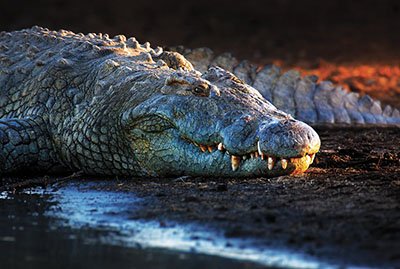 Another amazing proof that divine Creation is true and evolution is false is seen in the relationship sustained by the Egyptian Plover bird and the Nile crocodile. Africa’s largest crocodilian, these primordial brutes can reach 20 feet in length and weigh up to 1,650 pounds. Their diet entails mainly fish, but they will attack almost anything: zebras, small hippos, birds, porcupines, and other crocs. They are ambush hunters—they wait for fish or land animals to come close, and then rush out to attack. They are vicious man-eaters: up to 200 people die each year in the jaws of a Nile croc.
Despite these facts regarding the deadly nature of the Nile crocodile, it is absolutely astounding to learn that the Egyptian Plover bird has a symbiotic relationship with this creature that entails entering the croc’s mouth for the purpose of cleaning its teeth and gums. The croc will open its mouth and allow the bird to enter, sometimes keeping it open and sometimes closing it gently with the bird still inside. The bird then uses its beak to remove parasites, leeches, worms, and bits of food that infest the crocodile’s mouth. The Plover enjoys a ready source of food, and the crocodile gets a valuable teeth cleaning to promote health and minimize disease. Such an arrangement could not have evolved. No crocodile could have gradually decided it was in its best interest to let a bird clean its mouth. Such sophisticated relationships among diverse creatures prove pre-planning and programming—intelligent design by the Master Designer and Creator.
The Emerald Wasp and the Cockroach3
 |
| Wikimedia.org (Chiswick Chap) 2018 license CC-by-sa-4.0 |
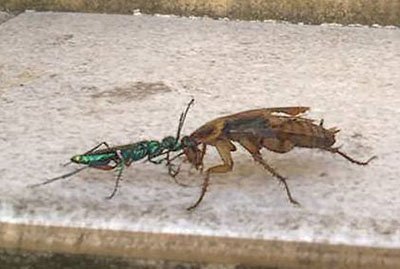
Another astounding example of symbiosis that demonstrates the existence of God pertains to the Emerald Cockroach Wasp and the American cockroach. The latter insect is six times larger than the Emerald Wasp. Yet, the wasp enacts a brilliantly strategic sting into the central nervous system of the cockroach to cause temporary paralysis of the front legs. This temporary paralysis allows the wasp to deliver a second sting into a carefully chosen spot in the brain ganglia to control the escape reflex. The brain sting causes a dramatic behavioral change: the cockroach becomes passive and zombie-like. Its breathing slows, and it makes no attempt to escape. As a result of this sting, the roach will groom itself, become sluggish, and fail to show normal escape responses.
The wasp then leads the cockroach by its antennae, like a leash, to the wasp’s burrow. The wasp does not have to drag the cockroach, since the roach willingly walks on its own legs. Inside the burrow, the wasp lays a white egg, about two millimeters long, on the roach’s abdomen. It then exits and uses debris to barricade the defenseless roach inside the burrow (to keep other predators out). With its escape reflex disabled, the stung roach remains calm and complacent as the wasp’s egg hatches after about three days. The hatched larva drills a hole into the leg of the cockroach to retrieve nutrition from the blood system of the roach for four to five days. Then the larva burrows into the abdomen of the cockroach, crawls inside, and over a period of eight days, consumes the roach’s internal organs in an order which guarantees that the roach will stay alive, at least until the larva enters the pupal stage and forms a cocoon inside the roach’s body. Six weeks from the first sting, a new adult wasp emerges from the hollowed out dead body of the roach.
The venom of the Emerald Wasp is carefully calibrated to shut down signals carried by a key neurotransmitter brain chemical called dopamine. The wasp delivers the sting with the precision of microscopic brain surgery. This remarkable skill could not have evolved. Nor was it learned. It was hardwired by the Creator into each wasp—making it a natural born neurosurgeon. The offspring of the wasp literally depend on the perfect execution of the mother’s sting. Too much venom, and the cockroach would immediately die, eliminating the wasp offspring’s fresh food source. Too little (or poorly aimed) venom, and the roach would escape. Millions of years of trial and error cannot be the source of this relationship. Failure of any one step in this complex process would prevent reproduction—and terminate the species. Can such design, complexity, order, purpose, and intelligence come out of mindless, evolutionary chaos? Absolutely not. The Emerald Wasp and the American cockroach were created by the Creator to function precisely as they do. “O Lord, how manifold are your works! In wisdom have you made them all; the earth is full of your creatures” (Psalm 104:24). The Creation declares the reality of the Creator.
The Leafcutter Ant and Fungus4
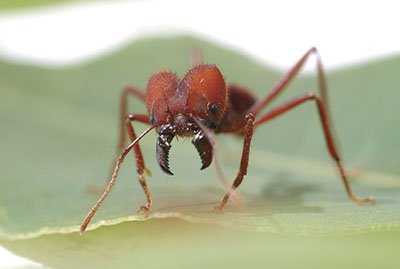 Leafcutter ants nest in underground chambers in the Amazonian rain forest of Brazil. They regularly leave their nests to forage hundreds of feet into the forest. Most tropical plants are permeated by toxic chemicals to deter foragers. So, using specially designed “mouth cutters,” the ants cut out portions of the leaves they find, being careful not to ingest any of the poisonous chemicals. They then transport their cargo back to the nests and deliver it to smaller worker ants. These ants clean the leaves and chew them into pulpy mulch—again, being careful not to “swallow.” They then feed the mulch to another organism that the ants actually cultivate—a fungus. This fungus breaks down the toxins in the leaves while generating proteins and sugars. These proteins and sugars constitute the food that the ants eat. The ants need the fungus for food—and will die without the fungus. The fungus, on the other hand, cannot live without the ants, since they are dependent on the ant to bring the leaves. This is a mutual co-dependency that could not have evolved.
Incredibly, this particular fungus grows only in the underground chambers of the Leafcutter ant’s nest. And the fungus will not consume all leaves, since some are toxic to the fungus. The Leafcutter ants are sensitive enough to adapt to the fungi’s preferences and, hence, cease collecting those leaves. Scientists think that the ants can detect chemical signals from the fungus which communicate the preferences of the fungus.
What’s more, researchers have identified an aggressive mold that threatens the fungus. When the researchers remove the ants from the nest, the mold destroys the fungus. Entomologists have discovered that the ants—especially the ones that tend the fungus—have a white, waxy coating on their body. The coating, which fights the mold for the fungus, has been identified as tangled mats of bacteria that produce many of the antibiotics that humans use for medicine. The ants are essentially wearing portable antimicrobials. Yet humans only discovered antibiotics within the last century. No wonder Solomon observed: “Go to the ant…consider her ways and be wise, which, having no captain, overseer or ruler, provides her supplies in the summer, and gathers her food in the harvest” (Proverbs 6:6-8).
The Yucca Moth and the Yucca5
 About 50 species of yucca plant grace the planet. Incredibly, the yucca plant is completely unable to pollinate itself in order to grow more seeds and reproduce. It is wholly dependent on the genetically programmed yucca moth to facilitate reproduction and perpetuate the species.
From their subterranean cocoons in spring, male and female yucca moths crawl to the surface and fly to nearby yucca plants. Yucca plants are just opening their flowers. The female yucca moth collects pollen from the yucca flower and fashions it into a sticky ball, using a pair of long, curved “claws” (proboscis) protruding from her mouth area, to collect, form, compact, and carry the golden pollen ball. The yucca’s pollen is in a curved region of the plant. Only the yucca moth has the specially curved proboscis to gather the pollen from the plant’s male reproductive organs.
Having collected the pollen, she then flies to another plant where she inserts a moth egg into the ovary wall of the yucca plant, using her ovipositor—itself a marvel of engineering design. Still carrying the pollen ball in her facial claws, she climbs to the top of the ovary. She presses the pollen into the stigma, fertilizing hundreds of immature seeds inside. When the moth larvae hatch, they feed on the seeds of the yucca. If they were to eat all the seeds, the yucca plants would stop reproducing, and both they and the moths would cease to exist. God designed the moth to calibrate the number of larvae growing inside each flower so that all the yucca seeds will not be consumed.
The life cycle of the yucca moth is timed so the adult moths emerge in the spring exactly when the yucca plants are in flower. The yucca moth and yucca plant were designed to function together. They had to have been created in close temporal proximity. No wonder evolutionary biologist Dr. Chris Smith conceded: “It is pretty mind-boggling to imagine how this arose. It’s very strange.”6 “Mind-boggling”? Absolutely. “Strange or inexplicable”? No—unless you ignore, reject, or dismiss the obvious.
The Black Wasp and the Aphid7
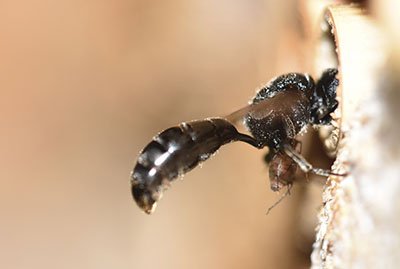 When plants in the southeastern United States are besieged by aphids—small sap-sucking, extremely destructive insect pests—they release a chemical mist that signals black wasps to come to their rescue. Upon arrival, wasps do not kill the aphids outright. With clinical precision, the wasps inject a single egg into each aphid’s body. Each wasp can inject eggs into 200 aphids. The aphid’s body then serves as the incubator for the offspring of its predator. As the ravenous wasp larvae grow, they literally eat the aphid alive from the inside out until they are ready to emerge and begin the process all over again.
Observe that this divinely designed means of controlling the aphid population is simply one marvelous system among others. The diversity and complexity of a variety of systems, all working in concert in the natural order, imply an overarching, overruling master plan to ensure the ongoing perpetuation of the created order. In addition to the black wasp, ants also participate in controlling aphids.
The Ant and the Aphid8
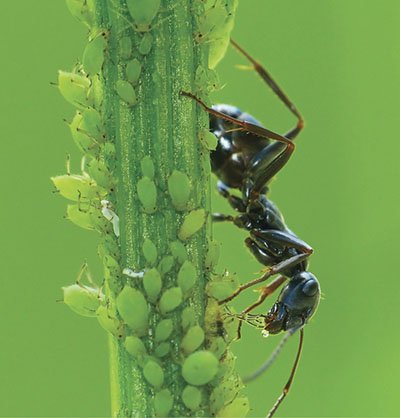 Aphids sustain another complicated relationship. They are equipped with special, syringe-like mouth parts to pierce plants and retrieve fluid from them. Some species of ants literally “cultivate” the aphids by “milking” them without harm to the insect. Ants stroke the aphids with their antennae, causing the aphids to secrete honeydew which the ants can then consume. The aphids, therefore, provide a ready food supply for the ants. In exchange, the aphids receive protection since the ants act as a team to fight off invaders and predators, like ladybugs.
But this interrelationship goes even deeper. The sap which the aphids retrieve from plants is rich in carbohydrates, but lacks essential amino acids—which aphids cannot synthesize. Enter a third actor in this mutualistic drama: tiny endosymbiont bacteria (Buchnera aphidicola). These bacteria live in the aphid’s special cells called bacteriocytes. The amino acids are supplied by these bacteria. Neither the bacteria nor the aphid can exist without the other.
Amazing: the ant depends on the aphid for food; the aphid depends on the ant for protection; the aphid depends on internal bacteria for amino acids; the aphid provides the bacteria with energy, carbon, and shelter inside specialized cells. Symbiosis within symbiosis—decisive proof of divine design!
Evolutionary Explanation?
Such remarkable examples of divine design could be multiplied endlessly. They absolutely point to God. But, of course, evolutionists attempt to offer an “explanation” for symbiosis among the wondrous organisms that grace our planet. It goes something like this:9 “Organisms that depend on each other for survival co-evolved, gradually becoming dependent on each other by means of minute changes over millions of years.” Such a claim is then liberally peppered with nullifying qualifications: “Surprisingly little is known about how mutualistic symbioses evolved and persist.” “Despite their ubiquity and importance, we understand little about how mutualistic symbioses form between previously free-living organisms.” “The evolutionary sequence of events in most lineages is unknown.” “Exactly how these associations evolve remains unclear.” “Much remains to be learned about the mechanisms that maintain mutualism as an evolutionarily stable interaction.” Rationally-thinking Christians have a responsibility before God to train themselves to recognize nonsensical gobbledygook when they hear it. The fact is that any alleged “transitions” or “minute changes”—when pinpointed and examined as moments in time—are seen to be unworkable, imaginary, impossible, and nonexistent. Both organisms needed each other from the beginning of their existence. How did these creatures gain nourishment before becoming dependent? Each of these organisms possesses concise design variables that prove the inability of gradual mutation and natural selection as effectual causative agents.
Recall the debate conducted in 1976 on the campus of North Texas State University in Denton, Texas, when Thomas B. Warren debated Antony G.N. Flew—at the time, arguably the foremost atheistic philosopher in the world. Flew’s attempt to substantiate the credibility of evolution is seen in this statement: “[I]t is, it seems to me, a consequence of evolutionary theory that species shade off into one another.”10 “Shade off into one another”? Evolutionists attempt to cloud the mind by implying that all organisms came into existence as a result of very slow, almost imperceptible changes over time. But where on the planet are these alleged increments or “shades” from one kind of animal to another? We know chimps exist. We know humans exist. We know nothing of any alleged “shades.” Nor does true science.
Warren challenged Flew to face the fact that even if evolution theorizes numerous pre-human ancestors, there had to be a first human being to arrive on the scene. Where did he/she come from? The very first human being on the planet had to come into existence somehow. But how? Was this first human being a male or female? A baby or an adult? In reality, there are only two possibilities: (1) either a nonhuman had to transform into a human during its lifetime, or (2) a nonhuman had to give birth to a human. Philosophically and scientifically, these are the only two possibilities—and neither is tenable. Evolution is not only scientifically unfeasible; it is logical and philosophical nonsense! Indeed, evolution is false, and there is a God.
The smaller and deeper we go in examining God’s creation, the more complex, sophisticated, and astounding the discoveries.11 One would have to be prejudiced and deliberately determined to deny God to brush aside the overwhelming evidence of Him in His creation. “The fool has said in his heart, ‘There is no God’” (Psalm 14:1; 53:1). “Stand still and consider the wondrous works of God” (Job 37:14).
Conclusion
If you were to toss a stick of dynamite into a print shop, and do so every day for a million years, would a dictionary ever be the result? Can such design, complexity, order, purpose, and intelligence ever come out of mindless, evolutionary chaos? The answer is an unequivocal “No!” The late British evolutionist Sir Fred Hoyle addressed specifically the many problems faced by those who defend the idea of a naturalistic origin of life on Earth. In fact, Dr. Hoyle described the atheistic concept that disorder gives rise to order in a rather picturesque manner when he observed that “the chance that higher forms have emerged in this way is comparable with the chance that a tornado sweeping through a junk-yard might assemble a Boeing 747 from the materials therein.”12 Dr. Hoyle, even went so far as to draw the following conclusion:
Once we see, however, that the probability of life originating at random is so utterly miniscule as to make the random concept absurd, it becomes sensible to think that the favourable properties of physics on which life depends, are in every respect deliberate…. It is therefore almost inevitable that our own measure of intelligence must reflect in a valid way the higher intelligences…even to the extreme idealized limit of God.13
Or as Dawkins conceded:
The more statistically improbable a thing is, the less we can believe that it just happened by blind chance. Superficially, the obvious alternative to chance is an intelligent Designer.14
Indeed, the interdependent, interconnected, interpenetrating features of God’s creation are beyond the capability of man to trace out—let alone to “manage” or “assist.” Neither a pine tree nor a pinecone is sentient. They have no thinking capacity or consciousness. They possess no personhood, soul, or spirit. Pine trees did not get together and discuss the threat of forest fires to their future survival, and then decide to produce pinecones that would remain closed during a fire only to open afterwards. No crocodile convention was ever held in which crocs decided it was in their best health interests to refrain from chomping down on Plover birds while all other animals remained “fair game.” The standard explanations by evolutionists for such wonders of creation are incoherent, nonsensical, and just plain pitiful. Elihu reminded Job: “Behold, God is exalted in His power; Who is a teacher like Him? Who has appointed Him His way, and who has said, ‘You have done wrong’? Remember that you should exalt His work, of which men have sung. All men have seen it; man beholds from afar” (Job 36:22-25, NASB).
Indeed, the realm of nature literally shouts forth the reality of the all-powerful Maker Who alone accounts for the intelligent design of the created order. As the psalmist so eloquently affirmed: “The heavens declare the glory of God; and the firmament shows His handiwork…. There is no speech, nor language where their voice is not heard. Their line has gone out through all the earth, and their words to the end of the world” (Psalm 19:1-4). Only a foolish person would conclude there is no God (Psalm 14:1).
The only plausible explanation for the Universe and the entire created order is “the great God who formed everything” (Proverbs 26:10). “O Lord, how manifold are Your works! In wisdom You have made them all. The earth is full of Your possessions” (Psalm 104:24). We can know there is a God. The Creation declares the reality of the Creator. To repeat Paul’s declaration in Romans: “For since the creation of the world His invisible attributes are clearly seen, being understood by the things that are made, even His eternal power and Godhead, so that they are without excuse” (1:20).
Endnotes
1 See Jørn Aas, et al. (2005), “Defining the Normal Bacterial Flora of the Oral Cavity,” Journal of Clinical Microbiology, 43(11):5721-5732, November; Human Oral Microbiome Database (2015), http://www.homd.org/.
2 See Leo Africanus (1896 reprint), The History and Description of Africa, trans. John Pory (London: Hakluyt Society), 3:951-952, https://archive.org/details/historyanddescr02porygoog; Robert Curzon (1851), A Visit to the Monasteries in the Levant (New York: George P. Putnam), 1:131, https://goo.gl/PRGnsJ; “Egyptian Plover” (2014), Bird Forum, http://www.birdforum.net/opus/Egyptian_Plover; “Endangered Crocodiles and Caimen” (no date), 50 Birds, http://www.50birds.com/animals/endangered-alligators-2.htm; Thomas Howell (1979), Breeding Biology of the Egyptian Plover, Pluvianus Aegyptius (Berkeley, CA: University of California), pp. 3ff., https://goo.gl/n6WCRn; Richard Meinertzhagen (1959), Pirates and Predators: The Piratical and Predatory Habits of Birds (London: Oliver & Boyd); “Nature in Egypt” (no date), http://traditionalegypt.co.uk/egypt/nature-in-egypt.php; Alfred Newton (1899), A Dictionary of Birds (London: Adam & Charles Black), pp. 442,732-733, https://goo.gl/1y0MbY; “Nile Crocodile” (no date), MediaLibrary.org, http://medlibrary.org/medwiki/Nile_crocodile#cite_note-26; “Nile Crocodile” (2015), National Geographic, http://animals.nationalgeographic.com/animals/reptiles/nile-crocodile/; “Nile Crocodile (Crocodylus niloticus), 2010” (2015), San Diego Zoo Global Library, http://ielc.libguides.com/sdzg/factsheets/nile_crocodile; Grace Norton, ed. (1908) The Spirit of Montaigne (Boston, MA: Houghton, Mifflin & Company), p. 78, https://goo.gl/KwULiY; Henry Scherren (1907), Popular Natural History (New York: Cassel & Company), pp. 268-269, https://goo.gl/9DLqQy; Philip Sclater (1893), The Ibis (London: Gurney and Jackson), vol. 5, 6th series, pp. 275-276, https://archive.org/details/ibis10uniogoog.
3 See Ram Gal and Frederic Libersat (2008), “A Parasitoid Wasp Manipulates the Drive for Walking of its Cockroach Prey,” Current Biology, 18[1]:877-82, June 24; Ram Gal and Frederic Libersat (2010), “A Wasp Manipulates Neuronal Activity in the Sub-Esophageal Ganglion to Decrease the Drive for Walking in Its Cockroach Prey,” PLoS One, 5[4]:e10019, http://www.ncbi.nlm.nih.gov/pmc/articles/PMC2850919/; G. Haspel, L.A. Rosenberg, and F. Libersat (2003), “Direct Injection of Venom by a Predatory Wasp into Cockroach Brain,” Journal of Neurobiology, 56[3]:287-92, September 5, http://www.ncbi.nlm.nih.gov/pubmed/12884267/; G. Haspel, E. Gefen, et al. (2005), “Parasitoid Wasp Affects Metabolism of Cockroach Host to Favor Food Preservation for its Offspring,” Journal of Comparative Physiology, 191[6]:529-34, June, http://www.ncbi.nlm.nih.gov/pubmed/15864597/; Frederic Libersat (2003), “Wasp Uses Venom Cocktail to Manipulate the Behavior of Its Cockroach Prey,” Journal of Comparative Physiology, 189[7]:497-508, July, http://www.bgu.ac.il/life/Faculty/Libersat/pdf/JCP.2003.pdf; Eugene Moore, Gal Haspel, Frederic Libersat, Michael Adams (2006), “Parasitoid Wasp Sting: A Cocktail of GABA, Taurine, and -alanine Opens Chloride Channels for Central Synaptic Block and Transient Paralysis of a Cockroach Host,” Journal of Neurobiology, 66[8]:811-820, July, http://onlinelibrary.wiley.com/doi/10.1002/neu.20254/abstract.
4 See Frank Aylward, Kristin Burnum-Johnson, et al. (2013), “Leucoagaricus gongylophorus Produces Diverse Enzymes for the Degradation of Recalcitrant Plant Polymers in Leaf-Cutter Ant Fungus Gardens,” Applied and Environmental Microbiology, 79[12]:3770-3778, June, http://aem.asm.org/content/79/12/3770.full.pdf+html; Matias Cafaro, et al. (2011), “Specificity in the Symbiotic Association Between Fungus-Growing Ants and Protective Pseudonocardia Bacteria,” Proceedings of the Royal Society B, 278:1814-1822, http://rspb.royalsocietypublishing.org/content/royprsb/278/1713/1814.full.pdf; Eric Caldera, et al. (2009), “Insect Symbioses: A Case Study of Past, Present, and Future Fungus-Growing Ant Research,” Environmental Entomology, 38[1]:78-92, February, http://ee.oxfordjournals.org/content/38/1/78; Cameron Currie, Ulrich Mueller, and David Malloch (1999), “The Agricultural Pathology of Ant Fungus Gardens,” Proceedings of the National Academy of Sciences USA, 96:7998-8002, July, http://www.pnas.org/content/96/14/7998.full.pdf; Cameron Currie, Michael Poulsen, et al. (2006), “Coevolved Crypts and Exocrine Glands Support Mutualistic Bacteria in Fungus-Growing Ants,” Science, 311[5757]:81-83, January 6, http://www.sciencemag.org/content/311/5757/81.abstract; Hermógenes Fernández-Marín, Jess Zimmerman, et al. (2006), “Active Use of the Metapleural Glands by Ants in Controlling Fungal Infection,” Proceedings of the Royal Society B, 273:1689-1695, March, http://rspb.royalsocietypublishing.org/content/royprsb/273/1594/1689.full.pdf; Hermógenes Fernández-Marín, David Nash, et al. (2015), “Functional Role of Phenylacetic Acid from Metapleural Gland Secretions in Controlling Fungal Pathogens in Evolutionarily Derived Leaf-Cutting Ants,” Proceedings B, 282[1807]:20150212, April 29, http://rspb.royalsocietypublishing.org/content/282/1807/20150212; Susanne Haedera, Rainer Wirthb, et al. (2009), “Candicidin-Producing Streptomyces Support Leaf-Cutting Ants to Protect Their Fungus Garden against the Pathogenic Fungus Escovopsis,” Proceedings of the National Academy of Sciences USA, 106[12]:4742-4746, http://www.pnas.org/content/106/12/4742.full.pdf; Ainslie Little, Takahiro Murakami, et al. (2006), “Defending against Parasites: Fungus-Growing Ants Combine Specialized Behaviours and Microbial Symbionts to Protect Their Fungus Gardens,” Biology Letters, 2:12-16, August, http://rsbl.royalsocietypublishing.org/content/roybiolett/2/1/12.full.pdf; Ainslie Little and Cameron Currie (2007), “Symbiotic Complexity: Discovery of a Fifth Symbiont in the Attine Ant-Microbe Symbiosis,” Biology Letters, 3:501-504, August, http://rsbl.royalsocietypublishing.org/content/roybiolett/3/5/501.full.pdf; Lucas Meirelles, Scott Solomon, et al. (2015), “Shared Escovopsis Parasites Between Leaf-Cutting and Non-Leaf-Cutting Ants in the Higher Attine Fungus-Growing Ant Symbiosis,” Royal Society Open Science, 2:150257, http://rsos.royalsocietypublishing.org/content/royopensci/2/9/150257.full.pdf; Ulrich Mueller and Nicole Gerardo (2002), “Fungus-Farming Insects: Multiple Origins and Diverse Evolutionary Histories,” Proceedings of the National Academy of Sciences USA, 99[24]:15247-15249, November 26, http://www.pnas.org/content/99/24/15247.full.pdf; Hannah Reynolds and Cameron Currie (2004), “Pathogenicity of Escovopsis weberi: The Parasite of the Attine Ant-Microbe Symbiosis Directly Consumes the Ant-Cultivated Fungus,” Mycologia, 96[5]:955-959, September/October, http://www.mycologia.org/content/96/5/955.abstract; Andre Rodrigues, Ulrich Mueller, et al. (2011), “Ecology of Microfungal Communities in Gardens of Fungus-Growing Ants (Hymenoptera: Formicidae): A Year-Long Survey of Three Species of Attine Ants in Central Texas,” FEMS Microbiological Ecology, 78[2]:244-255, http://femsec.oxfordjournals.org/content/femsec/78/2/244.full.pdf; Hassan Salem, Laura Florez, et al. (2015), “An Out-of-Body Experience: The Extracellular Dimension for the Transmission of Mutualistic Bacteria in Insects,” Proceedings of the Royal Society B, 282[1804]:20142957; Christopher Trantera, Lauren LeFevreb, et al. (2015), “Threat Detection: Contextual Recognition and Response to Parasites by Ants,” Behavioral Ecology, 26[2]:396-405, http://beheco.oxfordjournals.org/content/26/2/396.abstract; Mingzi Zhang, Michael Poulsen, and Cameron Currie (2007), “Symbiont Recognition of Mutualistic Bacteria by Acromyrmex Leaf-Cutting Ants,” The ISME Journal, 1:313–320, June, http://www.nature.com/ismej/journal/v1/n4/full/ismej200741a.html.
5 See W.P. Armstrong (1999), “The Yucca and Its Moth,” Zoonooz, 72[4]:28-31, April, http://waynesword.palomar.edu/ww0902a.htm; Henry Brean (2011), “Joshua Tree, Yucca Moth Co-Evolution Fascinates Researchers,” Las Vegas Review-Journal, April 18, http://www.reviewjournal.com/news/water-environment/joshua-tree-yucca-moth-co-evolution-fascinates-researchers; Beatriz Moisset (no date), “Yucca Moths (Tegeticula sp.),” United States Department of Agriculture Forest Service, http://www.fs.fed.us/wildflowers/pollinators/pollinator-of-the-month/yucca_moths.shtml; Olle Pellmyr (1997), “Prodoxidae: The Yucca Moth Family (Version 13),” The Tree of Life Web Project, http://tolweb.org/Prodoxidae/11872/1997.01.13; Olle Pellmyr and John Thompson (1992), “Multiple Occurrences of Mutualism in the Yucca Moth Lineage,” Proceedings of the National Academy of Sciences USA, 89:2927-2929, April, http://www.pnas.org/content/89/7/2927.full.pdf; Olle Pellmyr, John Thompson, et al. (1996), “Evolution of Pollination and Mutualism in the Yucca Moth Lineage,” The American Naturalist, 148[5]:827-847, November, http://www.jstor.org/stable/2463408?seq=1#page_scan_tab_contents; Marylee Ramsay and John Richard Schrock (1995), “The Yucca Plant and the Yucca Moth,” The Kansas School Naturalist, 41[2], June, http://www.emporia.edu/ksn/v41n2-june1995/; Carol Sheppard and Richard Oliver (2004), “Yucca Moths and Yucca Plants: Discovery of ‘the Most Wonderful Case of Fertilisation,’” American Entomologist, 50[1]:32-46, Spring, http://entomology.wsu.edu/wp-content/uploads/2012/02/yucca2.pdf; J. Arthur Thomson (1922), The Outline of Science (New York: G.P. Putnam’s Sons), 1:76,79; “Yucca Moth” (no date), DesertUSA, http://www.desertusa.com/animals/yucca-moth.html.
6 As quoted in Brean.
7 See “Aphid Control with Aphidius & Aphelinus Parasites” (2015), Greenmethods.com, https://greenmethods.com/aphidius/; “Cunning Super-Parasitic Wasps Sniff Out Protected Aphids and Overwhelm Their Defenses” (2012), ScienceDaily, 24, February, BioMed Central Limited, www.sciencedaily.com/releases/2012/02/120224110739.htm; B.M. Drees and J. Jackman (1999), Parasitic Wasp. Field Guide to Texas Insects (Houston, TX: Gulf Publishing Company); Lukas Gehrer and Christoph Vorburger (2012), “Parasitoids as Vectors of Facultative Bacterial Endosymbionts in Aphids,” Biology Letters, 8:613–615, March 14, http://rsbl.royalsocietypublishing.org/content/8/4/613; Paul Gross (1993), “Insect Behavioral and Morphological Defenses Against Parasitoids, Annual Review of Entomology,” 38:251-27, January; Kerry Oliver, J.A. Russell, N.A. Moran, M.S. Hunter (2003), “Facultative Bacterial Symbionts in Aphids Confer Resistance to Parasitic Wasps,” Proceedings of the National Academy of Sciences, 100[4]:1803; Kerry Oliver, Koji Noge, Emma Huang, Jamie Campos, Judith Becerra, and Martha Hunter (2012), “Parasitic Wasp Responses to Symbiont-Based Defense in Aphids,” BMC Biology, 10:11, http://www.biomedcentral.com/1741-7007/10/11; “Parasitic Wasps & Aphids” (no date), National Geographic, Youtube, https://www.youtube.com/watch?v=rLtUk-W5Gpk; “Parasitic Wasps, Order Hymenoptera” (no date), Symbiont, http://www.drmcbug.com/parasitic.htm; E. Wajnberg, C. Bernstein, and J. Van Alphen (2008), Behavioral Ecology of Insect Parasitoids—From Theoretical Approaches to Field Applications (UK: Blackwell Publishing).
8 See N. Bluthgen, N.E. Stork, and K. Fiedler (2004), “Bottom-Up Control and Co-Occurrence in Complex Communities: Honeydew and Nectar Determine a Rainforest Ant Mosaic,” Oikos, 106:344-358; M. Doebeli and N. Knowlton (1998), “The Evolution of Interspecific Mutualisms,” Proceedings of the National Academy of Sciences of the United States of America, 95:8676-8680; B. Holldobler and E.O. Wilson (1990), The Ants (Cambridge, MA: The Belknap Press of Harvard University Press); B. Holldobler and E.O. Wilson (1994), Journey to the Ants (Cambridge, MA: The Belknap Press of Harvard University Press); Naomi Pierce, Michael Braby, et al. (2002), “The Ecology and Evolution of Ant Association in the Lycaenidae (Lepidoptera),” Annual Review of Entomology, 47:733-771; V. Rico-Gray and P. Oliveira (2007), The Ecology and Evolution of Ant-Plant Interactions (Chicago, IL: University of Chicago Press); Bernhard Stadler and Anthony F.G. Dixon (2008), Mutualism: Ants and Their Insect Partners (Cambridge: Cambridge University Press); J.J. Stachowicz (2001), “Mutualism, Facilitation, and the Structure of Ecological Communities,” BioScience, 51:235-246, March.
9 Cf. Ed Grabianowski (2008), “How Symbiosis Works,” HowStuffWorks.com., March 7, http://science.howstuffworks.com/life/evolution/symbiosis2.htm; Durr Aanen and Ton Bisseling (2014), “The Birth of Cooperation,” Science, 345[6192]:29; Erik Hom and Andrew Murray (2014), “Niche Engineering Demonstrates a Latent Capacity for Fungal-Algal Mutualism,” Science, 345[6192]:94.
10 Antony G.N. Flew and Thomas B. Warren (1976), The Warren-Flew Debate on the Existence of God (Jonesboro, AR: National Christian Press), p. 25.
11 Jerry Fausz (2007), “Design Rules,” Reason & Revelation, 27[7]:49-52, http://apologeticspress.org/apPubPage.aspx?pub=1&issue=591.
12 Fred Hoyle (1981), “Hoyle on Evolution,” Nature, 294:105, November 12.
13 Fred Hoyle and Chandra Wickramasinghe (1981), Evolution from Space (London: J.M. Dent & Sons), pp. 141,144, emp. in orig.
14 Richard Dawkins (1982), “The Necessity of Darwinism,” New Scientist, 94:130, April 15, emp. added.
The post The Teleological Argument for the Existence of God [Part 2] appeared first on Apologetics Press.
]]>The post The Teleological Argument for the Existence of God [Part 1] appeared first on Apologetics Press.
]]>[EDITOR’S NOTE: This is the first in a two-part series on the teleological argument for the existence of God. Part II will appear in the March issue.]
Several years ago, astronomers from more than 30 research institutions in 15 countries worked together to select a site for a giant telescope that they hoped would read TV or radio signals from alien civilizations. Slated to cost one billion dollars, the Square Kilometer Array, or SKA, would be the world’s most powerful radio telescope. Speaking at a conference of the International Society for Optical Engineering in Orlando, Florida, project astronomers said they hoped to find “immediate and direct evidence of life elsewhere in the Universe.”1
Despite this bold venture, the scientists admitted that “such a search would have distinct limitations, to be sure.” “Distinct limitations”? Like what? For one, the scientists “aren’t sure how to recognize such signals, if they do turn up. The hope is that the signals would consist of organized patterns suggestive of intelligence, and not attributable to any known celestial sources.”2 Wait a minute. Evolutionary scientists are renowned for their condescending ridicule of creationists because those who believe in God assert that evidence of intelligent design in the Universe is proof of an Intelligent Designer. No, the evolutionists counter, the Universe got here by accident through random chance, mindless trial and error, and the blind, mechanistic forces of nature. They maintain that life on Earth owes its ultimate origin to dead, non-purposive, unconscious, non-intelligent matter. Yet they were perfectly willing to squander one billion dollars on a telescope with the speculative idea that solid proof—hard evidence—for the existence of alien life would reside in undecipherable radio or TV signals that convey “organized patterns suggestive of intelligence.”3 Atheistic evolutionists want it both ways: organized patterns prove the existence of intelligent alien design and organized patterns do not prove the existence of an Intelligent Designer. Philosophers and logicians refer to such duplicitous posturing as irrational and “logical contradiction.” Apparently, evolutionists call it “science.” Nevertheless, the basic thrust of the teleological argument for the existence of God is self-evident.
THE UNIVERSE—A “Waste of Space”?
“The cosmos is all that is or ever was or ever will be.”4 So began Carl Sagan’s immensely popular book and PBStelevision series: Cosmos. A more atheistic, humanistic, materialistic declaration could not be spoken. Sagan (1934-1996), who was an astronomer at Cornell University who lived his entire life resistant to the possibility of God and an afterlife, maintained his unbelief—in the words of his third wife—“unflinching” to the end.5 She, herself, finds comfort after his passing “without resorting to the supernatural.”6
When people reject or avoid the implications of the design in the created order—i.e., that it is logically the result of a Supreme Creator—they have inevitably “exchanged the truth of God for a lie, and worshiped and served the creature rather than the Creator” (Romans 1:25). Skeptical of the survival of the Earth at the mercy of Homo sapiens, Sagan turned his attention to an almost obsessive dedication to finding answers and solutions from life forms beyond Earth. In his own words: “In a very real sense this search for extraterrestrial intelligence is a search for a cosmic context for mankind, a search for who we are, where we have come from, and what possibilities there are for our future—in a universe vaster both in extent and duration than our forefathers ever dreamed of.”7
Less than a year after his death, Hollywood released a movie on July 11, 1997 based on Sagan’s novel Contact.8 The film’s central character, Dr. Eleanor Arroway (played by Jodie Foster), was surely the embodiment of the formative experiences, philosophical perspectives, and spiritual beliefs of Sagan himself. On three separate occasions in the film, a pseudo-intellectual remark, obviously designed to defend the naturalistic explanation of the existence of the Universe while ridiculing the Christian viewpoint, is offered up to viewers. As a child, “Ellie” asks her father if life exists out in the Universe, to which he responds: “Well, if there wasn’t, it’d be an awful waste of space.” As an adult, she converses with Palmer Joss (played by Matthew McConaughey), and, staring up at the starry Puerto Rican sky, expresses her confidence in the evolution of other life forms elsewhere in the Universe: “If just one in a million of those stars has planets, and if only one in a million of those has life, and if just one in a million of those has intelligent life, then there are millions of civilizations out there.”9 Ellie is pleasantly stunned when Joss repeats the same line that her father uttered to her when she was a child. Near the close of the film, Ellie speaks the line again to a group of school children when asked if life exists in space.
This triple declaration was obviously intended to offer a “logical” proof that, rather than looking to some supernatural Being Who is transcendent of the Universe, humans had best recognize that the only life beyond planet Earth are those life forms that have evolved (like our own) on other planets in far off galaxies. The materialist is forced to follow Sagan’s presupposition: life must exist elsewhere in the Universe since there is no God. If there is a God Who created life only on Earth, then He was guilty of poor teleological design—creating a vast physical realm that serves absolutely no purpose—and thus producing a nearly infinite realm of “wasted space.”
But wait! The Bible long ago anticipated the skepticism of the materialist astronomer. At the creation of the Universe, God said: “Let there be lights in the firmament of the heavens to divide the day from the night; and let them be for signs and seasons, and for days and years; and let them be for lights in the firmament of the heavens to give light on the earth” (Genesis 1:14-15). The luminaries that God made included the stars: “God set them in the firmament of the heavens to give light on the earth, and to rule over the day and over the night” (vss. 17-18). One very specific function of the stars that occupy space far beyond our solar system is illumination (cf. Psalm 136:9). They are “light-bearers.”10
Another very specific purpose of the vastness of space is seen in the multiple declarations regarding the infinitude of God and the evidence that points to His existence, His glory, His eternality, and His power. Paul affirmed very confidently that “since the creation of the world His invisible attributes are clearly seen, being understood by the things that are made, even His eternal power and Godhead, so that they are without excuse” (Romans 1:20). It is absolutely incredible—and, according to Paul, inexcusable—for a rational human being to contemplate the magnitude of the Universe and the vastness of space, and then to reject the only logical, plausible explanation for it all: God. We simply have no excuse for rejecting God when we are surrounded by such an overwhelming display of wonders and marvels in the created order. Indeed, atheism, evolution, and humanism are simply more sophisticated forms of the polytheism that has plagued humanity for millennia. Moses warned the Israelites of this very thing: “[T]ake heed, lest you lift your eyes to heaven, and when you see the sun, the moon, and the stars, all the host of heaven, you feel driven to worship them and serve them, which the Lord your God has given to all the peoples under the whole heaven as a heritage” (Deuteronomy 4:19). Evolutionary astronomy assigns an inflated value to the vastness of space by postulating that it can provide mankind with an alternative explanation for the existence of life—an explanation that absents God. Any such postulation ultimately amounts to idolatry.
David, too, paid homage to the glory of the Creator, as evidenced by the eloquent symphony of the majestic Universe that is played perpetually—24 hours a day:
The heavens declare the glory of God; and the firmament shows His handiwork. Day unto day utters speech, and night unto night reveals knowledge. There is no speech nor language where their voice is not heard. Their line has gone out through all the earth, and their words to the end of the world. In them He has set a tabernacle for the sun, which is like a bridegroom coming out of his chamber, and rejoices like a strong man to run its race. Its rising is from one end of heaven, and its circuit to the other end; and there is nothing hidden from its heat (Psalm 19:1-6; cf. 74:16-17; 136:7-8).
Separate and apart from the latest evidence that confirms the movement of the Sun through space,11 these verses reaffirm the fact that the created Universe loudly announces the existence of the Universe-Maker. David also declared: “O Lord, our Lord, how excellent is Your name in all the earth, You have set Your glory above the heavens! …When I consider Your heavens, the work of Your fingers, the moon and the stars, which You have ordained, what is man that You are mindful of him?” (Psalm 8:1,3). God “stretched out the heavens like a curtain” (Psalm 104:2). No wonder even a philosopher on the order of Immanuel Kant observed: “Two things fill the mind with ever new and increasing admiration and awe, the oftener and more steadily we reflect on them: the starry heavens above me and the moral law within me.”12
A third biblical explanation for the creation of the vast Universe was hinted at by God Himself in the attitude-adjusting lecture He delivered to Job: “Can you bind the cluster of the Pleiades, or loose the belt of Orion? Can you lead forth a constellation in its season? Or can you guide the Great Bear with its cubs? Do you know the laws of the heavens? Can you fix their rule over the earth?” (Job 38:31-33). Notice the action terms that are used to refer to the movement of the constellations: bind, loose, lead forth, and guide. Observe also the “laws of the heavens” and their relationship to “ruling over the earth.”13 These verses imply that the heavenly bodies, and the laws that govern them, have been deliberately orchestrated, modulated, and regulated by the Creator to serve a purpose or purposes far beyond our present understanding. The text seems to hint that Earth’s status, with its living beings, is somehow affected by the phenomena of the cosmic bodies. Even as the comprehension of scientists has been lacking through the centuries on many features of the physical realm, only eventually to discover the meaning that lay behind observable phenomena, even so our present comprehension of space is woefully inadequate to justify passing judgment on the intentionality and teleology that lie behind many astronomical phenomena.
Evolutionists have far better arguments with which to attempt to prop up their atheistic stance (the “problem of evil” being the strongest, though refutable14). The “wasted space” argument is anemic, pitiful, and hardly worthy of rebuttal. However, since they brought it to our attention, the Christian is once again reminded of the unfathomable attributes of the great God Who stands above and beyond this vast physical realm. The immensity and vastness of the Universe only spurs the rational mind to marvel at the One whose own metaphysical transcendence surpasses the visible. In the words of the psalmist: “I will meditate on the glorious splendor of Your majesty, and on Your wondrous works. Men shall speak of the might of Your awesome acts, and I will declare Your greatness” (145:5-6). “He counts the number of the stars; He calls them all by name. Great is our Lord, and mighty in power; His understanding is infinite” (Psalm 147:4-5). Isaiah agreed: “Lift up your eyes on high, and see who has created these things, who brings out their host by number; He calls them all by name, by the greatness of His might and the strength of His power” (40:26). Indeed, “the twenty-four elders fall down before Him who sits on the throne and worship Him who lives forever and ever, and cast their crowns before the throne, saying: ‘You are worthy, O Lord, to receive glory and honor and power; for You created all things, and by Your will they exist and were created’” (Revelation 4:10-11). The vast cosmos points directly and unmistakably to an awesome God.
The Revelation of God
You see, the infinite God of the Bible has revealed Himself to the human race by means of two forms of revelation: natural (or generic) and supernatural (or special). Special revelation consists of the Bible—the self-authenticating, supernatural book that God imparted to humanity by miraculously directing human writers to record His will (2 Timothy 3:16; 2 Peter 1:21).
Natural revelation consists of nature: the material realm, the created order. Since God created the heavens and the Earth, His “fingerprints” are all over it. Humans can easily recognize these fingerprints—if they are unbiased, honest, and willing to follow the evidence to its logical conclusion.
Sadly, the number of those who reject the obvious is legion. Why? They are generally unwilling to accept the implications of the existence of God: the need to bring one’s fleshly appetites and actions into harmony with the will of the Creator. But that fact does not lessen the magnitude of the evidence and its availability. Indeed, the psalmist said there is no language where the evidence for God is unavailable (Psalm 19:1-2).
Teleology
The word “teleology” comes from the Greek term teleios, meaning “complete, perfect,” taken from telos which means “end,” “outcome, result.”15 The teleological argument maintains that one proof for God’s existence is the fact that the Universe is the result or outcome of intentional design, order, and purpose. The characteristics of design in the Universe demonstrate the existence of a Designer. In addition to the passages given previously, the Bible also articulates this principle when the Hebrews writer stated this rationale succinctly in Hebrews 3:4—“For every house is built by someone, but He who built all things is God.” If houses with their sophisticated designs cannot just happen or evolve over millions of years, how could worlds? If a watch cannot occur by chance, neither can the systematic chronometers of the Universe. Their geometric precision is so superior to human invention that eclipses, planetary movements, and other astronomical phenomena can be predicted centuries in advance. The Universe is literally a finely tuned, organized machine. If we readily recognize that intelligent planning is behind all ordered design, how could nature’s intricate networks have no Planner? To observe the fantastic design in nature and then conclude there is no Supreme Designer is to behave irrationally. The evidence that surrounds us in the material Universe demands the conclusion that God exists.
Decisive Evidence
Do cars just happen? Of course not. Their multiple systems are interactive and integrated with each other in order for the automobile to operate. A mind—no, multiple minds—lie behind the creation of a car. Yet, compared to the Universe, or compared to the human body, or even compared to the inner workings of one tree leaf, a car is a crude and primitive invention. If the creation of a car demands the existence of the remarkable human brain/mind, what must be required for the creation of the human brain/mind? Obviously, something or Someone far superior to the human mind would be needed for its creation. Logically, that Someone must be the powerful, transcendent Creator: the God of the Bible.
The naturalistic explanation given by evolutionists for the existence of the created order cannot meet the dictates of logic that characterize the unencumbered, unprejudiced human mind. The more one investigates the intricacies and complexities of the natural realm, the more self-evident it is that a grand and great Designer is responsible for the existence of the Universe. In fact, the evidence is overwhelming and decisive.
The Human Body16
Take, for example, the human body, which possesses such complexity that it simply could not have evolved. Its amazing intricacies absolutely demand a mind—a higher intelligence—behind them. The development of the camera was based upon the human eye. Yet, for all we have accomplished with video and sophisticated photographic equipment, the living, full color optical system of the human eye is unsurpassed. What’s more, we possess a self-restoring, self-repairing healing system; a sensitive stereophonic auditory system; tireless muscular-connecting tissue systems; a well-engineered skeletal framework; a computerized memory-bank brain; a ventilation-insulation skin envelope which constitutes an efficient cooling system of 2000 pores per square inch of skin; and a cardiovascular system that constantly oxygenates our blood with every breath. The human body is absolute proof of God. Atheism cannot explain it. Evolution cannot logically account for it. Scientists have yet to fully understand it. Multiple lifetimes would be necessary even to begin to grasp the massive amount of evidence inherent in the human body.
The psalmist also stated, “I will praise You, for I am fearfully and wonderfully made; marvelous are Your works, and that my soul knows very well” (Psalm 139:14). Indeed, the human body itself is sufficient proof of the existence of the Divine Creator. Right now, your body is performing amazing feats of engineering, chemistry, and physics that no machine designed by man can duplicate. Great human minds have applied themselves to the task of duplicating the various capabilities of the human body. Some incredible things have been accomplished in their efforts to copy God’s Creation, but they simply cannot compare with the marvel of God’s design.
The Flagellum17
Consider yet another among the millions of amazing proofs of the reality of the Creator. Bacteria, like salmonella, have as part of their anatomy several flagella filaments extending from their cell body. These flagella are marvels of engineering—bio-nanomachines—that appear to possess the remarkable ability of self-assembly. The bacterium’s flagellum assembly process begins with the formation of an MS ring in the cytoplasmic membrane. Then a switch complex called a “C” ring is assembled on its cytoplasmic side, followed by integration of the protein export apparatus inside the ring. The export apparatus sends out flagellar proteins from the cell body to the distal end of the flagellum to grow the structure.
 Next, the “hook,” working as an efficient universal joint, extends to the outside of the cell. Then two junction proteins, Hap1 and Hap3, are attached, followed by the binding of the cap protein, Hap2, to form a capping structure under which the assembly of flagellum molecules begins to grow the flagellar filament. Flagellum molecules are then inserted successively just below the cap, and the flagellar filament continues to grow. All of the flagellar axial proteins produced in the cell body are sent into the central channel of the flagellum and transported to and polymerized at its growing end. Some 20 to 30,000 flagellum molecules polymerize to construct a 10 to 15 micrometer long filament.
The flagellar motor is similar to manmade motors—since both were built on fundamental principles set in place by the Creator. The flagellum consists of rotor and stator units in the cell membrane, including switching unit, bushing, universal joint, and helical screw propeller. To generate thrust, the rotary motor is driven by protons flowing into the cell body. The motor then drives the rotation of the flagellum at around 300 Hz, at a power level of 10-16 W, with energy conversion efficiency close to 100%. The resulting speed is up to 20,000 rpms—faster than the speed of Formula 1 race car engines. This highly efficient, flagellar motor is far beyond the capabilities of manmade, artificial motors. It is so sophisticated, that to suggest that it evolved is the height of irrationality and blind prejudice. Indeed, the evidence is decisive: there is a Designer.
The Pine Tree18
Consider the pine tree. Some 120 species and subspecies of the pine tree exist worldwide. The Ponderosa pine tree (pinus ponderosa) is one of America’s abundant tree species, covering approximately 27 million acres of land. A young Ponderosa pine has brownish-black bark that changes to a distinctive orange-brown color as the tree grows older. The bark is segmented into large, plate-like structures whose appearance has been likened to a jigsaw puzzle. This unusual design has a purpose. If the tree catches fire, these plates pop off as the bark burns. The tree, in effect, sheds its burning bark! This design, along with the great thickness of the bark, allows the tree to be very resistant to low intensity fires. Since design demands a designer, Who is responsible for this intricate design?
Another species of pine tree is the Lodgepole Pine (pinus contorta), so named since Native Americans used Lodgepole pine for the “lodge poles” in their tepees. This amazing pine tree grows cones that are slightly smaller than a golf ball, are tan when fresh, but turn gray with age. These serotinous cones remain closed until the heat of a forest fire prompts them to open. After the fire, the cones open and reseed the forest. The species literally regenerates itself—even though the forest fire kills the tree itself. Since such design demands a designer, Who is responsible for this ingenious design?
Yet another species of pine tree is the Whitebark Pine (pinus albicaulis). This tree possesses a symbiotic relationship with a bird species known as the Clark’s Nutcracker. The tree is dependent on this bird for reproduction, while the seed of the tree is a major source of food for the bird. This mutualistic relationship is further seen in the fact that Whitebark pinecones do not open and cast seed when they are ripe. The cones remain closed until the Nutcracker comes along, pries the cone open with its bill, and stores the seed within a pouch beneath its tongue. The bird then caches the seed to be used later as a food supply. Some of these seed caches are forgotten, or are not needed, thus enabling the tree to reproduce. Such amazing design—with no Mind behind it? Illogical!
Seed: The Dandelion, Tipuana tipu, and the Alsomitra macrocarpa19
When the Creator created the Universe in six literal days, He created seed on the third day:
Then God said, “Let the earth bring forth grass, the herb that yields seed, and the fruit tree that yields fruit according to its kind, whose seed is in itself, on the earth”; and it was so. And the earth brought forth grass, the herb that yields seed according to its kind, and the tree that yields fruit, whose seed is in itself according to its kind. And God saw that it was good. So the evening and the morning were the third day (Genesis 1:11-13).
God designed three main mechanisms for seed dispersal: (1) via animals (e.g., a bird eating a piece of fruit containing seed, and flying to another location where the seed passes out of its body), (2) drifting in ocean and fresh water, and (3) floating with the wind. Incredibly, each of these mechanisms points to the orchestration of a Mastermind.
Consider the ordinary dandelion. It possesses a magnificent crown of plumose hairs forming a symmetrical sphere. Upon closer investigation, this sphere is composed of numerous shafts, each equipped with its own umbrella-like canopy of intricately branched hairs. At the base of each shaft is a single seed. Each individual shaft with its canopy and single seed closely resemble the same design as that utilized in parachutes.
 As breezes blow across the surface of the dandelion, the canopy of hairs catch the wind which tugs at the shaft with its host of attached seeds, gently pulling them free from the dandelion head. The parachute-like canopy of hairs then allows the entire assembly to drift with the wind. In fact, the canopy of hairs is precisely designed to achieve flight. The length of the shaft is just right to enable aerodynamic positioning of the canopy to enable it to come to a landing in another location. The attached seed can then take root and start the process all over again. The dandelion is absolute, undeniable proof of God.
Then there is the Tipuana tipu tree (also called Rosewood), originally from South America, but now planted as a shade tree throughout the world. This tree produces achenes—a type of fruit consisting of a dry, membranous sheath that surrounds a seed. The tipu tree has a unique type of achene called a samara, which facilitates a specialized form of wind dispersal. It possesses a fan-shaped wing with a slight pitch (like a propeller or fan blade) which causes it to spin like the auto-rotation of helicopter blades when it falls. The spinning creates lift that slows descent, giving more opportunity to be carried a substantial distance from the tree by the wind, depending on wind velocity and distance above the ground. The decomposed seed spirals down to the ground to become established and perpetuate the species—an unmistakable example of flawless aerodynamic wing design.
 Also known for its ingenious aerodynamic configuration is the seed of a tenacious tropical climbing vine identified as Alsomitra macrocarpa. Also called the Javan cucumber, it hangs from trees high in the rain forest canopy in the Sunda Islands of the Malay Archipelago and the Indonesian islands. Each football-sized fruit/gourd is densely packed with large numbers of winged “Stealth Bomber” seeds. A single seed is enveloped by two transparent, papery wings, about five inches across, angled slightly back from and extending either side of the seed. Upon ripening, the wings become dry and the long edge opposite the seed curls slightly upwards.
Each one becomes airborne when released through a hole at the bottom of the gourd and sails through the air, majestically spiraling downward in 20 foot circles. The carefully designed aerodynamic features of the seed are such that it can glide great distances from its point of origin—a classic example of mechanical dispersal in the forest. Moving through the air like a butterfly in flight, it gains height, stalls, dips, and accelerates, once again producing lift—a maneuver known as phugoid oscillation. The seed’s stability in pitch and roll inspired the early aviation pioneer Igo Etrich. Scientists studying this amazing plant describe its lift-to-drag ratio and the rate of descent in these terms: “flight was so stable that samples were seen to take their optimal trimmed angle of attack with a value between the maximum gliding ratio and the minimum rate of descent.”
Evolutionists are confident in their conviction that their explanations for such marvels demonstrate nature’s independent, autonomous existence to the exclusion of God. They virtually “jump through hoops” and engage in “scientific ventriloquism” in their quest to achieve legitimacy for their atheistic bent. However, when all relevant evidence eventually comes to light, it fits “hand in glove” with the presence of the God of the Bible.
Wood20
Prior to the invention of modern plastics, what would the Creator have humans to use for suitable containers? Wood, stone, or clay, and eventually metal, pretty much exhausted the possibilities. Yet, government agencies, like the USDA and the FDA, generally have advocated the use of plastic for cutting boards and other surfaces that sustain food contact, on the grounds that the micropores and knife cuts in wood provide hidden havens for deadly bacterial organisms. As one Extension Specialist from the Department of Human Nutrition stated: “for cleanability and control of microorganisms, plastic is the better choice.”
However, the best research available on the subject suggests otherwise. Dr. Dean Cliver, microbiologist formerly with the Food Safety Laboratory and World Health Organization Collaborating Center for Food Virology at the University of California-Davis, disputed the oft’-repeated claim regarding the superiority of plastic over wood. His research findings, conducted over a period of several years, consistently demonstrated the remarkable antibacterial properties of wood.
Dr. Cliver and his research associates tested five life-threatening bacteria (Escherichia coli, Salmonella, Campylobacter jejuni, Listeria monocytogenes, and Staphylococcus aureus) on four plastic polymers and more than 10 species of hardwood, including hard maple, birch, beech, black cherry, basswood, butternut, and American black walnut. Within three minutes of inoculating wooden boards with cultures of the food-poisoning agents, 99.9% of the bacteria were “unrecoverable.” On the other hand, none of the bacteria tested under similar conditions on plastic died. In fact, leaving microbe populations on the two surfaces overnight resulted in microbial growth on the plastic boards, while no live bacteria were recovered from wood the next morning. Interestingly, bacteria are absorbed into the wood, but evidently do not multiply, and rarely if ever thrive again. In contrast, bacteria in knife scars in plastic boards remain viable (even after a hot-water-and-soap wash) and maintain their ability to surface later and contaminate foods. Treating wood cutting boards with oils and other finishes to make them more impermeable actually retards wood’s bactericidal activity. Microbiologists remain mystified by their inability to isolate a mechanism or agent responsible for wood’s antibacterial properties. Incredible, divine design.
Do these research findings bear any resemblance to Mosaic injunctions 3,500 years ago which required the destruction of pottery that had become contaminated—while wood was simply to be rinsed (Leviticus 6:28; 11:32-33; 15:12)? Dr. Cliver concluded: “I have no idea where the image of plastic’s superiority came from; but I have spent 40 years promoting food safety, and I would go with plastic if the science supported it. I don’t necessarily trust ‘nature,’ but I do trust laboratory research.” Kudos to Dr. Cliver’s honesty. What about trusting nature’s God?
Summary
Founding Father Thomas Paine was among the small handful of Founders who rejected Christianity. Yet he was not an atheist. He believed that the created order proves God exists. In fact, he considered atheists to be “fools” for their rejection of the plain evidence of creation. In Age of Reason, he explained:
Deism, then, teaches us, without the possibility of being deceived, all that is necessary or proper to be known. The creation is the Bible of the Deist. He there reads, in the handwriting of the Creator himself, the certainty of his existence and the immutability of his power, and all other Bibles and Testaments are to him forgeries. The probability that we may be called to account hereafter will, to a reflecting mind, have the influence of belief; for it is not our belief or disbelief that can make or unmake the fact. As this is the state we are in, and which it is proper we should be in, as free agents, it is the fool only, and not the philosopher, or even the prudent man, that would live as if there were no God.21
Don’t be foolish. The evidence for the marvelous, creative handiwork of God is simply staggering. The only plausible, rational explanation for the existence of human beings on this planet is God. The intricacies of the created order attest to that living God.
[to be continued]
Endnotes
1 “Sites Under Review for Telescope that Could Detect Alien TV” (2006), World Science, July 10, http://www.world-science.net/exclusives/060711_ska.htm.
2 Ibid., emp. added.
3 One is reminded of NASA’s Viking mission to Mars in the mid-seventies in which scientists eagerly declared evidence for life on Mars based on initial photos that appeared to show a “B” or even a face on a rock. Such judgments soon were deemed premature and incorrect. Cf. “‘Life’ on Mars” (2006), http://burro.astr.cwru.edu/stu/mars_life.html. Also Thomas Warren and Antony Flew (1976), The Warren-Flew Debate (Jonesboro, AR: National Christian Press), pp. 112,156.
4 Carl Sagan (1980), Cosmos (New York: Random House), p. 4.
5 Carl Sagan (1997), Billions and Billions (New York: Random House), p. 225.
6 Ibid., p. 228.
7 Carl Sagan, ed. (1973), “Introduction,” Communication with Extraterrestrial Intelligence [CETI] (MIT Press), pp. ix-x.
8 Carl Sagan (1985), Contact (New York: Simon and Schuster).
9 As cited in Ray Bohlin (1998), “Contact: A Eulogy to Carl Sagan,” http://www.probe.org/docs/contact.html. Of course, the scientific evidence does not support this conclusion—see Ray Bohlin (2002), “Are We Alone in the Universe?” http://www.probe.org/docs/lifemars.html.
10 C.F. Keil and F. Delitzsch (1976 reprint), Commentary on the Old Testament: The Pentateuch (Grand Rapids, MI: Eerdmans), 1:56; Herbert Leupold (1950 reprint), Exposition of Genesis (Grand Rapids, MI: Baker), p. 71.
11 See “StarChild Question of the Month for February 2000,” High Energy Astrophysics Science Archive Research Center (HEASARC), Astrophysics Science Division (ASD) at NASA/GSFC, https://starchild.gsfc.nasa.gov/docs/StarChild/questions/question18.html: “[T]he Sun—in fact, our whole solar system—orbits around the center of the Milky Way Galaxy. We are moving at an average velocity of 828,000 km/hr. But even at that high rate, it still takes us about 230 million years to make one complete orbit around the Milky Way!”
12 As quoted in Norman Geisler (1983), Cosmos: Carl Sagan’s Religion for the Scientific Mind (Dallas, TX: Quest), p. 59.
13 See Frank Gaebelein, ed. (1988), The Expositor’s Bible Dictionary (Grand Rapids, MI: Zondervan), 4:1037,1042.
14 See Thomas Warren (1972), Have Atheists Proved There Is No God? (Jonesboro, AR: National Christian Press). Also Dave Miller (2015), Why People Suffer (Montgomery, AL: Apologetics Press); Kyle Butt (2010), A Christian’s Guide to Refuting Modern Atheism (Montgomery, AL: Apologetics Press).
15 Barclay Newman (1971), A Concise Greek-English Dictionary of the New Testament (London: United Bible Societies), p. 180.
16 The following details were gleaned from: “The Brain Initiative” (2015), National Institutes of Health, http://www.braininitiative.nih.gov/index.htm; “The Cardiovascular System” (2008), SUNY Downstate Medical Center, http://ect.downstate.edu/courseware/histomanual/cardiovascular.html; D.D. Clark and L. Sokoloff (1999), Basic Neurochemistry: Molecular, Cellular and Medical Aspects, ed. G.J. Siegel, B.W. Agranoff, R.W. Albers, S.K. Fisher, M.D. Uhler (Philadelphia, PA: Lippincott), pp. 637–670; Brian Clegg (2013), “20 Amazing Facts about the Human Body,” The Guardian, January 26, http://www.theguardian.com/science/2013/jan/27/20-human-body-facts-science; “Fantastic Facts about the Human Body” (2008), DiscoveryHealth.com writers, HowStuffWorks.com, August 12, http://health.howstuffworks.com/human-body/parts/facts-about-the-human-body.htm; Henry Gray (1918), Anatomy of the Human Body (Philadelphia, PA: Lea & Febiger); Bartleby.com, 2000, www.bartleby.com/107/; “Human Anatomy” (2015), http://www.innerbody.com/; “Human Body” (2015), National Geographic, http://science.nationalgeographic.com/science/health-and-human-body/human-body/; Tanya Lewis (2015), “Human Brain: Facts, Anatomy & Mapping Project,” LiveScience, March 26, http://www.livescience.com/29365-human-brain.html; Marcus E. Raichle and Debra A. Gusnard (2002), “Appraising the Brain’s Energy Budget,” Proceedings of the National Academy of Sciences of the United States of America, 99[16]:10237-10239, August 6, http://www.pnas.org/content/99/16/10237; Nikhil Swaminathan (2008), “Why Does the Brain Need So Much Power?” Scientific American, April 29, http://www.scientificamerican.com/article/why-does-the-brain-need-s/; “Understanding the Brain” (no date), The National Science Foundation, http://www.nsf.gov/news/special_reports/brain/; Carl Zimmer (2004), Soul Made Flesh: The Discovery of the Brain—and How It Changed the World (New York: Free Press).
17 See Anton Arkhipov, Peter L. Freddolino, Katsumi Imada, Keiichi Namba, and Klaus Schulten (2006), “Coarse-Grained Molecular Dynamics Simulations of a Rotating Bacterial Flagellum,” Biophysical Journal, 91:4589-4597; Anton Arkhipov, Peter Freddolino, and Klaus Schulten (2014), “Bacterial Flagellum,” Theoretical and Computational Biophysics Group, NIH Center for Macromolecular Modeling & Bioinformatics, University of Illinois at Urbana-Champaign, http://www.ks.uiuc.edu/Research/flagellum/; Howard Berg (2000), “Motile Behavior of Bacteria,” Physics Today, 53[1]:24, January, http://scitation.aip.org/docserver/fulltext/aip/magazine/physicstoday/53/1/1.882934.pdf?expires=1447448109&id=id&accname=guest&checksum=4DB7CE4D03EA780CE104B9A03A1CD811; “‘Clutch’ Stops Flagella” (2008), Photonics.com, June 23, http://www.photonics.com/Article.aspx?PID=6&VID=35&IID=258&AID=34236; Tim Dean (2010), “Inside Nature’s Most Efficient Motor: The Flagellar,” Australian Life Scientist, August 2, http://www.lifescientist.com.au/content/molecular-biology/news/inside-nature-s-most-efficient-motor-the-flagellar-1216235209; Zoltán Diószeghy, Péter Závodszky, Keiichi Namba, and Ferenc Vonderviszt (2004), “Stabilization of Flagellar Filaments by HAP2 Capping,” FEBS Letters, 568[1-3]:105-109, June 18, http://www.febsletters.org/article/S0014-5793(04)00623-4/abstract; Erato Protonic Nanomachine Project, Graduate School of Frontier Biosciences, Osaka University, http://www.fbs.osaka-u.ac.jp/labs/namba/npn/index.html; Vitold Galkin, Xiong Yu, Jacob Bielnick, et al. (2008), “Divergence of Quaternary Structures among Bacterial Flagellar Filaments,” Science, 320[5874]:382-385, http://www.sciencemag.org/content/320/5874/382, http://www.sciencemag.org/content/320/5874/382; Abhrajyoti Ghosh and Sonja-Verena Albers (2011), “Assembly and Function of the Archaeal Flagellum,” Biochemical Society Transactions, 39[1]:64-69, February 1, http://www.biochemsoctrans.org/content/39/1/64#fn-group-1; Ken Jarrell, Douglas Bayley, and Alla Kostyukova (1996), “The Archaeal Flagellum: a Unique Motility Structure,” Journal of Bacteriology, 178[17]:5057-5064, September, http://jb.asm.org/content/178/17/5057?ijkey=bb6062450f68ce38ff0bb584daab03fe3ff79f1b&keytype2=tf_ipsecsha; H. Lodish, A. Berk, S.L. Zipursky, et al. (2000), “Cilia and Flagella: Structure and Movement” (Section 19.4), Molecular Cell Biology (New York: W.H. Freeman), fourth edition, http://www.ncbi.nlm.nih.gov/books/NBK21698/; Robert Macnab (2003), “How Bacteria Assemble Flagella,” Annual Review of Microbiology, 57:77-100, October, http://www.annualreviews.org/doi/abs/10.1146/annurev.micro.57.030502.090832; Saori Maki-Yonekura, Koji Yonekura, and Keiichi Namba (2010), “Conformational Change of Flagellin for Polymorphic Supercoiling of the Flagellar Filament,” Nature Structural & Molecular Biology, 17:417-422, March 14, http://www.nature.com/nsmb/journal/v17/n4/full/nsmb.1774.html; G.L.M. Meister and H.C. Berg (1987), “Rapid Rotation of Flagellar Bundles in Swimming Bacteria,” Nature, 325[6105]:637-640; Yoshio Nagata (2014), “Unlocking the Secrets of Nature’s Nanomotor,” Nikkei Asian Review, June 2, http://asia.nikkei.com/Tech-Science/Tech/Unlocking-the-secrets-of-nature-s-nanomotor; Fadel Samatey, Katsumi Imada, et al. (2001), “Structure of the Bacterial Flagellar Protofilament and Implications for a Switch for Supercoiling,” Nature, 410[15]:331-337; “Self-Assembly NanoMachine” (2008), ICORP Dynamic NanoMachine Project, Japan Science and Technology Agency, NHK Joho Network, Research Director Keiichi Namba, https://www.youtube.com/watch?v=uw0-MHI_248.
18 “Lodgepole Pine” (no date), USDA Forest Service, http://www.fs.fed.us/r1/helena/resources/trees/LodgepolePine.shtml; “Ponderosa Pine” (no date), USDA Forest Service, http://www.fs.fed.us/r1/helena/resources/trees/PonderosaPine.shtml; “Ponderosa Pine” (1995), Western Wood Products Association, http://www.wwpa.org/ppine.htm; “What Are Pine Trees?” (no date), The Lovett Pinetum Charitable Foundation, http://www.lovett-pinetum.org/1whatare.htm; “Whitebark Pine” (no date), USDA Forest Service, http://www.fs.fed.us/r1/helena/resources/trees/WhitebarkPine.shtml.
19 Trevor Armstrong, et al. (2003), “Rosewood or tipuana tree (Tipuana tipu),” Weed Management Guide, CRC Weed Management, https://www.environment.gov.au/biodiversity/invasive/weeds/publications/guidelines/alert/pubs/t-tipu.pdf; W.P. Armstrong (1999), “Blowing in the Wind: Seeds & Fruits Dispersed By Wind,” Wayne’s Word, http://waynesword.palomar.edu/plfeb99.htm#helicopters; Akira Azuma and Yoshinori Okuno (1987), “Flight of a Samara, Alsomitra macrocarpa,” Journal of Theoretical Biology, 129[3]:263-274, December 7, http://www.sciencedirect.com/science/article/pii/S0022519387800012; Y. Bar-Cohen (2012), “Biologically Inspired Technologies for Aeronautics,” in Innovation in Aeronautics, ed. Trevor Young and Mike Hirst (Philadelphia, PA: Woodhead Publishing); J.W. Dunne (1913), “The Theory of the Dunne Aeroplane,” The Aeronautical Journal, April, 83-102; “Helicopter Seed Dispersal—Tipuana tipu Samara” (2012), TheNerdyGardener, YouTube, https://www.youtube.com/watch?v=caGTvw-CRaA; J. Hutchinson (1942), “Macrozanonia Cogn. and Alsomitra Roem,” Annals of Botany, 6[1]:95-102, http://aob.oxfordjournals.org/content/6/1/95.full.pdf; K. Jones (1995), Pau d’Arco: Immune Power From the Rain Forest (Rochester, VT: Healing Arts Press); Ch’ien Lee (2015), “Alsomitra macrocarpa,” Image # cld06121913, from East Kalimantan, Indonesia, Nature Photography of Southeast Asia, http://www.wildborneo.com.my/photo.php?k=East Kalimantan, Indonesia&p=1&i=7; P. Loewer (1995), Seeds: The Definitive Guide to Growing, History, and Lore (New York: Macmillan Company), R.A. Rolfe (1920), “Macrozanonia Macrocarpa,” Bulletin of Miscellaneous Information (Royal Botanic Gardens, Kew), 6:197-199, http://www.jstor.org/stable/4118666?seq=1#page_scan_tab_contents; Tipuana tipu (no date), The Australian Government,http://www.environment.gov.au/cgi-bin/biodiversity/invasive/weeds/weeddetails.pl?taxon_id=67959; Percy Walker (1974), Early Aviation at Farnborough Volume II: The First Aeroplanes (London: Macdonald), 2:174-175.
20 Dean Cliver (2002), “Plastic and Wooden Cutting Boards,” Unpublished manuscript; Dean Cliver (2002), personal letter; Karen Penner (1994), “Plastic vs. Wood Cutting Boards,” Timely Topics, Department of Human Nutrition, K-State Research and Extension; Janet Raloff (1993), “Wood Wins, Plastic Trashed for Cutting Meat,” Science News, 143[6]:84-85, February 6; Janet Raloff (1997), “Cutting Through the Cutting Board Brouhaha,” Science News Online, Food For Thought, July 11.
21 Thomas Paine (1794), Age of Reason, Part II, Section 21, emp. added, http://www.ushistory.org/paine/reason/singlehtml.htm.
The post The Teleological Argument for the Existence of God [Part 1] appeared first on Apologetics Press.
]]>The post Does Epigenetics Support Neo-Darwinian Evolution? appeared first on Apologetics Press.
]]>A recent study on mice provides an example of epigenetic inheritance in action. In a study published by Nature Neuroscience, scientists trained mice to fear the odor of cherry blossoms by shocking their feet.5 They then studied the offspring of the mice and found that they were also afraid of the cherry blossom smell, without any shock training. In fact, they responded to even smaller amounts of odor than their parents, implying that the offspring were even more sensitive to the odor than their parents. Such examples of inheritance are epigenetic—the expression of genes is affected without an actual DNA change. Due to epigenetic inheritance, the evolutionist argues that evolution has occurred: positive change that is passed on to ancestors.6
In response, keep in mind first, that while the mice study is an example of evolution—change, in the general sense—it is not evidence of Darwin’s “molecules-to-man evolution” or macroevolution. Rather, it would better fit under the category we might call microevolutionary change—horizontal evolution, rather than vertical. The offspring are still mice, for example. To conclude from such a study, “Therefore, humans could evolve from a single-celled organism,” would be to blindly leap well beyond the actual evidence.
Second, the change that was found to occur appears to be temporary—only shown to last to the “grandmice” of the original mice. Thus, the change is not the permanent change required by the evolutionary model. Evolution requires changes that are fixed, not temporary. We are not temporarily humans, for example. We are humans “for the long run.” In other words, epigenetic changes appear to affect more than one generation, but they ultimately reset.
Also notice that this epigenetic example does not fit the evolutionary paradigm in a fundamental way. A fundamental plank of Darwinian evolution is that evolution is random: nothing or no one guides the process. It is random change, coupled with natural selection filtering out the random changes that do not result in the best options. But notice that the mouse epigenetic inheritance example is far from being random. It is directed change.
And finally, keep in mind that epigenetics involves the switching on or off of already existing genes in response to environmental factors. New genes are not being created in epigenetic inheritance—i.e., no new information is being added to the genome. Epigenetics only involves how existing genes are expressed. So they have to exist already. Blind cave fish, for example, still have their eye genes intact. Their eyesight is merely epigenetically “turned off.” They did not become blind because of genetic mutation.7
In his book Epigenetic Principles of Evolution, Nelson Cabej of the University of Tirana states,
[I]n 1973 Sadoglu came to the conclusion that the loss of eyes in cavefish was caused by mutations in genes responsible for eye development and that the number of degenerative mutations determines the degree of reduction or the loss of eyes. Now we know that no loss or mutations in genes involved in the loss of eyes has occurred in the blind hypogean form of A. fasciatus mexicanus [cave fish—JM]…. In cavefish, investigators found that all of oculogenic genes are functional, and all of them are expressed normally.8
William Jeffery of the University of Maryland, who conducted the study that discovered that cave fish still have their eye genes intact, noted that while some evolutionists believed that “neural mutation” was responsible for the loss of sight by cave fish, “little or no experimental evidence has been presented to support or reject” that theory.9 The eye genes of blind cavefish are still intact, but the expression of those genes appears to be affected by their environment.
Epigenetics does not provide the hoped for mechanism for molecules-to-man evolution, which requires the creation of libraries upon libraries of new genetic information. Notice that in epigenetics, like the mouse study example, creatures, through inheritance, are able to pre-adapt to their environments.
Parents are able to pass on information to offspring without a word, giving them important instruction (though not always necessarily good information). This is an example of forward thinking and pre-planning. Thinking and planning—pre-programming—without exception, is always evidence that a mind ultimately generated the program and information that is being conveyed. That is solid evidence of design, not random accidents and evolution.10
endnotes
1 Jeff Miller (2014), “God and the Laws of Science: Genetics vs. Evolution [Part I],” Reason & Revelation, 34[1]:2-10.
2 Kat Arney (2015), “Epigenetics: Your Lifestyle Can Change Your Genes,” New Scientist, 228[3051]:39; Kevin Laland (2016), “Evolution Evolves,” New Scientist, 231[3092]:42-43, September 24; Peter Bowler (2016), “Evolution (Part Two): Darwin and DNA,” New Scientist, 231[3088]:43.
3 Ibid.
4 Helen Thomson (2016), “Health Depends On Dad’s Sperm,” New Scientist, 230[3069]:8-9.
5 Brian G. Dias and Kerry J. Ressler (2014), “Parental Olfactory Experience Influences Behavior and Neural Structure in Subsequent Generations,” Nature Neuroscience, 17:89-96; cf. Mariette Le Roux (2013), “Mice Can ‘Warn’ Sons, Grandsons of Dangers Via Sperm,” Medical Xpress, December 1, http://medicalxpress.com/news/2013-12-mice-sons-grandsons-dangers-sperm.html.
6 Arney, 2015.
7 Nelson R. Cabej (2012), Epigenetic Principles of Evolution (London: Elsevier), pp. 330-331; W.R. Jeffery (2005), “Adaptive Evolution of Eye Degeneration in the Mexican Blind Cavefish,” Journal of Heredity, 96[3]:185-196, May/June.
8 Cabej, pp. 330-331,598, emp. added.
9 p. 185.
10 Special thanks to biochemist Dr. Joe Deweese for reviewing this article and offering helpful suggestions.
The post Does Epigenetics Support Neo-Darwinian Evolution? appeared first on Apologetics Press.
]]>The post Seeing the Designer in Shrimp Vision appeared first on Apologetics Press.
]]>Mantis shrimp are some of the most interesting creatures in the water. They have extremely powerful claws and lightening fast reflexes. But their ability to see ultraviolet light makes their eyesight one of the most remarkable abilities in the animal kingdom. Michael Bok, one of the researchers studying mantis shrimp vision stated: “The overall construction of the mantis shrimp’s visual system is just so unbelievably ridiculous, so this is just another piece of that tapestry” (Pappas, 2014). What makes their vision “unbelievably ridiculous” is that they have 12 photoreceptors in their eyes, while humans only have three (2014). Another interesting element to their vision is that the shrimp uses amino acids that act as sunscreen in their eyes to help them see ultraviolet light.
The design behind mantis shrimp vision, according to those doing the work on it, is “unbelievably ridiculous,” meaning of course that it is so advanced that it takes a team of researchers just to try to understand it, much less figure out a way to copy the technology. Those who contend that the mantis shrimp is a product of evolutionary changes that have taken place over millions of years cannot explain how such advanced capabilities could reside in the shrimp. No amount of mindless tinkering could produce such highly sensitive instruments as mantis shrimp eyes.
The most reasonable explanation for mantis shrimp vision is that an intelligent Creator, Who sees all things (including ultraviolet light), designed the shrimp and its complex eye. When brilliant human researchers come away from such “technology” in awe of the abilities of mantis shrimp vision, the obvious conclusion to draw is that the Designer of such vision possesses an intelligence far superior to that of the humans involved in the research. When the Proverbs writer stated: “The hearing ear and the seeing eye, the Lord has made both of them” (Proverbs 20:12), that would certainly include a “seeing eye” that uses amino acids as sunscreen and 12 photoreceptors to see light that humans cannot.
Reference
Pappas, Stephanie (2014), “Natural Sunscreen Explains Mantis Shrimp’s Amazing UV Vision,” LiveScience, http://news.yahoo.com/natural-sunscreen-explains-mantis-shrimps-amazing-uv-vision-200152964.html.
The post Seeing the Designer in Shrimp Vision appeared first on Apologetics Press.
]]>The post Atheists Admit Things Look Designed appeared first on Apologetics Press.
]]>For instance, Richard Dawkins stated: “Living things are not designed, but Darwinian natural selection licenses a version of the design stance for them. We get a short cut to understanding the heart if we assume that it is designed to pump blood” (2006, p. 182, emp. added). Did you catch that? He said that things weren’t designed by any intelligence, but we can understand them more readily if we assume they were.
University of Chicago professor Jerry Coyne, in his book Why Evolution is True, wrote: “If anything is true about nature, it is that plants and animals seem intricately and almost perfectly designed for living their lives” (2009, p. 1, emp. added). He further stated, “Nature resembles a well-oiled machine, with every species an intricate cog or gear” (p. 1). On page three of the same book, he wrote: “The more one learns about plants and animals, the more one marvels at how well their designs fit their ways of life.” Atheist Michael Shermer, in his book Why Darwin Matters, stated: “The design inference comes naturally. The reason people think that a Designer created the world is because it looks designed” (2006, p. 65, ital. in orig.).
Consider another example. Kenneth Miller is an evolutionary biologist at Brown University and co-author of a biology textbook published by Prentice Hall that is used widely in high school classes across the country. In his book, Only a Theory: Evolution and the Battle for America’s Soul, he admits that structural and molecular biologists, as they study the natural order, routinely mention the presence of design in their explorations. He, himself, admits that the human body shows evidence of design, pointing out examples like the design of the ball and socket joints of the human hips and shoulders, as well as the “S” curve of the human spine that allows us to walk upright (2008). So powerful is the design inference, Dawkins was forced to grudgingly admit: “So compelling is that illusion [of design—KB] that it has fooled our greatest minds for centuries, until Charles Darwin burst onto the scene” (2009, p. 416).
The irony of the situation is that each of these writers contends that such design is a product of naturalistic, mindless factors. But their telling statements underscore the obvious conclusion. If an Intelligent Designer really did create the world, what would it look like? Answer: Exactly like the one we have!
REFERENCES
Brown University (2008), “There is ‘Design’ in Nature, Biologist Argues,” ScienceDaily, http://www.sciencedaily.com/releases/2008/02/080217143838.htm.
Coyne, Jerry (2009), Why Evolution Is True (New York: Viking).
Dawkins, Richard (2006), The God Delusion (Boston, MA: Houghton Mifflin).
Dawkins, Richard (2009), The Greatest Show on Earth (New York: Free Press).
Shermer, Michael (2006), Why Darwin Matters (New York: Henry Holt and Company).
The post Atheists Admit Things Look Designed appeared first on Apologetics Press.
]]>The post Shrewbot’s Synthetic Whiskers Detect God appeared first on Apologetics Press.
]]>Robotics experts from the Bristol Robotics Laboratory in England have been working on a new machine they call Shrewbot. Shrewbot is a small robot fitted with synthetic whiskers that mimic those of the Etruscan shew (Moon, 2012). The primary advantage of this “touchy” technology is that the bot does not rely on vision. Researchers suggest that the sense of touch will enable the bot to explore “dark, dangerous or smoke filled environments” (2012).
When scientists copy designs in nature, it is called biomimicry. At Apologetics Press, we have written several articles about this field of research (see Biomimicry). Each new instance of this practice underscores the intelligent design within the natural world. The implication is simple. If brilliant scientists find complex, proficient designs in nature that are more efficient than any man-made designs, then the Designer of the natural world must be more intelligent than any human designer. It is ironic that one of the world’s smallest mammals provides such a “big” piece of evidence for the existence of God—the Intelligent Designer.
REFERENCES
Biomimicry, /APContent.aspx?category=12&topic=66.
Moon, Mariella (2012), “How the Etruscan Pygmy Shrew Inspired a Bewhiskered Disaster Relief Robot,” http://news.yahoo.com/blogs/technology-blog/etruscan-pygmy-shrew-inspired-bewhiskered-disaster-relief-robot-154004920.html.
The post Shrewbot’s Synthetic Whiskers Detect God appeared first on Apologetics Press.
]]>The post The Creativity of the Creator Declares His Glory appeared first on Apologetics Press.
]]>Sometimes we just need to “sit back, relax, and enjoy the view” of God’s handiwork. The Lord says, “Be still, and know that I am God” (Psalm 46:10). Sometimes we need to press the pause button and take a page out of God’s Creation revelation (Romans 1:20). Recognize that not everything fits neatly in a systematic filing system, and be thankful that God filled the Earth with His glorious, “manifold…works” (Psalm 104:24; Isaiah 6:3)—that He created all manner of creatures, some of which do not fit neatly in a sorting system, but certainly declare their Maker’s majesty.
Take the duck-billed platypus, for example. It is unlike any other animal on Earth. Scientists classify the platypus as a mammal, but it hardly fits neatly into this category. It is about the size of a house cat with fur thicker than a polar bear’s. It can store food in its mouth like a chipmunk. It has a beaver-like tail and webbed feet like an otter. It has spurs like a rooster, lays eggs like a turtle, and produces venom like a snake. Last, but not least, it has a clumsy-looking, duck-like bill with a complex electro-receptor system in it that allows the platypus to sense weak electric impulses in the muscles of its prey (Scheich, et al., 1986, 319:401-402). The platypus’ modern scientific name (Ornithorhynchus anatinus) means “duck-like, bird snout,” yet we call it a mammal. Truly, if there was ever an animal to call “unique,” it would be the platypus.
Consider also the seahorse. It is one of the most curious-looking animals on the planet. Though it has a head like a horse, eyes like a lizard, a tail like an opossum, and can swim like a submarine, the seahorse is considered a fish. Scientists refer to the seahorse as Hippocampus, a name derived from two Greek words: hippo, meaning “horse,” and campus, meaning “sea creature.”
Most fish swim horizontally by moving their bodies back and forth, from side to side. Seahorses, on the other hand, live in an upright position and swim vertically—like a submarine that can go up and down. The seahorse can properly maintain its balance as it goes up and down in the water because of the gas within its swim bladder (“Sea horse,” 1997, 10:579). Like a well-designed submarine that manipulates gas in order to submerge and resurface, the seahorse can alternate the amount of gas in its bladder to move up and down in the water (Juhasz, 1994). The life of the seahorse is dependent on a perfectly designed bladder. With a damaged bladder (or without a bladder altogether) a seahorse would sink to the ocean floor and die. How do evolutionists logically explain the evolution of this swim bladder if the seahorse has always needed it to survive? If it has always needed it, then it must have always had it, else there would be no seahorse.
Perhaps the most puzzling feature of the seahorse, which does not neatly file away in a normal animal fact folder, is that seahorses are the only known animals in which males actually become pregnant, carry young, and give birth. The male seahorse is designed with a special kangaroo-like pouch near its stomach. At just the right time during the courtship, the female seahorse deposits hundreds of eggs into the pouch of the male. The male fertilizes the eggs, and for the next few weeks carries the unborn seahorses, before squirting the fully formed babies out of the pouch (Danielson, 2002). If nothing like this process is known in the animal kingdom, why would anyone think that evolution can logically explain it? How do undirected time and chance stumble across a different and better way for a particular kind of fish to have babies? Did the first male seahorse to give birth simply have an irritable mate who refused to have babies unless he carried and birthed them? Suffice it to say, seahorses are as baffling to the theory of evolution as are duck-billed platypuses. These unusual animals cry out for a creative Creator, Who cannot be contained in the naturalistic box of evolution. As the patriarch Job asked, “Who…does not know that the hand of the Lord has done this, in whose hand is the life of every living thing?… Ask the beasts, and they will teach you…and the fish of the sea will explain to you” (Job 12:9-10,7-8).
CONCLUSION
God’s creation is full of variety and complexity. The natural world testifies to a masterful Maker, a creative Creator. He made an animal with the bill of a duck and the tail of a beaver. He gave a sea creature the head of a horse and the tail of an opossum. He made furry animals (i.e., bats) that fly on membranous wings, while making flightless birds (i.e., penguins) that live on land and “fly” through frigid waters. He made the prickly porcupine, the puffer fish, and a sloth so slow that it makes the tortoise look like a cheetah. As much as God’s creation testifies to His omniscient, omnipotent, sovereign nature (Job 38-41; Romans 1:20), I respectfully suggest that our great God seems to have had a lot of fun at the foundation of the world. At the very least, His amazing creativity has provided man a lot of laughs and entertainment since the beginning of time.
Oh come, let us sing to the Lord! Let us shout joyfully to the Rock of our salvation.
Let us come before His presence with thanksgiving; let us shout joyfully to Him with psalms.
For the Lord is the great God, and the great King above all gods.
In His hand are the deep places of the earth; the heights of the hills are His also.
The sea is His, for He made it; and His hands formed the dry land.
Oh come, let us worship and bow down; let us kneel before the Lord our Maker (Psalm 95:1-6).O Lord, how manifold are Your works! In wisdom You have made them all.
The earth is full of Your possessions….
I will sing to the Lord as long as I live; I will sing praise to my God while I have my being.
May my meditation be sweet to Him; I will be glad in the Lord (Psalm 104:24,33-34).
REFERENCES
Danielson, Stentor (2002), “Seahorse Fathers Take Reins in Childbirth,” National Geographic News, June 14, http://news.nationalgeographic.com/news/pf/90683716.html.
Juhasz, David (1994), “The Amazing Seahorse,” Answers in Genesis, June 1, http://www.answersingenesis.org/articles/cm/v16/n3/seahorse.
Scheich, Henning, et al. (1986), “Electroreception and Electrolocation in Platypus,” Nature, 319:401-402, January 30.
“Sea horse” (1997), The New Encyclopaedia Britannica (Chicago, IL: Encyclopaedia Britannica).
The post The Creativity of the Creator Declares His Glory appeared first on Apologetics Press.
]]>The post Autonomous Control of Creation appeared first on Apologetics Press.
]]>Engineers regularly work with control systems. Autonomous control is a step beyond remote control. Remote control applications allow manual issuing of commands through some sort of transmission device (i.e., a remote controller) that controls something else (e.g., a robot or television) located some distance away from the controller. Autonomous control, on the other hand, uses a computer program to issue the commands. The computer becomes the controller, instead of a human being. It is common knowledge in the engineering community that autonomous control is a subject that is of particular interest today. From autonomous control of ground vehicles (Naranjo, et al., 2006), to autonomous missile guidance systems (Lin, et al., 2004) and aerial vehicles (Oosterom and Babuska, 2006), to autonomous aquatic vehicles (Loebis, et al., 2004) and satellites (Cheng, et al., 2009), and even to autonomous farming equipment (Omid, et al., 2010), notable success is being made in this area of technology.
The amazing thing from a Christian perspective, however, is that many engineers—the designers of the scientific community—are becoming aware of the fact that the world around us is already replete with fully functional, superior designs in comparison to what the engineering community has been able to develop to date. Biomimicry (i.e., engineering design using something from nature as the blueprint) is becoming a prevalent engineering pursuit. However, some engineers are not interested in copying creation in their designs since they simply cannot replicate many of the features that the natural world has to offer. They are realizing that the created order oftentimes comes equipped with natural “sensor suites” whose designs surpass the capability of engineering knowledge to date. Animals possess amazing detection, tracking, and maneuvering capabilities which are far beyond the knowledge of today’s engineering minds, and likely will be for many decades, if not forever. An insect neurobiologist, John Hildebrand, from the University of Arizona in Tucson, admitted, “There’s a long history of trying to develop microrobots that could be sent out as autonomous devices, but I think many engineers have realised [sic] that they can’t improve on Mother Nature” (Marshall, 2008, p. 41). Of course, “Mother Nature” is not capable of designing anything, since “she” is mindless. The Chief Engineer, the God of the Bible, on the other hand, can be counted on to have the best possible engineering designs. Who, after all, could out-design the Grand Designer? In spite of the deterioration of the world and the entrance of disease and mutations into the created order, after some six millennia, His designs still stand out as the best—unsurpassed by human wisdom.
Controlling the Living
Recognizing the superiority of the natural world, the scientific community has become interested in learning how to remotely control living creatures instead of developing robotic versions. This line of thinking certainly adds new meaning to God’s command to mankind to “subdue” and “have dominion” over the created order (Genesis 1:28). One of the ways in which animal remote control is being done is by implanting electronics in animal bodies that are subsequently used to manipulate the movements and behaviors of the creature. Hybrid creatures such as these are known as bio-robots or cyborgs. Cyborg research has been conducted since the 1950s, when Jose Delgado of Yale University implanted electrodes into the brains of bulls to stimulate the hypothalamus for control purposes (Marshall, 2008). Since then, the list of remotely controlled animals using electrode implantation has grown to include:
- sharks (i.e., spiny dogfish; Gomes, et al., 2006; Brown, 2006)
- rats (Talwar, et al., 2002; Li and Panwar, 2006; Song, et al., 2006)
- monkeys (Brown, 2006; Horgon, 2005)
- mice (“SDUST Created…,” 2007)
- chimpanzees (Horgon, 2005)
- frogs (Song, et al., 2006)
- pigeons (“SDUST Created…,” 2007)
- cats (Horgon, 2005)
- gibbons (Horgon, 2005)
- cockroaches (Holzer, et al., 1997; “Researchers Develop ‘Robo-roach,’” 2001)
Cornell University, the University of California at Berkeley, the University of Michigan, and Arizona State University at Tempe are working on developing flying insect cyborgs, including hawkmoths and green June beetles (Ray, 2010; Sato, et al., 2008; Sato, et al., 2009; Bozkurt, et al., 2008). The University of Florida in Gainesville used electrodes to remotely control rats specifically for detection of humans (for search and rescue scenarios) and explosives (Marshall, 2008). Non-invasive remote creature control projects are underway as well. M.I.T. used virtual fencing coupled with Global Positioning System (GPS) for tracking and autonomously herding cows by implementing auditory cues and shock reinforcement to keep cows within a desirable area (Correll, et al., 2008; Schwager, et al., 2008).
There is beginning to be more interest in the prospect of remotely controlling canines as well (“Grand Challenge…,” 2010). Engineers realize that dogs can traverse a variety of terrains more efficiently than humans or robots and are effective at guarding territories, carrying out search and rescue missions, as well as providing guidance for the visually impaired. They also have an amazing sense of smell that makes them capable of detecting explosives, narcotics, tobacco, pipeline leaks, retail contraband, and even cell phones and bed bugs (“Detection Services,” 2010). Since engineers have not developed a device that can compare with a canine’s ability to detect odors, the use of canines for these applications is attractive. Although other creatures, such as rats (Marshall, 2008), have a keen sense of smell, canines are more appealing, especially due to their innate ability to interact with humans. Thus, using canines for these purposes is attractive to engineers, and the ability to remotely control a canine for many of these purposes is an even more attractive goal. Many scenarios could be envisioned to illustrate cases where the presence of a dog handler alongside a canine could be an impossibility (e.g., tight areas in search and rescue operations) or undesirable (e.g., scenarios where the handler should not be visible or in harm’s way). In a recent event in Afghanistan, a bomb detection canine detected an explosive a moment too late. The canine handler lost his left leg and received other serious injuries (“Grand Challenge…,” 2010). Remote control capability or autonomous guidance likely would have significantly altered the outcome of this unfortunate event, as well as many others.
Since engineers cannot yet develop an adequate robotic solution to this problem, the Office of Naval Research funded a research project to develop such a solution—a research project I was heavily involved in at Auburn University while engaged in doctoral studies. The Canine Detection and Research Institute (CDRI) at Auburn University demonstrated that detection canines can be remotely controlled using a canine vest we developed that was equipped with a tone and vibration generator (Britt, et al., 2010). However, many cases could easily be envisioned where the canine would be out of sight from the handler (e.g., moving behind a distant building), at which time remote control capability becomes useless. Therefore, the next natural step was to automate that remote control capacity (i.e., autonomous control of the canine).
 Since canines can traverse a variety of terrains more efficiently than humans, and possess a natural array of “sensors” used to detect and locate items of interest that robots are not readily equipped with, many aspects that pose problems to unmanned ground vehicles are inherently removed with the canine. Canines can execute the low-level decision making that is necessary for rerouting their local path to avoid obstacles or unfavorable terrain. We proved with notable success that canines can be tracked using GPS, inertial sensors, and magnetometers (Miller and Bevly, 2007; Miller and Bevly, 2009a; Miller and Bevly, 2009b), as well as be autonomously guided along desired paths to distant end points (Miller, 2010; Britt, 2009). More important, this system was designed without having to develop the technology that would be required for a complete robotic solution. Instead, a pre-designed creature, already developed by the Chief Engineer, was utilized. In the interest of not plagiarizing Him, I happily reference His incomprehensible work, although, unfortunately I cannot speak for all of my doctoral colleagues.
CONCLUSION
How ironic that those who are designed, design based on the Designer’s designs, while simultaneously claiming that those designs are not designed. How could mindless rocks, dirt, gas, or slime bring about the amazingly complex designs we see in the World? Personifying inanimate materials such as these with names like “Mother Nature” does nothing but tacitly admit that some Being is in control of the natural order. The frontlines of the engineering community today—bringing about unparalleled technology, more advanced than any society in the history of mankind—cannot come close to replicating the designs around us. Engineers are forced to borrow from God’s design portfolio (oftentimes plagiarizing Him—not giving Him due credit for His designs). What a testament to the greatness of the Chief Engineer’s created order! We may be able to try to fix some of the damage that has been done to the created order due to sin and entropy, but in the words of John Hildebrand, quoted earlier, we certainly “can’t improve on” God’s design. Rather than plagiarizing Him, let all engineers know, “He who built all thingsis God” (Hebrews 3:4, emp. added).
REFERENCES
Bozkurt, A., R. Gilmour, D. Stern, and A. Lal (2008), “MEMS Based Bioelectronic Neuromuscular Interfaces for Insect Cyborg Flight Control,” IEEEMEMS2008 Conference, pp. 160-163.
Britt, W. (2009), “A Software and Hardware System for the Autonomous Control and Navigation of a Trained Canine,” Ph.D. Dissertation, Auburn University, Summer.
Britt, W.R., J. Miller, P. Waggoner, D.M. Bevly, and J.A. Hamilton (2010), “An Embedded System for Real-time Navigation and Remote Command of a Trained Canine,” DOI 10.1007/s00779-010-0298-4.
Brown, S. (2006), “Stealth Sharks to Patrol the High Seas,” New Scientist, 2541:30-31, March 4.
Cheng, C., S. Shu, and P. Cheng (2009), “Attitude Control of a Satellite Using Fuzzy Controllers,” Expert Systems with Applications, 36:6613-6620.
Correll, N., M. Schwager, and D. Rus (2008), “Social Control of Herd Animals by Integration of Artificially Controlled Congeners,” Proceedings of the 10th International Conference on Simulation of Adaptive Behavior, pp. 437-447.
“Detection Services” (2010), Amdetech: Protection Through Detection, http://www.amdetech.com.
Gomes, W.J., D. Perez, and J.A. Catipovic (2006), “Autonomous Shark Tag with Neural Reading and Stimulation Capability for Open-ocean Experiments,” Eos Trans. AGU, 87(36), Ocean Sci. Meet. Suppl., Abstract OS45Q-05.
“Grand Challenge: Smart Vest for Detector Dogs” (2010), National Aerospace & Electronics Conference, http://www.naecon.org/challenge.htm.
Holzer, R., I. Shimoyama, and H. Miura (1997), “Locomotion Control of a Bio-Robotic System via Electric Stimulation,” International Conference on Intelligent Robots and Systems, Grenoble, France.
Horgon, John (2005), “The Forgotten Era of Brain Chips,” Scientific American, 293[4]:66-73.
Li, Y. and S. Panwar (2006), “A Wireless Biosensor Network Using Autonomously Controlled Animals,” IEEENetwork, 20[3]:6-11.
Lin, C., H. Hung, Y. Chen, and B. Chen (2004), “Development of an Integrated Fuzzy-Logic-Based Missile Guidance Law Against High Speed Target,” IEEETransactions on Fuzzy Systems, 12[2]:157-169.
Loebis, D., R. Sutton, J. Chudley, and W. Naeem (2004), “Adaptive Tuning of a Kalman Filter via Fuzzy Logic for an Intelligent AUV Navigation System,” Control Engineering Practice, 12:1531-1539.
Marshall, J. (2008), “The Cyborg Animal Spies Hatching in the Lab,” New Scientist, 2646:40-43, March 6.
Miller, J. (2010), “A Maximum Effort Control System for the Tracking and Control of a Guided Canine,” Ph.D. Dissertation, Auburn University, Winter.
Miller, J. and D.M. Bevly (2007), “Position and Orientation Determination for a Guided K-9,” Proceedings of the IONGNSS, Ft. Worth, TX.
Miller, J. and D.M. Bevly (2009a), “Determination of Pitch Effects in Guided K-9 Tracking,” Proceedings of the JSDE/IONJNC, Orlando, FL.
Miller, J. and D.M. Bevly (2009b), “Guided K-9 Tracking Improvements Using GPS, INS, and Magnetometers,” Proceedings of the IONITM, Anaheim, CA.
Naranjo, J.E., C. Gonzalez, R. Garcia, and T. Pedro (2006), “ACC+Stop&Go Maneuvers With Throttle and Brake Fuzzy Control,” IEEETransactions on Intelligent Transportation Systems, 7[2]:213-225.
Omid, M., M. Lashgari, H. Mobli, R. Alimardani, S. Mohtasebi, and R. Hesamifard (2010), “Design of Fuzzy Logic Control System Incorporating Human Expert Knowledge for Combine Harvester,” Expert Systems with Applications, 37:7080-7085.
Oosterom, M. and R. Babuska (2006), “Design of a Gain-Scheduling Mechanism for Flight Control Laws by Fuzzy Clustering,” Control Engineering Practice, 14:769-781.
Ray, Neil (2010), “The Cyborg Beetle: Progress or Ethical Deterioration?” The Triple Heliz, Issue 10.
“Researchers Develop ‘Robo-Roach’” (2001), VNUnet UK: UNU–MERIT—I&T Weekly, Issue 7, United Nations University, http://www.merit.unu.edu/i&tweekly/i&tweekly_previous.php?issue=0107&issue_show=7&year=2001.
Sato, H., C.W. Berry, B.E. Casey, G. Lavella, Y. Yao, J.M. Vandenbrooks, and M.M. Maharbiz (2008), “A Cyborg Beetle: Insect Flight Control Through an Implantable, Tetherless Microsystem,” IEEEMEMS2008 Conference, pp. 164-167.
Sato, H., Y. Peeri, E. Baghoomian, C.W. Berry, and M.M. Maharbiz (2009), “Radio-Controlled Cyborg Beetles: A Radio-frequency System for Insect Neural Flight Control,” IEEEMEMS2009 Conference, pp. 216-219.
Schwager, M., C. Detweiler, I. Vasilescu, D.M. Anderson, and D. Rus (2008), “Data-Driven Identification of Group Dynamics for Motion Prediction and Control,” Journal of Field Service Robotics, 25[6-7]:305-324.
“SDUST Created Remote-Controlled Pigeon” (2007), Shandong University of Science and Technology, http://www.sdkd.net.cn/en/news_show.php?id=65.
Song, W., J. Chai, T. Han, and K. Yuan (2006), “A Remote Controlled Multimode Microstimulator for Freely Moving Animals,” Acta Physiologica Sinica, 58[2]:183-188.
Talwar, S., S. Xu, E. Hawley, S. Weiss, K. Moxon, and J. Chapin (2002), “Rat Navigation Guided by Remote Control,” Nature, 417[6884]:37-38.
The post Autonomous Control of Creation appeared first on Apologetics Press.
]]>The post Robotic Hummingbird Defies Evolution appeared first on Apologetics Press.
]]> Imagine looking out your window one morning as the birds come to the feeder and seeing a hummingbird. As you look closer, however, you realize this is no ordinary hummingbird. It hovers, moves forward and backward, and is about the same size as other hummingbirds that you have seen, but this one has some striking differences. It is made out of lightweight, synthetic material and has a camera in its stomach, which is pointing right at you, filming everything you are doing! Anyone staring at a camera-laden hummingbird droid would immediately wonder who designed the machine and why it was sent. No one would entertain the idea that the perfectly functioning robot somehow evolved from natural processes that were at work in a junkyard down the street.
While this hummingbird robot sounds more like science fiction than science, it happens to be the latest gismo produced by the California-based company AeroVironment (Watson, 2011). Watson reported that the “Pentagon has poured millions of dollars into the development of tiny drones inspired by biology” (2011, emp. added). The product of this research is a robotic hummingbird “with a 6.5-inch wing span” that weighs “less than a AA battery and can fly at speeds up to 11 mph” (2011). The device has taken AeroVironment five years to produce and cost about four million dollars.
When compared to a “real,” living hummingbird, this contraption looks clumsy. Real hummingbirds can fly 25 miles per hour, and reach diving speeds of 60 miles per hour. They normally flap their wings about 50 times per second, but can flap them up to 200 times per second. If the amazing mechanical hummingbird took millions of dollars, several years, and a host of brilliant engineers to design, what are we forced to conclude about the real thing? Whoever designed it must have been more intelligent than the combined intelligence of the entire human engineering populace, since this latest hummingbird robot represents the very best humans can do. The supposed naturalistic process of evolution could never account for a creature like the hummingbird, nor for a mechanical imitation of it. When God asked the patriarch Job, “Does the hawk fly by your wisdom?” (Job 39:26), He was stressing the fact that flying creatures like hawks and hummingbirds provide outstanding evidence that God exists, and He knows infinitely more about everything than man does.
REFERENCE
Watson, Julie (2011), “Tiny Spy Planes Could Mimic Birds, Insects,” http://news.yahoo.com/s/ap/20110301/ap_on_re_us/us_hummingbird_drone/print.
The post Robotic Hummingbird Defies Evolution appeared first on Apologetics Press.
]]>The post Morphing Flight: Beyond Irreducible Complexity appeared first on Apologetics Press.
]]>[EDITOR’S NOTE: A.P. auxillary staff scientist Dr. Fausz holds a Ph.D. in Aerospace Engineering from Georgia Tech.]
Researchers and observers have long recognized that birds and various other flying creatures change the positioning of their body structures in flight in order to perform specific maneuvers or adjust their aerodynamic profile to accommodate changing flight conditions. This adaptive orientation of body shape has been dubbed “morphing” in the popular literature. The words “morph” and “morphing” are actually digressive forms of the word “metamorphosis,” which derives from the Greek “meta” (to change) and “morfe” (form). This is an apt description of the ability that birds possess to change the form or geometry of their bodies for increased maneuverability, as well as for stable flight in a wide variety of ambient conditions.
 |
|
This eagle is pulling its feet against its body to reduce aerodynamic drag. Note also the craning of the wings (normally used to slow descent speed) and the spreading of the wing feathers to break up wing tips vortices that increase drag.
|
This capability has always been respected and often mimicked by aircraft engineers to the extent that it has been technologically possible to do so. Furthermore, bird observations have often inspired technological advancement in aircraft design and development. The Wright brothers incorporated morphing into their first successfully powered aircraft design. In a letter, Wilbur Wright described the biological observation that was the basis for this morphing design:
My observation of the flight of buzzards leads one to believe that they regain their lateral stability when partly overturned by a gust of wind, by a torsion of the tips of the wings (Wright, 1900, Image 4).
Consequently, the Wright brothers designed their first aircraft to be able to “twist” its wings for lateral stability and control, mimicking bird capability. Another well-known example of morphing in aircraft design is retractable landing gear which serves the same purpose for aircraft as when a bird pulls its feet up to its body in flight. That is, this type of morphing dramatically decreases aerodynamic drag which, in turn, increases energy efficiency for the bird of prey—which translates to fuel efficiency in aircraft. Additional “low-tech” examples of morphing include movable control surfaces used to impart forces and torques on the aircraft for maneuvering and stability, wing “slats,” “slots,” and “flaps” that extend to change the shape of the wing, providing higher lift at lower speeds for takeoff and landing, and variable “sweep” wings that allow aircraft to fly efficiently at dramatically differing flight speeds, such as in transitioning from subsonic to supersonic flight. In contrast with these examples of “low tech” morphing designs of the past, a morphing aircraft has been defined as “one that utilizes innovative actuators, effectors, or mechanisms to adapt its state substantially in order to enhance behavior and performance in addressing multiple environments” (Love, et al., 2007, emp. added). These past examples of morphing technologies were certainly innovative in their time, but are now fairly commonplace—not even considered “morphing” by some.
Nonetheless, research in new innovation for morphing aircraft is once again looking to birds for inspiration and guidance. NASA Administrator Dan Goldin stated:
NASA will open the door to a bold and revolutionary era by using technology to mimic nature. The seemingly effortless flight of birds provides the inspiration for new aircraft utilizing wings that reconfigure in flight. The vehicle changes—or morphs—from a low-speed configuration to one more suited for high speed (as quoted in Levine, 2001).
NASA is not the only organization actively pursuing aircraft morphing technology, however. A recent  article described an unmanned aerial vehicle (UAV) currently under development, called “Roboswift” as “a small, remote-controlled aircraft that changes shape to mimic the aerodynamic profile of a swift” (Simonite, 2008). A researcher at the University of Florida, also studying morphing technology for UAVs, commented:
Despite the past century of innovation in aircraft technology, the versatility of modern aircraft remains far worse than airborne biological counterparts. The shape changing accomplished by birds and bats in flight stands as one of the few examples of true morphing. As such, the aircraft community is devoting considerable attention to the study of biological systems and how they might be implemented on a flight vehicle (Abdulrahim, 2005, emp. added).
Clearly, research in aircraft technology and design continues to draw ideas and inspiration from nature’s flyers. It is also clear that our technical capabilities seriously lag behind their natural abilities.
In spite of the fact that aerospace researchers have birds and other flying creatures to show them “how it’s done,” morphing aircraft design poses some very daunting technical challenges. This fact was discussed in an article describing the Morphing Aircraft Structures (MAS) project being carried out by the Lockheed Martin company with funding from the Defense Advanced Research Projects Agency (DARPA):
Morphing technology development requires integrated research in materials, smart structures, multi-functional airframe, and adaptive control. It is necessary to evaluate these constitutive technologies in a morphing vehicle to establish requirements and assure readiness for technology implementation (Love, et al., 2007).
Another research team, funded by the Air Force Research Laboratory (AFRL) and Northrup Grumman, further stated: “Significant design challenges require advances in smart structures and materials (skins), actuation and power distribution, and feedback control of the morphing structure” (Ghandi, et al., 2007). The implication here is that morphing design is highly multi-disciplinary (structures, aerodynamics, control, etc.) and that all of these areas require additional research before the technology readiness level will be sufficient to actually build a true morphing aircraft. These examples only scratch the surface of the extreme levels of government funding and human resources that have gone into morphing aircraft research, yet there is still much work that must be done before a viable design can be realized, mainly due to the multi-disciplinary nature of the problem.
Given the substantial resources that have been poured into morphing aircraft research without yet achieving the final objective, it seems inconceivable that researchers would look at their biological inspiration and assume that the capabilities they are striving to emulate were derived from an unprompted, undirected natural process. That is, however, what often occurs. Consider what one evolutionist insisted:
This provides a cautionary note for those pursuing biomimicry, direct replication of biological features: essential aspects of those biological features may be driven by secondary characteristics or functions unrelated to the features’ primary functions. The bat wing, with all of its elegant modifications for flight, is an obvious example. It is derived from a typical vertebrate forelimb with all of the associated musculature, skeletal, and neuronal architectural characteristics that were originally developed for terrestrial or aboreal locomotion. That is, it was not designed for propulsive flight a priori as an engineered device might be, but was modified from other structures that originated for other functions (Evers, 2007, p. 10).
Dr. Evers issued a warning here to all those engaged in morphing aircraft research that are proceeding from the perspective of biomimicry (copying nature)—that they may be in fact designing structures that are not optimally suited to their purpose because they are copying from organic structures that, presumably, were not designed for the purpose they serve. Note, however, that Dr. Evers states that the bat wing was “modified from other structures that originated for other functions” (p. 10, emp. added). One might wonder how the bat wing “was not designed for propulsive flight a priori,” but the “typical vertebrate forelimb,” from which it supposedly derived, “originated for other functions.” This type of “doublespeak” is not uncommon, however, in Darwinist writings, and it belies an underlying difficulty with Darwinian thought. Nature’s machines are so good at what they do that it is difficult for even die-hard Darwinists to accept that they all arose as a result of an undirected process even while arguing that they did.
Dr. Evers’ comments also illustrate how Darwinists will often focus on the structural aspects of animal functionality when comparing characteristics of different animals. As we have already noted here, however, morphing flight is an example of a capability that involves so much more than just the structural configurations that give animals such as bats, birds and butterflies the ability to fly. Indeed, morphing flight is a highly multi-disciplinary skill. The different disciplinary facets of morphing may be broken down as follows:
SENSING
Flying creatures and machines must be able to detect or sense the condition of the atmosphere around them, as well as their own position and structural configuration, in order to be able to carry out the activity of flying in a given environment. Examples of the types of data that must be gathered include air speed, altitude, air pressure, position relative to other objects, and the position and shape of their wings at each moment (especially true if morphing is being employed). This capability can involve highly specialized sensors in aircraft such as angular rate gyros for measuring orientation, and ports along the wing for measuring air pressure. Flying animals are able to make use of typical animal sensing capabilities such as vision, hearing, and smell, but must also rely on some very special sensor systems. Examples of these special sensors in animals include echo-location in bats (Colley, 2004), a bird’s ability to sense linear and angular acceleration with its ears (Pennycuick, 2008, p. 307), and highly sensitive hair-like mechanoreceptors that allow insects to sense the approach of potential predators (Vaidyanathan, et.al., 2001). It has even been suggested, in recent research, that birds can sense the magnetic field of the Earth, providing valuable information for navigation (Brahic, 2008).
COMPUTATION
The sensor inputs from eyes, ears, etc., as well as specialized sensor systems, must be integrated and processed in the brain for biological flyers, or alternatively, the flight computer if one is considering the sensor systems of flying machines. The processing that must be carried out includes specialized algorithms for flight stability, guidance, navigation, and control. Flight stability is arguably the most important of these functions, since without stability it is impossible to remain in flight, and lack of stability in flying can easily lead to tragic results. In aircraft, flight stability algorithms are executed at the highest possible processing speeds and given top priority for processor usage. Guidance is the function that determines, to the highest possible accuracy, where the flyer is currently located, particularly with respect to where it needs to go. On the other hand, navigation compares guidance information with known geographical waypoints to compute the “best” course for the flyer to follow to end up where the guidance function wants it to go. The control function takes guidance and navigation information and generates commands for the actuation system to steer the flyer along the computed course. In biological flyers, these commands are electrical impulses from the brain that stimulate specific muscles and organs. In aircraft, the commands are also electrical signals that activate electric motors or trigger hydraulic actuation. Given the computational requirements of flight locomotion, it may not be surprising that the size of a bird’s brain with respect to its body size is, on average, 10 times that of the reptiles with whom they are assumed to share common ancestry (Jerison, 2004).
ACTUATION
Morphing flight requires highly specialized structures, but it also requires equally specialized actuators to move and position those structures. The very definition of morphing aircraft, given previously, describes an aircraft that “utilizes innovative actuators, effectors, or mechanisms” (Love, et al., 2004). Natural flyers, as well, require a specialized skeletal structure and attached musculature to perform their amazing feats of aerial acrobatics. Mujahid Abdulrahim discussed the wing craning actuator on his morphing aircraft design and the specialized bird structure that it was modeled after:
The wing craning (gull-wing) mechanism is loosely modeled after a set of parallel bones connecting the shoulder and elbow joints of a bird wing. A rotation of the shoulder joint in the vertical plane results in an extension or contraction of the entire wing. The skeletal mechanism provides a geometric ratio between the extension of the inner and outer bones. Such a mechanism allows the bird to morph into a variety of positions using a single movement. Each of the positions is largely stable and affords a unique capability within the flight envelope (2005).
The specialization of this “skeletal mechanism” for morphing flight is clearly illustrated in this narrative, and the muscles that actuate these motions would be expected also to be specialized for the task in their attachments to the skeletal structure, as well as their configuration.
So, each of these “subsystems” require specialized components to fulfill their part in enabling the wonders of morphing flight. The manner in which these subsystems interact, however, is equally critical to the success of morphing in providing a positive contribution to flight capability. The sensory outputs have to provide specific information to be useful for stability, guidance and navigation, and the computational capability has to have sufficient processing capacity and be “wired” in such a way as to operate effectively on that information. Similarly, the computation function has to possess information about actuator configuration and dynamics in order to output appropriate command signals to achieve the objective of flight stability and to successfully execute the desired motion in flight. Finally, the actuators have to possess the dynamic range, as well as force and torque magnitudes, to achieve the necessary changes in body shape and position in a timely fashion.
Multiple components of bird anatomy have been studied in the literature with respect to the irreducible complexity they possess regarding the bird’s ability to fly. For example, Matthew Vanhorn discussed the amazing complexity of bird feathers (Vanhorn, 2004), Caleb Colley pointed out how bats use their ears (hearing) for echolocation (2004), and irreducible complexity has been examined in general terms with regard to various components of bird physiology (Fausz, 2008). These discussions of the various elements of bird physiology are compelling irreducible complexity arguments when one considers the specialized requirements of flight systems (cf. Miller, 2006, 5[2]:5-R).
 |
|
This block diagram illustrates the interconnection and interdependence of the major subsystems involved in achieving advanced flight capability.
|
When these physical components are considered in a system context, however, the arguments of irreducible complexity are taken to a whole new level. As discussed, the bird’s brain must have sufficient capacity to carry out the required computations, but this capacity is useless for flight without the required sensor information or the appropriate actuation systems for carrying out the computed commands. Likewise, without the necessary brain capacity the specialized sensing and actuation components would serve no purpose, and would likely be detrimental to survival. Useful flight capability is not possible without flight stability, at a minimum, and this is only possible if the necessary sensor, computer, and actuator components are all in place. Indeed, attempting flight without stability will, with high probability, result in the death of the flyer.
The multi-disciplinary nature of morphing flight has already been discussed, but is further reflected in the following:
To lay the foundation for a truly multi-role aircraft, multidisciplinary research efforts are currently focusing on technologies that enable substantial changes to the wing configuration…. Aerodynamics analysis [sic] (including unsteady and transient aerodynamics) are also important to accurately characterize the vehicle for control surface sizing, engine compatibility, and flight-control design. Despite significant strides to develop wing structure and actuation systems, much work remains to effectively control both the morphing planform as well as the entire morphing aircraft (Ghandi, et al., 2007).
This discussion illustrates that, even in focused research, it is difficult to make sure that all aspects of a significant multi-disciplinary problem are given adequate attention. This is no less true when it comes to biological creatures capable of morphing flight.
The irreducible complexity associated with bird feathers and other components of bird physiology are enough of a challenge to the Darwinian notion of natural selection to render it impractical. However, when one considers the system level implications of morphing flight, and the necessity of simultaneous development of multiple combinations of these physical components, natural selection as an explanation for morphing flight capability is seen to be absolutely irrational. Furthermore, the difficulty of achieving this capability in flying machines, even with substantial resources focused within a significant research effort, illustrates that birds are the product of, not just design, but of an incredibly capable Designer with an unparalleled understanding of the multi-disciplinary nature of the problem. That Designer, of course, is God, who spoke to Job on this subject:
Does the hawk fly by your wisdom,
and spread its wings toward the south?
Does the eagle mount up at your
command, and make its nest on high?
On the rocks it dwells and resides,
on the crag of the rock and the stronghold.
From there it spies out the prey; its
eyes observe from afar (Job 39:26-29).
Here God describes the computational capability inherent in a hawk flying by “wisdom” and an eagle by “command.” He also indicates the tremendous acuity of the eagle’s eyes for sensing prey, as well as several other facts about the behavior of these birds. Truly, only an omniscient, omnipotent God would possess this knowledge and the ability to apply it in such wondrous works of design and creation. Few birds have more impressive morphing flight capability than birds of prey, such as hawks and eagles, making them perfect examples of the amazing design ability of the Creator.
REFERENCES
Abdulrahim, Mujahid (2005), “Flight Performance Characteristics of a Biologically-Inspired Morphing Aircraft,” 43rd AIAA Aerospace Sciences Meeting and Exhibit, January 10-13, Reno, NV.
Brahic, Catherine (2008), “Birds Can ‘See’ the Earth’s Magnetic Field,” New Scientist, [On-line], URL: http://www.newscientist.com/article/dn13811-birds-can-see-the-earths-magnetic-field.html.
Colley, Caleb (2004), “Bat ‘Vision’,” Apologetics Press, [On-line], URL: http://www.apologeticspress.org/articles/2633.
Evers, J.H. (2007), “Biological Inspiration for Agile Autonomous Air Vehicles,” Platform Innovations and System Integration for Unmanned Air, Land and Sea Vehicles (AVT-SCI Joint Symposium). Meeting Proceedings RTO-MP-AVT-146, Paper 15: 1-14. Neuilly-sur-Seine, France: RTO, [On-line], URL: http://www.rto.nato.int/abstracts.asp.
Fausz, Jerry (2008), “Designed to Fly,” Reason and Revelation, 28[2]:9-15, February, [On-line], URL: http://www.apologeticspress.org/articles/3599.
Ghandi, N., Jha, A., Monaco, J., Seigler, T.M., Ward, D. and Inman, D.J. (2007), “Intelligent Control of a Morphing Aircraft,” 48th AIAA/ASME/ASCE/AHS/ASC Structures, Structural Dynamics, and Materials Conference, April 23-26, Honolulu, Hawaii.
Jerison, Harry J. (2004), “Dinosaur Brains,” Encyclopedia of Neuroscience (CDROM: Elsevier), third edition.
Levine, Jay (2001), “The Morphing Aircraft,” The Dryden X-Press, NASA Dryden Flight Research Center, [On-line], URL: http://www.dfrc.nasa.gov/Newsroom/X-Press/stories/043001/new_morph.html.
Love, M.H., Zink, P.S., Stroud, R.L., Bye, D.R., Rizk, S. and White, D. (2007), “Demonstration of Morphing Technology through Ground and Wind Tunnel Tests,” 48th AIAA/ASME/ASCE/AHS/ASC Structures, Structural Dynamics, and Materials Conference, April 23-26, Honolulu, Hawaii.
Miller, Dave (2006), “Bee Flight Physics,” Reason & Revelation, 5[2]:5-R, February, [On-line], URL: http://www.apologeticspress.org/articles/2839.
Pennycuick, Colin J. (2008), Modelling the Flying Bird (San Diego, CA: Academic Press), first edition.
Simonite, Tom (2008), “Morphing Aircraft Mimics a Bird on the Wing,” New Scientist, March 6, [On-line], URL: http://www.newscientist.com/article/dn13419-morphing-aircraft-mimics-a-bird-on-the-wing.html.
Vaidyanathan, Ravi, Roger D. Quinn, Roy E. Ritzmann, and Troy S. Prince (2001), “An Insect-Inspired Endgame Targeting Reflex for Autonomous Munitions,” International Conference on Intelligence Robots and Systems, October, 2001, Wailea, Hawaii.
Vanhorn, Matthew (2004), “Words of a Feather,” Apologetics Press, [On-line], URL: http://www.apologeticspress.org/articles/2610.
Wright, Wilbur (1900), “Letter to Octave Chanute,” The Wilbur and Orville Wright Papers, May 13, Library of Congress, [On-line], URL: http://tinyurl.com/ybropwa.
The post Morphing Flight: Beyond Irreducible Complexity appeared first on Apologetics Press.
]]>The post Blind, Biased Failure to See God appeared first on Apologetics Press.
]]>In the presence of such sophistication and intelligent design, one would think that researchers would recognize divine design when they see it. Sadly, however, the massive propaganda campaign that has inundated the science departments of American schools for a half century has blinded its victims to glaring evidence. Consider the lead researcher’s analysis of the clutch discovery: “We think it’s pretty cool that evolving bacteria and human engineers arrived at a similar solution to the same problem” (“‘Clutch’ Stops…”). Really? Nonsentient, uncoordinated, chance forces of nature somehow designed and created a technologically advanced device long before sentient, intelligent human engineers designed their own version? The same researcher also observed:
“This makes a lot of sense as far as the cell is concerned…. The flagellum is a giant, very expensive structure. Often when a cell no longer needs something, it might destroy it and recycle the parts. But here, because the flagellum is so big and complex, doing that is not very cost-effective. We think the clutch prevents the flagellum from rotating when constrained by the sticky matrix of the biofilm” (“‘Clutch’ Stops…”).
Wait a minute. “Makes a lot of sense”? “Very expensive”? “Big and complex”? The verbal gymnastics that evolutionists engage in would be humorous if not so sadly serious. These are terms that demand intelligence and sentience. The evolutionists constantly allow themselves the luxury of speaking as if the myriad organisms that display incredible design and purpose somehow created themselves and then consciously tweaked themselves over millions of years to become more efficient. They regularly cut themselves slack by speaking as if a mind—a conscious, intelligent being—were orchestrating the endless stream of biological marvels that grace the planet.
So blinded by irrational commitment to an outlandish theory, evolutionists are unable to hear the evidence screaming in their ears and flashing before their eyes, and come to the only logical conclusion: such intricate, complex design demands an intelligent, superior Designer. To deny it is bias of the first order.
“Thus says the LORD…. ‘I am the LORD, who makes all things…Who turns wise men backward, and makes their knowledge foolishness” (Isaiah 44:24-25).
REFERENCE
“‘Clutch’ Stops Flagella” (2008), Photonics Media, June 23, http://www.photonics.com/Article.aspx?AID=34236.
The post Blind, Biased Failure to See God appeared first on Apologetics Press.
]]>The post Biomimicry, Butterflies, and Bank Fraud appeared first on Apologetics Press.
]]>Recently, professors Mathias Kolle and Ullrich Baumberg of the University of Cambridge studied the microscopic structures in the wing scales of the Swallowtail butterfly in hopes of mimicking its magnificent colors (see “Vivid…,” 2010). The colors of these tropical butterflies are strikingly bright because of the shape of the microscopic structures and because “they are made up of alternate layers of cuticle and air” (“Vivid…”). Amazingly, Kolle and Baumberg have been successful at making “structurally identical copies of the butterfly scales,” purportedly even with “the same vivid colours as the butterflies’ wings.” How exactly do Kolle and Baumberg believe these “color copies” could be used for the benefit of mankind? They believe the artificial structures “could be used to encrypt information in optical signatures on bank notes or other valuable items to protect them against forgery…. [W]e could see structures based on butterflies’ wings shining from a…note or even our passports.”
It is entirely appropriate for scientists to look to nature for the inspiration of their inventions. After all, “the whole Earth is full of His [God’s] glory” (Isaiah 6:3, emp. added). The infinite, omniscient Creator made marvelous, living creatures, including butterflies, for man to use, study, and learn from in this life (Genesis 1:28). Sadly, many scientists today refuse to consider the most important thing to be learned from all of the animals and plants they study and seek to imitate: they all declare the glory of God. Nature did not assemble itself (as Kolle proposed in his discussion of the Swallowtail butterfly). Mindless matter and the random, chance processes of evolution fail on every account to explain the intricate design of even the smallest of living creatures. The designs in nature that intelligent human beings seek to copy demand an adequate explanation; they demand a grand Designer.
For every house is built by someone, but He who built all things is God (Hebrews 3:4).
For since the creation of the world His invisible attributes are clearly seen, being understood by the things that are made, even His eternal power and Godhead, so that they are without excuse (Romans 1:20).
REFERENCE
“Vivid Colours of Butterflies Could Help Cut Bank Fraud” (2010), The Economic Times, May 31, http://economictimes.indiatimes.com/news/news-by-industry/et-cetera/Vivid-colours-of-butterflies-could-help-cut-bank-fraud/articleshow/5993979.cms.
The post Biomimicry, Butterflies, and Bank Fraud appeared first on Apologetics Press.
]]>The post Response to “Insect Wing Evolution Revealed In Recycled Genes” appeared first on Apologetics Press.
]]>[EDITOR’S NOTE: A.P. auxiliary staff scientist Dr. Fausz holds a Ph.D. in Aerospace Engineering from Georgia Tech.]
The title of this article, written by Dan Vergano and published in the Science section of USA Today (2010, 28[137]:5D), suggests that scientists at Japan’s RIKEN Center for Developmental Biology in Kobe have “revealed” wing evolution in insects, while the text of the article falls well short of supporting the title’s claim. The article does, on the other hand, indicate that the research of these scientists answers the criticism of “some religious writers,” such as Matthew Vanhorn, a former intern of Apologetics Press (Vanhorn, 2004).
The RIKEN Center researchers, as discussed in the article, dissected insect eggs to determine the gene that “turned on” as wings developed in mayflies, and which gene shut down in wingless silverfish. According to Vergano, the researchers did this “to test the two current theories to explaining insect wing origins.” One of these theories suggests that wings “developed from the back shell of insects,” while the other theory suggests that wings “are modified extensions” of insect legs.
According to Vergano, the researchers “conclude the answer is a mixture of both theories.” The term “conclude” here is a bit strong considering that the strongest claims made in the article for the research are “they may now have the answer [to insect flight evolution—JF]” and “just two genes may explain insect wings” (p. 5, emp. added). Such noncommittal hesitation hardly qualifies as a scientific conclusion, and certainly does not support the title’s claim that insect wing evolution has been “revealed.”
In fact, their “conclusion” is seen to be less than weak considering that it is partly based on the idea that “both genes were already present in the wingless ancient ancestor of today’s flying bugs” (p. 5). If these scientists are searching for an explanation of the origin of insect wings, how is it that they already “know” that the insects they are studying have a common ancestor? Moreover, how do they know that this ancestor was flightless? Perhaps, these claims are supported by the fossil record? No, Vergano states in his article that “the fossil record offers no clues to [insect wing—JF] origin” (p. 5, emp. added).
In truth, this article illustrates a quite common feature of evolution research, in which the “conclusions” of the research are very often supported by the assumption that Darwinism is true. Even more, it is an artifact of what could be more generally called “model based science.” Origins are not testable or repeatable (i.e., not directly subject to the scientific method), so researchers create models based on their hypotheses and test the models instead. However, when a researcher has complete freedom to assume a set of initial conditions, and then modify many of the parameters of his model with impunity, it is very often a simple matter to make the model fit any set of empirical observations. In particular, if the initial conditions represent what the theory is, in fact, trying to verify, the results are not much in doubt. The result is a theory that cannot be proven wrong, because the model can always be adjusted to accommodate changing information. This observation describes Darwinism.
It is equally typical of those who support Darwinism, like Vergano, to cover such weaknesses within Darwinism by marginalizing those who criticize it. For instance, notice that Vergano groups Matthew Vanhorn with “some religious writers,” while quoting evolutionary biologist Elizabeth Jockusch, of the University of Connecticut to say, “Most mainstream experts think this is just the sort of thing that leads to new structures” (p. 5, emp. added.) The staff scientists at Apologetics Press, who happen to agree with Matthew Vanhorn’s observations, may be included in Mr. Vergano’s characterization of “some religious writers,” but who also hold Ph.D. and M.S. degrees in a variety of fields including Biochemistry, Geology, and Nuclear, Aerospace, and Mechanical Engineering. Furthermore, A.P. staff scientists work in the mainstream of their chosen disciplines. It is quite easy for someone to claim that they speak for the “mainstream,” but significantly more difficult to justify that claim.
Mr. Vergano’s article also makes the tacit assumption that explaining the origin of wings is equivalent to explaining the origin of flight. Darwinists often naively equate the development of structure with the development of capability. Flight, however, is a function that requires much more than just having wings, as human beings have (often painfully) discovered. Creatures developing the brain capacity and “know how” to fly via evolutionary processes are just as unlikely and improbable as the development of flight structures—and the two must occur concurrently to hold any benefit for the animal.
The weaknesses of evolutionary theory, as illustrated by Vergano’s article, and the vast inherent improbability that structure and capability would develop concurrently, suggest a more rational conclusion than one of common ancestry. The structure necessary for and the capability of flight, suggest design—and therefore a Designer. Evidence for design in nature is overwhelming, but will never be found by those who begin their search with the assumption that it is not there.
REFERENCES
Vanhorn, Matthew (2004), “The Evolution of Insect Flight,” [On-line], URL: /articles/2534.
Vergano, Dan (2010), “Insect Wing Evolution Revealed in Recycled Genes,” USA Today, 28[137]:5D, [On-line], URL: http://www.usatoday.com/tech/science/columnist/vergano/2010-03-26-wings29_ST_COLUMN_N.htm.
The post Response to “Insect Wing Evolution Revealed In Recycled Genes” appeared first on Apologetics Press.
]]>The post Wonders of God’s Creation appeared first on Apologetics Press.
]]>Ironically, though atheistic evolutionary scientists insist that the Earth and all living things on it have no grand, intelligent Designer, these same scientists consistently refer to amazing “design” in nature. Consider an example of such paradoxical language in a recent National Geographic article titled, “Biomimetics: Design by Nature” (Mueller, 2008). The word “design” (or one of its derivatives—designs, designed, etc.) appeared no less than seven times in the article in reference to “nature’s designs.” Evolutionary biologist Andrew Parker spoke of his collection of preserved animals as “a treasure-trove of brilliant design” (quoted in Mueller, 2008, 213[4]:75, emp. added). After interviewing Parker, National Geographic writer Tom Mueller noted how the capillaries between the scales of a thorny devil  lizard are “evidently designed to guide water toward the lizard’s mouth” (p. 81, emp. added). He then explained how “[i]nsects offer an embarrassment of design riches” (p. 75, emp. added). Mueller referred to nature’s “sophistication” and “clever devices” (p. 79), and praised nature for being able to turn simple materials “into structures of fantastic complexity, strength, and toughness” (p. 79). After learning of the uncanny, complicated maneuverability of a little blowfly, Mueller even confessed to feeling the need to regard the insect “on bended knee in admiration” (p. 82). Why? Because of its “mysterious” and “complicated” design. Brilliant and well-funded scientists around the world admit that living things perform many feats “too mysterious and complicated to be able to replicate” (p. 82). They are “designed,” allegedly, with no “Designer.”
But how can you get design without purpose, intelligence, and deliberate planning? The first three definitions the Merriam-Webster Online Dictionary gives for “design” (noun) are as follows: “1a:a particular purpose held in view by an individual or group…b:deliberate purposive planning… 2:a mental project or scheme in which means to an end are laid down; 3a:a deliberate undercover project or scheme” (“Design,” 2008, emp. added). After defining “design” as a drawing, sketch, or “graphic representation of a detailed plan…,” the American Heritage Dictionary of the English Language noted that design may be defined as “[t]he purposeful or inventive arrangement of parts or details” (2000, p. 492, emp. added). A design is preceded by “deliberate purposive planning,” “a detailed plan,” or an “inventive arrangement.” A design is the effect, not of time, chance, and unintelligent, random accidents, but of the purposeful planning and deliberate actions of an inventor or designer. A designer brings about a design. Thus, by definition, design demands a designer, and one with some measure of intelligence.
National Geographic purports that nature “blindly cobbles together myriad random experiments over thousands of generations” in order to produce complex, living organisms that the world’s “top scientists have yet to comprehend” (Mueller, 2008, 213[4]:90). We, on the other hand, choose to believe that, just as a painting demands a painter, and a poem a poet, the world’s amazing designs, which continually stump the most intelligent scientists on Earth, demand an intelligent Designer. Consider three wonders of God’s Creation—from the land, sea, and air—that testify on behalf of a grand Designer and against the random, chance processes of mindless evolution.
GIRAFFES
The height of an 18-foot giraffe, the tallest of all land animals, is quite daunting. The clumsy-looking giraffe’s ability to run 34 miles per hour is very impressive.  Its minimal sleep requirements—only about 30 minutes a day, often broken up into several short naps—and its ability to go weeks without drinking is remarkable (“Giraffe,” 1999). Its 18-inch, prehensile tongue, eight-foot-long tail, and six-foot-tall newborns are all very striking. Most remarkable, however, is the design of the giraffe’s circulatory system.
Consider that a giraffe’s brain is about eight feet higher than its heart. In order to get blood from its heart up to its brain, a giraffe must have an enormous heart that can pump blood extremely hard against gravity. What’s more, it must maintain such blood pressure as long as the giraffe’s neck is vertically in the air. It should come as no surprise that this long-necked mammal is  equipped with a two-foot-long, 20-plus-pound, thick-walled heart that is large enough and strong enough to pump blood eight feet high—creating blood pressure that is about twice that of any other large mammal, and as much as three times that of the average person (Foster, 1977, 152[3]:409).
But what about when a giraffe suddenly lowers its head several feet below its heart to get a drink of water? What happens to all of the blood that the heart normally pumps so powerfully against gravity to the brain? If the design of the giraffe were merely left up to time and chance, one would expect that the first time a giraffe tried to lower its neck to get a drink of water, the heart would pump so much blood to the brain that blood vessels in the brain would explode, or the brain would fill up with blood so quickly that the giraffe would pass out.
How does the giraffe keep from having brain bleeds, or from feeling woozy and passing out every time it bends down and raises back up? A National Geographic article on giraffes explains:
To withstand the surge of blood to and from the brain as its neck sweeps up and down, the giraffe has developed control valves in the jugular veins and a special network of blood vessels in its head. Known as the rete mirabile caroticum—wonder net of the carotids—this circulatory buffer keeps blood pressure constant in the brain” (Foster, p. 409).
A giraffe, then, has intricate valves in its jugular veins that help control how much blood gets to the brain during those times when a giraffe has its head lowered. Working together with these valves is a network of blood vessels that “controls the flow of blood into the head” (p. 411). Then, “[w]hen the head is raised, the same net counters the danger of blackouts from reduced blood pressure” (p. 411).


One might wonder how giraffes, which stand on their feet most of the day and have such high blood pressure, keep their lower extremities from pooling with blood. The fact is, even though “the blood vessels in the lower legs are under great pressure (because of the weight of fluid pressing down on them),” giraffes “have a very tight sheath of thick skin over their lower limbs that maintains high extravascular pressure” (“Giraffe,” 2008, parenthetical comment in orig.). Similar to a fighter pilot’s G-suit that “exerts pressure on the body and legs of the wearer under high acceleration and prevents blackout….[l]eakage from the capillaries in the giraffe’s legs, due to high blood pressure, is also probably prevented by a similar pressure of the tissue fluid outside the cells. In addition, the walls of the giraffe’s arteries are thicker than those in any other mammal” (Kofahl, 1992, 14[2]:23).

So, the giraffe has:
- “a complex pressure-regulation system” (“Giraffe,” 2008).
- “unique valves” that prevent overpressure when it lowers its head (Foster, 1977, p. 409).
- a network of blood vessels that helps stabilize blood pressure as the giraffe moves its neck up and down.
- a heart powerful enough to send an adequate amount of blood eight feet upwards against gravity.
- arteries in the lower part of its body thick enough to withstand the high blood pressure.
- skin tight enough to force blood back upward and keep capillaries in its lower extremities from bursting.
- oversized lungs (large enough to hold 12 gallons of air) that “compensate for the volume of dead air” in its 10-foot long trachea (Foster, p. 409; “Mammals: Giraffe,” 2008). [“Without this extra air-pumping capacity a giraffe would breathe the same used air over and over” (Foster, p. 409).]
National Geographic would have us believe that “nature” provided giraffes with all of this “special equipment” (Foster, p. 411). Supposedly, giraffes’ specialized, necessary, “unique” control valves are “remarkable adaptations” that “developed” (p. 409, emp. added). In other words, multiplied millions of years of “evolution” have “modified the giraffe’s anatomy to allow this stretched-version mammal to function” (p. 409).
How do the mindless, purposeless, random processes of time and chance adequately explain “unique valves,” “a complex pressure-regulation system,” a “wonder net” that “keeps blood pressure constant in the brain” (whether the giraffe’s neck is raised or lowered), a heart, lungs, and arteries all just the right size, etc.? Even more difficult (impossible) for evolution to explain is how all of these sophisticated body parts came about simultaneously? After all, what good is a big heart without a network of blood vessels that stabilizes blood pressure? And what is the point of the rete mirabile caroticum, if the giraffe did not have a heart powerful enough to pump blood eight feet into the air? Evolutionist Robert Wesson openly addressed this issue in his book, Beyond Natural Selection. He wrote:
All these things had to be accomplished in step, and they must have been done rapidly…. That it could all have come about by synchronized random mutations strains the definition of random. The most critical question, however, is how the original impetus to giraffeness—and a million other adaptations—got started and acquired sufficient utility to have selective value…. The observer must be often tempted to suppose that organisms have responded to their conditions and needs more purposefully than strict Darwinian theory can allow (1991, p. 226, emp. added).
Truly, the amazingly intricate design of the giraffe’s circulatory system, as well as the rest of its anatomy and physiology, demand a better explanation than the random, chance processes of evolution. The fact is, the giraffe is brilliantly designed—a wonder of God’s creation.
CUTTLEFISH
Two colorful, eight-legged cephalopods, known as cuttlefish, recently graced the cover of the journal New Scientist (2008, 198[2653]). With bluish-green blood, iridescent skin, feeding tentacles that shoot from their mouths like birthday party blowers, and eyes like something from a Batman movie, it is no surprise that the editors of New Scientist used the term “alien” in their description of the cuttlefish; the animals do look bizarre—plain and  simple. Make no mistake, however, these creatures are anything but simple. In fact, just above the cuttlefish was the cover title, “Alien Intelligence: Secret Code of an Eight-Legged Genius” (Brooks, 2008, emp. added). Michael Brooks, author of the feature article, declared that the cuttlefish is “the world’s most inventive mollusk” (2008, p. 31, emp. added) with a “sophisticated system for talking to one another” (p. 28, emp. added). Scientists have documented “around 40 different cuttlefish body patterns, many of which are used to communicate with other cuttlefish” (p. 29). At other times, cuttlefish send “tailor-made” signals to predators (p. 29, emp. added).
Even more incredible than their communication skills, is the cuttlefishes’ ability to blend in to their surroundings. Brooks described them as having “the world’s best camouflage skills” (p. 29). Similar to how these mollusks (cuttlefish have an internal shell called a cuttlebone, thus, scientists classify them as mollusks) communicate with other animals via a variety of body  patterns, they also move their bodies into a variety of positions in hopes of staying hidden. For example, while swimming next to large seaweed, a cuttlefish can mimic the motion of the grass by positioning and waving its eight arms similar to how seaweed sways in water. This makes it very difficult for both attackers and possible prey to locate the cuttlefish. In a recent study, scientists placed either horizontal or vertical stripes on the walls of cuttlefish tanks. How did the cuttlefish react? According to Dr. Roger Hanlon, “If the stripes were vertical they would raise an arm. If the stripes were horizontal they would stretch their bodies out horizontally” (as quoted in Brooks, p. 31). Amazing! Cuttlefish can even change the texture of their skin to mimic the shape of certain barnacle-encrusted rocks or corals.
But what must give other sea life more problems than anything is the cuttlefish’s ability to change color—and to do it so quickly. A cuttlefish can change the color of its entire body in the blink of an eye. If this mollusk wants to change to red, it sends signals from its brain to its “pigment” sacs (called chromatophores) to change to red. Cuttlefish can hide from other sea life by changing to the color of sand or seaweed. They can also appear as a strobe light, blinking “on and off” very quickly. So extraordinary are these “masters of camouflage” (p. 28) that government  researchers are even “looking into the possibility of copying cuttlefish camouflage for use in the military” (p. 31). Researchers are enamored with “how cuttlefish achieve their quick and convincing camouflage” (p. 30). Nevertheless, “[i]t’s highly unlikely that anyone could achieve that same level of camouflage” (p. 30). Scientists admittedly find it difficult “mimicking the colour-matching abilities of the cuttlefish…and its texture-matching ability, which utilizes the muscles beneath it” (p. 30). In fact, “[n]o one knows exactly” how cuttlefish match their backgrounds so effectively, especially since “[e]xperiments have shown that cuttlefish don’t look at their skin to check how well it matches the background” (p. 31, emp. added). What’s more, if, as scientists believe, this animal is colorblind, only seeing in shades of green (p. 31), how does it always choose the color most helpful (like changing to the color of sand when on the ocean floor)?

The cuttlefish is a remarkable creature. Evolutionists have called this animal a “genius.” Scientists admit that cuttlefish are “sophisticated,” “intelligent,” “tailor-made” creatures with a “secret code.” Yet “evolution” was the very first word Michael Brooks used in his New Scientist article to explain the existence of cuttlefish (p. 29). But how can intelligence arise from non-intelligence? How can something “tailor-made” have no tailor? No one would suggest that Morse code is the product of time and chance, yet Brooks and other evolutionists would have us believe that the cuttlefish’s “secret code” is the product of millions of years of mindless evolution (p. 31)? Preposterous! Nature cannot explain the cuttlefish. The real Code-Giver, the intelligent Designer Who “tailor-made” the cuttlefish, is God. He “created great sea creatures and every living thing that moves, with which the waters abounded, according to their kind” (Genesis 1:21).
GODWITS
As of the summer of 2008, Usain Bolt was the fastest man alive. During the 2008 Olympics, Bolt set Olympic and World records by running 100 meters in 9.69 seconds. A human running at a speed of 28 miles per hour is quite impressive, but neither Usain Bolt nor any other human can maintain such a speed for more than a few seconds. Marathon runners may be able to run 26.2 miles without stopping, but no one averages more than 13 miles per hour while running great distances. Although the human body is a meticulously designed “machine” (see Jackson, 2000), which functions perfectly for its intended purpose on Earth, there are limits to what a person can do. When these limits are compared to the speed and distance a particular bird flew some time ago, one gains a greater appreciation for God’s wondrous creation.
In February 2007, scientists from the U.S. Geological Survey fitted 16 shorebirds, known as bar-tailed godwits, with satellite transmitters. One of the godwits, dubbed E7, made its way from New Zealand to Alaska over the next three months, flying 9,340 miles with one five-week-long layover near the North Korea-China border (Hansford, 2007). After nearly four months, the godwit began its uninterrupted flight back to New Zealand. Amazingly, this little bird, which normally weighs less than one pound, flew 7,145 miles in nine days without stopping, averaging 34.8 mph. Without taking a break to eat, drink, or rest, the godwit flew “the equivalent of making a roundtrip flight between New York and San Francisco, and then flying back again to San Francisco without ever touching down” (“Bird Completes…,” 2007). Equally impressive, the godwit’s approximately 16,500-mile, roundtrip journey ended where it began. Without a map, a compass, or even a parent, godwits can fly tens of thousands of miles without getting lost.
Scientists have studied the migration of birds for decades and still cannot adequately explain this “age-old riddle” (Peterson, 1968, p. 108). Their stamina and sense of direction is mind-boggling. In his book Unsolved Mysteries of Science, evolutionist John Malone reported how much progress man has made over the last few centuries in understanding how birds are able to journey thousands of miles with pinpoint accuracy (2001, pp. 114-122). Yet, he concluded his chapter on bird migration with these words:
Partial explanations abound, but every book or scientific article on bird migration is full of conditional words and phrases: “It may be…but it also might not be.” We know more about how birds might achieve their epic flights around the world, but there are still far more mysteries than there are explanations. The tiny songbird that reappeared to build its nest in the apple tree outside your window—and we know from banding that it can indeed be exactly the same bird—has been to South America and back since you saw it last. How can that be? This is one case where it may be nicer not to know—simply allow yourself to be swept up by awe and wonder (p. 122, emp. added).

Try as they might, evolutionists attempting to explain the complexities of bird migration can only offer woeful (and often contradictory) theories, at best (Peterson, p. 108). How can a person reasonably conclude that non-intelligence, plus time, plus chance, equals a one-pound, bar-tailed godwit flying 7,145 miles in nine days without stopping for food, water, or rest? The “awe and wonder” to which John Malone alluded should be directed toward neither mindless evolution nor the birds themselves, but to the “great and awesome God” (Daniel 9:4) Who has done “wondrous works” and “awesome things” (Psalm 106:22), including endowing birds with the amazing trait we call “instinct.” Truly, it is not by evolution or man’s wisdom that a bird “soars, stretching his wings toward the south” (Job 39:26). Rather, “the stork in the sky knows her seasons; and the turtledove and the swift and the thrush observe the time of their migration” (Jeremiah 8:7, NASB), because all-knowing, all-powerful Jehovah is the Creator of them all.
CONCLUSION
Whereas National Geographic highlights “nature” and encourages readers to “learn from what evolution has wrought” (Mueller, 2008, 213[4]:75, emp. added), mankind would do better to heed the example of a noble inventor/designer from the mid-1800s. Samuel Morse, who invented the telegraph system and Morse Code, sent the very first telegraph from Washington, D.C. to Baltimore, Maryland on May 24, 1844 (“Today…,” 2007). His message consisted of a brief quotation from Numbers 23:23: “What hath God wrought!” (emp. added). Samuel Morse unashamedly testified to what everyone should understand: design demands a designer. Morse’s code and the telegraph system were the immediate effects of a designer: Samuel Morse. But, the Grand Designer, Who created Morse and every material thing that Morse used to invent his telegraph system, is God. Morse recognized this marvelous, self-evident truth. Should we not recognize it as well, especially in view of the abilities of giraffes, cuttlefish, and godwits—wonders of God’s creation?
For every house is built by someone, but He who built all things is God (Hebrews 3:4).
The heavens are Yours, the earth also is Yours; the world and all its fullness, You have founded them. The north and the south, You have created them (Psalm 89:11-12).
This great and wide sea, in which are innumerable teeming things, living things both small and great. O Lord, how manifold are Your works! In wisdom You have made them all (Psalm 104:25,24, emp. added).
REFERENCES
“Bird Completes Epic Flight Across the Pacific” (2007), ScienceDaily, September 17, [On-line], http://www.sciencedaily.com/releases/2007/09/070915131 205.htm.
Brooks, Michael (2008), “Do You Speak Cuttlefish?” New Scientist, 198[2653]: 28-31, April 26.
American Heritage Dictionary of the English Language (2000), (Boston, MA: Houghton Mifflin), fourth edition.
“Design” (2008), Merriam-Webster Online Dictionary, [On-line], URL: http://www.merriam-webster.com/diction ary.
Foster, Bristol (1977), “Africa’s Gentle Giants,” National Geographic, 152[3]:402-417, September.
“Giraffe” (1999), Smithsonian National Zoological Park, [On-line], URL: http://nationalzoo.si.edu/Animals/AfricanSavanna/fact-giraffe.cfm.
“Giraffe” (2008), New World Encyclopedia, [On-line], URL: http://www.newworldencyclopedia.org/entry/Giraffe.
Hansford, Dave (2007), “Alaska Bird Makes Longest Nonstop Flight Ever Measured,” National Geographic News, September 14, [On-line], URL: http://news.nationalgeographic.com/news/2007/09/070913-longest-flight.html.
Hurd, Dean, George Mathias, and Susan Johnson, eds. (1992), General Science: A Voyage of Discovery (Englewood Cliffs, NJ: Prentice Hall).
Jackson, Wayne (2000), The Human Body—Accident or Design? (Stockton, CA: Courier Publications).
Kofahl, Robert (1992), “Do Drinking Giraffes Have Headaches?” Creation, 14[2]:22-23, March, [On-line], URL: http://www.answersingenesis.org/creation/v14/i2/giraffes.asp.
Malone, John (2001), Unsolved Mysteries of Science (New York: John Wiley & Sons).
“Mammals: Giraffe” (2008), San Diego Zoo, [On-line], URL: http://www.sandiegozoo.org/animalbytes/t- giraffe.html.
Mueller, Tom (2008), “Biomimetics: Design by Nature,” National Geographic, 213[4]:68-91, April.
Peterson, Roger (1968), The Birds (New York: Time-Life).
“Today in History: May 24” (2007), The Library of Congress, [On-line], URL: http://memory.loc.gov/ammem/today/may24.html.
Wesson, Robert (1991), Beyond Natural Selection (Cambridge, MA: MIT Press).
The post Wonders of God’s Creation appeared first on Apologetics Press.
]]>The post Scientists Copy God’s Design—Without Giving God Credit (Again!) appeared first on Apologetics Press.
]]>Wonder no more. According to Live Science senior writer Jeanna Bryner, a team of mechanical and aerospace engineers is designing a new, 32-inch spy plane called Pterodrone. According to the design team,
The next generation of airborne drones won’t just be small and silent. They’ll alter their wing shapes using morphing techniques to squeeze through confined spaces, dive between buildings, zoom under overpasses, land on apartment balconies, or sail along the coastline (Bryner, 2008).
Scientists expect Pterodrone to be equipped with gyroscopes and a GPS, while being able to walk as well as fly.
What exactly inspires a group of highly educated, 21st-century engineers to design such a flying machine? Whence is the self-styled “design team” getting inspiration for their new flying mechanism? Answer: From Tapejara wellnhoferi, a flying reptile that supposedly evolved and went extinct 60+ million years ago. Bryner called the pterosaur “one of the savviest movers of the Cretaceous…a morphing machine” (2008). Based upon their study of the fossil record, scientists believe
Tapejara walked on four legs before rearing up on its two back limbs and running to reach takeoff speed. Once airborne, the beast could cruise at some 19 mph…. [T]o snap up fish food, the reptile would bend the tips of its wings up to form a three-mast sailboat structure with its body. The membranous crest atop its head would have served as the third sail, used as a rudder for steering (Bryner).
Mankind has been building flying machines of all shapes and sizes for more than 100 years. Just when you might think that engineers have perfected aircraft design, they improve by mimicking movements of an extinct pterosaur. Amazingly, though evolutionists admit Tapejara was a “morphing machine,” which had “nerves that served as sensors for temperature, pressure and wind direction,” and now has “inspired” a “design team” to build a “newly designed spy plane” (Bryner, emp. added), allegedly the pterosaur itself was simply the product of millions of years of blind, non-intelligent, random chance processes. So “the real deal,” as Bryner called Tapejara, was not designed by a designer, while the copycat is meticulously “designed” by a “design team” during a “design phase” (Bryner). Once again, we see how far copying kings (bio-inspired scientists) will go to reject and dishonor the Creator, the King of kings (Colossians 1:15-18).
For since the creation of the world His invisible attributes are clearly seen, being understood by the things that are made, even His eternal power and Godhead, so that they are without excuse, because, although they knew God, they did not glorify Him as God, nor were thankful, but became futile in their thoughts, and their foolish hearts were darkened. Professing to be wise, they became fools, and changed the glory of the incorruptible God into an image made like corruptible man—and birds and four-footed animals and creeping things (Romans 1:20-23).
REFERENCE
Bryner, Jeanna (2008), “New Flying Dinosaur Drone to Look Like Pterodactyl,” Live Science, [On-line], URL: http://www.livescience.com/technology/081008-pterodactyl-revival.html.
The post Scientists Copy God’s Design—Without Giving God Credit (Again!) appeared first on Apologetics Press.
]]>The post The Cause of Cuttlefish appeared first on Apologetics Press.
]]> and eyes like something from a Batman movie, it is no surprise that the editors of New Scientist used the term “alien” in its description of the cuttlefish; the animals do look bizarre—plain and simple. Make no mistake, however, these creatures are anything but simple. In fact, just above the cuttlefish was the cover title, “Alien Intelligence: Secret Code of an Eight-Legged Genius” (Brooks, 2008, emp. added). Michael Brooks, author of the feature article, declared that the cuttlefish is “the world’s most inventive mollusk” (2008, 198[2653]:31, emp. added) with a “sophisticated system for talking to one another” (p. 28, emp. added). Scientists have documented “around 40 different cuttlefish body patterns, many of which are used to communicate with other cuttlefish” (p. 29). At other times, cuttlefish send “tailor-made” signals to predators (p. 29, emp. added).
Even more incredible than their communication skills, is the cuttlefishes’ ability to blend in to their surroundings. Brooks described them as having “the world’s best camouflage skills” (p. 29). Similar to how these mollusks (cuttlefish have an internal shell called a cuttlebone, thus, scientists classify them as mollusks) communicate with other animals via a variety of body patterns, they also move their bodies into a variety of positions in hopes of staying hidden. For example, while swimming next to large seaweed, a cuttlefish can mimic the grass’s motion by positioning and waving its eight arms in a similar way that the seaweed sways in the water. This makes it very difficult for both attackers and possible prey to locate the cuttlefish. In a recent study, scientists placed either horizontal or vertical stripes on the walls of cuttlefish tanks. How did the cuttlefish react? According to Dr. Roger Hanlon, “If the stripes were vertical they would raise an arm. If the stripes were horizontal they would stretch their bodies out horizontally” (as quoted in Brooks, p. 31). Amazing! Cuttlefish can even change the texture of their skin to mimic the shape of certain barnacle-encrusted rocks or corals.
Finally, what must give other sea life more problems than anything is the cuttlefish’s ability to change color—and to do it so quickly. A cuttlefish can change the color of its entire body in the blink of an eye. If this mollusk wants  to change to red, it sends signals from its brain to its “pigment” sacs (called chromatophores) to change to red. Cuttlefish can hide from other sea life by changing to the color of sand or seaweed. They can also appear as a strobe lights, blinking “on an off” very quickly. So extraordinary are these “masters of camouflage” (p. 28) that government researchers are even “looking into the possibility of copying cuttlefish camouflage for use in the military” (p. 31). Researchers are enamored with “how cuttlefish achieve their quick and convincing camouflage” (p. 30). Nevertheless, “[i]t’s highly unlikely that anyone could achieve that same level of camouflage” (p. 30). Scientists admittedly find it difficult “mimicking the colour-matching abilities of the cuttlefish…and its texture-matching ability, which utilizes the muscles beneath it” (p. 30). In fact, “[n]o one knows exactly” how cuttlefish match their backgrounds so effectively, especially since “[e]xperiments have shown that cuttlefish don’t look at their skin to check how well it matches the background” (p. 31, emp. added). What’s more, if, as scientists believe, this animal is colorblind, only seeing in shades of green (p. 31), how does it always choose the color most helpful (like changing to the color of sand when on the ocean floor)?
Cuttlefish are remarkable creatures. Evolutionists have called the animal a “genius.” Scientists admit that cuttlefish are “sophisticated,” “intelligent,” “tailor-made” creatures with a “secret code.” Yet the very first word Michael Brooks used in his New Scientist article to explain the existence of cuttlefish is “evolution” (p. 29). But how can intelligence arise from non-intelligence? How can something “tailor-made” have no tailor? No one would suggest that Morse code is the product of time and chance, yet Brooks and other evolutionists would have us believe that the cuttlefish’s “secret code” is the product of millions of years of mindless evolution (p. 31)? Preposterous! Nature cannot explain the cuttlefish. The real Code-Giver, the Intelligent Designer Who “tailor-made” the cuttlefish, is God. He “created great sea creatures and every living thing that moves, with which the waters abounded, according to their kind” (Genesis 1:21).
REFERENCE
Brooks, Michael (2008), “Do You Speak Cuttlefish?” New Scientist, 198[2653]:28-31, April 26.
The post The Cause of Cuttlefish appeared first on Apologetics Press.
]]>The post Conveniently Redefining Design appeared first on Apologetics Press.
]]>Ironically, though atheistic evolutionary scientists insist that the Earth and all living things on it have no grand, intelligent Designer, these same scientists consistently refer to amazing “design” in nature. Consider an example of such paradoxical language in a National Geographic article titled, “Biomimetics: Design by Nature” (Mueller, 2008). The word “design” (or one of its derivatives—designs, designed, etc.) appeared no less than seven times in the article in reference to “nature’s designs.” Evolutionary biologist Andrew Parker spoke of his collection of preserved animals as “a treasure-trove of brilliant design” (Mueller, 2008, p. 75, emp. added). After interviewing Parker, National Geographic writer Tom Mueller noted how the capillaries between the scales of a thorny devil lizard are “evidently designed to guide water toward the lizard’s mouth” (p. 81, emp. added). He then explained how “[i]nsects offer an embarrassment of design riches” (p. 75, emp. added). Mueller referred to nature’s “sophistication” and “clever devices” (p. 79), and praised nature for being able to turn simple materials “into structures of fantastic complexity, strength, and toughness” (p. 79). After learning of the uncanny, complicated maneuverability of a little blowfly, Mueller even confessed to feeling the need to regard the insect “on bended knee in admiration” (p. 82). Why? Because of its “mysterious” and “complicated” design. Brilliant and well-funded scientists around the world admit that living things perform many feats “too mysterious and complicated to be able to replicate.” They are “designed,” allegedly, with no “Designer.”
But how can you get design without purpose, intelligence, and deliberate planning? The first three definitions the Merriam-Webster Online Dictionary gives for “design” (noun) are as follows: “1a:a particular purpose held in view by an individual or group…b:deliberate purposive planning… 2:a mental project or scheme in which means to an end are laid down; 3a:a deliberate undercover project or scheme” (2008, emp. added). After defining “design” as a drawing, sketch, or “graphic representation of a detailed plan…,” the American Heritage Dictionary of the English Language noted that design may be defined as “[t]he purposeful or inventive arrangement of parts or details” (2000, p. 492, emp. added). A design is preceded by “deliberate purposive planning,” “a detailed plan,” or an “inventive arrangement.” A design is the effect, not of time, chance, and unintelligent, random accidents, but of the purposeful planning and deliberate actions of an inventor or designer. A designer causes a design to come into existence. Thus, by definition, design demands a designer, and one with some measure of intelligence.
Whereas National Geographic highlighted the field of biomimetics and encouraged readers to “learn from what evolution has wrought” (Mueller, 2008, 213[4]:75, emp. added), mankind would do better to mimic the actions of a noble inventor/designer from the mid-1800s. Samuel Morse, who invented the telegraph system and Morse Code, sent the very first telegraph from Washington, D.C. to Baltimore, Maryland on May 24, 1844 (“Today…,” 2007). His message consisted of a brief quotation from Numbers 23:23: “What hath God wrought!” (emp. added). Samuel Morse unashamedly testified to what everyone should understand: design demands a designer. Morse’s code and the telegraph system were the immediate effects of a designer: Samuel Morse. But, the Grand Designer, Who created Morse and every material thing that Morse used to invent his telegraph system, is God. Morse recognized this marvelous, self-evident truth.
National Geographic purports that nature “blindly cobbles together myriad random experiments over thousands of generations” in order to produce complex, living organisms that the world’s “top scientists have yet to comprehend” (Mueller, 2008, 213[4]:90). We, on the other hand, choose to believe that, just as a painting demands a painter, and a poem a poet, the world’s amazing designs, which continually stump the most intelligent scientists on Earth, demand an intelligent Designer.
REFERENCES
American Heritage Dictionary of the English Language (2000), (Boston, MA: Houghton Mifflin), fourth edition.
Hurd, Dean, George Mathias, and Susan Johnson, eds. (1992), General Science: A Voyage of Discovery (Englewood Cliffs, NJ: Prentice Hall).
Merriam-Webster Online Dictionary (2008), [On-line], URL: http://www.merriam-webster.com/dictionary.
Mueller, Tom (2008), “Biomimetics: Design by Nature,” National Geographic, 213[4]:68-91, April.
“Today in History: May 24” (2007), The Library of Congress, [On-line], URL: http://memory.loc.gov/ammem/today/may24.html.
The post Conveniently Redefining Design appeared first on Apologetics Press.
]]>The post Designed To Fly appeared first on Apologetics Press.
]]>I have a wonderful story to tell you—a story that, in some respects, out rivals the Arabian Nights fables…. God in his great mercy has permitted me to be, at least somewhat, instrumental in ushering in and introducing to the great wide world an invention that may outrank the electric cars, the automobiles, and all other methods of travel…. I am now going to tell you something of two…boys…. Their names are Orville and Wilbur Wright, of Dayton, Ohio…. These two, perhaps by accident, or may be as a matter of taste, began studying the flights of birds and insects…. They not only studied nature, but they procured the best books, and I think I may say all the papers, the world contains on this subject…. These boys (they are men now), instead of spending their summer vacation with crowds, and with such crowds as are often questionable, as so many do, went away by themselves to a desert place by the seacoast…. With a gliding machine made of sticks and cloth they learned to glide and soar from the top of a hill to the bottom; and by making not only hundreds but more than a thousand experiments, they became so proficient in guiding these gliding machines that they could sail like a bird, and control its movements up and down as well as sidewise…. When they became experts they brought in, as they had planned to do, a gasoline engine to furnish power, and made a little success with their apparatus before winter set…. At first they went only a few hundred feet; and as the opportunity for practice in guiding and controlling it was only a few seconds at a time, their progress was necessarily very slow…. This work, mind you, was all new. Nobody living could give them any advice. It was like exploring a new and unknown domain…. Other experiments had to be made in turning from right to left; and, to make the matter short, it was my privilege, on the 20th day of September, 1904, to see the first successful trip on an air-ship, without a balloon to sustain it, that the world has ever made, that is, to turn the corners and come back to the starting point…. [T]o me the sight of a machine like the one I have pictured, with its white canvas planes and rudders subject to human control, is one of the grandest and most inspiring sights I have ever seen on earth; and when you see one of these graceful crafts sailing over your head, and possibly over your home, as I expect you will in the near future, see if you don’t agree with me that the flying machine is one of God’s most gracious and precious gifts (Root, 1905).
 |
|
Photograph of the Wright brothers’ historic first flight at the moment of takeoff
|
| Credit: Library of Congress, LC-W861-35 |
The sense of wonder expressed by Mr. Amos Ives Root at witnessing success in the Wright brothers’ struggle to achieve flight may be difficult to fathom. Air travel has become so commonplace in our society, the sight of modern flying machines “sailing over” our heads and homes catches our attention only for a moment, if at all. Though the first public account of the Wrights’ achievement was reported only in a humble beekeeping journal and drew little public notice, the invention described here led to nothing less than a revolution in transportation, a complete transformation in military strategy and tactics, and ultimately, the technological impetus to reach not only for the skies, but for the stars. And it all began, as Mr. Root notes, with “studying the flights of birds and insects.”
The Wright brothers’ methodical research and testing formally established the discipline of aeronautical engineering, but they were not the first aeronautical engineers. In fact, there were many, three of whom were Sir George Cayley, Otto Lilienthal and Samuel P. Langley. The Englishman Cayley, described as the “Father of Aerial Navigation,” like the Wrights, experimented with gliders and tested the lift characteristics of airfoils (wing cross-sections). Cayley’s airfoil testing apparatus, however, moved the airfoil rotationally which, after a few turns of the mechanism, caused the surrounding air to rotate with it, significantly decreasing the lift and reducing the accuracy of the measurements (Anderson, 1989, pp. 6-12). The Wright brothers used wind tunnels for airfoil testing, which is the preferred testing method even today (though modern wind tunnels generally are much larger).
Otto Lilienthal could be considered the world’s first hang glider expert, due to the way his gliders were configured and operated. Lilienthal, like Cayley, used a rotational device to measure aerodynamic forces on airfoils. He died in 1896 when the glider he was flying hit a gust of wind that pitched the nose of the vehicle upward causing it to stall, or lose lift, and plummet to the ground (Anderson, pp. 17-19). Hearing of this accident, the Wright brothers decided to put the “elevator” (control surface that regulates vehicle pitch) on the front of their flying machine. The elevator on most modern aircraft is at the rear, just below the vertical tail fin.
Samuel Pierpont Langley was contemporary with the Wright brothers, serving at that time as secretary of the Smithsonian Institute. Langley was one of the first to experiment with powered flight, successfully flying two small, unmanned vehicles—outfitted with steam engines—that he called aerodromes. When the Department of War commissioned him to develop a manned air vehicle, he decided to switch to a gasoline engine, which he attached to a larger version of one of his aerodromes. Unfortunately, the two test flights attempted by Langley with his manned aerodrome were miserable failures. The second of these failures occurred on December 8, 1903, just nine days prior to the Wright brothers’ first flight at Kitty Hawk, North Carolina (Anderson, pp. 21-26).
It is notable that all of these pioneers of aviation shared a fascination with the observation and study of flying creatures. Consider the following conversation with Samuel Langley, as recalled by Charles Manly, who piloted Langley’s ill-fated experiments:
I here asked Mr. Langley what first attracted his attention to aerial navigation. “I can’t tell when I was not interested in it,” he replied. “I used to watch the birds flying when I was a boy and to wonder what kept them up…. It finally occurred to me that there must be something in the condition of the air which the soaring birds instinctively understood, but which we do not” (Manly, 1915, Image 62).
In 1900, Wilbur Wright wrote a 17-page letter to Octave Chanute, a prominent mechanical engineer who, like Lilienthal, experimented with hang gliders. In this letter, Wilbur outlined the program of aeronautical research that he and his brother were about to undertake. He began the letter with a discussion of his affinity for flight and flying creatures, as follows:
Dear Sir:
For some years I have been afflicted with the belief that flight is possible to man…. My general ideas of the subject are similar [to] those held by most practical experimenters, to wit: that what is chiefly needed is skill rather than machinery. The flight of the buzzard and similar sailors is a convincing demonstration of the value of skill, and the partial needlessness of motors. It is possible to fly without motors, but not without knowledge & skill. This I conceive to be fortunate, for man, by reason of his greater intellect, can more reasonably hope to equal birds in knowledge, than to equal nature in the perfection of her machinery (Wright, 1900, Image 1, emp. added).
These and numerous other references to bird observations attest to the fact that birds were a dominant source of inspiration for these early aeronautical researchers.
In fact, mankind has observed birds and dreamed of flight throughout recorded history, as evidenced by the ancient Greek myth of Daedalus and Icarus. Daedalus is said to have fashioned wings of wax and bird feathers so that he and his son, Icarus, could escape imprisonment on the isle of Crete. The legend says that Icarus, in spite of his father’s warnings, flew too close to the sun, the wax in his wings melted and he perished in the Mediterranean Sea below. While this story is fictional, it certainly reflects the imaginative desire of its author to “take to the air” as a bird. As John D. Anderson, Jr., stated in his foundational text on the aerodynamics of flight: “All early thinking of human flight centered on the imitation of birds” (1989, p. 3). Having no flying experience, it is only natural that man, in his desire to fly, would seek to imitate the readily observable creatures who openly display their capability.
And capable they are! Birds are highly specialized both physiologically and instinctively to perform their marvelous feats of flight. Flying birds are uniquely configured for flight in their structure, musculature, profile, metabolism, and instinctive knowledge. Wilbur Wright accurately characterized this in his letter to Chanute when he referred to flying birds as “nature in the perfection of her machinery”—a feature which he said man could not reasonably hope to equal (Wright, 1900, Image 1). It is most interesting to study, as did the pioneers of aviation, the specific qualities of birds that make them wonderfully adept at riding the wind.
Perhaps the most visible feature of bird flight is the motion (i.e., “flapping”) of the wings. A bird’s wings move in such a way as to produce both lift and thrust simultaneously. Man has never successfully imitated this capability, either in the manipulation of artificial wings in the manner of the Daedalus myth (though many have tried), or mechanically in the tradition of Leonardo DaVinci’s “ornithopter” concepts, prompting Anderson to state that “human-powered flight by flapping wings was always doomed to failure” (1989, p. 4). Indeed, it was the observation that birds sometimes flew without moving their wings, via gliding and soaring, that ultimately led to the success of heavier-than-air flight, through the realization that “fixed wing” flight was also a possible design solution.
 |
 |
 |
| An eagle’s long, broad wings are effective for soaring. To help reduce turbulence as air passes over the end of the wing, the tips of the end feathers are tapered so that when the eagle fully extends its wings, the tips are widely separated. |
Birds do fly by flapping their wings, however, and the “secret” lies in the wing’s two-part structure. The inner part of the wing is more rounded in shape and moves very little, thus providing the majority of the lift. The outer part of the wing, on the other hand, is flatter, has a sharper edge, and executes most of the “flapping” motion, by which it produces both thrust and some lift. The outer part also serves another important purpose in flight. In his letter to Chanute, Wilbur Wright further stated:
My observation of the flight of buzzards leads one to believe that they regain their lateral stability when partly overturned by a gust of wind, by a torsion of the tips of the wings (1900, Image 4).
That is, birds turn the outer part of their wing to a higher angle relative to the wind to generate more lift on one side, and to a lower angle, reducing the lift, on the other side. This causes the bird to “roll,” in modern aerodynamic vernacular, in order to restore its lateral balance. Wilbur went on to explain his “wing-warping” design for accomplishing lateral stability based on this “observation of the flight of buzzards.” Modern aircraft use “ailerons,” small hinged surfaces on the back side of the wing and near the tip, to provide this lateral balancing, but the aerodynamic principle is the same. [NOTE: The next time you fly, try to sit just behind the wing and note the ailerons moving up and down frequently—keeping the aircraft balanced.] It should be no surprise that the muscles of a bird are specially configured, in size and positioning, to perform the motions of flapping and wingtip torsion. Clearly, the wing of a bird is highly specialized in both structure and musculature to provide the lift, thrust, and lateral equilibrium required for flight.
In the early pursuit of human flight, it was a challenge to design a machine that was light enough to fly, but strong enough to survive the flight. All of the Wright brothers’ aerodynamic research to optimize lift would have meant very little had they been unable to design a structure that weighed less than the lift their wings were able to produce. The Wrights used spruce, a strong, lightweight wood, for the frame of their aircraft and covered the frame with muslin cloth. Had they used significant amounts of metal in their structural design, as in modern aircraft, they would not have succeeded. They also had to design and build their own engine since existing designs did not provide satisfactory power-to-weight ratios. Sufficiently strong, lightweight, structural materials, and an engine that maximized power for minimal weight, were critical factors in the Wright brothers’ success.
Birds are light enough to fly due in large part to several properties of their body structure, including bones that mostly are hollow, and an impressive covering of feathers. The mostly hollow structure of bird bones provides a light, yet strong, framework for flight. Solid bones, like those possessed by other creatures and humans, would render most birds much too heavy for flight. As evolutionist and noted ornithologist Alan Feduccia stated:
The major bones are hollow and pneumatized [filled substantially with air—JF]…. [S]uch bones as the lightweight, hollow humerus are exemplary of this structural complexity (1999, p. 5).
Bird beaks also are made of lightweight horn material instead of heavier jaw and teeth structures. Feduccia noted, “[I]t is dogma that the avian body is characterized by light weight” (p. 3), and points out that even the bird skin is “greatly reduced in weight and is paper-thin in most species of flying birds” (p. 10). By far however, the most innovative structural feature contributing to the general flightworthiness of birds is the feather.
The phrase “light as a feather” has to be one of the oldest and most-used clichés in the English language. Yet, light as feathers are, their unique structure makes them sufficiently strong to stand against the aerodynamic forces that a bird’s wings routinely experience. The central shaft or “rachis” (Feduccia, 1999, p. 111) of a feather is an amazing structure, incredibly strong and stiff considering its negligible weight. Feather vanes are composed of fluffy strands, called barbs, that protrude from the shaft. Each barb has small hooks that attach to ridges on adjoining barbs. This characteristic allows feathers to maintain their shape to keep airflow around the bird as streamlined as possible. In fact, Feduccia observes that because of their asymmetry, “flight feathers have an airfoil cross-section” (p. 111), so they must maintain their shape to keep the bird aloft. When these hooks become detached, they have to be carefully aligned to reattach, which is accomplished in remarkable fashion by a bird’s instinctive preening (Vanhorn, 2004). Without a doubt, the feather is one of the most amazing and highly specialized structures in nature.
 Illustrated by Thomas A. Tarpley © 2004 AP |
|
Cross-section of two barbs showing how their barbules “hook” together.
KEY: A. Shaft (Rachis); B. Vane; C. Barbs; D. Hooked barbules; E. Ridged barbules. |
The magnitude of the Wright brothers’ accomplishment was due to the fact that it involved powered flight of a heavier-than-air vehicle. They had to design their own engine to obtain a sufficient power-to-weight ratio. Likewise, the musculature of birds, which provides their “power” for flight, also is specially configured. First, “the major flight muscles [comprise] a disproportionate amount of the body’s weight” (Feduccia, 1999, p. 3). Feduccia also observed:
The main muscle arising from the keel and responsible for raising the wing for the recovery stroke in modern birds is the large supracoracoideus, and it has unusual features that allow it to perform this function (p. 10).
Feduccia further notes that the bird’s sternum is “keeled,” meaning that it has a forward protrusion to accommodate attachment of the “extensive flight musculature” (p. 10). Indeed, the bird’s muscles and its skeletal structure are uniquely built for flight.
Birds are not only structurally specialized for flight, however. The almost constant flapping of wings requires a tremendous amount of energy. Significantly, flying birds possess a metabolic rate that is much higher than most other creatures. This allows them to consume high-energy foods and convert that food efficiently enough to supply the large quantity of energy required for flight. Feduccia comments that “birds are highly tuned metabolic machines” (1999, p. 1). High-energy fuel is not the only requirement for a high metabolism, however. Such high-rate energy conversion also requires significant amounts of oxygen. A bird’s lungs are unlike those found in any other creature. Birds do not have to breathe out, as do other vertebrates. It is not difficult to see how breathing out would be detrimental to flight; this would be much like the thrust reversal mechanisms used on modern aircraft to slow them down after landing, though on a smaller scale. Instead, the lungs of a bird are configured to allow air to flow through and out the other end, after it has acquired oxygen from the air much more efficiently than the lungs of other animals (Feduccia, p. 388). The oxygen obtained is sent to sacs throughout the bird’s body, helping to maintain balance and supply the oxygen as directly as possible to the hard-working flight muscles. The metabolic system of the bird is unique in the animal kingdom, and perfectly suited to a flying creature.
The Wright brothers could not have known all of these facts regarding bird metabolism or the specifics of the structural specializations that make birds flightworthy. They were, however, highly impressed with the ability of birds to manipulate their physiology to control their speed and direction of flight, and to perform amazing acrobatic feats in the air. A critical piece of the Wrights’ success in developing the first practical aircraft is the “three-axis” control system that they devised. The wing-warping that controlled the “roll” orientation of their aircraft has already been discussed. The wing-warping, however, also provided steering control of the aircraft, working with the rudder (the Wrights had observed that gliding/soaring birds would generally “roll” into turns). The steering orientation of an aircraft is known as “yaw.” Finally, the elevator control surface provided regulation of the “pitch” (nose up/down) orientation of their aircraft. While it did provide full control of all three of these “axes,” the Wright design was “statically unstable,” meaning that if the pilot let go of the controls, even for a very brief period of time, the machine would crash. In contrast, most modern passenger aircraft are designed to be statically stable.
This constant expenditure of control effort was physically exhausting; nonetheless, the Wright brothers became highly skilled pilots as a result of practicing with their machines. This pursuit to control the aerodynamics of their machine is consistent with Wilbur Wright’s stated belief that “man, by reason of his greater intellect, can more reasonably hope to equal birds in knowledge” (Wright, 1900, Image 1, emp. added). Eventually, the “fly-by-wire” concept was developed whereby computers came to perform many of the flight control functions that the Wrights had to actuate manually. Coupled with statically stable aircraft designs, fly-by-wire made flying much less strenuous for the pilot. Human beings, unlike birds, have the ability to analyze and understand concepts like aerodynamic forces and, in turn, manipulate that understanding to their own benefit.
Though birds certainly do not come close to man in intellect, they are quite masterful in controlling their bodies and wings to achieve remarkable maneuvers in the air. Human beings in aircraft have never duplicated many of the flight maneuvers that birds perform with apparent ease. This fact is illustrated by recent, and ongoing, research studying how birds use vortices (regions of rotating air) that are created at the front (leading) edge of their wings to create lift (Videler, et al., 2004), as well as how they turn sharply at high speed (Muller and Lentink, 2004). Leading edge vortices are used in supersonic aircraft with small, delta-shaped wings to provide additional lift while landing, but Muller and Lentink suggested that the principle can be further exploited to increase significantly the maneuverability of these aircraft.
 |
|
A V-22 Osprey can rotate its engines to transition from hovering to forward flight and vice versa.
|
|
Credit: ©Boeing 2008
|
How is it, though, that birds know precisely when to flap, twist the tips of their wings, pull their head back to change their center of gravity, fan out their tail feathers, sweep their wings back to manipulate leading edge vortices, glide, soar, preen, etc.? Langley was addressing this very question when he said, “It finally occurred to me that there must be something in the condition of the air which the soaring birds instinctively understood, but which we do not” (Manly, 1915, Image 62). Birds must instinctively know how to control properly their physiology for flight, because they certainly do not have the reasoning ability of humans that would allow them to hypothesize about the nature of air movement and verify their reasoning experimentally, as did the pioneers of human aviation. Yet in spite of this reality, a bird coming to rest lightly on top of a fence post eclipses everything humans have been able to accomplish in 100+ years of concentrated flight design. Even aircraft with vertical takeoff and landing (VTOL) capability like the AV-8 Harrier and the V-22 Osprey cannot pinpoint a landing that accurately. How did birds arrive at this instinctive knowledge?
Evolutionary theories of how bird flight might have evolved fall generally into two groups. The first group involves the so-called “ground-up” theories. This is the idea that dinosaurian reptiles evolved the ability to fly, after being lucky enough to sprout rudimentary wings, presumably driven by the desire to catch flying insects for food. Feduccia himself does not subscribe to the ground-up theories, but is instead a proponent of the other group, the so-called “arboreal” theories of bird evolution. These theories suggest that tree-dwelling reptiles (dinosaur ancestors in Feduccia’s view) learned to fly after first learning to glide, most likely in order to escape predators (see Feduccia’s chapter titled “Genesis of Avian Flight,” pp. 93-111). Even the gap between gliding and flying is enormous, however. Sir George Cayley is known to have successfully flown a manned glider as early as 1853, but it would be over 50 years before the first successful powered flight at Kitty Hawk, in spite of the intense efforts of many including, most notably, Samuel Langley.
Suppose for a moment, though, that either theory of bird flight evolution might be true. It is not difficult to imagine that vast multitudes of these creatures would have perished in the early process of learning to use their rudimentary flying equipment, just as many humans, like Otto Lilienthal, have died as mankind has slowly learned the intricacies and hazards of flight. If true that evolving birds had struggled through a similar process, then one would expect to find large numbers of “transitional” animals, possibly with developing wing structures, prototype feathers, or some other underdeveloped birdlike features in the fossil record. Feduccia admitted the lack of such fossils, and tries to excuse it stating, “Most bird bones are hollow and thin walled…and are therefore not easily preserved” (p. 1). He went on to suggest:
One could, technically, establish a phylogeny [evolutionary ancestry—JF] of birds, or any other group, exclusively of the fossil record, and perhaps have a reasonably good idea of the major lineages using evidence from such diverse areas as anatomy and biochemical and genetic (DNA) comparisons. Yet, even then, problems are legion. Not only is there considerable argument about the methodology that should be employed, but the search for meaningful anatomical features (known as characters) that elucidate relationships is laden with problems because, beneath their feathers, birds tend to look very much alike anatomically (p. 1).
 |
|
Amazingly adept fliers, birds provide mankind with the inspiration and impetus to pursue the ability to fly.
|
In other words, birds look like birds, and the fossil evidence suggests that they always have. This dilemma is particularly troubling for evolutionists when it comes to feathers, where according to Feduccia, “Feathers are unique to birds, and no known structure intermediate between scales and feathers has been identified. Nevertheless, it has generally been accepted that feathers are directly derived from reptilian scales…” (p. 113). Even the feathers of the urvogel (literally, “first bird”), known as Archaeopteryx, are said to have a pattern “essentially that of modern birds” (p. 111).
Speaking of the urvogel, Feduccia at one point stated, “The Archaeopteryx fossil is, in fact, the most superb example of a specimen perfectly intermediate between two higher groups of living organisms” (p. 1, emp. added). Ironically, however, he later came very close to contradicting himself when he counters the “ground-up” theories of flight origin by observing that “most recent studies have shown Archaeopteryx to be much more birdlike than previously thought” (p. 103). [NOTE: For a refutation of the evolutionist’s erroneous claims regarding Archaeopteryx as a “missing link,” see Harrub and Thompson, 2001, 21[4]:25-31.] So, how does evolution explain the lack of fossil evidence for the evolution of birds? Feduccia explained, “All these known facts point to a dramatic, explosive post-Cretaceous adaptive radiation” (p. 404). In other words, it happened very fast in evolutionary terms (as little as five million years according to Feduccia)—supposedly too fast to leave behind any transitional fossils. Five million years is a very long time for the total absence of a transitional fossil record (all of human history could unfold more than 830 times in five million years). How convenient for evolutionists to assert that evolution occurred quickly during those periods that lack transitional fossils. Their theory depends on missing links—yet these links are still missing. As if explaining the evolution of bird flight was not difficult enough, though, evolutionists still need to explain the evolution of flight in insects, pterosaurs, and bats as well—also with no transitional fossil evidence.
It is unanimously acknowledged that the Wright brothers designed and built the first practical heavier-than-air flying machine. The contributions of Cayley, Lilienthal, Langley, and others leading to that event, are also readily recognized. However, many, like Feduccia, observe birds just as these aviation pioneers once did, but see it as the end result of millions of years of accidental, unlikely random mutations refined by a process of natural selection. Considering the complexity and multiplicity of specializations required to give flying birds their ability, this viewpoint is very difficult to swallow (pardon the pun). The structure of a bird’s feather, alone, is sufficient evidence of irreducible complexity (Vanhorn, 2004), but taking all of the bird’s specializations into account, the irreducible complexity becomes absolutely overwhelming. Even if we suppose that some animal could obtain “nature in the perfection of her machinery” by accident (an accident of miraculous proportions to be sure), how would it survive long enough to learn to use that machinery? Further, assuming it was fortunate enough to develop the physical attributes of flight and managed to learn how to use them, how could it pass that knowledge to future generations of avians without intellectual understanding? It took man, with his far superior intellect, around 6,000 years to make the first halting leaps in flight, and he has not even come close to equaling, much less surpassing, a simple bird’s mastery of the skies. No, the evolutionary explanation is quite inadequate and unscientific.
CONCLUSION
In the Old Testament, God asked Job: “Is it by your understanding that the hawk soars, stretching his wings toward the south?” (Job 39:26). Clearly, God’s question is rhetorical and assumes that Job would have had ample opportunity to observe birds in flight and marvel at their ability. Job may never have dreamed that man would one day share the skies with birds, so he most assuredly acknowledged that the flight of the hawk was well beyond his own understanding. All of our achievements in flight, however, have only served to underscore the meaning behind God’s question to Job. In spite of all we have accomplished in flight design, we still do not fully understand how birds, insects, and bats do what they do. We do understand, however, that they did not design themselves, we certainly did not make birds capable of flight, nor did we teach them how to fly. In fact, we must humbly admit that they taught us.
Notice that even evolutionists like Feduccia cannot avoid using words like “optimized,” “fine tuned,” “invented,” and “designed” when speaking of birds and flight. For example, Feduccia called the feather a “near perfect aerodynamic design” (p. 130, emp. added), and attributes to them an “almost magical structural complexity” (p. 132, emp. added). He further stated that “the shape and size of wings have been optimized to minimize the energy required to fly” (p. 16, emp. added), and that a bird’s metabolic system is “fine tuned” (p. 1, emp. added). And he asserted, “In order for flight to be possible, flight architecture was invented early on” (p. 1, emp. added). Feduccia also suggested:
Flight is, in a morphological sense, the biomechanically and physiologically most restrictive vertebrate locomotor adaptation permitting little latitude for new designs…. As an analogy, an engineer can construct a terrestrial vehicle in diverse configurations, but there is really only one basic design for a fixed-wing aircraft (p. 3, emp. added).
He meant for this suggestion to explain why there is little divergence, or differences in characteristics, among bird species. But he unwittingly made the point, instead, that this lack of divergence points most naturally to design. Since flight is such a “restrictive adaptation,” random processes, which depend by definition on probabilities, are much more likely to “select away” from the ability, regardless of the benefit it might hold for the animal. Thus, evolution is simply at a loss to explain the abundance, diversity, and very existence of the flying creatures that we observe. Furthermore, optimization, invention, design, and fine-tuning are not processes that occur naturally, randomly, or by accident. They occur only through focused application of intellectual ability.
Likewise, the accomplishment of December 17, 1903 was no accident. The Wright brothers could not have designed their flying machine carelessly, much less randomly, and their airplane would not have flown as it did in the absence of their skillful piloting. They did not develop piloting skills naturally or by chance, either, but through arduous, disciplined experimentation and practice. Neither could the specializations and instincts that allow birds to navigate the skies have happened by accident. No, the hawk does not fly by our understanding. Instead, the hawk, sparrow, owl, thrush, swallow, etc., fly by instinct, possessing an inherent “fly by wire” control computer designed by One whose capability far exceeds that of Orville and Wilbur Wright, Samuel Langley, Otto Lilienthal, George Cayley, or any other human being. The Wright flyer required strenuous exertion by the pilot to be able to fly, but God designed His flying machines, not only to have the capability of flight, but also to know inherently how to use it to incredibly impressive effectiveness.
It has been said, “If God had wanted man to fly, He would have given him wings.” Actually, He did. God, the Master Designer, both created the wondrous flying creatures that we observe, and gave His crowning design, man, the ability to observe, reason, and imitate. Thus, He provided both the inspiration and the means for man to achieve everything he has accomplished in his brief history of flight. So, with regard to either birds or the airplanes we see passing over our heads and homes, as Amos Ives Root observed so long ago, “the flying machine is one of God’s most gracious and precious gifts” (1905).
REFERENCES
Anderson, Jr., John D. (1989), Introduction to Flight (New York: McGraw-Hill), third edition.
Feduccia, Alan (1999), The Origin and Evolution of Birds (New Haven, CT: Yale University Press), second edition.
Harrub, Brad and Bert Thompson (2001), “Archaeopteryx, Archaeoraptor, and the “Dinosaurs-To-Birds” Theory—[Part I],” Reason & Revelation, 21[4]:25-31, April.
Hedrick, Tyson L., James R. Usherwood, and Andrew A. Biewener (2004), “Wing Inertia and Whole Body Acceleration: An Analysis of Instantaneous Aerodynamic Force Production in Cockatiels (Nymphicus hollandicus) Flying across a Range of Speeds,” The Journal of Experimental Biology, 207:1689-1702.
Manly, Charles M. (1915), “Legal Cases—Wright Co. v. Curtiss Aeroplane Co.—Affidavits: Manly, Charles M.,” The Wilbur and Orville Wright Papers, January 19, Library of Congress, [On-line], URL: http://memory.loc.gov/cgi-bin/ampage?collId=mwright&fileName=04 /04109/mwright04109.db&recNum=61&itemLink=r?ammem/wright:@ field(DOCID+@lit(wright002721)).
Muller, U.K., and D. Lentink (2004), “Turning on a Dime,” Science, 306:1899, December 10.
Root, Amos Ives (1905), “First Published Account of the Wright Brothers Flight,” Gleanings in Bee Culture (Medina, OH: A.I. Root Company), [On-line], URL: http://www.rootcandles.com/about/wrightbrothers.cfm.
Vanhorn, Matthew (2004), “Words of a Feather,” Apologetics Press, [On-line], URL: http://apologeticspress.org/articles/2610.
Videler, J. J., et al., (2004), “Leading-Edge Vortex Lifts Swifts,” Science, 306:1960-1962, December 10.
Wright, Wilbur (1900), “Octave Chanute Papers: Special Correspondence,” The Wilbur and Orville Wright Papers, May 13, Library of Congress, [On-line], URL: http://memory.loc.gov/cgi-bin/ampage?collId=mwright&fileName=06/ 06001/mwright06001.db&recNum=0&itemLink=r?ammem/wright:@field( DOCID+@lit(wright002804)).
The post Designed To Fly appeared first on Apologetics Press.
]]>