The post Seal Whiskers Sensing God appeared first on Apologetics Press.
]]>The benefit of this technology over the current sonar technology the Navy uses is that seals do not have to send any sound or wave out. Their whiskers gather information based solely on what is coming in. McDermott wrote that researchers are attempting to “reverse-engineer the system” that is built into seal whiskers. Such reverse-engineering begs the question: If highly intelligent scientists are attempting—so far without success—to reverse-engineer the technology behind seal whiskers, then the original Engineer must have been more intelligent than those who are now attempting to understand the design. Such examples of humans looking to nature to find usable technology (often called biomimicry) validates the conclusion that there is a Grand Engineer behind the workings of the world. The idea that random, chance processes of evolution worked over millions of years to “design” a system such as that found in seal whiskers does not provide an adequate or rational answer. If it takes intelligence to reverse-engineer it, then it took intelligence to engineer it in the first place.
McDermott went on to state that seal whiskers are not the only natural technology that has peaked the interest of the U.S. Navy. She wrote: “The Navy, which is also funding bio-inspired work at universities, has taken a greater interest in the field in the past decade. Animals do things well that the Navy wants its underwater vehicles to do well.” When we look to the natural world that God, the Grand Engineer, designed, we can truly see that the beasts, cattle, great sea creatures, and even the whiskers on a seal bring praise to the Lord (Psalm 148:7-12).
Endnotes
1 Jennifer McDermott, “The Seal Whiskerers: Navy Looks to Sea Life for New Ships,” Associated Press, 2017, http://abcnews.go.com/Technology/wireStory/seal-whiskerers-navy-sea-life-ships-46136863.
The post Seal Whiskers Sensing God appeared first on Apologetics Press.
]]>The post Shrewbot’s Synthetic Whiskers Detect God appeared first on Apologetics Press.
]]>Robotics experts from the Bristol Robotics Laboratory in England have been working on a new machine they call Shrewbot. Shrewbot is a small robot fitted with synthetic whiskers that mimic those of the Etruscan shew (Moon, 2012). The primary advantage of this “touchy” technology is that the bot does not rely on vision. Researchers suggest that the sense of touch will enable the bot to explore “dark, dangerous or smoke filled environments” (2012).
When scientists copy designs in nature, it is called biomimicry. At Apologetics Press, we have written several articles about this field of research (see Biomimicry). Each new instance of this practice underscores the intelligent design within the natural world. The implication is simple. If brilliant scientists find complex, proficient designs in nature that are more efficient than any man-made designs, then the Designer of the natural world must be more intelligent than any human designer. It is ironic that one of the world’s smallest mammals provides such a “big” piece of evidence for the existence of God—the Intelligent Designer.
REFERENCES
Biomimicry, /APContent.aspx?category=12&topic=66.
Moon, Mariella (2012), “How the Etruscan Pygmy Shrew Inspired a Bewhiskered Disaster Relief Robot,” http://news.yahoo.com/blogs/technology-blog/etruscan-pygmy-shrew-inspired-bewhiskered-disaster-relief-robot-154004920.html.
The post Shrewbot’s Synthetic Whiskers Detect God appeared first on Apologetics Press.
]]>The post Autonomous Control of Creation appeared first on Apologetics Press.
]]>Engineers regularly work with control systems. Autonomous control is a step beyond remote control. Remote control applications allow manual issuing of commands through some sort of transmission device (i.e., a remote controller) that controls something else (e.g., a robot or television) located some distance away from the controller. Autonomous control, on the other hand, uses a computer program to issue the commands. The computer becomes the controller, instead of a human being. It is common knowledge in the engineering community that autonomous control is a subject that is of particular interest today. From autonomous control of ground vehicles (Naranjo, et al., 2006), to autonomous missile guidance systems (Lin, et al., 2004) and aerial vehicles (Oosterom and Babuska, 2006), to autonomous aquatic vehicles (Loebis, et al., 2004) and satellites (Cheng, et al., 2009), and even to autonomous farming equipment (Omid, et al., 2010), notable success is being made in this area of technology.
The amazing thing from a Christian perspective, however, is that many engineers—the designers of the scientific community—are becoming aware of the fact that the world around us is already replete with fully functional, superior designs in comparison to what the engineering community has been able to develop to date. Biomimicry (i.e., engineering design using something from nature as the blueprint) is becoming a prevalent engineering pursuit. However, some engineers are not interested in copying creation in their designs since they simply cannot replicate many of the features that the natural world has to offer. They are realizing that the created order oftentimes comes equipped with natural “sensor suites” whose designs surpass the capability of engineering knowledge to date. Animals possess amazing detection, tracking, and maneuvering capabilities which are far beyond the knowledge of today’s engineering minds, and likely will be for many decades, if not forever. An insect neurobiologist, John Hildebrand, from the University of Arizona in Tucson, admitted, “There’s a long history of trying to develop microrobots that could be sent out as autonomous devices, but I think many engineers have realised [sic] that they can’t improve on Mother Nature” (Marshall, 2008, p. 41). Of course, “Mother Nature” is not capable of designing anything, since “she” is mindless. The Chief Engineer, the God of the Bible, on the other hand, can be counted on to have the best possible engineering designs. Who, after all, could out-design the Grand Designer? In spite of the deterioration of the world and the entrance of disease and mutations into the created order, after some six millennia, His designs still stand out as the best—unsurpassed by human wisdom.
Controlling the Living
Recognizing the superiority of the natural world, the scientific community has become interested in learning how to remotely control living creatures instead of developing robotic versions. This line of thinking certainly adds new meaning to God’s command to mankind to “subdue” and “have dominion” over the created order (Genesis 1:28). One of the ways in which animal remote control is being done is by implanting electronics in animal bodies that are subsequently used to manipulate the movements and behaviors of the creature. Hybrid creatures such as these are known as bio-robots or cyborgs. Cyborg research has been conducted since the 1950s, when Jose Delgado of Yale University implanted electrodes into the brains of bulls to stimulate the hypothalamus for control purposes (Marshall, 2008). Since then, the list of remotely controlled animals using electrode implantation has grown to include:
- sharks (i.e., spiny dogfish; Gomes, et al., 2006; Brown, 2006)
- rats (Talwar, et al., 2002; Li and Panwar, 2006; Song, et al., 2006)
- monkeys (Brown, 2006; Horgon, 2005)
- mice (“SDUST Created…,” 2007)
- chimpanzees (Horgon, 2005)
- frogs (Song, et al., 2006)
- pigeons (“SDUST Created…,” 2007)
- cats (Horgon, 2005)
- gibbons (Horgon, 2005)
- cockroaches (Holzer, et al., 1997; “Researchers Develop ‘Robo-roach,’” 2001)
Cornell University, the University of California at Berkeley, the University of Michigan, and Arizona State University at Tempe are working on developing flying insect cyborgs, including hawkmoths and green June beetles (Ray, 2010; Sato, et al., 2008; Sato, et al., 2009; Bozkurt, et al., 2008). The University of Florida in Gainesville used electrodes to remotely control rats specifically for detection of humans (for search and rescue scenarios) and explosives (Marshall, 2008). Non-invasive remote creature control projects are underway as well. M.I.T. used virtual fencing coupled with Global Positioning System (GPS) for tracking and autonomously herding cows by implementing auditory cues and shock reinforcement to keep cows within a desirable area (Correll, et al., 2008; Schwager, et al., 2008).
There is beginning to be more interest in the prospect of remotely controlling canines as well (“Grand Challenge…,” 2010). Engineers realize that dogs can traverse a variety of terrains more efficiently than humans or robots and are effective at guarding territories, carrying out search and rescue missions, as well as providing guidance for the visually impaired. They also have an amazing sense of smell that makes them capable of detecting explosives, narcotics, tobacco, pipeline leaks, retail contraband, and even cell phones and bed bugs (“Detection Services,” 2010). Since engineers have not developed a device that can compare with a canine’s ability to detect odors, the use of canines for these applications is attractive. Although other creatures, such as rats (Marshall, 2008), have a keen sense of smell, canines are more appealing, especially due to their innate ability to interact with humans. Thus, using canines for these purposes is attractive to engineers, and the ability to remotely control a canine for many of these purposes is an even more attractive goal. Many scenarios could be envisioned to illustrate cases where the presence of a dog handler alongside a canine could be an impossibility (e.g., tight areas in search and rescue operations) or undesirable (e.g., scenarios where the handler should not be visible or in harm’s way). In a recent event in Afghanistan, a bomb detection canine detected an explosive a moment too late. The canine handler lost his left leg and received other serious injuries (“Grand Challenge…,” 2010). Remote control capability or autonomous guidance likely would have significantly altered the outcome of this unfortunate event, as well as many others.
Since engineers cannot yet develop an adequate robotic solution to this problem, the Office of Naval Research funded a research project to develop such a solution—a research project I was heavily involved in at Auburn University while engaged in doctoral studies. The Canine Detection and Research Institute (CDRI) at Auburn University demonstrated that detection canines can be remotely controlled using a canine vest we developed that was equipped with a tone and vibration generator (Britt, et al., 2010). However, many cases could easily be envisioned where the canine would be out of sight from the handler (e.g., moving behind a distant building), at which time remote control capability becomes useless. Therefore, the next natural step was to automate that remote control capacity (i.e., autonomous control of the canine).
 Since canines can traverse a variety of terrains more efficiently than humans, and possess a natural array of “sensors” used to detect and locate items of interest that robots are not readily equipped with, many aspects that pose problems to unmanned ground vehicles are inherently removed with the canine. Canines can execute the low-level decision making that is necessary for rerouting their local path to avoid obstacles or unfavorable terrain. We proved with notable success that canines can be tracked using GPS, inertial sensors, and magnetometers (Miller and Bevly, 2007; Miller and Bevly, 2009a; Miller and Bevly, 2009b), as well as be autonomously guided along desired paths to distant end points (Miller, 2010; Britt, 2009). More important, this system was designed without having to develop the technology that would be required for a complete robotic solution. Instead, a pre-designed creature, already developed by the Chief Engineer, was utilized. In the interest of not plagiarizing Him, I happily reference His incomprehensible work, although, unfortunately I cannot speak for all of my doctoral colleagues.
CONCLUSION
How ironic that those who are designed, design based on the Designer’s designs, while simultaneously claiming that those designs are not designed. How could mindless rocks, dirt, gas, or slime bring about the amazingly complex designs we see in the World? Personifying inanimate materials such as these with names like “Mother Nature” does nothing but tacitly admit that some Being is in control of the natural order. The frontlines of the engineering community today—bringing about unparalleled technology, more advanced than any society in the history of mankind—cannot come close to replicating the designs around us. Engineers are forced to borrow from God’s design portfolio (oftentimes plagiarizing Him—not giving Him due credit for His designs). What a testament to the greatness of the Chief Engineer’s created order! We may be able to try to fix some of the damage that has been done to the created order due to sin and entropy, but in the words of John Hildebrand, quoted earlier, we certainly “can’t improve on” God’s design. Rather than plagiarizing Him, let all engineers know, “He who built all thingsis God” (Hebrews 3:4, emp. added).
REFERENCES
Bozkurt, A., R. Gilmour, D. Stern, and A. Lal (2008), “MEMS Based Bioelectronic Neuromuscular Interfaces for Insect Cyborg Flight Control,” IEEEMEMS2008 Conference, pp. 160-163.
Britt, W. (2009), “A Software and Hardware System for the Autonomous Control and Navigation of a Trained Canine,” Ph.D. Dissertation, Auburn University, Summer.
Britt, W.R., J. Miller, P. Waggoner, D.M. Bevly, and J.A. Hamilton (2010), “An Embedded System for Real-time Navigation and Remote Command of a Trained Canine,” DOI 10.1007/s00779-010-0298-4.
Brown, S. (2006), “Stealth Sharks to Patrol the High Seas,” New Scientist, 2541:30-31, March 4.
Cheng, C., S. Shu, and P. Cheng (2009), “Attitude Control of a Satellite Using Fuzzy Controllers,” Expert Systems with Applications, 36:6613-6620.
Correll, N., M. Schwager, and D. Rus (2008), “Social Control of Herd Animals by Integration of Artificially Controlled Congeners,” Proceedings of the 10th International Conference on Simulation of Adaptive Behavior, pp. 437-447.
“Detection Services” (2010), Amdetech: Protection Through Detection, http://www.amdetech.com.
Gomes, W.J., D. Perez, and J.A. Catipovic (2006), “Autonomous Shark Tag with Neural Reading and Stimulation Capability for Open-ocean Experiments,” Eos Trans. AGU, 87(36), Ocean Sci. Meet. Suppl., Abstract OS45Q-05.
“Grand Challenge: Smart Vest for Detector Dogs” (2010), National Aerospace & Electronics Conference, http://www.naecon.org/challenge.htm.
Holzer, R., I. Shimoyama, and H. Miura (1997), “Locomotion Control of a Bio-Robotic System via Electric Stimulation,” International Conference on Intelligent Robots and Systems, Grenoble, France.
Horgon, John (2005), “The Forgotten Era of Brain Chips,” Scientific American, 293[4]:66-73.
Li, Y. and S. Panwar (2006), “A Wireless Biosensor Network Using Autonomously Controlled Animals,” IEEENetwork, 20[3]:6-11.
Lin, C., H. Hung, Y. Chen, and B. Chen (2004), “Development of an Integrated Fuzzy-Logic-Based Missile Guidance Law Against High Speed Target,” IEEETransactions on Fuzzy Systems, 12[2]:157-169.
Loebis, D., R. Sutton, J. Chudley, and W. Naeem (2004), “Adaptive Tuning of a Kalman Filter via Fuzzy Logic for an Intelligent AUV Navigation System,” Control Engineering Practice, 12:1531-1539.
Marshall, J. (2008), “The Cyborg Animal Spies Hatching in the Lab,” New Scientist, 2646:40-43, March 6.
Miller, J. (2010), “A Maximum Effort Control System for the Tracking and Control of a Guided Canine,” Ph.D. Dissertation, Auburn University, Winter.
Miller, J. and D.M. Bevly (2007), “Position and Orientation Determination for a Guided K-9,” Proceedings of the IONGNSS, Ft. Worth, TX.
Miller, J. and D.M. Bevly (2009a), “Determination of Pitch Effects in Guided K-9 Tracking,” Proceedings of the JSDE/IONJNC, Orlando, FL.
Miller, J. and D.M. Bevly (2009b), “Guided K-9 Tracking Improvements Using GPS, INS, and Magnetometers,” Proceedings of the IONITM, Anaheim, CA.
Naranjo, J.E., C. Gonzalez, R. Garcia, and T. Pedro (2006), “ACC+Stop&Go Maneuvers With Throttle and Brake Fuzzy Control,” IEEETransactions on Intelligent Transportation Systems, 7[2]:213-225.
Omid, M., M. Lashgari, H. Mobli, R. Alimardani, S. Mohtasebi, and R. Hesamifard (2010), “Design of Fuzzy Logic Control System Incorporating Human Expert Knowledge for Combine Harvester,” Expert Systems with Applications, 37:7080-7085.
Oosterom, M. and R. Babuska (2006), “Design of a Gain-Scheduling Mechanism for Flight Control Laws by Fuzzy Clustering,” Control Engineering Practice, 14:769-781.
Ray, Neil (2010), “The Cyborg Beetle: Progress or Ethical Deterioration?” The Triple Heliz, Issue 10.
“Researchers Develop ‘Robo-Roach’” (2001), VNUnet UK: UNU–MERIT—I&T Weekly, Issue 7, United Nations University, http://www.merit.unu.edu/i&tweekly/i&tweekly_previous.php?issue=0107&issue_show=7&year=2001.
Sato, H., C.W. Berry, B.E. Casey, G. Lavella, Y. Yao, J.M. Vandenbrooks, and M.M. Maharbiz (2008), “A Cyborg Beetle: Insect Flight Control Through an Implantable, Tetherless Microsystem,” IEEEMEMS2008 Conference, pp. 164-167.
Sato, H., Y. Peeri, E. Baghoomian, C.W. Berry, and M.M. Maharbiz (2009), “Radio-Controlled Cyborg Beetles: A Radio-frequency System for Insect Neural Flight Control,” IEEEMEMS2009 Conference, pp. 216-219.
Schwager, M., C. Detweiler, I. Vasilescu, D.M. Anderson, and D. Rus (2008), “Data-Driven Identification of Group Dynamics for Motion Prediction and Control,” Journal of Field Service Robotics, 25[6-7]:305-324.
“SDUST Created Remote-Controlled Pigeon” (2007), Shandong University of Science and Technology, http://www.sdkd.net.cn/en/news_show.php?id=65.
Song, W., J. Chai, T. Han, and K. Yuan (2006), “A Remote Controlled Multimode Microstimulator for Freely Moving Animals,” Acta Physiologica Sinica, 58[2]:183-188.
Talwar, S., S. Xu, E. Hawley, S. Weiss, K. Moxon, and J. Chapin (2002), “Rat Navigation Guided by Remote Control,” Nature, 417[6884]:37-38.
The post Autonomous Control of Creation appeared first on Apologetics Press.
]]>The post Robotic Hummingbird Defies Evolution appeared first on Apologetics Press.
]]> Imagine looking out your window one morning as the birds come to the feeder and seeing a hummingbird. As you look closer, however, you realize this is no ordinary hummingbird. It hovers, moves forward and backward, and is about the same size as other hummingbirds that you have seen, but this one has some striking differences. It is made out of lightweight, synthetic material and has a camera in its stomach, which is pointing right at you, filming everything you are doing! Anyone staring at a camera-laden hummingbird droid would immediately wonder who designed the machine and why it was sent. No one would entertain the idea that the perfectly functioning robot somehow evolved from natural processes that were at work in a junkyard down the street.
While this hummingbird robot sounds more like science fiction than science, it happens to be the latest gismo produced by the California-based company AeroVironment (Watson, 2011). Watson reported that the “Pentagon has poured millions of dollars into the development of tiny drones inspired by biology” (2011, emp. added). The product of this research is a robotic hummingbird “with a 6.5-inch wing span” that weighs “less than a AA battery and can fly at speeds up to 11 mph” (2011). The device has taken AeroVironment five years to produce and cost about four million dollars.
When compared to a “real,” living hummingbird, this contraption looks clumsy. Real hummingbirds can fly 25 miles per hour, and reach diving speeds of 60 miles per hour. They normally flap their wings about 50 times per second, but can flap them up to 200 times per second. If the amazing mechanical hummingbird took millions of dollars, several years, and a host of brilliant engineers to design, what are we forced to conclude about the real thing? Whoever designed it must have been more intelligent than the combined intelligence of the entire human engineering populace, since this latest hummingbird robot represents the very best humans can do. The supposed naturalistic process of evolution could never account for a creature like the hummingbird, nor for a mechanical imitation of it. When God asked the patriarch Job, “Does the hawk fly by your wisdom?” (Job 39:26), He was stressing the fact that flying creatures like hawks and hummingbirds provide outstanding evidence that God exists, and He knows infinitely more about everything than man does.
REFERENCE
Watson, Julie (2011), “Tiny Spy Planes Could Mimic Birds, Insects,” http://news.yahoo.com/s/ap/20110301/ap_on_re_us/us_hummingbird_drone/print.
The post Robotic Hummingbird Defies Evolution appeared first on Apologetics Press.
]]>The post Morphing Flight: Beyond Irreducible Complexity appeared first on Apologetics Press.
]]>[EDITOR’S NOTE: A.P. auxillary staff scientist Dr. Fausz holds a Ph.D. in Aerospace Engineering from Georgia Tech.]
Researchers and observers have long recognized that birds and various other flying creatures change the positioning of their body structures in flight in order to perform specific maneuvers or adjust their aerodynamic profile to accommodate changing flight conditions. This adaptive orientation of body shape has been dubbed “morphing” in the popular literature. The words “morph” and “morphing” are actually digressive forms of the word “metamorphosis,” which derives from the Greek “meta” (to change) and “morfe” (form). This is an apt description of the ability that birds possess to change the form or geometry of their bodies for increased maneuverability, as well as for stable flight in a wide variety of ambient conditions.
 |
|
This eagle is pulling its feet against its body to reduce aerodynamic drag. Note also the craning of the wings (normally used to slow descent speed) and the spreading of the wing feathers to break up wing tips vortices that increase drag.
|
This capability has always been respected and often mimicked by aircraft engineers to the extent that it has been technologically possible to do so. Furthermore, bird observations have often inspired technological advancement in aircraft design and development. The Wright brothers incorporated morphing into their first successfully powered aircraft design. In a letter, Wilbur Wright described the biological observation that was the basis for this morphing design:
My observation of the flight of buzzards leads one to believe that they regain their lateral stability when partly overturned by a gust of wind, by a torsion of the tips of the wings (Wright, 1900, Image 4).
Consequently, the Wright brothers designed their first aircraft to be able to “twist” its wings for lateral stability and control, mimicking bird capability. Another well-known example of morphing in aircraft design is retractable landing gear which serves the same purpose for aircraft as when a bird pulls its feet up to its body in flight. That is, this type of morphing dramatically decreases aerodynamic drag which, in turn, increases energy efficiency for the bird of prey—which translates to fuel efficiency in aircraft. Additional “low-tech” examples of morphing include movable control surfaces used to impart forces and torques on the aircraft for maneuvering and stability, wing “slats,” “slots,” and “flaps” that extend to change the shape of the wing, providing higher lift at lower speeds for takeoff and landing, and variable “sweep” wings that allow aircraft to fly efficiently at dramatically differing flight speeds, such as in transitioning from subsonic to supersonic flight. In contrast with these examples of “low tech” morphing designs of the past, a morphing aircraft has been defined as “one that utilizes innovative actuators, effectors, or mechanisms to adapt its state substantially in order to enhance behavior and performance in addressing multiple environments” (Love, et al., 2007, emp. added). These past examples of morphing technologies were certainly innovative in their time, but are now fairly commonplace—not even considered “morphing” by some.
Nonetheless, research in new innovation for morphing aircraft is once again looking to birds for inspiration and guidance. NASA Administrator Dan Goldin stated:
NASA will open the door to a bold and revolutionary era by using technology to mimic nature. The seemingly effortless flight of birds provides the inspiration for new aircraft utilizing wings that reconfigure in flight. The vehicle changes—or morphs—from a low-speed configuration to one more suited for high speed (as quoted in Levine, 2001).
NASA is not the only organization actively pursuing aircraft morphing technology, however. A recent  article described an unmanned aerial vehicle (UAV) currently under development, called “Roboswift” as “a small, remote-controlled aircraft that changes shape to mimic the aerodynamic profile of a swift” (Simonite, 2008). A researcher at the University of Florida, also studying morphing technology for UAVs, commented:
Despite the past century of innovation in aircraft technology, the versatility of modern aircraft remains far worse than airborne biological counterparts. The shape changing accomplished by birds and bats in flight stands as one of the few examples of true morphing. As such, the aircraft community is devoting considerable attention to the study of biological systems and how they might be implemented on a flight vehicle (Abdulrahim, 2005, emp. added).
Clearly, research in aircraft technology and design continues to draw ideas and inspiration from nature’s flyers. It is also clear that our technical capabilities seriously lag behind their natural abilities.
In spite of the fact that aerospace researchers have birds and other flying creatures to show them “how it’s done,” morphing aircraft design poses some very daunting technical challenges. This fact was discussed in an article describing the Morphing Aircraft Structures (MAS) project being carried out by the Lockheed Martin company with funding from the Defense Advanced Research Projects Agency (DARPA):
Morphing technology development requires integrated research in materials, smart structures, multi-functional airframe, and adaptive control. It is necessary to evaluate these constitutive technologies in a morphing vehicle to establish requirements and assure readiness for technology implementation (Love, et al., 2007).
Another research team, funded by the Air Force Research Laboratory (AFRL) and Northrup Grumman, further stated: “Significant design challenges require advances in smart structures and materials (skins), actuation and power distribution, and feedback control of the morphing structure” (Ghandi, et al., 2007). The implication here is that morphing design is highly multi-disciplinary (structures, aerodynamics, control, etc.) and that all of these areas require additional research before the technology readiness level will be sufficient to actually build a true morphing aircraft. These examples only scratch the surface of the extreme levels of government funding and human resources that have gone into morphing aircraft research, yet there is still much work that must be done before a viable design can be realized, mainly due to the multi-disciplinary nature of the problem.
Given the substantial resources that have been poured into morphing aircraft research without yet achieving the final objective, it seems inconceivable that researchers would look at their biological inspiration and assume that the capabilities they are striving to emulate were derived from an unprompted, undirected natural process. That is, however, what often occurs. Consider what one evolutionist insisted:
This provides a cautionary note for those pursuing biomimicry, direct replication of biological features: essential aspects of those biological features may be driven by secondary characteristics or functions unrelated to the features’ primary functions. The bat wing, with all of its elegant modifications for flight, is an obvious example. It is derived from a typical vertebrate forelimb with all of the associated musculature, skeletal, and neuronal architectural characteristics that were originally developed for terrestrial or aboreal locomotion. That is, it was not designed for propulsive flight a priori as an engineered device might be, but was modified from other structures that originated for other functions (Evers, 2007, p. 10).
Dr. Evers issued a warning here to all those engaged in morphing aircraft research that are proceeding from the perspective of biomimicry (copying nature)—that they may be in fact designing structures that are not optimally suited to their purpose because they are copying from organic structures that, presumably, were not designed for the purpose they serve. Note, however, that Dr. Evers states that the bat wing was “modified from other structures that originated for other functions” (p. 10, emp. added). One might wonder how the bat wing “was not designed for propulsive flight a priori,” but the “typical vertebrate forelimb,” from which it supposedly derived, “originated for other functions.” This type of “doublespeak” is not uncommon, however, in Darwinist writings, and it belies an underlying difficulty with Darwinian thought. Nature’s machines are so good at what they do that it is difficult for even die-hard Darwinists to accept that they all arose as a result of an undirected process even while arguing that they did.
Dr. Evers’ comments also illustrate how Darwinists will often focus on the structural aspects of animal functionality when comparing characteristics of different animals. As we have already noted here, however, morphing flight is an example of a capability that involves so much more than just the structural configurations that give animals such as bats, birds and butterflies the ability to fly. Indeed, morphing flight is a highly multi-disciplinary skill. The different disciplinary facets of morphing may be broken down as follows:
SENSING
Flying creatures and machines must be able to detect or sense the condition of the atmosphere around them, as well as their own position and structural configuration, in order to be able to carry out the activity of flying in a given environment. Examples of the types of data that must be gathered include air speed, altitude, air pressure, position relative to other objects, and the position and shape of their wings at each moment (especially true if morphing is being employed). This capability can involve highly specialized sensors in aircraft such as angular rate gyros for measuring orientation, and ports along the wing for measuring air pressure. Flying animals are able to make use of typical animal sensing capabilities such as vision, hearing, and smell, but must also rely on some very special sensor systems. Examples of these special sensors in animals include echo-location in bats (Colley, 2004), a bird’s ability to sense linear and angular acceleration with its ears (Pennycuick, 2008, p. 307), and highly sensitive hair-like mechanoreceptors that allow insects to sense the approach of potential predators (Vaidyanathan, et.al., 2001). It has even been suggested, in recent research, that birds can sense the magnetic field of the Earth, providing valuable information for navigation (Brahic, 2008).
COMPUTATION
The sensor inputs from eyes, ears, etc., as well as specialized sensor systems, must be integrated and processed in the brain for biological flyers, or alternatively, the flight computer if one is considering the sensor systems of flying machines. The processing that must be carried out includes specialized algorithms for flight stability, guidance, navigation, and control. Flight stability is arguably the most important of these functions, since without stability it is impossible to remain in flight, and lack of stability in flying can easily lead to tragic results. In aircraft, flight stability algorithms are executed at the highest possible processing speeds and given top priority for processor usage. Guidance is the function that determines, to the highest possible accuracy, where the flyer is currently located, particularly with respect to where it needs to go. On the other hand, navigation compares guidance information with known geographical waypoints to compute the “best” course for the flyer to follow to end up where the guidance function wants it to go. The control function takes guidance and navigation information and generates commands for the actuation system to steer the flyer along the computed course. In biological flyers, these commands are electrical impulses from the brain that stimulate specific muscles and organs. In aircraft, the commands are also electrical signals that activate electric motors or trigger hydraulic actuation. Given the computational requirements of flight locomotion, it may not be surprising that the size of a bird’s brain with respect to its body size is, on average, 10 times that of the reptiles with whom they are assumed to share common ancestry (Jerison, 2004).
ACTUATION
Morphing flight requires highly specialized structures, but it also requires equally specialized actuators to move and position those structures. The very definition of morphing aircraft, given previously, describes an aircraft that “utilizes innovative actuators, effectors, or mechanisms” (Love, et al., 2004). Natural flyers, as well, require a specialized skeletal structure and attached musculature to perform their amazing feats of aerial acrobatics. Mujahid Abdulrahim discussed the wing craning actuator on his morphing aircraft design and the specialized bird structure that it was modeled after:
The wing craning (gull-wing) mechanism is loosely modeled after a set of parallel bones connecting the shoulder and elbow joints of a bird wing. A rotation of the shoulder joint in the vertical plane results in an extension or contraction of the entire wing. The skeletal mechanism provides a geometric ratio between the extension of the inner and outer bones. Such a mechanism allows the bird to morph into a variety of positions using a single movement. Each of the positions is largely stable and affords a unique capability within the flight envelope (2005).
The specialization of this “skeletal mechanism” for morphing flight is clearly illustrated in this narrative, and the muscles that actuate these motions would be expected also to be specialized for the task in their attachments to the skeletal structure, as well as their configuration.
So, each of these “subsystems” require specialized components to fulfill their part in enabling the wonders of morphing flight. The manner in which these subsystems interact, however, is equally critical to the success of morphing in providing a positive contribution to flight capability. The sensory outputs have to provide specific information to be useful for stability, guidance and navigation, and the computational capability has to have sufficient processing capacity and be “wired” in such a way as to operate effectively on that information. Similarly, the computation function has to possess information about actuator configuration and dynamics in order to output appropriate command signals to achieve the objective of flight stability and to successfully execute the desired motion in flight. Finally, the actuators have to possess the dynamic range, as well as force and torque magnitudes, to achieve the necessary changes in body shape and position in a timely fashion.
Multiple components of bird anatomy have been studied in the literature with respect to the irreducible complexity they possess regarding the bird’s ability to fly. For example, Matthew Vanhorn discussed the amazing complexity of bird feathers (Vanhorn, 2004), Caleb Colley pointed out how bats use their ears (hearing) for echolocation (2004), and irreducible complexity has been examined in general terms with regard to various components of bird physiology (Fausz, 2008). These discussions of the various elements of bird physiology are compelling irreducible complexity arguments when one considers the specialized requirements of flight systems (cf. Miller, 2006, 5[2]:5-R).
 |
|
This block diagram illustrates the interconnection and interdependence of the major subsystems involved in achieving advanced flight capability.
|
When these physical components are considered in a system context, however, the arguments of irreducible complexity are taken to a whole new level. As discussed, the bird’s brain must have sufficient capacity to carry out the required computations, but this capacity is useless for flight without the required sensor information or the appropriate actuation systems for carrying out the computed commands. Likewise, without the necessary brain capacity the specialized sensing and actuation components would serve no purpose, and would likely be detrimental to survival. Useful flight capability is not possible without flight stability, at a minimum, and this is only possible if the necessary sensor, computer, and actuator components are all in place. Indeed, attempting flight without stability will, with high probability, result in the death of the flyer.
The multi-disciplinary nature of morphing flight has already been discussed, but is further reflected in the following:
To lay the foundation for a truly multi-role aircraft, multidisciplinary research efforts are currently focusing on technologies that enable substantial changes to the wing configuration…. Aerodynamics analysis [sic] (including unsteady and transient aerodynamics) are also important to accurately characterize the vehicle for control surface sizing, engine compatibility, and flight-control design. Despite significant strides to develop wing structure and actuation systems, much work remains to effectively control both the morphing planform as well as the entire morphing aircraft (Ghandi, et al., 2007).
This discussion illustrates that, even in focused research, it is difficult to make sure that all aspects of a significant multi-disciplinary problem are given adequate attention. This is no less true when it comes to biological creatures capable of morphing flight.
The irreducible complexity associated with bird feathers and other components of bird physiology are enough of a challenge to the Darwinian notion of natural selection to render it impractical. However, when one considers the system level implications of morphing flight, and the necessity of simultaneous development of multiple combinations of these physical components, natural selection as an explanation for morphing flight capability is seen to be absolutely irrational. Furthermore, the difficulty of achieving this capability in flying machines, even with substantial resources focused within a significant research effort, illustrates that birds are the product of, not just design, but of an incredibly capable Designer with an unparalleled understanding of the multi-disciplinary nature of the problem. That Designer, of course, is God, who spoke to Job on this subject:
Does the hawk fly by your wisdom,
and spread its wings toward the south?
Does the eagle mount up at your
command, and make its nest on high?
On the rocks it dwells and resides,
on the crag of the rock and the stronghold.
From there it spies out the prey; its
eyes observe from afar (Job 39:26-29).
Here God describes the computational capability inherent in a hawk flying by “wisdom” and an eagle by “command.” He also indicates the tremendous acuity of the eagle’s eyes for sensing prey, as well as several other facts about the behavior of these birds. Truly, only an omniscient, omnipotent God would possess this knowledge and the ability to apply it in such wondrous works of design and creation. Few birds have more impressive morphing flight capability than birds of prey, such as hawks and eagles, making them perfect examples of the amazing design ability of the Creator.
REFERENCES
Abdulrahim, Mujahid (2005), “Flight Performance Characteristics of a Biologically-Inspired Morphing Aircraft,” 43rd AIAA Aerospace Sciences Meeting and Exhibit, January 10-13, Reno, NV.
Brahic, Catherine (2008), “Birds Can ‘See’ the Earth’s Magnetic Field,” New Scientist, [On-line], URL: http://www.newscientist.com/article/dn13811-birds-can-see-the-earths-magnetic-field.html.
Colley, Caleb (2004), “Bat ‘Vision’,” Apologetics Press, [On-line], URL: http://www.apologeticspress.org/articles/2633.
Evers, J.H. (2007), “Biological Inspiration for Agile Autonomous Air Vehicles,” Platform Innovations and System Integration for Unmanned Air, Land and Sea Vehicles (AVT-SCI Joint Symposium). Meeting Proceedings RTO-MP-AVT-146, Paper 15: 1-14. Neuilly-sur-Seine, France: RTO, [On-line], URL: http://www.rto.nato.int/abstracts.asp.
Fausz, Jerry (2008), “Designed to Fly,” Reason and Revelation, 28[2]:9-15, February, [On-line], URL: http://www.apologeticspress.org/articles/3599.
Ghandi, N., Jha, A., Monaco, J., Seigler, T.M., Ward, D. and Inman, D.J. (2007), “Intelligent Control of a Morphing Aircraft,” 48th AIAA/ASME/ASCE/AHS/ASC Structures, Structural Dynamics, and Materials Conference, April 23-26, Honolulu, Hawaii.
Jerison, Harry J. (2004), “Dinosaur Brains,” Encyclopedia of Neuroscience (CDROM: Elsevier), third edition.
Levine, Jay (2001), “The Morphing Aircraft,” The Dryden X-Press, NASA Dryden Flight Research Center, [On-line], URL: http://www.dfrc.nasa.gov/Newsroom/X-Press/stories/043001/new_morph.html.
Love, M.H., Zink, P.S., Stroud, R.L., Bye, D.R., Rizk, S. and White, D. (2007), “Demonstration of Morphing Technology through Ground and Wind Tunnel Tests,” 48th AIAA/ASME/ASCE/AHS/ASC Structures, Structural Dynamics, and Materials Conference, April 23-26, Honolulu, Hawaii.
Miller, Dave (2006), “Bee Flight Physics,” Reason & Revelation, 5[2]:5-R, February, [On-line], URL: http://www.apologeticspress.org/articles/2839.
Pennycuick, Colin J. (2008), Modelling the Flying Bird (San Diego, CA: Academic Press), first edition.
Simonite, Tom (2008), “Morphing Aircraft Mimics a Bird on the Wing,” New Scientist, March 6, [On-line], URL: http://www.newscientist.com/article/dn13419-morphing-aircraft-mimics-a-bird-on-the-wing.html.
Vaidyanathan, Ravi, Roger D. Quinn, Roy E. Ritzmann, and Troy S. Prince (2001), “An Insect-Inspired Endgame Targeting Reflex for Autonomous Munitions,” International Conference on Intelligence Robots and Systems, October, 2001, Wailea, Hawaii.
Vanhorn, Matthew (2004), “Words of a Feather,” Apologetics Press, [On-line], URL: http://www.apologeticspress.org/articles/2610.
Wright, Wilbur (1900), “Letter to Octave Chanute,” The Wilbur and Orville Wright Papers, May 13, Library of Congress, [On-line], URL: http://tinyurl.com/ybropwa.
The post Morphing Flight: Beyond Irreducible Complexity appeared first on Apologetics Press.
]]>The post Biomimicry, Butterflies, and Bank Fraud appeared first on Apologetics Press.
]]>Recently, professors Mathias Kolle and Ullrich Baumberg of the University of Cambridge studied the microscopic structures in the wing scales of the Swallowtail butterfly in hopes of mimicking its magnificent colors (see “Vivid…,” 2010). The colors of these tropical butterflies are strikingly bright because of the shape of the microscopic structures and because “they are made up of alternate layers of cuticle and air” (“Vivid…”). Amazingly, Kolle and Baumberg have been successful at making “structurally identical copies of the butterfly scales,” purportedly even with “the same vivid colours as the butterflies’ wings.” How exactly do Kolle and Baumberg believe these “color copies” could be used for the benefit of mankind? They believe the artificial structures “could be used to encrypt information in optical signatures on bank notes or other valuable items to protect them against forgery…. [W]e could see structures based on butterflies’ wings shining from a…note or even our passports.”
It is entirely appropriate for scientists to look to nature for the inspiration of their inventions. After all, “the whole Earth is full of His [God’s] glory” (Isaiah 6:3, emp. added). The infinite, omniscient Creator made marvelous, living creatures, including butterflies, for man to use, study, and learn from in this life (Genesis 1:28). Sadly, many scientists today refuse to consider the most important thing to be learned from all of the animals and plants they study and seek to imitate: they all declare the glory of God. Nature did not assemble itself (as Kolle proposed in his discussion of the Swallowtail butterfly). Mindless matter and the random, chance processes of evolution fail on every account to explain the intricate design of even the smallest of living creatures. The designs in nature that intelligent human beings seek to copy demand an adequate explanation; they demand a grand Designer.
For every house is built by someone, but He who built all things is God (Hebrews 3:4).
For since the creation of the world His invisible attributes are clearly seen, being understood by the things that are made, even His eternal power and Godhead, so that they are without excuse (Romans 1:20).
REFERENCE
“Vivid Colours of Butterflies Could Help Cut Bank Fraud” (2010), The Economic Times, May 31, http://economictimes.indiatimes.com/news/news-by-industry/et-cetera/Vivid-colours-of-butterflies-could-help-cut-bank-fraud/articleshow/5993979.cms.
The post Biomimicry, Butterflies, and Bank Fraud appeared first on Apologetics Press.
]]>The post Robotic Hand Points to God appeared first on Apologetics Press.
]]>Amazingly, Petruzziello successfully manipulated the robotic hand using his mind.  In fact, he stated: “It’s a matter of concentration. When you think of it as your hand and forearm, it all becomes easier” (as quoted in David, 2009). The doctors left the electrodes in the young Italian’s arm for a month. So successful was Petruzziello at controlling the hand, by the end of the month he could “wiggle the robotic fingers independently, make a fist, grab objects, and make other movements” (2009).
While it is true that science fiction movies and books like Star Wars feature such amazing technology, who would have ever thought that such astounding advancement would become a reality? Petruzziello stated: “It felt almost the same as a real hand” (2009). As remarkable as the study is, however, the new technology leaves many things to be desired compared to an “average” human hand. For one thing, no one knows how long the electrodes can be attached to the human nerves. Those in need of such prosthetic apparatuses need the technology to remain connected for years, not a few days. Second, the hand “obeyed the commands it received from the man’s brain in 95 percent of cases” (2009). Of course, the human hand is far more efficient at responding to the brain’s commands. In addition, as would be expected, the robotic hand is extremely expensive. The one-month long project cost approximately three million dollars. And, as the researchers concluded: “More must be done to miniaturize the technology on the arm and the bulky machines that translate neural and digital signals between the robot and the patient” (2009). In truth, there is still an extremely long way to go before such technology begins to approach the capabilities of
an average human hand.
Research like this underscores the astonishing intelligence necessary to produce a “working” hand. The project cost three million dollars, “took five years to complete and produced several scientific papers that have been submitted to top journals including Science Translational Medicine and Proceedings of the National Academy of Sciences,” according to Dr. Paolo Maria Rossini, the neurologist leading the research (as quoted in David, 2009). Brilliant men and women spent thousands of hours and millions of dollars, combining their immense intelligence and experience, to enable the month-long trial to be successful. Yet “more must be done” to equip the robotic hand to function on a practical level.
As amazing as this research is, how many of us would voluntarily swap our “ordinary” human hand for the latest robotic facsimile? The rhetorical answer is: “None of us.” And yet we are being told by the majority of modern scientists and the media that the human hand arose by purely naturalistic, evolutionary processes over millions of years, while the inferior prosthetic hand was intelligently designed. The false evolutionary inference is simply untenable. If the inferior robotic hand necessitates intelligent design, by implication, the superior human hand must necessitate greater intelligence. How long will the greater-scientific world refuse to admit the truth that biological organs and systems can only be explained by an intelligent Designer? Indeed, as with all such research, this latest robotic hand points a steady index finger straight to the God of the Bible.
REFERENCE
David, Ariel (2009), “Experts: Man Controlled Robotic Hand With Thoughts,” [On-line], URL: http://news.yahoo.com/s/ap/20091202/ap_on_sc/eu_italy_robotic_hand.
The post Robotic Hand Points to God appeared first on Apologetics Press.
]]>The post Scientists Copy God’s Design—Without Giving God Credit (Again!) appeared first on Apologetics Press.
]]>Wonder no more. According to Live Science senior writer Jeanna Bryner, a team of mechanical and aerospace engineers is designing a new, 32-inch spy plane called Pterodrone. According to the design team,
The next generation of airborne drones won’t just be small and silent. They’ll alter their wing shapes using morphing techniques to squeeze through confined spaces, dive between buildings, zoom under overpasses, land on apartment balconies, or sail along the coastline (Bryner, 2008).
Scientists expect Pterodrone to be equipped with gyroscopes and a GPS, while being able to walk as well as fly.
What exactly inspires a group of highly educated, 21st-century engineers to design such a flying machine? Whence is the self-styled “design team” getting inspiration for their new flying mechanism? Answer: From Tapejara wellnhoferi, a flying reptile that supposedly evolved and went extinct 60+ million years ago. Bryner called the pterosaur “one of the savviest movers of the Cretaceous…a morphing machine” (2008). Based upon their study of the fossil record, scientists believe
Tapejara walked on four legs before rearing up on its two back limbs and running to reach takeoff speed. Once airborne, the beast could cruise at some 19 mph…. [T]o snap up fish food, the reptile would bend the tips of its wings up to form a three-mast sailboat structure with its body. The membranous crest atop its head would have served as the third sail, used as a rudder for steering (Bryner).
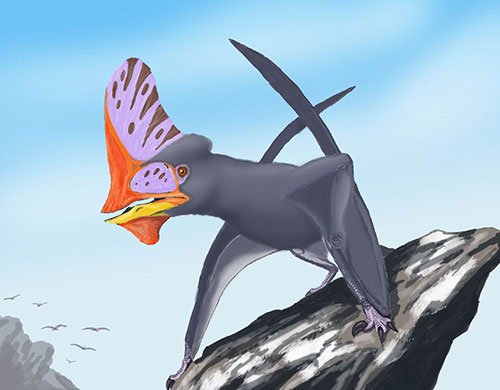
Mankind has been building flying machines of all shapes and sizes for more than 100 years. Just when you might think that engineers have perfected aircraft design, they improve by mimicking movements of an extinct pterosaur. Amazingly, though evolutionists admit Tapejara was a “morphing machine,” which had “nerves that served as sensors for temperature, pressure and wind direction,” and now has “inspired” a “design team” to build a “newly designed spy plane” (Bryner, emp. added), allegedly the pterosaur itself was simply the product of millions of years of blind, non-intelligent, random chance processes. So “the real deal,” as Bryner called Tapejara, was not designed by a designer, while the copycat is meticulously “designed” by a “design team” during a “design phase” (Bryner). Once again, we see how far copying kings (bio-inspired scientists) will go to reject and dishonor the Creator, the King of kings (Colossians 1:15-18).
For since the creation of the world His invisible attributes are clearly seen, being understood by the things that are made, even His eternal power and Godhead, so that they are without excuse, because, although they knew God, they did not glorify Him as God, nor were thankful, but became futile in their thoughts, and their foolish hearts were darkened. Professing to be wise, they became fools, and changed the glory of the incorruptible God into an image made like corruptible man—and birds and four-footed animals and creeping things (Romans 1:20-23).
REFERENCE
Bryner, Jeanna (2008), “New Flying Dinosaur Drone to Look Like Pterodactyl,” Live Science, [On-line], URL: http://www.livescience.com/technology/081008-pterodactyl-revival.html.
The post Scientists Copy God’s Design—Without Giving God Credit (Again!) appeared first on Apologetics Press.
]]>The post Scientists, Soldiers, and Fish Scales appeared first on Apologetics Press.
]]>According to scientists, the fish’s “armor” is able to protect it from others of its own species, as well as other carnivores. Its overlapping armored scales “first dissipate the energy of a strike, then protect against any penetrations to the soft tissues below and finally limit any damage to the shield to the immediate area surrounding the assault” (Crane, 2008). What makes the fish’s armor so effective? Aside from its four layers of overlapping scales, “researchers believe the dermal scales’ different composite materials [including bone and dentine—EL] and the geometry and thickness of various layers” all contribute to the armor’s strength and effectiveness in protecting the animal (Crane, 2008). Dr. Christine Ortiz, lead MIT researcher on the Polypterus project, stated: “Such fundamental knowledge holds great potential for the development of improved biologically inspired structural materials” (Bryner, 2008).
Brilliant scientists in the 21st century are spending an untold amount of time, energy, and money studying the scale structure of a fish, in hopes of designing new and improved armor applications for U.S. soldiers and military vehicles. Scientists admit that the “design” of the overlapping scale layers is “fascinating, complex and multiscale” (Crane, 2008). Yet, at the same time, we are told that this fish, which is inspiring state-of-the-art human armor systems, had no Designer (Bryner, 2008). Once again, naturalistic evolution allegedly was the great cause of a “fascinating” and “complex” creature. But design demands a designer. An effect (especially one of this magnitude) demands an adequate cause. In truth, blind chance, plus non-intelligence, plus random mutations, plus eons of time, neither designed nor caused Polypterus senegalus. Only an intelligent Designer could make such an awe-inspiring creature. As the psalmist wrote: “This great and wide sea, in which are innumerable teeming things, living things both small and great. O Lord, how manifold are Your works! In wisdom You have made them all” (104:25,24, emp. added).
REFERENCES
Bryner, Jeanna (2008), “Incredible Fish Armor Could Suit Soldiers,” LiveScience, July 27, [On-line], URL: http://www.livescience.com/animals/080727-fish-armor.html.
Crane, David (2008), “Flexible Biological Scalar Body Armor for Future Soldiers?” Defense Review, July 31, [On-line], URL: http://www.defensereview.com/modules.php?name=News&file=article& amp;sid=1159.
The post Scientists, Soldiers, and Fish Scales appeared first on Apologetics Press.
]]>The post Whiter than Tide® appeared first on Apologetics Press.
]]>Color—in both nature and human technology—is achieved by both pigmentation as well as the arrangement of an object’s surface structures. However, the color white is the result of random surface structures that “scatter” all the other colors simultaneously. The Cyphochilus beetle’s body, head, and legs are covered in long, flat scales whose size and spacing scatter white light far more efficiently than the fibers in white paper. What’s more, being only 1/200th of a millimeter thick, its scales are ten times thinner than a human hair. “This thickness is at least two orders of magnitude thinner than common synthetic systems designed for equivalent-quality whiteness” (Vukusic, et al., 2007, 315[5810]:348, emp. added). Indeed, the researchers observed: “Industrial mineral coatings, such as those used on high quality paper, plastics and in some paints, would need to be twice as thick to be as white” (“Bright White…,” 2007, emp. added). Lead researcher and physicist, Dr. Pete Vukusic, summarized: “In future, the paper we write on, the colour of our teeth and even the efficiency of the rapidly emerging new generation of white light sources will be significantly improved if technology can take and apply the design ideas we learn from this beetle” (“Bright White…,” emp. added).
Imagine that. Brilliant scientists hope to mimic the design of the beetle. Though it did not attend a university, study physics, or apply engineering technology to itself, the beetle has something to teach the educated minds of men regarding “optical brilliance.” Yet we are told that the beetle “evolved” over millions of years and that its sophisticated microstructures are the result of mindless, non-purposive, random forces? No, the rational explanation is self-evident: “God made…everything that creeps on the earth according to its kind” (Genesis 1:25). “Let them praise the name of the Lord, for He commanded and they were created” (Psalm 148:5).
REFERENCES
“Bright White Beetle Dazzles Exeter Scientists” (2007), University of Exeter, January 30, [On-line], URL: http://www.exeter.ac.uk/news/newsbeetle.shtml.
Vukusic, Pete, Benny Hallam, and Joe Noyes (2007), “Brilliant Whiteness in Ultrathin Beetle Scales,” Science, 315[5810]:348, January 19, [On-line], URL: http://www.sciencemag.org/cgi/content/abstract/315/5810/348?maxtoshow= &HITS=10&hits=10&RESULTFORMAT=&fulltext=Cyphochilus& searchid=1&FIRSTINDEX=0&resourcetype=HWCIT.
The post Whiter than Tide® appeared first on Apologetics Press.
]]>The post Feeling Design appeared first on Apologetics Press.
]]>One step toward better prosthetics is the ability to feel, also known as tactile sensation. “[S]cientists from Northwestern University, in Chicago, have shown that transplanting the nerves from an amputated hand to the chest allows patients to feel hand sensation there” (Singer, 2007). This new technology has the potential to enable amputees to feel sensations such as cold and hot, distinguish between surface texture such as smooth (like marble) or rough (like sandpaper), and various other sensations that biological hands can feel.
Todd Kuiken, the lead doctor in the research that was presented in the Proceedings of the National Academy of Sciences (Kuiken, et al., 2007), said that improving and refining the technology will take time. Emily Singer, writing for Technology Review, commented on the process of creating usable, “feeling” prostheses, saying, “The task is likely to be difficult” (2007). Kuiken further noted: “Our hands are incredible instruments that can feel things with exquisitely light touch and incredible resolution; to emulate that through a device is incredibly challenging…. All we’re giving our patients is a rough approximation, but something is better than nothing” (as quoted in Singer, 2007).
Notice the necessary inference implied in this research. Humans are brilliant, creative beings. They are using existing nerves to design prostheses that have “a rough approximation” of the sense of touch that a biological hand has. Millions of dollars are being spent, thousands of hours used, and massive amounts of various other resources are being employed to make this muted sensation available. Yet, evolutionary scientists expect thinking people to believe that the original, biological limbs that have an “exquisite” sense of touch and “incredible resolution” arose due to blind processes and random chance over multiplied billions of years of haphazard accidents overseen by no intelligence? Such a conclusion is irrational. Design demands a designer. If the “rough” prostheses have a designer, the human limbs after which they are modeled must, of logical necessity, have one as well.
REFERENCES
Kuiken, Todd, et al. (2007), “Redirection of Cutaneous Sensation from the Hand to the Chest Skin of Human Amputees with Targeted Reinnervation,” Proceedings of the National Academy of Sciences, [On-line], URL: http://www.pnas.org/cgi/content/abstract/104/50/20061.
Singer, Emily (2007), “Prosthetic Limbs that Can Feel,” Technology Review, [On-line], URL: http://www.technologyreview.com/Biotech/19759/?nlid=689.
The post Feeling Design appeared first on Apologetics Press.
]]>The post Conveniently Redefining Design appeared first on Apologetics Press.
]]>Ironically, though atheistic evolutionary scientists insist that the Earth and all living things on it have no grand, intelligent Designer, these same scientists consistently refer to amazing “design” in nature. Consider an example of such paradoxical language in a National Geographic article titled, “Biomimetics: Design by Nature” (Mueller, 2008). The word “design” (or one of its derivatives—designs, designed, etc.) appeared no less than seven times in the article in reference to “nature’s designs.” Evolutionary biologist Andrew Parker spoke of his collection of preserved animals as “a treasure-trove of brilliant design” (Mueller, 2008, p. 75, emp. added). After interviewing Parker, National Geographic writer Tom Mueller noted how the capillaries between the scales of a thorny devil lizard are “evidently designed to guide water toward the lizard’s mouth” (p. 81, emp. added). He then explained how “[i]nsects offer an embarrassment of design riches” (p. 75, emp. added). Mueller referred to nature’s “sophistication” and “clever devices” (p. 79), and praised nature for being able to turn simple materials “into structures of fantastic complexity, strength, and toughness” (p. 79). After learning of the uncanny, complicated maneuverability of a little blowfly, Mueller even confessed to feeling the need to regard the insect “on bended knee in admiration” (p. 82). Why? Because of its “mysterious” and “complicated” design. Brilliant and well-funded scientists around the world admit that living things perform many feats “too mysterious and complicated to be able to replicate.” They are “designed,” allegedly, with no “Designer.”
But how can you get design without purpose, intelligence, and deliberate planning? The first three definitions the Merriam-Webster Online Dictionary gives for “design” (noun) are as follows: “1a:a particular purpose held in view by an individual or group…b:deliberate purposive planning… 2:a mental project or scheme in which means to an end are laid down; 3a:a deliberate undercover project or scheme” (2008, emp. added). After defining “design” as a drawing, sketch, or “graphic representation of a detailed plan…,” the American Heritage Dictionary of the English Language noted that design may be defined as “[t]he purposeful or inventive arrangement of parts or details” (2000, p. 492, emp. added). A design is preceded by “deliberate purposive planning,” “a detailed plan,” or an “inventive arrangement.” A design is the effect, not of time, chance, and unintelligent, random accidents, but of the purposeful planning and deliberate actions of an inventor or designer. A designer causes a design to come into existence. Thus, by definition, design demands a designer, and one with some measure of intelligence.
Whereas National Geographic highlighted the field of biomimetics and encouraged readers to “learn from what evolution has wrought” (Mueller, 2008, 213[4]:75, emp. added), mankind would do better to mimic the actions of a noble inventor/designer from the mid-1800s. Samuel Morse, who invented the telegraph system and Morse Code, sent the very first telegraph from Washington, D.C. to Baltimore, Maryland on May 24, 1844 (“Today…,” 2007). His message consisted of a brief quotation from Numbers 23:23: “What hath God wrought!” (emp. added). Samuel Morse unashamedly testified to what everyone should understand: design demands a designer. Morse’s code and the telegraph system were the immediate effects of a designer: Samuel Morse. But, the Grand Designer, Who created Morse and every material thing that Morse used to invent his telegraph system, is God. Morse recognized this marvelous, self-evident truth.
National Geographic purports that nature “blindly cobbles together myriad random experiments over thousands of generations” in order to produce complex, living organisms that the world’s “top scientists have yet to comprehend” (Mueller, 2008, 213[4]:90). We, on the other hand, choose to believe that, just as a painting demands a painter, and a poem a poet, the world’s amazing designs, which continually stump the most intelligent scientists on Earth, demand an intelligent Designer.
REFERENCES
American Heritage Dictionary of the English Language (2000), (Boston, MA: Houghton Mifflin), fourth edition.
Hurd, Dean, George Mathias, and Susan Johnson, eds. (1992), General Science: A Voyage of Discovery (Englewood Cliffs, NJ: Prentice Hall).
Merriam-Webster Online Dictionary (2008), [On-line], URL: http://www.merriam-webster.com/dictionary.
Mueller, Tom (2008), “Biomimetics: Design by Nature,” National Geographic, 213[4]:68-91, April.
“Today in History: May 24” (2007), The Library of Congress, [On-line], URL: http://memory.loc.gov/ammem/today/may24.html.
The post Conveniently Redefining Design appeared first on Apologetics Press.
]]>The post Designed To Fly appeared first on Apologetics Press.
]]>I have a wonderful story to tell you—a story that, in some respects, out rivals the Arabian Nights fables…. God in his great mercy has permitted me to be, at least somewhat, instrumental in ushering in and introducing to the great wide world an invention that may outrank the electric cars, the automobiles, and all other methods of travel…. I am now going to tell you something of two…boys…. Their names are Orville and Wilbur Wright, of Dayton, Ohio…. These two, perhaps by accident, or may be as a matter of taste, began studying the flights of birds and insects…. They not only studied nature, but they procured the best books, and I think I may say all the papers, the world contains on this subject…. These boys (they are men now), instead of spending their summer vacation with crowds, and with such crowds as are often questionable, as so many do, went away by themselves to a desert place by the seacoast…. With a gliding machine made of sticks and cloth they learned to glide and soar from the top of a hill to the bottom; and by making not only hundreds but more than a thousand experiments, they became so proficient in guiding these gliding machines that they could sail like a bird, and control its movements up and down as well as sidewise…. When they became experts they brought in, as they had planned to do, a gasoline engine to furnish power, and made a little success with their apparatus before winter set…. At first they went only a few hundred feet; and as the opportunity for practice in guiding and controlling it was only a few seconds at a time, their progress was necessarily very slow…. This work, mind you, was all new. Nobody living could give them any advice. It was like exploring a new and unknown domain…. Other experiments had to be made in turning from right to left; and, to make the matter short, it was my privilege, on the 20th day of September, 1904, to see the first successful trip on an air-ship, without a balloon to sustain it, that the world has ever made, that is, to turn the corners and come back to the starting point…. [T]o me the sight of a machine like the one I have pictured, with its white canvas planes and rudders subject to human control, is one of the grandest and most inspiring sights I have ever seen on earth; and when you see one of these graceful crafts sailing over your head, and possibly over your home, as I expect you will in the near future, see if you don’t agree with me that the flying machine is one of God’s most gracious and precious gifts (Root, 1905).
 |
|
Photograph of the Wright brothers’ historic first flight at the moment of takeoff
|
| Credit: Library of Congress, LC-W861-35 |
The sense of wonder expressed by Mr. Amos Ives Root at witnessing success in the Wright brothers’ struggle to achieve flight may be difficult to fathom. Air travel has become so commonplace in our society, the sight of modern flying machines “sailing over” our heads and homes catches our attention only for a moment, if at all. Though the first public account of the Wrights’ achievement was reported only in a humble beekeeping journal and drew little public notice, the invention described here led to nothing less than a revolution in transportation, a complete transformation in military strategy and tactics, and ultimately, the technological impetus to reach not only for the skies, but for the stars. And it all began, as Mr. Root notes, with “studying the flights of birds and insects.”
The Wright brothers’ methodical research and testing formally established the discipline of aeronautical engineering, but they were not the first aeronautical engineers. In fact, there were many, three of whom were Sir George Cayley, Otto Lilienthal and Samuel P. Langley. The Englishman Cayley, described as the “Father of Aerial Navigation,” like the Wrights, experimented with gliders and tested the lift characteristics of airfoils (wing cross-sections). Cayley’s airfoil testing apparatus, however, moved the airfoil rotationally which, after a few turns of the mechanism, caused the surrounding air to rotate with it, significantly decreasing the lift and reducing the accuracy of the measurements (Anderson, 1989, pp. 6-12). The Wright brothers used wind tunnels for airfoil testing, which is the preferred testing method even today (though modern wind tunnels generally are much larger).
Otto Lilienthal could be considered the world’s first hang glider expert, due to the way his gliders were configured and operated. Lilienthal, like Cayley, used a rotational device to measure aerodynamic forces on airfoils. He died in 1896 when the glider he was flying hit a gust of wind that pitched the nose of the vehicle upward causing it to stall, or lose lift, and plummet to the ground (Anderson, pp. 17-19). Hearing of this accident, the Wright brothers decided to put the “elevator” (control surface that regulates vehicle pitch) on the front of their flying machine. The elevator on most modern aircraft is at the rear, just below the vertical tail fin.
Samuel Pierpont Langley was contemporary with the Wright brothers, serving at that time as secretary of the Smithsonian Institute. Langley was one of the first to experiment with powered flight, successfully flying two small, unmanned vehicles—outfitted with steam engines—that he called aerodromes. When the Department of War commissioned him to develop a manned air vehicle, he decided to switch to a gasoline engine, which he attached to a larger version of one of his aerodromes. Unfortunately, the two test flights attempted by Langley with his manned aerodrome were miserable failures. The second of these failures occurred on December 8, 1903, just nine days prior to the Wright brothers’ first flight at Kitty Hawk, North Carolina (Anderson, pp. 21-26).
It is notable that all of these pioneers of aviation shared a fascination with the observation and study of flying creatures. Consider the following conversation with Samuel Langley, as recalled by Charles Manly, who piloted Langley’s ill-fated experiments:
I here asked Mr. Langley what first attracted his attention to aerial navigation. “I can’t tell when I was not interested in it,” he replied. “I used to watch the birds flying when I was a boy and to wonder what kept them up…. It finally occurred to me that there must be something in the condition of the air which the soaring birds instinctively understood, but which we do not” (Manly, 1915, Image 62).
In 1900, Wilbur Wright wrote a 17-page letter to Octave Chanute, a prominent mechanical engineer who, like Lilienthal, experimented with hang gliders. In this letter, Wilbur outlined the program of aeronautical research that he and his brother were about to undertake. He began the letter with a discussion of his affinity for flight and flying creatures, as follows:
Dear Sir:
For some years I have been afflicted with the belief that flight is possible to man…. My general ideas of the subject are similar [to] those held by most practical experimenters, to wit: that what is chiefly needed is skill rather than machinery. The flight of the buzzard and similar sailors is a convincing demonstration of the value of skill, and the partial needlessness of motors. It is possible to fly without motors, but not without knowledge & skill. This I conceive to be fortunate, for man, by reason of his greater intellect, can more reasonably hope to equal birds in knowledge, than to equal nature in the perfection of her machinery (Wright, 1900, Image 1, emp. added).
These and numerous other references to bird observations attest to the fact that birds were a dominant source of inspiration for these early aeronautical researchers.
In fact, mankind has observed birds and dreamed of flight throughout recorded history, as evidenced by the ancient Greek myth of Daedalus and Icarus. Daedalus is said to have fashioned wings of wax and bird feathers so that he and his son, Icarus, could escape imprisonment on the isle of Crete. The legend says that Icarus, in spite of his father’s warnings, flew too close to the sun, the wax in his wings melted and he perished in the Mediterranean Sea below. While this story is fictional, it certainly reflects the imaginative desire of its author to “take to the air” as a bird. As John D. Anderson, Jr., stated in his foundational text on the aerodynamics of flight: “All early thinking of human flight centered on the imitation of birds” (1989, p. 3). Having no flying experience, it is only natural that man, in his desire to fly, would seek to imitate the readily observable creatures who openly display their capability.
And capable they are! Birds are highly specialized both physiologically and instinctively to perform their marvelous feats of flight. Flying birds are uniquely configured for flight in their structure, musculature, profile, metabolism, and instinctive knowledge. Wilbur Wright accurately characterized this in his letter to Chanute when he referred to flying birds as “nature in the perfection of her machinery”—a feature which he said man could not reasonably hope to equal (Wright, 1900, Image 1). It is most interesting to study, as did the pioneers of aviation, the specific qualities of birds that make them wonderfully adept at riding the wind.
Perhaps the most visible feature of bird flight is the motion (i.e., “flapping”) of the wings. A bird’s wings move in such a way as to produce both lift and thrust simultaneously. Man has never successfully imitated this capability, either in the manipulation of artificial wings in the manner of the Daedalus myth (though many have tried), or mechanically in the tradition of Leonardo DaVinci’s “ornithopter” concepts, prompting Anderson to state that “human-powered flight by flapping wings was always doomed to failure” (1989, p. 4). Indeed, it was the observation that birds sometimes flew without moving their wings, via gliding and soaring, that ultimately led to the success of heavier-than-air flight, through the realization that “fixed wing” flight was also a possible design solution.
 |
 |
 |
| An eagle’s long, broad wings are effective for soaring. To help reduce turbulence as air passes over the end of the wing, the tips of the end feathers are tapered so that when the eagle fully extends its wings, the tips are widely separated. |
Birds do fly by flapping their wings, however, and the “secret” lies in the wing’s two-part structure. The inner part of the wing is more rounded in shape and moves very little, thus providing the majority of the lift. The outer part of the wing, on the other hand, is flatter, has a sharper edge, and executes most of the “flapping” motion, by which it produces both thrust and some lift. The outer part also serves another important purpose in flight. In his letter to Chanute, Wilbur Wright further stated:
My observation of the flight of buzzards leads one to believe that they regain their lateral stability when partly overturned by a gust of wind, by a torsion of the tips of the wings (1900, Image 4).
That is, birds turn the outer part of their wing to a higher angle relative to the wind to generate more lift on one side, and to a lower angle, reducing the lift, on the other side. This causes the bird to “roll,” in modern aerodynamic vernacular, in order to restore its lateral balance. Wilbur went on to explain his “wing-warping” design for accomplishing lateral stability based on this “observation of the flight of buzzards.” Modern aircraft use “ailerons,” small hinged surfaces on the back side of the wing and near the tip, to provide this lateral balancing, but the aerodynamic principle is the same. [NOTE: The next time you fly, try to sit just behind the wing and note the ailerons moving up and down frequently—keeping the aircraft balanced.] It should be no surprise that the muscles of a bird are specially configured, in size and positioning, to perform the motions of flapping and wingtip torsion. Clearly, the wing of a bird is highly specialized in both structure and musculature to provide the lift, thrust, and lateral equilibrium required for flight.
In the early pursuit of human flight, it was a challenge to design a machine that was light enough to fly, but strong enough to survive the flight. All of the Wright brothers’ aerodynamic research to optimize lift would have meant very little had they been unable to design a structure that weighed less than the lift their wings were able to produce. The Wrights used spruce, a strong, lightweight wood, for the frame of their aircraft and covered the frame with muslin cloth. Had they used significant amounts of metal in their structural design, as in modern aircraft, they would not have succeeded. They also had to design and build their own engine since existing designs did not provide satisfactory power-to-weight ratios. Sufficiently strong, lightweight, structural materials, and an engine that maximized power for minimal weight, were critical factors in the Wright brothers’ success.
Birds are light enough to fly due in large part to several properties of their body structure, including bones that mostly are hollow, and an impressive covering of feathers. The mostly hollow structure of bird bones provides a light, yet strong, framework for flight. Solid bones, like those possessed by other creatures and humans, would render most birds much too heavy for flight. As evolutionist and noted ornithologist Alan Feduccia stated:
The major bones are hollow and pneumatized [filled substantially with air—JF]…. [S]uch bones as the lightweight, hollow humerus are exemplary of this structural complexity (1999, p. 5).
Bird beaks also are made of lightweight horn material instead of heavier jaw and teeth structures. Feduccia noted, “[I]t is dogma that the avian body is characterized by light weight” (p. 3), and points out that even the bird skin is “greatly reduced in weight and is paper-thin in most species of flying birds” (p. 10). By far however, the most innovative structural feature contributing to the general flightworthiness of birds is the feather.
The phrase “light as a feather” has to be one of the oldest and most-used clichés in the English language. Yet, light as feathers are, their unique structure makes them sufficiently strong to stand against the aerodynamic forces that a bird’s wings routinely experience. The central shaft or “rachis” (Feduccia, 1999, p. 111) of a feather is an amazing structure, incredibly strong and stiff considering its negligible weight. Feather vanes are composed of fluffy strands, called barbs, that protrude from the shaft. Each barb has small hooks that attach to ridges on adjoining barbs. This characteristic allows feathers to maintain their shape to keep airflow around the bird as streamlined as possible. In fact, Feduccia observes that because of their asymmetry, “flight feathers have an airfoil cross-section” (p. 111), so they must maintain their shape to keep the bird aloft. When these hooks become detached, they have to be carefully aligned to reattach, which is accomplished in remarkable fashion by a bird’s instinctive preening (Vanhorn, 2004). Without a doubt, the feather is one of the most amazing and highly specialized structures in nature.
 Illustrated by Thomas A. Tarpley © 2004 AP |
|
Cross-section of two barbs showing how their barbules “hook” together.
KEY: A. Shaft (Rachis); B. Vane; C. Barbs; D. Hooked barbules; E. Ridged barbules. |
The magnitude of the Wright brothers’ accomplishment was due to the fact that it involved powered flight of a heavier-than-air vehicle. They had to design their own engine to obtain a sufficient power-to-weight ratio. Likewise, the musculature of birds, which provides their “power” for flight, also is specially configured. First, “the major flight muscles [comprise] a disproportionate amount of the body’s weight” (Feduccia, 1999, p. 3). Feduccia also observed:
The main muscle arising from the keel and responsible for raising the wing for the recovery stroke in modern birds is the large supracoracoideus, and it has unusual features that allow it to perform this function (p. 10).
Feduccia further notes that the bird’s sternum is “keeled,” meaning that it has a forward protrusion to accommodate attachment of the “extensive flight musculature” (p. 10). Indeed, the bird’s muscles and its skeletal structure are uniquely built for flight.
Birds are not only structurally specialized for flight, however. The almost constant flapping of wings requires a tremendous amount of energy. Significantly, flying birds possess a metabolic rate that is much higher than most other creatures. This allows them to consume high-energy foods and convert that food efficiently enough to supply the large quantity of energy required for flight. Feduccia comments that “birds are highly tuned metabolic machines” (1999, p. 1). High-energy fuel is not the only requirement for a high metabolism, however. Such high-rate energy conversion also requires significant amounts of oxygen. A bird’s lungs are unlike those found in any other creature. Birds do not have to breathe out, as do other vertebrates. It is not difficult to see how breathing out would be detrimental to flight; this would be much like the thrust reversal mechanisms used on modern aircraft to slow them down after landing, though on a smaller scale. Instead, the lungs of a bird are configured to allow air to flow through and out the other end, after it has acquired oxygen from the air much more efficiently than the lungs of other animals (Feduccia, p. 388). The oxygen obtained is sent to sacs throughout the bird’s body, helping to maintain balance and supply the oxygen as directly as possible to the hard-working flight muscles. The metabolic system of the bird is unique in the animal kingdom, and perfectly suited to a flying creature.
The Wright brothers could not have known all of these facts regarding bird metabolism or the specifics of the structural specializations that make birds flightworthy. They were, however, highly impressed with the ability of birds to manipulate their physiology to control their speed and direction of flight, and to perform amazing acrobatic feats in the air. A critical piece of the Wrights’ success in developing the first practical aircraft is the “three-axis” control system that they devised. The wing-warping that controlled the “roll” orientation of their aircraft has already been discussed. The wing-warping, however, also provided steering control of the aircraft, working with the rudder (the Wrights had observed that gliding/soaring birds would generally “roll” into turns). The steering orientation of an aircraft is known as “yaw.” Finally, the elevator control surface provided regulation of the “pitch” (nose up/down) orientation of their aircraft. While it did provide full control of all three of these “axes,” the Wright design was “statically unstable,” meaning that if the pilot let go of the controls, even for a very brief period of time, the machine would crash. In contrast, most modern passenger aircraft are designed to be statically stable.
This constant expenditure of control effort was physically exhausting; nonetheless, the Wright brothers became highly skilled pilots as a result of practicing with their machines. This pursuit to control the aerodynamics of their machine is consistent with Wilbur Wright’s stated belief that “man, by reason of his greater intellect, can more reasonably hope to equal birds in knowledge” (Wright, 1900, Image 1, emp. added). Eventually, the “fly-by-wire” concept was developed whereby computers came to perform many of the flight control functions that the Wrights had to actuate manually. Coupled with statically stable aircraft designs, fly-by-wire made flying much less strenuous for the pilot. Human beings, unlike birds, have the ability to analyze and understand concepts like aerodynamic forces and, in turn, manipulate that understanding to their own benefit.
Though birds certainly do not come close to man in intellect, they are quite masterful in controlling their bodies and wings to achieve remarkable maneuvers in the air. Human beings in aircraft have never duplicated many of the flight maneuvers that birds perform with apparent ease. This fact is illustrated by recent, and ongoing, research studying how birds use vortices (regions of rotating air) that are created at the front (leading) edge of their wings to create lift (Videler, et al., 2004), as well as how they turn sharply at high speed (Muller and Lentink, 2004). Leading edge vortices are used in supersonic aircraft with small, delta-shaped wings to provide additional lift while landing, but Muller and Lentink suggested that the principle can be further exploited to increase significantly the maneuverability of these aircraft.
 |
|
A V-22 Osprey can rotate its engines to transition from hovering to forward flight and vice versa.
|
|
Credit: ©Boeing 2008
|
How is it, though, that birds know precisely when to flap, twist the tips of their wings, pull their head back to change their center of gravity, fan out their tail feathers, sweep their wings back to manipulate leading edge vortices, glide, soar, preen, etc.? Langley was addressing this very question when he said, “It finally occurred to me that there must be something in the condition of the air which the soaring birds instinctively understood, but which we do not” (Manly, 1915, Image 62). Birds must instinctively know how to control properly their physiology for flight, because they certainly do not have the reasoning ability of humans that would allow them to hypothesize about the nature of air movement and verify their reasoning experimentally, as did the pioneers of human aviation. Yet in spite of this reality, a bird coming to rest lightly on top of a fence post eclipses everything humans have been able to accomplish in 100+ years of concentrated flight design. Even aircraft with vertical takeoff and landing (VTOL) capability like the AV-8 Harrier and the V-22 Osprey cannot pinpoint a landing that accurately. How did birds arrive at this instinctive knowledge?
Evolutionary theories of how bird flight might have evolved fall generally into two groups. The first group involves the so-called “ground-up” theories. This is the idea that dinosaurian reptiles evolved the ability to fly, after being lucky enough to sprout rudimentary wings, presumably driven by the desire to catch flying insects for food. Feduccia himself does not subscribe to the ground-up theories, but is instead a proponent of the other group, the so-called “arboreal” theories of bird evolution. These theories suggest that tree-dwelling reptiles (dinosaur ancestors in Feduccia’s view) learned to fly after first learning to glide, most likely in order to escape predators (see Feduccia’s chapter titled “Genesis of Avian Flight,” pp. 93-111). Even the gap between gliding and flying is enormous, however. Sir George Cayley is known to have successfully flown a manned glider as early as 1853, but it would be over 50 years before the first successful powered flight at Kitty Hawk, in spite of the intense efforts of many including, most notably, Samuel Langley.
Suppose for a moment, though, that either theory of bird flight evolution might be true. It is not difficult to imagine that vast multitudes of these creatures would have perished in the early process of learning to use their rudimentary flying equipment, just as many humans, like Otto Lilienthal, have died as mankind has slowly learned the intricacies and hazards of flight. If true that evolving birds had struggled through a similar process, then one would expect to find large numbers of “transitional” animals, possibly with developing wing structures, prototype feathers, or some other underdeveloped birdlike features in the fossil record. Feduccia admitted the lack of such fossils, and tries to excuse it stating, “Most bird bones are hollow and thin walled…and are therefore not easily preserved” (p. 1). He went on to suggest:
One could, technically, establish a phylogeny [evolutionary ancestry—JF] of birds, or any other group, exclusively of the fossil record, and perhaps have a reasonably good idea of the major lineages using evidence from such diverse areas as anatomy and biochemical and genetic (DNA) comparisons. Yet, even then, problems are legion. Not only is there considerable argument about the methodology that should be employed, but the search for meaningful anatomical features (known as characters) that elucidate relationships is laden with problems because, beneath their feathers, birds tend to look very much alike anatomically (p. 1).
 |
|
Amazingly adept fliers, birds provide mankind with the inspiration and impetus to pursue the ability to fly.
|
In other words, birds look like birds, and the fossil evidence suggests that they always have. This dilemma is particularly troubling for evolutionists when it comes to feathers, where according to Feduccia, “Feathers are unique to birds, and no known structure intermediate between scales and feathers has been identified. Nevertheless, it has generally been accepted that feathers are directly derived from reptilian scales…” (p. 113). Even the feathers of the urvogel (literally, “first bird”), known as Archaeopteryx, are said to have a pattern “essentially that of modern birds” (p. 111).
Speaking of the urvogel, Feduccia at one point stated, “The Archaeopteryx fossil is, in fact, the most superb example of a specimen perfectly intermediate between two higher groups of living organisms” (p. 1, emp. added). Ironically, however, he later came very close to contradicting himself when he counters the “ground-up” theories of flight origin by observing that “most recent studies have shown Archaeopteryx to be much more birdlike than previously thought” (p. 103). [NOTE: For a refutation of the evolutionist’s erroneous claims regarding Archaeopteryx as a “missing link,” see Harrub and Thompson, 2001, 21[4]:25-31.] So, how does evolution explain the lack of fossil evidence for the evolution of birds? Feduccia explained, “All these known facts point to a dramatic, explosive post-Cretaceous adaptive radiation” (p. 404). In other words, it happened very fast in evolutionary terms (as little as five million years according to Feduccia)—supposedly too fast to leave behind any transitional fossils. Five million years is a very long time for the total absence of a transitional fossil record (all of human history could unfold more than 830 times in five million years). How convenient for evolutionists to assert that evolution occurred quickly during those periods that lack transitional fossils. Their theory depends on missing links—yet these links are still missing. As if explaining the evolution of bird flight was not difficult enough, though, evolutionists still need to explain the evolution of flight in insects, pterosaurs, and bats as well—also with no transitional fossil evidence.
It is unanimously acknowledged that the Wright brothers designed and built the first practical heavier-than-air flying machine. The contributions of Cayley, Lilienthal, Langley, and others leading to that event, are also readily recognized. However, many, like Feduccia, observe birds just as these aviation pioneers once did, but see it as the end result of millions of years of accidental, unlikely random mutations refined by a process of natural selection. Considering the complexity and multiplicity of specializations required to give flying birds their ability, this viewpoint is very difficult to swallow (pardon the pun). The structure of a bird’s feather, alone, is sufficient evidence of irreducible complexity (Vanhorn, 2004), but taking all of the bird’s specializations into account, the irreducible complexity becomes absolutely overwhelming. Even if we suppose that some animal could obtain “nature in the perfection of her machinery” by accident (an accident of miraculous proportions to be sure), how would it survive long enough to learn to use that machinery? Further, assuming it was fortunate enough to develop the physical attributes of flight and managed to learn how to use them, how could it pass that knowledge to future generations of avians without intellectual understanding? It took man, with his far superior intellect, around 6,000 years to make the first halting leaps in flight, and he has not even come close to equaling, much less surpassing, a simple bird’s mastery of the skies. No, the evolutionary explanation is quite inadequate and unscientific.
CONCLUSION
In the Old Testament, God asked Job: “Is it by your understanding that the hawk soars, stretching his wings toward the south?” (Job 39:26). Clearly, God’s question is rhetorical and assumes that Job would have had ample opportunity to observe birds in flight and marvel at their ability. Job may never have dreamed that man would one day share the skies with birds, so he most assuredly acknowledged that the flight of the hawk was well beyond his own understanding. All of our achievements in flight, however, have only served to underscore the meaning behind God’s question to Job. In spite of all we have accomplished in flight design, we still do not fully understand how birds, insects, and bats do what they do. We do understand, however, that they did not design themselves, we certainly did not make birds capable of flight, nor did we teach them how to fly. In fact, we must humbly admit that they taught us.
Notice that even evolutionists like Feduccia cannot avoid using words like “optimized,” “fine tuned,” “invented,” and “designed” when speaking of birds and flight. For example, Feduccia called the feather a “near perfect aerodynamic design” (p. 130, emp. added), and attributes to them an “almost magical structural complexity” (p. 132, emp. added). He further stated that “the shape and size of wings have been optimized to minimize the energy required to fly” (p. 16, emp. added), and that a bird’s metabolic system is “fine tuned” (p. 1, emp. added). And he asserted, “In order for flight to be possible, flight architecture was invented early on” (p. 1, emp. added). Feduccia also suggested:
Flight is, in a morphological sense, the biomechanically and physiologically most restrictive vertebrate locomotor adaptation permitting little latitude for new designs…. As an analogy, an engineer can construct a terrestrial vehicle in diverse configurations, but there is really only one basic design for a fixed-wing aircraft (p. 3, emp. added).
He meant for this suggestion to explain why there is little divergence, or differences in characteristics, among bird species. But he unwittingly made the point, instead, that this lack of divergence points most naturally to design. Since flight is such a “restrictive adaptation,” random processes, which depend by definition on probabilities, are much more likely to “select away” from the ability, regardless of the benefit it might hold for the animal. Thus, evolution is simply at a loss to explain the abundance, diversity, and very existence of the flying creatures that we observe. Furthermore, optimization, invention, design, and fine-tuning are not processes that occur naturally, randomly, or by accident. They occur only through focused application of intellectual ability.
Likewise, the accomplishment of December 17, 1903 was no accident. The Wright brothers could not have designed their flying machine carelessly, much less randomly, and their airplane would not have flown as it did in the absence of their skillful piloting. They did not develop piloting skills naturally or by chance, either, but through arduous, disciplined experimentation and practice. Neither could the specializations and instincts that allow birds to navigate the skies have happened by accident. No, the hawk does not fly by our understanding. Instead, the hawk, sparrow, owl, thrush, swallow, etc., fly by instinct, possessing an inherent “fly by wire” control computer designed by One whose capability far exceeds that of Orville and Wilbur Wright, Samuel Langley, Otto Lilienthal, George Cayley, or any other human being. The Wright flyer required strenuous exertion by the pilot to be able to fly, but God designed His flying machines, not only to have the capability of flight, but also to know inherently how to use it to incredibly impressive effectiveness.
It has been said, “If God had wanted man to fly, He would have given him wings.” Actually, He did. God, the Master Designer, both created the wondrous flying creatures that we observe, and gave His crowning design, man, the ability to observe, reason, and imitate. Thus, He provided both the inspiration and the means for man to achieve everything he has accomplished in his brief history of flight. So, with regard to either birds or the airplanes we see passing over our heads and homes, as Amos Ives Root observed so long ago, “the flying machine is one of God’s most gracious and precious gifts” (1905).
REFERENCES
Anderson, Jr., John D. (1989), Introduction to Flight (New York: McGraw-Hill), third edition.
Feduccia, Alan (1999), The Origin and Evolution of Birds (New Haven, CT: Yale University Press), second edition.
Harrub, Brad and Bert Thompson (2001), “Archaeopteryx, Archaeoraptor, and the “Dinosaurs-To-Birds” Theory—[Part I],” Reason & Revelation, 21[4]:25-31, April.
Hedrick, Tyson L., James R. Usherwood, and Andrew A. Biewener (2004), “Wing Inertia and Whole Body Acceleration: An Analysis of Instantaneous Aerodynamic Force Production in Cockatiels (Nymphicus hollandicus) Flying across a Range of Speeds,” The Journal of Experimental Biology, 207:1689-1702.
Manly, Charles M. (1915), “Legal Cases—Wright Co. v. Curtiss Aeroplane Co.—Affidavits: Manly, Charles M.,” The Wilbur and Orville Wright Papers, January 19, Library of Congress, [On-line], URL: http://memory.loc.gov/cgi-bin/ampage?collId=mwright&fileName=04 /04109/mwright04109.db&recNum=61&itemLink=r?ammem/wright:@ field(DOCID+@lit(wright002721)).
Muller, U.K., and D. Lentink (2004), “Turning on a Dime,” Science, 306:1899, December 10.
Root, Amos Ives (1905), “First Published Account of the Wright Brothers Flight,” Gleanings in Bee Culture (Medina, OH: A.I. Root Company), [On-line], URL: http://www.rootcandles.com/about/wrightbrothers.cfm.
Vanhorn, Matthew (2004), “Words of a Feather,” Apologetics Press, [On-line], URL: http://apologeticspress.org/articles/2610.
Videler, J. J., et al., (2004), “Leading-Edge Vortex Lifts Swifts,” Science, 306:1960-1962, December 10.
Wright, Wilbur (1900), “Octave Chanute Papers: Special Correspondence,” The Wilbur and Orville Wright Papers, May 13, Library of Congress, [On-line], URL: http://memory.loc.gov/cgi-bin/ampage?collId=mwright&fileName=06/ 06001/mwright06001.db&recNum=0&itemLink=r?ammem/wright:@field( DOCID+@lit(wright002804)).
The post Designed To Fly appeared first on Apologetics Press.
]]>The post Parkour and Biomimicry appeared first on Apologetics Press.
]]>Frenchman David Belle is credited with inventing parkour in the Parisian suburb of Lisses (“Introduction to Parkour,” n.d.; Murphy, 2006). American parkour aficionado Ryan Ford estimated that no one in America is Belle’s equal (Wilkinson). Belle made an insightful comment about parkour’s origin:
I was at a waterfall one day, and there were huge trees all around, and in the trees were monkeys. There were fences and barriers around them, so they couldn’t get out, but I went around the barriers and played with the monkeys. After that, I watched them all the time, learning how they climbed. All the techniques in parkour are from watching the monkeys (as quoted in Wilkinson, 2007, emp. added).
In fact, one parkour move is called the “monkey vault” (“Parkour Training…,” n.d.).
In citing primates as the inspiration for his innovative running style, Belle has thrown evolutionists an inadvertent curveball. Evolution involves a natural progression of more complicated, stronger, more adapted organisms (see Jackson, n.d.). If natural selection caused macroevolution to occur, we must ask why it produced a higher life form—Homo sapiens—without preserving obviously advantageous physical traits from the order Primates? Such features allow primates members to move efficiently and effortlessly in the wild. According to evolution, human movement should be better suited for survival than ape movement, not the other way around. (Of course, macroevolution and the interrelatedness of all species never have been demonstrated; see Houts, 2007.)
Belle said that “the philosophy of parkour that drives me is that progression of ability, being better than I was the day before” (as quoted in Wilkinson, 2007, emp. added). But jaw-dropping as Belle’s maneuvers are, they are simpler and less fluid than those of many monkeys. When we observe talented humans “aping” the apes, we should remember that God’s powerful creative hand has provided many creatures with characteristics perfect for survival, and that biomimicry implies a logical fault in evolution (see Butt, 2002).
David Belle admitted he is “still learning” about parkour (Wilkinson, 2007). Even as we admit to “still learning” about God, the Bible, and science, we hope that evolutionists will take note of the vast evidence for the Creator, and the severe problems with the General Theory of Evolution.
REFERENCES
Butt, Kyle (2002), “Thinking God’s Thoughts After Him,” [On-line], URL: http://apologeticspress.org/articles/1794.
Houts, Michael G. (2007), “Evolution is Religion—Not Science [Part I],” [On-line], URL: http://apologeticspress.org/articles/3511.
“Introduction to Parkour” (no date), Parkour USA, [On-line], URL: http://www.parkour.us/.
Jackson, Wayne (no date), “Evolution—Fact or Theory?” [On-line], URL: http://apologeticspress.org/rr/reprints/Evolution-Fact-or-Theory.pdf.
Laughlin, Zoe (2004), “Sewing the City: Parkour and the Traceurs of Narrative Threads,” [On-line], URL: http://www.asifitwerereal.org/zoe/archive/Parkour/parkour.htm.
Murphy, Zoe (2006), “Parkour Craze Reaches New Heights,” BBC News, [On-line], URL: http://news.bbc.co.uk/1/hi/world/europe/4954812.stm.
“Parkour Training: Monkey Vault” (no date), Expert Village, [On-line], URL: http://sports.expertvillage.com/videos/parkour-monkey-vault.htm.
“Urban Freeflow” (no date), The Official Worldwide Parkour/Freerun Network, [On-line], URL: http://www.urbanfreeflow.com/.
“What is Free Running?” (2006), American Parkour, [On-line], URL: http://www.americanparkour.com/content/view/877/27/.
“What is Parkour?” (2005), American Parkour, [On-line], URL: http://www.americanparkour.com/content/view/221/325/.
Wilkinson, Alec (2007), “No Obstacles: Navigating the World by Leaps and Bounds,” The New Yorker, [On-line], URL: http://www.newyorker.com/reporting/2007/04/16/070416fa_fact_wilkinson ?currentPage=1.
The post Parkour and Biomimicry appeared first on Apologetics Press.
]]>The post Hard to Miss Design In RoboBoy appeared first on Apologetics Press.
]]>What do they have to show for their efforts? Little Zeno has a face covered with a patented rubbery, skin-like substance Hanson calls frubber. Zeno can learn to recognize a face and associate it with the name of a person. Hanson comments that, due to these abilities, Zeno “can build a relationship with you” (as quoted in Slagle, 2007). Zeno is attached to a wireless computer that can tell him “how to frown, act surprised, or wrinkle its nose in anger” (2007). Hanson hopes to market thousands of Zenos in the years to come, at a cost of $200 to $300 each.
Slagle also mentioned another boy named Zeno. Hanson’s 18-month-old toddler has the same name as the robot. The article says that baby Zeno is a “rambunctious toddler who frolics with free rein among priceless electronics” (2007). Baby Zeno has self-repairing skin that is well-designed to let heat and waste out, or to conserve heat as needed. Baby Zeno needs no wireless computer to tell him how to frown, smile, or laugh. His body produces energy from such everyday items as green beans or sweet potatoes—no battery needed. His eyes see, his nose smells, his stomach digests, his feet run, and his hands feel and grab. He is a boy, just a regular boy. But he is lightyears ahead of what robo-Zeno will ever be.
Zeno the robot is the culmination of five years of intelligent design and engineering. Yet the toddler Zeno is much more advanced in every significant way. If we asked an evolutionary scientist if robo-Zeno was designed, no doubt he would respond in the affirmative? But if we ask him if baby Zeno exhibits intelligent design, how would he respond? No?
It is amazing that design is so easy to recognize in both robots and humans, but so often missed by evolutionary scientists when they study humans. In truth, every human is “fearfully and wonderfully made” (Psalm 139:14). Each human being testifies loudly to the conclusive fact that there is a God in heaven.
REFERENCES
Slagle, Matt (2007), “Robot Maker Builds Artificial Boy,” [On-line], URL: http://news.yahoo.com/s/ap/20070913/ap_on_hi_te/robot_boy;_ylt=Akjd5h 1ia0Ou5Id.iunSns.s0NUE.
The post Hard to Miss Design In RoboBoy appeared first on Apologetics Press.
]]>The post Torporific Biomimicry appeared first on Apologetics Press.
]]>Researchers still don’t understand how natural hibernators put themselves into torpor or how they bring themselves out of it. But new studies are peeling away the outer layers of that mystery. Far from succumbing to hypothermia, it seems, hibernators exploit it. Experiments are also revealing how animal tissues evade the damage that comes from inactivity and low blood flow, and suggesting that relatively few genes are involved in torpor and hibernation. That’s an auspicious sign for researchers who strive to manipulate the process (2007).
Physiologist Hannah V. Carey, of the University of Wisconsin–Madison, added: “These animals have got it right. They know how to use hypothermia to their advantage” (quoted in Harder). Hibernating animals are resistant to tissue breakdown that would kill other animals exposed to frigid temperatures.
The arctic ground squirrel, for example, hibernates over half the year and adopts the lowest body temperature ever measured in a mammal (“Arctic…,” 2006). Researchers at the University of Alaska at Fairbanks have shown that the squirrel’s body temperature drops below freezing, a condition known as supercooling (“Arctic…”). Every two to three weeks, while still in a state of torpor, the hibernating squirrel shivers and shakes for 12 to 15 hours, warming its body to 98 degrees Fahrenheit (“Arctic…”).
Researchers hope to reduce the danger of certain tedious medical procedures, particularly when ill or injured human patients are involved, by inducing torpor. Harder reported that “recent findings in animals point the way toward medical shortcuts that might mimic in people the effects of torpor, although these measures don’t exactly reproduce the biological state” (2007).
In 2005, “[u]sing a natural chemical humans and other animals produce in their bodies, scientists…for the first time induced hibernation in mammals, putting mice into a state similar to suspended animation for up to six hours and then bringing them back to normal life” (Britt, 2005). This achievement, “the first demonstration of ‘hibernation on demand’ in a mammal, ultimately could lead to new ways to treat cancer and prevent injury and death from insufficient blood supply to organs and tissues” (“Buying Time…,” 2005). The mice required no freezing. Instead, “the rodents breathed air laced with hydrogen sulfide, a chemical produced naturally in the bodies of humans and other animals. Within minutes, they stopped moving and soon their cell functions approached total inactivity” (Britt). Mark Roth, affiliate professor of biochemistry at the University of Washington School of Medicine and leader of the mice investigation, said: “Manipulating this metabolic mechanism for clinical benefit potentially could revolutionize treatment for a host of human ills related to ischemia, or damage to living tissue from lack of oxygen” (quoted in “Buying Time…,” 2005).
Humans have gone essentially cold-blooded automatically in some emergency situations, so developing a reliable torporific procedure seems advantageous (see Britt). Clinical applications of induced metabolic hibernation could include treating severe blood-loss injury, hypothermia, malignant fever, cardiac arrest, and stroke (see “Buying Time…,” 2005). The potential medical benefits also include improving cancer treatment by allowing patients to tolerate higher radiation doses without damaging healthy tissue (“Buying Time…”). Roth commented: “Right now in most forms of cancer treatment we’re killing off the normal cells long before we’re killing off the tumor cells. By inducing metabolic hibernation in healthy tissue we’d at least level the playing field” (quoted in “Buying Time…”). Molecular biologist Sandra Martin, of the University of Colorado School of Medicine in Aurora, admitted that such applications “lie far in the future” (quoted in Harder, 2007).
While animals already “know” how to use hypothermia to their advantage, scientists, the alleged inheritors of millions of years of evolutionary development, are yet to understand the hibernation process well enough to manipulate it in non-hibernating mammals and harness torpor’s advantages. Man continues his quest to understand and apply God’s masterful design. Often, however, he does so while ignoring or denying the very existence of the Designer (Romans 1:19-22). Will multiplying examples of biomimicry open his eyes? Apologetics Press remains committed to offering him every opportunity to see the truth of the Genesis account and its massive implications for human life and spiritual afterlife.
REFERENCES
“Arctic Ground Squirrel” (2006), Denali National Park and Preserve, [On-line], URL: http://www.nps.gov/dena/naturescience/arcticgroundsquirrel.htm.
Britt, Robert Roy (2005), “New Hibernation Technique Might Work on Humans,” LiveScience, [On-line], URL: http://www.livescience.com/health/050421_hibernation.html.
“Buying Time Through ‘Hibernation on Demand’: Landmark Finding in Mice May Lead to New Approaches for Cancer and Trauma Care in Humans,” (2005), Fred Hutchison Cancer Research Center, [On-line], URL: http://www.fhcrc.org/about/ne/news/2005/04/21/roth.html.
Fury, Amy (no date), “Naturalist Notes: Birds in Winter,” Wolf Ridge Environmental Learning Center, [On-line], URL: http://www.wolf-ridge.org/whats_hap/nat_note_archive/birds_in_ winter.html.
Harder, Ben (2007), “Perchance to Hibernate,” Science News Online, [On-line], URL: http://www.sciencenews.org/articles/20070127/bob9.asp.
Luis, A.D. and P.J. Hudson (2006), “Hibernation Patterns in Mammals: a Role for Bacterial Growth?,” Functional Ecology, [On-line], URL: http://www.blackwell-synergy.com/doi/abs/10.1111/j.1365-2435. 2006.01119.x.
Tyson, Peter (2000), “Secrets of Hibernation,” NOVA scienceNow, [On-line], URL: http://www.pbs.org/wgbh/nova/satoyama/hibernation.html.
The post Torporific Biomimicry appeared first on Apologetics Press.
]]>The post Sticky Business appeared first on Apologetics Press.
]]>The term “geckel” is derived from the names of the two creatures that inspired the new versatile adhesive: geckos and mussels. (Gecko + mussel = geckel.) Scientists closely examined the gecko’s “foot pads composed of specialized keratinous foot-hairs,” which “allow the gecko to cling onto vertical and even inverted surfaces” (Haeshin, et al., p. 338). By developing “nanotubes” that mimic “the bundles of fibers that make up the hairs on gecko feet” (Bullis, 2007), scientists have produced small tape samples that can be reused dozens of time. One obstacle to “gecko tape,” however, is water. Re-usable tape that mimics “gecko adhesion is greatly diminished upon full immersion” (Haeshin, et al., p. 338). Thus, scientists turned to the mussel.
Mussels have the ability to adhere to wet or fully immersed surfaces. Northwestern University biomedical-engineering professor Phillip Messersmith observed: “Mussels can stick to anything…. They adhere to a piece of wood, which is organic. They also adhere to the skin of whales” (as quoted in Patel-Predd, 2007). Their astounding stick-to-itiveness comes from a secretion of “specialized adhesive proteins” (Haeshin, et al., p. 338). After years of study, scientists have been able to manufacture a polymer that imitates the adhesive proteins of mussels.
Now, by combining what they have learned from gecko and mussel adhesion, researchers have developed a new adhesive, complete with nanotubes and a sticky protein polymer. Geckel is sticky, reusable, and can attach both to dry and wet surfaces. Scientists foresee it being used in many things, including medical tape and electronic equipment.
Sadly, many of the same scientists who spent thousands of hours studying the marvelous qualities of geckos and mussels believe these animals just evolved over millions of years. They believe that a big bang, plus spontaneous generation, plus time, plus chance equals awe-inspiring animals that hold the key to the invention of many impressive products. Researchers are designing new products based on living creatures that supposedly were not designed. Does this make any sense? None at all. The fact is, design demands a designer. Geckos and mussels, which scientists still cannot fully imitate, were designed by an intelligent Being—“The everlasting God, Jehovah, the Creator of the ends of the earth” (Isaiah 40:28, ASV). “O Lord, how manifold are Your works! In wisdom You have made them all…living things both small and great” (Psalm 104:24-25).
REFERENCES
Bullis, Kevin (2007), “Climbing Walls with Carbon Nanotubes,” Technology Review, June 25, [On-line], URL: http://www.technologyreview.com/Nanotech/18966/.
Butt, Kyle (2007), “Nature Sticks to Design,” Apologetics Press, [On-line], URL: http://apologeticspress.org/articles/3413.
Haeshin, Lee, Bruce Lee, and Phillip Messersmith (2007), “A Reversible Wet/Dry Adhesive Inspired by Mussels and Geckos,” Nature, 448[7151]:338-341, July 19.
Lyons, Eric (2007), “Who Makes the World’s Best Fliers?,” Apologetics Press, [On-line], URL: http://apologeticspress.org/articles/3436.
Patel-Predd, Prachi (2007), “Nanoglue Sticks Underwater,” Technology Review, July 18, [On-line], URL: http://www.technologyreview.com/Nanotech/19061/.
Ross, Rachel (2007), “Robotic Insect Takes Off for the First Time,” Technology Review, July 19, [On-line], URL: http://www.technologyreview.com/Infotech/19068/.
The post Sticky Business appeared first on Apologetics Press.
]]>The post Exceptional Spider Silk appeared first on Apologetics Press.
]]>Scientists are so enamored with spider silk because it has an “exceptional capacity to absorb kinetic energy” (Cunningham, 2007). Although it may not seem strong and tough from the vantage point of a human who easily can tear down a spider’s web, pound-for-pound, the silk from certain kinds of spiders is five times stronger than steel. What’s more, it can stretch 30 percent farther than the stretchiest known nylon, and is twice as flexible. Scientists have discovered that spider silk can even stretch 40 percent beyond its original length without breaking. In fact, due to its amazing strength and flexibility, it has been said that you could stop a jumbo jet in mid-flight with a spider web made of silk only one centimeter thick.
Since harvesting silk from spiders is impractical, scientists are attempting to make synthetic “spider silk” that could be used for countless things, including bulletproof vests, bridge suspension cables, and artificial tendons. Scientists especially covet the silk’s “exceptional capacity to absorb kinetic energy” and are hoping to copy what they call its “winning formula.” How have scientists fared thus far? In truth, even “[t]he best industrial fibers don’t absorb as much kinetic energy as spider silk does…. Despite years of research, scientists still can’t make a material as tough as the silk found within a spider web” (Cunningham, emp. added). Zoologist Chris Holland admitted that synthetic fibers “can’t even come close to” equaling the amazing qualities of spider-produced silk (as quoted in Cunningham).
What explanation do scientists give for the origin of spiders and their exceptional silk? To what do we owe this “winning formula” that intelligent scientists have been attempting to copy for years? According to Holland, “[s]piders…evolved the capacity to spin silk” (as quoted in Cunningham, emp. added). The mastermind behind the unequalled, “energy-efficient, high-performance” fibers in spider silk is, allegedly, mindless evolution. Truly, “the foolishness of God is wiser than men, and the weakness of God is stronger than men” (1 Corinthians 1:25). “For every house is built by someone, but He who built all things is God” (Hebrews 3:4).
REFERENCE
Cunningham, Aimee (2007), “Taken for a Spin,” Science News, April 14, [On-line], URL: http://www.sciencenews.org/articles/20070414/bob8.asp.
The post Exceptional Spider Silk appeared first on Apologetics Press.
]]>The post Having the Vision to See Design appeared first on Apologetics Press.
]]>Dawkins does this at the peril of being found guilty of heinous irrationality, since it can easily be proven that systems (like human vision) have design. In syllogistic form, the argument looks like this. Complex structures such as video cameras or computers made by intelligent beings (i.e., humans) exhibit recognizable characteristics of design (If they did not, no one would be able to tell the difference between a camera designed by engineers and a rock). Biological structures (such as human vision) exhibit the same recognizable characteristics of design. Thus, biological structures (such as human vision) were designed by an intelligent designer. After establishing the validity of this argument, we need only to prove that human vision exhibits the same characteristics of design that are recognized in man-made mechanisms such as cameras and computers.
With that in mind, we turn to a recent article in Technology Review titled, “Biologically Inspired Vision Systems.” Duncan Graham-Rowe, the author, explained: “Neuroscientists at MIT have developed a computer model that mimics the human vision system to accurately detect and recognize objects in a busy street scene, such as cars and motorcycles” (2007, emp. added). He further noted that scientists have been attempting to copy biological vision systems for many years because these systems “are so good.” A large portion of the article discusses challenges to programming a computer system with the ability to recognize and identify objects to any useful degree. Graham-Rowe then documented how researchers used human vision as a model for a visual computing system.
This system, based on the properties observed in human vision, worked remarkably well in several performance tests. Graham-Rowe quoted David Lowe, a computer vision and object recognition specialist from the University of British Columbia in Vancouver, who said: “Maybe we shouldn’t be surprised. Human vision is vastly better at recognition than any of our current computer systems, so any hints of how to proceed from biology are likely to be very useful” (emp. added).
In the final paragraph of his article, Graham-Rowe stated: “At the moment, the system is designed to analyze only still images” (emp. added). So we have a visual computing system that is designed by intelligent humans who took their ideas from characteristics of the biological system of human vision, which is still vastly better than the computer. The evolutionist’s conclusion is that the one made by humans is designed, but the vastly better one found in the human eye, even though it possesses similar (although superior) characteristics, is not the product of design. An honest observer would be forced to recognize the heinous irrationality of such a conclusion. Indeed, the rational conclusion is the one recorded by the Proverbs writer so many years ago: “The hearing ear and the seeing eye, the Lord has made both of them” (20:12).
REFERENCES
Dawkins, Richard (1996), The Blind Watchmaker (New York, NY: W.W. Norton).
Graham-Rowe, Duncan (2007), “Biologically Inspired Vision Systems,” Technology Review, [On-line], URL: http://www.technologyreview.com/Infotech/18210/page1/.
The post Having the Vision to See Design appeared first on Apologetics Press.
]]>The post Another Case of Man Mimicking God’s Design appeared first on Apologetics Press.
]]>Discounting the idea of shrinking people, reality can be stranger than fiction. Australian scientists are developing a miniature robot that they hope will be able to propel itself through human arteries to perform delicate medical procedures. With a width of two human hairs, the 250-micron microrobot will transmit images and perform microscopic tasks in areas of the body where current surgical procedure is risky. Once inserted by means of a syringe, the microrobot will be guided by remote control to the target site to perform its assigned tasks, and then returned to the point of entry for extraction (Cole, 2007).
One of the obstacles researchers have faced for years is how to design the propulsion system (e.g., Philipkoski, 1999; Lurie, 2004). Since electromagnetic motors have been found to be impractical, this “microrobot’s design is based on the E. coli bacterium, complete with flagella that will propel it through the body,” with the flagella made from human hair (Cole, 2007).
Once again, men turn to God and His creation in order to solve their problems. The Creator built into His creation the principles necessary for the Universe to operate for His purposes. Within that divinely designed framework, intelligent men tap into the intelligent designs of the Master Designer to produce amazing technology that aids the human race. “Know that the Lord, He is God; It is He who has made us, and not we ourselves” (Psalm 100:3).
REFERENCES
Cole, Emmet (2007), “Fantastic Voyage: Departure 2009,” Wired News, January 18, [On-line], URL: http://www.wired.com/news/technology/0,72448-0.html.
“The Magic School Bus®: Inside the Human Body” (no date), [On-line], URL: http://www.scholastic.com/magicschoolbus/home.htm.
Lurie, Karen (2004), “Smallest Robot,” ScienCentral News, July 15, [On-line], URL: http://www.sciencentral.com/articles/view.php3?type=article&article_id =218392303.
Philipkoski, Kristen (1999), “Will Robots Sail Your Veins?” Wired News, January 16, [On-line], URL: http://www.wired.com/news/technology/0,17376-1.html?tw=wn_story_page_next1.
The post Another Case of Man Mimicking God’s Design appeared first on Apologetics Press.
]]>