The post Who Did Nebuchadnezzar See in the Furnace? appeared first on Apologetics Press.
]]>Full of fury, King Nebuchadnezzar ordered the furnace to be heated well beyond its usual temperature. Daniel’s three companions were then thrown into the furnace, which, in turn, resulted in the deaths of those who placed them there. The Bible then reads:
Then King Nebuchadnezzar was astonished; and he rose in haste and spoke, saying to his counselors, “Did we not cast three men bound into the midst of the fire?” They answered and said to the king, “True, O king.” “Look!” he answered, “I see four men loose, walking in the midst of the fire; and they are not hurt, and the form of the fourth is like the Son of God” (Daniel 3:24-25, NKJV).
The original manuscripts of the Bible do not typically include punctuation and capitalization. Translators must make those decisions as best they can. However, they sometimes create misimpressions by their decisions, forcing the English reader to interpret a passage incorrectly. Such is certainly the case with the words “the Son of God.” The English reader would inevitably understand the phrase “the Son of God” to be a reference to Jesus. The resulting conclusion is that Jesus made a pre-incarnate visit to the furnace to rescue Daniel’s companions.
However, surely a pagan Babylonian king would have no knowledge of Jesus Christ—let alone know what He looked like. For that matter, neither would Daniel or his three friends. While the Old Testament prophets prophesied of the coming Messiah, their understanding of His person would have been woefully incomplete, since the fulfillment of those prophecies was yet far into the future. (See 1 Peter 1:10-11.)
In addition to the fact that the manuscripts do not capitalize “son” and “God,” additional grammatical features are worthy of note. First, the Hebrew text has no article “the” before “son.” Hence, it can just as easily read “a” son of God. Second, the Hebrew word for “God” (elohim) is a generic term that must not be confused with the divine name (Yahweh/YHWH) that refers exclusively to the God of the Bible. Elohim has the same latitude of meaning as the English word “God.” The exact same word can refer to the God of the Bible, or it can be used to refer to any “god”—from the Hindu gods Vishnu and Durga to the gods of Native Americanism. The same Hebrew word for “God” is used, for example, in Exodus 20:23 to refer to “gods”: “You shall not make anything to be with Me—gods of silver or gods of gold you shall not make for yourselves.”1 God even used the term in the giving of the Ten Commandments to refer to false gods: “You shall have no other gods (elohim) before Me” (Exodus 20:3). Further, it so happens that the Hebrew term elohim is a plural noun. Hence, it can refer to “gods” plural.
It makes perfect sense, then, that what the heathen king Nebuchadnezzar intended by his declaration was that the fourth figure in the fiery furnace was like a son of the gods—i.e., a celestial being of some sort. The king, in fact, clarified his own statement after the three companions emerged unscathed from the furnace: “Blessed be the God of Shadrach, Meshach, and Abed-Nego, who sent His Angel and delivered His servants who trusted in Him” (vs. 28). Nebuchadnezzar simply considered the fourth being to be some sort of supernatural, angelic being who was sent by Daniel’s God to rescue them from the furnace.
Several English translations recognize these grammatical nuances. The 1901 American Standard Version has “a son of the gods.” A host of other translations also so translate the verse, including the ESV, NASB, NCV, NIV, RSV, WEB, and YLT. The CJB has “and the fourth looks like one of the gods.” The ISV has “resembles a divine being,” which captures the meaning perfectly.2
Endnotes
1 Such is the case in many passages throughout the Old Testament, including Exodus 12:12; 15:11; 18:11; 23:13,24,32,33; etc.
2 Again, some have suggested that the third being in the furnace was a preincarnate appearance of Jesus. While such is certainly a possibility, we cannot know with certainty. Compare, for example, such passages as Genesis 18:1 and 1 Corinthians 10:4. However, as noted, we can be certain that the pagan Babylonian monarch (as well as Daniel and the three Hebrew youths) was unacquainted with Jesus.
The post Who Did Nebuchadnezzar See in the Furnace? appeared first on Apologetics Press.
]]>The post Why Did Jesus Have to Die? appeared first on Apologetics Press.
]]>If God is all-loving and all-powerful, then why did Jesus have to die in order for God to forgive sins?
A:
The Bible reveals that God is all-loving and all-powerful, but He is not only all-loving and all-powerful. That is, God is not a mere one- or two-sided Being. God is perfect in all of His attributes, including His holiness. God is 100% pure and holy. He is holy in the absolute sense. “[T]he Lord is upright;… there is no unrighteousness in Him” (Psalm 92:15). “God is light and in Him is no darkness at all” (1 John 1:5). The psalmist proclaimed of God: “No evil dwells with You” (5:4, NASB). Not one smidgen of sin can dwell in God or with God because even an iota of evil is against His innately pure and holy nature. Indeed, the “Lord God Almighty” is “[h]oly, holy, holy” (Revelation 4:8; Isaiah 6:3).1
In addition to God’s perfectly holy nature is His infinitely just nature. God’s “work is perfect; for all His ways are justice, a God of truth and without injustice; righteous and upright is He” (Deuteronomy 32:4). The psalmist declared to God: “Righteousness and justice are the foundation of Your throne” (89:14). Unlike earthly judges who often falter in the administration of justice, God “shows no partiality nor takes a bribe” (Deuteronomy 10:17). A corrupt judge allows the guilty to go unpunished, while a just judge pronounces righteous judgment upon lawbreakers (cf. Colossians 3:25).
God’s perfect holiness makes fellowship with wickedness literally impossible. God’s perfect justice requires punishment for any evil doing. Sin is so atrocious to God that the penalty for violating His law is death—an eternal separation from Him (Romans 6:23; 1 John 3:4). Every accountable human being at some point sins against God (Romans 3:10,23). We sin and thus separate ourselves from our holy Creator. We find ourselves (of our own doing) “dead in trespasses and sins” (Ephesians 2:1). We are lost in sin, “having no hope and without God” (Ephesians 2:12). And, as sinners, we have no power to save ourselves. There is nothing we can do. There is no plan that we could devise to escape the punishment from a perfectly holy and just God. A price must be paid for sin.
THIS is why Jesus came to Earth. He did not have to; He chose to. He came to satisfy God’s own (His own) perfect holiness and justice. “Christ died for our sins” (1 Corinthians 15:3). He willingly chose to pay the ultimate price for our sins, demonstrating that God is not only holy and just; He is love (1 John 4:8)! And, “[g]reater love has no one than this, than to lay down one’s life for his friends” (John 15:13).
God’s perfect love compelled Jesus to take our punishment upon Himself. “God, who is rich in mercy, because of His great love with which He loved us, even when we were dead in trespasses, made us alive together with Christ (by grace you have been saved)…. [I]n Christ Jesus you who once were far off have been brought near by the blood of Christ” (Ephesians 2:4-5,13). “For God so loved the world that He gave His only begotten Son, that whoever believes in Him should not perish but have everlasting life” (John 3:16).
God’s perfect holiness and justice demand that “the wages of sin is death” (Romans 6:23). But thanks be to God, that is not the end of the story! (At least it does not have to be.) What does the rest of Romans 6:23 say? “[B]ut the gift of God is eternal life in Christ Jesus our Lord.” Yes, God is both “just” and “the justifier”2 of the souls of humanity through the one and only sinless answer to the sin problem—Jesus Christ (Hebrews 4:15), Whose sole purpose in coming to Earth was to save the souls of sinful humankind (Matthew 1:21; Luke 19:10).
The most illogical, heart-wrenching, and terrible thing that a lost-in-sin human being can do is spurn the invitation from our loving God to accept the free gift of eternal salvation through Jesus.3 On the other hand, the two greatest things we can do with the one physical life that we have is (1) accept and follow Jesus, Who is the “the way, the truth, and the life” (John 14:6); and (2) tell others about why our Savior came to Earth (Matthew 28:18-20; Acts 8:4; Romans 1:16).
Endnotes
1 God’s almighty (all-powerful) nature does not contradict His holiness since God’s omnipotence does not mean He can do anything and everything. Scripture is clear, for example, that God “cannot lie” (Titus 1:2; Hebrews 6:18). Thus, the Bible’s teaching on the omnipotence of God is that He can do anything (1) that is logically possible to be done (e.g., He cannot create a square circle), and (2) that is in harmony with His holy will. [For more information, see Dave Miller (2009), “Things God Cannot Do,” https://apologeticspress.org/things-god-cannot-do-1240/.]
2 Through a trusting, biblical faith in Jesus, God made us “just” (or “right”) in the eyes of a perfectly just God (Romans 3:26).
3 To learn more about receiving the gift of salvation and becoming a follower of Christ, see AP’s free booklet at https://apologeticspress.org/wp-content/uploads/2021/08/Receiving-the-Gift-of-Salvation.pdf.
Behold! The Lamb of God
The post Why Did Jesus Have to Die? appeared first on Apologetics Press.
]]>The post Was Jesus' Body "Broken"–Or Not? appeared first on Apologetics Press.
]]>Therefore, because it was the Preparation Day, that the bodies should not remain on the cross on the Sabbath (for that Sabbath was a high day), the Jews asked Pilate that their legs might be broken, and that they might be taken away. Then the soldiers came and broke the legs of the first and of the other who was crucified with Him. But when they came to Jesus and saw that He was already dead, they did not break His legs.… For these things were done that the Scripture should be fulfilled, “Not one of His bones shall be broken” (John 19:31-36).
To account for the Roman soldiers excluding Jesus from the customary breaking of the leg bones of crucifixion victims,1 John quotes the words of David in Psalm 34:19-20—“Many are the afflictions of the righteous, but the LORD delivers him out of them all. He guards all his bones; not one of them is broken.”
Despite this plain declaration regarding the bones of Jesus, in his directives to the Corinthians regarding the Lord’s Supper, Paul explained:
For I received from the Lord that which I also delivered to you: that the Lord Jesus on the same night in which He was betrayed took bread; and when He had given thanks, He broke it and said, “Take, eat; this is My body which is broken for you; do this in remembrance of Me” (1 Corinthians 11:23-24).
Notice the tension, if not seemingly outright contradiction, that is created by the word “broken” when juxtaposed with John’s quotation of Psalm 34:20 in John 19:36. How are these disparate remarks to be reconciled?
This alleged contradiction is easily dispelled by taking into consideration the transmission of the New Testament text. “Textual criticism” is the science of ascertaining the original wording of a text.2 Since we do not have the original autographs that came from the hands of the inspired writers, we must examine the copies that have survived and “sort out” the differences between them. This pursuit has been in progress for centuries and has, in fact, accomplished its purpose. Abundant evidence exists by which one can know that the books of the Bible have been transmitted accurately through the centuries. We can be confident that the Bible has been adequately preserved from error and continues to serve the purpose God intends for it to serve.
It so happens that the term “broken” in 1 Corinthians 11:24 is a “textual variant”—an instance where manuscripts differ with each other. Some English translations include the word, while others do not. For example, those that keep “broken” include the KJV, NKJV, GNV, MEV, NLV, NMB, OJB, WEB, and YLT. Those that omit the word “broken” constitute the vast majority of English translations, including the ASV, ESV, NASB, RSV, NRSV, NIV, and many others. Why the difference?
Without going into technical detail, here are several observations that come from the manuscript evidence. First, while the external evidence for the inclusion of “broken” is varied and diverse, it is not as ancient as the evidence for omitting “broken.” Second, generally speaking, when textual critics pore over manuscripts and their textual variants, they have discovered that the shorter reading is typically the original. The exclusion of “broken” is the shorter reading. Third, they have observed that the more difficult reading (i.e., difficult for the scribe to understand or reconcile) is generally the original. In this case, insertion of the word “broken” could have been due to the scribe’s tendency to want to clarify, explain, or make sense of in what way Jesus’ body was “for you.”
Fourth, verbal dissidence exists between the words “for you” and “broke” earlier in the same verse, suggesting that a copyist was unduly influenced by the presence of the earlier form of the word for “broken.” We know that not one of Jesus’ bones was broken on the cross—as forthrightly affirmed by John’s inspired commentary on the actions of the Roman soldiers at the cross. If “broken” was originally included in Paul’s letter, one must resort to making sense of the term. Did Paul intend to refer to the breaking or tearing of Jesus’ skin? Or was he merely speaking metaphorically, using the concept of “broken” in the sense that Jesus was a broken man—having experienced extensive physical and mental torture? These possibilities—which arguably settle the issue of an alleged discrepancy—nevertheless seem unlikely.
Of course, nothing doctrinally significant is at stake with this textual variant—which is most certainly the case with the overwhelming majority of variants. But the external and internal manuscript evidence leans more to the conclusion that Paul originally wrote: “This is my body, which is for you.” No contradiction exists between the words of John and the words of Paul.
Endnotes
1 For more on this custom, see Dave Miller (2020), The Bible is From God: A Sampling of Proofs (Montgomery, AL: Apologetics Press), pp. 61ff.
2 See Bruce Metzger (1968), The Text of the New Testament (New York: Oxford University Press).
The post Was Jesus' Body "Broken"–Or Not? appeared first on Apologetics Press.
]]>The post Faith Reaching for Calvary appeared first on Apologetics Press.
]]>[NOTE: The following sermon was preached in Montgomery, AL in October 2019 by A.P. board member Frank Chesser.]
Sin is man’s worst enemy. It crouches at the door of the mind, eager to pollute the source of every human activity. It maintains constant surveillance over the mind, knowing that its capture means the ruin of a man. Sin enters the mind by invitation and supplants its light with darkness. An appalling enumeration of sins that characterized the Gentle world begins with the depiction, “their foolish heart was darkened” (Romans 1:21). John asserts that a man who hates his brother “is in darkness, and walks in darkness, and knows not where he goes, because that darkness has blinded his eyes” (1 John 2:11).
Only Christ and the Gospel can replace darkness with light. Jesus is the “light of the world” (John 8:12). The light of Christ is manifested through the Gospel and its appeal is to the mind, “for out of it are the issues of life” (Proverbs 4:23). The sounds of physical conflict are heard in communities, states, and nations around the world. Entire countries are enmeshed in combat. Implements of war interrupt the routine of life, and peace and serenity are supplanted by chaos, suffering, and death.
But the battlefield of the ages is the mind of man. Satan knows that the Gospel is man’s only hope, and the Gospel addresses the mind. Satan exerts strenuous, incessant effort to keep man’s mind under the dark canopy of sin and error “lest the light of the gospel of the glory of Christ, who is the image of God, should shine on them” (2 Corinthians 4:4). The transition from darkness to light occurs when man obeys the Gospel.
The cross is the pivotal point of all human history. The past, present, and future have as their center, the cross of Christ. The Gospel is God’s power to save, but without the cross, there is no Gospel. Remove the cross and all joy in birth, purpose in life, and hope in death have been destroyed. Erase the cross and every day of life is one unending tragedy. With the cross, everything matters; without the cross, nothing matters.
What is man’s greatest need? Man’s greatest need is not sensational preaching; it is cross-centered preaching. It is not human philosophy; it is Jesus Christ crucified. It is not physical adornment; it is a spirit dipped in blood. It is not a social Gospel; it is the Gospel of the cross. It is not Moses and Sinai; it is Christ and Calvary. “And I, brethren, when I came to you, did not come with excellence of speech or of wisdom declaring to you the testimony of God. For I determined not to know anything among you except Jesus Christ and Him crucified” (1 Corinthians 2:1-2).
From eternity, God knew the cross would be the price that would have to be paid for sin. Sin cannot correct itself. It cannot provide for its own cure. It cannot solve the problems it creates, heal the pain it causes, remove the barriers it constructs, restore the families it destroys, eliminate the suffering it produces, or stop the endless flow of unprepared souls into the world of eternal perdition. Man is powerless in the face of sin. The righteousness of all the righteous of all the ages cannot erase a single sin of a single sinner. The entire angelic host stood helplessly at the reality of Genesis 3:6. It took the perfect life of God’s Son in the flesh to qualify Him to conquer sin in the cross. The sinless life of Christ and His death on the cross enabled God to maintain His holiness, righteousness, and justice, and extend the blessing of reconciliation to all who would embrace the Gospel in the obedience of faith (Romans 3:23-26).
God foreknew the choice that man would make in Eden. How could this be? Because God is omniscient. God confidently asserted to ancient Israel, “I know the things that come into your mind” (Ezekiel 11:5). God knows the number of hairs on every head, and not even a small sparrow can fall from the heavens apart from His knowledge (Matthew 10:29-30). God’s foreknowledge did not negate Adam’s and Eve’s free will. God simply knew the course that man’s free will would take.
Divine foreknowledge of man’s choice in Eden was accompanied by foreknowledge of its only possible cure. Peter announced this truth on Pentecost when he said that Jesus was “delivered by the determined counsel and foreknowledge of God” (Acts 2:23). When a man chooses God by submitting to His will, God chooses him in Christ according to the divine principles intrinsic to the scheme of redemption ordained “before the foundation of the world” (Ephesians 1:4). God’s intent to save man by grace through the Gospel “was given to us in Christ Jesus before time began” (2 Timothy 1:9). God’s remedy for sin in the cross “was foreordained before the foundation of the world” (1 Peter 1:20). Jesus was God’s “Lamb slain from the foundation of the world” (Revelation 13:8). God’s plan to reconcile both Jews and Gentiles unto Himself “in one body through the cross” (Ephesians 2:16) was according to the “eternal purpose which he accomplished in Christ Jesus our Lord” (Ephesians 3:11).
Appropriating to one’s soul the sin cleansing power of the cross is accomplished “through faith in his blood” (Romans 3:25). The faith of the Gospel system that enables one to enjoy the forgiveness of sins by grace through blood is the faith that obeys God. It is the “work of faith” (1 Thessalonians 1:3). It is the “faith working through love” (Galatians 5:6). The greatest treatise ever written on the scheme of redemption opens with the phrase, “obedience of faith” (Romans 1:5), and it closes with the phrase “obedience of faith” (Romans 16:26). Between these two massive spiritual pillars is a divine commentary on the Gospel system and the faith that permits man to participate in its provisions.
Paul proceeds to portray the exceedingly sinful state of the Gentile world and its need of Gospel that centers in Christ and the cross (Romans 1:18-32). He then verified the like state of his own brethren in the flesh and depicts the whole of humanity to be “guilty before God” (Romans 3:19) because “all have sinned and fall short of the glory of God” (Romans 3:23). He points to man’s only hope in God’s spiritual healing by grace “through the redemption that is in Christ Jesus” (Romans 3:24) appropriated to one’s soul “by His blood, through faith” (Romans 3:25). He describes this divine plan as a “law of faith” (Romans 3:27) system that looks to the cross for its liberation from sin. He utilizes Abraham as an example of one who exhibited the obedience of faith that appropriates grace and the need of all men to possess the “faith of Abraham” (Romans 4:16) and not the blood of Abraham.
Consequently, every act of obedience to the will of God is faith making its appeal to the cross of Christ. Such was characteristic of those under the Old Testament, even though they did not possess all of the pieces to the spiritual puzzle of redemption. It was God’s design from eternity to unite all men in the one church by means of the cross of Christ and man’s obedience to the Gospel of Christ. The spiritual remnant from Adam to Pentecost of Acts 2 was unable to grasp the totality of this truth because of insufficient revelation (Ephesians 3:1-6). Even the prophets who prophesied of things concerning Christ and the church did not fully comprehend their own prophecies. Peter speaks of intense, studious efforts by the prophets to unravel some of the mysteries regarding their own prophetic declarations of the “sufferings of Christ and the glories that would follow” (1 Peter 1:11) and of angelic desire for deeper understanding of redemptive truths (1 Peter 1:12).
Though lacking a completed revelation, they were abundantly supplied with sufficient truths to enable them to live before God with a full faith. They understood the nature of God and sin. They perceived their sinful state and their inability to lift a finger to provide for their own redemption. They knew they were wholly dependent on God’s love, grace, and mercy. They understood that God was working toward the consummation of a plan that would secure their redemption. Jesus said, “Abraham rejoiced to see My day, and he saw it and was glad” (John 8:56). Every act of obedience under the Old Testament and every drop of sacrificial blood offered by the righteous remnant was an act of faith appealing to God’s love and grace for salvation that would culminate in Christ and the cross.
If not for the cross, what value could be attached to Abel’s offering? What benefit could be assigned to Noah’s conformity to the will of God and physical salvation from the Flood, if the cross had never become a reality? Severed from the cross, what gain could one perceive in Abraham’s departure from Ur and the and the offering of his son on the designated mountain in Moriah? Without Calvary, what advantage was it for Moses to suffer four decades of abuse from a nation of ingrates?
Of what value was compliance with the priesthood and sacrifice of Levi without the priesthood and sacrifice of Christ? If Jesus had not assumed flesh, lived a sinless life, and died on the cross, would there be any point in accentuating the difference between striking and speaking to the rock? What real gain could be cited for Israel’s battles and victory over her enemies in Canaan if Christ had not fought and conquered Satan and sin? Of what worth is the submissive disposition of Samuel, “Speak, for your servant hears” (1 Samuel 3:10), if Jesus had not prayed, “Father, if it is Your will, remove this cup from Me; nevertheless not My will, but Yours be done”? (Luke 22:42).
Eliminate the cross and what profit could be advanced for Judah’s return to Canaan following the Babylonian captivity and restoration of the Temple? Apart from the cross, what was the point of Nebuchadnezzar’s confession of the oneness and sovereignty of God? Is not Nineveh’s penitence irrevocably connected to Calvary? Where lies the significance in the preaching of the prophets if Jesus had not traveled the lonely road to Golgotha? What blessings followed those giants of faith who “were slain with the sword” (Hebrews 11:37) if Jesus had not been slain on the cross?
A completed Gospel was preached on Pentecost of Acts 2. When the remnant complied with the conditions of the Gospel in the obedience of faith, they were added to the church (Acts 2:47). Relative to salvation, faith now assumes a backward posture. It looks back to a consummated scheme of redemption in Christ and the cross. The power of faith is not in the action of faith; it is in the object of faith. There is no power to cure sin in expressions of faith. If demonstrations of faith could remedy sin, man could solve his own sin problem by his submission to the will of God.
Every command in the New Testament and every act of obedience to that command is faith appealing to the cross for redemption. Repentance is a command of God. He “commands all men everywhere to repent” (Acts 17:30). Repentance is “for the remission of sins” (Acts 2:38). A genuine change of heart regarding one’s sin followed by “fruits worthy of repentance” (Matthew 3:8) is not an attempt at self-absolution. A penitent heart understands that its power source is Calvary. Repentance is faith looking to the cross for forgiveness.
Jesus Christ is fully divine. He is deity in all fullness and essence. He is the “Mighty God” (Isaiah 9:6). Thomas confessed Him as “my Lord and my God” (John 20:28). “In the beginning was the Word, and the Word was with God, and the Word was God” (John 1:1); and that “Word” was Christ (John 1:14). Of His Son, God the Father affirmed, “Your throne, O God, is forever and ever; A scepter of righteousness is the scepter of Your kingdom” (Hebrews 1:8). Confessing the full deity of Christ is indispensable to one’s salvation (Romans 10:9-10). Confessing Christ is an exhibition of faith, looking to the object confessed for release from sin.
The Gospel of Christ that centers in the cross of Christ produces the church of Christ. The Gospel that Peter preached on Pentecost of Acts 2 took the minds of the hearers and anchored them to the cross. Submission to the Gospel in the obedience of faith effectuated the church. Jesus purchased the church “with His own blood” (Acts 20:28). Jesus earnestly desires for “all men to be saved and to come to the knowledge of the truth” (1 Timothy 2:4).
God sent His Son “as Savior of the world” (1 John 4:14), but Jesus can save only those “all who obey Him” (Hebrews 5:9). Those who obey Christ are added to the church of Christ (Acts 2:47), which is the “body” of Christ” (Colossians 1:18), and Jesus is “the Savior of the body” (Ephesians 5:23). Acceptance of the exclusive church, purchased by the exclusive Savior and produced by the exclusive Gospel is not bigotry. It is the humility of faith appealing to the cross for redemption.
Man is the offspring of God, made in the image of God. When man severs himself from God and pursues a life of carnal indulgence, he is spurning the most crucial aspect of his nature. Man’s need of God and of worship is as intrinsic to his nature as is heat in fire. Worship is requisite to man’s inner peace and spiritual serenity. It equips man to resist temptation and cope with adversity. It deepens conviction. It intensifies man’s loathing for sin and error and heightens his love for God and truth.
Worship fortifies the mind, the object of satanic onslaughts. It enriches spirituality. It provides solace for the grieving, hope to the despairing, and joy to the dispirited. It grows faith. Worship is manna from heaven to the hungry soul. It is living water that streams from the Rock of our salvation. It elevates the mind from the earthly and temporal to the spiritual and eternal. It allays the burdens of life. It quickens anticipation for heaven. Worship is indispensable to one’s spiritual life and his habitation in that “city which has foundations, whose builder and maker is God” (Hebrews 11:10).
What man calls worship is often a humanly contrived, self-pleasing, emotional experience that placates the flesh and dulls the spirit. It removes God as the object and enthrones man. It is physical, theatrical, and superficial. It stimulates the pulse and idles the mind. It is dramatic and noisy. Jokes and human-interest stories issuing from the pulpit are met with laughter and clapping. The preacher is idolized and applauded, while God is minimalized and marginalized. The participants leave with a distorted sense of spirituality, unchallenged minds, diminished convictions, appeased consciences, and a comfort zone for sin and enhanced toleration for those of varying religious persuasions. “And in vain they worship Me, teaching as doctrines the commandments of men” (Matthew 15:9).
Acceptable worship conforms to God’s pattern. It involves the right object, right act, and right motive. “God is Spirit, and those who worship Him must worship in spirit and truth” (John 4:24). One cannot come into God’s presence with an unauthorized act of worship that he likes and expect God to accept it. Nadab and Abihu attempted such presumptuousness, and God slew them. Unauthorized acts of worship insult the grace of God, nullify faith, and demonstrate irreverence for the cross of Christ.
Spirit-and-truth worship looks to the cross for its validation. The power of acceptable worship is in the power of the cross, not the act of worship. For two millenniums, “this do in remembrance of Me,” has reverberated in the minds of men in Sunday’s commemoration of the Lord’s Supper. Material gifts on the first day of each week reflect the goodness of God and His gifts to man, the pinnacle of which was the gift of His Son as the remedy for sin.
Prayers of faith on wings of grace take flight from the worship assembly and soar through the blood of Christ into the presence of God. With permission from Calvary, songs of the heart are allowed entrance into the throne room of heaven to join with the melodies of angels in praise and adoration to the majesty of God. Preaching that saves and edifies pivots around the cross and demonstrates its application to the whole of biblical instruction.
When Adam’s and Eve’s lips were soiled by the forbidden fruit, God commenced His journey toward Calvary. This redemptive voyage enjoyed its fruition in the death, burial, and resurrection of the sinless Christ. Prior to His return to the Father, Jesus decreed that the Gospel was to cover the earth. Upon hearing the Gospel, man was to believe and be baptized (Mark 16:15-16). The preponderance of humanity has never consented to the words of Christ. They declare their love for Christ while rejecting the will of Christ. They view teaching on the necessity of baptism for salvation as an affront to the grace of God and the cross of Christ. They assert that such teaching annuls faith and transforms the free gift of salvation into a meritorious system of works.
One can no more separate baptism from grace, blood, and faith than he can cleave blue from the sky. Baptism is faith complying with the teaching of grace. Baptism is the obedience of faith appropriating the provisions of grace in the cross. Baptism is a spiritual reenactment of the death, burial, and resurrection of Christ (Romans 6:3-4). The power of baptism is in the cross, not in the act of baptism. Baptism is the eye of faith riveted on the cross. It is the heart of faith beating for the cross. It is the trust of faith centered in the cross. It is the hands of faith laying hold of the cross. Baptism and all other acts of obedience to God is faith reaching for Calvary.
The post Faith Reaching for Calvary appeared first on Apologetics Press.
]]>The post John the Prophet—Preparing the Way for Jesus appeared first on Apologetics Press.
]]>The Jewish people had been living under the Law of Moses for nearly 1,500 years, and so introducing them to a new law and a new way was very important. Those who studied the Old Testament knew that a messenger would come before the Messiah (Jesus) to introduce Him. More than seven hundred years before John was born, Isaiah prophesied that the “voice of one crying in the wilderness” would be heard, and that voice would say: “Prepare the way of the Lord; make straight in the desert a highway for our God…the glory of the Lord shall be revealed, and all flesh shall see it together” (40:3,5). Do you remember the location from which John preached? It was in the “wilderness of Judea”—just like Isaiah predicted (Matthew 3:1)!
John’s purpose was to prepare the Jewish people for Christ’s arrival. He did this by preaching repentance, and by baptizing people; both of these were also important elements in Jesus’ ministry. Because of John’s work in the wilderness, it was less difficult for the people of Judea to follow Jesus. John had prepared them for His coming! After Jesus began His ministry, John told his disciples that his purpose had been served, and now Christ “must increase” but he “must decrease” (John 3:30). Several of the men who had followed John turned to Jesus (John 1:37).
John faded out of the picture, just as he predicted he would, and was eventually imprisoned and beheaded by his enemies (read Mark 6:14-29). We must never overlook John the baptizer, one of God’s greatest prophets and the forerunner of Christ.
The post John the Prophet—Preparing the Way for Jesus appeared first on Apologetics Press.
]]>The post Jesus is Coming appeared first on Apologetics Press.
]]>The truth is, the Bible is not too hard to understand. But it does take time and effort. One helpful thing to remember, whether you are just beginning to study the Bible, or whether you have been studying it for a long time, is that Jesus is the central theme. The Bible can be briefly outlined by making three points: (1) Jesus is coming; (2) Jesus has come; and (3) Jesus is coming again. These last two points are the main theme of the New Testament. The first four books of the New Testament (Matthew, Mark, Luke, and John) say a great deal about what Jesus did while He was here on Earth. The New Testament books of Acts through Revelation tell about Jesus’ Second Coming, and what we need to be doing in the meantime. They give us details about the Second Coming, but they mostly give instruction on how to live godly lives, so that we will be ready to go to heaven with Jesus when He does return.
The 39 books of the Old Testament are summed up by the first phrase mentioned above, “Jesus is coming.” [This refers to Jesus’ departure from heaven, when He came to Earth in human form 2,000 years ago “to seek and to save the lost” (Luke 19:10).] In the Old Testament, we read about many of the ancestors of Jesus. One of those ancestors was Abraham, a faithful servant of God. On two different occasions, God told Abraham that through one of his descendants, God would bless the world (Genesis 12:3; 22:18). In the years to come, this promise also was made to Abraham’s son and grandson, Isaac and Jacob (Genesis 26:4; 28:14). Throughout the Old Testament, many prophets spoke about the coming of this Savior. The New Testament says that this descendant of Abraham, Who would bring salvation to the world, was Jesus Christ (Galatians 3:16; John 3:16). It is our hope that you will draw closer to Him as you study about His life that is recorded in the Bible.
The post Jesus is Coming appeared first on Apologetics Press.
]]>The post Immanuel appeared first on Apologetics Press.
]]>God meant that trouble would always exist between Satan (and those who follow him), and those who follow God (read John 8:44 and 1 John 3:10). From the garden until now, Satan has tried to get people to disobey God. But God said how He would handle this trouble: “He shall bruise your [Satan’s] head, and you shall bruise His heel.” He meant that even though Satan would do everything possible to get people to sin, and to stop God from saving people from their sin, God would still make a way for people to be forgiven. He would send Jesus to live a sinless life, and then to die for everybody’s sin. When Jesus died on the cross, He suffered greatly (“heel bruised” by Satan). But His death allowed God to forgive sin (Satan’s “head bruised”)! Through Jesus’ death and resurrection, He crushed Satan’s hopes of keeping all people out of heaven.


About 700 years before Jesus came to Earth, the Old Testament prophet Micah made a very important announcement to the people of his day. He told them that someday the little village of Bethlehem Ephrathah would be given a very special privilege. In that little village would be born “the One to be ruler in Israel” (Micah 5:2). This prophecy is remarkable for two reasons. First, the fact that anyone could predict the precise city where a ruler would be born centuries later is fantastic. Second, the fact that Micah specified Bethlehem—Bethlehem Ephrathah of Judah, located five miles south of Jerusalem, rather than Bethlehem of Zebulun in northern Palestine—is also amazing.
At about the same time, the prophet Isaiah predicted that a Son would be born and named “Immanuel,” which means “God with us.” Jesus coming to Earth to offer salvation to everyone was God coming in the form of human flesh to give Himself for our sin.
The post Immanuel appeared first on Apologetics Press.
]]>The post When the Fullness of Time Had Come… appeared first on Apologetics Press.
]]>Clearly, the timing of Christ’s arrival was no accident. God sent Jesus to Earth according to a precise plan. As we look back in history, we can see several things that might have made it a good time for Christ to come.
|
|
| The roads built by the Romans made traveling between cities much easier and faster in the first century. |
First, Alexander the Great had conquered much of the world, and the Greek language was used, not only in the Mediterranean region, but also in many far-away places. Almost everyone knew Greek, which made communication much easier. Second, the Roman Empire had instituted a universal system of justice and peace. Third, travel had become much easier and more common, thanks to the Romans’ roads. Fourth, Jewish prophets (Isaiah, Jeremiah, Ezekiel, and others) had spent hundreds of years telling the people that a Savior was going to come. Fifth, the Jews had spread out widely into many lands, taking with them their laws and customs, and even had built synagogues as places to gather with friends and to worship. Sixth, the Old Testament Scriptures, which had been written in Aramaic and Hebrew, had been translated into Greek (in a book known as the Septuagint), and were being circulated widely.
 |
| By the time Jesus was born, the Jews had spread out into many lands, and built synagogues in which to worship and study the Old Testament. Pictured above are the remains of an old Jewish synagogue that once stood in Isreal. |
But there is something else of importance in explaining why Christ arrived when He did. Hundreds of years earlier, in Genesis 49:10, Jacob had given a prophecy: “The scepter shall not depart from Judah, nor a lawgiver from between his feet, until Shiloh comes.” Let’s examine the content of this important verse.
The word “Shiloh” was recognized by the Jews as another name for the Messiah, Whom God promised to send at some point in the future. This verse, then, explains exactly when the Messiah was to come—when the scepter had departed from Judah. But what was the “scepter,” and when did it depart from Judah? The scepter was a staff kept in the possession of the elders of each of the twelve tribes of Israel, and on which was engraved the name of the tribe. It symbolized the rights and powers of God’s people. As long as the elders had the scepter, the Jews not only could govern themselves, but could even administer the death penalty.
So, according to Jacob’s prophecy, Christ was promised to come before “the scepter” departed from Judah, which meant that Christ had to come prior to the Jews’ losing their national rights and powers. When did the Jews lose those rights and powers? In A.D. 6, when a man named Coponius was installed by the Roman emperor as the first procurator (agent of the Roman emperor) of Judea, he took away the Jews’ power to administer the death penalty. When that occurred, even first-century Jews recognized the departure of the scepter. When the members of the Sanhedrin (the Jewish council of rulers) found that they could not put Jesus to death themselves, but instead had to ask Pontius Pilate, the Roman procurator in A.D. 30, to do so on their behalf (Luke 23:24), they should have known that the Messiah was in their midst, for that was Jacob’s prophecy. One Jewish teacher, rabbi Rachmon, said: “When the members of the Sanhedrin found themselves deprived of their right over life and death, a general consternation took possession of them; they covered their heads with ashes, and their bodies with sackcloth, exclaiming: ‘Woe unto us, for the scepter has departed from Judah, and the Messiah has not come.’”
 The scepter had indeed departed from Judah, and the Messiah had indeed come. “When the fullness of time had come, God sent forth His Son.” Jesus came to a world where “all have sinned and fall short of the glory of God” (Romans 3:23), and where “the wages of sin is death” (Romans 6:23). But He offered salvation and said: “Be of good cheer, I have overcome the world” (John 16:33). He wanted people to know that “the gift of God is eternal life in Christ Jesus our Lord” (Romans 6:23).
Yet the Jews ignored Jacob’s prophecy as recorded in God’s Word, and demanded that the Romans kill Christ. How sad—that the people of Jesus’ day should be so blind to the eternal truths found within God’s Word. Let us not be as blind as those first-century Jews were.
The post When the Fullness of Time Had Come… appeared first on Apologetics Press.
]]>The post The Tiny Town of Nazareth appeared first on Apologetics Press.
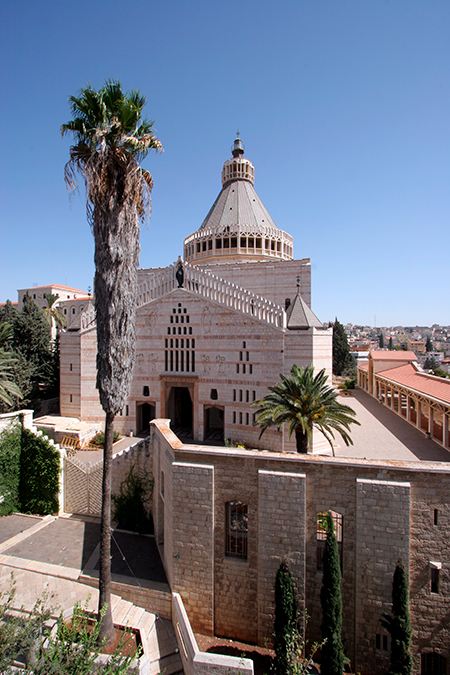
]]>the Basilica of the Annunciation pictured below.
Have you ever driven through a very small town? Maybe you even saw a sign that gave the name of the town and told how many people lived there. It might have said somethinglike, Sullivan POP 688. The letters POP stand for the word “population,” which means the number of people who live there. A town that only has 688 people is very small. In fact, many churches have more people than that during a Sunday worship service. In the past, some villages were even smaller than that. They had only about 100 people or less.
When we look in the Bible, we read about a little town named Nazareth. The Bible does not tell us how many people lived there, but it was very small. In fact, it was so small that people did not think anything important could come out of the town. It did not have big crops to export to other cities. It did not have large numbers of fishermen who sold fish. Nazareth did not have rich merchants who traded goods or big businesses that made nice clothes or jewelry.
We recognize the name of this tiny village because Jesus was from there. Even though Jesus was born in Bethlehem, He grew up in Nazareth. When He began His ministry, people wondered about His hometown. How could such an amazing teacher come from such a tiny town? Philip, one of His original followers, was trying to explain to his friend Nathanael that he found the Messiah. He told Nathanael that Jesus was from the town of Nazareth. Nazareth was so unimportant that Nathanael did not think the Messiah could be from there. He said, “Can anything good come out of Nazareth?” (John 1:46). He quickly found out he was wrong, and something very good did come out of Nazareth: the Lord Jesus Christ.
| Herodian lamps, similar to the one pictured below, helped archaeologists to determine the time period of the Nazareth house. |
 |
Because Nazareth was so small, archaeologists did not find any remains of the houses or buildings for many years. Some people even said that the Bible was wrong when it mentioned Nazareth. They taught that there was no village called Nazareth during the time of Jesus. These people went on to say that the writings about Jesus in the New Testament could not be true, because they claimed Jesus could not be from a town that did not exist.
In December of 2009, however, the way the world looked at Nazareth changed. An archaeologist named Yardena Alexandre announced the discovery of a house that dated to the time of Jesus in the little town of Nazareth. This house was just where the Bible suggested the town should be. The house had two rooms and a courtyard that totaled about 900 square feet. Many houses in the USA are four or five times that large. In fact, some of you reading this article may live in homes where one big playroom is 900 square feet. The artifacts found in the house, such as pieces of pottery, show us that the people who lived there were most likely poor.
Those people who doubted the Bible were put to shame. They claimed that the Bible made a mistake when writing about Jesus being from Nazareth. They were wrong. The discovery of the small Nazareth house helped to show that the Bible does not make mistakes. Once again, archaeology provided us with even more evidence to prove that the Bible is God’s Word.
The post The Tiny Town of Nazareth appeared first on Apologetics Press.
]]>The post Question and Answer: Should Jesus Be Called "Yeshua"? appeared first on Apologetics Press.
]]>“Do you know if there’s any truth to the claim that Jesus should only be called ‘Yeshua’ or that the name ‘Jesus’ is a corruption done by pagans or occultists (it’s been claimed that KJV was influenced by freemasonry, or that it was supposed to sound like Zeus)? Additionally, what evidence is there that the NT was originally written in Greek (vs. Hebrew vs. Aramaic)?”
A:
The Hebrew word transliterated “Joshua” in our English versions of the Old Testament (pronounced yeah-HO-shoo-ah) is equivalent to the Greek term “Jesus” (pronounced ee-ay-SOOS). Though God Himself miraculously instigated several new languages at Babel (Genesis 11), we do not know what those languages were nor do we know what single language was spoken prior to that event. God has given no indication whatsoever that Hebrew, Aramaic, and Greek are “sacred” languages that must be emulated. Instead, what we learn from the Bible is that God fully expected His Word to be translated into the multitude of languages that He knew would come about gradually as societies, ethnic groups, and nations developed. There is no evidence in Scripture that God assigns special reverence to, or expects verbal exclusivity for, the names “God” or “Jesus” in a particular language. The Jews refused to pronounce the divine name (approximated by English words like “Jehovah” and “Yahweh”) and so historically did not know how to pronounce it. The claims of pagans and occultists are irrelevant. One must produce the evidence from Scripture that God commands a specific spelling or pronunciation. Hispanics have the same word, “Jesus,” which they name their children, pronounced “hay-SOOS.” It has the same spelling in both English and Spanish. By the reasoning of those cited, differing pronunciations of the same word are unacceptable. Their theory shows a woeful lack of understanding regarding the functioning of human language.
Regarding the second question, there are well over 5,000 Greek manuscripts of the New Testament, some dating back close to the first century. There is a mountain of evidence from historical and religious writers in the early centuries of Christianity that record the linguistic state of affairs at the time. Once again, where is the evidence that the New Testament was originally written in a language other than Koine Greek? The evidence does not exist. It is true that Jesus probably spoke Aramaic while He was on Earth. But God the Holy Spirit chose to communicate the divine will via the most common, prominent language of the day: Koine Greek. A host of Hellenistic Jews at the time spoke Greek and relied on the Greek translation of the Old Testament (the Septuagint; cf. Acts 6). In fact, most of the quotes of the Old Testament found in the New Testament are from that version. When people postulate an imaginary Aramaic New Testament that lies behind the Greek New Testament that we have, they are merely speculating without solid, sufficient evidence—which they are under obligation to produce.
However, let’s suppose that those who make such claims are right, that the New Testament was originally written in Aramaic. Why did God not see to it that it was preserved and passed down to us? Answer: we must not need it! We can confidently say that we have God’s Word intact in our 21st century based on the variety of proofs that exist by which the New Testament text has been recovered/ascertained (see Has the Bible Been Corrupted? available through AP).
The post Question and Answer: Should Jesus Be Called "Yeshua"? appeared first on Apologetics Press.
]]>The post Islam and Jesus Christ appeared first on Apologetics Press.
]]> What is the answer to the math problem 2+2=__? Did you know there is only one right answer to this problem? The correct answer is 4. Let’s suppose that someone argues that the answer should be five, another person says the real answer is seven, and a third person claims the answer is nine. Just because some people disagree with the correct answer, that does not mean there are several correct answers, or that any answer is just as good as four. There is one correct answer and all the others are incorrect.
In a similar way, we could ask, how can a person be with God and go to heaven? There is only one correct answer to this question. Jesus Christ said, “I am the way, the truth, and the life. No one comes to the Father except through Me” (John 14:6). Many people say there are other ways to get to God. Some say through meditation. Others say through the teachings of Muhammad (muh-HAH-mud). Still others say by following rules in books written by councils instead of following Jesus’ words in the Bible. No matter what people say, the only way to God is through Jesus Christ.
 In this issue of Discovery we are learning about the religion of Islam. One of the main reasons we know it is not from God is because it denies that Jesus is God’s Son. Islam is a religion that was started by a man named Muhammad. He claimed to receive messages from God that he wrote down in a book called the Quran (coo-RON). When we look at these messages, however, we can know that they are not from God, because they deny that Jesus is God’s Son. In one place, the Quran says: “Praise be to Allah [this is the word the Quran uses for God] Who has revealed the Scripture unto His slave…to give warning of stern punishment from Him…and to warn those who say: Allah has chosen a son, a thing whereof they have no knowledge, nor had their fathers. Dreadful is the word that comes out of their mouths. They speak nothing but a lie” (Surah 18:1-5; a Surah is a division of the Quran, somewhat like the Bible is divided into books).
Notice that the Quran says that God does not have a Son, and anyone who says He does have a Son is lying. When we look into the Bible, however, we find that Jesus often taught that He is God’s Son. In Matthew 16, Jesus asked His disciples who they thought He was. Peter spoke up and said, “You are the Christ, the Son of the living God” (16:16). Jesus responded by saying, “Blessed are you, Simon Bar-Jonah, for flesh and blood has not revealed this to you, but My Father who is in heaven” (16:17). Notice that Jesus said that God had revealed to Peter that Jesus is God’s Son. That is the exact opposite of what the Quran teaches.


Many other places in the Bible teach that Jesus is God’s Son. In 1 John 2:22-23 we read, “Who is a liar but he who denies that Jesus is the Christ. He is antichrist who denies the Father and the Son. Whoever denies the Son does not have the Father either; he who acknowledges the Son has the Father also.” Jesus is the Son of God. One very important part of coming to God and being saved is believing that Jesus is God’s Son and being willing to confess that belief (Romans 10:9-10). Sadly, the Quran teaches the exact opposite.
There are many religions in the world that teach different things. But the only way to be right with God and go to heaven is to admit that Jesus is God’s Son and confess that belief. The Quran teaches that Jesus cannot be God’s Son. The Quran and Islam are wrong! Jesus Himself once said, “Therefore I said to you that you will die in your sins, for if you do not believe that I am He, you will die in your sins” (John 8:24). It is our prayer that all people in the world will believe that Jesus is God’s Son and obey His commandments so that they can be with God in heaven someday.
[Jesus is the Son of God: Luke 1:35, John 1:34, John 1:49, John 11:27, Matthew 27:54, John 10:36, Matthew 8:29, Matthew 16:16, John 2:22-23]
The post Islam and Jesus Christ appeared first on Apologetics Press.
]]>The post Was Jesus Crucified? appeared first on Apologetics Press.
]]>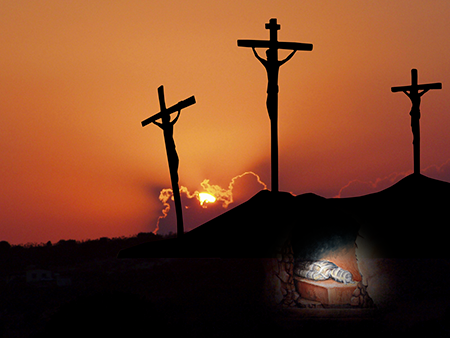 The crucifixion of Jesus was one of the saddest but most important events in the history of the world. When Christ was crucified, He took the sins of the world on Himself. Peter says that Jesus “bore our sins in His own body on the tree” (1 Peter 2:24). The crucifixion was so important that the apostle Paul wrote, “For I determined not to know anything among you except Jesus Christ and Him crucified” (1 Corinthians 2:2). The crucifixion helps us see that Jesus had power over death. He died on the cross, and three days later He defeated death and rose from the grave (Hebrews 2:14-15). If Jesus didn’t really die on the cross, then He could not rise from the grave.
Sadly, Muhammad and his teachings in the Quran deny that Jesus was crucified. The Quran states, “And because of their saying: We killed the Messiah son of Mary, Allah’s messenger—They killed him not nor crucified, but it appeared so to them and lo! those who disagree concerning it are in doubt thereof…they did not kill him for certain but Allah took him up unto Himself” (Surah 4:157-158). The Quran teaches that it only looked like Jesus was crucified, but He really stayed alive and was taken up into heaven. Therefore, the Quran denies that Jesus died, and it denies that He was resurrected.
 The apostle Paul knew there would be people such as Muhammad who would deny the resurrection. He wrote, “But if there is no resurrection of the dead, then Christ is not risen. And if Christ is not risen, then our preaching is vain and your faith is also vain…. And if Christ is not risen your faith is futile; you are still in your sins!” (1 Corinthians 15:13-17). Christ was crucified so that His blood can forgive the sins of those who obey Him. Thank God for that!
The post Was Jesus Crucified? appeared first on Apologetics Press.
]]>The post Power in the Blood appeared first on Apologetics Press.
]]>And so the blood of Jesus was required to take away our sins. But that precious blood came at a cost. Think about what it feels like when you cut yourself. Now, imagine having spikes driven through your hands and feet. Jesus Christ suffered immense pain and agony. We know, for instance, that prior to His death He was beaten and scourged before He was nailed to the cross. Scourging was a beating that was delivered using a whip that had pieces of bone, metal, or glass knotted into the ends. Repetitive blows of that special whip often would break a person’s skin and cause major pain. We also know that cruel people shoved a crown of thorns onto Jesus’ head in an effort to mock Him—and evidence suggests that these were not little thorns. Researchers have suggested that those thorns may have been over one inch long! In Luke 24:46, Jesus told His disciples: “Thus it is written, and thus it was necessary for the Christ to suffer and to rise from the dead the third day.” Jesus suffered! Could He have stopped His agonizing death? Most definitely—remember He is the Son of God. But He loved you and me so much that He went to that cross and bled for our sins! As long as we are alive, we need to be thankful to Jesus Christ for the wonderful gift of His precious blood, which keeps us from being separated from God.
The post Power in the Blood appeared first on Apologetics Press.
]]>The post Did Jesus Really Live on the Earth? appeared first on Apologetics Press.
]]>So, how do we know that there was a Man named Jesus Who lived upon the Earth? Is there any evidence available that proves Jesus actually walked the streets of Jerusalem nearly 2,000 years ago?
Even though the New Testament proves beyond the shadow of a doubt that Jesus actually lived, it is by no means the only historical evidence available. Around the year A.D. 94, a Jewish historian by the name of Josephus mentioned Jesus’ name twice in his book, Antiquities of the Jews. In section 18 of his book, Josephus wrote: “And there arose
 |
| Josephus |
about this time Jesus, a wise man, if indeed we should call him a man; for he was a doer of marvelous deeds, a teacher of men who receive the truth with pleasure.” Then, in section 20, Josephus documented how a man named Ananus brought before the Sanhedrin “a man named James, the brother of Jesus who was called the Christ, and certain others.”
About 20 years later, Tacitus, a Roman historian, wrote a book surveying the history of Rome. In it he described how Nero (the Roman Emperor) “punished with every refinement the notoriously depraved Christians (as they were popularly called).” He went on to write that “their originator, Christ, had been executed in Tiberius’ reign by the governor of Judea, Pontius Pilatus” (Annals 15:44). Even though Tacitus, Josephus, and other historians were not followers of Christ, they did have something to say about Him—and they even verified that Jesus was a real person Who was so famous that He attracted the attention of the Roman Emperor.
A final reason to believe that Jesus actually lived upon the Earth is because our entire dating method is based upon His existence. The letters “B.C.” stand for “before Christ,” and the letters “A.D.” (standing for Anno Domini) mean “in the year of the Lord.” So when a history teacher says that Alexander the Great ruled much of the world by 330 B.C., he or she is admitting that Alexander lived about 330 years before Jesus was born.
All of this evidence proves that Jesus was a real person, and not just some imaginary character.
 |
| Suggested Resource |
The post Did Jesus Really Live on the Earth? appeared first on Apologetics Press.
]]>The post Did Jesus know as a child that He would die one day on the cross? appeared first on Apologetics Press.
]]>Did Jesus know as a child that He would die one day on the cross?
Dear reader,
I love to read about Jesus. I especially love to read of the wonderful miracles He performed. One of the abilities Jesus had that we do not have was the ability to know about things before they would happen. One time Jesus predicted Peter would find a piece of money in the mouth of a fish (Matthew 17:24-27). Another time, as Jesus ate with His apostles, He predicted Judas would betray Him (John 13:18-26). He then predicted that Peter would deny Him three times before the rooster crowed (John 13:36-38). All of these things happened just as Jesus said they would. Jesus could foretell many things.
Was there anything Jesus did not know? The Bible tells us that when Jesus was on Earth He did not know when the time of His Second Coming would be. He said Himself, “Of that day and hour no one knows, not even the angels in heaven, nor the Son, but only the Father” (Mark 13:32). This was a piece of information that the Father had not revealed to Jesus in His human state.
When Jesus was older, He knew that He was going to die on the cross. In John 12:27-36, Jesus predicted His death. But, we cannot be certain when Jesus first knew that He would die on the cross. The Bible simply does not tell us.
The post Did Jesus know as a child that He would die one day on the cross? appeared first on Apologetics Press.
]]>The post Take Your Pick: Liar, Lunatic, or Lord appeared first on Apologetics Press.
]]>If a man on the street told you he was President of the United States, you would know (simply by using common sense) that he was a liar, he was a lunatic, or he was telling the truth. Likewise, there are only three explanations that one can give as to Who Christ was: (1) He was the “greatest” liar and phony the world has ever known; (2) He was a lunatic Who really thought He was God, but wasn’t; or (3) He was Who He claimed to be—the Son of God. No other choices exist.
The view that Christ was a madman rarely has been considered by anyone aware of Christ’s life. No lunatic could answer questions with such wisdom and authority. What crazy man would teach that we should do unto others as we would have them do unto us? The fact is, few have ever been bold (or insane) enough to call Christ a lunatic.
Perhaps Jesus was a liar and imposter. Again, not even the most famous unbelievers have been willing to put Jesus into this category. Well-known atheist Henri Rousseau once wrote: “If the life and death of Socrates were those of a sage, the life and death of Jesus were those of a God.” Another famous enemy of Christianity, Joseph Renan, called Jesus a “sublime person” and declared that in Him “is condensed all that is good and lofty in our nature.” The fact is, relatively very few people throughout history ever have claimed that Christ was a liar or a lunatic.
But, if Jesus was not a liar or a lunatic, then He must have been Who He said He was—the Son of God. Logically, one cannot say that Christ was a good man and yet was not the Son of God. Either He was both, or He was neither. Christ was a lunatic, a liar, or the Lord. The evidence shows beyond a doubt that He was, and is, our Lord!
The post Take Your Pick: Liar, Lunatic, or Lord appeared first on Apologetics Press.
]]>The post The Miracles of Jesus appeared first on Apologetics Press.
]]>Yes, He was. And He proved it by working miracles. While God had allowed other people to perform miracles, their miracles confirmed they were servants of God. Jesus’ miracles proved that He is God (read John 10:37-38; John 20:30-31). When Peter preached to the Jews who had put Jesus to death, he reminded them that Christ’s identity as the Son of God had been proved “by miracles, wonders, and signs which God did through him in your midst, even as you yourselves also know” (Acts 2:22). Indeed, the Jews did know, because they had witnessed Christ’s miracles almost daily. Even Jesus’ enemies often had to admit that no one could do what Jesus did unless God was with Him (John 3:2; see also John 9).
Jesus performed miracles of physical healing, such as healing: a man who was paralyzed (Matthew 9:2-8); Peter’s mother-in-law, who had a terrible fever (Mark 1:29-31); a nobleman’s son who was very sick (John 4:46-53); ten lepers (Luke 17:11-19); deafness and dumbness (Mark 7:31-37); blind Bartimaeus (Mark 10:46-52); and Malchus’ severed ear, which had been cut off by Peter (Luke 22:47-51).
He performed miracles in the natural realm, such as: stilling a storm (Matthew 8: 23-27); multiplying food to feed crowds (5,000 fed—Matthew 14:15-21; 4,000 fed—Matthew 15:32-39); and walking on water (Matthew 14: 25-33).
And, Christ raised people from the dead, including: Jairus’ daughter (Mark 5:35-43); a widow’s son (Luke 7:11-15); and Lazarus of Bethany (John 11:1-44).
Unlike some modern-day “miracles,” Christ’s miracles were not performed under controlled conditions. Nor were they faked for television cameras. When Jesus healed people, they really were healed! When He raised someone from the dead (something you don’t see anyone doing today!), they really did come back to life.
There are many ways to prove that Jesus was Who He claimed to be. But the miracles He performed are one of the most important proofs that He truly is the Son of God.
The post The Miracles of Jesus appeared first on Apologetics Press.
]]>The post Up from the Grave He Arose! appeared first on Apologetics Press.
]]>But now let’s suppose that your Bible class teacher says Jesus Christ died, was buried for three days, and rose again. What makes the story of Jesus any different from the one you heard at McDonalds? The truth is, there are many reasons Jesus’ story is different from all others. The most important reason is that His story is true, and the evidence supports it. Let’s look at some of that evidence.
The Bible Says So
One of the best reasons to believe that Jesus rose is because the Bible tells us that He did. The Bible is the most accurate book ever written. For many years, people have tried to prove it wrong and find mistakes in it. But they never are successful. If the Bible is right about everything else that it says, then we can trust it to tell us the truth about the resurrection.
The Event was Prophesied
King David, about a thousand years before Jesus walked on the Earth, explained that Christ would die and rise again. In Psalm 16:10, David prophesied of Jesus when he wrote: “For You will not leave my soul in Hades, nor will You allow Your Holy One to see corruption.” Peter quoted this verse in Acts 2:28 to prove that the Old Testament had foretold the resurrection.
From Fear to Faith

The night Jesus was arrested in Gethsemane was a sad time for His disciples. All of them ran for their lives in fear. Even “bold” Peter denied the Lord three times! But only a few weeks later, they stood together and preached that Jesus had risen from the grave. No amount of beatings, lashings, imprisonment, or threatening could stop them from preaching about the resurrection (Acts 4:18-20).
What event could change a small band of frightened doubters into powerful preachers? Only one thing could have caused the disciples’ change of heart. Peter said it well: “This Jesus God has raised up, of which we are all witnesses” (Acts 2:32).
What Does It Matter?
Because Jesus rose from the dead, we do not need to be afraid of death. Everyone who obeys Christ and does what the Bible says to do to become a Christian will defeat death just like He did. We should thank God for raising Jesus from the dead and for promising to do the same for us.
The post Up from the Grave He Arose! appeared first on Apologetics Press.
]]>The post The Baptism of Jesus appeared first on Apologetics Press.
]]> At the age of 30, Jesus began His public work for God by going to John the Baptizer to be baptized. At first, John refused to baptize Jesus. He said, “I have need to be baptized by You, and are You coming to me?” (Matthew 3:14). Why did John say that to Jesus? John was baptizing people for the forgiveness of their sins if they would confess their sins and repent (Matthew 3:6,8; Mark 1:4). He knew that Jesus was sinless, and thus did not need to be baptized for the forgiveness of His sins. Jesus did not correct John by saying that baptism is not for the remission of sins. Rather, Jesus showed that He was an exception to the usual reason for baptizing people. He gave John another reason for baptizing Him—a reason that applied only to the Son of God: “to fulfill all righteousness” (Matthew 3:15).
What did Jesus mean by this statement? John later explained the special reason when he said that he came baptizing with water so that Jesus could be revealed to Israel (John 1:31). When John baptized Jesus in the Jordan River, two very important things happened: (1) the Spirit of God descended like a dove on Jesus; and (2) God said, “This is My beloved Son, in whom I am well pleased” (Matthew 3:17). When John saw and heard these two things, he was able to prove his belief that Jesus was, in fact, the Son of God (John 1:34). Jesus’ baptism established His divine identity to the world. Not so with people today. They are to be baptized in water to be forgiven of their sins (Acts 2:38), to be clothed with Christ (Galatians 3:27), to be saved by the death, burial, and resurrection of Christ (Romans 6:3-4; 1 Peter 3:21), and to be added to Christ’s church (Acts 2:47).
Jesus came to the Earth to do His Father’s will (Luke 2:49; John 9:4). He submitted to water baptism, and He requires people today to be baptized in water to become His disciples (Matthew 28:19), and in order to have their sins forgiven by His blood (Mark 16:16; Acts 22:16).
The post The Baptism of Jesus appeared first on Apologetics Press.
]]>The post What Was It Like in the Time of Jesus? appeared first on Apologetics Press.
]]>Because the people of the Bible existed long ago in a far away land, we sometimes misunderstand how ancient people lived. Their expressions, habits, ceremonies, and clothing were very different than what we see today. They wore sandals instead of sneakers, rode donkeys instead of bikes, and spoke Hebrew or Greek instead of English.
Jesus and His disciples walked everywhere in sandals, and often their feet would get dirty. Fortunately, they had a method of cleaning their feet before walking into a house. Immediately after they entered someone’s home, a servant would wash their feet from a water bowl.
Education was highly valued in ancient Israel. The Bible also informs us that both mothers and fathers took an active role in the education of their children. Many times, the son would grow up learning the occupation of his father.
Although there were some similarities, many things in the time of Jesus were different than today.
The post What Was It Like in the Time of Jesus? appeared first on Apologetics Press.
]]>