The post Christian Families and Public Education appeared first on Apologetics Press.
]]>Please understand, I am no enemy of public education. I am partly a product of 13 years of quality public education in the great state of Oklahoma. While I was in school, my mother worked for the local public school system. Prior to starting a family, my wife taught public school in Tennessee for three years. I have countless Christian friends who work tirelessly in public school systems around the country as teachers, coaches, and administrators. They are fantastic role models for today’s youth, and I am thankful for the differences that they are making in the lives of many young people.
Sadly, however, the overall 13-year experience that millions of youth receive in many public schools today is a far cry from the far-more Christian-friendly encounter that students once had. Christian parents who enroll their students in public school should be as informed as possible about what is occurring in schools locally and around the country.
Schools Merely Reflect our Increasingly Immoral Society
Rather than acknowledge sexual immorality and impurity as evil (Galatians 5:19-21; 1 Corinthians 6:9-10), most Americans embrace sexual sins of various kinds as normal, fun, or harmless. (I work every day in Montgomery, Alabama, which in 2015 was declared to be “the most sexually diseased city in the nation.”)2 Ungodly entertainment is more prolific and easily accessible than ever before in our country’s history. A few years ago, the number one downloaded song on iTunes was Brittany Spears’ hit titled simply “3.” The song is about “gettin’ down with 3P” (that is, three people having sexual relations together at the same time). This former number one song glamorizes sin from beginning to end. Twice in the song Spears specifically mocks sexual sin, saying, “Livin’ in sin is the new thing (yeah).” She then adds, “What we do is innocent, just for fun and nothing meant.”
Given the sex-crazed society in which we live, it should not be surprising that schools are filled with sexually immoral students. According to the Center for Disease Control, data gathered from 2011-2013, revealed that ‘by age 19, roughly two of three never-married teenagers have had sexual intercourse.”3 (When I shared this statistic with my 19-year-old nephew who graduated from public school not many months ago, he was shocked that the number was only 66%.)
I had the privilege of working with youth in Tennessee and Alabama for many years. One high school senior mentioned to me that he was the only senior that he knew of in his rather small, close-knit graduating class who was not sexually promiscuous. On another occasion, a high school student told me that her high school prom had the reputation of being the best prom in the tri-county area because it was the “dirtiest” (that is, the most lewd and lustful). While a number of my wife’s middle-school students were already sexually active by the time they were 12 and 13, and some even pregnant, perhaps most disheartening were the sexual conversations she overheard six-year-olds having on the playground.
The Homosexual and Transgender Agenda Promoted through Public Education
Hardly a day goes by, it seems, that a story concerning homosexuality or transgenderism is not in the news. Hollywood and the mainstream media have been pushing for the acceptance of unnatural, “shameful,” “vile passions” for several years (Romans 1:26-27). Sadly, despite the presence of many thousands of morally minded, Christian public school teachers, America’s education system is becoming more and more a “place of persuasion” for gay rights activists. Notice a few examples:
- In 2008, the United States Court of Appeals for the First Circuit affirmed that public school teachers in Massachusetts have the constitutional right, not only to instruct their students regarding the alleged normalcy of homosexuality, but to do so without notifying parents.4
- In 2009, California passed a law that designated every May 22 as gay day, which public schools (K-12) are expected to celebrate. The day is officially called “Harvey Milk Day” in honor of Mr. Milk, a 1970s homosexual activist.5
- In 2011, President Obama’s Secretary of Education, Arne Duncan, spoke at the Lesbian Gay Bisexual Transgender (LGBT) Youth Summit via video. Secretary Duncan stated:
I’m absolutely thrilled that Capital Pride Week is being kicked off with such an important and historic event…. My commitment to LGBT students is unequivocal and it goes back to when I first supported a charter school for LGBT students in Chicago…. I’m pleased to announce we are also releasing a new “Dear Colleague” letter. It clarifies the rights of students to form clubs, such as gay-straight alliances, under the Equal Access Act…. Schools must treat all student-initiated clubs equally, including those of LGBT students. I’m so proud to have the department host this year’s first ever federal LGBT youth summit. We seek to promote a new and unprecedented level of commitment in protecting LGBT students.6
- Consider also the pressure that President Obama’s Administration has put on public schools in the past year (1) to interpret “sexual identity” as a mere choice rather than a biological reality, and (2) to allow so-called transgenders to use the restroom and locker room with which they currently identify themselves. In 2015, the US Department of Education informed Chicago Township High School District 211 that if they did not give a boy who claims to be a girl unrestricted access to the girls’ locker room then the school district would risk losing millions of dollars in federal funding.7 Can you believe that this is where we are in the U.S.? The United States Department of Education is pressuring schools to allow mentally confused boys full access to girls’ locker rooms? The insanity of such (mis)direction from the federal government upon local school systems is but one more grave concern for Christian parents.
Dangerous Ideas
Most parents become very alarmed when physical dangers present themselves at schools. Christian parents would likely never allow their kids to go to class if someone was threatening to take their lives or to harm them seriously. Yet, it is quite disturbing how disengaged many Christian parents seem to be when it comes to the spiritually and eternally dangerous ideas that fill many school classrooms. By and large, parents seem either oblivious to what is being taught, or, more likely, are simply apathetic toward the spiritually dangerous ideas that their children may hear for as many as 13 years.
In the mid-1990s, evolutionist Daniel Dennett wrote a book titled Darwin’s Dangerous Idea. One of the most disturbing comments in Dennett’s book concerned parents who teach their children (among other things) “that ‘Man’ is not a product of evolution.” Dennett wrote: “[T]hose of us who have freedom of speech will feel free to describe your teachings as the spreading of falsehoods, and will attempt to demonstrate this to your children at our earliest opportunity.”8
A few years ago in Mississippi, administrators and certain teachers were given a document titled the “2010 Mississippi Science Framework.” Public educators were reminded that “[t]he National Science Teachers Association (NSTA) strongly supports the position that evolution is a major unifying concept in science and should be included in the K-12 science education.” At the same time, public educators were told to “not advocate any religious interpretations of nature.” What’s more, they were instructed to “not mandate policies requiring the teaching of ‘creation science’ or related concepts, such as so-called ‘intelligent design…,’ and ‘arguments against evolution.’”9
Ideas are powerful things. Words matter. What we read, watch, and hear day after day will have an effect on our lives. When children hear year after year that the Universe is the result of a Big Bang, that the Earth is 4.5 billion years old, that life came from non-life, and that humans evolved from ape-like creatures over millions of years, they will have a tendency to believe what they have repeatedly heard and to doubt what the Bible teaches. Unless parents do a better job equipping children with facts from the Bible and true science than what the public school textbooks do at shrewdly presenting lies and unproven assertions, young people will be much more likely to grow up to become evolutionists who are skeptical of Creation, the Flood, and many other biblical statements and accounts.10
Conclusion
All Christian parents have the awesome responsibility of rearing their children “in the training and admonition of the Lord” (Ephesians 6:4; cf. 2 Timothy 3:15). However, it seems especially crucial for those who send their children to public school seven hours a day, nine months a year, for 13 years, to “be vigilant: because your adversary the devil walks about like a roaring lion, seeking whom he may devour” (1 Peter 5:8).
Due in large part to the deterioration of the public school system (which, again, merely reflects the spiritual and moral decline of society as a whole), approximately 13.4% of students in the U.S. are now educated in private11 or home schools.12 Depending on where you live in the U.S. and the state of the schools in your area, it may very well be time for you to consider one of these options.
*Originally published in Gospel Advocate, September 2016, 158[9]:12-14.
Endnotes
1 See Dave Miller (2008), The Silencing of God: The Dismantling of America’s Christian Heritage (Montgomery, AL: Apologetics Press).
2 Kym Klass (2015), “Montgomery Rated Most Sexually Diseased City in Nation,” Montgomery Advertiser, July 28, http://www.montgomeryadvertiser.com/story/news/2015/07/27/montgomery-rated-sexually-diseased-city-nation/30722091/.
3 Gladys M. Martinez and Joyce C. Abma (2015), “Sexual Activity, Contraceptive Use, and Childbearing of Teenagers 15-19 in the United States,” Centers for Disease Control and Prevention, July, http://www.cdc.gov/nchs/products/databriefs/db209.htm.
4 Parker v. Hurley. 2008. https://scholar.google.com/scholar_case?case=3852599956015630493&hl=en&as_sdt=6&as_vis=1&oi=scholarr.
5 Mark Tran (2009), “Arnold Schwarzenegger Signs Law Establishing Harvey Milk Day,” October 13, http://www.guardian.co.uk/world/2009/oct/13/schwarzenneger-law-harvey-milk-day.
6 “Secretary Arne Duncan Addresses the LGBT Youth Summit in Washington, D.C” (2011), http://www.youtube.com/watch?v=fA6JfpBHcH8.
7 Michael Miller (2015), “Feds Say Illinois School District Broke Law by Banning Transgender Student from Girls’ Locker Room,” November 3, https://www.washingtonpost.com/news/morning-mix/wp/2015/11/03/feds-say-illinois-school-district-broke-law-by-banning-trans-student-from-girls-locker-room/.
8 P. 519, emp. added.
9 “2010 Mississippi Framework,” Mississippi Department of Education, July 25, http://docplayer.net/17813083-Mississippi-science-framework.html.
10 I highly recommend ApologeticsPress.org as a resource to combat the error young people are taught in public schools.
11 “Private School Enrollment” (2016), https://nces.ed.gov/programs/coe/indicator_cgc.asp.
12 “Statistics about Nonpublic Education in the United States” (2012), http://www2.ed.gov/about/offices/list/oii/nonpublic/statistics.html.
The post Christian Families and Public Education appeared first on Apologetics Press.
]]>The post God, the Founders, and the Purpose of Human Government appeared first on Apologetics Press.
]]>
The American people have been experiencing a significant level of confusion regarding the purpose of civil government. Perhaps the prevailing sentiment of the population is that the core purpose of government is to collect money from citizens (via the IRS) so that elected politicians can make decisions regarding the distribution and dispersal of those funds. This serious misconception has led to a plethora of errors and harmful societal circumstances: a bloated, insatiable federal government that is in the throes of unprecedented, debilitating debt, a corresponding failure of elected officials to focus on their true purpose, a host of citizens who think the government exists to redistribute monetary assistance to them, and the list goes on. Meanwhile, the central purpose of government—the very reason the Founders established a federal government—is being neglected to the extent that citizens are encountering increasing danger to their lives. Perhaps even more tragic, the very government intended to be “of the people, by the people, and for the people” has assumed an adversarial role in which it persecutes those who hesitate to go along with its oppressive socialistic, anti-Christian, “politically correct” agenda.
What’s more, many Americans have been indoctrinated in the public school system with the idea that “separation of church and state” is true, that the government should have nothing to do with religion—except to suppress it in government, school, and public life.1 This indoctrination is so thorough and pervasive that few consider the fact that God has expressed His view on the subject. Indeed, the sole source of infallibly correct thinking—the Bible—addresses these concerns, articulating very precisely the divine purpose of civil government. What does the inspired Word of God say regarding the purpose of human government?
The Bible
Perhaps before answering that question, we should ask the prior question: “Did God intend for humans to form a government?” Yes, He did. The Bible states definitively: “Let every soul be subject to the governing authorities. For there is no authority except from God, and the authorities that exist are appointed by God” (Romans 13:1, emp. added). Another inspired apostle stated: “Therefore submit yourselves to every ordinance of man for the Lord’s sake, whether to the king as supreme, or to governors, as to those who are sent by him” (1 Peter 2:13-14). Jesus, Himself, had previously expressed what His apostles later wrote. He implied the validity of human government when He declared: “Render to Caesar the things that are Caesar’s, and to God the things that are God’s” (Mark 12:17). Nebuchadnezzar’s dream included the realization “that the living may know that the Most High rules in the kingdom of men, gives it to whomever He will, and sets over it the lowest of men” (Daniel 4:17). So, yes, human government is authorized and ordained by God and fully in keeping with His principle of authority that pervades all of life.2
What, then, does the Bible say about the purpose of the divinely authorized entity of human government? The Bible states explicitly that the central purpose and role of government is to maintain order, peace, protection, safety, and stability in society which, in turn, enables citizens to live their lives in freedom. Consider, for example, Paul’s lengthy discussion of civil government in his admonitions to Christians in the capital city—the heart—of the Roman Empire:
For rulers are not a terror to good works, but to evil. Do you want to be unafraid of the authority? Do what is good, and you will have praise from the same. For he is God’s minister to you for good. But if you do evil, be afraid; for he does not bear the sword in vain; for he is God’s minister, an avenger to execute wrath on him who practices evil (Romans 13:3-4, emp. added).
Observe: “a terror to evil works” (vs. 3) and “an avenger to execute wrath on him who does evil” (vs. 4). Peter expressed these same thoughts when he also addressed the subject:
Therefore submit yourselves to every ordinance of man for the Lord’s sake, whether to the king as supreme, or to governors, as to those who are sent by him for the punishment of evildoers and for the praise of those who do good (1 Peter 2:13-14, emp. added).
Observe:“for the punishment of evildoers” and “praise of those who do good” (vs. 14). Commenting on this passage, Guy N. Woods remarked: “the design, incidentally, of all civil authority—was (a) to punish the wicked, and (b) encourage good works by protecting those engaged therein.”3 In his remarks to Timothy, Paul again noted this same purpose:
Therefore I exhort first of all that supplications, prayers, intercessions, and giving of thanks be made for all men, for kings and all who are in authority, that we may lead a quiet and peaceable life in all godliness and reverence (1 Timothy 2:1-2, emp. added).
Observe again: “that we may lead a quiet and peaceable life” (i.e., protected from those who would disturb that peace). Even the pagan attorney Tertullus, who acted on behalf of the high priest in bringing formal charges against Paul before the Roman governor Felix, noted in passing the purpose of civil government:
And when he was called upon, Tertullus began his accusation, saying: “Seeing that through you we enjoy great peace, and prosperity is being brought to this nation by your foresight, we accept it always and in all places, most noble Felix, with all thankfulness” (Acts 24:2-3, emp. added).
Observe: through the civil magistrate, i.e., the government, “we enjoy great peace, and prosperity,” i.e., we are protected from those who would disrupt the peace, enabling us freely to exercise our right to pursue our vocations and the prosperity such brings. The government does not guarantee, let alone provide, prosperity; it simply ensures a peaceful atmosphere in which citizens can pursue their vocations and earn their living unhampered by thugs, thieves, and other criminals.
Hence, while not discounting subsidiary functions, the Bible states very succinctly that the essential thrust of human government—its core function—is to maintain order, peace, protection, safety, and stability in society so that citizens may be permitted to live their own lives and have the freedom to make their own decisions. This arrangement is God’s will. However, recall again Paul’s words to Timothy:
Therefore I exhort first of all that supplications, prayers, intercessions, and giving of thanks be made for all men, for kings and all who are in authority, that we may lead a quiet and peaceable life in all godliness and reverence (1 Timothy 2:1-2, emp. added).
Why should we pray for the government? So that our lives might be “quiet and peaceable”—the objective and purpose of the government as intended by God. But what is the purpose of having a peaceful, undisturbed, unmolested life? So that we might live life “in all godliness and reverence.” God wants people to make wise, spiritual decisions as they live their lives in anticipation of eternity. That is their purpose for existence (Ecclesiastes 12:13). But whether they do or don’t, civil government is divinely designed to create an environment where citizens are not molested by internal or external assailants.
america’s founders
Every American ought to be grateful to live in a country where its Founding Fathers understood God’s view of human government and, consequently, implemented that same view in their efforts to establish the Republic. They were very forthright in their expression of the purpose of government and what they envisioned were the enumerated sub-purposes. Hear them:
Though not an American Founder, the British empiricist philosopher and physician John Locke (1632-1704), widely regarded as one of the most influential of Enlightenment thinkers, exerted a considerable influence on the thinking of the Founders. They certainly agreed with his assessment of the purpose of human government: “The great and chief end, therefore, of men’s uniting into commonwealths, and putting themselves under government, is the preservation of their property,” with “property” defined as “their lives, Liberties and estates.”4 Another Englishman with whom the Founders agreed on this point was British jurist, judge, and politician of the Founding Era Sir William Blackstone (1723-1780), most noted for his Commentaries on the Laws of England which profoundly influenced the Founders and the formation of American law.5 He explained: “For the principal aim of society is to protect individuals in the enjoyment of those absolute rights, which are vested in them by the immutable laws of nature.”6
Apart from these weighty influences, the Founders themselves expressed pointed views of the purpose of government. In a sermon preached in Cambridge before the Massachusetts House of Representatives on May 30, 1770, prominent New England preacher Samuel Cooke pinpointed the true intention of government: “Civil government…the sole end and design of which is…the public benefit, the good of the people; that they may be protected in their persons, and secured in the enjoyment of all their rights, and to be enabled to lead quiet and peaceable lives in all godliness and honesty.”7 Five years later, on May 31, 1775, a month after the commencement of the Revolutionary War, Harvard College President Samuel Langdon delivered a sermon to the Massachusetts Congress titled “Government Corrupted by Vice, and Recovered by Righteousness.” Distinguished scholar, theologian, and charter member of the American Academy of Arts and Sciences, and delegate to the New Hampshire convention that adopted the U.S. Constitution, he, too, understood the central role of government:
Thanks be to God that he has given us, as men, natural rights, independent of all human laws whatever…. By the law of nature, any body of people, destitute of order and government, may form themselves into a civil society, according to their best prudence, and so provide for their common safety and advantage.8
On July 6, 1775, one year before declaring independence, the Continental Congress issued a declaration articulating precisely why they felt compelled to take up arms against their mother country. Obviously, they felt the government had gone awry (notice the extent to which they connect the purpose of government with God’s will on the matter):
If it was possible for men, who exercise their reason, to believe, that the Divine Author of our existence intended a part of the human race to hold an absolute property in, and an unbounded power over others, marked out by his infinite goodness and wisdom, as the objects of a legal domination never rightfully resistible, however severe and oppressive, the Inhabitants of these Colonies might at least require from the Parliament of Great Britain some evidence, that this dreadful authority over them, has been granted to that body. But a reverence for our great Creator, principles of humanity, and the dictates of common sense, must convince all those who reflect upon the subject, that government was instituted to promote the welfare of mankind, and ought to be administered for the attainment of that end.9
In our own native land, in defence of the freedom that is our birth-right, and which we ever enjoyed till the late violation of it—for the protection of our property, acquired solely by the honest industry of our fore-fathers and ourselves, against violence actually offered, we have taken up arms.10
The Founding Fathers, en masse, believed that the role of government was to protect its citizens.
| John Jay |
 |
John Jay was a brilliant Founder with a long and distinguished career in the formation and shaping of American civilization from the beginning. He not only was a member of the Continental Congress from 1774-1776, serving as its President from 1778-1779, he also helped to frame the New York State Constitution and then served as the Chief Justice of the New York State Supreme Court. He co-authored the Federalist Papers, was appointed as the first Chief Justice of the U.S. Supreme Court by George Washington, served as Governor of New York, and was the vice-president of the American Bible Society from 1816 to 1821. Here was his description of the purpose of government:
[W]ickedness rendered human government necessary to restrain the violence and injustice resulting from it. To facilitate the establishment and administration of government, the human race became, in the course of Providence, divided into separate and distinct nations. Every nation instituted a government, with authority and power to protect it against domestic and foreign aggressions. Each government provided for the internal peace and security of the nation, by laws for punishing their offending subjects. The law of all the nations prescribed the conduct which they were to observe towards each other, and allowed war to be waged by an innocent against an offending nation, when rendered just and necessary by unprovoked, atrocious, and unredressed injuries.11
Jay insightfully observed that God instituted human government in order to enact a restraining influence on the propensity of human beings to harm each other.
Alexander Hamilton was another prominent Founder, serving as an artillery Captain and Lieutenant-Colonel/Aide-de-camp to General Washington in the Revolutionary War. He was a member of the Continental Congress, a signer of the U.S. Constitution, co-author of the Federalist Papers, and Secretary of the Treasury under President Washington. In The Federalist, No. 15, dated December 1, 1787, Hamilton asked: “Why has government been instituted at all? Because the passions of men will not conform to the dictates of reason and justice without constraint.”12 Government is intended to constrain lawbreakers.
Another patriot preacher of the Founding era was Samuel West, who served as a chaplain during the Revolutionary War and was an influential member of the Convention that formed the Constitution of the State of Massachusetts, and also of the Convention for the adoption of the Constitution of the United States. In an election-day sermon preached before the Massachusetts House of Representatives on May 29, 1776, sometimes titled “On the Right to Rebel against Governors,” West noted the role of government:
Men of unbridled lusts, were they not restrained by the power of the civil magistrate, would spread horror and desolation all around them. This makes it absolutely necessary that societies should form themselves into politic bodies, that they may enact laws for the public safety, and appoint particular penalties for the violation of their laws, and invest a suitable number of persons with authority to put in execution and enforce the laws of the state, in order that wicked men may be restrained from doing mischief to their fellow-creatures, that the injured may have their rights restored to them, that the virtuous may be encouraged in doing good, and that every member of society may be protected and secured in the peaceable, quiet possession and enjoyment of all those liberties and privileges which the Deity has bestowed upon him, i.e., that he may safely enjoy and pursue whatever he chooses, that is consistent with the public good. This shows that the end and design of civil government cannot be to deprive man of their liberty or take away their freedom; but, on the contrary, the true design of civil government is to protect men in the enjoyment of liberty.13
Constitution signer, co-author of the Federalist Papers, and fourth U.S. President, James Madison, in a speech at the Virginia Convention in 1829, stated: “It is sufficiently obvious, that persons and property are the two great subjects on which Governments are to act; and that the rights of persons, and the rights of property, are the objects, for the protection of which Government was instituted. These rights cannot well be separated.”14 Quintessential Founder Thomas Jefferson pinpointed this same function of government in his second presidential inaugural address, likewise linking God and religion to its purpose:
Let us, then, with courage and confidence pursue our own Federal and Republican principles, our attachment to union and representative government.… entertaining a due sense of our equal right to the use of our own faculties, to the acquisitions of our own industry, to honor and confidence from our fellow-citizens, resulting not from birth, but from our actions and their sense of them; enlightened by a benign religion, professed, indeed, and practiced in various forms, yet all of them inculcating honesty, truth, temperance, gratitude, and the love of man; acknowledging and adoring an overruling Providence, which by all its dispensations proves that it delights in the happiness of man here and his greater happiness hereafter—with all these blessings, what more is necessary to make us a happy and a prosperous people? Still one thing more, fellow-citizens—a wise and frugal Government, which shall restrain men from injuring one another, shall leave them otherwise free to regulate their own pursuits of industry and improvement, and shall not take from the mouth of labor the bread it has earned. This is the sum of good government, and this is necessary to close the circle of our felicities.15
 Declaration signer Samuel Adams, considered the “Firebrand of the Revolution” and “The Father of the American Revolution,” was vociferous in his pronouncements of the proper role of the government. In his monumental “Rights of the Colonists,” he explained:
Government was instituted for the purposes of common defence…. [T]he grand end of civil government, from the very nature of its institution, is for the support, protection, and defence of those very rights; the principal of which, as is before observed, are Life, Liberty, and Property.16
Writing in the Boston-Gazette on Monday, December 19, 1768 under the pseudonym “Vindex,” Adams expounded that “the only true basis of all government [are] the laws of God and nature. For government is an ordinance of Heaven, design’d by the all-benevolent Creator, for the general happiness of his rational creature, man.”17 Alluding to the “fundamental principle of nature and the constitution, that what is a man’s own, is absolutely his own, and that no man can have a right to take it from him without his consent,” Adams maintained:
It is against the plain and obvious rule of equity, whereby the industrious man is intitled [sic] to the fruits of his industry: It weakens the best cement of society, as it renders all property precarious: And it destroys the very end for which alone men can be supposed to submit to civil government; which is not for the sake of exalting one man, or a few men, above their equals, that they may be maintained in splendor and greatness; but that each individual, under the joint protection of the whole community, may be the Lord of his own possession, and sit securely under his own vine.18
So to Adams, the purpose for a community of people to form a government is to create “joint protection” for all citizens as each exerts his own efforts to prosper. Adams’ allusion to each person being enabled to sit under his own vine is taken from the Old Testament prophet Micah (4:4). That same year, in a letter sent by the Massachusetts House of Representatives to their agent in London, Dennis DeBerdt, the purpose of government is identified in the words: “The security of right and property is the great end of government.”19
As tensions increased between the Americans and Britain, the First Provincial Congress of Massachusetts issued a letter to newly appointed British military Governor Lieutenant General Thomas Gage, appealing to him to cease and desist from the hostile preparations being made, which included the construction of military fortifications at the entrance to Boston. The letter, dated Thursday, October 13, 1774, contains a reminder of the proper purpose of government:
Your excellency must be sensible that the sole end of government is the protection and security of the people. Whenever, therefore, that power, which was originally instituted to effect these important and valuable purposes, is employed to harass, distress, or enslave the people, in this case it becomes a curse rather than a blessing.20
In “A Bill for Proportioning Crimes and Punishments,” Thomas Jefferson offered a further description of the purpose of human government:
Whereas, it frequently happens that wicked and dissolute men, resigning themselves to the dominion of inordinate passions, commit violations on the lives, liberties, and property of others, and, the secure enjoyment of these having principally induced men to enter into society, government would be defective in its principal purpose, were it not to restrain such criminal acts, by inflicting due punishments on those who perpetrate them.21
Prominent Founder John Adams stated the purpose succinctly in these words: “Property must be secured, or liberty cannot exist.”22 The state constitution of Massachusetts, believed to be largely the work of Adams, provides a more extensive definition of the purpose of government in its Preamble:
The end of the institution, maintenance, and administration of government, is to secure the existence of the body politic, to protect it, and to furnish the individuals who compose it with the power of enjoying in safety and tranquility their natural rights, and the blessings of life: and whenever these great objects are not obtained, the people have a right to alter the government, and to take measures necessary for their safety, prosperity and happiness.23
Though Thomas Paine fell into disrepute in the 1790s all across America when he published The Age of Reason, nevertheless, he was a significant Founder at the beginning. His wording of the purpose of government was given in his treatise The Rights of Man for the Use and Benefit of All Mankind:
Government is nothing more than a national association; and the object of this association is, the good of all, as well individually, as collectively. Every man wishes to pursue his occupation, and to enjoy the fruits of his labours, and the produce of his property, in peace and safety, and with the least possible expence. When these things are accomplished, all the objects for which government ought to be established, are answered.24
Another Founding era preacher, Dan Foster of Connecticut, articulated the same sentiment in his “A Short Essay on Civil Government:”
For ‘tis for the good of the state and people, that every one and the whole community, may enjoy their persons and properties free of all molestations, invasions, rapines and invasions whatsoever, that civil government is erected; and these great ends must be kept in sight and direct…. Our proposition asserts that the people have a natural and inherent right to appoint and constitute a [government] over them, for their civil good, liberty, protection, peace and safety…. to defend and secure to the people the quiet and peaceable enjoyment of their persons and properties.25
Harvard graduate and Founding era preacher from Duxbury, Massachusetts, Charles Turner, delivered an election sermon before the Massachusetts-Bay government in 1773, declaring:
God would have His civil ministers to prove, a terror to evil works; to punish evil doers—by salutary laws, honestly and honorably executed, to save the state from foreign injurious invaders…and to prevent the peoples suffering, from one another, as to life, property, or any of their rights.26
These citations could be multiplied extensively. They may be summarized in the words of the Declaration of Independence which the Founders crafted to articulate clearly the infringements of the British government under which they lived:
We hold these truths to be self-evident, that all men are created equal, that they are endowed by their Creator with certain unalienable Rights, that among these are Life, Liberty and the pursuit of Happiness. That to secure these rights, Governments are instituted among Men, deriving their just powers from the consent of the governed, —That whenever any Form of Government becomes destructive of these ends, it is the Right of the People to alter or to abolish it, and to institute new Government, laying its foundation on such principles and organizing its powers in such form, as to them shall seem most likely to effect their Safety and Happiness.27
conclusion
It’s as if rank and file Americans at the inception of the nation were widely educated in the principles of government and were attuned to the essentiality of government fulfilling its God-assigned responsibilities. Make no mistake: the freedom which they believed was endangered by the usurpations of the British government was not the 1960s “do your own thing” “freedom” which promoted the overthrow of the prevailing social mores in America. Far from it. They would have viewed such “freedom” to be licentiousness and immoral. Rather, they envisioned the freedom that they considered inherent in the creation of human beings by God—the unalienable right to live on the Earth in order to make one’s own choices in anticipation of eternity.
When the government loses sight of the function for which it was created, citizens are hampered in their efforts to achieve the purpose for which they were created: to obey God. Tragically, more than ever before in its 230 year history, America is experiencing severe convulsion due to the distortion of the role of government that prevails on virtually every level—local, state, and federal. Government has assumed a measure of control over the lives of its citizens that it has no right to exert, exceeding the limits envisioned by both God and the Founders. Citizens are being threatened, bullied, harassed, and intimidated by government to accept a redefinition of marriage and to embrace gender confusion as normal. They are being pressured to ignore the threat to national security posed by the blanket acceptance of foreigners who disdain the religion of Christ and the values upon which the Republic was built.28 The government has placed Americans under severe, nonconsensual financial burdens.29
It is bad enough that the government has ventured into illicit areas of activity. But, in the meantime, it has neglected, if not forsaken, its central purpose of providing adequate security for its law-abiding citizens. Is it coincidental that prisons are full while the government wages war on religious expression? Ask yourself these questions: Do I feel safer or less safe than at any other time in my life? Do I feel that my life and my property (i.e., home and possessions) are more secure or less secure? In my attempt to live a peaceful, serene, undisturbed lifestyle, do I feel the government is a friend and ally, or is it hostile and part of the problem?
The time has come for the nation to return to its moorings. The time has come for a massive spiritual and moral awakening, lest God say to America what He said to Israel of old: “‘Shall I not punish them for these things?’ says the LORD. ‘And shall I not avenge Myself on such a nation as this?’” (Jeremiah 5:9,29; 9:9).
Endnotes
1 See the DVD Separation of Church and State? available at: http://apologeticspress.org/store/Product.aspx?pid=106.
2 For a discussion of the crucial principle of authority, see Dave Miller (2012), Surrendering to His Lordship (Montgomery, AL: Apologetics Press).
3 Guy N. Woods (1962), A Commentary on the New Testament Epistles of Peter, John, and Jude (Nashville, TN: Gospel Advocate), p. 72.
4 John Locke (1821), Two Treatises of Government (London: Whitmore & Fenn), Book II, Chapter IX, p. 295.
5 Thomas Jefferson noted that the standing sentiment of American lawyers was that “Blackstone is to us what the Alcoran is to the Mahometans”—“Thomas Jefferson to John Tyler, May 26, 1810,” The Thomas Jefferson Papers at the Library of Congress,” http://hdl.loc.gov/loc.mss/mtj.mtjbib020310.
6 Sir William Blackstone (1765), Commentaries on the Laws of England (Oxford: Clarendon Press), Book I, Chapter I, 1:120, emp. added.
7 Samuel Cooke (1770), The True Principles of Civil Government, A Sermon Preached at Cambridge, in the Audience of His Honor Thomas Hutchinson, Esq; Lieutenant-Governor and Commander in Chief; The Honorable His Majesty’s Council, and the Honorable House of Representatives, of the Province of the Massachusetts-Bay in New-England, May 30th, 1770 (Boston, MA: Edes and Gill), p. 159, http://quod.lib.umich.edu/e/evans/N09097.0001.001?rgn=main;view=fulltext.
8 Samuel Langdon (1775), Government Corrupted by Vice, and Recovered by Righteousness (Watertown, MA: Benjamin Edes), p. 23, italics in orig., emp. added.
9 Continental Congress (1775), A Declaration by the Representatives of the United Colonies of North America, Now Met in General Congress at Philadelphia, Setting Forth the Causes and Necessity of Their Taking Up Arms, Journals of the Continental Congress, 1774-1789, 2:140,156, emp. added, http://goo.gl/OrJ371.
10 Ibid., emp. added.
11 William Jay (1833), The Life of John Jay (New York: J.&J. Harper), 2:393-394, emp. added.
12 Alexander Hamilton, John Jay, and James Madison (1911), The Federalist or the New Constitution (New York: E.P. Dutton), pp. 71-72, emp. added.
13 Samuel West (1776), A Sermon Preached Before the Honorable Council, and the Honorable House of Representatives, of the Colony of the Massachusetts-Bay, in New-England. May 29, 1776. Being the Anniversary for the Election of the Honorable Council for the Colony (Boston, MA: John Gill), pp. 13-14, emp. added.
14 Ritchie and Cook, eds. (1830), Proceedings and Debates of the Virginia State Convention of 1829-30 (Richmond, VA: Samuel Shepherd), p. 537, emp. added.
15 Thomas Jefferson (1801), “First Inaugural Address,” The Avalon Project at Yale Law School, emp. added, http://avalon.law.yale.edu/19th_century/jefinau1.asp.
16 William Wells (1866), The Life and Public Services of Samuel Adams (Boston, MA: Little, Brown, & Co.), 1:504, emp. added.
17 The Boston-Gazette, and Country Journal (1768), No. 716, Monday, December 19, 1768, p. 1.
18 Ibid., italics in orig., emp. added.
19 The Boston-Gazette, and Country Journal (1768), No. 679, Monday, April 4, p. 1, emp. added.
20 William Lincoln, ed. (1838), The Journals of each Provincial Congress of Massachusetts in 1774 and 1775, and of the Committee of Safety (Boston, MA: Dutton and Wentworth), p. 17.
21 Thomas Jefferson (1853), “A Bill for Proportioning Crimes and Punishments,” in The Writings of Thomas Jefferson, ed. H.A. Washington (Washington, D.C.: Taylor & Maury), 1:147, emp. added.
22 John Adams (1805), Discourses on Davila (Boston, MA: Russell and Cutler), p. 92.
23 Constitution of the Commonwealth of Massachusetts, “Preamble,” emp. added, https://malegislature.gov/laws/constitution.
24 Thomas Paine (1795), The Rights of Man for the Use and Benefit of All Mankind (London: Daniel Isaac Eaton), p. 97, emp. added.
25 Dan Foster (1775), A Short Essay on Civil Government (Hartford, CT: Ebenezer Watson), pp. 14,27, emp. added.
26 Charles Turner (1773), A Sermon Preached Before His Excellency Thomas Hutchinson, Esq; Governor: The Honorable His Majesty’s Council, and the Honorable House of Representatives, of the Province of the Massachusetts-Bay in New-England, May 26th. 1773 (Boston, MA: Richard Draper), pp. 10-11, italics in orig., emp. added.
27 Declaration of Independence (1776), Library of Congress, emp. added, http://hdl.loc.gov/loc.rbc/pe.76546.
28 See Dave Miller (2016), “Should Christians Favor Accepting Syrian Refugees?” Reason & Revelation, 36[4]:45-47.
29 Writing ca. 1817, James Madison noted: “The people of the U. S. owe their Independence & their liberty, to the wisdom of descrying in the minute tax of 3 pence on tea, the magnitude of the evil comprized [sic] in the precedent. Let them exert the same wisdom, in watching against every evil lurking under plausible disguises, and growing up from small beginnings.” If the Founders were outraged over the violation of the principle underlying a three cent tax, they would be incredulous at the extent to which Americans tolerate oppressive governmental taxation without their knowledge—let alone consent (e.g., the tax on cell phone bills that funds free phone giveaways). See “Detached Memoranda,” The Founders’ Constitution, ed. Philip Kurland and Ralph Lerner (Chicago, IL: The University of Chicago Press), Volume 5, Amendment I (Religion), Document 64, http://press-pubs.uchicago.edu/founders/documents/amendI_religions64.html.
 |
||
| Suggested Resources | ||
The post God, the Founders, and the Purpose of Human Government appeared first on Apologetics Press.
]]>The post Homosexuality and Public Education appeared first on Apologetics Press.
]]>One area in which gay rights activists have been most successful in promoting the homosexual agenda is in America’s public school system. Despite the presence of thousands of morally minded, Christian public school teachers (many of whom are family and friends), America’s education system is becoming more and more a “place of persuasion” for gay rights activists. The idea is: change the minds of students today, and you will change the direction of states tomorrow (see Harrub, 2006). Consider several examples over just the past four years of homosexual indoctrination, inundation, and toleration in the public school system.
Parker v. Hurley
In January 2008, the United States Court of Appeals for the First Circuit affirmed that public school teachers in Massachusetts have the constitutional right, not only to instruct their students regarding the alleged normalcy of homosexuality, but to do so without notifying parents (Parker v. Hurley, 2008). Circuit Judges Lynch, Stahl, and Howard ruled in favor of the Lexington, Massachusetts public school system, and upheld an earlier ruling of U.S. District Judge Mark Wolf, who believes “it is reasonable for public schools to attempt to teach understanding and respect for gays and lesbians” (Unruh, 2008), and to do so without teachers needing to consult parents. If first grade teachers in Massachusetts want to read books about Daddy’s Roommate or Jack and Jim to their six- and seven-year-olds, they not only have every legal right to do so, but are even encouraged by the state to promote such materials. According to both the judicial system and the Lexington, Massachusetts school system, if teachers want to read a book about a prince who rejects all of the princesses who wish to marry him, and instead, chooses to marry another prince (shown kissing on the last page of King and King), teachers are free to expose youth to such material. Parents can “quibble” and Christians can object, but such is the way of life in Massachusetts’ public schools. [NOTE: Amazingly, the plaintiffs in Parker v. Hurley were not even challenging the use of “nondiscrimination curriculum” (i.e., books that depict and celebrate homosexual marriages), but simply “the school district’s refusal to provide them [parents—EL] with prior notice and to allow for exemption from such instruction” (Parker v. Hurley, 2008, emp. added). But, since Massachusetts courts believe that reading books about men kissing and marrying men is not a “human sexuality issue” or “indoctrination,” parental notice is said to be unnecessary.]
PRESIDENT OBAMA’S “SAFE SCHOOLS” CZAR
In May 2009, President Obama appointed Kevin Jennings, “who has advocated promoting homosexuality in schools” (Lott, 2009), as director of the Office of Safe and Drug Free Schools (i.e., “safe schools” czar). Jennings is the founder of the Gay, Lesbian, and Straight Education Network (GLSEN), which, as of 2009 had “over 40 chapters at schools nationwide. He has also published six books on gay rights and education” (Lott). Years earlier, in March 1995, Jennings explained in a speech titled “Winning the Culture War,” how the most effective way for gay activists to get a foot in the door of public schools was to repackage the gay movement as a safety issue.
If the Radical Right can succeed in portraying us as preying on children, we will lose. Their language—“promoting homosexuality” is one example—is laced with subtle and not-so-subtle innuendo that we are “after their kids.” We must learn from the abortion struggle, where the clever claiming of the term “pro-life” allowed those who opposed abortion on demand to frame the issue to their advantage, to make sure that we do not allow ourselves to be painted into a corner before the debate even begins.
In Massachusetts the effective reframing of this issue was the key to the success of the Governor’s Commission on Gay and Lesbian Youth. We immediately seized upon the opponent’s calling card—safety—and explained how homophobia represents a threat to students’ safety by creating a climate where violence, name-calling, health problems, and suicide are common. Titling our report “Making Schools Safe for Gay and Lesbian Youth,” we automatically threw our opponents onto the defensive and stole their best line of attack. This framing short-circuited their arguments and left them back-pedaling from day one. Finding the effective frame for your community is the key to victory. It must be linked to universal values that everyone in the community has in common (quoted in Camenker, n.d., emp. added).
Ironically, and sadly, 14 years after delivering this speech, Kevin Jennings became, not just Massachusetts’—but America’s—“safe schools” (i.e., “gay-agenda-driven”) czar.
NEA’s Outspoken Homosexual Agenda
In July 2009, the National Education Association (NEA), which claims to represent the interest of most of the 3.2 million public school teachers and administrators in the U.S. (“NEA Executive Director…,” 2010), held its annual convention in San Diego, California. At the convention, retiring General Counsel Bob Chanin delivered a speech in which he stated:
When I first came to NEA in the early ’60s it had few enemies…. It was the proverbial sleeping giant: a conservative, apolitical, do-nothing organization. But then,NEA began to change. It embraced collective bargaining. It supported teacher strikes. It established a political action committee. It spoke out for affirmative action, and it defended gay and lesbian rights…. So the bad news, or depending on your point of view, the good news, is that NEA and its affiliates will continue to be attacked by conservative and right-wing groups as long as we continue to be effective advocates for public education, for education employees, and for human and civil rights (“NEA Power,” 2009, emp. added).
Following these comments (for which Chanin received a loud ovation), he stated:
And that brings me to my final, and most important point, which is why, at least in my opinion, NEA and its affiliates are such effective advocates…. NEA and its affiliates are effective advocates because we have power. And we have power because there are more than 3.2 million people who are willing to pay us hundreds of millions of dollars in dues each year because they believe that we are the unions that can most effectively represent them, the unions that can protect their rights and advance their interests as education employees (“NEA Power,” emp. added).
Sadly, at this same convention, the NEA, which the previous year gave $50 million to Barak Obama’s presidential campaign (Chagnon, 2009), voted by nearly a two-thirds majority “to throw their full support behind homosexual ‘marriage’ by committing to use its resources and political muscle to take down any legislation that hinders the homosexual movement” (Heck, 2009).
“Harvey Milk Day”
In October 2009, California passed a law that designated every May 22 as gay day, which public schools (K-12) are expected to celebrate. The day is officially called “Harvey Milk Day” in honor of Mr. Milk, a 1970s homosexual activist (Tran, 2009). California teachers and students are expected to commemorate the life of Milk, similar to how they celebrate the contributions of Martin Luther King, Jr.
U.S. Secretary of Education
On June 7, 2011, President Obama’s Secretary of Education, Arne Duncan, spoke at the Lesbian Gay Bisexual Transgender (LGBT) Youth Summit via video. Secretary Duncan stated:
I’m absolutely thrilled that Capital Pride Week is being kicked off with such an important and historic event…. My commitment to LGBT students is unequivocal and it goes back to when I first supported a charter school for LGBT students in Chicago…. I’m pleased to announce we are also releasing a new ‘Dear Colleague’ letter. It clarifies the rights of students to form clubs, such as gay-straight alliances, under the Equal Access Act…. Schools must treat all student-initiated clubs equally, including those of LGBT students. I’m so proud to have the department host this year’s first ever federal LGBT youth summit. We seek to promote a new and unprecedented level of commitment in protecting LGBT students (“Secretary Arne Duncan…,” 2011, emp. added).
It would be one thing for San Francisco’s Superintendent of Schools to come out with such unashamed, “unprecedented” support of LGBT conferences and school clubs, but Duncan is the U.S. Secretary of Education. With such outspoken support from President Obama’s Secretary of Education, and his former “safe schools” czar among many others, it should not be surprising that in 2011, the Gay, Lesbian, and Straight Education Network (GLSEN) reported that 4,000 student-lead “Gay-Straight Alliance” clubs were in existence (and registered with GLSEN) in schools across America (“About Gay…,” 2011). Astonishingly, about 1,000 of these clubs have sprung into existence in just the past three years (cf. Just the Facts…, 2008, p. 13).
New California Law
On July 14, 2011, California Governor Jerry Brown signed a bill into law that will “require public schools in the state [of California—EL] to teach students about the contributions of lesbian, gay, bisexual, and transgender Americans” (“California Governor…,” 2011, emp. added). In their coverage of this story, CNN did just what homosexual activists want in regard to categorizing homosexual Americans: they implied that homosexuals should be placed in the same category as racial and ethnic groups. “California law,” wrote a CNN wire staff writer, “already requires state schools to teach about the contributions of Native Americans, African-Americans, Mexican-Americans, and Asian-Americans, among other groups” (“California Governor…”). So, they argue, why shouldn’t California teach homosexual history, too? California State Senator Mark Leno said regarding the new law: “Today we are making history in California by ensuring that our textbooks and instructional materials no longer exclude the contributions of LGBT (lesbian, gay, bisexual and transgender) Americans” (“California Governor…”).
Can we not just teach history from a historical-accomplishment standpoint, rather than from the angle of who a person slept with? Exposing children (as young as five-year-olds) to the alleged normalcy of certain people’s “vile-passion” past is abominable (cf. Romans 1:26-27; Leviticus 18:22-28). One wonders what will happen to California teachers who refuse to teach “homosexual history.”
Pro-Homosexuals’ Pressure on Public School Officials
For years public school officials have been pressured by the American Civil Liberties Union (ACLU), the Freedom From Religion Foundation, and other organizations to discourage religious activities on school campuses. At the same time, superintendents, principals, and other school leaders around the country have been “increasingly pressured by pro-homosexual organizations to integrate homosexual education into school curricula. These organizations recommend promoting homosexuality as a normal, immutable trait that should be validated during childhood, as early as kindergarten” (“On the Promotion…,” 2011).
In January 2008, for example, a coalition, including the NEA and Interfaith Alliance, produced a 20-page pamphlet titled “Just the Facts About Sexual Orientation and Youth” and mailed it to every public school superintendent in the U.S. (“On the Promotion…”). The publication was not only endorsed by the NEA, but also by the American Association of School Administrators, the American Federation of Teachers, and the National Association of Secondary School Principals (Just the Facts…, 2008). The stated purpose of the pamphlet was to provide principals, educators, and school personnel “accurate information that will help you respond to a recent upsurge in promotion of efforts to change sexual orientation through therapy and religious ministries” (p. 2). Focus on the Family was one, if not the only, “religious ministry” specifically named. The liberal, gay-agenda-driven coalition who funded and endorsed the pamphlet wanted to warn educators of alleged false information that Focus on the Family had promoted in the media regarding the ability of and need for homosexuals to change their behavior. According to the coalition, “The promotion in schools of efforts to change sexual orientation by therapy or through religious ministries seems likely to exacerbate the risk of harassment, harm, and fear for these youth” (p. 4).
Throughout the booklet the so-called “Just the Facts Coalition” repeatedly expressed their views about the need for homosexuals to be accepted and protected by school officials, while strongly encouraging the silencing of any criticism of homosexuality. “[H]omosexuality,” they declared, “is not a mental disorder and thus is not something that needs to or can be ‘cured’” (p. 6, emp. added). Time and again, the coalition attempted to pressure educators to reject any and all promotion of the “homosexuality-is-sinful” stance.
[E]fforts to change sexual orientation through therapy have been adopted by some political and religious organizations and aggressively promoted to the public. However, such efforts have serious potential to harm young people because they present the view that the sexual orientation of lesbian, gay, and bisexual youth is a mental illness or disorder, and they often frame the inability to change one’s sexual orientation as a personal and moral failure (i.e., sin; p. 5, emp. added).
Ex-gay ministry and transformational ministry are terms used to describe efforts by some religious individuals and organizations to change sexual orientation through religious ministries. These individuals and organizations tend to have negative attitudes toward homosexuality that are based in their particular religious perspectives. In general, efforts to change sexual orientation through religious ministries take the approach that sexual orientation can be changed through repentance and faith. In addition, some individuals and groups who promote efforts to change sexual orientation through therapy are also associated with religious perspectives that take a negative attitude toward homosexuality…. Because ex-gay and transformational ministries usually characterize homosexuality as sinful or evil, promotion in schools of such ministries or of therapies associated with such ministries would likely exacerbate the risk of marginalization, harassment, harm, and fear experienced by lesbian, gay, and bisexual students (p. 10).
The coalition also made it a point to remind educators that “a public school counselor or teacher cannot proselytize to students or attempt to impose his or her religious beliefs about whether or not homosexuality is sinful” (p. 11, emp. added).
How sad it is that the day has come in America where teachers are told to keep silent about the very things that are destroying this country (cf. Miller, 2008 and 2010). One wonders if teachers can tell their students that any sexual relation outside of a lawful marriage is sinful? (Students desperately need to hear this biblical truth—Galatians 5:19-21; Hebrews 13:4). What about pedophilia or bestiality? Can teachers tell their students that anything is morally wrong? Can teachers inform their students that it is immoral to cheat or steal? What about lying or cursing? Must 21st-century teachers simply refrain from saying anything about sin in fear of hurting someone’s feelings? In the end, such weak, spineless, pathetic policies only hurt America’s youth and the nation as a whole. Unfortunately, the NEA and several other education associations felt that it was imperative to reach America’s 16,000 superintendents with their homosexually-slanted “Facts About Sexual Orientation.”
More Examples
It might be tempting for Christians in middle America to dismiss the homosexual agenda in public school systems as an east or west coast issue and not a middle-America problem. Though there are some more-conservative areas of the country where various school systems (thankfully) have been less impacted by homosexual activists, the fact is, the homosexual agenda is becoming more and more an issue in more and more places every year.
- On April 25, 2006 (one day before GLSEN’s student-lead national Day of Silence, in which students attempt to remain silent all day in school “to bring attention to anti-LGBT name-calling, bullying and harassment”—“Day of Silence,” 2011), a questionnaire approved by two teachers in Port Washington, Wisconsin was handed out to nearly 400 students. The questionnaire, which was not authorized by the principal, asked teens several questions regarding their “heterosexuality,” including—“If you have never slept with someone of your same gender, then how do you know you wouldn’t prefer it?” (Kertscher, 2006). Thankfully, both the principal and the president of the local school board said that the survey was “inappropriate” and “will never go out again” (Kaufman, 2006).
- Two years after the above-mentioned questionnaire was handed out in Port Washington, Wisconsin, World Net Daily columnist Drew Zahn reported that a similar questionnaire was administered about 150 miles away at Pecatonica High School in Blanchardville, Wisconsin. Some of the questions included the following: (1) Is it possible that your heterosexuality is just a phase you may grow out of? (2) Is it possible that your heterosexuality stems from a neurotic fear of others of the same sex? (3) Why do you insist on flaunting your heterosexuality? Can’t you just be who you are and keep it quiet? (4) Considering the menace of overpopulation, how could the human race survive if everyone were heterosexual? (5) Would you want your child to be heterosexual, knowing the problems that s/he would face? (Zahn, 2008). Unfortunately, Pecatonica’s principal was not as remorseful as Port Washington’s. Principal Dave McSherry approved of the questionnaire and contended that it was “part of a comprehensive curriculum in critical thinking skills, preparing the students to make decisions on their own in college and beyond” (Zahn).
- On November 7, 2008, a Carmel, Indiana bus driver lectured her student passengers about toleration. She then called one of the students “a stupid little bigot” for telling others that she could not have voted for Obama as president because she is against abortion and gay marriage (Cox, 2010). “I don’t want to hear one more word about anyone going to hell if they are gay…because it is none of your…business,” the driver stated. The bus’s surveillance video also caught the driver saying that she would “eat the girl alive.” According to the American Family Association, “when the girl’s father complained to the school about the bus driver’s actions, he was told that the behavior of the driver fell within the scope of her employment” (“School Bus Driver…,” 2010).
- More recently, in August 2011, a school board in Florida suspended its 2010-11 Teacher of the Year over the following statement he made about homosexual marriage on his personal Facebook page: “I almost threw up…. Now they showed two guys kissing. If they want to call it a union, go ahead. But don’t insult a man and woman’s marriage by throwing it in the same cesspool…. God will not be mocked. When did this sin become acceptable?…. I will never accept it because God will never accept it. Romans chapter one” (as quoted in Padgett, 2011).
- On September 20, 2011, a ninth-grade honors student in Fort Worth, Texas was given a disciplinary referral form, one day of in-school suspension, and two days of out-of-school suspension (Khalil, 2011). What was his offense? While in German class, “when conversation shifted to religion and homosexuality in Germany,” Dakota Ary said to a friend that “he was a Christian and ‘being a homosexual is wrong’” (Stames, 2011). This one statement, which was overheard by the teacher (who previously had posted a picture in the classroom of two men kissing), allegedly warranted a reprimand and three days of suspension. Thankfully, administrators dropped the suspension completely, but only after Dakota’s mother solicited the help of a constitutional attorney (Khalil).
- A life-long educator and current church leader in the heart of the “Bible Belt,” recently informed us that his former principal actively sought to replace outgoing teachers, first and foremost, with lesbians.
As a former public school student, as a husband of a former public school teacher, and as a friend of many great past and present public school teachers and administers, it brings me no joy to underscore the negative impact that the homosexual agenda has had, and is having, in public school systems around the country. Nevertheless, Christians in America need to be aware of the many destructive steps homosexual activists are taking in public education.
What To Do
What can be done? First, the Church must lovingly and courageously teach on the sinfulness of homosexuality. Second, parents, especially those with children in public schools, must instruct their children in what the Bible teaches about homosexuality (and many other subjects). Young people are learning earlier and earlier in life about homosexuality from someone somewhere, perhaps even in their public school classrooms. [NOTE: One of the best ways you can teach your young children at home about this sensitive issue is by acquiring Apologetics Press’s book, Does God Love Michael’s Two Daddies? The book, written by Tennessee State Representative Sheila Butt, promotes God’s love for all individuals, while at the same time showing, in a loving way, that homosexuality is sinful (Romans 1:26-27; 1 Timothy 1:9-11), and not something to be “celebrated.”] Third, if you are a public school teacher, which is a very noble occupation, stand firm in your biblical beliefs and courageously refuse to do anything to lead your students to believe that homosexuality is “just an alternative lifestyle.” (Perhaps you could place Does God Love Michael’s Two Daddies? in your school library.) Also, refuse to join NEA, and let your superiors and colleagues know that as a Christian you are steadfastly opposed to NEA’s ungodly, homosexual agenda. (Alternative groups that provide liability insurance and legal services are available.) Finally, especially if you are in an area where homosexuality is being promoted as a good and wholesome alternative lifestyle, you may choose to do what a growing number of Christian parents are doing, and what renowned pro-family authors and speakers, such as Dr. James Dobson and Dr. Laura Schlessinger, have publicly urged parents to do—remove your children from public schools altogether (see Kupelian, 2005, p. 151-153). Due in large part to the deterioration of the government-run public school system, approximately 12% of students in the U.S. are now educated in private or home schools (“Fast Facts,” 2007). Though many great public school teachers are diligently working to educate and mentor young people in the noblest of ways, more and more Americans recognize the dire threat that so many liberal, agenda-driven public school workers pose to the moral values of millions of children across America.
REFERENCES
“About Gay-Straight Alliances (GSAs)” (2011), GLSEN, http://www.glsen.org/cgi-bin/iowa/all/library/record/2342.html?state=what.
“California Governor Signs Bill Requiring Schools to Teach Gay History” (2011), CNN, http://articles.cnn.com/2011-07-14/us/california.LGBT.education_1_california-governor-signs-bill-gay-history-state-textbooks?_s=PM:US.
Camenker, Brian (no date), “The Homosexual Movement’s Lies and Deceptions to Get Massachusetts Tax Dollars for Their Programs in Public Schools,” http://www.article8.org/docs/gay_strategies/framing_the_issue.htm.
Chagnon, Pete (2009), “NEA to Consider Full Support of Homosexual ‘Marriage,’” http://www.onenewsnow.com/Education/Default.aspx?id=588006.
Cox, Gene (2010), “Carmel Bus Driver Calls Student ‘Stupid Little Bigot,’” May 25, http://www.fox59.com/news/wxin-bus-driver-offensive-comment-052510,0,1907683.story.
“Day of Silence” (2011), GLSEN, http://www.dayofsilence.org/.
“Fast Facts” (2007), National Center for Education Statistics, http://nces.ed.gov/fastfacts/display.asp?id=6.
Gallup, George, Jr. and D. Michael Lindsay (1999), Surveying the Religious Landscape: Trends in U.S. Beliefs (Harrisburg, PA: Morehouse Publishing).
Harrub, Brad (2006), “Homosexuality in the Classroom,” Apologetics Press, /APContent.aspx?category=7&article=1849#.
Heck, Peter (2009), “Christian Teachers—It’s Time to Fly!” http://www.onenewsnow.com/Education/Default.aspx?id=610828.
Just the Facts Coalition (2008),Just the Facts About Sexual Orientation and Youth: A Primer for Principals, Educators, and School Personnel (Washington, D.C.: American Psychological Association), http://www.apa.org/pi/lgbt/resources/just-the-facts.pdf.
Khalil, Cathryn (2011), “Student’s Homosexuality Comment Leads to Suspension,” September 22, http://www.cbs19.tv/story/15526115/students-homosexuality-comment-leads-to-suspension.
Kaufman, Gil (2006), “‘Heterosexual Questionnaire’ Spurs Debate at Wisconsin High School,” May 17, http://www.mtv.com/news/articles/1531923/high-school-sexuality-survey-spurs-debate.jhtml.
Kertscher, Tom (2006), “The Survey Says What?” FrontPageMag, May 17, http://archive.frontpagemag.com/readArticle.aspx?ARTID=4397.
Kupelian, David (2005), The Marketing of Evil (Nashville, TN: Cumberland House Publishing).
Lott, Maxim (2009), “Critics Assail Obama’s ‘Safe Schools’ Czar, Say He’s Wrong man for the Job,” Fox News, http://www.foxnews.com/politics/2009/09/23/critics-assail-obamas-safe-schools-czar-say-hes-wrong-man-job/#ixzz1WjFhGbmW.
“Miley Cyrus Gets Inked in Support of Gay Marriage” (2011), Access Hollywood, July 31, http://www.accesshollywood.com/69/miley-cyrus-gets-new-tattoo-in-support-of-gay-marriage_article_51398.
Miller, Dave (2008), The Silencing of God: The Dismantling of America’s Christian Heritage (Montgomery, AL: Apologetics Press).
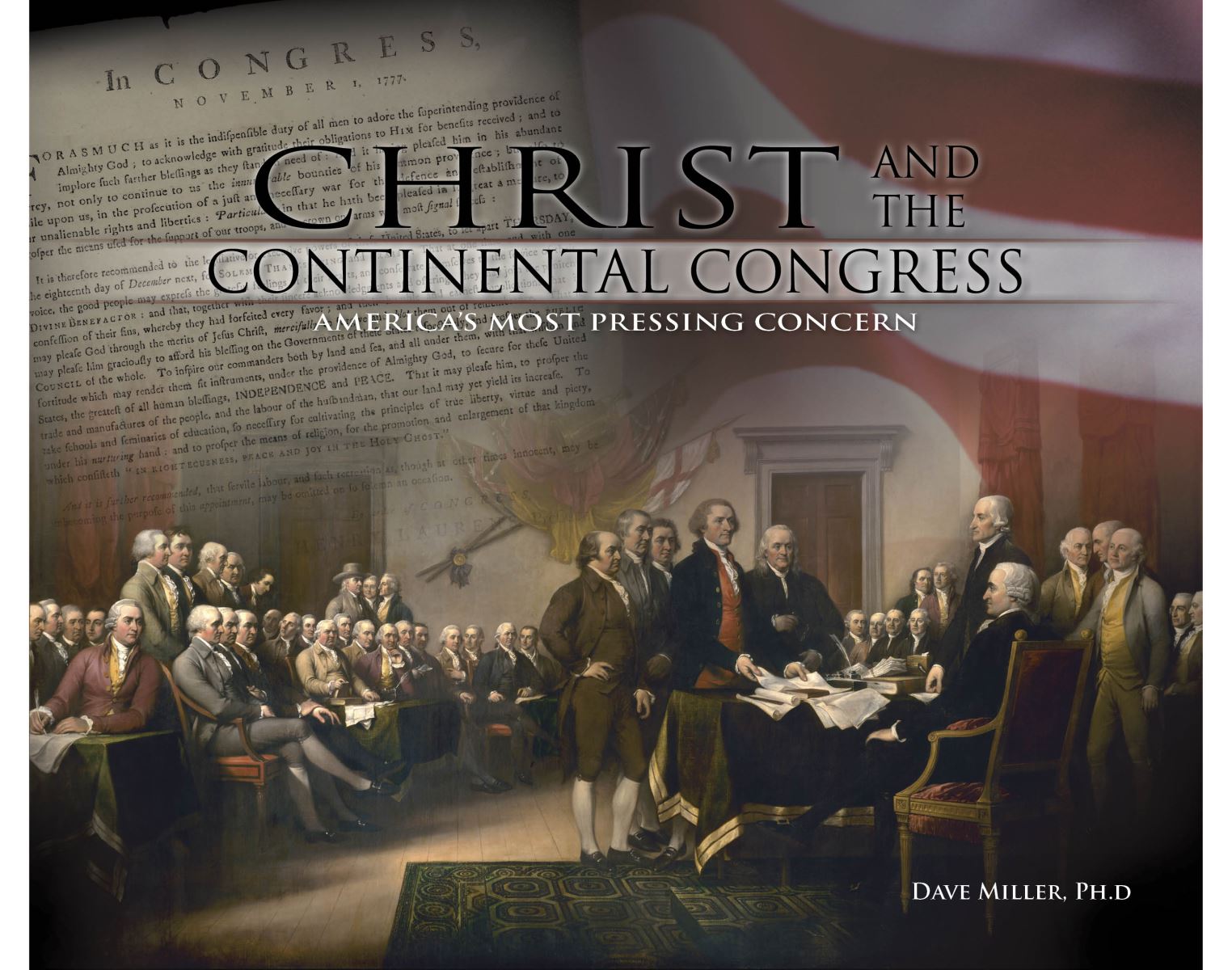
Miller, Dave (2010), Christ and the Continental Congress: America’s Most Pressing Concern (Montgomery, AL: Apologetics Press).
Miller, Dave and Brad Harrub (2004), “An Investigation of the Biblical Evidence Against Homosexuality,” Apologetics Press, http://apologeticspress.org/article/1401.
“NEA Executive Director John Wilson Responds to Misleading ‘Crossroads’ Ad” (2010), National Education Association, http://www.nea.org/home/42823.htm.
“NEA Power” (2009), http://www.youtube.com/watch?v=YkLGvDQsvmY.
“On the Promotion of Homosexuality in the Schools” (2011), Facts About Youth, http://factsaboutyouth.com/posts/on-the-promotion-of-homosexuality-in-the-schools/.
Padgett, Tim (2011), “A Teacher is Back in Class After Anti-Gay Diatribe, But Did He Really Win?” Time, August 30, http://www.time.com/time/nation/article/0,8599,2091038,00.html#ixzz1WjUxZRHF.
Parker v. Hurley (2008), http://www.ca1.uscourts.gov/cgi-bin/getopn.pl?OPINION=07-1528.01A.
“School Bus Driver Lectures Girl on Gay Rights” (2010), AFA, http://www.afa.net/Blogs/BlogPost.aspx?id=2147494982.
“Secretary Arne Duncan Addresses the LGBT Youth Summit in Washington, D.C.” (2011), http://www.youtube.com/watch?v=fA6JfpBHcH8.
Stames, Todd (2011), “Texas School Punishes Boy for Opposing Homosexuality,” Fox News, September 22, http://www.foxnews.com/us/2011/09/22/texas-school-punishes-boy-for-opposing-homosexuality/.
Tran, Mark (2009), “Arnold Schwarzenegger Signs Law Establishing Harvey Milk Day,” October 13, http://www.guardian.co.uk/world/2009/oct/13/schwarzenneger-law-harvey-milk-day.
Unruh, Bob (2008), “‘Gay’ Lessons Violate Civil Rights, Man Says,” WorldNetDaily.com, http://www.worldnetdaily.com/news/article.asp?ARTICLE_ID=57298.
Zahn, Drew (2008), “Teacher Forces Teens to Question Being ‘Straight,’” World Net Daily, http://www.wnd.com/?pageId=82529.
The post Homosexuality and Public Education appeared first on Apologetics Press.
]]>The post What the Founders Said [Part I] appeared first on Apologetics Press.
]]>[EDITOR’S NOTE: The August and September issues of Reason & Revelation are being devoted to examining what the Founders of the American Republic said regarding a number of vital topics that are even now impacting Americans. May we soberly listen and reflect.]
The several hundred men who were responsible for orchestrating the founding of America were very explicit in their pronouncements about their intentions. They left a wealth of writings that articulate their genius. Indeed, these intelligent, well-educated men combed through the annals of human history in order to learn from the mistakes of the past. They examined the human governments that riddle the halls of history in order to construct the best possible government. Their conclusion: the form of government that “fits hand in glove” with the Christian religion (the religion professed by the vast majority of Americans at the time) is a Republic. Listen carefully to prominent Founder Noah Webster:
[O]ur citizens should early understand that the genuine source of correct republican principles is the Bible, particularly the New Testament or the Christian religion…. Almost all the civil liberty now enjoyed in the world owes its origin to the principles of the Christian religion…. [C]ivil liberty has been gradually advancing and improving, as genuine Christianity has prevailed…. [T]he religion which has introduced civil liberty, is the religion of Christ and his apostles, which enjoins humility, piety, and benevolence; which acknowledges in every person a brother, or a sister, and a citizen with equal rights. This is genuine Christianity, and to this we owe our free constitutions of government (1838, pp. v,273-274, emp. added).
In what way is our Republic dependent on Christianity? If Noah Webster (and the scores of other Founders and Framers who expressed similar sentiments) was correct, what specific features of the Republic are dependent on Christianity and Bible principles if America is to be perpetuated? Please consider what the Founders said…
ABOUT THE BASIS OF INDEPENDENCE
One of the fundamental attributes of the United States of America from its inception has been “liberty.” That is, Americans have enjoyed an unprecedented level of freedom, with minimal government intrusion, that enables them, within the bounds and confines of Christian morality, to pursue their dreams and goals, thereby achieving for themselves a standard of living and progress unparalleled in human history. Indeed, the freedom that characterizes American civilization has been the envy of the world for over two centuries. People by the thousands continue to yearn to come to America’s shores, as reflected by the inscription within the Statue of Liberty: “Give me your tired, your poor, your huddled masses yearning to breathe free” (“Statue of Liberty…”).
The salient question is: from whence does this independence derive? What is the source of this incredible state of affairs? On what is America’s freedom based and on what does it continue to depend? Whereas the singular answer to the question was understood by the vast majority of Americans for the first century and a half of the life of the Republic, these days, a host of answers are continually articulated by political leaders and citizens alike that show a fundamental ignorance of America’s origins. For example, some would say that America’s independence is rooted in a fundamental human desire to be free, unhampered by the interference of human government or other authorities. This explanation bears a close resemblance to the 1960s attitude that clamored for freedom to pursue unrestrained, immoral behavior—to “do your own thing.” The Founders would not dignify such with the noble term “freedom.” They would use the biblical term “licentiousness” (see, for example, Washington, 1790; West, 1776) to describe such behavior, i.e., sinful in the sight of God. Others claim that at the root of America’s independence was the desire to be released from the overbearing control of British rule. They believe that such matters as “taxation without representation” and the coercive quartering of British troops in private homes lay at the basis of the desire for independence. While these, and other, circumstances were certainly part of the overall situation, the Founders did not consider them to be the basis of freedom.
Further, the “politically correct” crowd insists that the basis of American independence is pluralism and multiculturalism. That is, they claim that the Founders intended to create an environment in which all religions and ideologies could be embraced and “celebrated.” They believe that the real strength of America lies in “diversity”—the amalgamation, acceptance, and promotion of conflicting cultural, linguistic, and religious beliefs and practices. To them, America is intended to be a haven of security and affirmation for everyone—from the atheist to the homosexual—regardless of religious or moral viewpoint. Such thinking is a perverse and outrageous misrepresentation of the Founders.
Still others have come to believe that the real foundation of America’s freedom is to be found in the federal government’s intrusive effort to achieve economic equality for all Americans (i.e., socialism). They believe that the essential purpose of government is to extract money from the wealthiest citizens and redistribute those funds to the needy and the poor. They believe the government should take care of its citizens, by guaranteeing them a job, sending them a monthly check, providing them with such services as health care, etc. The Founders would be horrified at this perspective as well.
Here is the truth of the matter. On October 20, 1779, the Continental Congress—an entity that represents a host of the Founders of the country—issued a proclamation to the entire nation that contains the quintessential answer to the question: “On what was American independence founded?” Please read it closely:
Whereas it becomes us humbly to approach the throne of Almighty God, with gratitude and praise for the wonders which his goodness has wrought in conducting our forefathers to this western world; for his protection to them and to their posterity amid difficulties and dangers; for raising us, their children, from deep distress to be numbered among the nations of the earth; …and above all, that he hath diffused the glorious light of the gospel, whereby, through the merits of our gracious Redeemer, we may become the heirs of his eternal glory: therefore, Resolved, That it be recommended to the several states, to appoint Thursday, the 9th of December next, to be a day of public and solemn thanksgiving to Almighty God for his mercies, and of prayer for the continuance of his favor and protection to these United States; …that he would grant to his church the plentiful effusions of divine grace, and pour out his holy spirit on all ministers of the gospel; that he would bless and prosper the means of education, and spread the light of Christian knowledge through the remotest corners of the earth; …that he would in mercy look down upon us, pardon our sins and receive us into his favor, and finally, that he would establish the independence of these United States upon the basis of religion and virtue, and support and protect them in the enjoyment of peace, liberty and safety as long as the sun and moon shall endure, until time shall be no more. Done in Congress, the 20th day of October, one thousand seven hundred and seventy-nine, and in the 4th year of the independence of the United States of America.
Samuel Huntington, President.
Attest, Charles Thomson, Secretary (Journals of…, 1904-1937, 15:1191-1193, emp. added).
Establish the independence of the United States on religion and virtue? In view of such remarkable assertions by quintessential Founders of America, it is evident that a vast number of Americans have no clue regarding the foundation of the Republic. They are completely oblivious to the key to genuine freedom. Hence, they are unfamiliar with what is necessary to perpetuate the Republic (Deuteronomy 28:1 ff.). If the average American does not even understand (let alone promote) the basis on which our independence was established, how can we hope to sustain that freedom? Sadly, we cannot.
ABOUT THE PURSUIT OF HAPPINESS
Imagine asking the six billion plus people on the planet, “What would make you happy?” The majority would undoubtedly respond by referring to physical things or conditions that they believe would make them content—everything from cars, houses, clothes, food, and electronic gadgets, to financial security and business success, to exemption from sickness, suffering, heartache, aging, and adversity. In other words, most people believe that their happiness is directly tied to their physical and emotional status in life.
In contrast, the Bible teaches that, as a matter of fact, we humans do not really know what will make us happy (Jeremiah 10:23). We think we do—but we actually do not. We recognize this phenomenon in children. Think of the boy who is so very certain that if he could just have the latest, popular toy, he would be truly fulfilled and never ask for anything else. Or the girl who is absolutely convinced that if she could just have a certain boy as her boyfriend, she would find complete happiness. So we adults have a list in our minds of those things or accomplishments that we think would bring us into a state of ultimate fulfillment and satisfied contentment.
Yet the Bible articulates clearly that the alluring, beckoning baubles of this world cannot provide any meaningful, ultimate happiness. Instead, it teaches that true contentment resides in one’s submission to the will of God—living a spiritual life rather than relying on the temporary stimulation of fleshly appetites that are short-lived (Hebrews 11:25). The psalmist explains: “Blessed [i.e., happy—DM] is everyone who fears the Lord, who walks in His ways. When you eat the labor of your hands, you shall be happy, and it shall be well with you” (128:1-2). “Happy are the people whose God is the Lord!” (Psalm 144:15). “Happy is he who has the God of Jacob for his help, whose hope is in the Lord his God” (Psalm 146:5). “He who heeds the word wisely will find good, and whoever trusts in the Lord, happy is he” (Proverbs 16:20). “Where there is no revelation, the people cast off restraint; but happy is he who keeps the law” (Proverbs 29:18). The Bible clearly teaches that genuine happiness may be achieved in only one way: obeying God’s directives—found only in the Bible. As John Quincy Adams reminded his son:
[G]reat is my veneration for the Bible, and so strong my belief, that when duly read and meditated on, it is of all books in the world, that which contributes more to make men good, wise, and happy…. I call it the source of all human virtue and happiness…. [Man] must hold his felicity and virtue on the condition of obedience to [God’s] will (1850, pp. 9,27-28, emp. added).
This pursuit is, in fact, the entirety of human existence (Ecclesiastes 12:13).
It should come as no surprise that the Founders of American civilization understood this principle and wove it into their official utterances. After all, since they were setting up a government and launching a new nation, they were extremely sensitive to the factors that would ensure the success of such a venture. Take, for example, two proclamations formulated by the Continental Congress to the entire country about a year before the close of the Revolutionary War, the first issued on March 19, 1782:
The goodness of the Supreme Being to all his rational creatures, demands their acknowledgments of gratitude and love; his absolute government of this world dictates, that it is the interest of every nation and people ardently to supplicate his favor and implore his protection…. The United States in Congress assembled, therefore, taking into consideration our present situation, our multiplied transgressions of the holy laws of our God, and his past acts of kindness and goodness towards us, which we ought to record with the liveliest gratitude, think it their indispensable duty to call upon the several states, to set apart the last Thursday in April next, as a day of fasting, humiliation and prayer, that our joint supplications may then ascend to the throne of the Ruler of the Universe, beseeching Him to diffuse a spirit of universal reformation among all ranks and degrees of our citizens; and make us a holy, that so we may be an happy people (Journals of…, 22:137-138, emp. added).
How did the architects of American civilization believe Americans could achieve happiness? By being holy—by being submissive to “the holy laws of our God.” They believed that human happiness is integrally linked to the spiritual condition of the people—and that spirituality is tied to God and His Word.
Seven months later, on October 11, 1782, Congress issued another proclamation:
It being the indispensable duty of all nations, not only to offer up their supplications to Almighty God, the giver of all good, for his gracious assistance in a time of distress, but also in a solemn and public manner to give him praise for his goodness in general, and especially for great and signal interpositions of his Providence in their behalf; therefore, the United States in Congress assembled…do hereby recommend it to the inhabitants of these states in general, to observe, and request the several states to interpose their authority in appointing and commanding the observation of Thursday, the twenty-eighth day of November next, as a day of solemn thanksgiving to God for all his mercies: and they do further recommend to all ranks, to testify their gratitude to God for his goodness, by a cheerful obedience to his laws, and by promoting, each in his station, and by his influence, the practice of true and undefiled religion, which is the great foundation of public prosperity and national happiness (Journals of…, 23:647, emp. added).
The practice of “true and undefiled religion,” i.e., Christianity, is “the great foundation of…national happiness”? But we are being told that the happiness of a people depends on a strong economy, health care for every citizen, a monthly check from the government, ready access to abortion, same-sex marriage, and amnesty for illegal aliens. Not according to the Founders! The entire nation’s happiness depends on a majority of its citizens pursuing the Christian religion.
If these pronouncements were not enough, consider one made by the Father of our country, George Washington. After serving as the Commander-in-Chief of the American revolutionary forces, and then serving two terms as the nation’s first president, George Washington delivered his “Farewell Address” to the nation before retiring to private life. In that speech, he pinpointed the critical foundation for the survival of the nation:
Of all the dispositions and habits which lead to political prosperity, religion and morality are indispensable supports. In vain would that man claim the tribute of patriotism, who should labor to subvert these great pillars of human happiness, these firmest props of the duties of men and citizens. The mere politician, equally with the pious man, ought to respect and to cherish them. A volume could not trace all their connections with private and public felicity (1796, emp. added).
The Christian religion, and the standard of morality it provides, are the “great pillars of human happiness” that are intricately woven into the fabric of human civilization to enable “private and public felicity [happiness—DM]”? Indeed. The wild pursuit of happiness ongoing in America via entertainment, lust, and immorality is doomed to complete failure. The outcome will inevitably end in national tragedy. As Moses informed the Israelites concerning their occupation of the Promised Land:
Set your hearts on all the words which I testify among you today, which you shall command your children to be careful to observe—all the words of this law. For it is not a futile thing for you, because it is your life, and by this word you shall prolong your days in the land (Deuteronomy 32:46-47, emp. added).
ABOUT THE PURPOSE OF GOVERNMENT
The Founders were very specific in articulating the purpose and role of government. While there were certainly disagreements among them regarding the extent to which a centralized government should involve itself in public affairs, most of them would be aghast at the extent to which the federal government now intrudes into the lives of citizens. They would also be astounded to see the extent to which religion, specifically Christianity, has been banned from the political sphere. They would be shocked at the prevailing mentality that insists that the nation as a whole, and its elected representatives in particular, should refrain from expressing publicly any connection to Christianity. It is, in fact, difficult for the average American today to conceive that the Founders would have given their official sanction to Christianity and encouraged its practice for the good of the nation. Yet, that is precisely what the Founders believed en masse. They believed that government had a prominent role to play in the promotion of Christianity throughout the nation and the world.
On March 16, 1776, four months before declaring independence, the Continental Congress issued a proclamation to the entire nation. Observe their implied understanding of the role of government by the specific appeals they made, particularly regarding the critical importance of Christianity:
In times of impending calamity and distress; when the liberties of America are imminently endangered by the secret machinations and open assaults of an insidious and vindictive administration, it becomes the indispensable duty of these hitherto free and happy colonies, with true penitence of heart, and the most reverent devotion, publickly to acknowledge the over ruling providence of God; to confess and deplore our offences against him; and to supplicate his interposition for averting the threatened danger, and prospering our strenuous efforts in the cause of freedom, virtue, and posterity.
The Congress, therefore…do earnestly recommend, that Friday, the Seventeenth day of May next, be observed by the said colonies as a day of humiliation, fasting, and prayer;…That he would be graciously pleased to bless all his people in these colonies with health and plenty, and grant that a spirit of incorruptible patriotism, and of pure undefiled religion, may universally prevail;…. And it is recommended to Christians of all denominations, to assemble for public worship, and abstain from servile labour on the said day (Journals of the…, 4:208-209, emp. added).
To the Founders, patriotism and Christianity go hand in hand. The fate of the new nation was dependent on the extent to which Americans devoted themselves to practicing the precepts of Christianity. The Congress included as part of their official governmental role to promote the universal spread of Christianity.
On November 1, 1777, they directed additional remarks to the country:
It is therefore recommended to the legislative or executive Powers of these UNITED STATES to set apart THURSDAY, the eighteenth Day of December next, for SOLEMN THANKSGIVING and PRAISE:…That it may please him…to prosper the Means of Religion, for the promotion and enlargement of that Kingdom, which consisteth “in Righteousness, Peace and Joy in the Holy Ghost” (Journals of…, 9:854-851, emp. added).
The quoted phrase at the end of their proclamation is from Romans 14:17 and refers to the Christian religion.
On March 20, 1779, their proclamation to the nation included the following:
RESOLVED, THAT it be recommended to the several States to appoint the First Thursday in May next to be a Day of Fasting, Humiliation, and Prayer to Almighty God…that he will diffuse useful knowledge, extend the influence of true religion, and give us that peace of mind, which the world cannot give (Journals of…, 13:343-344, emp. added).
Again, the Continental Congress conceptualized their role to include urging citizens to request God to spread Christianity. The peace of mind which “the world cannot give” is an allusion to the words of Jesus and Paul taken from John 14:27 and Philippians 4:7.
On March 19, 1782, they proclaimed:
The United States in Congress assembled, therefore…think it their indispensable duty to call upon the several states,…beseeching Him…that He would incline the hearts of all men to peace, and fill them with universal charity and benevolence, and that the religion of our Divine Redeemer, with all its benign influences, may cover the earth as the waters cover the seas (Journals of…, 22:137-138, emp. added).
On October 11, 1782, their proclamation included these words:
[T]he United States in Congress assembled…recommend to all ranks, to testify their gratitude to God for his goodness, by a cheerful obedience to his laws, and by promoting, each in his station, and by his influence, the practice of true and undefiled religion (Journals of…, 23:647, emp. added).
“True and undefiled religion,” a paraphrase of James 1:27, is yet another reference to the religion of Christ. Who, today, considers such admonitions to fall within the purview of elected officials?
One of the Fathers of American Jurisprudence, Joseph Story, summarized the attitude of the Founders and most Americans in his monumental work Commentaries on the Constitution of the United States. His lucid, cogent clarification of the interpenetration of religion and government is desperately needed today:
How far any government has a right to interfere in matters touching religion, has been a subject much discussed by writers upon public and political law…. [T]he right of a society or government to interfere in matters of religion will hardly be contested by any persons, who believe that piety, religion, and morality are intimately connected with the well being of the state, and indispensable to the administration of civil justice. The promulgation of the great doctrines of religion, the being, and attributes, and providence of one Almighty God; the responsibility to him for all our actions, founded upon moral freedom and accountability; a future state of rewards and punishments; the cultivation of all the personal, social, and benevolent virtues; these never can be a matter of indifference in any well ordered community. It is, indeed, difficult to conceive, how any civilized society can well exist without them. And at all events, it is impossible for those, who believe in the truth of Christianity, as a divine revelation, to doubt, that it is the especial duty of government to foster, and encourage it among all the citizens and subjects. This is a point wholly distinct from that of the right of private judgment in matters of religion, and of the freedom of public worship according to the dictates of one’s conscience. The real difficulty lies in ascertaining the limits, to which government may rightfully go in fostering and encouraging religion…. Now, there will probably be found few persons in this, or any other Christian country, who would deliberately contend, that it was unreasonable, or unjust to foster and encourage the Christian religion generally, as a matter of sound policy, as well as of revealed truth. In fact, every American colony, from its foundation down to the revolution…did openly, by the whole course of its laws and institutions, support and sustain, in some form, the Christian religion; and almost invariably gave a peculiar sanction to some of its fundamental doctrines. And this has continued to be the case in some of the states down to the present period, without the slightest suspicion, that it was against the principles of public law, or republican liberty. Indeed, in a republic, there would seem to be a peculiar propriety in viewing the Christian religion, as the great, basis, on which it must rest for its support and permanence, if it be, what it has ever been deemed by its truest friends to be, the religion of liberty…. Probably at the time of the adoption of the constitution, and of the amendment to it, now under consideration, the general, if not the universal, sentiment in America was, that Christianity ought to receive encouragement from the state, so far as was not incompatible with the private rights of conscience, and the freedom of religious worship. An attempt to level all religions, and to make it a matter of state policy to hold all in utter indifference, would have created universal disapprobation, if not universal indignation (1833, Vol. III, Ch. 44, Paragraphs 1865-1868, emp. added).
American history is replete with the application of this principle. American government was founded on Christian principles—and its perpetuation depends on the continuation of those principles by a substantial portion of its citizenry. In complete harmony with the spirit of the Founders, consider the words of a 20th century President, Calvin Coolidge, who expressed the prevailing sentiments of the nation on Wednesday, March 4, 1925, when he commenced his presidency with the following words:
Here stands our country, an example of tranquility at home, a patron of tranquility abroad. Here stands its Government, aware of its might but obedient to its conscience. Here it will continue to stand, seeking peace and prosperity,…attentive to the intuitive counsel of womanhood, encouraging education, desiring the advancement of religion, supporting the cause of justice and honor among the nations. America seeks no earthly empire built on blood and force. No ambition, no temptation, lures her to thought of foreign dominions. The legions which she sends forth are armed, not with the sword, but with the cross. The higher state to which she seeks the allegiance of all mankind is not of human, but of divine origin. She cherishes no purpose save to merit the favor of Almighty God (1925, emp. added).
Whatever varied functions and activities the government is to involve itself in, according to the original design of the Republic, according to the Founders themselves, America actually has only one purpose: to merit the favor of God. When the government and Americans at large lose sight of that singular, all-encompassing principle, the foundations of the Republic have been significantly compromised. God help us to return to our moorings.
ABOUT THE PURPOSE OF SCHOOLS
American public schools, especially the university, have become counterproductive to the continuation of the American way of life. In his book Freefall of the American University, Jim Nelson Black describes the decline of the American educational process:
Grade inflation, the proliferation of junk courses, and the loss of a core curriculum,…historical revisionism, moral relativism, and an emphasis on the flawed ideologies of race and gender continue virtually unchallenged…. The crisis in higher education is not only the risk of indoctrination through the vagaries of pluralism, tolerance, and diversity but also the fact that “value-neutral” socialization and radical sexual indoctrination are robbing many young Americans of their future…. The university campus is no longer a center of higher learning but a socialist conspiracy that feeds on itself, fueled by fear-mongering on the Left and apathy on the Right (2004, pp. ix,xi,xiv).
Marlin Maddoux also provides an eye-opening assessment of American schools:
While America wasn’t looking, Reading, Writing, and Arithmetic was largely replaced by Moral Relativism and Secular Humanism in our kindergartens, grade schools, and universities…. In fact, the public school system has done more to undermine the basic principles of freedom, free enterprise, patriotism, and Christianity than any other single institution (2006, inside flap, p. 76).
What an unbelievable turnaround from the intention of those who established the Republic. Their viewpoint regarding public education was articulated many times during the course of the founding of America. One such declaration came in a proclamation to the nation by the Continental Congress on November 1, 1777:
It is therefore recommended to the legislative or executive Powers of these UNITED STATES to set apart THURSDAY, the eighteenth Day of December next, for SOLEMN THANKSGIVING and PRAISE: That at one Time and with one Voice, the good People may express the grateful Feelings of their Hearts, and consecrate themselves to the Service of their Divine Benefactor;…That it may please him…[t]o take Schools and Seminaries of Education, so necessary for cultivating the Principles of true Liberty, Virtue and Piety, under his nurturing Hand (Journals of…, 9:854-851, emp. added).
Another affirmation of the role of schools was made by the Congress in a national proclamation issued on March 19, 1782:
The United States in Congress assembled, therefore, taking into consideration our present situation, our multiplied transgressions of the holy laws of our God, and his past acts of kindness and goodness towards us, which we ought to record with the liveliest gratitude, think it their indispensable duty to call upon the several states, to set apart the last Thursday in April next, as a day of fasting, humiliation and prayer, that our joint supplications may then ascend to the throne of the Ruler of the Universe, beseeching Him to diffuse a spirit of universal reformation among all ranks and degrees of our citizens;…that He would grant success to all engaged in lawful trade and commerce, and take under his guardianship all schools and seminaries of learning, and make them nurseries of virtue and piety (Journals of…, 22:137-138, emp. added).
Declaration signer and physician, Dr. Benjamin Rush, explained the mode of education to be adopted “so as to secure to the state all the advantages to be derived from the proper instruction of youth”:
[T]he only foundation for a useful education in a republic is to be laid in Religion. Without this there can be no virtue, and without virtue there can be no liberty, and liberty is the object and life of all republican governments…. [T]he religion I mean to recommend in this place, is that of the New Testament…. [A]ll its doctrines and precepts are calculated to promote the happiness of society, and the safety and well being of civil government. A Christian cannot fail of being a republican…for every precept of the Gospel inculcates those degrees of humility, self-denial, and brotherly kindness, which are directly opposed to the pride of monarchy and the pageantry of a court. A Christian cannot fail of being useful to the republic, for his religion teacheth him, that no man “liveth to himself” (1804, pp. 8-9).
I lament, that we waste so much time and money in punishing crimes, and take so little pains to prevent them. We profess to be republicans, and yet we neglect the only means of establishing and perpetuating our republican forms of government, that is, the universal education of our youth in the principles of Christianity, by means of the Bible; for this divine Book, above all others, favours that equality among mankind, that respect for just laws, and all those sober and frugal virtues, which constitute the soul of republicanism (1804, pp. 112-113, emp. added).
It is evident that whatever benefits might be received from education, according to the Founders of American civilization, the central role of schools of learning in a Republic is to instill within children Christian virtue and piety, which undergird the principles of true freedom. No wonder the school textbooks that characterized education from the very beginning of the country right up to WW2 were saturated with allusions to God, the Bible, and Christianity (e.g., the New England Primer; McGuffey’s Readers; the “Blue Back Speller”; cf. Miller, 2008, pp. 53-68). The only hope for the survival of the Republic is for education to return to the teaching of Christian principles. In the words of Jesus Christ: “Take My yoke upon you and learn from Me, for I am gentle and lowly in heart, and you will find rest for your souls” (Matthew 11:29, emp. added).
REFERENCES
Adams, John Quincy (1850), Letters of John Quincy Adams to His Son on the Bible and Its Teachings (Auburn, MA: James Alden).
Black, Jim Nelson (2004), Freefall of the American University (Nashville, TN: WND Books).
Coolidge, Calvin (1925), “Inaugural Address,” The Avalon Project at Yale Law School, http://www.yale.edu/lawweb/avalon/presiden/inaug/coolidge.htm.
Journals of the Continental Congress, 1774-1789 (1904-1937), ed. Worthington C. Ford, et al. (Washington, D.C.: Government Printing Office), Library of Congress, http://memory.loc.gov/ammem/amlaw/lwjc.html.
Maddoux, Marlin (2006), Public Education Against America (New Kensington, PA: Whitaker House).
Miller, Dave (2008), The Silencing of God: The Dismantling of America’s Christian Heritage (Montgomery, AL: Apologetics Press).
Rush, Benjamin (1804), Essays, Literary, Moral, and Philosophical (Philadelphia, PA: Thomas and William Bradford), http://books.google.com/books?id=xtUKAAAAIAAJ&printsec=frontcover&dq=benjamin+rush&cd=2#v=onepage&q&f=false.
“Statue of Liberty National Monument” (no date), http://www.libertystatepark.com/emma.htm.
Story, Joseph (1833), Commentaries on the Constitution of the United States (Boston, MA: Hilliard, Gray, & Co.)
Washington, George (1790), “First Annual Message, January 8, 1790,” http://www.founding.com/founders_library/pageID.2222/default.asp.
Washington, George (1796), “Farewell Address,” The Avalon Project at Yale Law School, http://www.yale.edu/lawweb/avalon/washing.htm.
Webster, Noah (1838), History of the United States (Cincinnati, OH: Burgess & Crane), http://books.google.com/books?id=zRFLAAAAYAAJ&printsec=frontcover&dq=history+of+the+united+states+noah+webster&cd=1#v=onepage&q&f=false.
The post What the Founders Said [Part I] appeared first on Apologetics Press.
]]>The post The Real Problem with American Public Education appeared first on Apologetics Press.
]]>Yet, it is no secret that American schools are in trouble. Schools cannot guarantee student performance. You’ve heard the horror stories of students graduating from high school without being able to read. Further, public schools are experiencing more discipline problems than ever before. There are more high school dropouts than ever. The list goes on. Politicians and educators have been scrambling for years to address the problem—from school vouchers to “no child left behind.”
So what is the problem? What has happened to American public education? If we have more money, more degreed teachers, and more educational tools, yet little improvement has been forthcoming, what is the problem? Could our sad situation possibly have anything to do with the fact that we have displaced God and religion from the classroom where they previously reigned for over a century and a half? The Founders of the American Republic anticipated and articulated the problem plainly. For example, Declaration of Independence signer Benjamin Rush stated: “[T]he only foundation for a useful education in a republic is to be laid in religion. Without this there can be no virtue, and without virtue there can be no liberty, and liberty is the object and life of all republican governments” (1798, p. 8, emp. added). Dr. Rush further stated:
We profess to be republicans, and yet we neglect the only means of establishing and perpetuating our republican forms of government, that is, the universal education of our youth in the principles of Christianity by the means of the Bible. For this Divine Book, above all others, favors that equality among mankind, that respect for just laws, and those sober and frugal virtues, which constitute the soul of republicanism (pp. 93-94, emp. added).
Dr. Rush also insisted:
I wish to be excused for repeating here, that if the Bible did not convey a single direction for the attainment of future happiness, it should be read in our schools in preference to all other books, from, its containing the greatest portion of that kind of knowledge which is calculated to produce private and public temporal happiness…. By withholding the knowledge of this [Christian] doctrine from children, we deprive ourselves of the best means of awakening moral sensibility in their minds (1947, pp. 122,125, emp. and bracketed item added).
Noah Webster echoed the same sentiment: “In my view, the Christian religion is the most important and one of the first things in which all children, under a free government, ought to be instructed” (1843, p. 291, emp. added).
Indeed, the central problem in American public education is strictly and solely moral and religious. Unless God and the principles of Christianity are returned to the schools, we can expect to see a continuation of the national downward spiral. As God instructed the Israelite nation of old: “Only take heed to yourself, and diligently keep yourself, lest you forget the things your eyes have seen, and lest they depart from your heart all the days of your life. And teach them to your children and your grandchildren” (Deuteronomy 4:9, emp. added).
REFERENCES
Rush, Benjamin (1947), “The Bible as a School Book,” in The Selected Writings of Benjamin Rush, ed. Dagobert Runes, (New York: Philosophical Library), http://books.google.com/books?ct=result&id=SfVI4cYU2Y0C&dq=%22awakening+moral+sensibility%22&ots=qBCgbpRB4x&pg=PA125&lpg= PA125&sig=ACfU3U0oaK9Gl39Fi7YJsyRbKPJ3VbjLRg&q= school#PPP1,M1.
Rush, Benjamin (1798), Essays, Literary, Moral and Philosophical (Philadelphia, PA: Thomas & Samuel Bradford).
Webster, Noah (1843), A Collection of Papers on Political, Literary, and Moral Subjects (New York: Webster and Clark).
The post The Real Problem with American Public Education appeared first on Apologetics Press.
]]>The post The Purpose of Education appeared first on Apologetics Press.
]]>In contrast to this subversion, most parents see education simply as part of the process that will prepare their children for adulthood. Typically, that preparation consists primarily of a “good education.” But why do parents want their children to go to school and get a “good” education? Most would answer: “so my child will be able to make a good living.” In other words, parents want their children to be able to secure a suitable job that will, in turn, secure their financial future. They want their children to be able to support themselves and their families. No doubt you have seen the commercials that correlate number of years of education with annual income.
But what about the intentions of those who founded the schools of America? Did the founders of this country’s premiere institutions of higher learning share this same basic purpose for public education? Did they sacrifice their time, money, and effort to establish schools in America for the primary purpose of making it possible for students to “make a good living”? Did they understand the central objective of secular education to be to enable a person to secure a good-paying job? Allowing our educational forebears to speak for themselves in their own words reveals some startling realizations.
The first institution of higher education in the Colonies was Harvard College, founded in 1636. Named after its first benefactor, John Harvard, the 1636 rules of Harvard included the following declaration:
Let every student be plainly instructed and earnestly pressed to consider well the main end of his life and studies is to know God and Jesus Christ which is eternal life (John 17.3) and therefore to lay Christ in the bottom as the only foundation of all sound knowledge and learning. And seeing the Lord only giveth wisdom, let every one seriously set himself by prayer in secret to seek it of Him (Prov. 2,3). Every one shall so exercise himself in reading the Scriptures twice a day that he shall be ready to give such an account of his proficiency therein (as quoted in Pierce, 1833, p. 5, emp. added; parenthetical items in orig.).
Over a century after the founding of Harvard, the state constitution of Massachusetts reiterated the original and continuing purpose of the institution:
Article I. Whereas our wise and pious ancestors, so early as the year one thousand six hundred and thirty-six, laid the foundation of Harvard College, in which university many persons of great eminence have, by the blessing of God, been initiated in those arts and sciences, which qualified them for public employments, both in church and state: and whereas the encouragement of arts and sciences, and all good literature, tends to the honor of God, the advantage of the Christian religion, and the great benefit of this and the other United States of America—it is declared, that the President and Fellows of Harvard College…shall have, hold, use, exercise and enjoy, all the powers…which they now have or are entitled to have (Constitution…, emp. added).
So according to the founders of Harvard, as well as the architects of the state constitution (themselves founders of the Republic), what was the purpose of education? To know God and Christ, to honor God, and to demonstrate the “advantage,” i.e., superiority of, the Christian religion to the benefit of the entire country. Based on that original purpose, it is evident that public education today is, to borrow a metaphor from Jesus, “like whitewashed tombs which indeed appear beautiful outwardly, but inside are full of dead men’s bones and all uncleanness” (Matthew 23:27).
The founding of the other premiere institutions of higher learning in America followed this same all-consuming, quintessential principle. For example, the second college established in America was William and Mary, founded in 1693. In the 1758 volume, The Charter, Transfer and Statutes of the College of William and Mary in Virginia, the purpose for its founding was explained:
There are three things which the founders of this college proposed to themselves, to which all its statutes should be directed. The first is that the youth of Virginia should be well educated to learning and good morals. The second is that the churches of America, especially Virginia, should be supplied with good ministers after the doctrine and government of the Church of England, and that the college should be a constant seminary for this purpose. The third is that the Indians of America should be instructed in the Christian religion, and that some of the Indian youth that are well behaved and well inclined, being first well prepared in the Divinity School, may be sent out to preach the gospel to their countrymen in their own tongue (as quoted in Adler, 1968, 1:371, emp. added).
 |
|
Old campus building at Yale in New Haven, Connecticut.
|
The third college established in America, Yale, was founded in 1701 and had as its stated purpose to be a school “wherein Youth may be instructed in the Arts and Sciences [and] through the blessing of Almighty God may be fitted for Publick employment both in Church and Civil State” (“About Yale,” n.d.). The trustees stated the purpose on November 11, 1701 in the following words: “To plant, and under ye Divine blessing to propagate in this Wilderness, the blessed Reformed, Protestant Religion, in ye purity of its Order, and Worship” (Mode, 1921, p. 109). They further stated: “Every student shall consider the main end of his study to wit to know God in Jesus Christ and answerably to lead a Godly, sober life” (Ringenberg, 1984, p. 38, emp. added). Regulations for students at Yale in 1754 included strong religious requirements: “All scholars shall live religious, godly, and blameless lives according to the rules of God’s Word, diligently reading the Holy Scriptures, the fountain of light and truth; and constantly attend upon all the duties of religion, both in public and secret” (as quoted in Adler, 1968, 1:464, emp. added).
The fourth college established in America was Princeton, founded in 1746. In 1752, one of the trustees of the school, Gilbert Tennent, and Samuel Davies, later president, prepared a brochure describing the college, which included the following explanations of its intended purpose:
 |
|
Princeton University in Princeton, New Jersey.
|
NOTHING has a more direct tendency to advance the happiness and glory of a community than the founding of public schools and seminaries of learning for education of youth, and adorning their minds with useful knowledge and virtue. Hereby, the rude and ignorant are civilized and rendered human; persons who would otherwise be useless members of society are qualified to sustain with honor the offices they may be invested with for the public service; reverence of the Deity, filial piety, and obedience to the laws are inculcated and promoted…. [S]everal gentlemen residing in and near the province of New Jersey, who were well-wishers to the felicity of their country and real friends of religion…first projected the scheme of a collegiate education in that province. The immediate motives to this generous design were: the great number of Christian societies then lately formed in various parts of the country, where many thousands of the inhabitants, ardently desirous of the administration of religious ordinances, were entirely destitute of the necessary means of instruction and incapable of being relieved…. [T]he great scarcity of candidates for the ministerial function to comply with these pious and Christian demands…. [T]hese considerations were the most urgent arguments for the immediate prosecution of the above mentioned scheme of education…. It will suffice to say that the two principal objects the trustees had in view were science and religion. Their first concern was to cultivate the minds of the pupils in all those branches of erudition which are generally taught in the universities abroad; and, to perfect their design, their next care was to rectify the heart by inculcating the great precepts of Christianity in order to make them good. Upon these views this society was founded…. But as religion ought to be the end of all instruction and gives it the last degree of perfection…[s]tated times are set apart for the study of the Holy Scriptures in the original languages, and stated hours daily consecrated to the service of religion. The utmost care is taken to discountenance vice and to encourage the practice of virtue and a manly, rational, and Christian behavior in the students (Davies and Tennent, 1754, emp. added).
Dartmouth was founded in 1769 by “Reverend Eleazar Wheelock” with a charter granted by King George III to spread Christianity—initially to Indian youths:
KNOW YE, THEREFORE that We, considering the premises and being willing to encourage the laudable and charitable design of spreading Christian knowledge among the savages of our American wilderness, and also that the best means of education be established in our province of New Hampshire, for the benefit of said province, do, of our special grace, certain knowledge and mere motion, by and with the advice of our counsel for said province, by these presents, will, ordain, grant and constitute that there be a college erected in our said province of New Hampshire by the name of Dartmouth College, for the education and instruction of youth of the Indian tribes in this land in reading, writing, and all parts of learning which shall appear necessary and expedient for civilizing and christianizing children of pagans, as well as in all liberal arts and sciences, and also of English youth and any others. And the trustees of said college may and shall be one body corporate and politic, in deed, action and name, and shall be called, named and distinguished by the name of the Trustees of Dartmouth College (Charter of…, emp. added).
Harvard, William and Mary, Yale, Princeton, Dartmouth—this listing could be significantly expanded.
Even a brief glance at some of the original school mottos testifies to the purpose of education in America from the beginning (see “List of…,” n.d.). For example, Brown University, the seventh oldest institution of higher learning in the United States, founded by Baptist preachers in 1764 as Rhode Island College, has the motto In deo speramus, Latin for “In God We Hope.” Princeton’s motto is Dei sub numine viget, meaning “Under God’s Power She Flourishes.” Dartmouth’s motto is Vox clamantis in deserto, translated “A Voice Crying in the Wilderness,” a reference to Isaiah’s prophecy of John the Baptizer in Isaiah 40:3 (cf. Matthew 3:3). Another Ivy League school, founded in 1754 as King’s College, renamed Columbia College when it reopened in 1784 after the American Revolution, and now Columbia University, has the motto In lumine Tuo videbimus lumen, which means “In Thy Light Shall We See Light.”
George Washington University was chartered in 1821 (on land provided by George Washington) as Columbian College with the motto Deus Nobis Fiducia—“In God Our Trust.” Northwestern University was founded in 1851 by Methodists from Chicago to serve Americans in the Northwest Territory. The motto on Northwestern’s seal is Quaecumque sunt vera, meaning “Whatsoever things are true”—taken from Philippians 4:8. Also on the seal is a Greek phrase inscribed on the pages of an open book: ho logos pleres charitos kai aletheias, which translates as “The Word…full of grace and truth”—a reference to Jesus Christ taken from John 1:14. Even the University of California at Berkeley, a school known for its student activism, rebellion against America’s Christian heritage, and “hippie” counterculture in the 1960s, has a Bible-inspired motto, “Let There Be Light,” taken from Genesis 1:3.
 American education has strayed far from its moorings. We have shifted from a nation that saw its very survival as dependent on the spread of Christian principles through the schools, to a nation that literally disdains, repudiates, and has ejected the teaching of Christian principles from the public school system. The Founders would be appalled. Physician and signer of the Declaration of Independence, Dr. Benjamin Rush, asserted: “[T]he only foundation for a useful education in a republic is to be laid in religion. Without this there can be no virtue, and without virtue there can be no liberty, and liberty is the object and life of all republican governments” (1798, p. 8, emp. added). Dr. Rush further stated:
We profess to be republicans, and yet we neglect the only means of establishing and perpetuating our republican forms of government, that is, the universal education of our youth in the principles of Christianity by the means of the Bible. For this Divine Book, above all others, favors that equality among mankind, that respect for just laws, and those sober and frugal virtues, which constitute the soul of republicanism (pp. 93-94, emp. added).
 Noah Webster echoed those sentiments: “In my view, the Christian religion is the most important and one of the first things in which all children, under a free government, ought to be instructed” (1843, p. 291, emp. added). The words of God to Moses at Mt. Sinai ought to serve as the guiding star for America’s schools: “Gather the people to Me, and I will let them hear My words, that they may learn to fear Me all the days they live on the earth, and that they may teach their children” (Deuteronomy 4:10). “Come, you children, listen to me; I will teach you the fear of the Lord” (Psalm 34:11). Without the fear of the Lord instilled in the nation’s youth, all will be lost (Deuteronomy 5:33; 6:1-18; Jeremiah 7:23).
REFERENCES
“About Yale” (no date), Yale University, [On-line], URL: http://www.yale.edu/about/history.html.
Adler, Mortimer, ed. (1968), The Annals of America (Chicago, IL: Encyclopedia Britannica).
Charter of Dartmouth College (no date), Dartmouth College Government Documents, [On-line], URL: http://www.dartmouth.edu/~govdocs/case/charter.htm.
Constitution of the Commonwealth of Massachusetts, [On-line], URL: http://www.mass.gov/legis/const.htm.
Davies, Samuel and Gilbert Tennent (1754 edition), The Value of the College at Princeton: From A General Account of the Rise and State of the College, Lately Established in the Province of New Jersey, [On-line], URL: http://personal.pitnet.net/primarysources/princeton.html.
Kertscher, Tom (2006), “The Survey Says What?” Milwaukee Journal Sentinel, May 15, [On-line], URL: http://www.jsonline.com/story/index.aspx?id=424003.
“List of University Mottos” (no date), Answers.com, [On-line], URL: http://www.answers.com/topic/list-of-university-mottos.
Lyons, Eric and Kyle Butt (2007), “Militant Atheism,” Reason & Revelation, 27[1]:1-5, January, [On-line], URL: http://www.apologeticspress.org/articles/3195.
Mode, Peter G. (1921), Sourcebook and Bibliographical Guide for American Church History (Menasha, WI: George Banta Publishing).
Pierce, Benjamin (1833), A History of Harvard University (Cambridge, MA: Brown, Shattuck, & Co.).
Ringenberg, William C. (1984), The Christian College: A History of Protestant Higher Education in America (Grand Rapids, MI: Eerdmans).
Rush, Benjamin (1798), Essays, Literary, Moral and Philosophical (Philadelphia, PA: Thomas & Samuel Bradford).
Webster, Noah (1843), A Collection of Papers on Political, Literary, and Moral Subjects (New York: Webster and Clark).
The post The Purpose of Education appeared first on Apologetics Press.
]]>The post Schoolbooks, Easter Eggs, and Homosexuality appeared first on Apologetics Press.
]]>Another case in point: A second grade teacher at Estabrook Elementary in Lexington, Massachusetts recently read a fairytale book to her class. The fairytale book was not the Grimm brothers’ Cinderella or Hansel and Gretel. Nor was it Hans Christian Andersen’s The Emperor’s New Clothes or The Princess and the Pea. No, not hardly. It was King and King—a book about two princes who marry each other, acquire children, and are shown kissing on the last page. The book targets children ages six and older. The Lexington Superintendent of Schools boasts that the school system is committed to “diversity and tolerance” and maintains that he has no legal obligation to notify parents when children are being exposed to such material since same-sex marriage is now legal in Massachusetts (Jan, 2006). Of course, the Left Coast 9th Circuit Court of Appeals had already ruled that parents do not have a fundamental right to control when, where, and how their children are taught about sex (Parker, 2005).
Most Americans are unaware that the public school system is being inundated with educational materials that promote the homosexual agenda, materials that are specifically designed to prepare the next generation to embrace homosexuality. The public school system is being systematically rearranged to eliminate parents from the loop so that they will cease “interfering” with educators who seek to indoctrinate children with their anti-Christian values. The books appearing in various school libraries around the country are legion, including And Tango Makes Three; Heather Has Two Mommies; Daddy’s Roommate; Jack and Jim: Picture Book; One Dad, Two Dads, Brown Dad, Blue Dads; The Sissy Duckling; Who’s in a Family?; Molly’s Family; It’s Perfectly Normal; Best, Best Colors; and My Two Uncles. Imagine what America is going to be like 10 to 15 years from now when the children nurtured by such books are adults. (Parents may want to give more consideration to homeschooling).
Christians and others who continue to oppose homosexuality will remain the objects of abuse, ridiculed as “homophobic,” “intolerant,” and “judgmental.” But “we ought to obey God rather than men” (Acts 5:29). The Bible is still the inspired Word of God. The Creator has said that same-sex relations are sinful (Romans 1:24-28). The spread of such behavior will result in national destruction, as recognized by the great English jurist, William Blackstone (who exerted a profound influence on the Founding Fathers and American jurisprudence):
[T]he infamous crime against nature…is an offence of so dark a nature…. THIS the voice of nature and of reason, and the express law of God, determine to be capital. Of which we have a signal instance, long before the Jewish dispensation, by the destruction of two cities by fire from heaven: so that this is an universal, not merely a provincial, precept (1769, 4.15.215-216).
REFERENCES
Blackstone, William (1769), Commentaries on the Laws of England, [On-line], URL: http://www.yale.edu/lawweb/avalon/blackstone/bk4ch15.htm.
“Gay Parents Quietly Crash White House Easter Party” (2006), Yahoo News, April 17, [On-line], URL: http://news.yahoo.com/s/afp/20060417/ts_alt_afp/u spoliticseaster_060417200009.
Jan, Tracy (2006), “Parents Rip School Over Gay Storybook,” Boston Globe, April 20, [On-line], URL: http://www.boston.com/news/local/articles/2006/04/20/parents_rip_school _over_gay_storybook/.
Parker, Kathleen (2005), “Parents Take Another Hit in the Culture Wars,” Orlando Sentinel, G3, November 6, [On-line], URL: http://pqasb.pqarchiver.com/orlandosentinel/access/922392231.html?dids= 922392231:922392231&FMT=ABS&FMTS=ABS:FT&date=Nov+6%2C+2005&author=Kathl een+Parker%2C+Sentinel+Columnist&pub=Orlando+Sentinel&edition=&startpag e=G.3&desc=Parents+take+another+hit+in+the+culture+wars.
“White House Easter: Gay Friendly?” (2006), CBS News, April 13, [On-line], URL: http://www.cbsnews.com/stories/2006/04/13/national/main 1496408.shtml.
The post Schoolbooks, Easter Eggs, and Homosexuality appeared first on Apologetics Press.
]]>The post Illegal to Teach American History—in America? appeared first on Apologetics Press.
]]>Talk about “political correctness” run amok! The case is simply one more instance among hundreds of the widespread misconception that the constitution and its Framers intended to establish a religionless republic. It further demonstrates the conspiratorial-like agenda of liberal educators, judges, and politicians to sanitize American history by expunging the factuality of America’s Christian heritage. Make no mistake, if they get their way—and they have made significant strides in the last fifty years—American civilization will continue its downward spiral into moral depravity and eventual dissolution. The Founders themselves so predicted.
For example, Noah Webster affirmed in 1829: “The Christian religion, in its purity, is the basis, or rather the source of all genuine freedom in government…and I am persuaded that no civil government of a republican form can exist and be durable in which the principles of that religion have not a controlling influence” (as quoted in Snyder, 1990, p. 253). Charles Carroll, one of the signers of the Declaration of Independence, in a letter to James McHenry on November 4, 1800, claimed: “[W]ithout morals a republic cannot subsist any length of time; they therefore who are decrying the Christian religion, whose morality is so sublime and pure…are undermining the solid foundation of morals, the best security for the duration of free governments” (as quoted in Steiner, 1907, p. 475).
The first president and “father of our country,” George Washington, insisted in 1788:
No country upon earth ever had it more in its power to attain these blessings than United America. Wondrously strange, then, and much to be regretted indeed would it be, were we to neglect the means and to depart from the road which Providence has pointed us to so plainly; I cannot believe it will ever come to pass (1835, 9:391-39).
In his “Inaugural Address” in 1789, Washington further asserted: “The propitious smiles of Heaven can never be expected on a nation that disregards the eternal rules of order and right which Heaven itself has ordained” (American State Papers…, 1833, 1:9-10).
The governor of Connecticut (and signer of the Declaration of Independence), Samuel Huntington, said in 1788: “While the great body of freeholders are acquainted with the duties which they owe to their God, to themselves, and to men, they will remain free. But if ignorance and depravity should prevail, they will inevitably lead to slavery and ruin” (as quoted in Elliot, 1836, 2:200).
Many other great Americans understood the connection between America’s survival and her attachment to the God of the Bible. For example, Theodore Roosevelt insisted: “A churchless community, a community where men have abandoned and scoffed at or ignored their religious needs, is a community on the rapid down grade” (n.d.). Supreme Allied Commander during World War II and later U.S. president, Dwight D. Eisenhower, explained: “Without God there could be no American form of government nor an American way of life. Recognition of the Supreme Being is the first—the most basic—expression of Americanism” (as quoted in Claybourn, n.d.).
Even Thomas Jefferson, who is believed to be the principal architect of the Constitution, joined his voice to the symphony of voices that maintained that America’s security ultimately resides in its commitment to the one true God—the very God that the California school board seeks to expunge from the classroom: “Can the liberties of a nation be thought secure when we have removed their only firm basis, a conviction in the minds of the people that these liberties are of the gift of God? That they are not to be violated but with his wrath? Indeed I tremble for my country when I reflect that God is just: that his justice cannot sleep forever” (1787, Query XVIII).
In the spirit of the Founding Fathers, who registered their objections to their British oppressors, social studies teacher Williams has filed a discriminatory suit in U.S. District Court in San José, claiming violations of his right to free speech under the First Amendment. Stay tuned.
REFERENCES
American State Papers: Documents Legislative and Executive, of the Congress of the United States (1833), (Washington, DC: Gales and Seaton).
Claybourn, Joshua (no date), “God in the Public Square,” [On-line], URL: http://www.hoosierreview.com/claybourn_files/claybourn7.html
Elliot, Jonathan, ed. (1836), Debates in the Several States Conventions on the Adoption of the Federal Constitution (Washington, DC: Jonathan Elliot).
Jefferson, Thomas (1787), Notes on the State of Virginia, [On-line], URL: http://www.yale.edu/lawweb/avalon/jevifram.htm.
Moore, Jimmy (2004), “Teacher Told Declaration not Allowed in Class Due to ‘God’ Reference,” Talon News, [On-line], URL: http://www.gopusa.com/news/2004/december/1202_ca_teacher_declarationp.shtml.
Roosevelt, Theodore (no date), “Nine Reasons Why a Man Should Go to Church,” Theodore Roosevelt Association, [On-line], URL: http://www.theodoreroosevelt.org/life/Church9reasons.htm.
Snyder, K. Alan (1990), Defining Noah Webster: Mind and Morals in the Early Republic (New York: University Press of America).
Steiner, Bernard C. (1907), The Life and Correspondence of James McHenry (Cleveland, OH: The Burrows Brothers).
Washington, George (1835), The Writings of George Washington, ed. Jared Sparks (Boston, MA: Russell, Odiorne, and Metcalf).
Whitcomb, Dan (2004), “Declaration of Independence Banned at Calif. School,” Reuters, [On-line], URL: http://www.reuters.com/printerFriendlyPopup.jhtml?type=topNews&storyID=6911883.
The post Illegal to Teach American History—in America? appeared first on Apologetics Press.
]]>The post School Refuses Lottery Funds appeared first on Apologetics Press.
]]>American civilization has declined to such an extent that most citizens would be shocked to find that the Idaho school occupies the same moral ground that the majority of Americans have occupied from the very beginning of our nation’s history. In fact, the Founding Fathers addressed the issue of gambling. For example, the Continental Congress passed a resolution on October 12, 1788, declaring their condemnation of gambling:
Whereas true religion and good morals are the only solid foundations of public liberty and happiness: Resolved, That it be, and it is hereby earnestly recommended to the several states, to take the most effectual measures for the encouragement thereof, and for the suppressing theatrical entertainments, horse racing, gaming, and such other diversions as are productive of idleness, dissipation, and a general depravity of principles and manners (Journals…, 1823, 3:85).
The laws of Connecticut included a prohibition against gambling:
Gaming is an amusement, the propensity of which is deeply implanted in human nature. Mankind in the most unpolished state of barbarism and in the most refined periods of luxury and dissipation, are attached to this practice with an unaccountable ardor and fondness. To describe the pernicious consequences of it, the ruin and desolation of private families, and the promotion of idleness and dissipation, belong to a treatise on ethics (as quoted in Swift, 1796, 2:351).
In a letter to Martha Jefferson in 1787, Thomas Jefferson commented on the degrading influence of gambling:
In a world which furnishes so many employments which are useful, so many which are amusing, it is our own fault if we ever know what ennui is, or if we are ever driven to the miserable resources of gaming, which corrupts our dispositions, and teaches us a habit of hostility against all mankind (as quoted in Forman, 1900, p. 266).
In his proposal for a revision of the laws in his home state of Virginia, Jefferson offered the following “Bill to Prevent Gaming,” which restricted the holding of public office to non-gamblers:
Any person who shall bet or play for money, or other goods, or who shall bet on the hands or sides of those who play at any game in a tavern, racefield, or other place of public resort, shall be deemed an infamous gambler, and shall not be eligible to any office of trust or honor within this state (1950, 2:306).
George Washington frequently addressed the deleterious effect of gambling on the soldiers of the Continental Army that he commanded. In General Orders issued on February 26, 1776, Washington admonished:
All officers, non-commissioned officers and soldiers are positively forbid playing at cards, and other games of chance. At this time of public distress, men may find enough to do in the service of their God, and their Country, without abandoning themselves to vice and immorality (1931, 4:347).
The majority view of the nation and its Founders from day one has been that gambling in its various forms is a vice that is destructive of the moral fabric of society. As George Washington declared to his troops on May 8, 1777: “Few vices are attended with more pernicious consequences” (8:28). But that majority view has now become the minority view. If the Continental Congress was correct in its claim that “true religion and good morals are the only solid foundations of public liberty and happiness,” then America is moving swiftly down a road that will result in “a general depravity of principles and manners.”
REFERENCES
Boone, Rebecca (2004), “Idaho School Turns Down Lottery Donation,” Seattle Post-Intelligencer, [On-line], URL: http://seattlepi.nwsource.com/national/apus_story.asp?category=1110&slug=School%20Lottery.
Forman, S.E. (1900), The Life and Writings of Thomas Jefferson (Indianapolis, IN: Bowen-Merrill).
Jefferson, Thomas (1950), The Papers of Thomas Jefferson (Princeton, NJ: Princeton University Press).
Journals of the American Congress: From 1774 to 1788 (1823), (Washington, D.C.: Way and Gideon).
Swift, Zephaniah (1796), A System of Laws of the State of Connecticut (Windham, CT: John Byrne).
Washington, George (1931), The Writings of George Washington from the Original Manuscript Sources, 1745-1799 (Washington, D.C.: United States Government Printing Office).
The post School Refuses Lottery Funds appeared first on Apologetics Press.
]]>