The post More Evidence That the “Junk” DNA Argument Is Junk appeared first on Apologetics Press.
]]>Some have, thankfully, given up on the vestigial organ argument but, unfortunately, have “updated” it with a more “modern” version: the vestigial gene argument. As evolutionary geneticist of the University of Chicago Jerry Coyne explained,
[W]hen a trait is no longer used, or becomes reduced, the genes that make it don’t instantly disappear from the genome: Evolution stops their action by inactivating them, not snipping them out of the DNA. From this we can make a prediction. We expect to find, in the genomes of many species, silenced, or “dead,” genes: genes that once were useful but are no longer intact or expressed. In other words, there should be vestigial genes.3
He, and many others, believe that is exactly what we see in the human genome: vestigial genes, “pseudogenes,” or “Junk DNA.” Creationists argue that all DNA serves a purpose (even if we do not yet fully understand it), having been created by God. The only exceptions would, perhaps, be in those rare cases where genetic entropy or mutations have, over the centuries, harmed the original DNA as God designed it, affecting its function.4
Don’t miss an important point in Coyne’s statement: according to Coyne, evolution would “predict” that junk DNA exists. In a scientific context, a “prediction” is a technical term. When a scientific theory is developed, if it is a legitimate scientific theory, it should have the ability to make predictions that can be verified or falsified upon further study (i.e., “If theory X is true, then we will find Y.”). If the predictions are verified, it does not necessarily “prove” the theory. Instead, it gathers support for the theory and shows it to have greater “explanatory power”—the ability to explain more evidence. While verified predictions do not necessarily prove a theory, if the predictions are found to be false upon examination of the evidence, the theory is falsified (at least, that version of the theory).5 Unfortunately for evolutionists, as with vestigial organs, as scientists further examine the human genome, they are discovering that evolutionists, once again, have been too rash in claiming they have found evidence for evolution. A growing arsenal of evidence is overwhelmingly falsifying an evolutionary prediction.
Jonathan Wells is a molecular and cell biologist of the Center for Science and Culture at the Discovery Institute in Seattle. In his 2011 book, The Myth of Junk DNA, he cites several prominent evolutionists who use the “Junk DNA” argument. He responded:
The arguments by Dawkins, Miller, Shermer, Collins, Kitcher, Coyne and Avise rest on the premise that most non-protein-coding DNA is junk, without any significant biological function. Yet a virtual flood of recent evidence shows that they are mistaken: Much of the DNA they claim to be “junk” actually performs important functions in living cells. The following chapters cite hundreds of scientific articles…that testify to those functions—and those articles are only a small sample of a large and growing body of literature on the subject.6
The evidence against the Junk DNA argument was already growing by leaps and bounds years ago and has continued over the decade since.7
As a case in point, consider an article released by New Scientist in July of last year.8 The writer, Michael Marshall, explains that the “new, more complete version of the human genome” that was released in May of 2021 “has uncovered enormous amounts of genetic variation between people that we couldn’t detect before…. Other studies have suggested that the new genome will finally reveal the functions of seemingly useless, repetitive sequences of ‘Junk DNA.’” Marshall explains that previous technology that was used to sequence the human genome made scientists “blind” to the fact that such sequences are, in fact, useful. After studying sections of the sequence that have DNA that repeat “over and over without interruption,” geneticist of the University of Connecticut Rachel O’Neill said, “Most surprising is the number of repeats and the types of complex repeats…. They’re not just random repeated sequences, they have structure, and that structure can impact the organization of our genome.” Marshallexplains, “Many geneticists have long argued that much of this repetitive DNA has no function and is ‘junk.’ However, some parts do seem to play roles—for instance, in regulating the activity of genes.”
As scientists study the evidence, the Junk DNA argument has been steadily dismantled, falsifying an evolutionary prediction and verifying creationist predictions. As is always the case, the more we learn about the Universe, the more we are struck by the fact that even its most microscopic, seemingly pointless characteristics have been intricately designed with specific purposes in mind.
Endnotes
1 Other vestigial organs are thought to have a diminished or changed, rather than non-existent, function. If they have a function at all, however, regardless of how important those functions may seem to scientists today, they are not evidence of poor design or pointless, evolutionary leftovers. The existence of organs that are apparently not as important/essential in function today compared to other organs does not prove that those organs were once more functional than they are now. They may have always had the same functionality they do today. For example, while a “pinkie” finger may not be as “useful” or essential as a heart, that does not mean that the pinkie is unimportant or proof of diminished function. Does the fact that carpet in the floorboard of a car is not as useful/important as a car motor mean that floorboard carpet has a diminished function compared to an alleged evolutionary ancestor? Or, rather, is floorboard carpet evidence that engineers include non-essential components in their designs that are still useful for other purposes (e.g., aesthetics, comfort, convenience, etc.)? See also Endnote 4.
2 Robert Wiedersheim (1895), The Structure of Man: An Index To His Past History (London: Macmillan), pp. 200-203.
3 Jerry A. Coyne (2009), Why Evolution is True (New York: Viking), pp. 66-67.
4 Note that genetic degeneration of the human body has not caused humans to be non-humans or non-humans to be humans. Such evolutionary examples are examples of “microevolutionary” rather than “macroevolutionary”/Darwinian change. Note also that such examples would be examples of de-evolution, rather than the progressive evolution espoused by Darwinists. Also, besides a consideration of the effect that genetic entropy would have had on the human body over the millennia, it is also possible that the pre-Flood world was so different from the post-Flood world that some features of the human body or genome do not function in the way they were originally designed to function due to an environment change. In other words, some aspects of the human body may be corrupted remnants of original humans, not evolutionary ancestors.
5 As a simple (silly) example, if a theory was presented that stated that humans are bi-pedal, a prediction of that theory would be that normal humans will have two legs everywhere they are examined. While each verification of that prediction does not prove the theory (but only adds support for it), the discovery of an unmutated tri-pedal human would directly falsify the bi-pedal theory.
6 Jonathan Wells (2011), The Myth of Junk DNA (Seattle, WA: Discovery Institute in Seattle), Kindle file, Chapter 2.
7 E.g., Yusuf Tutar (2012), “Pseudogenes,” Comparative and Functional Genomics, 2012:424526; S.W. Cheetham, G.J. Faulkner, and M.E. Dinger (2020), “Overcoming Challenges and Dogmas to Understand the Functions of Pseudogenes,” Nature Reviews Genetics, 21:191-201; R.K. Singh, D. Singh, A. Yadava, et al. (2020), “Molecular Fossils ‘Pseudogenes’ as Functional Signature in Biological System,” Genes & Genomics, 42:619-630; Evgeniy S. Balakiriv and Francisco J. Ayala (2003), “Pseudogenes: Are They ‘Junk’ or Functional DNA?” Annual Review of Genetics, 37:123-151.
8 Michael Marshall (2021), “Full Human Genome Put to Work,” New Scientist, 251[3345]:12, emp. added.
The post More Evidence That the “Junk” DNA Argument Is Junk appeared first on Apologetics Press.
]]>The post Vestigial Organs appeared first on Apologetics Press.
]]>Sadly, though modern science has shown repeatedly that many “useless” body parts actually have important functions, evolutionists continue to advance their theories without evidence to support them. For example, evolutionists have long taught that the human coccyx (the fused vertebrae at the end of the spinal column) is a “leftover tail” from our supposed animal ancestors. They say this “tail” is especially visible while a baby is inside the mother’s womb. The truth is, however, humans do not have tails—they never have and never will. What evolutionists call a tail in human embryos is simply the human spinal column that has not fully matured. Furthermore, the coccyx of a child or an adult is not a useless leftover of evolution. Rather, it serves as an attachment point for certain pelvic muscles that help us stand up. It also allows us to sit comfortably, and serves as a kind of shock absorber. It even plays a role when women give birth.


Scientists and doctors may not be fully aware of all the functions of an organ, but there is not one part of the human body (or of any creature on Earth) that is proof of evolution. As with evolutionists’ arguments from homology, evolutionists see what they want to see regarding “vestigial organs.”
 In truth, even if scientists did discover that the human body had one or more organs in it that had a reduced function (or no function at all), such a discovery still would not prove evolution to be true. Think about it: we are the descendants of Adam and Eve—and of Noah and his wife. They may have had better functioning organs than we do, but that certainly is not proof of evolution. Things can certainly “devolve,” but they don’t evolve.
The post Vestigial Organs appeared first on Apologetics Press.
]]>The post What is the Appendix in the Body For? appeared first on Apologetics Press.
]]>That is a very good question. In fact it is so good that it puzzled doctors for many years. If you read last month’s question and answer, you will remember that many years ago organs such as the tonsils and the appendix were thought to be useless ”leftovers” of evolution. These parts were called vestigial (ve-STIJ-ē-al) organs. The word “vestigial” means a trace or a mark left by something, much like a footprint. It was thought that these “useless” organs were marks or “footprints” of evolution.
However, as doctors learned more about these organs, especially the appendix, they discovered that they are not useless after all. The appendix is a small pouch that extends off the large intestine. It also is called the vermiform (worm-shaped) appendix because it looks like a three-inch earthworm. In recent years, doctors have observed that the appendix is a tough soldier against infection, especially in people who have been exposed to some types of radiation. Inside the appendix is lymphoid (LIM-foid) tissue which helps produce white blood cells that fight disease. Also, early in a child’s life the appendix is relatively larger than it is in adults. It is during these early stages of life that the appendix appears to play an even bigger role in guarding the body from infection.
The more we learn about the human body, the more we realize that it does not have “useless” parts. In fact, the Bible teaches that humans are “fearfully and wonderfully made”(Psalm 139:14).The old familiar child’s saying is true: “God doesn’t make junk!”
The post What is the Appendix in the Body For? appeared first on Apologetics Press.
]]>The post Vestigial Organs: Evolution's Left-Overs or Evolutionists' Ignorance? appeared first on Apologetics Press.
]]>In 1895, an evolutionist named Robert Wiedersheim made a list of 86 different organs that he thought were vestigial—organs that supported the idea that we evolved from ape-like creatures millions of years ago. Evolutionists were excited by this news since they believed it helped to prove evolution. Since then, evolutionists have argued that many parts of our bodies are no longer useful, but are remains of our evolutionary ancestors: our hair, wisdom teeth, appendix, coccyx, tonsils, several genes (“junk” DNA), and even goose bumps have been called leftovers of evolution.
 |
| Robert Wiedersheim |
As time has passed, Wiedersheim’s list has gotten smaller and smaller. Why? Because scientists have studied more and more about the human body over the years and discovered that there are important functions for each of the organs on Wiedersheim’s list. The problem was never that there were not functions for those organs on the vestigial list. The problem was that scientists did not know enough to figure out what those functions were. In other words, the organs on the vestigial list are not evolution’s left-overs, but rather, they highlight evolutionists’ ignorance about those organs.
Consider the parathyroid glands, which evolutionists long considered to be vestigial organs. These four little glands are usually found sticking to the thyroid in your lower neck, just above your collar bone. If they are functionless, or not that important, then removing the parathyroid glands should not create a problem for humans, right? Why, do you suppose, when I had my thyroid removed several months ago, my doctors were so concerned about my parathyroid glands? They went out of their way to warn me that the glands might accidentally get cut off during my surgery. Why would they want to warn me about that possibility if it did not matter whether or not I had them? The reason is that doctors have discovered that the parathyroid glands are not vestigial. They are very important to humans. Without the parathyroid glands (the last major organ that humans have ever discovered), your body would not be able to regulate its calcium levels within the very narrow range that it requires, and the nervous and muscular systems would not function properly. People who believe in vestigial organs would be more likely not to worry about removing “vestigial” organs, since they do not believe they are important. This makes evolution a dangerous belief.
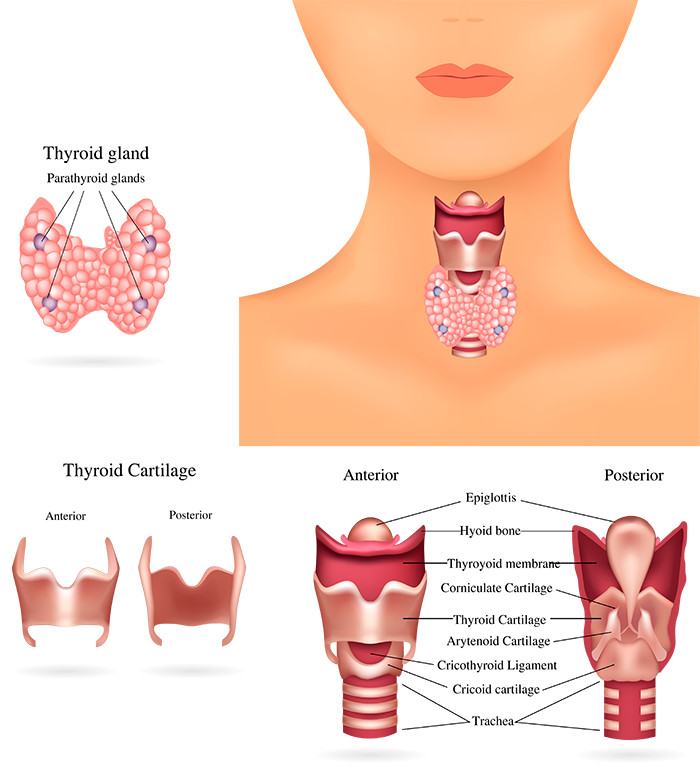
Consider another way that belief in evolution, and specifically “vestigial” organs, is dangerous and even harmful to us. Have you ever stopped to think about how doctors and scientists learned everything we know about the human body? It was through careful research and study of the body over many years. Usually the way research happens is that doctors or scientists ask others to give them money to pay for their research and study. Otherwise, they would not have a way to live while they are studying, and they would not have the money to pay for the equipment they need to study the body. Now what do you think the effect would have been when Wiedersheim released his list of “vestigial” organs? Do you think as many doctors or scientists would have done research and study on those organs that were considered unimportant? Do you think they could have convinced as many people to give them money to support their study of those organs if they wanted to?
Perhaps you can see now how belief in vestigial organs is a dangerous idea. Less research and study will tend to be done on those organs, since evolutionists do not believe them to be important! If those organs were designed by God, however, we can trust that they do, in fact, have important purposes in our bodies, even if we do not quite understand those purposes yet. Instead of throwing out organs as useless, we should praise God, knowing that we are “fearfully and wonderfully made” (Psalm 139:14).
The post Vestigial Organs: Evolution's Left-Overs or Evolutionists' Ignorance? appeared first on Apologetics Press.
]]>The post The Appendix is Not Vestigal appeared first on Apologetics Press.
]]>First, scientists suggest that when an embryo is forming, the appendix produces certain hormones that help it grow correctly. Second, the appendix contains lymphoid cells that help to fight infection. Third, scientists think that the appendix could be a place to store good gut bacteria. You see, your body needs certain bacteria to digest food. If you get a bad stomach virus, the stomach and intestines clean themselves out—ejecting the good and bad bacteria. It seems that the appendix stores some of the good bacteria to help the gut replace it.
Sometimes, however, the appendix can cause trouble. It can become clogged and swell. This is called appendicitis. If the appendix bursts, it can cause serious trouble. Therefore, doctors remove the appendix when this happens. When your appendix is removed, you can still live a very healthy life.
 Some evolutionists say that since removing the appendix doesn’t seem to harm you, then it must be a useless leftover. But that thinking does not make sense. If you removed a small part of your pinky finger, could you still live a healthy life? Sure, but that doesn’t mean your pinky is
vestigial. If you clipped off your earlobe, could you still be healthy? Sure, but that does not mean your earlobe is vestigial.
Some evolutionists say that since removing the appendix doesn’t seem to harm you, then it must be a useless leftover. But that thinking does not make sense. If you removed a small part of your pinky finger, could you still live a healthy life? Sure, but that doesn’t mean your pinky is
vestigial. If you clipped off your earlobe, could you still be healthy? Sure, but that does not mean your earlobe is vestigial.
Your appendix is not vestigial. It is a well-designed part of your body that has many helpful functions. Sure, God is such a great designer that you can live without your appendix, but that certainly doesn’t mean that it is a leftover of evolution. Let’s praise God for the wonderful bodies He has given us.
The post The Appendix is Not Vestigal appeared first on Apologetics Press.
]]>The post Vestigial Organs: No Proof of Evolution appeared first on Apologetics Press.
]]> a particular organ, but these organs are in no way proof of evolution.
That said, what if scientists really did discover that the human body had one or more organs in it that had a reduced function—or no function at all? What if the organ functioned perfectly in the past, but not so much today? Would this really be evidence of evolution as many science textbooks teach? Not at all.
The human body is a marvelous thing to study and shows amazing, complex, functional design. It certainly testifies that a grand Designer (God) exists! However, since Adam and Eve left the Tree of Life in the Garden of Eden, and since Noah and his family stepped off the ark into a flood-ravished world, much degeneration has taken place. [For example, the lifespan of human beings has decreased drastically through the centuries—from people living over 900 years (such as Adam and Methuselah) to now far less than 1% of people living to reach just 100 years old.] It might also be that in “the world that then was” (the world before the Flood—2 Peter 3:6) certain organs were simply more necessary than they are today.
In addition, many diseases and mutations have been introduced into the human gene pool. Is it possible that there could be a loss of a gene for an organ which causes the organ not to function as well as it once did—or perhaps lose function altogether one day? If so, then even if it were ever proven that a “vestigial organ” exists, such an organ would not prove evolution to be true.
Human beings do not have body parts that are leftovers from some alleged ape-like creature that lived millions of years ago. We are the descendants of Adam and Eve—and of Noah and his wife. They may have had better functioning organs than we do, but that certainly is not proof of evolution. In fact, the very opposite is the case!
The post Vestigial Organs: No Proof of Evolution appeared first on Apologetics Press.
]]>The post God Gave Us Goose Bumps! appeared first on Apologetics Press.
]]>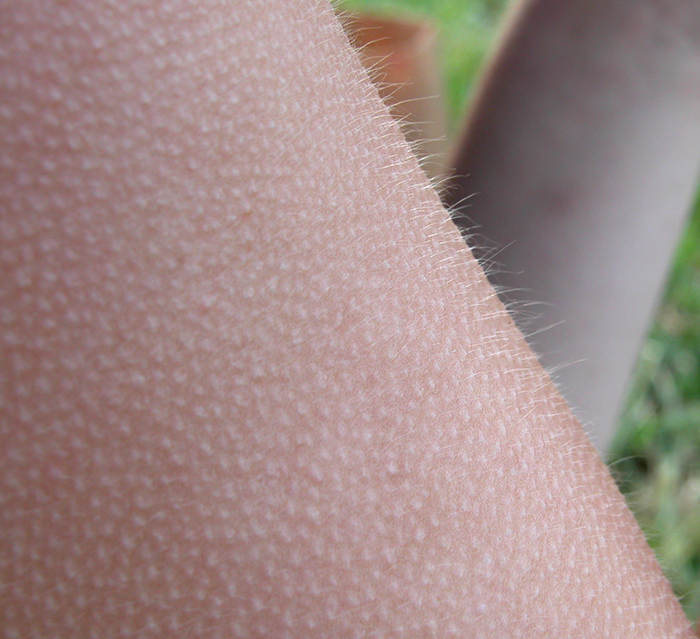 rything about your body was designed by God. The different parts of your body serve important purposes as God intended.
Goose bumps get their name from bumps that can be seen on a goose when its feathers are plucked. Goose bumps happen when tiny muscles at the base of each hair follicle contract and force the hair to stand up. These muscles are called erector pili [ih-RECK-ter PIE-lie] muscles. Isn’t it amazing that this happens without you thinking about it? God made them to work whether you think about them or not.
But why do we get goose bumps? Consider two reasons. First, goose bumps occur when we get cold. The muscles that contract cause the skin to “bunch up,” forming little bumps that cause your hairs to stand up straight. In addition to the muscle tension, the rising hair forms a layer that traps air between the hairs and skin, creating insulation and warmth. This amazing way for the body to preserve its own heat, reducing heat loss, had to have been designed by God. Goosebumps are not evolutionary leftovers!
Second, we also get goose bumps when we get hot, or face extreme heat. God made our bodies to sweat as part of an efficient cooling system. As perspiration accumulates on our skin, it naturally evaporates. As the sweat evaporates, it cools down the skin surface. But this process causes a dramatic temperature difference. So the body responds to the “chill” of the sweat evaporation by engaging the “goosebump response” when we get too chilled.
Notice that goose bumps serve very important purposes for people. Goose bumps were designed by God. They most certainly are not unused, unnecessary “vestigial organs” left over from evolution!
The post God Gave Us Goose Bumps! appeared first on Apologetics Press.
]]>The post Are There “Leftovers” of Evolution? appeared first on Apologetics Press.
]]>Now think with me about the theory of evolution. According to evolution, animals and humans have been evolving for millions of years. Supposedly, they started out very simple, but over millions of years, have progressed into the complex creatures we see today. If this really did happen, the theory of evolution says that we should find some “leftover” structures that once were used but are not used anymore, just like the saggy, useless balloon. The “leftover” structures might be body organs or parts that were used “millions of years ago” by an animal or human, but now the creature has changed so much that the structure is no longer needed. Evolutionists call these leftovers “vestigial” organs.
A vestige is a piece or part left by something. For instance, after a war, old land mines accidentally left in a field would be a vestige of the war. Since evolutionists believe that evolution actually happened, they believe that there are leftover pieces or parts of it—vestiges. That is why evolutionists call certain body parts vestigial; they think the parts are leftovers from evolution.
There is one problem with this idea of vestigial parts: it is absolutely false! At one time, there was a list of over 100 parts of the human body that scientists believed were useless and vestigial. After years of research, however, we have learned that these parts are not leftovers of evolution. In fact, scientists have discovered that many of these parts are veryimportant. These parts looked useless to us at one time, because we had not studied them closely enough. After years of study, scientists are beginning to realize that the parts they once considered useless are quite helpful. We are also learning that just because we do not know what a body part does, that does not mean it is useless. God designed the body perfectly. There are no leftovers of evolution. As the psalmist wrote, humans are “fearfully and wonderfully made” (Psalm 139:14).
The post Are There “Leftovers” of Evolution? appeared first on Apologetics Press.
]]>The post The Appendix and the Tonsils: Vestigial? appeared first on Apologetics Press.
]]>Many scientists in the past have said that the tonsils and the appendix were vestigial—useless leftovers of evolution. They said that our evolutionary ancestors might have used them, but we don’t need them anymore. Because of this “discovery,” scientists tried to say that evolution was true. After more study, though, scientists have actually found that both of these “unimportant” organs do more than was once thought.
The appendix is a worm-shaped organ that is found just below your belly button, and slightly to the right. Today, when you get a cold, you can fight it off easily, and it goes away fairly quickly. But when you were first born, it was more difficult for your body to fight off even a simple cold! We now know that your appendix helped guard you from all kinds of microscopic germs that might have tried to enter your body while you were a very small child. Even as you get older, your appendix has special tissue inside of it that continues to fight off germs for you. Plus, researchers have discovered that the appendix helps fight certain types of cancer cells.
Your tonsils are two round, white spots that can be found in the back of your throat, one on each side. Like the appendix, most people thought that the tonsils were evidence of evolution because they supposedly didn’t do anything. Scientists now know that tonsils actually do the same thing as the appendix—fight off germs! Learning more about the appendix and tonsils helps us to understand that our bodies are not accidents formed by evolution. Tonsils and the appendix are not leftovers of evolution, but are important body parts designed and created by God.
The post The Appendix and the Tonsils: Vestigial? appeared first on Apologetics Press.
]]>