The post More Concerning Stats on the Apparent Effect of Theistic Evolution appeared first on Apologetics Press.
]]>For decades, Apologetics Press has documented the dangers of evolutionary thinking being widespread in a society2 and in the Church.3 Indeed, it seems clear that belief in theistic evolution can have a tendency to erode one’s confidence in a straightforward reading of the biblical text, which could affect one’s eternal destiny.4 GALLUP polls have revealed that young Earth creationists tend to be more “religious.”5 “[T]he most religious Americans are most likely to be [young Earth—JM] creationists.”6 Young Earth creationists, for example, are 42% more likely than theistic evolutionists to attend worship services faithfully.7 Does belief in theistic evolution actually lead to forsaking the worship assemblies? Are the coupling of the two circumstances a result of a separate underlying factor? It is uncertain. However, since the free gift of salvation is contingent upon obedience to God’s instructions (Hebrews 5:9), if it is the case that a person is less likely to obey God’s commands if he accepts theistic evolution, then one’s belief with regard to evolution would become an important decision.
A poll by Pew Research Center, titled “Views about Human Evolution,”8 further highlighted that young Earth creationists are undeniably more likely to be zealous and faithful to the Word of God. The poll found that among theists in the U.S. (over 85% of whom would self-classify as Christian),9 creationists, compared to theistic evolutionists, are much more likely to:
- believe that their Scripture is the Word of God—and, as such, believe that it should be taken literally;
- look to their religion to determine right and wrong [62% of theistic evolutionists look to science, philosophy, and “common sense” over Scripture];
- consider religion to be very important in their lives;
- pray regularly;
- participate in prayer/Scripture study groups;
- regularly read Scripture;
- believe in absolute morality [65% of theistic evolutionists believe the situation determines right and wrong in many cases, rather than Scripture].
Such results are concerning, to say the least. Why does there appear to be a connection between less zeal for religion and theistic evolution? Is it the case that theistic evolution leads such individuals to become less religious in these ways? Or is it the case that such individuals were already less religious and, subsequently, more easily accepted theistic evolution? Neither option would bode well for theistic evolutionary implications.
Is the connection merely a coincidence that should be disregarded? That suggestion seems unlikely, considering that (1) the trend holds through every one of the categories studied by the pollsters and (2) such a result of theistic evolutionary thinking would be predicted to occur. After all, if a person feels he cannot trust what the Bible says about our origin, why would he study it? Why would he trust it when it tells us about right and wrong? Why would he take it seriously when it says to worship, pray, and study Scripture regularly? If he has accepted evolution, which has naturalistic (as opposed to supernaturalistic) implications, is he more or less likely to view God as being at work in the world today—answering prayers, for instance?
When seeing such statistics that speak to the spiritual state of many of those who have accepted theistic evolution, should it be surprising if they are much more likely than are creationists to ultimately leave their faith behind? After all, faith comes from hearing the Word of God (Romans 10:17) and the statistics reveal that theistic evolutionists are less interested in studying God’s Word—which will cause their faith to crumble over time. Such statistics highlight the importance of continuing to refute evolution, both biblically and scientifically, and emphasizing the many evidences for biblical Creation.
Endnotes
1 Cf. Jeff Miller (2020), “Latest Stats on Creationists and Evolutionists in the U.S.,” Reason & Revelation, 40[7]:80-83.
2 E.g., Kyle Butt (2008), “Implications of Atheism [Parts 1-2],” Apologetics Press, https://apologeticspress.org/implications-of-atheism-part-i-911/.
3 E.g., Eric Lyons (2008), “Why Address the Age of the Earth?” Apologetics Press, https://apologeticspress.org/why-address-the-age-of-the-earth-2507/; Kyle Butt (2010), “A Soul’s Salvation Could Hinge On the Earth’s Age,” Apologetics Press, https://apologeticspress.org/a-souls-salvation-could-hinge-on-the-earths-age-3792/; Dave Miller (2004), “The Implications of Rejecting the Literal Days of Genesis 1,” Apologetics Press, https://apologeticspress.org/the-implications-of-rejecting-the-literal-days-of-genesis-1-1200/; Jeff Miller (2022), “Should Christians Accept Evolution and an Old Earth to Win Converts?” Reason & Revelation, 42[4]:38-44.
4 Jeff Miller (2012), “Literal Creationists Holding Their Ground in the Polls,” Reason & Revelation, 32[9]:94.
5 While being “religious” does not necessarily mean that a person is right with God (Romans 10:2-3), living one’s life in complete submission to Christ and His will (i.e., living the Christian faith/religion) is a requirement by God (Romans 1:5; 16:26; Acts 6:7; Matthew 6:33; Matthew 16:24; etc.).
6 Frank Newport (2012), “In U.S., 46% Hold Creationist View of Human Origins,” GALLUP Politics, June 1, http://www.gallup.com/poll/155003/Hold-Creationist-View-Human-Origins.aspx, emp. added.
7 Megan Brenan (2019), “40% of Americans Believe in Creationism,” Gallup News On-line, July 26, https://news.gallup.com/poll/261680/americans-believe-creationism.aspx.
8 “Views about Human Evolution” (2014), Pew Research Center, http://www.pewforum.org/religious-landscape-study/views-about-human-evolution/.
9 “Religious Landscape Study” (2014), Pew Research Center, http://www.pewforum.org/religious-landscape-study/.
Science vs. Evolution
The post More Concerning Stats on the Apparent Effect of Theistic Evolution appeared first on Apologetics Press.
]]>The post Should Christians Accept Evolution and an Old Earth to Win Converts? (Part 2) appeared first on Apologetics Press.
]]>
[EDITOR’S NOTE: Part I of this two-part series appeared in the April issue. Part II follows below and continues, without introductory comments, where the first article ended.]
Reason #4: We Want to Be Rational.
Scientists pride themselves on being rational, basing their conclusions on the evidence. Christians wish to do so as well, in keeping with Scripture’s teaching on the subject (e.g., 1 Thessalonians 5:21; Acts 17:11; 1 John 4:1). “Blind” (i.e., evidence-less) faith is unbiblical.1
So, if Creation as it has been taught for thousands of years is correct, we want to know that fact, because we want to be rational, drawing the right conclusions. If Creation as it has been taught is incorrect, we want to know that, too! We want the truth, because we want to be rational. We want to, “Prove/test all things, hold fast what is good” (1 Thessalonians 5:21). Is the pursuit of sound conclusions a worthy reason to oppose Evolution when Evolution has proven to be an irrational theory?
Reason #5: We Want to Teach the Truth.
It is clear that “truth” is a theme in Scripture, on par with faith: coming to know the truth (1 Timothy 2:4); believing the truth (2 Thessalonians 2:12); obeying the truth (1 Peter 1:22); preaching the truth (Ephesians 4:15); telling the truth (Ephesians 4:25); walking in truth (2 John 1:4); doing the truth (John 3:21); working for truth (3 John 8); practicing the truth (1 John 1:6); following the way of truth (2 Peter 2:2); standing in the truth (John 8:44); girding our waist with truth (Ephesians 6:14); rightly dividing the truth (2 Timothy 2:15); worshipping in truth (John 4:24); and rejoicing in the truth (1 Corinthians 13:6). The truth is what sets us free (John 8:32). Jesus is described as “the Truth” (John 14:6).
According to 2 Thessalonians 2:10, loving the truth leads to salvation. Do we love the truth? If a person loves the truth taught in God’s Word—be it the truth about Creation or the Cross—will he not want to oppose those ideas he believes to be false and only teach true ideas to others (regardless of their popularity)?
Reason #6: Teaching Error is Sinful.
The Bible is explicit in its condemnation of teaching error regarding biblical matters. “My brethren, let not many of you become teachers, knowing that we shall receive a stricter judgment” (James 3:1). When we want to believe or do what we want to believe or do, it is tempting to try to force the Bible to say what we want it to say, injecting our own ideas into the text (eisegesis), instead of letting the text interpret itself without our own preconceived biases (exegesis). Peter, however, warns about the result of “untaught and unstable people” twisting the Scriptures to fit their agenda. It will bring on their own “destruction” (2 Peter 3:16). Genesis 1 is as much Scripture as the rest of the Bible. Teaching error about Creation is just as wrong as teaching error about anything the Bible teaches.
In Job 13:7, Job defends himself against the accusations being made by his friends, who had claimed that God was punishing him for sinning. He warns his friends about putting words in God’s mouth saying, “Will you speak falsely for God?” (ESV). Would we want to attribute something to God that He did not do, or say He did something that He did not say? Would we want to claim that He did something—like Creation—in a way that He did not do it? In so doing, we become false witnesses for God!
In 1 Corinthians 15, Paul gives a defense of the fact that, in the end, there will be a resurrection from the dead. Souls are not annihilated at death: there is an afterlife. Paul argues that, if there is no afterlife, then, contrary to the testimony of Paul and the apostles, Jesus was not resurrected. “Yes, and we are found false witnesses of God, because we have testified of God that He raised up Christ, whom He did not raise up—if in fact the dead do not raise” (vs. 15). Would we want to be false witnesses of God, claiming He used Evolution, the Big Bang, and deep time, if He did not do so? If God did not use Darwinian Evolution, and Christians say He did, then are they not giving false testimony for God?
Undoubtedly, some people simply have not thoroughly examined the evidence concerning Evolution, deep time, and the Bible. Perhaps they have no opinion on the subjects because they do not care or because they humbly recognize that they currently have insufficient evidence to draw a conclusion. Perhaps they lean for or against belief in Evolution due to the evidence they currently possess. We would not suggest that every person must necessarily passionately believe in a young Earth and a literal Creation to be saved. However, the moment a person begins definitively teaching and encouraging others to accept as true a particular position with biblical implications, he is bound by Scripture to “speak the oracles [i.e., utterances (NASB)/very words (NIV)] of God” (1 Peter 4:11). No matter the topic, a person should be careful to speak the truth in all things. If the truth can be known about something, the truth should be taught. If a person knows he is not, or cannot be, certain what the truth is on a subject, he should be careful not to speak definitively, instead using disclaimers (e.g., “might be,” “could be,” “seems,” etc.). On the other hand: if the evidence conclusively substantiates a truth, he should unashamedly teach it. We have yet to see a solid, reasonable case made for how Evolution and deep time should be drawn from the biblical text or injected into it. On the contrary, they have been shown to be lacking in essential scientific and biblical evidence. Should we not, therefore, if desiring to speak the oracles of God, teach against them?
Reason #7: Evolution Is a Dangerous Doctrine.
When a person thinks about Evolution academically and superficially, without considering its heinous implications and inevitable, deleterious effects on a society, he might fail to see the inherent danger in not speaking against it, much less promoting it. One might think that Evolution and morality can co-exist, especially if Theistic Evolution is accepted, instead of Naturalistic Evolution. However, as mentioned in Part I, belief in Theistic Evolution is a “gateway doctrine” which tends to lead towards faithlessness and belief in pure naturalism, as it did for Charles Darwin. While Darwin was a self-espoused orthodox Christian when he first wrote Origin of Species, upon dwelling on Evolutionary ideas, he “very gradually, with many fluctuations, became weaker” in his faith, ultimately becoming an agnostic. Later, he stated, “Then arises the doubt, can the mind of man, which has, as I fully believe, been developed from a mind as low as that possessed by the lowest animals, be trusted when it draws such grand conclusions [i.e., belief in God—JM]?”2 Evolution devastates faith, as it did its “Father.”
We have documented extensively elsewhere3 that when Evolutionary thinking is carried to its logical implications, society becomes dark, indeed. If students are taught their whole life that Evolution is true and, therefore, only the most fit will tend to survive by tooth and claw, what would we expect those students to be like after roughly two decades of indoctrination? If they are taught that “might makes right” in the Evolutionary paradigm (as opposed to Scripture defining what is right) and that humans are merely hairless apes, why would we not expect the emergence of a society populated by violent animals? Why would we not expect an immoral populace that uses weapons instead of intellects and takes what they want if they have the power and opportunity to do so?
Is it coincidence that over the last several decades, as Evolution (including Theistic Evolution) began being taught in earnest in U.S. public schools and churches, that the percentage of Americans who believe the Bible is the actual Word of God and is to be taken literally has steadily declined, while the percentage of Americans who believe the Bible to be a book of fables, history, and moral precepts recorded by man has steadily increased?4 Simultaneously, starting in the 1960s and 1970s, the U.S. index crime rate, which includes the reported crimes of murder/manslaughter, rape, robbery, aggravated assault, burglary, larceny, and motor vehicle theft, began to skyrocket. The crime rate climbed from a steady yearly average of roughly 700 crimes per 100,000 people in the 30s-50s, to 6,000 crimes per 100,000 people—over 800% growth in 20 years.5 No doubt there were several contributing factors to the explosion of crime, but one would predict that the widespread teaching of Evolution would result in immorality and violence, since, as leading Evolutionists have acknowledged (including Darwin, himself), Evolution and morality are incompatible.
Famous evolutionary biologist, Richard Dawkins said, “Absolutist moral discrimination is devastatingly undermined by the fact of evolution.”6 Cornell University evolutionary biology professor William Provine, keynote speaker at the Darwin Day event at the University of Tennessee in Knoxville, said, “Naturalistic evolution has clear consequences that Charles Darwin understood perfectly. 1) No gods worth having exist; 2) no life after death exists; 3) no ultimate foundation for ethics exists; 4) no ultimate meaning in life exists; and 5) human free will is nonexistent…. The first 4 implications are so obvious to modern naturalistic evolutionists that I will spend little time defending them.”7 Charles Darwin said, “A man who has no assured and ever present belief in the existence of a personal God or of a future existence with retribution and reward, can have for his rule of life, as far as I can see, only to follow those impulses and instincts which are the strongest or which seem to him the best ones.”8 Is it any wonder that more and more people in society would live out the implications of Evolution if they are taught to believe that it is true?
What kind of things are implied by Evolution that would lead to a dark society? Consider Darwin’s own words in The Descent of Man:
With savages, the weak in body or mind are soon eliminated; and those that survive commonly exhibit a vigorous state of health. We civilised men, on the other hand, do our utmost to check the process of elimination; we build asylums for the imbecile, the maimed, and the sick; we institute poor-laws; and our medical men exert their utmost skill to save the life of every one to the last moment. There is reason to believe that vaccination has preserved thousands, who from a weak constitution would formerly have succumbed to small-pox. Thus the weak members of civilised societies propagate their kind. No one who has attended to the breeding of domestic animals will doubt that this must be highly injurious to the race of man. It is surprising how soon a want of care, or care wrongly directed, leads to the degeneration of a domestic race; but excepting in the case of man himself, hardly any one is so ignorant as to allow his worst animals to breed.
The aid which we feel impelled to give to the helpless is mainly an incidental result of the instinct of sympathy, which was originally acquired as part of the social instincts, but subsequently rendered, in the manner previously indicated, more tender and more widely diffused. Nor could we check our sympathy, even at the urging of hard reason, without deterioration in the noblest part of our nature…. We must therefore bear the undoubtedly bad effects of the weak surviving and propagating their kind; but there appears to be at least one check in steady action, namely that the weaker and inferior members of society do not marry so freely as the sound; and this check might be indefinitely increased by the weak in body or mind refraining from marriage, though this is more to be hoped for than expected.9
But why must we “bear the undoubtedly bad effects of the weak surviving and propagating their kind,” if there is no morality if Evolution is true? From serial murderer Jeffrey Dahmer10 (who murdered and dismembered 17 men and boys) to Pekka Auvinen (who massacred eight people in his school in Finland in 2007), calling himself a “natural selector” eliminating “all who I see unfit…, failures of natural selection,”11 many have carried out the logical implications of their belief in Evolution. In 1999, Columbine High School shooter Eric Harris made his plans to put on his “natural selection” T-shirt and enter his high school to shoot dozens of students and teachers, stating in his personal writings that he would “kick natural selection up a few notches,” killing “whoever I deem unfit.”12 Nazi Germany was, of course, the most notorious of those carrying out the implications of Darwinian Evolution, killing 6,000,000 Jews in Europe for being, in their view, “unfit.”13
As Richard Dawkins said concerning Evolution, “My own feeling is that a human society based simply on the gene’s law of universal ruthless selfishness would be a very nasty society in which to live.”14 If Evolution is false (along with its necessary foundation of an old Earth), would not a rational, moral person do everything in his power to oppose it?
Conclusion
Should a Christian accept Evolution and an old Earth to make the Bible more “palatable” and win more converts? Worded another way: if the Bible does not teach something, should we claim that it does if it will make more people happy with it? Should Christians adjust and compromise every Bible teaching that people have a problem with? Is that how God wants humans to treat Scripture?
One would think that the fallaciousness of such an approach would be self-evident. People have a problem with many more biblical doctrines than Creation and a young Earth. From miracles to the divinity of Christ to the Bible’s teaching about sexual immorality and divorce—the bulk of the world will not choose to accept God’s way. It has always been that way. Should Noah have adjusted his teachings to “save” more people on the Ark with him? We should not go beyond what is written (1 Corinthians 4:6). We should not twist the Scriptures, or we are inviting our destruction (2 Peter 3:16).
Jesus certainly did not adjust His teachings to make them more palatable to people (which, ultimately, is why He was killed). Should we? Certainly not. In fact, Jesus directly warned His disciples that the world would hate them and their message (John 15:18-20). It will be considered foolishness to the world (1 Corinthians 1:18-25). It will be laughed at. Peter warned that scoffers who wish to live immoral lives will “willingly forget” Genesis 1 (Creation) and Genesis 6-9 (the global Flood of Noah’s day). They will belittle and make fun of the teachings of Christians on those subjects (2 Peter 3:3-6), but Peter warned that God “is not slack concerning His promise”: Judgment Day is coming just as certainly as Creation happened and the judgment of the Flood came, whether or not they wish to “willingly forget” that truth (vss. 7-13).
Few passages more directly apply to the mindset of those who advocate for Evolution than 2 Timothy 4:3-4: “For the time will come when they will not endure sound doctrine, but according to their own desires, because they have itching ears, they will heap up for themselves teachers; and they will turn their ears away from the truth, and be turned aside to fables.” “Sound” doctrine refers to teachings that are healthy, logical, and rational—reasonable conclusions that follow from the evidence. Paul warns that some people would not just reject the evidence, they would not endure (“put up with”—NIV) it. By implication, they would actively try to fight it, because the implications of that evidence run counter to “their own desires.” They want to live the way they want to live without being accountable. They want to do that which is right in their own eyes. Their solution: surround themselves with “experts” who will tell them what they want to hear. With enough “smart people” bolstering their view, they can, with little bother from their conscience, believe in something that is not supported by either the Bible or legitimate scientific evidence.
If we are warned that many people will not accept the truth (regardless of how it is packaged), the Christian should realize that the packaging is not the real issue. Some people will not accept the truth. Period. So, why try to change the packaging to suit those who are not searching for the truth anyway and invite our own judgment? Why join the anti-Christian, ungodly forces of the world who wish to “suppress the truth [including Creation—JM] in unrighteousness” so that they can live as they want (Romans 1:18-32)? A Christian should never forget that Evolution is, first and foremost, a theory championed by “haters of God” (Romans 1:30). One should be very certain Evolution is true before endorsing such a dangerous doctrine (Romans 1:32) and supporting its promoters (2 Chronicles 19:2).
Christians should understand that most people are not going to like or accept what the Bible teaches on many subjects (Matthew 7:13-14), but boldly and lovingly teach them anyway. “Therefore, since we have such hope, we use great boldness of speech” (2 Corinthians 3:12). We should not be ashamed of the Bible’s teaching on any subject, nor should we be shaken by those who scoff at us. Evolution not only has no evidence to support its most basic tenets, it actually stands against mounds of scientific evidence which refutes it.15 Belief in Evolution is, therefore, not only dangerous, but irrational. “Buy the truth, and do not sell it” (Proverbs 23:23). Defend the truth (1 Peter 3:15), contending earnestly for it (Jude 3). “Preach the word” always (2 Timothy 4:2), regardless of its popularity.
Endnotes
1 Dave Miller (2003), “Blind Faith,” Apologetics Press, https://apologeticspress.org/blind-faith-444/.
2 Charles Darwin (1887), The Life and Letters of Charles Darwin: Volume 1, The Project Gutenberg EBook of the Life and Letters of Charles Darwin, Volume I (of II), by Charles Darwin, Chapter 1.VIII.—Religion, https://www.gutenberg.org/files/2087/2087-h/2087-h.htm.
3 Kyle Butt (2008), “The Bitter Fruits of Atheism (Part 1),” Reason & Revelation, 28[7]:49-55, https://apologeticspress.org/wp-content/uploads/2021/08/0807.pdf.
4 Lydia Saad (2017), “Record Few Americans Believe Bible Is Literal Word of God,” GALLUP On-line, May 15, https://news.gallup.com/poll/210704/record-few-americans-believe-bible-literal-word-god.aspx.
5 “Uniform Crime Reports, 1933-1998,” Federal Bureau of Investigation, https://www.jrsa.org/projects/Historical.pdf.
6 Richard Dawkins (2006), The God Delusion (New York: Houghton Mifflin), p. 301.
7 William Provine (1998), “Evolution: Free Will and Punishment and Meaning in Life,” emp. added, http://eeb.bio.utk.edu/darwin/DarwinDayProvineAddress.htm.
8 Charles Darwin (1958), The Autobiography of Charles Darwin, ed. Nora Barlow, (New York: W.W. Norton), p. 94.
9 Charles Darwin (1874), The Descent of Man and Selection in Relation to Sex, The Project Gutenberg EBook of the Descent of Man, by Charles Darwin, Natural Selection as Affecting Civilised Nations, https://www.gutenberg.org/files/2300/2300-h/2300-h.htm, emp. added.
10 Stone Phillips (1994), Interview with Jeffrey and Lionel Dahmer, http://www.youtube.com/watch?v=IjW7bezdddE.
11 “Teen Dead Who Opened Fire on Finnish Classmates, Police Say” (2007), CNN, http://www.cnn.com/2007/WORLD/europe/11/07/school.shooting/ index.html.
12 “Eric Harris’ Journal,” transcribed by Peter Langman, 2014, https://schoolshooters.info/sites/default/files/harris_journal_1.3.pdf.
13 Kyle Butt (2001), “Hitler—The Ultimate Evolutionist,” Apologetics Press, https://apologeticspress.org/hitlerthe-ultimate-evolutionist-866/.
14 Richard Dawkins (1989), The Selfish Gene (Oxford: Oxford University Press), pp. 2-3, emp. added.
15 Jeff Miller (2017), Science vs. Evolution (Montgomery, AL: Apologetics Press).
Science vs. Evolution
The post Should Christians Accept Evolution and an Old Earth to Win Converts? (Part 2) appeared first on Apologetics Press.
]]>The post Should Christians Accept Evolution and an Old Earth to Win Converts? (Part 1) appeared first on Apologetics Press.
]]>
[EDITOR’S NOTE: This article is the first installment in a two-part series. Part II will appear in the May issue of R&R.]
We regularly encounter secular individuals who scoff at our strong stand against Evolution1 and its claim of a billions-of-years old Universe. From time to time, however, we encounter Bible-believing, self-identifying Christians who vehemently oppose our work on those subjects as well. They often argue that our teaching on a literal six-day Creation week 6-8,000 years ago causes many people immediately to reject Christianity and the Bible, since such positions seem far-fetched to some. They believe we should “back off” of such subjects so that more people will consider Christianity to be palatable and come to Christ. We should, they argue, accept, along with the Bible, mainstream scientific thinking on Evolution and the age of the Earth, allowing for compromises like “theistic evolution” and “progressive creationism.” Why do we oppose Evolution and an old Earth? Should we? Are we running off potential converts and keeping people from Christ?
In truth, we can show, through our correspondence with our audience over the years, that our positions on Evolution and the age of the Earth have actually caused many to develop more faith in Scripture and, subsequently, come to Christ. It is, however, no doubt true in some cases that there are people who “write off” Christianity because of “Young Earth Creationist” teachings. So, should we teach Creation/anti-Evolution more and help strengthen faith? Or should we teach the subjects less and “run fewer people off”? Ultimately, the answer is not up to us and our opinion. We must use reason and revelation from God to determine what God would have us to do. Here are seven reasons we believe it to be essential to oppose Evolution and an old Earth.
Reason #1: If Evolution Is Right, then the Bible Is Wrong
First, if evolutionary theory is true, then the Genesis account of Creation is, at best, misleading and, at worst, inaccurate—which would categorize the Bible as uninspired. Genesis 1-11 is straightforward in its declaration that the Universe was created in six literal days, and it gives no indication that it should be taken in any other way. It is not couched in figurative or poetic language, like that found in other places in Scripture. It is narrative, reporting history, and is treated as such throughout the rest of Scripture, by virtually every New Testament writer and by Christ, Himself.2
Some, attempting to inject a figurative meaning of “day” into Genesis 1, argue “The days of Genesis 1 could be millions of years each, because, with God, a day is the same thing as a thousand years (2 Peter 3:8—‘…with the Lord one day is as a thousand years, and a thousand years as one day’). So, God could’ve meant that each day was long.” Is 2 Peter 3:8 truly justification for inflating the days of Genesis 1? A careful study of 2 Peter 3:8 (e.g., the dual use of the word “as”) and the surrounding context3 reveals that 2 Peter 3:8 is utilizing simile, a figure of speech not to be taken literally, comparable to that used in Psalm 90:4—“For a thousand years in Your sight are like yesterday when it is past, and like a watch in the night.” Second Peter 3:8 in no way teaches that every time the word “day” is used in conjunction with God’s activity in the Bible, we must convert the word “day” into 1,000 Earth years—as though God simply is not capable of communicating with humans using human language. Even if such were the case, 1,000 years is a far cry from 2,300,000,000 years, which is closer to the length each Creation day would have to be to attempt to make Genesis 1 fit with the current conventional age of the Universe.
In truth, Moses used practically every means at his disposal in the Hebrew language to convey the idea that the Creation of the entire Universe consisted of six normal days, not millions or billions of years in length, and without gaps before or in between them.4 The Hebrew word for “day” that is used in Genesis 1 is yom, and it almost always means either a full 24-hour day or the 12-hour period of daylight. Some argue, however, that in some cases, yom can mean a general, rather than specific, period of time like, for example, “In my day, we walked everywhere.”5 As in modern English, the context of a statement must be used to determine how a word that has multiple meanings is being used. We do so constantly, without a second thought. “In my day, we went to the store during the day, and we didn’t wait three days to get it done.” We have no problem understanding what that sentence means, even though “day” is used in three different ways in the same sentence. Contextual clues help the reader to interpret the uses of “day” correctly.
Similarly, Moses helped his audience to understand his use of the word “day” in reference to the six days of Creation by, for example, modifying it with numbers: “So the evening and the morning were the first day” (1:5); “…second day” (1:8); “…third day” (1:13); etc. Using numbers in conjunction with the word “day” limits its meaning to normal days. Moses further helped his audience by using the words “evening” and “morning” in conjunction with “day.” In the words of Hebrew scholar, Justin Rogers, “While it is true that the Hebrew term ‘day’ can be used in a nonliteral sense in other contexts, the terms ‘evening’ (‘erev) and ‘morning’ (bōqer) are always used in a literal sense…. There is to my knowledge no place in the Bible in which the terms ‘evening and morning’ refer to a broad scope of time. They are always literal….”6 Ironically, Moses could have used the Hebrew word, dor, which refers to a long period of time (an “age” or “generation”), but he did not. He used yom, modified it with numbers, and used “evening” and “morning” with the word, clearing up any confusion about its meaning. There is little more he could do to communicate to his audience on behalf of God that the days of Genesis 1 were normal days.
Later in his writings, in Exodus 20:11, Moses clarified his meaning in Genesis 1 once again. “For in six days the Lord made the heavens and the Earth, the sea, and all that is in them, and rested the seventh day….” One would have to be unwilling to accept Moses’ clear declaration to misunderstand his meaning. What aspect of the Universe is left outside of the heavens (i.e., space), the Earth, the sea, and all that is in them? According to Moses, the Universe was not created gradually, in steps over eons of time.7 Everything was created in six days, not six billion years, and God rested on the seventh day.
Notably, the seven-day week concept, which characterizes Jewish and Christian calendars, is based on that idea, with the Jews celebrating the Sabbath on the literal seventh day of every literal week, not the seventh billion “years.” Question: did the Jews get it wrong? Did they misunderstand Moses? No. The Jews kept the Sabbath day after every six literal days of every literal week, and if they did not keep the Sabbath Day correctly, they would have been executed (Exodus 31:14), as was the case in an incident recorded in Numbers 15:32-36. Proper observance of the Sabbath Day was crucial to the Jews. They recognized that they were to mirror their weeks after Creation week.
If Evolution and deep time8 are right, then Moses was wrong in his writings, implying that the first five books of the Bible are uninspired. But that would not be the extent of the damage. Was Paul wrong when, in referring to man, he highlighted in Romans 1:18-32 that God’s attributes have been clearly seen “since the creation of the world”? If man did not arrive until roughly two million years ago, then he was not around anywhere near the Creation of the world based on the deep-time Evolution timeline. If Paul is wrong, then how can Romans through Philemon—the bulk of the New Testament—be inspired?
But it gets even worse: in Luke 11:50-51, Jesus said that the shedding of Abel’s blood occurred at “the foundation of the world.” According to Evolution, the Big Bang Theory, and deep time, the Earth formed roughly 4.54 billion years ago. Humans, once again, did not arrive on the scene until roughly two million years ago. In other words, humans arrived on the scene at the very end of the world as we know it, not its “foundation.” According to the Big Bang model, 99.96% of the Earth’s existence was spent without humans. In Mark 10:6, Jesus said God made man “from the beginning of creation, male and female,” quoting from Genesis 1:27—the creation of humans. Again, according to modern “science,” the Universe is roughly 13.8 billion years old, meaning that humans were not around “from the beginning of creation.” Instead, 99.99% of the time that the Universe was in existence passed prior to the emergence of humans. Was Jesus wrong? If so, He is not deity, and our faith is in vain.

The Hebrew language does not allow for Evolution and an old Earth in the Bible. The Bible writers do not allow them. Jesus, Himself, does not allow them. And, ironically, Evolution itself will not allow a merger with the Bible, either.
- According to Genesis 1, the formless Earth was created initially (1:1), prior to the creation of the stars on Day 4 (1:14-18). The Big Bang model has our solar system beginning to form roughly nine billion years after the first stars began to form.
- According to the Bible, the Earth was initially covered with water (Genesis 1:2,6),9 while popular science today argues that the Earth was initially molten.
- The Big Bang model postulates that our Sun formed roughly 3.9 billion years before the first land plants evolved on Earth. The biblical model places the creation of plants on Day 3 and the Sun on Day 4. If there was a gap of time between Days 3 and 4 (i.e., Multiple Gap Theory) or if each day was millions of years in length (i.e., Day Age Theory), how did the plants survive without photosynthesis throughout the long period of darkness/night (1:5)?
- Many plants require pollination and symbiotic relationships with flying creatures, but flying creatures were created two days after the plants (1:11-13,21-23), according to Genesis 1. If these days were millions of years in length, or if gaps of time existed between the Creation days, how did the plants survive for millions of years without their pollinators?
- The Big Bang model claims that fish preceded the evolution of fruit trees by hundreds of millions of years, while the biblical model states that fruit trees (1:12) were created two days prior to the swimming creatures (1:21).
- The evolutionary model claims that birds evolved from the dinosaurs, while the biblical model states that the flying creatures were created on Day 5 (1:21) and land creatures (including the dinosaurs) were created on Day 6 (1:24).
Bottom line: the Bible does not allow for Evolution or the injection of billions of years into Genesis 1. Either Evolution/old Earth are right and the Bible and Christ are wrong, or Evolution/old Earth are wrong and should be rejected as false and taught as such. Question: should we cease opposing Evolution to attract more potential converts, if such a position implies that the Bible and Christ are wrong and the basis of our faith is null and void?
Reason #2: Belief in Creation Is A Matter of Faith
If a person without any preconceived ideas about the origin of the Universe picks up the Bible and simply reads Genesis 1, taking it at face value, he will not arrive at the conclusion that Evolution or the Big Bang Theory are responsible for the origin of the Universe and life. Let an eight-year-old child read Genesis 1 and wait to see if he decides on his own that the text teaches the Gap Theory, the Day-Age Theory, the Modified Gap Theory, the Multiple Gap Theory, or Progressive Creationism. Obviously, that would not happen without prompting from others. In fact, the unambiguous teaching of Genesis 1 about Creation is surely the reason why few have dreamed up such theories after reading Genesis 1 without prompting from some other (non-biblical) source. Now, the important question: what changed?
The answer is clear, is it not—especially to naturalists, skeptics, and atheists? In the 1800s, anti-Bible sentiment was gaining popularity in the world, and individuals like Charles Darwin and James Hutton arrived on the scene, developing and popularizing naturalistic (rather than supernaturalistic) science, Darwinian Evolution, and uniformitarian geology (all of which require an old Universe). Literal, biblical Creation and catastrophism (the global Flood) had been the mainstream beliefs in “Christian” nations, and naturalism, Evolution, and uniformitarianism began to replace them. Since such beliefs were becoming mainstream in scientific circles and anything involving supernatural activity was beginning to be viewed as “unenlightened,” preposterous, and outdated, many scientists felt compelled to believe them. As scientists within Christendom began considering the new theories and feeling pressure from their peers, their biblical positions were naturally affected. Their faith in what Scripture plainly teaches was shaken.
It is likely the case that evidence was presented to the Bible-believer that caused him to question and, ultimately, re-interpret Scripture’s clear meaning. Every evidence that has been brought forth to substantiate Evolution and an old Earth, however, has been shown to be erroneous, irrelevant, or inadequate.10 Logically, then, why would a person attempt to twist the Scriptures to force an unwarranted interpretation? Is peer pressure a legitimate reason to re-interpret Scripture? Certainly not (Exodus 23:2). Should a person put his faith in popular scientists over the straightforward teaching of God’s inspired Word?11
Notice, then, that if a person capitulates to the irrational, self-contradictory worldview12 of the admittedly naturalistic scientific community over Scripture, it becomes a faith issue.13 Such a person is failing to believe what God said and is putting his faith in naturalistic science instead. “But without faith it is impossible to please Him…” (Hebrews 11:6). That truth makes opposition to Evolution an essential aspect of apologetics and evangelism, does it not?
Reason #3: If Evolution Is Right, Then We Can’t Trust Anything in the Bible
Since Genesis 1 has all the indicators of being a description of literal history,14 if Evolution is true anyway, then Genesis 1 cannot be what it seems to be. It must be figurative, poetic, mythic, and non-literal, despite its narrative indicators. Hebrew scholar Steven Boyd conducted a statistical analysis of words in 97 poetic and narrative biblical texts and showed that Genesis 1:1-2:3 unquestionably belong in the narrative category.15
So, if Genesis 1 should be interpreted as being non-historical, despite the evidence against that interpretation, then how can the proper interpretation of anything in the Bible be conclusively known? Anything and everything in the Bible becomes questionable as to whether it should be taken literally. Did the miracles of Christ actually happen, or are they to be taken figuratively? Was He really born of a virgin, or are Matthew and Luke speaking hyperbolically? Are murder or adultery prohibitions to be taken literally? Accepting Evolution causes faith in Scripture to crumble, leading man to do what is “right in his own eyes” (Judges 17:6).
In many cases, Evolution is a doctrine that, in the long run, undermines faith in the Bible and, therefore, leads many into total faithlessness.16 Why? One reason is summarized well by famous skeptic Michael Shermer: “[I]t doesn’t take a rocket scientist—or an English naturalist—to understand why the theory of the origin of species by means of natural selection would be so controversial: If new species are created naturally, what place, then, for God?”17 Further, the Bible becomes less trustworthy when we reject its straightforward teachings. If a person cannot trust the Bible’s most basic, clear, obvious teachings, how can he trust any of the Bible? How can he know with certainty what the Bible actually teaches?
In John 5:47, Jesus, in discussing the writings of Moses, said, “if you do not believe his writings, how will you believe My words?” If a person is unwilling to believe Moses’ account of Creation, then, according to Jesus, it will ultimately impact his faith in Christ. Is that not an important reason to oppose Evolution?
Endnotes
1 In this article, by “Evolution” (uppercase “E”) we mean “molecules-to-man Evolution,” which generally includes the Big Bang Theory coupled with Darwinian Evolution (i.e., the Theory of Evolution or Macroevolution). We distinguish “Evolution” in that sense from “evolution” (or microevolution). Microevolution (which, unlike Evolution, has been demonstrated in the real world and which does not contradict the Bible) refers to small changes within clearly established groups of creatures, amounting to mere variety. Microevolution occurs within phylogenic boundaries that disallow evolution beyond divinely defined limits (Genesis 1:24; Galatians 6:7).
2 Dave Miller (2020), “Genesis: Myth or History?” Reason & Revelation, 40[5]:50-57, https://apologeticspress.org/wp-content/uploads/2021/08/2005-web.pdf.
3 Eric Lyons (2007), “‘With God One Day is a Thousand Years’?” Apologetics Press, https://apologeticspress.org/with-god-one-day-is-a-thousand-years-2191/.
4 Cf. Justin Rogers (2015), “Does the Hebrew Word Yom Endorse an Old Earth?” Reason & Revelation, 35[9]:98-100, September, https://apologeticspress.org/wp-content/uploads/2021/08/1509w.pdf; Justin Rogers (2015), “Is Gap Theory Linguistically Viable?” Reason & Revelation, 35[12]:134-141, December, https://apologeticspress.org/wp-content/uploads/2021/08/1512.pdf.
5 Cf. Genesis 26:18; Joshua 24:31; Genesis 2:4.
6 Rogers, “Does the Hebrew…,” pp. 99-100, emp. in orig.
7 Contrary to the Gap Theory and its varieties.
8 i.e., a billions-of-years-old Universe.
9 Or possibly composed of water (cf. 2 Peter 3:5, ESV).
10 See www.apologeticspress.org.
11 For evidence of the Bible’s inspiration, see Kyle Butt (2022), Is the Bible God’s Word? (Montgomery, AL: Apologetics Press); Dave Miller (2020), The Bible is from God (Montgomery, AL: Apologetics Press).
12 Jeff Miller (2012), “The Atheistic Naturalist’s Self-Contradiction,” Reason & Revelation Resources, 31[5]:53, https://apologeticspress.org/wp-content/uploads/2021/08/1205.pdf.
13 This is not to say that all Evolutionists have accepted Evolution due to peer pressure.
14 Cf. Dave Miller, “Genesis: Myth of History?”
15 Don DeYoung (2008), Thousands…Not Billions (Green Forest, AR: Master Books), pp. 157ff.
16 Jeff Miller (2012), “Literal Creationists Holding Their Ground in the Polls,” Reason & Revelation, 32[9]:94-95, September, https://apologeticspress.org/wp-content/uploads/2021/08/1209w.pdf.
17 Michael Shermer (2007), Why Darwin Matters: The Case Against Intelligent Design (New York, NY: Henry Holt), Kindle edition, Loc. 115.
Science vs. Evolution
The post Should Christians Accept Evolution and an Old Earth to Win Converts? (Part 1) appeared first on Apologetics Press.
]]>The post Why Are We Losing Them When They Leave For College? appeared first on Apologetics Press.
]]>[Editor’s Note: The following article was written by A.P. auxiliary staff writer, Kevin Cain, who holds degrees from Freed-Hardeman University (B.S., M.Min.) and the Doctor of Jurisprudence from South Texas College of Law. A former Briefing Attorney of The First Court of Appeals, his current practice focuses on litigation at the trial and appellate levels in both State and Federal Courts.]
 We took her to Bible class. We took her to worship services regularly. We took her to countless youth events, trips, and activities. She was baptized at camp when she was 14. I thought we did everything right before she left for college. We did what the preachers and elders said we should do when it comes to raising our sweet daughter. And yet, when she left home for higher education, she left the church about the same time. She does not attend worship services or Bible class. She is not involved with any other Christians or on-campus Christian organizations. She is not in contact with any of her old church friends. She’s gone, and it breaks my heart every day. Where did we go wrong?
Too many parents have lived a similar experience. If it only happened once, it would be a tragedy. But when we see it happen time and time again, it is an epidemic. The obvious question is “why?” Why are so many of our young people leaving for college and leaving the church at the same time? What are we missing? What did we fail to teach them? What went wrong?
There are countless theories as to why this epidemic continues. People speculate they are leaving because the church is too conservative; the music is boring; the preacher uses too much Scripture; the church is outdated on its views of marriage and women’s roles; the parents were too strict; the church building is outdated; or the youth minister didn’t connect with my child on a personal level. Theories and opinions abound, but what is missing are facts and objective answers. Parents and elders are looking for answers—why are they leaving and what can be done?
First, are the statistics as bad as we have heard? The short answer is “yes.” Campus Renewal out of Austin, Texas estimates that between 60% to 80% of Christian denominational students leaving for college also leave their faith behind as well.1 Another study by respected pollster George Barna involved interviews with 22,000 adults and over 2,000 teenagers in 25 separate surveys (hereinafter the “Barna Study”). The purpose of this survey was not only to determine how many young people were leaving religion, but also to find out why. This survey among “conservative” evangelicals concluded that two-thirds of young people give up on religion when they head for college.2 While these are general studies outside the churches of Christ, these numbers are nevertheless alarming. While the numbers at the congregation you attend may be better, any statistic above 0% is worrisome.
So, who do we blame? When things go this wrong on this scale, we like to blame the elders, the youth minister, the preacher, the church (as a whole), global warming, or pretty much anyone but ourselves. If we can point the finger at someone else before they point the finger at us, we don’t have to feel too bad about these alarming numbers. Right?
Interestingly, the Barna Study delves deep (and I mean deep) into analyzing why these young people are leaving religion behind. For example, the Barna Study determined that of all the 20-something evangelicals who attended church regularly but no longer do so now:
- 95% attended church regularly during elementary and middle school.
- 55% attended church regularly during high school
- 11% were still going to church during college3
From those stats, we see that only 11% of those who have left the church did so during college years. Almost 90% of them were lost already in middle school and high school—before going to college. About 40% are leaving the church during elementary and middle school. This shocked me when I first read it. We are not losing most of our young people when they leave for college and have to face the world alone for the first time. Most of them are checking out (mentally if not physically as well) in junior high and high school. We are losing them earlier than we might have thought.
The Barna Study goes on to make an interesting comparison between those who regularly attended Bible class and those who did not regularly attend Bible class. Compared to those who grew up not attending Bible class, students who regularly attend Bible class are:
- more likely NOT to believe all accounts/stories in the Bible are true or accurate;
- more likely to doubt the Bible because it is written by men and has errors in the translating;
- more likely to accept that gay marriage and abortion should be legal;
- much more likely to believe that God used evolution to change one kind of animal into another;
- more likely NOT to believe the earth is less than 10,000 years old;
- more likely to believe dinosaurs died before people were on the planet; and
- more likely to believe that good people don’t need to go to church.4
These statistics appear to be upside down. How could it be that a person who grew up attending Bible school is less likely to believe in basic Bible principles as compared to a person who did not regularly go to Bible class? That simply doesn’t make sense. I’ll admit; I had to read these results several times before I finally concluded that I was not misreading or misunderstanding all this. Are we doing something wrong or missing something in our traditional Bible class curricula?
What we begin to see from these important findings in the Barna Study is a significant correlation between believing in the creation account and whether they will remain faithful to God or whether they will come back to the church. There is a direct tie between what they believe about Genesis and their attitude toward Christianity.
The conclusion here is painfully obvious: If the authority of God’s Word is undermined in Genesis, this leads to a slippery slope of unbelief about the whole of the Bible. If we as teachers, parents, preachers, and elders have been chipping away at the accuracy and reliability of the events in the first eleven chapters in Genesis (or we ignore cultural attacks on Genesis 1-11), if we really cannot rely on these events as being historically accurate, why should we believe in the accuracy of the details of the life of Joseph in Genesis 37-50? Why should we believe the accuracy of Moses delivering Israel from slavery in the book of Exodus? Why believe the account of David and Goliath? How could we believe in the miracles of Elijah and Elisha? Why should we even believe the prophecies of Jesus? Ultimately, why believe the Gospel accounts of Matthew, Mark, Luke, and John if we cannot rely on the accuracy of Genesis 1-11? Our kids are smart enough to know that when we compromise in one area of the Bible (like Genesis 1-11), we can hypocritically compromise wherever we want. The damage has been done, and for most of our young people, it depends on how they view the foundation and the very beginning of the Bible and the Creation account.
The Barna Study also looked into the beliefs of young adults who said they plan to return some day (like when they have kids of their own) versus those who never plan to return.5
| Planning on returning | Never coming back | |
|
Do you believe all the books of the Bible are inspired by God? |
76.4% said yes |
41.9% said yes |
|
Do you believe in creation as stated in the Bible? |
92.1% said yes |
47.8% said yes |
|
Do you believe in the creation of Adam and Eve in the Garden of Eden? |
91.3% said yes |
50.6% said yes |
|
Do you believe all the accounts/stories in the Bible are true/accurate? |
58.5% said yes |
16.8% said yes |
Those who have left and never plan to return have serious doubts about the accuracy of the Bible, especially when it comes to Creation. In those early formative years, they were clearly left with questions and reservations about the reliability of God’s word and the Creation account in particular. And now, after years of doubting the first chapters of Genesis and years after a constant bombardment of evolution in school (and pretty much everywhere) and increasing compromises by religious institutions regarding Creation, they find themselves gone with no thought of ever returning.
In 1859, Darwin published On the Origin of Species and 12 years later The Descent of Man.6 In these two volumes, he made popular the idea that single-celled organisms changed through the process of evolution into ape-like creatures and eventually into humans.7 In response, many of the religious institutions in England, and eventually across the United Kingdom and Europe, began to adopt Darwin’s ideas.8 They reinterpreted the Genesis account of Creation and proposed views such as “theistic evolution.”9 They compromised what they had always taught (God created the world in one literal week) and tried to engender scientific credibility by claiming that God worked through evolution to create the world. To see the long-term effect of this compromise, just look at the superficial state of religion in Europe today. It can be summed up by looking at the beautiful cathedrals and places of worship throughout that continent—amazing museums filled with architectural works, but lacking in the work of the Lord.
The damage was done, and the slope was more than just a little slippery. This thinking and rationale of making compromises in the Creation account sent a very clear message to everyone, especially to the upcoming younger generations. It was now acceptable to use man’s ideas to re-interpret the Bible, rather than to use the Bible to judge man’s ideas. God set up a system where He laid out His divine perspective on how man should view the world (Psalm 32:8). God made man (Genesis 1:27). Therefore, man should listen to God, the Creator (Deuteronomy 28:1-2). When man started listening to sources outside of God, a spiritual perspective would encourage man to judge those worldly ideas by God’s standard to see if they are sound and righteous (Acts 17:11; 1 John 4:1). But now, young people see organized religion doing something altogether different. Now they see church leaders conforming and changing God’s Word to fit alleged scientific theories and notions, rather than an accurate view of the physical world that corresponds perfectly with the Bible—a divine source these young people once believed was the “truth.”
Here is the rational next step that signals the beginning of the end for so many young people. “If I can’t trust the Bible in the earthly things, why should I trust it in the spiritual things?” That is a fair question. If you answer that you cannot trust the Bible in either arena, then what good is God’s Word? And that is the conclusion that many young people are reaching. In contrast, if you are struggling and want to compromise and believe the Bible may not be scientifically accurate but it is still relevant for spiritual matters, then think about what message that sends. Under this perspective, if a young person has questions about how to feel about God or think about his fellow man, then you go to the church for answers. If you have questions about facts and reality, you go to school and ask your science teacher. This practice of trying to harmonize Creation with evolution (often called “theistic evolution”) has created an environment where the church has basically disconnected the Bible from the “real world.”
The first chip to fall—and where the slippery slope begins—is the belief that the Earth is billions of years old. The battleground is not necessarily evolution, as there are many evolutionists who still believe in God, and there are many who do not believe in God and also do not subscribe to the theory of evolution. The major attack on biblical authority today starts with the attack on the first verse in the Bible, “In the beginning, God created the heavens and the earth” (Genesis 1:1).
Notice the growing level of disbelief in the statistics below as they bottom out on the subject of the age of the Earth.
- 77% believe in Noah’s ark and the global flood
- 75% believe in Adam and Eve in the garden
- 62% believe Abraham fathered Isaac when he was 100 years old
- 60% believe in the Tower of Babel
- ONLY 20% believe the earth is less than 10,000 years old10
The number one area of disbelief among young people who are leaving religion and their faith behind is the age of the Earth. This is where we are losing them. This is where the line in the sand has been drawn.
For those surveyed who did not believe in the accuracy of the Bible, the Barna Study asked the reasons why they did not believe the Bible events are accurate:
- 24% said they were written by men.
- 18% said the Bible was not translated correctly.
- 15% said the Bible contradicts itself.
- 14% said science shows the world is old.
- 11% said the Bible contains errors.
- 7% said there’s so much suffering in the world.
- 4% said Christians do not live by the Bible
- 4% said evolution proves the Bible is wrong.11
Interestingly, 82% of those who said they did not believe all the accounts in the Bible are true and accurate did so because of doubts about the authority of the Bible. This is the problem and a significant reason why they are leaving.
This should come as no surprise to the Bible student who knows through inspiration what people will be like in times like this.
Knowing this first of all, that scoffers will come in the last days with scoffing, following their own sinful desires. They will say, “Where is the promise of his coming? For ever since the fathers fell asleep, all things are continuing as they were from the beginning of creation.” For they deliberately overlook this fact, that the heavens existed long ago, and the earth was formed out of water and through water by the word of God (2 Peter 3:3-5).
In this period of time where scoffers and critics will ridicule faithful Christians for anticipating the return of Christ, notice that these same people will deny the Creation account. And from a sinful, strategic perspective, it makes sense. If you can get them to doubt the first historical act of God in the Bible (God made the world in six days), getting them to doubt the rest of the Bible will be easy work.
This is not to say that there are not other factors at work and relevant causes of this dilemma. However, it seems clear that basic beliefs about the first few chapters of Genesis are a significant part of the problem as to why so many young people leave the church.
The Solution
The problem is devastating, the numbers are heartbreaking, and the cause of all this is discouraging. So, what can be done? Is the point of all this just to scare us and make us feel bad, or is there something we can do? The good news is there are answers and solutions, but it will take hard work to right this ship.
Rewrite Our Curriculum
This is not to say that we have not been doing a good job of teaching our children about the Old Testament, Christ, the Church, and salvation. However, we may be under-emphasizing or overlooking a critical component in a balanced spiritual course of study—APOLOGETICS. We need more classes on apologetics, especially on fundamental questions on the existence of God and the first eleven chapters of Genesis, especially the historical reality of the Creation account. Please do not be prideful and say, “We’ve been doing this for years” or “I’ve spent years developing these lessons.” That work should not be overlooked and is genuinely appreciated. However, it is time to take a fresh perspective on what we are teaching in light of these alarming statistics. Greater emphasis on apologetics and the historical reality of the Creation account is needed in our classes.
Start Younger
We need to be teaching apologetics at younger ages. And yes, this obviously includes our high school and junior high students, but also our elementary and even pre-school children. “Train up a child in the way he should go, and when he is old, he will not depart from it” (Proverbs 22:6).
Apologetics Press offers a variety of resources to help you instruct and instill within our young people a belief and love for God, His word, and His creation. There is the “Learn to Read” series that uses the theme of “God created everything” to help children begin to read. My personal favorite is Dogs, Frogs, and Hogs. These books contain simple phrases like “God made dogs.” Like the early readers we were introduced to in public school, these books take simple phrases and concepts, mingle them with God’s creative power, and engrain them into precious minds who need to know God.
There is also an “Early Reader” series that uses more words and somewhat more sophisticated topics to impress on slightly older children the complexity and beauty of God’s creation. The little boys I read to love God Made Insects. The girls tend to like God Made Puppies. There is something for everyone here. The level of information increases when you move to the “Advanced Reader” series. These include titles like Copies of God’s Design, Human Body, and Migrating Animals. As your children grow in their reading skills and in their ability to process information, these readers follow them all along the way emphasizing over and over again the reality that God made it all.
As your kids get even older, there are books that mature with them while tackling more difficult concepts. Dinosaurs Unleashed is one of the best sellers at Apologetics Press, and the kids love it. The art-work is amazing, but the message is invaluable—God made everything, and that includes dinosaurs. There are other books for this stage in life, like How Do You Know God is Real? and Wonders of God’s Creation. One of my personal, creative favorites is the Dinosaur Field Journal. This is a great resource for the adventurer inside our sweet children.
As they reach their teenage years, there are other excellent books that challenge our young people to question what they are hearing in the world and to be secure in their faith. These include The Dinosaur Delusion, Truth Be Told: Exposing the Myth of Evolution, Always Be Ready, Out With Doubt, A Matter of Fact, and Reasons to Believe.
Finally, every student leaving for college should be equipped with the Defending the Faith Study Bible from Apologetics Press. This Bible is filled with resources designed to arm our teens and college aged youth (and older people like me) with information to combat the atheistic assumptions and difficult questions that so many young people face in school and among their friends. This Bible has helps and resources throughout that include:
- Scores of special sections that cover topics such as God’s existence, science and the Bible, God’s justice and hell, defending the Bible’s position on prayer, theistic evolution, and the Bible and slavery.
- Comments written and produced by faithful members of the Lord’s Church.
- Thorough and complete refutations of alleged Bible contradictions and discrepancies.
- A litany of positive evidences for the inspiration of the Bible, such as documented archaeological discoveries, comparisons of modern scientific findings with the biblical text, and historical evidence that validates the predictive prophecies of the Bible.
- Biblical answers to some of life’s most profound questions such as: Why did God create people? Why do good people suffer? How will it all end?
And the good news is that while there are many books and resources highlighted in this article, this is just the tip of the iceberg. Apologetics Press has countless volumes of books, readers, magazines, and other sources to help fortify your children’s faith and assist moms and dads in reaching one of the greatest goals in their lives—see their children remain faithful to God. Please take advantage of these resources.
More Teachers Willing To Step Up
If we are going to have more classes on apologetics, we will obviously need more teachers willing to tackle these classes. We not only need teachers to step up in Bible class, but also parents to get more involved in teaching and reinforcing apologetics at home. Unfortunately, we tend to think of apologetics as somewhat of a specialized discipline where only experts (like the staff at AP) can effectively teach this material. I’ll be the first to admit that the folks at Apologetics Press are outstanding teachers and preachers, especially in the area of apologetics. They have unique knowledge and talents that make them exceptionally qualified and true blessings in the church. I get it.
However, you probably don’t know much about how to treat Type 2 Diabetes or Reye’s Syndrome. Nevertheless, I am confident that if your child was diagnosed with one of these conditions, it would not take you long to become an expert in this arena. Your child’s physical condition would require you to learn a considerable amount of complicated medical information, but you would master it, because your child’s life is worth it.
We need to get just as serious and motivated when it comes to the spiritual welfare of our children. Yes, I know, apologetics can seem a little complex and will require some study and effort on our part, but it is worth it. Our children are leaving the church in alarming numbers, and a significant reason why is because of how they view the first few chapters of the Bible. The world is constantly attacking the Bible, and especially the Creation account. We need to get prepared, and we need to prepare our children. They are worth it.
History, Not Stories
I know this will sound like nitpicky semantics, but please stop calling historical events in the Bible “stories.” It is not that this is in any way inaccurate. But when our children hear the word “stories,” they think of everything from Winnie the Pooh to Harry Potter. The term “stories” can imply that the information to be revealed may not be entirely accurate. When we talk in class about the “story of Creation,” our children may be equating this in their minds with the fiction in story books we read to them about talking bears and flying superheroes. Let’s start talking about the Creation “account” rather than a story. Let’s refer to the Flood as an “event” or a “historical reality” rather than a story. We can do better to impress on our children that what happened in the Bible (especially in the first 11 chapters) is just as real as when men landed on the moon, when George Washington was our first president, and when Shakespeare wrote Hamlet. Let’s get real with our teaching.
What Is Not the Solution
To the surprise of many, one interesting thing gleaned from the Barna Study is that young people largely are not leaving religion because the worship and singing is not cool enough. To look at some churches who subscribe to the “Sister Act” theory of church retention, one could easily conclude that young people are leaving the church because worship services just aren’t exciting enough. Some have the mindset that if we just make our worship and singing culturally relevant, the young people will flood back into the pews and stay with us. The statistics simply do not support this assumption.
Becoming “culturally cool” may have an immediate short-term impact on enthusiasm and attendance, but it is just a Band-Aid for a much deeper disease. While contemporary music and a concert environment is popular these days in many worship services, it is not the problem. The Barna Study made clear that the primary problem driving young people away is not “cool” worship services, but their rejection of belief in basic Bible teachings. We don’t need gimmicks, entertaining concerts, and light shows in worship. We simply need the preaching of God’s Word.
Are there other things that can be done to help address this problem of young people leaving the Church? Absolutely. Pray for them every day that God would bless and protect them as they increase in wisdom and stature and in favor with man, and especially in favor with God. Remove hypocrisy from the lives of elders and parents who interact with these young people. Be consistent with your kids in terms of emphasizing the importance of spiritual matters over everything (including sports and academics). Keep your kids involved in church and spiritual activities, and surrounded by godly influences. These are all helpful and worth consideration. But at the core of this problem is whether our kids believe the first few chapters of Genesis. No more excuses. No more compromises. It is time to take a stand and proclaim: “In the beginning, God created the heavens and the earth,” and after six days, God saw that it was very good.
ENDNOTES
1 Paul McCants (no date), Campus Renewal, Campus Ministry, p. 1, https://www.campusrenewal.org/wp-content/uploads/2016/09/Campus-Renewal-Campus-Link-Grant-Proposal.pdf.
2 Ken Ham and Britt Beemer (2009), Already Gone (Green Forest, AR: Master Books), pp. 22-23.
3 Ibid., p. 31.
4 Ibid., pp. 38-39.
5 Ibid., p. 63.
6 Charles Darwin (1859), On the Origin of Species by Means of Natural Selection, or Preservation of Favoured Races in the Struggle for Life (London: John Murray); Charles Darwin (1871), The Descent of Man and Selection in Relation to Sex (London: John Murray).
7 Ibid.
8 Ham and Beemer, p. 75.
9 Ibid.
10 Ibid., p. 79.
11 Ibid., pp. 107-108.
The post Why Are We Losing Them When They Leave For College? appeared first on Apologetics Press.
]]>The post Dawkins Calls Evil Good and Good Evil appeared first on Apologetics Press.
]]>It is a scary thing to admit that he is right, from a naturalistic perspective—the worldview that he holds. His thinking is a logical outgrowth of naturalism. If naturalism is correct, we are the end result of evolution, where the ultimate law of the Universe is “survival of the fittest”: might makes right; the strong survive. If naturalism is correct, it would make sense that one should do whatever is necessary to encourage the survival of the species, including helping nature eliminate the unfit (cf. Lyons, 2008). Why would one spend time, energy, and resources helping someone who is a significant “drain” on society? Why would one try to keep those around that are loaded with harmful mutations, syndromes, and disorders? From a naturalistic perspective, such behavior would be fighting against progress and evolution. It would be “immoral.”
The day after the public backlash from his comments, Dawkins attempted to calm the furor he generated by further clarifying his thinking on his website. He said,
For what it’s worth, my own choice would be to abort the Down fetus and, assuming you want a baby at all, try again. Given a free choice of having an early abortion or deliberately bringing a Down child into the world, I think the moral and sensible choice would be to abort…. I personally would go further and say that, if your morality is based, as mine is, on a desire to increase the sum of happiness and reduce suffering, the decision to deliberately give birth to a Down baby, when you have the choice to abort it early in the pregnancy, might actually be immoral from the point of view of the child’s own welfare…. In any case, you would probably be condemning yourself as a mother (or yourselves as a couple) to a lifetime of caring for an adult with the needs of a child…. [W]hat I was saying simply follows logically from the ordinary pro-choice stance that most of us, I presume, espouse (2014, emp. added).
What a selfish and scary society in which to live—reminiscent of Nazi Germany. Imagine being deemed unfit because of the effort others must exert to help you. Imagine being deemed “unfit” because of your ailments or aches and pains, your age, your race, your financial situation, your I.Q., your level of education, your psychological state, or worse, your beliefs. Who would have the right to be the fitness police? Who would be deemed the fitness judge? Dawkins? How is he qualified to deem what is moral and what isn’t, considering the fact that there is no such thing as “immorality” if naturalism is true (cf. Lyons, 2011)? [NOTE: See Butt, 2008 for a thorough discussion of other disconcerting implications of naturalism.]
If naturalists had their way in determining laws based on their standards of morality, progress would be hampered. As our growing understanding of genetics allows us to anticipate disorders that will likely arise in an individual, people that would even be deemed valuable by naturalists in the future if they were allowed to live would inevitably be wiped out. Famous atheist, theoretical physicist and cosmologist of Cambridge University, Stephen Hawking, was diagnosed, decades ago, with Amyotrophic Lateral Sclerosis (ALS, or Lou Gehrig’s Disease), is permanently in a wheelchair, must communicate through a computer system operated by his cheek, and must “have around-the-clock care” (Harmon, 2012). Ironically, he would have likely been killed off long before he became the famous naturalistic thinker and influence that he is now. Truly, the fact that people with such conditions have proven themselves to be of benefit to society is a strong argument against abortion of the “unfit.”
Eerily, the United States might not be as far from a society in which Dawkins’ thinking has free reign as we might think. According to a 2012 Gallup poll, 15% of Americans believe we owe our origins to naturalistic evolution (Newport). That figure translates to about one in every seven Americans who you meet on the street being naturalists. If those individuals follow out the logic of their worldview, they will be forced to think the same way Dawkins does about the “unfit.” This implication of the naturalistic mindset and the millions that are affirming naturalism highlights the paramount need for Christians to be prepared to defend the truth from the dangerous doctrine of naturalism. “Woe to those who call evil good and good evil.” [NOTE: See Miller, 2013 for a scientific refutation of naturalism.]
REFERENCES
Butt, Kyle (2008), “The Bitter Fruits of Atheism (Part I),” Reason & Revelation, 28[7]:49-55, July, http://apologeticspress.org/apPubPage.aspx?pub=1&issue=603.
Dawkins, Richard (2014), “Abortion & Down Syndrome: An Apology for Letting Slip the Dogs of Twitterwar,” Richard Dawkins Foundation for Reason & Science, August 21, https://richarddawkins.net/2014/08/abortion-down-syndrome-an-apology-for-letting-slip-the-dogs-of-twitterwar/.
Harmon, Katherine (2012), “How Has Stephen Hawking Lived to 70 with ALS?” Scientific American, January 7, http://www.scientificamerican.com/article/stephen-hawking-als/.
Hawkins, Kathleen (2014), “Richard Dawkins: ‘Immoral’ Not to Abort Down’s Foetuses,” BBC News Ouch, August 21, http://www.bbc.com/news/blogs-ouch-28879659.
Lyons, Eric (2008), “Save the Planet…Abort a Child!?” R&R Resources, 7[2]:8-R, February, http://apologeticspress.org/pub_rar/28_2/0802.pdf.
Lyons, Eric (2011), “The Moral Argument for the Existence of God,” Reason & Revelation, 31[9]:86-95, September, http://apologeticspress.org/pub_rar/31_9/1109.pdf.
Miller, Jeff (2013), Science vs. Evolution (Montgomery, AL: Apologetics Press).
Newport, Frank (2012), “In U.S., 46% Hold Creationist View of Human Origins,” GALLUP Politics, June 1, http://www.gallup.com/poll/155003/Hold-Creationist-View-Human-Origins.aspx.
The post Dawkins Calls Evil Good and Good Evil appeared first on Apologetics Press.
]]>The post Bill Nye/Ken Ham Debate Review: Tying Up Really Loose Ends appeared first on Apologetics Press.
]]>[EDITOR’S NOTE: Many have inquired about our thoughts on the Bill Nye/Ken Ham debate that took place on February 4th in Petersburg, Kentucky. Of course, we strongly disagree with Bill Nye’s contention that evolution is a viable model of origins, and wholeheartedly agree with Ken Ham’s proposition that Creation is a viable model of origins. However, we were disappointed in creationist Ken Ham’s decision to allow so many of Bill Nye’s questions and comments to go unanswered, thus leaving the impression that Nye’s points have merit or are unanswerable. In light of so many evidences, undeniable truths, and critical responses that were not brought to light that evening, I asked A.P. staff scientist, Dr. Jeff Miller, to prepare a response to Bill Nye’s assertions. These three men of science are certainly qualified to discuss these matters: Ham received a bachelor’s degree in applied science from the Queensland Institute of Technology in Australia and a diploma of education from the University of Queensland. Nye received a B.S. in Mechanical Engineering from Cornell University. Dr. Miller holds a Ph.D. in Mechanical Engineering from Auburn University.]
In the debate on February 4, 2014, which is said to have been viewed by over three million people Tuesday night, and another two million plus on Wednesday (“Over Three Million Tuned In…,” 2014), Answers in Genesis creationist Ken Ham squared off against Bill Nye (known to many of us as “The Science Guy”). Nye challenged Ham with several questions which he believed to be pertinent to the Creation/evolution controversy (Nye and Ham, 2014). The debate topic centered on whether or not Creation is a viable model of origins in today’s modern scientific era. Without dragging the reader through a play-by-play analysis of the entire debate, we believe several of Nye’s questions and comments that were not addressed in the debate are worthy of attention. [NOTE: Ironically, although Ken Ham did not respond to several of Nye’s points, the Answers in Genesis Web site is replete with solid responses to the bulk of Nye’s arguments, as the references in this article will attest.]
Nye’s Defense of Naturalistic Evolution
First, we wish to highlight the fact that Nye inadvertently revealed some of the weaknesses and even impenetrable barriers that prohibit the naturalistic evolutionary model from being true. Keep in mind that, regardless of the legitimacy of any attacks on the Creation model, if naturalism contradicts the evidence, then the evidence remains in support of some form of supernaturalism. In truth, however, the evidence supports the Creation model.
Evolution is a Historical Science
While Ham did not adequately address many of Nye’s points, Nye was eloquently treated to a lesson on the difference between observational and historical science, proving that naturalistic evolution and origin studies fall under the historical science category. Nye was unable to refute this claim. Nobody has ever observed macroevolution (i.e., inter-kind evolution), abiogenesis (i.e., life from non-life), the spontaneous generation of natural laws (i.e., scientific laws that write themselves), a cause-less effect, or the spontaneous generation or eternality of matter—all of which are necessary under the evolutionary model. This lack of observation proves that evolution does not fall under the definition of science, as stated by the National Academy of Sciences: “The statements of science must invoke only natural things and processes. The statements of science are those that emerge from the application of human intelligence to data obtained from observation and experiment” (Teaching About Evolution…, 1998, p. 42, emp. added). Evolutionists are notorious for reasoning that the Creation model should not be taught in schools since it cannot be observed and, therefore, is not “science,” based on the naturalistic definition of the term. The fact that naturalistic evolution is also unobservable highlights that evolutionary theory is “faith-based” in the sense that direct evidence is lacking for several of its fundamental tenets. Instead of refuting that argument, Nye’s response was, “Mr. Ham, I learned something. Thank you.” Our response: if you do not have an adequate response to that argument, and if Creation does not belong in the science classroom because many of its fundamental tenets were not observed, then evolution does not belong in the classroom either.
In truth, whichever model is the best inference from the evidence should be the one used in the classroom, even if all of its tenets were not necessarily “observed”: Creation or evolution (or some other model). There is, however, a fundamental difference between Creation and evolution. The evidence actually stands against naturalism, since we know from science, for example, that abiogenesis and the origin of matter/energy from nothing (or the eternality of matter) cannot happen naturally. Those phenomena are required by naturalism. One cannot be a naturalist and yet believe in unnatural things like such phenomena without contradicting himself. The component logical fallacy called contradictory premises (or a logical paradox) occurs when one establishes “a premise in such a way that it contradicts another, earlier premise” (Wheeler, 2014). For example:
- Premise One—Evolution is a naturalistic origin model.
- Premise Two—Evolution requires abiogenesis and other unnatural phenomena.
If evolution is purely naturalistic, can it involve unnatural phenomena and still be consistent?
On the other hand, though the creation of the Universe and the Flood cannot be observed today, the evidence points to their historical reality indirectly. In the same way forensic scientists can enter a scene, gather evidence, and determine what happened, when it happened, how it happened, who did it, and many times, why he did it—all without actually witnessing the event—humans can examine the evidence and conclude that the Universe was created. Bottom line: it is clear, regardless of the model you choose, that something happened in the beginning that was unnatural, or as Nye insinuated, “magical.” How is Creation far-fetched, as the naturalists believe, in comparison to a model that espouses magic—with no magician?
Flawed Evolutionary Dating Techniques
Conflicting Dates from a Fossilized Forest
When the research of geologist Andrew Snelling was discussed as proof that uniformitarian dating techniques are fundamentally flawed, Nye was not able to offer an adequate response. In the research, fossilized wood from deep within the Earth under Australia was carbon dated to be about 37,500 years old, while the basalt rock encompassing the wood was dated using the K-Ar method to be some 47.5 million years old (2000), though both the rock and the wood should have been the same age. [NOTE: Carbon dating is used to date organic materials, while the K-Ar method and others are used to date inorganic materials (rocks).] Nye’s attempt to explain the problem using plate tectonics was quickly refuted by Ham when he pointed out that the basalt was not above the forest, but was encompassing the forest. Nye did not respond. Snelling’s research stands as evidence against the validity of evolutionary dating techniques which Nye could not refute. The Creation model has no problem with this research, since it does not rely on uniformitarian dating techniques. [NOTE: Uniformitarianism is the evolutionary assumption that “events of the geologic past can be explained by phenomena observable today” (McGraw-Hill Dictionary…, 2003, p. 2224). Creationists believe that catastrophism is a better model for interpreting the geologic column. Catastrophism is the idea that most “features in the Earth were produced by occurrence of sudden, short-lived, worldwide events” (McGraw-Hill…, p. 342).]
Assumptions and Evolution
Nye claimed that we can know with certainty the age of the Universe based on the present. The problem with that argument for the naturalist is that since no one was there at the beginning to observe what happened or when it happened, no naturalist can actually know, as Nye claimed. Instead, assumptions have to be made by the naturalist in order to try to surmise what may have happened—namely that conditions today were also present in the past (i.e., uniformitarianism). That is quite a presumptuous assumption to be sure. Creationists argue that assumptions such as uniformitarianism and those of radiometric dating techniques are faulty and disprove the validity of those techniques (e.g., Miller, 2013a; Morris, 2011, pp. 48-71). In response, Nye said:
When people make assumptions based on radiometric dating; when they make assumptions about the expanding Universe; when they make assumptions about the rate at which genes change in populations of bacteria in laboratory growth media; they’re making assumptions based on previous experience. They’re not coming out of whole cloth.
First, we find it ironic that Nye so strongly supports evolutionary assumptions, arguing that they are valid because they are based on “previous experience.” Nobody has ever observed macroevolution, abiogenesis, the spontaneous generation of natural laws, a cause-less effect, or the spontaneous generation or eternality of matter, and yet these absurd notions are assumed under the evolutionary model. In the debate, Nye even verbally admitted that the evolutionary model has no explanation for how consciousness could come from matter. He said, “Don’t know. This is a great mystery.” In truth, of course he cannot know, because the evidence from nature says that it cannot happen naturally. His evolutionary model prohibits it (Miller, 2012b), and yet he ignores that evidence. Concerning the origin of matter, he also admitted, “This is the great mystery. You’ve hit the nail on the head…. What was before the Big Bang? This is what drives us. This is what we wanna know!” Again, the naturalistic model prohibits the eternality or spontaneous generation of matter (Miller, 2013b), though one of them had to happen under the naturalistic model. So of course it’s “a great mystery” how it could happen. In truth, it cannot happen naturally. Nature has spoken, and yet Nye and his colleagues reject the evidence in favor of their closed-minded bias towards naturalism.
These are significant questions that evolution cannot answer and that cannot be brushed aside as he attempted to do. They must be answered by the naturalist before naturalistic evolution can even be a possibility—before it should even be allowed to be taught. Without a legitimate explanation, evolution is no different from a fictional story. Life had to come from non-life naturally in the evolutionary model, and matter had to come from somewhere, and yet the evolutionist ignores those problems as though they are irrelevant and assumes there’s a naturalistic explanation for them without any evidence substantiating that assumption.
In truth, all “previous experience” in science says that none of those things (i.e., macroevolution, abiogenesis, the spontaneous generation of natural laws, a cause-less effect, or the spontaneous generation or eternality of matter) can happen. The questions that Nye and his colleagues consider “a mystery” are not really mysteries. Science has spoken on those matters and concluded that they are impossible under the naturalistic model. There are scientific laws which prove that truth (see Miller, 2013c). Accepting those things as possible flies in the face of the scientific evidence and is tantamount to a blind faith in evolution. Evolution is a fideistic religion that ignores the evidence. It has no foundation, since the evidence contradicts its foundational premises. The Creation model, on the other hand, has no problem with the evidence. The Creation model harmonizes with the evidence on all counts and only disagrees with the evolutionary interpretation of the evidence.
That said, we have no problem with the idea that present observations can be useful today and even useful in some ways for the past—but within careful limits. If it is true that, for example, the nuclear decay rates are not a simple constant, but instead are variable, depending upon environmental conditions which could have been significantly different in the past due to catastrophic events like the Flood, then it would be naïve and erroneous to make age estimates of any rock without considering the possibility of such fluctuations.
“[M]aking assumptions based on previous experience” would be incorrect since that “previous experience” did not include the Flood.
In his book, The Young Earth, Creation geologist John Morris documents modern research which casts serious doubt on several of the assumptions of evolutionary dating techniques, especially the assumption of constant nuclear decay rates (2011; see also DeYoung, 2005). For example, research by a team of scientists (known as RATE) that was presented at the International Conference on Creationism in 2003, indicates that the nuclear decay rates have not always been constant (Humphreys, et al., 2003). The RATE team had several zircon crystals dated by expert evolutionists using the uranium-lead evolutionary dating technique and found them to be 1.5 billion years old, assuming a constant decay rate. A by-product of the breakdown of uranium into lead is helium. Content analysis of the crystals revealed that large amounts of helium were found to be present. However, if the crystals were as old as the dating techniques suggested, there should have been no trace of helium left, since helium atoms are known to be tiny, light, unreactive, and able to easily escape from the spaces within the crystal structure. The presence of helium and carbon-14 showed that the rocks were actually much younger (4,000 to 14,000 years old) than the dating techniques alleged. Since these zircons were taken from the Precambrian basement granite in the Earth, an implication of the find is that the whole Earth could be no older than 4,000 to 14,000 years old. The results of the crystal dating indicate that 1.5 billion years’ worth of radioactive decay, based on the uniformitarian constant decay rate assumption, occurred in only a few thousand years. How could such a thing be possible? How can the two dating techniques be reconciled? By understanding that the rate of decay of uranium into lead must have been different—much higher—in the past. This research simply cannot be ignored by any serious, honest scientist. If the Creation model is true, then modern, historical science should be reconsidered and completely revised.
Concerning the creationist stance that nuclear decay rates were different in the past, Nye further said:
So this idea, that you can separate the natural laws of the past from the natural laws that we have now, I think, is at the heart of our disagreement. I don’t, I don’t see how we’re ever going to agree with that if you insist that natural laws have changed. It’s, for lack of a better word, it’s magical. And I have appreciated magic since I was a kid, but it’s not really what we want in conventional, mainstream science…. I encourage you to explain to us why, why we should accept your word for it that natural law changed just 4,000 years ago. Completely. And there’s no record of it.
First keep in mind that three significant assumptions that underlie dating techniques were mentioned by Ham to Nye, and Nye completely ignored two of them (i.e., that radiometric dating techniques assume a specimen was originally completely composed of a parent element, which would yield incorrect dates if daughter elements were present in a specimen from its creation. Such initial conditions would be predicted in the Creation model. The other assumption he ignored was that the specimen was completely isolated throughout its lifetime, and therefore unaffected by outside phenomena—a closed system. See Miller, 2013a for a discussion on these dating technique assumptions.). We believe they were left completely unanswered because they would be impossible for him to refute.
Second, it should be firmly understood that we would not argue that the natural laws of the past have changed. That, in fact, is a requirement of the evolutionary model, not the Creation model. The Law of Biogenesis, for example, would have to be “changed” in the past in order for naturalistic evolution to get started since all evidence indicates that life comes only from life in nature (Miller, 2012b). The Laws of Thermodynamics would have to be “changed” in the past in order to account for the origin of matter and energy, since all of the scientific evidence indicates that energy cannot be eternal and/or cannot spontaneously generate (Miller, 2013b). The Law of Causality would have to be “changed” in the past in order to account for the Universe not having a cause (Miller, 2011b). It seems that we should be challenging Mr. Nye instead: “I encourage you to explain to us why, why we should accept your word for it that natural law changed billions of years ago. Completely. And there’s no record of it. It’s, for lack of a better word, magical.”
The creationist does not argue that the laws of nature changed in the past regarding decay rates, but rather, that decay is subject to a more complex law or equation than the one being assumed today. If nuclear decay rates fluctuate based on conditions resulting from certain catastrophic events, then if all of those conditions were met today, we would argue that the same results would still occur today. In other words, the “law” for decay rates is still the same today, but is merely misunderstood and needs to be modified to be more robust. It should be able to account for the unusual effects of catastrophic activity before applying it to the past. [NOTE: While the creationist does not argue that scientific laws have ever “changed,” he would argue that laws have been temporarily suspended in the past during God’s supernatural activities (Miller, 2003). The evolutionists, however, are in the unenviable position of having to explain, not only how a law could come into existence, but how it could be re-written without a Writer.]
Energy from the Sun for Evolution
The audience asked Nye the question, “How do you balance the Theory of Evolution with the Second Law of Thermodynamics?” Nye answered that question by stating, “The Earth is getting energy from the Sun all the time, and that energy is used to make life forms somewhat more complex…. The fundamental thing…is the Earth is not a closed system. So there’s energy pouring in here from the Sun…. And so that energy is what drives living things on Earth, especially in our case, plants.” The Second Law of Thermodynamics does, indeed, present a problem for the Theory of Evolution, and Nye’s response does not adequately address the problem.
The Second Law of Thermodynamics tells us that in a closed system (like a box completely sealed), the energy and matter within that system will deteriorate and move towards disorder over time (i.e., the “entropy” of the system will increase), becoming less usable and moving from order to chaos. Evolution requires that the opposite happen—that chaos, disorder, and simplicity move towards order and complexity. Nye argued that such is possible, because the system (i.e., the box) is not closed—i.e., the Earth (our system) is receiving energy from outside, namely the Sun, allowing evolution to happen. It is true that entropy can be countered and decreased in localized areas of the Universe (while the entropy of the total Universe increases) as long as energy can be injected into those areas that moves those systems back towards order.
As an illustration, consider a bedroom. Left to itself, a bedroom will move towards a state of disorder. Only the addition of useful energy (i.e., work) can counter the entropy increase in that room. Notice, however, that not just any energy will work. If I dump energy in the form of matter into the room (i.e., if I bring in clothes or trash and dump them in the room), it will not counter entropy, but can actually increase it. Not just any “work” will counter entropy, either. If I step into the room and start jumping up and down (adding energy to the room), it will not counter entropy, but rather, will increase entropy by wearing out the carpet and expending my own energy. If I step into the room and expend energy by knocking books off the shelf, I have not decreased the entropy in the room. Only the addition of the right kind of useful energy will counter entropy in that room.
The Sun can certainly be a useful form of energy. However, it also kills things, melts things, mutates things (e.g., causing cancer), and creates deserts—generating significant entropy on the planet. Before evolution can be considered viable, evolutionists are in the unenviable position of having to explain specifically how the great Second Law can be countered and summarily brushed aside by energy from the Sun (or other outside energy source). Passing allusions to the Sun and the Earth being an open system do not answer the challenge made to evolution by creationists.
The problem is further compounded when one considers that, regardless of the energy reaching Earth from the Sun, evolution is not occurring at the genetic level—where evolution must ultimately occur. Genetic entropy is increasing at alarming rates, moving humanity towards mutational meltdown: deterioration and decay, not order and progression, are what we find at the genetic level (cf. Sanford, 2008; Miller, 2014a; Miller, 2014c). [NOTE: Evolution on a cosmic scale (i.e., Universal evolution, rather than localized Darwinian evolution on Earth) requires that an explosion billions of years ago produced the ordered Universe we have today. Since the Universe is, by definition, closed from a naturalistic perspective (i.e., the evidence indicates that there is nothing outside of the natural Universe that can add useful energy to it to counter entropy; cf. Miller, 2010), the Second Law of Thermodynamics prohibits cosmic evolution.]
Nye’s Attacks against the Creation Model
In his attack on the viability of the Creation model, Nye made several claims that were curiously left unanswered. We believe they deserve attention.
No Higher and Lower Animals Mixing in the Geologic Column?
At one point in the debate, Nye showed various pictures of fossils and the fossil record, including a trilobite picture towards the bottom of the geologic column. He claimed, “You never, ever find a higher animal mixed in with a lower one.” “When there was a big flood on the Earth, you would expect drowning animals to swim up to a higher level. Not any one of them did. Not a single one. If you could find evidence of that, my friends, you could change the world.” This, he argued, was proof in favor of evolution and against the Creation/Flood model, implying that if Creation is true, there should be evidence of “higher” and “lower” creatures (e.g., the trilobite) together in the fossil record, while if evolution is true, they should be separate.
Ironically, in 1968, William Meister discovered a human footprint with fossilized trilobites in the print (Lammerts, 1976, pp. 186-187). Of course evolutionists would not wish to concede that the print was from a human, but it is hard to brush aside the sandal stitching that is visible in the print. That alone is enough evidence to refute Nye’s claim. But what about the story Nature published in 2005 that upset standard evolutionary suppositions about the history of evolution? A small dinosaur was discovered fossilized in the stomach of a mammal too big to have yet evolved, according to the evolutionary model (Hu, et al., 2005). Did that pivotal discovery make an impact? What about the discovery of “human-like” footprints in coal veins that were supposed to have been laid down during the Carboniferous period of evolutionary geology, 248 million years before humans were supposed to be on the scene (Ingalls, 1940; Wilder-Smith, 1970)? What about the existence of “living fossils,” like the coelacanth—creatures found today that, according to the evolutionary interpretation of the geologic column, were supposed to be long extinct? Though they were nowhere to be seen in the column over the last 70 million years (according to the evolutionary timescale), evolutionists were wrong to assume that that meant they were not alive through the millennia (“Coelacanth,” 2014; “Diver Finds…,” 2014). This, of course, illustrates that just because a creature, including a human, did not leave a fossil in a particular geologic layer or layers (even those representing an alleged 70 million years of evolutionary time), it does not mean it did not then exist. Clearly, using Nye’s terminology, the coelacanth must have “swam up” the geologic column, surviving until the present day. And what about the recent discoveries of soft dinosaur tissue—proving that dinosaurs could not have gone extinct 65 million years ago as evolutionists argue, but instead lived contemporaneously with the rest of us (Boyle, 2007; Perkins, 2005; Schweitzer, et al., 2005; Schweitzer, et al., 2007)? “You never, ever find a higher animal mixed in with a lower one,” Mr. Nye? I think not. Will the truth “change the world,” do you suppose? Sadly, probably not.
Nye claims that if the Flood is true, there should be a mixing of “lower” fossils (i.e., simpler creatures) and “higher” fossils in the geologic column, because the “lower” creatures would have been trying to “swim” upward in the Flood. We are amazed that Nye would even make such a statement, as it seems to betray the fact that he does not understand the fossilization process. Only those creatures caught by, for example, mud slides in the Flood would have been fossilized. Those creatures that could “swim up” would not even have been fossilized at all, as they would have died on the surface of the waters and decayed without fossilization, as do most aquatic creatures when they die. The real question, then, becomes which creatures could get to higher ground (not higher water) easier, thus avoiding mud slides? Clearly, smaller creatures with less maneuverability (i.e., not necessarily less complexity) would be covered in the earliest mud slides, not able to move quickly enough, and therefore, be found lower in the ground. Larger, faster, and more intelligent species would tend to be able to avoid fossilization-causing phenomena longer and get to higher ground. There would tend to be, however, exceptions in the Flood model, as some creatures would run into “dead ends” and be caught in mudslides in their flight, which explains the many anomalies and mass fossil grave yards that evolutionists seem to brush under the carpet without much comment. [NOTE: It is also true that creationists do not argue that all fossils were formed in the Flood. Some may, in fact, have been formed during other localized catastrophes, although it is likely that most were formed during the Flood.] While the evolutionary scenario has no room for such exceptions, they are predicted in the Creation/Flood model.
Nye also argued: “There’s not a single place in the Grand Canyon where the fossils of one type of animal cross over into the fossils of another.” While Nye carefully qualified his assertion by focusing solely on the Grand Canyon (which may or may not have such fossils), when the discussion is opened up to allow us to consider other places where “fossils of one type of animal cross over into the fossils of another,” the Creation model is quickly vindicated, and the evolutionary model is found to be inadequate. We have documented several cases of polystrate fossils (i.e., fossils that cut through at least two sedimentary-rock layers) elsewhere, including trees, Calamites, and catfish (e.g., Thompson, 2002, pp. 224-230). Perhaps the most famous of such examples would be the discovery of an 80 foot long, baleen whale “standing on end” in a diatomaceous Earth quarry in California (Reese, 1976, 54[4]:40; Snelling, 1995). Only one such example is needed to refute the entire evolutionary uniformitarian interpretation of the geologic column and vindicate the creationists’ catastrophism approach to interpreting the column. Polystrate fossils prove that the geologic layers were laid down rapidly, not gradually over eons of time.
Attacking the Biblical Age of the Earth
Hundreds of Thousands of Years Documented in Ice Cores?
Nye argued that the Creation model claims that the Flood was some 4,000 years ago (and that Creation was only a few thousand years before that), but that there are ice cores in Greenland and Antarctica showing hundreds of thousands of years’ worth of annual ice layers. As with other evolutionary dating techniques, however, evolutionists base their dating (i.e., layer counting) on erroneous assumptions about those layers—namely uniformity: the idea that seasonal conditions were the same in the distant past as they are now. Evidence exists that indicates that multiple, assumed annual, uniformitarian “layers” can form in one year (Alley, et al., 1997). These sub-annual layers could be the result of individual storms or cyclical weather patterns that resemble annual layers (Oard, 2003).
Creation scientists argue that in the Flood model, a great ice age with turbulent weather ensued after the Flood until around 2000 B.C. (Oard, 2004c). During that ice age, multiple “layers” would have been laid down each year (as many as 1,000 uniformitarian “annual cycles” in one year). The actual annual layers over the next few centuries after the Flood, therefore, would have been much thicker and contain several of the layers evolutionists would count as separate years (cf. Vardiman, 1992; Oard, 2001; Oard, 2003; Oard, 2004a; Oard, 2004b; Oard, 2006).
As further confirmation of this possibility, there is evidence today that ice layers can form quickly and be much thicker than evolutionists’ uniformitarian estimates. World War II planes from 1942 were discovered in 1988 in Greenland, under 260 feet of ice (“World War II Planes Found…,” 1988). This illustrates that even in modern times, although the annual layer of ice in Greenland is less than one foot today (De Angelis, et al., 1997, p. 26683), an average of over five feet of ice formed over the planes every year for 46 years where they were found (“World War II Planes Found…”). Ice cores are simply not a problem for the Creation model.
Evidence against Creation from Tree Dating?
Nye argued that there are bristlecone pine trees alive today that are as much as 6,800 years old, and even a Norway Spruce tree (Tjikko) that is 9,550 years old. If so, these trees would have had to survive the Flood and possibly even precede the Creation Week—a major problem for the Creation model. It is uncertain to which bristlecone pine tree Nye refers, since the oldest living bristlecone pine to date was announced in 2013 as being 5,062 years old (Castro, 2013). Dendrochronology is the science of dating trees by counting their rings, and it is considered a very reliable science for dating wood, since today, one ring is generally known to form in a tree for every year that the tree has lived. However, if we consider the possibility of sub-annual tree ring growth (i.e., more than one ring forming each year; as well as the issues inherent in cross dating, which was used in dating the tree—“OldList,” 2013), like those that can occur in unusual seasons (Aardsma, 1993; Lammerts, 1983), such a tree could line up with the Flood model nicely. In the words of creation scientist John Morris:
As it pertains to Flood model considerations, remember that the centuries immediately following the Flood witnessed the coming of the Ice Age. All trees growing on the continents were recently sprouted, actively growing trees. The still-warm oceans rapidly evaporated seawater, thus providing the raw material for major monsoonal-type storms. Earth was ravaged by frequent and wide-ranging atmospheric disturbances, dumping excessive snowfall in northern regions and rainfall to the south. If ever there was a time when multiple rings could develop in trees, this was it. Those centuries probably produced tree ring growth that was anything but annual. Thus, far from disproving biblical history, tree ring studies provide supportive and instructive information about true history (2012).
While the work of LaMarch and Harlan (1973) prompts many to reject sub-annual tree ring growth for bristlecone pines, not all scientists accept their conclusion. Gladwin believes that bristlecone pine tree growth patterns are too erratic for dating at all (1978), and based on finding extra rings when studying bristlecone tree saplings, Lammerts argued that the bristlecone chronology could be lowered by at least 1,500 years (1983). Furthermore, the renowned expert in dendrochronology, M.G.L. Baillie, warned:
As with conventional jig-saws, some people are better at pattern recognition than others and, if the analogy is not too brutal, there are those who recognise the problems, and those who might try to force the pieces together. It has to be remembered that there is only one correct pattern: each tree has grown only once and ultimately its ring pattern can only fit at one place in time. Simply because two pieces look alike does not necessarily mean that they fit together (1982, p. 23).
If we assume that Nye was referring to cross dated trees in his tree age claims, his argument against the Creation model still fails. Cross dating is the process of successively overlapping the tree ring patterns from living and dead trees (including fossilized trees) further back in history. It is an imprecise and often subjective method to be sure, yet it is incorrectly argued that this process can create a chronology reaching back over 8,000 years (Ferguson and Graybill, 1985).
In response, first we must understand that only living trees would potentially create a problem for the Creation/Flood model, and then, only if one assumes that all trees died in the Flood, which may not be the case (Wright, 2012). The text only says that “all flesh died that moved on the Earth” (Genesis 7:21), which would not include plants. Some pre-Flood era tree species may have been robust enough to survive the turbulent waters of the Flood, and some areas of the Earth—though covered with water—may not have had as much turbulence as others. Bert Cregg of the Department of Horticulture and Forestry at Michigan State University, notes that “[m]any tree species can survive months under water” in floods (Cregg, 2011). Whitlow and Harris’ monumental work on the effect of flooding on trees revealed dozens of species that are tolerant (i.e., able to survive deep flooding for one growing season) and/or very tolerant to flooding (i.e., able to survive deep, prolonged flooding for more than one year; 1979, pp. 68-129). If some trees survived the Flood, then living trees with 6,000 or more rings would not be a problem for the Flood model. [NOTE: It is also possible that Noah brought trees on the Ark (especially those that would provide food for the passengers).]
That said, there are no living trees that can be known to be older than when the Flood occurred. The 2013 bristlecone discovery could very well be that of a tree that began to grow immediately after the Flood. Beyond that point, even if cross dating reliably revealed thousands upon thousands of tree rings—enough to cause one to question a recent Creation (i.e., six to ten thousand years ago)—we must recognize the fact that the biblical model calls for fully functional, mature trees from the first day of their existence (so that Adam and Eve, also fully grown, would have food)—which would have included tree rings, since rings provide strength for large trees (Miller, 2011a). [NOTE: The same may be said about light that is viewable on Earth from stars that are billions of light years away. Such light would have been immediately viewable on Earth by Day Six in order to fulfill God’s purpose for it, stated in Genesis 1:14. See Lyons, 2011 for a discussion on the apparent age of the Universe.] But regardless, such old dates cannot be taken as conclusive due to the potential for sub-annual tree ring growth in unusual weather like that of the world immediately post-Flood, as well as the effects of time-staggered, repeated disturbances on tree ring growth (Woodmorappe, 2009).
The tree that Nye mentioned by name, Tjikko, was dated using carbon dating (Owen, 2008), not dendrochronology, and therefore tends not even to be listed among the verified oldest trees. Carbon dating is a notoriously imprecise and suspect method due to its frequent anomalies, largely caused by its long-believed, foundational assumption that the ratio of 14C to 12C in the atmosphere has remained constant throughout history, as well as the effect of the Earth’s magnetic field on the production rate of 14C (Batten, 2002). Scientists now know that the ratio is not constant (Michaels and Fagan, 2013). So they attempt to calibrate the 14C “clock” using other techniques that are largely ineffective beyond recorded history. Archaeologists today, therefore, cannot use 14C dating as conclusive evidence in dating ancient objects because of such anomalies. So much so that evolutionists admit concerning carbon dating, “[I]t is not infallible. In general, single dates should not be trusted” (Michaels and Fagan). [NOTE: See Major, 1993 for further discussion of carbon and tree ring dating.]
Civilizations Older than the Flood?
Concerning the Bible’s relatively small, thousands of years timeframe, Nye argued, “Ya know, there are, there are human populations that are far older than that, with traditions that go back farther than that.” It is unclear to which civilizations Nye is referring, as he did not specifically state them. The most recent date for the Flood, based on biblical chronologies, would be about 2300 B.C. [NOTE: Some conservative scholars believe that date can be pushed back several hundred years and still be in keeping with the biblical chronologies.] Chinese records date to around 1600 B.C. Only legend exists from before that time (Bender, 2014). Chinese history, therefore, cannot be said to contradict the biblical model. No Sumerian king before Enmebaragesi (2700 B.C.) has been verified by archaeology (Kuiper, 2011, p. 48), though it is thought that the Sumerian language is “the oldest written language in existence,” dating back to about 3100 B.C. (Kuiper, p. 42). That date is suspect, however. According to the Encyclopaedia Britannica, as “the chronology of the first half of the third millennium is largely a matter for the intuition of the individual author. Carbon-14 dates are at present too few and far between to be given undue weight. Consequently, the turn of the fourth to third millennium is to be accepted, with due caution and reservations, as the date of the…invention of writing” (Kuiper, p. 47, emp. added).
While some scholars have dated the commencement of the first Egyptian dynasty at 5700 B.C. (long before the typical date given by creationists for the Flood), archaeologists admit that no written record actually exists from before about 3100 B.C. (and even that estimate cannot be known conclusively). While the chronology of later events than that date can often be somewhat speculative and subjective in many cases, anything dated prior to that date relies almost exclusively on tree-ring dating (which, again, could be completely erroneous due to the Flood), pottery comparison (which is laden with speculative assumptions; cf. Brantley, 1993), or radiocarbon dating—all methods influenced by evolutionary presuppositions and given to subjectivity (cf. Major, 1993). Egyptian chronology is far from being conclusively known, even though many modern Egyptologists have come to an agreement of 3100 B.C. being the date of the First Dynasty of Egypt (with Narmer depicted on the Narmer Palette, being regarded as having unified Egypt). However, the general agreement was 5000 B.C. before the 20th century, and it may change again. Some scholars, though considered by many in the archaeological community to be fringe individuals, believe that the Egyptian chronology can be collapsed another 300-600 years, bringing the Egyptian civilization commencement down to a date as recent as 2500 B.C.—still a couple of centuries before the typical young Earth Flood model (Bass, 2003). Regardless, taking into account the potential small gaps in the biblical chronologies (Lyons, 2002) easily vindicates the Flood model. [NOTE: See Bass, 2003 for an in depth discussion of Egyptian chronology and the biblical model.]
Notable is the fact that archaeology testifies through many lines of evidence that humanity appeared suddenly in history sometime around 3000 B.C. (i.e., around the time of the Flood). The civilizations were fully developed and modernized when they first appeared in history. It’s as though, like the Cambrian Explosion in the geologic column (discussed below), the civilizations were not the result of a slow, gradual evolution from ape-like humans dragging their knuckles on the ground, grunting, and carrying clubs; rather, they were comprised of individuals that were already intelligent from the onset, though who had not yet banded together to form civilizations capable of recording history for the future. The Flood had only just occurred. As with the Cambrian Explosion, this explosion of ancient history is difficult for evolutionists to explain.
Not so for the Creation model, however, which predicts just such a thing occurring. Relatively soon after the Flood, the incident at the Tower of Babel occurred (Genesis 11; Miller, 2002). Humans were already intelligent and relatively technologically capable at this time—able to construct massive boats and towers. Apparently, humanity wanted to cluster into a single, super-civilization instead of spreading out and filling the Earth as God had commanded (Genesis 9:1). So God created the different languages of the Earth, forcing humanity to divide into similar language groups and disperse throughout the Earth. Once the various groups spread out, it was only a matter of time before those groups began laying down roots, forming the ancient civilizations, and recording history.
Attacking the Flood
Animals to Australia?
Nye spent an extensive amount of time attacking the biblical Flood account. For example, he argued that kangaroos and other Australian animals could not have traveled from the Ark on Ararat to Australia, since no land bridge exists and no evidence of a past land bridge exists. Ironically, this is as much a problem for the evolutionary model as it is for the Creation model. However, as with the evolutionary model, the Creation model has no problem with the concept of Pangaea—the idea that all of today’s continents were once together in one massive continent. Such a concept harmonizes well with the description of God’s activities given in Genesis 1:9. As is often the case, the problem to creationists comes from the evolutionary assumption of uniformitarianism. While the continents are spreading on the order of centimeters per year today, if the Flood occurred, and “all the fountains of the great deep were opened” (Genesis 7:11), surely including volcanic and significant tectonic activity, the separation rate could certainly have been much quicker for many years. Immediately after the Flood, Australia, Antarctica, and India could have been much closer together, in keeping with Pangaea models, allowing migration to Australia before the continents were too far apart. Recent research by Yale University, which indicates that continental drift was once three times faster than it is today, provides support for this theory (Mitchell, et al., 2010; Thomas, 2010). The researchers concluded, “These observations suggest that either nonuniformitarian plate tectonics or an episode of rapid true polar wander occurred during the Cambrian ‘explosion’ of animal life” (p. 755, emp. added). The research not only supports the Flood model prediction about rapid continental drift in the past, but it highlights that the accelerated drift occurred in the same time period as the catastrophic event that caused the Cambrian explosion.
Other possibilities are also available which vindicate the biblical model. For example, according to the Flood model, as mentioned earlier, a great ice age commenced after the Flood, possibly allowing migration across frozen channels. It is also likely that for some time, remnants of the great forests of the pre-Flood era would have been floating on the receding waters of the Earth until their decay was completed. As is the case from localized floods today, small “land masses” composed of trees and debris can be found floating on the water (e.g., traveling down rivers). Who’s to say that such mini-, mobile “continents,” with various animals along for the ride, would not have been common immediately following the Flood? A radically different terrestrial environment, with species clamoring to find food on the newly disheveled Earth, could have caused accelerated dispersal of the Ark’s population from Ararat to Australia before Australia had moved too far from the mainland. It is also possible, based on the biblical model, that divine guidance was involved in the dispersal, similar to the divine guidance alluded to in Genesis 6:20, when God gathered the animals to Noah before the Flood. If God could miraculously bring the many, various animals to the Ark before the Flood, could He not also have dispersed them wherever He chose after the Flood?
11 New Species Each Day?
Nye argued that there are some 16,000,000 species on the planet today, and that if there was a Flood only 4,000 years ago, and only 7,000 representative species on the Ark to start with, there would have to have been 11 new species evolving every day over the last 4,000 years since the Flood. [NOTE: The Creation/Flood model proposes that not all modern species were on the Ark, since the word “kind” in the Bible (e.g., Genesis 6:20) is not equivalent to “species,” but might be closer to the modern taxonomic group, “family.” On the Ark, therefore, there would have been representative species (the biblical word, “kind”) of, for example, the “dog kind,” equipped with the genetic capability to produce all other species within that kind (e.g., coyotes, foxes, wolves, domestic dogs, etc.; See Thomas, 2012 and Ahlfort, 2011 for discussion on the origin of modern canines). Speciation (i.e., the appearance of new species) would have occurred through inter-breeding and microevolution (i.e., evolution involving only minor changes within kinds, such as beak size and color changes, staying within narrow boundaries; as opposed to macroevolution/Darwinian evolution, an unobserved phenomenon which involves change across phylogenic boundaries between kinds). Though the original number of “kinds” was much smaller than the modern taxonomic term “species,” it is true that whatever the number of kinds were on the Ark, they were also the only species of those kinds in existence at the time. All other species today had to descend from those original species. It is unclear if 7,000 is a good estimate of the number of those proto-species, but creationists are currently studying the matter (e.g., Ham, 2012).] Nye said:
So you’d go out into your yard. You wouldn’t just find a different bird: a new bird. You’d find a different kind of bird. A whole new species of bird, every day…. This would be enormous news. I mean, the last 4,000 years? People would have seen these changes among us…. We see no evidence of that. There’s no evidence of these species.
First, again, we have to question where he is getting his information concerning 16,000,000 species. Some studies have species counts as low as 3,000,000 (Zimmer, 2011). A 2011 projected estimate of species on the planet published by Public Library of Science Biology, including the Plantae, Fungi, Protozoa, Chromista, Animalia, Archaea, and Bacteria Kingdoms (i.e., including beetles and bacteria, which Nye implied were not in his estimate), is 10,960,000 (Mora, et al., 2011), not 16,000,000. [NOTE: This is an estimate, which fluctuates based on those variables being considered by the researchers. The scientific community does not agree on how many species may exist and many competing methods of calculating those estimates are available. The actual catalogued number of living species on the Earth was only 1,438,769, as of 2011 (Mora, et al.).]
All marine creatures, of course, though they are included in the 10,960,000 estimate, were not on the Ark, and their microevolution would have continued without being filtered by the animal kinds brought on the Ark. That brings the estimate down to 8,750,000 species in existence today that came from the creatures on the Ark, based on Mora and his colleagues’ study. More could most certainly be removed, considering that the estimated number of those creatures designated as “ocean dwelling” species in the study did not include other creatures that can survive in water (e.g., amphibians), but are not defined as “ocean dwelling” in the study (“WoRMS Taxon Tree,” 2014). Such creatures would not have necessarily been on the Ark.
The biblical text also does not mention Noah carrying plants onto the Ark to save them from destruction (except those that the animals and Noah and his family ate, Genesis 6:21), since they are not “flesh” (Genesis 6:19). Removing plants from the list of species brings our count down to 8,435,400, based on the study of Mora and his colleagues.
Incidentally, while Nye insinuated that the plants of the Earth would have died in the Flood, and it is certainly true that many would have, it is also true that (1) Noah could have brought seeds on the Ark; and (2) most of the world’s vegetation is underwater, and survives well in that environment. Scientists estimate that 50% to 85% of Earth’s oxygen comes from ocean plants (“How Much Do Oceans Add…?” 2013). Further, many dead plants (with their seeds intact) would have been floating in piles on the surface of the Flood waters. It is also true that studies show that seeds can survive submersion in salt water for extended periods of time (Howe, 1968). Ironically, Darwin, himself, verified several ways in which seeds can survive and be viable after extended travel in and on salt water (Darwin, 1979, pp. 352-359). [See Wright, 2012 for an in depth discussion of plant survival in the Flood, including the effect of salinity on seeds, as well as the discussion above about the survival of trees during flooding.]
It is also certain that the number of current species on the planet could be significantly reduced due to the inevitability of synonymous species (e.g., two names given to the same species—creatures originally thought to be two distinct species that are now considered one and the same, or one creature whose name has changed over time and yet both names have been counted). Mora and his colleagues noted this weakness in species estimates, explaining that “[a] survey of 2,938 taxonomists with expertise across all major domains of life…revealed that synonyms are a major problem at the species level” (2011). They believe that 17.9% of species could be synonyms, and possibly much more (as much as 46.6%). The World Register of Marine Species documents that 44.5% of all accepted marine species are synonyms (“World Register of Marine Species,” 2014). If we help Nye by accepting the smaller average amount given by Mora, et al., that only 17.9% of the remaining species are indeed synonyms, that would take 8,435,400 species down to 6,869,150 species on the Earth today and 6,862,000 new species since the Flood, based on the supposition that there were 7,000 kinds on the Ark. Such an estimate is a far cry from Nye’s estimated 16,000,000. Further, if the Flood was 4,500 years ago (which is closer to our estimate), that would bring Nye’s total from 11 new species per day down to 4 (and some estimates push the Flood back further than 5,000 years ago). If there are indeed fewer species than the researchers’ projections, more synonyms, more years since the Flood, more species that could survive outside of the Ark, and more representative kinds on the Ark, this number decreases even more. [NOTE: Though Nye did not mention it, the Creation model must also account for species that have descended from the original proto-species, but that are now extinct. It is unknown how many extinct species are in the fossil record (Evolutionists assume there will be billions because of the need for transitional creatures under the evolutionary model. That prediction has been shown to be false thus far.). It is estimated from the fossil record that “one species per million species per year” goes extinct (“The Current Mass Extinction,” 2001). If all 7,000,000 current “land” species had been in existence since the Flood (which would not have been the case), that would only add 31,500 extinct species to the count, which is negligible in our estimates. Creationist Kurt Wise, whose Ph.D. in Geology is from Harvard University, cites research indicating that at least 75% of the 250,000 species identified in the fossil record are still living, meaning that, at most, 62,500 extinct species exist in the fossil record, and likely, far less (Wise, 2009). Some of those would also be marine species and thus not added to our count. Regardless, again, this number is negligible in our calculations. Keep in mind also that much of the fossil record represents species that were in existence at the time of the Flood and before (i.e., that were killed in the Flood), but that would not have necessarily developed since the Flood. So the actual number of species that have evolved since the Flood but have gone extinct is likely much smaller.]
Further consider the fact that about half of the remaining species are insects (Hamilton, et al., 2010), including the many beetles Nye mentioned, many of which are known to reproduce quickly. Flies (Drosophila melanogaster), for example, can lay as many as 100 eggs each day, and up to 2,000 eggs in their lifetimes (Reeve and Black, 2001, p. 157). Bacteria, also included in the list of species, can reproduce even quicker. According to the American Society for Microbiology, in only 10 hours, one bacterium can propagate through binary fusion and produce ten billion bacteria (“Microbial Reproduction,” 2012). Rapid reproductive rates make the potential for rapid microevolutionary speciation more plausible, especially in the centuries immediately following the Flood. The proto-species on the Ark would have likely been chosen by God due to their immense genetic variability, which would have lent itself to rapid speciation. The speciation rate would have gradually been hampered through the localization of species communities, creating what evolutionists call niche conservatism (cf. Holt and Gomulkiewicz, 1997; Wiens, et al., 2010). [NOTE: It is also possible that many insects, other invertebrates (which comprise “95 to 99 percent of the planet’s animal species” [“Meet Our Animals…,” 2014]), fungi, protozoa, and bacteria species could survive outside of the Ark and therefore, could be removed from the list—decreasing the number of species on the Mora, et al. list by as much as 4,500,000.]
Also according to the Creation model, human lifespans were higher for several centuries following the Flood, and as with the pre-Flood era, the childbearing age ranges appear to have been longer (e.g., Genesis 11:10). The genealogies of Genesis 11 show an exponential decay rate in life spans in the centuries immediately following the Flood, while the genealogies of Genesis 5 show consistently high life spans before the Flood. This seems to indicate that the Flood dramatically changed the Earth in a way that affected its population’s health (2 Peter 3:6 describes the pre-Flood world, “the world that then existed,” as having “perished”). If the health, reproductive capacity, and lifespans of animals on Earth paralleled those of humans—and it is reasonable to assume that they did for the same reasons—then animal productivity would have also been higher before the Flood and immediately after the Flood, allowing for quicker microevolution (i.e., quicker speciation). Many new species were likely coming about throughout the world every day for centuries after the Flood, though that rate could have slowed significantly today. [NOTE: See Woodmorappe, 1996, pp. 180-213 and Criswell, 2009 for thorough discussions of the plausibility of rapid, post-Flood speciation. See also Thomas, 2011 for a discussion of recent research involving rapidly changing bird species.]
Bottom line: it is not far-fetched to argue that there could have been (and could be) multiple new species appearing around the world every day after the Flood, especially among the smaller creatures on the planet that reproduce quicker. In fact, Science magazine ran an article in 1988 highlighting the correlation between smaller sized creatures being represented by more species on Earth, which supports this hypothesis (May). As opposed to Nye’s claim, we simply would not tend to notice the introduction of many of these new species, since they would be smaller life forms. The Earth is a big place, with many things proceeding unnoticed by mankind. If, for example, four new species appear every day somewhere on (or in) this enormous planet, with a volume of 1,083,210,000,000 cubic kilometers (“Earth Fact Sheet,” 2013), at least three of the four would likely be tiny: not birds or fish as Nye suggested. The odds that any of them would happen to be in my yard, much less that I would notice them, are basically zero. And yet in spite of that, scientists are still consistently documenting 15,000 new species each year—that’s an average of 41 new species found every day (Zimmer, 2011). While many of those are certainly already existing species that scientists are simply discovering and documenting, and are not newly evolved species, who’s to say how many of them are not also newly evolved species (in the microevolutionary sense)? Either way, those species are new to us, they are being noticed, and many are making the news somewhere in the world, Mr. Nye, apparently 41 of them every day—not 11.
Amateur Ship Builders?
Nye was critical of the idea that Noah and his family, without any training as ship-builders, could build such a massive, wooden ship. It is possible (though highly unlikely) that no boat had ever been built before the Ark, since the land was possibly all one continent. It is also possible, however, that in approximately 2,000 years of history from Creation to the Flood, ships could have been built. Human lifespans consistently exceeded 900 years (Genesis 5) and humans likely had higher intelligence [since, unlike modern bodies, their bodies (and brains) were born closer to the perfect Creation and would have been much less decayed and corrupted genetically by disease and mutation]. For all we know, there could have been explorers building ships that could float from “West Pangaea” all the way around the globe to “East Pangaea.” There could have also been boats built to travel across lakes or down rivers, like the Pishon, Gihon, Hiddekel, and Euphrates rivers (Genesis 2:10-14). The Creation model does not claim that humans have become progressively “higher” and more intelligent—slowly evolving from ape-like intelligence to modern human intelligence. In fact, though technology has progressed in many ways over the past few centuries, the opposite would be the case with regard to mental capability due to several millennia of genetic entropy. Humans certainly could have built ships. If anyone on the planet in Noah’s day knew how, there is absolutely no reason to assume that Noah would not have hired him to help. It is a plausible conjecture, in fact, to assume that Noah hired many individuals to help build the Ark, and used the opportunity to preach to them as they worked (2 Peter 2:5), though to no avail (1 Peter 3:20). [NOTE: Extensive evidence exists proving that ancient man was capable of engineering feats that modern man cannot even yet reproduce (Landis, 2012).]
Further, consider the fact that Noah was 600 years old when the Flood came—ample opportunity to learn carpentry (Genesis 7:6). If we assume God did not tell Noah to study ship-building before He told him to build the Ark (although in that period of Bible history, it is clear that God spoke to family patriarchs, Hebrews 1:1, e.g., Adam, Job, Abraham, Isaac, Jacob, and of course, Noah, and we are not necessarily told about every instance of His communication with them), Noah still would have had as much as 120 years to hone his ship-making abilities before the Flood (Genesis 6:3)—much more time to perfect his skills than any shipwright today, and in fact, more time than any shipwright can even be alive today.
Of course, beyond these reasonable explanations, it is probable that God gave more explicit guidance to Noah concerning the design and construction of the Ark beyond what the text says. Who would be better to serve under as an apprentice than the omniscient Master Builder and Chief Engineer of the Universe, Who commanded Noah to build the Ark in the first place?
Not Enough Space on the Ark?
Nye argued that the National Zoo exhibits only 400 species, and yet those animals take up 163 acres. He believes that it is unreasonable to say that the Ark was capable of holding 14,000 animals in such a small place. The Ark, however, was not built as an attractive, spacious display of animals for the public, but was, rather, a basic shelter to protect the land creatures from the Flood. Rather than a zoo, a better modern parallel to the Ark might be the factory farm, which can house tens of thousands of animals under one roof. Many of the animals were likely juvenile (e.g., the larger sauropod dinosaurs), and many could have been in a hibernated state on the Ark, thus reducing the food and waste estimates. Creationists Whitcomb and Morris argue, based on the assumption of only a 17.5 inch cubit, that the Ark’s carrying capacity was equivalent to eight freight trains pulling sixty five standard box cars each (1961, pp. 67-68).
Creationist geologist and biologist John Woodmorappe conducted a thorough study of the feasibility of housing 16,000 animals (representatives from each of the genus taxonomic ranks; i.e., even more than would be represented if the family rank was used instead) in the Ark, taking into account the spatial requirements for food, water, waste disposal, heating, ventilation, and lighting, and found that the Ark was more than adequate in size to house the animals (1996). [NOTE: The dimensions of the Ark are given in cubits in the Bible (Genesis 6:15). Scholars document that this measurement was the length from the tip of the middle finger to the elbow—about 18-21 inches (Elwell, 1988, p. 2136). If, however, the average human being was larger in the pre-Flood era, due to healthier bodies and a more protected, greenhouse-like environment, the measurement of a cubit could have been larger. The hypothesis of larger sized life before and soon after the Flood is supported by the Bible’s references to enormous fruit (Numbers 13:23), dinosaur-like creatures (Job 40-41), and even very large humans (Genesis 6:4; Numbers 13:33; Deuteronomy 2:11,20; 3:11-13; Joshua 12:4; 13:12; 17:15; 1 Samuel 17:4,23; 1 Samuel 21:9,16-22; 22:10; 2 Samuel 21:19; 1 Chronicles 20:4-8). It could also explain the large size of ancient, fossilized humans, such as homo heidelbergensis. A 25-inch cubit versus an 18-inch cubit would more than double the volume of space within the Ark (1,518,750 cubic feet vs. 4,062,500 cubic feet).]
Was the Ark Seaworthy?
Nye gave the example of the large wooden ship, the Wyoming, which was built in 1909 and sank in 1924 due to the tendency of its wooden planks to “twist and buckle” on the heavy seas [“Wyoming (Schooner),” 2014]. He claimed that the Ark would have been subject to the same problems and therefore could not have survived the Flood, disproving the biblical account.
However, the Wyoming is in no way a parallel to the Ark. First consider that the Wyoming was equipped with six enormous masts and several sails. The torsion that would be generated from the wind filling those sails on the open seas would certainly be significant—most definitely causing twisting, buckling, and leakage. Sails, however, are used when the objective is for a boat to go somewhere. The Ark had no destination. It merely needed to float. So it would not have been equipped with sails, and the torsion problem would be significantly reduced.
Further, in response to Nye, Ham correctly, though briefly and vaguely, alluded to ancient boat-building practices, and the interlocking plank system of mortise-and-tenon joints. Such techniques were being used in the centuries immediately following the Flood on wooden ships 2,000 years ago in Northern Vietnam (Bellwood and Cameron, 2007), 2,800 years ago in Greece (Casson, 1991, pp. 28-29), 3,400 years ago in Turkey (Casson, pp. 28-29)—ironically, the very area where the Ark is thought to have rested after the Flood—and even 4,000-5,000 years ago in Egypt on massive, 150-foot wooden ships (O’Connor and Adams, 2001, pp. 44-45; Ward, 2001, p. 45). Mortise and tenon joints help prevent “the frame from twisting and makes it firmer, giving it added strength” (“Mortise and Tenon Joints,” 2009).
Further, it is notable that God was very specific in articulating to Noah the kind of wood he was to use. He did not give a generic statement like, “Build a wooden boat,” and God did not tell Noah to use terebinth, green poplar, almond, palm, willow, olive, fig, pomegranate, or chestnut wood, though all of these types of trees were clearly known, having been mentioned by Moses in his other inspired writings (cf. Genesis 13:18; 30:37; Exodus 15:27; Leviticus 23:40; Deuteronomy 6:11; 8:8; etc.). Instead, God specifically commanded “gopher wood.” No one knows what “gopher wood” was, and it is very possible that there is no modern equivalent, since many ancient species are extinct and since many species since the Flood would have gone through microevolutionary changes (especially degenerative evolution). The use of this type of wood was clearly significant to God, its characteristics being conducive to such an engineering feat.
Consider also that the Wyoming, in spite of its problems, stayed afloat for 15 years, while the Ark only needed to float for about one year. Even if water did by-pass the pitch that was used to seal the cracks of the ship (Genesis 6:14; which, incidentally, could have been a special sealant well-capable of preventing any leaking that might occur in such a short time), with some sort of primitive pump on board the Ark, or a system to catch any of the fresh, pre-Flood era rainwater that seeped in for drinking purposes (possibly lessening the necessary water storage space), the problem disappears. [NOTE: It is also notable that Genesis 7:16 indicates that God, Himself, sealed the Ark after its passengers boarded. God certainly would have known how to seal a vessel in a way that would prohibit leakage.]
Bottom line: nothing Mr. Nye said disproves the seaworthiness of the Ark. The Ark was a large, barge-like vessel with the correct dimensions to suit its purposes, capable of carrying its crew and supplies and of staying afloat, which is all it needed to do and all it was designed to do. Interestingly, many of the latest, largest barges have begun using a dimension ratio very close to that of the Ark. Modern super jumbo barges have a length to width ratio of 290:50, while the Ark had a ratio of 300:50 (“Barges and Towboats,” 2014). [NOTE: Consider also the S.S. Jeremiah O’Brien, a ship constructed in the 1940’s for transportation of supplies during World War II. Its dimension ratio was 441:57, compared to the Ark’s 450:75 (if one cubit equals 18 inches) (“SS Jeremiah O’Brien,” 2013).] The Chief Engineer would certainly have known what design would be necessary and effective to suit His purposes.
Why Aren’t There Grand Canyons Everywhere?
Nye argued that if the Flood created the Grand Canyon, why aren’t there other Grand Canyons all over the place? In response, first, it may be the case that the Grand Canyon was not formed by the Flood at all, but some other localized catastrophic event from the past. It is very likely, however, that the Flood was the cause. Second, there are, in fact, numerous canyons and gorges spread out all over the world. Wikipedia lists 99 on land, though the list is in no way comprehensive (“Canyon,” 2014).
Keep in mind, however, that many more canyons may not be on land. According to the United States Geological Survey, 70% of the Earth is covered in water, with 96.5% of all of Earth’s water being in the oceans (“How Much Water Is There…?,” 2013). Many, perhaps most, of the Earth’s Flood canyons and gorges are in the oceans, where they were at one time above water, but have since (due to tectonic activity, glacier melting, etc.) been covered with ocean water.
That said, should there be even more? Consider: do you remember going into your backyard as a kid and playing with the water hose? After “flooding” portions of the yard with water, did you notice miniature “canyons”—small cracks in the dirt where the water carved its way through the yard? Were they “all over the place”? No. Did they not tend to be located only in those “arid” areas of the yard where there was more dirt and less grass, whose root systems would help prevent erosion and “canyon” formation? On a large scale, the southwest United States is very much such a place. Bottom line: canyons only form in those areas that are conducive to canyon creation. They will only be “everywhere” if there are conditions “everywhere” for them to form—and there are not.
Animals were Herbivores before the Flood?
According to Genesis 1:29-30, it seems that God initially created land creatures, including birds and creeping things, to be herbivores in the beginning (although other interpretations may be possible). Nye scoffed at such an idea by highlighting the teeth of lions and their apparent carnivorous design. Ham correctly responded by highlighting the similar teeth of bears—which frequently eat vegetation. Such examples could be multiplied indefinitely, highlighting the fact that appearances can be deceiving when those appearances are used to make assumptions about the behavior or fitness of a creature. One would expect a wooly mammoth with its thick fur to be well suited for cold environments, while not being suited for warm habitats. Yet lions and tigers with their thick fur are not in Greenland or Antarctica, but rather, are oftentimes thriving in the hot, humid jungles close to the equator.
Not until Noah and his family exited the Ark are we explicitly told that God’s dietary intentions for various creatures changed. In Genesis 9:3, God personally authorized a carnivorous diet for humans, and it is possible that the same change was intended for animals, whose very nature appears to have changed after the Flood (Genesis 9:2—“And the fear of you and the dread of you shall be on every beast of the Earth, on every bird of the air, on all that move on the Earth, and on all the fish of the sea.”). Before the Flood, God’s rationale for destroying the Earth is discussed. Genesis 6:3 says that “all flesh had corrupted their way on the Earth,” and the same Hebrew words for “all flesh” are used throughout the Flood context, clearly indicating that the phrase is referring to all living land creatures—man and animals (6:13,17,19; 7:15,16,21; 8:17; 9:11,15,16,17). This may indicate that animals had been corrupted from the way God had initially planned for them and had already become carnivorous by the Flood. Either way, Nye’s insinuations are just that—not conclusive evidence against the Creation model. [NOTE: See Thompson, 2001 for further discussion.]
Nye’s Challenges to Creationists
The Creation Model Can’t Predict Anything?
According to Nye, evolutionists can use their model to predict things that can be either verified or invalidated through scientific investigation. [NOTE: Nye discussed the origin of sexuality at length, claiming that evolution predicted the emergence of sexual from asexual reproduction. In actuality, the origin of sexual reproduction is one of the glaring deficiencies of evolutionary theory. See Thompson and Harrub, 2002b for an extensive discussion on evolution and the origin of sexuality.] As an example, he discussed Tiktaalik—according to evolutionists, a missing, evolutionary link between fish and land-dwellers. [NOTE: See Morris and Sherwin, 2010, pp. 65-67,149 for a conclusive refutation of Tiktaalik’s alleged transitional status.] Such missing links should indeed exist if the evolutionary model is true, and yet Darwin, himself, admitted in The Origin of Species that
the number of intermediate varieties [i.e., transitional, “missing link” fossils—JM], which have formerly existed, [must] be truly enormous…. Geology assuredly does not reveal any such finely graduated organic chain; and this, perhaps, is the most obvious and serious objection which can be argued against this theory [i.e., the theory of evolution—JM]. The explanation lies, I believe, in the extreme imperfection of the geological record (1956, pp. 292-293, emp. added).
He hoped time would help reveal the fossils that would validate his theory. But even after 100 years of further search for tran sitional fossils, famous Harvard paleontologist Stephen J. Gould admitted, “The history of most fossil species includes…features particularly inconsistent with gradualism…[like] sudden appearance—in any local area, a species does not arise gradually by the steady transformation of its ancestors; it appears all at once and ‘fully formed’” (1977, 86[5]:14). According to Gould, there is no evidence of gradual evolution, since there are no transitional creatures. Species are fully formed when they first appear in the record.
The evidence for evolution in the fossil record, that evolutionists can even attempt to argue is in favor of evolution, is slim. So much so that evolutionary Earth scientist Phillip Donoghue from the University of Bristol said, “The origin of animals is almost as much a mystery as the origin of life itself” (2007, 445[7124]:155). The evidence in the fossil record for evolution is so sparse that evolutionist Mark Ridley admitted, “[N]o real evolutionist, whether gradualist or punctuationist, uses the fossil record as evidence in favor of the theory of evolution as opposed to special creation” (1981, 90:832, emp. added).
The Cambrian Explosion, for example, continues to plague evolutionists, since it simply does not fit the evolutionary model. In the Cambrian strata of the geologic column several life forms suddenly appear without any evolutionary history, as though they were created rather than evolved. No transitional fossils exist connecting single-celled organisms with the explosion of fully-formed creatures in the Cambrian strata. In the words of famous evolutionary biologist of Oxford University, Richard Dawkins:
The Cambrian strata of rocks, vintage about 600 million years [evolutionists are now dating the beginning of the Cambrian at about 530 million years], are the oldest in which we find most of the major invertebrate groups. And we find many of them already in an advanced state of evolution, the very first time they appear. It is as though they were just planted there, without any evolutionary history. Needless to say, this appearance of sudden planting has delighted creationists (1986, p. 229, bracketed comment in orig., emp. added).
Atheistic evolutionist Blair Scott, Communications Director of American Atheists, Inc., admitted in the Butt-Scott Debate concerning the Earth, “Now if I take the Cambrian Explosion, on its own, the logical conclusion I would draw is, ‘Wow! It was created’” (2011). Donoghue conceded, “[T]he degree to which animal evolutionary history extends beyond the Cambrian is a controversy rich in speculation but sparse in evidence” (p. 155, emp. added). ScienceDaily, reporting on research at the University of Texas at Austin, said, “This rapid diversification, known as the Cambrian explosion, puzzled Charles Darwin and remains one of the biggest questions in animal evolution to this day. Very few fossils exist of organisms that could be the Precambrian ancestors of bilateral animals, and even those are highly controversial” (“University of Texas at Austin,” 2008, emp. added). Evolutionary biologists D. Osorio, J.P. Bacon, and P.M. Whitington, writing in American Scientist, explained:
As Darwin noted in the Origin of Species, the abrupt emergence of arthropods in the fossil record during the Cambrian presents a problem for evolutionary biology. There are no obvious simpler or intermediate forms—either living or in the fossil record—that show convincingly how modern arthropods evolved from worm-like ancestors. Consequently there has been a wealth of speculation and contention about relationships between the arthropod lineages (1997, emp. added).
In truth, evolution predicts an evolutionary history in the fossil record, and the record falsifies that prediction.
Regardless, in spite of the complete failure of evolutionists in finding missing links, Nye erroneously argues that evolution predicts transitional fossils and can allegedly predict where to find them, in this case Tiktaalik being found in a swamp in Canada. [NOTE: We would be curious to hear what other such predictions have actually yielded results, in his opinion, considering not one fossil has been found which has conclusively proven to be transitional.] Nye said, “They made a prediction that this animal would be found, and it was found. So far, Mr. Ham and his world view, the…Creation model, does not have this capability. It cannot make predictions and show results…. The big thing I want from you, Mr. Ham, is can you come up with something that you can predict? Do you have a Creation model that predicts something that will happen in nature?” Ironically, the Creation model predicts that no such transitional fossils will be found when examining the fossil record, and that engaging in the pursuit of such fossils is foolish and a waste of valuable scientific capital. When creationists look at the fossil record, we expect to find fully functional, distinct species when they first appear in the fossil record, and that is precisely what we find—including the example of Tiktaalik.
An exhaustive list of predictions which can be made based on the Creation model would fill volumes, but we intentionally used the words “predict” and “prediction” regarding creationist positions throughout this article up to this point to highlight the fact that the Creation model can make many predictions. The following are a few sample predictions from the Creation model, understanding, of course, that not all creationists are in agreement with any one model:
- The Creation model predicts that matter and energy will not spontaneously generate, nor can it last forever (i.e., the Universe cannot pop into existence or be eternal), and the evidence from science has verified that truth, though naturalistic evolution must erroneously predict the possibility of one or the other (Miller, 2013b).
- The Creation model predicts that life cannot spontaneously arise in nature from non-life, and the evidence from science has verified that truth, though naturalistic evolution must erroneously predict that abiogenesis can occur (Miller, 2012b).
- The Creation model predicts that, since the Universe was designed, it will be replete with evidences of design. Proofs of complexity, planning, intent, and purpose will be seen everywhere, and nature bears this truth out (see the various Design topics under the category, “Existence of God,” at www.apologeticspress.org).
- The Creation model predicts that the Universe will appear older than it is, since God created it to be fully functional from the beginning. Daughter elements would have been in existence from the beginning, as well as mature light and tree rings (Lyons, 2011; Miller, 2011a).
- The Creation model predicts that similar designs will be found in various living things since all life shares a common Designer and since, from an engineering design perspective, optimal designs would be expected to be repeated in creatures that utilize similar habitats, have similar diets, etc. (Miller, 2014b). This prediction has proven to be valid. Evolutionists call such similar structures “homologous structures,” although they interpret the evidence as being proof of a common ancestor, rather than common Designer.
- The Creation model predicts that life will produce according to its kind, in keeping with Genesis one (God having initially created each of the original proto-species). Microevolution will occur, but evolution across phylogenic boundaries (i.e., macroevolution) will not. The evidence verifies that prediction (Miller, 2014c; Butt, 2008).
- The Creation model predicts that life forms will appear fully formed and functional in the fossil record when they appear, without an evolutionary history linking them to a single-celled organism. The fossil record verifies this prediction (see the Cambrian Explosion discussion above, as well as Thompson and Harrub, 2003b, pp. 1-98).
- The Creation model predicts that, since the Flood actually occurred, archaeology and history will provide ancient stories from independent civilizations around the world that bear witness to its occurrence, although the details of the stories will likely be different, having been corrupted over time (with the exception of the divinely guided record). The evidence verifies that prediction (Lyons and Butt, 2003).
- The Creation model predicts that, because the incident at Babel actually occurred (Genesis 11), archaeology could uncover evidence that ancient humans were capable of constructing tower-like structures. Large, ancient, tower-like structures in the Mesopotamian region, as well as elsewhere, have been discovered, including a well-preserved structure in Ur called a ziggurat. Abraham was said to have lived in Ur relatively shortly after the Babel incident (Genesis 11:28-31). The structure was thought to have been constructed near the end of the third millennium B.C. (“Ziggurats,” 2014). [NOTE: Consider also the ancient pyramids of Egypt.]
- The Creation model predicts that every organ on the human body will be shown to have a purpose, either now or in humanity’s ancient past. There will be no such thing as a vestige of our past “evolutionary history” (i.e., a vestigial organ) that has no purpose today. The latest evidence continues to verify that prediction (Bergman, 2000; Houts, 2011; Lyons, 2008; DeWitt, 2008).
- The Creation model predicts that there will be no conclusive evidence of civilizations that began before the Flood and continued to exist through and after the Flood (i.e., all nations either ended abruptly at the Flood or appeared after the Flood). As was discussed earlier, the verifiable evidences for the ancient civilizations of Sumer, China, and Egypt, for example, coincide with the biblical model’s time frame.
- The Creation model predicts that the dry land might have initially been in the form of one landmass (Genesis 1:9) that was broken up and rapidly divided (likely during and after the Flood). Evidence exists that such a landmass may have existed, and it is generally called Pangaea.
- The Creation model predicts that the Flood would have caused unusual phenomena for a brief period of time. Instead of constant nuclear decay rates, continental drift, tree ring growth, and ice core formations, for example, something akin to exponential decay rates might have been involved. [NOTE: The exponential decay pattern of life spans after the Flood (Genesis 11) supply biblical evidence for this hypothesis.] As has been discussed earlier, evidence supports such a contention.
- The Creation model predicts that humans and dinosaurs once lived contemporaneously and various lines of evidence verify that truth, including ancient drawings, stories, and figurines (Lyons and Butt, 2008).
- The Creation model predicts that dinosaurs roamed the Earth, not 65 million years ago, but in the not-too-distant past, and several lines of evidence verify that truth. Besides the evidences for the co-existence of humans and dinosaurs, there have been recent discoveries of soft dinosaur tissues which could not have survived for 65 million years (Lyons and Butt, 2008).
- The Creation model predicts that there will be evidences that the geologic column was formed rapidly through catastrophic activity, rather than over eons through uniformitarian processes, and such evidence is available and increasing in volume (cf. Morris, 2011; Thompson, 2002, pp. 224-230).
- The Creation model predicts that, since the Earth is relatively young, petrification can happen rapidly, rather than over eons of time, and recent evidence verifies that prediction (e.g., Akahane, et al., 2004).
- The Creation model predicts that smaller, less maneuverable, but not necessarily less complex, creatures will be found lower in the geologic column, and the evidence verifies that truth (e.g., the trilobite, cf. Thompson and Harrub, 2002a).
- The Creation model predicts that, since the Bible is inspired of God, science will verify its scientific claims. Science has consistently done so [e.g., the significance of the eighth day in performing minor surgery under the Law of Moses (Leviticus 12:3; Thompson, 1993a); the importance of proper waste disposal (Deuteronomy 23:12-13; Wise, 2003); the existence of oceanic recesses or trenches (Job 38:16; Thompson, 1993b); the existence of scientific laws (Job 38:33; Miller, 2012c), including the First and Second Laws of Thermodynamics (Psalm 102:25-27; Genesis 2:1-2; Exodus 20:11; Miller, 2012b) and the Law of Causality (Hebrews 3:4; Miller, 2011b); and the significance of blood in sustaining life (Leviticus 17:14; Butt, 2007, pp. 107-108)].
- The Creation model predicts that the Earth might have once been a tropical environment, even at the poles. If it is inferred that it did not rain on the Earth for hundreds of years until the Flood, but instead was watered with dew from the ground (Genesis 2:5-6), if humans had extremely long lifespans before the Flood (Genesis 5), and if the Earth was filled with herbivorous creatures (Genesis 1:29-30) before the Flood, we know the Earth was significantly different than it is now (2 Peter 3:5-6; decaying genealogies of Genesis 11). [NOTE: Some Creation scientists infer from Genesis 1:6-8 that some form of water canopy surrounded the Earth until the Flood, creating a greenhouse-like, lush, protected environment across the entire Earth and holding some of the Flood waters (e.g., Morris, 2014; Vardiman, 2003).] Recent discoveries indicate that Antarctica was “once covered in palm trees.” According to researchers, “tropical vegetation, including palms and relatives of today’s tropical Baobab trees” once grew “on the continent’s now frozen coasts” (“Antarctica Once Covered…,” 2012). Recent discoveries also indicate that Greenland was once green. ScienceDaily, reporting on research at the University of Copenhagen, said:
Ancient Greenland was green. New Danish research has shown that it was covered in conifer forest and had a relatively mild climate. The research is painting a picture which is overturning all previous assumptions about biological life and the climate in Greenland (“Fossil DNA Proves Greenland Once Had Lush Forests…,” 2007).
Though other examples could be given, these predictions meet the challenge posed by Nye.
Are You Supposed to Just Take Our Word for It?
Nye said concerning the Bible, “So, are we supposed to take your word for English words translated over the last 30 centuries, instead of what we can observe in the Universe around us?” In response, we would say, “No.”
The evidence we have discussed thus far is proof of the Creation model from “the Universe around us,” regardless of the Bible’s teachings. Further, the Bible can be known to be from God. It should not be accepted blindly without evidence (1 Thessalonians 5:21; Acts 17:11). What is true can be known (John 8:32). The reason we know the Bible should be trusted as coming from God is because of the characteristics it has that could not have been produced by humans (Butt, 2007). Such evidence proves that the Bible is divine and should be carefully considered by historical scientists. [NOTE: The Bible can also be known to have been transmitted faithfully over the centuries (Miller, 2014; Lightfoot, 2003).]
What Would Change Your Mind?
The audience asked Mr. Ham what would change his mind about Creation. Ham responded by saying, “No one’s ever going to convince me that the Word of God is not true.” We wholeheartedly disagree with such a response, as it seems to indicate that Ham is closed-minded—as though he blindly believes the Bible regardless of the evidence. This approach, again, is not what the Bible actually endorses (cf. Acts 17:11; John 8:32; 1 John 4:11). God expects us to examine the evidence and only believe those things that can be proven to be true (1 Thessalonians 5:21). Jesus even told His critics not to believe in Him if His evidence was insufficient to prove His claims (John 10:37-38; cf. Miller, 2012).
While it is true that the evidence harmonizes perfectly with the Creation model, a true biblical creationist remains open-minded towards all future evidence. If evidence could be presented which cannot be harmonized with the Bible and its Creation model, we would “change our minds.” If, for example, a case of spontaneous generation or the eternality of matter, the spontaneous generation of life, the spontaneous generation of genetic information, the spontaneous generation of complex, functional design, an organ which can be known to have never served any useful purpose for humans, proof that Jesus never lived or the resurrection never happened, a prophecy of the Bible proved to be wrong, a historical or geographical error were found in the Bible, or a legitimate contradiction in the Bible were found, we would readily change our minds.
Nye responded to the same audience question by stating the following:
We would just need one piece of evidence. We would need the fossil that swam from one layer to another. We would need evidence that the Universe is not expanding. We would need evidence that the stars appear to be far away, but they’re not. We would need evidence that rock layers can somehow form in just 4,000 years instead of the extraordinary am-. We would need evidence that somehow you can reset atomic clocks and keep neutrons from becoming protons. Bring on any of those things and you would change me immediately.
The fossil challenge was answered earlier. Evidence that the Universe is not expanding in the way the Big Bang postulates has been provided by astrophysicist Halton Arp (Thompson and Harrub, 2003a; although the creationist does not really have a problem with the idea that the Universe might be expanding—only with the idea that it was originally all crammed into a cosmic egg that exploded). Creationists generally agree that the stars are as far away as they appear, as it has no bearing on the Creation model. Evidence that the rock layers could be formed quickly has been provided elsewhere as well (Morris, 2011). Creationists would not argue that neutrons had to be kept from becoming protons. Morris highlighted research, again, that indicates that the nuclear decay rates have been different in the past (2011). Sadly, though we have “brought on” the evidence, Mr. Nye will probably not be “changed immediately,” because truth is not generally the world’s real motivation.
Nye said, “For us in the scientific community, I remind you that when we find an idea that’s not tenable, it doesn’t work, it doesn’t fly, it doesn’t hold water, whatever idiom you’d like to embrace, we throw it away. We’re delighted…. If you can find a fossil that has swum between layers, bring it on!” Again, we have done so for years, and yet there has not been a change in the thinking of the scientific community because of its naturalistic presupposition. Though naturalism contradicts the Law of Biogenesis, the Law of Causality, the Laws of Thermodynamics, the laws of probability and genetics (Miller, 2013c), it has not been “thrown away.” The reason seems to be summed up best by Richard Lewontin, evolutionary geneticist of Harvard University:
Our willingness to accept scientific claims against common sense is the key to an understanding of the real struggle between science and the supernatural. We take the side of science in spite of the patent absurdity of some of its constructs…, in spite of the tolerance of the scientific community for unsubstantiated just-so stories, because we have a prior commitment, a commitment to naturalism. It is not that the methods and institutions of science somehow compel us to accept a material explanation of the phenomenal world, but, on the contrary, that we are forced by our a priori adherence to material causes to create an apparatus of investigation and a set of concepts that produce material explanations, no matter how counter-intuitive, no matter how mystifying to the uninitiated. Moreover, that materialism is absolute, for we cannot allow a Divine Foot in the door (1997, p. 31, 2nd and 4th emp. in orig.).
Nye claims that his evolutionary colleagues and he encourage innovators and those with new thoughts, rather than consensus views. It is clear that, if that claim is true, it only applies to those innovators with new thoughts that fit into the consensus naturalistic view (Stein and Miller, 2008).
How Are Creation Scientists Using the Creation Model Today?
Ham did not respond to the challenge of how Creation scientists are using the Creation model today. In response, we would say, “Creation scientists do the same things Creation scientists always did for hundreds of years before evolution was en vogue—true science.” Long before the popularity of evolution, many of the brilliant fathers of various scientific disciplines were, in fact, creationists who approached their work from a theistic perspective (Miller, 2012d).
All areas of science involving the predictions listed above are engaged in by creationists. Creationists are also strong proponents of the booming engineering field known as biomimicry and bioinspired engineering—engineering design using Creation as the blue print to mimic—as well as cyborg research (Miller, 2011c). Recognizing that the Universe is a result of design, rather than random chance, certainly affects an engineer’s perspective in his designs. Creation geologists study the Earth and its characteristics to study the past, but do so with catastrophism and uniformitarianism on their minds, depending on the time frame being considered. Creation paleontologists study ancient humans to determine what life might have been like before and immediately after the Flood. Creation astronomers and astrophysicists study space from a creationist perspective, rather than a cosmic evolutionary, Big Bang perspective. Creation archaeologists study ancient artifacts as verification of the Bible and its chronology. Creation medical doctors study medicine and biology to help others, and engineers design with others in mind as well—a fundamental principle within the biblical model. Dozens of other examples could be cited. Bottom line: creation scientists do the same sorts of things evolutionary scientists do, except creationists do them from a biblical perspective, not wasting time, money, and manpower on erroneous naturalistic pursuits, like origin of life studies and Big Bang cosmology.
Keep in mind, however, that the bulk of scientific study has nothing to do with evolution or Creation and their predictions. Richard Dawkins admitted concerning some scientists:
They have decided, perhaps rightly, that they can do taxonomy better if they forget about evolution, and especially if they never use the concept of the ancestor in thinking about taxonomy. In the same way, a student of, say, nerve cells, might decide that he is not aided by thinking about evolution. The nerve specialist agrees that his nerve cells are the products of evolution, but he does not need to use this fact in his research. He needs to know a lot about physics and chemistry, but he believes that Darwinism is irrelevant to his day-to-day research on nerve impulses. That is a defensible position…. A physicist certainly doesn’t need Darwinism in order to do physics (1986, p. 283, emp. added).
Such examples could be multiplied.
Upon What Do You Base Your Belief?
The audience asked Ham the question, “What is the one thing above anything else upon which you base your belief?” While Ham said the Bible, we would say, “Truth.” Truth provides evidence which drives faith. The trust we have in parents or friends is based on evidence—they have proven themselves to be trustworthy. Our belief in the existence of God is based on evidence: that the Universe could not have created itself; that objective morality must come from God; that complex, functional design always, without exception, demands a Designer; that the religious inclination humans have could not have arisen from rocks and dirt. Our belief in the inspiration of the Bible is based on evidence: the scientific foreknowledge of the Bible; the unity of the Bible; the historical accuracy of the Bible; the predictive prophecies of the Bible; the lack of sustainable contradictions within the Bible. Once the Bible is accepted as inspired, the blueprint for the Creation model can be uncovered, which shapes the creationist’s perspective on science.
What About All the People on the Planet Who Don’t Accept the Bible?
Nye was critical of the idea that the Bible is right, while the billions of people who do not accept it are all wrong. The Bible is clear in its prediction that this will certainly be the case (Matthew 7:13-14). God is just (Psalm 7:11). He is fair. According to the biblical model, anyone who is sincerely seeking the truth will be able to find it (Matthew 5:6; 7:7-8), regardless of their location or life circumstances. In the context of discussing the Flood and the return of Christ, Peter explained that God is longsuffering, “not willing that any should perish but that all should come to repentance” (2 Peter 3:4-9). But as in the days of the Flood, the bulk of humanity has always chosen not to “come to repentance,” and therefore, dies in its sins (Luke 13:3). God will not force the world to become His disciples, since such an action would not be loving (and God is love, 1 John 4:8) and would be tantamount to His creating mindless robots lacking free will. Mr. Nye has the choice to accept the truth or reject it, and it will not be God’s fault if he continues to choose, as did Pharaoh in the days of Moses, to reject the truth. The same is true of the billions on the planet that reject the truth. [NOTE: Incidentally, if Nye has a problem with the biblical model because most people reject it, and so many people cannot possibly all be wrong, then why does he not have a problem with atheistic evolution, since most people reject it? According to Adherents.com, 92% of the world believes that some form of god(s) exist (“Major Religions of the World…,” 2007), implying that only 8% of the World believes in pure naturalism.]
Conclusion
Creation is not just “a viable model of origins in today’s modern scientific era,” it is the viable model. Why? Because it is true. What else could be more viable than truth? Evolution simply is not a viable model, regardless of how many proponents it has, because it cannot even answer many fundamental questions, and at the same time, it contradicts the existing evidence at every turn. Ironically, Nye quoted from the U.S. Constitution, Article I, Section 8, arguing that the Founders’ wished “to promote the progress of science and useful arts,” beckoning the audience to reject Creation because of the Founders’ wishes. An examination of the evidence, however, illustrates that the Founders’ believed in the Bible as the foundation of that scientific pursuit (Miller, 2008), and that foundation has led to the amazing nation that exists today. Sorry, kids. Bill Nye is not the true Science Guy…but the Pseudo-Science Guy (Miller, 2012a). Sadly, he is among the many skeptics that rejected Noah’s message, failed to believe in the global Flood, and missed the boat. We pray that he’ll reconsider the evidence before it’s too late.
REFERENCES
Aardsma, Gerald E. (1993), “Tree-Rings Dating and Multiple Growth Ring Per Year,” Creation Research Society Quarterly, 29:184-189, March.
Ahlfort, Katarina (2011), “Genetic Study Confirms: First Dogs Came from East Asia,” KTH Royal Institute of Technology, November 11, http://www.kth.se/en/aktuellt/nyheter/vargen-tamjdes-till-hund-i-sydostra-asien-1.269636.
Akahane, Hisatada, Takeshi Furuno, Hiroshi Miyajima, Toshiyuki Yoshikawa, and Shigeru Yamamoto (2004), “Rapid Wood Silicification in Hot Spring Water: An Explanation of Silicification of Wood During the Earth’s History,” Sedimentary Geology, 169[3-4]:219-228, July 15.
Alley, R.B., Shuman, C.A., Meese, D.A., Gow, A.J., Taylor, K.C., Cuffey, K.M., Fitzpatrick, J.J., Grootes, P.M., Zielinski, G.A., Ram, M., Spinelli, G., Elder, B. (1997), “Visual-Stratigraphic Dating of the GISP2 Ice Core: Basis, Reproducibility, and Application,” Journal of Geophysical Research, 102[C12]:26367-26381, November 30.
“Antarctica Once Covered in Palm Trees, Scientists Discover” (2012), Fox News, August 2, http://www.foxnews.com/scitech/2012/08/02/antarctica-once-covered-in-palm-trees-scientists-discover/.
Baillie, M.G.L. (1982), Tree-Ring Dating and Archaeology (Chicago: University of Chicago Press).
“Barges and Towboats” (2014), Coosa-Alabama River Improvement Association, Inc., http://www.caria.org/barges_tugboats.html.
Bass, Alden (2003), “Which Came First, the Pyramids or the Flood?” Apologetics Press, https://www.apologeticspress.org/apcontent.aspx?category=9&article=92.
Batten, Don (2002), “Does Carbon Dating Disprove the Bible?” Answers in Genesis, http://legacy-cdn-assets.answersingenesis.org/assets/pdf/radio/Carbondating.pdf.
Bellwood, Peter and Judith Cameron (2007), “Ancient Boats, Boat Timbers, and Locked Mortise-and-Tenon Joints from Bronze/Iron-Age Northern Vietnam,” The International Journal of Nautical Archaeology, 36[1]:2-20.
Bender, Mark (2014), “Chinese History,” Ohio State University, http://people.cohums.ohio-state.edu/bender4/eall131/EAHReadings/module02/m02chinese.html#top.
Bergman, Jerry (2000), “Do Any Vestigial Organs Exist in Humans?” Answers in Genesis, http://www.answersingenesis.org/articles/tj/v14/n2/vestigial.
Boyle, Alan (2007), “Finding a Dinosaur’s Soft Spots,” MSNBC, http://cosmiclog.msnbc.msn.com/archive/2007/07/24/288786.aspx.
Brantley, Garry K. (1993), “Dating in Archaeology: Challenges to Biblical Credibility,” Apologetics Press, https://www.apologeticspress.org/APContent.aspx?category=9&article=392&topic=61.
Butt, Kyle (2007), Behold! The Word of God (Montgomery, AL: Apologetics Press).
Butt, Kyle (2008), “Mutant Fruit Flies Bug Evolution,” Apologetics Press, http://www.apologeticspress.org/APContent.aspx?category=9&article=2501&topic=93.
Butt, Kyle and Blair Scott (2011), The Butt/Scott Debate: Does God Exist? (Montgomery, AL: Apologetics Press), September 29.
“Canyon” (2014), Wikipedia, http://en.wikipedia.org/wiki/Canyon.
Casson, Lionel (1991), The Ancient Mariners (Princeton, NJ: Princeton University Press).
Castro, Joseph (2013), “What is the Oldest Tree in the World?” Live Science, http://www.livescience.com/29152-oldest-tree-in-world.html.
“Coelacanth” (2014), American Museum of Natural History, http://www.amnh.org/exhibitions/permanent-exhibitions/fossil-halls/hall-of-vertebrate-origins/coelacanth.
Cregg, Bert (2011), “Flood-Tolerant Trees,” Michigan State University: Extension, http://msue.anr.msu.edu/news/flood_tolerant_trees.
Criswell, Daniel (2009), “Speciation and the Animals on the Ark,” Acts & Facts, 38[4]:10, http://www.icr.org/article/speciation-animals-ark/.
“The Current Mass Extinction” (2001), PBS: Evolution—Library, WGBH Educational Foundation, http://www.pbs.org/wgbh/evolution/library/03/2/l_032_04.html.
Darwin, Charles (1956 edition), The Origin of Species (London: J.M. Dent & Sons).
Darwin, Charles (1979), The Origin of Species by Means of Natural Selection or the Preservation of Favoured Races in the Struggle for Life (New York: Avenel Books).
Dawkins, Richard (1986), The Blind Watchmaker (New York: W.W. Norton).
De Angelis, M., Steffensen, J.P., Legrand, M., Clausen, H., and Hammer, C. (1997), “Primary Aerosol (Sea Salt and Soil Dust) Deposited in Greenland Ice during the Last Climatic Cycle: Comparison with East Antarctic Records,” Journal of Geophysical Research, 102[C12]:26681-26698.
DeWitt, David A. (2008), “Setting the Record Straight on Vestigial Organs,” Answers in Genesis, http://www.answersingenesis.org/articles/aid/v3/n1/setting-record-straight-vestigial.
DeYoung, Don (2005), Thousands…Not Billions (Green Forest, AR: Master Books).
“Diver Finds ‘Living Fossil’” (2014), Science Now, http://www.calacademy.org/science_now/archive/headline_science/coelacanth_010601.php.
Donoghue, Philip C.J. (2007), “Embryonic Identity Crisis,” Nature, 445[7124]:155-156.
“Earth Fact Sheet” (2013), NASA, http://nssdc.gsfc.nasa.gov/planetary/factsheet/earthfact.html.
Elwell, Walter A., ed. (1988), Baker Encyclopedia of the Bible (Grand Rapids, MI: Baker).
Ferguson, C.W. and D.A. Graybill (1985), “Dendrochronology of Bristlecone Pine,” Laboratory of Tree-Ring Research Final Technical Report, University of Arizona at Tucson, https://arizona.openrepository.com/arizona/bitstream/10150/246033/1/ltrr-0019.pdf.
“Fossil DNA Proves Greenland Once Had Lush Forests; Ice Sheet Is Surprisingly Stable” (2007), ScienceDaily, July 5, http://www.sciencedaily.com/releases/2007/07/070705153019.htm.
Gladwin, Harold S. (1978), “Dendrochronology, Radiocarbon, and Bristlecones,” Creation Research Society Quarterly, 15:24-26, June.
Gould, Stephen Jay (1977), “Evolution’s Erratic Pace,” Natural History, 86[5]:12-16, May.
Ham, Ken (2012), “How Many Kinds?” Answers in Genesis, http://blogs.answersingenesis.org/blogs/ken-ham/2012/11/01/how-many-kinds/.
Hamilton, Andrew J., Yves Basset, Kurt K. Benke, Peter S. Grimbacher, Scott E. Miller, Vojtech Novotny, G. Allan Samuelson, Nigel E. Stork, George D. Weiblen, and Jian D.L. Yen (2010), “Quantifying Uncertainty in Estimation of Tropical Arthropod Species Richness,” The American Naturalist, 176[1]:90-95, July.
Holt, Robert D. and Richard Gomulkiewicz (1997), “How Does Immigration Influence Local Adaptation? A Reexamination of a Familiar Paradigm,” The American Naturalist, 149[3]:563-572.
Houts, Michael G. (2011), “True Science Is the Christian’s Friend,” Reason & Revelation, 31[1]:1-7, January, http://apologeticspress.org/pub_rar/31_1/1101.pdf.
Howe, George F. (1968), “Seed Germination, Sea Water, and Plant Survival in the Great Flood,” Creation Research Society Quarterly, December, pp. 105-112, http://www.creationbotany.org/12_Plant_survival_and_the_great_Flood.pdf.
“How Much Do Oceans Add to World’s Oxygen?” (2013), Earthsky, http://earthsky.org/earth/how-much-do-oceans-add-to-worlds-oxygen.
“How Much Water is There On, In, and Above the Earth?” USGS: The USGS Water Science School, http://ga.water.usgs.gov/edu/earthhowmuch.html.
Hu, Yaoming, Jin Meng, Yuanqing Wang, and Chuankui Li (2005), “Large Mesozoic Mammals Fed on Young Dinosaurs,” Nature, 433:149-152, January 13.
Humphreys, Russell, John Baumgardner, Steven Austin, and Andrew Snelling (2003), “Helium Diffusion Rates Support Accelerated Nuclear Decay,” Proceedings of the Fifth International Conference on Creationism, ed. John Ivey Jr. (Creation Science Fellowship: Pittsburgh, PA), www.icr.org/research/icc03/pdf/Helium_ICC_7-22-03.pdf.
Ingalls, Albert G. (1940), “The Carboniferous Mystery,” Scientific American, 162:14, January.
Kuiper, Kathleen, ed. (2011), Mesopotamia: The World’s Earliest Civilization (New York, NY: Britannica Educational Publishing).
LaMarche, V.C., Jr. and T.P. Harlan (1973), “Accuracy of Tree Ring Dating of Bristlecone Pine For Calibration of the Radiocarbon Time Scale,” Journal of Geophysical Research, 78:8849-8858.
Lammerts, Walter (1976), Why Not Creation? (Grand Rapids, MI: Baker), pp. 185-193.
Lammerts, Walter E. (1983), “Are the Bristlecone Pine Trees Really So Old?” Creation Research Society Quarterly, 20:108-115, September.
Landis, Don (2012), The Genius of Ancient Man: Evolution’s Nightmare (Green Forest, AR: Master Books).
Lewontin, Richard (1997), “Billions and Billions of Demons,” The New York Review, January 9.
Lightfoot, Neil (2003), How We Got the Bible (Grand Rapids, MI: Baker), third edition.
Lyons, Eric (2002), “Terah Begot Abraham—When?” Apologetics Press, https://www.apologeticspress.org/APContent.aspx?category=9&article=900.
Lyons, Eric (2008), “Leftovers…Again!” Apologetics Press, http://www.apologeticspress.org/apcontent.aspx?category=9&article=2500.
Lyons, Eric (2011), “Common Sense, Miracles, and the Apparent Age of the Earth,” Apologetics Press, http://www.apologeticspress.org/apcontent.aspx?category=9&article=4082.
Lyons, Eric and Kyle Butt (2003), “Legends of the Flood,” Apologetics Press, http://www.apologeticspress.org/APContent.aspx?category=9&article=64&topic=303.
Lyons, Eric and Kyle Butt (2008), The Dinosaur Delusion: Dismantling Evolution’s Most Cherished Icon (Montgomery, AL: Apologetics Press).
“Major Religions of the World Ranked by Number of Adherents” (2007), http://www.adherents.com/Religions_By_Adherents.html.
Major, Trevor (1993), “Dating in Archaeology: Radiocarbon & Tree-Ring Dating,” Apologetics Press, https://www.apologeticspress.org/APContent.aspx?category=9&article=464&topic=61.
May, Robert M. (1988), “How Many Species Are There on Earth?” Science, 241[4872]:1441-1449.
McGraw-Hill Dictionary of Scientific and Technical Terms (2003), pub. M.D. Licker (New York: McGraw-Hill), sixth edition.
“Meet Our Animals: Facts” (2014), Smithsonian National Zoological Park, http://nationalzoo.si.edu/animals/invertebrates/facts/.
Michaels, George H. and Brian Fagan (2013), “Chronological Methods 8—Radiocarbon Dating,” University of California Santa Barbara Instructional Development, http://archserve.id.ucsb.edu/courses/anth/fagan/anth3/Courseware/Chronology/08_Radiocarbon_Dating.html.
“Microbial Reproduction” (2012), Microbe World, http://www.microbeworld.org/interesting-facts/microbial-reproduction.
Miller, Dave (2002), “Peleg, Pangaea, and Genesis 10:25,” Apologetics Press, http://www.apologeticspress.org/APContent.aspx?category=108&article=4636.
Miller, Dave (2003), “Modern-Day Miracles, Tongue-Speaking, and Holy Spirit Baptism: A Refutation—Extended Version,” http://www.apologeticspress.org/apcontent.aspx?category=11&article=1399.
Miller, Dave (2008), The Silencing of God (Montgomery, AL: Apologetics Press).
Miller, Dave (2012), “Jesus Said: ‘Do Not Believe Me’,” Apologetics Press, https://www.apologeticspress.org/APContent.aspx?category=11&article=4214.
Miller, Dave (2014), “Has the Bible Been Corrupted?” Apologetics Press, Audio File, http://apologeticspress.org/MediaPlayer.aspx?media=4172.
Miller, Jeff (2010), “‘The Laws of Thermodynamics Don’t Apply to the Universe!’” Apologetics Press, http://apologeticspress.org/APContent.aspx?category=9&article=3704.
Miller, Jeff (2011a), “Did the Trees of the Garden of Eden Have Rings?” Apologetics Press, http://www.apologeticspress.org/apcontent.aspx?category=9&article=4138.
Miller, Jeff (2011b), “God and the Laws of Science: The Law of Causality,” Apologetics Press, http://www.apologeticspress.org/apcontent.aspx?category=12&article=3716.
Miller, Jeff (2011c), “Autonomous Control of Creation,” Reason & Revelation, 31[12]:129-131, December, http://apologeticspress.org/pub_rar/31_12/1112.pdf.
Miller, Jeff (2012a), “Bill Nye: the (Pseudo-) Science Guy,” Apologetics Press, https://www.apologeticspress.org/APContent.aspx?category=9&article=2842.
Miller, Jeff (2012b), “The Law of Biogenesis [Part I],” Reason & Revelation, 32[1]:2-11, http://apologeticspress.org/pub_rar/32_1/1201.pdf.
Miller, Jeff (2012c), “The Laws of Science—by God,” Apologetics Press, http://www.apologeticspress.org/APContent.aspx?category=12&article=4545.
Miller, Jeff (2012d), “‘You Creationists are Not Qualified to Discuss Such Matters!’” Reason & Revelation, 32[12]:141-143, December, http://apologeticspress.org/pub_rar/32_12/1212.pdf.
Miller, Jeff (2013a), “Don’t Assume Too Much: Not All Assumptions in Science Are Bad,” Apologetics Press, http://www.apologeticspress.org/apcontent.aspx?category=9&article=4666.
Miller, Jeff (2013b), “Evolution and the Laws of Science: The Laws of Thermodynamics,” Apologetics Press, http://www.apologeticspress.org/APContent.aspx?category=9&article=%202786.
Miller, Jeff (2013c), Science vs. Evolution (Montgomery, AL: Apologetics Press).
Miller, Jeff (2014a), “Can’t Order Come from Disorder Due to the Sun?” Reason & Revelation, 34[2]:22, February, http://apologeticspress.org/pub_rar/34_2/1402w2.pdf.
Miller, Jeff (2014b), “Did Life Originate Under Ground?” Apologetics Press, http://apologeticspress.org/apPubPage.aspx?pub=1&issue=1150.
Miller, Jeff (2014c), “God and the Laws of Science: Genetics vs. Evolution [Part II],” Reason & Revelation, 34[2]:14-21, February, http://apologeticspress.org/pub_rar/34_2/1402w2.pdf.
Mitchell, Ross N., David A.D. Evans, and Taylor M. Kilian (2010), “Rapid Early Cambrian Rota-tion of Gondwana,” Geology, 38[8]:755-758.
Mora, Camilo, Derek P. Tittensor, Sina Adl, Alastair G.B. Simpson, and Boris Worm (2011), “How Many Species Are There on Earth and in the Ocean?” PLoS Biology, 9[8]:e1001127, http://www.plosbiology.org/article/info%3Adoi%2F10.1371%2Fjournal.pbio.1001127#pbio.1001127-Appeltans1.
Morris, J. (2012), “Tree Ring Dating,” Acts & Facts, 41[10]:15.
Morris, John (2011), The Young Earth (Green Forest, AR: Master Books).
Morris, John D. (2014), “Year-Long Summertime,” Institute for Creation Research, http://www.icr.org/article/long-summertime/.
Morris, John D. and Frank J. Sherwin (2010), The Fossil Record (Dallas, TX: The Institute for Creation Research).
“Mortise and Tenon Joints” (2009), Materials Technology Wood, http://www.materialstechnologywood.com/practice-joints-mortice-and-tenon.php.
Nye, Bill and Ken Ham (2014), Uncensored Science: Bill Nye Debates Ken Ham (Petersburg, KY: Answers in Genesis).
Oard, Michael (2001), “Do Greenland Ice Cores Show over One Hundred Thousand Years of Annual Layers?” Answers in Genesis, http://www.answersingenesis.org/articles/tj/v15/n3/greenland.
Oard, Michael (2003), “Are Polar Ice Sheets Only 4500 Years Old?” Acts & Facts, 32[7].
Oard, Michael (2004a), “Chapter 12: Do Ice Cores Show Many Tens of Thousands of Years?” Answers in Genesis, http://www.answersingenesis.org/articles/fit/ice-cores-thousands-years.
Oard, Michael (2004b), “Ice Cores vs. the Flood,” Answers in Genesis, http://www.answersingenesis.org/articles/tj/v18/n2/icecore.
Oard, Michael (2004c), “The Genesis Flood Caused the Ice Age,” Answers in Genesis, http://www.answersingenesis.org/articles/fit/flood-caused-ice-age.
Oard, Michael (2006), “Still Trying to Make Ice Cores Old,” Answers in Genesis, http://www.answersingenesis.org/articles/2006/12/28/still-trying.
O’Connor, David and Matthew Adams (2001), “Moored in the Desert,” Archaeology, 54[3]:44-45, May/June.
“OldList” (2013), Rocky Mountain Tree-Ring Research, http://www.rmtrr.org/oldlist.htm.
Osorio, D., J.P. Bacon, and P.M. Whitington (1997), “The Evolution of Arthropod Nervous Systems,” American Scientist, 85[3]:244-253.
“Over Three Million Tuned In Live for Historic Bill Nye and Ken Ham Evolution/Creation Debate” (2014), Answers in Genesis, February 5, http://www.answersingenesis.org/articles/2014/02/05/post-debate-news-release.
Owen, James (2008), “Oldest Living Tree Found in Sweden,” National Geographic News, April 14, http://news.nationalgeographic.com/news/2008/04/080414-oldest-tree.html.
Perkins, Sid (2005), “Old Softy: Tyrannosaurus Fossil Yields Flexible Tissue,” Science News, 167[13]:195, March 26, http://www.sciencenews.org/articles/20050326/fob1.asp.
Reese, K.M. (1976), “Workers Find Whale in Diatomaceous Earth Quarry,” Chemical and Engineering News, 54[4]:40, October 11.
Reeve, E.C. and Isobel Black, eds. (2001), Encyclopedia of Genetics, http://books.google.com/books?id=JjLWYKqehRsC&pg=PA157&lpg=PA157&dq=Drosophila+Fruit+fly+mutations&source=web&ots=V5yPPBPE6h&sig=fOkUS_qLsARelWNDqpe5uhq70mI&hl=en.
Ridley, Mark (1981), “Who Doubts Evolution?” New Scientist, June 25, 90:832.
Sanford, J.C. (2008), Genetic Entropy & the Mystery of the Genome (Waterloo, NY: FMS Publications), Kindle file.
Schweitzer, Mary H., Jennifer L. Wittmeyer, John R. Horner, and Jan K. Toporski (2005), “Soft-Tissue Vessels and Cellular Preservation in Tyrannosaurus rex,” Science, 307:1952-1955, March 25.
Schweitzer, Mary, et al. (2007), “Analyses of Soft Tissue from Tyrannosaurus rex Suggest the Presence of Protein,” Science, 316:277-285, April 13.
Snelling, Andrew (1995), “The Whale Fossil in Diatomite, Lompoc, California,” Creation Ex Nihilo Technical Journal, 9[2]:244-258.
Snelling, Andrew (2000), “Conflicting ‘Ages’ of Tertiary Basalt and Contained Fossilised Wood, Crinum, Central Queensland, Australia,” CEN Technical Journal, 14[2]:99-122.
“SS Jeremiah O’Brien” (2013), Historic Naval Ships Association, http://www.hnsa.org/ships/jobrien.htm.
Stein, Ben and Kevin Miller (2008), Expelled: No Intelligence Allowed (Premise Media).
Teaching About Evolution and the Nature of Science (1998), National Academy of Sciences (Washington, DC: National Academy Press).
Thomas, Brian (2010), “Continents Didn’t Drift, They Raced,” Institute for Creation Research, http://www.icr.org/article/continents-didnt-drift-they-raced/.
Thomas, Brian (2011), “Study Shows Bird Species Change Fast,” Institute for Creation Research, http://www.icr.org/article/study-shows-bird-species-change-fast/.
Thomas, Brian (2012), “On the Origin of Dogs,” Acts & Facts, 41[1]:16, http://www.icr.org/article/origin-dogs/.
Thompson, Bert (1993a), “Biblical Accuracy and Circumcision on the 8th Day,” Apologetics Press, http://www.apologeticspress.org/apcontent.aspx?category=13&article=1118.
Thompson, Bert (1993b), “Scientific Foreknowledge and Biblical Accuracy,” Apologetics Press, http://www.apologeticspress.org/apcontent.aspx?category=13&article=1095.
Thompson, Bert (2001), “Did Death Occur on Earth Prior to Man’s Sin?” Apologetics Press, https://www.apologeticspress.org/apcontent.aspx?category=11&article=677.
Thompson, Bert (2002), The Scientific Case for Creation (Montgomery, AL: Apologetics Press), https://www.apologeticspress.org/pdfs/e-books_pdf/scfc.pdf.
Thompson, Bert and Brad Harrub (2002a), “Creationists Fight Back! A Review of U.S. News & World Report’s Cover Story on Evolution,” Reason & Revelation, 22[9]:65-71, September, http://apologeticspress.org/apPubPage.aspx?pub=1&issue=533&article=455.
Thompson, Bert and Brad Harrub (2002b), “The Origin of Gender and Sexual Reproduction,” Apologetics Press, http://www.apologeticspress.org/apcontent.aspx?category=9&article=162.
Thompson, Bert and Brad Harrub (2003a), “Arp’s Anomalies,” Apologetics Press, https://www.apologeticspress.org/apcontent.aspx?category=9&article=1322.
Thompson, Bert and Brad Harrub (2003b), The Truth about Human Origins (Montgomery, AL: Apologetics Press), https://www.apologeticspress.org/pdfs/e-books_pdf/taho.pdf.
University of Texas at Austin (2008), “Discovery of Giant Roaming Deep Sea Protist Provides New Perspective On Animal Evolution,” ScienceDaily. November 21, www.sciencedaily.com/releases/2008/11/081120130531.htm.
Vardiman, Larry (1992), “Ice Cores and the Age of the Earth,” Acts & Facts, 21[4].
Vardiman, Larry (2003), “Temperature Profiles for an Optimized Water Vapor Canopy,” Proceedings of the Fifth International Conference on Creationism, Pittsburgh, PA, August 4-9, pp. 29-39, http://static.icr.org/i/pdf/technical/Temperature-Profiles-for-an-Optimized-Water-Vapor-Canopy.pdf.
Ward, Cheryl (2001), “World’s Oldest Planked Boats,” Archaeology, 54[3]:45, May/June.
Wheeler, L. K. (2014), “Logical Fallacies Handlist,” Carson-Newman University, http://web.cn.edu/kwheeler/index.html.
Whitcomb, John C. and Henry M. Morris (1961), The Genesis Flood (Philadelphia, PA: Presbyterian & Reformed).
Whitlow, Thomas H. and Richard W. Harris (1979), Flood Tolerance in Plants: A State-of-the-Art Review, Environmental & Water Quality Operational Studies Technical Report.
Wiens, John J., David D. Ackerly, Andrew P. Allen, Brian L. Anacker, Lauren B. Buckley, Howard V. Cornell, Ellen I. Damschen, T. Jonathan Davies, John-Arvid Grytnes, Susan P. Harrison, Bradford A. Hawkins, Robert D. Holt, Christy M. McCain, and Patrick R. Stephens (2010), “Niche Conservatism as an Emerging Principle in Ecology and Conservation Biology,” Ecology Letters, 13:1310-1324.
Wilder-Smith, A.E. (1970), Man’s Origin: Man’s Destiny (Wheaton, IL: Harold Shaw).
Wise, David (2003), “The First Book of Public Hygiene,” Answers in Genesis, http://www.answersingenesis.org/articles/cm/v26/n1/hygiene.
Wise, Kurt (2009), “Completeness of the Fossil Record,” Answers in Genesis, http://www.answersingenesis.org/articles/am/v5/n1/completeness-fossil-record.
Woodmorappe, John (1996), Noah’s Ark: A Feasibility Study (Santee, CA: Institute for Creation Research).
Woodmorappe, John (2009), “Biblical Chronology and the 8,000-Year-Long Bristlecone Pine Tree-Ring Chronology,” Answers in Genesis, http://www.answersingenesis.org/articles/aid/v4/n1/biblical-chronology-bristlecone-pine.
“World Register of Marine Species” (2014), WoRMS, http://www.marinespecies.org/.
“World War II Planes Found in Greenland in Ice 260 Feet Deep” (1988), The New York Times On-line Archives, August 4, http://www.nytimes.com/1988/08/04/us/world-war-ii-planes-found-in-greenland-in-ice-260-feet-deep.html.
“WoRMS Taxon Tree” (2014), WoRMS, http://www.marinespecies.org/aphia.php?p=browser.
Wright, David (2012), “How Did Plants Survive the Flood?” Answers in Genesis, http://www.answersingenesis.org/articles/aid/v7/n1/how-did-plants-survive-flood.
“Wyoming (Schooner)” (2014), Wikipedia, http://en.wikipedia.org/wiki/Wyoming_%28schooner%29.
“Ziggurats” (2014), The British Museum, http://www.mesopotamia.co.uk/ziggurats/home_set.html.
Zimmer, Carl (2011), “How Many Species? A Study Says 8.7 Million, but It’s Tricky,” The New York Times, August 23, http://www.nytimes.com/2011/08/30/science/30species.html?_r=0.
The post Bill Nye/Ken Ham Debate Review: Tying Up Really Loose Ends appeared first on Apologetics Press.
]]>The post Don’t “Throw the Baby Out with the Bathwater”: Not All Theories are Bad! appeared first on Apologetics Press.
]]>According to the McGraw-Hill Dictionary of Scientific and Technical Terms, scientific theory is “an attempt to explain a certain class of phenomena” by deducing them from other known principles (p. 2129). Scientific theories are crucial and very beneficial to the work of a scientist. They are a starting place to try to explain and make sense of scientific evidence that has been gathered. Much of what we know to be true in science started out as theory that was later verified or proved and re-categorized.
In biblical apologetics, we often lay out “theories” as to what message might be conveyed in a certain difficult text. For example, in Matthew 20:29-34 and Mark 10:46-52 the Bible records an incident where Jesus is said to have been leaving Jericho, and seemingly the same incident is recorded in Luke 18:35-43, where it says that the event happened while Jesus was drawing near to Jericho. Mark and Luke say that one blind man was healed in this incident, while Matthew says that two blind men were healed. Eric Lyons discussed various “theories” which adequately explain what is likely happening in these passages—reasonable theories which illustrate that the Bible in no way contradicts itself (Lyons, 2004). While many of these theories may not ever be known as “gospel” this side of eternity, those theories should not be considered “bad” or things to be scoffed at. Creation scientists also suggest “theories” in order to attempt to explain various scientific observations in light of biblical revelation, for example, about the Flood or the Creation account.
Theories can be good—as long as they are accepted for what they are. A theory looks at the evidence and attempts to explain what may be going on—but it does not necessarily yield definites. Theories are “maybes.” That is why there can be multiple theories to try to explain the same observed phenomena, and yet those theories can be totally different from each other and can even contradict one another without, at the same time, contradicting the evidence. One scientist says, “Well, I believe this is what’s going on.” Another scientist says, “Well, maybe, but I think this explains that phenomena better;” or “Yes, I agree, but I also think this is going on.” They have both proposed theories, and may find out in time that they are both right, only one of them is right, or neither is right. But for the moment, their explanations are merely theories—possible explanations of what they are witnessing. A theory may ultimately be proven wrong in the long run, and if not, it will still likely be revised to some extent.
That said, a fundamental rule for developing a scientific theory is that the theory must be in keeping with the scientific evidence—not in contradiction to it. A law of science trumps a “theory” if the two contradict one another, because a law, by definition, is known with certainty to describe nature and is considered to be without exception—beyond doubt. For example, if John Smith proposes a “theory” that claims that a “perpetual motion machine” could be made by combining certain mechanical components in a certain way, he would likely be scoffed at by the engineering community, since the Second Law of Thermodynamics prohibits the design of such a machine (cf. Miller, 2010). The laws of science trump theories that contradict them.
Theories are not, in and of themselves, bad. They are very good for science. The key is to develop theories that are in keeping with the evidence, and reject those theories that are found to be in contradiction to it. The Theory of Evolution and the Big Bang Theory contradict the laws of science in many ways (cf. Miller, 2011; Miller, 2012; Miller, 2007; Thompson, et al., 2003), and yet those theories are blindly clung to by many in the scientific community when those theories should be rejected. We should be sure not to “throw the baby out with the bathwater” with regard to the importance of scientific theory, but if the bathwater needs to be thrown out, do it, or you could hurt the baby—in this case, the baby being the progress of science.
REFERENCES
Lyons, Eric (2004), “Controversial Jericho,” Apologetics Press, http://apologeticspress.org/apcontent.aspx?category=6&article=666.
McGraw-Hill Dictionary of Scientific and Technical Terms (2003), pub. M.D. Licker (New York: McGraw-Hill), sixth edition.
Miller, Jeff (2007), “God and the Laws of Thermodynamics: A Mechanical Engineer’s Perspective,” Reason & Revelation, 27[4]:25-31, April, http://apologeticspress.org/articles/3293.
Miller, Jeff (2010), “Couldn’t There Have Been Exceptions to the Laws of Science?” Apologetics Press, http://apologeticspress.org/APContent.aspx?category=12&article=3713.
Miller, Jeff (2011), “God and the Laws of Science: The Law of Causality,” Apologetics Press, http://apologeticspress.org/article/3716.
Miller, Jeff (2012), “The Law of Biogenesis,” Reason & Revelation, 32[1]:2-11, January, http://apologeticspress.org/apPubPage.aspx?pub=1&issue=1018&article=1722.
Thompson, Bert, Brad Harrub, and Branyon May (2003), “The Big Bang Theory—A Scientific Critique” Reason & Revelation, 23[5]:33-47, May, http://apologeticspress.org/apPubPage.aspx?pub=1&issue=541&article=540.
The post Don’t “Throw the Baby Out with the Bathwater”: Not All Theories are Bad! appeared first on Apologetics Press.
]]>The post “Evolution is the Scientific Consensus—So You Should Believe It!” appeared first on Apologetics Press.
]]>Recently, we received an e-mail at Apologetics Press responding to an article we posted a few weeks back titled, “Bill Nye: The (Pseudo-)Science Guy” (Miller, 2012a). The gentleman’s comments were not atypical of many of the comments we receive from the evolutionary community, but one line of reasoning, in particular, is representative of the mindset of many. Thus, we felt it was worth a formal, public response. The argument this individual based his contention on was that the scientific consensus on a subject—whatever it may be—should be ultimately accepted (i.e., considered as “gospel”), and any further scientific investigation and/or discovery should be viewed in light of the veracity of the scientific consensus on that subject. Specifically, he applied the concept to the idea that belief in Darwinian evolution is the scientific consensus today and therefore, should be accepted—not resisted, as we do at Apologetics Press. This gentleman is hardly the only one who espouses such a view. So, it is worthy of consideration to see if it holds up under scrutiny.
Perhaps the first objection one should have to such a mindset is that it falls into the category of logical fallacies known as Argumentum ad Populum—appeal to the majority (Archie, 2012). The variation of this fallacy known as “Bandwagon,” is the idea in which someone attempts to “prove a conclusion on the grounds that all or most people think or believe it is true” (Archie). In other words, just because a lot of people believe in something (like macroevolution), that does not make it true—and the number of people who believe in it should not be cited as evidence in support of the proposition. Just because bloodletting was “the most common procedure performed by surgeons for almost two thousand years,” that should not have made it an acceptable idea, though it carried the weight of consensus behind it (“Bloodletting,” 2012). Just because the consensus in medicine in the recent past, before the discovery of germs, was not to worry about cleanliness in operating rooms, that does not mean that such entrenched practices should not be questioned. Just because the consensus over millennia was that life could arise spontaneously from non-life (Balme, 1962)—a belief held even as late as 300 years ago when Francesco Redi conducted his experiments that began casting doubt on that idea—that does not mean that such a preposterous idea should have continued to exist. Just because the “consensus” in certain evolutionary circles only 100 years ago was that certain races should be considered inferior in the evolutionary chain (cf. Darwin, 1859; Stein and Miller, 2008), did that mean that everyone should have accepted the “consensus” and taken part in eliminating those deemed “weaker” or “less fit” by evolutionists?
“Majority rule” is hardly a suitable mindset for scientific investigation. Scientific breakthroughs are not made by the majority—but rather, by innovative individuals thinking outside the box, not thinking in the same way the majority thinks. In fact, the “consensus” view is often times the very viewpoint that is wrong because of the “herd mentality” humanity tends to have—the same mentality that Moses warned against in Exodus 23:2. Just because there is a consensus in this country among the rank and file Americans that evolution is false (cf. Miller, 2012b), that should not be taken as evidence for or against evolution—whether or not the population is deemed “scientific” enough in the minds of the science community’s self-promoting “credentials police.” There exists an overwhelming consensus (84%) in the world that some kind of god(s) exists (cf. “Major Religions of the World…,” 2007), and yet one can be assured that the atheistic evolutionary community would not want to appeal to the “consensus” argument in that case. Consider further: even if it is now the scientific consensus among the biology community that Darwinian evolution is true, what about before evolution had become consensus in that field? Should the “consensus rule” have been applied then, disallowing the spread of evolutionary theory? If so, then the biology community is in error for breaking their own rules and needs to go back to the old viewpoint in order to be consistent.
In truth, accepting the consensus view on a theory is a dangerous practice. Scientific theories are not “bad guys.” Theories are important in order to make scientific progress. However, a theory (like the Theory of Evolution or the Big Bang Theory), by its very definition, is not known as absolute, but rather, as a possible explanation of something. A theory tacitly acknowledges the potential that it may be incorrect and that there may be other theories that fit the facts better, that will one day be proven as legitimate. This makes accepting the consensus view on a scientific theory a dangerous practice, since the theory may be wrong. A scientific law, however, is not based on “consensus” or speculation, but on the evidence—the facts. Therefore, there should be “consensus” about the laws of nature, even if there isn’t. However, what makes them valid should not be, and is not, based on “consensus.” The goal of science should be the pursuit of truth—not consensus; truth—not what’s popular. That is what has and will lead to further scientific progress in this country and in the world.
The consensus in this country that has existed since its inception—that Creation is true and Darwinian evolution is false—has no doubt played a role in the scientific breakthroughs that individual scientists have made that have led to our nation’s success. Such breakthroughs are to be expected according to the biblical model. In this area, it is clear that following the “consensus” has been a good thing. It seems evident, based on God’s dealings with nations in the Bible, that He views the spiritual state of a nation by its consensus views on various matters, and He responds accordingly with blessings or punishments. In the past, God has showered this nation with blessings—scientifically, economically, militarily, and in many other ways—in large part due to the “consensus” of Americans that the God of the Bible is the one true God (cf. Miller, 2008). Sadly, the consensus is changing, and we should expect God’s blessings to diminish accordingly. May we encourage you always in your pursuit to boldly speak “the truth in love” (Ephesians 4:15), doing your part to make the American consensus one that believes in and seeks to obey the one true God of the Universe.
REFERENCES
Archie, John (2012), “Philosophy 103: Introduction to Logic Argumentum Ad Populum,” Introduction to Logic, Lander University, http://philosophy.lander.edu/logic/popular.html.
Balme, D.M. (1962), “Development of Biology in Aristotle and Theophrastus: Theory of Spontaneous Generation,” Phronesis: A Journal for Ancient Philosophy, 7[1-2]:91-104.
“Bloodletting” (2012), Science Museum Brought to Life: Exploring the History of Medicine, http://www.sciencemuseum.org.uk/broughttolife/techniques/bloodletting.aspx.
Darwin, Charles (1859), On the Origin of Species By Means of Natural Selection, or the Preservation of Favoured Races in the Struggle for Life (London: John Murray).
“Major Religions of the World Ranked by Number of Adherents” (2007), http://www.adherents.com/Religions_By_Adherents.html.
Miller, Dave (2008), The Silencing of God (Montgomery, AL: Apologetics Press).
Miller, Jeff (2012a), “Bill Nye: The (Pseudo-)Science Guy,” Apologetics Press, http://apologeticspress.org/APContent.aspx?category=9&article=2842.
Miller, Jeff (2012b), “Literal Creationists Holding Their Ground in the Polls,” Reason & Revelation, 32[9]:94-95, September (Montgomery, AL: Apologetics Press), http://www.apologeticspress.org /APPubPage.aspx?pub=1&issue=1093&article=2040#.
Stein, Ben and Kevin Miller (2008), Expelled: No Intelligence Allowed (Premise Media).
The post “Evolution is the Scientific Consensus—So You Should Believe It!” appeared first on Apologetics Press.
]]>The post Literal Creationists Holding Their Ground in the Polls appeared first on Apologetics Press.
]]>The pollsters highlighted a sobering connection between how religious a person is and their likelihood of being a creationist versus an evolutionist. According to the poll, “the most religious Americans are most likely to be [young earth—JM] creationists” (2012, emp. added). Of those who attend worship each week, 25% believe in theistic evolution and 67% believe in the creation of the Universe within the last 10,000 years. For those who attend almost every week or month, 31% believe in theistic evolution and 55% believe in creationism. Of those who attend seldom or never, 38% believe in theistic evolution and only 25% believe in creationism (2012). The implication is that the less religious a person becomes, moving away from a consistent contemplation of spiritual matters (i.e., the worship of God and a study of His Word), the more he will capitulate to the prevailing secular viewpoint instead of the biblical viewpoint.
One unfortunate finding from the Gallup poll was that the percentage of those who believe in theistic evolution, in one form or another, appears to have gradually declined over the years (from 38% to 32%), while the percentage of those who believe in secular evolution has increased by the same amount (from 9% to 15%) (2012). That’s 19,000,000 Americans! This finding supports the contention that theistic evolution is a gateway doctrine that leads many to atheism—which is a major reason why Apologetics Press has long sought to fight the spread of this debilitating doctrine. Darwinian evolution is not a belief which comes from a straightforward reading of the Bible. It is a theory that is championed by the secular world and that many religious people have felt pressure to accept. Many feel the need to attempt to squeeze Darwinian evolution into the text of Genesis chapter one, in spite of its clear teaching that the Universe was spoken into existence in six, approximately 24-hour days.
Theistic Evolution—A Devastating Doctrine
This practice can be devastating in the long run, destroying one’s faith in the Bible and Christianity and giving ammunition to the Bible’s skeptics. How so? The theistic evolutionist often tries to get around the clarity of the Genesis account of Creation by contending that it is not a literal, historical account, but rather is figurative and symbolic. In other words, Genesis chapter one does not actually mean what it says. The Bible certainly uses figurative language at times (e.g., in the Psalms, Revelation, Daniel, etc.). However, the fact that we can know that such language is being used, proves that there are textual indicators that distinguish historical from figurative and symbolic genres of writing in the Bible.
For example, when Genesis 25 describes Esau’s appearance as being “like a hairy garment all over,” we understand that his skin was not literally a hairy garment. Rather, it was similar to the appearance and feel of a hairy garment. When the 23rd Psalm says that the Lord “makes me to lie down in green pastures” and “leads me beside the still waters,” we understand that the text is not speaking literally, but figuratively. In Daniel chapter 2, Daniel interpreted King Nebuchadnezzar’s dream, which depicted a “great image” with a head of gold, chest and arms of silver, belly and thighs of bronze, legs of iron, and its feet composed of iron and clay. Daniel said to Nebuchadnezzar, “You are the head of gold” (vs. 38). We, of course, understand that Daniel was not speaking literally. He was explaining that the gold head of the image was symbolic and represented the greatness of Nebuchadnezzar’s Babylonian empire in comparison to the lesser kingdoms that would follow his. We can know that Revelation is a book that is to be taken figuratively and symbolically, because John tells us so right at the beginning of the book (i.e., Revelation 1:1—“And He sent and signified it….” Revelation is a book filled with signs, not to be taken literally).
Similarly, one can easily distinguish the difference between a heavily symbolic account of Creation, like that given in Psalm 104, and the account given in Genesis one—which is given in straightforward, narrative terminology. Genesis one gives every indication of being a historical account of Creation. [NOTE: Biblical Hebrew scholar, Steven Boyd, in the book Thousands…Not Billions,engaged in a fascinating study, where he showed, using a statistical analysis of verb uses in 97 poetic and narrative biblical texts, that Genesis 1:1-2:3 unquestionably belongs in the category of narrative texts (DeYoung, 2005, pp. 157-170).]
That said, if a text like Genesis one, that has no indication that it is anything other than a historical narrative, is taken to be figurative, as the theistic evolutionary proposition requires, then what would keep a person from doing the same thing anywhere else in the Bible? How can we know for certain that Jesus was really born of a virgin, was crucified, and was resurrected? What would prohibit such accounts from being interpreted as figurative and symbolic as well? Some have gone so far! When the Bible tells us things that we should or should not do to be pleasing to God, what would keep us from interpreting those areas of Scripture as figurative as well? Interpreting Genesis one as figurative has far reaching implications.
In truth, one can come to know what in the Bible is figurative and what is not. When the evidence from the biblical text is weighed (cf. Thompson, 2000), it is clear that Genesis one relates a literal account of Creation in six, approximately 24-hour days, within the last 10,000 years. The scientific evidence supports this contention, as we point out on a regular basis at Apologetics Press. However, such issues highlight how critical the question of origins is, as it is fundamental to our interpretation of Scripture. Reading things into the biblical text that are not warranted can be a very slippery slope. Such practices are just as forbidden as adding man-made doctrines and practices into the church of the Bible (cf. Matthew 15:8-9; Colossians 3:17; 1 Corinthians 4:6; John 4:24; Revelation 22:18-19; Galatians 1:8-9).
Consider further, if theistic evolution is true, then Moses was in error in his writings and was, therefore, not inspired by God. Moses clearly stated in Exodus 20:11 that everything—“the heavens and the earth, the sea, and all that is in them”—was made in six days. When the plural form of the Hebrew word for “day” (yamim) is used in Old Testament non-prophetic literature, like Exodus 20:11, it always refers to literal 24-hour periods of time. The same can be said when this Hebrew word is preceded by a numeral, as in Exodus 20:11 (cf. Thompson, pp. 188-201). Why? Because it would make no sense to speak of six “long periods of time.” So, according to Moses, the entire Universe, with everything in it, was created in six, literal, 24-hour periods of time. If theistic evolution were true, then Moses’ writings—a significant section of our Bibles—would be in error, and the skeptic would be accurate in concluding that Moses was not inspired by God. And further, any other biblical characters who quoted from Moses’ writings as though he was an inspired author (including Jesus, Himself—Matthew 4:4,7,10), would also be in error.
If theistic evolution were true, Paul also would be in error. Speaking of mankind, Paul said in Romans 1:20 that certain attributes of God have been “clearly perceived” by mankind “ever since the creation of the world” (ESV). If theistic evolution is true, mankind would not have been around to “clearly perceive” or see the world until billions of years after “the creation of the world.” So, either theistic evolution is false, or Paul was in error and was not inspired by God—a contention which would eliminate much of the New Testament.
And further, Jesus, Himself, said in Mark 10:6 concerning Adam and Eve, “But from the beginning of the creation, God ‘made them male and female’” (cf. Matthew 19:4; Genesis 1:27). Again, if theistic evolution were true, man was certainly not around “from the beginning of creation.” Evolutionary theory supposes that mankind was not around for the vast majority of the Universe’s history. If theistic evolution is true, Jesus, Himself—the Son of Almighty God—is in error and not worthy of our worship. Indeed, theistic evolutionary positions strike at the very heart of the Christian faith—the integrity and inspiration of the Bible, the inspiration of Moses and Paul, and the deity of Christ Himself.
Several have said to Apologetics Press personel over the years, “Does it matter? What’s the big deal if someone believes in theistic evolution?” This latest poll, and the implications of belief in this devastating doctrine with regard to the biblical text, make it clear that this matter is no “little thing.” It is critical that the Christian prepares himself for the defense of the truth on any topic (1 Peter 3:15). We are commanded to “prove” or “test all things; hold fast what is good” (1 Thessalonians 5:21). The proper interpretation of the first chapter of the Bible is no exception to this command. The Christian should be ready to cast “down arguments and every high thing that exalts itself against the knowledge of God, bringing every thought into captivity to the obedience of Christ” (2 Corinthians 10:5).
REFERENCES
DeYoung, Don (2005), Thousands…Not Billions (Green Forest, AR: Master Books).
Newport, Frank (2012), “In U.S., 46% Hold Creationist View of Human Origins,” GALLUP Politics, June 1, http://www.gallup.com/poll/155003/Hold-Creationist-View-Human-Origins.aspx.
Thompson, Bert (2000), Creation Compromises (Montgomery, AL: Apologetics Press), http://apologeticspress.org/pdfs/e-books_pdf/cre_comp.pdf.
The post Literal Creationists Holding Their Ground in the Polls appeared first on Apologetics Press.
]]>The post Bill Nye: The (Pseudo-)Science Guy appeared first on Apologetics Press.
]]>[In light of the coming debate between Bill Nye and Ken Ham on February 4th, we wish to recall your attention to Bill Nye’s statements several months ago regarding Creation and evolution.]
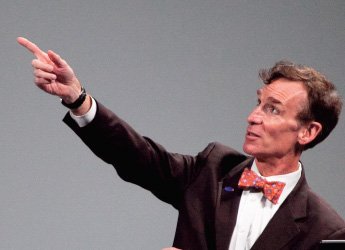 |
| wikipedia.org (Ed Schipul) 2012 CC-by-sa-2.0 |
Many of us who are scientists grew up watching “Bill Nye the Science Guy,” and learned to love science in the process. Sadly, Bill Nye came out in 2012 with a video that indicates he is vehemently opposed to parents who teach children that evolutionary theory is false. In a YouTube video posted by BigThink.com, Nye said:
Denial of evolution is unique to the United States…. People still move to the United States, and that’s largely because of the intellectual capital we have—the general understanding of science. When you have a portion of the population that doesn’t believe in that, it holds everybody back. Really. Evolution is the fundamental idea in all of life science. In all of biology. It’s like, it’s very much analogous to trying to do geology without believing in tectonic plates. You’re just not going to get the right answer. Your whole world is just going to be a mystery instead of an exciting place…. Once in awhile I get people that really, or, that claim, they don’t believe in evolution. And my response, generally, is, “Why not? Really. Why not?” Your world just becomes fantastically complicated when you don’t believe in evolution. Here are these ancient dinosaur bones or fossils. Here is radioactivity. Here are distant stars that are just like our star but that are at a different point in their life cyle. The idea of deep time, of this billions of years, explains so much of the world around us. If you try to ignore that, your world view just becomes crazy. Just untenable. It’s self-inconsistent. And I say to the grown-ups: If you want to deny evolution and live in your, in your, uh, world that’s completely inconsistent with everything we observe in the Universe, that’s fine. But don’t make your kids do it. Because we need them. We need scientifically literate voters and tax payers for the future…. We need engineers that can build stuff—solve problems…. In another couple centuries, that world view, I’m sure, will be, just won’t exist. There’s no evidence for it (Fowler and Rodd, 2012).
Such comments, though not surprising, certainly are unfortunate, since so many young people have long hung on Bill Nye’s every word about science.
Several points are worthy of mentioning in response to Mr. Nye. It is true that widespread denial of evolution seems to be somewhat unique to the United States (see Miller, 2012), although there are other contenders (cf. Le Page, 2008). It is also true that many people clamor to get into the United States and that the United States has been the leader in the technological revolution over the last century. What’s unfortunate is that Nye totally ignores the fact that America has become the superpower that we are in science and in every other field—while largely not believing in evolution. America has historically been Christian and pro-Bible (and thus, anti-evolution), and in truth, it is due to that stance that America has flourished. Becoming more pro-evolution would actually move us in the opposite direction from the direction that has made us great in the first place. Believing in evolution will actually “hold America back”—while believing in Creation has not.
Nye believes that dinosaur fossils, radioactivity, distant stars, and deep time prove evolution and disprove Creation. As you know, we address such matters on a regular basis (e.g., Lyons and Butt, 2008; DeYoung, 2005; Lyons, 2011; Miller, 2010) and have shown that the scientific evidence supports the Creation model rather than the Evolutionary model. The Creation model can offer reasonable explanations, in keeping with the scientific evidence, for the existence of matter, energy, life, the laws of science, design, beauty, religious intuition, morality, “anomalies” in the geologic column, and many other things, while the evolutionary model falls far short. It is the evolutionary model that is “completely inconsistent” with much of what we observe in the Universe. In truth, it is the evolutionary model that is holding back the progress of science. If evolutionary scientists would stop spending time and money in pursuit of unscientific notions (like trying to figure out how abiogenesis could happen, even though science has already disproven that idea time and again; or how something material could come from nothing or exist forever, even though science has already disproven those ideas time and again; or trying to find “missing link” fossils that prove that we came from ape-like creatures, when over 130 years of exploration into the geologic column has not helped in that pursuit), and begin interpreting the scientific evidence in light of the Creation model, much more progress could be made, as was the case in America’s past.
Evolutionary theory spawned the false concept of vestigial organs. That idea would have all but stopped scientific research on those organs, since according to evolutionary theory, those organs are now useless or nearly so. Now we are realizing that those organs are not vestigial, but important, and we are reaping the effects of evolutionists’ lack of emphasis on those organs for over a century. Little research has been done on many of those organs in the past century due to the vestigial argument. On the other hand, when scientists have turned their attention towards the created order for scientific inspiration—as creationists do since we understand that the Chief Engineer designed it—they are discovering that the Universe is replete with fully functional, amazing designs worthy of mimicking. The Creation model is hardly a hinderance to scientific progress. Contrary to Nye’s charge to parents—we encourage parents to continue to advocate the creationist mindset! The fruit of that pursuit has been the emergence of the most advanced and prosperous country in the history of mankind (cf. Skousen, 2009). Teach your kids the truth! “We need scientifically literate voters and tax payers for the future. We need engineers that can build stuff—solve problems.”
In a CBS interview after the release of the video, Nye talked about his passion concerning evolutionary theory.
I feel passionate about it for the betterment of the United States, the United States economy, and our future. What makes the United States great—the reason people want to live in the United States, move here still—is because of our ability to innovate. This goes back to Ben Franklin and Thomas Alva Edison and George Washington Carver, let alone landing on the moon—Neil Armstrong. All these people believed in science (“Bill Nye on Creationism Critique…,” 2012).
While we disagree that the “reason people want to live in the United States” is solely our ability to innovate, we certainly agree that the freedom and encouragement to engage in innovative endeavors in this country is a significant perk in coming here. However, Nye has failed to realize that the freedom to innovate in this country stems from the fundamental belief held by the Founders of this country—that men have been “endowed by their Creator with certain unalienable Rights,” including life, liberty, and the pursuit of happiness. These unalienable Rights, according to the Founders, were derived from the God of the Bible, in which, the Founders, en masse, believed (see Miller, 2008b). Belief in the Bible has resulted in fewer evolutionists in America—since Darwinian evolution and the biblical account of Creation cannot be harmonized (see Thompson, 2000). And yet, again, America is still greater than, perhaps, any other country in the history of the world.
Ironically, Nye mentions Franklin, Carver, and Armstrong among the great scientists of history. Franklin, though less religious than many of the Founders, was still a strong proponent of biblical morality in America and believed in the God of the Bible. Carver was a well-known Creation scientist, and Armstrong was among this country’s pioneering astronauts who even read from the Bible from space during television broadcasts (see Miller, 2008a). Nye failed to mention the fact that many great scientists from history have made significant contributions to the field of science, even though they were firm believers in God and Creation. Johannes Kepler, the father of modern astronomy and modern optics, was a firm Bible believer. Robert Boyle, the father of chemistry, was a Bible believer. Samuel F.B. Morse, who invented Morse Code, was a believer. Wernher Von Braun, the father of the space program at NASA, was a strong believer in God and Creation, as well as Louis Pasteur, the father of biology, Lord Kelvin, the father of thermodynamics, Sir Isaac Newton, the father of modern physics, and Faraday, the father of electromagnetism. Dozens of other well-known scientists from history could be cited (see Morris, 1990).
Although numbers ultimately mean nothing in regard to truth, creationists can certainly come up with an impressive list of qualified scientists living today who have examined the scientific evidence and concluded that the evolutionary model falls short in explaining our existence. Creation Ministries International posted a list of some 187 scientists alive today (or recently deceased) who believe in the biblical account of creation (“Creation Scientists…,” 2010). The scientists who are listed all possess a doctorate in a science-related field. Over 90 different scientific fields are represented in the list, including several types of engineers, chemists, geneticists, physicists, and biologists. Astronomers and astrophysicists; geologists and geophysicists; physicians and surgeons; micro-, molecular, and neurobiologists; paleontologists and zoologists are represented, and the list goes on. Jerry Bergman amassed a list of more than 3,000 individuals. Most have a Ph.D. in science, and many more could be added, according to Bergman.
On my list I have well over 3,000 names including Nobel Prize winners, but, unfortunately, a large number of persons that could be added to the public list, including many college professors, did not want their name listed because of real concerns over possible retaliation or harm to their careers (2006).
For over 30 years, we at Apologetics Press have conducted numerous seminars and published hundreds of articles by qualified, credentialed scientists who speak out in support of the biblical account of creation as well—scientists with graduate degrees in geology, astrophysics, microbiology, neurobiology, cell biology, biochemistry, aerospace engineering, nuclear engineering, and biomechanical engineering. Creationists can certainly speak with credibility in scientific matters—and we can show with confidence that the scientific evidence does not support Bill Nye and his evolutionary theory.
Concerning a recent NASA conference he attended, Nye noted how extraordinary it is that anybody in the world could attend that conference in a sense, since it was broadcast all around the world using technology that did not exist in the past, but now does, thanks to science. “That’s a result of science. That’s not a result of thinking the Earth is some extraordinarily short number of years old” (“Bill Nye on Creationism…,” 2012). It is true that our technology is a result of science, and in a sense, it is not necessarily all due to “thinking the Earth is some extraordinarily short number of years old,” since not all technological breakthroughs or hang-ups are necessarily the result of one’s belief on the age of the Earth. However, technology is also not a result of thinking the Earth is some extraordinarily long number of years old either. One’s belief about how old the Earth is does not necessarily directly affect the findings of science. Even prominent evolutionists recognize that one does not need to believe in Darwinian evolution in order to be a scientist. Richard Dawkins of Oxford University said, “a student of, say, nerve cells, might decide that he is not aided by thinking about evolution. The nerve specialist agrees that his nerve cells are the products of evolution, but he does not need to use this fact in his research…. That is a defensible position…. A physicist certainly doesn’t need Darwinism in order to do physics” (1996, p. 283, emp. added). A person’s stance on evolutionary theory may not directly affect his scientific findings, but it certainly can indirectly affect his findings through God’s Providence—as has been manifested throughout the history of this country and the blessings that Almighty God has bestowed upon us through scientific advancement. When God is happy with the decisions of a country, the country is blessed with prosperity and advancement (Psalm 33:12). So, Bill Nye and people like him are a hindrance to scientific progress. Why? (1) Because his views foster the acceptance of false information and hinder the free exchange of ideas; (2) Because many scientific man hours are wasted on pursuing pseudo-science; and (3) Because his unbiblical view of the origin of the Universe will ultimately lead to the drying up of the fountain of God’s providential scientific blessings in this country. May God help us to boldly fight this war for the soul of America.
REFERENCES
Bergman, Jerry (2006), “Darwin Skeptics,” [On-line], URL: http://www.rae.org/darwinskeptics.html.
“Bill Nye on Creationism Critique: I’m Not Attacking Religion” (2012), CBS News, August 28, http://www.cbsnews.com/8301-505270_162-57501492/bill-nye-on-creationism-critique-im-not-attacking-religion/.
“Creation Scientists and Other Specialists of Interest” (2010), Creation Ministries International, http://creation.com/creation-scientists.
Dawkins, Richard (1996), The Blind Watchmaker (New York: W.W. Norton).
DeYoung, Don (2005), Thousands…Not Billions (Green Forest, AR: Master Books).
Fowler, Jonathan and Elizabeth Rodd (2012), “Bill Nye: Creationism is Not Appropriate for Children,” BigThink.com, http://www.youtube.com/watch?v=gHbYJfwFgOU.
Le Page, Michael (2008), “Evolution Myths: It Doesn’t Matter if People Don’t Grasp Evolution,” New Scientist, 198[2652]:31, April 19.
Lyons, Eric (2011), “Common Sense, Miracles, and the Apparent Age of the Earth,” Apologetics Press, http://apologeticspress.org/APContent.aspx?category=9&article=4082.
Lyons, Eric and Kyle Butt (2008), The Dinosaur Delusion (Montgomery: AL: Apologetics Press).
Miller, Dave (2008a), “American Astronauts: From Belief to Unbelief,” Apologetics Press, http://apologeticspress.org/apcontent.aspx?category=12&article=2490.
Miller, Dave (2008b), The Silencing of God (Montgomery, AL: Apologetics Press).
Miller, Jeff (2010), “Inevitable—Given Enough Time?” Apologetics Press, http://apologeticspress.org/APContent.aspx?category=12&article=3729.
Miller, Jeff (2012), “Literal Creationists Holding Their Ground in the Polls,” Reason & Revelation, 32[9]:94-95, September (Montgomery, AL: Apologetics Press).
Morris, Henry M. (1990), Men of Science Men of God: Great Scientists Who Believed in the Bible (El Cajon, CA: Master Books), third printing.
Skousen, W. Cleon (2009), The 5000 Year Leap: A Miracle That Changed the World (Malta, ID: National Center for Constitutional Studies), 17th printing.
Thompson, Bert (2000), Creation Compromises (Montgomery, AL: Apologetics Press), second edition, http://apologeticspress.org/pdfs/e-books_pdf/cre_comp.pdf.
The post Bill Nye: The (Pseudo-)Science Guy appeared first on Apologetics Press.
]]>The post God, Evolution, and the Value of Human Life appeared first on Apologetics Press.
]]>“Let Us make man in Our image, according to Our likeness; let them have dominion over the fish of the sea, over the birds of the air, and over the cattle, over all the earth and over every creeping thing that creeps on the earth.” So God created man in His own image; in the image of God He created him; male and female He created them. Then God blessed them, and God said to them, “Be fruitful and multiply; fill the earth and subdue it; have dominion over the fish of the sea, over the birds of the air, and over every living thing that moves on the earth” (Genesis 1:26-28).
God created man in His image. He gave man an immortal soul (Genesis 35:18; Matthew 10:28). He made man inherently more valuable than all other life on Earth (Matthew 6:26-30). From the very beginning, God expected man to eat plant life (Genesis 1:29), and, since at least the time of Noah, God has authorized man to eat animals (Genesis 9:2-3). In truth, man has been killing animals (for sacrifices, clothes, etc.) with God’s approval ever since sin entered the world (Genesis 4:4; Hebrews 11:4; Genesis 8:20; cf. Genesis 3:21). The shedding of man’s blood, however, is altogether different. Why? Because “in the image of God He made man” (Genesis 9:6).
Whereas the Christian worldview is grounded in the God-given value of human life and man’s superiority over the rest of God’s earthly Creation (see Psalm 8:5-8), atheistic evolution devalues human life to the point where man inheres no more value than rodents, roaches, and microbes. For decades, students in American public schools have read from textbooks that devalue human life. In the introduction to the unit on the animal kingdom in Holt’s 10th-grade biology textbook, students were taught: “You are an animal, and share a common heritage with earthworms…” (Johnson, 1994, p. 453). A 1989 Earth Science textbook published by Harcourt, Brace, and Jovanovich alleged that “humans probably evolved from bacteria that lived more than 4 billion years ago” (p. 356). In 2006, evolutionary ecologist Dr. Eric Pianka was named the Distinguished Texas Scientist of the Year. At his award ceremony, Pianka condemned “the idea that humankind occupies a privileged position in the Universe” and “hammered his point home by exclaiming, ‘We’re no better than bacteria!’” (Mims, 2006). In a 2008 New Scientist article titled, “We Should Act Like the Animals We Are,” environmentalist David Suzuki stated in an interview with Jo Merchant: “[W]e must acknowledge that we are animals…. We like to think of ourselves as elevated above other creatures. But the human body evolved” (Marchant, 200[2678]:44).
Indeed, there is a stark contrast between theism and atheistic evolution. One says that God specially created man; the other says, we “share a common heritage with earthworms.” One says that man is inherently more valuable than animals; the other says “we are animals.” One says that man is superior to bacteria; the other says, “we’re no better than bacteria!” But, if we’re no better than microorganisms or the Earth on which we live, what will keep humanity from deciding to reduce the human population to 10% of the present number in order to “save mother Earth” from “overpopulation”? Dr. Pianka suggested such an idea during his 2006 award ceremony. What will keep lawmakers from banning the killing and eating of animals (our alleged equals)? And what about eating plants? They are alive, too. How can we justify eating plants and animals if we are no better than bacteria? How can we justify walking? After all, we might step on, and kill, a worm or a bacterium. If we lie down, we might destroy a bedbug. Even more troublesome, if we continue to breathe, we might inhale and destroy a microbe.
In truth, when people embrace the godless notion that human life and all other forms of life are equal, insanity prevails. Chaos rules the day. A biblical worldview, however, creates a rational order suitable for human existence.
REFERENCES
Earth Science (1989), (New York: Harcourt, Brace, & Jovanovich).
Johnson, George B. (1994), Biology: Visualizing Life (New York: Holt, Rinehart, & Winston).
Marchant, Jo (2008), “We Should Act Like the Animals We Are,” New Scientist, 200[2678]:44-45, October 18-24.
Mims, Forrest (2006), “Dealing with Doctor Doom,” The Citizen Scientist, http://www.sas.org/tcs/weeklyIssues_2006/2006-04-07/feature1p/ index.html.
The post God, Evolution, and the Value of Human Life appeared first on Apologetics Press.
]]>The post Population Statistics and a Young Earth appeared first on Apologetics Press.
]]>There is no question that both viewpoints—biblical and evolutionary—require a commencement point for mankind to begin propagation of the species. The biblical (i.e., Flood) model asserts that God started the process, creating both Adam and Eve—one male and one female—approximately 6,000 years ago. From them, the human race was established and ultimately exterminated in the global Flood of Noah’s day (Genesis 6-9), with the exception of Noah and his family. After the Flood, Noah’s three sons and their wives commenced the repopulation of the human species (Genesis 9:19).
The evolutionary model claims that the first “man” of the genus Homo emerged around two to three million years ago (cf. Corballis, 2002, p. 183; Johanson, 2001; “The Emergence…,” 2011; University of Utah, 2005; Walker, 2002). It has always been intriguing that the evolutionary side of the aisle appears to be quiet about the fact that at the commencement of the human species, both male and female human beings had to evolve simultaneously, in the same geographic area, and while both were alive, in order for the human species to propagate itself—not just one male or one female, and not two males or two females. Further, these male and female human bodies also had to contain the fully functional reproductive components that would be necessary to replicate humanity. In The Masterpiece of Nature: The Evolution and Genetics of Sexuality, Graham Bell discusses this quandary, stating that:
Sex is the queen of problems in evolutionary biology. Perhaps no other natural phenomenon has aroused so much interest; certainly none has sowed as much confusion. The insights of Darwin and Mendel, which have illuminated so many mysteries, have so far failed to shed more than a dim and wavering light on the central mystery of sexuality, emphasizing its obscurity by its very isolation (1982, p. 19).
Evolutionist Philip Kitcher admitted, “Despite some ingenious suggestions by orthodox Darwinians, there is no convincing Darwinian history for the emergence of sexual reproduction” (1982, p. 54). Evolutionist Mark Ridley noted that “[s]ex is a puzzle that has not yet been solved; no one knows why it exists” (2001, p. 111). Julie Schecter said that “sex remains a mystery to researchers, to say nothing of the rest of the population. Why sex?” (1984, 34:680). [See Thompson and Harrub, 2002 for an in depth discussion on the origin of genders and sexuality.]
Besides the problem raised for evolutionists by the origin of sexual reproduction, more problems exist that evolutionists appear to be quite reticent about. For instance, the patriarch and matriarch of the human race, having miraculously emerged in the same time period of history with each other, also had to be able to find each other on planet Earth without first starving, without being eaten by the ferocious animals that evolutionary images of early man portray, and without getting too old to replicate. And still further, just because there is another human being near you, does that mean you will be attracted to him/her? The male and female had to decide that they liked each other and do something about it before dying. And even further, the baby and mother had to survive the ordeal of child birth in those allegedly primitive circumstances. If the emergence of one human being from a non-human being seems ludicrous due to its contradiction of the Law of Biogenesis, surely this realization makes the evolutionary proposition beyond preposterous.
POPULATION STATISTICS AND THE EVOLUTIONARY MODEL
However, for the sake of argument, let us grant the atheistic evolutionist several miraculous feats—two living, opposite-sex human beings, with the necessary sexual components to propagate the species, in the same region on Earth, safe guarded from their primitive environment, with a desire for each other, and young enough to replicate. Even granting all of these significant but unrealistic assumptions, the evolutionist is left with statistical obstacles. Consider the mathematics for this argument.
Let us suppose that couples throughout history have had an average of (2 × c) children (i.e., c boys plus c girls). Starting with two humans, this would make the population after the first generation, Pn = 2+2 ∙ c. Then, the children, marrying each other, had another (2 ∙ c) children per couple. As illustrated in Scientific Studies in Special Creation (Lammerts, 1971), continuing this progression results in the following equation, where n is the number of generations for which the calculation is done.

After multiplying both sides of Equation (1) by c, subtracting the resulting equation from Equation (1), grouping, and dividing both sides by (c – 1), the following equation results:

This gives the total population after n generations, without any deaths. Assuming each person lives an average of d generations, the number of deceased people by the final generation (i.e., the (n – d)th generation) can be calculated using Equation (3):

Therefore, the total population after n generations, accounting for death, can be calculated by subtracting the population of the (n – d)th generation from the population calculated in Equation (2), resulting in the following:

If each couple has only two children (i.e., c = 1), the population will remain constant, and if each couple has fewer than two children on average (i.e., c < 1), the population will decrease (Lammerts, pp. 198-205). [See also Morris and Morris, 1996 and Wysong, 1976 for more information on the derivation of the above equations.]
The actual value of the constants (c, d, and n) are unknown, since the world’s population has not been known with any certainty until the last few hundred years. They also would almost certainly have fluctuated at different times in history based on the state of technology, lifespans (especially considering the long lifespans in the generations immediately following the Flood and the shorter lifespans preceding the current state of medical knowledge), and fluctuating offspring production rates. However, this approach allows for the use of long-term averages to get a rough estimate of what the world’s population should look like over time.
Being very conservative, accounting for periods of famine, disease, war, natural calamity, etc., let us assume that c = 1.2. Thus, each couple throughout history has had, on average, at least two children, and many times three or more children were born. Also, let us assume that each person has lived, on average, one and a third generations (i.e., d = 1.3). This means that each person died having seen some, though not all, of their grandchildren. Again, this estimate is likely very conservative, especially since effective birth control methods are a relatively recent innovation. However, these conservative estimates certainly take into account the long periods of time in history when people lived shorter lives and had fewer children. Let us further assign a reasonable estimate of a “generation” to be 38 years. This means that each couple has had all of their children by age 38. All of these numbers could easily and fairly be increased, but doing so would do even further damage to the evolutionist’s case.
Using these conservative estimates, if human beings have been on the planet producing offspring for one million years, over 26,000 generations have passed. There are currently about seven billion people on earth—6.9×10⁹ (“U.S. & World Population…,” 2011). However, according to Equation (4), there should be over 102,000 people on the Earth today if propagation commenced one million years ago. That is a one, followed by 2,000 zeros. In order to try to fathom that number, consider the following analogy. The known Universe is thought to be 28 billion light years in diameter (Powell, 2006; Tully, 2000). That is the equivalent of over 1070 cubic miles of volume. If tiny, three foot humans, modeled as cylinders with five inch radii (i.e., very narrow shoulders), were crammed into the Universe like sardines, 1082 people  might fit (if they have not eaten in awhile). That leaves enough people to fill up 101,918 (minus one) additional Universes that are the size of this one! And what’s worse, if c, d, or n are increased, as they legitimately could be, the problem is further amplified. Consider also that these numbers are based on a starting point of one million years ago. Evolutionists claim that humans have been on the Earth for two to three million years. To make their plight even worse, the evolutionary community digs its own grave significantly deeper by speculating that the original Adam and Eve were actually Adam, Eve, and about 10,000 other people (Hawks, et al., 2000). Even if 10,000 such miracles were accomplished in the same period of time in human history, one can easily imagine how many more people would result in a given period of time if 5,000 couples initially began bearing children instead of one couple. Where, pray tell, are all of the imaginary people that should be in existence if evolution is the true history of humanity?
The evolutionary community certainly has trouble adjusting the numbers to allow for this preposterous scenario. However, they must be able to come up with a reasonable explanation in order to maintain their position. If evolution is true, it must be assumed that there were times when the human population remained constant for very long periods of time or decreased to the point of extinction at different times in history (cf. Weiss, 1984; Hawks, et al., 2000). Such speculation is a leap into the dark without sufficient, verifiable evidence. [NOTE: Incidentally, such speculation is in contradiction with uniformitarian principles, which are fundamental to evolutionary dating techniques. If the Earth has not progressed in a constant, uniform fashion as macroevolution suggests, then old ages based on those uniformitarian assumptions cannot be assigned to the Earth. It seems that the evolutionary community wants to “have their cake and eat it, too.”] History grants us no world population estimates based on census’s until the last 200 years. Before that, according to population statisticians’ estimates, the average annual population growth was estimated to be relatively constant, ranging between 0.03-0.15% from 1750 A.D. to 10,000 B.C. (“Historical Estimates of World Population,” 2010) [NOTE: World populations are estimated at this later date based on the assumption that the theory of evolution is true. Such a time frame would be pre-Creation, according to the Bible, and is rejected by the author.] Likely due to medical breakthroughs and technological advancement, the annual population growth has since jumped to about 2%. Note that even the irreligious community recognizes the likelihood of significant population growth on average over time throughout history and makes its estimates accordingly. The evolutionary position, in order to exist at all, must stand in contradiction to this fact. The evidence, as well as common sense, cannot be denied. If growth is the norm as the evidence indicates, evolution is impossible. The evidence conveyed by population statistics simply does not support the evolutionary model.
POPULATION STATISTICS AND THE CREATION MODEL
What about the creation model? Is it supported by the evidence from population statistics? The biblical position asserts that after the Flood, repopulation of the Earth commenced, starting with six people (i.e., Shem, Ham, Japheth, and their wives), instead of two (or 10,000). Using the aforementioned procedure, the following equation can be derived for calculation of the projected population for any given time, starting with six people:

If we assume, based on biblical genealogies, that the Flood took place roughly 4,300 years ago (cf. Bass, 2003), using the same c andd as above, as well as a generation of 38 years, then 113 generations have passed since the global Flood of Noah’s day. Based on these numbers, the approximate projected population for today can be calculated. According to the calculations, there should be approximately seven billion people on Earth—6.7×10⁹. This is strikingly close to the current population as recorded by the U.S. Census Bureau—6.9×10⁹.
CONCLUSION
What does the evidence indicate? Is the evolutionary model a plausible explanation for man’s existence? The evidence from the field of population statistics says, “Certainly not.” Even granting very conservative numbers in the calculation of projected populations, it is the biblical model that is in keeping with the numerical evidence provided by the world’s population. The evidence supports a young age for the Earth and mankind. One would have to be dishonest to examine such concrete evidence and dismiss it out of hand. Yet, this attitude pervades much of the scientific community today. The same people who proclaim that they, unlike theists, are the ones who examine the evidence without bias, only drawing those conclusions that are warranted by the evidence, are the very ones who turn against the evidence when it does not suit their purpose and agenda. Philosopher David Hume once said that no man turns against reason until reason turns against him (as quoted in Warren, 1982, p. 4). That certainly sums up the mentality of many in the scientific community. Why not choose to go with the reasonable conclusion that can be drawn from the evidence? The Earth is young. Evolution cannot explain human existence. The biblical model can…and does.
REFERENCES
Bass, Alden (2003), “Which Came First, the Pyramids or the Flood?” Reason & Revelation, 23[11]:97-103, November, /pub_rar/23_11/0311.pdf.
Bell, Graham (1982), The Masterpiece of Nature: The Evolution and Genetics of Sexuality (Berkeley, CA: University of California Press).
Corballis, Michael C. (2002), From Hand to Mouth: The Origins of Language (Princeton, NJ: Princeton University Press).
“The Emergence of Modern Humans” (2011), Dolan DNA Learning Center, http://www.geneticorigins.org/pv92/intro.html.
Hawks, John, Keith Hunley, Sang-Hee Lee, and Milford Wolpoff (2000), “Population Bottlenecks and Pleistocene Human Evolution,” Molecular Biology and Evolution, 17[1]:2-22.
“Historical Estimates of World Population” (2010), U.S. Census Bureau, http://www.census.gov/ipc/www/worldhis.html.
Johanson, Donald C. (2001), “Origins of Modern Humans: Multiregional or Out of Africa?” American Institute of Biological Sciences, http://www.actionbioscience.org/evolution/johanson.html.
Kitcher, Philip (1982), Abusing Science: The Case Against Creationism (Cambridge, MA: MIT Press).
Lammerts, Walter, ed. (1971), Scientific Studies in Special Creation (Philadelphia, PA: Presbyterian and Reformed).
Morris, Henry M. and John D. Morris (1996), The Creation Trilogy—Science & Creation (Green Forest, AR: Master Books).
Powell, Richard (2006), “The Size of the Universe,” An Atlas of the Universe, http://www.atlasoftheuniverse.com/universe.html.
Ridley, Mark (2001), The Cooperative Gene (New York: The Free Press).
Schecter, Julie (1984), “How Did Sex Come About?” Bioscience, December.
Thompson, Bert and Brad Harrub (2002), “The Origin of Gender and Sexual Reproduction [Part I],” Reason & Revelation, 22[10]:73-79, /pub_rar/22_10/0210.pdf.
Tully, Brent (2000), “How Big is the Universe?” NOVA Online, http://www.pbs.org/wgbh/nova/universe/howbig.html.
University of Utah (2005), “The Oldest Homo Sapiens: Fossils Push Human Emergence Back to 195,000 Years Ago,” Science Daily, http://www.sciencedaily.com/releases/2005/02/050223122209.htm.
“U.S. & World Population Clocks” (2011), U.S. Census Bureau, http://www.census.gov/main/www/popclock.html.
Walker, Matthew (2002), “What Does the Archaeology Record Tell Us About the Lifestyles of the Early Hominids?” New Archaeology, http://www.newarchaeology.com/articles/earlyhom.php.
Warren, Thomas B. (1982), Logic & the Bible (Ramer, TN: National Christian Press).
Weiss, K.M. (1984), “On the Number of Members of the Genus Homo Who Have Ever Lived, and Some Evolutionary Implications,” Human Biology, December, 56[4]:637-49.
Wysong, R.L. (1976), The Creation/Evolution Controversy (East Lansing, MI: Inquiry Press).
The post Population Statistics and a Young Earth appeared first on Apologetics Press.
]]>The post Does Evolution Belong in Biomedical Curricula? appeared first on Apologetics Press.
]]> published in a special supplementary edition of the journal, which conveyed the thoughts of some scientists that medical school curricula needed a course on evolutionary biology (“Evolution in Health…,” 2010, 107[suppl. 1]:1691-1807). The question of whether medical school and biomedical graduate programs should require a course on evolutionary biology is complicated to say the least.
First, evolutionary biology must, as always, be defined. Microevolution (or the small genetic changes occurring in populations that lead to differences within a species) has relevance to medicine and medical research. Consider, for example, the idea of antibiotic resistance in bacteria and viruses. Over time and under the pressures of antibiotics, many strains of bacteria and some viruses will undergo genetic changes (mutations) that allow them to become resistant to the drug(s) that would otherwise be lethal. Additionally, bacteria have the amazing ability to transfer genes between one another, thereby passing antibiotic resistances from one bacterium to another. This problem of antibiotic resistance is a significant medical concern, especially for some diseases such as tuberculosis and HIVwhere multidrug-resistant strains of the infectious agent, which are difficult to treat, are causing disease. However, macroevolution (or the idea that over long periods of time species will evolve into new and distinctive species) does not have relevance in medicine. Macroevolution is the alleged process by which many, many small genetic changes accumulate over time to transform one organism into a new and different organism. For example, macroevolution is the alleged process by which evolutionists claim that bacteria evolved into mitochondria and eventually eukaryotes, how reptiles evolved into birds, and how apes evolved into humans. Even if true (and it is not), this description of evolution has no place in medical or biomedical curricula.
APPLICATIONS FOR MEDICAL PROGRAMS
Modern medical (M.D.) programs are designed to give future physicians a foundational understanding of the biochemical and cellular basis of the human body, and then teach them about the body’s anatomy, physiology, and various disease states. The microevolutionary genetic changes that are attributed to antibiotic resistance and phenotypic variation (physical and biochemical differences between people) in the human population are currently not stressed in medical curricula. Nesse and colleagues stated: “[F]ew physicians and medical researchers have taken a course on evolutionary biology, and no medical school teaches evolutionary biology as a basic science for medicine” (2010, p. 1806). What the authors of this article fail to do is distinguish microevolution from macroevolution. It is likely that physicians could benefit from a better understanding of how small genetic changes lead to diversity in the human population and adaptations such as antibiotic resistance in pathogens. Macroevolution (also known as Darwinian evolutionary theory) is an attempt to explain the origin of life. It does not address disease states nor how we treat disease. Even if Darwinian evolutionary theory were a proven science, it would serve no purpose in the preparation of future physicians. The reality is that Darwinian evolution is simply an unproven hypothesis, which means that it certainly does not belong in medical school coursework.
Knowing that your doctor has only two years of coursework in his or her medical school program, would you want this person, who is going to be caring for the medical needs of you and your family, to spend less time learning about how the human body works, and more time learning about the monkeys from which humans supposedly originated? The idea is rather preposterous. Physicians obviously need to know everything possible about the human body and its diseases, not about how single-celled organisms allegedly evolved over millions of years into humans. The brief two years of required medical school coursework are a major hurdle in adding any form of evolutionary biology to the curricula, because if any course or set of material is added, then something else has to be removed. There is only so much time for medical educators to teach students in this two-year period. I, for one, would much rather my doctor spend time on medically relevant content than the unproven “science” of macroevolution.
APPLICATIONS FOR BIOMEDICAL PROGRAMS
In 2007, I received a Ph.D. in cell biology from a biomedical graduate program at the University of Alabama at Birmingham School of Medicine. In that program I took no formal coursework in evolutionary theory or speciation, nor were such courses even an option. Instead, I took coursework in biochemistry, genetics, cell biology, virology, and the biology of disease, among others. Moroz claims that this kind of curricula is “sacrificing a deeper understanding of the fundamental laws of biology,” and students in such programs “lose some strategic advantage as well as a long-term perspective” (p. 36). I must disagree.
Modern graduate doctoral programs in the biomedical sciences are designed to train future scientists in how to conduct research that has the potential to lead to new medical discoveries, such as the origins of disease and the development of novel disease treatments and cures. This training requires a strong foundation in the scientific method and its direct application, as well as basic science coursework in human and pathogen biology. Just as was described above for physicians, an understanding of microevolutionary processes has benefit for future biomedical scientists. For example, to develop a new and improved drug to treat the HIV virus, one would need to know why current drugs are becoming less effective due to viral genetic changes. However, macroevolution does not belong in the curricula of future medical researchers for all of the same reasons that it does not belong in medical school programs: (1) Darwinian evolutionary theory is an unproven hypothesis, and (2) it has no application in medicine.
APPLICATIONS FOR BIOMEDICAL RESEARCH
In his article, quoting Theodosius Dobhansky, Moroz stated: “Nothing in biology makes sense except in the light of evolution” (p. 36). What this means is that one cannot understand life and its intricacies unless it is looked at from the perspective of evolution. “Whether we like it or not, biology simply means evolution,” Moroz went on to observe (p. 36). Once again, I must strongly disagree.
I once had a conversation with my graduate Ph.D.advisor, a pediatric oncologist and scientist, about the similarities in DNAsequence and genome structure between humans and other organisms. He, believing in Darwinian evolution, and I, believing that God created each organism separately, had very different perspectives on biology. But, he concluded that no matter which stance you take on the origin of life, evolution or creation, the way in which we conduct biomedical research is unchanged. Common ancestry due to macroevolution would be expected to lead to organism similarities, just as common design due to a Designer would also lead to similarities in organism structure and function. The point is that biology does make sense in light of creation. Statements made by individuals such as Moroz or Dobzhansky regarding the need for evolution to understand biology are nothing more than evolutionist propaganda, intending to use the letters behind one’s name to sway the population into believing that macroevolution must be fact.
Moroz did write correctly in his article that “many, if not most, breakthroughs in biology and medicine have come by studying experimental models representing the entire spectrum of the diversity of life: from bacteria to yeasts, from infusorians to algae, from hydra to squid and sea slugs” (p. 36). Obviously, scientists cannot use humans as their lab animals, so we use other organisms instead. Indeed, biomedical research relies upon model organisms such as the mouse, fly, worm, and yeast to model what is going on in humans. This modeling of physiology and disease pathology works because of the similarities all organisms share—including humans. However, what is important to note, and what Dr. Morov does not say, is that Darwinian macroevolution need not be true, let alone understood or taught to medical students, for these similarities to be utilized for biomedical research. God created humans, mice, flies, worms, and yeast with both their distinctions and similarities. This common design allows scientists to maximize on the similarities for research purposes.
CONCLUSION
While I took no formal courses in evolutionary biology during my own graduate coursework, I was exposed to some evolutionary theory embedded in courses such as biochemistry. On one particular biochemistry exam, I was posed with observations about the similarities and differences between protein amino acid sequences among various species and asked, “How do you account for these observations?” My response on the exam read: “I account for this observation by believing that God created these proteins in this manner,” followed by, “The evolutionist accounts for this observation by.…” I received 80% credit for my response, but more interestingly, the professor wrote these words below my response: “This particular belief will make it more difficult for you to function as a professional biologist.” Did this statement turn out to be true? No. I have functioned well, perhaps excellently in my professional career. I have published research in top-tier journals and won awards. I do not mention these things to boast, but rather to prove that biology does not depend on evolution, just as medicine does not depend on evolution.
The topic of evolutionary theory in biomedical curricula is complex. The principles of microevolution would likely be beneficial for both future researchers and physicians if they can be worked into an already content-heavy curriculum. But, Darwinian evolutionary theory, biodiversity, and speciation do not belong in biomedical or medical curricula. As scientists, physicians, and medical educators make decisions regarding curriculum reform, let us hope that prudent wisdom will prevail over the biased agenda of many staunch macroevolutionists.
REFERENCES
Moroz, Leonid (2010), “The Devolution of Evolution,” The Scientist, 24(11):36.
“Evolution in Health and Medicine Special Feature” (2010), Proceedings of the National Academy of Sciences, 107(suppl. 1):1691-1807, January 26.
Nesse, Randolph M., et al. (2010), “Making Evolutionary Biology a Basic Science for Medicine,” Proceedings of the National Academy of Sciences, 107[suppl. 1]:1806, January 26.
The post Does Evolution Belong in Biomedical Curricula? appeared first on Apologetics Press.
]]>The post Creation in Medical School Curricula? appeared first on Apologetics Press.
]]>That said, in actuality a strong case can be made for the inclusion of the creation model. The implications of the evolutionary principle known as “the survival of the fittest” were horribly carried out on the Jewish population by the Nazis in World War II in an attempt to create the “master race” (cf. Stein and Miller, 2008; Butt, 2001). In contrast, it is the Christian religion that enjoins principles that are in keeping with patient well-being. While genocide, abortion, and euthanasia are in keeping with the ideals of evolution, the Bible promotes compassion for the weak, sick, and hurting; sacrificing oneself to help others; treating others the way we would want to be treated; and doing our best at whatever we put our hands to—all hallmarks of the medical field. It is the Christian religion that has caused the number of hospitals to grow throughout the world and medicine to be given, often free of charge, to those in need. The American Red Cross, founded in 1881 by the deeply religious, Clara Barton (“A Brief History…,” 2010; Barton, 1922, 2:317-325), is heavily involved in helping others at home and abroad. According to the official American Red Cross website: “Today, in addition to domestic disaster relief, the American Red Cross offers compassionate services in five other areas…” (“About Us,” 2010).
Support of such compassionate efforts would certainly be considered among the ideals emphasized by Christianity. In fact, the emblem of the Red Cross is so synonymous with Christianity that it is not used in those countries where the logo is “by its very nature, offensive to Muslim soldiers” (“The History of the Emblems,” 2010; cf. “A Downside to Symbols…,” 2010). Many of the strides that have been made in the medical field in the last 200 years for the benefit of the world were made in this nation, which until the last 30-40 years essentially taught “Christian Biology” in schools. God, Christ, the Bible, and Creation were believed by most Americans and biology was taught through those lenses. The field of medicine or bio-medical research hardly suffered by not teaching evolution, but instead teaching Creation for all those years.
The atheistic evolutionary viewpoint would say, like Scrooge, if someone is not fit enough to live, they ought to die “and decrease the surplus population” (Dickens, 1843, p. 11). Christianity, on the other hand, results in self-sacrificial physicians. That’s the kind of doctor I want working on my family. Christianity fits very nicely in the medical field. Perhaps it should be a part of medical school curricula once again.
REFERENCES
“About Us” (2010), American Red Cross, http://www.redcross.org/portal/site/en/menuitem.d8aaecf214c576bf971e4cfe43181aa0/?vgnextoid=477859f392ce8110VgnVCM10000030f3870aRCRD&vgnextfmt=default.
“A Brief History of the American Red Cross” (2010), American Red Cross, http://www.redcross.org/portal/site/en/menuitem.86f46a12f382290517a8f210b80f78a0/?vgnextoid=271a2aebdaadb110VgnVCM10000089f0870aRCRD.
“A Downside to Symbols: Cultural Mismatches” (2010), History of Graphic Design, Symbols: The Alphabet of Human Thought, http://www.designhistory.org/symbols.html.
Barton, William E. (1922), The Life of Clara Barton: Founder of the American Red Cross (New York: Houghton Mifflin).
Brooks, Will (2011), “Does Evolution Belong in Biomedical Curricula?” Reason & Revelation, 31[3]:18-20, March, http://apologeticspress.org/APContent.aspx?&article=3796.
Butt, Kyle (2001), “Ideas Have Consequences,” http://apologeticspress.org/APContent.aspx?category=12&article=528.
Dickens, Charles (1843), A Christmas Carol (New York: Aladdin Classics).
Moroz, Leonid (2010), “The Devolution of Evolution,” The Scientist, 24(11):36.
Stein, Ben and Kevin Miller (2008), Expelled: No Intelligence Allowed (Premise Media).
“The History of the Emblems” (2010), ICRC Resource Centre, http://www.icrc.org/eng/resources/documents/misc/emblem-history.htm.
The post Creation in Medical School Curricula? appeared first on Apologetics Press.
]]>The post Save the Planet! Kill the People! appeared first on Apologetics Press.
]]>Since James Lee’s death, much has come to light about his radical environmental beliefs. Many in the mainstream media ignored or downplayed Lee’s previously posted environmental rants. (Lee posted a manifesto at savetheplanet.com prior to his hostile actions on September 1; see Lee, 2010). Some may justify disregarding Lee’s extreme human-hating, planet-saving views because he was delusional, or mentally ill, or simply because the global-warming, environmental movement should not be discredited on the basis of one man’s extreme actions. (The mainstream media, however, do not ignore the strongly held beliefs of a “Bible-believing,” delusional pro-lifer who bombs an abortion clinic.) Of course, it is true that the actions of a person should not discredit a particular belief system or religion, if the individual is acting in opposition to his or her beliefs. The fact is, however, Lee was actually taking environmental, evolutionary, atheistic beliefs to their logical conclusion.
Like a growing number of environmental, global-warming alarmists, James Lee made perfectly clear that the human population needs to be reduced drastically. In his pre-crusade post, Lee wrote about the “problem of human overpopulation,” saying, “the planet does not need humans” (Lee, 2010). “Saving the plant means saving what’s left of the non-human Wildlife by decreasing the Human population. That means stopping the human race from breeding any more disgusting human babies!… Nothing is more important than…saving the environment and the remaning [sic] species.” As if the Discovery Channel does not already heavily advocate the General Theory of Evolution, Lee emphasized how they must “[t]alk about Evolution…and Darwin until it sinks into the stupid people’s brains…” (Lee, 2010).
For someone who rejects God and the Bible, but believes that humans (1) evolved by time and chance over millions of years, and (2) are currently wreaking havoc on the only known planet in the Universe that can support life, destroying human lives to save “Mother Earth” is perfectly rational. James Lee may have been mentally ill, but his flippant attitude about humanity and his willingness to end the lives of humans for the sake of Earth is perfectly consistent with atheistic, evolutionary beliefs.
At his “2006 Scientist of the Year” award ceremony in Beaumont, Texas, evolutionary ecologist Eric Pianka expressed his Lee-like concerns about human overpopulation. According to attendee Forrest Mims,
Professor Pianka said the Earth as we know it will not survive without drastic measures. Then, and without presenting any data to justify this number, he asserted that the only feasible solution to saving the Earth is to reduce the population to 10 percent of the present number…. His favorite candidate for eliminating 90 percent of the world’s population is airborne Ebola (Ebola Reston), because it is both highly lethal and it kills in days, instead of years.
Did Pianka release Ebola upon his audience? No. Did he take hostages as James Lee did in Silver Spring, Maryland? No. But, if he had, he merely would have been acting out what he and millions of atheistic evolutionists around the world believe: “We’re no better than bacteria!” (as quoted in Mims, 2006).
The truth is, humans are better than bacteria! We are better and more valuable than any plant or animal on Earth because God made us better. He created man “in his own image” (Genesis 1:27). He gave man an immortal soul (Zechariah 12:1; Matthew 10:28). And he gave man the responsibility, not to destroy human life to save the planet (Genesis 9:6), but to “fill the earth and subdue it” and “have dominion…over every living thing that moves on the earth” (Genesis 1:28).
For those who refuse to have God in their knowledge (Romans 1:28), life will forever be filled with the self-contradictory, unreasonable, inhumane lies of atheistic evolution. But, for those who “come to the knowledge of the truth” (1 Timothy 2:4), and embrace man’s God-given role on Earth, beliefs and actions will remain consistent, rational, and in harmony with God’s Word.
REFERENCES
Lee, James (2010), “The Discovery Channel Must Broadcast to the World Their Commitment to Save the Planet and to do the Following Immediately,” http://www.scribd.com/doc/36771069/Save-the-Planet-Protest-Com.
Mims, Forrest (2006), “Dealing with Doctor Doom,” The Citizen Scientist, http://www.sas.org/tcs/weeklyIssues_2006/2006-04-07/feature1p/index.html.
The post Save the Planet! Kill the People! appeared first on Apologetics Press.
]]>The post Evolution, Textbooks, and Homeschooling appeared first on Apologetics Press.
]]>Hundreds of thousands of creationists in the U.S. have chosen to homeschool their children partly because they do not want their most precious God-given gifts (Psalm 127:3) sitting year after year at the feet of evolutionists, reading evolutionary textbooks, especially without critical analysis. These homeschooling parents still provide their children with training in Earth science, biology, chemistry, etc. In fact, many religiously motivated homeschoolers (which comprise at least 83% of homeschooling families in the U.S.; see Lovan, 2010) provide countless more hands-on, operational science experiences for their children than a lot of young people receive in public schools (where funding is limited and where classrooms are often shared with 20-30 other students). Some individuals, however, are extremely critical of the various textbooks many homeschoolers use.
Associated Press writer Dylan Lovan recently penned an article wherein he interviewed three non-religious homeschooling families and two evolutionary scientists, all who expressed disappointment over the available homeschooling science textbooks. After reviewing two of the best-selling biology textbooks homeschoolers frequently use, Virginia Tech biology professor Duncan Porter said “he would give the books an F” (Lovan, 2010). Ecology and evolutionary professor Jerry Coyne of the University of Chicago stated: “If this is the way kids are home-schooled then they’re being shortchanged, both rationally and in terms of biology” (as quoted in Lovan). “These books are promulgating lies to kids,” said Dr. Coyne (as quoted in Lovan), and allegedly are not scientifically credible. What is so terrible about the science books produced by Apologia, Bob Jones, and other publishers that frequently sell to homeschooling families? The textbooks “dispute Charles Darwin’s theory” of evolution (Lovan, 2010).
And why shouldn’t the theory of evolution be disputed? Why shouldn’t it be assessed critically and debated? Why shouldn’t students learn that all evolutionary dating methods are based upon various assumptions (see Butt and Lyons, 2009, pp. 94-100; see also DeYoung, 2005)? Why shouldn’t they be taught scientific laws that contradict evolution? Why shouldn’t they be allowed to explore the scientific case for Creation and ask whether non-intelligence can reasonably explain complex, functional design, like that in a living, human cell? As Dr. Jay Wile, textbook writer for Apologia, said: “We definitely do not lie to the students. We tell them the facts that people like Dr. Coyne would prefer to cover up.” In truth, it is evolutionists like Jerry Coyne who feel “compelled to lie in order to prop up a failing hypothesis (evolution)” (as quoted in Lovan).
Furthermore, regarding Coyne and Porter’s concerns that homeschoolers are being “shortchanged, both rationally and in terms of biology” because of their use of science textbooks that do not blindly embrace Darwinian evolution, consider how well the average homeschool student scores in standardized science tests. Two different studies (from 1998 and 2009), which included a total of more than 30,000 homeschool students from all 50 states, revealed that, on average, homeschoolers score 30 to 36 percentile points higher than the average student on standardized science tests (see Slatter, 2009). What’s more, many of these same homeschoolers go on to attend universities around the country where they excel in science classes, rather than being hindered because of their religious homeschooling heritage.
The facts speak for themselves: (1) Evolution is not a proven fact (so why should it be the only theory of origins presented to students?); (2) Studies show that, on average, homeschoolers outperform public school students by a wide margin on standardized tests, including science tests, despite most homeschoolers being taught that life on Earth was created and designed by an intelligent, infinite, eternal Mind. Evolutionists may give creationist homeschooling families an “F” on their choice of science curriculum, but in reality, it is the theory of evolution that deserves the “F.”
REFERENCES
“Back to School: 2006-2007” (2009), U.S. Census Bureau, http://www.census.gov/Press-Release/www/releases/archives/facts_for_ features_special_editions/007108.html.
Brooks, Michael (2006), “In Place of God,” New Scientist, 192[2578]:8-11.
Butt, Kyle and Eric Lyons (2009), Truth Be Told (Montgomery, AL: Apologetics Press).
“Comments” (2008), The Richard Dawkins Foundation, http://richarddawkins.net/articles/2609-16-of-us-science-teachers-are-creationists.
DeYoung, Donald B. (2005), Thousands…Not Billions (Green Forest, AR: Master Books).
Gallup, George Jr. and Michael Lindsay (1999), Surveying the Religious Landscape: Trends in U.S. Beliefs (Harrisburg, PA: Morehouse Publishing).
Holmes, Bob (2008), “16% of US Science Teachers are Creationists,” New Scientist, May 20, http://www.newscientist.com/article/dn13930-16-of-us-science-teachers-are-creationists.html.
Lovan, Dylan (2010), “Top Home-School Texts Dismiss Darwin, Evolution,” http://www.google.com/hostednews/ap/article/ALeqM5h3x1DHDjafMujXt9RNwwH6ugU9NgD9E9AOV80.
“Poll: Creationism Trumps Evolution” (2004), CBS News, http://www.cbsnews.com/stories/2004/11/22/opinion/polls/main657083.shtml.
The Scientific Case for Creation (2004), (Montgomery, AL: Apologetics Press), http://apologeticspress.org/pdfs/e-books_pdf/scfc.pdf.
Slatter, Ian (2009), “New Nationwide Study Confirms Homeschool Academic Achievement,” August 10, http://www.hslda.org/docs/news/200908100.asp.
The post Evolution, Textbooks, and Homeschooling appeared first on Apologetics Press.
]]>The post God May Not Exist, But Aliens Do? appeared first on Apologetics Press.
]]>In recent weeks, Hawking has made national and international headlines with his assertions about aliens. According to the first line of an April 25 MSNBC article, “British physicist Stephen Hawking says aliens are out there, but it could be too dangerous for humans to interact with extraterrestrial life” (“Hawking…,” 2010, emp. added). Hawking was a little less confident in his new documentary titled “Into the Universe with Stephen Hawking.” After posing the question, “Are we alone on our small, round, blue ball?” He answered: “I think probably not” (2010). What followed, however, was an entire documentary that presumed the existence of aliens. “I imagine they might exist in massive ships…having used up all the resources from their home planet. Such advanced aliens would perhaps become nomads, looking to conquer and colonize whatever planets they can reach” (“Hawking…”). If aliens visit Earth, Hawking said, “the outcome would be much as when Columbus landed in America, which didn’t turn out very well for the Native Americans” (“Into the Universe…,” 2010). Thus, inhabitants of Earth are warned to stay away from aliens at all costs.
When NBC Nightly News anchor Brian Williams commented on Hawking’s new Discovery Channel documentary about aliens, he began by calling the evolutionary astrophysicist “one of the bona fide smart people on the planet” (Williams, 2010). But how smart can a person be who believes in E.T., all the while doubting (or denying) God’s existence? What has this world come to when so-called “bona fide smart people” reject Creation but embrace the Law-of-Biogenesis-breaking theory of spontaneous generation? How can a person say “aliens are out there,” but God probably isn’t? We are supposed to be careful to avoid alien invaders, but not concern ourselves with whether God exists? What kind of “smart” person thinks that Star Trek is reality, but an omnipotent Creator is fantasy? The Bible calls such a person a “fool.”
For since the creation of the world His invisible attributes are clearly seen, being understood by the things that are made, even His eternal power and Godhead, so that they are without excuse, because, although they knew God, they did not glorify Him as God, nor were thankful, but became futile in their thoughts, and their foolish hearts were darkened. Professing to be wise, they became fools (Romans 1:20-22).
The fool has said in his heart, “There is no God” (Psalm 14:1; 53:1).
The fear of the LORD is the beginning of wisdom, and the knowledge of the Holy One is understanding (Proverbs 9:10).
REFERENCES
“A Brief History of Time” (no date), Random House, http://www.randomhouse.com/catalog/display.pperl/9780553380163.html.
“The Crazy World of Stephen Hawking” (2010), The Independent, October 12, http://www.independent.co.uk/news/science/the-crazy-world-of-stephen-hawking-631043.html.
“Hawking: Aliens May Pose Risks to Earth” (2010), April 25, http://www.msnbc.msn.com/id/36769422/.
“Into the Universe with Stephen Hawking” (2010), Discovery Channel, April 25, http://dsc.discovery.com/tv/stephen-hawking/about/about.html.
“Pope Sees Physicist Hawking at Evolution Gathering” (2008), October 31, http://www.reuters.com/article/idUSTRE49U6E220081031?feedType=RSS&feedName=scienceNews.
“Stephen Hawking” (2010), Encyclopedia of World Biography, http://www.notablebiographies.com/Gi-He/Hawking-Stephen.html.
Williams, Brian (2010), NBC Nightly News, April 26, http://www.msnbc.msn.com/id/36769422/.
The post God May Not Exist, But Aliens Do? appeared first on Apologetics Press.
]]>The post Has Life Been Made From Scratch? appeared first on Apologetics Press.
]]>In order to answer the central question, it is important to understand the process for design, synthesis, and assembly of the genome. First, the DNA sequences that encode the genome of the bacterium Mycoplasma mycoides were manipulated on a computer. The changes made in the genome included deleting some nonessential DNA sequences, inserting a few extra genes, and inserting “watermark” sequences that would be used to verify that the transplant was successful and DNA in the organism was the modified DNA. Interestingly, these watermarks include coded sequences with names and e-mail addresses, a creative step that provided a unique tracking capability for the procedure.
Second, the team partnered with a company to synthesize the DNA in ~1080 base-pair sequences. (DNA consists of two complementary strands of bases that “pair up” to make a double-stranded or duplex molecule.) It took 1000 of the sequences to make the entire set of DNA that ultimately would be required to provide the instructions for asexual reproduction of the bacteria. Additionally, the scientists were challenged with the complex task of assembling the DNA fragments into a much larger one million base-pair (Mbp) synthetic chromosome. (By comparison, there are three billion base pairs of DNA in one copy—23 chromosomes—of the human genome). The ~1000 fragments of ~1000 base pairs each were “stitched” together inside yeast cells through a process of DNA recombination which is inherent to the cell. The team first constructed ~10,000 base pair DNA sections and then ~100,000 base pair sections before stitching the final ~1 Mbp chromosome together. Clearly, the recent publication chronicles a complex series of events that results in the reporting of the design, synthesis, and assembly of the requisite information for controlling continuous self-replication.
The assembly of the final artificial bacterial chromosome with the imbedded natural genes and the “watermark” sequences was confirmed using several molecular techniques, and the chromosome ultimately inserted into a bacterial cell of a closely related yet distinctive species (Mycoplasma capricolum) where the original DNA had been expunged. The recipient bacterial cell (M. capricolum) had intact proteins and RNA molecules, which included all of the required, preformed, and functional enzymes to support self-replication once the new chromosome was inserted. Researchers grew the cells through a number of cell divisions, which eventually diluted out, degraded, and replaced the original M. capricolum proteins. Thus, the researchers were left with a “synthetic” cell from M. capricolum that was now producing proteins from a “synthetic” DNA molecule coding for genes originally from M. mycoides.
Overall, the technical expertise demonstrated in the report is quite an impressive accomplishment. DNA synthesis, cloning, and recombination techniques are frequently used but have never been applied on the scale of millions of base pairs. Furthermore, the experiment demonstrated that there is a minimal set of genes that can be used to run a basic bacterial cell. The researchers from JCVI had previously demonstrated that there is a “minimal gene complement” that would sustain the life of another bacterium, Myscoplasma genitalium (Fraser, 1995). In the Fraser report, the researchers deleted ~100 of M. genitalium’s ~480 genes one at a time and found it could still survive (but could not survive when multiple genes were deleted simultaneously). The recent work of JCVI helps to support the concept that there is a minimal set of genes that can support life resulting in the interesting question: how could “simpler” life exist (much less develop) with fewer genes than the “minimal gene complement”? A question that is controversial—and, to say the least, has enormous implications for whether life could develop from nonlife.
There are several important considerations to bear in mind when considering the impact of the study, namely: 1) the DNA sequences for all of the genes were already designed and synthesizers were used to generate the actual DNA; 2) the recipient cell contained preformed enzymes and other factors needed to support life—the cell was not “made from scratch”; 3) the sole replaced component in the recipient cell was the “instructions,” that is, the DNA; and 4) the researchers relied on living systems to help assemble the chromosome into its final form through the stitching process in yeast described above.
The JCVI experiment is similar to what happens when an egg is fertilized. The proteins and other factors are already present in an unfertilized egg, just as they were in the recipient bacterial cell. Upon fertilization, the DNA from the mate is joined together with the DNA already in the egg, allowing growth and development to begin. The important thing in both cases is that it is not simply the DNA alone that is needed. Instead, a new living cell requires many preformed proteins and RNA molecules in order to support and sustain life.
One overly simplistic yet accurate analogy compares the JCVI process to that of taking the hard drive out of one computer and replacing it with a second hard drive that was set up separately (“News to Note,” 2010). In the hard drive analogy, the computer and all of its components already exist, and only the hard drive is replaced. In the case of the JCVI experiment, the cell and its components already exist, and only the DNA is replaced. While simple in its description, it is important to note that the experiment overcame numerous technically difficult steps before finding success. Moreover, it is important to remember that even the DNA was adapted from a living organism. In other words, the “hard drive” was “programmed” using pre-existing “software.”
CONCLUSION
It is true that this experiment is very impressive, and the challenges that were overcome should not be dismissed lightly. In fact, the results provide evidence for the complexity of life. The JCVI researchers started with the genome of an organism that is among the smallest known to man. It contains as few genes as possible to sustain life. Yet, it was a long (over 10 years) and very expensive (~$40 million) process to copy the genome of this simple organism, assemble the copy into an intact chromosome, and insert this chromosome into an already living cell (Pennisi, 2010). It is fascinating how much effort went in to this procedure—which really did not create new life; rather it simply modified existing molecular machinery that is required for life.
While there are many who fear that the JCVI process may open the door to great and terrible power in the hands of scientists, it is likely an unwarranted fear for what will happen with the technology. Similar to all of nature, in the right hands and with pure motives, it may at some point be used for good or, at the whim of corrupt goals, could generate evil results. Ultimately it must be acknowledged that God is in control, and the evidence of His handiwork is apparent in even the simplest of microorganisms.
REFERENCES
Gibson D.G., Glass J.I., Lartigue C., Noskov V.N., Chuang R.Y., Algire M.A., Benders G.A., Montague M.G., Ma L., Moodie M.M., Merryman C., Vashee S., Krishnakumar R., Assad-Garcia N., Andrews-Pfannkoch C., Denisova E.A., Young L., Qi Z.Q., Segall-Shapiro T.H., Calvey C.H., Parmar P.P., Hutchison C.A. 3rd, Smith H.O., Venter J.C (2010), “Creation of a Bacterial Cell Controlled by a Chemically Synthesized Genome,” Science, May 20, http://www.sciencemag.org/cgi/content/abstract/science.1190719.
Fraser C.M., Gocayne J.D., White O., Adams M.D., Clayton R.A, Fleischmann R.D., Bult C.J., Kerlavage A.R., Sutton G., Kelley J.M., Fritchman R.D., Weidman J.F., Small K.V., Sandusky M., Fuhrmann J., Nguyen D., Utterback T.R., Saudek D.M., Phillips C.A., Merrick J.M., Tomb J.F., Dougherty B.A., Bott K.F., Hu P.C., Lucier T.S., Peterson S.N., Smith H.O., Hutchison C.A. 3rd, Venter J.C. (1995), “The Minimal Gene Complement of Mycoplasma Genitalium,” Science, October 20, 270(5235): 397-403.
“News to Note” (2010), Answers in Genesis, May 22, http://www.answersingenesis.org/articles/2010/05/22/news-to-note-05222010.
Pennisi, E. (2010), “Synthetic Genome Brings New Life to Bacterium,” Science, May 21, vol. 328, http://www.sciencemag.org/cgi/content/summary/328/5981/958.
Sanders, Laura (2010), “Genome from a Bottle,” Science News, May 20, http://www.sciencenews.org/view/generic/id/59438/title/Genome_from_a_bottle_.
The post Has Life Been Made From Scratch? appeared first on Apologetics Press.
]]>The post Evolution, Intelligent Design, and Testability appeared first on Apologetics Press.
]]>In an attempt to discredit intelligent design, supporters of evolution have made and repeated one primary line of attack. They posit that intelligent design is not scientific because it cannot be tested. The writings of those who bring this accusation against intelligent design are legion. In an article titled, “UNLV Teachers Dismiss ‘Design’ Theory,” the author quotes Stanley Smith, professor of the Department of Biological Sciences, as saying: “[S]cience includes hypotheses that must be tested and proved or discarded.” Smith then stated: “All science follows the scientific method, in which we make observations in nature, create testable hypotheses as to why we see patterns that we do and then conduct experiments that test those hypotheses” (as quoted in Thomas, 2005). Smith further quipped that intelligent design does not meet this criterion. Associate professor of biological sciences, Steven de Belle, commented on intelligent design as well. He stated: “‘It is not science. The defining feature of the scientific method is lacking in ID,’ which includes making observations and testing hypotheses” (Thomas, 2005).
In an article describing the University of Kansas decision to teach a course on intelligent design as religious myth, Paul Mirecki, the chair of KU’s religious studies department, and teacher of the new course, commented on intelligent design in this way: “Creationism is mythology…. Intelligent design is mythology. It’s not science. They try to make it sound like science. It clearly is not” (Gendall, 2005).
In his article titled “Scientific Theories More Than Guesses,” Jonathan Hoffman wrote: “Thomas Harrington correctly pointed out that a scientific theory is testable and falsifiable. What he failed to state, however, is that ‘intelligent design’ does not meet these criteria” (2005).
Here, then, is the alleged situation. Evolution is scientific because it is testable and falsifiable, and has been tested and confirmed. Intelligent design, on the other hand, is not scientific because it cannot be tested and cannot be falsified, and therefore should not be viewed as science. In order to sort this out, it would be appropriate to see just how testable and falsifiable the theory of organic evolution really is.
Every evolutionary scientist must recognize that the fundamental tenet of organic evolution is the idea that life arose from non-living material substances such as chemicals. This idea, often referred to as spontaneous generation, certainly is a testable idea. Ironically, however, biological scientists have been testing this idea for centuries and have discovered that life in this Universe does not and cannot arise spontaneously from natural processes. This fact is well-known and admitted even by evolutionary scientists. George Wald wrote in Biological Sciences: “If life comes only from life, does this mean that there was always life on earth? It must, yet we know that this cannot be so. We know that the world was once without life—that life appeared later. How? We think it was by spontaneous generation” (1963, p. 42). David Kirk noted: “By the end of the nineteenth century there was general agreement that life cannot arise from the nonliving under conditions that now exist upon our planet. The dictum ‘All life from preexisting life’ became the dogma of modern biology, from which no reasonable man could be expected to dissent” (1975, p. 7). And Martin Moe stated:
A century of sensational discoveries in the biological sciences has taught us that life arises only from life, that the nucleus governs the cell through the molecular mechanisms of deoxyribonucleic acid (DNA) and that the amount of DNA and its structure determine not only the nature of the species but also the characteristics of individuals (1981, p. 36, emp. added).
According, then, to every piece of experimental data that has been collected, life in this material Universe does not arise from non-living chemicals. Thousands of experiments have been designed and executed, each of which verifies this fact (for more information see Thompson, 1989). And yet, the general population is being led to believe that evolution is scientific because it is experimentally testable and falsifiable? If, by scientific, it is meant that, regardless of the outcome of the experiments, the theory will be maintained, then by all means evolution is scientific. In reality, the origin of life according to organic evolution has been tested and disproved. Therefore, if the foremost precept of organic evolution is untestable (at the least) and has been satisfactorily disproved (at the most), how can its advocates maintain that it alone belongs in the science classroom?
Is intelligent design scientific and testable? Can intelligence be tested and verified? In reality, intelligence in the Universe can be tested and verified. The SETI (Search for Extraterrestrial Intelligence) project is a classic example of the testability of intelligence. Basically, millions of dollars were pumped into a project to detect codes or messages from outer space that would indicate intelligence. Those involved in the project recognized that mathematical patterns, codes, languages, algorithms, and various other “fundamental laws” would be accepted as evidence that some type of intelligence did exist. The premise that can be surmised from the SETI program is that intelligence could be recognized and distinguished from non-intelligent, natural explanations; the required criteria for this recognition being some type of code, mathematical sequence, physical patterns, etc. Such codes have been found in biological systems such as DNA and living organisms (see Butt, 2005).
Another example of testing for intelligence would be that of the IQ (Intelligent Quotient) test designed to measure intelligence scientifically. Countless tests have been designed to assess the amount of intelligence possessed by individuals. Websites that discuss such testing often use words and terms for their tests such as “scientifically valid,” “intelligence testing,” “developed by Ph.D.s,” etc. (see IQtest Home Page). From such admissions, it can be inferred that intelligence is measurable and testable. If a person could take the different aspects of IQ tests that verify intelligence and apply them to things that are studied in the natural world, then intelligence could be tested and verified. In essence, that is exactly what has been done in intelligent design books such as Michael Behe’s Darwin’s Black Box and William Dembski’s Intelligent Design.
W.R. Thompson, in his introduction to the 1956 edition of Darwin’s Origin of Species, stated it perfectly when he said:
It is…right and proper to draw the attention of the non-scientific public to the disagreements about evolution. But some recent remarks of evolutionists show that they think this unreasonable. This situation where scientific men rally to the defense of a doctrine they are unable to define scientifically, much less demonstrate with scientific rigor, attempting to maintain its credit with the public by suppression of criticism and elimination of difficulties, is abnormal and undesirable in science (p. xxii).
In truth, proponents of evolution know that it cannot withstand open criticism. Furthermore, they know that evolution cannot be tested nor is it any more scientific than intelligent design; in fact, it is less so. Therefore, in order for them to keep it ensconced in textbooks, they must suppress criticism of it and not allow its varied and numerous flaws to be considered critically. The situation that has arisen due to this irrational adherence to evolution is nothing short of “abnormal and undesirable in science.” The next time someone demands that evolution is testable, ask for the experimental evidence that confirms that life came from non-life and observe the tell-tale silence that speaks the truth.
REFERENCES
Behe, Michael J. (1996), Darwin’s Black Box: The Biochemical Challenge to Evolution (New York: The Free Press).
Butt, Kyle (2005), “The SETI Project, Falling “Floppy Discs,” and A Major Missed Implication,” [On-line], URL: http://www.apologeticspress.org/articles/361.
Dembski, William A. (1999), Intelligent Design: The Bridge Between Science and Theology (Downers Grove, IL: InterVarsity Press).
Gendall, Michael (2005), “Religious Course Stresses Mythology,” [On-line], URL: http://badgerherald.com/news/2005/11/29/religious_course_str.php.
Hoffman, Jonathan (2005), “Scientific Theories More Than Guesses,” [On-line], URL: http://www.alligator.org/pt2/051129column.php.
IQtest Home Page (2005), [On-line], URL: http://www.iqtest.com/.
Kirk, David (1975), Biology Today (New York: Random House).
Moe, Martin A. (1981), “Genes on Ice,” Science Digest, 89[11]:36,95, December.
Thomas, Laurel (2005), “UNLV Teachers Dismiss ‘Design’ Theory,” [On-line], URL: http://unlvrebelyell.com/article.php?ID=880.
Thompson, Bert (1989), “The Bible and the Laws of Science: The Law of Biogenesis,” [On-line], URL: http://www.apologeticspress.org/articles/2004.
Thompson, W.R. (1956), “Introduction,” Origin of Species by Charles Darwin (New York: Dutton: Everyman’s Library).
Wald, George (1963), Biological Science: An Inquiry Into Life (New York: Harcourt, Brace & World).
The post Evolution, Intelligent Design, and Testability appeared first on Apologetics Press.
]]>The post Frauds in Science appeared first on Apologetics Press.
]]>Exalted views of the objectivity of science and scientists were shattered recently when the New Scientist reported in its November, 1976 issue on the results of a survey it conducted on the subject of “Cheating in Science.” Out of 204 scientists replying to the journal’s questionnaire, 197 reported they were aware of cheating by their colleagues. They judged that 58% of the cheating was intentional, and they reported that only 10% of these intentional cheaters were dismissed; most of them, in fact, were promoted (Koshy, 1977, p. 86).
Two of the more notorious instances of scientific fraud provide an interesting and valuable case study in this regard.
THE EMBRYONIC RECAPITULATION HOAX
Ernst Heinrich Haeckel (1834-1919) was a German biologist and philosopher who asserted that the entire Universe (including the human mind) was the result of solely material processes—a mere machine in motion. He was a devoted follower of Charles Darwin—so much so, in fact, that he was dubbed “the apostle of Darwinism in Germany.”
Haeckel received most of his fame as a consequence of his popularization of the so-called “theory of embryonic recapitulation.” This is the now-defunct notion that successive stages of individual embryonic development repeat the evolutionary stages of one’s animal ancestry. The argument is entirely specious, as even evolutionists have admitted. Famed Harvard evolutionist George Gaylord Simpson wrote, for example: “It is now firmly established that ontogeny [development of the individual—WJ] does not repeat phylogeny [development of the race—WJ]” (1957, p. 352).
In any case, Haeckel had a passion for promoting the recapitulation theory, which he termed “the fundamental biogenetic law.” And, as one writer has noted:
To support his theory, however, Haeckel, whose knowledge of embryology was self-taught, faked some of his evidence. He not only altered his illustrations of embryos but also printed the same plate of an embryo three times, and labeled one a human, the second a dog and the third a rabbit “to show their similarity” (Bowden, 1977, p. 128).
Haeckel was exposed by professor L. Rutimeyer of Basle University. He was charged with fraud by five professors, and ultimately convicted in a university court. During the trial, Haeckel admitted that he had altered his drawings, but sought to defend himself by saying:
I should feel utterly condemned and annihilated by the admission, were it not that hundreds of the best observers and biologists lie under the same charge. The great majority of all morphological, anatomical, histological, and embryological diagrams are not true to nature, but are more or less doctored, schematized and reconstructed (as quoted in Bowden, 1977, p. 128).
Not only did Haeckel misrepresent evidence in his own drawings, but even “went so far as to alter pictures of embryos drawn by others. A professor Arnold Bass charged that Haeckel had made changes in pictures of embryos that he (Bass) had drawn. Haeckel’s reply to these charges was that if he is to be accused of falsifying drawings, many other prominent scientists should be accused of the same thing…” (Davidheiser, 1969, p. 76).
Evolutionist H.H. Newman of the University of Chicago said that Haeckel’s works “did more harm than good to Darwinism” (1932, p. 30). Yet in spite of the fact that Haeckel’s drawings proved to be an embarrassment to the evolutionary establishment, they still are employed in some modern writings as a “proof” of the accuracy of the theory of evolution (e.g., see Asimov, 1981, p. 83).
THE PILTDOWN HOAX
In December of 1912, Charles Dawson, an amateur archaeologist, and Sir Arthur Smith-Woodward of the British Museum of Natural History, announced that they had discovered a man-like skull in a pit near Piltdown, England. Along with the skull was a jawbone that appeared to be very ape-like except for the teeth—which were more flattened, as would be expected in humans. Working with Dawson and Smith-Woodward was Pierre Teilhard de Chardin, a Jesuit priest in his late 20s who labored incessantly to harmonize evolution and the biblical record of creation.
Although a few scientists questioned the association of the skull with the jaw, most evolutionists were convinced that Eanthropus dawsoni (or, as he was more commonly known, “Piltdown Man”) was an authentic link in human evolution. It has been estimated that some 500 publications appeared on this subject. It is a curious thing, however, that the bones were kept under tight security—even from evolutionists. Sir Arthur Keith, an eminent British authority in this field, was allowed to view the fossils for only twenty minutes, and was forced henceforth to work with plaster casts of the originals (see Weiner, 1955, p. 121). The famous anthropologist, L.S.B. Leakey also complained that he was denied access to the fossils (Leakey, 1960, p. vi.).
By 1950, a dating method [that employed fluorine] had become available for assigning a relative age to fossil bones. In 1953, after a series of tests, it was determined that the Piltdown skull and jaw were of completely different ages. The skull was a few thousand years old (not one million as formerly alleged), and the jaw bone was that of a modern ape! As a consequence of this startling revelation, a careful study of the bones was begun. Eventually, it was discovered that the teeth had been ground down artificially to appear human—and that it had been a sloppy job at that. Abrasion marks were still evident, the surfaces were flattened at different angles, etc. Moreover, as a result of chemical tests, it was determined that the jaw bone had been stained chemically with potassium bichromate and iron salts for the purpose of making it appear ancient. Actually the “fossil” turned out to be nothing more than a human skull with an ape’s jaw attached. Someone had really been “monkeying” (forgive the pun) with the evidence.
But who was the perpetrator of this elaborate fraud? S.J. Weiner of Oxford University, who was instrumental in the exposure of the hoax, suggested (without making any formal accusation) that the weight of the evidence pointed in the direction of Dawson—although he did allow that perhaps Dawson himself was a victim of this devious scheme. The renowned United Nations scientist, A.E. Wilder-Smith, though again making no formal charge, commented:
It does strike one as remarkable that Professor Smith-Woodward allowed very few other scientists to study the original skull or even to handle it. Plaster casts were always made and the studies carried out with their aid. Plaster casts, however, do not give the very fine details needed for study, nor can one determine with their help whether a find is a fossil or not. Even more important, no one can analyze a skull chemically with only a plaster cast to work with! (1968, p. 133).
More recently, in a scholarly investigation of the available data, Malcolm Bowden concluded that Teilhard de Chardin was likely the culprit (1977). Teilhard certainly had the motive because, as far as he was concerned, all views should bow to evolution which he viewed as “the light illuminating all facts” (1963, p. 44). Moreover, he had the the opportunity, since several of the fake finds were “discovered” by him. Also, he had the technical expertise to pull off such an elaborate ruse. He had taught chemistry (a knowledge of which would be essential in staining the fossils) at Cairo University.
Perhaps as embarrassing as the fraudulent nature of the Piltdown affair, however, was the fact that a number of the world’s leading evolutionary experts were fooled by the hoax for over 40 years. Dogmatic, sweeping statements that had been made with an air of absolute confidence ultimately required public retraction. Such was the concern in England that a motion was made (and tabled) in the House of Commons “that the House has no confidence in the Trustees of the British Museum…because of the tardiness of their discovery that the skull of the Piltdown man is a partial fake” (see Bowden, 1977, p. 8). Duane T. Gish no doubt expressed the sentiments of many when he wrote: “The success of this monumental hoax served to demonstrate that scientists, just like everyone else, are very prone to find what they are looking for whether it is there or not” (1973, p. 92).
There is an important lesson that many Christians need to learn from situations such as these. There is no need to be intimidated by the so-called “discoveries” of an unbelieving world. Not all these discoveries are fraudulent, of course, but they nevertheless are subject to the interpretation placed on them by the discoverer. This, at the very least, should suggest caution in accepting the claims that evolutionists make from time to time.
REFERENCES
Asimov, Isaac (1981), “The Genesis War,” Science Digest, 89[9]:82-87, October. [NOTE: This is a written debate with creationist Duane T. Gish.]
Bowden, Malcolm (1977), Ape-Men: Fact or Fallacy? (Bromley, England: Sovereign Publications).
Davidheiser, Bolton (1969), Evolution And Christian Faith (Phillipsburg, NJ: Presbyterian and Reformed).
de Chardin, Teilhard (1963), Saturday Evening Post, October 12.
Gish, Duane T. (1973), Evolution: The Fossils Say No! (San Diego, CA: Creation-Life Publishers).
Kosh, George (1977), A Challenge to Biology (Minneapolis, MN: Bible-Science Association).
Leakey, L.S.B. (1960), Adam’s Ancestors (New York: Harper & Brothers).
Simpson, George Gaylord (1957), Life: An Introduction to Biology (New York: Harcourt, Brace & Co.).
Weiner, S.J. (1955), The Piltdown Forgery (Oxford, England: Oxford University Press).
Wilder-Smith, A.E. (1968), Man’s Origin: Man’s Destiny (Wheaton, IL: Harold Shaw).
The post Frauds in Science appeared first on Apologetics Press.
]]>