The post Why Are We Losing Them When They Leave For College? appeared first on Apologetics Press.
]]>[Editor’s Note: The following article was written by A.P. auxiliary staff writer, Kevin Cain, who holds degrees from Freed-Hardeman University (B.S., M.Min.) and the Doctor of Jurisprudence from South Texas College of Law. A former Briefing Attorney of The First Court of Appeals, his current practice focuses on litigation at the trial and appellate levels in both State and Federal Courts.]
 We took her to Bible class. We took her to worship services regularly. We took her to countless youth events, trips, and activities. She was baptized at camp when she was 14. I thought we did everything right before she left for college. We did what the preachers and elders said we should do when it comes to raising our sweet daughter. And yet, when she left home for higher education, she left the church about the same time. She does not attend worship services or Bible class. She is not involved with any other Christians or on-campus Christian organizations. She is not in contact with any of her old church friends. She’s gone, and it breaks my heart every day. Where did we go wrong?
Too many parents have lived a similar experience. If it only happened once, it would be a tragedy. But when we see it happen time and time again, it is an epidemic. The obvious question is “why?” Why are so many of our young people leaving for college and leaving the church at the same time? What are we missing? What did we fail to teach them? What went wrong?
There are countless theories as to why this epidemic continues. People speculate they are leaving because the church is too conservative; the music is boring; the preacher uses too much Scripture; the church is outdated on its views of marriage and women’s roles; the parents were too strict; the church building is outdated; or the youth minister didn’t connect with my child on a personal level. Theories and opinions abound, but what is missing are facts and objective answers. Parents and elders are looking for answers—why are they leaving and what can be done?
First, are the statistics as bad as we have heard? The short answer is “yes.” Campus Renewal out of Austin, Texas estimates that between 60% to 80% of Christian denominational students leaving for college also leave their faith behind as well.1 Another study by respected pollster George Barna involved interviews with 22,000 adults and over 2,000 teenagers in 25 separate surveys (hereinafter the “Barna Study”). The purpose of this survey was not only to determine how many young people were leaving religion, but also to find out why. This survey among “conservative” evangelicals concluded that two-thirds of young people give up on religion when they head for college.2 While these are general studies outside the churches of Christ, these numbers are nevertheless alarming. While the numbers at the congregation you attend may be better, any statistic above 0% is worrisome.
So, who do we blame? When things go this wrong on this scale, we like to blame the elders, the youth minister, the preacher, the church (as a whole), global warming, or pretty much anyone but ourselves. If we can point the finger at someone else before they point the finger at us, we don’t have to feel too bad about these alarming numbers. Right?
Interestingly, the Barna Study delves deep (and I mean deep) into analyzing why these young people are leaving religion behind. For example, the Barna Study determined that of all the 20-something evangelicals who attended church regularly but no longer do so now:
- 95% attended church regularly during elementary and middle school.
- 55% attended church regularly during high school
- 11% were still going to church during college3
From those stats, we see that only 11% of those who have left the church did so during college years. Almost 90% of them were lost already in middle school and high school—before going to college. About 40% are leaving the church during elementary and middle school. This shocked me when I first read it. We are not losing most of our young people when they leave for college and have to face the world alone for the first time. Most of them are checking out (mentally if not physically as well) in junior high and high school. We are losing them earlier than we might have thought.
The Barna Study goes on to make an interesting comparison between those who regularly attended Bible class and those who did not regularly attend Bible class. Compared to those who grew up not attending Bible class, students who regularly attend Bible class are:
- more likely NOT to believe all accounts/stories in the Bible are true or accurate;
- more likely to doubt the Bible because it is written by men and has errors in the translating;
- more likely to accept that gay marriage and abortion should be legal;
- much more likely to believe that God used evolution to change one kind of animal into another;
- more likely NOT to believe the earth is less than 10,000 years old;
- more likely to believe dinosaurs died before people were on the planet; and
- more likely to believe that good people don’t need to go to church.4
These statistics appear to be upside down. How could it be that a person who grew up attending Bible school is less likely to believe in basic Bible principles as compared to a person who did not regularly go to Bible class? That simply doesn’t make sense. I’ll admit; I had to read these results several times before I finally concluded that I was not misreading or misunderstanding all this. Are we doing something wrong or missing something in our traditional Bible class curricula?
What we begin to see from these important findings in the Barna Study is a significant correlation between believing in the creation account and whether they will remain faithful to God or whether they will come back to the church. There is a direct tie between what they believe about Genesis and their attitude toward Christianity.
The conclusion here is painfully obvious: If the authority of God’s Word is undermined in Genesis, this leads to a slippery slope of unbelief about the whole of the Bible. If we as teachers, parents, preachers, and elders have been chipping away at the accuracy and reliability of the events in the first eleven chapters in Genesis (or we ignore cultural attacks on Genesis 1-11), if we really cannot rely on these events as being historically accurate, why should we believe in the accuracy of the details of the life of Joseph in Genesis 37-50? Why should we believe the accuracy of Moses delivering Israel from slavery in the book of Exodus? Why believe the account of David and Goliath? How could we believe in the miracles of Elijah and Elisha? Why should we even believe the prophecies of Jesus? Ultimately, why believe the Gospel accounts of Matthew, Mark, Luke, and John if we cannot rely on the accuracy of Genesis 1-11? Our kids are smart enough to know that when we compromise in one area of the Bible (like Genesis 1-11), we can hypocritically compromise wherever we want. The damage has been done, and for most of our young people, it depends on how they view the foundation and the very beginning of the Bible and the Creation account.
The Barna Study also looked into the beliefs of young adults who said they plan to return some day (like when they have kids of their own) versus those who never plan to return.5
| Planning on returning | Never coming back | |
|
Do you believe all the books of the Bible are inspired by God? |
76.4% said yes |
41.9% said yes |
|
Do you believe in creation as stated in the Bible? |
92.1% said yes |
47.8% said yes |
|
Do you believe in the creation of Adam and Eve in the Garden of Eden? |
91.3% said yes |
50.6% said yes |
|
Do you believe all the accounts/stories in the Bible are true/accurate? |
58.5% said yes |
16.8% said yes |
Those who have left and never plan to return have serious doubts about the accuracy of the Bible, especially when it comes to Creation. In those early formative years, they were clearly left with questions and reservations about the reliability of God’s word and the Creation account in particular. And now, after years of doubting the first chapters of Genesis and years after a constant bombardment of evolution in school (and pretty much everywhere) and increasing compromises by religious institutions regarding Creation, they find themselves gone with no thought of ever returning.
In 1859, Darwin published On the Origin of Species and 12 years later The Descent of Man.6 In these two volumes, he made popular the idea that single-celled organisms changed through the process of evolution into ape-like creatures and eventually into humans.7 In response, many of the religious institutions in England, and eventually across the United Kingdom and Europe, began to adopt Darwin’s ideas.8 They reinterpreted the Genesis account of Creation and proposed views such as “theistic evolution.”9 They compromised what they had always taught (God created the world in one literal week) and tried to engender scientific credibility by claiming that God worked through evolution to create the world. To see the long-term effect of this compromise, just look at the superficial state of religion in Europe today. It can be summed up by looking at the beautiful cathedrals and places of worship throughout that continent—amazing museums filled with architectural works, but lacking in the work of the Lord.
The damage was done, and the slope was more than just a little slippery. This thinking and rationale of making compromises in the Creation account sent a very clear message to everyone, especially to the upcoming younger generations. It was now acceptable to use man’s ideas to re-interpret the Bible, rather than to use the Bible to judge man’s ideas. God set up a system where He laid out His divine perspective on how man should view the world (Psalm 32:8). God made man (Genesis 1:27). Therefore, man should listen to God, the Creator (Deuteronomy 28:1-2). When man started listening to sources outside of God, a spiritual perspective would encourage man to judge those worldly ideas by God’s standard to see if they are sound and righteous (Acts 17:11; 1 John 4:1). But now, young people see organized religion doing something altogether different. Now they see church leaders conforming and changing God’s Word to fit alleged scientific theories and notions, rather than an accurate view of the physical world that corresponds perfectly with the Bible—a divine source these young people once believed was the “truth.”
Here is the rational next step that signals the beginning of the end for so many young people. “If I can’t trust the Bible in the earthly things, why should I trust it in the spiritual things?” That is a fair question. If you answer that you cannot trust the Bible in either arena, then what good is God’s Word? And that is the conclusion that many young people are reaching. In contrast, if you are struggling and want to compromise and believe the Bible may not be scientifically accurate but it is still relevant for spiritual matters, then think about what message that sends. Under this perspective, if a young person has questions about how to feel about God or think about his fellow man, then you go to the church for answers. If you have questions about facts and reality, you go to school and ask your science teacher. This practice of trying to harmonize Creation with evolution (often called “theistic evolution”) has created an environment where the church has basically disconnected the Bible from the “real world.”
The first chip to fall—and where the slippery slope begins—is the belief that the Earth is billions of years old. The battleground is not necessarily evolution, as there are many evolutionists who still believe in God, and there are many who do not believe in God and also do not subscribe to the theory of evolution. The major attack on biblical authority today starts with the attack on the first verse in the Bible, “In the beginning, God created the heavens and the earth” (Genesis 1:1).
Notice the growing level of disbelief in the statistics below as they bottom out on the subject of the age of the Earth.
- 77% believe in Noah’s ark and the global flood
- 75% believe in Adam and Eve in the garden
- 62% believe Abraham fathered Isaac when he was 100 years old
- 60% believe in the Tower of Babel
- ONLY 20% believe the earth is less than 10,000 years old10
The number one area of disbelief among young people who are leaving religion and their faith behind is the age of the Earth. This is where we are losing them. This is where the line in the sand has been drawn.
For those surveyed who did not believe in the accuracy of the Bible, the Barna Study asked the reasons why they did not believe the Bible events are accurate:
- 24% said they were written by men.
- 18% said the Bible was not translated correctly.
- 15% said the Bible contradicts itself.
- 14% said science shows the world is old.
- 11% said the Bible contains errors.
- 7% said there’s so much suffering in the world.
- 4% said Christians do not live by the Bible
- 4% said evolution proves the Bible is wrong.11
Interestingly, 82% of those who said they did not believe all the accounts in the Bible are true and accurate did so because of doubts about the authority of the Bible. This is the problem and a significant reason why they are leaving.
This should come as no surprise to the Bible student who knows through inspiration what people will be like in times like this.
Knowing this first of all, that scoffers will come in the last days with scoffing, following their own sinful desires. They will say, “Where is the promise of his coming? For ever since the fathers fell asleep, all things are continuing as they were from the beginning of creation.” For they deliberately overlook this fact, that the heavens existed long ago, and the earth was formed out of water and through water by the word of God (2 Peter 3:3-5).
In this period of time where scoffers and critics will ridicule faithful Christians for anticipating the return of Christ, notice that these same people will deny the Creation account. And from a sinful, strategic perspective, it makes sense. If you can get them to doubt the first historical act of God in the Bible (God made the world in six days), getting them to doubt the rest of the Bible will be easy work.
This is not to say that there are not other factors at work and relevant causes of this dilemma. However, it seems clear that basic beliefs about the first few chapters of Genesis are a significant part of the problem as to why so many young people leave the church.
The Solution
The problem is devastating, the numbers are heartbreaking, and the cause of all this is discouraging. So, what can be done? Is the point of all this just to scare us and make us feel bad, or is there something we can do? The good news is there are answers and solutions, but it will take hard work to right this ship.
Rewrite Our Curriculum
This is not to say that we have not been doing a good job of teaching our children about the Old Testament, Christ, the Church, and salvation. However, we may be under-emphasizing or overlooking a critical component in a balanced spiritual course of study—APOLOGETICS. We need more classes on apologetics, especially on fundamental questions on the existence of God and the first eleven chapters of Genesis, especially the historical reality of the Creation account. Please do not be prideful and say, “We’ve been doing this for years” or “I’ve spent years developing these lessons.” That work should not be overlooked and is genuinely appreciated. However, it is time to take a fresh perspective on what we are teaching in light of these alarming statistics. Greater emphasis on apologetics and the historical reality of the Creation account is needed in our classes.
Start Younger
We need to be teaching apologetics at younger ages. And yes, this obviously includes our high school and junior high students, but also our elementary and even pre-school children. “Train up a child in the way he should go, and when he is old, he will not depart from it” (Proverbs 22:6).
Apologetics Press offers a variety of resources to help you instruct and instill within our young people a belief and love for God, His word, and His creation. There is the “Learn to Read” series that uses the theme of “God created everything” to help children begin to read. My personal favorite is Dogs, Frogs, and Hogs. These books contain simple phrases like “God made dogs.” Like the early readers we were introduced to in public school, these books take simple phrases and concepts, mingle them with God’s creative power, and engrain them into precious minds who need to know God.
There is also an “Early Reader” series that uses more words and somewhat more sophisticated topics to impress on slightly older children the complexity and beauty of God’s creation. The little boys I read to love God Made Insects. The girls tend to like God Made Puppies. There is something for everyone here. The level of information increases when you move to the “Advanced Reader” series. These include titles like Copies of God’s Design, Human Body, and Migrating Animals. As your children grow in their reading skills and in their ability to process information, these readers follow them all along the way emphasizing over and over again the reality that God made it all.
As your kids get even older, there are books that mature with them while tackling more difficult concepts. Dinosaurs Unleashed is one of the best sellers at Apologetics Press, and the kids love it. The art-work is amazing, but the message is invaluable—God made everything, and that includes dinosaurs. There are other books for this stage in life, like How Do You Know God is Real? and Wonders of God’s Creation. One of my personal, creative favorites is the Dinosaur Field Journal. This is a great resource for the adventurer inside our sweet children.
As they reach their teenage years, there are other excellent books that challenge our young people to question what they are hearing in the world and to be secure in their faith. These include The Dinosaur Delusion, Truth Be Told: Exposing the Myth of Evolution, Always Be Ready, Out With Doubt, A Matter of Fact, and Reasons to Believe.
Finally, every student leaving for college should be equipped with the Defending the Faith Study Bible from Apologetics Press. This Bible is filled with resources designed to arm our teens and college aged youth (and older people like me) with information to combat the atheistic assumptions and difficult questions that so many young people face in school and among their friends. This Bible has helps and resources throughout that include:
- Scores of special sections that cover topics such as God’s existence, science and the Bible, God’s justice and hell, defending the Bible’s position on prayer, theistic evolution, and the Bible and slavery.
- Comments written and produced by faithful members of the Lord’s Church.
- Thorough and complete refutations of alleged Bible contradictions and discrepancies.
- A litany of positive evidences for the inspiration of the Bible, such as documented archaeological discoveries, comparisons of modern scientific findings with the biblical text, and historical evidence that validates the predictive prophecies of the Bible.
- Biblical answers to some of life’s most profound questions such as: Why did God create people? Why do good people suffer? How will it all end?
And the good news is that while there are many books and resources highlighted in this article, this is just the tip of the iceberg. Apologetics Press has countless volumes of books, readers, magazines, and other sources to help fortify your children’s faith and assist moms and dads in reaching one of the greatest goals in their lives—see their children remain faithful to God. Please take advantage of these resources.
More Teachers Willing To Step Up
If we are going to have more classes on apologetics, we will obviously need more teachers willing to tackle these classes. We not only need teachers to step up in Bible class, but also parents to get more involved in teaching and reinforcing apologetics at home. Unfortunately, we tend to think of apologetics as somewhat of a specialized discipline where only experts (like the staff at AP) can effectively teach this material. I’ll be the first to admit that the folks at Apologetics Press are outstanding teachers and preachers, especially in the area of apologetics. They have unique knowledge and talents that make them exceptionally qualified and true blessings in the church. I get it.
However, you probably don’t know much about how to treat Type 2 Diabetes or Reye’s Syndrome. Nevertheless, I am confident that if your child was diagnosed with one of these conditions, it would not take you long to become an expert in this arena. Your child’s physical condition would require you to learn a considerable amount of complicated medical information, but you would master it, because your child’s life is worth it.
We need to get just as serious and motivated when it comes to the spiritual welfare of our children. Yes, I know, apologetics can seem a little complex and will require some study and effort on our part, but it is worth it. Our children are leaving the church in alarming numbers, and a significant reason why is because of how they view the first few chapters of the Bible. The world is constantly attacking the Bible, and especially the Creation account. We need to get prepared, and we need to prepare our children. They are worth it.
History, Not Stories
I know this will sound like nitpicky semantics, but please stop calling historical events in the Bible “stories.” It is not that this is in any way inaccurate. But when our children hear the word “stories,” they think of everything from Winnie the Pooh to Harry Potter. The term “stories” can imply that the information to be revealed may not be entirely accurate. When we talk in class about the “story of Creation,” our children may be equating this in their minds with the fiction in story books we read to them about talking bears and flying superheroes. Let’s start talking about the Creation “account” rather than a story. Let’s refer to the Flood as an “event” or a “historical reality” rather than a story. We can do better to impress on our children that what happened in the Bible (especially in the first 11 chapters) is just as real as when men landed on the moon, when George Washington was our first president, and when Shakespeare wrote Hamlet. Let’s get real with our teaching.
What Is Not the Solution
To the surprise of many, one interesting thing gleaned from the Barna Study is that young people largely are not leaving religion because the worship and singing is not cool enough. To look at some churches who subscribe to the “Sister Act” theory of church retention, one could easily conclude that young people are leaving the church because worship services just aren’t exciting enough. Some have the mindset that if we just make our worship and singing culturally relevant, the young people will flood back into the pews and stay with us. The statistics simply do not support this assumption.
Becoming “culturally cool” may have an immediate short-term impact on enthusiasm and attendance, but it is just a Band-Aid for a much deeper disease. While contemporary music and a concert environment is popular these days in many worship services, it is not the problem. The Barna Study made clear that the primary problem driving young people away is not “cool” worship services, but their rejection of belief in basic Bible teachings. We don’t need gimmicks, entertaining concerts, and light shows in worship. We simply need the preaching of God’s Word.
Are there other things that can be done to help address this problem of young people leaving the Church? Absolutely. Pray for them every day that God would bless and protect them as they increase in wisdom and stature and in favor with man, and especially in favor with God. Remove hypocrisy from the lives of elders and parents who interact with these young people. Be consistent with your kids in terms of emphasizing the importance of spiritual matters over everything (including sports and academics). Keep your kids involved in church and spiritual activities, and surrounded by godly influences. These are all helpful and worth consideration. But at the core of this problem is whether our kids believe the first few chapters of Genesis. No more excuses. No more compromises. It is time to take a stand and proclaim: “In the beginning, God created the heavens and the earth,” and after six days, God saw that it was very good.
ENDNOTES
1 Paul McCants (no date), Campus Renewal, Campus Ministry, p. 1, https://www.campusrenewal.org/wp-content/uploads/2016/09/Campus-Renewal-Campus-Link-Grant-Proposal.pdf.
2 Ken Ham and Britt Beemer (2009), Already Gone (Green Forest, AR: Master Books), pp. 22-23.
3 Ibid., p. 31.
4 Ibid., pp. 38-39.
5 Ibid., p. 63.
6 Charles Darwin (1859), On the Origin of Species by Means of Natural Selection, or Preservation of Favoured Races in the Struggle for Life (London: John Murray); Charles Darwin (1871), The Descent of Man and Selection in Relation to Sex (London: John Murray).
7 Ibid.
8 Ham and Beemer, p. 75.
9 Ibid.
10 Ibid., p. 79.
11 Ibid., pp. 107-108.
The post Why Are We Losing Them When They Leave For College? appeared first on Apologetics Press.
]]>The post People All Over the World Associate Atheism with Immorality appeared first on Apologetics Press.
]]>Combined, these results show that across the world, religious belief is intuitively viewed as a necessary safeguard against the temptations of grossly immoral conduct, and atheists are broadly perceived as potentially morally depraved and dangerous. Viewed differently, people perceive belief in a god as a sufficient moral buffer to inhibit immoral behaviour.4
Blumberg wrote, “The study echoes the findings of a report by Pew Research Center, published in 2014, which found that majorities in 22 countries say a person must believe in God in order to be moral and have good values.”5 In truth, Charles Darwin recognized this when he stated, “A man who has no assured and ever present belief in the existence of a personal God or of a future existence with retribution and reward, can have for his rule of life, as far as I can see, only to follow those impulses and instincts which are the strongest or which seem to him the best ones.”6
At Apologetics Press, we have written extensively on the fact that the philosophy of atheism absolutely cannot provide a foundation upon which to build a moral framework.7 It is true that atheists can behave in more moral ways than people who believe in God. But atheists cannot appeal to atheism to honestly explain or defend such moral behavior. Atheism cannot really even define the terms “moral” and “immoral.”
It is interesting that in Blumberg’s article she quoted Bart Campolo, an atheistic activist who stated, “We secularists, who pursue goodness simply because we recognize it as the surest way to flourish, need to get a whole lot better at compellingly articulating our own good news, and maybe even learn to make it sing.”8 Notice the sentiment behind Campolo’s statement. He sees morality as “the surest way to flourish.” But what happens when the morally right thing to do does not coincide with an individual “flourishing”? What happens when “doing right” means a costly sacrifice even to the point of death to help someone who might never respond in kind? You can see that even in the context of trying to make atheistic morality appear meaningful, Campolo only succeeds in showing that it is a “means to an end” way of life based on a foundation of self-preservation. Imagine what would happen if people made their moral decisions based only on what would help them “flourish.” Campolo’s articulation of atheistic morality helps us to see why the foundational tenets of atheism are distrusted around the world.
Endnotes
1 Antonia Blumberg (2017), “Anti-Atheist Prejudice is Entrenched Around the Globe, Even Among Atheists,” Huffington Post, https://www.yahoo.com/news/anti-atheist-prejudice-entrenched-around-203055330.html.
2 Will Gervais, et. al. (2017), “Global Evidence of Extreme Intuitive Moral Prejudice Against Atheists,” Nature, https://www.nature.com/articles/s41562-017-0151?ncid=edlinkushpmg00000313.
3 Ibid.
4 Ibid.
5 Blumberg.
6 Charles Darwin (1958), The Autobiography of Charles Darwin, ed. Nora Barlow (New York: W.W. Norton), p. 94.
7 Kyle Butt (2008), “The Bitter Fruits of Atheism, Parts 1&2,” Reason & Revelation, 28[7&8]:50-64, http://apologeticspress.org/APContent.aspx?category=12&article=2515; Eric Lyons (2011), “The Moral Argument for the Existence of God,” Apologetics Press, http://apologeticspress.org/APContent.aspx?category=12&article=4101&topic=95; Antony G.N. Flew and Thomas B. Warren (1977), Warren-Flew Debate (Ramer, TN: National Christian Press), pp. 15ff.
8 Blumberg.
The post People All Over the World Associate Atheism with Immorality appeared first on Apologetics Press.
]]>The post Why Be An Atheist? appeared first on Apologetics Press.
]]>Greed/Materialism—“I can make money by believing this viewpoint.”
Jealousy—“If I hold this viewpoint I will be held in higher esteem than others.”
Loyalty—“I believe this viewpoint because my parents did.”
Ambition—“I will advance in my career if I believe this viewpoint.”
Selfishness—“I want to believe this viewpoint because it makes me feel better.”
Sensualism—“I believe this viewpoint because I can indulge myself sexually.”
Ignorance—“I’m not sure why I believe this viewpoint, but I do.”
Bias/Prejudice—“I don’t believe that viewpoint because of who else believes it.”
Indifference—“I hold this viewpoint, but it really doesn’t matter much to me.”
Foolish Pride—“The smart people don’t believe that viewpoint.”
If God exists and the Bible is His Word, then what we believe and why we believe it are crucial and eternally significant.
Intellectuals throughout history have considered themselves superior to others based on their alleged intellectual prowess. The atheistic elite of our day ooze arrogance in their condescending dismissal of those who believe in God. They seek to give the impression that they believe what they believe due solely to a rational, unbiased, sensible analysis of facts that have, in turn, led them to the beliefs that they hold. On the other hand, those who do not consent to their infidelity are depicted as ignorant, biased, and stupid. Consider the frantic judgment leveled by prominent evolutionist Richard Dawkins of Oxford University: “It is absolutely safe to say that if you meet somebody who claims not to believe in evolution, that person is ignorant, stupid, or insane (or wicked, but I’d rather not consider that).”1
Despite such high and holy self-righteous declarations, the fact is that the very nature of error is such that a person can continue to embrace it only by means of impure motives. If an honest atheist is willing to examine the facts, he will either cease being an atheist or he will cease being honest. Hence, those who have distinguished themselves for their ongoing vociferous defense of their infidelity most assuredly possess one or more motives deep down in their hearts that enable them to dismiss the actual evidence that disproves their viewpoint.
Interestingly, atheists occasionally divulge their inner motives without particularly intending to do so. For example, in a makeshift “debate” conducted in 2010 on the campus of Caltech between atheists Sam Harris and Michael Shermer on the one hand, and Deepak Chopra and Jean Houston on the other, Sam Harris made the following observations:
Most of our neighbors believe in…a personal God who hears our prayers and occasionally answers them…. The God that our neighbors believe in is essentially an invisible person. It’s a Creator deity who created the universe to have a relationship with one species of primates. Lucky us. And He’s got galaxy upon galaxy to attend to, but he’s especially concerned with what we do, and he’s especially concerned with what we do while naked. He almost certainly disapproves of homosexuality.2
While we humans often constitute a hodge-podge of conflicting motives and inclinations, nevertheless, in our conversations we often unwittingly expose one or more of our hidden motives for believing what we believe. To ridicule Christians for holding to an ethical framework that was authored by the Creator of the Universe (Who created human sexuality) implies that the accuser disagrees with those restrictions on sexual behavior. But notice further that Harris implied something else: his belief in atheism enables him to not be concerned about his sexual behavior. The same motives that infected pagans throughout history in which their heathenism enabled them to be released from sexual inhibitions—from the Moabites3 in 1500 B.C. to the Ephesians4 in A.D. 60—are the same for atheists. Unbelief allows a person to be free to engage in whatever sexual activity he desires, whenever and with whomever. The intellectual sophistication and academic elitism that accompanies modern atheism is nothing more than a smokescreen to indulge the flesh. The reason Hollywood hates Christianity is because they want to be able to give full vent to their illicit fleshly appetites without feeling the guilt that comes from flaunting the moral restraints given by the Creator. Christians in Ephesus in the first century fully understood these ulterior motives that underlie one’s belief system. They lived in a city that hosted one of the seven wonders of the ancient world—the Temple of Artemis—dedicated to the goddess with her vulgar adornments.5 Paul spoke right to the soul of the population when he penned the following inspired words to the church—an apt evaluation of the unbelief that grips both atheism and much of the religious error of the world:
Now this I say and testify in the Lord, that you must no longer walk as the Gentiles do, in the futility of their minds. They are darkened in their understanding, alienated from the life of God because of the ignorance that is in them, due to their hardness of heart. They have become callous and have given themselves up to sensuality, greedy to practice every kind of impurity. But that is not the way you learned Christ! (Ephesians 4:17-20, ESV, emp. added).
Endnotes
1 Richard Dawkins (1989), “Book Review” (of Donald Johanson and Maitland Edey’s Blueprint), The New York Times, section 7, April 9, p. 3, emp. added.
2 Sam Harris (2010), “The Future of God Debate: Sam Harris and Michael Shermer vs. Deepak Chopra and Jean Houston,” Nightline Faceoff, ABC News, March 14, https://www.youtube.com/watch?v=0E99BdOfxAE; See also Dan Harris and Ely Brown (2010), “‘Nightline’ ‘Face-Off’: Does God Have a Future?” March 23, http://abcnews.go.com/Nightline/FaceOff/nightline-face-off-god-future/story?id=10170505.
3 Numbers 25:1-2.
4 Acts 19.
5 James Edwards (2016), “Archaeology Gives New Reality to Paul’s Ephesus Riot,” Biblical Archaeology Review, 42[4]:28-30, July/August.
The post Why Be An Atheist? appeared first on Apologetics Press.
]]>The post God, Atheism, and the True Meaning of Life appeared first on Apologetics Press.
]]>In light of such valid, but depressing, confessions about unbelief, I would simply like to point out two beautiful truths about theism, and specifically biblical theism. First, a person can logically come to know that the God of the Bible exists.6 If matter demands a Maker; if life on Earth demands a life Giver; if complex, functional design in the Universe demands a Designer; and if the supernatural attributes of the Bible demand a Supernatural Author; then the evidence demands this verdict: the God of the Bible exists. Second, the Word of God gives mankind the meaning and purpose that he inherently longs for. Please understand, rational Christians do not come to believe in God and in the Bible as His inspired Word simply because we want some objective meaning to our life on Earth. Rather, once we see the evidence for God and His Word and commit our lives to the Lord in obedience to the Gospel of Christ (Romans 6:1-17; 2 Thessalonians 1:7-9), our admittedly innate but formerly uninformed desire for a “higher meaning” is at that moment made complete by the “perfect law of liberty” (James 1:25). In fact, God gave His inspired Word so that “the man of God may be complete” (2 Timothy 3:17). No doubt, part of this Divinely given, God-revealed “perfection” or “completeness” is one’s realization that the human life actually has real, objective meaning.
The best atheism can do is to ask people to choose for themselves what the meaning of human life is. But such meaning is entirely subjective. One person could just as easily conclude that the meaning of life is to reduce the population of human beings on Earth by any means possible in order to “save mother Earth,”7 as he could decide that the meaning of life is “to follow those impulses and instincts which are the strongest or which seem to him the best ones,”8 including having sexual relations with anyone, at anytime, anywhere.9 On the other hand, Christianity offers the world real, objective meaning. The Creator of mankind has informed us that we exist on Earth for the purpose of choosing (by the grace of God) where we want to live eternally (Matthew 7:13-14). As we prepare to meet our Maker (Ecclesiastes 12:7), He has instructed us to “[f]ear God and keep His commandments, for this is man’s all. For God will bring every work into judgment, including every secret thing, whether good or evil” (Ecclesiastes 12:13-14).
Endnotes
1 Richard Dawkins (1995), “God’s Utility Function,” Scientific American, 273[5]:85, November, emp. added.
2 Graham Lawton (2016), “What is the Meaning of Life?” New Scientist, 231[3089]:33, September 3.
3 Ibid., emp. added.
4 Ibid., emp. added.
5 Ibid.
6 See Eric Lyons and Kyle Butt (2014), “7 Reasons to Believe in God,” Apologetics Press, https://apologeticspress.org/APContent.aspx?category=12&article=5045&topic=93. For even more evidence, visit the “Existence of God” section of ApologeticsPress.org.
7 See Eric Lyons (2010), “Save the Planet! Kill the People!” Apologetics Press, http://apologeticspress.org/APContent.aspx?category=9&article=3586&topic=94.
8 Charles Darwin (1958), The Autobiography of Charles Darwin, ed. Nora Barlow (New York: W.W. Norton).
9 Regardless of whether the person is willing. Cf. Randy Thornhill and Craig T. Palmer (2000), A Natural History of Rape (Cambridge: MIT Press).
The post God, Atheism, and the True Meaning of Life appeared first on Apologetics Press.
]]>The post Dawkins Calls Evil Good and Good Evil appeared first on Apologetics Press.
]]>It is a scary thing to admit that he is right, from a naturalistic perspective—the worldview that he holds. His thinking is a logical outgrowth of naturalism. If naturalism is correct, we are the end result of evolution, where the ultimate law of the Universe is “survival of the fittest”: might makes right; the strong survive. If naturalism is correct, it would make sense that one should do whatever is necessary to encourage the survival of the species, including helping nature eliminate the unfit (cf. Lyons, 2008). Why would one spend time, energy, and resources helping someone who is a significant “drain” on society? Why would one try to keep those around that are loaded with harmful mutations, syndromes, and disorders? From a naturalistic perspective, such behavior would be fighting against progress and evolution. It would be “immoral.”
The day after the public backlash from his comments, Dawkins attempted to calm the furor he generated by further clarifying his thinking on his website. He said,
For what it’s worth, my own choice would be to abort the Down fetus and, assuming you want a baby at all, try again. Given a free choice of having an early abortion or deliberately bringing a Down child into the world, I think the moral and sensible choice would be to abort…. I personally would go further and say that, if your morality is based, as mine is, on a desire to increase the sum of happiness and reduce suffering, the decision to deliberately give birth to a Down baby, when you have the choice to abort it early in the pregnancy, might actually be immoral from the point of view of the child’s own welfare…. In any case, you would probably be condemning yourself as a mother (or yourselves as a couple) to a lifetime of caring for an adult with the needs of a child…. [W]hat I was saying simply follows logically from the ordinary pro-choice stance that most of us, I presume, espouse (2014, emp. added).
What a selfish and scary society in which to live—reminiscent of Nazi Germany. Imagine being deemed unfit because of the effort others must exert to help you. Imagine being deemed “unfit” because of your ailments or aches and pains, your age, your race, your financial situation, your I.Q., your level of education, your psychological state, or worse, your beliefs. Who would have the right to be the fitness police? Who would be deemed the fitness judge? Dawkins? How is he qualified to deem what is moral and what isn’t, considering the fact that there is no such thing as “immorality” if naturalism is true (cf. Lyons, 2011)? [NOTE: See Butt, 2008 for a thorough discussion of other disconcerting implications of naturalism.]
If naturalists had their way in determining laws based on their standards of morality, progress would be hampered. As our growing understanding of genetics allows us to anticipate disorders that will likely arise in an individual, people that would even be deemed valuable by naturalists in the future if they were allowed to live would inevitably be wiped out. Famous atheist, theoretical physicist and cosmologist of Cambridge University, Stephen Hawking, was diagnosed, decades ago, with Amyotrophic Lateral Sclerosis (ALS, or Lou Gehrig’s Disease), is permanently in a wheelchair, must communicate through a computer system operated by his cheek, and must “have around-the-clock care” (Harmon, 2012). Ironically, he would have likely been killed off long before he became the famous naturalistic thinker and influence that he is now. Truly, the fact that people with such conditions have proven themselves to be of benefit to society is a strong argument against abortion of the “unfit.”
Eerily, the United States might not be as far from a society in which Dawkins’ thinking has free reign as we might think. According to a 2012 Gallup poll, 15% of Americans believe we owe our origins to naturalistic evolution (Newport). That figure translates to about one in every seven Americans who you meet on the street being naturalists. If those individuals follow out the logic of their worldview, they will be forced to think the same way Dawkins does about the “unfit.” This implication of the naturalistic mindset and the millions that are affirming naturalism highlights the paramount need for Christians to be prepared to defend the truth from the dangerous doctrine of naturalism. “Woe to those who call evil good and good evil.” [NOTE: See Miller, 2013 for a scientific refutation of naturalism.]
REFERENCES
Butt, Kyle (2008), “The Bitter Fruits of Atheism (Part I),” Reason & Revelation, 28[7]:49-55, July, http://apologeticspress.org/apPubPage.aspx?pub=1&issue=603.
Dawkins, Richard (2014), “Abortion & Down Syndrome: An Apology for Letting Slip the Dogs of Twitterwar,” Richard Dawkins Foundation for Reason & Science, August 21, https://richarddawkins.net/2014/08/abortion-down-syndrome-an-apology-for-letting-slip-the-dogs-of-twitterwar/.
Harmon, Katherine (2012), “How Has Stephen Hawking Lived to 70 with ALS?” Scientific American, January 7, http://www.scientificamerican.com/article/stephen-hawking-als/.
Hawkins, Kathleen (2014), “Richard Dawkins: ‘Immoral’ Not to Abort Down’s Foetuses,” BBC News Ouch, August 21, http://www.bbc.com/news/blogs-ouch-28879659.
Lyons, Eric (2008), “Save the Planet…Abort a Child!?” R&R Resources, 7[2]:8-R, February, http://apologeticspress.org/pub_rar/28_2/0802.pdf.
Lyons, Eric (2011), “The Moral Argument for the Existence of God,” Reason & Revelation, 31[9]:86-95, September, http://apologeticspress.org/pub_rar/31_9/1109.pdf.
Miller, Jeff (2013), Science vs. Evolution (Montgomery, AL: Apologetics Press).
Newport, Frank (2012), “In U.S., 46% Hold Creationist View of Human Origins,” GALLUP Politics, June 1, http://www.gallup.com/poll/155003/Hold-Creationist-View-Human-Origins.aspx.
The post Dawkins Calls Evil Good and Good Evil appeared first on Apologetics Press.
]]>The post “Unlike Naturalists, You Creationists Have a Blind Faith” appeared first on Apologetics Press.
]]>“Blind Faith”—Many Have It
What is “blind faith”? What is meant by the accusation? The idea behind “blind faith” is that a person chooses to believe in something or someone (namely, God) without any supporting evidence. The portrait painted in our minds is that of a person who puts on a blindfold and steps up to a ledge. He cannot see what is beyond the ledge. He has no idea how far down the drop is—whether or not he will plummet to his death, break his legs, or simply fall down. He has no idea if there is water, a trampoline, or rocks at the bottom. He simply decides to believe that he will not die if he jumps off—that he will be safe. He has no evidence, only pure, baseless “faith.” So, he takes a “leap of faith.” Question: who in their right mind would do such a thing? Whoever has such a faith truly is naïve, an extremely emotionally, rather than rationally, charged individual, and possibly is in need of counseling, or has an agenda for having such a belief system.
Sadly many people have such a “faith.” Many people call themselves Christians, and claim to believe in the Bible, but clearly have not read it. They have a “blind faith” which, according to the Law of Rationality (Ruby, 1960, pp. 126-127), is irrational. Their belief in God is not based on the evidence, but is a blind leap into the dark without it. Philosphers call this phenomenon “fideism” (Popkin, 1967, 3:201-202). However, the biblical portrait of faith (Greek, pistis—translated equally as faith, belief, trust, or having confidence in; Arndt, et al., 1979, pp. 661-664) is not what some in Christendom have defined it to be nor what Hollywood has portrayed it to be. It is not “believing when common sense tells you not to,” as the 1947 movie, Miracle on 34th Street suggested (Seaton). It is not a “leap of faith” like Dr. Jones’ actions in Indiana Jones and the Last Crusade (Spielberg, 1989). The Bible does not advocate a “Feel, don’t think” mentality, like that encouraged by Qui-Gon Jinn in Star Wars (Lucas, 1999). Biblical faith is based on evidence (Hebrews 11:1). It is trust—comparable to the trust one has in a parent or friend—that is based on proof. We trust someone when he has proven himself to be trustworthy. When one listens to or reads revelation from God’s Word (i.e., what Bible believers call “special revelation”) and the information therein proves to be true, one develops faith in God (Romans 10:17). When one examines the evidence from the created order (i.e., what Bible believers call “general revelation”), and it points to the existence of a supernatural Being as Creator—rather than blind, random, accidental change over time—we learn to trust God based on that evidence.
In short: The biblical model of faith requires evidence. According to the biblical model, the truth of God can be known—not felt or accepted without proof—and it will set men free (John 8:32). Sincere truth seekers examine what they have been told and investigate its veracity by pondering the evidence, as did the “fair-minded” Bereans of Acts 17:11, before becoming Christians. In fact, God (through Paul in 1 Thessalonians 5:21) tells the creationist that he is expected to prove or test something before believing it—only accepting what has been proven right or good. Do such passages give the impression that the Bible advocates a blind, evidence-less faith?
Sadly, evidence-based faith is not the faith of many within Christendom. But “don’t throw the baby out with the bathwater.” Many of us base our view squarely on the evidence—such as the evidence presented below. [NOTE: See Miller, 2003a for more on the topic of “blind faith” and the Bible. Also, Miller, 2003b.]
But We Don’t
In order for a belief to not be “blind” or irrational, it needs supporting evidence. While the creationist does not claim to hold direct, observable evidence of God, since we cannot taste, touch, see, hear, or smell Him, the indirect evidence—a legitimate source of scientific evidence—is overwhelming. What supporting evidence do creationists put forth? A thorough treatment of this subject is outside the scope of this article, but hundreds of articles and books deal eloquently and credibly with the subject. [NOTE: See www.apologeticspress.org for a library of said material.]
In short, the creationist argues, among other things, that:
- The available evidence contradicts the atheistic model (cf. Miller, 2012b; Miller, 2013c), which logically leaves theism—the Creation model;
- The fundamental evidence that contradicts the naturalistic model, supports the contentions of the creation model, which never contradicts the scientific evidence;
- The existence and teachings of the laws of science demand a non-material, uncaused Cause for the Universe;
- There are numerous natural evidences in the Universe that exhibit the characteristics of intent, purpose, and complexity, which indicate a Mind behind them. Such attributes testify to the presence of intelligent design, which implies a Designer;
- Objective morality exists, which implies a higher Law that transcends mankind, which in turn demands a supernatural Author;
- A Book exists that contains certain characteristics that can only be explainable if it is what it says it is—the Word of the Creator.
These proofs, and many others, provide evidence that demands an explanation and cannot be satiated by naturalistic theories. Only supernatural Creation provides an answer in keeping with the evidence. The Creation model can hardly be deemed unscientific. Its legitimate followers cannot be brushed aside as “blind” believers. Such sweeping accusations are unfair and betray a prejudiced, stereotypical mindset, to say nothing of the fact that such accusations fall victim to the ad hominem logical fallacy (“Fallacies,” 2012).
Actually, Evolutionists Do
In truth, Creation is the reasonable choice—the one not beholden to evidence-less leaps of faith. It is not contingent on the baseless, mythical claim that aliens exist and initiated life on Earth (cf. Miller, 2013a); that abiogenesis—like magic from a fictional novel—is somehow possible (cf. Miller, 2012b); that non-humans give birth to humans, as they do in the tabloids (cf. Flew and Warren, 1977, pp. 25,45,65); or the fanciful idea that Universes spontaneously pop into existence (cf. Miller, 2013c). Indeed, atheistic evolution is simply well-packaged superstition. Creation is the option in keeping with reason and the evidence.
While some who call themselves “Christians,” do, indeed, have an unscriptural, blind faith, in truth, the same can be said of the evolutionary community—and more so. Why? (1) Because unlike evolution, the evidence does not contradict Creation but supports it, even though some have accepted Creation without that evidence; (2) because not all creationists hold to a blind faith. Some examine the evidence and draw the reasonable conclusion that a Creator exists. However, all naturalists must have a blind, evidence-less faith, since atheistic evolution is based on certain baseless, unprovable assumptions, including abiogenesis, naturalism, spontaneous generation or the eternality of matter, etc. (cf. Miller, 2013b and Kerkut, 1960 for other key, baseless evolutionary assumptions). Belief in those assumptions is purely blind. They (1) are not supported by the evidence, which classifies evolution as irrational; (2) actually contradict the evidence; and (3) even show the naturalist to be engaged in self-contradiction, which he blindly ignores when confronted with the evidence of his contradictions (cf. Miller, 2012a). It seems clear that it is the evolutionist—not the creationist—who holds to a blind faith.
Consider the following timeless quotes from various prominent evolutionists concerning the character of the naturalist’s faith:
- Robert Jastrow, evolutionary astronomer and founder and former director of the Goddard Institute for Space Studies at NASA: “At present, science has no satisfactory answer to the question of the origin of life on the earth. Perhaps the appearance of life on the earth is a miracle. Scientists [i.e., naturalists—JM] are reluctant to accept that view, but their choices are limited; either life was created on the earth by the will of a being outside the grasp of scientific understanding, or it evolved on our planet spontaneously, through chemical reactions occurring in nonliving matter lying on the surface of the planet. The first theory places the question of the origin of life beyond the reach of scientific inquiry. It is a statement of faith in the power of a Supreme Being not subject to the laws of science. The second theory is alsoan act of faith. The act of faith consists in assuming that the scientific view of the origin of life is correct, without having concrete evidence to support that belief” (1977, pp. 62-63, emp. added).
- John Sullivan, once a popular evolutionary science writer: “The hypothesis that life has developed from inorganic matter is, at present, still an article of faith” (1933, p. 95, emp. added).
- Richard Lewontin, evolutionary geneticist of Harvard University: “Our willingness to accept scientific claims against common sense is the key to an understanding of the real struggle between science and the supernatural. We take the side of science in spite of the patent absurdity of some of its constructs…, in spite of the tolerance of the scientific community for unsubstantiated just-so stories, because we have a prior commitment, a commitment to naturalism. It is not that the methods and institutions of science somehow compel us to accept a material explanation of the phenomenal world, but, on the contrary, that we are forced by our a priori adherence to material causes to create an apparatus of investigation and a set of concepts that produce material explanations, no matter how counter-intuitive, no matter how mystifying to the uninitiated. Moreover, that materialism is absolute, for we cannot allow a Divine Foot in the door”(1997, p. 31, 2nd and 4th emp. in orig.).
- G.A. Kerkut, British evolutionary physiologist: Spontaneous generation is “a matter of faith on the part of the biologist…. The evidence for what did happen is not available” (1960, p. 150, emp. added).
- Loren Eiseley, evolutionary anthropologist of the University of Pennsylvania: “With the failure of these many efforts, science was left in the somewhat embarrassing position of having to postulate theories of living origins which it could not demonstrate. After having chided the theologian for his reliance on myth and miracle, science found itself in the unenviable position of having to create a mythology of its own: namely, the assumption that what, after long effort, could not be proved to take place today, had, in truth, taken place in the primeval past” (1957, pp. 201-202, emp. added).
- Robert Hazen, evolutionary geologist who received his doctoral degree in Earth Science from Harvard University, a research scientist at the Carnegie Institution of Washington’s Geophysical Laboratory, and a professor of Earth Science at George Mason University: “I make an assumption that life emerged from basic raw materials through a sequence of events that was completely consistent with the natural laws of chemistry and physics. Even with this scientific approach, there is a possibility that we’ll never know—in fact, that we can’t ever know. It is possible that life emerged by an almost infinitely improbable sequence of difficult chemical reactions. If life is the result of an infinitely improbable succession of chemical steps, then any scientific attempt to understand life’s origin is doomed to failure; such a succession could not be duplicated in a program of lab experiments. If the origin of life was an infinitely improbable accident, then there’s absolutely nothing you or I or anyone else could do to figure out how it happened. I must tell you, that’s a depressing thought to someone like me who has devoted a decade to understanding the origin of life” (2005, emp. added).
- Fred Hoyle, distinguished atheistic British astronomer, and Chandra Wickramasinghe, professor of astronomy and applied mathematics at University College, Cardiff, Wales: “It is doubtful that anything like the conditions which were simulated in the laboratory existed at all on a primitive Earth, or occurred for long enough times and over sufficiently extended regions of the Earth’s surface to produce large enough local concentrations of the biochemicals required for the start of life. In accepting the ‘primeval soup theory’ of the origin of life, scientists have replaced religious mysteries which shrouded this question with equally mysterious scientific dogmas. The implied scientific dogmas are just as inaccessible to the empirical approach” (1978, p. 26, emp. added).
If these quotes from eminent evolutionists do not prove that naturalistic evolution is a religious faith, and a blind one at that, what would? It’s no wonder that the late Colin Patterson, senior paleontologist at the British Museum of Natural History in London, said about evolution, “One morning I woke up and something had happened in the night, and it struck me that I had been working on this stuff for twenty years and there was not one thing I knew about it. That’s quite a shock to learn that one can be misled so long. Either there was something wrong with me, or there was something wrong with evolutionary theory” (1981, emp. added). These quotes simply do not characterize true Christianity or the true Creation model—but they do characterize evolution.
Thus, it seems that the rank and file evolutionist’s self-incriminating, venomous accusations towards the creationist are well-represented by the Shakespearean quote, “The lady doth protest too much, methinks” (III.2). Be wary of the one who makes accusations the loudest and attempts to deflect attention from his own inadequacies.
Bottom line: The true model of origins will be based on the evidence. It will be the rational model. It will not contradict the evidence at every turn. So atheistic evolution is not the true model of origins.
REFERENCES
Arndt, William, F.W. Gingrich, and Frederick W. Danker (1979), A Greek-English Lexicon of the New Testament and Other Early Christian Literature (Chicago, IL: University of Chicago Press), second edition revised.
Eiseley, Loren (1957), The Immense Journey (New York: Random House).
“Fallacies” (2012), The Writing Center at UNC Chapel Hill, http://writingcenter.unc.edu/handouts/fallacies.
Flew, Antony G.N. and Thomas B. Warren (1977), The Warren-Flew Debate on the Existence of God (Jonesboro, AR: National Christian Press).
Hazen, Robert (2005), Origins of Life, audio-taped lecture (Chantilly, VA: The Teaching Company).
Hoyle, Fred and Chandra Wickramasinghe (1978), Lifecloud (New York: Harper & Row).
Jastrow, Robert (1977), Until the Sun Dies (New York: W.W. Norton).
Kerkut, George A. (1960), The Implications of Evolution (London: Pergamon).
Lewontin, Richard (1997), “Billions and Billions of Demons,” The New York Review, January 9.
Lucas, George, dir. (1999), Star Wars Episode I—The Phantom Menace, Lucasfilm.
Miller, Dave (2003a), “Blind Faith,” Apologetics Press, http://apologeticspress.org/apcontent.aspx?category=11&article=444.
Miller, Dave (2003b), “Modern-Day Miracles, Tongue-Speaking, and Holy Spirit Baptism: A Refutation–EXTENDED VERSION,” Apologetics Press, http://apologeticspress.org/apcontent.aspx?category=11&article=1399.
Miller, Jeff (2012a), “The Atheistic Naturalist’s Self-Contradiction,” Reason & Revelation, 32[5]:53, May, http://apologeticspress.org/apPubPage.aspx?pub=1&issue=1029&article=1763.
Miller, Jeff (2012b), “The Law of Biogenesis,” Reason & Revelation, 32[1]:2-11, January, http://apologeticspress.org/apPubPage.aspx?pub=1&issue=1018&article=1722.
Miller, Jeff (2013a), “Directed Panspermia and Little, Green (Non-Existent) Men from Outer Space,” Apologetics Press, http://apologeticspress.org/APContent.aspx?category=9&article=4620.
Miller, Jeff (2013b), “Don’t Assume Too Much: Not All Assumptions in Science Are Bad,” Reason & Revelation, 33[6]: 62-64,69-70, http://apologeticspress.org/apPubPage.aspx?pub=1&issue=1122&article=2153.
Miller, Jeff (2013c), “Evolution and the Laws of Science: the Laws of Thermodynamics,” Apologetics Press, http://apologeticspress.org/APContent.aspx?category=12&article=2786.
Patterson, Colin (1981), Written transcript made from audio tape of lecture presented at the American Museum of Natural History, November.
Popkin, Richard (1967), “Fideism” in The Encyclopedia of Philosophy (New York: McMillan).
Ruby, Lionel (1960), Logic: An Introduction (Chicago, IL: J.B. Lippincott).
Seaton, George (1947), Miracle on 34th Street, Twentieth Century Fox.
Shakespeare, William (2011), Hamlet, The Literature Network, http://www.online-literature.com/shakespeare/hamlet/10/.
Spielberg, Steven, dir. (1989), Indiana Jones and the Last Crusade, Paramount Pictures.
Sullivan, J.W.N. (1933), Limitations of Science (New York: Viking Press).
The post “Unlike Naturalists, You Creationists Have a Blind Faith” appeared first on Apologetics Press.
]]>The post Bill Nye: The (Pseudo-)Science Guy appeared first on Apologetics Press.
]]>[In light of the coming debate between Bill Nye and Ken Ham on February 4th, we wish to recall your attention to Bill Nye’s statements several months ago regarding Creation and evolution.]
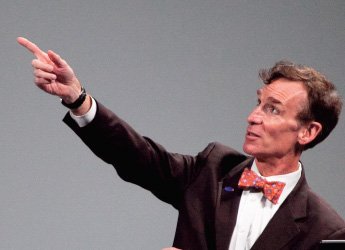 |
| wikipedia.org (Ed Schipul) 2012 CC-by-sa-2.0 |
Many of us who are scientists grew up watching “Bill Nye the Science Guy,” and learned to love science in the process. Sadly, Bill Nye came out in 2012 with a video that indicates he is vehemently opposed to parents who teach children that evolutionary theory is false. In a YouTube video posted by BigThink.com, Nye said:
Denial of evolution is unique to the United States…. People still move to the United States, and that’s largely because of the intellectual capital we have—the general understanding of science. When you have a portion of the population that doesn’t believe in that, it holds everybody back. Really. Evolution is the fundamental idea in all of life science. In all of biology. It’s like, it’s very much analogous to trying to do geology without believing in tectonic plates. You’re just not going to get the right answer. Your whole world is just going to be a mystery instead of an exciting place…. Once in awhile I get people that really, or, that claim, they don’t believe in evolution. And my response, generally, is, “Why not? Really. Why not?” Your world just becomes fantastically complicated when you don’t believe in evolution. Here are these ancient dinosaur bones or fossils. Here is radioactivity. Here are distant stars that are just like our star but that are at a different point in their life cyle. The idea of deep time, of this billions of years, explains so much of the world around us. If you try to ignore that, your world view just becomes crazy. Just untenable. It’s self-inconsistent. And I say to the grown-ups: If you want to deny evolution and live in your, in your, uh, world that’s completely inconsistent with everything we observe in the Universe, that’s fine. But don’t make your kids do it. Because we need them. We need scientifically literate voters and tax payers for the future…. We need engineers that can build stuff—solve problems…. In another couple centuries, that world view, I’m sure, will be, just won’t exist. There’s no evidence for it (Fowler and Rodd, 2012).
Such comments, though not surprising, certainly are unfortunate, since so many young people have long hung on Bill Nye’s every word about science.
Several points are worthy of mentioning in response to Mr. Nye. It is true that widespread denial of evolution seems to be somewhat unique to the United States (see Miller, 2012), although there are other contenders (cf. Le Page, 2008). It is also true that many people clamor to get into the United States and that the United States has been the leader in the technological revolution over the last century. What’s unfortunate is that Nye totally ignores the fact that America has become the superpower that we are in science and in every other field—while largely not believing in evolution. America has historically been Christian and pro-Bible (and thus, anti-evolution), and in truth, it is due to that stance that America has flourished. Becoming more pro-evolution would actually move us in the opposite direction from the direction that has made us great in the first place. Believing in evolution will actually “hold America back”—while believing in Creation has not.
Nye believes that dinosaur fossils, radioactivity, distant stars, and deep time prove evolution and disprove Creation. As you know, we address such matters on a regular basis (e.g., Lyons and Butt, 2008; DeYoung, 2005; Lyons, 2011; Miller, 2010) and have shown that the scientific evidence supports the Creation model rather than the Evolutionary model. The Creation model can offer reasonable explanations, in keeping with the scientific evidence, for the existence of matter, energy, life, the laws of science, design, beauty, religious intuition, morality, “anomalies” in the geologic column, and many other things, while the evolutionary model falls far short. It is the evolutionary model that is “completely inconsistent” with much of what we observe in the Universe. In truth, it is the evolutionary model that is holding back the progress of science. If evolutionary scientists would stop spending time and money in pursuit of unscientific notions (like trying to figure out how abiogenesis could happen, even though science has already disproven that idea time and again; or how something material could come from nothing or exist forever, even though science has already disproven those ideas time and again; or trying to find “missing link” fossils that prove that we came from ape-like creatures, when over 130 years of exploration into the geologic column has not helped in that pursuit), and begin interpreting the scientific evidence in light of the Creation model, much more progress could be made, as was the case in America’s past.
Evolutionary theory spawned the false concept of vestigial organs. That idea would have all but stopped scientific research on those organs, since according to evolutionary theory, those organs are now useless or nearly so. Now we are realizing that those organs are not vestigial, but important, and we are reaping the effects of evolutionists’ lack of emphasis on those organs for over a century. Little research has been done on many of those organs in the past century due to the vestigial argument. On the other hand, when scientists have turned their attention towards the created order for scientific inspiration—as creationists do since we understand that the Chief Engineer designed it—they are discovering that the Universe is replete with fully functional, amazing designs worthy of mimicking. The Creation model is hardly a hinderance to scientific progress. Contrary to Nye’s charge to parents—we encourage parents to continue to advocate the creationist mindset! The fruit of that pursuit has been the emergence of the most advanced and prosperous country in the history of mankind (cf. Skousen, 2009). Teach your kids the truth! “We need scientifically literate voters and tax payers for the future. We need engineers that can build stuff—solve problems.”
In a CBS interview after the release of the video, Nye talked about his passion concerning evolutionary theory.
I feel passionate about it for the betterment of the United States, the United States economy, and our future. What makes the United States great—the reason people want to live in the United States, move here still—is because of our ability to innovate. This goes back to Ben Franklin and Thomas Alva Edison and George Washington Carver, let alone landing on the moon—Neil Armstrong. All these people believed in science (“Bill Nye on Creationism Critique…,” 2012).
While we disagree that the “reason people want to live in the United States” is solely our ability to innovate, we certainly agree that the freedom and encouragement to engage in innovative endeavors in this country is a significant perk in coming here. However, Nye has failed to realize that the freedom to innovate in this country stems from the fundamental belief held by the Founders of this country—that men have been “endowed by their Creator with certain unalienable Rights,” including life, liberty, and the pursuit of happiness. These unalienable Rights, according to the Founders, were derived from the God of the Bible, in which, the Founders, en masse, believed (see Miller, 2008b). Belief in the Bible has resulted in fewer evolutionists in America—since Darwinian evolution and the biblical account of Creation cannot be harmonized (see Thompson, 2000). And yet, again, America is still greater than, perhaps, any other country in the history of the world.
Ironically, Nye mentions Franklin, Carver, and Armstrong among the great scientists of history. Franklin, though less religious than many of the Founders, was still a strong proponent of biblical morality in America and believed in the God of the Bible. Carver was a well-known Creation scientist, and Armstrong was among this country’s pioneering astronauts who even read from the Bible from space during television broadcasts (see Miller, 2008a). Nye failed to mention the fact that many great scientists from history have made significant contributions to the field of science, even though they were firm believers in God and Creation. Johannes Kepler, the father of modern astronomy and modern optics, was a firm Bible believer. Robert Boyle, the father of chemistry, was a Bible believer. Samuel F.B. Morse, who invented Morse Code, was a believer. Wernher Von Braun, the father of the space program at NASA, was a strong believer in God and Creation, as well as Louis Pasteur, the father of biology, Lord Kelvin, the father of thermodynamics, Sir Isaac Newton, the father of modern physics, and Faraday, the father of electromagnetism. Dozens of other well-known scientists from history could be cited (see Morris, 1990).
Although numbers ultimately mean nothing in regard to truth, creationists can certainly come up with an impressive list of qualified scientists living today who have examined the scientific evidence and concluded that the evolutionary model falls short in explaining our existence. Creation Ministries International posted a list of some 187 scientists alive today (or recently deceased) who believe in the biblical account of creation (“Creation Scientists…,” 2010). The scientists who are listed all possess a doctorate in a science-related field. Over 90 different scientific fields are represented in the list, including several types of engineers, chemists, geneticists, physicists, and biologists. Astronomers and astrophysicists; geologists and geophysicists; physicians and surgeons; micro-, molecular, and neurobiologists; paleontologists and zoologists are represented, and the list goes on. Jerry Bergman amassed a list of more than 3,000 individuals. Most have a Ph.D. in science, and many more could be added, according to Bergman.
On my list I have well over 3,000 names including Nobel Prize winners, but, unfortunately, a large number of persons that could be added to the public list, including many college professors, did not want their name listed because of real concerns over possible retaliation or harm to their careers (2006).
For over 30 years, we at Apologetics Press have conducted numerous seminars and published hundreds of articles by qualified, credentialed scientists who speak out in support of the biblical account of creation as well—scientists with graduate degrees in geology, astrophysics, microbiology, neurobiology, cell biology, biochemistry, aerospace engineering, nuclear engineering, and biomechanical engineering. Creationists can certainly speak with credibility in scientific matters—and we can show with confidence that the scientific evidence does not support Bill Nye and his evolutionary theory.
Concerning a recent NASA conference he attended, Nye noted how extraordinary it is that anybody in the world could attend that conference in a sense, since it was broadcast all around the world using technology that did not exist in the past, but now does, thanks to science. “That’s a result of science. That’s not a result of thinking the Earth is some extraordinarily short number of years old” (“Bill Nye on Creationism…,” 2012). It is true that our technology is a result of science, and in a sense, it is not necessarily all due to “thinking the Earth is some extraordinarily short number of years old,” since not all technological breakthroughs or hang-ups are necessarily the result of one’s belief on the age of the Earth. However, technology is also not a result of thinking the Earth is some extraordinarily long number of years old either. One’s belief about how old the Earth is does not necessarily directly affect the findings of science. Even prominent evolutionists recognize that one does not need to believe in Darwinian evolution in order to be a scientist. Richard Dawkins of Oxford University said, “a student of, say, nerve cells, might decide that he is not aided by thinking about evolution. The nerve specialist agrees that his nerve cells are the products of evolution, but he does not need to use this fact in his research…. That is a defensible position…. A physicist certainly doesn’t need Darwinism in order to do physics” (1996, p. 283, emp. added). A person’s stance on evolutionary theory may not directly affect his scientific findings, but it certainly can indirectly affect his findings through God’s Providence—as has been manifested throughout the history of this country and the blessings that Almighty God has bestowed upon us through scientific advancement. When God is happy with the decisions of a country, the country is blessed with prosperity and advancement (Psalm 33:12). So, Bill Nye and people like him are a hindrance to scientific progress. Why? (1) Because his views foster the acceptance of false information and hinder the free exchange of ideas; (2) Because many scientific man hours are wasted on pursuing pseudo-science; and (3) Because his unbiblical view of the origin of the Universe will ultimately lead to the drying up of the fountain of God’s providential scientific blessings in this country. May God help us to boldly fight this war for the soul of America.
REFERENCES
Bergman, Jerry (2006), “Darwin Skeptics,” [On-line], URL: http://www.rae.org/darwinskeptics.html.
“Bill Nye on Creationism Critique: I’m Not Attacking Religion” (2012), CBS News, August 28, http://www.cbsnews.com/8301-505270_162-57501492/bill-nye-on-creationism-critique-im-not-attacking-religion/.
“Creation Scientists and Other Specialists of Interest” (2010), Creation Ministries International, http://creation.com/creation-scientists.
Dawkins, Richard (1996), The Blind Watchmaker (New York: W.W. Norton).
DeYoung, Don (2005), Thousands…Not Billions (Green Forest, AR: Master Books).
Fowler, Jonathan and Elizabeth Rodd (2012), “Bill Nye: Creationism is Not Appropriate for Children,” BigThink.com, http://www.youtube.com/watch?v=gHbYJfwFgOU.
Le Page, Michael (2008), “Evolution Myths: It Doesn’t Matter if People Don’t Grasp Evolution,” New Scientist, 198[2652]:31, April 19.
Lyons, Eric (2011), “Common Sense, Miracles, and the Apparent Age of the Earth,” Apologetics Press, http://apologeticspress.org/APContent.aspx?category=9&article=4082.
Lyons, Eric and Kyle Butt (2008), The Dinosaur Delusion (Montgomery: AL: Apologetics Press).
Miller, Dave (2008a), “American Astronauts: From Belief to Unbelief,” Apologetics Press, http://apologeticspress.org/apcontent.aspx?category=12&article=2490.
Miller, Dave (2008b), The Silencing of God (Montgomery, AL: Apologetics Press).
Miller, Jeff (2010), “Inevitable—Given Enough Time?” Apologetics Press, http://apologeticspress.org/APContent.aspx?category=12&article=3729.
Miller, Jeff (2012), “Literal Creationists Holding Their Ground in the Polls,” Reason & Revelation, 32[9]:94-95, September (Montgomery, AL: Apologetics Press).
Morris, Henry M. (1990), Men of Science Men of God: Great Scientists Who Believed in the Bible (El Cajon, CA: Master Books), third printing.
Skousen, W. Cleon (2009), The 5000 Year Leap: A Miracle That Changed the World (Malta, ID: National Center for Constitutional Studies), 17th printing.
Thompson, Bert (2000), Creation Compromises (Montgomery, AL: Apologetics Press), second edition, http://apologeticspress.org/pdfs/e-books_pdf/cre_comp.pdf.
The post Bill Nye: The (Pseudo-)Science Guy appeared first on Apologetics Press.
]]>The post The Atheistic Naturalist’s Self-Contradiction appeared first on Apologetics Press.
]]>The atheist says, “I refuse to consider believing in anything that isn’t natural—whose explanation cannot be found in nature. Everything must and can be explained through natural processes.” So, according to the atheist, the existence of everything in the Universe must be explainable by natural means—nothing unnatural (e.g., a supernatural Being) can be considered in the equation. Evolutionary geologist Robert Hazen, who received a doctorate in Earth Science from Harvard, is a research scientist at the Carnegie Institution of Washington’s Geophysical Laboratory and a professor of Earth Science at George Mason University. In his lecture series, Origins of Life, Hazen said:
In this lecture series I make a basic assumption that life emerged by some kind of natural process. I propose that life arose by a sequence of events that are completely consistent with the natural laws of chemistry and physics. In this assumption I am like most other scientists. I believe in a universe that is ordered by these natural laws. Like other scientists, I rely on the power of observations and experiments and theoretical reasoning to understand how the cosmos came to be the way it is (2005, emp. added).
The problem is that in holding this position, the naturalist quickly runs into walls of scientific fact that contradict it. The laws of science are formal declarations of what have been proven, time and again through science, to occur in nature without exception. The naturalist cannot hold a view that contradicts the laws of nature and not simultaneously contradict himself. But this is precisely the position that the naturalist is in. He must allege an explanation not in keeping with nature for many things we find in the Universe. For example, the naturalist’s explanation of the origin of matter and energy (i.e., spontaneous generation or eternal existence) is unnatural (i.e., in contradiction to the 1st and 2nd Laws of Thermodynamics; see Miller, 2007). The naturalist must further contradict himself by alleging an unnatural explanation for the origin of life (i.e., abiogenesis, in contradiction to the Law of Biogenesis; see Miller, 2012). And what’s more, the naturalist must contradict himself by alleging that various kinds of living creatures can give rise to other kinds of living creatures through macroevolution—a contention which, unlike microevolution, has never been observed to occur in nature (see Thompson, 2002). Abiogenesis, spontaneous energy generation, the eternality of matter, and macroevolution are all unnatural suggestions since they have never been observed to occur in nature, and yet they are fundamental to the naturalist’s unnatural view. Simply put, the atheistic naturalist’s position is self-contradictory.
The worldview that is in keeping with the evidence—that is not self-contradictory—is the Christian faith as described on the pages of the Bible. The naturalist cannot explain the Universe without relying on unnatural means. The creationist has no problem with unnatural explanations, since the Bible clearly states that God—a supernatural Being—created the Universe and life. Truth is never self-contradictory. When scrutinized, it always comes out on top. When a person chooses to fight it, he will inevitably get hurt in the end. “The fool has said in his heart, ‘There is no God’” (Psalm 53:1).
REFERENCES
Hazen, Robert (2005), Origins of Life, audio-taped lecture (Chantilly, VA: The Teaching Company).
Miller, Jeff (2007), “God and the Laws of Thermodynamics: A Mechanical Engineer’s Perspective,” Reason & Revelation, 27[4]:25-31, April, /articles/3293.
Miller, Jeff (2012), “The Law of Biogenesis [Parts I & II],” Reason & Revelation, 32[1/2]:1-11,13-22, January-February, http://apologeticspress.org/APContent.aspx?category=9&article=4165&topic=93.
Thompson, Bert (2002), The Scientific Case for Creation (Montgomery, AL: Apologetics Press).
The post The Atheistic Naturalist’s Self-Contradiction appeared first on Apologetics Press.
]]>The post What Our “Lower Cousins” Teach Us About Infanticide appeared first on Apologetics Press.
]]>Culot’s research uncovered the fact that mother tamarins sometimes allow their babies to fall to their deaths from the tops of trees. In addition, mother tamarins occasionally cause the death of their offspring in a more direct way. The team reported one incident in which the mother bit her own baby’s head off and proceeded to eat its brain and upper body.
Kluger’s article focused on why tamarins would be so brutal. Several factors are thought to be responsible for a mother tamarin’s decision to kill her offspring. The article noted that if there were not enough supporting males to help the mother raise the baby, or if there were too many other babies born at the same time, a mother would often kill her own baby or allow it to die without attempting to protect it. Apparently, if it does not look like the baby has a high probability of survival, the mother will terminate its life and wait for a more opportune time to give birth. As Kluger said: “The explanation for such pitiless behavior is as cold as it is unavoidable: tamarin mothers are simply very good at balancing their genetic ledgers and know when they’re heading for a loss” (2011).
So what does such brutal animal behavior have to do with human behavior and morality? Absolutely nothing if a person understands the truth that God created all humans in His own image, and that every human child has a right to life simple because it is human (Lyons and Thompson, 2002). Unfortunately, however, that fact is not understood by many in our world today. An increasing number of people have chosen rather to believe in the false idea of atheistic evolution. If, according to the atheistic evolutionary belief, humans evolved from animals and are related to primates, then primate behavior can help us understand human behavior. If we can find a naturalistic explanation for why tamarin mothers kill their babies, then we can use that same reasoning to account for why human mothers kill their babies. As James Rachels stated:
Animal behaviour is routinely studied with an eye to acquiring information that can then be applied to humans. Psychologists who want to investigate maternal behaviour, for example…might study the behaviour of rhesus monkey mothers and infants, assuming that whatever is true of them will be true of humans—because, after all, they are so much like us (1990, p. 166, emp. added)
Kluger applied this type of reasoning to the research on tamarins:
Humans recoil at such stark genetic number crunching, but while infanticide among our species is socially and criminally proscribed, it does happen—and far too often. And when mothers are the perps, they are often facing some of the same kinds of pressures as tamarins—uncertain resources (read: money) and an absent or unreliable male (2011).
The sickening, immoral connections Kluger makes between murderous tamarin mothers and humans is all too clear. If tamarins murder their babies because they don’t have the resources to raise them, and humans are related to tamarins, then it is “natural” for human mothers to kill their babies as well. Kluger attempted to soften the implications of his statement by saying that humans have options that “tamarins don’t” and “nothing excuses willful neglect, never mind murder.” His attempt failed, however, in light of his concluding statement: “We may be the highest primates, but we remain members of that sometimes brutish club, and our lower cousins still do have plenty to teach us” (2011, emp. added). What, pray tell, are our alleged “lower cousins,” the mustached tamarins, teaching us? They are teaching us that if you convince humans that they are nothing more than animals, they will act like nothing more than animals.
REFERENCES
Kluger, Jeffrey (2011), “Scientists Discover Mother Monkeys Who Kill Their Babies,” Time, http://news.yahoo.com/s/time/20110615/hl_time/08599207678600/print.
Lyons, Eric and Bert Thompson (2002), “In the Image and Likeness of God: Part 1,” Reason & Revelation, 22[3]:17-23, /apcontent.aspx?category=11&article=149.
Rachels, James (1990), Created from Animals: The Moral Implications of Darwinism (New York: Oxford University Press).
The post What Our “Lower Cousins” Teach Us About Infanticide appeared first on Apologetics Press.
]]>The post Creation in Medical School Curricula? appeared first on Apologetics Press.
]]>That said, in actuality a strong case can be made for the inclusion of the creation model. The implications of the evolutionary principle known as “the survival of the fittest” were horribly carried out on the Jewish population by the Nazis in World War II in an attempt to create the “master race” (cf. Stein and Miller, 2008; Butt, 2001). In contrast, it is the Christian religion that enjoins principles that are in keeping with patient well-being. While genocide, abortion, and euthanasia are in keeping with the ideals of evolution, the Bible promotes compassion for the weak, sick, and hurting; sacrificing oneself to help others; treating others the way we would want to be treated; and doing our best at whatever we put our hands to—all hallmarks of the medical field. It is the Christian religion that has caused the number of hospitals to grow throughout the world and medicine to be given, often free of charge, to those in need. The American Red Cross, founded in 1881 by the deeply religious, Clara Barton (“A Brief History…,” 2010; Barton, 1922, 2:317-325), is heavily involved in helping others at home and abroad. According to the official American Red Cross website: “Today, in addition to domestic disaster relief, the American Red Cross offers compassionate services in five other areas…” (“About Us,” 2010).
Support of such compassionate efforts would certainly be considered among the ideals emphasized by Christianity. In fact, the emblem of the Red Cross is so synonymous with Christianity that it is not used in those countries where the logo is “by its very nature, offensive to Muslim soldiers” (“The History of the Emblems,” 2010; cf. “A Downside to Symbols…,” 2010). Many of the strides that have been made in the medical field in the last 200 years for the benefit of the world were made in this nation, which until the last 30-40 years essentially taught “Christian Biology” in schools. God, Christ, the Bible, and Creation were believed by most Americans and biology was taught through those lenses. The field of medicine or bio-medical research hardly suffered by not teaching evolution, but instead teaching Creation for all those years.
The atheistic evolutionary viewpoint would say, like Scrooge, if someone is not fit enough to live, they ought to die “and decrease the surplus population” (Dickens, 1843, p. 11). Christianity, on the other hand, results in self-sacrificial physicians. That’s the kind of doctor I want working on my family. Christianity fits very nicely in the medical field. Perhaps it should be a part of medical school curricula once again.
REFERENCES
“About Us” (2010), American Red Cross, http://www.redcross.org/portal/site/en/menuitem.d8aaecf214c576bf971e4cfe43181aa0/?vgnextoid=477859f392ce8110VgnVCM10000030f3870aRCRD&vgnextfmt=default.
“A Brief History of the American Red Cross” (2010), American Red Cross, http://www.redcross.org/portal/site/en/menuitem.86f46a12f382290517a8f210b80f78a0/?vgnextoid=271a2aebdaadb110VgnVCM10000089f0870aRCRD.
“A Downside to Symbols: Cultural Mismatches” (2010), History of Graphic Design, Symbols: The Alphabet of Human Thought, http://www.designhistory.org/symbols.html.
Barton, William E. (1922), The Life of Clara Barton: Founder of the American Red Cross (New York: Houghton Mifflin).
Brooks, Will (2011), “Does Evolution Belong in Biomedical Curricula?” Reason & Revelation, 31[3]:18-20, March, http://apologeticspress.org/APContent.aspx?&article=3796.
Butt, Kyle (2001), “Ideas Have Consequences,” http://apologeticspress.org/APContent.aspx?category=12&article=528.
Dickens, Charles (1843), A Christmas Carol (New York: Aladdin Classics).
Moroz, Leonid (2010), “The Devolution of Evolution,” The Scientist, 24(11):36.
Stein, Ben and Kevin Miller (2008), Expelled: No Intelligence Allowed (Premise Media).
“The History of the Emblems” (2010), ICRC Resource Centre, http://www.icrc.org/eng/resources/documents/misc/emblem-history.htm.
The post Creation in Medical School Curricula? appeared first on Apologetics Press.
]]>The post Blind, Biased Failure to See God appeared first on Apologetics Press.
]]>In the presence of such sophistication and intelligent design, one would think that researchers would recognize divine design when they see it. Sadly, however, the massive propaganda campaign that has inundated the science departments of American schools for a half century has blinded its victims to glaring evidence. Consider the lead researcher’s analysis of the clutch discovery: “We think it’s pretty cool that evolving bacteria and human engineers arrived at a similar solution to the same problem” (“‘Clutch’ Stops…”). Really? Nonsentient, uncoordinated, chance forces of nature somehow designed and created a technologically advanced device long before sentient, intelligent human engineers designed their own version? The same researcher also observed:
“This makes a lot of sense as far as the cell is concerned…. The flagellum is a giant, very expensive structure. Often when a cell no longer needs something, it might destroy it and recycle the parts. But here, because the flagellum is so big and complex, doing that is not very cost-effective. We think the clutch prevents the flagellum from rotating when constrained by the sticky matrix of the biofilm” (“‘Clutch’ Stops…”).
Wait a minute. “Makes a lot of sense”? “Very expensive”? “Big and complex”? The verbal gymnastics that evolutionists engage in would be humorous if not so sadly serious. These are terms that demand intelligence and sentience. The evolutionists constantly allow themselves the luxury of speaking as if the myriad organisms that display incredible design and purpose somehow created themselves and then consciously tweaked themselves over millions of years to become more efficient. They regularly cut themselves slack by speaking as if a mind—a conscious, intelligent being—were orchestrating the endless stream of biological marvels that grace the planet.
So blinded by irrational commitment to an outlandish theory, evolutionists are unable to hear the evidence screaming in their ears and flashing before their eyes, and come to the only logical conclusion: such intricate, complex design demands an intelligent, superior Designer. To deny it is bias of the first order.
“Thus says the LORD…. ‘I am the LORD, who makes all things…Who turns wise men backward, and makes their knowledge foolishness” (Isaiah 44:24-25).
REFERENCE
“‘Clutch’ Stops Flagella” (2008), Photonics Media, June 23, http://www.photonics.com/Article.aspx?AID=34236.
The post Blind, Biased Failure to See God appeared first on Apologetics Press.
]]>The post Save the Planet! Kill the People! appeared first on Apologetics Press.
]]>Since James Lee’s death, much has come to light about his radical environmental beliefs. Many in the mainstream media ignored or downplayed Lee’s previously posted environmental rants. (Lee posted a manifesto at savetheplanet.com prior to his hostile actions on September 1; see Lee, 2010). Some may justify disregarding Lee’s extreme human-hating, planet-saving views because he was delusional, or mentally ill, or simply because the global-warming, environmental movement should not be discredited on the basis of one man’s extreme actions. (The mainstream media, however, do not ignore the strongly held beliefs of a “Bible-believing,” delusional pro-lifer who bombs an abortion clinic.) Of course, it is true that the actions of a person should not discredit a particular belief system or religion, if the individual is acting in opposition to his or her beliefs. The fact is, however, Lee was actually taking environmental, evolutionary, atheistic beliefs to their logical conclusion.
Like a growing number of environmental, global-warming alarmists, James Lee made perfectly clear that the human population needs to be reduced drastically. In his pre-crusade post, Lee wrote about the “problem of human overpopulation,” saying, “the planet does not need humans” (Lee, 2010). “Saving the plant means saving what’s left of the non-human Wildlife by decreasing the Human population. That means stopping the human race from breeding any more disgusting human babies!… Nothing is more important than…saving the environment and the remaning [sic] species.” As if the Discovery Channel does not already heavily advocate the General Theory of Evolution, Lee emphasized how they must “[t]alk about Evolution…and Darwin until it sinks into the stupid people’s brains…” (Lee, 2010).
For someone who rejects God and the Bible, but believes that humans (1) evolved by time and chance over millions of years, and (2) are currently wreaking havoc on the only known planet in the Universe that can support life, destroying human lives to save “Mother Earth” is perfectly rational. James Lee may have been mentally ill, but his flippant attitude about humanity and his willingness to end the lives of humans for the sake of Earth is perfectly consistent with atheistic, evolutionary beliefs.
At his “2006 Scientist of the Year” award ceremony in Beaumont, Texas, evolutionary ecologist Eric Pianka expressed his Lee-like concerns about human overpopulation. According to attendee Forrest Mims,
Professor Pianka said the Earth as we know it will not survive without drastic measures. Then, and without presenting any data to justify this number, he asserted that the only feasible solution to saving the Earth is to reduce the population to 10 percent of the present number…. His favorite candidate for eliminating 90 percent of the world’s population is airborne Ebola (Ebola Reston), because it is both highly lethal and it kills in days, instead of years.
Did Pianka release Ebola upon his audience? No. Did he take hostages as James Lee did in Silver Spring, Maryland? No. But, if he had, he merely would have been acting out what he and millions of atheistic evolutionists around the world believe: “We’re no better than bacteria!” (as quoted in Mims, 2006).
The truth is, humans are better than bacteria! We are better and more valuable than any plant or animal on Earth because God made us better. He created man “in his own image” (Genesis 1:27). He gave man an immortal soul (Zechariah 12:1; Matthew 10:28). And he gave man the responsibility, not to destroy human life to save the planet (Genesis 9:6), but to “fill the earth and subdue it” and “have dominion…over every living thing that moves on the earth” (Genesis 1:28).
For those who refuse to have God in their knowledge (Romans 1:28), life will forever be filled with the self-contradictory, unreasonable, inhumane lies of atheistic evolution. But, for those who “come to the knowledge of the truth” (1 Timothy 2:4), and embrace man’s God-given role on Earth, beliefs and actions will remain consistent, rational, and in harmony with God’s Word.
REFERENCES
Lee, James (2010), “The Discovery Channel Must Broadcast to the World Their Commitment to Save the Planet and to do the Following Immediately,” http://www.scribd.com/doc/36771069/Save-the-Planet-Protest-Com.
Mims, Forrest (2006), “Dealing with Doctor Doom,” The Citizen Scientist, http://www.sas.org/tcs/weeklyIssues_2006/2006-04-07/feature1p/index.html.
The post Save the Planet! Kill the People! appeared first on Apologetics Press.
]]>The post Evolution, Textbooks, and Homeschooling appeared first on Apologetics Press.
]]>Hundreds of thousands of creationists in the U.S. have chosen to homeschool their children partly because they do not want their most precious God-given gifts (Psalm 127:3) sitting year after year at the feet of evolutionists, reading evolutionary textbooks, especially without critical analysis. These homeschooling parents still provide their children with training in Earth science, biology, chemistry, etc. In fact, many religiously motivated homeschoolers (which comprise at least 83% of homeschooling families in the U.S.; see Lovan, 2010) provide countless more hands-on, operational science experiences for their children than a lot of young people receive in public schools (where funding is limited and where classrooms are often shared with 20-30 other students). Some individuals, however, are extremely critical of the various textbooks many homeschoolers use.
Associated Press writer Dylan Lovan recently penned an article wherein he interviewed three non-religious homeschooling families and two evolutionary scientists, all who expressed disappointment over the available homeschooling science textbooks. After reviewing two of the best-selling biology textbooks homeschoolers frequently use, Virginia Tech biology professor Duncan Porter said “he would give the books an F” (Lovan, 2010). Ecology and evolutionary professor Jerry Coyne of the University of Chicago stated: “If this is the way kids are home-schooled then they’re being shortchanged, both rationally and in terms of biology” (as quoted in Lovan). “These books are promulgating lies to kids,” said Dr. Coyne (as quoted in Lovan), and allegedly are not scientifically credible. What is so terrible about the science books produced by Apologia, Bob Jones, and other publishers that frequently sell to homeschooling families? The textbooks “dispute Charles Darwin’s theory” of evolution (Lovan, 2010).
And why shouldn’t the theory of evolution be disputed? Why shouldn’t it be assessed critically and debated? Why shouldn’t students learn that all evolutionary dating methods are based upon various assumptions (see Butt and Lyons, 2009, pp. 94-100; see also DeYoung, 2005)? Why shouldn’t they be taught scientific laws that contradict evolution? Why shouldn’t they be allowed to explore the scientific case for Creation and ask whether non-intelligence can reasonably explain complex, functional design, like that in a living, human cell? As Dr. Jay Wile, textbook writer for Apologia, said: “We definitely do not lie to the students. We tell them the facts that people like Dr. Coyne would prefer to cover up.” In truth, it is evolutionists like Jerry Coyne who feel “compelled to lie in order to prop up a failing hypothesis (evolution)” (as quoted in Lovan).
Furthermore, regarding Coyne and Porter’s concerns that homeschoolers are being “shortchanged, both rationally and in terms of biology” because of their use of science textbooks that do not blindly embrace Darwinian evolution, consider how well the average homeschool student scores in standardized science tests. Two different studies (from 1998 and 2009), which included a total of more than 30,000 homeschool students from all 50 states, revealed that, on average, homeschoolers score 30 to 36 percentile points higher than the average student on standardized science tests (see Slatter, 2009). What’s more, many of these same homeschoolers go on to attend universities around the country where they excel in science classes, rather than being hindered because of their religious homeschooling heritage.
The facts speak for themselves: (1) Evolution is not a proven fact (so why should it be the only theory of origins presented to students?); (2) Studies show that, on average, homeschoolers outperform public school students by a wide margin on standardized tests, including science tests, despite most homeschoolers being taught that life on Earth was created and designed by an intelligent, infinite, eternal Mind. Evolutionists may give creationist homeschooling families an “F” on their choice of science curriculum, but in reality, it is the theory of evolution that deserves the “F.”
REFERENCES
“Back to School: 2006-2007” (2009), U.S. Census Bureau, http://www.census.gov/Press-Release/www/releases/archives/facts_for_ features_special_editions/007108.html.
Brooks, Michael (2006), “In Place of God,” New Scientist, 192[2578]:8-11.
Butt, Kyle and Eric Lyons (2009), Truth Be Told (Montgomery, AL: Apologetics Press).
“Comments” (2008), The Richard Dawkins Foundation, http://richarddawkins.net/articles/2609-16-of-us-science-teachers-are-creationists.
DeYoung, Donald B. (2005), Thousands…Not Billions (Green Forest, AR: Master Books).
Gallup, George Jr. and Michael Lindsay (1999), Surveying the Religious Landscape: Trends in U.S. Beliefs (Harrisburg, PA: Morehouse Publishing).
Holmes, Bob (2008), “16% of US Science Teachers are Creationists,” New Scientist, May 20, http://www.newscientist.com/article/dn13930-16-of-us-science-teachers-are-creationists.html.
Lovan, Dylan (2010), “Top Home-School Texts Dismiss Darwin, Evolution,” http://www.google.com/hostednews/ap/article/ALeqM5h3x1DHDjafMujXt9RNwwH6ugU9NgD9E9AOV80.
“Poll: Creationism Trumps Evolution” (2004), CBS News, http://www.cbsnews.com/stories/2004/11/22/opinion/polls/main657083.shtml.
The Scientific Case for Creation (2004), (Montgomery, AL: Apologetics Press), http://apologeticspress.org/pdfs/e-books_pdf/scfc.pdf.
Slatter, Ian (2009), “New Nationwide Study Confirms Homeschool Academic Achievement,” August 10, http://www.hslda.org/docs/news/200908100.asp.
The post Evolution, Textbooks, and Homeschooling appeared first on Apologetics Press.
]]>The post God May Not Exist, But Aliens Do? appeared first on Apologetics Press.
]]>In recent weeks, Hawking has made national and international headlines with his assertions about aliens. According to the first line of an April 25 MSNBC article, “British physicist Stephen Hawking says aliens are out there, but it could be too dangerous for humans to interact with extraterrestrial life” (“Hawking…,” 2010, emp. added). Hawking was a little less confident in his new documentary titled “Into the Universe with Stephen Hawking.” After posing the question, “Are we alone on our small, round, blue ball?” He answered: “I think probably not” (2010). What followed, however, was an entire documentary that presumed the existence of aliens. “I imagine they might exist in massive ships…having used up all the resources from their home planet. Such advanced aliens would perhaps become nomads, looking to conquer and colonize whatever planets they can reach” (“Hawking…”). If aliens visit Earth, Hawking said, “the outcome would be much as when Columbus landed in America, which didn’t turn out very well for the Native Americans” (“Into the Universe…,” 2010). Thus, inhabitants of Earth are warned to stay away from aliens at all costs.
When NBC Nightly News anchor Brian Williams commented on Hawking’s new Discovery Channel documentary about aliens, he began by calling the evolutionary astrophysicist “one of the bona fide smart people on the planet” (Williams, 2010). But how smart can a person be who believes in E.T., all the while doubting (or denying) God’s existence? What has this world come to when so-called “bona fide smart people” reject Creation but embrace the Law-of-Biogenesis-breaking theory of spontaneous generation? How can a person say “aliens are out there,” but God probably isn’t? We are supposed to be careful to avoid alien invaders, but not concern ourselves with whether God exists? What kind of “smart” person thinks that Star Trek is reality, but an omnipotent Creator is fantasy? The Bible calls such a person a “fool.”
For since the creation of the world His invisible attributes are clearly seen, being understood by the things that are made, even His eternal power and Godhead, so that they are without excuse, because, although they knew God, they did not glorify Him as God, nor were thankful, but became futile in their thoughts, and their foolish hearts were darkened. Professing to be wise, they became fools (Romans 1:20-22).
The fool has said in his heart, “There is no God” (Psalm 14:1; 53:1).
The fear of the LORD is the beginning of wisdom, and the knowledge of the Holy One is understanding (Proverbs 9:10).
REFERENCES
“A Brief History of Time” (no date), Random House, http://www.randomhouse.com/catalog/display.pperl/9780553380163.html.
“The Crazy World of Stephen Hawking” (2010), The Independent, October 12, http://www.independent.co.uk/news/science/the-crazy-world-of-stephen-hawking-631043.html.
“Hawking: Aliens May Pose Risks to Earth” (2010), April 25, http://www.msnbc.msn.com/id/36769422/.
“Into the Universe with Stephen Hawking” (2010), Discovery Channel, April 25, http://dsc.discovery.com/tv/stephen-hawking/about/about.html.
“Pope Sees Physicist Hawking at Evolution Gathering” (2008), October 31, http://www.reuters.com/article/idUSTRE49U6E220081031?feedType=RSS&feedName=scienceNews.
“Stephen Hawking” (2010), Encyclopedia of World Biography, http://www.notablebiographies.com/Gi-He/Hawking-Stephen.html.
Williams, Brian (2010), NBC Nightly News, April 26, http://www.msnbc.msn.com/id/36769422/.
The post God May Not Exist, But Aliens Do? appeared first on Apologetics Press.
]]>The post Why is Good Good? appeared first on Apologetics Press.
]]>One objection to this moral argument has been summarized and adapted from a 2,400-year-old debate concerning the following question: “Why is good good?” In questioning the foolish young man Euthyphro, Plato’s Socrates tries to determine the definition of “pious” or “impious” (Plato, 1997, p. 4). Socrates offers two possibilities, but rejects them both: “Is the pious being loved by the gods because it is pious, or is it pious because it is being loved by the gods?” (p. 9). The dialogue between Socrates and Euthyphro is extensive, but the general results are these: (1) Euthyphro cannot define “pious” as “that which is loved by the Greek gods,” for the gods are said to disagree with one another on occasion—a thing cannot be both pious and impious (see p. 4). And, (2) after numerous attempts, Euthyphro cannot say what quality the pious things have, if “pious” means something other than “loved by the gods” (pp. 11ff.).
The Euthyphro dialogue has been adapted by later philosophers in the debate concerning the very existence of God, and this adaptation has been codified in philosophical literature as the “Euthyphro Dilemma” (e.g., Benn, 1998, pp. 47ff.). For example:
There is the further question, which has often been debated, but was raised originally by Plato, in his dialogue, Euthyphro. Should we follow God’s laws just because they are His or rather, because His laws are good? If the latter, then we have to decide what is good in order to know that God is good. If the former, then one has to decide whether or not to believe in God precisely on the basis of whether we can accept those laws. Either way, we have to decide for ourselves what laws of morality we are willing to accept (Solomon, 2008, p. 460).
Perhaps a clearer way of phrasing the dilemma is this: Is good good because it is good, or because God says it is good? If good is good independent of God (and He merely identifies it), then God does not hold the high position which theists have ascribed to Him. On the other hand, if good is good because God says it is, then there is the possibility that God has commanded something that is actually wrong (we are being deceived) and He is merely arbitrary in His ethical requirements: He could just as easily say that lying is good as He could say it is bad. The dilemma is meant to show that objective morality does not exist, because morality is actually grounded exclusively in each moral agent’s subjectivity (and in whatever consensus develops between agents). Any explanation of morality that involves a divine standard is either contradictory or explains itself in terms of itself (i.e., it is circular). This position corresponds with an atheistic position, as it does away with the need for a divine Law Giver.
What response to the Euthyphro dilemma is available for the Christian apologist to use? Consider the following three principles:
1. There Is A Universal Moral Law. In his book, Mere Christianity (2001, pp. 1-8), C.S. Lewis argues for the existence of a universal moral law (and a corresponding Law Giver) in the following way (summarized by Geisler, 1999):
1. There must be a universal moral law, or else: (a) Moral disagreements would make no sense, as we all assume they do. (b) All moral criticisms would be meaningless (e.g., “The Nazis were wrong.”). (c) It is unnecessary to keep promises or treaties, as we all assume that it is. (d) We would not make excuses for breaking the moral law, as we all do. 2. But a universal moral law requires a universal Moral Law Giver, since the Source of it: (a) Gives moral commands (as lawgivers do). (b) Is interested in our behavior (as moral persons are). 3. Further, this universal Moral Law Giver must be absolutely good: (a) Otherwise all moral effort would be futile in the long run, since we could be sacrificing our lives for what is not ultimately right. (b) The source of all good must be absolutely good, since the standard of all good must be completely good. 4. Therefore, there must be an absolutely good Moral Law Giver (p. 500, parenthetical items in orig.).
The conclusion that a universal moral system exists causes us to cast suspicion upon any dilemma that purports to disprove the very possibility of such a system. The Euthyphro dilemma falls into this category. Furthermore, the Euthyphro dilemma proves inapplicable when applied to the God of the Bible.
2. The Euthyphro dilemma is a false one. For the purposes of answering current critics of Christianity, the Christian apologist need not evaluate the dilemma in terms of the Greek gods, but in terms of the one, true God (i.e., the God of the Bible). The Bible teaches that God certainly is good (e.g., Genesis 1:13; 59:20; Deuteronomy 6:24; Psalm 89:14; etc.). God’s essence is to exist as He is (Exodus 3:14). God cannot exist apart from all of His attributes, including goodness. If He existed and lacked any of His attributes, then He would not be the God to Whom we refer when we speak of the biblical God. Therefore, God is good, but not in virtue of a standard of goodness that exists separate from Him. As further evidence for this, consider that there are possible acts which God refuses to do because such acts do not accord with His moral nature. For example, God cannot lie (see Miller, 2009; Colley, 2004).
Because God is infinite, goodness is measured in relation to Him. Jesus illustrated this in His parable of the workers in the vineyard (Matthew 20:1-15). In the story, only the landowner (representing God) was in a position to determine what was “good” (20:15). Humans, as created beings, are not in a position to argue with God concerning His rightness or wrongness (see Job 29-31; 38-40). The Euthyphro dilemma presumes that we do exactly that, despite the fact that we are incapable of it (Jeremiah 10:23).
Therefore, there is no dilemma as alleged by some who appeal to Plato’s Euthyphro (see Warren and Flew, 1977, pp. 26-28,32). Yet, some maintain that God’s moral principles are unreasonable or that He is contradictory (see Butt, 2009b), and we must therefore reject the biblical God in favor of atheism or another notion of divinity. We now turn to this allegation.
3. While God’s moral principles do not owe their existence to human rationality, they nonetheless appeal to human rationality. Indeed, if it could be shown that God’s rules run counter to human rationality, then it would appear that His principles are deficient to ground human morality, and that we were not made in His image. However, there is not a single biblical principle of morality that can be, when interpreted properly, shown to be in conflict with the best interests of humanity.
The creationist model would anticipate such a perfect correlation between human needs and the provisions of biblical morality, inasmuch as God was motivated by His own character to create the human race in a way that is “very good” (Genesis 1:31), and placed requirements upon humanity that are suitable for the fulfillment of human needs. To demonstrate the truthfulness of this statement would require further studies (e.g. Butt, 2009a; Colley, 2010a; Colley, 2010b). Consider the words of the psalmist:
The law of the Lord is perfect, converting the soul; the testimony of the Lord is sure, making wise the simple; the statutes of the Lord are right, rejoicing the heart; the commandment of the Lord is pure, enlightening the eyes; the fear of the Lord is clean, enduring forever; the judgments of the Lord are true and righteous altogether. More to be desired are they than gold, Yea than much fine gold; sweeter also than the honey and the honeycomb. Moreover by them Your servant is warned, and in keeping them there is great reward (19:7-11; cf. 1 Timothy 1:8).
The suitability of God’s laws to man’s needs diffuses the motivation for the Euthyprho dilemma, as the facts about God diffuse the logic of the dilemma.
Therefore, our answer to the Euthyphro dilemma is as follows: Good is defined by God’s goodness, which is inseparable from His nature. His standard of goodness applies to all mankind by virtue of creation.
REFERENCES
Benn, Piers (1998), Ethics (Montreal, Quebec: McGill-Queen’s Press).
Butt, Kyle (2009a), “Biblical Ideas Concerning Killing and Murder are Not Contradictory,” [On-line], URL: http://apologeticspress.org/articles/240253.
Butt, Kyle (2009b), “Is God Immoral for Killing Innocent Children?,” [On-line], URL: http://apologeticspress.org/articles/240272.
Colley, Caleb (2004), “God Cannot Lie,” [On-line], URL: http://apologeticspress.org/articles/2561.
Colley, Caleb (2010a), “In Defense of the Golden Rule,” [On-line], URL: http://apologeticspress.org/articles/240331.
Colley, Caleb (2010b), “Defending the Biblical Position Against Lying,” [On-line], URL: http://apologeticspress.org/articles/240320.
Geisler, Norman L. (1999), Baker Encyclopedia of Christian Apologetics (Grand Rapids, MI: Baker).
Jackson, Wayne (1995), “The Case for the Existence of God [Part III],” [On-line], URL: http://apologeticspress.org/apcontent.aspx?category=12&article=362.
Lewis, C. S. (2001), Mere Christianity (New York: HarperCollins), revised edition.
Miller, Dave (2008), “A Higher Law,” [On-line], URL: http://apologeticspress.org/articles/240092.
Miller, Dave (2009), “Things God Cannot Do,” [On-line], URL: http://apologeticspress.org/articles/2292.
Plato (1997), Euthyphro, trans. G.M.A. Grube, in Complete Works, ed. John M. Cooper (Indianapolis, IN: Hackett).
Solomon, Robert C. (2008), Introducing Philosophy (New York: Oxford University), ninth edition.
The Trial of German Major War Criminals (1946), 187th Day: Friday, 26th July, 1946, (Vol. 19, Part 1 of 12), (London: His Majesty’s Stationery Office), [On-line], URL: http://www.nizkor.org/hweb/imt/tgmwc/tgmwc-19/tgmwc-19-187-01.shtml.
Warren, Thomas B. and Antony G.N. Flew (1977), The Warren-Flew Debate On the Existence of God (Moore, OK: National Christian Press).
The post Why is Good Good? appeared first on Apologetics Press.
]]>The post The Fool appeared first on Apologetics Press.
]]>Because of their inability to discern spiritual things (1 Corinthians 2:14), the Soviet cosmonauts looked out of their spacecraft in the 1960s and, in ridicule, asked, “Where is God?,” echoing again the words of the psalmist: “Why should the nations say, ‘Where now is their God?’ But our God is in heaven; He does whatever He pleases” (Psalm 115:2-3). Pride is a deadly pitfall that blinds one to the truth: “The wicked in his proud countenance does not seek God; all his thoughts are, ‘There is no God’ ” (Psalm 10:4).
But the Universe “declares” the plain work of the Creator (Psalm 19:1). Would we not consider a person a “fool” were he to pick up a watch and proclaim, “There is no watchmaker”? Though he had never empirically encountered the creator and designer of the watch, the mere existence of the watch proves the existence of a watchmaker. It takes very little investigation to see that a watch is a crude, simplistic instrument compared to the glorious, complex chronometers of the Universe. Those who see “the things that are made” and deny the very One Who made it all are “without excuse” (Romans 1:20).
Recognition of the existence of the Creator should lead a person to pursue His will. One may express verbal belief in the existence of God while being a practical atheist. Such a person professes, “There is no God” by his or her actions. By failing to be devoted to God, even while considering oneself to be a Christian, he or she is denying the Lord (1 Timothy 5:8; 2 Timothy 3:5; Titus 1:16). One can deny His great act of love, mercy, and grace (Titus 2:11-12; Hebrews 2:3). One can forget and ignore the great dissolution to come (2 Peter 3:10-12).
Who desires to be a fool? Who really wants to live a foolish existence? The wise, insightful, noble person is the one who examines the evidence and draws the warranted conclusion (Acts 17:11; 1 Thessalonians 5:21). Only a fool would affirm: “There is no God.”
The post The Fool appeared first on Apologetics Press.
]]>The post Frauds in Science appeared first on Apologetics Press.
]]>Exalted views of the objectivity of science and scientists were shattered recently when the New Scientist reported in its November, 1976 issue on the results of a survey it conducted on the subject of “Cheating in Science.” Out of 204 scientists replying to the journal’s questionnaire, 197 reported they were aware of cheating by their colleagues. They judged that 58% of the cheating was intentional, and they reported that only 10% of these intentional cheaters were dismissed; most of them, in fact, were promoted (Koshy, 1977, p. 86).
Two of the more notorious instances of scientific fraud provide an interesting and valuable case study in this regard.
THE EMBRYONIC RECAPITULATION HOAX
Ernst Heinrich Haeckel (1834-1919) was a German biologist and philosopher who asserted that the entire Universe (including the human mind) was the result of solely material processes—a mere machine in motion. He was a devoted follower of Charles Darwin—so much so, in fact, that he was dubbed “the apostle of Darwinism in Germany.”
Haeckel received most of his fame as a consequence of his popularization of the so-called “theory of embryonic recapitulation.” This is the now-defunct notion that successive stages of individual embryonic development repeat the evolutionary stages of one’s animal ancestry. The argument is entirely specious, as even evolutionists have admitted. Famed Harvard evolutionist George Gaylord Simpson wrote, for example: “It is now firmly established that ontogeny [development of the individual—WJ] does not repeat phylogeny [development of the race—WJ]” (1957, p. 352).
In any case, Haeckel had a passion for promoting the recapitulation theory, which he termed “the fundamental biogenetic law.” And, as one writer has noted:
To support his theory, however, Haeckel, whose knowledge of embryology was self-taught, faked some of his evidence. He not only altered his illustrations of embryos but also printed the same plate of an embryo three times, and labeled one a human, the second a dog and the third a rabbit “to show their similarity” (Bowden, 1977, p. 128).
Haeckel was exposed by professor L. Rutimeyer of Basle University. He was charged with fraud by five professors, and ultimately convicted in a university court. During the trial, Haeckel admitted that he had altered his drawings, but sought to defend himself by saying:
I should feel utterly condemned and annihilated by the admission, were it not that hundreds of the best observers and biologists lie under the same charge. The great majority of all morphological, anatomical, histological, and embryological diagrams are not true to nature, but are more or less doctored, schematized and reconstructed (as quoted in Bowden, 1977, p. 128).
Not only did Haeckel misrepresent evidence in his own drawings, but even “went so far as to alter pictures of embryos drawn by others. A professor Arnold Bass charged that Haeckel had made changes in pictures of embryos that he (Bass) had drawn. Haeckel’s reply to these charges was that if he is to be accused of falsifying drawings, many other prominent scientists should be accused of the same thing…” (Davidheiser, 1969, p. 76).
Evolutionist H.H. Newman of the University of Chicago said that Haeckel’s works “did more harm than good to Darwinism” (1932, p. 30). Yet in spite of the fact that Haeckel’s drawings proved to be an embarrassment to the evolutionary establishment, they still are employed in some modern writings as a “proof” of the accuracy of the theory of evolution (e.g., see Asimov, 1981, p. 83).
THE PILTDOWN HOAX
In December of 1912, Charles Dawson, an amateur archaeologist, and Sir Arthur Smith-Woodward of the British Museum of Natural History, announced that they had discovered a man-like skull in a pit near Piltdown, England. Along with the skull was a jawbone that appeared to be very ape-like except for the teeth—which were more flattened, as would be expected in humans. Working with Dawson and Smith-Woodward was Pierre Teilhard de Chardin, a Jesuit priest in his late 20s who labored incessantly to harmonize evolution and the biblical record of creation.
Although a few scientists questioned the association of the skull with the jaw, most evolutionists were convinced that Eanthropus dawsoni (or, as he was more commonly known, “Piltdown Man”) was an authentic link in human evolution. It has been estimated that some 500 publications appeared on this subject. It is a curious thing, however, that the bones were kept under tight security—even from evolutionists. Sir Arthur Keith, an eminent British authority in this field, was allowed to view the fossils for only twenty minutes, and was forced henceforth to work with plaster casts of the originals (see Weiner, 1955, p. 121). The famous anthropologist, L.S.B. Leakey also complained that he was denied access to the fossils (Leakey, 1960, p. vi.).
By 1950, a dating method [that employed fluorine] had become available for assigning a relative age to fossil bones. In 1953, after a series of tests, it was determined that the Piltdown skull and jaw were of completely different ages. The skull was a few thousand years old (not one million as formerly alleged), and the jaw bone was that of a modern ape! As a consequence of this startling revelation, a careful study of the bones was begun. Eventually, it was discovered that the teeth had been ground down artificially to appear human—and that it had been a sloppy job at that. Abrasion marks were still evident, the surfaces were flattened at different angles, etc. Moreover, as a result of chemical tests, it was determined that the jaw bone had been stained chemically with potassium bichromate and iron salts for the purpose of making it appear ancient. Actually the “fossil” turned out to be nothing more than a human skull with an ape’s jaw attached. Someone had really been “monkeying” (forgive the pun) with the evidence.
But who was the perpetrator of this elaborate fraud? S.J. Weiner of Oxford University, who was instrumental in the exposure of the hoax, suggested (without making any formal accusation) that the weight of the evidence pointed in the direction of Dawson—although he did allow that perhaps Dawson himself was a victim of this devious scheme. The renowned United Nations scientist, A.E. Wilder-Smith, though again making no formal charge, commented:
It does strike one as remarkable that Professor Smith-Woodward allowed very few other scientists to study the original skull or even to handle it. Plaster casts were always made and the studies carried out with their aid. Plaster casts, however, do not give the very fine details needed for study, nor can one determine with their help whether a find is a fossil or not. Even more important, no one can analyze a skull chemically with only a plaster cast to work with! (1968, p. 133).
More recently, in a scholarly investigation of the available data, Malcolm Bowden concluded that Teilhard de Chardin was likely the culprit (1977). Teilhard certainly had the motive because, as far as he was concerned, all views should bow to evolution which he viewed as “the light illuminating all facts” (1963, p. 44). Moreover, he had the the opportunity, since several of the fake finds were “discovered” by him. Also, he had the technical expertise to pull off such an elaborate ruse. He had taught chemistry (a knowledge of which would be essential in staining the fossils) at Cairo University.
Perhaps as embarrassing as the fraudulent nature of the Piltdown affair, however, was the fact that a number of the world’s leading evolutionary experts were fooled by the hoax for over 40 years. Dogmatic, sweeping statements that had been made with an air of absolute confidence ultimately required public retraction. Such was the concern in England that a motion was made (and tabled) in the House of Commons “that the House has no confidence in the Trustees of the British Museum…because of the tardiness of their discovery that the skull of the Piltdown man is a partial fake” (see Bowden, 1977, p. 8). Duane T. Gish no doubt expressed the sentiments of many when he wrote: “The success of this monumental hoax served to demonstrate that scientists, just like everyone else, are very prone to find what they are looking for whether it is there or not” (1973, p. 92).
There is an important lesson that many Christians need to learn from situations such as these. There is no need to be intimidated by the so-called “discoveries” of an unbelieving world. Not all these discoveries are fraudulent, of course, but they nevertheless are subject to the interpretation placed on them by the discoverer. This, at the very least, should suggest caution in accepting the claims that evolutionists make from time to time.
REFERENCES
Asimov, Isaac (1981), “The Genesis War,” Science Digest, 89[9]:82-87, October. [NOTE: This is a written debate with creationist Duane T. Gish.]
Bowden, Malcolm (1977), Ape-Men: Fact or Fallacy? (Bromley, England: Sovereign Publications).
Davidheiser, Bolton (1969), Evolution And Christian Faith (Phillipsburg, NJ: Presbyterian and Reformed).
de Chardin, Teilhard (1963), Saturday Evening Post, October 12.
Gish, Duane T. (1973), Evolution: The Fossils Say No! (San Diego, CA: Creation-Life Publishers).
Kosh, George (1977), A Challenge to Biology (Minneapolis, MN: Bible-Science Association).
Leakey, L.S.B. (1960), Adam’s Ancestors (New York: Harper & Brothers).
Simpson, George Gaylord (1957), Life: An Introduction to Biology (New York: Harcourt, Brace & Co.).
Weiner, S.J. (1955), The Piltdown Forgery (Oxford, England: Oxford University Press).
Wilder-Smith, A.E. (1968), Man’s Origin: Man’s Destiny (Wheaton, IL: Harold Shaw).
The post Frauds in Science appeared first on Apologetics Press.
]]>The post The FANG Argument: A Refutation appeared first on Apologetics Press.
]]>However, if you are omniscient, you already know all your future choices and you are not free to change what you know in advance. You cannot make decisions. You do not have a period of uncertainty and flexibility before selecting. You do not have free will. If you do change what you thought you knew in advance, exercising the prerogative of omnipotence, then you were not omniscient in the first place. You can’t have both free will and omniscience. If God is defined as having free will and knowing the future, then God does not exist (2008, pp. 127-128).
Barker’s FANG argument has several problems. First, he has extreme difficulty maintaining that a personal being must have free will, because he does not believe humans have free will. Barker’s atheistic evolutionary assumptions force him to believe that humans are products of nature that do not possess independent minds capable of truly making any choice that is not directed by genes and nature. In his debate with Peter Payne, Barker stated: “I happen to think that we have the illusion of freewill…. I’m a strict determinist. We are natural creatures. The material world is all there is. We actually don’t have what we would call libertarian freewill” (Barker and Payne, 2005). If humans do not have free will, then they cannot be personal beings. Knowing the absurdity of this conclusion, Barker must somehow change the definition of free will to allow humans to be personal beings and still be completely controlled by their alleged naturalistic origins.
How does Barker accomplish this? He simply changes the definition of free will. He states: “I am a determinist, which means that I don’t think complete libertarian free will exists. Since we don’t know the future…we have the illusion of free will, which to me is what ‘free will’ actually means” (2008, p. 128, italics in orig.). Notice the devious switch in which having the illusion of something now means that a person actually has it. Suppose that we used this type of thinking in the real world. A man is in the desert dying of thirst and sees a mirage in which he has the illusion that he is drinking a tall glass of water. Does he actually have the water because he has the illusion of it? Certainly not. Will the illusion of the water save him from dying of thirst? No. Having a thing, and having the illusion of that thing, are very different situations, indeed. In essence, then, Dan’s FANG argument falls apart because of his incoherent assertion that a personal being must have free will, but humans are personal beings despite their lack of free will.
There are other reasons why FANG is false. Remember that, according to Barker, “Free will, if it exists, requires that you not know the future.” This statement, however, is simply an assertion, with no factual or logical backing. Who says that free will requires that you not know the future? Is there a logical syllogism that Barker has produced that proves the statement to be true? No, there is not. Dan merely tosses the statement out there, sounding very confident in his assertion, expecting the listener or reader to accept what he says, but he does not prove the validity of his major premise. A mere assertion proves nothing.
In fact, free will does not require that a person be ignorant of the future. Could a person know what would happen in the future, have the ability and power to change it, but still choose what he knew would happen? Yes. The life of Jesus Christ gives a perfect case in point. In Isaiah 53:9, the Bible says that the Messiah would not lie. This prophecy was written about 700 years before Jesus walked the Earth. According to Dan, that must mean that since God knew that Jesus (God in the flesh) would not lie, then Jesus did not have the ability or choice to lie. Yet, when we look to the New Testament, we see that Jesus was tempted in all ways like other humans are (Hebrews 4:15), but He did not sin. Did Jesus have the ability to lie? Yes. Did He have the opportunity to lie every day of His life on Earth? Yes. But did Jesus know that He would not lie? Yes. We see, then, that foreknowledge of an event does not rob a person of the ability to change the event. It is not that God, by knowing His future actions, cannot change them. It is simply that He does not choose to change them.
At this point in the discussion, the atheist might raise an objection. He might say that using the biblical example of Jesus to reinforce the fact that free will does not require ignorance of the future is unacceptable, since the atheist does not acknowledge that the Bible is God’s Word. This objection is plagued by a serious problem. Where did the idea originate that God is omnipotent and omniscient? The atheist has used the Bible’s description of God to construct the FANG argument. If the Bible was used to construct the “problem,” how could a person object to using the Bible to solve the problem? In reality, the skeptic often wants to use the Bible when it is convenient, but reject the Bible when the text clears up an alleged contradiction. One of the primary purposes of the Bible is to show the consistency of God’s characteristics. To say that God has qualities (derived from the Bible) that are inconsistent, and then to completely ignore His explanation that reconciles them, is dishonest.
Furthermore, even if a person were to reject the factual validity of the prophecies and the life of Jesus, the example of Jesus would still provide a valid hypothetical situation that would disprove Barker’s statement: “free will requires that you not know the future.” Even if we were to say that, hypothetically, there was a person named Jesus who knew he would never lie, but had the opportunity and ability to lie every day of His life, that would be sufficient to prove Barker’s assertion false [NOTE: Just for the record, the historicity and deity of Christ has been established as fact, see Butt & Lyons, 2006.]
Additionally, the FANG argument fails because it equates the knowledge of the future with the cause of future events. Suppose a person knows that at 12:00 p.m. tomorrow he will choose to drink coffee instead of tea. At 12:00 p.m. the next day, he chooses coffee. What caused him to choose coffee? According to FANG, the cause of his choice must be his knowledge of the future. But, if you ask him what caused him to choose coffee, he might say that he hates tea, is allergic to tea, likes coffee better, etc. His knowledge of the fact that he would choose coffee did not force him to choose coffee, nor did it take from him the ability to change his mind. To further illustrate this fact, consider the idea of God’s omnipresence in relation to the actions of humans. According to the biblical definition, used by Barker to form FANG, does God know all future actions of every human? Yes. So, God knew that you would be reading this information at this moment. Does God’s advance knowledge cause a person’s actions? No, because foreknowledge does not equal causality.
The FANG argument in no way accomplishes its stated purpose of disproving God’s existence. It is incoherent based on Dan Barker’s own concept of human free will. It is invalid because its basic foundational assumption is false: free will does not demand that a person be ignorant of the future. The FANG argument turns out to be nothing more than the False Assertion for the Nonexistence of God.
REFERENCES
Barker, Dan and Peter Payne (2005), “Does Ethics Require God?,” [On-line], URL: http://www.ffrf.org/about/bybarker/ethics_debate.php.
Barker, Dan (2008), godless (Berkeley, CA: Ulysses Press).
Butt, Kyle and Eric Lyons (2006), Behold! The Lamb of God (Montgomery, AL: Apologetics Press).
The post The FANG Argument: A Refutation appeared first on Apologetics Press.
]]>The post A Higher Law appeared first on Apologetics Press.
]]>Everything is indeed permitted if God does not exist, and man is in consequence forlorn, for he cannot find anything to depend upon either within or outside himself…. Nor, on the other hand, if God does not exist, are we provided with any values or commands that could legitimize our behavior (1961, p. 485, emp. added).
Or, to put it in the words of prominent evolutionist, Richard Dawkins:
I am not advocating a morality based on evolution. I am saying how things have evolved. I am not saying how we humans morally ought to behave…. My own feeling is that a human society based simply on the gene’s law of universal ruthless selfishness would be a very nasty society in which to live. But unfortunately, however much we may deplore something, it does not stop it being true (1989, pp. 2,3, emp. added).
So if atheism, and its sinister protégé, evolution, are true, no higher standard for human behavior exists than human opinion, genetic tendency, and subjective inclination—animalistic impulse.
But such thinking is utter nonsense. No sane evolutionist would want to live in a society where the behavioral implications of his theory are enacted on a thoroughgoing, widespread scale. Yet, atheists and evolutionists continue their propaganda campaign to eradicate Christian principles from civilization. Tragically, the gradual encroachment of atheistic morality is evident in American society. Not only have crime statistics exploded since the systematic elimination of God and Christianity from public schools commenced in the 1960s, many immoral behaviors are openly, blatantly vying for legal and social sanction—from same-sex marriage, polygamy, and abortion to gambling, suicide, and a host of other evils.
No atheist or evolutionist desires to embrace the logical outcome of his godless philosophy. He seeks to distance himself from those moments in history where atheistic ideology has managed to assert itself over a society. One stark example is seen in the rise of the Nazis and their Third Reich in 1930s Germany. Their agenda included the persecution and elimination of Christian and Jewish elements of society. When their regime came crashing down and they were called before the world’s tribunal, one of their attempts to justify themselves was that they were merely obeying the law of the land. They insisted that they all had to obey Hitler’s orders, which had the force of law in the German state, and, hence, obedience could not be made the basis of a criminal charge. Dr. Stahmer, the defense attorney for Hitler’s “Successor Designate No. 1,” Hermann Goering, articulated the point on July 4, 1946 at the Nuremburg Trials in Nuremburg, Germany:
From whence will they [the victorious Allies—DM] take the standard by which to decide about justice and injustice in a legal sense? In so far as such standards exist by International Law, valid up to now, further statements are not required. That a special court for the trial was created by the Charter of this Tribunal I also do not object to. I must, however, vigorously protest against its use, in so far as it is meant to create a new material law by threatening punishment for crimes which, at the time of their perpetration, at least as far as individuals are concerned, did not carry any punishment…. Can one expect that hereafter punishment will be recognized as just, if the culprit was never aware of it, because at the time he was not threatened with such punishment, and he believed to be able to derive the authorisation for his way of acting solely from the political aims pursued?… Because internationally recognized standards outside the positive International Law by which the legitimacy of States and of their aims could have been judged did not exist, any more than did an international community as such. Slogans about the legitimacy of one’s own and of the illegitimacy of foreign aspirations served only the formation of political fronts just as the efforts to brand political adversaries as disturbers of the peace. In any case they did, indeed, not create law (The Trial of…, 1946b, 18:106-107, emp. added).
In his final argument, Dr. Stahmer further asserted that Germany was operating under a dictator: “A dictator does not enter into a conspiracy with followers, he does not make any agreement with them, he dictates” (1946b, 18:111). Hitler was the law of Germany. Hence, what right did America, Britain, or Russia (the Allied powers) have to call the Nazis to account for their actions? What standard of behavior, what law code, could possibly justify their condemnation of the Nazis? How could Nazis be judged on the basis of American, British, or Russian law, seeing they were Germans—not Americans, British, or Russians? Atheists, humanists, materialists, and evolutionists can offer no legitimate answer to these questions. The very nature of their viewpoint militates against the existence of objective, absolute morality. Indeed, to the evolutionist, morality can be nothing more than a function of the human mind—an expression of personal taste, likes, and dislikes.
U.S. Supreme Court justice, and U.S. Chief of Counsel for the prosecution (Chief Prosecutor) of Nazi war criminals at Nuremberg, Robert Jackson, made the following observation in his opening remarks on November 21, 1945: “The Charter of this Tribunal evidences a faith that the law is not only to govern the conduct of little men, but that even rulers are, as Lord Chief Justice Coke [said] to King James, ‘under God and the law’” (The Trial of…, 1946a, 1:78, emp. added). Similarly, on July 27, 1946, Sir Hartley Shawcross, Chief Prosecutor of the United Kingdom of Great Britain, asserted the fundamental basis for human behavior: “Ultimately the rights of men, made as all men are made in the image of God, are fundamental” (The Trial of…, 1946d, 19:470, emp. added).
On Friday, July 26, 1946, Jackson included the following comments in his closing arguments:
As a Military Tribunal, this Tribunal is a continuation of the war effort of the Allied nations. As an International Tribunal, it is not bound by the procedural and substantive refinements of our respective judicial or constitutional systems, nor will its rulings introduce precedents into any country’s internal system of civil justice. As an International Military Tribunal, it rises above the provincial and transient and seeks guidance not only from international law but also from the basic principles of jurisprudence which are assumptions of civilization and which long have found embodiment in the codes of all nations (The Trial of…, 1946c, 19:383, July 26, emp. added).
The only legal guidance and authority that transcends international law, which is responsible for the moral assumptions of civilization as embodied in the codes of all nations, and which rises above “the provincial and transient” (geographical locale and time), is the law of God! Here is the only basis upon which human behavior may be rightly measured.
Atheists typically define morality in terms of “minimizing harm and pain,” and then insist that humans naturally possess an inherent recognition of morality—mores that have characterized human civilization throughout history. But this vague, ambiguous attempt to evade the existence of objective morality will not do. World-renowned atheist, Antony Flew, attempted this sleight of hand in his debate with Thomas B. Warren in 1976, when he insisted that the Nazis were tried for their crimes on the basis of “International” law (p. 248). Observe that this quibble side-steps the real issue, for at least three reasons: (1) There is no such thing as “International” law, since the entire international community has never established a single law code that can be bound on all countries. Even the United Nations lacks any such law code. Nor would they ever come to an agreement on one, if they tried! (2) Even if all nations on Earth somehow united to reach consensus on right and wrong, what right would those nations’ representatives have to impose their standard of behavior on all humans? (3) And, further, even if one generation of world leaders defined right and wrong for the entire world, what would prevent the next generation of world leaders from meeting and overturning that standard? All subsequent moral frameworks and law codes would be just as legitimate as the first one—though they may differ with each other in numerous instances. In the specific case of the Nazis, if some later tribunal convened to revisit the Nuremberg verdicts, and decided to overturn those decisions and declare to the world that the Nazis’ actions were actually noble, heroic, and moral—would their action make it so? If there is no God, the atheist must answer, “Yes.”
The Founders of the American Republic insisted that human government must be established on unchanging moral principles that transcend human opinions and feelings. These unchanging moral principles are derived from and based upon the unchanging laws of God—what the Founders styled in the Declaration of Independence: “the laws of nature and of nature’s God.” As Constitution signer and U.S. Supreme Court Justice James Wilson expressed: “Human law must rest its authority ultimately upon the authority of that law which is Divine” (1804, 1:105). Or as Constitution signer Alexander Hamilton insisted: “The law…dictated by God Himself is, of course, superior in obligation to any other. It is binding over all the globe, in all countries, and at all times. No human laws are of any validity if contrary to this” (1961, 1:87). Noah Webster said it so well when he observed that “our citizens should early understand that the genuine source of correct republican principles is the Bible, particularly the New Testament, or the Christian religion” (1832, p. 6).
The truth is that all human behavior that conflicts with the law of God is sin (1 John 3:4)—the only moral evil. Any civilization that jettisons this objective standard of morality is committing ultimate, national suicide. That society is leaving itself open to unimaginable horror—the natural consequence that logically follows from the expulsion of God from the minds of the citizens. Atheism, if honestly applied, must inevitably result in hedonism. The psalmist certainly connected the dots:
The fool has said in his heart, “There is no God.” They are corrupt, and have done abominable iniquity; There is none who does good (Psalm 53:1).
The solution? Citizens must return to the founding principles: God exists, the Bible is the Word of God, Christianity is the one true religion, and citizens must govern themselves by Christian moral principles.
REFERENCES
Dawkins, Richard (1989), The Selfish Gene (Oxford: Oxford University Press).
Hamilton, Alexander (1961), The Papers of Alexander Hamilton, ed. Harold Syrett (New York: Columbia University Press).
Sartre, Jean Paul, (1961), “Existentialism and Humanism,” French Philosophers from Descartes to Sartre, ed. Leonard M. Marsak (New York: Meridian).
The Trial of German Major War Criminals (1946a), 2nd Day: Wednesday, 21st November, 1945, (Vol. 1, Part 7 of 8), (London: His Majesty’s Stationery Office), http://www.nizkor.org/hweb/imt/tgmwc/tgmwc-01/tgmwc-01-02-07.html.
The Trial of German Major War Criminals (1946b), 187th Day: Thursday, 4th July, 1946, (Vol. 18, Part 7 of 8), (London: His Majesty’s Stationery Office), http://www.nizkor.org/hweb/imt/tgmwc/tgmwc-18/tgmwc-18-171-07.shtml.
The Trial of German Major War Criminals (1946c), 187th Day: Friday, 26th July, 1946, (Vol. 19, Part 1 of 12), (London: His Majesty’s Stationery Office), http://www.nizkor.org/hweb/imt/tgmwc/tgmwc-19/tgmwc-19-187-01.shtml.
The Trial of German Major War Criminals (1946d), 188th Day: Saturday, 27th July, 1946, (Vol. 19, Part 8 of 8), (London: His Majesty’s Stationery Office), http://www.nizkor.org/hweb/imt/tgmwc/tgmwc-19/tgmwc-19-188-08.shtml.
Warren, Thomas and Antony Flew (1976), The Warren-Flew Debate on the Existence of God, Creation and Evolution (Ramer, TN: National Christian Press). http://www.nationalchristianpress.net/NCPcatalog.pdf.
Webster, Noah (1832), History of the United States (New Haven, CT: Durrie & Peck).
Wilson, James (1804), The Works of the Honourable James Wilson, ed. Bird Wilson (Philadelphia, PA: Lorenzo Press).
The post A Higher Law appeared first on Apologetics Press.
]]>The post The Bitter Fruits of Atheism [Part II] appeared first on Apologetics Press.
]]>[EDITOR’S NOTE: Part I of this two-part series appeared in the July issue. Part II follows below, and continues, without introductory comments, where the first article ended.]
SEXUAL DEVIANCE AND PERVERSION
Not only does atheistic evolution devalue human life, it also taints many of the most important areas of human interaction. Sexuality is one area of human behavior that has been completely disrupted by the erroneous concepts of evolution and atheism. In a work he titled Ends and Means, atheist Aldous Huxley wrote:
I had motives for not wanting the world to have meaning; consequently, assumed it had none, and was able without any difficulty to find reasons for this assumption…. For myself, as no doubt for most of my contemporaries, the philosophy of meaninglessness was essentially an instrument of liberation. The liberation we desired was simultaneously liberation from a certain political and economic system and liberation from a certain system of morality. We objected to the morality because it interfered with our sexual freedom (1937, pp. 270, 273, emp. added).
Following Huxley’s argument, if we assume that the world was not created by God, and that there is ultimately no real meaning to human existence, then we can have sex with whomever, whenever, and in whatever way we choose. Evolutionary atheism offers sexual deviance a blank check to be filled out in whatever way each “naked ape” chooses. Numerous examples can be shown in which atheistic evolution is used to explain and defend sordid sexual perversions.
Rape and Evolution
Working under the assumption of naturalistic evolution, and knowing the ethical implications of such, Randy Thornhill and Craig T. Palmer co-authored a book titled A Natural History of Rape, published by the MIT Press in 2000. In their preface they stated that they “would like to see rape eradicated from human life” (p. xi). A noble thought—to eradicate such a detestable practice. Their self-professed purpose is to educate their readers as to the causes of rape. They feel this education will help their readers understand rape better, and be more fully equipped to initiate programs that will prevent rape more efficiently than the current programs.
Yet, as noble as their suggested aim may be, Thornhill and Palmer embarked on an impossible task. Since they apply naturalistic, evolutionary thinking to rape, they are forced to say, in essence, that there is really nothing ultimately wrong with the practice (although they do not like it and want to see it eradicated). In the third chapter, titled “Why Do Men Rape?,” the authors note: “The males of most species—including humans—are usually more eager to mate than the females, and this enables females to choose among males who are competing with one another for access to them. But getting chosen is not the only way to gain sexual access to females. In rape, the male circumvents the female’s choice” (2000, p. 53).
Comparing humans with animal species, the authors view rape as a natural way for males to circumvent the selection process. In fact, they claim: “Human rape arises from men’s evolved machinery for obtaining a high number of mates in an environment where females choose mates” (p. 190, emp. added). They further state that “[e]volutionary theory applies to rape, as it does to other areas of human affairs, on both logical and evidentiary grounds. There is no legitimate scientific reason not to apply evolutionary or ultimate hypotheses to rape” (p. 55).
In their proposed “scientific” reasons why men rape women, Thornhill and Palmer suggested that in some cases heavy metals such as lead “disrupt psychological adaptations of impulse control,” which may lead to a “higher rate of criminality” (p. 58). They stated: “Lead may account for certain cases of rape, just as mutations may” (p. 58, emp. added). Thus, rape may simply be caused when a male of a species is exposed to an excess of some type of heavy metal like lead or by mutations. Sam Harris added: “There is, after all, nothing more natural than rape. But no one would argue that rape is good, or compatible with a civil society, because it may have had evolutionary advantages for our ancestors” (2006, pp. 90-91). Joann Rodgers quipped: “Rape or at least rape-like acts clearly exist in many species, giving additional weight to both rape’s ‘natural’ roots and its ‘value’ in our biological and psychological legacy” (2001, p. 412). She further commented: “Even rape, fetishes, bondage, and other so-called aberrant sexual behaviors are almost certainly biologically predisposed, if not adaptive, and may therefore be what biologists call ‘conserved’ traits, attributes or properties useful or essential to life across all cultures and genomes” (p. 11, emp. added).
The fallacy with this line of thinking is that it flies in the face of everything humans know about moral decisions. Furthermore, it transforms a vicious, morally reprehensible activity into something that may occasionally be caused by mutations or other phenomena that exempt the rapist from taking responsibility for his actions. Such “scientific” explanations for an immoral action like rape are absolutely appalling. When boiled down to its essence, as Thornhill, Palmer, Harris, and Rodgers, have so well illustrated, proponents of naturalistic evolution can never claim that any activity is wrong in an ultimate sense. This being the case, any action that a person chooses to do would be considered just as morally right as any other action, since all human behavior would be the by-product of evolution. As Darwin himself said, “A man who has no assured and ever present belief in the existence of a personal God or of a future existence with retribution and reward, can have for his rule of life, as far as I can see, only to follow those impulses and instincts which are the strongest or which seem to him the best ones” (1958, p. 94, emp. added). If a man follows his impulse to rape a woman, atheists cannot say, and more and more will not say, it is wrong.
Homosexuality
In the section dealing with abortion (in part one of this series), we noted how evolutionists often appeal to nature to justify immoral behavior. They claim that if animals can be found to exhibit a certain behavior, it is then moral for humans to engage in that behavior as well. Evolutionists have followed this line of reasoning in their defense of homosexuality. For example, the Oslo Natural History Museum opened the world’s first exhibit documenting cases of “homosexual” behavior in nature. One of the statements in the exhibit reads: “We may have opinions on a lot of things, but one thing is clear—homosexuality is found throughout the animal kingdom, it is not against nature” (Doyle, 2006).
In a Live Science article titled, “Animal Sex: No Stinking Rules,” the author wrote:
Animals flout established rules when it comes to the game of love and sex. In fact, the animal kingdom is full of swingers. Bonobos are highly promiscuous, engaging in sexual interactions more frequently than any other primate, and in just about every combination from heterosexual to homosexual unions. Mothers even mate with their mature sons…. Bonobo societies ‘make love, not war,’ and their frequent sex is thought to strengthen social bonds and resolve conflict. This idea could explain why bonobo societies are relatively peaceful and their relatives, chimpanzees, which practice sex strictly for reproduction, are prone to violence (n.d.).
Of course, the fallacy of such thinking has already been exposed. Immoral behavior cannot be justified by referring to animal behavior. Furthermore, homosexuality is certainly “against nature,” that is, the natural way that God designed humans to function. The inspired apostle Paul condemned homosexuality:
For this reason God gave them up to vile passions. For even their women exchanged the natural use for what is against nature. Likewise also the men, leaving the natural use of the woman, burned in their lust for one another, men with men committing what is shameful, and receiving in themselves the penalty of their error which was due (Romans 1:26-27, emp. added).
Homosexuality controverts human nature in at least two fundamental ways. First, on a basic physical, anatomical level, homosexuality disregards the natural use of the sexual organs of men and women. Males and females were designed to be sexually compatible in order to reproduce and bear offspring (see Genesis 1:28). If homosexuality was a natural, genetic occurrence (which it is not—see Harrub and Miller, 2004), the genes responsible for it would quickly disappear due to the inability of same sex couples to reproduce. Second, God designed men and women to be capable of a relationship, in marriage, unlike any other human relationship. When a man and a woman are joined together, they become “one-flesh,” a biblical phrase that describes the epitome of intimacy and compatibility (Genesis 2:23). God specifically designed Eve, and all future women, to be perfect helpers suitable for Adam and subsequent men. And, while it is true that sinful humans often fail to achieve the intimacy and oneness designed by God, it is not because of faulty design, but of people’s sinful decisions. God designed men and women to be naturally compatible both physically and emotionally. Homosexuality circumvents that inherent compatibility.
Sex Behind the Bike Sheds
In the United States of America, one would be hard pressed to find a person who does not understand that teenage pregnancy among unwed mothers is a colossal problem in this country (as well as many others). Contributors to the official Web site of The National Campaign to Prevent Teen and Unplanned Pregnancy, explain: “Despite hitting the lowest level in 30 years, 31% of teenage girls get pregnant at least once before they reach age 20” (“The National Day…,” 2008). The site further informs its readers that 750,000 teens per year get pregnant. In order to curb this destructive trend, the government sanctioned a day designated as “The National Day to Prevent Teen Pregnancy,” the seventh annual of which occurred on May 7, 2008. Organizations that partnered in this effort included The American Academy of Pediatrics, The American Medical Association, Big Brothers Big Sisters of America, Centers for Disease Control and Prevention, the March of Dimes, the National 4-H Council, and a host of other well-known groups.
In the official Teen Discussion Guide of “The National Day to Prevent Teen Pregnancy,” the authors noted: “Sex has consequences—both physical and emotional.” They further stated: “Not having sex is the best and safest choice to prevent pregnancy…” (“Teen Discussion Guide,” 2008). In a section of the guide titled “Fact or Fiction,” the authors wrote: “Fact: Abstinence is the only 100% effective way to prevent pregnancy” (2008). It is abundantly clear that the general population of approximately 300 million people in the U.S. recognize teen pregnancy as a problem and would like to see it stopped.
The only sure solution to teen pregnancy is equally clear—total sexual abstinence among unmarried teenagers. When thinking about ideas or philosophical frameworks that would encourage such abstinence, where would one turn? The obvious answer is to the New Testament. The Bible repeatedly stresses the need for sexual purity, and condemns sexual activity outside of the marriage bond. Hebrews 13:4 makes that point abundantly clear: “Marriage is honorable among all, and the bed undefiled; but fornicators and adulterers God will judge.” The apostle Paul admonished his readers to “put to death your members which are on the earth: fornication, uncleanness, passion, evil desire, and covetousness, which is idolatry” (Colossians 3:5, emp. added; cf. 1 Corinthians 6:18). The New Testament clearly and consistently presents sexual guidelines that, if followed, would prevent 100% of out-of-wedlock teen pregnancy.
When attention is turned to the philosophy of atheistic evolution, the situation is much different. Not only do the logical implications of evolution not prohibit teen pregnancy, they actually encourage and justify it. In June 2006, Dr. Lawrence Shaw, deputy medical director at the Bridge Centre in London, spoke at the 22nd annual conference of the European Society of Human Reproduction and Embryology (“Teenage and 60-Year-Old…,” 2006). In his speech, he explored the alleged evolutionary history of humans, and how that heritage affects present human behavior. Speaking directly to the issue of teen pregnancy, Shaw stated:
Therefore, before we condemn our teenagers for having sex behind the bike sheds and becoming pregnant, we should remember that this is a natural response by these girls to their rising fertility levels. Society may “tut, tut” about them, but their actions are part of an evolutionary process that goes back nearly two million years; whilst their behaviour may not fit with Western society’s expectations, it is perhaps useful to consider it in the wider context (as quoted in “Teenage and 60-Year-Old…,” 2006, emp. added).
Shaw’s rationale is in complete harmony with the implications of evolution, while at the same time completely at odds with what is morally justified. In Sex: A Natural History, Joann Rodgers wrote about a high school sophomore who was longing to entice the local football star into a “few stolen kisses” or a sexual “backseat tumble.” Concerning this teen, Rodgers wrote:
Her physiological need, her reproductive status, and her strategies are not altogether removed from that of the Florida black beetle, Lara the bonobo, or the castle-bound Guinevere longing for Lancelot. Athleticism and body building, one-night stands, romantic love, and jealousy, along with infidelity, monogamy, and homosexuality, are so universally demonstrable across species and cultures that they have long been presumed in large measure to have been drawn through the filter of sexual evolution and biology” (2001, p. 11).
According to evolution, promiscuous teenagers are not morally responsible for negative sexual behavior. They simply are programmed to pass on their genes to the next generation. Teenagers who are getting pregnant might not fit into “Western society’s expectations,” but they are not doing anything immoral or wrong—according to the theory. They are simply acting on their evolutionary impulses that span back some two million years, just like black beetles and bonobos.
Evolution and Adultery
Why would a person make a solemn vow to be sexually faithful to his spouse in a committed marriage relationship, but then break that vow and commit adultery with another person? Is there anything morally wrong with adultery? As with other deviant sexual practices, evolutionary theory explains adultery in purely naturalistic terms, absolving adulterous perpetrators of any moral delinquency. In her article titled “Are Humans Meant to be Monogamous,” Jeanna Bryner said: “Evolutionary psychologists have suggested that men are more likely to have extramarital sex, partially due to the male urge to ‘spread genes’ by broadcasting sperm. Both males and females, these scientists say, try to up their evolutionary progress by seeking out high-quality mates, albeit in different ways” (n.d.). Bryner quoted Daniel Kruger, an evolutionary psychologist at the University of Michigan’s School of Public Health, who said: “We’re special in this regard [the tendency to be monogamous—KB], but at the same time like most mammals, we are a polygynous species.” Bryner then explained: “Kruger said humans are considered ‘mildly polygynous,’ in which a male mates with more than one female” (n.d.). According to atheistic evolution, adultery is not a morally debased breach of a marriage contract, but rather simply the outworking of the “evolutionary urge” to pass on one’s genes to the next generation in the most effective way possible.
Joann Rodgers noted: “Indeed, lifelong monogamy appears to be as rare in us as in the animal world, at least among the so-called alpha or most powerful males and females” (2001, p. 341). Rodgers further stated: “Other evidence for a natural tendency to infidelity emerges from how easily and simply our behavior and our biochemistry can be subverted to the game” (p. 341, italics in orig.). She paralleled human sexual behavior with studies done on birds, such as the reed warbler, bluebirds, and the pied flycatcher, as well as other animals, such as primates and prairie voles. Concerning these studies, she said that “evidence for the prevalence and reward of promiscuity in females is considerable” (p. 342). Rodgers concluded:
And in humans and most animals, adultery and infidelity—what Fisher calls “nature’s Peyton Place”—are widespread, common, tolerated, and in fact reinforced by our biology. Only if promiscuity really maximizes a woman’s reproductive edge is it worth both the risk and her having evolved those subtle deceits such as hidden ovulation and the capacity to hide or fake orgasm (p. 343).
Notice that Rodgers takes it to be a matter of fact that humans naturally commit adultery. She reasons that such is the case because adulterous females maximize their reproductive “edge.” In fact, she is so bold as to state that if adultery were not evolutionarily productive, it would not exist, and the fact that it occurs so often, both in humans and in animals, is evidence that it is beneficial as far as evolution is concerned.
What does Rodgers have to say about the feelings of guilt and shame that often accompany adulterous relationships? She admitted that “[g]uilt and shame always seem to be part and parcel of sexual cheating” (p. 341). But she suggested that “shame, guilt, and concepts of sexual morality evolved just as surely as our tendency to stray” (p. 379, italics in orig.). Analyzing adultery, then, from an evolutionary standpoint, it is simply a natural, inherited behavior, that is often accompanied by the evolved emotions of shame and guilt, but it has several practical, reproductive advantages and that is why it persists. According to such evolutionary thinking, humans should hardly even attempt to regulate sexual activity or apply moral constraints to it. Rodgers quipped: “What seems to be the case is that human societies do best when they live and let live, up to a point, in order to keep our social responsibilities and our biological drives in some balance” (p. 353, emp. added).
Such thinking is debased and illogical. Sexual misconduct is not a product of evolution, it is the product of selfish decisions made by the parties involved. Society cannot clear its bespattered conscience with a single swipe of the evolutionary eraser. We must face the fact that we as a society are acting immorally, and we must resolve to teach the one philosophy that can remedy the situation: there is a God in heaven and we must live according to His Word.
Pedophilia
Since sexual behavior such as promiscuity before marriage, adultery, and homosexuality are generally viewed by atheistic evolutionists as “mainstream” and harmless when involving consenting adults, most evolutionists have no problem openly declaring them to be products of evolution. Yet it is difficult, though not impossible, to find an “honest” evolutionist that will extend the logical implications of atheistic evolution to fringe, grotesque sexual behaviors such as pedophilia. In truth, if adultery and promiscuity are nothing more than the outworking of evolutionary urges, are not all sexual behaviors? Who is to say which behaviors are “moral” and should be maintained, or which ones are “immoral” and wrong? Such is the quagmire into which evolutionists have plunged themselves.
In a chapter titled “Bad Sex,” Joann Rodgers wrote: “In addition, even the criminal justice system is coming to recognize that while pedophilia and other forms of exploitive sex must be punished in order to protect victims, the perpetrators may also be victims—not necessarily of any abuse but of their biological predispositions” (2001, p. 429, emp. added). She then quoted psychiatrist Fred Berlin, who said: “Nothing in the research suggests that perversions are ‘volitional’ or that their expression is a failure of self-control” (p. 429, emp. added).
Notice the implications involved in these statements. Pedophiles allegedly are victims of their biological predispositions. Furthermore, their actions are not “volitional” (based on their own choices or freewill), nor are their actions a failure to control their urges. One has to wonder why, then, such behavior should be punished. If it is not volitional, or controlled by a person’s will, we cannot expect punishment to alter the behavior. Furthermore, if pedophilia is not a lack of self-control, why would we expect punishment to hinder those contemplating committing such acts in the future? If pedophiles are biologically predisposed to sexual perversion, cannot will themselves in any other direction, and are not suffering from a lack of self-control, punishment can neither change their behavior nor discourage them (or others) from future involvement in it. If evolution is true, then all sexual behaviors, including pedophilia, homosexuality, necrophilia, bestiality, polygamy, and promiscuity are equally “moral” options. As Rodgers wrote:
In the origin and development of species, no surviving component of sex, can be considered unnatural or unnecessary. All aspects of sex observable in animals today, no less than sexual reproduction itself, are what biologists and psychologists call “highly conserved.” All aspects of sex are the evolutionary winners across the eons of natural selection, of trial and error. They persist in us and every other creature precisely because of their importance in survival (2001, pp. 4-5, italics in orig.).
ATHEISTS’ SEXUAL AGENDA
Not only is sexual perversion and promiscuity a direct and logical implication of atheistic evolution, but such sexual laxity is one of the primary aims of the atheistic community. In 2007, atheistic writer Christopher Hitchens wrote a book titled god is not Great: How Religion Poisons Everything. Hitchens has been critically acclaimed as “one of the most prolific, as well as brilliant, journalists of our time,” according to the London Observer. The Los Angeles Times stated that he is a “political and literary journalist extraordinaire.” In god is not Great, Hitchens repeatedly argues that biblical sexual purity and monogamous sexual fidelity are not only undesirable, but actually destructive. In his list of four irreducible objections to religious faith, he included that faith “is both the result and cause of dangerous sexual repression” (2007, p. 4). Just six pages later, he wrote that it is absurd to think that someone could know that there is a God and “to know what ‘he’ demands of us—from our diet to our observances to our sexual morality” (p. 10). Later in the book, Hitchens wrote:
The relationship between physical health and mental health is now well understood to have a strong connection to the sexual function, or dysfunction. Can it be a coincidence, then, that all religions claim the right to legislate in matters of sex? The principle way in which believers inflict on themselves, on each other, and on nonbelievers, has always been their claim to monopoly in this sphere (p. 53).
In opposition to the “sexual repression” that Hitchens assigns to all religions, he stated: “Clearly, the human species is designed to experiment with sex” (p. 54). He also stated: “Sexual innocence, which can be charming in the young if it is not needlessly protracted, is positively corrosive and repulsive in the mature adult” (p. 227).
In his final chapter titled “The Need for a New Enlightenment,” Hitchens concluded his book with a plea to banish all religions. He wrote:
Above all, we are in need of a renewed Enlightenment, which will base itself on the proposition that the proper study of mankind is man, and woman…. Very importantly, the divorce between sexual life and fear, and the sexual life and disease, and the sexual life and tyranny, can now at last be attempted, on the sole condition that we banish all religions from the discourse (p. 283, emp. added).
From Hitchens’ writings, it is abundantly clear that one of his primary purposes for getting rid of God is so he, and those who adopt his atheistic propositions, can “experiment” sexually as evolved animals without any fetters of conscience. [NOTE: Many of the religions that Hitchens discusses are guilty of approving unbiblical injunctions regarding sex that deserve denunciation, such as forbidding to marry. Hitchens’ point, however, is clear: all religions, including New Testament Christianity, should be abolished so that no sexual restrictions hinder unregulated sexual experimentation.]
Hitchens is certainly not alone in his desire to see atheism propel human sexuality into an unregulated realm of experimental promiscuity. Militant atheist Sam Harris, in his Letter to a Christian Nation, attempted to explain to Christians that sexuality has nothing to do with morality. He wrote:
You [Christians—KB] believe that your religious concerns about sex, in all their tiresome immensity, have something to do with morality…. Your principle concern appears to be that the creator of the universe will take offence at something people do while naked. This prudery of yours contributes daily to the surplus of human misery (2006, p. 26).
Harris further commented that “any God who could concern Himself with something as trivial as gay marriage…is not as inscrutable as all that” (p. 55).
Other atheists have advanced the banner of sexual anarchy into realms such as pornography. David Mills, in Atheist Universe, titled chapter nine “Christian Fundamentalists and the ‘Danger’ of Internet Porn” (2006, p. 190). In that chapter, Mills extrapolates from his atheistic philosophy that pornography is harmless and morally neutral. He stated: “When viewed in historical perspective, it is difficult to believe that teenage males are genuinely harmed by sexual images…. No credible sociological or psychological study of this question has discerned any harmful effects whatever of a teenage male’s viewing photos of nude women or of adult copulation” (p. 197). Mills further proposed that senseless religious moralizing is to blame for the fact that pornography has ever been stigmatized as immoral. He brazenly asserted: “When all the religious and moralistic blathering is dismissed, opponents of internet porn have failed utterly to document any empirical ‘harm’ to teenage males…” (p. 198).
Mills is demonstrably wrong in his assertion that no documented empirical evidence verifies that teenage males are harmed by pornography. Numerous studies document that, among other deleterious effects, viewing pornography “can lead to anti-social behavior,” “desensitizes people to rape as a criminal offence,” and “leads men and women to experience conflict, suffering, and sexual dissatisfaction” (Rogers, 1990). According to one study of rapists, half of those surveyed “used pornography to arouse themselves immediately prior to seeking out a victim” (1990). In addition, heavy exposure to pornography “encourages a desire for increasingly deviant materials which involve violence, like sadomasochism and rape” (1990).
Mills, Hitchens, Harris, and many of their fellow atheists are attempting to strip away all moral “regulations” from human sexuality. Make no mistake: atheism justifies sexual conduct of any kind, and those atheists who understand this point are demanding that all societal regulations on sex be abolished. As Joann Rodgers aptly summarized:
Animals, insects, and bacteria, with their multiple desires, mutinous genders, alternative sex lives, and sometimes violent mating habits, behave in ways that we humans, in our arrogance, consider graceless if not immoral. And yet what we may consider profane in nature is indeed profound…. With evolutionary biology as our guide, however, we are better able to see what has long been concealed in our nature and nurture, and that the profound is not at all profane (2001, pp. 40-41, emp. added).
THE ATHEISTIC OBJECTION
Of course, atheists do not sit idly by while their philosophy is accused of grotesquely immoral implications. They fire back with the idea that millions have been abused, tortured, and murdered at the hands of “Christians.” Atheistic apologists then proceed to detail horrible crimes that took place during the Salem Witch Trials, the Crusades, and the Spanish Inquisition. David Mills wrote: “The Crusades, the Inquisition, the witch burnings, the torture of ‘infidels’ were all carried out in the name of the Christian God. While it is unfair to hold Christianity responsible for perversions of its teachings, it is nonetheless indisputable that, historically more people have been slaughtered in the name of the Christian religion than for any reason connected to atheism” (2006, p. 48). Hitchens’ book god is not Great: How Religion Poisons Everything contains copious examples of crimes against humanity perpetrated in the name of religion. The second chapter of his book is titled “Religion Kills.” In it, he discussed several countries he visited. He stated: “Here then, is a very brief summary of the religiously inspired cruelty I witnessed in these six places” (2007, p. 18). The paragraphs that follow that statement document multiple tortures and murders done in the name of specific religions.
Hitchens and others can easily document atrocities performed in the name of religion. But does this prove that all religion is false, and that if a person can spot a flaw or comprehend a fallacy in one religion, then he has effectively disproved the validity of all religions? Absolutely not. Can you imagine what would happen if this type of argument were used in other areas of life? Apply such thinking to food: since many foods are poisonous and have killed people, all foods should be avoided. Apply the thinking to electricity: since many people have died while using electricity, all electrical use is detrimental to society. Or apply it to activities like swimming: many have drowned while swimming, thus all swimming leads to drowning and should be avoided. What if the logic were applied to surgery? Since it is true that thousands of people have died during or as a result of surgery, then all surgery should be avoided, because it leads to death or is in some way physically detrimental to society. Obviously, the ridiculous idea that all religion is detrimental to society, simply because it can be proven that some religions are, should be quickly discarded by any honest, thoughtful observer.
New Testament Christianity does not stand or fall based on the validity of competing religions. In fact, Hitchens and others are right in asserting that many religions are detrimental to society. But they are wrong to lump true Christianity in with the rest of the useless lot. New Testament Christianity is unique, logically valid, historically documented, and philosophically flawless. It does not crumble with those religions that are filled with “vain babblings and contradictions of what is falsely called knowledge” (1 Timothy 6:20). Instead, New Testament Christianity, as personified in the life of Jesus Christ, shines forth as the truth that makes men free (John 8:32).
Furthermore, it should be noted that atheism is not discredited based on the behavior of its adherents. Some atheists are kind to others, hard-working, and considerate. Does this prove that atheism is true? No. On the other hand, some atheists shoot their classmates because they consider them less fit. Does the brutal, immoral behavior of these individuals discredit atheism as a philosophy? Not necessarily. No philosophy can be correctly assessed based solely on the behavior of those who claim to follow it. Hitchens correctly stated: “The first thing to be said is that virtuous behavior by a believer is no proof at all of—indeed is not even an argument for—the truth of his belief” (2007, pp. 184-185).
Having said that, we must hasten to state that a philosophy can be correctly assessed by considering only the behaviors which are based on the correctly derived, logical implications of the philosophy. In regard to the crimes done in “the name of Christianity,” even atheists admit that such crimes were justified by twisting the teachings of the New Testament. Notice that Mills conceded: “While it is unfair to hold Christianity responsible for perversions of its teachings, it is nonetheless indisputable that, historically more people have been slaughtered in the name of the Christian religion than for any reason connected to atheism” (2006, p. 48, emp. added). Harris made a similar statement: “You probably think the Inquisition was a perversion of the ‘true’ spirit of Christianity. Perhaps it was” (2006, p. 11, emp. added). An honest reading of the New Testament lays bare the lucid fact that activities such as the witch hunts and inquisitions were not behaviors based on the logical implications of the teachings of Christ in the New Testament. Jesus taught people to treat others with love, kindness, and respect—the way they, themselves, wish to be treated (Matthew 7:12).
Notice, however, that the behaviors and views decried in this series about the fruits of atheism are directly derived from a proper understanding of atheism, and are propounded by the atheists themselves. Who said that atheistic evolution destroys all moral absolutes? Who stated that parents should have the option to kill a child a month after it is born? Who proposed that humans are no better than bacteria, and that 90% of the human population needs to be eliminated? Who suggested that sexual promiscuity, teen pregnancy, rape, and homosexuality are natural products of the evolutionary process? Evolutionary atheists are the ones promoting these ideas. Radical Christian fundamentalists are not building rhetorical straw men by concocting outlandish, grotesquely immoral behaviors out of thin air. On the contrary, the immoral actions and attitudes arising from atheistic evolution are clearly spelled out and advocated by the atheists themselves. If a person who claims to be a Christian kills a one-month-old child because the child is a hemophiliac, that person violates every principle derived from an accurate understanding of New Testament teaching. If an atheist does the same, he does so with the full force of a proper understanding of atheistic evolution justifying his behavior.
CONCLUSION
The concept of God is the only rational basis for an ultimate moral standard. When the concept of God is eradicated from a philosophy or society, that philosophy or society cuts off its ability to make moral decisions. In turn, it forfeits the ability to “eradicate” such actions as rape, theft, murder, or any other immoral vice. As John Paul Sartre appropriately commented, “Everything is indeed permitted if God does not exist, and man is in consequence forlorn, for he cannot find anything to depend upon either within or outside himself” (1961, p. 485). When the Bible succinctly stated, “The fool has said in his heart, ‘There is no God,’ they are corrupt, they have done abominable works, there is none who does good” (Psalm 14:1), it offered accurate, divine commentary on every person, society, or philosophy that would abandon the notion that God exists—“They are corrupt.”
In truth, the false philosophy of naturalistic evolution fails on many accounts, not the least of which is its inability to provide a foundation for ethics. The denial of a divine, ultimate standard of morality throws one into hopeless confusion about how actions such as rape should be viewed. Naturalistic evolutionists who are honest with their theory’s implications can say they do not “like” things like rape, or they think it is best that rape be stopped, or that they think it might be more beneficial to the majority for the action to be limited or eradicated, but they have no grounds on which to say it is absolutely, morally wrong.
In stark contrast to the foundationless ethics of naturalistic philosophy, the concept of God provides the perfect rationale on which to base moral determinations. There is a God who sees both “the evil and the good” (Proverbs 15:3). He will call every person into account for his or her actions (Revelation 20:12-15). Therefore each individual is responsible to that God for any actions he or she commits in violation of His moral standard found in the Bible (Ephesians 3:3-4). Rape, murderous abortion, school slayings, genocide, and other such heinous crimes against humanity are not biological, evolutionary by-products passed down to humans from some mammalian precursor, nor are such crimes biological “malfunctions” caused by mutations. Such actions are sinful, morally reprehensible crimes against humanity and God by individuals who have chosen to ignore the ultimate moral standard God manifested in His Son Jesus Christ and recorded in His Word, the Bible.
REFERENCES
“Animal Sex: No Stinking Rules” (no date), Live Science, [On-line], URL: http://www.livescience.com/bestimg/index.php?url=&cat=polygamous.
Bryner, Jeanna (no date), “Are Humans Meant to be Monogamous?” Live Science, [On-line], URL: http://www.livescience.com/mysteries/080319-llm-monogamy.html.
Darwin, Charles (1958), The Autobiography of Charles Darwin, ed. Nora Barlow (New York: W.W. Norton).
Doyle, Alister (2006), “Birds and Bees May Be Gay: Museum Exhibition,” [On-line], URL: http://news.yahoo.com/s/nm/20061012/sc_nm/environment_homosexuality_ dc;_ylt=AhEiR4DtDaCUi1h7KCssWvms0NUE;_ylu=X3oDMTA3ODdxdHBhBHNlY wM5NjQ-.
Harris, Sam (2006), Letter to a Christian Nation (New York: Alfred A. Knopf).
Harrub, Brad and Dave Miller (2004), “This is the Way God Made Me: A Scientific Examination of Homosexuality and the ‘Gay Gene,’” Reason & Revelation, 24[8]:73-79, August, [On-line], URL: http://apologeticspress.org/articles/2553.
Hitchens, Christopher (2007), god Is Not Great: How Religion Poisons Everything (New York: Twelve).
Huxley, Aldous (1937), Ends and Means (London: Chatto & Windus).
Mills, David (2006), Atheist Universe (Berkeley, CA: Ulysses Press).
“The National Day to Prevent Teen Pregnancy” (2008), [On-line], URL: http://www.thenationalcampaign.org/national/default.aspx.
Rodgers, Joann (2001), Sex: A Natural History (New York: Henry Holt).
Rogers, Jay (1990), “The Documented Effects of Pornography,” The Forerunner, [On-line], URL: http://forerunner.com/forerunner/X0388_Effects_of_Pornograp.html.
Sartre, Jean Paul, (1961), “Existentialism and Humanism,” French Philosophers from Descartes to Sartre, ed. Leonard M. Marsak (New York: Meridian).
“Teen Discussion Guide” (2008), [On-line], URL: http://www.stayteen.org/quiz/assets/2008_ND_teen_guide.pdf.
“Teenage and 60-Year-Old Mums are Consequences of Evolution” (2006), European Society of Human Reproduction & Embryology, [On-line], URL: http://www.eshre.com/emc.asp?pageId=795.
Thornhill, Randy and Craig T. Palmer (2000), A Natural History of Rape (Cambridge, MA: MIT Press).
The post The Bitter Fruits of Atheism [Part II] appeared first on Apologetics Press.
]]>