The post More Unfossilized Evidence of “Dinosaurs” Living in the Recent Past appeared first on Apologetics Press.
]]>
For a few years now, we have been documenting the on-going progress of one of the most powerful scientific evidences of a young Earth.1 Since evolutionist Mary Schweitzer began bringing to light soft tissue in dinosaur fossils in the early 2000s, the list of dinosaur species in which soft, stretchy tissue, collagen, blood vessels, cells, or proteins have been found has grown significantly, reaching ever deeper into the geologic column. Obviously, her research has been controversial and dismissed by many from the beginning, since all dinosaur fossils allegedly are at least 65-66 million years old—according to the evolutionary paradigm. While soft tissue could theoretically be preserved for thousands of years, if in a cool, dry, and sterile environment (which is not the environment dinosaur fossils are found in), tens of thousands…hundreds of thousands…millions…tens of millions…hundreds of millions of years? Preposterous.2 In the words of vertebrate paleontologist Philip Senter of Fayetteville State University in North Carolina, “The recent discovery of preserved cells and soft tissues in certain dinosaur bones seems incompatible with an age of millions of years, given the expectation that cells and soft tissues should have decayed away after millions of years. However, evidence from radiometric dating shows that dinosaur fossils are indeed millions of years old.”3 Rather than consider the possibility that radiometric dating methods are unreliable at best,4 Senter disregards the clear implication of the latest scientific evidences in order to hold on to a blind “faith” in an old Earth and evolution, which requires millions of years to do its “work.” Finding biomaterials in rock layers thought by geologists to be 66-252 million years old effectively falsifies evolution and the radiometric dating methods that yield absolute5 ages that high.
Schweitzer did more research in response to critics, to make sure contamination was not a factor and that her conclusions were accurate, but found the same results. Even more, other scientists added their voices to hers, separately finding biomaterials in their dinosaur fossils. Biomaterials in Tyrannosaurus rex,6 hadrosaur,7 triceratops,8 seismosaur,9 Thescelosaurus,10 and Psittacosaurus11 fossils from the Mesozoic (i.e., 66-252 million radiometric years old) rock layers have been found over the years, with more regularly being discovered. In the words of Rowan University vertebrate paleontologist Paul Ullmann and his colleagues, writing in Cretaceous Research, “Recovery of soft tissues and cells from fossil bones is becoming increasingly common, with structures morphologically consistent with vertebrate osteocytes, blood vessels, fibrous/collagenous matrix, and potential intravascular contents now recognized from specimens dating back to the Permian [i.e., 252-299 million radiometric years ago—JM].”12
Add to the thus-far-formidable list of dinosaur fossils with intact biomaterials the Mesozoic marine reptiles that have been discovered with biomaterials still intact—from mosasaurs13 to ichthyosaurs14 to plesiosaurs15—and it becomes increasingly clear that the discovery of biomaterials in these fossils are not anomalies nor examples of contamination. Studying dinosaur fossils with soft tissues still intact, University College of London bioengineer and professor Sergio Bertazzo and his colleagues, writing in Nature, highlighted that the fossils in which they found soft tissue showed no evidence of having been specially preserved by nature in any way. In other words, they were comparable to typical dinosaur fossils. They correctly reason in response that the soft tissue evidence “strongly suggests that the preservation of soft tissues and even proteins is a more common phenomenon than previously accepted.”16
As if more proof were needed to establish the inadequacy of the old-Earth, evolutionary explanation of the evidence, scientists have also found soft tissue in Mesozoic pterosaurs (ancient flying reptiles), including a Tupandactylus navigans reported in PLoS ONE in August of last year.17 Thought to have lived 100 million years ago, based on the evolutionary timescale, Nature explained that “the specimen boasts soft-tissue remains of nearly all of the reptile’s imposing head crest, which is five times taller than its skull.”18 While land-dwelling and water-dwelling creatures are more likely to be caught and preserved by fossil-forming phenomena (e.g., mudslides and lava flows), flying creatures can more easily “get above” them. The discovery of several fossilized pterosaurs,19 then, is evidence of special catastrophic activity in the past, and the fact that many are found with soft tissue still intact is evidence of that special catastrophic activity in the recent past.20
Are not such evidences strongly and obviously in favor of a young Earth? Do they not strongly suggest that the Mesozoic and Paleozoic rock layers in which dinosaur, marine reptile, pterosaur, and other fossils with biomaterials are found are not as old as geologists have long believed—thousands, not hundreds of millions of years? Though evolutionists have advanced various theories attempting to explain millions-of-years-old biomaterials in light of evolution, the theories fall woefully short of explaining the evidence.21 Only a closed-minded, blind “faith” in the evolutionary paradigm would see soft, stretchy dinosaur tissue and immediately disregard the simple (and obvious) possibility that dinosaur fossils are not as old as uniformitarian geology and radiometric dating methods claim. And yet the evidence speaks clearly: Darwinian evolution over millions of years is not an adequate explanation for the origin of the Earth’s inhabitants. By using the Bible as the foundation for scientific study, biblical creationists had it right long before Darwinian evolution and uniformitarian geology emerged in the 19th century.
Endnotes
1 E.g., Eric Lyons and Kyle Butt (2008), The Dinosaur Delusion (Montgomery, AL: Apologetics Press), pp. 153-155; Kyle Butt (2009), “Recent Hype Over Dinosaur Soft Tissue,” Apologetics Press, https://apologeticspress.org/recent-hype-over-dinosaur-soft-tissue-2745/; Eric Lyons (2009), “Controversial Collagen Confirmation Points to Creation,” Apologetics Press, https://apologeticspress.org/controversial-collagen-confirmation-points-to-creation-338/.
2 The evidence shows that fossils can form in a matter of months in catastrophic conditions [e.g., Hisatada Akahane, Takeshi Furuno, Hiroshi Miyajima, Toshiyuki Yoshikawa, and Shigeru Yamamoto (2004), “Rapid Wood Silicification in Hot Spring Water: An Explanation of Silicification of Wood During the Earth’s History,” Sedimentary Geology, 169[3-4]:219-228, July 15; Alan Channing and Dianne Edwards (2004), “Experimental Taphonomy: Silicification of Plants in Yellowstone Hot-Spring Environments,” Transactions of the Royal Society of Edinburgh: Earth Sciences, 94:503-521], but on the upper end, scientists believe that “[p]reserved remains become fossils if they reach an age of about 10,000 years,” not millions [“Fossil” (2013), National Geographic: Resource Library on-line, https://www.nationalgeographic.org/encyclopedia/fossil/].
3 Philip J. Senter (2021), “Preservation of Soft Tissues in Dinosaur Fossils: Compatibility with an Age of Millions of Years,” The American Biology Teacher, 83[5]:298-302, emp. added.
4 Jeff Miller (2013), “Don’t Assume Too Much: Not All Assumptions in Science Are Bad,” Reason & Revelation, 33[6]:62-70, https://apologeticspress.org/wp-content/uploads/2021/08/1306.pdf.
5 Geologists distinguish between relative ages and absolute ages when referring to dating geologic formations. Relative ages make mere comparisons (e.g., a deeper rock strata must be older than a higher rock strata), while absolute ages attempt to give “exact” ages (e.g., this rock is 65-75 million years old).
6 M. Schweitzer, et al. (2005), “Soft-tissue, Vessels and Cellular Preservation in Tyrannosaurus Rex,” Science, 307:1952-1955; E.M. Boatman, et al. (2020), “Mechanisms of Soft Tissue and Protein Preservation in Tyrannosaurus rex,” Scientific Reports, 9[15678], October 30.
7 M. Schweitzer, et al. (2009), “Biomolecular Characterization and Protein Sequences of the Campanian Hadrosaur B. canadensis,” Science, 324:626-631; P.V. Ullman, S.H. Pandya, and R. Nellermoe (2019), “Patterns of Soft Tissue and Cellular Preservation in Relation to Fossil Bone Tissue Structure and Overburden Depth at the Standing Rock Hadrosaur Site, Maastrichtian Hell Creek Formation, South Dakota, USA,” Cretaceous Research, 99:1-13.
8 Mark Armitage and Kevin Anderson (2013), “Soft Sheets of Fibrillar Bone from a Fossil of the Supraorbital Horn of the Dinosaur Triceratops horridus,” Acta Histochemica, 115[6]:603-608.
9 L.R. Gurley, et al. (1991), “Proteins in the Fossil Bone of the Dinosaur, Seismosaurus,” Journal of Protein Chemistry, 10:75-90.
10 Kevin Anderson (2017), Echoes of the Jurassic (Chino Valley, AZ: CRS Books), pp. 34-35.
11 T. Lingham-Soliar (2008), “A Unique Cross Section Through the Skin of the Dinosaur Psittacosaurus from China Showing a Complex Fibre Architecture,” Proceedings of the Royal Society B: Biological Sciences, 275:775-780.
12 Ullmann, et al., p. 1, emp. added.
13 Johan Lindgren, et al. (2011), “Microspectroscopic Evidence of Cretaceous Bone Proteins,” PLoS ONE, 6[4]:e19445.
14 Johan Lindgren (2018), “Soft-tissue Evidence for Homeothermy and Crypsis in a Jurassic Ichthyosaur,” Nature, 564[7736]:359-365, December.
15 Eberhard Frey, et al. (2017), “A New Polycotylid Plesiosaur with Extensive Soft Tissue Preservation from the Early Late Cretaceous of Northeast Mexico,” Boletin de la Sociedad Geologica Mexicana, 69:87-134.
16 Sergio Bertazzo, et al. (2015), “Fibres and Cellular Structures Preserved in 75-Million-Year-Old Dinosaur Specimens,” Nature Communications, 6[7352], https://www.nature.com/articles/ncomms8352, emp. added.
17 Victor Beccari, et al. (2021), “Osteology of an Exceptionally Well-preserved Tapejarid Skeleton from Brazil: Revealing the Anatomy of a Curious Pterodactyloid Clade,” PLoS ONE, August 25, https://journals.plos.org/plosone/article?id=10.1371/journal.pone.0254789.
18 “Extreme Headgear of a Plundered Pterosaur” (2021), Nature: Research Highlights, 597[7874]:10, September 2.
19 E.g., S. Christopher Bennett (2002), “Soft Tissue Preservation of the Cranial Crest of the Pterosaur Germanodactylus from Solnhofen,” Journal of Vertebrate Paleontology, 22[1]:43-48; Alexander W.A. Kellner, et al. (2009), “The Soft Tissue of Jeholopterus (Pterosauria, Anurognathidae, Batrachognathinae) and the Structure of the Pterosaur Wing Membrane,” Proceedings of the Royal Society B: Biological Sciences, 277[1679]:321-329; D. Hone, et al. (2015), “A Specimen of Rhamphorhynchus with Soft Tissue Preservation, Stomach Contents and a Putative Coprolite,” PeerJ, 3:e1191.
20 The Mesozoic rock layers in which are found dinosaurs, pterosaurs, and the aforementioned marine reptiles are thought by creationists to have been deposited during the biblical Flood (Genesis 6-9), roughly 4,500 years ago.
21 See the special Spring, 2015 Creation Research Society Quarterly issue devoted to the topic, as well as the subsequent work being conducted on the subject by the Creation Research Society (iDino2).
The post More Unfossilized Evidence of “Dinosaurs” Living in the Recent Past appeared first on Apologetics Press.
]]>The post Was the Ark Large Enough for All of the Animals? appeared first on Apologetics Press.
]]>(1) It is true that dinosaurs would have been on the Ark. Since the commencement of the Flood in the geologic column and fossil record is clear—the “Great Unconformity” and the Cambrian Explosion, respectively—and the dinosaurs are found well above those worldwide geologic features, the dinosaurs were alive when the Flood began. As land-living creatures, therefore, they would have been represented on the Ark. Further, archaeological evidence verifies the existence of dinosaurs after the Flood.3
That said, it is virtually certain that God did not send to Noah adult representatives of the species He wanted on the Ark. Adult species require more space, food, and water, and produce more waste. Further, they would not survive as long after the Flood as would juvenile species and, therefore, would not be as well-suited for repopulating the Earth as would juvenile species. Juvenile species, obviously, would take very little space on the Ark. Even the enormous sauropod dinosaurs were likely less than seven inches in size when hatched.4
(2) It is not certain that there are 11,000,000 species on the planet. The actual catalogued number of species as of 2018 was roughly 1.8 million.5 Biologists are projecting they will eventually catalogue 11,000,000 species. Even that number, however, includes many species that would not have been on the Ark (since the text does not list them among the animals Noah brought), including the entire kingdoms Plantae, Fungi, Protozoa, Chromista, Archaea, and Bacteria. Further, many creatures found within Animalia would not have been represented on the Ark, including marine creatures and many amphibians that could survive outside the Ark, as well as many of the insects (which make up the bulk of Animalia), since they do not have the “breath of life” (Genesis 7:15) and many would not be classified as “creeping things” (7:14) according to Scripture. The number of species represented on the Ark, therefore, would have been significantly lower than 11,000,000.
(3) Noah used the “cubit” as the measurement standard for the dimensions of the Ark, which is often estimated to be roughly 18 inches—from the tip of the middle finger to the elbow.6 Some scholars estimate a longer cubit, however. The fossil record reveals that reptiles (dinosaurs), plants, insects, and marine creatures grew much larger than do most animals today. If humans also were larger in the pre-Flood era, as Homo heidelbergensis fossils may imply, the cubit could have been larger as well. A 25-inch cubit would more than double the volume of space within the Ark (1,518,750 cubic feet vs. 4,062,500 cubic feet).
(4) The text of Genesis indicates that “kinds” of creatures—not species—were brought on the Ark. As discussed elsewhere,7 the two terms are not equivalent. The designation “species” was developed relatively recently—thousands of years after Moses wrote. “Kind” is likely more closely related to the modern taxonomic terms “family” or “genus.” Much of the diversity we see within those categories—the many species of the planet—may have come about after the Flood due to the inheritable variation within the genomes of the proto-species on the Ark. Representatives of the canines, for example, were on the Ark, from which likely came foxes, wolves, jackals, coyotes, dingoes, and domesticated dogs.

Creation geologist and biologist John Woodmorappe conducted a thorough study of the feasibility of housing 16,000 animals (representatives from each of the genus taxonomic rank; i.e., even more than would be represented if the family rank was used instead) in the Ark, taking into account the spatial requirements for food, water, waste disposal, heating, ventilation, and lighting, and found that the Ark was more than adequate in size to house the animals.8
The Ark was well equipped to meet the challenge of housing thousands of animals with room to spare. Obviously, it would be expected that the Ark would be large enough for its passengers considering God knew how many species He would be sending to Noah and therefore how large the Ark needed to be—both variables that God, Himself, controlled (Genesis 6:14-16,20). As is always the case: there is no rational reason to distrust what the Bible says.
Endnotes
1 Camilo Mora, Derek P. Tittensor, Sina Adl, Alastair G.B. Simpson, and Boris Worm (2011), “How Many Species Are There on Earth and in the Ocean?” PLoS Biology, 9[8]:e1001127, https://apologeticspress.page.link/HowManySpecies.
2 Eric Lyons (2004), “How Many Animals of Each Kind did Noah Take into the Ark?” Apologetics Press, http://www.apologeticspress.org/AllegedDiscrepancies.aspx?article=656.
3 Eric Lyons and Kyle Butt (2008), The Dinosaur Delusion (Montgomery, AL: Apologetics Press).
4 Simon Jackson (1997), “Dinosaur Eggs: Sauropod Eggs,” University of Bristol: Earth Sciences, http://palaeo.gly.bris.ac.uk/palaeofiles/eggs/Types/sauropods.html.
5 “About the Catalogue of Life” (2018), Catalogue of Life: 2018 Annual Checklist, http://www.catalogueoflife.org/annual-checklist/2018/info/about.
6 Walter A. Elwell, ed. (1988), Baker Encyclopedia of the Bible (Grand Rapids, MI: Baker), p. 2136.
7 Jeff Miller (2017), Science vs. Evolution (Montgomery, AL: Apologetics Press), 2nd edition, p. 132.
8 John Woodmorappe (1996), Noah’s Ark: A Feasibility Study (Santee, CA: Institute for Creation Research).
 |
|
| Suggested Resources | |
The post Was the Ark Large Enough for All of the Animals? appeared first on Apologetics Press.
]]>The post Does the Fossil Record Support Creation and the Flood? appeared first on Apologetics Press.
]]>
A prominent argument used in favor of Darwinian evolution and against biblical Creation, with its account of the global Deluge of Noah’s day, centers on the nature of the fossil record recorded in the layers of rock beneath and around us. Does the fossil record indeed conflict with biblical Creation?
In order for a scientific theory to be validated, it should be able to make predictions about what research would discover if the theory is true. If gradual Darwinian evolution accounts for the origin of all current species from previous, less complex species, starting with an original, simple common ancestor that was a single-celled organism, one would make certain predictions that would be verified upon examining the fossil record. For example, the fossil record should show single-celled organisms at the base of the fossil record, followed by fossils of other simple organisms. Billions of fossils of intermediary organisms would be predicted to exist that connect the single-celled organism to the next species. Every species thereafter would follow suit in its representation in the fossil record, with its own billions of transitional fossils linking it to a previous species. Further, since Darwinian evolution would predict “survival of the fittest,” with a constant upward trend in the evolution of species, extinction of any species thought to be millions of years old would be inevitable. As a new, more fit species evolved onto the scene, it would survive, pushing out its previous, less fit form.
On the other hand, if biblical Creation and the Flood are true, completely different predictions would be made concerning the fossil record. Since God initially created representatives of all kinds, rather than their evolving from previous forms, since fossil forming phenomena are rare, and since the Earth is young, the bulk of the fossil record would be, not a record of past life and evolution on a billions of years old Earth, but a record of death as the year-long Flood progressed. Few fossils would be found below the Flood layers, with many of those having likely been destroyed when the Flood began. The Flood layers, on the other hand, would be the equivalent of a worldwide graveyard—a record of the destruction of “all living things which were on the face of the ground” (Genesis 7:23).
Creationists would predict that when the Flood began, mass destruction of life occurred worldwide, and therefore the fossil record would begin with an explosion of fossil forms that were fully formed and functional, with no evidence of having evolved from previous forms. The bulk of these fossils would be in sedimentary rock, since the Flood was an aqueous event. Both simple and complex creatures would be mixed throughout the fossil record, while larger, faster, and/or “smarter” creatures would sometimes be found higher in the record, since they could more easily escape fossil forming phenomena and survive longer. If much of the Flood waters came from the oceans, as the text and scientific evidence seem to imply,1 the fossils at the base of the fossil record would be of creatures found on the ocean floor, followed by marine creatures. As the Flood waters continued to rise and the cataclysm hit the coasts, shallow water organisms and coastline creatures would be killed and buried, followed by creatures further and further inland. Marine fossils would be interspersed throughout the fossil record, since the ocean waters moving onto the land would have carried swimming creatures with them. After the Flood ended, since fossil forming phenomena are rare, those creatures that were unable to rebound after the Flood (or which were hunted, etc.) would gradually go extinct, often with no record of having even survived the Flood. While the fossils of the year-long Flood would show no evidence of change throughout the year, the layers after the Flood would be predicted to show evidence of the diversifying of creatures after they left the Ark to repopulate the Earth.
Which model’s predictions best fit the physical evidence gleaned from paleontology? Paleontologists have long acknowledged three general characteristics of the fossil record in its totality: (1) abrupt appearance; (2) stasis; and (3) extinction.2 Each of these characteristics fit the Creation/Flood paradigm well, but create an “uncomfortable paradox” for the Darwinian gradual evolution paradigm.3
Characteristic #1: Abrupt Appearance
This general characteristic refers to the fact that when fossils first appear in the fossil record, they appear fully formed without any evolutionary history. The Cambrian Explosion, for example, refers to the many fully formed creatures that abruptly appear at the base of the fossil record with no ancestors. Reporting on research at the University of Texas at Austin, UT News reported: “This rapid diversification, known as the Cambrian explosion, puzzled Charles Darwin and remains one of the biggest questions in animal evolution to this day. Very few fossils exist of organisms that could be the Precambrian ancestors of bilateral animals, and even those are highly controversial.”4 Osorio, et al., writing in American Scientist, acknowledged,
As Darwin noted in the Origin of Species, the abrupt emergence of arthropods in the fossil record during the Cambrian presents a problem for evolutionary biology. There are no obvious simpler or intermediate forms—either living or in the fossil record—that show convincingly how modern arthropods evolved from worm-like ancestors. Consequently there has been a wealth of speculation and contention.5
The late, well known evolutionary paleontologist Stephen Jay Gould admitted: “The Cambrian explosion was the most remarkable and puzzling event in the history of life.”6 Famous evolutionary biologist of Oxford University, Richard Dawkins, described the Cambrian Explosion this way:
The Cambrian strata of rocks, vintage about 600 million years [secular geologists are now dating the beginning of the Cambrian at about 540 million years—JM], are the oldest in which we find most of the major invertebrate groups. And we find many of them already in an advanced state of evolution, the very first time they appear. It is as though they were just planted there, without any evolutionary history.7
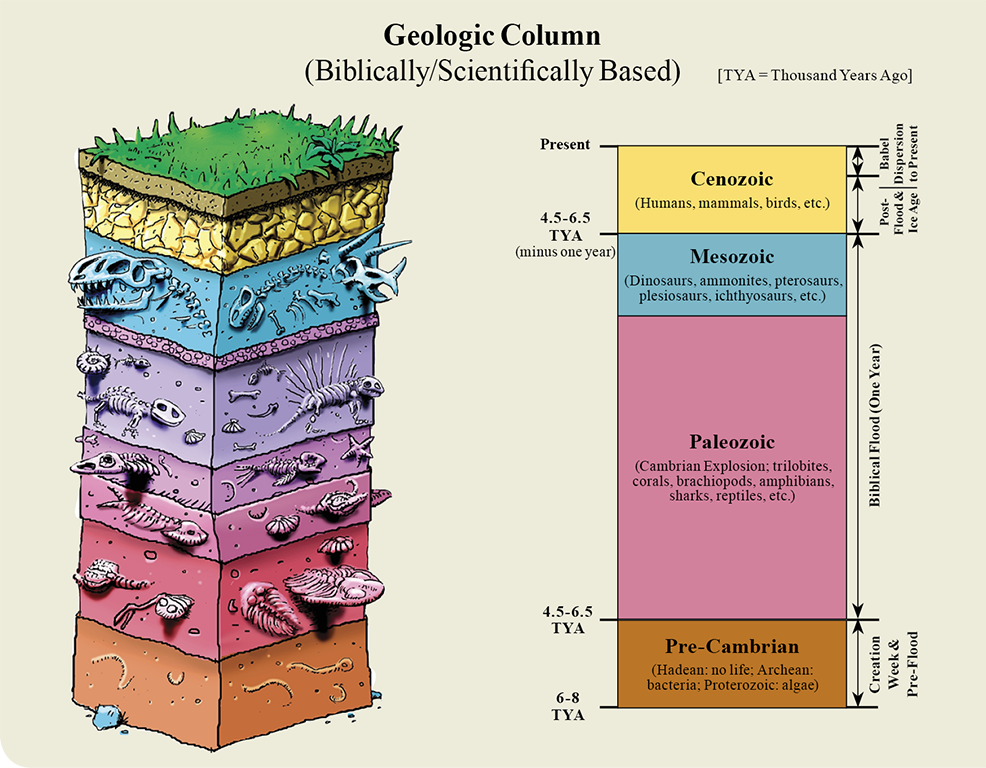
Long ago, the late, famous paleontologist of Columbia University, the American Museum of Natural History, and the Museum of Comparative Zoology at Harvard, George Gaylord Simpson, admitted: “Most new species, genera, and families, and nearly all categories above the level of families, appear in the records suddenly, and are not led up to by known, gradual, completely transitional sequences.”8 The Cambrian Explosion is an acknowledged problem for evolutionary theory—a falsified prediction—and yet the abrupt appearance of fully formed and functional species is an obvious, pervasive trait of the entire fossil record, from beginning to end.
The abrupt appearance of living organisms, however, is not the extent of the problem for evolution. Not only are the species of the fossil record fully formed and functional from the beginning of the record, but they are also complex when they abruptly appear. The trilobite, for example, is characteristic of the Cambrian strata at the base of the fossil record—a creature equipped with an extremely complex vision system, using aplanatic lenses that are more complex than the human eye, which is equipped with a single refractive lens.9 The fossil record provides no evidence for the evolution of the trilobite, and yet its complexity is stunning. Complexity at the commencement of the fossil record is a falsification of a fundamental evolutionary prediction, but coincides perfectly with Creation and Flood predictions.
Evolution would also predict that diversity would precede disparity in the fossil record. In other words, varieties of a single body type (diversity) would be found in the fossil record at its base, and over time (moving up through the record), other body types would eventually emerge (disparity). One calls to mind the well-known sketches of the evolutionary tree of life, with a single-celled organism at its base gradually giving rise to the many branches and twigs that characterize all life. The biblical Creation model predicts the opposite: God initially created distinct kinds (disparity) from which came variety and diversity within those kinds. Instead of the evolutionary tree of life, one calls to mind an orchard of trees representing distinct kinds with their branches and twigs representing mere diversification and variety within those kinds. The fossil record, once again, supports the creationist contention. Biologists have pinpointed a few dozen distinct phyla—the level of organization used to group organisms based on their basic body plans. Of the 27 phyla represented in the fossil record, roughly 20 appear immediately in the Cambrian explosion (disparity) with no evidence of having evolved.10 Variety within those phyla—species diversity—does not show up until higher in the fossil record, just as biblical Creation would predict: disparity before diversity.
Abrupt appearance of fully formed and functional, complex organisms with immense disparity is a sweeping characteristic of the fossil record. That truth is severely problematic for evolution, but it is precisely what would be predicted if biblical Creation and the Flood occurred.
Characteristic #2: Stasis
Stasis in the fossil record refers to the observation that after creatures appear in the fossil record, they remain virtually the same throughout their tenure in the rock layers.11 While Darwinian evolution would predict a gradual change of species over millions of years, the fossil record does not reflect that prediction: transitional fossils linking one species to a distinctly different species do not exist.
Gould admitted that evolutionists “have no direct evidence for smooth transitions.” He acknowledged: “All paleontologists know that the fossil record contains precious little in the way of intermediate forms; transitions between major groups are characteristically abrupt.”12 Writing in Paleobiology he explained: “The absence of fossil evidence for intermediary stages between major transitions in organic design, indeed our inability, even in our imagination, to construct functional intermediates in many cases, has been a persistent and nagging problem for gradualistic accounts of evolution.”13 “[T]he extreme rarity of transitional forms in the fossil record persists as the trade secret of paleontology. The evolutionary trees that adorn our textbooks have data only at the tips and nodes of their branches: the rest is inference, however reasonable, not the evidence of the fossils.”14
Evolutionary paleontologist Steven Stanley explained: “The known fossil record fails to document a single example of phyletic evolution [i.e., evolution of a new phylum—JM] accomplishing a major morphological transition and hence offers no evidence that the gradualistic model can be valid.”15 Evolutionary anthropologist and emeritus professor of the University of Oxford Robert Barnes acknowledged that “the fossil record tells us almost nothing about the evolutionary origin of phyla and classes. Intermediate forms are non-existent, undiscovered, or not recognized.”16 Evolutionary biologists James Valentine and Douglas Erwin wrote: “If ever we were to expect to find ancestors to or intermediates between higher taxa, it would be in the rocks of the late Precambrian to Ordovician times, when the bulk of the world’s higher animal taxa evolved. Yet transitional alliances are unknown or unconfirmed for any of the phyla or classes appearing then.”17
So clear is the lack of evidence of evolutionary transition in the fossil record that evolutionary zoologist of Oxford University Mark Ridley went so far as to say, “[N]o real evolutionist, whether gradualistic or punctuationist, uses the fossil record as evidence in favor of the theory of evolution as opposed to special creation.”18 Why? Because the fossil record does not support evolution; it supports Creation. Even Charles Darwin saw the problem in the 1800s that persists today:
[T]he number of intermediate varieties, which have formerly existed, [must] be truly enormous. Why then is not every geological formation and every stratum full of such intermediate links? Geology assuredly does not reveal any such finely graduated organic chain; and this, perhaps, is the most obvious and serious objection which can be argued against this theory [i.e., evolution—JM].19
Colin Patterson literally “wrote the textbook” on evolution. He was the paleontologist who served as the editor of the professional journal published by the British Museum of Natural History in London. In response to a letter asking why he did not include examples of transitional fossils in his book, he responded,
I fully agree with your comments on the lack of direct illustration of evolutionary transitions in my book. If I knew of any, fossil or living, I would certainly have included them…. Yet [Stephen Jay] Gould and the American Museum people are hard to contradict when they say there are no transitional fossils…. I will lay it on the line—there is not one such fossil for which one could make a watertight argument.20
Notable is the fact that when paleontologists uncover a fossil that they hope will pass as a legitimate transitional form, not only is it still controversial, but the championed fossil is inevitably from a vertebrate organism. Vertebrate fossils, however, comprise roughly only 0.0125% of the fossil record—they are virtually irrelevant indicators of whether or not evolution occurred.21 Since well over 99.9% of the fossil record is made up of invertebrate fossils, one would think that if evolution happened, transitional fossils would be easy to find among the invertebrates, especially since their remains tend to preserve more easily. Rarely, if ever, however, do evolutionists even claim to find alleged invertebrate transitional forms. If species evolve in the manner described by mainstream evolutionists, (1) transitional forms should not be difficult to find, and (2) they would be invertebrates most of the time. Neither of those predictions hold true.
Further verification that stasis—a lack of significant evolutionary change—reflects the fossil record pertains to what Darwin termed “living fossils.” Countless times over many years evolutionists have discovered fossils in strata laid down millions of years ago (according to the evolutionary timeline) that were thought to be extinct, presumably from having evolved into something else. According to evolution, species are the result of “descent with modification” from other species, so it would be virtually inconceivable that a species would remain essentially the same after millions of years. After all, according to evolution, evolution happens! “Living fossils,” however, have been discovered many times over the years. “Living fossils” (a self-contradictory notion at best) are species thought to have lived millions of years ago, that have been discovered alive in modern times, virtually the same as their fossil counterpart. Consider the following sample of living fossils with the number of alleged evolutionary years since their alleged extinctions22:
- Coelacanths (300-400 million years)
- Graptolites (300 million years)
- Tuatara (over 65 million years)
- Metasequoia tree (over 20 million years)
- Heliopora coral (over 65 million years)
- Crocodiles (over 150 million years)
- Various teleost fishes (over 100 million years)
- Sturgeons (over 65 million years)
- Bowfin fish (70 million years)
- Gar fish (100 million years)
- Pleurotomaria gastropod (500 million years)
- Neotrigonia mollusk (100 million years)
- Chambered Nautilus (500 million years)
- Neopilina mollusk (280 million years)
- Lingula brachiopod (450 million years)
- Wollemi pine trees (over 65 million years)
- Horseshoe crabs (over 400 million years)
- Monoplacophorans mollusks (over 500 million years)
Once again, the predictions of the evolutionary paradigm fall woefully short. Stasis is a verified prediction of the Creation model—not the evolutionary paradigm. A lack of transitional fossils, especially among the invertebrates, along with the prevalence of “living fossils,” supports Creation—not evolution.
Characteristic #3: Extinction
Five “mass extinction” events are said to have occurred in history, according to the evolutionary paradigm.23
- In the Ordovician extinction (445 million years ago), 60-70 percent of the Earth’s species went extinct.
- In the Devonian extinction (360-375 million years ago), up to 75 percent of the Earth’s species disappeared from the Earth.
- In the Permian extinction (252 million years ago), 95 percent of the Earth’s species went extinct.
- In the Triassic extinction (200 million years ago), 70-80 percent of the Earth’s species disappeared.
- In the Cretaceous extinction (65-66 million years ago), 75 percent of the Earth’s species went extinct.
According to evolutionists, the causes of these alleged worldwide extinction events are still unknown.
Creationists interpret the same data differently. First, the dates of the extinction events are incorrect, since they rely on radiometric dating.24 All dates in millions of years can be telescoped to the biblical timeframe upon realization that, for example, the nuclear decay rates were apparently accelerated during the Flood. The Flood likely corresponds roughly to the Cambrian through Cretaceous periods (i.e., 540 million years ago to 66 million years ago, using the evolutionary timescale). Each of the extinction events, therefore, fall within the year-long Flood that occurred a few thousand years ago. The geologic column and fossil record provide an account of the Flood’s progression.25 Hence, each of the major extinction events noted by evolutionists merely report the destruction of another of Earth’s major habitats/ecosystems as the waters of the Flood continued to rise.
Regardless of one’s explanation of the evidence, extinction—not evolution—is a major trait of the fossil record. The biblical global Flood provides a powerful explanation for why worldwide death and extinction occurred in the fossil record and, at the same time, why fossils are typically found in sedimentary rock (which is typically formed from aqueous events).
Conclusion
The fossil record is a compilation of creatures that abruptly appear, fully formed, in the rock layers of the Earth with no evolutionary history. They remain virtually the same throughout the record, and then oftentimes disappear from the surface of the Earth. Do these pervasive, endemic traits of the fossil record support the biblical accounts of Creation and the Flood, or is the naturalistic paradigm the better explanation for the origin of the fossils? Clearly, the Theory of Evolution does not fit the physical evidence. Many of its most fundamental predictions are consistently falsified through observation of the evidence left for us in the fossil record. Evolution, therefore, has been effectively falsified. Upon assessing the evidence, it seems that one must be determined to ignore it, blindly holding to naturalism, to accept evolution. Biblical Creation and the Flood fit the evidence. They happened, whether or not we appreciate their implications regarding how we should live in order to please God and receive His eternal blessings (2 Peter 3:3-11).
Endnotes
1 Jeff Miller (2019), ” Was the Flood Global? Testimony from Scripture and Science,” Reason & Revelation, 39[4]:38-47, https://apologeticspress.org/apPubPage.aspx?pub=1&issue=1293&article=2918.
2 E.g., Stephen Jay Gould (1980), The Panda’s Thumb (New York: W.W. Norton & Co.), pp. 181-182.
3 Ibid.
4 “Discovery of Giant Roaming Deep Sea Protist Provides New Perspective on Animal Evolution” (2008), UT News, November 20, http://news.utexas.edu/2008/11/20/giant_protist.
5 Daniel Osorio, Jonathan Bacon, and Paul Whitington (1997), “The Evolution of Arthropod Nervous Systems,” American Scientist, 85[3]:244, emp. added.
6 Stephen J. Gould (1994), “The Evolution of Life on Earth,” Scientific American, 271:86, October.
7 Richard Dawkins (1986), The Blind Watchmaker (New York: W.W. Norton), p. 229, emp. added.
8 George G. Simpson (1953), The Major Features of Evolution (New York: Columbia University Press), p. 360.
9 Lisa J. Shawver (1974), “Trilobite Eyes: An Impressive Feat of Early Evolution,” Science News, 105:72, February 2; Riccardo Levi-Setti (1993), Trilobites (Chicago, IL: University of Chicago Press), pp. 57-58; Richard Ellis (2001), Aquagenesis (New York: Viking), p. 49.
10 Stephen C. Meyer (2013), Darwin’s Doubt (New York: HarperCollins), p. 31.
11 Gould (1980), p 182.
12 Stephen Jay Gould (1977), “Evolution’s Erratic Pace,” Natural History, 86[6]:24, emp. added.
13 Stephen Jay Gould (1980), “Is a New and General Theory of Evolution Emerging?,” Paleobiology, 6[1]:119-130, Winter, p. 127, emp. added.
14 Gould (1977), p. 13, emp. added.
15 Steven Stanley (1977), Macroevolution (San Francisco, CA: Freeman), p. 39, emp. added.
16 Robert Barnes (1980), “Invertebrate Beginnings,” Paleobiology, 6[3]:365, emp. added.
17 James Valentine and Douglas Erwin (1987), “Interpreting Great Developmental Experiments: The Fossil Record,” Development as an Evolutionary Process (New York: Alan R. Lias), p. 84, emp. added.
18 Mark Ridley (1981), “Who Doubts Evolution?” New Scientist, June 25, 90:832.
19 Charles Darwin (1956), The Origin of Species (London: J.M. Dent & Sons), pp. 292-293, emp. added.
20 Colin Patterson (1979), Letter of April 10, 1979 to Luther Sunderland: reprinted in Bible-Science Newsletter, 19[8]:8, August, 1981, emp. added.
21 John D. Morris (1994), “Does the Geologic Column Prove Evolution?” Acts & Facts, 23[7], https://www.icr.org/article/does-geologic-column-prove-evolution.
22 John D. Morris and Frank J. Sherwin (2010), The Fossil Record (Dallas, TX: Institute for Creation Research), pp. 113-114; “Are Horseshoe Crabs Really Crabs?” (2018), National Ocean Service, June 25, https://oceanservice.noaa.gov/facts/horseshoe-crab.html; Paul Bunje (n.d.), “The Monoplacophora,” University of California Museum of Paleontology, http://www.ucmp.berkeley.edu/taxa/inverts/mollusca/monoplacophora.php.
23 “Earth’s Major ‘Mass Extinction’ Events” (2017), Phys.org, July 17, https://phys.org/news/2017-07-earth-major-mass-extinction-events.html.
24 Jeff Miller (2013), “Don’t Assume Too Much: Not All Assumptions in Science Are Bad,” Reason & Revelation, 33[6]:62-70, http://apologeticspress.org/pub_rar/33_6/1306.pdf.
25 Miller (2019).
The post Does the Fossil Record Support Creation and the Flood? appeared first on Apologetics Press.
]]>The post Was the Flood Global? Testimony from Scripture and Science appeared first on Apologetics Press.
]]>
Some ask how the Flood of Genesis 6-9 could be a global Flood. There simply is not enough water on the Earth to cover “all the high mountains under the whole heaven…covering them fifteen cubits deep” (Genesis 7:19-20, ESV). After considering such apparent quandaries, many resort to interpreting the Flood of Genesis 6-9 as being, not worldwide, but local in its extent. Is the story of the Flood myth? Was the Flood a local, rather than a global, Flood?
The Testimony of Scripture
 |
First, Scripture simply leaves no room for a local Flood interpretation. Here are eight reasons why:
1. If the Flood was local, why waste several decades building an Ark (5:32; 7:6)? Why not just leave the area?
2. Why bring onto the Ark animals from all over the region if the Flood was local—representatives of “every living thing of all flesh” (6:19)? Since God actually sent the animals to Noah anyway (6:20), why not just send them out of the area instead?
3. How would the Ark be able to stay afloat for several months while the water receded if the Flood was local (8:3)? While the Ark could certainly stay afloat on a large lake for a long span of time, large lakes do not dry up or recede in only one year without catastrophic breaches which do not conform well to the uniformitarian assumption that many local Flood advocates hold. The description in the text seems to imply that the Ark was floating in a receding mass of water so large that it took months for it to drain away. As the Flood waters were receding, Noah sent out birds to determine if the Earth was sufficiently safe and dry to exit the Ark. The dove “found no resting place for the sole of her foot” (8:9), and yet doves will often travel farther than five miles in search of food.1
4. How could the biblical terminology—describing the water as covering “all the high mountains that are under the whole heaven” (7:19, ESV)—be reconciled with a local flood? How could water rise high enough locally to cover mountains if the Flood was not greater in its extent?
5. How could the biblically-stated purpose of destroying man (and beast) from the face of the whole Earth (6:13; 7:4) be accomplished with a local flood? Conservative estimates indicate there could have been 215,000,000 people on the planet by the time of the Flood—given the long life spans of the pre-Flood era, the robustness of the young human genome, and God’s command for humans to be fruitful, multiply, and fill the Earth (Genesis 1:28). Given that large buildings had likely not yet been engineered, such a large population would surely have been spread out a great distance, and yet all humans were killed. Further, Genesis 9:19 indicates that after the Flood, “the whole Earth was populated” through the three sons of Noah who were on the Ark with him—Shem, Ham, and Japheth.
6. God made a promise to man and the creatures of the Earth never to again destroy the Earth with a Flood in the way He had done (9:8-16). If the Flood was local, then God lied, breaking His covenant with man, since local floods occur all the time. A global Flood, however, has never again occurred.
7. Peter used the universal destruction of the Earth in the Flood to describe what judgment day will be like (2 Peter 3:6-7). If the Flood was not universal, then logically, judgment also will not be universal.
8. The Flood was so devastating to the Earth that seedtime, harvest, winter, summer, and even day and night were severely affected for many months (8:22). How could Earth processes have been thus affected if the Flood was merely local?
The Bible is clear: the Noahic Flood was global in its extent.
The Testimony of Science
Science is also clear on the universality of the Flood. A scientific theory is validated through testing its predictions. If a global, rather than a localized, Flood occurred, what would we predict we would find upon examination of the physical evidence? Here are nine scientific evidences that verify global Deluge predictions:
Scientific Evidence #1: Sedimentary Layers across Continents and Even Between Continents
Sedimentary rock is understood typically to be the result of sediment deposited by water. As would be predicted if a global Flood occurred, the bulk of the surface of the Earth is comprised of sedimentary rock. Some 80-90% of the Earth’s surface is covered with sediment or sedimentary rock, as opposed to igneous or metamorphic rocks.2 While in the geologic column the upper layers, known as the Cenozoic strata (often considered post-Flood by Creation geologists), are characterized by geographically localized beds of sedimentary rock, many of the Flood layers (Paleozoic and Mesozoic strata) traverse extensive regions. Paleozoic and Mesozoic strata can often be traced across continents and, in some cases, between continents.
For example, geologists have identified six “megasequences” of sedimentary rock layers at the Grand Canyon that can be followed across North America.3 The chalk beds of the cretaceous period (e.g., the “White Cliffs of Dover”) extend from Ireland through England, across the English channel into Europe, and on down to the middle East, Egypt, and even Kazakhstan.4 Even more notable is the fact that the same chalk beds—found sandwiched between the same strata—are found in the Midwestern USA and in Western Australia.5 Similarly, the Pennsylvanian coal beds of America extend into Britain, Europe, and even further—to the Caspian Sea of Russia.6 Additionally, the distinctly different Permian coal beds of the southern hemisphere extend between Australia, Antarctica, India, South Africa, and South America.7 Such widespread deposition of sediment speaks loudly in support of a global, aqueous event that deposited vast amounts of sediment in a process like none that we witness today.
Scientific Evidence #2: Marine Fossils on Continents and Mountains
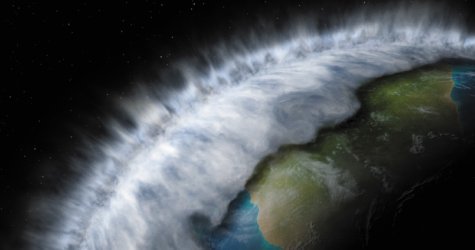
If a Flood once covered the Earth, wherein the ocean floor was broken up and fountains of material were released on the Earth (Genesis 7:11; Proverbs 3:20) followed by all of the Earth’s mountains being covered with water (Genesis 7:19-20; ESV, NIV, RSV, NASB), one would predict marine fossils to be discovered over the entire Earth—on all continents and atop mountains.8 It is no secret that marine fossils are found well above sea level worldwide and at the summits of mountains. Even the tallest mountain range in the world—the mighty Himalayas—hosts marine fossils.9
Continental rock (including that which comprises mountains) and the basaltic rock that comprises the ocean floor are fundamentally different. The rock that raised to form mountains, therefore, was never at the base of the ocean. How, therefore, are the marine fossils found across continents and mountains to be explained? Did the continents “dip” down below sea level several times in the past to allow marine creatures to travel onto continents and be buried in several distinct layers? Since continental rock is less dense, it “floats” in the mantle like a cork—unable to dip in such a way.10 Instead, the ocean had to have risen high enough at some point to flood the continents, bringing with it the marine creatures that are found fossilized across continents—even in what are now mountains.
Scientific Evidence #3: Lack of Erosion (or Rapid Erosion) Between Rock Layers
Uniformitarian geology predicts the gradual deposition and erosion of sediment across the planet over long periods of time—present processes are the key to understanding the past. Uniformitarianism, therefore, would predict the joining surfaces between strata to be rough and uneven, with dips and plunges. After all, normal terrain has hills, valleys, riverbeds, and other geographic features that detract from smooth, level topography. If the Flood occurred, however, many of the strata found in the Paleozoic and Mesozoic layers were laid down while saturated with water and with little time between their sequential deposition. The joining surfaces of many strata, therefore, would be smooth and flat, with little evidence of erosion. The enormous, beautiful rock outcrops of the Grand Canyon allow visitors to see for themselves the distinctive sedimentary rock layers that characterize the Paleozoic era—what Creation geologists argue is the beginning of the Flood. One characteristic feature of those layers is that the joining surfaces of the layers are generally very smooth, with little evidence of the erosion or deposition processes that should characterize the rock layers if they were formed over long periods of time.11 The evidence indicates that the worldwide sedimentary layers of the geologic column were deposited rapidly in a worldwide aqueous event.
Scientific Evidence #4: Catastrophic Burial
Most living creatures do not fossilize upon dying. In order to fossilize, they must be buried rapidly and sequestered from oxygen which causes the rapid decomposition of soft-bodied animals. Fossilization, therefore, is a rarity, especially for land-dwelling creatures.12 The conditions must be just right. While individual dead carcasses might be envisioned as being covered and preserved from time to time by a localized mudslide or rapid sediment deposition process, non-catastrophic conditions that could kill and preserve the exquisite remains of a larger animal (e.g., a sauropod or large theropod dinosaur) are much more difficult to envision. And yet fossils of dinosaurs that were killed by an aqueous burial event are typical throughout the fossil record—just as the Flood model would predict. For instance, the classic dinosaur death pose—known as the opisthotonic posture—often characterizes dinosaur fossils when the articulated remains of a skeleton are discovered.13 The dinosaur’s head is “thrown back over the body, sometimes almost touching the spine,”14 as if drowning and gasping for air.
Even if localized, non-catastrophic conditions could reasonably explain the preservation of individual enormous creatures, the hundreds of fossil graveyards of the world with numerous preserved fossils at each site, demand catastrophic, aqueous conditions.15 The quick execution and burial of a group of animals is much harder to explain under uniformitarian circumstances, especially when that group of animals is comprised of dinosaurs. Upon close examination, the contemporary explanation of dinosaur graveyards does not hold up. Paleontologists speculate that many dinosaur graveyards are the result of dinosaurs dying during local flood season while crossing a river and being carried to a river bend and successively buried year after year. The physical evidence, however, does not substantiate this idea. In Newcastle, Wyoming, for instance, a dinosaur graveyard of over 5,000 disarticulated dinosaurs has been discovered organized into a graded bone bed. If dinosaur corpses were piling up on a river bend each year and being rapidly buried there, one would expect the bones to be found in a river current orientation with many of the skeletons articulated—the bones found joined together as skeletons or partial skeletons. Instead, the graveyard is comprised of randomly oriented, disarticulated bones. Furthermore, if the dinosaur bones were being deposited upon one another annually, one would predict bone beds at different levels representing successive events. The bones in the dinosaur graveyard, however, are organized in a single, graded bed, with larger bones at the bottom and smaller bones as you move upward—indicating a single, rapid, catastrophic event that was responsible for the destruction, transportation, and burial of the thousands of dinosaurs in the area, including Edmontosaurus, Triceratops, Pachycephalosaurus, and various varieties of Tyrannosaurus.
Many other fossils testify to catastrophic, rather than uniformitarian, flood conditions as predicted by the Flood model. From fossils of Triassic (middle Flood) ichthyosaurs being catastrophically buried while giving birth,16 to Jurassic (late Flood) Aspidorhynchus fish buried with Rhamphorhychus (pterosaur) in its jaws,17 to Eocene (late or soon after Flood) aspiration fossils—fish killed and buried while eating other fish:18 fossils that verify the predictions of the global Flood model abound.
Scientific Evidence #5: “Unearthly” Seismites
A seismite is a special rock layer that forms when an earthquake vibrates a layer of sediment (like sand) that is covered with water—like the soggy sand that is under water along a shoreline. When an earthquake happens, it shakes the soggy sand, and the water within it tries to escape upward from the sand as it settles, like magma from a volcano. If the sand were to dry out after the earthquake and lithify (i.e., turn to stone) and then you cut the sandstone in two and looked at the inside layers, you would see the squiggly lines caused by the movement of the shaken water. These are called fluid avulsion structures, and they are usually only a few centimeters thick today. If the Flood happened, and “all of the fountains of the great deep were broken up” (Genesis 7:11) and “the mountains rose, the valleys sank down” (Psalm 104:8, ESV), in conjunction with water saturated continents, the existence of seismites in the rock layers associated with the Flood would be predicted.
Not only have many such seismites been discovered, but in Lance Creek, Wyoming, dozens of distinct seismite layers have been discovered that are several meters thick, rather than a few centimeters thick like seismites forming today.19 Such abnormal seismites would be termed “unearthly” by geologists, since no known earthly process (i.e., none witnessed today) can account for their formation. These layers have been traced over several miles and are potentially continent wide. This means that (1) the whole area was once covered with massive amounts of water (enough to make several meters of sand soggy); and (2) several major earthquakes happened—dozens of earthquakes so intense that there is no modern reference point to interpret their strength. When comparing modern seismites and their correlated earthquakes with the Lance Creek seismites, one infers that the Lance Creek seismites necessarily were caused by an unknown, abnormal phenomenon—possibly the earthquakes generated by the rapid formation of the Rocky Mountains during the Flood when, for example, the Pacific oceanic plate collided with and subducted beneath the North American plate along the west coast of the United States.
Scientific Evidence #6: Long Distance Sediment Transportation
Sedimentary rock layers are the result of sediment being deposited by water, and in some cases, wind. Rivers, for example, will pick up dirt from their beds and banks, carry them along for a certain distance, gauged by the speed and depth of the river, and re-deposit the sediment, which may eventually become sedimentary rock if the conditions are right. The type of sedimentary rock will be based on the type of material that comprises the rock, and the type of material is based on the source of the sediment that the river is carrying. If a global, rather than merely local, flood occurred, one would predict that enormous amounts of sediment would have been transported great distances, as opposed to the smaller amounts of sediment that are transported shorter distances today.
Once again, when we examine the physical evidence in the Flood rock layers, we see certain kinds of sedimentary rock whose material source is hundreds and, in some cases, even thousands of miles away. The Coconino Sandstone in the Grand Canyon, with an average thickness greater than the length of a football field and surface area greater than the state of California, can be traced beyond Utah to the north. The source of the Supai Group at the Grand Canyon is postulated to be extremely far from the Grand Canyon, and the source of the Navajo Sandstone of Utah appears to be the Appalachian Mountains of the eastern United States—over 1,800 miles away.20 While the physical evidence is difficult to reconcile using the conventional paradigm of uniformitarianism, it verifies yet another prediction of the global Flood model.
Scientific Evidence #7: Cambrian Explosion
According to Genesis chapter one and following, a few thousand years ago, God directly created all “kinds” of life within four days, not by evolution over four billion years.21 Approximately 1,650 years after that initial Creation, the Flood occurred. If the Flood was, in fact, global in its extent, then it destroyed all birds and land-living creatures that were not on the vessel prepared for the eight survivors of that catastrophic event. Based on that information, Creation geologists can make several scientific predictions. Since the Earth is young and God did not create life through gradual evolution, and since the Flood was apparently the first (and only) major, global catastrophic event on the Earth post-Creation and catastrophic events are generally the cause of fossilization, the following would be predicted: (1) Very few fossils likely would have been formed prior to the Flood; (2) Transitional fossils between major phylogenic groups would be non-existent in the fossil record; (3) Instead, living creatures would appear fully formed, distinct, and functional the first time they appear in the fossil record; (4) When the global Flood began, we would predict a significant marker in the geologic column that represents the commencement of the worldwide Flood event; (5) We would further predict an explosion of fully formed fossils above that line, worldwide, representing the deaths of living creatures due to mud slides and other fossil-forming processes during the global Flood.
When one examines the fossil record, testing the validity of these global Flood predictions, we find that all five of the predictions are easily verified. One observes beginning at the base of the record, in the Pre-Cambrian layers (i.e., pre-Flood layers), very little is found by way of fossils—namely fully formed stromatolites (predictions 1 and 3). Above the Pre-Cambrian strata, a distinct line is observed that extends across the entire planet, called the “Great Unconformity” (prediction 4).22 That line marks the beginning of the Cambrian strata (i.e., the Flood) and an explosion of fully formed fossils—called the “Cambrian Explosion” by paleontologists (predictions 3 and 5). These fossils appear worldwide in sedimentary rock with absolutely no evolutionary history preserved in the fossil record (prediction 2), and to all intents and purposes, effectively reflect the beginning of the fossil record23—precisely what would be predicted if Creation and the global Flood occurred, and decisively contrary to the conventional evolutionary paradigm. One well-known evolutionary biologist even conceded concerning the fossils of the Cambrian: “It is as though they were just planted there, without any evolutionary history. Needless to say, this appearance of sudden planting has delighted creationists.”24 Even Charles Darwin recognized the Cambrian Explosion as a problem for his theory.25 The Cambrian Explosion not only falsifies evolutionary predictions, but it verifies at least five global Flood predictions.
Scientific Evidence #8: Flood Legends
If the Flood occurred, but was merely local in its extent, one would not expect a record of the limited event to have been passed down in separate societies worldwide. One might expect distinct legends of localized floods to be passed down within separate societies, but they would not show significant similarities if they were describing different events. If the Flood occurred and was global in its extent, however, it would be inconceivable to suppose that stories about such a catastrophic event would not be passed down through the ages to virtually all societies. Since the incident at Babel occurred soon after the Flood (Genesis 11), where God directly created several distinctly different oral languages, but apparently not written languages, stories of the Flood were likely not written down for many years. Instead, they were passed along orally—a medium more prone to inaccuracies in transmission. The event, therefore, would certainly be remembered, but many of the details would not generally be expected to be accurate.26 When comparing separate accounts of the event from different societies, if the details matched precisely, one would suspect collusion at some point between the societies (i.e., that the Flood stories originated from one later source, rather than from the original witnesses). Sure enough, once again, we find decisive evidence from archaeology of hundreds of worldwide, distinct but curiously similar legends of a catastrophic Flood.27 The details do not perfectly match, as predicted, but amazingly match in the essentials, suggesting a true, single event thousands of years ago that affected the whole world rather than a small geographic area.
Scientific Evidence #9: Rapid Deposition of Strata
As discussed earlier, uniformitarianism, the standard assumption used to interpret geologic observations today, would suggest that the sedimentary rock layers of the Earth were deposited gradually over millions of years. One would not expect sediment layers well below the surface to be soft after millions of years, but rather to have been lithified. If a global Flood occurred, then catastrophism, not uniformitarianism, is a better interpretive principle to be used in geology. If a global Flood occurred, then the sedimentary layers of the Paleozoic and Mesozoic layers (i.e., the Flood rock strata) were laid down rapidly—possibly in as little as one year’s time. Many of the strata below the surface at any point during the Flood, therefore, would still be soft—not yet lithified. Which prediction is borne out upon examination of the physical evidence? The global Flood model prediction is verified when we observe tightly folded rock strata, for example, in the Paleozoic Tapeats Sandstone and Muav Limestone of the Grand Canyon.28 Since rocks break, rather than bend, observing several meters of unbroken, tightly folded rock strata implies the layers were not yet rock when they were bent—precisely what would be expected if the global Flood occurred and laid down the worldwide sedimentary layers of the Mesozoic and Paleozoic eras.
Further evidence of the rapid deposition of strata is seen when we observe polystrate fossils. Polystrate fossils are individual fossils that span multiple (“poly”) strata (“strate”), such as fossilized trees and other organisms across the world.29 Surely only fanciful, blind “faith” would lead one to accept the postulate that a tree could remain dead, undecayed, and sticking out of the ground for hundreds of thousands or millions of years while sediment slowly accumulated around the tree, burying it. Polystrate fossils worldwide suggest rapid deposition of the sedimentary rock layers also worldwide.
Where Did the Water Go?
Both science and Scripture support a global Flood, but if the waters of the Flood really did once cover the Earth—even the mountains—where did the water go after the Flood? The water could not have disappeared from the Universe—it must be accounted for, unless God chose to suspend the First Law of Thermodynamics and directly remove the water from the Universe.
The account of the Flood event is certainly laced with God’s supernatural activity. He directly communicated with Noah, informing him how to build the Ark (Genesis 6:14-16), sent the animals to Noah (Genesis 6:20), personally shut the door of the Ark (Genesis 7:16), and apparently initiated the Flood (Genesis 6:17; 7:4,23). The possibility of other supernatural activity on God’s part, therefore, cannot be ignored. However, before assuming “God miraculously did it” as an explanation for everything that we do not know—which could lead to false conclusions, scientific laziness, and a lack of valuable knowledge about the natural realm and God’s amazing glory as reflected therein30—let us consider if there is another plausible explanation as to where the water from the Flood went.
If the entire current Earth’s atmosphere released its water, it would only cover the globe to a depth of about one inch above sea level.31 If all of the present land ice of the Earth melted—including glaciers, ice caps, and ice sheets—it would raise the sea level approximately 230 feet.32 If all of the water within the Earth’s crust was pumped onto the surface of the Earth, it would raise the sea level another 600 feet,33 which is much more significant, but when we consider that many of Earth’s mountains tower over the Earth above 25,000 feet in height, such numbers pale in significance.34 Where is the water from the Flood? Answer: apparently the same place it came from—primarily the oceans (Psalm 104:6-9).
While Scripture does not give many details about what occurred during the Flood, it does provide a few important clues.
- When the Flood began, the “fountains of the great deep (i.e., the oceans) were broken up”—all of them (Genesis 7:11; Proverbs 3:20). Such terminology suggests the breakup of the ocean floor and the release of water and magma from below the Earth’s surface onto the ocean floor. Using our knowledge of geology in the 21st century, such terminology suggests plate tectonics (i.e., the breakup and initiation of the movement of the plates that comprise the surface of the Earth) may have been activated at that point.
- The breakup of the great deep is mentioned, followed by (i.e., perhaps causing) the opening of the “windows of heaven”—intense rain (Genesis 7:11) for 40 days and nights (7:12).
- The waters “increased” (7:17)—“greatly increased” (vs. 18)—prevailing for 150 days (vs. 24)—roughly five months. After that point, “the fountains of the deep and the windows of heaven were also stopped, and the rain from heaven was restrained,” a great wind passed over the Earth, and therefore, the waters began to recede continually (8:1-3) until the Ark came to rest several weeks later (vs. 4).
- Psalm 104 (ESV) speaks of Creation and the Flood. Verses 6-9 refer to the Flood35 and tell us that the mountains rose and the valleys sank down during the event. While some higher elevation locations apparently existed prior to the Flood (7:19-20), the taller mountains formed during the Flood.
- Psalm 104:9 (ESV) indicates that the geologic activity that ensued in the Flood created a geographic setting that now disallows a global flood to occur again.
Is there physical evidence to support and further explain these statements in Scripture? Undeniably.
When the fountains of the great deep were broken up—apparently commencing plate tectonics36—magma from the mantle would have touched the waters of the ocean, superheating it and blasting it into the atmosphere as superheated vapor, where it came back down as rain. Many of Earth’s divergence zones37 stretch for hundreds of miles at the base of the oceans. Geyser-like activity would have, therefore, created worldwide fountains that drenched the continents with immense amounts of water for possibly weeks (40 days?) until the movement of Earth’s tectonic plates slowed.
We are able to observe today the effects of Earth’s tectonic plates as they move relative to one another, converging and subducting, diverging, and transforming. Most geologic activity on the Earth occurs along the margins of tectonic plates as they move—earthquakes, volcanoes, and mountain building, for example. Subducting plates angle downward, slowly diving into Earth’s mantle and dragging with them the ocean floor. On the rear side of the plate, plate divergence occurs—plates being pulled away from one another—forming gaps between plates, and new material surfaces from the mantle to fill the gaps, replacing the material that has been pulled towards the subduction zone. While plates move on the order of centimeters per year today (forming mountains and volcanoes very slowly), when plate tectonics began (i.e., at the beginning of the Flood), simulations show the rate would have been on the order of meters per second, forming mountains rapidly.38
If tectonic plates have always moved at the same slow rate that they are moving today, the subducting plate material would have heated and reached thermal equilibrium with the mantle material long before reaching the core/mantle boundary in its descent. If the global Flood model is correct, however, and the plates were moving rapidly at the onset of the Flood only a few thousand years ago, immense slabs of colder material from the ocean floor would be predicted to be piled at the core/mantle boundary that has not yet warmed to mantle temperatures. Sure enough, yet another Flood prediction was verified when technology progressed to the point that the Earth’s internal structure could be studied. Colder slabs of material were discovered piled under subduction zones, deep in the mantle in the mid-1990s.39
The new material replacing the cold, dense ocean floor that is pulled towards subduction zones is much hotter, and thus, less dense. The effect is that the new material “floats” higher in the mantle. As the ocean floor was rapidly replaced with new mantle material during the early weeks of the Flood, therefore, more and more of the ocean water was continually being displaced onto the land until the entire ocean floor was replaced. Geologists and geophysicists estimate that, at its peak height, the ocean floor would have been over 3,000 feet higher than its initial level.40 Plate motion would have slowed at that point, allowing the new ocean floor to cool, become denser once again and, therefore, float lower in the mantle—creating the valleys that would allow the Flood waters to return to the oceans. The new height of the mountains and the topography of the ocean floor now prohibit the possibility of the reoccurrence of a global Flood—as Psalm 104:9 implies.
Our ever increasing scientific knowledge continues to provide more and more clues that support and explain the global Deluge of Noah. Whether the Flood water was removed supernaturally or naturally, there is no quandary created for the global Flood model.
Conclusion
The Bible speaks of a major Flood, roughly 1,650 years after Creation. While skeptics scoff at the possibility of a global Flood and many Bible-believers scratch their heads in incredulity at such a prospect, both inspired Scripture and science agree: the Flood occurred—and it was global. Once again, there is no reason to question the validity of Scripture. When one carefully examines the evidence prior to drawing conclusions (1 Thessalonians 5:21), the claims of Scripture are verified, without exception. One need only “be diligent” as an unashamed worker, being careful to correctly handle God’s Word (2 Timothy 2:15).
Does it matter, though, whether or not the global Flood happened? Most certainly. Jesus called the attention of His audience back to the Flood in Matthew 24, warning:
But as the days of Noah were, so also will the coming of the Son of Man be. For as in the days before the flood, they were eating and drinking, marrying and giving in marriage, until the day that Noah entered the ark, and did not know until the flood came and took them all away, so also will the coming of the Son of Man be (vss. 37-39).
Sadly, mankind has forgotten the message that God’s Flood conveyed.The Flood was a physical depiction of how God feels about sin. The Flood is a reminder about God’s holiness, and the necessity of human repentance and obedience in order to be pleasing to Him. It is a reminder that judgment can always be just around the corner, when we least expect it. In 2 Peter 3:3-6, Peter reminded his audience of the Flood, and then warned:
But the day of the Lord will come as a thief in the night, in which the heavens will pass away with a great noise, and the elements will melt with fervent heat; both the earth and the works that are in it will be burned up. Therefore, since all these things will be dissolved, what manner of persons ought you to be in holy conduct and godliness (vss. 10-11)?
The global Flood of Noah is a reminder of the global judgment that looms in the future and God’s demand that we live a holy and godly life.
But the Flood is also a reminder of God’s grace. God, through Moses, went out of His way to repeatedly highlight how Noah was different—he consistently obeyed God (Genesis 6:22; 7:5,9,16). The Flood is a reminder that those who obediently submit to God can be saved through water—and receive the benefits of God’s grace—if we will only believe Him. Peter, once again, used the Flood in 1 Peter 3:
[T]he Divine longsuffering waited in the days of Noah, while the ark was being prepared, in which a few, that is, eight souls, were saved through water. There is also an antitype which now saves us—baptism (not the removal of the filth of the flesh, but the answer of a good conscience toward God), through the resurrection of Jesus Christ (vss. 20-21).41
Endnotes
1 Ronnie George (no date), Mourning Doves in Texas, Texas Parks & Wildlife Department, p. 11.
2 Kevin Charles Beck, et al. (2018), “Sedimentary Rock,” Encyclopaedia Britannica On-line, October 16, https://www.britannica.com/science/sedimentary-rock.
3 L.L. Sloss (1963), “Sequences of the Cratonic Interior of North America,” Geological Society of America Bulletin, no. 74, pp. 93-114.
4 D.V. Ager (1973), The Nature of the Stratigraphical Record (London: Macmillan), pp. 1-2.
5 Andrew Snelling (2008), “Transcontinental Rock Layers,” Answers Magazine, July-September, pp. 80-83, https://assets.answersingenesis.org/doc/articles/pdf-versions/flood_evidence_3.pdf.
6 Ager, pp. 6-7.
7 Snelling, p. 82.
8 Note that most of the Earth’s mountains likely were raised late in the Flood, after the fossils therein had already been laid down.
9 J.P. Davidson, W.E. Reed, and P.M. Davis (1997), “The Rise and Fall of Mountain Ranges,” in Exploring Earth: An Introduction to Physical Geology (Upper Saddle River, N.J.: Prentice Hall), pp. 242–247.
10 Andrew Snelling (2007), “High and Dry Sea Creatures,” Answers Magazine, October-December, pp. 81-83, https://answersingenesis.org/fossils/fossil-record/high-dry-sea-creatures/.
11 Steven Austin (1994), Grand Canyon: Monument to Catastrophe (Santee, CA: ICR).
12 “Under What Conditions Do Fossils Form?” (no date), American Geosciences Institute, https://www.americangeosciences.org/education/k5geosource/content/fossils/under-what-conditions-do-fossils-form.
13 “Articulated” means that the dinosaur skeleton is found intact, rather than dismantled with its bones reduced to pieces or missing.
14 Brian Switek (2017), “The Secret of the Dinosaur Death Pose,” Scientific American, March 1, https://blogs.scientificamerican.com/laelaps/the-secret-of-the-dinosaur-death-pose/.
15 David Bottjer, Walter Etter, James Hagadorn, and Carol Tang, eds. (2002), Exceptional Fossil Preservation: A Unique View on the Evolution of Marine Life (New York: Columbia University Press).
16 Christine Dell’Amore (2014), “Oldest Sea Monster Babies Found; Fossil Shows Reptiles Had Live Birth,” National Geogrpahic On-line, February 12, https://news.nationalgeographic.com/news/2014/02/140212-sea-monster-ichthyosaur-reptiles-paleontology-science-animals/.
17 Charles Choi (2012), “Caught in the Act: Ancient Armored Fish Downs Flying Reptile,” Live Science On-line, March 9, https://www.livescience.com/18958-armored-fish-attacks-pterosaur.html.
18 L. Grande (1984), “Paleontology of the Green River Formation, with a Review of the Fish Fauna,” Ed. 2, The Geological Survey of Wyoming Bulletin, 63, http://www.fossilmuseum.net/Fossil_Galleries/GreenRiverFish.htm.
19 Andrew Snelling (2017), “When Continents Collide,” Answers Magazine On-line, January 1, https://answersingenesis.org/geology/plate-tectonics/when-continents-collide/.
20 Austin, pp. 35-36; Andrew Snelling (2008), “Sand Transported Cross Country,” Answers Magazine On-line, October 1, https://answersingenesis.org/geology/sedimentation/sand-transported-cross-country/.
21 Eric Lyons (2014), “Creation and the Age of the Earth,” Reason & Revelation, 34[7]:86-94, http://apologeticspress.org/pub_rar/34_7/1407w1.pdf; Jeff Miller (2017), Science vs. Evolution (Montgomery, AL: Apologetics Press), second edition; Jeff Miller (2019), “21 Reasons to Believe the Earth is Young,” Reason & Revelation, 39[1]:2-5,8-11.
22 Austin, pp. 66-67.
23 Stephen J. Gould (1994), “The Evolution of Life on Earth,” Scientific American, 271:86, October.
24 Richard Dawkins (1986), The Blind Watchmaker (New York: W.W. Norton), p. 229.
25 “Discovery Of Giant Roaming Deep Sea Protist Provides New Perspective On Animal Evolution” (2008), UT News, November 20, http://news.utexas.edu/2008/11/20/giant_protist; Daniel Osorio, Jonathan Bacon, and Paul Whitington (1997), “The Evolution of Arthropod Nervous Systems,” American Scientist, 85[3]:244.
26 And one would expect local religious beliefs and superstitions to be interwoven with the historical facts.
27 Eric Lyons and Kyle Butt (2003), “Legends of the Flood,” Apologetics Press, http://apologeticspress.org/apcontent.aspx?category=6&article=64; Duane Gish (1992), Dinosaurs by Design (Green Forest, AR: New Leaf Publishing), p. 74; Robert Schoch (2003), Voyages of the Pyramid Builders (New York: Jeremy Parcher/Putnam), p. 249; Graham Hancock (1995), Fingerprints of the Gods (New York: Three Rivers Press), p. 190.
28 Andrew Snelling, “Rock Layers Folded, Not Fractured,” Answers 4, No. 2 (April-June 2009):80-83; Morris, pp. 108-113.
29 Michael Oard and Hank Giesecke (2007), “Polystrate Fossils Require Rapid Deposition,” CRS Quarterly, 43[3]:232-240, March; John Morris (2011), The Young Earth (Green Forest, AR: Master Books), pp. 102-105; Andrew Snelling (1995), “The Whale Fossil in Diatomite, Lompoc, California,” Creation Ex Nihilo Technical Journal, 9[2]:244-258.
30 Psalm 19:1; Romans 1:20; Psalm 111:2.
31 “The Water Cycle: Water Storage in the Atmosphere” (2018), United States Geological Survey, https://water.usgs.gov/edu/watercycleatmosphere.html.
32 “Facts About Glaciers” (2018), National Snow & Ice Data Center, https://nsidc.org/cryosphere/glaciers/quickfacts.html.
33 “Deborah Netburn” (2015), “There Are 6 Quintillion Gallons of Water Hiding in the Earth’s Crust,” Los Angeles Times, November 21, https://www.latimes.com/science/sciencenow/la-sci-sn-modern-groundwater-20151116-story.html.
34 Indirect evidence of immense stores of water in the mantle has been recently discovered, although unconfirmed at present [Becky Oskin (2014), “Rare Diamond Confirms That Earth’s Mantle Holds an Ocean’s Worth of Water,” Scientific American On-line, March 12, https://apologetcspress.page.link/ScientificAmericanMarch2014; Andy Coghlan (2017), “There’s as Much Water in Earth’s Mantle as in All the Oceans,” New Scientist On-line, June 7, https://www.newscientist.com/article/2133963-theres-as-much-water-in-earths-mantle-as-in-all-the-oceans/.]
35 Otherwise, if they refer to Creation, then verse nine was violated during the Flood when the water covered the Earth again.
36 Or as Creation scientists call it, Catastrophic Plate Tectonics.
37 I.e., places where tectonic plates are moving apart with new material from the mantle replacing the ocean floor.
38 Steven Austin, John Baumgardner, D. Russell Humphreys, Andrew Snelling, Larry Vardiman, and Kurt Wise (1994), “Catastrophic Plate Tectonics: A Global Flood Model of Earth History,” Proceedings of the Third International Conference on Creationism, ed. R.E. Walsh (Pittsburgh, PA: Creation Science Fellowship), pp. 609-621.
39 S.P. Grand (1994), “Mantle Shear Structure Beneath the Americas and Surrounding Oceans,” Journal of Geophysical Research, 99:11591-11621; J.E. Vidale (1994), “A Snapshot of Whole Mantle Flow,” Nature, 370:16–17.
40 Austin, et al.
41 See Dave Miller (2018), Baptism & the Greek Made Simple (Montgomery, AL: Apologetics Press), pp. 90-94.
|
|
| Suggested Resources | |
The post Was the Flood Global? Testimony from Scripture and Science appeared first on Apologetics Press.
]]>The post Are Biblical Giants Mythical? appeared first on Apologetics Press.
]]>According to evolutionists, giants are not a mythical idea. In a science podcast broadcasted by Cambridge University, well-known paleoanthropologist of the University of Witwatersrand, Lee Berger, was interviewed. Berger discovered the australopithecus sediba2 and homo naledi3 fossils. The podcast group had an opportunity to visit the fossil collection at the University where Berger is a professor for a podcast. While there, they discussed the fossils of the museum. In the article following the interview, editor Chris Smith said, “One of the most interesting things that the fossil record reveals is that we went through a period of extreme giantism. These were people routinely over 7ft tall, they were huge.”4 Berger said, “You’ve probably heard the myth that ancient humans were tiny and some of them were tiny. But, as we moved through the period of 0.5 million to 300,000 years ago in Africa…, [t]hey go through a period of giantism.”5 Berger then proceeded to show the group an example of one of the giant femurs from a species dubbed homo heidelbergensis.6 Berger said, “They are huge. That’s so big we can’t even calculate how big this individual was.”7 Berger admitted that he cannot even gage the actual size of the individual and so surmises him to be over seven feet tall. Smith responded to Berger, asking him if the extreme size could just be an abnormality—an exception to the rule. Berger responded, saying, “No, because we found a lot of them. Everywhere we find them we find them enormous. These are what we call archaic homo sapiens. Some people refer to them as homo heidelbergensis. These individuals are extraordinary. They are giants.”8 Notice first that Berger acknowledges that homo heidelbergensis is definitely human (i.e., homo sapiens), just ancient and enormous. Second, notice that, according to Berger, the fossils are not abnormalities. There was a group of these large humans.
In case homo heidelbergensis is not sufficient evidence, Ralph von Koenigswald of the Netherlands Indies Geological Survey discovered enormous jawbones in 1944. Announcing the discovery, Time magazine ran an article titled “Giants in Those Days,” quoting from Genesis 6:4. According to the article,
Koenigswald first found a big jawbone which looked [human]…but was so massive that he thought it could not possibly be a man’s. Then he found a still larger jaw, the biggest ever discovered, which was unmistakably human…. Koenigswald named it Meganthropus paleojavanicus…. Koenigswald’s crowning find dwarfed even Meganthropus…. [H]e found three astounding teeth. They were six times as big as a modern man’s molars…. Weidenreich [of the American Museum of Natural History] is sure, from the pattern of their “biting surfaces, that they are definitely human.” He has named this man monster…Gigantanthropus. The…giants, Weidenreich thinks, were not freaks. Taking a fresh look at the thick-boned fossils of such other primitive human beings as Heidelberg Man, Weidenreich now believes that “gigantism and massiveness may have been a general or at least widespread character of early mankind.”9
So once again, we have evidence of enormous humans, and not merely “freaks,” but potentially a widespread characteristic of humanity. Humans are definitely capable of enormous size.10
Even today, thousands of years beyond the optimal period of human health and life longevity that characterized the pre-Flood world, humans are capable of immense size. According to Guinness World Records, the tallest man alive today is Sultan Kosen who is eight feet three inches tall.11 His immense height seems to have been caused by a pituitary condition which resulted in an over-production of growth hormone, providing scientific evidence of those genetic characteristics that can contribute to great size. Kosen, however, was short compared to the tallest man from the past who was officially measured: Robert Wadlow—eight feet eleven inches tall, just one inch shy of nine feet tall!12 He weighed in at 491 pounds at one point in his life.
Even evolutionists concede that humans are capable of, and have grown to, immense heights. The giants of the Bible were not mythical beings, but real humans—albeit, big ones.
Endnotes
1 E.g., 1 Samuel 17:4-7; 21:19-22; Nephilim: Genesis 6:4; Numbers 13:32-33; Rephaim: Deuteronomy 2:10-11,20; Deuteronomy 3:11,13; Joshua 12:4; 13:12; 17:15; 2 Samuel 21:16,18,20,22.
2 Jeff Miller (2015), “In the News: Sediba: Yet Another Paleo-Blunder,” Reason & Revelation, 35[6]:66.
3 Jeff Miller (2015), “Homo Naledi—Kind of Shady?” Reason & Revelation, 35[11]:129-131.
4 Chris Smith (2007), “Our Story: Human Ancestor Fossils,” The Naked Scientists, University of Cambridge, November 25.
5 Ibid.
6 Jeff Miller (2011), “Heidelberg Man: The Evolutionist’s Jawbone of Life,” Apologetics Press, http://www.apologeticspress.org/APContent.aspx?article=305.
7 Smith.
8 Ibid.
9 “Giants in Those Days” (1944), Time, Science, July 3.
10 It is possible (even likely) that humans, like plants, reptiles, and insects, were, in fact, larger in the pre-Flood era and for some time afterwards due to the optimized nature of the pre-Flood world. Homo heidelbergensis may be representative of many humans post-Flood. However, when the geologic column and fossil record are telescoped to the biblical timeframe, we realize that most homo species are actually just variety within the human kind, living at roughly the same time with each other. Many of the fossils of larger humans that are being discovered, therefore, are possibly representative of a “race” within the human kind, rather than a species representative of all humans over a long period of time.
11 “Tallest Man Ever” (2018), Guinness World Records On-line, http://www.guinnessworldrecords.com/world-records/tallest-man-ever.
12 Ibid.
The post Are Biblical Giants Mythical? appeared first on Apologetics Press.
]]>The post 21 Reasons to Believe the Earth is Young appeared first on Apologetics Press.
]]>
The age of the Earth, according to naturalists and old-Earth advocates, is 4.5 billion years.1 Young-Earth creationists contend that the Earth is on the order of thousands, not billions, of years old. Is there evidence to support the young-Earth creationists’ premise?
First, as we have shown elsewhere, the biblical narrative implies that the Universe was created with an immediate appearance of age in many ways.2 Adam and Eve were not mere zygotes, but walking, talking, working, and procreating individuals. The trees of the Garden were bearing fruit so that Adam and Eve could eat from them, light from distant stars was viewable on Earth, and daughter elements3 were possibly in the various rocks. That said, while certain attributes of the Earth would appear old, the biblical model suggests that other features of the Universe would highlight its youth. Here are 21 such examples:
Bible
#1: Bible Teaching
If the Bible is the inspired Word of God, then whatever it teaches can be known to be true—including what it teaches about the age of the Earth. The evidence indicates that the Bible is in fact God’s Word.4 Simple addition of the genealogies in Genesis 5 reveals that from Creation to the Flood was 1,6565 years, give or take a few years.6 The genealogies of Genesis 11, which do not use precisely the same terminology as that of Genesis 5,7 account for roughly 400 to 5,000 years, ending with the birth of Abram.8 From Abram to Christ is roughly 2,000 years, and from Christ to present day is roughly 2,000 years. Therefore, the age of the Earth is 6,000-10,000 years.
Paleontology/Archaeology
#2: Polystrate Fossils
Perhaps the most widely used argument for a millions-of-years-old Earth historically has been the rock layers of the geologic column. It would take millions of years for the thousands of meters of material beneath us to accumulate and lithify—or so the argument goes. Is that true? A polystrate fossil is a single fossil that spans more than one geologic stratum. Many polystrate tree trunk fossils have been discovered, as well as a baleen whale, swamp plants called calamites, and catfish.9 Polystrate fossils prove that both the rock layers of the geologic column and the surfaces between them do not require millions of years of slow and gradual accumulation and lithification. After all, how could a tree escape its inevitable decay while sticking out of the ground for millions of years with its roots dead and lithified, while it waited to be slowly covered with sediment? Polystrate fossils provide evidence that the rock strata have formed rapidly—fast enough to preserve organic materials before their decay.
#3: DNA in “Ancient” Bacteria Support a Young Earth
In 2000, a bacterium was discovered that is thought to be from the Permian Period of Earth’s history—250 million years ago. The problem is that, according to geomicrobiologist of the University of Bristol John Parkes, “[a]ll the laws of chemistry tell you that complex molecules in the spores should have degraded to very simple compounds such as carbon dioxide” in that amount of time,10 and yet the bacterium’s DNA was still intact. Further, the “Lazarus” bacterium actually revived in spite of its supposed great age. Not only was the bacterium revived, but analysis of its DNA indicated that the bacterium is similar to modern bacteria—it had not evolved in “250 million years.”11 Critics verified that the DNA of the bacterium does in fact match that of modern bacteria, but respond that “unless it can be shown that [the bacterium] evolves 5 to 10 times more slowly than other bacteria,” the researchers’ claims should be rejected.12 So according to critics, the evidence does not match the “theoretical expectations for ancient DNA” predicted by the evolutionary model. Therefore, the bacterium cannot be ancient regardless of the evidence.13 Another plausible option: the bacterium is not 250 million years old.
#4: Human Population Statistics
Evolutionists argue that humans (i.e., the genus homo) have been on the Earth for roughly two to three million years. Using statistics, one can arrive at an estimate for how many people would be predicted to be on the Earth at different points in history. For example, accounting for factors such as war, disease, and famine, and assuming humans have been on the planet for only one million, rather than two to three million, years, we find that there should be 102,000 people on the planet today.14 There are, however, not even 1010 people on the Earth. In fact, if three-feet-tall humans with narrow shoulders were squeezed into the Universe like sardines, only 1082 people could fit into the entire Universe. It would take 101,918 (minus one) other Universes like ours to house that many humans.
It might be tempting to argue that the Earth could only sustain roughly 50 billion people, resource-wise, and therefore, all humans above that number would die off. If that were the case, however, there should be evidence that the Earth’s resource capacity had been met many times in the past in the form of billions upon billions of hominid fossils. Hominid fossils, however, are acknowledged to be “hard to come by.”15 In fact, “meager evidence” exists to attempt to substantiate the origin of the entire genus homo.16 Even after over a century of searching for homo fossils, one evolutionary scientist admitted several years ago, “The fossils that decorate our family tree are so scarce that there are still more scientists than specimens. The remarkable fact is that all the physical evidence we have for human evolution can still be placed, with room to spare, inside a single coffin.”17 Is belief in an old Earth reasonable or irrational? Ironically, if our calculations are adjusted based on the predictions of the biblical model, roughly 4,350 years ago18 a Flood ensued that wiped out man from the face of the Earth. If the planet then began to be repopulated by six people (namely the sons of Noah and their wives), statistics show that there should be roughly 6.7 to 8.1 billion people on the planet today. As of today, the U.S. Census Bureau documents that the world’s population is 7.5 billion people.19
#5: Carbon-14 in “Ancient” Fossils and Materials
At current rates, it takes 5,730 years for half of the radioactive element carbon-14 (C-14), from an organic sample like a bone or piece of wood, to break down into its daughter element, nitrogen-14. With such a “short” half-life, after 57,300 years (10 half-lives), less than 0.1% of the original C-14 atoms are left in any specimen. Current technology does not allow scientists to detect C-14 in specimens thought to be older than 60-100 thousand years in age—all of the measurable carbon-14 is gone.20 If C-14 is detected in any uncontaminated specimen, therefore, the specimen cannot be older than 100,000 years (assuming, as evolutionists do, a constant nuclear decay rate of C-14 into nitrogen-14—an assumption which would not hold in the biblical Flood scenario). The discovery of C-14 in fossils that are believed to be 10s to 100s of millions of years old is, predictably, shocking to those who accept the conventional dating scheme and its underlying techniques. No matter how much care is taken to ensure that the specimens have not been contaminated, the fossils still reveal the presence of C-14. Fossilized wood from the Cenozoic era (up to 65 million years old, conventionally), fossilized wood, dinosaur fossils, and ammonite shells from the Mesozoic era (66-252 million years old, conventionally), and fossilized wood, reptiles, and sponges from the Paleozoic era (252-541 million years old) have been discovered with C-14 present.21 Similarly, coal from the Paleozoic era (thought to be 40-320 million years old), and even diamonds thought to be billions of years old, have yielded C-14 upon examination.22 It is notable that regardless of where the specimens are found in the geologic column, the C-14 ages all fall within the range of 10-60 thousand years old (again, assuming a constant nuclear decay rate). While one might predict that deeper in the strata would correspond to an older age, the depth in the strata does not appear to correlate to the measured age of the specimen, supporting the creationist contention that the entire fossil record and geologic column from the Paleozoic up into the Cenozoic era likely formed during the single year of the biblical Flood. The geologic column and fossil record are not a record of life through time, but of death during the Flood a few millennia ago.23
#6: Soft Tissue/Blood Vessels in Dinosaur Fossils
The last uncontested dinosaur fossil is found in the Cretaceous period of the geologic column, below the K-Pg boundary that marks a mysterious extinction event that wiped out some 70% of the planet’s species. The dinosaur era (i.e., the Mesozoic) extends from roughly 252 million years ago to the K-Pg boundary, roughly 65-66 million years ago according to the evolutionary timescale. Obviously, no flesh could conceivably survive 100,000 years without decay, much less one million years, much less 65 million years, much less 200 million years. As of 2005, however, many dinosaur fossils have been “cracked open” and studied, only to find collagen and blood vessels with red blood cells intact, original proteins, and soft, stretchy, flexible tissue. The list has grown to include T-rex, hadrosaur, mosasaur, triceratops, thescelosaurus, psittacosaurus, archaeopteryx, and seismosaur fossils.24 While certain sterile conditions could conceivably preserve organic remains for hundreds or thousands of years, the fossils being studied were not discovered in sterile, laboratory environments, but rather harsh environments like the mid-western U.S., with large temperature differentials, erratic weather, and climate conditions that accelerate decay. No reasonable explanation has been offered, and yet the evidence has continued to mount.25 The most plausible explanation is that the geologic strata that host the dinosaurs do not date to 66+ million years ago, but rather, to a few thousand years ago.
#7: Human/Dinosaur Co-existence
According to the evolutionary, old-Earth timeline, dinosaurs went extinct some 65 to 66 million years ago. Modern-day mammals and many other living organisms did not yet exist, since they are not found in the strata that house the dinosaurs. Humans (i.e., the genus homo) only arrived on the scene two to three million years ago according to that paradigm. No human, therefore, ever saw a dinosaur. If, however, evidence was discovered that proves humans and dinosaurs in fact co-existed in the recent past, then the evolutionary timeline telescopes down millions of years and the geologic strata in which the dinosaurs are found are shown to represent a time period in the not-too-distant past. Sure enough, physical, historical, and biblical evidences are available to substantiate the co-existence of humans and dinosaurs in the recent past.26
Geology
#8: Tightly Folded Rock Strata
If the rock layers of the geologic column represent millions of years of slow accumulation, lithification, and erosion, one would expect the layers beneath the surface layer to be “brittle,” as rock layers are today. Plate movement would, therefore, result in the fracturing of those rock layers, rather than bending them—rocks do not bend, but rather, break. In several places on the Earth, however, rock layers have been discovered that are bent and folded at radical angles without fracturing (e.g., the Tapeats Sandstone and Muav Limestone of the Grand Canyon27). These thick layers of sediment that eventually lithified—representing millions of years of time, conventionally—must have been laid down rapidly and had not yet had enough time to lithify before being bent by the rapid plate movement predicted to occur during the Flood.
#9: Rapid “Slow” Processes
Any old-Earth/evolutionary dating technique relies on the uniformitarian assumption: whatever processes we witness occurring today must be used to explain the past. If petrifying a tree, forming oil, carving a canyon, transforming the parent isotopes of a radioactive rock into their daughter elements, or moving a continent several miles would take millions of years at the lithification, transformation, erosion, decay, and “drift” rates we see today, then the Earth must be at least millions of years old. If, however, each of these processes are shown to occur rapidly under catastrophic conditions (as predicted by the young-Earth biblical model), then those processes cannot be used to prove an old Earth. Sure enough, as creationists have predicted would be the case, each of these processes has been empirically verified as occurring rapidly under catastrophic conditions like those of the biblical Flood model. Petrification has been found to be able to occur in mere months to a few years under catastrophic conditions.28 Oil has been shown to form in hundreds to thousands of years.29 The rapid carving of canyons has been verified to occur under catastrophic conditions as well.30 Studies have verified that the nuclear decay rates of radioactive materials can be accelerated under catastrophic conditions,31 and evidence for the rapid movement in the past of the plates upon which the continents reside has been verified as well.32 If each of the chronometers that are said to prove “old” ages of the Earth is contradicted by the evidence, then where is the evidence of an old Earth?
#10: Amount of Salt in the Sea
Ocean water is salty. Each year, hundreds of millions of tons of sodium are added to the oceans and only about 27% of it is removed by other processes, leaving an annual accumulation of 336 million tons of sodium.33 Starting with a zero sodium content in the sea and using the old-Earth assumption of uniformitarianism, the current concentration of sodium in the ocean would be reached in only 42 million years. According to the U.S. National Oceanic and Atmospheric Administration, however, the ocean is 3.8 billion years old.34 The response to this fact, as must be the case in other examples in this list, would obviously be that accumulation and/or dissemination rates must have been different in the past. The average salt accumulation, however, would have to be over 90 times slower than present rates in order to accommodate the alleged age of the ocean. This conjecture simply does not hold up under scrutiny and, even if it did, it would merely prove the creationist contention that uniformitarianism is not a reliable assumption. Present processes are not the key to understanding the past and, therefore, no old-age dating technique can be trusted, since they all rely on uniformitarianism. Since the Flood happened, catastrophism, not uniformitarianism, is a more reasonable assumption in interpreting physical evidence. Intimately tied to catastrophism are rapid processes and, therefore, young ages.
#11: Amount of Sediment on the Sea Floor
As water and wind scour the continents each year, 20 billion tons of material is estimated to be deposited in the oceans.35 As the tectonic plates of the Earth move, subduction occurs, with one plate slowly diving under another towards the mantle. One billion tons of material is estimated to be removed from the sea floor each year from that process,36 leaving 19 billion tons of sediment accumulating each year on the ocean floor. On average, the sediment thickness on the ocean floor is 1,500 feet.37 Based on the current rate of sediment deposition, however (i.e., assuming uniformitarianism once again), the sediment on the ocean floor would accumulate in only a small fraction of the alleged 3.8 billion year age of the ocean (i.e., 0.5% or 19 million years).38 The average annual sediment accumulation would have to be 197 times smaller to match an ocean age of 3.8 billion years. The amount of sediment on the sea floor simply does not support a billions-of-years-old ocean, but fits well with a young Earth when the accelerated erosion rates during and immediately after the Flood are accounted for.
#12: Lack of Erosion Evidence Between Strata
When making a multi-layer cake, the adjoining surface between layers is smooth. If you made your cake outside over several weeks, waiting several days between new layers and leaving the cake open to the elements in the meantime, the surface of each layer would exhibit the indicators of time—decay, loss of cake from scavengers, erosion from rain water, etc. Similarly, if geologic strata are formed over millions of years, the surface between adjoining layers would not be smooth, but would exhibit proof of time passing in the form of, for instance, erosional and depositional surfaces. However, the layers, by and large (e.g., at the Grand Canyon), display smooth contact surfaces—indicating rapid deposition without enough time for erosion.39 Those surfaces which show evidence of erosion match the type of erosion that would be predicted if the lower surface had not yet lithified when a rapid erosion event occurred above the surface, prior to further rapid deposition. Bottom line: the Grand Canyon exhibits evidence of a young Earth.
#13: Helium in Zircon Crystals
Zircon crystals are considered to be some of the oldest minerals on Earth—thought to be billions of years old. They are very hard and resistant to deterioration, and are also able to preserve their contents well, making them safer from contamination. Within zircon crystals, a portion of the zirconium atoms are replaced by uranium while the crystals grow. As radioactive uranium-238 decays into its daughter element, lead-206, alpha particles are released that combine with nearby electrons. Helium is subsequently formed, which can then be detected in zircon crystals. While zircon crystals are able to preserve their contents well, helium is known to behave as a “slippery” material. Helium atoms are small and are in constant motion as gas particles. They are, therefore, hard to contain, and they diffuse quickly.40 Upon examination of zircon crystals that are thought to be 1.5 billion years old, however, scientists have discovered the presence of unusually high concentrations of helium.41 If the crystals were billions of years old, the helium should have been diffused from the crystals and released into the atmosphere, since high concentrations of helium can only be sustained, theoretically, for a few thousand years without significant diffusion. The presence of high concentrations of helium illustrates the fact that at some point(s) in the relatively recent past, the nuclear decay rate of uranium-238 was accelerated, producing larger amounts of helium that have not yet had time to diffuse. If radioactive decay rates were accelerated at some point in the past (e.g., during the Flood), then radioactive materials will appear deceptively old, while actually being relatively young.
#14: “Orphan” Radiohalos
As a radioactive atom of uranium decays into polonium within a solid crystalline material, alpha particles are released and “halos”42 form, marking the different stages of nuclear decay. Parentless radiohalos, however, are found in many granitic rocks, implying accelerated nuclear decay in the past and a young age for the Earth.43
#15: Clastic Dikes
In sedimentary rock strata, open fractures often exist, and in some cases, other sedimentary material is injected into those cracks at a later time, filling them with a different type of sedimentary rock. These are called clastic dikes. The Ute Pass fault, west of Colorado Springs, for example, exhibits over 200 sandstone dikes, some of which are miles in length. The dikes are comprised of Cambrian Sawatch sandstone (allegedly 500 million years old) that injected rock from the Cretaceous period (allegedly 65-66 million years old).44 Is it reasonable to presume that 500-million-year-old sediment remained unlithified for over 400 million years while Ordovician, Silurian, Devonian, Carboniferous, Permian, Triassic, Jurassic, and Cretaceous strata were laid down on top of it before intruding into the Cretaceous strata? Or is it more reasonable to infer that the layers of the geologic column from the Cambrian to the Cretaceous were laid down rapidly on top of one another during a global, aqueous catastrophe before they had lithified? Then, during the rapid uplift of the Rocky Mountains later in the Flood, the Cambrian Sawatch material was injected through the overlying layers forming the clastic dikes of the Ute Pass. Bottom line: the geologic column was formed rapidly—the Earth is young.
Astronomy/Astrophysics/Geophysics
#16: Faint Young Sun Paradox
As the hydrogen within the Sun fuses into helium, the Sun gradually increases in temperature. Calculations show that (at current rates) 3.5 billion years ago, the Sun would have been 25% dimmer and would have heated the Earth less, dropping Earth’s temperature some 31oF. Earth would have been below freezing!45 According to contemporary thinking, however, Earth, initially molten, was hotter, not colder, prior to 3.5 billion years ago, and was gradually cooling, not heating up.46 Not only is there no evidence that Earth was ever frozen, but if it had been frozen 3.5 billion years ago and beyond, according to evolutionists, life could not emerge 3.5-4 billion years ago since it relies on liquid water.
#17: Rapid Decay Rate of Earth’s Magnetic Field
Scientists have been measuring the strength of the Earth’s magnetic field with precision since 1835. The magnetic field is decaying at an exponential rate with a half-life of roughly 1,100 years.47 By implication, when we follow the exponential function back in history, doubling the Earth’s magnetic field intensity every 1,100 years, we reach a point 30,000 years ago when the Earth’s magnetic field strength would have been comparable to that of a neutron star,48 creating immense heat that would have prohibited life from existing and possibly even compromised the internal structure of the Earth. The Earth cannot be millions of years old.
#18: Lunar Recession Rate
The Moon is presently moving away from the Earth at a rate of approximately 4 cm per year.49 The recession rate is not linear. As the Moon moves further from the Earth, it recedes slower. Based on the equation that describes the Moon’s recession rate, scientists can calculate where the Moon would have been compared to the Earth at different times in history. For example, 6,000 years ago, the Moon would have been 750 feet closer to the Earth than it is today—resulting in little effect on the Earth. If, however, the Moon has the contemporary age of 4.5 billion years old, there is a significant problem, because 1.55 billion years ago the Moon would have been touching the Earth.50 It would be physically impossible, therefore, for the Moon to be older than 1.55 billion years old based on the known recession rate of the Moon. In response, those who wish to maintain the contemporary belief in deep time must argue that present recession rates did not hold in the past.51 In so doing, however, they abandon uniformitarian thinking (i.e., “the present is the key to the past”) which undergirds every deep time dating technique. They are, therefore, once again admitting that every evolutionary dating technique is suspect and does not prove an old Earth.
#19: Atmospheric Helium Content
Helium is gradually accumulating in the Earth’s atmosphere as radioactive isotopes beneath the Earth’s surface decay, emitting alpha particles that attract electrons and form helium. The amount of helium in the atmosphere has been measured, the rate at which helium is introduced in the atmosphere has been measured, and the theoretical rate of helium release to space has been calculated as well. Using the typical old-Earth assumption of uniformity over time, it is easy to calculate an upper limit on the age of the atmosphere. The atmosphere can be no older than two million years—as opposed to the alleged age of 4.5 billion years.52
#20: Spiral Galaxies
Earth is located in the Milky Way Galaxy—a spiral galaxy. According to the Big Bang model, galaxies began forming within a billion years after the Big Bang, making many of them over 12 billion years old. Of all of the galaxies that scientists have observed, some 77 percent of them are spiral galaxies.53 The oldest spiral galaxy is thought to be roughly 11 billion years old.54 If you have ever sprinkled cinnamon on a hot, foamy drink and then stirred the drink with a straw or stick, you will notice the formation of the characteristic spiral galaxy shape. You may also notice that the portion of the spiral that is closer to the center rotates faster than the portion of the spiral that is close to the edge of the cup. That “differential rotation” causes the arms of the spiral to begin blurring closer to the center of the spiral over time. After a few rotations, the center of the spiral is no longer recognizable. Similarly, spiral galaxies are spinning slowly. If spiral galaxies are as old as is claimed by secular cosmologists, after a few hundred million years the arms of the spirals should no longer be recognizable—and yet many of them are. Space.com admits: “The exact mechanism for the formation of the spiral arms continues to puzzle scientists. If they were permanent features of the galaxy, they would soon wind up tightly and disappear in less than a billion years.”55 Apparently, the observational evidence does not harmonize with the deep time proposition of the Big Bang model.
#21: Comet Contradiction
The solar system is comprised of hundreds of thousands of objects that are orbiting the Sun. Over 3,000 of those objects are comets.56 Comets are balls of ice and dirt moving through space in elliptical orbits around the Sun. They are believed to be “leftovers from the material that initially formed the solar system about 4.6 billion years ago.”57 As comets in their orbit move close to the Sun, solar winds and radiation from the Sun “blow” material from the comet, creating the characteristic tail we observe. Since material is removed from a comet with each cycle around the Sun, obviously the comet will eventually disintegrate—completely sublimating. The typical lifespan of a comet is 10,000 years.58 How, then, can the solar system be 4.6 billion years old if thousands of comets—thought to have formed when the solar system formed—are still orbiting the Sun? Scientists speculate the existence of a source for new comets that lies outside of the solar system, but no observational evidence has substantiated that claim. The biblical model, of course, provides a plausible explanation that harmonizes with the evidence: the solar system is less than 10,000 years old.
Conclusion
This list is but a small sample of the available evidences for a young Earth. Keep in mind that the assumption of uniformitarianism undergirds many of the arguments in this list. Uniformitarianism is a fundamental assumption of evolutionary dating techniques, not of the biblical Creation model. The creationist would argue that uniformitarianism is extremely unreliable due to the effects of catastrophic phenomena (especially that of the Flood; cf. 2 Peter 3:3-6). The biblical Creation perspective advocates, instead, catastrophism as the reliable way to interpret scientific evidence from the past. By illustrating that uniformitarianism simultaneously proves a young Earth (according to the examples above) and disproves a young Earth (according to standard evolutionary dating techniques), the unreliability of uniformitarianism is substantiated. The old-Earth advocate is forced to abandon uniformitarianism, or be guilty of holding to it blindly without evidence of its reliability. In abandoning uniformitarianism, however, the person who believes in an old Earth has now yielded his primary evidence for an old Earth and must embrace the contention that one simply cannot know the age of the Earth using science. We would concur with that conclusion, but remind the old-Earth advocate that while science cannot provide the age of the Earth, there is another source of information that can provide its age. Recall the first point in our list: since we can know that the Bible is from God, what it says is true. It gives us enough information to know the relative age of the Earth, on the order of thousands, not billions, of years.
There is never a reason to doubt the Bible. True science will always support it. If the Bible indicates that the Earth is young, then a fair, thorough assessment of the evidence will substantiate that truth, even if assessing the evidence requires time and effort. That evidence is readily available.
Endnotes
1 For a response to old-Earth dating techniques, see Jeff Miller (2013), “Don’t Assume Too Much: Not All Assumptions in Science Are Bad,” Reason & Revelation, 33[6]:62-70.
2 Eric Lyons (2011), “Common Sense, Miracles, and the Apparent Age of the Earth,” Reason & Revelation, 31[8]77-80.
3 In radioactive decay, a radioactive element (the parent) decays into another element (the daughter) over time. When dating a rock, geologists assume that there was initially no daughter elements present in the rock—only parent elements when the decay began. That assumption is then used to determine, at today’s decay rates, how long it would take for the rock to have the quantity of daughter element that it currently contains.
4 Kyle Butt (2007), Behold! The Word of God (Montgomery, AL: Apologetics Press).
5 Assuming the Masoretic text is correct (as opposed to the Septuagint or Samaritan Pentateuch).
6 Unless Adam had Seth on Adam’s birthday, Seth had Enosh on Seth’s birthday, Enosh had Cainan on Enosh’s birthday, etc., each patriarch’s age is being rounded by, potentially, a few months.
7 Eric Lyons (2002), “When Did Terah Beget Abraham?” Apologetics Press, http://apologeticspress.org/apcontent.aspx?category=13&article=624.
8 The genealogy terminology of Genesis 11 is not precisely the same as that of Genesis 5. As highlighted in Lyons, 2002, the patriarch years before the birth of the next patriarch could refer to the number of years up to the firstborn son (similar to Moses’ terminology in the same context concerning Shem and Abram). If so, then the number of years between the firstborn’s birth and the ancestor of Christ listed is unknown. If each patriarch listed is a firstborn son, then simple math yields roughly 390 years from Shem to the birth of Abram, Nahor, and Haran. If, however, there is a span of time between the date of the firstborn son and the actual ancestor of Christ (who may not have been the firstborn), the time between Shem and Terah’s sons grows. As an upper limit, if every patriarch in Genesis 11 continued to live to 900 years (like the patriarchs of the pre-Flood world, Genesis 5), then the “missing” years add up to a potential addition of 4,410 years (an extreme, unlikely scenario). Upper and lower limits, therefore, are placed on the potential length of time between the Flood and the birth of Terah’s children: between 390 and 4,800 years.
9 Michael J. Oard and Hank Giesecke (2007), “Polystrate Fossils Require Rapid Deposition,” CRS Quarterly, 43[3]:232-240, March; John Morris (2011), The Young Earth (Green Forest, AR: Master Books), pp. 102-105; Andrew Snelling (1995), “The Whale Fossil in Diatomite, Lompoc, California,” Creation Ex Nihilo Technical Journal, 9[2]:244-258.
10 As quoted in Andy Coghlan (2000), “Eternal Life,” New Scientist, Online, October 18, https://www.newscientist.com/article/dn82-eternal-life/.
11 Russell Vreeland, William Rosenzweig, and Dennis Powers (2000), “Isolation of a 250 Million-Year-Old Halotolerant Bacterium from a Primary Salt Crystal,” Nature, 407:897-900, October 19.
12 D.C. Nickle, G.H. Learn, M.W. Rain, J.I. Mullins, and J.E. Mittler (2002), “Curiously Modern DNA for a ‘250 Million-Year-Old’ Bacterium,” Journal of Molecular Evolution, 54[1]:134-137.
13 Ibid.
14 Jeff Miller (2011), “Population Statistics and a Young Earth,” Reason & Revelation, 31[5]:41-47, http://apologeticspress.org/pub_rar/31_5/1105w.pdf.
15 Mariette DiChristina (2012), “The Story Begins,” Scientific American, 306[4]:4, April.
16 Kate Wong (2012), “First of Our Kind,” Scientific American, 306[4]:31, April.
17 Lyall Watson (1982), “The Water People,” Science Digest, 90[5]:44, May.
18 Keep in mind that the Flood could have been a few hundred years further back in history than 4,300 years ago.
19 “U.S. and World Population Clock” (2018), United States Census Bureau, November 2, https://www.census.gov/popclock/.
20 Sarah Zielinski (2008), “Showing Their Age,” Smithsonian Magazine.com, July, https://www.smithsonianmag.com/history/showing-their-age-62874/.
21 Andrew Snelling (2011), “Carbon-14 in Fossils and Diamonds,” Answers Magazine, Online, January 1, https://answersingenesis.org/geology/carbon-14/carbon-14-in-fossils-and-diamonds/; Brian Thomas and Vance Nelson (2015), “Radiocarbon in Dinosaur and Other Fossils,” Creation Research Society Quarterly, 51[4]:299-311.
22 Don DeYoung (2008), Thousands…Not Billions (Green Forest, AR: Master Books), pp. 45-62.
23 Note that radiocarbon dating does, in fact, sometimes result in ages of materials that exceed 10,000 years. Radiocarbon dating, however, is understood to be suspect for objects thought to be older than a few thousand years [cf. George H. Michaels and Brian Fagan (2013), “Chronological Methods 8—Radiocarbon Dating,” University of California Santa Barbara Instructional Development, http://archserve.id.ucsb.edu/courses/anth/fagan/anth3/Courseware/Chronolo-gy/08_Radiocarbon_Dating.html]. Further, biblical creationists argue that radioactive decay rates were apparently accelerated during the Flood and afterward, possibly up to 1,500-1,000 B.C., making all dating techniques unreliable for ages beyond that time. See DeYoung for evidence of accelerated radioactive decay in the past.
24 Kevin Anderson (2017), Echoes of the Jurassic (Chino Valley, AZ: CRS Books); Brian Thomas (2015), “Solid Answers on Soft Tissue,” Answers Magazine Online, January 1, https://answersingenesis.org/dinosaurs/when-did-dinosaurs-live/solid-answers-soft-tissue/.
25 Cf. Creation Research Society Quarterly (2015), 51[4] and Anderson for in-depth discussion and responses to proposed explanations.
26 Eric Lyons and Kyle Butt (2008), The Dinosaur Delusion (Montgomery, AL: Apologetics Press).
27 Andrew A. Snelling, “Rock Layers Folded, Not Fractured,” Answers 4, No. 2 (April-June 2009):80-83; Morris, pp. 108-113.
28 H. Akahane, et al. (2004), “Rapid Wood Silicification in Hot Spring Water: An Explanation of Silicification of Wood During the Earth’s History,” Sedimentary Geology 169(3-4):219-228, July 15; Alan Channing, Alan and Dianne Edwards (2004), “Experimental Taphonomy: Silicification of Plants in Yellowstone Hot-Spring Environments,” Transactions of the Royal Society of Edinburgh: Earth Sciences, 94:503-521, http://www.rcn.montana.edu/Publications/Pdf/2004/ChanningEdwards%202004%20Experimental%20taphonomy.pdf.
29 Borys M. Didyk and Bernd R.T. Simoneit (1989), “Hydrothermal Oil of Guaymas Basin and Implications for Petroleum Formation Mechanisms,” Nature, 342:65-69, November 2.
30 John Morris and Steven Austin (2003), Footprints in the Ash (Green Forest, AR: Master Books), pp. 74-76; “A Geologic Catastrophy” (2005), Glacial Lake Missoula and the Ice Age Floods, http://www.glaciallakemissoula.org/story.html; James O’Connor and Richard Waitt (1995), “Beyond the Channeled Scabland,” Oregon Geology, 57[5]:100-103, https://www.oregongeology.org/pubs/og/ogv57n05.pdf; Michelle Roberts (2007), “Texas Set to Open New Canyon to Public,” Canyon Lake Gorge, The Associated Press, October 5, https://www.canyonlakeguide.com/helpful_info/gorge.htm; Sigrid Sanders, et al. (2017), “Providence Canyon,” New Georgia Encyclopedia Online, July 26, http://www.georgiaencyclopedia.org/articles/geography-environment/providence-canyon.
31 Steve Reucroft and J. Swain (2009), “Ultrasonic Cavitation of Water Speeds Up Thorium Decay,” CERN Courier, June 8, http://cerncourier.com/cws/article/cern/39158; Cf. DeYoung.
32 Ross Mitchell, David Evans, and Taylor Kilian (2010), “Rapid Early Cambrian Rotation of Gondwana,” Geology, 38[8]:755-758; Paul Garner (2011), The New Creationism (Carlisle, PA: EP Books), pp. 187-189.
33 Steven Austin and D. Russell Humphreys (1990), “The Sea’s Missing Salt: A Dilemma for Evolutionists,” Proceedings of the Second International Conference on Creationism, ed. R.E. Walsh and C.L. Brooks (Pittsburgh, PA: Creation Science Fellowship), 2:17-33.
34 “Why Do We Have Oceans?” (no date), National Ocean Service, https://oceanservice.noaa.gov/facts/why_oceans.html.
35 John Milliman and James Syvitski, “Geomorphic/Tectonic Control of Sediment Discharge to the Ocean: The Importance of Small Mountainous Rivers,” The Journal of Geology, 100 (1992): 525-544.
36 William Hay, James Sloan II, and Christopher Wold (1998), “Mass/Age Distribution and Composition of Sediments on the Ocean Floor and the Global Rate of Sediment Subduction,” Journal of Geophysical Research, 93[B12]: 14,933-14,940.
37 “Deep-Sea Sediments” (2018), Encyclopaedia Britannica Online, https://www.britannica.com/science/ocean-basin/Deep-sea-sediments.
38 NOTE: One ft3 wet gravel is approximately 126.1 pounds, and the surface area of the ocean is roughly 139 million square miles. The total weight of the sediment on the ocean floor is, therefore, 3.665(1017) tons.
39 Steven Austin (1994), Grand Canyon: Monument to Catastrophe (Santee, CA: Institute for Creation Research), pp 42-43.
40 Consider a child’s helium balloon. The helium, being “slippery,” gradually escapes the balloon, but it does so through the rubber itself, not through the knot at the base of the balloon.
41 DeYoung, pp. 65-78.
42 Rings of color that surround a radioactive mineral.
43 DeYoung, pp. 93-95.
44 Steven Austin and John Morris (1986), “Tight Fold and Clastic Dikes as Evidence for Rapid Deposition and Deformation of Two Very Thick Stratigraphic Sequences,” First International Conference on Creationism, ed. R.E. Walsh, C.L. Brooks, and R.S. Crowell (Pittsburgh, PA: Creation Science Fellowship), pp. 3-13, http://static.icr.org/i/pdf/technical/Tight-Fold-and-Clastic-Dikes-Rapid-Deposition-Deformation.pdf.
45 Danny Faulkner (2012), “#4 Faint Sun Paradox,” Answers Magazine Online, October 1, https://answersingenesis.org/astronomy/sun/4-faint-sun-paradox/.
46 Eric McLamb (2011), “Earth’s Beginnings: The Origins of Life,” Ecology Online, September 11, http://www.ecology.com/2011/09/10/earths-beginnings-origins-life/; Karina Shah (2021), “Signs That Earth Was Once Almost Entirely Molton Found in Ancient Rock,” New Scientists, March 12, www.newscientist.com/article/2271279-signs-that-earth-was-once-almost-entirely-molton-found-in-ancient-rock/.
47 D.R. Humphreys (2016), Earth’s Mysterious Magnetism and that of Other Celestial Orbs (Chino Valley, AZ: Creation Research Society), p. 57.
48 Earth’s magnetic field strength is roughly 0.5 G at the surface, while a neutron star’s magnetic field strength is at least 108 G [“Earth’s Magnetic Field” (2018), Harvard Natural Sciences Lecture Demonstrations, Harvard University, https://sciencedemonstrations.fas.harvard.edu/presentations/earths-magnetic-field; A. Reisenegger (2003), “Origin and Evolution of Neutron Star Magnetic Fields,” International Workshop on Strong Magnetic Fields and Neutron Stars, http://www.if.ufrgs.br/hadrons/reisenegger1.pdf.].
49 David Powell (2007), “Earth’s Moon Destined to Disintegrate,” Space.com, January 22, https://www.space.com/3373-earth-moon-destined-disintegrate.html.
50 Don DeYoung (2008), “Tides and the Creation Worldview,” Creation Research Society Quarterly, 45[2]:100-108.
51 E.g., F.R. Stephenson, “Tidal Recession of the Moon from Ancient and Modern Data,” Journal of the British Astronomical Association, 91:141, http://adsbit.harvard.edu/full/seri/JBAA./0091//0000136.000.html.
52 Larry Vardiman (1990), The Age of the Earth’s Atmosphere (El Cajon, CA: Institute for Creation Research).
53 Nola Taylor Redd (2013), “Spiral Galaxy Facts & Definition,” Space.com, August 15, https://www.space.com/22382-spiral-galaxy.html.
54 Calla Cofield (2017), “Oldest Spiral Galaxy Ever Seen May Reveal Secrets About the Milky Way,” Space.com, November 7, https://www.space.com/38690-oldest-spiral-galaxy-ever-seen-detected.html.
55 Redd, emp. added.
56 “Solar System Profile” (2018), ThePlanets.org, https://theplanets.org/solar-system/.
57 Charles Choi (2017), “Comets: Facts About the ‘Dirty Snowballs’ of Space,” Space.com, October 23, https://www.space.com/53-comets-formation-discovery-and-exploration.html.
58 “How Long Does it Take for Comets to ‘Melt’?” (2013), TheNakedScientists.com, April 4, https://www.thenakedscientists.com/articles/questions/how-long-does-it-take-comets-melt.
|
|
| Suggested Resourses | |
The post 21 Reasons to Believe the Earth is Young appeared first on Apologetics Press.
]]>The post Science vs. the Big Bang & Evolution: A Concise Look appeared first on Apologetics Press.
]]>[NOTE: The following article is a special section within the Apologetics Press study Bible, currently scheduled to be released in 2020. In order to stay in keeping with the “concise” approach, the typical references have been omitted. The reader is referred to our Web site and monthly journal Reason & Revelation for citation of the many relevant articles on these subjects.]
Many within Christendom have attempted to create compatibility between naturalistic evolution (i.e., cosmic evolution—the Big Bang Theory plus Darwinian Evolution) and Scripture. Before even spending time attempting to reconcile Scripture with such theories, however, one should first consider whether evolution is even a rational scientific theory to begin with—supported by the evidence.
According to the Big Bang Theory, all matter and energy that comprise the Universe were originally in an infinitely dense “spec” (a singularity) roughly 14 billion years ago. That “cosmic egg” expanded faster than the speed of light for well less than one second (i.e., “inflation”), and now continues to expand indefinitely. Particles began forming in the first few seconds, atoms after 380,000 years, the first stars after 200-300 million years, and our solar system and Earth roughly nine billion years later.
According to the secular model, some 800 million years later (3.8 billion years ago), life sprang into existence on Earth and Darwinian evolution began. The initial single-celled organisms eventually evolved into multicellular organisms (and the earliest plants), which eventually evolved into invertebrates, which then evolved into vertebrates. Vertebrate fish evolved into amphibians, then reptiles, which gave rise to dinosaurs and mammals. Dinosaurs evolved into birds, and mammals ultimately evolved into primates. The genus homo, within the primate group, arrived some 2-3 million years ago, ultimately evolving into humans.
There are many problems with this “just so” story as proposed by naturalists. Here are 15 of them, some of which apply to naturalistic evolution exclusively, and some to both naturalistic and “supernaturalistic” evolution:
- The origin of laws of science: At the heart of science is man’s discovery of the laws of nature that govern the Universe, telling it how to behave. These laws exist, and yet there is absolutely no evidence from nature that such laws can “write” themselves into existence. One cannot be a naturalist and believe such a thing happens, since there is no evidence that such a thing could happen in nature. To believe that the laws of science could write themselves would require a blind “faith.”
- The origin of matter/energy: Not only would the laws that govern the Universe have to create themselves, but the physical material of the Universe would have to either be eternal or create itself. The Big Bang model asserts that the Universe began with all matter/energy in one place and it rapidly expanded eventually forming the Universe. Those who believe the matter of the Universe was the result of a quantum fluctuation must also believe in a quantum field of energy that “fluctuated.” No naturalistic model explains the origin of all matter/energy, but rather, what happened to that already existing material at the beginning. Again, upon examination of the scientific evidence from the natural realm, one discovers three relevant laws of science which prohibit a natural origin of the Universe. The First Law of Thermodynamics indicates that in nature, matter and energy do not create themselves from nothing. Energy can be converted into matter (and vice versa), but the sum total amount of matter/energy in the Universe must be constant. Either matter/energy in the natural realm were created by Something outside of the natural realm, or matter/energy are eternal. Few cosmologists today would accept the latter in light of the findings of the Second Law of Thermodynamics—entropy happens. We are steadily running out of usable energy—that is, the Universe is “wearing out” or “running down,” implying that it could not have existed forever or we would long since have exhausted all usable energy and be in a state of Universal heat death. The Law of Causality—perhaps the most fundamental of all scientific laws—indicates that every effect that we see in the natural realm always has a cause. Since the Universe is an effect, it requires a cause. Since matter/energy could not exist forever or create itself in a natural way, the Cause must be outside of (i.e., super-) nature.
- The Horizon/Flatness problems: Several decades ago cosmologists observed that the entire Universe appears to have the same temperature, implying that there had to be sufficient time for every location in the Universe to have exchanged its energy with other locations and come to equilibrium. Some places in the Universe, however, are too far from each other to have had time to exchange their energy if the Big Bang model is correct. This problem has been termed the Horizon problem. Further, based on the Big Bang model, if the Universe is billions of years old, when we examine the composition of energy in the Universe, the ratio of gravitational potential energy to kinetic energy in the Universe (i.e., Ω) should be either zero or enormous if the Universe is as old as is claimed. The evidence, however, indicates that Ω is estimated to be close to the very unlikely number one, making the Universe very close to “flat” in curvature (rather than “closed” or “open”). That discovery would seem to imply that either the Universe is not actually billions of years old, or that Ω was initially exactly one to within 15 significant figures—an occurrence so unlikely that it would appear that the Universe was finely tuned (i.e., designed).
- A lack of evidence for inflation: Inflation was invented, in part, to resolve the Horizon and Flatness problems and yet, to date, there is absolutely no evidence for inflation. Even if it were true, other problems would exist, such as what caused inflation and what caused it to stop? Although inflation is essential for the Big Bang model, accepting it amounts to grasping an irrational blind “faith,” and ironically, leading naturalistic cosmologists acknowledge that fact. Inflation theory is not science.
- A lack of evidence for dark energy: Big Bang theorists see the evidence for Universal expansion—a key observation undergirding the theory—but cannot (with their model) explain why the expansion of space appears to be accelerating, rather than decelerating, as would be expected based on the Big Bang model. In an attempt to be consistent with the blind “faith” theme of modern cosmology, dark energy was invented to attempt to explain the accelerated expansion. An enormous “fudge factor,” so to speak, was added to the cosmological equation. Presumably, an unknown, unobserved and possibly unobservable energy in space—an energy thought to make up 73% of the Universe, but which we do not know exists—is driving the accelerated expansion. The Big Bang model does not adequately explain the evidence.
- The smoothness problem: The Big Bang model relies on the fundamental assumption known as the Cosmological Principle—the idea that the Universe is uniform and homogeneous (i.e., spread out evenly). Once again, however, the actual observable evidence indicates that the Universe is not smooth, but rather, is “clumpy” (e.g., there exist stars, galaxies, clusters of galaxies, etc. that clump rather than spread out). The Universe is characterized by deviations from homogeneity. The Universe should be smooth if the Big Bang is true, but it is not.
- Missing antimatter: Energy can be transformed into matter, according to the First Law of Thermodynamics, but when it happens, an equal amount of antimatter (basically normal matter with a reversed charge on its particles) is always produced—without exception according to the laboratory evidence. So if the Big Bang is true and energy was transformed into all of the matter of the Universe at the beginning, there should have been an equal amount of matter and antimatter produced—but there clearly was not, or else when the two touched, they would have been immediately destroyed, releasing their energy. Today the Universe is virtually completely composed of regular matter. (Apparently the Big Bang did not occur.)
- The Fermi Paradox: If the Big Bang model is true, it would be inconceivable that other life—even advanced life—does not exist somewhere in the Universe with its billions of stars and even, presumably, more planets. Such life should have long ago colonized our region of the Universe, and yet there is absolutely no evidence for the existence of extraterrestrials. If one predicts that aliens should exist and should have been noticed by humans by now if the Big Bang Theory is true and that prediction fails upon examining the evidence, then the Big Bang Theory has been effectively falsified by the evidence.
- The Anthropic Principle: The “Anthropic Principle” is the term used by leading cosmologists to describe the incredibly fine-tuned nature of the Universe. Mounting evidence indicates that it seems to have been perfectly designed for life on Earth to exist. In order to by-pass the supernatural implication of the scientific evidence for design (i.e., that there must be a Designer for the Universe), many cosmologists are suggesting that our Universe is one of an infinite number within a “multiverse,” and we “happen” to live in the right one. Other cosmologists, however, point out that such a hypothesis not only requires a blind faith (having no evidence to support it, making it irrational), but it merely “moves the goal posts.” The sleight-of-hand only begs the question: what would cause the multiverse to exist—God?
- Origin of life: Even if the Big Bang happened, at some point, non-living substances had to spontaneously come to life. When we examine the evidence, however, we find that in nature, life always and exclusively comes from life—a fundamental biological rule known as the Law of Biogenesis. In order to be a naturalist, one must ignore the mountain of scientific evidence for biogenesis and blindly believe that something unnatural occurred at least once (i.e., abiogenesis). In short, one must cease to be a naturalist and become a super-naturalist like us. The problem of the first life spontaneously animating, however, is greater than is perhaps often considered. The first organism could not be simple, since it required an operating program to control its functions and also had to be equipped with a replication system, or its death would have promptly ended its evolutionary journey before it began. Absolutely no evidence exists that such a “just so” story could occur.
- Darwinian evolution (i.e., macroevolution) lacks solid evidence: After the hypothetical, original life spontaneously animated, Darwinists contend that it eventually evolved into all forms of life we see today. In order for a theory to be rational, however, it must have sufficient evidence to support it. Upon examination of the alleged evidences for evolution, however, they are found, without exception, to be either erroneous (e.g., alleged embryonic recapitulation; horse and whale evolution in the fossil record; vestigial organs and genes; transitional forms; human/chimp chromosome fusion; mitochondrial DNA; and radio-isotope dating techniques); irrelevant (e.g., natural selection, which explains the survival of the fittest, not their arrival; geographic distribution; evidences of microevolution, like “Darwin’s finches,” English peppered moths, the evolution of bacterial antibiotic resistance, epigenetics, and fruit fly evolution, which represent mere diversification within already existing kinds rather than evidence of evolution across phylogenic boundaries into distinctly different kinds of creatures); or inadequate (e.g., homologous structures and genetic similarities). Macroevolution is found to be merely a wishful dream conjured by naturalists, rather than a conclusion warranted by the actual scientific evidence.
- Origin of genetic information: A single-celled organism is substantially different from a human being, genetically speaking. In order for macroevolution to happen—evolving a single-celled organism into a distinctly different organism—nature must have a mechanism to generate new raw material or genetic information in living organisms over time. No such mechanism is known to exist. Rather, the observable evidence indicates that information is always and exclusively the product of a sender or mind. It is not generated spontaneously from nothing. Neo-Darwinists speculate that genetic mutations could be the mechanism that drives change, but according to the observable evidence, genetic mutations do not create new raw material. It’s not rocket science: without a mechanism to evolve a creature, a creature cannot evolve.
- Evidence of common ancestry lacking: A fundamental contention of naturalistic evolution is the proposition “relation through descent from a common ancestor”—all living organisms are related, however distantly. Not only is such a contention contrary to the observable evidence that life comes only from life and that of its kind (i.e., the Law of Biogenesis) and would require a mechanism for change which does not exist, but such a contention would imply that the fossil record should be replete with billions of fossils from the transitional species that link all organisms back to the original single-celled organism. Not only did Darwin himself acknowledge that the fossil record does not reveal that evidence (and admitted that the fossil record is, perhaps, the “most obvious and serious objection” which could be levied against his theory), but leading paleontologists admit it as well. For example, every alleged transitional fossil that has been discovered and attempted to be used as evidence that humans evolved from an ape-like creature has been found to be either fraudulent or inconclusive at best (without exception), even though there should be multiplied millions of those transitional fossils, making macroevolution beyond a doubt, and multiplied billions of the transitional fossils of every other species on the planet as well—a prediction which the fossil record does not bear out. Further, the fossil record is characterized by abrupt appearance of fully formed and functional species, stasis (i.e., little change of the species throughout its tenure in the geologic column, rather than evidence of change into distinctly different species), and then extinction—not evidence of evolution. The Cambrian Explosion at the base of the geologic column effectively constitutes a falsification of evolution, since the many fossilized creatures that are found there appear abruptly, fully formed and functional, exhibit complex design (e.g., the trilobite), and show no evidence of having evolved from previous life forms. Ironically, there is a paucity of fossils that are even alleged to be transitional forms, and they are all vertebrate species, which are known to represent only a minute portion of the complete fossil record (perhaps less than one percent). The bulk of the fossil record, however, is comprised of invertebrate species, and yet no transitional forms among the invertebrates are even known. Bottom line: the fossil record falsifies Darwinian evolution rather than verifying it.
- Uniformitarianism is false: At the heart of every old Earth dating technique (e.g., radioisotope dating techniques, ice core layering analysis, tree ring dating, etc.) is the assumption known as uniformitarianism—the principle that processes and rates currently observed have continued with the same rates and intensity throughout time, implying, for example, that geologic features are explainable by current processes (also implying an old age of the Earth and Universe)—“the present is the key to the past.” Once again, such an assumption does not hold up upon examination of the actual physical evidence. Catastrophic events (e.g., Mount St. Helens volcano eruptions; Mississippi River drainage; rapid canyon erosion from local flooding) are known to speed up “normal” rates and processes. Ironically, even secular geologists now acknowledge that strict uniformitarianism does not hold. The growing theory among secular scientists concerning how the dinosaurs went extinct, for example, involves a massive meteorite that struck the Earth 65 million years ago: a world-wide catastrophic event to be sure. What many geologists appear to ignore, however, is that yielding strict uniformitarianism and accepting catastrophism in any form acknowledges that all old Earth dating techniques could be flawed, since they are all based on the assumption of uniformitarianism.
- Evidence for an old Earth is lacking: In order to allow the time for cosmic evolution to occur, it is argued that the Universe must be many billions of years old. Even if it was true that time would allow cosmic evolution to occur (and there is no evidence that time has the power to bridge the many gaps in evolution that have already been alluded to), there is no solid evidence to substantiate the claim that the Universe is billions of years old. Uniformitarianism, a fundamental assumption of all evolutionary dating techniques and capable, if true, of allowing for billions of years of evolution, has already been shown to be false, and the oft’ cited radioisotope dating techniques are riddled with further erroneous assumptions. Such techniques (e.g., Rubidium-Strontium, Uranium-Lead, Potassium-Argon, and Carbon-14) assume (1) that the nuclear decay rate from parent to daughter isotope has been constant throughout time—a contention which recent scientific evidence has called into question; (2) the specimen being measured is a closed system, never having been affected by any outside force—a contention which has been observed to be illegitimate; and (3) the specimen was originally only comprised of the parent element—an assumption which has been disproved observationally time and again. Those issues are compounded by the many examples that indicate that the Earth is relatively young—far younger than the cosmic evolutionary timeline indicates.1
Conclusion: the many problems with cosmic evolution are not mere bumps in the road. They are uncrossable chasms which effectively falsify naturalism. One cannot believe in naturalism and simultaneously have a rational faith. Rather, his “faith” must be a blind one. In truth, there is no such thing as a naturalist, since every person must believe that something unnatural has occurred at least once (e.g., spontaneous generation of natural laws, matter/energy, life, and genetic information). A naturalist is really a supernaturalist in disguise, one who believes in a modern, “respectable” form of witchcraft—only without the existence of an actual witch to do the magic. The supernatural realm is demanded by the scientific evidence. One need only follow the evidence to arrive at God.
Endnotes
1 Jeff Miller (2019), “21 Reasons to Believe the Earth is Young,” Reason & Revelation, 39[1]:2-11, https://apologeticspress.org/apPubPage.aspx?pub=1&issue=1287.
|
|
| Suggested Resources | |
The post Science vs. the Big Bang & Evolution: A Concise Look appeared first on Apologetics Press.
]]>The post The Cambrian Explosion: Falsification of Darwinian Evolution appeared first on Apologetics Press.
]]>Consider Darwinian Evolution, the currently popular theory for how all life came to be, from goo to you. If life on Earth today is the result of countless tiny changes over 3.8 billion years, a clear chain of fossils extending back to that original single-celled organism should be present in the fossil record. There should be billions of fossils documenting the transitions between billions of creatures throughout the record. Yet this prediction has not been verified in the fossil record, effectively falsifying Darwinian Evolution. Decades ago, the late, famous evolutionary paleontologist of Harvard, Stephen J. Gould, acknowledged this problem. He said, “The absence of fossil evidence for intermediary stages between major transitions in organic design, indeed our inability, even in our imagination, to construct functional intermediates in many cases, has been a persistent and nagging problem for gradualistic accounts of evolution” (1980, p. 127). “All paleontologists know that the fossil record contains precious little in the way of intermediate forms; transitions between major groups are characteristically abrupt” (1977, p. 24). “[T]he extreme rarity of transitional forms in the fossil record persists as the trade secret of paleontology. The evolutionary trees that adorn our textbooks have data only at the tips and nodes of their branches: the rest is inference, however reasonable, not the evidence of the fossils” (1977, p. 13). His study of the fossil record led to his rejection of gradualistic evolution altogether.
David B. Kitts, the late evolutionary geologist, paleontologist, and professor of geology and the history of science at Oklahoma University, said, “Despite the bright promise that paleontology provides a means of ‘seeing’ evolution, it has presented some nasty difficulties for evolutionists, the most notorious of which is the presence of ‘gaps’ in the fossil record. Evolution requires intermediate forms between species, and paleontology does not provide them” (1974, p. 466, emp. added). Concerning the evolution of humans, Richard Lewontin, research professor at the Museum of Comparitive Zoology at Harvard, admitted, “The main problem is the poor fossil record. Despite a handful of hominid fossils stretching back 4m [million—JM] years or so, we can’t be sure that any of them are on the main ancestral line to us. Many of them could have been evolutionary side branches” (2008, emp. added). Evolutionist and senior science writer for Scientific American, Kate Wong, admitted, “The origin of our genus, Homo, is…[b]ased on…meager evidence…. [W]ith so little to go on, the origin of our genus has remained as mysterious as ever” (2012, pp. 31-32). Editor-in-chief of Scientific American, Mariette DiChristina, said, “Pieces of our ancient forebears generally are hard to come by, however. Scientists working to interpret our evolution often have had to make do with studying a fossil toe bone here or a jaw there” (2012, 306[4]:4). Colin Patterson literally “wrote the textbook” on evolution. He was the paleontologist who served as the editor of the professional journal published by the British Museum of Natural History in London. In response to a letter asking why he did not include examples of transitional fossils in his book, he responded, “I fully agree with your comments on the lack of direct illustration of evolutionary transitions in my book. If I knew of any, fossil or living, I would certainly have included them…. Yet Gould and the American Museum people are hard to contradict when they say there are no transitional fossils…. I will lay it on the line—there is not one such fossil for which one could make a watertight argument” (1979, emp. added). Evolutionary zoologist of Oxford University, Mark Ridley, went so far as to say, “[N]o real evolutionist, whether gradualistic or punctuationist, uses the fossil record as evidence in favor of the theory of evolution as opposed to special creation” (1981, 90:832).
One glaring area of the fossil record that effectively falsifies the predictions of Darwinian Evolution is, interestingly enough, deep in the Earth where the fossil record in essence begins. Very little is found in the Pre-Cambrian strata with regard to fossils—namely stromatolites—but beginning at the Cambrian strata, an explosion of fossils can be found. These fossils appear with absolutely no evolutionary history preserved in the fossil record. Here’s how a middle school science textbook describes the event: “During the Cambrian Period life took a big leap forward. At the beginning of the Paleozoic Era, a great number of different kinds of organisms evolved. Paleontologists call this event the Cambrian Explosion because so many new life forms appeared within a relatively short time”(Jenner, et al., 2006, p. 335, first emp. in orig.). So the Cambrian Explosion was a “big leap forward,” with “many new life forms” appearing “within a relatively short time”—i.e., they appear rapidly with no evidence of gradual evolution, as predicted by evolutionary theory. Charles Darwin even recognized the Cambrian Explosion as a problem for his theory. Reporting on research at the University of Texas at Austin, UT News reported, “This rapid diversification, known as the Cambrian explosion, puzzled Charles Darwin and remains one of the biggest questions in animal evolution to this day. Very few fossils exist of organisms that could be the Precambrian ancestors of bilateral animals, and even those are highly controversial” (“Discovery of Giant…,” 2008). Osorio, et al., writing in American Scientist, said,
As Darwin noted in the Origin of Species, the abrupt emergence of arthropods in the fossil record during the Cambrian presents a problem for evolutionary biology. There are no obvious simpler or intermediate forms—either living or in the fossil record—that show convincingly how modern arthropods evolved from worm-like ancestors. Consequently there has been a wealth of speculation and contention (1997, 85[3]:244, emp. added).
The trilobite, for example, is characteristic of the Cambrian strata—a creature equipped with an extremely complex vision system, using aplanatic lenses—more complex than the human eye, equipped with a single refractive lens. The fossil record provides no evidence for the evolution of the trilobite. No wonder Gould admitted, “The Cambrian explosion was the most remarkable and puzzling event in the history of life” (1994, 271:86).
Famous evolutionary biologist of Oxford University, Richard Dawkins, describes the Cambrian Explosion this way:
The Cambrian strata of rocks, vintage about 600 million years [evolutionists are now dating the beginning of the Cambrian at about 530 million years], are the oldest in which we find most of the major invertebrate groups. And we find many of them already in an advanced state of evolution, the very first time they appear. It is as though they were just planted there, without any evolutionary history (1986, bracketed comment in orig., emp. added, p. 229).
Atheistic evolutionist Blair Scott, Communications Director of American Atheists, Inc. admitted, “[I]f I take the Cambrian Explosion, on its own, the logical conclusion I would draw is, ‘Wow! It was created’” (Butt and Scott, 2011). Long ago, the late, famous paleontologist of Columbia University, the American Museum of Natural History, and the Museum of Comparative Zoology at Harvard, George Gaylord Simpson, admitted, “Most new species, genera, and families, and nearly all categories above the level of families, appear in the records suddenly, and are not led up to by known, gradual, completely transitional sequences” (1953, p. 360). So not only is the Cambrian Explosion a problem for evolutionary theory, but prominent evolutionists even admit it.
Now consider another theory: if the Bible is true, then according to Genesis chapter one and following, a few thousand years ago, God directly created all “kinds” of life within four days, not by evolution over four billion years. Approximately 1,650 years after that initial Creation, a global Flood ensued that is said to have destroyed all birds and land-living creatures that were not on the vessel prepared by the eight survivors of that catastrophic event (Genesis 6-9). Based on that information, creationists can develop theories about the details of what might have happened, make predictions based on those theories, and verify or falsify those predictions by studying the Earth.
Creation scientists, for example, would predict that, since the Earth is young and God did not create life through gradual evolution, very few fossils likely would have been formed prior to the Flood. Since the Flood was apparently the first major catastrophic event on the Earth, and catastrophic events are generally the cause of fossilization, transitional fossils between major phylogenic groups would be non-existent. When the Flood began, however, creationists would predict a significant marker inthe geologic column that represents the commencement of the worldwide Flood event. They would further predict an explosion of fossils above that line, representing the deaths of living creatures due to mud slides and other fossil-forming processes during the event. When we examine the Cambrian Explosion, sure enough, at the base of the Cambrian strata we find a distinct line, called the “Great Unconformity.” That line, curiously, stretches across the planet and marks the beginning of the Cambrian and underlies the explosion of life—exactly as creationists would predict to be the case if the Cambrian marked the beginning of the Flood. No wonder Dawkins said regarding the Cambrian Explosion, “Needless to say, this appearance of sudden planting [of life without any evolutionary history—JM] has delighted creationists” (p. 229). He understands the implications of the Cambrian Explosion. Indeed, it falsifies gradualistic evolution and verifies the predictions of biblical creationists.
[NOTE: For a thorough study of the Cambrian Explosion, see Darwin’s Doubt by Stephen C. Meyer.]
REFERENCES
Butt, Kyle and Blair Scott (2011), The Butt/Scott Debate: Does God Exist? (Montgomery, AL: Apologetics Press), September 29.
Dawkins, Richard (1986), The Blind Watchmaker (New York: W.W. Norton).
DiChristina, Mariette (2012), “The Story Begins,” Scientific American, 306[4]:4, April.
“Discovery Of Giant Roaming Deep Sea Protist Provides New Perspective On Animal Evolution,” (2008), UT News, November 20, http://news.utexas.edu/2008/11/20/giant_protist.
Gould, Stephen J. (1977), “Evolution’s Erratic Pace,” Natural History, 86[5]:12-16, May.
Gould, Stephen J. (1980), “Is a New and General Theory of Evolution Emerging?,” Paleobiology, 6[1]:119-130, Winter.
Gould, Stephen J. (1994), “The Evolution of Life on Earth,” Scientific American, 271:85-91, October.
Jenner, Jan, et al. (2006), Science Explorer (Boston, MA: Prentice Hall).
Kitts, David G. (1974), “Paleontology and Evolutionary Theory,” Evolution, 28:458-472, September.
Lewontin, Richard (2008), “We Know Nothing about the Evolution of Cognition,” 2008 AAAS Annual Meeting: Science and Technology from a Global Perspective. Speech paraphrased by James Randerson in The Guardian, “We Know Nothing, about Brain Evolution” (2008), February 19, http://www.theguardian.com/science/blog/2008/feb/19/thedistinguishedbiologistpr.
Osorio, Daniel, Jonathan P. Bacon, and Paul M. Whitington (1997), “The Evolution of Arthropod Nervous Systems,” 85[3]:244-253.
Patterson, Colin (1979), Letter of April 10, 1979 to Luther Sunderland: reprinted in Bible-Science Newsletter, 19[8]:8, August, 1981.
Ridley, Mark (1981), “Who Doubts Evolution?” New Scientist, June 25, 90:832.
Simpson, George G. (1953), The Major Features of Evolution (New York: Columbia University Press).
Wong, Kate (2012), “First of Our Kind,” Scientific American, 306[4]:30-39, April.
Science vs. Evolution
The post The Cambrian Explosion: Falsification of Darwinian Evolution appeared first on Apologetics Press.
]]>The post Homo Naledi—Kind of Shady? appeared first on Apologetics Press.
]]>
On September 10th the media began highlighting the latest fossil find which is argued, once again, to be representative of an ancient ancestor of humans—Homo naledi. We are wary about how we respond to brand new discoveries, since always the “jury is still out” when these stories are first splashed in the media and portrayed as conclusive proof of various claims. We have documented their rashness time and again (e.g., Miller, 2015a; Miller, 2015b; Miller, 2015c), and this story is no exception. Fox News highlighted South African deputy president Cyril Ramaphosa’s statement that “history books will have to be rewritten” based on this discovery (Tilsley, 2015), a statement very reminiscent of how the media viewed the Homo floresiensis fossils when they were discovered in 2004. In 2014 a new study suggested that the fossils were merely modern humans with Down Syndrome (Miller, 2015b). In keeping with previous trends among naturalists and the media, it seems likely that this newest discovery will again, in the long run, prove not to be what the media is currently claiming it to be, once further study has been done on the fossils—as was the case with Homo floresiensis,Australopithecus sediba (Miller, 2015c), and the Big Bang inflation debacle last year (Miller, 2015a). With these facts in mind, here are some of the details we can gather at this initial stage.
Lee Berger is the evolutionary paleoanthropologist of the University of Witwatersrand in South Africa who has been in the media a lot the past few years due to the discovery of the Australopithecus sediba fossils (Miller, 2012a; Miller, 2012b; Miller, 2015c). Once again, his team has been at the heart of the newest discovery. Though the find is only now being broadcast, the discovery took place in 2013 and was kept secret for two years. They discovered ancient bones and teeth in a cave system in Africa that now number over 1,500 in specimens—an unheard of cache of “human-like” fossils from a single site (Callaway, 2015). The bones are thought to be representative of some 15 individuals.
 |
| Credit: Lee Roger Berger research team (http://elifesciences.org/content/4/e09560) [CC BY 4.0], via Wikimedia Commons |
The first thing you will likely notice in many of the articles splashing the find is the paleoartist depiction of what Homo naledi is thought to have looked like (e.g., Shreeve, 2015; Barras, 2015; Watson, 2015). This portrait should immediately cause skepticism, since mere bones do not tell you what a person’s facial expressions, eye color, skin color, facial wrinkles, hair color, or lips would have looked like, even if a complete skull had been found. Yet all of these features are brazenly depicted in the naledi reconstruction (and even emphasized in the case of National Geographic’s home Web page the day after running the story, which featured a close-up of nadeli’s eye region, complete with freckles around the eyes and red blood vessels in the whites of its eyes). When such liberties are taken and brazenly broadcast to the media’s audience as solid science, the effect is powerful. As we reported earlier this year regarding the sediba fossils (Miller, 2015c), paleoartists have been extremely influential in shaping the minds of the masses in whether they view evolution as true or false, in spite of the fact that their artistic depictions are typically created based on meager evidence—what New Scientist calls “part of a face here” or “a jawbone fragment there” (Barras). USA Today described the nadeli discovery as “1,550-plus bits of fossil” (Watson, emp. added). New Scientist highlighted Berger’s contention that the naledi discovery “has implications for how we interpret the other early human fossil finds…. These fossils generally amount to just a few fragments rather than complete skeletons” (Barras, emp. added). As he pointed out after discovering the sediba fossils, Berger now adds, “Both sediba and naledi say you can’t take a mandible [lower jaw], a maxilla [upper jaw] or a collection of teeth and try to predict what the rest of the body looks like” (as quoted in Barras). Based on what happened in the case of the sediba fossils, having more than said evidence still does not guarantee correct depictions (Miller, 2015c). Apparently the paleoartists are still not getting the message from leading paleoanthropologists.
There are other curiosities already being highlighted at this early stage of the discovery: the age of the fossils is unclear—anywhere between 200,000 and 2,800,000 years (Tilsley), based on evolutionary dating schemes, and where the fossils fall in that range is significant from an evolutionary perspective. [NOTE: Creationists would argue that those dates correlate to the post-Flood period a few thousand years ago.] USA Today quoted Berger’s thoughts regarding the fossils:
[T]he bodies may have been deliberately placed in the cave, suggesting that long-ago, human relatives were engaged in ritual disposals of their dead. “It’s enormously surprising to see a very primitive member of the genus, something with this small a brain,” engaged in activity that was thought to be unique to modern humans (as quoted in Watson).
Fox News quoted Berger saying, “‘This is a new species of human that deliberately disposed of bodies in this chamber.’…Up until now, Berger adds, it was thought that Homo sapiens were the first beings to choose to dispose of their dead. ‘Now, with Homo naledi, we have evidence of the world’s first burial site,’ he said” (Tilsley).
This claim is, as Berger notes, completely inconsistent with the paleoanthropology community’s previous claims about Homo sapiens. If Berger is right that the naledi buried their dead, and if the fossils are dated by evolutionists to be over a million years old (using their time scales), then paleoanthropologists have been wrong in their bold claims about Homo sapiens. Previously, the oldest evidence of human burial was dated by evolutionists as 430,000 years ago (Callaway). Since burial of dead bodies is considered a mark of intelligence that distinguishes humans from the animal kingdom, Berger’s find could provide tangible evidence that what we would call “humans” (roughly the genus “Homo”) have always been intelligent, rather than that trait evolving within humans. [NOTE: Creationists argue that there would have been a few thousand “proto-species” (called “kinds” in the Bible—cf. Genesis 7:14), on Noah’s Ark with immense genetic capability for creating the diversity we see on the planet today within those kinds, including the diversity we see within Homo sapiens. Humans, therefore, would not have necessarily looked exactly as we do today, but would have still been humans (just as caucasoid, mongoloid, and negroid physiologies today do not look exactly the same). Legitimate examples of ancient humans are likely representative of the humans flourishing in the centuries immediately following the Flood a few thousand years ago. Dating schemes that expand that time scale to hundreds of thousands or millions of years suffer from flawed assumptions—cf. Houts, 2015; Miller, 2013.]
Another inconsistency in the naledi discovery: the jumble of fossils that were found in the shaft, if they all belong to the same species, seem to represent a species with a strange hodgepodge of characteristics that do not seem plausible. The skull seems to have harbored a smaller, ape-like brain, while the lower limbs, feet, and hands that were discovered, according to paleoanthropologists, seem to be more like that of modern humans. New Scientist reported,
The species the bones belonged to had a unique mix of characteristics. Look at its pelvis or shoulders, says Berger, and you would think it was an apelike Australopithecus which appeared in Africa about 4 million years ago and is thought to be an ancestor of Homo. But look at its foot and you could think it belonged to our species…. Its skull, though, makes clear that the brain was less than half the size of ours, and more like that of some species of Homo that lived about 2 million years ago. “It doesn’t look a lot like us,” says Berger (Barras).
Quoting John Hawks, paleoanthropologist at the University of Wisconsin-Madison, Nature reported, “It is a very strange combination of features, some that we’ve never seen before and some that we would have never expected to find together” (Callaway, emp. added). Of course, the reason for that expectation is justified: the combination of such body components does not make sense. It is very possible that in actuality the bones might not actually belong together at all—a contention that was argued by paleoanthropologists against Berger’s sediba fossils last year (Miller, 2015c). As with sediba, they may be merely a jumble of bones from different species. After all, Hawks, who helped coordinate the dig for naledi, admitted that “the team took flak for its unorthodox approach. ‘There’s a lot of the field that really believed we’re just a couple of cowboys who don’t know how things should be done’” (as quoted in Callaway). Of course, when the strange inconsistencies of this find are added to the previously botched assertions of Berger in the sediba find, it provides evidence that the critics may have a point.
Berger argues that “the bodies appear to have been dropped from above down a chute formed by rocks which forms the entrance to the chamber” (Tilsley). Could it, instead, be the case that the bodies of several different people and animals all fell down the chute and were trapped there, rather than having been intentionally dropped down the chute? Science highlighted that possibility (Gibbons, 2015, p. 1150). Such would explain why there’s a hodgepodge of bones from apparently different species. Remains from rodents and an owl were also found (p. 1150). Since the hundreds of bones were found disarticulated (i.e., separated from one another rather than in skeletal frame position), there is no conclusive way to know which bones go with which species—and by implication, no way to know if there are or are not multiple species represented.
No wonder, even at this early stage, paleoanthropologists who are critical of Berger’s claims are not hard to find. USA Today reported reactions by two of them:
Other scientists find the new trove of fossils tantalizing but don’t necessarily agree with Berger and his team on what, exactly, has been found. The fossils are “fabulous and a bit confusing,” says New York University’s Susan Anton via email. “There are some things in this that just don’t look like early Homo,” or at least the fossils of early Homo from east Africa. “The material is spectacular,” says the University of Pittsubrgh’s [sic] Jeffrey Schwartz….” But “the interpretation of it … is doubtful.” He points out varying skull shapes, among other features, among the Naledi specimens and argues the Homo family is so poorly defined that it’s not clear Naledi fits into it (Watson, emp. added).
Apparently the find isn’t as clear as it is being portrayed. Nature quoted Schwartz as well: “However, Jeffrey Schwartz, an evolutionary biologist at the University of Pittsburgh in Pennsylvania, thinks that the material is too varied to represent a single species. ‘I could show those images to my students and they would say that they’re not the same,’ he says. One of the skulls looks more like it comes from an australopithecine, he says, as do certain features of the femurs” (Callaway). Apparently, Schwartz agrees with my first take on the evidence: there’s more than one species represented by the fossils. Fox News admitted that “[n]ot everybody agreed that the discovery revealed a new species. Tim White of the University of California, Berkeley [who is most known for his work on the famous “Lucy” fossils—JM], told The Associated Press the claim is questionable. ‘From what is presented here, (the fossils) belong to a primitive Homo erectus, a species named in the 1800s,’ he said” (Tilsley, parenthetical statement in orig.). New Scientist included its disclaimers as well:
Inevitably, though, there are dissenting views. “To me, having studied virtually the entire human fossil record, the specimens lumped together as Homo naledi represent two cranial morphs,” says Jeffrey Schwartz at the University of Pittsburgh in Philadelphia. Ian Tattersall at the American Museum of Natural History in New York shares that view. Last month, he and Schwartz wrote an article calling for researchers to think carefully about classifying new fossils as belonging to Homo. As for the Dinaledi finds, Schwartz and Tattersall point out that although the foreheads of some of the new skulls are gently sloped, one skull has a taller forehead with a distinct brow ridge—suggesting two species are present. “Putting these fossils in the genus Homo adds to the lack of clarity in trying to sort out human evolution,” says Schwartz (Barras).
Bottom line: the evolutionary community must continue its search for conclusive evidence of its claims that we evolved from an ape-like creature. On a positive note, it is refreshing that Lee Berger, unlike the bulk of the paleoanthropological community, is insistent about not hoarding his fossil finds where few can examine them to see the evidence for themselves. Noting the change in practice that Berger is creating in the community by being so open, paleoanthropologist of the University of Kent in Canterbury, UK, Tracy Kivell, said, “There’s lots of fossils out there no one has ever seen, except for a few select people. Palaeoanthropology is really rotten that way” (Callaway). Is it possible that if the paleoanthropological community was more forthcoming with their alleged evidences for evolution, more scientists would be able to assess the evidence and more quickly discover flaws in claims being made? In so doing, would they not highlight for the world, before the world forgets the previous flawed claims, how unsupported by solid evidence the theory of evolution truly is?
REFERENCES
Barras, Colin (2015), “New Species of Extinct Human Found in Cave May Rewrite History,” NewScientist.com, September 10, https://www.newscientist.com/article/mg22730383-700-new-species-extinct-human-found-in-cave-may-rewrite-history/.
Callaway, Ewen (2015), “Crowdsourcing Digs Up an Early Human Species,” Nature.com, September 10, http://www.nature.com/news/crowdsourcing-digs-up-an-early-human-species-1.18305.
Gibbons, Ann (2015), “New Human Species Discovered,” Science, 349[6253]:1149-1150, September 11.
Houts, Michael G. (2015), “Assumptions and the Age of the Earth,” Reason & Revelation, 35[3]:26-34, March, http://apologeticspress.org/apPubPage.aspx?pub=1&issue=1185.
Miller, Jeff (2012a), “Australopithecus Sediba: Evolutionary Game Changer?” Reason & Revelation, 32[3]:33-35, March, http://apologeticspress.org/APPubPage.aspx?pub=1&issue=1024&article=1741#.
Miller, Jeff (2012b), “Sediba Hype Continues,” Reason & Revelation, 32[9]:92-93, September, http://apologeticspress.org/apPubPage.aspx?pub=1&issue=1093&article=2039.
Miller, Jeff (2013), “Don’t Assume Too Much: Not All Assumptions in Science Are Bad,” Reason & Revelation, 33[6]:62-70, June, http://apologeticspress.org/apPubPage.aspx?pub=1&issue=1122.
Miller, Jeff (2015a), “Big Bang Inflation Officially Bites the Dust,” Reason & Revelation, 35[6]:62-65, June, http://apologeticspress.org/apPubPage.aspx?pub=1&issue=1195&article=2514.
Miller, Jeff (2015b), “Hobbit Man: Another Blunder…And an Insult,” Reason & Revelation, 35[4]:46-47, April, http://apologeticspress.org/apPubPage.aspx?pub=1&issue=1188&article=2503.
Miller, Jeff (2015c), “Sediba: Yet Another Paleo-Blunder,” Reason & Revelation, 35[6]:66, June, http://apologeticspress.org/apPubPage.aspx?pub=1&issue=1195&article=2516.
Shreeve, Jamie (2015), “This Face Changes the Human Story. But How?” NationalGeographic.com, September 10, http://news.nationalgeographic.com/2015/09/150910-human-evolution-change/.
Tilsley, Paul (2015), “Mass Grave of New Human Relative Discovered in South Africa, Claim Scientists,” FoxNews.com, September 10, http://www.foxnews.com/science/2015/09/10/mass-grave-new-human-relative-discovered-in-south-africa-claim-scientists/?intcmp=hpbt1.
Watson, Traci (2015), “Ancient Fossils in African Cave are Tantalizing Glimpse of Early Man,” USAToday.com, September 10, http://www.usatoday.com/story/news/2015/09/10/fossils-humans-cave-ancient-bones/71966570/?hootPostID=69a85859aa6fa7ba18f77917410b6df1.
The post Homo Naledi—Kind of Shady? appeared first on Apologetics Press.
]]>The post Sediba: Yet Another Paleo-Blunder appeared first on Apologetics Press.
]]>In fact, once again, a complete 180 degree turnaround is underway. An article appearing in New Scientist in 2014 started with the sentence, “One of our closest long-lost relatives may never have existed. The fossils of Australopithecus sediba, which promised to rewrite the story of human evolution, may actually be the remains of two species jumbled together” (Barras, 2014). Ella Been of Tel Aviv University in Israel studies the spines of ancient hominins and ran across a paper in Science magazine that assessed the spine of sediba. After conducting her own study, Yoel Rak (also of Tel Aviv) and she “conclude that there are not two but four individuals” represented by the sediba fossils—separate individuals whose bones were mixed up during the (catastrophic) event that began the fossilization process (Barras). They presented their study at a meeting of the Paleoanthropology Society in Calgary, Canada in April, 2014. This revelation, once again, highlights how easy it is for evolutionists to be wrong in their conclusions about fossils, especially considering that their conclusions are based on “meager evidence” (Wong, p. 31), like a “toe bone here or a jaw there” (DiChristina, 2012, p. 4).
Recall from our last article addressing sediba that Lee Berger, the evolutionary paleoanthropologist of the University of Witwatersrand in South Africa who discovered the sediba fossils, chided the standard practice in the paleontological community of trying to draw too much information from single, isolated bones. The sediba skeletons were thought to be more complete than typical fossil finds (even though the sediba skeletons were nowhere near being even 50% complete). Berger argued that if any of the bones he found had been found isolated, as is the typical scenario in fossil finds, completely different conclusions would have been drawn about the skeletal anatomy. He said, “Sediba shows that one can no longer assign isolated bones to a genus” (as quoted in Wong, p. 34). Ironically, now even his discovery, which was thought to be more complete, has also apparently been shown to be inadequate in determining the anatomy of an ancient skeleton. His assessment appears to have fallen victim to the same erroneous practice in paleontology that he chided. To make matters worse, according to the New Scientist article, “Berger’s latest work hints that the young male’s vertebrae may show signs of disease. If so, they are not representative of the species” (p. 11). That would mean that the sediba fossils cannot even be used as evidence of a transitional species, since the normal anatomy of the species would remain unknown.
The fossil record should be filled with billions of transitional fossils if Darwinian evolution actually occurred, but as we have highlighted time and again—and even many of the evolutionists themselves frequently admit—the evidence for the evolution of humans from an ape-like ancestor is lacking. The fossil record continues to support what creationists predict to be the case if the biblical model is true. God created the original “kinds” (Genesis 1:21,24-25) of creatures, and only diversification within those kinds has occurred over time. Believing that we evolved from a single-celled organism billions of years ago amounts to a wild, irrational leap.
REFERENCES
Barras, Colin (2014), “Missing Link Fossils May Be a Jumble of Species,” New Scientist, 222[2964]:11, April 12.
Butt, Kyle (2010), “Australopithecus Sediba: Another Relative We Never Had,” Apologetics Press, http://apologeticspress.org/APContent.aspx?category=9&article=2872.
DiChristina, Mariette (2012), “The Story Begins,” Scientific American, 306[4]:4, April.
Miller, Jeff (2012a), “Australopithecus Sediba: Evolutionary Game Changer?” Reason & Revelation, 32[3]:33-35, March, http://apologeticspress.org/APPubPage.aspx?pub=1&issue=1024&article=1741#.
Miller, Jeff (2012b), “Sediba Hype Continues,” Reason & Revelation, 32[9]:92-93, September, http://apologeticspress.org/apPubPage.aspx?pub=1&issue=1093&article=2039.
Potter, Ned (2011), “Evolutionary ‘Game Changer’: Fossil May Be Human Ancestor,” ABC News, September 8, http://abcnews.go.com/Technology/fossils-south-africa-called-evolutionary-game-changer/story?id=14474976#.Tmou Xw8wezs.email.
Wong, Kate (2012), “First of Our Kind,” Scientific American, 306[4]:30-39, April.
The post Sediba: Yet Another Paleo-Blunder appeared first on Apologetics Press.
]]>The post Sediba Hype Continues appeared first on Apologetics Press.
]]>No essential new evidence was presented in this article, which attempted again to prove that humans evolved from sediba, beyond what was discussed in our previous articles. What is new in this article is a further exposition of the dissent in the evolutionary community over their alleged fossil evidence for evolution. The evolutionary community simply cannot come to a consensus about the implications of its fossil finds, which illustrates the fact thatthe fossils cannot be definitively used as proof of evolution, since they can be interpreted in so many ways.
 |
|
Lee Berger of the University of Witwatersrand in South Africa holding the cranium of Australopithecus sediba |
While Berger and others contend that the sediba fossils are representative of the ancestor of Homo, others vehemently disagree. William Kimbel of Arizona State University is known for leading the team that found the alleged 2.3 million-year-old upper jawbone in Hadar, Ethiopia that many evolutionists, up to this point, have believed to be the earliest evidence of the genus Homo. Kimbel responded to Berger’s assertion, saying, “I don’t see how a taxon with a few characteristics that look like Homo in South Africa can be the ancestor (of Homo) when there’s something in East Africa that is clearly Homo 300,000 years earlier [i.e., the jawbone he discovered—JM]” (as quoted in Wong, p. 36). Meave Leakey, of the famous fossil finding Leakey family, said, “There are too many things that do not fit, particularly the dates and geography. It is much more likely that the South African hominins are a separate radiation that took place in the south of the continent” (as quoted in Wong, p. 36). René Bobe, a biological anthropologist at George Washington University, believes the sediba fossils to be “too primitive in their overall form” to be the claimed ancestors (Wong, p. 36). Bernard Wood, a paleoanthropologist and professor at George Washington University, as well as adjunct senior scientist at the National Museum of Natural History, said, “There are not many characters linking it to Homo…. I just think sediba has got too much to do in order to evolve into [erectus]” (as quoted in Wong, bracketed item in orig., p. 36). If leading evolutionists cannot agree with each other about what their fossil evidence proves, how can their evidence be used to definitively prove anything?
One of the fascinating admissions that was made in this article by the evolutionists is that, contrary to the picture painted by many, the alleged evidence for human evolution is meager at best. Kate Wong, evolutionist and senior science writer for Scientific American, said, “The origin of our genus, Homo, is one of the biggest mysteries facing scholars of human evolution. Based on themeager evidence available, scientists have surmised that Homo arose in East Africa…” (Wong, p. 31, emp. added). Paleontologists often rely on a few isolated fossil bones, found here and there around the world, to construct their alleged tree of human evolutionary proof. Wong went on to say:
For decades paleoanthropologists have combed remote corners of Africa on hand and knee for fossils of Homo’s earliest representatives…. Their efforts have brought only modest gains—a jawbone here, and handful of teeth there. Most of the recovered fossils instead belong to either ancestral australopithecines or later members of Homo—creatures too advanced to illuminate the order in which our distinctive traits arose…. [W]ith so little to go on, the origin of our genus has remained as mysterious as ever (Wong, p. 32, emp. added).
Mariette DiChristina, editor-in-chief of Scientific American, also admitted that “[p]ieces of our ancient forebears generally are hard to come by…. Scientists working to interpret our evolution often have had to make do with studying a fossil toe bone here or a jaw there” (DiChristina, 2012, p. 4). Lee Berger, himself, admitted that there is a lack of human evolutionary evidence in the fossil record, although he tried to shine the light of hope on the issue. He stated: “[W]e really need a better record—and it’s out there” (as quoted in Wong, 2012, p. 39). Such a statement is strongly reminiscent of the admission and hopes of Charles Darwin over a century ago:
[T]he number of intermediate varieties, which have formerly existed, [must] be truly enormous…. Geology assuredly does not reveal any such finely graduated organic chain; and this, perhaps, is the most obvious and serious objection which can be argued against this theory. The explanation lies, I believe, in the extreme imperfection of the geological record (1956, pp. 292-293, emp. added).
He, of course, hoped that further fossil exploration would help to validate his theory, but over 150 years of continued research has left the evolutionary community with the same result: “We really need a better record.” Others have admitted the fact that the alleged evidence for human evolution in the fossil record is scarce and controversial (see Thompson, 2004, pp. 209-236), but it is nice to see other evolutionary scientists admitting the truth, at least on this point.
A final point made by Lee Berger that deserves highlighting is the fact that Berger chided the standard practice in paleontology of drawing too much from isolated bone discoveries. The sediba skeletons were more complete than typical fossil finds (even though the sediba skeletons are nowhere near being even 50% complete). According to Berger, if any of the bones he found had been found in different locations, isolated from one another, as is the typical scenario in fossil finds, completely different conclusions would have been drawn about the anatomy of the creature. He said, “Sediba shows that one can no longer assign isolated bones to a genus” (as quoted in Wong, 2012, p. 34). Bernard Wood agreed that Berger is “absolutely right” (as quoted in Wong, p. 36). The creationist community has made this contention all along, but Berger’s point is highly controversial in the evolutionary community, to say the least, considering that the bulk of the alleged evidence for human evolution ultimately comes down to such “isolated bones.” If Berger is right, the evolutionary “tree” would be essentially cut down and used as firewood. We wouldn’t expect the evolutionary community to agree with him, but Berger’s honesty on this point, in spite of its controversial nature, is certainly commendable.
Note that the Creation model would not be harmed in the least by an axe being taken to the human evolutionary tree. The evolutionary community, however, is reluctant to follow the evidence where it leads on this point because of the establishment’s clear bias against the Creation model. However, the Creation model contends, in keeping with the evidence, that humans did not evolve over millions of years from an ape-like ancestor, but rather, were created separately from all other creatures, on day six of Creation. While minor changes can occur within kinds over time (e.g., changes in beak size, color, etc.), evolution between “kinds” (Genesis 1:25) simply does not occur—according to the scientific evidence. Creatures were created from the beginning according to their kinds, and the fossil evidence supports this truth.
REFERENCES
Butt, Kyle (2010), “Australopithecus Sediba: Another Relative We Never Had,” Apologetics Press, http://apologeticspress.org/APContent.aspx?category=9&article=2872.
Darwin, Charles (1956 edition), The Origin of Species (London: J.M. Dent & Sons).
DiChristina, Mariette (2012), “The Story Begins,” Scientific American, 306[4]:4, April.
Miller, Jeff (2012), “Australopithecus Sediba: Evolutionary Game Changer?” Reason & Revelation, 32[3]:33-35, March, http://apologeticspress.org/APPubPage.aspx?pub=1&issue=1024&article=1741#.
Thompson, Bert (2004), The Scientific Case for Creation (Montgomery, AL: Apologetics Press).
Wong, Kate (2012), “First of Our Kind,” Scientific American, 306[4]:30-39, April.
The post Sediba Hype Continues appeared first on Apologetics Press.
]]>The post Peking Man: Another Missing Missing Link appeared first on Apologetics Press.
]]> Q:
Q:
Who or what was Peking Man?
A:
If it is true that human beings are the latest product in a long line of evolutionary ancestors that were part human and part ape-like creature, there should be clear and decisive evidence in the fossil record to substantiate it. Billions of fossils should exist that illustrate the evolutionary progression of man from alleged ape-like ancestors. However, as we have conclusively proven elsewhere (cf. Harrub and Thompson, 2003; Thompson, et al., 2002), such evidence is lacking. As Colin Patterson, the late paleontologist, admitted several years ago, try though they might, with over a century of fossil searching by evolutionists, “there is not one…[transitional—JM] fossil for which one could make a watertight argument” (as quoted in Sunderland, 1984, p. 89). The elusive Peking Man is no exception.
 |
 |
| Wikipedia (Mutt) 2011 | Alleged replica of missing Peking Man skull |
In the 1920s and 30s, a few fossils were discovered near Beijing, China, which evolutionists believed were the remains of a transitional creature they dubbed Peking Man. Evolutionists were quick to call the fossils proof of transitional creatures on the road to “modern” man and proof of evolution—dating the fossils from between 300,000 and 800,000 years ago. However, scientists have found conflicting evidence from the same site. In 1933 several fossils of “modern” humans were also discovered, who were not supposed to be on the scene yet (“Peking Man Site at Zhoukoudian,” 2011; “The Peking Man…,” 2011). Bottom line: though many evolutionists, in their desperation, still point to Peking Man as proof of evolution, there is literally no evidence to substantiate their claims. In 1941, the fossils mysteriously went missing. Gao Xing, a paleontologist and member of the Working Committee to Search for the Lost Skullcaps of Peking Man, said, “We don’t know where the bones are. They may well have been destroyed. But we have to look” (Melvin, 2005). How ironic it is, that the more evolution is examined, the more its alleged evidence goes mysteriously missing.
REFERENCES
Harrub, Brad and Bert Thompson (2003), The Truth About Human Origins (Montgomery, AL: Apologetics Press).
Melvin, Sheila (2005), “Archaeology: Peking Man, Still Missing and Missed,” The New York Times: Healthscience, http://www.nytimes.com/2005/10/10/health/10iht-melvin.html.
Sunderland, Luther D. (1984), Evolution’s Enigma (San Diego, CA: Master Books).
“Peking Man Site at Zhoukoudian” (2011), United Nations Educational, Scientific and Cultural Organization: World Heritage Convention, http://whc.unesco.org/en/list/449.
“The Peking Man World Heritage Site at Zhoukoudian” (2011), Unesco and World Heritage Patrimoinemondial, http://www.unesco.org/ext/field/beijing/whc/pkm-site.htm.
Thompson, Bert, Brad Harrub, and Eric Lyons (2002), “Human Evolution and the ‘Record of the Rocks,’” Apologetics Press, http://apologeticspress.org/apPubPage.aspx?pub=1&issue=529.
The post Peking Man: Another Missing Missing Link appeared first on Apologetics Press.
]]>The post Heidelberg Man: The Evolutionist's Jawbone of Life appeared first on Apologetics Press.
]]>Heidelberg Man, named Homo heidelbergensis, was based on a single jawbone (known as the “Mauer Jaw”) discovered near Heidelberg in Germany in 1907 by Daniel Hartmann (Raymond, 1947, pp. 280-281; Foley, 2001). The fossil was recognized by Hartmann to be very human-like, though bigger and more “robust” (Foley, 2001). Concerning Heidelberg Man, Donald Johanson, American paleoanthropologist and discoverer of the famous “Lucy” fossil, explained that Hartmann, like the founders of other famous fossils, thought his “fossil was something special, deserving at least a distinct species name,” even though “[h]is finder recognized that he was a man” (Johanson and Edey, 1981, p. 36, emp. added). In spite of the jawbone’s strong similarity to a human jawbone, Hartmann decided to give its owner a special name and put him in “a species of his own” (Johanson, p. 36), thus giving him immediate notoriety and giving evolutionists immediate glee.
Observe, however, that just because a fossil is a little bigger does not mean it is not a human. If paleontologists recognize the fossil to be very man-like, only bigger, why not just call it a big man? The popular atheistic website, TalkOrigins, even notes that Homo heidelbergensis is also known by some evolutionists as Homo sapiens, but an “archaic” version (Foley). One has to wonder what the late wrestler, Andre the Giant’s, or Goliath’s jawbone (1 Samuel 17:4) would look like beside a “modern” human jawbone. Should Andre have been designated Homo heidelbergensis instead of Homo sapiens because of his size?
Consider: why might evolutionists be so reluctant to admit that Heidelberg Man is simply a big, “modern” man? Could it possibly be that they are so desperate to find transitional fossils that their fossil finds tend to be tainted and interpreted in such a way as to support their agenda? This would explain why the discovery of a single jawbone could cause such elation and ultimately unsubstantiated claims, especially by evolutionists in the news media. The claim that a “missing link” fossil has been found and evolution has been further proved is quickly spread far and wide, when in actuality, a single human-like jawbone creates quite a meager case as a transitional fossil in support of evolutionary theory. Might evolutionists also refuse to admit that Heidelberg was a simple, “modern” man because such a being could not have existed in the time period they believe Heidelberg Man lived, according to their assumed evolutionary timelines? Regardless of the reason, the result is that the bulk of the scientific community exhibits a bias against alternate, plausible interpretations of the fossil evidence (e.g., the creation perspective on fossil finds) due to their unfounded assumption that the Creation model is somehow not scientific. Such alternatives are not even considered. Instead of being open-minded in drawing conclusions from the scientific evidence—allowing it to lead him where it will—the evolutionist interprets all the evidence through tainted lenses. Without such evolutionary bias and assumption in place, the conclusion one would draw upon finding the “Mauer Jaw” would be totally different.
The truth is, God placed a certain amount of potential variation in the human genetic code when He wrote it, as He did in all living beings. That variation allows for differences in bone size and small variations in bone structures as well. But there is no evidence that that variation leads to evolution between kinds. A quick glance at the differences in skull structures of people living today highlights the fact that God made the human anatomy with the potential for small distinctions in skeletal structure. Every species on the planet comes with a variety of shapes and sizes, and yet those differences do not call for species distinctions, and certainly do not prove organic evolution. Humans have always been humans, and humans have always produced humans. Heidelberg Man is just another misnamed “modern” man with a special name.
REFERENCES
Darwin, Charles (1956 edition), The Origin of Species (London: J.M. Dent & Sons).
Foley, Jim (2001), “Heidelberg Man,” http://www.talkorigins.org/faqs/homs/mauer.html.
Harrub, Brad and Bert Thompson (2003), The Truth About Human Origins (Montgomery, AL: Apologetics Press).
Johanson, Donald C. and Maitland A. Edey (1981), Lucy: The Beginnings of Humankind (New York: Simon and Schuster).
Raymond, Percy E. (1947), Prehistoric Life (Cambridge, MA: Harvard University Press).
Thompson, Bert, Brad Harrub, and Eric Lyons (2002), “Human Evolution and the ‘Record of the Rocks,’” Apologetics Press, /apcontent.aspx?category=9&article=153.
The post Heidelberg Man: The Evolutionist's Jawbone of Life appeared first on Apologetics Press.
]]>The post Cro-Magnon Man: Nothing but a “Modern” Man appeared first on Apologetics Press.
]]>The absence of fossil evidence for intermediary stages between major transitions in organic design, indeed our inability, even in our imagination, to construct functional intermediates in many cases, has been apersistent and nagging problem for gradualistic accounts of evolution (Gould, 1980, 6[1]:127, emp. added).
Colin Patterson, the late paleontologist who served as the editor of the professional journal published by the British Museum of Natural History in London, even conceded:
I fully agree with your comments on the lack of direct illustration of evolutionary transitions in my book. If I knew of any, fossil or living, I would certainly have included them…. Yet Gould and the American Museum people are hard to contradict when they say there are no transitional forms…. I will it lay it on the line—there is not one such fossil for which one could make a watertight argument (Patterson, 1979, 19[8]:8, emp. added).
Thus, it comes as no surprise that the evolutionary community, with the help of the news media, jumps at any mention of a potential transitional fossil find. The media is quick to broadcast the fossil find far and wide–yet without adequate evidence to substantiate the evolutionists’ claims. Perhaps you have heard mention of “Cro-Magnon Man” by evolutionists. Who is Cro-Magnon Man? Are the Cro-Magnon fossils proof of evolution? Are they transitional fossils that provide a “missing link” in the evolution of man from ape-like ancestors?
In 1868, near the village of Les Eyzies in southwestern France, a rock shelter dated to be 23,000-27,000 years old (using evolutionary dating techniques) known as “Abri de Cro-Magnon” was investigated. In it, the first Cro-Magnon fossils were discovered (O’Neil, 2011). According to evolutionists, the fossils were considered to be of “early modern humans,” who “were very similar in appearance to modern Europeans” (O’Neil). Some scientists have decided that the Cro-Magnons “are not sufficiently different enough from modern humans to warrant a separate designation. Scientists today use ‘Anatomically Modern Human’ (AMH) or ‘Early Modern Human’ (EMH) to designate the Upper Paleolithic human beings who looked a lot like us…” (Hirst, 2011). ScienceDaily reports that the Cro-Magnoids were “the first people who had a skeleton that looked anatomically modern” (Public Library of Science, 2008, emp. added). So clearly, according to evolutionists themselves, the Cro-Magnons looked like modern man.
Recent research indicates that the Cro-Magnons were also genetically the same as modern Europeans (Caramelli, et al., 2008). So, if it looks like a modern man anatomically, and if it even looks like a man genetically…what’s the difference? Ultimately, there is no difference. However, according to the theory of evolution, there must be a difference, because the human brain has been a product of evolution. Thus, according to evolutionary thinking, the assumption must be made that humans living thousands of years ago would have been less intelligent and capable, since their brains had not yet fully developed. With this in mind, they define a “modern man” as one who is considered to be more recent. The problem is that there is no evidence that human beings evolved in such a manner. The transitional fossils are lacking. What the evidence indicates is that humans have always been humans. Humans have always been “modern man.” Humans have always had the intelligence to do great things that are not understood even today—from the pyramids of Giza to the Egyptian embalming abilities; from the Paracas civilization of South America who amazingly conducted successful brain surgery over 2,000 years ago (“The Inca…,” 2010), to the Maya astronomers, studying the stars over 1,000 years ago and creating a calendar using a sophisticated gear system of such precision that eclipses could be anticipated and the cycles of the Moon documented with an error of only 33 seconds (“The Maya…,” 2010); from the Moche people, living 1,500 years ago and engineering enormous structures, including the “Temple of the Sun,” constructed with over 140,000,000 adobe bricks (“The Inca…”), to the Nazca people, also living over 1,500 years ago, who developed sophisticated irrigation systems and who made enormous pictures in the ground which are only viewable by air. The lines which comprise the pictures are barely visible at all by ground. These lines—covering some 135 miles—include a 450 feet long bird, an enormous spider, and a killer whale (“The Lost City of Nasca,” 2000; “Nazca Lines and Cahuachi Culture, 2011; “The Inca…”). Historians are at a loss as to how or why these pictures were made. Some have speculated that they were made for extraterrestrials to see from space. Some believe they were for irrigation purposes. In 1975, Jim Woodman built a hot air balloon using materials that the Nazca were believed to have in their day and flew it over the images, illustrating that the Nazca may have been able to fly (“The Inca…”).
The truth is, humans have always been “modern man.” Scientific breakthroughs may be made at different times in history that cause technology to surge forward and give humanity more insight into the created order, but such breakthroughs are not an indication of the evolving brain of mankind. Such breakthroughs are due to the fact that God’s beneficent hand is involved in the affairs of men, causing it to “rain on the just and the unjust” (Matthew 5:45). Bottom line: Cro-Magnon Man is not a missing link. Cro-Magnon Man is just an evolutionary name for a “modern” man. [Note: see Thompson, et al., 2002 for a thorough examination of many of the alleged transitional fossils.]
REFERENCES
Caramelli, D., L. Milani, S. Vai, A. Modi, E. Pecchioli, M. Girardi, et al. (2008), “A 28,000 Years Old Cro-Magnon mtDNA Sequence Differs from All Potentially Contaminating Modern Sequences,” PLoS One, 3[7]:e2700, http://www.plosone.org/article/info%3Adoi%2F10.1371%2Fjournal.pone.0002700.
Gould, Stephen Jay (1980), “Is a New and General Theory of Evolution Emerging?,” Paleobiology, 6[1]:119-130, Winter.
Hirst, K. Kris (2011), “Why Don’t We Call Them Cro-Magnon Anymore? What Are ‘Anatomically Modern Humans’?,” About.com: Archaeology, http://archaeology.about.com/od/earlymansites/a/cro_magnon.htm.
“The Inca: Secrets of the Ancestors—Part 8” (2010), Time Life’s Lost Civilizations Series, http://www.documentarystream.com/time-lifes-lost-civilizations/.
“The Lost City of Nasca” (2000), BBC Home, http://www.bbc.co.uk/science/horizon/1999/nasca.shtml.
“The Maya: The Blood of Kings—Part 7” (2010), Time Life’s Lost Civilizations Series, http://www.documentarystream.com/time-lifes-lost-civilizations/.
“Nasca Lines and Cahuachi Culture” (2011), http://www.crystalinks.com/nazca.html.
O’Neil, Dennis (2011), “Early Modern Homo Sapiens,” Palomar College, http://anthro.palomar.edu/homo2/mod_homo_4.htm.
Patterson, Colin (1979), Letter on April 10, 1979 to Luther Sunderland: reprinted in Bible-Science Newsletter, 19[8]:8, August, 1981.
Public Library of Science (2008), “Europe’s Ancestors: Cro-Magnon 28,000 Years Old Had DNA Like Modern Humans,” ScienceDaily, July 16, http://www.sciencedaily.com/releases/2008/07/080715204741.htm.
Thompson, Bert, Brad Harrub, and Eric Lyons (2002), “Human Evolution and the ‘Record of the Rocks,’” Apologetics Press, http://apologeticspress.org/APContent.aspx?category=9&article=153.
The post Cro-Magnon Man: Nothing but a “Modern” Man appeared first on Apologetics Press.
]]>