The post Living Light: The Mechanisms and Diversity of Bioluminescence appeared first on Apologetics Press.
]]>[EDITOR’S NOTE: The following article was co-authored by AP auxiliary staff scientist Dr. Joe Deweese and two of his talented undergraduate research assistants, Luke Sullivan and Caleb Hammond, both of whom are former Apologetics Press camp attendees. Dr. Deweese holds a Ph.D. in Biochemistry from Vanderbilt University and serves as Professor of Biochemistry and Director of Undergraduate Research at Freed-Hardeman University.]
Introduction
On a summer night, one of nature’s most captivating sights is the flickering of fireflies (Figure 1). These glowing insects, like many other organisms, exhibit bioluminescence—the ability to produce light through chemical reactions in their bodies. Bioluminescence can be found in various creatures, from land-based fungi to ocean-dwelling bacteria. In fact, approximately 76% of all marine organisms are bioluminescent.1

Bioluminescence occurs in three main ways. The first mechanism is the luciferin-luciferase system, which involves molecular oxygen, a light-producing molecule called luciferin, and an enzyme called luciferase. Luciferase helps oxygen react with luciferin, which leads to light production (Figure 2).2 While the structures and chemical compositions of luciferins and luciferases vary across species, many organisms, such as fireflies and marine plankton, use a form of this system (Figure 3).3


The second form of bioluminescence uses fluorescent proteins, which absorb one wavelength of light and emit another. While the green fluorescent protein (GFP) from jellyfish has greatly benefitted the scientific community, its mechanism is different from other luminescent proteins.4 The chromophore, the part that absorbs and re-emits light, is located in the primary structure of the protein, which depends upon its amino acid sequence.5 Researchers have modified GFPs to use in research applications, altering the wavelengths of light that are absorbed and emitted.
Finally, there are the photoproteins. These molecules are similar to luciferin in that they react with oxygen to emit light, but the reaction does not require a luciferase. Interestingly, photoproteins and GFP have been discovered as working together in jellyfish.6 It is unclear how widespread photoproteins are among living organisms.
In some cases, bioluminescence is found in organisms that do not generate the light but instead exist in a symbiotic relationship with bioluminescent bacteria. For example, the Anglerfish produces light through a specialized organ, called the esca, that houses bioluminescent bacteria.7 These bacteria use a luciferin-luciferase type system, but it is very distinct from that found in fireflies and other eukaryotic organisms. The remainder of this article aims to explore examples of the diversity of the luciferin-luciferase bioluminescent systems.
Diversity of Luciferin-Luciferase Systems
Luciferin-luciferase systems vary significantly across organisms. The term “luciferin” broadly refers to any molecule that reacts with oxygen to generate light. Examples of different luciferins are shown in Figure 4. Organisms must not only produce luciferin but also create enzymes to regulate its production and control the timing of light production.8

There is also great diversity in luciferases.9 Examples of bacterial and eukaryotic luciferases are shown in Figure 5. The amino acid sequences of these enzymes are highly diverse, illustrating that these enzymes are structurally unique across species.

Some evolutionary scientists suggest that luciferases evolved independently in different organisms. For example, the luciferase system in fireflies is believed to have evolved separately from the marine systems. Each system has unique biochemical pathways, supporting the idea that these systems are highly specialized.10
Bacterial Luciferin-Luciferase System
Though bacteria are simple organisms, their bioluminescent systems are complex. Bioluminescent bacteria contain genes that encode the proteins necessary for light production. Some evolutionists believe these genes evolved independently in many species, while others argue that they spread through horizontal gene transfer (i.e., the ability of some organisms to transfer genetic information to other organisms).11
In bacteria, two proteins, LuxA and LuxB, form a complex called LuxAB. This complex converts aldehydes into acids, using FMNH2 as an electron source. There is debate over the precise nature of the chemicals involved in the reaction, but long-chain aldehydes are generally accepted as the substrates.12 Several other reactants and genes regulate the light’s intensity and other aspects of the system.13 Despite the continued exploration of bacterial bioluminescence, much remains to be discovered about how all the components work together.14
Fungal Luciferin-Luciferase System
Bioluminescent fungi, which can be found worldwide, have fascinated scientists for centuries. Approximately 80 species of glowing fungi have been identified (see Figure 6 for an example). However, it was only in 2015 that the luciferin responsible for fungal bioluminescence was discovered. Researchers found that the molecule 3-hydroxyhispidin acts as luciferin in fungi, a molecule also found in some plants.15

Fungal bioluminescence seems to be a by-product of metabolism, as the light is constantly produced. The intensity of the light varies with the time of day, suggesting a connection to circadian rhythms.16
The process of light production in fungi involves two steps. First, a precursor molecule, hispidin, is converted into 3-hydroxyhispidin by an enzyme. This luciferin is then activated to produce light. Although researchers are still working to fully understand the genetic mechanisms behind this process, the general reaction has been established.17
Dinoflagellate Luciferin-Luciferase System
Dinoflagellates, tiny single-celled organisms that are a type of phytoplankton, produce one of the most stunning forms of bioluminescence and are responsible for the glowing ocean waters often observed at night (Figures 3 and 7). Unlike other systems, dinoflagellates produce light in specialized organelles called scintillons, which contain luciferin, luciferase, and sometimes a protein that binds to luciferin.18

The luciferin in dinoflagellates is structurally similar to chlorophyll, the pigment that helps plants photosynthesize. While the exact structure of luciferin in most dinoflagellates is still unknown, the luciferin from P. lunula has been studied extensively and is thought to react with the luciferase of other dinoflagellates. The entire system is regulated by the day-night cycle. In some species, scintillons are destroyed at dawn and recreated at dusk, while in others, the molecules are simply relocated to different parts of the cell.19 Dinoflagellates also have Luciferin Binding Protein (LBP), which is suspected to hold onto the luciferin under normal conditions and release it when the acidity of the cell changes. However, the exact function and mechanism is not known.20 Though much remains unknown about the function of dinoflagellate bioluminescence, it continues to intrigue scientists for its complexity and beauty.
Key Observations and Reflections
The diversity among bioluminescent organisms is remarkable, particularly within the luciferin-luciferase systems. Each organism has its own specific luciferin and luciferase, which are not interchangeable between different groups of organisms (e.g., bacterial luciferin cannot substitute for fungal luciferin). Furthermore, the luciferin-luciferase mechanism is dependent upon several components, including genetic information, light-producing luciferin, luciferase enzyme, oxygen, various cofactors, and environmental conditions. Considering the immense diversity and intricate complexity, we must ask a fundamental question: how did these organisms develop this ability to produce light? There are only two options: unguided evolution or intentional design.
Within the evolutionary framework, there are a few postulated possibilities. First, bioluminescence could have originated from an ancestral organism with a primitive luciferin-luciferase system, which evolved into the diverse systems we see today. However, the vast diversity between systems makes it difficult to attribute them all to a common ancestor.21 Thus, most evolutionary scientists propose that these systems evolved independently in different organisms multiple times!22 Again, however, this is problematic. The statistical probability of this complex system evolving one time is low enough; the likelihood of these mechanisms arising across all bioluminescent organisms is practically null.
Therefore, intentional design is the best explanation for the origin of this diverse, complex phenomenon. And because that Designer must be supernatural in order to invent nature, and because the Bible must be the work of a perfect Being in Whom is no flaw, we can humbly and confidently join the Psalmist in professing that all of creation is “the work of [the LORD’s] fingers,” including this fascinating mechanism of bioluminescence (Psalm 8:3).23 Furthermore, let’s praise Him because the same God who designed the glowing dinoflagellates is “mindful” of us (v. 4). As verse 9 so beautifully says, “O LORD, our Lord, how excellent is Your name in all the earth!”
Conclusion
Bioluminescence represents a diverse set of mechanisms in a broad spectrum of organisms. Even within the mechanisms known as “luciferin-luciferase” systems, the degree of diversity is staggering. The natural origin of these mechanisms would require multiple evolutionary miracles in order to develop the genes and control mechanisms needed to carry out these functions. These complex systems and their elaborate control systems are best explained by means of a supernatural Creator.
Endnotes
1 Séverine Martini and Steven H.D. Haddock (2017), “Quantification of bioluminescence from the surface to the deep sea demonstrates its predominance as an ecological trait,” Scientific Reports, 7:1-11, April.
2 Osamu Shimomura (2012), Bioluminescence: Chemical Principles and Methods (Singapore: World Scientific), revised edition.
3 Ibid.
4 Osamu Shimomura, Frank H. Johnson, and Yo Saiga (1962), “Extraction, Purification and Properties of Aequorin, a Bioluminescent Protein from the Luminous Hydromedusan, Aequorea,” Journal of Cellular and Comparative Physiology, 59[3]:223-239, June; Osamu Shimomura (1979), “Structure of the chromophore of Aequorea green fluorescent protein,” FEBS Letters, 104[2]:220-222, August; Shimomura (2012); Sowmya Swaminathan (2009), “GFP: the green revolution,” Nature Cell Biology, 11[1]:S20, October.
5 Shimomura (1979).
6 Shimomura (1962).
7 Lindsay L. Freed, Cole Easson, Lydia J. Baker, Danté Fenolio, Tracey T. Sutton, Yasmin Khan, Patricia Blackwelder, Tory A. Hendry, and Jose V. Lopez (2019), “Characterization of the microbiome and bioluminescent symbionts across life stages of Ceratioid Anglerfishes of the Gulf of Mexico,” FEMS Microbiology Ecology, 95[10]:1-11, September.
8 Eveline Brodl, Andreas Winkler, and Peter Macheroux (2018), “Molecular Mechanisms of Bacterial Bioluminescence,” Computational and Structural Biotechnology Journal, 16:551-564, November; David Morse, A.M. Pappenheimer, Jr., and J. Woodland Hastings (1989), “Role of a luciferin-binding protein in the circadian bioluminescent reaction of Gonyaulax polyedra,” Journal of Biological Chemistry, 264[20]:11822-11826, July; Konstantin V. Purtov, Valentin N. Petushkov, et al. (2015), “The Chemical Basis of Fungal Bioluminescence,” Angewandte Chemie International Edition, 54[28]:8124-8128, July; R.L. Airth and G. Elizabeth Foerster (1962), Archives of Biochemistry and Biophysics, 97[3]:567-573, June.
9 Shimomura (2012).
10 Aubin Fleiss and Karen S. Sarkisyan (2019), “A brief review of bioluminescent systems,” Current Genetics, 65:877-882, March; Asiri N. Dunuweera, Shashiprabha P. Dunuweera, and K. Ranganathan (2024), “A Comprehensive Exploration of Bioluminescence Systems, Mechanisms, and Advanced Assays for Versatile Applications,” Biochemistry Research International, 1-22, February; Thérèse Wilson, and J. Woodland Hastings (1998), “Biolumiscence,” Annual Review of Cell and Developmental Biology, 14:197-230, November.
11 Eveline Brodl, Andreas Winkler, and Peter Macheroux (2018), “Molecular Mechanisms of Bacterial Bioluminescence,” Comput Struct Biotechnol J., November. For a response, see Joe Deweese (2015), “What Is Horizontal Gene Transfer, and Does It Support Evolution?” Reason & Revelation, 35[9]:100-105, September.
12 Ibid.
13 Ibid; Edward Meighen (1989), “Bacterial bioluminescence: organization, regulation, and application of the lux genes,” Federation of American Societies for Experimental Biology Journal, 7[11]:1016-1022, August.
14 Brodl, Winkler, and Macheroux (2018).
15 Audrey Chew, Dennis Desjardin, Yee-Shin Tan, Md Yusuf Musa, and Vikineswary Sabaratnam (2014), “Bioluminescent Fungi from Peninsular Malaysia—a Taxonomic and Phylogenetic Overview,” Fungal Diversity, September; Konstantin Purtov, Valentin Petushkov, et al. (2015), “The Chemical Basis of Fungal Bioluminescence,” Angewandte Chemie International Edition, 54(28):8124-8128, July.
16 Konstantin Purtov, Valentin Petushkov, et al. (2015), “The Chemical Basis of Fungal Bioluminescence,” Angewandte Chemie International Edition, 54[28]:8124-8128, July; Anderson Oliveira, Cassius Stevani, et al. (2015), Current biology, 25[7]:964-968, March.
17 Ibid; R.L. Airth and G. Elizabeth Foerster (1962), “The Isolation of Catalytic Components Required for Cell-Free Fungal Bioluminescence,” Archives of Biochemistry and Biophysics, 97:567-573, January; Alexey Kotlobay, Karen Sarkisyan, et al. (2018), “Genetically encodable bioluminescent system from fungi,” Proceedings of the National Academy of Sciences of the United States of America, 115[50]:12728-12732, November; Kseniia Palkina, Anastasia Balakireva, et al. (2023), “Domain Truncation in Hispidin Synthase Orthologs from Non-Bioluminescent Fungi Does Not Lead to Hispidin Biosynthesis,” International Journal of Molecular Sciences, 24[2]:1317, January.
18 Martha Valiadi and Debora Iglesias-Rodriguez (2013), “Understanding Bioluminescence in Dinoflagellates—How Far Have We Come?,” Microorganisms, 1,1 3-25.5, September.
19 Michel Desjardins and David Morse (1993), “The Polypeptide Components of Scintillons, the Bioluminescence Organelles of the Dinoflagellate Gonyaulax Polyedra,” Biochemistry and Cell Biology, 71[3-4]:176-182, March; Valiadi and Iglesias-Rodriguez (2013).
20 Valiadi and Iglesias-Rodriguez (2013); D. Morse, A.M. Pappenheimer Jr, and J.W. Hastings (1989), “Role of a luciferin-binding protein in the circadian bioluminescent reaction of Gonyaulax polyedra,” The Journal of Biological Chemistry, 264[20]:11822-11826, July.
21 Shimomura (2012)
22 Fleiss and Sarkisyan (2019).
23 Eric Lyons and Kyle Butt (2014), “7 Reasons to Believe in God,” Reason & Revelation, 34[10]:110-119, October.
The post Living Light: The Mechanisms and Diversity of Bioluminescence appeared first on Apologetics Press.
]]>The post Decisive Evidence of Design in Turtles appeared first on Apologetics Press.
]]>[EDITORS’ NOTE: Abby Mitchell holds a B.S. in Environmental Science from Freed-Hardeman University as well as an M.S. in Biology from the University of West Florida. As a previous intern for Apologetics Press, we asked her to write an article discussing some of the evidences of design she observed in her graduate studies on turtles.]
The plethora of diversity in nature is astonishing, and it is also eye-opening how each special characteristic demonstrates God’s creativity and power. We get a glimpse of God’s unique designs when we undertake the study of turtles, categorized under class Reptilia (where snakes, crocodiles, and lizards are found) in the order Testudines. Within that order, there are three basic divisions: sea turtles, tortoises, and freshwater turtles.
Sea turtles are found exclusively in the ocean and can be characterized by their large, front, paddle-like limbs and enormous size—ranging from 3 to 9.5 feet, depending on the species. (There are only seven different species alive today.) Despite their low numbers, no reptile receives quite as much attention and affection as do sea turtles. Perhaps a part of their popularity stems from their beautiful shell patterns, gentle nature, or even the inspirational journey the babies take from hatchlings to full-sized adults.
Tortoises can’t claim quite the fanbase as sea turtles, possibly in part due to their rugged, tank-like appearance. They are generally unable to swim but instead live fully on land with stumpy, elephant-like feet and a high dome-shaped shell to help protect them from predators.
Freshwater turtles, on the other hand, are the smallest individuals on average—reaching the size of a large dinner plate at most. They spend the majority of their lives in or close to freshwater, whether that be in seasonal ponds and creeks or lakes and rivers.
There is an incredible abundance of diverse traits to explore among turtles, even in such a seemingly small order of God’s creatures. By looking at how their traits and abilities are crafted specifically for how they breathe in water, for surviving in their specific environments, and especially in ways that remain mysterious to scientists even today, it is easy to see that turtles could only be fashioned by the hand of God.
Breathing Mechanisms: Proof of Design
Both sea turtles and freshwater turtles are air-breathers yet live in and around water their whole lives. As a result, they exhibit diverse adaptations1 to help them thrive in this environment. Just like marine mammals, sea turtles breathe air using lungs and yet spend almost their entire lives in the water. In order to survive in an aquatic environment, sea turtles have lungs that are “subdivided to a degree much greater than any other reptile, and the enhanced surface area results in a lung oxygen diffusivity that approaches that of the mammal.”2 While evolutionists consider this to be an example of “convergent evolution,” we can appreciate the evidence of God’s consistency in design. This lung feature is a trait sea turtles share with marine mammals; however, at least one aspect of their oxygen control sets them apart from marine mammals. Unlike marine mammals, the amount of time they spend in a dive is not restricted by the brain’s oxygen supply. Rather, “the brain is able to function in the complete absence of oxygen allowing the turtle to endure long periods of total anoxia [lack of oxygen—AM].”3 This trait provides sea turtles with more control over their breathing without the potential of losing consciousness. By allowing air to exit their lungs as needed, sea turtles can control their descent in water.
Freshwater turtles, on the other hand, have a different adaptation for staying underwater for long periods of time: the ability to “breathe” under water without any need of their lungs. Research has found that there are three main ways turtles absorb oxygen from water: their skin, their mouths, and their intestinal opening at the end of the digestive tract called the cloaca. The cloaca accounts for almost 50% of the oxygen that turtles absorb from water.4 This opening is lined with skin formations that increase its surface area and are filled with blood vessels to absorb as much oxygen as possible. By contracting the muscles of the cloaca in a rhythmic way, oxygen-filled water continually flows over the skin, enabling oxygen to be absorbed. Although the ability may seem odd to us, this specialized design allows freshwater turtles to remain fully submerged in water for a very extended period of time. Such a unique, pre-planned design could only come from an all-knowing Designer.
Specialized Adaptations: Proof of Design
Turtles are found on every continent except Antarctica, as well as every ocean on the planet, meaning they have a wide range of adaptations to accommodate the varying climates they inhabit. Sea turtles, being confined to the deep oceans for their entire lives except for laying eggs, must be able to sense their surroundings even while underwater. Most air-breathing animals that live in the water such as blue whales or sea lions, have what is called a nasal plug that seals off the nose to keep water out when diving. Sea turtles, on the other hand, have no visible nasal plug, but rather water freely enters the nasal cavity in order to allow sea turtles to sense—we could say “smell”—chemicals around them. Their nasal cavity “significantly differs from those of other animals, including terrestrial and semi-aquatic turtles.”5 While most reptiles have separate chemical sensing organs from their nasal cavities, sea turtles have sensory organs inside the nasal cavity. Due to the shape and structure of the nasal cavity, water cannot flow all the way through it but still enters far enough for “smelling.” This special design allows them to sense the world around them while keeping seawater from entering their lungs in a way that is specialized and unique to sea turtles.
Tortoises also have specialized functions tailored to their environment. They are mainly found in desert and arid environments, which means plants—their primary source of food—are sporadic and often extremely fibrous. While this would spell disaster for most digestive systems, tortoises are able to gain a large concentration of nutrients from the food they digest due to their specially designed “hindgut”—the latter half of the digestive tract—that holds food for digestion over extended periods of time, up to 49 days.6 Their guts are also occupied by specialized bacteria capable of breaking down highly fibrous food.7 This feature is one of the reasons tortoises are so long-lived, as their metabolism is extremely slow but consistent throughout their lives.8
Freshwater turtles—like sea turtles—spend most of their lives in water, mainly leaving water to lay eggs, yet also exhibit adaptations fit specifically for their freshwater habitats. While sea turtles limit their habitats to more tropical climates, freshwater turtles inhabit a much wider climate range. During winter months, adult freshwater turtles of northern species brumate—the reptile form of hibernation—by burrowing into the soil at the bottom of ponds, leaving their shallowly buried nests to fend for themselves in the freezing temperatures. How do the hatchlings survive? Many of the northern species are specially equipped for overwintering in the freezing topsoil and are what is considered “freeze tolerant,” allowing some hatchlings to survive temperatures down to -4˚C for an extended period.9 Other species can survive winter as hatchlings by “supercooling.” This term refers to cooling below the freezing point of water without the water forming ice crystals. In this way, these northern freshwater turtle species possess a special design to prevent ice crystals from forming, helping them avoid frostbite and survive freezing temperatures unharmed.10 In both cases, these baby turtles exhibit an incredible ability to survive in extreme conditions. If evolution were true, how could the first northern freshwater turtles have survived if they were not already equipped with these necessary survival abilities? God is amazing in His foreknowledge, and characteristics such as these show His care for His creation.
Mysterious Complexity: Proof of Design
Despite advances that have been made in science and studies that have been done on turtles, there are still many mysteries surrounding them by which evolutionists are stumped. One of these traits is the “Rathke’s gland,” which can be found in all freshwater and sea turtles but is absent in tortoises. Rathke’s glands excrete a brown, very foul-smelling liquid. Though scientists are unsure of their function, they are hypothesized to be used for both repelling predators and communicating with other turtles.11 The intriguing fact about this particular gland is that there is “general similarity in the anatomy of the glands among extant species and fossils,” meaning this specialized communication gland has remained seemingly unchanged for supposed hundreds of millions of years as required by evolutionary thinking.12 In contrast, it makes more sense to conclude that these animals appeared on Earth much more recently than evolution requires, created by an all-knowing Designer Who left hints of His handiwork all around us.
Another trait still shrouded in mystery is the navigation ability of sea turtles. “The total distances certain green turtles (Chelonia mydas) and loggerheads (Caretta caretta) traverse over the span of their lifetimes exceed tens of thousands of kilometers.”13 These journeys include returning to the beaches where they hatched to lay eggs and small feeding grounds. How is it possible that they can travel such distances without a map? Researchers have found that sea turtles seem to utilize two main methods of navigation. Sea turtles can detect chemical cues in the water, and it is hypothesized that they are able to utilize distinct variations in those chemical cues to help orient themselves to their location. Second, sea turtles have what could be called a “magnetic compass sense” that allows them to utilize variations in Earth’s geomagnetic field to navigate across the faceless ocean. Even with all the years of research and tagging of sea turtles to monitor their movements, at the end of the day, “how adults navigate across vast expanses of seemingly featureless ocean, however, remains an enduring mystery.”14
Conclusion
The beautiful sea turtles of the ocean inspire awe in many, with nasal cavities unique even among the reptiles, lungs and brains designed for deep dives, and the ability to navigate across the expanse of the ocean without maps. Tortoises were designed like tanks inside and out, with a thick, domed shell and strong legs to carry them on land, and the inner gut designed to digest whatever food the tortoise comes across. Meanwhile, freshwater turtles exhibit some incredible specialized abilities mirroring that of their seawater relatives, able to withstand freezing temperatures and extract oxygen from water around them. Both sea and freshwater turtles are also able to communicate in ways that confound scientists with their highly advanced communication glands—clearly designed by a Being more intelligent than modern scientists.
God has truly designed an incredible creation filled with mysteries we may never find the answers to, and often the more we explore and learn, the more complex the picture becomes. Isn’t it hard to fathom how, according to evolutionists, “[f]rom the Triassic the turtles have come down to present times practically unchanged,”15 yet we still understand so little about them? Is it reasonable to suggest that such complex, intentional features could emerge by pure accident over millions of years? Truly, only an omniscient Designer could have created such complex and specialized designs.
But now ask the beasts, and they will teach you; and the birds of the air, and they will tell you; or speak to the earth, and it will teach you; and the fish of the sea will explain to you. Who among all these does not know that the hand of the LORD has done this, in whose hand is the life of every living thing, and the breath of all mankind? (Job 12:7-10).
Endnotes
1 By using the term “adaptations,” we are not endorsing the Darwinian evolutionary idea that, through adaptation, one form of life can evolve into a completely different kind of life. Rather, we are referring to the heritable genetic variability with which creatures have been designed that allows a narrow limit of offspring varieties, some more suited to various habitats than others (i.e., microevolutionary change, not Darwinian macroevolutionary change across phylogenic boundaries).
2 M.E. Lutcavage, P.L. Lutz, and H. Baier (1987), “Gas Exchange in the Loggerhead Sea Turtle,” Journal of Experimental Biology, 131:365-372.
3 P.L. Lutz, J.C. LaManna, M.R. Adams, and M. Rosenthal (1980), “Cerebral Resistance To Anoxia in the Marine Turtle,” Respiration Physiology, 41:241-251; P.L. Lutz, M. Rosenthal, and T. Sick (1985), “Living without Oxygen: Turtle Brain as a Model of Anaerobic Metabolism,” Molecular Physiology, 8:411-425.
4 S. FitzGibbon & C. Franklin (2010), “The Importance of the Cloacal Bursae as the Primary Site of Aquatic Respiration in the Freshwater Turtle, Elseya albagula,” Australian Zoologist, 35[2]:276-282.
5 D. Kondoh, C. Kitayama, & Y.K. Kawai (2021), “The Nasal Cavity in Sea Turtles: Adaptation to Olfaction and Seawater Flow,” Cell and Tissue Research, 383:347-352, https://doi.org/10.1007/s00441-020-03353-z.
6 E. Sadeghayobi, et al. (2011), “Digesta retention time in the Galápagos tortoise (Chelonoidis nigra),” Comparative Biochemistry and Physiology Part A: Molecular & Integrative Physiology, 160[4]:493-497.
7 P.S. Barboza (1995), “Digesta Passage and Functional Anatomy of the Digestive Tract in the Desert Tortoise (Xerobates agassizii),” Journal of Comparative Physiology B, 165:193-202, https://doi.org/10.1007/BF00260810.
8 T.K. Brown, K.A. Nagy, and D.J. Morafka (2005), “Costs of Growth in Tortoises,” Journal of Herpetology, https://doi.org/10.1670/0022-, 39[1]:19-23.
9 J.P. Baker, et al. (2003), “Adaptations to Terrestrial Overwintering of Hatchling Northern Map Turtles, Graphtemys geographica,” Journal of Comparative Physiology B, 173:643-651, DOI 10.1007/s00360-003-0373-5.
10 Ibid.
11 A.M. Bezerra, et al. (2020), “Anatomical, Histological, and Histochemical Analyses of the Scent Glands of the Scorpion Mud Turtle (Kinosternon scorpioides scorpioides),” The Anatomical Record, 303[5]: 1489-1500.
12 Ibid.
13 K. Lohman, J. Hester, & C. Lohman (1999), “Long-Distance Navigation in Sea Turtles,” Ethology Ecology & Evolution, 11:1-23.
14 Ibid.
15 A.S. Romer (1933), Vertebrate paleontology (Chicago, IL: The University of Chicago Press), p. 133.
The post Decisive Evidence of Design in Turtles appeared first on Apologetics Press.
]]>The post Going Viral: Exploring Virus Mutations and Evolution Using SARS-CoV-2 appeared first on Apologetics Press.
]]>EDITOR’S NOTE: The following article was written by A.P. auxiliary staff scientist Dr. Deweese who holds a Ph.D. in Biochemistry from Vanderbilt University and serves as Professor of Biochemisty and Director of Undergraduate Research at Freed-Hardeman University.
Introduction
For the past two and a half years, the world has been given a front-row seat to the process of science as the pandemic of SARS-CoV-2 has made its way around the world and back again. This article examines the virus and its components with a goal to understand how the virus works and how it is changing over time. Further, we will seek to consider the implications of viral evolution and step back to think about how viruses fit into a biblical worldview. [For a more extensive study of the nature of SARS-CoV-2, see the online version of this article.]
Before January of 2020, relatively few individuals used the term “coronavirus” in everyday language, much less understood its implications. While there are a few different coronaviruses that cause things like the common cold, prior to SARS-CoV-2, only two had caused major problems in humans: severe acute respiratory syndrome coronavirus (SARS-CoV) and Middle East respiratory syndrome coronavirus (MERS-CoV). An outbreak of SARS-CoV occurred in 2002-2004, which infected over 8,000 people and killed nearly 10% of those infected.1 MERS-CoV was associated with the Arabian Peninsula and occurred from 2012-2015 with about a 30% death rate, but a very low transmission rate.2 As of October, 2021, there have been a total of 2,578 cases with 888 reported deaths (34.4%) since 2012.3 By contrast, SARS-CoV-2 has spread globally in just over two years with over 419 million cases worldwide and over 5.8 million deaths (~1.4% of those infected) so far according to the Johns Hopkins Coronavirus Resource Center.4 Unfortunately, these numbers do not clarify for us the difference between people who died from the effects of COVID versus those who died of other causes but had COVID.
In general, SARS-CoV and MERS-CoV are naturally found in rodents and/or bats but have undergone “zoonotic transmission” to infect humans.5 Zoonosis is a term used to describe a disease that has undergone “spillover” from vertebrate animals to humans.6 As you might guess, there are barriers and challenges that prevent many diseases from infecting different organisms. However, some barriers are not insurmountable. Many questions still surround how and what changes took place to give us SARS-CoV-2—were they natural mutations in animal populations or were they part of experimental efforts perhaps aiming to thwart an epidemic? There are those on various sides of these issues.7
This article is not intended to settle the question of the origin of the virus or to take a particular side. Instead, we want to ask more fundamental questions: what is different between SARS-CoV-2 and previous deadly coronaviruses? Why does it spread so quickly? What will happen moving forward? And what are the apologetic implications of the coronavirus?
What Do We Learn About Mutations and Natural Selection from SARS-CoV-2 Variants?
One way to study viruses is to see how the sequences vary from other known viruses. Interestingly, SARS-CoV-2 is only 79% similar to SARS-CoV.8 This means that both viruses share about 79% of the same sequence information. The closest sequences to SARS-CoV-2 are viruses isolated from bats found in Yunnan province 1000+ km from Wuhan, denoted RaTG13 and RmYN02.9 RaTG13 is the closest, sharing 96.2% identify, while the RmYN02 shares 93.3% identity with SARS-CoV-2 reference sequence (note that the reference sequence is the first sequence that was released by Chinese researchers before the variants). In this context, nucleotide “identity” means that two sequences are identical at that percentage of sites. Thus, 100% identity would mean that they have the same nucleotides at all possible sites. In a 30,000 nucleotide sequence, a 90% identity means that 27,000 sites match between two sequences.10
Throughout the pandemic, researchers have tracked the changes occurring in the genome of SARS-CoV-2 using advanced DNA sequencing technologies. As a result, there are now over four million SARS-CoV-2 viral sequences for us to compare in the public NCBI Virus Variation database.11 This is a bit of a unique situation because we’ve never had such a large pandemic occur while we have had the ability to sequence the genetic information of the virus in real-time worldwide. This massive effort has provided a way to track genomic changes (i.e., mutations in the virus) over time to see what types of changes are occurring and what types of changes are not occurring.
In general, we observe the changes typically seen in any organism: deletion, insertion, and single nucleotide changes. Single nucleotide changes are by far the most common. At this point, perhaps you are wondering how many changes are in the variants when compared to the reference sequence. In even the most extreme cases—like the Omicron variant—the total number of nucleotide changes (including insertions and deletions) is around 100 (less than 1%). Thus, for over 99% of the sequence there are no changes.
As of this writing, 10 variants are considered “Variants Being Monitored” (VBM) by the Centers for Disease Control, while two are listed as “Variants of Concern” (VOC): delta and omicron.12 In reviewing mutation data on these variants, most of the mutations tend to occur in the Spike protein-coding region with additional mutations in the ORF1ab region and some variants showing mutations in the nucleocapsid (N) protein-coding region.13 Mutations in the Spike protein tend to be focused within the amino terminal domain (the first part of the protein) or the RBD, as noted above. These are the regions that antibodies typically bind, especially those formed through vaccination with the mRNA vaccines.
As seen in Figure 1, Spike protein point mutation sites are mapped onto a three-dimensional model of the protein for the Omicron variant. The mutation sites are highlighted as red spheres. The region in red is the Receptor Binding Domain (RBD). The concentration of red spheres in this area underscores the importance of understanding how this region is changing and what impact that has on viral transmission and treatability. Mutations in this region can result in evasion of antibodies that target Spike protein.14 In other words, some of these mutations in the Spike protein make this region less able to be bound by antibodies from vaccination and/or prior infection. It is also worth noting that in addition to antibodies, T-cells also respond to SARS-CoV-2 and T-cell response includes binding to Spike (or other viral proteins). Notably, T-cell response in vaccinated and/or prior infected individuals still mostly retain the ability to recognize Omicron.15

Figure 1: Structure of Spike Protein Showing Region of Receptor Binding Domain. The image is a ribbon diagram of a structure generated using cryo-electron microscopy (PDB ID 6zGG). Spike protein is a trimer (three monomers) shown in blue, green, and orange. The receptor binding domain of the green monomer is colored red and spheres represent sites mutated in Omicron (Some sites are also mutated in other variants).
What can we learn from this? There are a few key takeaways for us to consider. First, mutations in SARS-CoV-2 are still rare in the sense that we do not see widespread mutation throughout the viral genome. This is due to the error correction mechanism and apparently a low tolerance of genetic change. The mutations that are occurring are enabling the virus to survive and spread more readily while causing more mild symptoms in general. Thus, you could argue that natural selection is filtering out mutations that do not benefit the virus. As noted by Dutch botanist and geneticist Hugo de Vries, however, “Natural selection may explain the survival of the fittest, but it cannot explain the arrival of the fittest.”16 Natural selection does not provide the mechanism for the origin of new information, which is necessary for the evolution of new viruses and organisms.17
Second, the types of changes we are seeing fall into the basic categories of insertions, deletions, and single-nucleotide changes. The largest insertion in the sequences examined was nine nucleotides. Interestingly, this sequence is not found anywhere in the virus or in any of the variants examined except Omicron. There is a similar sequence in the genome (about 4,000 nucleotides away) that is off by one nucleotide, but the author has not seen a lot of speculation around this sequence.
There are some limitations to this brief study. For instance, there are 10s to 100s of thousands of sequences for some of these variants. So, there will undoubtedly be variability among the various samples. Yet, even with such variability, the general themes noted above remain: no novel sets of information have been generated by the DNA changes observed. More specifically, no new proteins or enzymatic functions have been observed. Instead, mutation and selection appear to be at work on the existing protein-coding genes, which is why we see most mutations focused on regions like the Spike protein-coding sequence. In order for new features to develop as in the Neo-Darwinian model of evolution, new genetic information is needed, but we do not observe this occurring.18
SARS-CoV-2 is mutating, but it is also clear that it is still SARS-CoV-2 (i.e., we do not see new functions arising though we do see modification of functions). We are seeing first-hand what types of mutations are possible. Note that this does not necessarily mean that we know what is possible in a living organism—viral growth and mutation have unique constraints. Other studies have argued that mutations tend to modify or break existing features rather than build new ones.19 This appears to hold true in SARS-CoV-2.
Are Viruses a Form of “Natural Evil” that Support a Case Against God?
In considering the SARS-CoV-2 virus and its cost on our world, it is worth asking, why do we have viruses anyway? From a human perspective, it can often seem like all viruses are “bad.” Are viruses a “natural evil” created by God to plague the world? After all, the only time the media (or society more generally) tends to focus on viruses is in the context of the seasonal flu or in the case of an outbreak of some deadly virus—like MERS or SARS. In fact, the word “virus” originated from the Latin term for poison.20 Our language has clear implications for how we view viruses. Do viruses represent a “bad” design on the part of the Creator?
As a little exercise in considering the roles and purposes of viruses, let’s first ask: how many types of viruses are there? Current taxonomy of viral species by the International Committee on the Taxonomy of Viruses lists 10,434 species.21 It seems generally agreed that this is an under-representation of the total number of viruses in nature, as additional viruses continue to be discovered year by year. In support of this idea, it has been stated that there are ~1031 bacterial viruses (called bacteriophages) in the biosphere, which exceeds the estimate of the number of stars in the universe!22 Interestingly, only approximately 219 viruses have been found to infect humans. Of these viruses, relatively few cause disease or death in humans.23 Far fewer have been found to cause epidemics or pandemics.24 Yet, as humans, we generally focus on these few cases that cause disease rather than on the thousands of viruses (perhaps hundreds of thousands or millions?) that exist throughout nature.25
To be clear, the 1918 Spanish flu, HIV, SARS, MERS, and SARS-CoV-2 have all had a major impact on our world. Many lives were lost or dramatically changed because of these viruses and their associated epidemics or pandemics. Yet, the integral role of viruses in nature has not been all negative as will be pointed out below.
Second, if there are so many different viruses, what do they do? Are there natural and ecological functions and roles for viruses? The answer to that is yes. In fact, there are many functions and roles for viruses in nature. For example, bacteriophages, mentioned above, help control bacterial populations.26 In addition, bacteriophages can aid in transfer of genes between bacteria, serve as a nutrient repository, and defend bacteria against other bacteria.27 Further, viruses may also play similar roles in eukaryotes and higher organisms including symbiotic relationships.28 In humans, infection with GB-virus C has been associated with slowed progression of HIV infection, suggesting that this virus helps block HIV from infecting host cells.29 Some have argued that the roles of viruses worldwide are so important that life as we know it would not exist without viruses.30
So, does coronavirus have a natural role in bats or pangolins? This is a harder question to answer as few people are looking at this question—the general starting assumption is that viruses are “poison” or “pathogens.”31 Interestingly, this assumption, based upon evolutionary presuppositions, may be impeding our understanding of the roles of viruses in nature. Additional research will be needed to identify and explore such roles.
Consider for a moment: why would God allow viruses? Again, recall that most viruses do not cause problems and disease in humans, and it is reasonable to consider that many viruses have useful roles in nature. Could viruses be originally created entities that perhaps have also decayed since the Fall like our own genomes?32 If viruses were originally created by God to serve specific roles in nature, then it is possible that the nature and roles of viruses have been corrupted over time by genetic mutation.33 The biochemical components in viruses are highly sophisticated—for example, reverse transcriptase (making DNA from RNA), error-correction, self-assembly, etc. These complex systems are best explained in a design model.
This perspective on viruses being designed entities has proved to be a fruitful research endeavor.34 In fact, understanding the original design of viruses may help us identify the roles of viruses and how those roles have become corrupted over time. This may help us understand virulence and the ability of a virus to spread and mutate, which may help us predict future pandemic threats.
What can we expect moving forward? As we move forward, we can expect that SARS-CoV-2 will remain present continuing to change. The rate of change may slow since the virus is infecting fewer individuals than when it was spreading at its peak. Changes in the virus may enable it to continue to spread and possibly even cause new outbreaks, but the changes also seem to reduce the ability of the virus to cause serious illness in most people. Note that serious illness is still happening, especially in individuals with multiple risk factors, and we need to be serious about looking after those who are most at risk. The good news is that new treatments and approaches are becoming available to help minimize the health impact where possible.
Conclusion
SARS-CoV-2 has spread around the world over the last two and a half years and caused major loss of life. Though the virus has mutated during that time, no new genetic information has been generated nor have novel features developed as needed by a Neo-Darwinian model. Further, while the origin of this strain of the virus may remain contentious and debated, it is clear that viruses as a whole are designed entities fulfilling important roles in nature. It may be hard for us to identify those roles in the present time due to the genetic changes that have taken place in those viruses since the Fall in Genesis 3. Nevertheless, viewing viruses as designed entities that have experienced genetic change and decay since the Fall has served as a valuable framework for research in this area. In addition, this view helps remind us of God’s power in creation and of the consequences of sin that have been building since the Fall.
Endnotes
1 “Revised U.S. Surveillance Case Definition for Severe Acute Respiratory Syndrome (Sars) and Update on Sars Cases—United States and Worldwide, December 2003,” (2003), MMWR: Morbidity and Mortality Weekly Report, 52[49]:1202-1206.
2 B. Rha, J. Rudd, et al. (2015), “Update on the Epidemiology of Middle East Respiratory Syndrome Coronavirus (Mers-Cov) Infection, and Guidance for the Public, Clinicians, and Public Health Authorities—January 2015,” MMWR: Morbidity and Mortality Weekly Report, 64[3]:61-62.
3 WHO (2021), “Mers Situation Update.”
4 Coronavirus Resource Center Global Map (2022), Johns Hopkins University & Medicine, https://coronavirus.jhu.edu/map.html.
5 World Health Organization (2020), “Health Topics: Zoonosesd,” https://www.who.int/news-room/fact-sheets/detail/zoonoses.
6 K.G. Andersen, A. Rambaut, et al. (2020), “The Proximal Origin of Sars-Cov-2,” Nature Medicine, 26[4]:450-452; Y. Deigin, and R. Segreto (2021), “Sars-Cov-2’s Claimed Natural Origin Is Undermined by Issues with Genome Sequences of Its Relative Strains: Coronavirus Sequences Ratg13, Mp789 and Rmyn02 Raise Multiple Questions to Be Critically Addressed by the Scientific Community,” Bioessays, 43[7]:e2100015; M. Seyran, D. Pizzol, et al. (2021), “Questions Concerning the Proximal Origin of Sars-Cov-2” Journal of Medical Virology, 93[3]:1204-1206; J. van Helden, C.D. Butler, et al. (2021), “An Appeal for an Objective, Open, and Transparent Scientific Debate About the Origin of Sars-Cov-2,” Lancet, 398[10309]:1402-1404.
7 G.A. Rossi, O. Sacco, et al. (2020), “Differences and Similarities between Sars-Cov and Sars-Cov-2: Spike Receptor-Binding Domain Recognition and Host Cell Infection with Support of Cellular Serine Proteases,” Infection, 48[5]:665-669.
8 Hong Zhou, Xing Chen, et al. (2020), “A Novel Bat Coronavirus Closely Related to Sars-Cov-2 Contains Natural Insertions at the S1/S2 Cleavage Site of the Spike Protein,” Current Biology, 30[11]:2196-2203, e2193; Peng Zhou, Xing-Lou Yang, et al. (2020), “A Pneumonia Outbreak Associated with a New Coronavirus of Probable Bat Origin,” Nature, 579[7798]:270-273.
9 See the extended version of this article for a more technical discussion, https://apologeticspress.org/going-viral-exploring-virus-mutations-and-evolution-extended/.
10 E.L. Hatcher, S.A. Zhdanov, et al. (2017), “Virus Variation Resource-Improved Response to Emergent Viral Outbreaks,” Nucleic Acids Research, 45[D1]:D482-d490.
11 SARS-CoV-2 Variant Classification and Definitions (2022), CDC, https://www.cdc.gov/coronavirus/2019-ncov/variants/variant-classifications.html.
12 O’Toole, V. Hill, et al. (2022), “Tracking the International Spread of Sars-Cov-2 Lineages B.1.1.7 and B.1.351/501y-V2 [Version 1; Peer Review: 3 Approved],” Welcome Open Res, 6[121].
13 Chakraborty, A.R. Sharma, et al. (2022), “A Detailed Overview of Immune Escape, Antibody Escape, Partial Vaccine Escape of Sars-Cov-2 and Their Emerging Variants with Escape Mutations,” Frontiers in Immunology, 13:801522.
14 V. Naranbhai, A. Nathan, et al. (2022), “T Cell Reactivity to the Sars-Cov-2 Omicron Variant Is Preserved in Most but Not All Individuals,” Cell, 185[6]:1041-1051.e1046.
15 Hugo de Vries and Daniel Trembly MacDougal (1905), Species and Varieties, Their Origin by Mutation; Lectures Delivered at the University of California (Chicago, IL: The Open Court Publishing Company).
16 J.C. Sanford (2008), Genetic Entropy & the Mystery of the Genome (Waterloo, NY: FMS Publications).
17 Ibid.; Michael J. Behe (2019), Darwin Devolves : The New Science About DNA That Challenges Evolution (New York: Harper Collins).
18 Behe, 2019; M.J. Behe (2010), “Experimental Evolution, Loss-of-Function Mutations, and ‘the First Rule of Adaptive Evolution,’” Quarterly Review of Biology, 85[4]:419-445.
19 Harald Brüssow (2021), “On the Role of Viruses in Nature and What This Means for the Covid-19 Pandemic,” Microbial Biotechnology, 14[1]:79-81.
20 Peter J. Walker, Stuart G. Siddell, et al. (2020), “Changes to Virus Taxonomy and the Statutes Ratified by the International Committee on Taxonomy of Viruses (2020),” Archives of Virology, 165[11]:2737-2748.
21 F. Rohwer and R. Edwards (2002), “The Phage Proteomic Tree: A Genome-Based Taxonomy for Phage,” Journal of Bacteriology, 184[16]:4529-4535; Georgia Purdom and Joe Francis (2009), “More Abundant Than Stars,” Answers Research Journal, 2:85-95.
22 Mark Woolhouse, Fiona Scott, et al. (2012), “Human Viruses: Discovery and Emergence,” Philosophical Transactions of the Royal Society of London. Series B, Biological Sciences, 367[1604]:2864-2871.
23 Ibid.
24 Ibid.; M.E. Woolhouse, R. Howey, et al. (2008), “Temporal Trends in the Discovery of Human Viruses,” Proceedings: Biological Sciences, 275[1647]:2111-2115.
25 Purdom and Francis.
26 Z. Naureen, A. Dautaj, et al. (2020), “Bacteriophages Presence in Nature and Their Role in the Natural Selection of Bacterial Populations,” Acta Bio-Medica: Atenei Parmensis, 91[13-S]:e2020024.
27 Ibid.
28 M.J. Roossinck (2015), “Move over, Bacteria! Viruses Make Their Mark as Mutualistic Microbial Symbionts,” Journal of Virology, 89[13]:6532-6535; Marilyn J. Roossinck (2011), “The Good Viruses: Viral Mutualistic Symbioses,” Nature Reviews Microbiology, 9[2]:99-108.
29 Nirjal Bhattarai and Jack T. Stapleton (2012), “Gb Virus C: The Good Boy Virus?” Trends in Microbiology, 20[3]:124-130.
30 Purdom and Francis.
31 Roossinck.
32 Purdom and Francis.
33 Sanford.
34 Purdom and Francis.
The post Going Viral: Exploring Virus Mutations and Evolution Using SARS-CoV-2 appeared first on Apologetics Press.
]]>The post The Ironclad Beetle: Armored Tank of the Insect World appeared first on Apologetics Press.
]]>
Just how strong is this rugged beetle’s armor? Researchers have discovered that the beetle can withstand pressure from loads that are 39,000 times its own body weight. To help us understand the significance of that fact, it would be “akin to a 90 kg (200 lb—KB) human withstanding the weight of about 280 doubledecker buses.”1 Of course, with this kind of armor technology—the real life equivalent of something out of a superhero movie—scientists want to know how it works. What makes the beetle’s exoskeleton so remarkably strong?
When the research team zoomed its microscopes in on the hard outer shell of the beetle, they found “two key microscopic features” that “help it withstand crushing forces.”2 First, they discovered that the two halves of the outer shell connect by a series of joints that interlock with multiple connection points. The amount of interconnectivity varies between different parts of the beetle’s body. Certain areas are extremely tightly connected, while others are looser and act almost as springs that cushion and absorb shock.3 The second key feature, as described by Rivera and his colleagues in the Nature magazine article that discusses the major work they did on the beetle, is detailed in very complicated engineering terms in the article.4 Temming summarized it well when she wrote:
The second key feature is a rigid joint, or suture, that runs the length of the beetle’s back and connects its left and right sides. A series of protrusions, called blades, fit together like jigsaw puzzle pieces to join the two sides. These blades contain layers of tissue glued together by proteins, and are highly damage-resistant. When the beetle is squashed, tiny cracks form in the protein glue between the layers of each blade. Those small, healable fractures allow the blades to absorb impacts without completely snapping….5
Rivera’s team noted that their research may provide significant knowledge to our current understanding of mechanical engineering. Under a section titled “Biomimetic sutures,” they explain that when the suture design of the beetle is compared and tested against that found in our most advanced “turbine engines and aerospace structures,” the design of the beetle performs better than our best designs. They found that blades “mimicking the DIB (diabolical ironclad beetle—KB) suture are slightly stronger…than current engineering fasteners…, yet demonstrate a substantial increase (more than 100%) in energy displacement.”6 They went on to say that based on our new knowledge of how the beetle’s armor is designed, they believe that in our current fields of engineering there is “considerable potential for further improvement of these interdigitated interfaces by tuning material parameters.”7 In other words, we can copy this beetle’s design and make stronger material than we have at the present.
Sadly, the obvious implication of the beetle’s armor design is completely missed by the research team. They incorrectly attribute these phenomenal features to “millions of years” of evolutionary change due to “environmental pressures.” Such a conclusion truly defies logic. Literally, the most brilliant human researchers in the world have, for many decades, collaborated together to contemplate, engineer, design, and build the most advanced connecting joints and protective structures ever conceived in the human mind. They have used these joints and structures, as rocket scientists, to build aerospace devices that must withstand massive amounts of pressure. And for all that, when we look at the tiny, two-centimeter long diabolical ironclad beetle, its armor eclipses the abilities of our best and brightest rocket scientists. An unbiased observer cannot miss the implication. Whoever designed the beetle’s armor possesses an intelligence superior to the combined abilities of the world’s rocket scientists. How long will it take the human race to recognize that God’s thoughts are higher than our thoughts and His ways higher than our ways (Isaiah 55:9)? Isn’t it ironic that the lofty ways of God are so clearly evident in a tiny, ground-crawling beetle?
Endnotes
1 Nicola Davis (2020), “Scientists Reveal How Diabolical Ironclad Beetle Can Bear Huge Weights,” The Guardian, https://www.theguardian.com/environment/2020/oct/21/scientists-reveal-diabolical-ironclad-beetle-bear-huge-weights.
2 Maria Temming (2020), “The Diabolical Ironclad Beetle Can Survive Getting Run Over by a Car, Here’s How,” Science News, https://www.sciencenews.org/article/diabolical-ironclad-beetle-exoskeleton-armor-impossible-squish.
3 Ibid.
4 Jesus Rivera et al., “Toughening Mechanisms of the Elytra of the Diabolical Ironclad Beetle,” Nature, Vol. 586, October 22, 2020, p. 543.
5 Temming.
6 Rivera, et al.
7 Ibid.
The post The Ironclad Beetle: Armored Tank of the Insect World appeared first on Apologetics Press.
]]>The post Amazing Noses appeared first on Apologetics Press.
]]>Proboscis comes from a Greek word that means “for taking food.” Today, the word can refer to any “long, flexible snout.” The elephant has an amazing six-foot-long, 300-pound proboscis hanging from its face. The elephant’s trunk is the biggest and strongest nose of any land animal. The elephant uses its trunk to suck, pour, and spray water into its mouth and on its body. It picks up food with it and tosses or blows the food into its mouth. When the elephant swims, it can use the trunk as a snorkel.
There is no evidence for the evolution of the elephant’s trunk. Such amazing design demands a Grand Designer—God. Elephants are the most famous animal with a long, flexible snout, but other animals with a proboscis often have “elephant” as part of their names, too. These animals include the elephant seal, the elephant shrew, and the long-nosed elephant fish.
The most sensitive snout of any mammal in the world belongs to one of the weirdest-looking creatures. The star-nosed mole may look like its nose exploded on the 4th of July, but (as the saying goes) “looks can be deceiving.” As creepy as it may appear, the star-nosed mole was perfectly designed by God—for smelling (yes), but mainly for touching. On the mole’s 22 flexible nose stems are about 25,000 touch receptors, which are very sensitive. Since the mole lives in darkness, it relies on its sense of touch much more than sight. (How often do you try to touch things with your nose?) The star-nosed mole can send signals from its nose “feelers” to its brain with superhero-like speed. In less than 1/100th of a second from the time it touches something with its nose, it can know whether or not it is edible.
The duck-billed platypus has one amazing snout. It is extremely sensitive. Scientists have learned that the platypus’s leathery bill has a complex electro-receptor system in it. This system allows the platypus to detect very slight electric impulses in the muscles of its prey. (Platypus prey include small creatures like earthworms and tadpoles, which often hide under the mud.) Evolution cannot sensibly explain the existence of the duck-billed platypus. The design of this one-of-a-kind animal declares the existence of God, the Grand Designer.
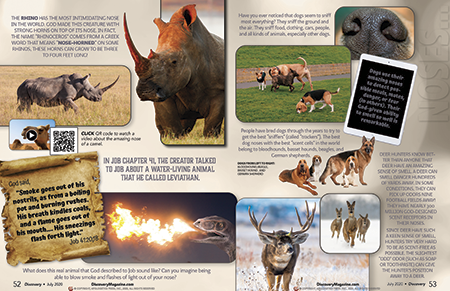
The rhino has the most intimidating nose in the world. God made this creature with strong horns on top of its nose. In fact, the name “rhinoceros” comes from a Greek word that means “nose-horned.” On some rhinos, these horns can grow to be three to four feet long!
In Job chapter 41, the Creator talked to Job about a water-living animal that He called Leviathan. God said, “Smoke goes out of his nostrils, as from a boiling pot and burning rushes. His breath kindles coals, and a flame goes out of his mouth…. His sneezings flash forth light.” Job 41:20,18
What does this real animal that God described to Job sound like? Can you imagine being able to blow smoke and flashes of light out of your nose? Have you ever noticed that dogs seem to sniff most everything? They sniff the ground and the air. They sniff food, clothing, cars, people, and all kinds of animals, especially other dogs. Dogs use their amazing noses to detect possible meals, mates, danger, or fear (in others). Their God-given ability to smell so well is remarkable. People have bred dogs through the years to try to get the best “sniffers” (called “trackers”). The best dog noses with the best “scent cells” in the world belong to bloodhounds, basset hounds, beagles, and German shepherds.
Deer hunters know better than anyone that deer have an amazing sense of smell. A deer can smell danger hundreds of yards away. In some conditions, they can pick up odors nine football fields away! They have nearly 300 million God-designed scent receptors in their noses. Since deer have such a keen sense of smell, hunters try very hard to be as scent-free as possible. The slightest “odd” odor (such as soap or toothpaste) can give the hunter’s position away to a deer.
Dogs and deer have great smelling snouts. Yet, bears seem to have an even stronger sense of smell. Scientists say that bears have hundreds of millions of scent receptor cells in their noses. These cells are connected to millions of nerve cells, which send signals to the part of the brain that is used for smelling. This part of the brain, called the olfactory (all-FAK-ta-ree) bulb, is much larger than that in humans. Researchers believe these animals can smell another bear or a possible meal miles away. The sense of smell in bears is so good that the only logical explanation for it is the miracle of God’s creation! No scent cell, nerve cell, or olfactory bulb could be the result of mindless, godless evolution.
God may not have created humans with the sniffer of a bloodhound or the snout of a black bear, but rest assured that He gave us exactly what we needed. God gave us a great olfactory system: the cells, tissue, and nerves that all work together to make smelling a success. We can detect if food is spoiled (and thus bad for us to eat), or if it smells lovely (and most often good to eat). Think about it: You can be at one end of the house and wake up from sleep and know instantly that someone is cooking eggs, bacon, and biscuits. What a great sense of smell! And what a great God for giving it to us!
Conclusion:
Noses can filter the air we breathe and at the same time smell scent molecules. Some animals use their noses to root for food. Others use them to make noises and attract a mate. And some use them to grasp food and to lift heavy objects. One thing is for sure: noses are one amazing gift from the Creator!




The post Amazing Noses appeared first on Apologetics Press.
]]>The post Creepy Cave Critters appeared first on Apologetics Press.
]]>Bats
 Bats are the only truly flying mammals. Most are nocturnal (they hunt at night). During the day they need a good place to sleep and hide. Caves are perfect for them, because they are able to fly even when it’s dark! They are not blind, but they do have a special ability called echolocation (EK-oh-low-KAY-shun). They can make noises that humans cannot hear, which bounce off of objects and travel back to the bats, allowing them to locate things by sound rather than sight.
Camel crickets
 Camel Crickets, also called cave or spider crickets, look like they have a hump like a camel. Unlike most crickets, they do not “chirp,” since they don’t have the organs (like wings) that other male crickets have. While they do not have wings, fangs, or the ability to bite, they do have long legs that give them a mighty leap, and long antennae that help them move around in the dark.
As with all of God’s amazing creatures, cave critters are well-designed to live in the places God wanted them to live. Some of them may be a little creepy (especially the camel cricket), but their amazing design and function on the Earth is proof positive of the Creator Who made them.
The post Creepy Cave Critters appeared first on Apologetics Press.
]]>The post God’s Sensational Sharks appeared first on Apologetics Press.
]]>There is good reason for our fascination with sharks. They are some of the most remarkable animals on the planet. Sharks are fish that have no bones. Their bodies are made of cartilage. Cartilage is the durable, but flexible substance that composes your nose and ears. Cartilage is less dense and weighs less than bone, which allows sharks to swim extremely fast. The mako shark can reach speeds of over 40 miles per hour.


Who can think of sharks without picturing their huge jaws full of pointed, serrated teeth? Sharks can have as many as 50 teeth in their mouths, arranged in several rows. Unlike human teeth, shark teeth are not anchored in the jawbone; they connect directly to the gums. This means that they fall out much more easily. Not to worry, though, because they replace these lost teeth constantly throughout their lives. Some sharks can replace all the teeth in their mouths every 10 days. And some super-toothy sharks can grow as many as 30,000-50,000 teeth over the course of their lifetime. That is why so many shark teeth wash up on the beach.
Many of us picture huge great white sharks or swift swimming mako sharks, but there are more than 400 different species of sharks (you can read about a few of them in the next article). Most sharks live about 25 years. Some species, such as the spiny dogfish can live to be 100, but scientists believe that the Greenland shark can live much longer. In fact, scientists believe one Greenland shark lived more than 270 years, making it one of the oldest living animals on record.
 |
 |
| Super Fast Mako Shark | Old Greenland Shark |
 Sharks have excellent sight and smell, but they also have another sense that enables them to be perfect predators. Along their noses and faces, sharks have special pores call ampullae (AM-puh-lay) of Lorenzini. These features allow them to detect electromagnetic impulses in the water. You may be wondering what type of electricity they can detect in water. Living organisms produce various degrees of electromagnetic impulses. Using their ampullae of Lorenzeni, sharks detect the impulses that fish and other prey send in the water. By doing this, sharks can find food that they cannot see or smell. Sharks can detect fish that burrow under the sand in an attempt to escape.
One funny thing that can happen to a shark is something called tonic immobility. Because of the way sharks are designed, they can be flipped over on their backs in the water. If researchers know just where to rub on the underside of a shark, it will send the shark into something like a coma, where the shark becomes totally still. Researchers can then take measurements and perform research activities on the shark without it thrashing around in the water. As cool as this is, I would not suggest trying it on any sharks you might encounter.
If you have watched shows about sharks, or read books about them, then you know that many people say that sharks evolved over millions of years. This simply cannot be the case. Sharks are very well designed. It is a fact that anything that is designed had to have a designer. There are still many things about sharks we don’t know. Only an all-powerful God could create such an amazing animal that humans are still trying to figure out. “So God created great sea creatures and every living thing that moves, with which the waters abounded, according to their kind” (Genesis 1:21).
The post God’s Sensational Sharks appeared first on Apologetics Press.
]]>The post Shocking Shark Variety appeared first on Apologetics Press.
]]>Whale Shark
The biggest of all the sharks (and the largest fish on Earth) is the whale shark. These sharks are not whales (which are classified as mammals), but they are “as big as a whale” (or at least some of them). The whale shark can reach 40-plus feet in length—longer than the average school bus—and it can weigh 24,000 pounds—or almost twice as much as Tyrannosaurus rex is thought to have weighed.

The whale shark is quite different than what you might think of as a typical shark. Whale sharks are passive giants that tolerate humans swimming near them. They occasionally even allow scuba divers in the open ocean to hang on to their fins for a free ride. (Can you imagine doing that?!)
Whale sharks do not eat by biting and chomping down on their prey. Instead, these sharks open their large mouths and suck in large amounts of small plankton and sardines, which are trapped by a spongy webbing, and then swallowed.
Dwarf Lanternshark
What is the smallest shark on Earth? It appears that honor belongs to the dwarf lanternshark, which at full-grown is about the size of a stapler (6-8 inches). Just imagine being able to hold an adult shark in one hand!
 |
|
wikipedia.org (Javontaevious) 2019 CC-bysa-3.0 |
The name lanternshark comes from the fact it can produce bioluminescent (by-oh-LOO-meh-NESS-sent) light. That is, God made the lanternshark with the ability to produce light naturally with chemical reactions. Such light, which is emitted from the shark’s underside, likely helps to trick its small prey.
Megalodon
God gave the extinct megalodon (MEG-uh-luh-don) the largest teeth of any known shark. Its teeth grew about 4-5 inches long—the width of an average man’s palm—and some as much as 7 inches.


So how big did a megalodon’s entire body get? We don’t really know. Like most sharks, megalodons apparently were made mostly of cartilage, and cartilage does not preserve well in rock layers. So, like a lot of dinosaurs that are reconstructed from only a few fossils, scientists make a lot of guesses when they attempt to reconstruct what an entire megalodon looked like. But many estimate they reached lengths of 40-60 feet.
Frilled Shark
 |
|
wikipedia.org (citron) 2019 CC-bysa-3.0 |
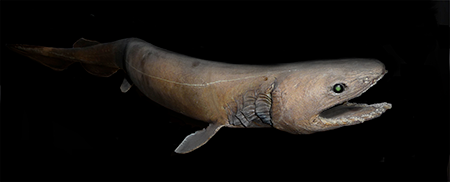
A few years ago, a shark was caught on tape that was quite shocking to some—it was thought to be a “prehistoric” frilled shark. Sometimes caught in fishermen’s nets, but rarely seen alive, this creature supposedly can be traced back 95 million years ago in the fossil record—thus, the description “prehistoric” shark. The problem is, frilled sharks are anything but “prehistoric.” They are living animals (which happen to also be known from the fossil record, just like many other animals). Even though they may look like scary creatures from an (inaccurate) evolutionary painting depicting “prehistoric” times, they are as modern as hippos, human beings, and humpback whales—all of which God made on days five and six of Creation only a few thousand years ago, not millions.
Hammerhead
 Hammerhead sharks are some of the most curious-looking creatures on the planet. Their heads actually look a lot like hammers, and their eyes and nostrils are spread far apart—at the ends of the “hammer.”
God designed hammerheads, like many other kinds of sharks, with extremely sensitive heads, which allow them to detect the slight electrical signals that their prey (such as stingrays) give off in the water and under the sand. Such complex design and abilities of the hammerhead defy evolutionary explanations.
Though sometimes a little scary or bizarre-looking, sharks are just one more amazing testimony to the grand Creator. “O Lord, how manifold are Your works! In wisdom You have made them all. The earth is full of Your possessions—this great and wide sea, in which are innumerable teeming things, living things both small and great” (Psalm 104:24-25).
The post Shocking Shark Variety appeared first on Apologetics Press.
]]>The post Getting the Skinny on Shark Skin appeared first on Apologetics Press.
]]>Shark skin is rough because it is covered in tiny scales called dermal denticles. These denticles form tiny ridges and valleys. Scientists have discovered that these amazing skin features have remarkable qualities. First, they alter the flow of water around the shark and allow it to glide more smoothly through water. By copying this design (using biomimicry) researchers were able to create Olympic swimsuits that had similar denticles. These swimsuits were so effective at increasing swimmers’ speeds that it is no longer legal to wear them in most major swimming competitions.
 |
|
wikipedia.org (lsurus2) 2019 CC-bysa-3.0 |
Furthermore, the shape and features of denticles discourage parasites and bacteria growth. This discovery has led to several interesting inventions. One company produced a plastic that has features similar to shark denticles. The shape of the plastic makes it so that germs such as E. coli and Staph do not grow on it for days or weeks. This technology could be used in hospitals and schools where there are lots of germs. Another company made a special paint that can be used on ships to help keep barnacles off and to make them move more smoothly through the water.
Brilliant scientists spend thousands of hours studying shark skin. They take their findings and try to mimic (or copy) the design to make products that people can use. Often, their copy of the design is not nearly as efficient at the design in nature. So, what does that tell us about nature? It shows us that the God Who designed the natural world, and the shark with its amazing skin, must be much more intelligent than humans. Indeed, “every house is built by someone, but He who built all things is God” (Hebrews 3:4).
The post Getting the Skinny on Shark Skin appeared first on Apologetics Press.
]]>The post Who's Who Among the Ice Age Animals appeared first on Apologetics Press.
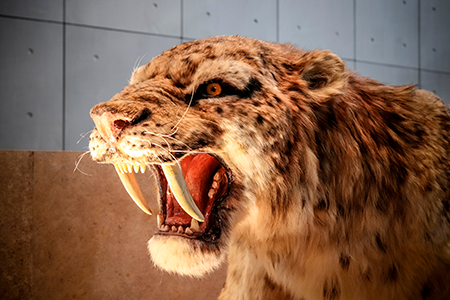
]]>1.Smilodon: Better known as the saber-toothed tiger, it was roughly the size of a modern African lion, but much heavier. Its canine teeth could grow to be 8 inches in length, compared to lion teeth that are roughly 4 inches long. Because of the size of smilodon teeth, scientists believe it could open its jaws extremely wide. That would have made its bite strength weaker than modern cats, however. Small comfort when you consider the damage that could be done with those teeth, regardless of the smilodon’s bite strength.

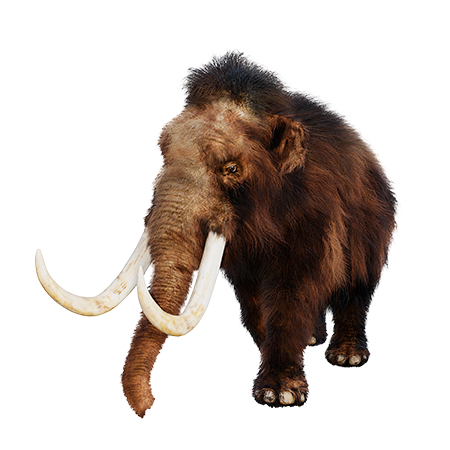
2. Woolly Mammoth: Woolly mammoths were comparable to modern elephants in size: about 10 feet tall from shoulder to toe. African elephant tusks are roughly 6 feet long, while woolly mammoth tusks were much longer: up to 13 feet. Its thick coat of brown hair—some of which could reach up to 3 feet in length—makes the mammoth stand out in our minds. The hair and extra fat with which God designed them helped them survive in cold temperatures. The appearance of woolly mammoths is well known today, because of paleoart (drawings made by humans who saw woolly mammoths alive). Also, we know what they looked like because well-preserved mammoth carcasses have been found buried in ice. If a human took one of these hairy beasts down, he could definitely feed his family for a long time.

3. Megalonyx: More commonly known as the giant ground sloth (as opposed to modern tree sloths), it could reach the size of an ox when fully grown: 10 feet long and 2,200 pounds in weight. It was a plant-eater, also called a herbivore. The giant ground sloth grew bigger than many bears, was able to stand up on its hind legs, and had a blunt snout that looked like it just finished headbutting the last animal to come across its path. You probably would not want to try to ride it. Like the mammoths, scientists know giant ground sloths had thick hair, because well-preserved carcasses have been discovered with their hair intact.


4. Glyptodon: While we might run over a 3-foot armadillo on the highways of Texas, it would have been the other way around in the Ice Age when you ran across a glyptodon. Although it was probably of the same “kind” as modern armadillos, it could be 11 feet long and 5 feet tall, weighing in at 4,400 pounds. That’s heavier than many cars, and it was armored like a car as well. The glyptodon’s armor would have made it difficult for predators to kill and eat this Ice Age beast.
 wikipedia.org (Cropbot) 2019 CC-by-sa-3.0 |
 |
 wikipedia.org (WolfmanSF) 2019 CC-by-sa-3.0 |
The animals that existed during the Ice Age were probably more similar to those that were on the Ark. When God created all of the “kinds” of animals (Genesis 1:24-25), He created their genes with the ability to produce amazing variety within their kinds as they reproduced. From a single pair of animals could come the amazing amount of diversity that we see within the kinds today. Modern Asian and African elephants, as well as Woolly Mammoths and Mastodons are probably all part of the same kind! The Ice Age animals, however, were well-designed for a cold life. “The works of the Lord are great, studied by all who have pleasure in them” (Psalm 111:2).
The post Who's Who Among the Ice Age Animals appeared first on Apologetics Press.
]]>The post Were Beavers Once Bigger than Humans? appeared first on Apologetics Press.
]]>
Dear Digger Doug,
Is it true that beavers used to be bigger than humans?
Dear reader,
While modern American beavers are 2½ to 3 feet in length and weigh 25-70 pounds, the Giant Beaver that lived during the Ice Age, though it looked very similar to modern beavers, was much bigger. It was about 8 feet long and weighed in at 125-225 pounds. Its hind feet were particularly large, compared to modern beavers. While modern beaver front teeth (the incisors) are less than 1 inch in length, Giant Beaver teeth were up to 6 inches in length! Since the paddles of Giant Beaver tails (like modern beavers) were probably made of soft tissue that does not easily fossilize, we do not know what they looked like, nor do we know if their feet were webbed like modern beaver feet. If so, I don’t know about you, but I wouldn’t want to be slapped with that tail!
The post Were Beavers Once Bigger than Humans? appeared first on Apologetics Press.
]]>The post Copying God's Design appeared first on Apologetics Press.
]]>He gave humans the ability to think and to study the natural world. Humans have studied nature for many years. And they have found that the world is perfectly designed.
Humans have also discovered that the designs in nature can be used to make things that are helpful to man. In fact, scientists often copy designs in nature.
When people copy nature, it is called “biomimicry.”The word “biomimicry” can be understood when you look at each part of the word. “Bio” means life, and “mimicry” means to copy or to imitate. So, biomimicry means that humans are looking at nature and copying God’s design.
Let’s look at some examples of science copying God’s design. Spider silk is a very strong substance produced by spiders to make their webs. Scientists have studied spider silk and learned that, pound-for-pound, it is stronger than steel.


Not only is spider silk very strong, it can also stretch. Scientists are trying to copy the design of spider silk. They believe that the design of spider silk can help humans make better clothes, stronger buildings, and safer cars.
Have you ever tried to catch a fly with your hands? If you have, you know that it is hard to do. Flies are very fast. They can change direction in the air. And they can land and take off quickly.


Flies fly better than any airplane that humans have designed. Because they are so good at flying, scientists are studying them. Scientists hope to copy the design in flies to build better airplanes.
Some scientists have even designed a robot that looks like a fly. It is very small and has tiny wings. What good is such a little robot? It could have all kinds of uses like helping to get people out of burning buildings or taking pictures of things in places that are hard for big planes to reach.
The post Copying God's Design appeared first on Apologetics Press.
]]>The post The Teleological Argument for the Existence of God [Part 1] appeared first on Apologetics Press.
]]>[EDITOR’S NOTE: This is the first in a two-part series on the teleological argument for the existence of God. Part II will appear in the March issue.]
Several years ago, astronomers from more than 30 research institutions in 15 countries worked together to select a site for a giant telescope that they hoped would read TV or radio signals from alien civilizations. Slated to cost one billion dollars, the Square Kilometer Array, or SKA, would be the world’s most powerful radio telescope. Speaking at a conference of the International Society for Optical Engineering in Orlando, Florida, project astronomers said they hoped to find “immediate and direct evidence of life elsewhere in the Universe.”1
Despite this bold venture, the scientists admitted that “such a search would have distinct limitations, to be sure.” “Distinct limitations”? Like what? For one, the scientists “aren’t sure how to recognize such signals, if they do turn up. The hope is that the signals would consist of organized patterns suggestive of intelligence, and not attributable to any known celestial sources.”2 Wait a minute. Evolutionary scientists are renowned for their condescending ridicule of creationists because those who believe in God assert that evidence of intelligent design in the Universe is proof of an Intelligent Designer. No, the evolutionists counter, the Universe got here by accident through random chance, mindless trial and error, and the blind, mechanistic forces of nature. They maintain that life on Earth owes its ultimate origin to dead, non-purposive, unconscious, non-intelligent matter. Yet they were perfectly willing to squander one billion dollars on a telescope with the speculative idea that solid proof—hard evidence—for the existence of alien life would reside in undecipherable radio or TV signals that convey “organized patterns suggestive of intelligence.”3 Atheistic evolutionists want it both ways: organized patterns prove the existence of intelligent alien design and organized patterns do not prove the existence of an Intelligent Designer. Philosophers and logicians refer to such duplicitous posturing as irrational and “logical contradiction.” Apparently, evolutionists call it “science.” Nevertheless, the basic thrust of the teleological argument for the existence of God is self-evident.
THE UNIVERSE—A “Waste of Space”?
“The cosmos is all that is or ever was or ever will be.”4 So began Carl Sagan’s immensely popular book and PBStelevision series: Cosmos. A more atheistic, humanistic, materialistic declaration could not be spoken. Sagan (1934-1996), who was an astronomer at Cornell University who lived his entire life resistant to the possibility of God and an afterlife, maintained his unbelief—in the words of his third wife—“unflinching” to the end.5 She, herself, finds comfort after his passing “without resorting to the supernatural.”6
When people reject or avoid the implications of the design in the created order—i.e., that it is logically the result of a Supreme Creator—they have inevitably “exchanged the truth of God for a lie, and worshiped and served the creature rather than the Creator” (Romans 1:25). Skeptical of the survival of the Earth at the mercy of Homo sapiens, Sagan turned his attention to an almost obsessive dedication to finding answers and solutions from life forms beyond Earth. In his own words: “In a very real sense this search for extraterrestrial intelligence is a search for a cosmic context for mankind, a search for who we are, where we have come from, and what possibilities there are for our future—in a universe vaster both in extent and duration than our forefathers ever dreamed of.”7
Less than a year after his death, Hollywood released a movie on July 11, 1997 based on Sagan’s novel Contact.8 The film’s central character, Dr. Eleanor Arroway (played by Jodie Foster), was surely the embodiment of the formative experiences, philosophical perspectives, and spiritual beliefs of Sagan himself. On three separate occasions in the film, a pseudo-intellectual remark, obviously designed to defend the naturalistic explanation of the existence of the Universe while ridiculing the Christian viewpoint, is offered up to viewers. As a child, “Ellie” asks her father if life exists out in the Universe, to which he responds: “Well, if there wasn’t, it’d be an awful waste of space.” As an adult, she converses with Palmer Joss (played by Matthew McConaughey), and, staring up at the starry Puerto Rican sky, expresses her confidence in the evolution of other life forms elsewhere in the Universe: “If just one in a million of those stars has planets, and if only one in a million of those has life, and if just one in a million of those has intelligent life, then there are millions of civilizations out there.”9 Ellie is pleasantly stunned when Joss repeats the same line that her father uttered to her when she was a child. Near the close of the film, Ellie speaks the line again to a group of school children when asked if life exists in space.
This triple declaration was obviously intended to offer a “logical” proof that, rather than looking to some supernatural Being Who is transcendent of the Universe, humans had best recognize that the only life beyond planet Earth are those life forms that have evolved (like our own) on other planets in far off galaxies. The materialist is forced to follow Sagan’s presupposition: life must exist elsewhere in the Universe since there is no God. If there is a God Who created life only on Earth, then He was guilty of poor teleological design—creating a vast physical realm that serves absolutely no purpose—and thus producing a nearly infinite realm of “wasted space.”
But wait! The Bible long ago anticipated the skepticism of the materialist astronomer. At the creation of the Universe, God said: “Let there be lights in the firmament of the heavens to divide the day from the night; and let them be for signs and seasons, and for days and years; and let them be for lights in the firmament of the heavens to give light on the earth” (Genesis 1:14-15). The luminaries that God made included the stars: “God set them in the firmament of the heavens to give light on the earth, and to rule over the day and over the night” (vss. 17-18). One very specific function of the stars that occupy space far beyond our solar system is illumination (cf. Psalm 136:9). They are “light-bearers.”10
Another very specific purpose of the vastness of space is seen in the multiple declarations regarding the infinitude of God and the evidence that points to His existence, His glory, His eternality, and His power. Paul affirmed very confidently that “since the creation of the world His invisible attributes are clearly seen, being understood by the things that are made, even His eternal power and Godhead, so that they are without excuse” (Romans 1:20). It is absolutely incredible—and, according to Paul, inexcusable—for a rational human being to contemplate the magnitude of the Universe and the vastness of space, and then to reject the only logical, plausible explanation for it all: God. We simply have no excuse for rejecting God when we are surrounded by such an overwhelming display of wonders and marvels in the created order. Indeed, atheism, evolution, and humanism are simply more sophisticated forms of the polytheism that has plagued humanity for millennia. Moses warned the Israelites of this very thing: “[T]ake heed, lest you lift your eyes to heaven, and when you see the sun, the moon, and the stars, all the host of heaven, you feel driven to worship them and serve them, which the Lord your God has given to all the peoples under the whole heaven as a heritage” (Deuteronomy 4:19). Evolutionary astronomy assigns an inflated value to the vastness of space by postulating that it can provide mankind with an alternative explanation for the existence of life—an explanation that absents God. Any such postulation ultimately amounts to idolatry.
David, too, paid homage to the glory of the Creator, as evidenced by the eloquent symphony of the majestic Universe that is played perpetually—24 hours a day:
The heavens declare the glory of God; and the firmament shows His handiwork. Day unto day utters speech, and night unto night reveals knowledge. There is no speech nor language where their voice is not heard. Their line has gone out through all the earth, and their words to the end of the world. In them He has set a tabernacle for the sun, which is like a bridegroom coming out of his chamber, and rejoices like a strong man to run its race. Its rising is from one end of heaven, and its circuit to the other end; and there is nothing hidden from its heat (Psalm 19:1-6; cf. 74:16-17; 136:7-8).
Separate and apart from the latest evidence that confirms the movement of the Sun through space,11 these verses reaffirm the fact that the created Universe loudly announces the existence of the Universe-Maker. David also declared: “O Lord, our Lord, how excellent is Your name in all the earth, You have set Your glory above the heavens! …When I consider Your heavens, the work of Your fingers, the moon and the stars, which You have ordained, what is man that You are mindful of him?” (Psalm 8:1,3). God “stretched out the heavens like a curtain” (Psalm 104:2). No wonder even a philosopher on the order of Immanuel Kant observed: “Two things fill the mind with ever new and increasing admiration and awe, the oftener and more steadily we reflect on them: the starry heavens above me and the moral law within me.”12
A third biblical explanation for the creation of the vast Universe was hinted at by God Himself in the attitude-adjusting lecture He delivered to Job: “Can you bind the cluster of the Pleiades, or loose the belt of Orion? Can you lead forth a constellation in its season? Or can you guide the Great Bear with its cubs? Do you know the laws of the heavens? Can you fix their rule over the earth?” (Job 38:31-33). Notice the action terms that are used to refer to the movement of the constellations: bind, loose, lead forth, and guide. Observe also the “laws of the heavens” and their relationship to “ruling over the earth.”13 These verses imply that the heavenly bodies, and the laws that govern them, have been deliberately orchestrated, modulated, and regulated by the Creator to serve a purpose or purposes far beyond our present understanding. The text seems to hint that Earth’s status, with its living beings, is somehow affected by the phenomena of the cosmic bodies. Even as the comprehension of scientists has been lacking through the centuries on many features of the physical realm, only eventually to discover the meaning that lay behind observable phenomena, even so our present comprehension of space is woefully inadequate to justify passing judgment on the intentionality and teleology that lie behind many astronomical phenomena.
Evolutionists have far better arguments with which to attempt to prop up their atheistic stance (the “problem of evil” being the strongest, though refutable14). The “wasted space” argument is anemic, pitiful, and hardly worthy of rebuttal. However, since they brought it to our attention, the Christian is once again reminded of the unfathomable attributes of the great God Who stands above and beyond this vast physical realm. The immensity and vastness of the Universe only spurs the rational mind to marvel at the One whose own metaphysical transcendence surpasses the visible. In the words of the psalmist: “I will meditate on the glorious splendor of Your majesty, and on Your wondrous works. Men shall speak of the might of Your awesome acts, and I will declare Your greatness” (145:5-6). “He counts the number of the stars; He calls them all by name. Great is our Lord, and mighty in power; His understanding is infinite” (Psalm 147:4-5). Isaiah agreed: “Lift up your eyes on high, and see who has created these things, who brings out their host by number; He calls them all by name, by the greatness of His might and the strength of His power” (40:26). Indeed, “the twenty-four elders fall down before Him who sits on the throne and worship Him who lives forever and ever, and cast their crowns before the throne, saying: ‘You are worthy, O Lord, to receive glory and honor and power; for You created all things, and by Your will they exist and were created’” (Revelation 4:10-11). The vast cosmos points directly and unmistakably to an awesome God.
The Revelation of God
You see, the infinite God of the Bible has revealed Himself to the human race by means of two forms of revelation: natural (or generic) and supernatural (or special). Special revelation consists of the Bible—the self-authenticating, supernatural book that God imparted to humanity by miraculously directing human writers to record His will (2 Timothy 3:16; 2 Peter 1:21).
Natural revelation consists of nature: the material realm, the created order. Since God created the heavens and the Earth, His “fingerprints” are all over it. Humans can easily recognize these fingerprints—if they are unbiased, honest, and willing to follow the evidence to its logical conclusion.
Sadly, the number of those who reject the obvious is legion. Why? They are generally unwilling to accept the implications of the existence of God: the need to bring one’s fleshly appetites and actions into harmony with the will of the Creator. But that fact does not lessen the magnitude of the evidence and its availability. Indeed, the psalmist said there is no language where the evidence for God is unavailable (Psalm 19:1-2).
Teleology
The word “teleology” comes from the Greek term teleios, meaning “complete, perfect,” taken from telos which means “end,” “outcome, result.”15 The teleological argument maintains that one proof for God’s existence is the fact that the Universe is the result or outcome of intentional design, order, and purpose. The characteristics of design in the Universe demonstrate the existence of a Designer. In addition to the passages given previously, the Bible also articulates this principle when the Hebrews writer stated this rationale succinctly in Hebrews 3:4—“For every house is built by someone, but He who built all things is God.” If houses with their sophisticated designs cannot just happen or evolve over millions of years, how could worlds? If a watch cannot occur by chance, neither can the systematic chronometers of the Universe. Their geometric precision is so superior to human invention that eclipses, planetary movements, and other astronomical phenomena can be predicted centuries in advance. The Universe is literally a finely tuned, organized machine. If we readily recognize that intelligent planning is behind all ordered design, how could nature’s intricate networks have no Planner? To observe the fantastic design in nature and then conclude there is no Supreme Designer is to behave irrationally. The evidence that surrounds us in the material Universe demands the conclusion that God exists.
Decisive Evidence
Do cars just happen? Of course not. Their multiple systems are interactive and integrated with each other in order for the automobile to operate. A mind—no, multiple minds—lie behind the creation of a car. Yet, compared to the Universe, or compared to the human body, or even compared to the inner workings of one tree leaf, a car is a crude and primitive invention. If the creation of a car demands the existence of the remarkable human brain/mind, what must be required for the creation of the human brain/mind? Obviously, something or Someone far superior to the human mind would be needed for its creation. Logically, that Someone must be the powerful, transcendent Creator: the God of the Bible.
The naturalistic explanation given by evolutionists for the existence of the created order cannot meet the dictates of logic that characterize the unencumbered, unprejudiced human mind. The more one investigates the intricacies and complexities of the natural realm, the more self-evident it is that a grand and great Designer is responsible for the existence of the Universe. In fact, the evidence is overwhelming and decisive.
The Human Body16
Take, for example, the human body, which possesses such complexity that it simply could not have evolved. Its amazing intricacies absolutely demand a mind—a higher intelligence—behind them. The development of the camera was based upon the human eye. Yet, for all we have accomplished with video and sophisticated photographic equipment, the living, full color optical system of the human eye is unsurpassed. What’s more, we possess a self-restoring, self-repairing healing system; a sensitive stereophonic auditory system; tireless muscular-connecting tissue systems; a well-engineered skeletal framework; a computerized memory-bank brain; a ventilation-insulation skin envelope which constitutes an efficient cooling system of 2000 pores per square inch of skin; and a cardiovascular system that constantly oxygenates our blood with every breath. The human body is absolute proof of God. Atheism cannot explain it. Evolution cannot logically account for it. Scientists have yet to fully understand it. Multiple lifetimes would be necessary even to begin to grasp the massive amount of evidence inherent in the human body.
The psalmist also stated, “I will praise You, for I am fearfully and wonderfully made; marvelous are Your works, and that my soul knows very well” (Psalm 139:14). Indeed, the human body itself is sufficient proof of the existence of the Divine Creator. Right now, your body is performing amazing feats of engineering, chemistry, and physics that no machine designed by man can duplicate. Great human minds have applied themselves to the task of duplicating the various capabilities of the human body. Some incredible things have been accomplished in their efforts to copy God’s Creation, but they simply cannot compare with the marvel of God’s design.
The Flagellum17
Consider yet another among the millions of amazing proofs of the reality of the Creator. Bacteria, like salmonella, have as part of their anatomy several flagella filaments extending from their cell body. These flagella are marvels of engineering—bio-nanomachines—that appear to possess the remarkable ability of self-assembly. The bacterium’s flagellum assembly process begins with the formation of an MS ring in the cytoplasmic membrane. Then a switch complex called a “C” ring is assembled on its cytoplasmic side, followed by integration of the protein export apparatus inside the ring. The export apparatus sends out flagellar proteins from the cell body to the distal end of the flagellum to grow the structure.
 Next, the “hook,” working as an efficient universal joint, extends to the outside of the cell. Then two junction proteins, Hap1 and Hap3, are attached, followed by the binding of the cap protein, Hap2, to form a capping structure under which the assembly of flagellum molecules begins to grow the flagellar filament. Flagellum molecules are then inserted successively just below the cap, and the flagellar filament continues to grow. All of the flagellar axial proteins produced in the cell body are sent into the central channel of the flagellum and transported to and polymerized at its growing end. Some 20 to 30,000 flagellum molecules polymerize to construct a 10 to 15 micrometer long filament.
The flagellar motor is similar to manmade motors—since both were built on fundamental principles set in place by the Creator. The flagellum consists of rotor and stator units in the cell membrane, including switching unit, bushing, universal joint, and helical screw propeller. To generate thrust, the rotary motor is driven by protons flowing into the cell body. The motor then drives the rotation of the flagellum at around 300 Hz, at a power level of 10-16 W, with energy conversion efficiency close to 100%. The resulting speed is up to 20,000 rpms—faster than the speed of Formula 1 race car engines. This highly efficient, flagellar motor is far beyond the capabilities of manmade, artificial motors. It is so sophisticated, that to suggest that it evolved is the height of irrationality and blind prejudice. Indeed, the evidence is decisive: there is a Designer.
The Pine Tree18
Consider the pine tree. Some 120 species and subspecies of the pine tree exist worldwide. The Ponderosa pine tree (pinus ponderosa) is one of America’s abundant tree species, covering approximately 27 million acres of land. A young Ponderosa pine has brownish-black bark that changes to a distinctive orange-brown color as the tree grows older. The bark is segmented into large, plate-like structures whose appearance has been likened to a jigsaw puzzle. This unusual design has a purpose. If the tree catches fire, these plates pop off as the bark burns. The tree, in effect, sheds its burning bark! This design, along with the great thickness of the bark, allows the tree to be very resistant to low intensity fires. Since design demands a designer, Who is responsible for this intricate design?
Another species of pine tree is the Lodgepole Pine (pinus contorta), so named since Native Americans used Lodgepole pine for the “lodge poles” in their tepees. This amazing pine tree grows cones that are slightly smaller than a golf ball, are tan when fresh, but turn gray with age. These serotinous cones remain closed until the heat of a forest fire prompts them to open. After the fire, the cones open and reseed the forest. The species literally regenerates itself—even though the forest fire kills the tree itself. Since such design demands a designer, Who is responsible for this ingenious design?
Yet another species of pine tree is the Whitebark Pine (pinus albicaulis). This tree possesses a symbiotic relationship with a bird species known as the Clark’s Nutcracker. The tree is dependent on this bird for reproduction, while the seed of the tree is a major source of food for the bird. This mutualistic relationship is further seen in the fact that Whitebark pinecones do not open and cast seed when they are ripe. The cones remain closed until the Nutcracker comes along, pries the cone open with its bill, and stores the seed within a pouch beneath its tongue. The bird then caches the seed to be used later as a food supply. Some of these seed caches are forgotten, or are not needed, thus enabling the tree to reproduce. Such amazing design—with no Mind behind it? Illogical!
Seed: The Dandelion, Tipuana tipu, and the Alsomitra macrocarpa19
When the Creator created the Universe in six literal days, He created seed on the third day:
Then God said, “Let the earth bring forth grass, the herb that yields seed, and the fruit tree that yields fruit according to its kind, whose seed is in itself, on the earth”; and it was so. And the earth brought forth grass, the herb that yields seed according to its kind, and the tree that yields fruit, whose seed is in itself according to its kind. And God saw that it was good. So the evening and the morning were the third day (Genesis 1:11-13).
God designed three main mechanisms for seed dispersal: (1) via animals (e.g., a bird eating a piece of fruit containing seed, and flying to another location where the seed passes out of its body), (2) drifting in ocean and fresh water, and (3) floating with the wind. Incredibly, each of these mechanisms points to the orchestration of a Mastermind.
Consider the ordinary dandelion. It possesses a magnificent crown of plumose hairs forming a symmetrical sphere. Upon closer investigation, this sphere is composed of numerous shafts, each equipped with its own umbrella-like canopy of intricately branched hairs. At the base of each shaft is a single seed. Each individual shaft with its canopy and single seed closely resemble the same design as that utilized in parachutes.
 As breezes blow across the surface of the dandelion, the canopy of hairs catch the wind which tugs at the shaft with its host of attached seeds, gently pulling them free from the dandelion head. The parachute-like canopy of hairs then allows the entire assembly to drift with the wind. In fact, the canopy of hairs is precisely designed to achieve flight. The length of the shaft is just right to enable aerodynamic positioning of the canopy to enable it to come to a landing in another location. The attached seed can then take root and start the process all over again. The dandelion is absolute, undeniable proof of God.
Then there is the Tipuana tipu tree (also called Rosewood), originally from South America, but now planted as a shade tree throughout the world. This tree produces achenes—a type of fruit consisting of a dry, membranous sheath that surrounds a seed. The tipu tree has a unique type of achene called a samara, which facilitates a specialized form of wind dispersal. It possesses a fan-shaped wing with a slight pitch (like a propeller or fan blade) which causes it to spin like the auto-rotation of helicopter blades when it falls. The spinning creates lift that slows descent, giving more opportunity to be carried a substantial distance from the tree by the wind, depending on wind velocity and distance above the ground. The decomposed seed spirals down to the ground to become established and perpetuate the species—an unmistakable example of flawless aerodynamic wing design.
 Also known for its ingenious aerodynamic configuration is the seed of a tenacious tropical climbing vine identified as Alsomitra macrocarpa. Also called the Javan cucumber, it hangs from trees high in the rain forest canopy in the Sunda Islands of the Malay Archipelago and the Indonesian islands. Each football-sized fruit/gourd is densely packed with large numbers of winged “Stealth Bomber” seeds. A single seed is enveloped by two transparent, papery wings, about five inches across, angled slightly back from and extending either side of the seed. Upon ripening, the wings become dry and the long edge opposite the seed curls slightly upwards.
Each one becomes airborne when released through a hole at the bottom of the gourd and sails through the air, majestically spiraling downward in 20 foot circles. The carefully designed aerodynamic features of the seed are such that it can glide great distances from its point of origin—a classic example of mechanical dispersal in the forest. Moving through the air like a butterfly in flight, it gains height, stalls, dips, and accelerates, once again producing lift—a maneuver known as phugoid oscillation. The seed’s stability in pitch and roll inspired the early aviation pioneer Igo Etrich. Scientists studying this amazing plant describe its lift-to-drag ratio and the rate of descent in these terms: “flight was so stable that samples were seen to take their optimal trimmed angle of attack with a value between the maximum gliding ratio and the minimum rate of descent.”
Evolutionists are confident in their conviction that their explanations for such marvels demonstrate nature’s independent, autonomous existence to the exclusion of God. They virtually “jump through hoops” and engage in “scientific ventriloquism” in their quest to achieve legitimacy for their atheistic bent. However, when all relevant evidence eventually comes to light, it fits “hand in glove” with the presence of the God of the Bible.
Wood20
Prior to the invention of modern plastics, what would the Creator have humans to use for suitable containers? Wood, stone, or clay, and eventually metal, pretty much exhausted the possibilities. Yet, government agencies, like the USDA and the FDA, generally have advocated the use of plastic for cutting boards and other surfaces that sustain food contact, on the grounds that the micropores and knife cuts in wood provide hidden havens for deadly bacterial organisms. As one Extension Specialist from the Department of Human Nutrition stated: “for cleanability and control of microorganisms, plastic is the better choice.”
However, the best research available on the subject suggests otherwise. Dr. Dean Cliver, microbiologist formerly with the Food Safety Laboratory and World Health Organization Collaborating Center for Food Virology at the University of California-Davis, disputed the oft’-repeated claim regarding the superiority of plastic over wood. His research findings, conducted over a period of several years, consistently demonstrated the remarkable antibacterial properties of wood.
Dr. Cliver and his research associates tested five life-threatening bacteria (Escherichia coli, Salmonella, Campylobacter jejuni, Listeria monocytogenes, and Staphylococcus aureus) on four plastic polymers and more than 10 species of hardwood, including hard maple, birch, beech, black cherry, basswood, butternut, and American black walnut. Within three minutes of inoculating wooden boards with cultures of the food-poisoning agents, 99.9% of the bacteria were “unrecoverable.” On the other hand, none of the bacteria tested under similar conditions on plastic died. In fact, leaving microbe populations on the two surfaces overnight resulted in microbial growth on the plastic boards, while no live bacteria were recovered from wood the next morning. Interestingly, bacteria are absorbed into the wood, but evidently do not multiply, and rarely if ever thrive again. In contrast, bacteria in knife scars in plastic boards remain viable (even after a hot-water-and-soap wash) and maintain their ability to surface later and contaminate foods. Treating wood cutting boards with oils and other finishes to make them more impermeable actually retards wood’s bactericidal activity. Microbiologists remain mystified by their inability to isolate a mechanism or agent responsible for wood’s antibacterial properties. Incredible, divine design.
Do these research findings bear any resemblance to Mosaic injunctions 3,500 years ago which required the destruction of pottery that had become contaminated—while wood was simply to be rinsed (Leviticus 6:28; 11:32-33; 15:12)? Dr. Cliver concluded: “I have no idea where the image of plastic’s superiority came from; but I have spent 40 years promoting food safety, and I would go with plastic if the science supported it. I don’t necessarily trust ‘nature,’ but I do trust laboratory research.” Kudos to Dr. Cliver’s honesty. What about trusting nature’s God?
Summary
Founding Father Thomas Paine was among the small handful of Founders who rejected Christianity. Yet he was not an atheist. He believed that the created order proves God exists. In fact, he considered atheists to be “fools” for their rejection of the plain evidence of creation. In Age of Reason, he explained:
Deism, then, teaches us, without the possibility of being deceived, all that is necessary or proper to be known. The creation is the Bible of the Deist. He there reads, in the handwriting of the Creator himself, the certainty of his existence and the immutability of his power, and all other Bibles and Testaments are to him forgeries. The probability that we may be called to account hereafter will, to a reflecting mind, have the influence of belief; for it is not our belief or disbelief that can make or unmake the fact. As this is the state we are in, and which it is proper we should be in, as free agents, it is the fool only, and not the philosopher, or even the prudent man, that would live as if there were no God.21
Don’t be foolish. The evidence for the marvelous, creative handiwork of God is simply staggering. The only plausible, rational explanation for the existence of human beings on this planet is God. The intricacies of the created order attest to that living God.
[to be continued]
Endnotes
1 “Sites Under Review for Telescope that Could Detect Alien TV” (2006), World Science, July 10, http://www.world-science.net/exclusives/060711_ska.htm.
2 Ibid., emp. added.
3 One is reminded of NASA’s Viking mission to Mars in the mid-seventies in which scientists eagerly declared evidence for life on Mars based on initial photos that appeared to show a “B” or even a face on a rock. Such judgments soon were deemed premature and incorrect. Cf. “‘Life’ on Mars” (2006), http://burro.astr.cwru.edu/stu/mars_life.html. Also Thomas Warren and Antony Flew (1976), The Warren-Flew Debate (Jonesboro, AR: National Christian Press), pp. 112,156.
4 Carl Sagan (1980), Cosmos (New York: Random House), p. 4.
5 Carl Sagan (1997), Billions and Billions (New York: Random House), p. 225.
6 Ibid., p. 228.
7 Carl Sagan, ed. (1973), “Introduction,” Communication with Extraterrestrial Intelligence [CETI] (MIT Press), pp. ix-x.
8 Carl Sagan (1985), Contact (New York: Simon and Schuster).
9 As cited in Ray Bohlin (1998), “Contact: A Eulogy to Carl Sagan,” http://www.probe.org/docs/contact.html. Of course, the scientific evidence does not support this conclusion—see Ray Bohlin (2002), “Are We Alone in the Universe?” http://www.probe.org/docs/lifemars.html.
10 C.F. Keil and F. Delitzsch (1976 reprint), Commentary on the Old Testament: The Pentateuch (Grand Rapids, MI: Eerdmans), 1:56; Herbert Leupold (1950 reprint), Exposition of Genesis (Grand Rapids, MI: Baker), p. 71.
11 See “StarChild Question of the Month for February 2000,” High Energy Astrophysics Science Archive Research Center (HEASARC), Astrophysics Science Division (ASD) at NASA/GSFC, https://starchild.gsfc.nasa.gov/docs/StarChild/questions/question18.html: “[T]he Sun—in fact, our whole solar system—orbits around the center of the Milky Way Galaxy. We are moving at an average velocity of 828,000 km/hr. But even at that high rate, it still takes us about 230 million years to make one complete orbit around the Milky Way!”
12 As quoted in Norman Geisler (1983), Cosmos: Carl Sagan’s Religion for the Scientific Mind (Dallas, TX: Quest), p. 59.
13 See Frank Gaebelein, ed. (1988), The Expositor’s Bible Dictionary (Grand Rapids, MI: Zondervan), 4:1037,1042.
14 See Thomas Warren (1972), Have Atheists Proved There Is No God? (Jonesboro, AR: National Christian Press). Also Dave Miller (2015), Why People Suffer (Montgomery, AL: Apologetics Press); Kyle Butt (2010), A Christian’s Guide to Refuting Modern Atheism (Montgomery, AL: Apologetics Press).
15 Barclay Newman (1971), A Concise Greek-English Dictionary of the New Testament (London: United Bible Societies), p. 180.
16 The following details were gleaned from: “The Brain Initiative” (2015), National Institutes of Health, http://www.braininitiative.nih.gov/index.htm; “The Cardiovascular System” (2008), SUNY Downstate Medical Center, http://ect.downstate.edu/courseware/histomanual/cardiovascular.html; D.D. Clark and L. Sokoloff (1999), Basic Neurochemistry: Molecular, Cellular and Medical Aspects, ed. G.J. Siegel, B.W. Agranoff, R.W. Albers, S.K. Fisher, M.D. Uhler (Philadelphia, PA: Lippincott), pp. 637–670; Brian Clegg (2013), “20 Amazing Facts about the Human Body,” The Guardian, January 26, http://www.theguardian.com/science/2013/jan/27/20-human-body-facts-science; “Fantastic Facts about the Human Body” (2008), DiscoveryHealth.com writers, HowStuffWorks.com, August 12, http://health.howstuffworks.com/human-body/parts/facts-about-the-human-body.htm; Henry Gray (1918), Anatomy of the Human Body (Philadelphia, PA: Lea & Febiger); Bartleby.com, 2000, www.bartleby.com/107/; “Human Anatomy” (2015), http://www.innerbody.com/; “Human Body” (2015), National Geographic, http://science.nationalgeographic.com/science/health-and-human-body/human-body/; Tanya Lewis (2015), “Human Brain: Facts, Anatomy & Mapping Project,” LiveScience, March 26, http://www.livescience.com/29365-human-brain.html; Marcus E. Raichle and Debra A. Gusnard (2002), “Appraising the Brain’s Energy Budget,” Proceedings of the National Academy of Sciences of the United States of America, 99[16]:10237-10239, August 6, http://www.pnas.org/content/99/16/10237; Nikhil Swaminathan (2008), “Why Does the Brain Need So Much Power?” Scientific American, April 29, http://www.scientificamerican.com/article/why-does-the-brain-need-s/; “Understanding the Brain” (no date), The National Science Foundation, http://www.nsf.gov/news/special_reports/brain/; Carl Zimmer (2004), Soul Made Flesh: The Discovery of the Brain—and How It Changed the World (New York: Free Press).
17 See Anton Arkhipov, Peter L. Freddolino, Katsumi Imada, Keiichi Namba, and Klaus Schulten (2006), “Coarse-Grained Molecular Dynamics Simulations of a Rotating Bacterial Flagellum,” Biophysical Journal, 91:4589-4597; Anton Arkhipov, Peter Freddolino, and Klaus Schulten (2014), “Bacterial Flagellum,” Theoretical and Computational Biophysics Group, NIH Center for Macromolecular Modeling & Bioinformatics, University of Illinois at Urbana-Champaign, http://www.ks.uiuc.edu/Research/flagellum/; Howard Berg (2000), “Motile Behavior of Bacteria,” Physics Today, 53[1]:24, January, http://scitation.aip.org/docserver/fulltext/aip/magazine/physicstoday/53/1/1.882934.pdf?expires=1447448109&id=id&accname=guest&checksum=4DB7CE4D03EA780CE104B9A03A1CD811; “‘Clutch’ Stops Flagella” (2008), Photonics.com, June 23, http://www.photonics.com/Article.aspx?PID=6&VID=35&IID=258&AID=34236; Tim Dean (2010), “Inside Nature’s Most Efficient Motor: The Flagellar,” Australian Life Scientist, August 2, http://www.lifescientist.com.au/content/molecular-biology/news/inside-nature-s-most-efficient-motor-the-flagellar-1216235209; Zoltán Diószeghy, Péter Závodszky, Keiichi Namba, and Ferenc Vonderviszt (2004), “Stabilization of Flagellar Filaments by HAP2 Capping,” FEBS Letters, 568[1-3]:105-109, June 18, http://www.febsletters.org/article/S0014-5793(04)00623-4/abstract; Erato Protonic Nanomachine Project, Graduate School of Frontier Biosciences, Osaka University, http://www.fbs.osaka-u.ac.jp/labs/namba/npn/index.html; Vitold Galkin, Xiong Yu, Jacob Bielnick, et al. (2008), “Divergence of Quaternary Structures among Bacterial Flagellar Filaments,” Science, 320[5874]:382-385, http://www.sciencemag.org/content/320/5874/382, http://www.sciencemag.org/content/320/5874/382; Abhrajyoti Ghosh and Sonja-Verena Albers (2011), “Assembly and Function of the Archaeal Flagellum,” Biochemical Society Transactions, 39[1]:64-69, February 1, http://www.biochemsoctrans.org/content/39/1/64#fn-group-1; Ken Jarrell, Douglas Bayley, and Alla Kostyukova (1996), “The Archaeal Flagellum: a Unique Motility Structure,” Journal of Bacteriology, 178[17]:5057-5064, September, http://jb.asm.org/content/178/17/5057?ijkey=bb6062450f68ce38ff0bb584daab03fe3ff79f1b&keytype2=tf_ipsecsha; H. Lodish, A. Berk, S.L. Zipursky, et al. (2000), “Cilia and Flagella: Structure and Movement” (Section 19.4), Molecular Cell Biology (New York: W.H. Freeman), fourth edition, http://www.ncbi.nlm.nih.gov/books/NBK21698/; Robert Macnab (2003), “How Bacteria Assemble Flagella,” Annual Review of Microbiology, 57:77-100, October, http://www.annualreviews.org/doi/abs/10.1146/annurev.micro.57.030502.090832; Saori Maki-Yonekura, Koji Yonekura, and Keiichi Namba (2010), “Conformational Change of Flagellin for Polymorphic Supercoiling of the Flagellar Filament,” Nature Structural & Molecular Biology, 17:417-422, March 14, http://www.nature.com/nsmb/journal/v17/n4/full/nsmb.1774.html; G.L.M. Meister and H.C. Berg (1987), “Rapid Rotation of Flagellar Bundles in Swimming Bacteria,” Nature, 325[6105]:637-640; Yoshio Nagata (2014), “Unlocking the Secrets of Nature’s Nanomotor,” Nikkei Asian Review, June 2, http://asia.nikkei.com/Tech-Science/Tech/Unlocking-the-secrets-of-nature-s-nanomotor; Fadel Samatey, Katsumi Imada, et al. (2001), “Structure of the Bacterial Flagellar Protofilament and Implications for a Switch for Supercoiling,” Nature, 410[15]:331-337; “Self-Assembly NanoMachine” (2008), ICORP Dynamic NanoMachine Project, Japan Science and Technology Agency, NHK Joho Network, Research Director Keiichi Namba, https://www.youtube.com/watch?v=uw0-MHI_248.
18 “Lodgepole Pine” (no date), USDA Forest Service, http://www.fs.fed.us/r1/helena/resources/trees/LodgepolePine.shtml; “Ponderosa Pine” (no date), USDA Forest Service, http://www.fs.fed.us/r1/helena/resources/trees/PonderosaPine.shtml; “Ponderosa Pine” (1995), Western Wood Products Association, http://www.wwpa.org/ppine.htm; “What Are Pine Trees?” (no date), The Lovett Pinetum Charitable Foundation, http://www.lovett-pinetum.org/1whatare.htm; “Whitebark Pine” (no date), USDA Forest Service, http://www.fs.fed.us/r1/helena/resources/trees/WhitebarkPine.shtml.
19 Trevor Armstrong, et al. (2003), “Rosewood or tipuana tree (Tipuana tipu),” Weed Management Guide, CRC Weed Management, https://www.environment.gov.au/biodiversity/invasive/weeds/publications/guidelines/alert/pubs/t-tipu.pdf; W.P. Armstrong (1999), “Blowing in the Wind: Seeds & Fruits Dispersed By Wind,” Wayne’s Word, http://waynesword.palomar.edu/plfeb99.htm#helicopters; Akira Azuma and Yoshinori Okuno (1987), “Flight of a Samara, Alsomitra macrocarpa,” Journal of Theoretical Biology, 129[3]:263-274, December 7, http://www.sciencedirect.com/science/article/pii/S0022519387800012; Y. Bar-Cohen (2012), “Biologically Inspired Technologies for Aeronautics,” in Innovation in Aeronautics, ed. Trevor Young and Mike Hirst (Philadelphia, PA: Woodhead Publishing); J.W. Dunne (1913), “The Theory of the Dunne Aeroplane,” The Aeronautical Journal, April, 83-102; “Helicopter Seed Dispersal—Tipuana tipu Samara” (2012), TheNerdyGardener, YouTube, https://www.youtube.com/watch?v=caGTvw-CRaA; J. Hutchinson (1942), “Macrozanonia Cogn. and Alsomitra Roem,” Annals of Botany, 6[1]:95-102, http://aob.oxfordjournals.org/content/6/1/95.full.pdf; K. Jones (1995), Pau d’Arco: Immune Power From the Rain Forest (Rochester, VT: Healing Arts Press); Ch’ien Lee (2015), “Alsomitra macrocarpa,” Image # cld06121913, from East Kalimantan, Indonesia, Nature Photography of Southeast Asia, http://www.wildborneo.com.my/photo.php?k=East Kalimantan, Indonesia&p=1&i=7; P. Loewer (1995), Seeds: The Definitive Guide to Growing, History, and Lore (New York: Macmillan Company), R.A. Rolfe (1920), “Macrozanonia Macrocarpa,” Bulletin of Miscellaneous Information (Royal Botanic Gardens, Kew), 6:197-199, http://www.jstor.org/stable/4118666?seq=1#page_scan_tab_contents; Tipuana tipu (no date), The Australian Government,http://www.environment.gov.au/cgi-bin/biodiversity/invasive/weeds/weeddetails.pl?taxon_id=67959; Percy Walker (1974), Early Aviation at Farnborough Volume II: The First Aeroplanes (London: Macdonald), 2:174-175.
20 Dean Cliver (2002), “Plastic and Wooden Cutting Boards,” Unpublished manuscript; Dean Cliver (2002), personal letter; Karen Penner (1994), “Plastic vs. Wood Cutting Boards,” Timely Topics, Department of Human Nutrition, K-State Research and Extension; Janet Raloff (1993), “Wood Wins, Plastic Trashed for Cutting Meat,” Science News, 143[6]:84-85, February 6; Janet Raloff (1997), “Cutting Through the Cutting Board Brouhaha,” Science News Online, Food For Thought, July 11.
21 Thomas Paine (1794), Age of Reason, Part II, Section 21, emp. added, http://www.ushistory.org/paine/reason/singlehtml.htm.
The post The Teleological Argument for the Existence of God [Part 1] appeared first on Apologetics Press.
]]>The post Why do lions have a mane? appeared first on Apologetics Press.
]]>Why do lions have a mane?
Evie Miller—Montgomery, AL
Dear Evie,
I have always loved how beautiful and majestic male lions look with their furry manes. God made lions on day six of Creation and designed some of the males with the ability to grow manes. I say, “some,” because you might find it interesting to know that not all male lions have big manes. Most of the ones you see in pictures do, but there is a group of lions in Tsavo, Kenya where the male lions do not have manes. So what is a lion’s mane good for? We don’t know exactly, but in some studies, it seems that female lions are more attracted to male lions with dark manes. And other male lions are less likely to try to fight a lion with a long mane. So, it looks like a male lion with a long, dark mane gets to stay out of fights more often, and is more attractive to females than lions with shorter, lighter manes. The most important thing is to keep the mane thing the mane thing (Sorry, just a little bit of lion humor. I’m roaring with laughter, taking pride in my jokes).
The post Why do lions have a mane? appeared first on Apologetics Press.
]]>The post Porcupines: God's Perfect Pin Cushions appeared first on Apologetics Press.
]]>Porcupines are in the rodent family, along with rats, mice, and beavers. They are the third largest rodents in the world. There are more than 20 different species of porcupines. They are found on every continent except Antarctica. Some porcupines, such as the African crested porcupine, can grow to be about three feet long and weigh 60 pounds. Others, such as the Bahia hairy dwarf porcupine, can be as small as 18 inches and weigh only 2.5 pounds. Several porcupines, such as the Brazilian porcupine, have long prehensile tails that they use in the same way monkeys use their tails—to wrap around tree-limbs and swing upside down. The larger porcupines have tails that are 8-10 inches long. The most notable feature that all porcupines share is that they all have quills.
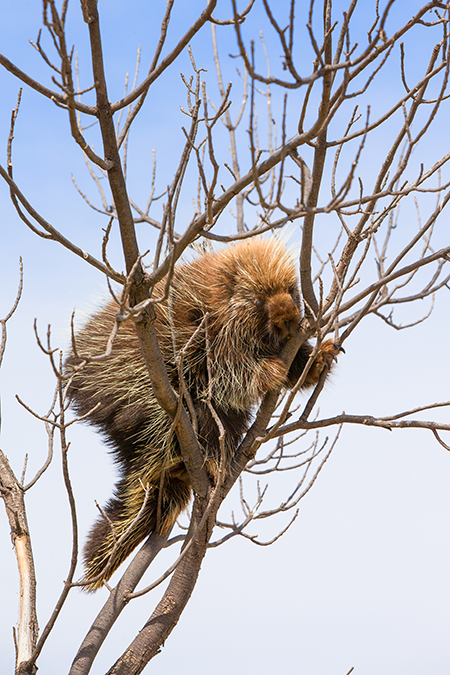 Porcupines are herbivores (eating plants and vegetables). What you might not know is that they also eat wood and tree bark. I doubt you have ever looked at a small tree trunk and thought, “Wow, that would make a great snack!” Why is that? Humans cannot get nutrients out of wood because it is primarily composed of a substance called cellulose. In fact, most animals can’t use wood or bark as food. God designed porcupines, however, with an unusual digestive system. In their guts (or intestines) they house special bacteria that break down cellulose and turn it into usable food. This perfectly designed system could not have evolved over millions of years. Instead, God equipped porcupines with this ability.
Porcupines are nocturnal, foraging for food at night. They love to climb trees, and some spend most of their time there. Most porcupines are solitary animals and do not live close to other porcupines. They interact with each other mainly in the spring during mating season. When baby porcupines are born, their spikes are soft, but they harden in a few days. You probably know that groups of animals have special names. When fish are together, they are called a school of fish; lions in a group are called a pride. What do you think a mother porcupine and her babies are called when they are traveling together in a group? A prickle!
If you have ever been around porcupines at a zoo or wildlife home, you may know that they smell terrible. Why do they smell so bad? A porcupine’s quills protect it from most danger. Sometimes, however, even though it may win a fight by using its quills, a porcupine may get injured or killed in the battle. For this reason, porcupines do not want to have to use their quills. On the other hand, predators such as dogs or wolves may have tried to fight a porcupine sometime in the past and been stabbed by the sharp quills. They most likely do not want to repeat that painful experience again. So, porcupines have a unique group of cells called a rosette that releases a very strong odor. Also, they have certain special quills that are perfectly designed to diffuse that odor and make sure other animals in the area can smell it. By releasing this chemical odor, porcupines are letting all the other animals around them know there is a porcupine near, so “watch where you step.”
 |
 |
 |
| African Crested Porcupine | Bahia Hairy Dwarf Porcupine | Brazilian Porcupine |
With so much protection, it is no wonder that porcupines can live to be some of the oldest rodents in the world. In the wild, they can live 10-15 years, and in captivity some aged prickly pigs have reached the ripe old ages of 27-30 years old.
The post Porcupines: God's Perfect Pin Cushions appeared first on Apologetics Press.
]]>The post Porcupine Hair is "Quilly" Neat appeared first on Apologetics Press.
]]>


Several features of porcupine quills point to the fact that God, our intelligent Creator, is the only one Who could have designed them. First, the quills are covered in a greasy, fatty substance. For many years, no one knew what the slimy stuff did. People noticed, however, that when a quill stabbed a human or animal, it rarely caused any type of infection, but a similar stab by a splinter or other pointed object would get infected. It turns out that the greasy coating on a porcupine quill contains chemicals that fight infection, much like antibiotic ointment that is used in first aid kits. Further study revealed why this is the case. Porcupines can get rather fat. This does not help them climb well, and they sometimes fall out of trees. When they do, they often stab themselves with their own quills. God designed them to produce their own medicine so that when they do stab themselves, the wound does not get infected. Isn’t that neat?


Another fun fact about porcupine quills is that they are easy to see in the dark. Why is that? Porcupines need predators to know they are covered with quills and are not a good meal. Since porcupines are nocturnal, they need a way to “advertise” their presence and defenses in the dark. One way they do this is by producing a special fluorescent pigment that coats the tips of their quills. This special “paint” makes the tips of the quills brighter at night and easier for predators to see. If the first thing a predator sees is a back full of super-sharp spikes, it is probably going to look elsewhere for a midnight snack!
 Maybe you have heard that porcupine quills are extremely hard to remove? This is because the quills have tiny barbs that cover their tips. These barbs are similar to those found on a fishhook or whaling harpoon. Scientists who study porcupine quills and barbs have learned some remarkable things. Because of the way the barbs are designed, it takes less force to push a barbed quill into something than it does to push a quill without barbs into the same thing. Why is that a big deal? People in the medical field have been looking for ways to create better needles that go into the skin using less force. The barb system on a porcupine quill has given them a good design to use for this purpose. This is an example of something we often talk about in Discovery called biomimicry—when humans copy God’s design in nature. Furthermore, the barbs make the quill difficult to pull out, because when pulled backwards the barbs flare out. This design is also useful in needles that need to “stay put” for a while and not slip in and out of skin.
Who would have thought that God’s amazing creative ability would be so clear in the quills of a porcupine? Once again, we learn that the more we look at God’s natural world, the more we see His wondrous work.
The post Porcupine Hair is "Quilly" Neat appeared first on Apologetics Press.
]]>The post Hedgehog: The Land Urchin appeared first on Apologetics Press.
]]>In addition to the prickly porcupine, God also made another spiky creature called a hedgehog. The first hedgehog I ever saw in the wild was in the country of New Zealand, but hedgehogs are not actually native to New Zealand. Europeans introduced these animals to that country in the 1800s. Different native species of hedgehogs are found throughout Europe, Africa, and Asia. The pet hedgehog that my family has is of the East African variety.
Interestingly, the hedgehog used to be called “urchin”—not “sea urchin,” but just “urchin.” (The sea urchin was actually named after this “land urchin.”) In the 15th century, Englishmen gave this spiky land animal the name “hedge-hog” because (1) it was often seen foraging under hedges, and (2) it has a hog-like snout. (Some also claim that the name “hog” comes from the pig-like sounds it occasionally makes.)

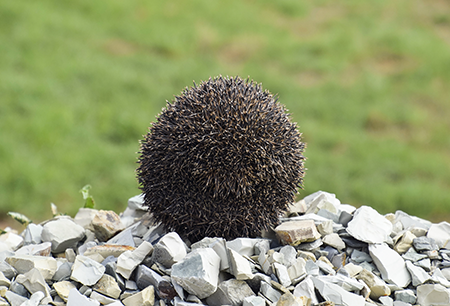
Though hedgehogs are not porcupines, there is obviously one major similarity: hedgehogs have thousands of spikes all over their head and back. An average hedgehog can have more than 5,000 stiff, needle-like spines. When this cute, little creature (which can grow anywhere from about 6-16 inches in length) is threatened by a predator, it quickly uses its strong stomach muscles to curl up into a tight ball, so that not one vulnerable part of its body is exposed. When in this position, you cannot see the hedgehog’s stomach, nose, eyes, ears, legs, or tail. All that is visible, and the only things you can feel when a hedgehog is in its fully rolled position, are the light-weight (but strong), prickly (and perfectly designed) spines that go every which way—a marvelous, God-given deterrent to predators!
Hedgehogs give mankind just one more reason to stand in awe of the Creator. Indeed, as the angelic beings cried out in the days of Isaiah, “The whole earth is full of His [God’s] glory!” (Isaiah 6:3).
The post Hedgehog: The Land Urchin appeared first on Apologetics Press.
]]>The post Axolotl: The Strangest Salamander You've Ever Seen appeared first on Apologetics Press.
]]>In the wild, you can find them only in one lake system, the Xochimilco Lake, in and around Mexico City. Wild axolotls are extremely rare and are endangered, but there are tens of thousands of them in captivity. Why are there so many in captivity? One of the main reasons has to do with their amazing ability to regrow parts of their bodies that are cut off or damaged. In fact, of all the animals in the world that have the ability to regenerate body parts, axolotls are among the very best.
 |
When most animals are cut or injured, their bodies repair the wound by forming scar tissue. Human bodies heal this way as well. Axolotls, however, do not form any scar tissue. Their bodies begin to regrow the same kinds of cells that were there before. If an axolotl loses a leg or tail, it can regrow the entire organ, as good as new, in only a few months. Also, there is no scarring and no way to tell that the leg or tail was ever injured. Plus, they can regrow their limbs an endless number of times. If they lose the same leg 50 times, they can regrow it every time.
Scientists are studying these salamanders to see if they can figure out how to help humans regenerate organs and limbs. So far, they have not had much success. The fact that they are studying them shows us something really neat. God designed the axolotl. He created it with the ability to regrow its limbs. Humans are trying to copy the design, but have not succeeded. That proves that God is much more intelligent than humans. Only an all-powerful God could design the wonderful axolotl.

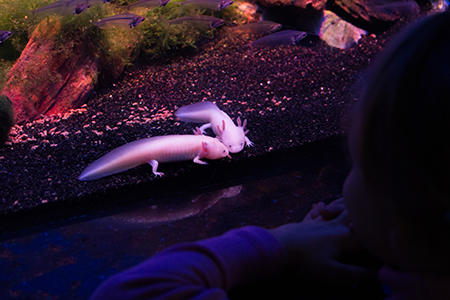
The post Axolotl: The Strangest Salamander You've Ever Seen appeared first on Apologetics Press.
]]>The post Sugar Gliders appeared first on Apologetics Press.
]]>Sugar gliders are marsupials found in the wild in Australia, New Guinea, and Indonesia. Like other marsupials, such as kangaroos and koalas, sugar gliders have pouches that their young babies, known as joeys, live in until they are fully developed.

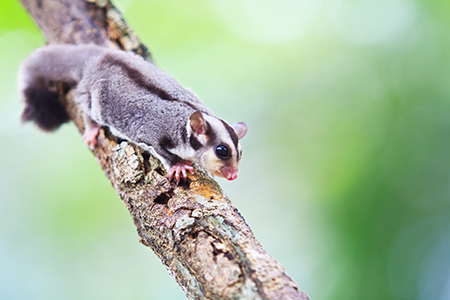
At full-grown, sugar gliders are 12 inches long (from head to tail) and weigh only about 3-5 ounces (about the weight of a banana). As their name suggests, these cute, little creatures are gliders. God designed them with their own “wingsuits” that they use to glide from limb-to-limb and tree-to-tree. (At times, they look like they are floating.) Sugar gliders have a soft fold of skin called a patagium (puh-TAY-jee-um), which connects and stretches from their wrists to their ankles on both sides of their body. This perfectly designed furry membrane allows sugar gliders to glide 150 feet in the air from tree to tree.
Think about it! A mammal that can glide 150 times the length of its own body! If it needs to escape a predator, or if it sees a sweet piece of fruit 150 feet away (now you know why it’s called a sugar glider), it can jump and glide from one tree to another—trees that may be as far away as half of a football field!
 |
| Our family has a pet sugar glider names Luna (which we think is aptly named since Luna is the Latin name for “moon,” and sugar gliders are nocturanl animals—meaning they are active at night and sleep during the day). |
What’s more, these animals are so well designed that they can make such “flights” and land without hurting themselves. (That’s quite remarkable considering the many human beings, who have attempted similar feats with various wingsuits, only to suffer major injuries and even death.)
How could anyone logically conclude that perfectly designed gliding animals are the result of evolutionary time and chance, while the man-made copies are the result of highly intelligent designers? Such reasoning is quite illogical, and very disrespectful to the grand Designer of all things: God.
The post Sugar Gliders appeared first on Apologetics Press.
]]>The post Pit Vipers: Snakes WIth Superpowers? appeared first on Apologetics Press.
]]> Who wouldn’t like to have a superpower? Although we do not have what would typically be considered super abilities, there are amazingly designed creatures all around us that do, in fact, have what we would consider to be superpowers. Consider, for example, the Pit Viper.
Pit Vipers are a group of venomous snake species found in Europe, Asia, and the Americas, from Canada all the way down to South America. This group of snakes can be as short as 18 inches—or as long as 12 feet! Unlike many snakes, most Pit Vipers give birth to live snakes, rather than eggs that hatch. They can be found in parched deserts or lush rainforests, on the ground in front of you, or in the trees above you. One species of Pit Viper (the cottonmouth) even travels through water.
Escaping the grasp of these sneaky villains would be difficult since they are found in so many types of terrain, and since they are known as ambush predators—hiding quietly and patiently until an unsuspecting prey comes across their path (as one of our AP interns discovered while traipsing with me across the grasslands of eastern Wyoming last year). Some are equipped with rattles that briefly announce your impending doom—while others have no rattles, attacking their victims without warning. But none of these features would be considered superpowers.


Ever wondered how your TV is able to communicate with your remote control? You can aim a remote in the general direction of a device (and sometimes even in the opposite direction), and it will “sense” what you want it to do and respond. If you saw a laser come out of your remote control, it might be easier to understand why the TV responded, but whatever is being sent by your remote is invisible! On your TV is a sensor that picks up invisible thermal radiation. If it picks up certain levels of thermal radiation, it will respond—and your remote control is designed to send out signals precisely in the range your TV detects.
Now, what does that have to do with the Pit Viper? Pit Vipers have special sensors (pit organs) on their faces that are designed to detect infrared radiation. They can sense the body heat from prey anywhere around them within several feet. So even if you try to hide out of their site—they can still feel your presence! I don’t know about you, but I think that would be a pretty amazing superpower to have. But more importantly, guess Who made it? Psalm 111:2—“The works of the Lord are great, studied by all who have pleasure in them.”

The post Pit Vipers: Snakes WIth Superpowers? appeared first on Apologetics Press.
]]>