The post The 100th Anniversary of the Scopes “Monkey” Trial appeared first on Apologetics Press.
]]>Background
What precipitated such an unprecedented court case? Why all the hysteria? In the 1920s, several state legislatures in the U.S. were contemplating banning some form of the Theory of Evolution from being taught in public schools. On March 21, 1925, Tennessee Governor Austin Peay signed into law the Butler Act, which was first introduced by Representative John Washington Butler two months earlier and was the first of its kind in the country. Specifically, the Butler Act stated:
That it shall be unlawful for any teacher in any of the universities, normals1 and all other public schools of the State which are supported in whole or in part by the public school funds of the state, to teach any theory that denies the story of the Divine Creation of man as taught in the Bible, and to teach instead that man has descended from a lower order of animals.2
When the American Civil Liberties Union (ACLU) learned of the passing of the Butler Act, they quickly began soliciting in newspapers for a willing Tennessee participant in hopes of testing the veracity of the Butler Act. The ACLU wanted to represent a science teacher who had taught evolution since the Butler Act became law in Tennessee. However, the teacher they ultimately represented was far from the ideal candidate and one of the first signs that the “Scopes” Trial should never have happened.
The Unprincipled Selection of Scopes
John Scopes was a first-year math and physics teacher and football coach at Rhea County High School in Dayton, Tennessee in 1924-25. He was not the school’s biology teacher. But Scopes did substitute for the regular biology teacher (Principal William Fergeson) for two weeks in April 1925 using the previously approved textbook A Civic Biology, which indeed contained material on human evolution.3
How did Scopes become the defendant in (what many have called) “the trial of the century”? Did one or more of his students accuse him of breaking the Butler Act? Was there a parent, school administrator, or a group of vile Christians out to get Scopes (as the terribly historically inaccurate 1960 movie Inherit the Wind vividly portrayed)?4 Not at all.
The school term was already over, and Scopes was enjoying some leisure time at the tennis courts in Dayton when a few leading community members summoned him to the local drugstore. They weren’t looking to tar and feather Scopes but rather to use him as a pawn in their plan to bring some excitement and commerce to their little town. They were hoping that he had taught human evolution so that they could contact the ACLU about representing Scopes in a trial in Dayton because “such a case would put Dayton on the map and benefit business.”5
Scopes admitted, “I had been tapped and trapped by the rush of events.” This young man, with only one year of teaching experience under his belt, agreed to stand trial, saying, “If you can prove that I’ve taught evolution, and that I can qualify as a defendant, then I’ll be willing to stand trial.” If? What did he mean, “If”? Scopes admitted in his memoirs, “To tell the truth, I wasn’t sure I had taught evolution.” But the townsmen “weren’t concerned about this technicality.”6
Scopes had “expressed willingness to stand trial. That was enough.” The owner of the drugstore proceeded to call the Chattanooga News: “‘This is F.E. Robinson in Dayton,’ he said. ‘I’m chairman of the school board here. We’ve just arrested a man for teaching evolution.’” And what was Scopes’ reaction to being “arrested”? He said: “I drank the fountain drink that had been handed me and I went back to the high school to finish playing tennis with the kids…. [T]hey [Robinson and the other men] would handle the technicalities of my ‘arrest’ and bond.”7 The next day, the Chattanooga News announced Scopes’ “arrest,” which was then picked up by the Associated Press, which then became a national story. Apparently, so unusual were the circumstances surrounding Scopes’ original “arrest” and subsequent indictment that when the Court initially convened for his actual trial in July, Tennessee’s Attorney General Tom Stewart suggested, “[I]n this case, we think a new indictment be returned…. [B]oth sides are anxious that the record be kept straight and regular….”8
Legendary Lawyers
As if the selection of Scopes as the defendant in this trial was not bizarre enough, the leading prosecutor selected was a three-time presidential candidate and former Secretary of State who had not tried a case in more than 30 years. William Jennings Bryan was a very intelligent, talented, articulate individual,9 but his selection as prosecuting attorney may have had more to do with his fame than an overall commitment to facts. Dayton lawyer Sue Hicks,10 who “just happened” to be present at Robinson’s drugstore the day of Scopes’ “arrest,” no doubt called upon Bryan (a Miami, Florida resident at the time) to serve on the prosecution team, in part because of his well-known advocacy for anti-evolution legislation, but also for his sheer iconic status, which would do exactly what the leading townsmen desired—“put Dayton on the map and benefit business.”11
Upon learning that the legendary William Jennings Bryan was selected to prosecute Scopes, nationally known agnostic and trial lawyer Clarence Darrow convinced the ACLU (of which he was a member) to allow him to join the defense team as lead defender. Darrow was a fierce critic of the Bible and Christianity.12 During the Scopes Trial, Darrow referred to Bryan’s Bible-believing, Christian religion as “fool religion.”13 And in his essay, “Why I Am An Agnostic,” Darrow made his thoughts about God and the Bible crystal clear: “The fear of God is not the beginning of wisdom. The fear of God is the death of wisdom.”14 Bryan referred to Darrow as “the greatest atheist or agnostic in the United States.”15
A Court Case or a Publicity Stunt?
In one sense, the Scopes Trial was cut and dry (or at least it should have been): Had John Scopes violated Tennessee law (i.e., the Butler Act)?16 This was the central question. Judge John T. Raulston instructed the Grand Jury on the first day of proceedings, saying:
Gentlemen of the grand jury, on May 25, 1925, John T. Scopes was indicted in this county for violating what is generally known as the anti-evolution statute…. [T]he vital question now involved for your consideration is, has the statute been violated by the said John T. Scopes or any other person by teaching a theory that denies the story of the Divine Creation of man as taught in the Bible, and in Rhea County since the passage of this act and prior to this investigation. If you find the statute has been thus violated, you should indict the guilty person or persons, as the case may be. You will bear in mind that in this investigation you are not interested to inquire into the policy or wisdom of this legislation.17
Throughout the trial, Judge Raulston similarly stated:
It is not within the province of the court under these issues to decide and determine which is true, the story of divine creation as taught in the Bible, or the story of the creation of man as taught by evolution…. [T]his court is not further concerned as to its policy, but is interested only in its proper interpretation and, if valid, its enforcement…. The question is whether or not Mr. Scopes taught men descended from the lower order of animals.18
Though technically Scopes was on trial, in reality, the defense, prosecution, and media made sure that it was more of a theatrical stage to banter about freedom and “fundamentalism,”19 the Bible and evolution, secularism and Christianity. How often does a defense attorney—whose client did not plead guilty at the beginning of the trial—argue a case for seven days and then abruptly conclude (as Darrow did), “I think to save time we will ask the court to bring in the jury and instruct the jury to find the defendant guilty. We make no objection to that and it will save a lot of time and I think that should be done.”20 In what reasonable trial does the defense (a) call the prosecuting attorney to take the stand and be cross-examined, (b) admit that the prosecuting attorney (Bryan in this case) would not be very valuable as a witness (in terms of what the trial was originally about), and (c) agree that they themselves may be cross-examined, but then never give the prosecution the opportunity to do so because the defense suddenly tells the jury and judge to find their client guilty, and the trial quickly comes to an end with no closing arguments?21
Prosecuting attorney Bryan seemed strangely eager to take the stand as an expert witness on the Bible. When asked, “Mr. Bryan, you are not objecting to going on the stand?” his response was, “Not at all.”22 Perhaps Bryan sincerely wanted to try to “give a defense” of the Bible and of the freedom of Tennesseans to teach creation to the exclusion of evolution? Maybe he was mostly motivated by the genuine expectation of cross-examining Darrow and the other defense lawyers?23 Perhaps Bryan allowed pride to get the best of him? Or maybe it was a combination of all three?
Though at one point in the trial the bailiff declared, “People, this is no circus. There are no monkeys up here,”24 the Scopes Trial might accurately be described as more spectacle than substance. (A case could be made that it was more unusual and bizarre than the infamous O.J. Simpson trial 70 years later.) The New York Times reported before the trial ever began that an actress offered “the use of a trained chimpanzee to combat the law” (i.e., the Butler Act). Renowned radio announcer Quinn Ryan, from WGN Chicago, “famous for creating broadcasts that were ‘almost as good as being there,’” comically portrayed Bryan’s entrance into the courtroom as if he was a heavyweight boxer, saying, “Here comes William Jennings Bryan.25 He enters now. His bald pate like a sunrise over Key West.”26 What’s more, while inside the court, Darrow was cited for “contempt and insult,”27 blatantly insulting the judge’s integrity multiple times in one day;28 one writer described the scene outside the courthouse (even as the trial was just getting started), as “half circus and half a revival meeting.”29
Much Bigger Than Scopes
While in one sense, the Scopes Trial was simply about a statute violation, in reality, it was about something much bigger: a battle between ideas of human origins and what should be taught in public schools. Did humans evolve from animals (as Darrow passionately believed), or are we the descendants of an original man and woman supernaturally created by God, to Whom we are accountable (as Bryan was convinced is true and literally taught in the Bible)?
At various times in the proceedings, both sides referred to the anticipated future trial in an appellate court, which was expected to focus on the constitutionality of the Butler Act.30 In fact, Darrow indicated during the Scopes Trial that going to a higher court was his only purpose, saying, “What we are interested in, counsel well knows what the judgment and verdict in this case will be. We have a right to present our case to another court and that is all we are after.”31 In his 1932 autobiography, Darrow went further in stating what his purpose had been in the Scopes Trial:
My object, and my only object, was to focus the attention of the country on the progamme of Mr. Bryan and the other fundamentalists in America. I knew that education was in danger from the source that has always hampered it—religious fanaticism. To me it was perfectly clear that the proceedings bore little semblance to a court case, but I realized that there was no limit to the mischief that might be accomplished unless the country was roused to the evil at hand. So I volunteered to go.32
Alleged Proofs of Evolution in the Scopes Trial
Since the Scopes Trial was technically about whether John Scopes had violated the Butler Act—and not about the legitimacy of the law itself—Judge Raulston was “not interested to inquire into the policy or wisdom of this legislation.”33 Thus, the judge ruled that testimony from evolutionary scientists was not germane to Scopes’ innocence or guilt and thus inadmissible evidence for the jury to consider. However, the judge did allow “expert testimony” (in the form of affidavits) to be read into the trial records (making up about 20% of the overall transcript of the trial) for the benefit of the appellate court in the event Scopes was found guilty and the defense appealed the case.34
So, what proof of evolution did the “experts” give that “religious fanatics” and “fundamentalist Christians” like William Jennings Bryan missed, willfully ignored, or outright rejected in 1925? Was the creationist’s dismissal of evolution (and especially human evolution, as stated in the Butler Act) inconsistent with the available facts? Should there be, as Darrow claimed during the trial, “no question among intelligent men about the fact of evolution”?35
Comparative Anatomy
The terms “similar,” “homology,” and “comparative anatomy”36 occur some 60 times in the testimony of the expert evolutionists filed into the official Scopes Trial record on day seven of the proceedings. Known as “homology,” the comparison of similar body structures of various living organisms allegedly proves evolution. Since, for example, the flipper of a whale, the wing of a bat, the forefoot of a dog, and the human arm and hand have certain similarities, supposedly they share the same ancestor from many millions of years ago. According to this line of argumentation, the first humans were not specially designed by the Creator, but evolved from animal ancestors.
Creationists rationally and unashamedly acknowledge the many similarities that exist among the various kinds of animal life on Earth, and even between animals and humans. (Millions of living things have eyes, ears, mouths, digestive systems, respiratory systems, etc.) In truth, similarities among living things fit perfectly with the Creation viewpoint. Such similarities should be expected among creatures designed to breathe the same air, drink the same water, eat the same food, live on the same land, and generally use the same five senses to function in our physical world. But homology neither proves creation nor evolution. Similar structures are just a fact. When evolutionists (like those in the Scopes Trial) contend that homology is evidence of evolution, they are not stating a fact but are making an unproven (and unprovable) assertion.37
Embryonic Recapitulation
The terms “embryo” or “embryonic development”38 appear 40 times in the expert evolutionists’ written testimony in the Scopes Trial. According to these men, “the facts of comparative embryology” are powerful evidence of evolution39 and had been recognized by evolutionists such as Ernst Haeckel for decades. Haeckel, for example, “believed that organisms retrace their evolution as embryos, when they ‘climb their own family tree.’”40 One evolutionary zoologist in the Scopes trial alleged:
In many instances certain early stages in the development of an advanced organism resemble in unmistakable ways the end stages of less advanced organisms. There is, in fact, in the long ontogeny of members of high groups, a sort of rough-and-ready repetition of the characteristic features of many lower groups. This fact has so impressed some biologists that they have embodied it into a law, the so-called biogenetic law: that ontogeny recapitulates phylogeny. In less technical language this means that the various stages in the development of the individual are like the various ancestral forms from which the species is descended, the earliest embryonic stages being like the most remote ancestors and the latter stages like the more recent ancestors. In still other words, the concept may be stated as follows: The developmental history of the individual may be regarded as an abbreviated resume of its ancestral history.41
Supposedly, the human embryo goes through evolutionary stages of growth—through a kind of “fish stage,” “salamander stage,” and even an animal-like tail stage. One evolutionary anthropologist in the Scopes Trial stated: “Going to the human embryo we find these vestiges of an earlier condition much more developed while others appear for a time and then vanish before birth. Such a case is the free tail possessed by every human embryo, a few weeks before its birth.”42
Interestingly, more than a decade prior to the Scopes Trial, prominent British evolutionary anatomist and physician Sir Arthur Keith, admitted in his book The Human Body, “It was expected that the embryo would recapitulate [retrace—EL] the features of its ancestors from the lowest to the highest forms in the animal kingdom. Now that the appearances of the embryo at all ages are known, the general feeling is one of disappointment; the human embryo at no stage is anthropoid in its appearance. The truth is, we expected too much.”43
And what have we learned in the last century? Renowned evolutionist Stephen J. Gould wrote in 2000 in Natural History magazine:
Haeckel remains most famous today as the chief architect and propagandist for a famous argument that science disproved long ago but that popular culture has never fully abandoned…. Once ensconced in textbooks, misleading information becomes cocooned and effectively permanent, because…textbooks copy from previous texts…. We should therefore not be surprised that Haeckel’s drawings entered nineteenth-century textbooks. But we do, I think, have the right to be both astonished and ashamed by the century of mindless recycling that has led to the persistence of these drawings in a large number, if not majority, of modern textbooks.44
The so-called biogenetic law (of embryonic recapitulation), which played such a prominent part in the written evolutionists’ testimony in the Scopes Trial, was and is a farce.45
Vestigial Organs
Two sections in the expert evolutionists’ written testimony dealt with vestigial organs46—the idea that animals and humans have previously functional, but now leftover, useless structures of evolution. Allegedly:
There are, according to Wiedersheim, no less than 180 vestigial structures in the human body,47 sufficient to make of a man a veritable walking museum of antiquities. Among these are the vermiform appendix, the abbreviated tail with its set of caudal muscles…. These and numerous other structures of the same sort can be reasonably interpreted as evidence that man has descended from ancestors in which these organs were functional. Man has never completely lost these characters; he continues to inherit them though he no longer has any use for them.48
Another Scopes Trial evolutionist alleged: “Man has a vestigial tail [i.e., the coccyx—EL] composed generally of about four vertebrae so small and so short as to be entirely concealed in the flesh and muscles at the base of the spine.”49
What is the truth of the matter? Once again, the “experts” in the Scopes Trial got it wrong—very wrong! The more that doctors have learned about the human body, the more they have recognized legitimate functions of the so-called “vestigial organs.” The appendix serves an “immunological function…in the developing embryo” and “continues to function even in the adult.”50 Furthermore, the appendix “acts like a bacteria factory, cultivating the good germs,”51 serving as “a reservoir of good gut bacteria.”52 And the human coccyx is extremely important. It serves as a point of attachment for several pelvic muscles that help us stand up. And, like the shocks on a car, the coccyx is also used as a shock absorber when we sit down.53 Although the evolutionary experts in 1925 confidently asserted, “All of the lines of evidence presented point strongly to organic evolution, and none are contrary to this principle,”54 real, observable, rational, operational science has proved them very wrong.
What’s more, while “vestigial” organs are not the useless organs that many have made them out to be, suppose (for the sake of argument) that scientists did discover one or more organs in the human body that had a reduced function—or no function at all? What if the particular organ functioned perfectly in the past but not so much today? Would this actually be evidence of evolution? Not at all. The human body is a marvelous thing to study and shows amazing, complex, functional design—which logically demands a Designer (and not accidental evolution over many millions of years). However, since the first humans were on Earth, much degeneration has taken place. Many diseases and mutations have been introduced into the human gene pool. Is it possible that there could be a loss of a gene for an organ at some point, which causes the organ not to function as well as it once did—or perhaps lose function altogether one day? If so, then even if it were ever proven that a “vestigial organ” exists, such an organ would not logically prove evolution to be true. In fact, wouldn’t the presence of “vestigial organs” actually be evidence of “devolution,” not “evolution,” with organisms being more complex the farther back in time we go?55
Once again, the “evolution-is-a-fact” hype surrounding the Scopes Trial was anything but factual.56 The more we continue to learn, the more erroneous and inadequate the impotent theory of evolution is demonstrated to be. Millions of people may still believe it, but they do so more out of a religious commitment to blind faith, rather than because the evidence demands such a verdict.
Alleged Human Evolution
The evolutionary scientists in the Scopes Trial also had much to say about “evidence” for human evolution, but as with all the other “proofs” they offered, their “evidence” was either irrelevant, deficient,57 or (eventually) disproven altogether. “The dawn man of Piltdown”58 (i.e., Piltdown Man) was determined to be a forgery in 1953. (Someone had combined the skull of a human and the jawbone of an ape.) The “Java ape-man,” as one Scopes Trial scientist called him,59 was “erroneously based on the skull cap of a gibbon and fossilized teeth and thigh bone of a modern human.”60 It was not some kind of missing link! What’s more, “Rhodesian man,” “Heidelberg man,” and “Neanderthal man” (all of which were brought up multiple times by the Scopes Trial evolutionists in their affidavits) were nothing more than varieties of past humans.61 (And if we look around the planet today, there is still a great amount of observable variety within humankind. Such diversity should also be expected from the fossil record: human bones of various shapes and sizes.)
Human Evolution’s Racist Implications
Though the Scopes Trial expert evolutionists may not have been racist in their affidavits, the textbook that Scopes used (or allegedly used) to teach evolutionary theory included racist language. Under consecutive sections titled “Evolution of Man” and “The Races of Man,” Scopes’ textbook taught impressionable minds the following:
Undoubtedly there once lived upon the earth races of men who were much lower in their mental organization than the present inhabitants. If we follow the early history of man upon the earth, we find that at first he must have been little better than one of the lower animals…. The beginnings of civilization were long ago, but even to-day the earth is not entirely civilized…. At the present time there exist upon the earth five races or varieties of man, each very different from the other in instincts, social customs, and, to an extent, in structure. These are the Ethiopian or negro type, originating in Africa; the Malay or brown race, from the islands of the Pacific; the American Indian; the Mongolian or yellow race, including the natives of China, Japan, and the Eskimos; and finally, the highest type of all, the Caucasians, represented by the civilized white inhabitants of Europe and America.62
Where would such racist ideas of white supremacy originate? Not from the Bible, not from the Creator and Christ, and not from pure Christianity, Whose Author and Namesake taught that everyone is created in the image of God and has a priceless immortal soul, which Jesus loves so much that He gave His life to save. The arrogant, destructive, repulsive teachings of Scopes’ textbook are the detestable logical effects of naturalistic evolutionary ideas, including the evolutionists’ beloved hero, Charles Darwin, who was mentioned more than 20 times in the trial by Scopes’ defense lawyers and expert evolutionists. What’s more, Darwin’s book The Origin of Species was referred to in the trial as “one of the epoch-making books of all time.”63 Readers would do well to acquaint themselves with the full title of Darwin’s book: The Origin of Species by Means of Natural Selection—or The Preservation of Favoured Races in the Struggle for Life.
The fact is, Darwinian evolution, so fiercely defended in the Scopes Trial, implies that some groups of humans are closer to our alleged ape-like ancestors in their mental faculties than others. Thus, some groups of humans are supposedly superior to others. The Bible teaches exactly the opposite. There are not different species or races of men; there is just one human race—an intelligent people—that God created “in His image” in the beginning (Genesis 1-2), both “male and female” (Genesis 1:27). According to the Bible, all of humanity descended from Adam and Eve, the first couple (1 Corinthians 15:45; Genesis 3:20), and later Noah, through whom the Earth was repopulated after the Flood (Genesis 6-10). Whatever the shades of our skin, whatever the shapes of our bodies, we share equal value as human beings (Genesis 1:26-28; cf. Romans 10:12)—but not according to Darwinian evolution and Scopes’ biology textbook.
The Bible on Trial
The climax of the eight-day Scopes Trial came near the end—at the latter part of day seven. Following the defense’s lengthy submission of expert evolutionary testimony, they abruptly called to the stand to testify, of all people, the world-famous prosecuting attorney and three-time presidential candidate William Jennings Bryan. “[E]ven if your honor thinks it is not admissible in general, so we wish to call him now,” said defense attorney Hayes.64 Against the other prosecuting attorneys’ better judgment,65 Bryan seemed eager to take the stand (though admittedly, from the beginning of his questioning and throughout, both Judge Raulston and the defense attorneys led Bryan to believe that he would have equal opportunity to put Darrow and the others on the stand).66 [Had Bryan known that he would actually never have an opportunity to question Darrow or the others, he may not have chosen to testify.]67
So, what happened during Darrow’s one-sided interrogation of Bryan? In short, the renowned agnostic tried to humiliate Bryan and discredit his literal interpretation of various biblical miracles, including (1) God creating Eve from Adam’s rib, (2) the Genesis Flood, (3) the extraordinarily long day during the time of Joshua,68 and (4) Jonah surviving for three days inside of a large sea creature.
Admittedly, if no supernatural God exists, then (a) the miracles of the Bible are make-believe, (b) the Bible itself is merely a work of fiction, and (c) Bible-believing Christians are very naïve (just as Darrow wanted the world to believe in 1925). However, if an omniscient, omnipotent, supernatural Being does exist,69 then He could work any number of supernatural miracles (which are in harmony with His divine will).
- If there were no Universe, and He chose to create one, He could simply speak it into existence (Psalm 33:6-9).
- If He wanted to miraculously create a grown man from the dust of the ground and a mature woman from the man’s rib,70 such a feat would seem quite simple for God after everything else He had previously made during the creation week.
- If the same God Who made light, as well as mornings and evenings on Earth without a Sun on days 1-3 of creation (Genesis 1:3-19),71 chose to make the Sun and Moon in Joshua’s day to “stand still” (at least in some sense), such an act by the Creator of the Universe would be simple—whether we understand exactly how He did it or not. (And we don’t!) Is it possible for the omnipotent Creator, Whom the Bible says currently “upholds the Universe by the word of His power” (Hebrews 1:3, ESV), to miraculously manipulate a day on Earth to His liking? Is it possible for God to perhaps refract light or to specially create some kind of light to illuminate a part of the Earth for a longer period of time than the normal daylight hours? Though skeptics (whether in 1925 or 2025) often ridicule the idea of miracles, in truth, if a supernatural God exists, then supernatural miracles are possible—including an astronomical miracle on behalf of the Israelites when they faced the armies of the Amorites.
- If the Creator of everything on Earth chose to (1) prepare “a great fish to swallow Jonah,” (2) keep Jonah safe inside the sea creature for three days, and then (3) speak to the fish to have it vomit Jonah onto dry land, an all-powerful God could do exactly that.
- And if there were no written revelation from the Creator to humankind, He could certainly make that happen (cf. 2 Peter 1:20-21). He could ensure that writers of His choosing penned what He wanted humanity to know. If He wanted mankind to know that He created the world and everything in it, He could tell them through His divinely inspired writers. If He wanted His human creation to know about some of the miracles He worked through the millennia, again, He could communicate such information through His chosen writers.
In reality, the highly irrational position is Darrow’s atheistic (or agnostic) evolution. Naturalistic atheism contends that matter came from nothing, life came from non-life, intelligence came from non-intelligence, and complex, functional design (like that found in everything from a honeybee to the human brain) had no designer. Such commitment to naturalism is a blind faith.72 Yet it’s “fundamentalist Christians” who are portrayed as irrational73—for believing that a supernatural God could create a “whale” (or some type of sea creature)74 that could swallow Jonah. Have we forgotten that evolutionists contend that non-fish evolved into fish, some of which left the water to become dog-like creatures, and some of those dog-like creatures eventually went back into the oceans to evolve flukes, baleen, blowholes, and much more—on their way to becoming gigantic whales? This is the only “factual” story about whales that children can hear in school today, despite (1) no real evidence (only imaginative interpretations of various fossils), and (2) the law of biogenesis, which observably indicates that life reproduces after its own kind75 (i.e., fish do not become land animals and land animals do not become fish or whales).
Eight TakeAways from the Scopes Trial
- Always look to the source material for the real story. The propaganda machine was hard at work in 1925, just as it is today. We should not simply read what an evolutionist or a creationist says about a matter. Examine the actual evidence for yourself and come to honest, informed, logical conclusions, whether about the Scopes Trial, the Bible, or anything else—but especially about eternally important matters!
- Neither Scopes’ lawyers nor their “expert” evolutionists proved evolution to be true. Everything they testified about evolution was erroneous, irrelevant, or very inadequate.76
- Darrow neither disproved the Bible nor any miracle of the Bible; he merely mocked it and those who believed the evidence for its Divine inspiration and reliability.77
- Though Christian-minded Tennessean lawmakers undoubtedly meant well in 1925 when passing the “anti-evolution” Butler Act, attempting to legislate various Bible teachings is probably not the wisest course of action. After all, how has that worked out for Christians when they find themselves in the minority in the U.S. and elsewhere around the world, in this century or some other?78 Perhaps the best course of action is to kindly encourage “free and just” legislation that allows for and promotes robust study and open, honest debate in schools and society at large.
- Christians should continually pray for strength and prepare themselves to endure mocking and misrepresentations from anyone, including media propaganda. Just as Bryan and “fundamentalist Christians” were mocked in 1925, and just as Jesus was unjustly scorned and misrepresented 2,000 years ago, Christians will (at least occasionally) be unfairly persecuted (Matthew 5:10-12; 1 Peter 4:14-16).
- Regardless of how disrespectful others may be when talking about God, the Bible, Jesus, or Christians, “[l]et your speech always be with grace, seasoned with salt” (Colossians 4:6). Give honest, reasonable answers to questions in a spirit of “gentleness and respect” (1 Peter 3:15, ESV). Drastically different than the way Inherit the Wind (1960) portrayed Tennessee Christians’ hateful treatment of Darrow, in truth, the agnostic admitted near the end of the trial just how well he had been treated: “[S]o far as the people of Tennessee are concerned…I don’t know as I was ever in a community in my life where my religious ideas differed as widely from the great mass as I have found them since I have been in Tennessee. Yet I came here a perfect stranger and I can say what I have said before that I have not found upon anybody’s part—any citizen here in this town or outside, the slightest discourtesy. I have been treated better, kindlier and more hospitably than I fancied would have been the case in the north, and that is due largely to the ideas that southern people have and they are, perhaps, more hospitable than we are up north.”79
- Christians must balance being courageous with being wise. Bryan may have appeared to bravely take the stand in the Scopes Trial, but it was a foolish move on that occasion (and not because the Bible cannot be logically defended).80 Jesus wants Christians to be courageous (Matthew 10:27-28), but He also taught His followers to “not give what is holy to the dogs; nor cast your pearls before swine, lest they trample them under their feet, and turn and tear you in pieces” (Matthew 7:6). Or as the wise man said: “Do not answer a fool according to his folly, lest you also be like him” (Proverbs 26:4).
- Anyone who is interested in more information on the Scopes Trial should read Bryan’s closing argument,81 which he was not allowed to deliver due to the trial’s unusual ending. Though imperfect, Bryan makes several fundamental points for both creationists and evolutionists to seriously consider, most notably regarding morality and the afterlife.
Conclusion
The Scopes Trial was more than a legal showdown—it was a cultural clash revealing a deep divide between naturalistic and theistic worldviews, one that still exists today. Though a century has passed, the lessons remain relevant: truth matters, civility counts, and genuine Christian faith requires both courage and discernment. Let us learn from history—not to mindlessly relive battles fought in 1925, but to be honest, think clearly, stand faithfully, and speak graciously as we have opportunity to do good in 2025.
Endnotes
1 Schools that trained teachers.
2 Butler Act (1925), Tennessee Virtual Archive, teva.contentdm.oclc.org/digital/collection/scopes/id/166.
3 George W. Hunter (1914), A Civic Biology (New York: American Book Company), librarycollections.law.umn.edu/documents/darrow/Hunter_Civic_Biology_1914.pdf, pp. 194-196.
4 The witch hunt, jailing, and burning in effigy of Scopes’ character portrayed in the award-winning 1960 movie Inherit the Wind is far from reality; it is a gross mischaracterization of the facts of history that seemingly few people know. Sadly, impressionable students in countless classrooms around the U.S. watch this classic. Like the General Theory of Evolution, the facts are not on the side of Inherit the Wind, yet most students will not hear the real story about the Scopes Trial.
5 John T. Scopes and James Presley (1967), Center of the Storm: Memoirs of John T. Scopes (New York: Holt, Rinehart, and Winston), p. 61.
6 Ibid., pp. 60-61, emp. added.
7 Ibid., pp. 60-61.
8 Scopes Trial Transcript in The World’s Most Famous Court Trial: Tennessee Evolution Case (1990), (Dayton, TN: Bryan College), p. 4. NOTE: The first 319 pages of this book are a “word-for-word report” of the Scopes Trial.
9 Regardless of how historically inaccurate the movie Inherit the Wind portrayed his character.
10 Apparently the same “Sue” whom Johnny Cash sang about in “A Boy Named Sue.”
11 Scopes and Presley, p. 61.
12 Clarence Darrow (no date), Absurdities of the Bible (Girard, KS: Haldeman-Julius Publications); see also Clarence Darrow (1929), Why I Am an Agnostic (Girard, KS: Haldeman-Julius), pp. 27-40, librarycollections.law.umn.edu/documents/darrow/why_I_am_an_agnostic.pdf. See also Scopes Trial Transcript, p. 99.
13 Scopes Trial Transcript, p. 288.
14 Darrow (1929), p. 40.
15 Scopes Trial Transcript, p. 299.
16 Ibid., pp. 4,6, emp. added.
17 Ibid., pp. 202,284.
18 By “fundamentalism,” Clarence Darrow, in essence, is referring to Christians who interpreted such things as the biblical creation account, Flood account, etc., literally rather than figuratively.
19 Scopes Trial Transcript, p. 306.
20 Ibid., p. 284.
21 Ibid.
22 Ibid.
23 Ibid., p. 282.
24 “Evolution Stirs Heat in Dayton, Tennessee; Citizens Protest Sharing Trial Publicity with Chattanooga—Meeting Ends in Fist Fight” (1925), The New York Times, May 20, www.nytimes.com/1925/05/20/archives/evolution-stirs-heat-in-dayton-tennessee-citizens-protest-sharing.html.
25 “WGN Broadcasts the Trial,” www.pbs.org/wgbh/americanexperience/features/monkeytrial-wgn-radio-broadcasts-trial/.
26 Scopes Trial Transcript, p. 211.
27 Ibid., pp. 206-207.
28 “Dayton Keyed Up for Opening Today of Trial of Scopes” (1925), The New York Times, July 10, https://www.nytimes.com/1925/07/10/archives/dayton-keyed-up-for-opening-today-of-trial-of-scopes-intense.html.
29 In reality, the Tennessee Supreme court overturned Scopes’ conviction on a technicality. “Under section 14 of article 6 of the Constitution of Tennessee, a fine in excess of $50 must be assessed by a jury…. Since the jury alone can impose the penalty this Act requires, and as a matter of course no different penalty can be inflicted, the trial judge exceeded his jurisdiction in levying this fine [of $100—EL], and we are without power to correct his error. The judgment must accordingly be reversed…. The Court is informed that the plaintiff in error is no longer in the service of the State. We see nothing to be gained by prolonging the life of this bizarre case” [“John Thomas Scopes v the State, Appeal from the Criminal Court of Rhea County” (1927), Supreme Court of Tennessee, January 17, https://famous-trials.com/scopesmonkey/2087-appealdecision].
30 Scopes Trial Transcript, p. 206, emp. added.
31 Clarence Darrow (1932), The Story of My Life (New York: Charles Scribner’s Sons), p. 249, emp. added, gutenberg.net.au/ebooks05/0500951h.html.
32 Scopes Trial Transcript, pp. 6, 202. Even on day seven of the trial, Judge Raulston reminded the defense, “The question is whether or not Mr. Scopes taught men descended from the lower order of animals” (p. 284).
33 Ibid., pp. 201-280. One scientist (Dr. Maynard Metcalf) was allowed to give testimony in person, though without the jury’s presence (pp. 133-143).
34 Ibid., p. 168, emp. added.
35 And derivatives thereof, e.g., similarity, homologous, and comparative anatomist(s).
36 For more information on homology, see Jerry Bergman (2001), “Does Homology Provide Evidence of Evolutionary Naturalism?” Journal of Creation, 15[1]:26-33, April 1, https://answersingenesis.org/theory-of-evolution/evidence/does-homology-provide-evidence-of-evolutionary-naturalism/.
37 Or derivatives thereof.
38 Scopes Trial Transcript, pp. 201-280.
39 Stephen Jay Gould (2000), “Abscheulich! (Atrocious!),” Natural History, 109[2]:43.
40 Scopes Trial Transcript, p. 273.
41 Ibid., p. 235, emp. added.
42 Sir Arthur Keith (1912), The Human Body (London: Williams and Norgate), pp. 94-95, emp. added.
43 Gould, pp. 44,45, emp. added.
44 For more information on embryonic recapitulation, see Trevor Major (1994), “Haeckel: The Legacy of a Lie,” https://apologeticspress.org/haeckel-the-legacy-of-a-lie-596/. See also Elizabeth Mitchell (2020), “Recapitulation Theory: How Embryology Does Not Prove Evolution,” September 5, https://answersingenesis.org/theory-of-evolution/recapitulation-does-embryology-prove-evolution/.
45 Scopes Trial Transcript, pp. 267-268. Vestigial structures were also discussed in other parts of the written affidavits.
46 The number of vestigial organs in the human body that Wiedersheim claimed was actually 86, not 180, as asserted in the Scopes Trial—Robert Wiedersheim, (1895), The Structure of Man: An Index to His Past History, trans. H. and M. Bernard (London: Macmillan).
47 Scopes Trial Transcript, p. 268, emp. added.
48 Ibid., pp. 246-247, emp. added.
49 “The Last Word” (2003), New Scientist, 177[2381]:65, February 8. See also Warwick Glover (1988), “The Human Vermiform Appendix: A General Surgeon’s Reflections,” Journal of Creation, 3[1]:34-35.
50 Duke surgery professor Bill Parker, as quoted in Seth Borenstein (2007), “Scientists: Appendix Protects Good Germs,” www.oklahoman.com/story/news/2007/10/06/scientists-appendix-protects-good-germs/61698570007/.
51 Midwestern University (2017), “Appendix May Have Important Function, New Research Suggests,” ScienceDaily, January 9, www.sciencedaily.com/releases/2017/01/170109162333.htm.
52 “Coccyx” (2018), Healthline, www.healthline.com/health/coccyx#1.
53 Scopes Trial Transcript, p. 280, emp. added.
54 For more information, see R.L. Wysong (1976), The Creation-Evolution Controversy (East Lansing, MI: Inquiry Press), pp. 397-399.
55 If macroevolution is true (i.e., large-scale changes of one kind of creature into another, which requires new genetic information), shouldn’t human bodies be producing new, never-before-seen organs? (Which is not happening!)
56 Not really proving what they claim to prove—that humans evolved from ape-like creatures.
57 Scopes Trial Transcript, p. 278.
58 Ibid., p. 237.
59 Jeff Miller (2023), “Does the Evidence REALLY Support Human Evolution? (Part 1),” Reason & Revelation, 43[8]:88, August, https://apologeticspress.org/does-the-evidence-really-support-human-evolution-part-i/.
60 For more information, see Miller (2023), 43[8]:86-89,92-93.
61 Hunter (1914), A Civic Biology, pp. 195-196.
62 Scopes Trial Transcript, p. 215.
63 Perhaps the defense knew earlier (or all along) that they wanted to try to get Bryan on the stand, but to Bryan it was a total surprise. Bryan testified during the questioning, saying, “I didn’t know I was to be called as a witness” (Ibid., p. 293).
64 Scopes Trial Transcript, p. 284.
65 As they let their objections be known several times before and during the questioning (Ibid., pp. 284,286,288,292,299).
66 Bryan responded to the request that he take the stand by saying, “If your honor please, I insist that Mr. Darrow can be put on the stand, and Mr. Malone and Mr. Hays.” Judge Raulston replied: “Call anybody you desire. Ask them any questions you wish.” To which Bryan said: “Then, we will call all three of them” (p. 284). At one point during the questioning of Bryan, he said to Darrow: “You testify to that when you get on the stand, I will give you a chance” (p. 287). Again, the judge was expecting Bryan to have an opportunity to question Darrow, saying, “He [Bryan] wants to ask the other gentleman [Darrow] questions along the same line” (p. 288). When Bryan was on the stand, even Darrow once implied that he [Darrow] would take the stand, too, saying, “Wait until you get to me” (Ibid., p. 293, emp. added).
67 Bryan never got an opportunity to question Darrow (or deliver his closing statement) because following the questioning of Bryan, the seventh day’s proceedings ended. When the trial resumed on day eight, Darrow abruptly threw in the towel, saying, “I think to save time we will ask the court to bring in the jury and instruct the jury to find the defendant guilty” (Ibid., p. 306).
68 Joshua 10:12-14.
69 And the evidence indicates He does. See Eric Lyons and Kyle Butt (2014), “7 Reasons to Believe in God,” Reason & Revelation, 34[10]:110-119, https://apologeticspress.org/7-reasons-to-believe-in-god-5045/. See also AP’s book Does God Exist? (www.apologeticspress.org/store/Product.aspx?pid=874), as well as the “Existence of God” section of the AP website (https://apologeticspress.org/category/existence-of-god/).
70 Cf. 1 Corinthians 11:8-12; 1 Timothy 2:13.
71 Keep in mind that “the Father of lights” (James 1:17), Who is “light” (1 John 1:5), could create light easily without first having to create the Sun, Moon, and stars. Just as God could produce a fruit-bearing tree on Day 3 without seed, He could produce light supernaturally on Day 1 without the “usual” light bearers (which subsequently were created on Day 4). For more information, see Eric Lyons (2006), “When Were the Sun, Moon, and Stars Created?” apologeticspress.org/when-were-the-sun-moon-and-stars-created-1990/.
72 For more information, see Jeff Miller (2014), “There’s No Such Thing as a Naturalist,” Apologetics Press, apologeticspress.org/theres-no-such-thing-as-a-naturalist-5050/.
73 Admittedly, many who wear the name “Christian” do not reason or act like Christ (e.g., John 10:37-38) nor seem to care about speaking words of “truth and reason” (Acts 26:25).
74 See Eric Lyons (2012), “Was Jonah Swallowed by a Fish or a Whale?” www.apologeticspress.org/was-jonah-swallowed-by-a-fish-or-a-whale-2830/. See also Dave Miller (2003), “Jonah and the ‘Whale’?” apologeticspress.org/jonah-and-the-whale-69/.
75 For more information, see Jeff Miller (2012), “The Law of Biogenesis—Parts 1-2, Reason & Revelation, 32[1-2]:2-11,14-17,20-22, January & February, apologeticspress.org/the-law-of-biogenesis-part-i-4165/; apologeticspress.org/the-law-of-biogenesis-part-ii-4178/.
76 For more information, see Jeff Miller (2024), “Four Reasons to Believe Evolution Is Not True,” Reason & Revelation, 44[8]:2-5,8-11, August, apologeticspress.org/4-reasons-to-believe-evolution-is-not-true/.
77 For evidence of the inspiration of the Bible, see Kyle Butt (2022), Is the Bible God’s Word? (Montgomery, AL: Apologetics Press). See also Dave Miller (2020), The Bible Is From God: A Sampling of Proofs (Montgomery, AL: Apologetics Press) and “The Inspiration of the Bible” section of www.apologeticspress.org.
78 In one memorable scene near the end of Inherit the Wind, Darrow’s character asks Bryan’s character to imagine if the tables were turned and someone like Scopes’ character had “the influence and the lung power to railroad through the state legislature a law saying that only Darwin could be taught in the schools?” Oh, how the tables have turned!
79 Scopes Trial Transcript, pp. 225-226.
80 Darrow was not interested in truth or in helping the world learn the truth through a fair investigation. He simply wanted to try to make fun of Bryan (and Christians who believe in the inerrancy of Scripture and a literal creation of Adam and Eve, etc.). Furthermore, Darrow “fought dirty” and strategically (and dishonestly) worked things out (by abruptly throwing in the towel on the next day and asking the court to find his client [Scopes] guilty) so that Darrow never had to take the stand himself (against Bryan)—and thus the questioning of Bryan was entirely one-sided.
81 William Jennings Bryan (1925), The Last Message of William Jennings Bryan, https://archive.org/details/cain-2009-william-jennings-bryan-last-message-9781906267162/mode/2up.
The post The 100th Anniversary of the Scopes “Monkey” Trial appeared first on Apologetics Press.
]]>The post Refuting the Miller-Urey Experiment appeared first on Apologetics Press.
]]>What Is Life?
Before we consider this experiment about the origin of life, let’s consider the definition for “life.” Morris, et al. give four essential characteristics for living things: an archive of information, a barrier that separates the living thing from the environment, capacity to regulate cell interiors, and the ability to gather materials and harness energy from the environment.5 Urry, et al. gave examples of some of the properties of life: order, evolutionary adaptation, regulation, energy processing, growth and development, response to the environment, and reproduction.6 These characteristics or properties of life must exist together for something to be considered a living organism. The information about how any living organism is constructed is contained inside the organism’s cells on strands of DNA (deoxyribonucleic acid) and RNA (ribonucleic acid), which consist of specific arrangements of five nucleic acids: adenine, guanine, cytosine, thymine (found only in DNA) and uracil (found only in RNA). This information is used by the cell to construct and organize proteins, which are made from molecules called amino acids and are arranged in specific sequences and three-dimensional patterns. Proteins are necessary for the structural arrangement of the cell and the many metabolic processes required for life. Science magazine attributed the explanation for the origin of this complexity to the discovery by Miller and Urey, specifically the origin of the amino acids that are the basis for the proteins in the cell.7
Miller’s Experiment
It was originally supposed that organic compounds, those compounds that contain the element carbon and are found in living organisms (for example, DNA or proteins), were only able to be made, or synthesized, by living organisms themselves. In the same way, inorganic molecules—those molecules that do not contain carbon—were only able to originate from non-living sources. However, in an essay published in Science magazine, Bada and Lezcano8 state that the scientist who first reported synthesizing a simple organic compound from inorganic molecules was F. Wöhler in 1828.9 Bada and Lezcano also stated that, in 1913, W. Löb reported that he had synthesized the first simple amino acids using wet formamide, a silent discharge of electricity, and ultraviolet light. In 1950, Melvin Calvin attempted to synthesize organic compounds in oxidizing atmospheric conditions.10 He was able to synthesize a high volume of formic acid,11 however, he demonstrated the necessity of running these experiments in a reducing atmosphere.12 In 1951, Harold Urey presented his concept of a prebiotic, reducing atmosphere from his studies of the origin of the Universe. In 1953, Miller,13 a graduate student at the University of Chicago, developed an apparatus to form basic organic compounds. He used CH4 (methane), NH3 (ammonia), H2O (water), and H2 (hydrogen) and circulated them through an electrical discharge for a week. After the experiment was run, he added HgCl2 (mercuric chloride) to prevent the growth of living organisms, distilled the results, and positively identified the amino acids glycine, 𝛼-alanine, â-alanine and less certainly identified some other amino acids. These amino acids provide part of the foundation for proteins, the building blocks of life. Later analysis of samples from Miller’s work revealed over 40 different amino acids and amines.14 If the conclusions from Miller’s experiment violated established laws of science, however, or if he based the experiment upon faulty assumptions, then his experiment is invalid evidence for abiogenesis.15 While Miller made a profound discovery, the unsubstantiated conclusion that he and others drew from his work ignored established science and made several assumptions that cannot be supported.
Contradiction of Scientific Laws
The purpose, conclusion, and application of Miller’s experiment contradicted firmly established laws of science: theories that have “been tested by and [are] consistent with generations of data.”16 Even now, more than half a century after Miller’s experiment, these are still considered law. One is the Law of Biogenesis: the fact that life cannot come from non-life—there must be pre-existing life. This thought was expressed by Rudolf Virchow in 1855: “Omnis cellula e cellula,” or, “Every cell from a cell.”17 The Law of Biogenesis is based on work by Francesco Redi, Lazzaro Spallanzani, and Louis Pasteur. The hypothesis that Miller was testing was in contradiction to this already established Law and therefore, as expected, the experiment failed to support his hypothesis. This is a law based upon exclusion: abiogenesis has never been observed. Scientists do not know exactly how life could have come about from non-life. They have never replicated it in a laboratory. They have never seen signs of abiogenesis inside or outside the lab. So, there is no evidence for life coming from anything other than life. Does Miller’s experiment nullify the Law of Biogenesis? No, it only strengthens it. Even in the orderly and precise conditions found in a laboratory, scientists have not been able to create life from non-life, and yet it is assumed by naturalists that it happened in the disorganized prebiotic world.
Another scientific law that is ignored by Miller’s experiment is the Second Law of Thermodynamics. This law states that, “in any chemical or physical process, the entropy of the Universe tends to increase.”18 To put it another way, the Universe is continuing to become more disorganized. An analogy of this scientific law is a tornado going through a plane graveyard: instead of making new planes, it will cause greater damage to the junked planes. The objective of Miller’s experiment was to provide evidence that the Universe, at one point, went from disorder (prebiotic soup) to order (amino acids, DNA, then life), which would seem to break this Law. While it is true that, in an open system (like Earth), useful energy can be added from without, allowing entropy to be countered locally in some cases, that energy has to be of such a nature that it can, in fact, counter entropy in the particular system under consideration (rather than increasing entropy). No evidence has been presented to substantiate the conjecture that entropy was countered at the molecular and genetic level at the beginning of life (or each of the evolutionary jumps thereafter).19 Instead, genetic entropy is the rule.20 The contradiction of Miller’s results with these two scientific laws were not addressed.
False Conclusions and Assumptions
Miller addressed the hypothesis of early formation of organic compounds that would serve as the basis of life. However, it must be understood that his experiment resulted in forming only some of the clay to make the house of life. Amino acids are the foundation for proteins, the building blocks of life. The amino acids must be combined in a precise way and be able to replicate themselves perfectly, following the genetic code of DNA. The DNA is transcribed into RNA, which is translated into a protein. Some of the proteins are required for the maintenance and replication of DNA. You cannot have functional DNA without proteins, nor vice versa.
Irreducible complexity is a concept that has been suggested by Michael Behe, a professor of biochemistry at Lehigh University. It is the idea that a living organism must have a minimum number of working processes. If the organism was ever missing one of these processes, or if one was faulty, the organism could not live.21 If the amino acids did not combine in the right order (and, therefore, did not produce that minimum number of working processes), then they would not be able to continue replicating themselves. Miller addressed this concept in a response to Sidney W. Fox’s letter to Science magazine in 1959 by saying, “it would be convenient for the investigator if the primitive pathways followed the present ones, but surely this is not necessary…. If we choose the pathway of the more primitive organism, then why should not even more primitive organisms have used pathways different from these?”22 Miller is implying that there are reducibly complex organisms with simpler and simpler metabolic pathways until you just have a string of random amino acids. These reducibly complex organisms and simpler metabolic pathways are ideas conceived only in the human mind, and do not have any scientific evidence for their existence. So, even though Miller’s experiment resulted in some of the building blocks (amino acids) for the building of life (proteins), his experiment did not create life itself, nor show how it could have evolved from the random amino acids.
Additionally, the amino acids made in Miller’s apparatus were a racemic, or equal proportions, mixture of right- and left-handed amino acids, specific orientations that are mirror images of each other.23 Miller and Urey bring this to light in their defense against bacterial contamination. However, life is comprised almost entirely of left-handed amino acids.24 The results of this experiment show that abiotic synthesis of organic molecules does not produce the necessary configuration for life, nor does it explain how life is comprised mainly of only one orientation of amino acids.
A different problem with Miller’s experiment is the assumption that was made based on the uniformitarian25 concept of the Universe. Miller and Urey co-authored an article that brought out several uniformitarian assumptions that they made—assumptions that would directly affect the plausibility of the abiogenesis hypothesis. For instance, they said, “there is no reason to suppose that the same temperature [we experience on Earth today—JK] was not present in the past.”26 Looking at the geological record, however, we find that there have been cycles of cooling and warming. The varying temperatures would affect the composition of the prebiotic atmosphere as well as the stability of any organic molecules formed. The assumption of uniformitarian conditions cannot be validated.
Miller and Urey further attempted to explain the current buffer systems of the ocean to show that the pH level of the ocean in the past was suitable for life to originate. The pH of the ocean at the time is argued to have been 8, making it ideal for the stability of ammonia that allows for hydrogen to escape the atmosphere, which allows for a reducing atmosphere. They present their calculations as sound, yet proceed to admit that they are invalid:
It is evident that the calculations do not have a quantitative validity because of many uncertainties with respect to temperature, the processes by which equilibrium could be approached, the atmospheric level at which such processes would be effective, and the partial pressure of hydrogen required to provide the necessary rate of escape. In view of these uncertainties, further calculations are unprofitable at the present time. However, we can conclude from this discussion that a reducing atmosphere containing low partial pressures of hydrogen and ammonia and a moderate pressure of methane and nitrogen constitutes a reasonable atmosphere for the primitive earth. That this was the case is not proved by our arguments….27
Miller and Urey conclude that nothing can be determined about the oceanic and atmospheric conditions because of a lack of evidence.
A final problem with Miller’s experiment is the composition of the atmospheric conditions that he used. Miller used methane, ammonia, water, and hydrogen as the assumed atmospheric composition when life originated, based on the works of Urey and Oparin. Miller and Urey said that only by using a reducing atmosphere could amino acids be synthesized. They affirmed that, “if the conditions were oxidizing, no amino acids were synthesized.”28 Miller and Urey also concluded that oxygen was not necessary to the early atmosphere because it is not essential for life. Regarding the experimental synthesis of life in an oxidizing atmosphere, they said that the experiments could “be interpreted to mean that it would not have been possible to synthesize organic compounds nonbiologically as long as oxidizing conditions were present on the earth.”29 So, was the prebiotic atmosphere a reducing atmosphere or an oxidizing atmosphere?
In their book, The Origins of Life on Earth, Stanley L. Miller and Leslie E. Orgel described their reasoning behind having a prebiotic, reducing atmosphere: “We believe that there must have been a period when the earth’s atmosphere was reducing, because the synthesis of compounds of biological interest takes place only under reducing conditions.”30 They continue to say that there is some geological and geophysical evidence that suggests that the early atmosphere was reducing and conclude, “Fortunately, everyone agrees that although the primitive atmosphere may not have been strongly reducing, it certainly did not contain more than a trace of molecular oxygen.”31 Their circular reasoning is that life originated in a reducing atmosphere and that we know there is a reducing atmosphere because life had to originate in it. However, Philip H. Abelson of the Geophysical Laboratory asked, and answered, “What is the evidence for a primitive methane-ammonia atmosphere on earth? The answer is that there is no evidence for it, but much against it.”32 He references Rubey, a member of the U.S. Geological Survey, in saying that volcanic gases, which are thought to have been abundant when life originated, would be similar to the composition of the atmosphere near the Earth: water, carbon dioxide, and nitrogen. Abelson continues, stating that the early atmosphere was reducing, but not to the extent to which Miller believed. It is thought that there was carbon monoxide (oxidizing agent) from the outgassing that was transformed into formate.33 However, the partial pressure of the carbon monoxide would still be high enough to interact with any amino acids that were developed. So, there were oxidizing agents in the prebiotic air. However, we cannot know for certain what the partial pressure was in the early atmosphere. Jonathan Wells, a molecular and cell biologist with a doctorate from the University of California at Berkeley, was quoted in an interview with Lee Strobel discussing the effects of the Miller experiment using the atmosphere presumed now to be the prebiotic atmosphere (carbon dioxide, nitrogen, and water vapor). Wells stated that the results of such an atmosphere would be formaldehyde and cyanide: a poison and embalming fluid.34 The end result is not anything like what Miller proposed.
Conclusion
Does the Miller experiment show that life can come from non-life? No, it only shows that some of the basic building blocks of life can be made in a specifically designed experimental apparatus. The evidence is too great against the assumptions made in Miller’s experiment. For Miller and Urey to describe their own work as uncertain on many levels, unproven by their arguments, and unprofitable to continue studying, it establishes the truth that there is not a reason to believe the validity or soundness of Miller’s proposition. Since Miller’s experiment proposed the violation of established laws of science and was based upon faulty assumptions, his experiment is invalid evidence for abiogenesis. The rational conclusion from the evidence is still as clear as it was before the Miller-Urey Experiment: the existence of life demands a Creator.
Endnotes
1 Prebiotic: “Of or relating to the conditions prevailing on earth before the appearance of living things”—The American Heritage Medical Dictionary (2022), https://ahdictionary.com/word/search.html?q=prebiological.
2 Jeffrey L. Bada and Antonio Lazcano (2003), “Perceptions of Science: Prebiotic Soup—Revisiting the Miller Experiment,” Science, 300[5620]:745-746.
3 T.W. Graham Solomons and Craig B. Fryhle (2011), Organic Chemistry (Hoboken, NJ: Wiley Publishing Company), 10th edition, p. 30.
4 James Morris, et al. (2019), Biology: How Life Works (New York: MacMillan Learning), p. 45.
5 Ibid., p. 25.
6 Lisa A. Urry, et al. (2014), Biology (Hoboken, NJ: Pearson Education), p. 3.
7 Bada and Lazcano, p. 746.
8 Ibid, p. 745.
9 Friedrich Wöhler (1828), “Ueber Kunstliche Bildung Des Harnstoffs,” Annalen Der Physik Und Chemie, 88[2]:253-256.
10 Oxidizing atmospheric conditions: current atmospheric conditions, containing free oxygen and hydroxide ions.
11 Formic acid: “a colourless, corrosive, fuming liquid with a pungent smell…Formula: HCOOH” (W.G. Hale, V.A. Saunders, and J.P. Margham (2005), Collins Dictionary of Biology (London: Collins),3rd edition.
12 Reducing atmosphere: an atmosphere with a lessened amount of oxygen, or other oxidizing gases, and contains a higher amount of reducing gases, such as hydrogen and carbon monoxide. This is different from the oxidizing atmosphere in the world today.
13 Stanley L. Miller (1953), “A Production of Amino Acids under Possible Primitive Earth Conditions,” Science, 117[3046]:528-529.
14 Jeffrey L. Bada (2013), “New insights into prebiotic chemistry from Stanley Miller’s spark discharge experiments,” Chemical Society Reviews, 42:2186.
15 Abiogenesis: “The supposed development of living organisms from nonliving matter”—The American Heritage Medical Dictionary (2022), https://ahdictionary.com/word/search.html?q=abiogenesis.
16 Jay L. Wile and Marilyn F. Durnell (2002), Exploring Creation with Biology (Cincinnati, OH: Apologia Educational Ministries, Inc.), p. 559.
17 Urry, et al., p. 234.
18 David L. Nelson and Michael M. Cox (2008), Principles of Biochemistry (New York: W.H. Freeman), 5th edition, p. G-14.
19 Jeff Miller (2013), “Can’t Order Come from Disorder Due to the Sun?” Reason & Revelation, 34[2]:22-23.
20 Jeff Miller (2014), “God and the Laws of Science: Genetics vs. Evolution (Part 2),” Reason & Revelation, 34[2]:14-22.
21 Michael J. Behe (1996), Darwin’s Black Box: The Biochemical Challenge to Evolution (New York: Free Press), p. 39.
22 Sidney W. Fox, et al. (1959), “Origin of Life,” Science, 130[3389]:1624.
23 Stanley L. Miller and Harold C. Urey (1959), “Organic Compound Synthesis on the Primitive Earth,” Science, 130[3370]:248.
24 Solomons and Fryhle (2011), p. 8.
25 Uniformitarianism: “Principle that geologic processes operating at present are the same processes that operated in the past”—Charles C. Plummer, Diane H. Carlson, and David McGeary (2007), Physical Geology (New York: McGraw-Hill), 11th edition, p. G-10.
26 Miller and Urey, p. 246.
27 Ibid., p. 247.
28 Ibid., p. 248.
29 Ibid., p. 245.
30 Stanley L. Miller and Leslie E. Orgel (1974), The Origins of Life on Earth (Englewood Cliffs, NJ: Prentice-Hall, Inc.), p. 33.
31 Ibid.
32 P.H. Abelson (1966), “Chemical Events on the Primitive Earth,” Proceedings of the National Academy of Sciences, 55[6]:1365, italics in orig.
33 Ibid., p. 1367.
34 Lee Strobel (2004), The Case for a Creator (Grand Rapids, MI: Zondervan Publishing House), pp. 37-38.
The post Refuting the Miller-Urey Experiment appeared first on Apologetics Press.
]]>The post 4 Reasons to Believe Evolution is NOT True appeared first on Apologetics Press.
]]>The problems with evolutionary theory, however, do not stop with the origin, age, and evolution of the Universe itself. Biological evolution (or “macroevolution”) is just as much a problem as is cosmic evolution.5 At some point(s) in the past, if evolution is true, life must have arisen from lifelessness and somehow changed into all species which have ever roamed planet Earth. Does the evidence support biological evolution?
Problem #1: Life from Non-life
Before life can evolve, life has to exist. If evolution is true, that first life had to come about from non-life, a phenomenon called “abiogenesis” or “spontaneous generation.” Abiogenesis, however, has long been acknowledged to be an unprovable, though necessary, part of evolution. In 1960 G.A. Kerkut published The Implications of Evolution. Therein he listed seven non-provable assumptions upon which evolution is based. “The first assumption is that non-living things gave rise to living material, i.e., spontaneous generation occurred.”6 In spite of the admission that evolution is based on non-provable assumptions, many today in the evolutionary community boldly assert that their theory is a scientific fact. However, the unbiased observer must ask: what does the scientific evidence actually have to say about the origin of life?
The work of various scientists over the centuries disproved the superstitious idea that life can come from non-life (e.g., Francesco Redi and Lazzaro Spallanzani). Louis Pasteur is generally acknowledged to be the scientist whose experiments drove nails into the proverbial abiogenesis coffin. Even standard evolution-based high school biology textbooks have historically acknowledged that fact. For example, one such popular textbook stated, “It was not until 1864, and the elegant experiment of French scientist Louis Pasteur, that the hypothesis of spontaneous generation was finally disproved.”7 They acknowledged that, “Pasteur, like Redi and Spallanzani before him, had shown that life comes only from life.”8 This truth is so absolute that it has been deemed a scientific law: the Law of Biogenesis. Evolutionist George G. Simpson, one of the most influential paleontologists of the 20th century, articulated well the findings of science: “[T]here is no serious doubt that biogenesis is the rule, that life comes only from other life, that a cell, the unit of life, is always and exclusively the product or offspring of another cell.”9 Though many attempts have since been made to initiate life from non-life, none have succeeded. Leading evolutionary biologists have been forced to acknowledge, therefore, that abiogenesis is “impossible,” “absurd,” and an “obsolete concept,”10 but without it, evolution cannot even get started!
Notice the following acknowledgements by leading evolutionists over the years. Evolutionist and Nobel Laureate, George Wald, of Harvard University wrote: “As for spontaneous generation, it continued to find acceptance until finally disposed of by the work of Louis Pasteur.”11 He further admitted, “One has only to contemplate the magnitude of this task to concede that the spontaneous generation of a living organism is impossible. Yet here we are, as a result, I believe, of spontaneous generation.”12 Notice that his belief in spontaneous generation is not based on the actual evidence but, instead, on blind faith in evolution in spite of the evidence. In the lecture series, Origins of Life,13 evolutionary geologist Robert Hazen made notable admissions: “The origin of life is a subject of immense complexity, and I have to tell you right up front, we don’t know how life began.” “How can I tell you about the origin of life when we are so woefully ignorant of that history?” Evolutionists do not know how life could emerge from non-life within their naturalistic theory, but they believe in it anyway.
Evolutionist Paul Davies, theoretical physicist, cosmologist, astrobiologist, and professor at Arizona State University, writing in New Scientist, said, “One of the great outstanding scientific mysteries is the origin of life. How did it happen?…The truth is, nobody has a clue.”14 Evolutionist John Horgan did not even try to veil his admission within an article. He titled one of his articles, “Pssst! Don’t Tell the Creationists, but Scientists Don’t Have a Clue How Life Began.”15 Such admissions are quite telling, albeit incorrect. What Davies and Horgan mean is, no naturalistic evolutionist “has a clue.” Biblical supernaturalists, on the other hand, know exactly how life originated, and the answer harmonizes perfectly with the Law of Biogenesis—unlike evolution’s life-origins fairytale. If one sticks with the evidence, he must conclude that to believe life can come from non-life would be irrational, unscientific, and requires blind faith in evolution.16
Problem #2: The Nature of the First Life
Life coming from non-life, in actuality, is the “easy” part. The difficulty of getting life from non-life is so overwhelming that we usually fail to realize other daunting aspects of the equation that compound the difficulty of the problem for evolutionists. The distinguished British astronomer, Sir Fred Hoyle, once highlighted the gravity of the abiogenesis problem.
At all events, anyone with even a nodding acquaintance with the Rubik’s cube will concede the near-impossibility of a solution being obtained by a blind person moving the cubic faces at random. Now imagine 1050 blind persons each with a scrambled Rubik’s cube, and try to conceive of the chance of them all simultaneously arriving at the solved form. You then have the chance of arriving by random shuffling at just one of the many biopolymers on which life depends. The notion that not only biopolymers but the operating programme of a living cell could be arrived at by chance in a primordial organic soup here on the Earth is evidently nonsense of a high order.17
The arrival of life on Earth from non-life is problematic enough, but life cannot exist without an actual “operating program” that tells it how to function once it exists.
The problem does not stop there, either. What would happen to the first life if it could not reproduce itself? Famous evolutionary biologist Richard Dawkins stated in an interview with Ben Stein regarding the origin of life, “Nobody knows how it got started. We know the kind of event that it must have been. We know the sort of event that must have happened for the origin of life. It was the origin of the first self-replicating molecule.” Obviously, the first life had to already have the functionality to reproduce: yet another hurdle that would be impossible for evolution to jump. Stein asked Dawkins, “Right. And how did that happen?” Dawkins replied, “I’ve told you. We don’t know.” Stein then said, “So, you have no idea how it started?” Dawkins replied, “No. Nor has anybody.”18 John Keosian, biology professor at Rutgers University, said, “Even conceptually, it is difficult to see how a system satisfying the minimum criteria for a living thing can arise by chance and, simultaneously, include a mechanism containing the suitable information for its own replication.”19 We agree.
Another problem exists when considering what would have to occur for abiogenesis to be possible. The biomolecules of life generally are only found in one (out of two) of the main three-dimensional biomolecule configurations—a scenario called homochirality. However, as biochemist Joe Deweese of Freed-Hardeman University noted, “in a pre-biotic system (one where life does not yet exist) there is no clear mechanism for preferentially causing the formation of one chiral form over another. This means there is no homochirality. Instead, when chemicals react in experimental systems, researchers tend to get mixtures of L- and D- [i.e., “right-handed” and “left-handed”—JM] forms of molecules,”20 a dilemma called the “homochirality problem” by origin-of-life scientists. Experimental evidence does not support the contention that abiogenesis occurred.
No wonder abiogenesis is deemed by many evolutionists to require a “miracle” that requires blind faith on the part of the evolutionist to accept.21 But the problem for evolutionists does not stop there, either. Evolutionist John Maddox, writing in Nature, said, “[I]t is disappointing that the origin of the genetic code is still as obscure as the origin of life itself.”22
Problem #3: The Origin of Genetic Information
Darwin believed that “natural selection” would serve as a mechanism to make evolution happen. However, in the immortal words of Dutch evolutionary botanist Hugo de Vries, “Natural selection may explain the survival of the fittest, but it cannot explain the arrival of the fittest.”23 Natural selection is simply a “filtering mechanism” that eliminates those species that are not as well suited to an environment as another species. Those species must already exist, however, in order for them to be filtered. What natural mechanism could create the species in the first place?
Mainstream evolutionary thinking today is that genetic mutations coupled with natural selection will create the best fit species, a belief known as “Neo-Darwinism.” Once again, however, genes must already exist in order for them to be mutated. Where did the first, “simple” genome come from? And how could new genetic information (i.e., new “raw material”) be subsequently spontaneously created naturally as the original life forms morphed into other life forms? In the words of the late, famous evolutionary paleontologist of Harvard University, Stephen Jay Gould, “A mutation doesn’t produce major new raw material. You don’t make a new species by mutating the species…. That’s a common idea people have; that evolution is due to random mutations. A mutation is not the cause of evolutionary change.”24 If a living thing does not already have the genetic code to grow new parts, it cannot grow them, because that would require new raw material.
Consider the analogy of making a digital copy of a file from a computer onto a flash drive. When a file is copied, “mutations” can sometimes occur. The file does not always copy properly. The final copy is not always exactly like the original. Codon errors, duplications, translocations, deletions, and other mutations exist in genetics—errors that cause the final copy to be “mutated.” Do such mutations add new raw material? Do they “write a new sentence” in the file? No. A mutation might cause a fly to have extra wings (homeotic mutations) or a person to have an extra toe (polydactyly), but mutations do not create a new feature or a new creature. A mutation would not cause a wing to appear on a creature, for example, unless the creature already had wings in its genome.
Why? Because when the structure of the DNA molecule was discovered in the twentieth century, James Watson and Francis Crick “discovered that DNA stores information using a four-character chemical alphabet. Strings of precisely sequenced chemicals called nucleotide bases store and transmit the assembly instructions—the information—for building the crucial protein molecules and machines the cell needs to survive.”25 Information is packed into our genes, and yet, in the words of information scientist Werner Gitt of the Federal Institute of Physics and Technology, “There is no known law of nature, no known process, and no known sequence of events which can cause information to originate by itself in matter.”26 Bottom line: evolution has no way of getting life from non-life, and no way to evolve it into something different when it arrives. Once again, the evolutionist must rely on blind faith to hold his position.27
Problem #4: Insufficient Evidence for Evolution
In order for a belief to be “rational,” it must have sufficient supporting evidence. After all, the Law of Rationality states that one should only draw those conclusions that are warranted by the evidence.28 Biblical creation is rational, since it is based on evidence that the Bible is of divine origin.29 Is belief in evolution a rational belief or a blind faith? Where is the evidence for evolution?
When a student takes “Biology” class in public high school or college, he will most likely find a section in his textbook listing alleged evidences for evolution. Upon closer examination, without exception, these evidences can be categorized as being one of three possibilities: erroneous, irrelevant, or inadequate. Consider the following commonly listed evidences for macroevolution:
Category 1: Erroneous Evidences
- Embryonic recapitulation: Ernst Haeckel, living at the turn of the 19th century, asserted that embryos in their development in the womb repeat the evolutionary history of their species. Though his idea quickly became embedded in evolution-friendly textbooks, his claims were not only found to be inaccurate,30 but eventually found to be a hoax.31 Upon confrontation, Haeckel eventually acknowledged that several of the charts he used to promote his theory were fabricated to support his theory. He said, “I should feel utterly condemned and annihilated by the admission, were it not that hundreds of the best observers and biologists lie under the same charge. The great majority of all morphological, anatomical, histological, and embryological diagrams are not true to nature, but are more or less doctored, schematized and reconstructed.”32
- Horse evolution charts: Textbooks often have charts allegedly documenting the evolution of horses from the small, fox-like creature known as eohippus or hyracotherium. Several decades ago, however, leading paleontologists acknowledged that the “uniform, continuous transformation of hyracotherium into equus [modern horses—JM], so dear to the hearts of generations of textbook writers, never happened in nature.”33 Perhaps the leading paleontologist of the twentieth century, Harvard professor Stephen Jay Gould, subtly chided those who spread misinformation by using horse evolution as proof of evolution:
Once ensconced in textbooks, misinformation becomes cocooned and effectively permanent, because, as stated above, textbooks copy from previous texts. (I have written two essays on this lamentable practice: one on the amusingly perennial description of the eohippus, or “dawn horse,” as the size of a fox terrier, even though most authors, including yours truly, have no idea of the dimensions or appearance of this breed…).34
Keep in mind that even if some or all of the animals on the typical horse charts were, in fact, part of the ancestry of modern horses, hyracotherium (the first animal on the horse evolution chart) is still acknowledged by evolutionists to be a “horse” and, therefore, is argued by some creationists to be part of the “horse kind” which left the Ark. If so, horse evolution charts would be evidence of microevolution (not macroevolution) and would, therefore, constitute inadequate evidence of macroevolution (category three below). Bottom line: evidence for macroevolution cannot be found among the horses.35
- Whale evolution charts: Whale evolution has been called “one of the best documented examples of mammal evolution,”36 and yet the entire timeline of whale evolution is now being revamped (again). Whales were historically argued by many to be descended from hippos, until 1979 when pakicetus became the believed ancestor of the whales. Discovery of more bones over the years caused scientists to completely change their portraits of pakicetus to look something like a land-dwelling, wolf-like mammal, with only a slight resemblance to the whale in its teeth. As would be expected, after further discoveries, pakicetus is now being abandoned and scientists are changing the evolutionary story of whales again. They now suggest that carnivorous whales may have descended from a tiny, deer-like, herbivorous, aquatic creature known as indohyus—a big shift, to say the least, in spite of the supposed documentation of whale evolution. What will be the new supposed evolutionary ancestor of whales in the coming years?
- Transitional fossils: As we have shown elsewhere, the fossil record is, perhaps, one of the strongest evidences in favor of Creation, not evolution.37 Abrupt appearance, stasis, and mass extinction characterize the fossil record from bottom to top, exactly as creationists would predict and exactly the opposite of what evolution would predict. While there should be billions of transitional fossils linking all life forms to previous ancestors if Darwin was correct, in truth, there are no undisputed transitional forms.38 While change should characterize the fossil record, leading paleontologists have long acknowledged instead that stasis is the rule.39 If Darwinian evolution actually happened, transitional forms would be prevalent, especially among the invertebrates which fossilize more easily and make up most of the fossils on the planet by far. However, few if any alleged transitional forms among the invertebrates have even been uncovered by evolutionists. Even among the few alleged vertebrate transitional forms, as time passes, the fossil is ultimately re-considered and marked off the list of supposed evidences for evolution. To illustrate, perhaps the two most oft-cited alleged transitional creatures in the animal kingdom would be tiktaalik and archaeopteryx.
Tiktaalik has been hailed as the transitional creature linking fish and amphibians, a creature whose pelvic fins (its front fins) are thought to have been evolving into legs. However, in 2010 researchers40 in Poland discovered four-limbed animal tracks in fossil strata believed to be nine million years older than the tiktaalik strata. How could tiktaalik be the transition from fish to legged amphibians if four-legged creatures were already around and fully-functional “nine million years” before tiktaalik was on the scene?
Archaeopteryx is thought to be the creature that linked dinosaurs to their descendants, the birds. Equipped with teeth and claws, but also sporting feathers, a wishbone, and a beak, archaeopteryx looked to scientists as though it was not quite bird and was not quite dinosaur. Some admittedly modern birds and birds within the fossil record, however, have claws41 and teeth42 as well, proving that having them does not imply they descended from dinosaurs. Further, acknowledged birds have been found in fossil strata thought to be “millions of years” older than the strata in which archaeopteryx was found,43 and the supposed feathered dinosaurs do not arrive in the fossil strata until “millions of years” after the strata in which archaeopteryx is found. In the words of British paleontologist and senior editor of Nature, Henry Gee, concerning the “dethronement of Archaeopteryx,” “Archaeopteryx is just another dinosaur with feathers.”44 Bottom line: archaeopteryx is now considered by most to be a true bird. It is not transitional.45
Category 2: Irrelevant Evidences
The logical Fallacy of Equivocation occurs when the same word is used in at least two unclear ways in an argument, and the two are treated as though they are one and the same.46 “Trees have branches. My bank has branches. Therefore, my bank is a tree.” Richard Dawkins was no doubt referring to this category of evidence when he claimed that evolution is a “fact that is proved utterly beyond reasonable doubt.” He claimed, “It is absolutely safe to say that if you meet somebody who claims not to believe in evolution, that person is ignorant, stupid or insane (or wicked, but I’d rather not consider that).”47 If, by “evolution” is meant the concept that change happens over time (e.g., we are not exactly the same as our parents), then perhaps only “ignorant, stupid or insane” people reject evolution. If, however, by “evolution” Dawkins is referring to molecules-to-man evolution, then evolution certainly is not a “fact that is proved utterly beyond reasonable doubt.” However, without clarification, many students fall victim to the Fallacy of Equivocation, assuming that since change happens, (Darwinian) evolution must be true.
With that in mind, the Biology student should be careful not to be swayed by this category of alleged evidences for evolution—a category which is, perhaps, proclaimed the loudest. This category contains, for example, instances of “evolution” which are not disputed by creationists (i.e., microevolution), but which do not provide evidence for the form of evolution accepted by mainstream secular scientists today (i.e., macroevolution)—“molecules-to-man” naturalistic evolution.
- Natural selection: When a species is not as well-suited to a particular habitat as another species, if the less “fit” species does not migrate to a different environment for which it is more suited, the more fit species will tend to thrive and the less fit species will tend to die out. That is natural selection, and it is not rejected by creationists. However, natural selection in no way supports the idea that a fish can turn into an amphibian or a dinosaur can turn into a bird. As discussed earlier, natural selection is merely a filtering mechanism which cannot act until a species already exists. Evolution requires the appearance of a new creature before natural selection can do its work. Natural selection, therefore, is an irrelevant evidence in regard to macroevolution—it neither supports it nor refutes it.
- Geographic distribution and finches: Charles Darwin, in his travels, noted that animals that were slightly different from one another, but clearly still related, would often be found in a single local area, but in different habitats (e.g., slightly different climates). He saw this as evidence that those animals descended from a common ancestor in the area and that natural selection caused certain varieties to thrive in different habitats. He observed varieties of finches (as well as tortoises, iguanas, and plants), for example, with different colored feathers and different sized or shaped beaks. These varieties, he postulated, must have descended from a single ancestor in South America.
However, while variety existed among the finches, they all were still acknowledged to be finches. Further, as biologists Peter and Rosemary Grant of Princeton, who spent 35 years studying the Darwin Galapagos finches, acknowledged, “for beak size and shape to evolve, there must be enough heritable variation in those traits to provide raw material for natural selection.”48 In other words, the possible variation seen among the finches was all inherited from the original ancestor—it was not spontaneously generated from thin air. The variation was already built into the species. Nothing new came about, but macroevolution requires new material. Again, therefore, geographic distribution is an irrelevant evidence for macroevolution. Heritable variation within animals implies (1) an initial Creator of the genetic information that was inherited by offspring, and (2) variation is limited by the genetic package that the original ancestor is equipped with. Evolution across phylogenic boundaries from one kind of animal to another, therefore, cannot happen if the ancestor was not already equipped with the genetic information to allow such a change. Since the original, simple single-celled organisms thought by evolutionists to have launched life on Earth would not have been equipped with the genetic information to bring about all of the species on the planet, macroevolution is not possible.
Darwin also acknowledged cases where there were animals in similar habitats across the world that were apparently not descended from the same ancestors but that had similarities in structure anyway. He considered these examples to be evidence of natural selection: that the pressures of natural selection cause certain body characteristics to appear and thrive in certain environments, while other characteristics less suited to the environment die out. This, once again, is merely evidence of natural selection, not macroevolution—an irrelevant evidence.
- Evidences of microevolution: Darwin’s finches are a classic example of microevolutionary change—small changes under the umbrella of the general kind of creature that God originally created (Genesis 1:24). Microevolution is not proof of macroevolution, however, since all available evidence supports a hard reproductive boundary, beyond which an animal cannot evolve. Evolutionary paleontologist Steven Stanley explained: “The known fossil record fails to document a single example of phyletic evolution [i.e., evolution of a new phylum—JM] accomplishing a major morphological transition and hence offers no evidence that the gradualistic model can be valid.”49 Change between species seems only to be capable at roughly the genus or family level (e.g., speciation from wolves to dogs). The original kinds that God created had the potential for a certain amount of diversity within them, but not enough to change the kinds into a different kind. Other often cited examples of microevolutionary change would include peppered moth varieties, bacteria “evolving” resistance to antibiotics, and fruit fly varieties. Mutated flies are still flies, resistant bacteria are still bacteria, and dark peppered moths are every bit as much moths as are light colored peppered moths. Microevolutionary evidences are irrelevant evidences in trying to prove that single-celled organisms can evolve into humans over millions of years.50
Category 3: Inadequate Evidences
Admittedly, one category of alleged evidence for evolution stands as unrefuted potential evidence for evolution. The evidence is not adequate evidence, however, considering that the same evidence can be used with better consistency in support of biblical Creation as well.
- Homologous structures: Evolutionists argue that similarities in different life are every bit as much evidence for our relation to them as is our similarities to our human ancestors. It is true that if we are related to someone, we would predict there to be similarities between us (we share similarities with our parents, for example). However, as Darwin himself observed (see Geographic distribution above), similarities are often seen in species that clearly share no common ancestor. That concession begs the question: how do evolutionists really know which species are actually related and which are not? Similar bone structures between birds and dinosaurs, or chimps and humans, for example, do not necessarily suggest relationship. Could there be a different explanation? Actually, yes: there is a perfect explanation that fits the evidence better.
If Creation, rather than evolution, is true, then similarities seen between different kinds would suggest a common Designer, rather than a common ancestor. Car manufacturers often use the same features and car parts on multiple models (e.g., tires, brake systems, windshield wipers, bolts, light bulbs, etc.), rather than “re-inventing the wheel” with each model. If a particular part has proven to be the most effective part and it can be used multiple times in other applications, it would be extremely inefficient of an engineer to use a different part or design a new part in all new designs. Car manufacturers often even design their various car models with a similar “look” that distinguishes their brand from others.
Similarly, one would expect God, if He is an efficient Engineer, to use similar structures in many life forms on Earth, since they were all designed to live on the same planet. Those designed to live in similar environments on Earth and do similar things would be expected to be even more similar than other species. Those creatures who would be breathing air would be expected to have similar lungs. Many of those creatures designed for swimming in water would be expected to have fins, and so on. If the same Designer was behind the different kinds of animals of the Earth, one would expect similarities between them—and, of course, there are.
Which view—common ancestry or common design—fits the evidence better and more consistently? Several evidences could be highlighted which reveal the superiority of the Creation model in explaining the evidence, but let’s look at one. Recall again the above section on “Geographic distribution.” While similarities between those species living in the same relative environment—species that are distinctive from those found elsewhere—is admittedly suggestive of possible common ancestry (though, once again, not macroevolutionary ancestry), the second category of similarity observed by Darwin (i.e., creatures similar though not related) is a problem for macroevolution. In the case of descent from a common ancestor, the genetic potential for similarities between descendants is at least possible (though Someone would have to create the “heritable variation” in the first place), but when common ancestry has been ruled out, there is no means of creating the observed similar features between creatures. A common Designer, therefore, is the reasonable conclusion from the evidence for both of Darwin’s observations.51
Conclusion
Even if the Big Bang could create the Universe and explain away all of the inconsistencies we see when studying the cosmos, at some point, in order for biological evolution to occur, life had to come from non-life. If that feat was not difficult enough, that life had to be extremely complex—more complex than we might typically even realize. It had to have an operating program that told it how to function. It had to be able to replicate itself and be homochiral. It had to be equipped with the necessary genome to allow life to continue. That pool of genetic information had to be continually increased spontaneously over millions of years in order to allow that single-celled organism to turn into all of the species on the planet, ending with the genetically complex species we call homo sapiens. The pool had to increase in spite of the fact that there is no known way to spontaneously generate such information in a natural way.
With such facts established, it should come as no surprise to find that evolution has never been able to be substantiated by solid evidence. Its alleged evidences are always, without exception, erroneous, irrelevant or, at the very least, inadequate. Belief in evolution, therefore, requires one to hold a blind “faith” in a superstitious fairytale. It’s no wonder that the late Colin Patterson, senior paleontologist at the British Museum of Natural History in London, said about evolution, “One morning I woke up and something had happened in the night, and it struck me that I had been working on this stuff for twenty years and there was not one thing I knew about it. That’s quite a shock to learn that one can be misled so long. Either there was something wrong with me, or there was something wrong with evolutionary theory.”52
Endnotes
1 See Jeff Miller (2022), “Should Christians Accept Evolution and an Old Earth to Win Converts?” Reason & Revelation, 42[4]:38-44, April.
2 See Jeff Miller (2017), Science vs. Evolution (Montgomery, AL: Apologetics Press), 2nd edition, pp. 9-38.
3 See Jeff Miller (2019), “21 Reasons to Believe the Earth is Young,” Reason & Revelation, 39[1]:2-11, January.
4 Ibid.
5 Biological evolution, macroevolution, and Darwinian evolution all refer to the theory that all species on the planet evolved from previous species, leading back to original common ancestors of all life.
6 Gerald A. Kerkut (1960), The Implications of Evolution (London: Pergamon), p. 6.
7 Kenneth R. Miller and Joseph Levine (1991), Biology (Englewood Cliffs, NJ: Prentice Hall), p. 341, emp. added.
8 Ibid.
9 George G. Simpson and William Beck (1965), Life: An Introduction to Biology (New York: Harcourt, Brace, & World), 2nd edition, p. 144, emp. added.
10 See Jeff Miller (2017), Science vs. Evolution (Montgomery, AL: Apologetics Press), pp. 61-109.
11 George Wald (1962), “Theories on the Origin of Life” in Frontiers of Modern Biology (Boston, MA: Houghton-Mifflin), p. 187, emp. added.
12 George Wald (1954), “The Origin of Life,” Scientific American, 191[2]:44-53, August, p. 47, emp. added.
13 Robert Hazen (2005), Origins of Life (Chantilly, VA: The Teaching Company).
14 Paul Davies (2006), New Scientist, 192[2578]:35, November 18, emp. added.
15 John Horgan (2011), “Pssst! Don’t Tell the Creationists, but Scientists Don’t Have a Clue How Life Began,” Scientific American, http://www.scientificamerican.com/blog/post.cfm?id=pssst-dont-tell-the-creationists-bu-2011-02-28, emp. added.
16 For an in depth study on the Law of Biogenesis and its implications, see Miller, 2017, pp. 61-109.
17 Fred Hoyle (1981), “The Big Bang in Astronomy,” New Scientist, 92:527, November 19, first emp. in orig.
18 Ben Stein and Kevin Miller (2008), Expelled: No Intelligence Allowed (Premise Media), emp. added.
19 John Keosian (1964), The Origin of Life (New York: Reinhold), pp. 69-70, emp. added.
20 Joe Deweese (2023), “Homochirality and the Origin of Life,” Reason & Revelation, 43[11]:122-124, November, emp. added.
21 See Miller (2017), pp. 61-109.
22 John Maddox (1994), “The Genesis Code by Numbers,” Nature, 367:111, January 13, emp. added.
23 Hugo De Vries (1905), Species and Varieties: Their Origin by Mutation, ed. Daniel Trembly MacDougal (Chicago, IL: Open Court), pp. 825-826, emp. added.
24 Stephen J. Gould (1980), “Is a New and General Theory of Evolution Emerging?,” Hobart College speech, 2-14-80; quoted in Luther Sunderland (1984), Darwin’s Enigma (San Diego, CA: Master Books).
25 Stephen C. Meyer (2009), Signature in the Cell (New York: Harper Collins), Kindle file, Ch. 1, emp. added.
26 Werner Gitt (2007), In the Beginning was Information (Green Forest, AR: Master Books), Kindle file, Ch. 6.
27 For an in depth study of the problem of the origin of genetic information, see Miller (2017), pp. 111-132.
28 Lionel Ruby (1960), Logic: An Introduction (Chicago, IL: J.B. Lippincott), pp. 130-131.
29 See Kyle Butt (2022), Is the Bible God’s Word? (Montgomery, AL: Apologetics Press); Dave Miller (2020), The Bible is from God: A Sampling of Proofs (Montgomery, AL: Apologetics Press).
30 Aaron O. Wasserman (1973), Biology (New York: Appleton-Century-Crofts), p. 497; George G. Simpson and William S. Beck (1965), Life: An Introduction to Biology (New York: Harcourt, Brace, & World), pp. 240-241; Erich Blechschmidt (1977), The Beginnings of Human Life (New York: Sringer-Verlag), p. 32; Sir Arthur Keith (1932), The Human Body (London: Thornton and Butterworth), p. 94.
31 W.R. Thompson (1956), “Introduction,” Origin of Species, by Charles Darwin (London: Dent, Everyman’s Library edition), p. xvi; Jane M. Oppenheimer (1988), “Haeckel’s Variations on Darwin,” Biological Metaphor and Cladistic Classification, ed. H.M. Hoenigswald and L.F. Wiener (Pittsburgh, PA: University of Pennsylvania Press), p. 134; Kenneth R. Miller and Joseph S. Levine (2006), Biology (Upper Saddle River, NJ: Prentice Hall), p. 385.
32 As quoted in Malcolm Bowden (1977), Ape-Men: Fact or Fallacy? (Bromley, England: Sovereign Publications), p. 76.
33 George Gaylord Simpson (1953), Life of the Past (New Haven, CT: Yale University Press), p. 125, emp. added.
34 Stephen Jay Gould (2000), “Abscheulich! (Atrocious),” Natural History, 109[2]:42-50, March, paren. in orig., p. 45.
35 See also D. Raup (1979), “Conflicts Between Darwin and Paleontology,” Field Museum of Natural History Bulletin, 50[1]:24-25.
36 “Whales Descended from Tiny Deer-like Creature” (2007), ScienceDaily, http://www.sciencedaily.com/releases/2007/12/071220220241.htm.
37 Jeff Miller (2019), “Does the Fossil Record Support Creation and the Flood?” Reason & Revelation, 39[7]:74-80.
38 Colin Patterson (1979), Letter of April 10, 1979 to Luther Sunderland: reprinted in Bible-Science Newsletter, 19[8]:8, August, 1981, emp. added.
39 E.g., Stephen Jay Gould (1980), The Panda’s Thumb (New York: W.W. Norton & Co.), pp. 181-182.
40 “Ancient Four-Legged Beasts Leave Their Mark” (2010), Science on-line, January 6, http://news.sciencemag.org/evolution/2010/01/ancient-four-legged-beasts-leave-their-mark.
41 E.g., the ostrich, African Turaco, and young South American Hoatzin.
42 E.g., Ichthyornis [see The Editors of Encyclopaedia, “Ichthyornis” (2020), Encyclopedia Britannica, March 4, https://www.britannica.com/animal/Ichthyornis.], Hesperornis [The Editors of Encyclopaedia, “Hesperornis” (2021), Encyclopedia Britannica, December 16, https://www.britannica.com/animal/Hesperornis.], Hongshanornis [Riley Black (2014), “Feathery Fossil Offers Insights into the Flight and Diet of an Early Bird,” National Geographic on-line, January 8, https://www.nationalgeographic.com/science/article/feathery-fossil-offers-insights-into-the-flight-and-diet-of-an-early-bird.], and Sulcavis [see Riley Black (2013), “Fossil Bird Had Tough Teeth,” National Geographic on-line, January 13, https://www.nationalgeographic.com/science/article/fossil-bird-had-tough-teeth.]. See also the descriptions of Deinonychus and Cryptovolans in “Feathered Dinosaurs and the Origins of Flight” (2024), Arizona Museum of Natural History, https://www.arizonamuseumofnaturalhistory.org/explore-the-museum/exhibitions/previous-exhibitions/feathered-dinosaurs-and-the-origins-of-flight. See also “Pictures: Giant Fossil Bird Found With Spiky ‘Teeth’” (2010), National Geographic on-line, September 16, https://www.nationalgeographic.com/history/article/100915-giant-bird-wingspan-science-chilensis-teeth-pictures.
43 E.g., Anchiornis (see Black, 2014) and Protoavis [see Sankar Chatterjee (1999), “Protoavis and the Early Evolution of Birds,” Palaeontographica A, 254:1-100].
44 Henry Gee (1999), In Search of Deep Time (New York: The Free Press), pp. 195,197.
45 In regard to human evolution in particular, typical inadequate evidences would include the lack of necessary transitional forms to substantiate Darwinian evolution [see Jeff Miller (2023a), “Does the Evidence REALLY Support Human Evolution? (Part 1),” Reason & Revelation, 43[8]86-88, August]. Other inadequate evidences would include human-chimp DNA similarities [see Jeff Miller (2023b), “Does the Evidence REALLY Support Human Evolution? (Part 2),” Reason & Revelation, 43[9]:99, September].
46 Hans Hansen (2015), “Fallacies,” The Stanford Encyclopedia of Philosophy, ed. Edward N. Zalta & Uri Nodelman, https://plato.stanford.edu/entries/fallacies/.
47 Richard Dawkins (1989), “In Short: Nonfiction,” The New York Times, April 9, https://www.nytimes.com/1989/04/09/books/in-short-nonfiction.html.
48 Kenneth R. Miller and Joseph S. Levine (2010), Biology (Boston, MA: Pearson), p. 472.
49 Steven Stanley (1977), Macroevolution (San Francisco, CA: Freeman), p. 39, emp. added.
50 In regard to human evolution in particular, typical irrelevant evidences would include the examples of species among the Australopithecines, which are now regarded as belonging on a side branch of the human evolutionary tree, rather than being our ancestors. Also included among the irrelevant evidences would be species from the genus Homo, which are generally all regarded as being varieties of human and, therefore, examples of micro-, not macroevolution (see Miller (2023a), pp. 89-92).
51 In regard to human evolution in particular, typical erroneous evidences would include the many rash claims of transitional forms from the fossil record that have proved to be hoaxes and blunders (see Miller (2023a), pp. 88-89). Another erroneous evidence would include vestigial organs and genes, human-chimp chromosome fusion, mitochondrial DNA and “Eve” (see Miller (2023b), pp. 98-100).
52 Colin Patterson (1981), Written transcript made from audio tape of lecture presented at the American Museum of Natural History, November, emp. added.
Science vs. Evolution
The post 4 Reasons to Believe Evolution is NOT True appeared first on Apologetics Press.
]]>The post Does the Evidence REALLY Support Human Evolution? (Part II) appeared first on Apologetics Press.
]]>[EDITORS’ NOTE: Part I of this two-part series appeared in the August issue. Part II follows below and continues, without introductory comments, where the first article ended.]
What About Other Alleged Evidences of Human Evolution?
Even if the fossil record doesn’t support human evolution, what about the other evidences discussed in textbooks?
Vestigial Organs—Erroneous Evidence
“Vestigial” organs are parts of the human body that, in many cases, were once thought by many evolutionists to be virtually useless leftovers from previous species in the human evolutionary ancestry that have yet to be eliminated from the body. In 1895, German anatomist Robert Wiedersheim made a list of 86 organs that he considered “wholly” or at least “in part functionless,” which have subsequently been shown to be useful as more study has been conducted on those organs over the decades.1 Evolutionary theory long argued that such vestigial organs exist and are proof of evolution (i.e., such organs would be expected to exist, if evolution were true), and yet, after well over a century of further investigation since Wiedersheim, not one organ on the human body can be argued not to have a legitimate function.
Vestigial organs are still listed among the alleged evidences for human evolution in most textbooks, even though the examples given have, long ago, been shown to be useful components of the human body. For example:
- Wisdom teeth—useful in cultures with a less processed diet2
- Tonsils—useful for fighting off germs3
- Coccyx—serves as a shock absorber and connection point for pelvic muscles4
- Appendix—important aspect of immune system, especially when young;5 also serves “as a reservoir for beneficial gut bacteria”6
- Parathyroid—regulates calcium intake7
- Hair—useful for protection (from, for example, solar radiation, temperature extremes, and potentially harmful insects)8
- Male nipple—a product of embryological development (not evolutionary development) that is equipped with sensitive nervous tissue, it is a useful component of the human reproductive system during intercourse9
“Junk” DNA: Vestigial Genes—Erroneous Evidence
As the 20th-century vestigial organ evidence for human evolution has fallen on hard times, many evolutionists have replaced it with a 21st-century version. Evolutionists argue:
[W]hen a trait is no longer used, or becomes reduced, the genes that make it don’t instantly disappear from the genome: Evolution stops their action by inactivating them, not snipping them out of the DNA. From this we can make a prediction. We expect to find, in the genomes of many species, silenced, or “dead,” genes: genes that once were useful but are no longer intact or expressed. In other words, there should be vestigial genes.10
As with the vestigial organ argument, the vestigial gene argument is now falling on hard times as well. Jonathan Wells is a molecular and cell biologist of the Center for Science and Culture at the Discovery Institute in Seattle. In his book, The Myth of Junk DNA, he cites several prominent evolutionists who use the “Junk DNA” argument. He responded:
The arguments by Dawkins, Miller, Shermer, Collins, Kitcher, Coyne and Avise rest on the premise that most non-protein-coding DNA is junk, without any significant biological function. Yet a virtual flood of recent evidence shows that they are mistaken: Much of the DNA they claim to be “junk” actually performs important functions in living cells. The following chapters cite hundreds of scientific articles…that testify to those functions—and those articles are only a small sample of a large and growing body of literature on the subject.11
The evidence for the usefulness of supposed “junk” DNA has continued to pour in over the past decade.12 Don’t miss the significance of this point: evolutionists predicted that there should be vestigial genes if evolution is true. While verified predictions do not necessarily prove a theory, if the predictions are found to be false upon examination of the evidence, the theory is falsified (at least, that version of the theory). The evidence for vestigial genes is evaporating, falsifying evolutionary theory yet again.
Human/Chimp Chromosome Fusion—Erroneous Evidence
Humans have 46 chromosomes while apes have 48. However, when we look closely at human chromosomes, chromosome 2 appears to be a hybrid of two different ape chromosomes, suggesting to some the possibility that humans evolved from a common 48-chromosome ancestor with apes. Chromosome 2 is claimed to be due to an “end-to-end” fusion of two small, ape-like chromosomes, forming one human chromosome, allegedly explaining why we have 46 (23 pairs) and apes have 48 (24 pairs). However, geneticists have now discovered that the alleged fusion site is in the incorrect location for it to have occurred and that the DNA sequences between chimps and humans do not match at the fusion site.13 Human-chimp chromosome fusion did not occur.
Human-Chimp DNA Similarities—Inadequate Evidence
Evolutionists have long argued that humans and chimpanzees have DNA sequences that are 98-99% identical, supposedly suggesting our close evolutionary relationship. However, Jonathan Marks, evolutionary anthropologist, geneticist, and professor at the University of North Carolina at Charlotte, warns evolutionists about the dangers of misinterpreting the genetic evidence and reading too much into the DNA similarities between chimps and humans. In his book, What it Means to Be 98% Chimpanzee, he discusses the misleading tendency to compare long chains of genetic subunits in DNA. He explains that “such comparisons of DNA sequence ignore qualitative differences, those of kind rather than amount.”14 In other words, the reported chimp-human DNA comparisons are like comparing two side-by-side lines of people, only counting the order in which men and women appear in the lines, with no consideration for any distinguishing characteristics of those men and women (e.g., whether they are dark skinned, light skinned, tall, short, red-haired, blue-eyed, underweight, overweight, etc.).
He also explains,
Because DNA is a linear array of those four bases—A,G,C, and T—only four possibilities exist at any specific point in a DNA sequence. The laws of chance tell us that two random sequences from species that have no ancestry in common will match at about one in every four sites. Thus even two unrelated DNA sequences will be 25 percent identical, not 0 percent identical.15
In other words, the DNA of a human and any other creature that has DNA (e.g., a daffodil) will be at least 25% identical, even though they share no common ancestry.
Further, geneticists have highlighted the fact that previous human-chimp DNA comparisons have not accounted for unalignable regions of the compared genomes and also fail to account for human DNA contamination that is common in sequencing. Accounting for these issues, the human-chimp DNA similarity is roughly 84%, not 98-99%.16 Clearly, human-chimp DNA comparisons often are misleading.
That said, certain genetic similarities between humans and chimps should be completely expected given similarities between our body structures, physiologies, biochemistries, intended diets, and habitats. Humans and chimps are both mammals and have similar types of internal organs. We both eat fruits and vegetables, which means our mouths and digestive systems have some similar characteristics. We both have eyes, ears, noses, mouths, and fingers, and get sensory information from these body structures. Thus, there is little doubt that there will be many similarities between human and chimp DNA. However, such similarities are better explained as indicative of a common Designer, not common ancestor. Further, such DNA similarities do not consider the most important distinction between humans and chimps: the fact that humans, unlike chimps, have an immortal soul.17
Mitochondrial DNA and “Eve”—Erroneous Evidence
DNA in humans is stored in the nucleus and mitochondria of a cell. The DNA in a nucleus comes from both the father and the mother, but the DNA in mitochondria is usually passed down only from the mother.18 As the DNA is copied and passed on, genetic mutations happen.
The first female (Eve) would have had an original DNA sequence. Over time, however, the DNA that was copied and passed on would have gathered more and more mutations. By comparing the variations of mitochondrial DNA that we see in many different nationalities of people, scientists used an estimated mutation rate to make a “molecular clock” to try to trace our genetic lines back in history to a single common ancestor of all of the human nationalities—an ancestor that didn’t have any of those variations from mutations.
Beginning in the 1980s, evolutionary scientists argued that they had proven that all humans could trace their genetic ancestry back to a single woman in Africa that lived 180,000-200,000 years ago—a far cry from the Bible’s timeline, but matching the evolutionary timeframe regarding when homo sapiens evolved onto the scene.19 However, in order to estimate when “Eve” lived, evolutionists estimated a mutation rate—not using actual data—but using the assumed evolutionary timescale. Obviously, using the evolutionary time frame to prove the evolutionary time frame is circular reasoning.
If we instead use the actual, observed rate that human mitochondria mutate20 and the actual, average number of mitochondrial mutations there are in humans, we can calculate a more likely estimate for when Eve lived. We find that it was less than 10,000 years ago, just like the Bible implies.21
The Problem Is Worse Than That
The idea of a human somehow emerging from a non-human is a tall order, in and of itself. After all, according to the Law of Biogenesis, in nature, life comes only from life of its kind. Non-humans don’t give rise to humans—a problem for evolution. But, once again, the problem for evolution is actually much larger than the evolution of a single human.
It’s not merely a single human that had to come into existence from a non-human giving birth to or transforming into a human. Neither is it the case that merely two human beings had to evolve onto the scene. Rather, at least one male and one distinctly different human being—the female, equipped with a significantly different anatomy—had to evolve simultaneously on the Earth in order for the human species to propagate itself. In other words, one male human could not have randomly come into existence one day, and a female two hundred years later. No, there had to be representatives of both genders on the Earth simultaneously, doubling the impossibility of the event. Notable is the fact that evolutionists argue for the necessity of an even larger initial pool of humans—compounding the problem even more.
Further, those male and female human bodies had to also contain the fully functional reproductive components that would be necessary to replicate humanity. And even further, those male and female human beings had to find each other on planet Earth—a sphere with a surface area of 196,900,000 square miles. They had to find each other in what is thought to have been a very hostile and primitive earthly environment as well—without first starving or being eaten by the ferocious animals that evolutionary images of early man portray.
They had to find each other while they were in the childbearing years, as well—not too old or young to reproduce before the other individual died. Assuming the two were able to find each other at the right time (and were willing and able to reproduce with each other), mother and child then had to survive the ordeal of childbirth in those allegedly primitive circumstances—a time and situation when, most certainly, miscarriage would be highly likely.
Running into any one of these significant barriers to success would have killed off humans before we got started. If the accidental emergence of a single human being from a non-human being seems untenable to you, surely the other requirements necessary to make the species continue reveals the evolutionary proposition to be beyond implausible. Simply put, human evolution would require a miracle.
Endnotes
1 Cf. Jeff Miller (2022), “More Evidence that the ‘Junk’ DNA Argument is Junk,” Reason & Revelation, 42[2]:14-15, February, https://apologeticspress.org/wp-content/uploads/2022/02/2202-web.pdf. As discussed therein, note that even if there were examples of organs which do not have a function today, it is possible that the pre-Flood world was so different from the post-Flood world that some features of the human body or genome do not function in the way they were originally designed to function due to an environment change. In other words, some aspects of the human body may be corrupted remnants of original humans, not evolutionary ancestors. Also, some alleged vestigial organs are thought to have a diminished or changed, rather than non-existent, function. If they have a function at all, however, regardless of how important those functions may seem to scientists today, they are not evidence of poor design or pointless, evolutionary leftovers. The existence of organs that are apparently not as important/essential in function today compared to other organs does not prove that those organs were once more functional than they are now. They may have always had the same functionality they do today. For example, while a “pinkie” finger may not be as “useful” or essential as a heart (or index finger), that does not mean that the pinkie is unimportant or proof of diminished function. Does the fact that carpet in the floorboard of a car is not as useful/important as a car motor mean that floorboard carpet has a diminished function compared to an alleged evolutionary ancestor of that car model? Or, rather, is floorboard carpet evidence that engineers include non-essential components in their designs that are still useful for other purposes (e.g., aesthetics, comfort, convenience, etc.)?
2 V. Lombardi (1982), “The Adaptive Value of Dental Crowding: A Consideration of the Biologic Basis of Malocclusion,” American Journal of Orthodontics, [81]:38-42 January; Cf. Jerry Bergman (2000), “Do Any Vestigial Organs Exist in Humans?,” Answers in Genesis, https://answersingenesis.org/human-body/vestigial-organs/do-any-vestigial-organs-exist-in-humans/; David Menton (2014), “Vestigial Organs—Evidence for Evolution?,” Answers in Genesis, https://answersingenesis.org/human-body/vestigial-organs/vestigial-organs-evidence-for-evolution/; “Wisdom Teeth” (2019), Healthline.com, Accessed 4/6/23, https://www.healthline.com/health/why-do-we-have-wisdom-teeth.
3 Bergman; “Tonsils” (2022), Cleveland Clinic, Accessed 4/6/23, https://my.clevelandclinic.org/health/body/23459-tonsils.
4 Eric Lyons (2008), “Leftovers…Again!,” Apologetics Press, https://apologeticspress.org/leftovers-again-2500/; Menton; “Coccyx” (2018), Healthline.com, Accessed 4/6/23, https://www.healthline.com/human-body-maps/coccyx#1.
5 Warwick Glover (1988), “The Human Vermiform Appendix: A General Surgeon’s Reflections,” Journal of Creation, 3[1]:34-35; “Appendicitis” (n.d.), Johns Hopkins Medicine on-line, Accessed 4/6/23, https://www.hopkinsmedicine.org/health/conditions-and-diseases/appendicitis.
6 Midwestern University (2017), “Appendix May Have Important Function, New Research Suggests,” ScienceDaily, January 9, https://www.sciencedaily.com/releases/2017/01/170109162333.htm.
7 “The Parathyroid Glands” (n.d.), Johns Hopkins Medicine on-line, Accessed 4/6/23, https://www.hopkinsmedicine.org/health/conditions-and-diseases/the-parathyroid-glands.
8 Menton.
9 Ibid; Jerry Bergman (2001), “Is the Human Male Nipple Vestigial?,” Journal of Creation, 15[2]:38-41, August, http://creation.com/is-the-human-male-nipple-vestigial#txtRef4.
10 Jerry A. Coyne (2009), Why Evolution is True (New York: Viking), pp. 66-67.
11 Jonathan Wells (2011), The Myth of Junk DNA (Seattle, WA: Discovery Institute in Seattle), Kindle file, Chapter 2.
12 Cf. Miller, 2022.
13 Jeffrey P. Tomkins (2020), “Human Chromosome 2 Fusion Never Happened,” Acts & Facts, 49[5], https://www.icr.org/article/human-chromosome-2-fusion-never-happened.
14 Jonathan Marks (2002), What it Means to Be 98% Chimpanzee (Los Angeles, CA: University of California Press), pp. 25-27.
15 Jonathan Marks (2000), “98% Alike? (What Similarity to Apes Tells Us About Our Understanding of Genetics),” The Chronicle of Higher Education, May 12, p. B-7, emp. added.
16 Jeffrey P. Tomkins (2018), “Comparison of 18,000 De Novo Assembled Chimpanzee Contigs to the Human Genome Yields Average BLASTN Alignment Identities of 84%,” Answers Research Journal, 11:205-209, https://answersresearchjournal.org/comparison-chimp-contigs-human-genome/.
17 A truth to which both science and Scripture testify. Cf. Eric Lyons and AP Staff (2002), “In the ‘Image and Likeness of God,’” Reason & Revelation, 22[3]:17-23, https://apologeticspress.org/wp-content/uploads/2021/08/0203.pdf; Bert Thompson and Brad Harrub (2004), “The Origin of Consciousness [Part 1],” Reason & Revelation, 24[4]:25-39.
18 Although there are rare occasions where a father contributes Mitochondrial DNA as well [cf. Anna Asvolinski (2018), “Fathers Can Pass Mitochondrial DNA to Children,” The Scientist, https://www.the-scientist.com/news-opinion/fathers-can-pass-mitochondrial-dna-to-children-65165; Brad Harrub and Bert Thompson (2003), The Truth About Human Origins (Montgomery, AL: Apologetics Press), pp. 116-120], adding further uncertainty to evolutionary claims about Mitochondrial DNA.
19 Note that evolutionists argue the genus Homo evolved onto the scene two-to-three million years ago (i.e., Homo habilis). Homo sapiens, however, did not arrive until 180,000-200,000 years ago, according to the evolutionary timeline.
20 And assume the rate has been constant. It may have been faster immediately after the Flood, however, which would decrease the timespan between when Eve lived and today, causing it to fit with Scripture even better.
21 Nathaniel T. Jeanson and Jeffrey P. Tomkins (2018), “Genetics Confirms the Recent, Supernatural Creation of Adam and Eve,” Answers in Genesis, https://answersingenesis.org/adam-and-eve/genetics-confirms-recent-supernatural-creation-adam-and-eve/.
The post Does the Evidence REALLY Support Human Evolution? (Part II) appeared first on Apologetics Press.
]]>The post Does the Evidence REALLY Support Human Evolution? (Part I) appeared first on Apologetics Press.
]]>[EDITORS’ NOTE: This article is the first installment in a two-part series. Part II will follow next month.]
Macroevolution1 is the belief that all extant species emerged from previous species, beginning with a simple, single-celled organism. Macroevolution is accepted as true by the bulk of mainstream scientists, even though, without a God, it does not even have the means to get started on its path from single-celled organisms to humans. No sufficient evidence exists to support the blind belief that life could come from non-life, much less life that is equipped with an operating program, genetic information, and the ability to reproduce itself. The evidences which are claimed to support biological evolution, without fail, end up being irrelevant, inadequate, or even erroneous upon deeper investigation. But what about these supposed evidences of human evolution?
We as humans tend to have a special interest in human evolution, since the subject directly pertains to us. This truth no doubt explains why much of the hype over new alleged evidences for evolution focuses on human evolution, in particular. Upon deeper examination, are the oft-used evidences in support of human evolution legitimate?
Does the Fossil Record Support Human Evolution?
The fossil record is proclaimed by many to be decisive proof of human evolution. However, while evolution would predict the existence of billions of transitional fossils connecting all species (including humans) to their evolutionary precursors,2 that evidence is conspicuously absent in the fossil record. Each new fossil thought to be a potential candidate for a transitional form is, without exception, heavily debated amongst evolutionists themselves. Eventually, once other paleontologists have examined the fossil, and other fossils have been discovered that shed more light on previous fossils, the fossil is often agreed upon by evolutionists themselves not to be a transitional form towards humans. As in the case of alleged evidences for macroevolution in general, proclaimed fossil record evidences of human evolution are either inadequate, erroneous, or irrelevant in nature.
Inadequate Evidence
As we discuss elsewhere,3 the fossil evidence for Darwinian evolution in general, much less human evolution, simply is not available. If evolution happened, there should be fossil evidence of the transition of the original single-celled organism into its evolutionary descendants—i.e., there should be transitional fossils between the supposed common ancestors of all species on the planet. However, the late, well-known Harvard University evolutionary paleontologist Stephen Jay Gould admitted years ago that evolutionists “have no direct evidence for smooth transitions.” He acknowledged: “All paleontologists know that the fossil record contains precious little in the way of intermediate forms; transitions between major groups are characteristically abrupt.”4 Writing in Paleobiology he explained: “The absence of fossil evidence for intermediary stages between major transitions in organic design, indeed our inability, even in our imagination, to construct functional intermediates in many cases, has been a persistent and nagging problem for gradualistic accounts of evolution.”5 “[T]he extreme rarity of transitional forms in the fossil record persists as the trade secret of paleontology. The evolutionary trees that adorn our textbooks have data only at the tips and nodes of their branches: the rest is inference, however reasonable, not the evidence of the fossils.”6
Colin Patterson literally “wrote the textbook” on evolution. He was the paleontologist who served as the editor of the professional journal published by the British Museum of Natural History in London. In response to a letter asking why he did not include examples of transitional fossils in his book, he responded,
I fully agree with your comments on the lack of direct illustration of evolutionary transitions in my book. If I knew of any, fossil or living, I would certainly have included them…. Yet [Stephen Jay] Gould and the American Museum people are hard to contradict when they say there are no transitional fossils…. I will lay it on the line—there is not one such fossil for which one could make a watertight argument.7
Even after over a century of searching for homo fossils, one evolutionary scientist admitted several years ago, “The fossils that decorate our family tree are so scarce that there are still more scientists than specimens. The remarkable fact is that all the physical evidence we have for human evolution can still be placed, with room to spare, inside a single coffin.”8 According to evolutionists, themselves, the fossil evidence for human evolution is meager at best. Kate Wong, evolutionist and senior science writer for Scientific American, said, “The origin of our genus, Homo, is one of the biggest mysteries facing scholars of human evolution. Based on the meager evidence available, scientists have surmised that Homo arose in East Africa…”9 Paleontologists often rely on a few isolated fossil bones (or bone fragments), found here and there around the world, to construct their alleged tree of human evolutionary proof. Wong went on to say:
For decades paleoanthropologists have combed remote corners of Africa on hand and knee for fossils of Homo’s earliest representatives…. Their efforts have brought only modest gains—a jawbone here, and handful of teeth there. Most of the recovered fossils instead belong to either ancestral australopithecines or later members of Homo—creatures too advanced to illuminate the order in which our distinctive traits arose…. [W]ith so little to go on, the origin of our genus has remained as mysterious as ever.10
Mariette DiChristina, editor-in-chief of Scientific American, also admitted that “[p]ieces of our ancient forebears generally are hard to come by…. Scientists working to interpret our evolution often have had to make do with studying a fossil toe bone here or a jaw there.”11 New Scientist described the available fossil evidence for humans as “part of a face here” or “a jawbone fragment there.”12 Supposed human evolution fossils “generally amount to just a few fragments rather than complete skeletons.”13 Are fragments of toe bones, faces, and jawbones sufficient evidence to substantiate human evolution?
In their 2023 article in American Scientist, “The Inevitably Incomplete Story of Human Evolution,” Bernard Wood, a paleoanthropologist and professor at George Washington University, as well as adjunct senior scientist at the National Museum of Natural History, and paleoanthropologist Alexis Uluutku of George Washington University, acknowledged: “Reconstructing that braided rope [of human evolutionary lineage—JM] would be a scientific challenge in any case, but it is all the more difficult because of major gaps in the fossil record.”14 Warning all modern paleoanthropologists, they explain that, “the existing human fossil record is incomplete in almost all respects, with little chance that any narrative explanation offered today can be the right one.”15 Mentioning creationists as capitalizing on evolutionary paleoanthropologist blunders over the years, they explain, “Accounts based on incomplete data sets can sometimes, misleadingly sound definitive,” and yet,
It is accepted practice in paleoanthropology to present detailed reconstructions of human evolutionary history that rarely acknowledge the extent to which they are incomplete and bound to change. But this practice does a disservice to all concerned. It would be more helpful as well as more accurate, to acknowledge that the hominin fossil record is incomplete and that there are therefore limits to what can be said about it.16
“The bottom line,” they explain, “is that taxonomic proposals, phylogenetic reconstructions, and classifications are all hypotheses. They are all subject to testing and will inevitably be corroborated or revised as new evidence accumulates.”17 Sadly, although the typical fossil evidences for human evolution are based on very few samples and, therefore, are inconclusive, mainstream evolutionists proclaim their scant evidence as though it is authoritative. However, Wood and Uluutku warn: “The smaller the sample, the greater the opportunity for the observed value of a trait to be biased by random sampling and measurement error,” which disallows results from being “reproduced by others” and causes “mistrust between scientists and the public.”18
They further acknowledge: “Hypotheses involving extinct taxa inevitably rest on evidence from the bones and teeth that are preserved in the fossil record. Unfortunately, the hard tissues of some types of living monkeys and apes can look so similar that it is almost impossible to tell which bone or tooth comes from which species.”19 Which species does the fossil belong to: an extinct hominid or a living ape or monkey? Oftentimes, according to Wood and Uluutku, the selected interpretation is the result of “confirmation bias”—
the all-too-human tendency to see what we expect (or hope) to see, sometimes at the cost of seeing accurately. Rarely operating at a conscious level, confirmation bias involves focusing on and giving excessive weight to evidence that supports an already-favored conclusion while overlooking or devaluing evidence to the contrary. Probably the best known example of confirmation bias in this field centers on a fossil that eventually proved to be no more than a hoax, the notorious Piltdown Man…. One of the dangers of confirmation bias is that it can lead individuals, including researchers, to reach conclusions prematurely, stopping the search for objective evidence because they perceive the case for an outcome…to be stronger than it actually is. The result can be to prop up incorrect hypotheses or to promote overconfidence in a hypothesis…20
The evidence for human evolution is inadequate at best. Does that truth dissuade many evolutionists from accepting evolution? Since their acceptance of evolution is already based on blind, evidence-less faith in many other areas,21 why would it? Evolutionary paleoanthropologist Lee Berger, from the University of the Witwatersrand in Johannesburg, South Africa, has become famous over the past decade for discovering hominid fossils (e.g., Australopithecus sediba and Homo naledi). He admitted that there is a lack of human evolutionary evidence in the fossil record. However, his blind faith in evolution isn’t shaken by the fossil record’s failure to provide necessary evidence. He baselessly stated: “[W]e really need a better record—and it’s out there.”22
Erroneous Evidence
Notably, to his credit, Berger subtly chided other paleontologists for their standard practice of assigning fossil fragments to a particular genus, since isolated bones are not enough evidence to know where a species belongs. He explained that his fossil discoveries show “that one can no longer assign isolated bones to a genus.”23 He said that “you can’t take a mandible [lower jaw], a maxilla [upper jaw] or a collection of teeth and try to predict what the rest of the body looks like.”24 If a paleontologist does so, he is likely to make a mistake. Bernard Wood, again, agreed that Berger is “absolutely right.”25 One should not expect the paleoanthropology community to stop such unwise practices, since the human evolutionary “tree” would have to be essentially cut down and used as firewood, considering that the bulk of the evidence for human evolution is comprised of such isolated bones.
One would suspect that, if Berger and Wood are right, evolutionists might be prone to misidentification of fossils at first glance. Enter the parade of human evolution blunders and hoaxes that have been championed over the past two centuries. Here are but a few:26
- Java Man—a supposed human ancestor later found to have been erroneously based on the skull cap of a gibbon and fossilized teeth and thigh bone of a modern human
- Piltdown Man—mentioned earlier, was originally thought to be a human evolutionary ancestor, but later found to be a forgery using a modified orangutan jawbone and a portion of a modern human skull
- Nebraska Man—an alleged human ancestor based on a single tooth, later found to be from a wild pig
- Flipper Man—another alleged human evolutionary ancestor based on what was later acknowledged to be a fossilized rib of a dolphin
- Orce Man—an alleged ancestor based on a skull cap, later found to be from a donkey
- Java Man 2—A few years after the Java Man find, but before the mistake had been discovered, in 1926, Professor Heberlein of the Dutch Medical Service, found what appeared to be a complete Java Man cranium in the same area that Java Man had been discovered. Again, the fossil was hailed as more evidence of this transitional creature—until Time magazine ran a retraction in 1927. In the retraction, the Smithsonian Institute said that the cranium was actually the kneecap of an elephant.27
- Southwestern Colorado Man—In the same Java Man 2 retraction, Dr. Ales Hrdlicka of the Smithsonian Institution noted that, “The ‘Southwestern Colorado Man,’ lately deduced from a set of Eocene teeth, was a myth, the teeth having proved to be those of an antique horse.”28
- Calaveras Man—In July of 1866, Josiah Whitney, the head of California’s geological survey, unveiled his discovery of a skull that had been found in Calaveras County, presenting a paper to the California Academy of Natural Sciences. It was discovered in a mineshaft beneath volcanic deposits believed to be a million years old—making it, at the time, the oldest known human ancestor on the continent. Eventually, once again, it was determined to be a hoax—planted by local miners in the mine. Carbon dating revealed that the skull was approximately 1,000 years old.29
- Neanderthal Man—Neanderthals are often depicted as having sub-human intelligence: cave men grunting and hitting things with clubs. However, in the words of evolutionary anthropologist of Washington University in St. Louis (one of the world’s foremost authorities on the Neanderthals), “Detailed comparisons of Neanderthal skeletal remains with those of modern humans have shown that there is nothing in Neanderthal anatomy that conclusively indicates locomotor, manipulative, intellectual or linguistic abilities inferior to those of modern humans.”30 Further, genetic evidence suggests that modern humans (i.e., Homo sapiens), Neanderthals, and Denisovans all had children together in the past, proving that they are all human (i.e., part of the “human kind”).31 Concerning the results of sequencing the Neanderthal Genome, Ed Green (Assistant Professor of Biomolecular Engineering at UC Santa Cruz) explained: “Two chimpanzees are roughly as different in DNA sequence as a human and a Neanderthal.”32 In other words, a human and Neanderthal are both just as much human as two chimpanzees are chimpanzee.
- Hobbit Man—In 2004, paleontologists discovered bones from seven individuals on the island of Flores. By giving “Hobbit Man” (Homo floresiensis) a name that distinguishes him from a normal man, evolutionists leave the impression with the public that another ancient “sub-human” has been discovered. More recent evidence, however, has revealed that Homo floresiensis is likely merely another human, possibly even merely a human suffering from Down Syndrome.33
- Cro-Magnon Man—Once again, by giving 1868 Cro-Magnon fossils a special name, evolutionists leave the impression that primitive, “sub-human” missing links have been found, substantiating evolution. Further analysis of Cro-Magnon fossils, however, has revealed that Cro-Magnon Man is both anatomically and even genetically like modern man.34 If it walks like a duck, talks like a duck, looks like a duck…and, in this case, bleeds like a duck, it’s a duck.
Are creationists making these instances up? Hardly. In the words of famous skeptic Michael Shermer, executive director of the Skeptics Society and prior monthly contributor to Scientific American, “Hoaxes like Piltdown Man and honest mistakes like Nebraska Man, Calaveras Man, and Hesperopithecus are in time exposed. In fact, it was not creationists who exposed these errors, it was scientists who did so.”35 While we disagree with his implication that creationists are not scientists, we very much agree that it is generally evolutionists themselves, to their credit, who uncover their own fossil blunders and hoaxes. Since they are unwilling to change their practices, expect more such mistakes as the years roll by.
Irrelevant Evidence
What about the many supposed “species” found on human evolutionary trees in textbooks and museums that are not (yet) acknowledged to be hoaxes and mistakes? Are they proof of evolution?
Human evolutionary ancestry trees generally include the hominins, species whose Latin names begin with “homo” or “australopithecus” (i.e., the “australopithecines”). Many evolutionists believe that the australopithecines are the transitional species in the ancestry of humans, connecting us back to the common ancestor we supposedly shared with modern apes. As you study these charts, you will likely see in the human “family tree,” for example:
- Homo erectus
- Homo neanderthalensis
- Homo habilis
- Homo naledi
- Homo floresiensis
- Homo heidelbergensis
- Homo rudolfensis
- Homo sapiens
- Homo ergaster
- Australopithecus africanus
- Australopithecus afarensis
- Australopithecus (or Paranthropus) robustus
- Australopithecus (or Paranthropus) boisei
- Australopithecus anamensis
- Australopithecus sediba
Upon closer examination of these species and others, creationists have determined from statistical analysis that virtually all of the Homo species36 are likely varieties of humans that have walked the Earth in the past.37 While they are related to one another, the Homo varieties provide no evidence of having evolved from non-humans (e.g., the australopithecines). Notable is the fact that the creationist classification system (called baraminology) is more likely to detect true relationship, since it is designed to detect both similarities and distinctions between creatures. Evolutionary classification (e.g., cladistics), on the other hand, assumes all life to be related through common descent and, therefore, only detects similarities between species, even if the species have separate lineages in reality.
When God created “kinds” of life during Creation week (not to be confused with the modern term “species”—a biblical “kind” is thought to roughly correlate to the modern taxonomic category of “family” or “genus”), He created their genomes with enough potential variability to bring about immense diversity within each kind over time. For example, modern foxes, wolves, jackals, coyotes, dingoes, and all varieties of domestic dogs are thought to be descended from the originally created single “dog kind” that was created on Day 6 of Creation week. That “kind” would have been represented by two individuals on the Ark during the Flood. Similarly, the bulk of the many Homo varieties group together statistically in similarity and are thought to have descended from Noah and his family after the Flood.
The australopithecines, on the other hand, are found by Creation studies to group together, but separately from the Homo varieties—apparently their own created kind, with no ancestral relationship to humans.38 This prediction and subsequent verification by creationists is being acknowledged by more and more of the evolutionary community as well. Years ago, many in the evolutionary community began to reject all australopithecines as being ancestral to man at all: they are their own, separate group. Lord Solly Zuckerman, the famous British anatomist who studied australopithecines for over 15 years, concluded that if man did descend from an ape-like ancestor, he did so “without leaving any fossil traces of the steps of the transformation.”39 The late evolutionist, Ashley Montagu, said, “[T]he skull form of all australopithecines shows too many specialized and ape-like characters to be either the direct ancestor of man or of the line that led to man.”40 Based largely on the nature of Orrorin tugenensis teeth, Martin Pickford, evolutionary geologist from the College de France in Paris, and Brigitte Senut, French evolutionary paleontologist of France’s National Museum of Natural History, believe that all australopithecines should be placed in a side branch of the “evolutionary tree” leading to Orrorin tugenensis and dying out 1.5 million years ago, rather than in the evolutionary line leading to Homo sapiens.41
Today, this acknowledgement has become accepted to the point that the Smithsonian National Museum of Natural History in Washington, D.C. now depicts the australopithecines as being their own, separate branch from Homo in their depiction of the human evolutionary tree.42 Dembo, et al. demonstrated using statistical analysis of cranial features that the australopithecines group separately from members of Homo, rather than being their ancestors.43 Anthropologist Paul Szpak of McMaster University noted: “Determining which species of australopithecine (if any) is ancestral to the genus Homo is a question that is a top priority for many paleoanthropologists, but one that will likely elude any conclusive answers for years to come. Nearly every possible species has been suggested as a likely candidate, but none are overwhelmingly convincing.”44 Simply put, many evolutionists acknowledge that the evidence simply does not support the contention that humans descended from the australopithecines. So, the gap of evidence linking humans to an alleged ape-like ancestor is now more like a chasm. To believe in evolution requires, once again, a blind faith.
Bottom line: fossils which have long been used by evolutionists to provide evidence of the macroevolution of humans, bridging the gap between humans and the supposed human-ape common ancestor, are actually mere evidences of microevolution in the case of the Homo varieties (i.e., diversification within a single kind), and not evidence of human evolutionary ancestry at all in the case of the australopithecines. Ultimately, therefore, they are irrelevant evidences in determining the validity of human evolution.
Endnotes
1 Or the General Theory of Evolution/Darwinian Evolution.
2 Jeff Miller (2019), “Does the Fossil Record Support Creation and the Flood?” Reason & Revelation, 39[7]:74-80, https://apologeticspress.org/wp-content/uploads/2021/08/1907w.pdf.
3 Cf. Ibid.
4 Stephen Jay Gould (1977), “Evolution’s Erratic Pace,” Natural History, 86[6]:24, emp. added.
5 Stephen Jay Gould (1980), “Is a New and General Theory of Evolution Emerging?,” Paleobiology, 6[1]:119-130, Winter, p. 127, emp. added.
6 Gould (1977), p. 13, emp. added.
7 Colin Patterson (1979), Letter of April 10, 1979 to Luther Sunderland: reprinted in Bible-Science Newsletter, 19[8]:8, August, 1981, emp. added.
8 Lyall Watson (1982), “The Water People,” Science Digest, 90[5]:44, May, emp. added.
9 Kate Wong (2012), “First of Our Kind,” Scientific American, 306[4]:30-39, April, p. 31, emp. added.
10 Ibid., p. 32, emp. added.
11 Mariette DiChristina (2012), “The Story Begins,” Scientific American, 306[4]:4, April, emp. added.
12 Colin Barras (2015), “New Species of Extinct Human Found in Cave May Rewrite History,” NewScientist.com, September 10, https://www.newscientist.com/article/mg22730383-700-new-species-extinct-human-found-in-cave-may-rewrite-history/.
13 Ibid., emp. added.
14 Bernard Wood and Alexis Uluutku (2023), “The Inevitably Incomplete Story of Human Evolution,” American Scientist, 111[2]:108, March-April, emp. added.
15 Ibid., 111[2]:106, emp. added.
16 Ibid., 111[2]:113, emp. added.
17 Ibid., 111[2]:112, emp. added.
18 Ibid., 111[2]:113, emp. added.
19 Ibid., 111[2]:109, emp. added.
20 Ibid., 111[2]:111, emp. added.
21 Jeff Miller (2017), “Evolutionists Have a Blind Faith,” Reason & Revelation, 37[11]:131, https://apologeticspress.org/wp-content/uploads/2021/08/1711w.pdf.
22 As quoted in Wong, p. 39, emp. added.
23 Ibid., p. 34.
24 As quoted in Barras.
25 Wong, p. 36.
26 Bert Thompson and Brad Harrub (2003), The Truth About Human Origins (Montgomery, AL: Apologetics Press), pp. 88-91; I. Anderson (1983), “Humanoid Collarbone Exposed as Dolphin’s Rib,” New Scientist, April 28, p. 199; Miquel Carandell Baruzzi (2020), The Orce Man (Leiden, Netherlands: Koninklijke Brill NV).
27 “Science: A.A.A.S.” (1927), Time, January 10, https://content.time.com/time/subscriber/article/0,33009,881620-2,00.html.
28 Ibid.
29 “The Notorious Calaveras Skull” (2009), Archaeology on-line, https://archive.archaeology.org/online/features/hoaxes/calaveras.html.
30 Erik Trinkaus (1978), “Hard Times Among the Neanderthals,” Natural History, 87[10]:58-63, December, p. 58.
31 Cf. Kate Wong (2010), “Neandertal Genome Study Reveals that We Have a Little Caveman in Us,” Scientific American, 6 May, https://www.scientificamerican.com/article/neandertal-genome-study-r/; V. Slon, et al. (2018), “The Genome of the Offspring of a Neanderthal Mother and a Denisovan Father,” Nature, 561:113-116, 22 August, https://www.nature.com/articles/s41586-018-0455-x.
32 “Neanderthals: Expert Q&A” (2012), NOVA ScienceNOW, October 4, http://www.pbs.org/wgbh/nova/evolution/green-neanderthals.html.
33 Jeff Miller (2015), “Hobbit Man: Another Blunder…And An Insult,” Reason & Revelation, 35[4]:46-47, April, https://apologeticspress.org/wp-content/uploads/2021/08/1504_ws.pdf; note that Creation scientists are still in disagreement about the placement of Homo floresiensis.
34 Jeff Miller (2011), “Cro-Magnon Man: Nothing but a ‘Modern’ Man,” Apologetics Press, https://apologeticspress.org/cro-magnon-man-nothing-but-a-modern-man-3501/.
35 Michael Shermer (2007), Why Darwin Matters: The Case Against Intelligent Design (New York: Henry Holt), Kindle edition, p. 85.
36 There is debate over whether or not Homo habilis actually exists as a distinct species.
37 T.C. Wood (2016), “An Evaluation of Homo naledi and ‘Early’ Homo from a Young-Age Creationist Perspective,” Journal of Creation Theology and Science Series B: Life Sciences, 6:14-30; note that the Australopithecus sediba, Homo naledi, and Homo floresiensis discoveries are still too recent to know with certainty where they belong.
38 Ibid.
39 Solly Zuckerman (1970), Beyond the Ivory Tower (New York: Taplinger), p. 64.
40 Ashley Montagu (1957), Man: His First Two Million Years (Yonkers, NY: World Publishers), emp. added.
41 Cf. Brigitte Senut, Martin Pickford, Dominique Gommery, Pierre Mein, Kiptalam Cheboi, Yves Coppens (2001), “First Hominid From the Miocene,” Comptes Rendus de l’Academie des Science, Series IIA-Earth and Planetary Science, 332[2]:137-144, January 30; cf. Michael Balter (2001), “Early Hominid Sows Division,” ScienceNOW, February 22, http://news.sciencemag.org/sciencenow/2001/02/22-03.html, and Angela M.H. Schuster (2001), “Special Report: Ancient Ancestors?,” Archaeology, 54[4]:24-25, July/August.
42 “Human Family Tree” (2020), What Does It Mean to Be Human?, Smithsonian National Museum of Natural History on-line, https://humanorigins.si.edu/evidence/human-family-tree. The American Museum of Natural History in New York does as well [cf. “Anne and Bernard Spitzer Hall of Human Origins Educator’s Guide” (2007), American Museum of Natural History, https://www.amnh.org/content/download/58856/954173/version/5/file/human_origins_educators_guide.pdf, p. 5].
43 Mana Dembo, et al. (2016), “The Evolutionary Relationships and Age of Homo naledi: An Assessment Using Dated Bayesian Phylogenic Methods,” Journal of Human Evolution, 97:22. Again, Australopithecus sediba is the exception. The authors found that it may or may not group with Homo—insufficient evidence is currently available. Note also that the authors considered only cranial characters in their analysis.
44 Paul Szpak (2007), “Evolution of the Australopithecines,” Tree of Life Web Project, http://tolweb.org/treehouses/?treehouse_id=4438#AboutThisPage, emp. added: Specifically concerning the famous Australopithecus africanus, the Australian Museum admits that it “was once considered to be a direct ancestor of modern humans but new finds have challenged this position. Many scientists now believe this species represents a side branch in our evolutionary family tree but there is disagreement about its exact relationship to other species” [Fran Dorey (2018), “Australopithecus africanus,” Australian Museum on-line, 11 November, https://australian.museum/learn/science/human-evolution/australopithecus-africanus/]. Concerning the robust australopithecine species (robustus and boisei), the Encyclopedia Britannica explains that Robert Broom was the first to discover their existence: “Broom’s choice of the name Paranthropus (meaning ‘to the side of humans’) reflects his view that this genus was not directly ancestral to later hominins, and it has long been viewed as a distant side branch on the human evolutionary tree” [Donald C. Johanson and Henry McHenry (2018), “Australopithecus: Fossil Hominin Genus,” Encyclopedia Britannica on-line, https://www.britannica.com/topic/Australopithecus].
The post Does the Evidence REALLY Support Human Evolution? (Part I) appeared first on Apologetics Press.
]]>The post More Evidence That the “Junk” DNA Argument Is Junk appeared first on Apologetics Press.
]]>Some have, thankfully, given up on the vestigial organ argument but, unfortunately, have “updated” it with a more “modern” version: the vestigial gene argument. As evolutionary geneticist of the University of Chicago Jerry Coyne explained,
[W]hen a trait is no longer used, or becomes reduced, the genes that make it don’t instantly disappear from the genome: Evolution stops their action by inactivating them, not snipping them out of the DNA. From this we can make a prediction. We expect to find, in the genomes of many species, silenced, or “dead,” genes: genes that once were useful but are no longer intact or expressed. In other words, there should be vestigial genes.3
He, and many others, believe that is exactly what we see in the human genome: vestigial genes, “pseudogenes,” or “Junk DNA.” Creationists argue that all DNA serves a purpose (even if we do not yet fully understand it), having been created by God. The only exceptions would, perhaps, be in those rare cases where genetic entropy or mutations have, over the centuries, harmed the original DNA as God designed it, affecting its function.4
Don’t miss an important point in Coyne’s statement: according to Coyne, evolution would “predict” that junk DNA exists. In a scientific context, a “prediction” is a technical term. When a scientific theory is developed, if it is a legitimate scientific theory, it should have the ability to make predictions that can be verified or falsified upon further study (i.e., “If theory X is true, then we will find Y.”). If the predictions are verified, it does not necessarily “prove” the theory. Instead, it gathers support for the theory and shows it to have greater “explanatory power”—the ability to explain more evidence. While verified predictions do not necessarily prove a theory, if the predictions are found to be false upon examination of the evidence, the theory is falsified (at least, that version of the theory).5 Unfortunately for evolutionists, as with vestigial organs, as scientists further examine the human genome, they are discovering that evolutionists, once again, have been too rash in claiming they have found evidence for evolution. A growing arsenal of evidence is overwhelmingly falsifying an evolutionary prediction.
Jonathan Wells is a molecular and cell biologist of the Center for Science and Culture at the Discovery Institute in Seattle. In his 2011 book, The Myth of Junk DNA, he cites several prominent evolutionists who use the “Junk DNA” argument. He responded:
The arguments by Dawkins, Miller, Shermer, Collins, Kitcher, Coyne and Avise rest on the premise that most non-protein-coding DNA is junk, without any significant biological function. Yet a virtual flood of recent evidence shows that they are mistaken: Much of the DNA they claim to be “junk” actually performs important functions in living cells. The following chapters cite hundreds of scientific articles…that testify to those functions—and those articles are only a small sample of a large and growing body of literature on the subject.6
The evidence against the Junk DNA argument was already growing by leaps and bounds years ago and has continued over the decade since.7
As a case in point, consider an article released by New Scientist in July of last year.8 The writer, Michael Marshall, explains that the “new, more complete version of the human genome” that was released in May of 2021 “has uncovered enormous amounts of genetic variation between people that we couldn’t detect before…. Other studies have suggested that the new genome will finally reveal the functions of seemingly useless, repetitive sequences of ‘Junk DNA.’” Marshall explains that previous technology that was used to sequence the human genome made scientists “blind” to the fact that such sequences are, in fact, useful. After studying sections of the sequence that have DNA that repeat “over and over without interruption,” geneticist of the University of Connecticut Rachel O’Neill said, “Most surprising is the number of repeats and the types of complex repeats…. They’re not just random repeated sequences, they have structure, and that structure can impact the organization of our genome.” Marshallexplains, “Many geneticists have long argued that much of this repetitive DNA has no function and is ‘junk.’ However, some parts do seem to play roles—for instance, in regulating the activity of genes.”
As scientists study the evidence, the Junk DNA argument has been steadily dismantled, falsifying an evolutionary prediction and verifying creationist predictions. As is always the case, the more we learn about the Universe, the more we are struck by the fact that even its most microscopic, seemingly pointless characteristics have been intricately designed with specific purposes in mind.
Endnotes
1 Other vestigial organs are thought to have a diminished or changed, rather than non-existent, function. If they have a function at all, however, regardless of how important those functions may seem to scientists today, they are not evidence of poor design or pointless, evolutionary leftovers. The existence of organs that are apparently not as important/essential in function today compared to other organs does not prove that those organs were once more functional than they are now. They may have always had the same functionality they do today. For example, while a “pinkie” finger may not be as “useful” or essential as a heart, that does not mean that the pinkie is unimportant or proof of diminished function. Does the fact that carpet in the floorboard of a car is not as useful/important as a car motor mean that floorboard carpet has a diminished function compared to an alleged evolutionary ancestor? Or, rather, is floorboard carpet evidence that engineers include non-essential components in their designs that are still useful for other purposes (e.g., aesthetics, comfort, convenience, etc.)? See also Endnote 4.
2 Robert Wiedersheim (1895), The Structure of Man: An Index To His Past History (London: Macmillan), pp. 200-203.
3 Jerry A. Coyne (2009), Why Evolution is True (New York: Viking), pp. 66-67.
4 Note that genetic degeneration of the human body has not caused humans to be non-humans or non-humans to be humans. Such evolutionary examples are examples of “microevolutionary” rather than “macroevolutionary”/Darwinian change. Note also that such examples would be examples of de-evolution, rather than the progressive evolution espoused by Darwinists. Also, besides a consideration of the effect that genetic entropy would have had on the human body over the millennia, it is also possible that the pre-Flood world was so different from the post-Flood world that some features of the human body or genome do not function in the way they were originally designed to function due to an environment change. In other words, some aspects of the human body may be corrupted remnants of original humans, not evolutionary ancestors.
5 As a simple (silly) example, if a theory was presented that stated that humans are bi-pedal, a prediction of that theory would be that normal humans will have two legs everywhere they are examined. While each verification of that prediction does not prove the theory (but only adds support for it), the discovery of an unmutated tri-pedal human would directly falsify the bi-pedal theory.
6 Jonathan Wells (2011), The Myth of Junk DNA (Seattle, WA: Discovery Institute in Seattle), Kindle file, Chapter 2.
7 E.g., Yusuf Tutar (2012), “Pseudogenes,” Comparative and Functional Genomics, 2012:424526; S.W. Cheetham, G.J. Faulkner, and M.E. Dinger (2020), “Overcoming Challenges and Dogmas to Understand the Functions of Pseudogenes,” Nature Reviews Genetics, 21:191-201; R.K. Singh, D. Singh, A. Yadava, et al. (2020), “Molecular Fossils ‘Pseudogenes’ as Functional Signature in Biological System,” Genes & Genomics, 42:619-630; Evgeniy S. Balakiriv and Francisco J. Ayala (2003), “Pseudogenes: Are They ‘Junk’ or Functional DNA?” Annual Review of Genetics, 37:123-151.
8 Michael Marshall (2021), “Full Human Genome Put to Work,” New Scientist, 251[3345]:12, emp. added.
The post More Evidence That the “Junk” DNA Argument Is Junk appeared first on Apologetics Press.
]]>The post Genesis: Myth or History? appeared first on Apologetics Press.
]]>
What do we mean by “myth”? German theologian Rudolf Bultmann popularized the notion that, in order to properly interpret the text, the New Testament must be stripped of those elements that appear to be “mythical,” specifically, its supernatural features.1 “Myth,” therefore, in theological circles refers to a traditional, non-literal story in a particular culture that manifests that culture’s worldview. The story serves as a vehicle to convey a truth, without necessarily being historically true. The Bible’s depictions of heaven, hell, demons, evil spirits, and Satan are viewed as symbols for deeper meanings rather than being literally existent. Many theologians, and now many Americans, insist that the Bible is a pre-scientific document that is riddled with the errors that accompanied early man’s quest for knowledge, making many of its claims “mythical.”
Along with the onset of modern scientific discovery and understanding has come a widespread tendency to compromise the biblical text of Genesis 1-11. Otherwise conservative thinking Christians have not been immune to this deadly cancer that ultimately undermines the entire Bible and one’s ability to arrive at the truth. In the 1980s, it was discovered that raw evolution was being taught by two Abilene Christian University professors. One of the biology professors provided his class with a handout that included a photocopy of the first page of Genesis. In the margin he scrawled the words, “Hymn, myth.”2 Concerned about the backlash from its base, the university mobilized in an attempt to discredit the charge and sweep it under the proverbial carpet, but the evidence was decisive, as acknowledged even by objective outsiders as well as a Master’s thesis conducted 30 years later.3 The fact is that evolution has been taught on other Christian college campuses as well. The lack of outcry testifies to the fact that even Christians and their children have been adversely influenced by secular education.
It is amazing, even shocking, to see the extent to which the authority of the biblical text in general, and the book of Genesis in particular, has been undermined in the mind of the average American, especially in the last half century or so. In virtually every corner of our country, relaxed and compromised views of the Bible prevail—even among otherwise conservative Americans and those who profess to be Christian. Before leaving office, President Bush (“W”) was interviewed by Cynthia McFadden on ABC’s “Nightline.” When asked if he believed the Bible to be literally true, he responded: “You know. Probably not.… No, I’m not a literalist, but I think you can learn a lot from it, but I do think that the New Testament for example is…has got… You know, the important lesson is ‘God sent a son.’”4 When asked about creation and evolution, Bush said:
I think you can have both. I think evolution can—you’re getting me way out of my lane here. I’m just a simple president. But it’s, I think that God created the earth, created the world; I think the creation of the world is so mysterious it requires something as large as an Almighty and I don’t think it’s incompatible with the scientific proof that there is evolution.5
Myriad instances could be cited in which Americans manifest the degrading effects of skepticism, atheism, evolution, and liberal theology.
What a far cry from most of America’s history. It is hard to believe that—up until the 1960s—American education was thoroughly saturated with the biblical account of Creation.6 The book of Genesis was taken as a straight-forward account of the formation of the Universe and the beginning of human history. People took God at His Word. Though liberal theology swept through Europe in the late 19th century, which included attacks on the verbal, inerrant inspiration of the Scriptures, and though the Creation account began to be openly challenged at the 1925 Scopes trial in Dayton, Tennessee, still, the majority of Americans continued to accept the biblical account right on up to World War II. Since then, however, sinister forces have been chipping away at belief in the inspiration and integrity of the Bible. They have succeeded in eroding confidence in its trustworthiness and authority.
But there are no excuses. The evidence is available, and it is overwhelming. No one can stand before God at the end of time and justify himself for his rejection of Genesis as a straightforward record of literal history. Failure to take Genesis at face value can easily result in acceptance of views and/or practices that will jeopardize one’s standing with God.
New Testament Proof that Genesis is Literal History
If we had no other means by which to determine whether Genesis is myth or history, the New Testament alone is ample proof. Depending on how one calculates the material, the New Testament has at least 60 allusions to Genesis 1-11, with over 100 allusions to the entire book.7 Jesus and the writers of the New Testament consistently treated Genesis as literal history. As a matter of fact, every New Testament author refers to Genesis, and nearly every New Testament book does as well. Their handling of the Genesis text demonstrates that they considered the events to have actually occurred, rather than being mythical or legendary folklore that merely contains useful lessons.
Jesus
Consider a sampling of allusions made by Jesus:
- He specified the foundation of the marriage institution, quoting Genesis 1:27 and 2:24 as historical precedent and proof that carte blanche divorce is unacceptable to God (Matthew 19:4-5; Mark 10:6-8). Did He mean to ground marriage on fairytales?
- Jesus mentioned Abel as a real person whose blood was shed on account of his righteous behavior, just like other historical personages in human history (Matthew 23:35). If Abel was not an actual person who lived on Earth, neither was Zechariah, son of Berechiah, whom Jesus said the Jews “murdered between the Temple and the altar”—an actual physical location.
- Jesus declared Satan to be a “murderer from the beginning” and the father of lies—referring to the Fall (John 8:44; Genesis 3:4,19; cf. Romans 5:12; 1 John 3:8).
- Jesus referenced Moses’ writings as genuine representations of history (John 5:46), even warning, “But if you do not believe his writings, how will you believe My words?” (vs. 47).
- Jesus spoke of the “days of Noah” and the Flood as an actual historical event that has many parallels to the future coming of the Son of Man in terms of what people will be doing with their time (Matthew 24:37-39).
- Jesus compared Capernaum to Sodom (Genesis 18-19), saying, “for if the mighty works which were done in you had been done in Sodom, it would have remained until this day. But I say to you that it shall be more tolerable for the land of Sodom in the day of judgment than for you” (Matthew 11:23-24). Sodom would have had to have been an actual city for it to “have remained until this day” and for it to fare more tolerably in the Day of Judgment (cf. 10:15).
- The genealogical lists of Jesus’ physical lineage identify actual historical persons in the first century all the way back to persons originally named in Genesis, including Abraham, Isaac, Jacob, Judah, and Tamar (Matthew 1:1-2), as well as Adam, Seth, Enoch, and Noah (Luke 3:36-37).
Paul
Paul, likewise, treated persons, places, and incidents in Genesis as if historically real. Here is a sampling of some of his allusions:
- He quoted Genesis 1:3 to note how God caused light to shine out of darkness (2 Corinthians 4:6).
- Quoting Genesis 2:7, Paul said Adam was the first human being on Earth (1 Corinthians 15:45).
- He claimed that Adam was made from dust (1 Corinthians 15:47)—as Genesis records.
- He noted how the woman is “from” (ek—“out of”) man (1 Corinthians 11:8,12), referring to the fact that Eve was literally taken out of Adam’s body.
- Paul quoted Genesis 2:24 to verify how a man and woman “become one flesh” (1 Corinthians 6:16), comparing marriage to the church (Ephesians 5:31).
- Adam was as historically real as Christ and Moses, having introduced sin into the world, causing death to reign during the historical interval “from Adam to Moses” (Romans 5:14-15).
- Paul identified Adam and Eve by name, noting that Adam was created before the woman was created, and also noting the deception to which Eve succumbed (1 Timothy 2:13-14), which occurred via the “serpent” (2 Corinthians 11:3).
- Paul claimed that God’s deity and attributes have been evident “since the creation of the world” (Romans 1:20).
- Paul said that Jesus fulfilled the promises that had been made to “the fathers,” i.e., Abraham, Isaac, and Jacob (Romans 15:8).
- Paul quoted the promise God made to Abraham concerning Sarah giving birth to Isaac (Romans 9:9), and also mentions Jacob, Esau, and Rebecca by name (vss. 9-10).
Peter
Peter, too, endorsed the historicity of Genesis:
- He alluded to the watery mass at Creation from Genesis 1:12,6-7,9 (2 Peter 3:5).
- He regarded the Flood as an actual historical event, mentioning Noah by name and specifying the number of survivors as eight, and the Flood’s extent being global (1 Peter 3:20; 2 Peter 2:5; 3:6).
- Peter believed in the historical personage of Lot (Genesis 11-14,19) and that God actually turned “the cities of Sodom and Gomorrah into ashes” to make them “an example to those who afterward would live ungodly.” The incident also serves the purpose of demonstrating how God “knows how to deliver the godly out of temptations” (2 Peter 2:6-9). If the incident was not historical, it would serve no legitimate parallel purpose.
- Peter also noted the actual, historical relationship sustained by Sarah and Abraham (1 Peter 3:6).
Hebrews
The writer of the Hebrews letter bases his entire argument on the historicity of Genesis and the Old Testament system:
- His quotation of Psalm 102 includes the fact that even as God created the heavens and the Earth, so they will perish (1:10). Both circumstances require literal historicity.
- Alluding to the fact that God “finished” His creative activities—a direct allusion to Genesis 2:1—he then quotes Genesis 2:2 to call attention to the literal cessation of God’s actions on the seventh day of the week (4:3-4; cf. vs. 10—“as God did from His”).
- The comparison of Christ to Melchizedek (Genesis 14:18) in contrast with Aaron demands that both of these figures were actual historical personages (5:1-10; 6:20; 7:1-21).
- God’s promise to Abraham in Genesis 22:17 was a literal promise to a literal person (6:13-14).
- God’s creation of the Universe was by His “word” (11:3)—even as the Genesis record indicates that God spoke the created order into existence (“God said…”—1:3,6,9,11,14,20,24,26).
- Hebrews chapter 11 is a veritable “Who’s Who” of historical personalities from Genesis whose historicity is assumed: Cain and Abel (vs. 4), Enoch (vs. 5), Noah (vs. 7), Abraham (vss. 8-10), Sarah (vss. 11-12, who literally produced a multitude of descendants), Isaac (vss. 17-20), Jacob (vss. 20-21), and Joseph (vs. 22).
- Esau sold his birthright for food (12:16).
- Abel’s shed blood is as historically real as Christ’s (12:24).
Other New Testament Writers
The other writers show the same respect for bona fide history portrayed in Genesis. James refers to Abraham’s sacrifice of Isaac (2:21). Jude mentions Cain, Enoch, and Sodom and Gomorrah (vss. 7,11,14). He draws a comparison between the physical destruction of the cities with “the vengeance of eternal fire” that awaits the disobedient at the Judgment. John notes that Cain murdered his brother because of his own sinful actions (1 John 3:12). Even the book of Revelation, though highly figurative, nevertheless contains numerous allusions to Genesis that indicate an historical understanding of the book (e.g., 5:5; 10:6; 20:2; 22:2). To suggest that the book of Genesis is a compilation of interesting fables, myths, folklore, popular anecdotes, and stories, rather than actual history, is to suggest that the doctrines of Christianity are rooted in and dependent on fairytales and imaginary stories. Indeed, if the events of Genesis did not historically occur, the New Testament writers—and Jesus Himself—were either in error or flat out liars, since they unquestionably referred to the events of Genesis as being historically true.
Linguistic Proof that Genesis is Literal History
In addition to the New Testament’s inspired treatment of Genesis as an actual account of history, one could also simply examine the literary genre of Genesis. Many in our day insist that Genesis should not be read as literal history because it is written in poetic form and is not a literal description of actual events. But such a claim is, itself, linguistic gobbledygook. Written language, whether from man or God, can be deciphered in terms of its genre. One can identify the author’s use of linguistic elements and extract intended meaning from the words that are used. In other words, though the 50 chapters of Genesis contain figurative language—as does the entire Bible—nevertheless, one can easily distinguish between the literal and the figurative.
Entire volumes have been written on human communication, how human language functions, and how to derive meaning from written language. Many books have been produced that expound the discipline of hermeneutics—the process of interpreting language. These volumes provide self-evident, easily discernible rules and procedures for detecting figurative language. D.R. Dungan’s classic work, Hermeneutics, written in 1888, contains chapters on “Figurative Language,” “The Various Figures of the Bible,” and “Figures of Thought.”8 Clinton Lockhart’s 1901 volume Principles of Interpretation contains chapters on “Figurative Language,” “Poetry,” and “Types.”9 Christendom has produced many books that demonstrate the means by which biblical language may be understood, including Bernard Ramm’s Hermeneutics and Milton Terry’s 1883 volume Biblical Hermeneutics.10 Ascertaining whether Genesis and, specifically, the Creation account are “poetic,” “hymn,” or “myth” is not a matter of confusion or uncertainty—except for those who have an agenda and wish to concoct an elaborate smokescreen to avoid the obvious import of God’s Word.
Does Genesis 1 contain any figurative language? Certainly. But not anything that makes the chapter non-literal in its basic import. For example, the term “face” in Genesis 1:2, which is actually plural in the Hebrew (pah-neem—“faces”), is an idiomatic instance of pleonasm, a form of amplificatio, in which more words are used than the grammar requires: “And darkness was upon the faces of the deep.” The noun “deep” (which, itself, is a figurative term for the sea or ocean) is enhanced or emphasized by means of a second, redundant noun “faces.” Instead of simply saying, “darkness was upon the deep,” adding “faces” makes the statement “much more forcible and emphatic.”11 The use of “saw” in Genesis 1:4,10,12,18,21,25 is the figure of speech known as anthropopatheia in which human attributes are ascribed to God—specifically in this text, human actions.12 The expression in 1:9,10, “Let the dry appear,” is the figure of speech known as antimereia, the exchange of one part of speech for another, in this case, an adjective for a noun. “Dry” in the verses refers to the “land.”13 Genesis 1:11 uses polyptoton in which the same part of speech is repeated in a different inflection. Specifically, the verb “seeding” is repeated by means of its cognate noun “seed”: “Let the earth bring forth grass, the herb yielding seed,” literally, “seeding seed.”14 In other words, vegetation was created by God in a state of bearing seed, and not vice versa—which militates against the notion of evolution and underscores the instantaneous nature of the Creation. Indeed, this figurative language testifies to the literal nature of the Creation week.
So, yes, Genesis 1 (and perhaps every other chapter in the Bible) contains figurative language, as does our everyday language.15 But that language is detectable, discernible, and decipherable—and does not necessarily imply that the overall message being conveyed is not to be taken literally. None of the language of Genesis 1 even hints that the events described were imaginary as opposed to being actual historical occurrences. In fact, simply take your Bible and turn to Genesis chapter 1 and notice how many terms are used that have an obvious, undisputable literal import, including “earth,” “darkness,” “Spirit of God,” “waters,” “light,” “day,” “night,” “evening,” “morning,” “first,” “seas,” “grass,” “herb,” “seed,” “fruit,” “tree,” “seasons,” “years,” “stars,” “fowl,” “fish,” “cattle,” etc. Distinguishing between figurative and literal language is not that difficult. As a side note, Steven Boyd conducted a statistical analysis using logistic regression, in order to ascertain whether Genesis 1:1-2:3 is Hebrew poetry or historical narrative. He concluded: “The biblical creation account clearly is not poetry but instead is a literal description in real time of supernatural events.”16
Corroboration by Other Bible Passages
If the events described in the book of Genesis were not intended to be understood as literal history, one would expect the rest of the Bible to give some indication of that fact. Yet, on the contrary, several passages scattered from the Old Testament to the New Testament allude to the events in such a way that their historicity is assumed. Take, for example, specific verses regarding the creation of the Universe by God. The distinct impression is given in Genesis chapter 1 that God orally spoke everything into existence, rather than using some naturalistic, time-laden process. In what is obviously an actual historical setting, reported to us in a literal context of Scripture, Moses informs the Israelites situated at the base of Mt. Sinai—
Remember the Sabbath day, to keep it holy. Six days you shall labor and do all your work, but the seventh day is the Sabbath of the LORD your God. In it you shall do no work…. For in six days the LORD made the heavens and the earth, the sea, and all that is in them, and rested the seventh day. Therefore the LORD blessed the Sabbath day and hallowed it (Exodus 20:8-11).
No Israelite listening to this declaration in 1500 B.C. would have ever conceived the notion that God created everything in the Universe over a period of millions and billions of years. The correlation between the days of Genesis 1 and the six-day work week enjoined upon people under the Law of Moses would have been unmistakable and could have been understood in no other way but literally.
Another example is seen in Psalm 33—which is certainly written in standard Hebrew metrical verse—but poetry that conveys literal truth. Speaking of God’s creative powers, David declared:
By the word of the LORD the heavens were made, and all the host of them by the breath of His mouth. He gathers the waters of the sea together as a heap; He lays up the deep in storehouses. Let all the earth fear the LORD; Let all the inhabitants of the world stand in awe of Him. For He spoke, and it was done; He commanded, and it stood fast (Psalm 33:6-9).
The figurative elements of this poetic passage are seen in the notions of “breath” and “mouth”—physical attributes that would not literally, physically characterize God Who is “spirit” (John 4:24; cf. Luke 24:39). But the oral aspect of God speaking the physical realm into existence is literal, even as God literally and audibly spoke to people throughout history (e.g., Genesis 12:1ff.; 22:12; Exodus 3:4ff.; Matthew 3:17; 17:5).
Still another example is seen in the psalmist’s call for praise by inanimate creation:
Praise the LORD! Praise the LORD from the heavens; Praise Him in the heights! Praise Him, all His angels; Praise Him, all His hosts! Praise Him, sun and moon; Praise Him, all you stars of light! Praise Him, you heavens of heavens, and you waters above the heavens! (Psalm 148:1-4).
Here is an excellent instance of figurative language. Obviously, the Sun, Moon, stars, and waters cannot literally, audibly praise God. Yet, having been created by God, they reflect their Maker. They manifest attributes that demonstrate their divine origin (cf. Psalm 19:1ff.). Hence, the next verse declares: “Let them praise the name of the LORD, for He commanded and they were created” (vs. 5). Here is yet another forthright indication that the impression projected by the Genesis account, that God literally spoke the Universe into existence, is an accurate impression, in spite of the fact that in Psalm 148 this truth is couched in figurative language.
We must ever remember that the Bible is unlike any other book on the planet. It reflects its own divine origin by the attributes that it possesses. It does not divulge its divine message in a sterile vacuum in which a writer expounds lofty ideals, or by means of a listing of ethical “do’s and don’ts.” Rather, by means of the Bible, God conveys His message to mankind in history.17 We are introduced to the beginning of the Universe, the beginning of the human race, and thereafter we are treated to a sequential, historical narrative that guides us through 4,000 years of human history, climaxing with God’s own personal visit to the Earth. This is all history! And it is clearly intended to be understood literally.
Conclusion
The book of Genesis explains the Creation of the Universe, the corruption of humanity by sin, the catastrophe of the global Flood, and the confusion at Babel. Amazingly, it provides the foundation for anthropology, biology, astronomy, geology, and a host of other disciplines. Critical doctrines that impact all of humanity are rooted in the events described in Genesis, including the necessity of clothing—human modesty—and why we organize our lives in terms of a seven-day week. More crucial doctrines that pertain to eternity are also approached early on, including why humans sin, why humans die, and why Jesus would have to die on the cross. The very meaning of human existence is clarified by examining the book of Genesis.
Read carefully to Charles Darwin’s autobiographical statement regarding the shift that occurred in his thinking that led to his belief in evolution: “I had gradually come, by this time, to see that the Old Testament from its manifestly false history of the world and from its attributing to God the feelings of a revengeful tyrant, was no more to be trusted than the sacred books of the Hindoos, or the beliefs of any barbarian.”18 The integrity of the entire Bible is seriously undermined when anyone compromises the literal, historical nature of the book of Genesis, with its critical teaching on origins. Obstinately clinging to evolution, theistic or otherwise, and stubbornly insisting on a relaxed, devalued interpretation of Genesis, can only end in a diluted religion.
May we love God. May we love His Word. May we defend it against all efforts to destroy its integrity and message. May we pore over its contents—as if our lives, the lives of our family, and the lives of those we influence depend upon it. For, indeed, they do.
Endnotes
1 E.g., Rudolf Bultmann (1958), Jesus Christ and Mythology (New York: Charles Scribner’s Sons).
2 Bert Thompson (1986), Is Genesis Myth? (Montgomery, AL: Apologetics Press), p. 16. Wayne Jackson (1986), “The Teaching of Evolution at Abilene Christian University,” Christian Courier, 21[9]:33-35, January.
3 For example, John Morris of the Institute for Creation Research conducted a seminar on the campus of Abilene Christian University in the wake of the adamant denial of school authorities that their professors believed in evolution or an old Earth. He subsequently reported: “No tendency toward the teaching of organic evolution was encountered during the meetings, but it was obvious that several of the science professors held the old-earth position.” See Henry Morris, ed. (1987), “Abilene Christian University Sponsors Seminar on Creation and Age of the Earth,” Acts & Facts, 16[5]:4, May. Further, in his Master’s thesis written 30 years after the fact via an extensive use of primary sources, Paul Anthony engaged in an extensive investigation of the controversy and concluded: “[T]he evidence makes clear that Archie Manis and Ken Williams were indeed teaching evolution in their classes as an explanatory framework for most of the world’s diversity in plants and animals. They rejected young-earth creationism and denied that such an idea could be proven scientifically. And they accepted the basic concepts of evolution, such as natural selection and genetic mutation, as beyond dispute. Regardless of whether either man accepted fully the Darwinian system of all life’s descent from a single common ancestor, there is little doubt that when Bert Thompson accused them of teaching evolution without refutation–especially given that ACU never disputed the vast majority of the evidence he presented–he was correct in the basic facts of his allegations, notwithstanding either the university’s denials or his own acerbic style.” From Paul Anthony (2016), “Untruths and Propaganda”–Churches of Christ, Darwinism, and the 1985-1986 ACU Evolution Controversy, Digital Commons @ ACU, Electronic Theses and Dissertations, Paper 8, p. 127.
4 “Bush Says Creation ‘Not Incompatible’ With Evolution” (2008), Fox News, December 9, http://www.foxnews.com/politics/2008/12/09/bush-says-creation-incompatible-evolution#ixzz1OWvPq9Ma.
5 Ibid.
6 New England Primer (1805), pp. 31-32, http://public.gettysburg.edu/~tshannon/his341/nep1805contents.html; Noah Webster (1857), The Elementary Spelling Book (New York, NY: American Book Company), p. 29.
7 Lita Cosner (2010), “The Use of Genesis in the New Testament,” Creation Ministries International, http://creation.com/genesis-new-testament.
8 D.R. Dungan (1888), Hermeneutics (Delight, AR: Gospel Light), pp. 195-369.
9 Clinton Lockhart (1915), Principles of Interpretation (Delight, AR: Gospel Light), revised edition, pp. 156-197,222-228.
10 Bernard Ramm, et al. (1987), Hermeneutics (Grand Rapids, MI: Baker); Milton Terry (no date), Biblical Hermeneutics (Grand Rapids, MI: Zondervan), reprint.
11 E.W. Bullinger (1898), Figures of Speech Used in the Bible (Grand Rapids, MI: Baker, 1968 reprint), p. 406.
12 Ibid., p. 888.
13 Ibid., p. 495.
14 Ibid., p. 275.
15 A few English idioms that are commonly used and immediately understood virtually without thought include: “he’s on the phone,” “she’s under the gun,” “keep your eyes peeled,” “you drive me up the wall,” “he threw me a curve,” “I’m feeling blue,” “I need to stretch my legs,” “shoot the breeze,” “did you catch that,” etc.
16 Stephen Boyd (2005), “A Proper Reading of Genesis 1:1-2:3,” in Don DeYoung, Thousands…Not Billions (Green Forest, AR: Master Books), p. 168.
17 Cf. Ed Wharton (1977), Christianity: A Clear Case of History! (West Monroe, LA: Howard Book House).
18 Nora Barlow, ed. (1959), The Autobiography of Charles Darwin 1809-1882 with Original Omissions Restored (New York: Harcourt, Brace, and World), pp. 85-86.
The post Genesis: Myth or History? appeared first on Apologetics Press.
]]>The post Why Are We Losing Them When They Leave For College? appeared first on Apologetics Press.
]]>[Editor’s Note: The following article was written by A.P. auxiliary staff writer, Kevin Cain, who holds degrees from Freed-Hardeman University (B.S., M.Min.) and the Doctor of Jurisprudence from South Texas College of Law. A former Briefing Attorney of The First Court of Appeals, his current practice focuses on litigation at the trial and appellate levels in both State and Federal Courts.]
 We took her to Bible class. We took her to worship services regularly. We took her to countless youth events, trips, and activities. She was baptized at camp when she was 14. I thought we did everything right before she left for college. We did what the preachers and elders said we should do when it comes to raising our sweet daughter. And yet, when she left home for higher education, she left the church about the same time. She does not attend worship services or Bible class. She is not involved with any other Christians or on-campus Christian organizations. She is not in contact with any of her old church friends. She’s gone, and it breaks my heart every day. Where did we go wrong?
Too many parents have lived a similar experience. If it only happened once, it would be a tragedy. But when we see it happen time and time again, it is an epidemic. The obvious question is “why?” Why are so many of our young people leaving for college and leaving the church at the same time? What are we missing? What did we fail to teach them? What went wrong?
There are countless theories as to why this epidemic continues. People speculate they are leaving because the church is too conservative; the music is boring; the preacher uses too much Scripture; the church is outdated on its views of marriage and women’s roles; the parents were too strict; the church building is outdated; or the youth minister didn’t connect with my child on a personal level. Theories and opinions abound, but what is missing are facts and objective answers. Parents and elders are looking for answers—why are they leaving and what can be done?
First, are the statistics as bad as we have heard? The short answer is “yes.” Campus Renewal out of Austin, Texas estimates that between 60% to 80% of Christian denominational students leaving for college also leave their faith behind as well.1 Another study by respected pollster George Barna involved interviews with 22,000 adults and over 2,000 teenagers in 25 separate surveys (hereinafter the “Barna Study”). The purpose of this survey was not only to determine how many young people were leaving religion, but also to find out why. This survey among “conservative” evangelicals concluded that two-thirds of young people give up on religion when they head for college.2 While these are general studies outside the churches of Christ, these numbers are nevertheless alarming. While the numbers at the congregation you attend may be better, any statistic above 0% is worrisome.
So, who do we blame? When things go this wrong on this scale, we like to blame the elders, the youth minister, the preacher, the church (as a whole), global warming, or pretty much anyone but ourselves. If we can point the finger at someone else before they point the finger at us, we don’t have to feel too bad about these alarming numbers. Right?
Interestingly, the Barna Study delves deep (and I mean deep) into analyzing why these young people are leaving religion behind. For example, the Barna Study determined that of all the 20-something evangelicals who attended church regularly but no longer do so now:
- 95% attended church regularly during elementary and middle school.
- 55% attended church regularly during high school
- 11% were still going to church during college3
From those stats, we see that only 11% of those who have left the church did so during college years. Almost 90% of them were lost already in middle school and high school—before going to college. About 40% are leaving the church during elementary and middle school. This shocked me when I first read it. We are not losing most of our young people when they leave for college and have to face the world alone for the first time. Most of them are checking out (mentally if not physically as well) in junior high and high school. We are losing them earlier than we might have thought.
The Barna Study goes on to make an interesting comparison between those who regularly attended Bible class and those who did not regularly attend Bible class. Compared to those who grew up not attending Bible class, students who regularly attend Bible class are:
- more likely NOT to believe all accounts/stories in the Bible are true or accurate;
- more likely to doubt the Bible because it is written by men and has errors in the translating;
- more likely to accept that gay marriage and abortion should be legal;
- much more likely to believe that God used evolution to change one kind of animal into another;
- more likely NOT to believe the earth is less than 10,000 years old;
- more likely to believe dinosaurs died before people were on the planet; and
- more likely to believe that good people don’t need to go to church.4
These statistics appear to be upside down. How could it be that a person who grew up attending Bible school is less likely to believe in basic Bible principles as compared to a person who did not regularly go to Bible class? That simply doesn’t make sense. I’ll admit; I had to read these results several times before I finally concluded that I was not misreading or misunderstanding all this. Are we doing something wrong or missing something in our traditional Bible class curricula?
What we begin to see from these important findings in the Barna Study is a significant correlation between believing in the creation account and whether they will remain faithful to God or whether they will come back to the church. There is a direct tie between what they believe about Genesis and their attitude toward Christianity.
The conclusion here is painfully obvious: If the authority of God’s Word is undermined in Genesis, this leads to a slippery slope of unbelief about the whole of the Bible. If we as teachers, parents, preachers, and elders have been chipping away at the accuracy and reliability of the events in the first eleven chapters in Genesis (or we ignore cultural attacks on Genesis 1-11), if we really cannot rely on these events as being historically accurate, why should we believe in the accuracy of the details of the life of Joseph in Genesis 37-50? Why should we believe the accuracy of Moses delivering Israel from slavery in the book of Exodus? Why believe the account of David and Goliath? How could we believe in the miracles of Elijah and Elisha? Why should we even believe the prophecies of Jesus? Ultimately, why believe the Gospel accounts of Matthew, Mark, Luke, and John if we cannot rely on the accuracy of Genesis 1-11? Our kids are smart enough to know that when we compromise in one area of the Bible (like Genesis 1-11), we can hypocritically compromise wherever we want. The damage has been done, and for most of our young people, it depends on how they view the foundation and the very beginning of the Bible and the Creation account.
The Barna Study also looked into the beliefs of young adults who said they plan to return some day (like when they have kids of their own) versus those who never plan to return.5
| Planning on returning | Never coming back | |
|
Do you believe all the books of the Bible are inspired by God? |
76.4% said yes |
41.9% said yes |
|
Do you believe in creation as stated in the Bible? |
92.1% said yes |
47.8% said yes |
|
Do you believe in the creation of Adam and Eve in the Garden of Eden? |
91.3% said yes |
50.6% said yes |
|
Do you believe all the accounts/stories in the Bible are true/accurate? |
58.5% said yes |
16.8% said yes |
Those who have left and never plan to return have serious doubts about the accuracy of the Bible, especially when it comes to Creation. In those early formative years, they were clearly left with questions and reservations about the reliability of God’s word and the Creation account in particular. And now, after years of doubting the first chapters of Genesis and years after a constant bombardment of evolution in school (and pretty much everywhere) and increasing compromises by religious institutions regarding Creation, they find themselves gone with no thought of ever returning.
In 1859, Darwin published On the Origin of Species and 12 years later The Descent of Man.6 In these two volumes, he made popular the idea that single-celled organisms changed through the process of evolution into ape-like creatures and eventually into humans.7 In response, many of the religious institutions in England, and eventually across the United Kingdom and Europe, began to adopt Darwin’s ideas.8 They reinterpreted the Genesis account of Creation and proposed views such as “theistic evolution.”9 They compromised what they had always taught (God created the world in one literal week) and tried to engender scientific credibility by claiming that God worked through evolution to create the world. To see the long-term effect of this compromise, just look at the superficial state of religion in Europe today. It can be summed up by looking at the beautiful cathedrals and places of worship throughout that continent—amazing museums filled with architectural works, but lacking in the work of the Lord.
The damage was done, and the slope was more than just a little slippery. This thinking and rationale of making compromises in the Creation account sent a very clear message to everyone, especially to the upcoming younger generations. It was now acceptable to use man’s ideas to re-interpret the Bible, rather than to use the Bible to judge man’s ideas. God set up a system where He laid out His divine perspective on how man should view the world (Psalm 32:8). God made man (Genesis 1:27). Therefore, man should listen to God, the Creator (Deuteronomy 28:1-2). When man started listening to sources outside of God, a spiritual perspective would encourage man to judge those worldly ideas by God’s standard to see if they are sound and righteous (Acts 17:11; 1 John 4:1). But now, young people see organized religion doing something altogether different. Now they see church leaders conforming and changing God’s Word to fit alleged scientific theories and notions, rather than an accurate view of the physical world that corresponds perfectly with the Bible—a divine source these young people once believed was the “truth.”
Here is the rational next step that signals the beginning of the end for so many young people. “If I can’t trust the Bible in the earthly things, why should I trust it in the spiritual things?” That is a fair question. If you answer that you cannot trust the Bible in either arena, then what good is God’s Word? And that is the conclusion that many young people are reaching. In contrast, if you are struggling and want to compromise and believe the Bible may not be scientifically accurate but it is still relevant for spiritual matters, then think about what message that sends. Under this perspective, if a young person has questions about how to feel about God or think about his fellow man, then you go to the church for answers. If you have questions about facts and reality, you go to school and ask your science teacher. This practice of trying to harmonize Creation with evolution (often called “theistic evolution”) has created an environment where the church has basically disconnected the Bible from the “real world.”
The first chip to fall—and where the slippery slope begins—is the belief that the Earth is billions of years old. The battleground is not necessarily evolution, as there are many evolutionists who still believe in God, and there are many who do not believe in God and also do not subscribe to the theory of evolution. The major attack on biblical authority today starts with the attack on the first verse in the Bible, “In the beginning, God created the heavens and the earth” (Genesis 1:1).
Notice the growing level of disbelief in the statistics below as they bottom out on the subject of the age of the Earth.
- 77% believe in Noah’s ark and the global flood
- 75% believe in Adam and Eve in the garden
- 62% believe Abraham fathered Isaac when he was 100 years old
- 60% believe in the Tower of Babel
- ONLY 20% believe the earth is less than 10,000 years old10
The number one area of disbelief among young people who are leaving religion and their faith behind is the age of the Earth. This is where we are losing them. This is where the line in the sand has been drawn.
For those surveyed who did not believe in the accuracy of the Bible, the Barna Study asked the reasons why they did not believe the Bible events are accurate:
- 24% said they were written by men.
- 18% said the Bible was not translated correctly.
- 15% said the Bible contradicts itself.
- 14% said science shows the world is old.
- 11% said the Bible contains errors.
- 7% said there’s so much suffering in the world.
- 4% said Christians do not live by the Bible
- 4% said evolution proves the Bible is wrong.11
Interestingly, 82% of those who said they did not believe all the accounts in the Bible are true and accurate did so because of doubts about the authority of the Bible. This is the problem and a significant reason why they are leaving.
This should come as no surprise to the Bible student who knows through inspiration what people will be like in times like this.
Knowing this first of all, that scoffers will come in the last days with scoffing, following their own sinful desires. They will say, “Where is the promise of his coming? For ever since the fathers fell asleep, all things are continuing as they were from the beginning of creation.” For they deliberately overlook this fact, that the heavens existed long ago, and the earth was formed out of water and through water by the word of God (2 Peter 3:3-5).
In this period of time where scoffers and critics will ridicule faithful Christians for anticipating the return of Christ, notice that these same people will deny the Creation account. And from a sinful, strategic perspective, it makes sense. If you can get them to doubt the first historical act of God in the Bible (God made the world in six days), getting them to doubt the rest of the Bible will be easy work.
This is not to say that there are not other factors at work and relevant causes of this dilemma. However, it seems clear that basic beliefs about the first few chapters of Genesis are a significant part of the problem as to why so many young people leave the church.
The Solution
The problem is devastating, the numbers are heartbreaking, and the cause of all this is discouraging. So, what can be done? Is the point of all this just to scare us and make us feel bad, or is there something we can do? The good news is there are answers and solutions, but it will take hard work to right this ship.
Rewrite Our Curriculum
This is not to say that we have not been doing a good job of teaching our children about the Old Testament, Christ, the Church, and salvation. However, we may be under-emphasizing or overlooking a critical component in a balanced spiritual course of study—APOLOGETICS. We need more classes on apologetics, especially on fundamental questions on the existence of God and the first eleven chapters of Genesis, especially the historical reality of the Creation account. Please do not be prideful and say, “We’ve been doing this for years” or “I’ve spent years developing these lessons.” That work should not be overlooked and is genuinely appreciated. However, it is time to take a fresh perspective on what we are teaching in light of these alarming statistics. Greater emphasis on apologetics and the historical reality of the Creation account is needed in our classes.
Start Younger
We need to be teaching apologetics at younger ages. And yes, this obviously includes our high school and junior high students, but also our elementary and even pre-school children. “Train up a child in the way he should go, and when he is old, he will not depart from it” (Proverbs 22:6).
Apologetics Press offers a variety of resources to help you instruct and instill within our young people a belief and love for God, His word, and His creation. There is the “Learn to Read” series that uses the theme of “God created everything” to help children begin to read. My personal favorite is Dogs, Frogs, and Hogs. These books contain simple phrases like “God made dogs.” Like the early readers we were introduced to in public school, these books take simple phrases and concepts, mingle them with God’s creative power, and engrain them into precious minds who need to know God.
There is also an “Early Reader” series that uses more words and somewhat more sophisticated topics to impress on slightly older children the complexity and beauty of God’s creation. The little boys I read to love God Made Insects. The girls tend to like God Made Puppies. There is something for everyone here. The level of information increases when you move to the “Advanced Reader” series. These include titles like Copies of God’s Design, Human Body, and Migrating Animals. As your children grow in their reading skills and in their ability to process information, these readers follow them all along the way emphasizing over and over again the reality that God made it all.
As your kids get even older, there are books that mature with them while tackling more difficult concepts. Dinosaurs Unleashed is one of the best sellers at Apologetics Press, and the kids love it. The art-work is amazing, but the message is invaluable—God made everything, and that includes dinosaurs. There are other books for this stage in life, like How Do You Know God is Real? and Wonders of God’s Creation. One of my personal, creative favorites is the Dinosaur Field Journal. This is a great resource for the adventurer inside our sweet children.
As they reach their teenage years, there are other excellent books that challenge our young people to question what they are hearing in the world and to be secure in their faith. These include The Dinosaur Delusion, Truth Be Told: Exposing the Myth of Evolution, Always Be Ready, Out With Doubt, A Matter of Fact, and Reasons to Believe.
Finally, every student leaving for college should be equipped with the Defending the Faith Study Bible from Apologetics Press. This Bible is filled with resources designed to arm our teens and college aged youth (and older people like me) with information to combat the atheistic assumptions and difficult questions that so many young people face in school and among their friends. This Bible has helps and resources throughout that include:
- Scores of special sections that cover topics such as God’s existence, science and the Bible, God’s justice and hell, defending the Bible’s position on prayer, theistic evolution, and the Bible and slavery.
- Comments written and produced by faithful members of the Lord’s Church.
- Thorough and complete refutations of alleged Bible contradictions and discrepancies.
- A litany of positive evidences for the inspiration of the Bible, such as documented archaeological discoveries, comparisons of modern scientific findings with the biblical text, and historical evidence that validates the predictive prophecies of the Bible.
- Biblical answers to some of life’s most profound questions such as: Why did God create people? Why do good people suffer? How will it all end?
And the good news is that while there are many books and resources highlighted in this article, this is just the tip of the iceberg. Apologetics Press has countless volumes of books, readers, magazines, and other sources to help fortify your children’s faith and assist moms and dads in reaching one of the greatest goals in their lives—see their children remain faithful to God. Please take advantage of these resources.
More Teachers Willing To Step Up
If we are going to have more classes on apologetics, we will obviously need more teachers willing to tackle these classes. We not only need teachers to step up in Bible class, but also parents to get more involved in teaching and reinforcing apologetics at home. Unfortunately, we tend to think of apologetics as somewhat of a specialized discipline where only experts (like the staff at AP) can effectively teach this material. I’ll be the first to admit that the folks at Apologetics Press are outstanding teachers and preachers, especially in the area of apologetics. They have unique knowledge and talents that make them exceptionally qualified and true blessings in the church. I get it.
However, you probably don’t know much about how to treat Type 2 Diabetes or Reye’s Syndrome. Nevertheless, I am confident that if your child was diagnosed with one of these conditions, it would not take you long to become an expert in this arena. Your child’s physical condition would require you to learn a considerable amount of complicated medical information, but you would master it, because your child’s life is worth it.
We need to get just as serious and motivated when it comes to the spiritual welfare of our children. Yes, I know, apologetics can seem a little complex and will require some study and effort on our part, but it is worth it. Our children are leaving the church in alarming numbers, and a significant reason why is because of how they view the first few chapters of the Bible. The world is constantly attacking the Bible, and especially the Creation account. We need to get prepared, and we need to prepare our children. They are worth it.
History, Not Stories
I know this will sound like nitpicky semantics, but please stop calling historical events in the Bible “stories.” It is not that this is in any way inaccurate. But when our children hear the word “stories,” they think of everything from Winnie the Pooh to Harry Potter. The term “stories” can imply that the information to be revealed may not be entirely accurate. When we talk in class about the “story of Creation,” our children may be equating this in their minds with the fiction in story books we read to them about talking bears and flying superheroes. Let’s start talking about the Creation “account” rather than a story. Let’s refer to the Flood as an “event” or a “historical reality” rather than a story. We can do better to impress on our children that what happened in the Bible (especially in the first 11 chapters) is just as real as when men landed on the moon, when George Washington was our first president, and when Shakespeare wrote Hamlet. Let’s get real with our teaching.
What Is Not the Solution
To the surprise of many, one interesting thing gleaned from the Barna Study is that young people largely are not leaving religion because the worship and singing is not cool enough. To look at some churches who subscribe to the “Sister Act” theory of church retention, one could easily conclude that young people are leaving the church because worship services just aren’t exciting enough. Some have the mindset that if we just make our worship and singing culturally relevant, the young people will flood back into the pews and stay with us. The statistics simply do not support this assumption.
Becoming “culturally cool” may have an immediate short-term impact on enthusiasm and attendance, but it is just a Band-Aid for a much deeper disease. While contemporary music and a concert environment is popular these days in many worship services, it is not the problem. The Barna Study made clear that the primary problem driving young people away is not “cool” worship services, but their rejection of belief in basic Bible teachings. We don’t need gimmicks, entertaining concerts, and light shows in worship. We simply need the preaching of God’s Word.
Are there other things that can be done to help address this problem of young people leaving the Church? Absolutely. Pray for them every day that God would bless and protect them as they increase in wisdom and stature and in favor with man, and especially in favor with God. Remove hypocrisy from the lives of elders and parents who interact with these young people. Be consistent with your kids in terms of emphasizing the importance of spiritual matters over everything (including sports and academics). Keep your kids involved in church and spiritual activities, and surrounded by godly influences. These are all helpful and worth consideration. But at the core of this problem is whether our kids believe the first few chapters of Genesis. No more excuses. No more compromises. It is time to take a stand and proclaim: “In the beginning, God created the heavens and the earth,” and after six days, God saw that it was very good.
ENDNOTES
1 Paul McCants (no date), Campus Renewal, Campus Ministry, p. 1, https://www.campusrenewal.org/wp-content/uploads/2016/09/Campus-Renewal-Campus-Link-Grant-Proposal.pdf.
2 Ken Ham and Britt Beemer (2009), Already Gone (Green Forest, AR: Master Books), pp. 22-23.
3 Ibid., p. 31.
4 Ibid., pp. 38-39.
5 Ibid., p. 63.
6 Charles Darwin (1859), On the Origin of Species by Means of Natural Selection, or Preservation of Favoured Races in the Struggle for Life (London: John Murray); Charles Darwin (1871), The Descent of Man and Selection in Relation to Sex (London: John Murray).
7 Ibid.
8 Ham and Beemer, p. 75.
9 Ibid.
10 Ibid., p. 79.
11 Ibid., pp. 107-108.
The post Why Are We Losing Them When They Leave For College? appeared first on Apologetics Press.
]]>The post How Long Were Adam and Eve in the Garden Before Sinning? appeared first on Apologetics Press.
]]>The argument is that millions of years could have elapsed in the Garden prior to the first sin, during which evolution and deep time occurred. Ages, presumably, were not being counted until the first sin. Several problems immediately surface upon considering such an assumption.
- Genesis 1:14-15 indicates that the purpose of the stars as created during the Creation week was “to give light on the Earth,” “to divide the day from the night,” and to allow the only creatures who do so to reckon “signs and seasons…days and years.” Clearly, time, and specifically years, were being counted from the beginning. “So all the days that Adam lived were nine hundred and thirty years; and he died” (Genesis 5:5). However many years Adam and Eve were in the Garden, we know it was not more than 930.
- How likely is it that humans would be able to resist temptation for one year, much less 930 years, much less 4,500,000,000 years? After all, Satan was already present “from the beginning” (John 8:44) trying to manipulate Adam and Eve to disobey God, and unlike today, even doing so in a direct, visible way—making verbal arguments to tempt Adam and Eve.
- Genesis 3 recounts the first sin and the eviction of Adam and Eve from Paradise. God subsequently placed cherubim and a flaming sword in the path of any who would attempt to re-enter the Garden and eat from the Tree. The text proceeds to relate the events that followed their eviction. “Now Adam knew Eve his wife, and she conceived and bore Cain…. Then she bore again, this time his brother Abel” (4:1-2). Abel, of course, was ultimately murdered by Cain some time later. The implication by those seeking to squeeze in time after Creation, then, is that Adam and Eve were in the Garden for millions of years prior to even conceiving Cain and Abel. Jesus, however, stated that the blood of Abel was shed at the “foundation of the world”—not millions or billions of years later. Note that the evolutionary model argues that humans (the genus homo) arrived on the scene two to three million years ago—at least 13,798,000,000 years after the Universe began, and at the very end of recorded time, not at the foundation of the world.
- Further, Genesis 5:3 indicates that Adam was 130 when Seth, who was born after Cain and Abel, was born. Adam and Eve could not have, therefore, been in the Garden for even 130 years.
- Jesus called the devil “a murderer from the beginning,” the “father” of lies (John 8:44)—a clear allusion to his actions in the Garden which led to the death of Adam, Eve, and every human since. Adam and Eve’s “murder” was considered by Jesus to be at the “beginning,” not the end, of geologic time.
- It is also the case that Adam and Eve had been commanded by God to “be fruitful and multiply, and fill the Earth” (Genesis 1:28). Upon marrying, Moses recounts God’s command for husband and wife: “a man shall…be joined to his wife, and they shall become one flesh” (2:24). If Adam and Eve had refused to do so, they would have been disobeying God and, therefore, sinning. Recall that humanity’s reluctance to “be fruitful and multiply, and fill the Earth” after the Flood (9:1) resulted in God’s actions at Babel (11:1ff.). We can, therefore, assume that Adam and Eve were obeying God, since their first sins were tied to eating from the forbidden Tree (3:6ff.), not from disobeying God’s command regarding procreation. Since Adam and Eve did not conceive a child until after their eviction from the Garden, it stands to reason that they were not even in the Garden long enough to do so.
- Consider also that the desire to insert time into the biblical text is generally the result of an attempt to reconcile the Bible with contemporary geology (the geologic column) and paleontology (the fossil record). The fossil record, however, reveals that humans do not “evolve” until the late Cenozoic era—again, at the very top of the fossil record and geologic column. The 3.8 billion years of necessary time to reconcile the evolutionary timeframe of the fossil record with Scripture, therefore, must be injected before humans are even on the scene, not after Adam and Eve are in the Garden. In other words, even if Adam and Eve were in the Garden for millions of years, the biblical model would still not harmonize with the contemporary model.
Bottom line: the Bible does not allow for deep time to be injected into Adam and Eve’s tenure in the Garden of Eden. Immense time at that point in history would not help the Bible fit the evolutionary paradigm anyway, and there is no need for time to be injected. The biblical timeframe fits the physical evidence well, as long as erroneous assumptions are not used to interpret that evidence.
Endnotes
1 Jeff Miller (2018), “Science vs. the Big Bang & Evolution: A Concise Look,” Apologetics Press, http://apologeticspress.org/APContent.aspx?article=5599.
2 Justin Rogers (2015), “Is the Gap Theory Linguistically Viable?” Reason & Revelation, 35[12]:134-141, http://apologeticspress.org/apPubPage.aspx?pub=1&issue=1208#; Justin Rogers (2015), “Does the Hebrew Word Yom Endorse an Old Earth?” Reason & Revelation, 35[9]:98-100, http://apologeticspress.org/apPubPage.aspx?pub=1&issue=1202.
3 John N. Clayton (1980), “Is the Age of the Earth Related to a ‘Literal Interpretation’ of Genesis?” Does God Exist? 7[1]:3-8, January.
The post How Long Were Adam and Eve in the Garden Before Sinning? appeared first on Apologetics Press.
]]>The post Science vs. the Big Bang & Evolution: A Concise Look appeared first on Apologetics Press.
]]>[NOTE: The following article is a special section within the Apologetics Press study Bible, currently scheduled to be released in 2020. In order to stay in keeping with the “concise” approach, the typical references have been omitted. The reader is referred to our Web site and monthly journal Reason & Revelation for citation of the many relevant articles on these subjects.]
Many within Christendom have attempted to create compatibility between naturalistic evolution (i.e., cosmic evolution—the Big Bang Theory plus Darwinian Evolution) and Scripture. Before even spending time attempting to reconcile Scripture with such theories, however, one should first consider whether evolution is even a rational scientific theory to begin with—supported by the evidence.
According to the Big Bang Theory, all matter and energy that comprise the Universe were originally in an infinitely dense “spec” (a singularity) roughly 14 billion years ago. That “cosmic egg” expanded faster than the speed of light for well less than one second (i.e., “inflation”), and now continues to expand indefinitely. Particles began forming in the first few seconds, atoms after 380,000 years, the first stars after 200-300 million years, and our solar system and Earth roughly nine billion years later.
According to the secular model, some 800 million years later (3.8 billion years ago), life sprang into existence on Earth and Darwinian evolution began. The initial single-celled organisms eventually evolved into multicellular organisms (and the earliest plants), which eventually evolved into invertebrates, which then evolved into vertebrates. Vertebrate fish evolved into amphibians, then reptiles, which gave rise to dinosaurs and mammals. Dinosaurs evolved into birds, and mammals ultimately evolved into primates. The genus homo, within the primate group, arrived some 2-3 million years ago, ultimately evolving into humans.
There are many problems with this “just so” story as proposed by naturalists. Here are 15 of them, some of which apply to naturalistic evolution exclusively, and some to both naturalistic and “supernaturalistic” evolution:
- The origin of laws of science: At the heart of science is man’s discovery of the laws of nature that govern the Universe, telling it how to behave. These laws exist, and yet there is absolutely no evidence from nature that such laws can “write” themselves into existence. One cannot be a naturalist and believe such a thing happens, since there is no evidence that such a thing could happen in nature. To believe that the laws of science could write themselves would require a blind “faith.”
- The origin of matter/energy: Not only would the laws that govern the Universe have to create themselves, but the physical material of the Universe would have to either be eternal or create itself. The Big Bang model asserts that the Universe began with all matter/energy in one place and it rapidly expanded eventually forming the Universe. Those who believe the matter of the Universe was the result of a quantum fluctuation must also believe in a quantum field of energy that “fluctuated.” No naturalistic model explains the origin of all matter/energy, but rather, what happened to that already existing material at the beginning. Again, upon examination of the scientific evidence from the natural realm, one discovers three relevant laws of science which prohibit a natural origin of the Universe. The First Law of Thermodynamics indicates that in nature, matter and energy do not create themselves from nothing. Energy can be converted into matter (and vice versa), but the sum total amount of matter/energy in the Universe must be constant. Either matter/energy in the natural realm were created by Something outside of the natural realm, or matter/energy are eternal. Few cosmologists today would accept the latter in light of the findings of the Second Law of Thermodynamics—entropy happens. We are steadily running out of usable energy—that is, the Universe is “wearing out” or “running down,” implying that it could not have existed forever or we would long since have exhausted all usable energy and be in a state of Universal heat death. The Law of Causality—perhaps the most fundamental of all scientific laws—indicates that every effect that we see in the natural realm always has a cause. Since the Universe is an effect, it requires a cause. Since matter/energy could not exist forever or create itself in a natural way, the Cause must be outside of (i.e., super-) nature.
- The Horizon/Flatness problems: Several decades ago cosmologists observed that the entire Universe appears to have the same temperature, implying that there had to be sufficient time for every location in the Universe to have exchanged its energy with other locations and come to equilibrium. Some places in the Universe, however, are too far from each other to have had time to exchange their energy if the Big Bang model is correct. This problem has been termed the Horizon problem. Further, based on the Big Bang model, if the Universe is billions of years old, when we examine the composition of energy in the Universe, the ratio of gravitational potential energy to kinetic energy in the Universe (i.e., Ω) should be either zero or enormous if the Universe is as old as is claimed. The evidence, however, indicates that Ω is estimated to be close to the very unlikely number one, making the Universe very close to “flat” in curvature (rather than “closed” or “open”). That discovery would seem to imply that either the Universe is not actually billions of years old, or that Ω was initially exactly one to within 15 significant figures—an occurrence so unlikely that it would appear that the Universe was finely tuned (i.e., designed).
- A lack of evidence for inflation: Inflation was invented, in part, to resolve the Horizon and Flatness problems and yet, to date, there is absolutely no evidence for inflation. Even if it were true, other problems would exist, such as what caused inflation and what caused it to stop? Although inflation is essential for the Big Bang model, accepting it amounts to grasping an irrational blind “faith,” and ironically, leading naturalistic cosmologists acknowledge that fact. Inflation theory is not science.
- A lack of evidence for dark energy: Big Bang theorists see the evidence for Universal expansion—a key observation undergirding the theory—but cannot (with their model) explain why the expansion of space appears to be accelerating, rather than decelerating, as would be expected based on the Big Bang model. In an attempt to be consistent with the blind “faith” theme of modern cosmology, dark energy was invented to attempt to explain the accelerated expansion. An enormous “fudge factor,” so to speak, was added to the cosmological equation. Presumably, an unknown, unobserved and possibly unobservable energy in space—an energy thought to make up 73% of the Universe, but which we do not know exists—is driving the accelerated expansion. The Big Bang model does not adequately explain the evidence.
- The smoothness problem: The Big Bang model relies on the fundamental assumption known as the Cosmological Principle—the idea that the Universe is uniform and homogeneous (i.e., spread out evenly). Once again, however, the actual observable evidence indicates that the Universe is not smooth, but rather, is “clumpy” (e.g., there exist stars, galaxies, clusters of galaxies, etc. that clump rather than spread out). The Universe is characterized by deviations from homogeneity. The Universe should be smooth if the Big Bang is true, but it is not.
- Missing antimatter: Energy can be transformed into matter, according to the First Law of Thermodynamics, but when it happens, an equal amount of antimatter (basically normal matter with a reversed charge on its particles) is always produced—without exception according to the laboratory evidence. So if the Big Bang is true and energy was transformed into all of the matter of the Universe at the beginning, there should have been an equal amount of matter and antimatter produced—but there clearly was not, or else when the two touched, they would have been immediately destroyed, releasing their energy. Today the Universe is virtually completely composed of regular matter. (Apparently the Big Bang did not occur.)
- The Fermi Paradox: If the Big Bang model is true, it would be inconceivable that other life—even advanced life—does not exist somewhere in the Universe with its billions of stars and even, presumably, more planets. Such life should have long ago colonized our region of the Universe, and yet there is absolutely no evidence for the existence of extraterrestrials. If one predicts that aliens should exist and should have been noticed by humans by now if the Big Bang Theory is true and that prediction fails upon examining the evidence, then the Big Bang Theory has been effectively falsified by the evidence.
- The Anthropic Principle: The “Anthropic Principle” is the term used by leading cosmologists to describe the incredibly fine-tuned nature of the Universe. Mounting evidence indicates that it seems to have been perfectly designed for life on Earth to exist. In order to by-pass the supernatural implication of the scientific evidence for design (i.e., that there must be a Designer for the Universe), many cosmologists are suggesting that our Universe is one of an infinite number within a “multiverse,” and we “happen” to live in the right one. Other cosmologists, however, point out that such a hypothesis not only requires a blind faith (having no evidence to support it, making it irrational), but it merely “moves the goal posts.” The sleight-of-hand only begs the question: what would cause the multiverse to exist—God?
- Origin of life: Even if the Big Bang happened, at some point, non-living substances had to spontaneously come to life. When we examine the evidence, however, we find that in nature, life always and exclusively comes from life—a fundamental biological rule known as the Law of Biogenesis. In order to be a naturalist, one must ignore the mountain of scientific evidence for biogenesis and blindly believe that something unnatural occurred at least once (i.e., abiogenesis). In short, one must cease to be a naturalist and become a super-naturalist like us. The problem of the first life spontaneously animating, however, is greater than is perhaps often considered. The first organism could not be simple, since it required an operating program to control its functions and also had to be equipped with a replication system, or its death would have promptly ended its evolutionary journey before it began. Absolutely no evidence exists that such a “just so” story could occur.
- Darwinian evolution (i.e., macroevolution) lacks solid evidence: After the hypothetical, original life spontaneously animated, Darwinists contend that it eventually evolved into all forms of life we see today. In order for a theory to be rational, however, it must have sufficient evidence to support it. Upon examination of the alleged evidences for evolution, however, they are found, without exception, to be either erroneous (e.g., alleged embryonic recapitulation; horse and whale evolution in the fossil record; vestigial organs and genes; transitional forms; human/chimp chromosome fusion; mitochondrial DNA; and radio-isotope dating techniques); irrelevant (e.g., natural selection, which explains the survival of the fittest, not their arrival; geographic distribution; evidences of microevolution, like “Darwin’s finches,” English peppered moths, the evolution of bacterial antibiotic resistance, epigenetics, and fruit fly evolution, which represent mere diversification within already existing kinds rather than evidence of evolution across phylogenic boundaries into distinctly different kinds of creatures); or inadequate (e.g., homologous structures and genetic similarities). Macroevolution is found to be merely a wishful dream conjured by naturalists, rather than a conclusion warranted by the actual scientific evidence.
- Origin of genetic information: A single-celled organism is substantially different from a human being, genetically speaking. In order for macroevolution to happen—evolving a single-celled organism into a distinctly different organism—nature must have a mechanism to generate new raw material or genetic information in living organisms over time. No such mechanism is known to exist. Rather, the observable evidence indicates that information is always and exclusively the product of a sender or mind. It is not generated spontaneously from nothing. Neo-Darwinists speculate that genetic mutations could be the mechanism that drives change, but according to the observable evidence, genetic mutations do not create new raw material. It’s not rocket science: without a mechanism to evolve a creature, a creature cannot evolve.
- Evidence of common ancestry lacking: A fundamental contention of naturalistic evolution is the proposition “relation through descent from a common ancestor”—all living organisms are related, however distantly. Not only is such a contention contrary to the observable evidence that life comes only from life and that of its kind (i.e., the Law of Biogenesis) and would require a mechanism for change which does not exist, but such a contention would imply that the fossil record should be replete with billions of fossils from the transitional species that link all organisms back to the original single-celled organism. Not only did Darwin himself acknowledge that the fossil record does not reveal that evidence (and admitted that the fossil record is, perhaps, the “most obvious and serious objection” which could be levied against his theory), but leading paleontologists admit it as well. For example, every alleged transitional fossil that has been discovered and attempted to be used as evidence that humans evolved from an ape-like creature has been found to be either fraudulent or inconclusive at best (without exception), even though there should be multiplied millions of those transitional fossils, making macroevolution beyond a doubt, and multiplied billions of the transitional fossils of every other species on the planet as well—a prediction which the fossil record does not bear out. Further, the fossil record is characterized by abrupt appearance of fully formed and functional species, stasis (i.e., little change of the species throughout its tenure in the geologic column, rather than evidence of change into distinctly different species), and then extinction—not evidence of evolution. The Cambrian Explosion at the base of the geologic column effectively constitutes a falsification of evolution, since the many fossilized creatures that are found there appear abruptly, fully formed and functional, exhibit complex design (e.g., the trilobite), and show no evidence of having evolved from previous life forms. Ironically, there is a paucity of fossils that are even alleged to be transitional forms, and they are all vertebrate species, which are known to represent only a minute portion of the complete fossil record (perhaps less than one percent). The bulk of the fossil record, however, is comprised of invertebrate species, and yet no transitional forms among the invertebrates are even known. Bottom line: the fossil record falsifies Darwinian evolution rather than verifying it.
- Uniformitarianism is false: At the heart of every old Earth dating technique (e.g., radioisotope dating techniques, ice core layering analysis, tree ring dating, etc.) is the assumption known as uniformitarianism—the principle that processes and rates currently observed have continued with the same rates and intensity throughout time, implying, for example, that geologic features are explainable by current processes (also implying an old age of the Earth and Universe)—“the present is the key to the past.” Once again, such an assumption does not hold up upon examination of the actual physical evidence. Catastrophic events (e.g., Mount St. Helens volcano eruptions; Mississippi River drainage; rapid canyon erosion from local flooding) are known to speed up “normal” rates and processes. Ironically, even secular geologists now acknowledge that strict uniformitarianism does not hold. The growing theory among secular scientists concerning how the dinosaurs went extinct, for example, involves a massive meteorite that struck the Earth 65 million years ago: a world-wide catastrophic event to be sure. What many geologists appear to ignore, however, is that yielding strict uniformitarianism and accepting catastrophism in any form acknowledges that all old Earth dating techniques could be flawed, since they are all based on the assumption of uniformitarianism.
- Evidence for an old Earth is lacking: In order to allow the time for cosmic evolution to occur, it is argued that the Universe must be many billions of years old. Even if it was true that time would allow cosmic evolution to occur (and there is no evidence that time has the power to bridge the many gaps in evolution that have already been alluded to), there is no solid evidence to substantiate the claim that the Universe is billions of years old. Uniformitarianism, a fundamental assumption of all evolutionary dating techniques and capable, if true, of allowing for billions of years of evolution, has already been shown to be false, and the oft’ cited radioisotope dating techniques are riddled with further erroneous assumptions. Such techniques (e.g., Rubidium-Strontium, Uranium-Lead, Potassium-Argon, and Carbon-14) assume (1) that the nuclear decay rate from parent to daughter isotope has been constant throughout time—a contention which recent scientific evidence has called into question; (2) the specimen being measured is a closed system, never having been affected by any outside force—a contention which has been observed to be illegitimate; and (3) the specimen was originally only comprised of the parent element—an assumption which has been disproved observationally time and again. Those issues are compounded by the many examples that indicate that the Earth is relatively young—far younger than the cosmic evolutionary timeline indicates.1
Conclusion: the many problems with cosmic evolution are not mere bumps in the road. They are uncrossable chasms which effectively falsify naturalism. One cannot believe in naturalism and simultaneously have a rational faith. Rather, his “faith” must be a blind one. In truth, there is no such thing as a naturalist, since every person must believe that something unnatural has occurred at least once (e.g., spontaneous generation of natural laws, matter/energy, life, and genetic information). A naturalist is really a supernaturalist in disguise, one who believes in a modern, “respectable” form of witchcraft—only without the existence of an actual witch to do the magic. The supernatural realm is demanded by the scientific evidence. One need only follow the evidence to arrive at God.
Endnotes
1 Jeff Miller (2019), “21 Reasons to Believe the Earth is Young,” Reason & Revelation, 39[1]:2-11, https://apologeticspress.org/apPubPage.aspx?pub=1&issue=1287.
 |
|
| Suggested Resources | |
The post Science vs. the Big Bang & Evolution: A Concise Look appeared first on Apologetics Press.
]]>The post Mutations and Fossils: Proof of Evolution? appeared first on Apologetics Press.
]]>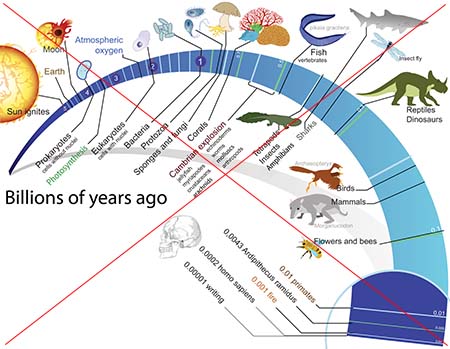 There is an important rule that helps us to know how to think properly: the Law of Rationality. It says that we shouldn’t believe in something without enough evidence for it. If evolution is true, then there should be evidence that proves it. Otherwise, to believe in it is “irrational,” and amounts to putting on a blindfold, jumping off a cliff, and blindly believing someone will catch you before you hit the bottom. Not a good idea! In this issue of Discovery, we are going to look at several of the common evidences that are said to prove evolution is true, starting with a look at genetic mutations and fossils.
 According to many evolutionists, a simple, single-celled organism sprang into existence 3,800,000,000 years ago on Earth (that’s a lot of years!). There is no evidence that life could come from non-life, and in fact, there is so much evidence against the idea that there is a law that says it cannot happen (the Law of Biogenesis). So evolution is irrational. But many still believe it happened anyway. Then, they say, over millions of years, that life changed and became something not quite as simple—it was more complex. And then…it happened again…and again…and again…over, and over, and over. Eventually, you were born. Is there evidence this idea of evolution could ever happen?
 |
| www.wikipedia.org (DRGNU23) 2017 CC-BY-SA-3.0 |
Many evolutionists believe so, because they say whenever a cell reproduces, it will sometimes not reproduce correctly—the cell that is “born” is mutated (different from what it is supposed to be). Evolutionists believe that if enough mutations build up in a creature, it would eventually change into a human over millions of years! The problem is that even though mutations happen, there has never been any proof that mutations cause a totally new creature to evolve. When fruit flies mutate, they are still fruit flies. When finches have baby finches that have different sized beaks or different colors than their mommy and daddy finches, they are still finches. When bacteria change and become resistant to antibiotics, making it harder for you to get well when you are sick, nobody argues that the mutated bacteria that are hurting you are no longer bacteria. The rule we see from observing the evidence is that mutations cannot create new raw material or information. In other words, mutations might cause you to have an extra toe, since you already have toes in your genes, but they won’t cause you to have wings, since that would require new raw material to be added/written into your genes. Mutations in fruit flies might cause them to have extra wings, but not a beak. That is what the evidence tells us.


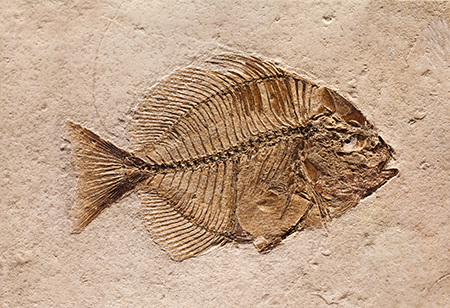
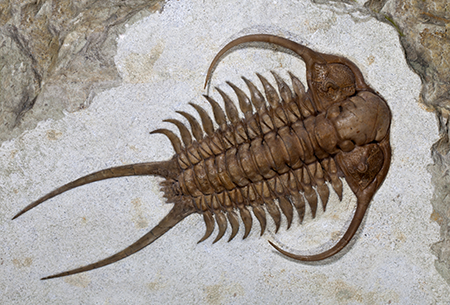
But even if mutations could allow evolution to happen (which it can’t), we should find evidence that it actually did happen when we look at the fossil record. If evolution happened, we would predict that after digging in the dirt and rocks for over 180 years since Charles Darwin proposed his form of evolution, paleontologists and geologists should have found a chain of fossils from humans all the way back to the single-celled organism that started life. There should be fossils of creatures that are part human and part ape-like. There should be creatures that are part reptile, part amphibian, and others that are part amphibian and part fish. But the fossil record does not show that evidence. In fact, one leading evolutionist admitted that the evolution of man is based on “meager evidence.” As we have shown in other issues of Discovery, each new fossil that evolutionists discover and claim to be proof of evolution ends up being wrong, or at the very least, highly debated by the evolutionists themselves, and never proven to be true.
The truth is, if evolution is rational, there should be evidence that one type of living creature can change into another, and there should be abundant evidence in the fossil record that it happened. Fossils and mutations can hardly be used as solid evidence for evolution if even the evolutionists cannot agree that they support evolution. Bottom line: there is no evidence that proves evolution, and it would be irrational to believe it.
The post Mutations and Fossils: Proof of Evolution? appeared first on Apologetics Press.
]]>The post Human Evolution: Beyond Preposterous appeared first on Apologetics Press.
]]>It has always intrigued me that the evolutionary side of the aisle seems to be notably silent about the fact that at the beginning of the human species, not merely a single human had to come into existence from a non-human—an impossible feat on its own. Neither is it the case that merely two human beings had to evolve onto the scene, either. Rather, at least one male and one distinctly different human being—the female; equipped with a significantly different anatomy—had to evolve simultaneously on the Earth in order for the human species to propagate itself. In other words,one male human could not have randomly come into existence one day, and a female two hundred years later. No, there had to be representatives of both genders on the Earth simultaneously, doubling the impossibility of the event.
Further, those male and female human bodies had to also contain the fully functional reproductive components that would be necessary to replicate humanity. And even further, those male and female human beings had to accidentally run into each other on planet Earth—a sphere with a surface area of 196,900,000 square miles. They had to find each other in what is thought to have been a very hostile and primitive Earthly environment as well—without first starving or being eaten by the ferocious animals that evolutionary images of early man portray.
They had to find each other while they were in the childbearing years, as well—not too old or young to reproduce before the other individual died. Assuming the two were able to find each other at the right time (and were willing and able to reproduce with each other), mother and child then had to survive the ordeal of child birth in those allegedly primitive circumstances.
Running into any one of these significant barriers to success would have killed off humans before we got started. If the accidental emergence of a single human being from a non-human being seems ludicrous to you, surely the other requirements necessary to make the species stick shows the evolutionary proposition to be beyond preposterous.
Endnotes
1 W. Stanley Jevons (1888), Elementary Lessons in Logic: Deductive & Inductive (New York: MacMillan), p. 119.
2 Antony G.N. Flew and Thomas B. Warren (1977), The Warren-Flew Debate on the Existence of God (Jonesboro, AR: National Christian Press).
3 Jeff Miller (2014), “God and the Laws of Science: Genetics vs. Evolution [Part 1],” Apologetics Press, https://www.apologeticspress.org/APContent.aspx?category=9&article=4779&topic=296.
Science vs. Evolution
The post Human Evolution: Beyond Preposterous appeared first on Apologetics Press.
]]>The post Monkey See, Monkey Do? appeared first on Apologetics Press.
]]>Consider, for instance, man’s ability to speak. The Bible tells us that Adam was created with this ability “in the beginning.” The very day he was created, he named all of the animals before him (Genesis 2:19), and later he used language to offer excuses as to why he disobeyed God. Humans carry on conversations all the time. But when is the last time you heard the monkeys down at the zoo converse with one another using words? Or, when have you ever seen your dog talking to (not barking at) the cat next door? As one evolutionist admitted: “Language does indeed create a gulf between Homo sapiens [humans] and the rest of the natural world.” The gift of speech is a fundamental part of man’s nature that likens him to God and separates him from the rest of creation.
 Unlike animals, man also is creative. He has built spaceships that travel 240,000 miles to the Moon; he has made artificial hearts for the sick; and he continues to construct computers that can process billions of pieces of information a second. Animals, on the other hand, cannot do such things because they lack the creative ability that God gave only to man. Beavers may build huts, and spiders may weave webs, but they are guided by instinct. Thousands of attempts have been made to teach animals to express themselves in art, music, and writing, but none has produced the hoped-for success. Simply put, a huge gap exists between humans and animals in the realm of creativity.
Finally, unlike animals, man always has sought to worship a higher being. Even when he departs from the true God, man still worships something, whether it is a tree, a rock, or even himself. No race or tribe of men anywhere in the world lacks the ability and desire to worship. However, no chimp or dog ever stopped to sing a hymn of praise or offer a prayer of thanks to its Creator.
There is no doubt that man’s unique abilities separate him from the animal world and liken him to God. The first chapter of the Bible reveals that humans are created “in the image of God” (Genesis 1:26-27). This doesn’t mean God created us in His physical image, because God is spirit (John 4:24), and spirits don’t have a physical body (Luke 24:39). Instead, we were created with many of the qualities God possesses (though on a different level)—like being able to speak, to love, to make our own choices, and to be quite creative. How awesome it is to know that we bear God’s image!
The post Monkey See, Monkey Do? appeared first on Apologetics Press.
]]>The post Homo Naledi—Kind of Shady? appeared first on Apologetics Press.
]]>
On September 10th the media began highlighting the latest fossil find which is argued, once again, to be representative of an ancient ancestor of humans—Homo naledi. We are wary about how we respond to brand new discoveries, since always the “jury is still out” when these stories are first splashed in the media and portrayed as conclusive proof of various claims. We have documented their rashness time and again (e.g., Miller, 2015a; Miller, 2015b; Miller, 2015c), and this story is no exception. Fox News highlighted South African deputy president Cyril Ramaphosa’s statement that “history books will have to be rewritten” based on this discovery (Tilsley, 2015), a statement very reminiscent of how the media viewed the Homo floresiensis fossils when they were discovered in 2004. In 2014 a new study suggested that the fossils were merely modern humans with Down Syndrome (Miller, 2015b). In keeping with previous trends among naturalists and the media, it seems likely that this newest discovery will again, in the long run, prove not to be what the media is currently claiming it to be, once further study has been done on the fossils—as was the case with Homo floresiensis,Australopithecus sediba (Miller, 2015c), and the Big Bang inflation debacle last year (Miller, 2015a). With these facts in mind, here are some of the details we can gather at this initial stage.
Lee Berger is the evolutionary paleoanthropologist of the University of Witwatersrand in South Africa who has been in the media a lot the past few years due to the discovery of the Australopithecus sediba fossils (Miller, 2012a; Miller, 2012b; Miller, 2015c). Once again, his team has been at the heart of the newest discovery. Though the find is only now being broadcast, the discovery took place in 2013 and was kept secret for two years. They discovered ancient bones and teeth in a cave system in Africa that now number over 1,500 in specimens—an unheard of cache of “human-like” fossils from a single site (Callaway, 2015). The bones are thought to be representative of some 15 individuals.
 |
| Credit: Lee Roger Berger research team (http://elifesciences.org/content/4/e09560) [CC BY 4.0], via Wikimedia Commons |
The first thing you will likely notice in many of the articles splashing the find is the paleoartist depiction of what Homo naledi is thought to have looked like (e.g., Shreeve, 2015; Barras, 2015; Watson, 2015). This portrait should immediately cause skepticism, since mere bones do not tell you what a person’s facial expressions, eye color, skin color, facial wrinkles, hair color, or lips would have looked like, even if a complete skull had been found. Yet all of these features are brazenly depicted in the naledi reconstruction (and even emphasized in the case of National Geographic’s home Web page the day after running the story, which featured a close-up of nadeli’s eye region, complete with freckles around the eyes and red blood vessels in the whites of its eyes). When such liberties are taken and brazenly broadcast to the media’s audience as solid science, the effect is powerful. As we reported earlier this year regarding the sediba fossils (Miller, 2015c), paleoartists have been extremely influential in shaping the minds of the masses in whether they view evolution as true or false, in spite of the fact that their artistic depictions are typically created based on meager evidence—what New Scientist calls “part of a face here” or “a jawbone fragment there” (Barras). USA Today described the nadeli discovery as “1,550-plus bits of fossil” (Watson, emp. added). New Scientist highlighted Berger’s contention that the naledi discovery “has implications for how we interpret the other early human fossil finds…. These fossils generally amount to just a few fragments rather than complete skeletons” (Barras, emp. added). As he pointed out after discovering the sediba fossils, Berger now adds, “Both sediba and naledi say you can’t take a mandible [lower jaw], a maxilla [upper jaw] or a collection of teeth and try to predict what the rest of the body looks like” (as quoted in Barras). Based on what happened in the case of the sediba fossils, having more than said evidence still does not guarantee correct depictions (Miller, 2015c). Apparently the paleoartists are still not getting the message from leading paleoanthropologists.
There are other curiosities already being highlighted at this early stage of the discovery: the age of the fossils is unclear—anywhere between 200,000 and 2,800,000 years (Tilsley), based on evolutionary dating schemes, and where the fossils fall in that range is significant from an evolutionary perspective. [NOTE: Creationists would argue that those dates correlate to the post-Flood period a few thousand years ago.] USA Today quoted Berger’s thoughts regarding the fossils:
[T]he bodies may have been deliberately placed in the cave, suggesting that long-ago, human relatives were engaged in ritual disposals of their dead. “It’s enormously surprising to see a very primitive member of the genus, something with this small a brain,” engaged in activity that was thought to be unique to modern humans (as quoted in Watson).
Fox News quoted Berger saying, “‘This is a new species of human that deliberately disposed of bodies in this chamber.’…Up until now, Berger adds, it was thought that Homo sapiens were the first beings to choose to dispose of their dead. ‘Now, with Homo naledi, we have evidence of the world’s first burial site,’ he said” (Tilsley).
This claim is, as Berger notes, completely inconsistent with the paleoanthropology community’s previous claims about Homo sapiens. If Berger is right that the naledi buried their dead, and if the fossils are dated by evolutionists to be over a million years old (using their time scales), then paleoanthropologists have been wrong in their bold claims about Homo sapiens. Previously, the oldest evidence of human burial was dated by evolutionists as 430,000 years ago (Callaway). Since burial of dead bodies is considered a mark of intelligence that distinguishes humans from the animal kingdom, Berger’s find could provide tangible evidence that what we would call “humans” (roughly the genus “Homo”) have always been intelligent, rather than that trait evolving within humans. [NOTE: Creationists argue that there would have been a few thousand “proto-species” (called “kinds” in the Bible—cf. Genesis 7:14), on Noah’s Ark with immense genetic capability for creating the diversity we see on the planet today within those kinds, including the diversity we see within Homo sapiens. Humans, therefore, would not have necessarily looked exactly as we do today, but would have still been humans (just as caucasoid, mongoloid, and negroid physiologies today do not look exactly the same). Legitimate examples of ancient humans are likely representative of the humans flourishing in the centuries immediately following the Flood a few thousand years ago. Dating schemes that expand that time scale to hundreds of thousands or millions of years suffer from flawed assumptions—cf. Houts, 2015; Miller, 2013.]
Another inconsistency in the naledi discovery: the jumble of fossils that were found in the shaft, if they all belong to the same species, seem to represent a species with a strange hodgepodge of characteristics that do not seem plausible. The skull seems to have harbored a smaller, ape-like brain, while the lower limbs, feet, and hands that were discovered, according to paleoanthropologists, seem to be more like that of modern humans. New Scientist reported,
The species the bones belonged to had a unique mix of characteristics. Look at its pelvis or shoulders, says Berger, and you would think it was an apelike Australopithecus which appeared in Africa about 4 million years ago and is thought to be an ancestor of Homo. But look at its foot and you could think it belonged to our species…. Its skull, though, makes clear that the brain was less than half the size of ours, and more like that of some species of Homo that lived about 2 million years ago. “It doesn’t look a lot like us,” says Berger (Barras).
Quoting John Hawks, paleoanthropologist at the University of Wisconsin-Madison, Nature reported, “It is a very strange combination of features, some that we’ve never seen before and some that we would have never expected to find together” (Callaway, emp. added). Of course, the reason for that expectation is justified: the combination of such body components does not make sense. It is very possible that in actuality the bones might not actually belong together at all—a contention that was argued by paleoanthropologists against Berger’s sediba fossils last year (Miller, 2015c). As with sediba, they may be merely a jumble of bones from different species. After all, Hawks, who helped coordinate the dig for naledi, admitted that “the team took flak for its unorthodox approach. ‘There’s a lot of the field that really believed we’re just a couple of cowboys who don’t know how things should be done’” (as quoted in Callaway). Of course, when the strange inconsistencies of this find are added to the previously botched assertions of Berger in the sediba find, it provides evidence that the critics may have a point.
Berger argues that “the bodies appear to have been dropped from above down a chute formed by rocks which forms the entrance to the chamber” (Tilsley). Could it, instead, be the case that the bodies of several different people and animals all fell down the chute and were trapped there, rather than having been intentionally dropped down the chute? Science highlighted that possibility (Gibbons, 2015, p. 1150). Such would explain why there’s a hodgepodge of bones from apparently different species. Remains from rodents and an owl were also found (p. 1150). Since the hundreds of bones were found disarticulated (i.e., separated from one another rather than in skeletal frame position), there is no conclusive way to know which bones go with which species—and by implication, no way to know if there are or are not multiple species represented.
No wonder, even at this early stage, paleoanthropologists who are critical of Berger’s claims are not hard to find. USA Today reported reactions by two of them:
Other scientists find the new trove of fossils tantalizing but don’t necessarily agree with Berger and his team on what, exactly, has been found. The fossils are “fabulous and a bit confusing,” says New York University’s Susan Anton via email. “There are some things in this that just don’t look like early Homo,” or at least the fossils of early Homo from east Africa. “The material is spectacular,” says the University of Pittsubrgh’s [sic] Jeffrey Schwartz….” But “the interpretation of it … is doubtful.” He points out varying skull shapes, among other features, among the Naledi specimens and argues the Homo family is so poorly defined that it’s not clear Naledi fits into it (Watson, emp. added).
Apparently the find isn’t as clear as it is being portrayed. Nature quoted Schwartz as well: “However, Jeffrey Schwartz, an evolutionary biologist at the University of Pittsburgh in Pennsylvania, thinks that the material is too varied to represent a single species. ‘I could show those images to my students and they would say that they’re not the same,’ he says. One of the skulls looks more like it comes from an australopithecine, he says, as do certain features of the femurs” (Callaway). Apparently, Schwartz agrees with my first take on the evidence: there’s more than one species represented by the fossils. Fox News admitted that “[n]ot everybody agreed that the discovery revealed a new species. Tim White of the University of California, Berkeley [who is most known for his work on the famous “Lucy” fossils—JM], told The Associated Press the claim is questionable. ‘From what is presented here, (the fossils) belong to a primitive Homo erectus, a species named in the 1800s,’ he said” (Tilsley, parenthetical statement in orig.). New Scientist included its disclaimers as well:
Inevitably, though, there are dissenting views. “To me, having studied virtually the entire human fossil record, the specimens lumped together as Homo naledi represent two cranial morphs,” says Jeffrey Schwartz at the University of Pittsburgh in Philadelphia. Ian Tattersall at the American Museum of Natural History in New York shares that view. Last month, he and Schwartz wrote an article calling for researchers to think carefully about classifying new fossils as belonging to Homo. As for the Dinaledi finds, Schwartz and Tattersall point out that although the foreheads of some of the new skulls are gently sloped, one skull has a taller forehead with a distinct brow ridge—suggesting two species are present. “Putting these fossils in the genus Homo adds to the lack of clarity in trying to sort out human evolution,” says Schwartz (Barras).
Bottom line: the evolutionary community must continue its search for conclusive evidence of its claims that we evolved from an ape-like creature. On a positive note, it is refreshing that Lee Berger, unlike the bulk of the paleoanthropological community, is insistent about not hoarding his fossil finds where few can examine them to see the evidence for themselves. Noting the change in practice that Berger is creating in the community by being so open, paleoanthropologist of the University of Kent in Canterbury, UK, Tracy Kivell, said, “There’s lots of fossils out there no one has ever seen, except for a few select people. Palaeoanthropology is really rotten that way” (Callaway). Is it possible that if the paleoanthropological community was more forthcoming with their alleged evidences for evolution, more scientists would be able to assess the evidence and more quickly discover flaws in claims being made? In so doing, would they not highlight for the world, before the world forgets the previous flawed claims, how unsupported by solid evidence the theory of evolution truly is?
REFERENCES
Barras, Colin (2015), “New Species of Extinct Human Found in Cave May Rewrite History,” NewScientist.com, September 10, https://www.newscientist.com/article/mg22730383-700-new-species-extinct-human-found-in-cave-may-rewrite-history/.
Callaway, Ewen (2015), “Crowdsourcing Digs Up an Early Human Species,” Nature.com, September 10, http://www.nature.com/news/crowdsourcing-digs-up-an-early-human-species-1.18305.
Gibbons, Ann (2015), “New Human Species Discovered,” Science, 349[6253]:1149-1150, September 11.
Houts, Michael G. (2015), “Assumptions and the Age of the Earth,” Reason & Revelation, 35[3]:26-34, March, http://apologeticspress.org/apPubPage.aspx?pub=1&issue=1185.
Miller, Jeff (2012a), “Australopithecus Sediba: Evolutionary Game Changer?” Reason & Revelation, 32[3]:33-35, March, http://apologeticspress.org/APPubPage.aspx?pub=1&issue=1024&article=1741#.
Miller, Jeff (2012b), “Sediba Hype Continues,” Reason & Revelation, 32[9]:92-93, September, http://apologeticspress.org/apPubPage.aspx?pub=1&issue=1093&article=2039.
Miller, Jeff (2013), “Don’t Assume Too Much: Not All Assumptions in Science Are Bad,” Reason & Revelation, 33[6]:62-70, June, http://apologeticspress.org/apPubPage.aspx?pub=1&issue=1122.
Miller, Jeff (2015a), “Big Bang Inflation Officially Bites the Dust,” Reason & Revelation, 35[6]:62-65, June, http://apologeticspress.org/apPubPage.aspx?pub=1&issue=1195&article=2514.
Miller, Jeff (2015b), “Hobbit Man: Another Blunder…And an Insult,” Reason & Revelation, 35[4]:46-47, April, http://apologeticspress.org/apPubPage.aspx?pub=1&issue=1188&article=2503.
Miller, Jeff (2015c), “Sediba: Yet Another Paleo-Blunder,” Reason & Revelation, 35[6]:66, June, http://apologeticspress.org/apPubPage.aspx?pub=1&issue=1195&article=2516.
Shreeve, Jamie (2015), “This Face Changes the Human Story. But How?” NationalGeographic.com, September 10, http://news.nationalgeographic.com/2015/09/150910-human-evolution-change/.
Tilsley, Paul (2015), “Mass Grave of New Human Relative Discovered in South Africa, Claim Scientists,” FoxNews.com, September 10, http://www.foxnews.com/science/2015/09/10/mass-grave-new-human-relative-discovered-in-south-africa-claim-scientists/?intcmp=hpbt1.
Watson, Traci (2015), “Ancient Fossils in African Cave are Tantalizing Glimpse of Early Man,” USAToday.com, September 10, http://www.usatoday.com/story/news/2015/09/10/fossils-humans-cave-ancient-bones/71966570/?hootPostID=69a85859aa6fa7ba18f77917410b6df1.
The post Homo Naledi—Kind of Shady? appeared first on Apologetics Press.
]]>The post The True Story of Man’s Origin appeared first on Apologetics Press.
]]>“In the beginning God created the heavens and the earth.” This is the first sentence in Genesis, the first book of the English Bible. The first two chapters of Genesis tell how God created the Sun, Moon, sky, land, plants, animals, and everything in this Universe in six, 24-hour days. But there was one special creature that God created who was not like any of the animals.
On the sixth day of Creation, God said “Let Us make man in Our image, according to Our likeness” (Genesis 1:26). In order to make man, God formed him from the dust of the ground and breathed into his nostrils the breath of life. His name was Adam. Adam was God’s greatest creation on Earth; he could walk, talk, think, make decisions, and do many other things that the animals could not do. But there was one problem; Adam was very lonely because none of the other creatures was a suitable helper for him. For this reason, God caused Adam to fall into a deep sleep. As Adam slept, God took one of his ribs and used it to form a woman whom Adam called Eve. Adam and his wife Eve were the first two people to walk on the Earth. They did not evolve from ape-like creatures over a long period of time. God created them on the sixth day of the first week.
Even Jesus spoke about Adam and Eve when He said, “from the beginning of the creation, God made them male and female” (Mark 10:6). If evolution were true, the Universe would have existed billions of years before humans ever existed. That would mean that Jesus did not tell the truth. But we know that Jesus always told the truth. And we know that humans have been on the Earth “from the beginning of creation”—the sixth day of the very first week of Creation to be exact.
You are a human being who has been made in the image of God, exactly like your ancestors Adam and Eve. Don’t be fooled into thinking that humans evolved, because they did not!
The post The True Story of Man’s Origin appeared first on Apologetics Press.
]]>The post What is Horizontal Gene Transfer, and Does it Support Evolution? appeared first on Apologetics Press.
]]>[EDITOR’S NOTE: The following article was written by A.P. auxiliary staff scientist Dr. Deweese who holds a Ph.D. in Biochemistry from Vanderbilt University.]
One of the foundational principles of biology and genetics is the concept that parents pass genetic material (DNA) to offspring. This parent-to-offspring transmission is also called vertical gene transfer (VGT). For many years, scientists have also known that genetic information can also be passed between organisms (usually between bacteria) in a process called horizontal gene transfer (HGT), previously known as lateral gene transfer (LGT). For example, HGT allows bacteria to share genes such as those that confer antibiotic resistance, which helps explain how resistance can spread in populations of bacteria. Another form of HGT takes place when a parasite is able to incorporate genetic information into a host organism (Dunning Hotopp, et al., 2007).
Over the last two decades, with the completion of entire genome sequences for numerous organisms, scientists have been comparing DNA sequences for similar genes found in different organisms. These comparisons have shown that not all genes can be explained through a typical evolution-by-common-descent model where all genetic information is passed through VGT. In other words, some organisms share similar genes that are not found in their alleged “common ancestors,” as they would be expected to if Darwinian evolution is true. As Institute for Creation Research geneticist Dr. Jeff Tomkins notes, these genes are referred to as “orphan” genes (Tomkins, 2013). The question then arises, where did these genes come from, if not from an ancestor? Thus, in an effort to explain the presence of genes that are not found in supposed evolutionary ancestors, some researchers have utilized the concept of HGT to explain these genes even in multicellular eukaryotes. It should be noted that HGT is a controversial topic and not all evolutionists accept the HGT hypothesis for the origin of genes. Additionally, utilizing HGT to explain the presence of these genes is a large step beyond the actual “observed” cases of HGT. Again, while HGT is observed in bacteria and in a few parasite-host relationships, there is no observed mechanism for genes to spread between multicellular organisms in a horizontal fashion (Tomkins, 2015).
Interestingly, a recently published report suggested that HGT may be needed to explain dozens if not hundreds of genes in humans and non-human primates (Crisp, et al., 2015). In fact, this study identifies dozens of “foreign” genes in the human genome. Note that the criteria for deciding whether genes are “foreign” or not relies on the presupposition of evolution by common descent. In other words, “foreign” genes are those that cannot be explained by standard VGT from alleged “common ancestors.” Thus, these authors suggest that such genes must be explained by HGT (Crisp, et al.).
This study has been reviewed by Tomkins, who has been part of bacterial HGT studies in the past (Dunning Hotopp, et al., 2007). He observes several problems with this current study, including the way genes are compared using only homologous sequence segments rather than the entire gene sequence (Tomkins, 2015). In addition, the genes identified in the study include a number of essential enzyme activities—including enzymes involved in amino acid, lipid, and nucleotide metabolism (Crisp, et al.). These enzymes are integral components of metabolic pathways rather than expendable transplants from distant organisms. Further, the authors do not suggest any mechanism for how HGT would supposedly work between multicellular organisms. As Tomkins points out, HGT between multicellular organisms would require the new genes to be brought into the germline cells, incorporated into the genome, and then transmitted to offspring (2015). There are barriers to these events happening at many levels. Finally, these genes would need to be expressed, regulated, and become incorporated into the existing metabolic networks. Each of these barriers poses significant challenges to the use of HGT to explain the spread of genes.
The fact is, there is currently no evidence that HGT can occur in the wild between multicellular organisms. Further, there are no observed mechanisms for this transfer to take place. The fact that the genes identified in the study quoted above impacted important enzymes and metabolic pathways implies that these genes are part of complex and integrated networks—they do not represent minor functions in many cases. Taken together, it is clear that relying on HGT to explain the spread of “foreign” genes is a stretch, at best, and currently is lacking key pieces of evidence. This is not the first time—and will not be the last time—that evolutionists strain to interpret straightforward evidence. The fact that genes cannot be attributed to VGT and common descent could, instead, be interpreted to mean that these genes were placed there by design, which would be the simplest and most obvious explanation.
REFERENCES
Crisp, A., C. Boschetti, M. Perry, A. Tunnacliffe, and G. Micklem (2015), “Expression of Multiple Horizontally Acquired Genes Is a Hallmark of Both Vertebrate and Invertebrate Genomes,” Genome Biology, 16[1]:50.
Dunning Hotopp, J.C., M.E. Clark, D.C. Oliveira, et al. (2007), “Widespread Lateral Gene Transfer from Intracellular Bacteria to Multicellular Eukaryotes,” Science, 317[5845]:1753-1756.
Tomkins, J.P. (2013), “Newly Discovered ‘Orphan Genes’ Defy Evolution,” http://www.icr.org/article/newly-discovered-orphan-genes-defy.
Tomkins, J.P. (2015), “Another Horizontal Gene Transfer Fairy Tale,” http://www.icr.org/article/8673.
The post What is Horizontal Gene Transfer, and Does it Support Evolution? appeared first on Apologetics Press.
]]>The post Sediba: Yet Another Paleo-Blunder appeared first on Apologetics Press.
]]>In fact, once again, a complete 180 degree turnaround is underway. An article appearing in New Scientist in 2014 started with the sentence, “One of our closest long-lost relatives may never have existed. The fossils of Australopithecus sediba, which promised to rewrite the story of human evolution, may actually be the remains of two species jumbled together” (Barras, 2014). Ella Been of Tel Aviv University in Israel studies the spines of ancient hominins and ran across a paper in Science magazine that assessed the spine of sediba. After conducting her own study, Yoel Rak (also of Tel Aviv) and she “conclude that there are not two but four individuals” represented by the sediba fossils—separate individuals whose bones were mixed up during the (catastrophic) event that began the fossilization process (Barras). They presented their study at a meeting of the Paleoanthropology Society in Calgary, Canada in April, 2014. This revelation, once again, highlights how easy it is for evolutionists to be wrong in their conclusions about fossils, especially considering that their conclusions are based on “meager evidence” (Wong, p. 31), like a “toe bone here or a jaw there” (DiChristina, 2012, p. 4).
Recall from our last article addressing sediba that Lee Berger, the evolutionary paleoanthropologist of the University of Witwatersrand in South Africa who discovered the sediba fossils, chided the standard practice in the paleontological community of trying to draw too much information from single, isolated bones. The sediba skeletons were thought to be more complete than typical fossil finds (even though the sediba skeletons were nowhere near being even 50% complete). Berger argued that if any of the bones he found had been found isolated, as is the typical scenario in fossil finds, completely different conclusions would have been drawn about the skeletal anatomy. He said, “Sediba shows that one can no longer assign isolated bones to a genus” (as quoted in Wong, p. 34). Ironically, now even his discovery, which was thought to be more complete, has also apparently been shown to be inadequate in determining the anatomy of an ancient skeleton. His assessment appears to have fallen victim to the same erroneous practice in paleontology that he chided. To make matters worse, according to the New Scientist article, “Berger’s latest work hints that the young male’s vertebrae may show signs of disease. If so, they are not representative of the species” (p. 11). That would mean that the sediba fossils cannot even be used as evidence of a transitional species, since the normal anatomy of the species would remain unknown.
The fossil record should be filled with billions of transitional fossils if Darwinian evolution actually occurred, but as we have highlighted time and again—and even many of the evolutionists themselves frequently admit—the evidence for the evolution of humans from an ape-like ancestor is lacking. The fossil record continues to support what creationists predict to be the case if the biblical model is true. God created the original “kinds” (Genesis 1:21,24-25) of creatures, and only diversification within those kinds has occurred over time. Believing that we evolved from a single-celled organism billions of years ago amounts to a wild, irrational leap.
REFERENCES
Barras, Colin (2014), “Missing Link Fossils May Be a Jumble of Species,” New Scientist, 222[2964]:11, April 12.
Butt, Kyle (2010), “Australopithecus Sediba: Another Relative We Never Had,” Apologetics Press, http://apologeticspress.org/APContent.aspx?category=9&article=2872.
DiChristina, Mariette (2012), “The Story Begins,” Scientific American, 306[4]:4, April.
Miller, Jeff (2012a), “Australopithecus Sediba: Evolutionary Game Changer?” Reason & Revelation, 32[3]:33-35, March, http://apologeticspress.org/APPubPage.aspx?pub=1&issue=1024&article=1741#.
Miller, Jeff (2012b), “Sediba Hype Continues,” Reason & Revelation, 32[9]:92-93, September, http://apologeticspress.org/apPubPage.aspx?pub=1&issue=1093&article=2039.
Potter, Ned (2011), “Evolutionary ‘Game Changer’: Fossil May Be Human Ancestor,” ABC News, September 8, http://abcnews.go.com/Technology/fossils-south-africa-called-evolutionary-game-changer/story?id=14474976#.Tmou Xw8wezs.email.
Wong, Kate (2012), “First of Our Kind,” Scientific American, 306[4]:30-39, April.
The post Sediba: Yet Another Paleo-Blunder appeared first on Apologetics Press.
]]>The post Q&A: How Do Creationists Explain These Facts? appeared first on Apologetics Press.
]]>
This series of claims appears to offer irrefutable evidence in favor of evolution by common descent and has been often repeated on blogs and news Web sites. The premise of these claims is that if all life evolved from a common ancestor, there should be genetic remnants of our evolutionary past still present in the genomes of all organisms. Initially, these claims may sound insurmountable as evidence for our supposed evolutionary ancestry. However, several important points need to be made to clarify this “evidence.” Further, these alleged evidences are easily explained and do not support common descent.
Before addressing the claims, a few points need to be made regarding terminology. First, these claims use the term “genes” without clarifying exactly what is meant, which is very common in popular media. The term gene was coined by a Danish biologist named Wilhelm Johannsen over 100 years ago to describe the units of inheritance identified in Gregor Mendel’s research (“1909: The Word Gene Coined,” 2013). While this was a convenient way to describe these “units of inheritance,” our understanding of these factors has expanded dramatically in recent years. The idea that a single gene controls a specific trait or feature is generally an oversimplification. In other words, a visible trait (known as a “phenotype”) is the product of a series of genetic factors (known as the “genotype”). For example, eye color in humans results from the combination of specific versions (called alleles) of at least two different genes. More modern definitions have linked the idea of a gene to a sequence of DNA that is used to produce a protein. However, even this fails to capture the full idea of what a gene is since a number of DNA sequences are functional (and influence phenotype) without producing a protein product.
Applying this understanding to the claims being addressed above, it should be noted that the use of the word “gene” is misleading at best. The “genes” in some of the above questions are actually part of the sophisticated network of protein-coding and non-protein coding genes involved in body plan development (i.e., that control the development of structures and physical features while an organism is developing). These genes participate in an impressively well-orchestrated ballet that controls the location of body structures in embryos during development. So, there really aren’t specific “genes for legs” or “genes for tails.” Instead, alteration of the temporal and spatial presence of the protein products of development-regulating genes will alter the physical structures of a developing embryo.
_________________________________________________________________________________
A “gene” generally refers to a sequence of DNA that contains the information that is transcribed into RNA and translated into a protein product. This DNA
RNA
_________________________________________________________________________________
Second, genes involved in body plan development are important to multicellular organisms, and there are several genes involved in development that have homologous (similar) genes that are present in very diverse sets of organisms. For example, the homeobox or HOX genes are a family of genes that are found in a wide array of organisms. These genes are involved in body plan development and slight changes to these genes can have extreme consequences on the structure and viability of an organism (McGinnis and Krumlauf, 1992, pp. 283-302; Mallo, et al., 2010, pp. 7-15). The tight regulation of HOX genes is evident from experimental results showing that mutations in HOX can alter body plan and neural development and even cause cancer (Philippidou and Dasen, 2013, pp. 12-34; Quinonez and Innis, 2014, pp. 4-15). This function underscores the fact that these genes are critical and must be precisely regulated in order for body plans to develop properly. While mutations in HOX genes can lead to extra limbs or other features, the additional features often are nonfunctional and are usually detrimental to the organism.
Third, HOX genes and other genes involved in development are often hailed as evidence of evolution by common descent. This is because HOX homologs are found in many different organisms, which is interpreted as evidence that these genes arose during evolution and passed from one life form to the next. However, it is proposed that some genes (including genes involved in growth and development) evolved independently multiple times (Irimia and Garcia-Fernandez, 2008, pp. 1521-1525). In other words, some homologous genes present in unrelated organisms arose independently, rather than from a common ancestor. According to this interpretation, evolution solved some of the same problems several times (i.e., in different lineages, independently). Rather than suggesting that these genetic discordances are evidence of common design, the concept of convergent evolution was invented to “explain away” these coincidences (Bergman, 2001, pp. 26-33). While convergent evolution is a convenient concept, it does not explain how these genes or sets of genes evolved once, let alone multiple times independently (Meyer, 2013).
So, what should we make of these claims? Let us examine each one briefly to understand what the claims are and what the evidence is. First, do whales have “genes for legs”? While whales have developmental genes just like other mammals, they do not have specific “genes for legs.” In fact, the only reason that “legs” are even mentioned is because of the presumed evolutionary ancestry of whales. In other words, why not call these “genes for extra fins/flippers”? Further, it should be noted that there are a few extreme cases that have been documented in whales where bones around the pelvic region have been expanded and/or additional bones are present (Andrews, 1921, pp. 1-6). Contrary to some claims, the pelvic region in whales is not a vestigial structure. Rather, the bones in this region anchor the reproductive organs (Wieland, 1998, pp. 10-13; Dines, et al., 2014, pp. 3296-3306). Cases of “growths” or extra bones, while interesting, do not mean that whales once had legs. Is it possible that these occurrences are within the natural genetic variation of organisms? Take for example, the more recent story of a dolphin with a second set of fins (Wieland, 2006). Perhaps this is an example of our lack of understanding of the natural genetic variation found within these creatures? Again, the only reason that these structures are claimed to be “legs” is because of the evolutionary interpretation placed on top of the data. The fact that these anomalies exist does not negate Creation in any way. Rather than supporting common descent, these examples of variations and mutations really suggest a common design, including common developmental circuits built into the genomes of organisms (Ham, 2006; Sarfati, 2014).
Second, humans do not have genes for tails. This claim arises from the presumption that we evolved from ape-like ancestors and is based on two observations. First, there are newborns that have fatty tissue appendages on the rear of the child, which may appear tail-like. However, these appendages do not display characteristics of a tail in structure or function (Lamb, 2007). Further, these incidences are clearly the result of mutation—breaking gene function rather than developing something new. The second source of this claim comes from the appearance of a developing human embryo. During embryonic development, it may appear like humans have a tail, but this actually develops into the spinal column and coccyx. The coccyx is no longer considered a vestigial organ (Bergman and Howe, 1990, p. xii). So, there never is a “tail” even as an embryo. But what of the cases of extra bones beyond the coccyx? There are some documented cases of this, but this only supports the idea that there is variation among humans and not that humans have leftover “tail genes.” [For a more detailed discussion of “human tails,” see a series of articles by Casey Luskin (2014).] Further, there are numerous examples of anatomical variation among humans including cervical ribs, extra fingers or toes, absent muscles, and even differences in the branching pattern of the aorta (Moore, et al., 2014). Each of these examples suggest that anatomical variation is normal and highlights the differences in development that result from an individual’s unique genetic make-up.
Third, regarding humans having the genes for egg yolk, this claim is weak at best. The claim originates from a single published report suggesting that humans have remnants of a gene used to make a protein found in egg yolk (Brawand, et al., 2008, p. e63). When the data is examined, the “remnants” are a few very short sequence segments—most of which contain multiple mutations when compared to the sequences found in chickens [see supporting information in (Brawand, et al.)]. Unlike the claim that “humans have genes for egg yolks,” we in fact have a few short sequences (sequences represent portions of two to three exons out of 35 exons in the VIT1 gene) which poorly correspond to fragments of the rather large genes for these proteins. In fact, I would suggest that these sequence correspondences really are not remnants at all. Some of the sequences in question are actually part of other human genes. So, instead of being remnant sequences, these are more likely coincidental sequence similarities.
_________________________________________________________________________________
Homologous proteins are those that have similar structure (resulting from similar DNA/protein sequence) and function. The evolutionary assumption is that homologous features—including structures, proteins, etc.—are the result of evolution by common descent. However, homology does not necessarily imply common ancestry. Instead, we would argue from a biblical model these are excellent examples of common design features that were created to accomplish common functions.
_________________________________________________________________________________
Fourth, the claim that birds have genes for teeth likely centers around a 2006 study of a mutation in chickens called talpid2, which is a lethal recessive mutation that causes several developmental defects in chick embryos (Harris, et al., 2006, pp. 371-377). This mutation has been studied for over 60 years, and the 2006 study suggested that embryos with this mutation appeared to be developing a tooth-like structure before death (Harris, et al.). Evolutionary interpretations of these findings suggest that this mutation must indicate that there is some vestigial genetic programming for tooth development leftover in the genomes of chickens (“Mutant Chickens Grow Teeth,” 2006). But important points need to be made regarding those interpretations. First, the talpid2 mutation is known to impact the developmental gene called sonic hedgehog (shh), which plays critical roles in body plan patterning and development. Thus, it is no surprise that this mutation may cause drastic changes in body structure. Second, this mutation is lethal; so, clearly, it does not offer any benefit for the organism. Third, at the time of the 2006 study, the actual gene involved in this mutation was unknown. However, that gene has now been identified as C2CD3 (Chang, et al., 2014, pp. 3003-3012). This study noted that the actual function of the protein produced from this gene is not known, but they provided evidence that a deletion within this gene caused the talpid2 phenotype (Chang, et al.). Interestingly, this gene is somehow involved in production of cilia and the protein product is detectable in cells. Thus, far from being a “gene for teeth,” this gene appears to be important in embryonic development and somehow plays a role in cilia formation. Certainly, more details will be forthcoming as research continues, but this example does not support the idea that “birds have genes for teeth.” That said, it should be noted that there are examples of birds with teeth (e.g., Archaeopteryx; also, there is an egg tooth that is used to break out of eggs). So, we would not be surprised to find other birds with the genetic information to produce such structures, but the existence of those abilities in no way implies that birds evolved from animals with teeth. Further, it is also possible that there may be birds that have lost the ability to produce teeth through genetic mutation, but again, the talpid2 mutation does not appear to be such a case.
Conclusion
It is very important that we carefully examine the scientific evidence behind common claims that purport to show irrefutable evidence for evolution. An examination of the actual data shows that the evidence is not what it claims to be. It is important, however, that creationists also not oversimplify complex data. The details of science often make a big difference in interpretation of the data, as is seen with the talpid2 mutation example.
From a biblical worldview perspective, none of the above “evidences” are at odds with a Creation model. In fact, the presence of mutations and variation is consistent with the genetic degeneration anticipated in the modern concept of the Creation model (Sanford, 2008). Living on Earth after the Fall, with many generations of mutations already present in the genomes of organisms around the world, we must recognize that genetic degeneration continues to remind us of both the consequences of the Fall and the hope we have in Christ our Redeemer Who will clothe us with a new body (Philippians 3:21).
REFERENCES
“1909: The Word Gene Coined” (2013), http://www.genome.gov/25520244.
Andrews, R.C. (1921), “A Remarkable Case of External Hind Limbs in a Humpback Whale,” American Museum Novitates, [9]:1-6.
Bergman, Jerry (2001), “Does Homology Provide Evidence of Evolutionary Naturalism?,” Journal of Creation, 15[1]:26-33.
Bergman, Jerry and George F. Howe (1990), “Vestigial Organs”Are Fully Functional: A History and Evaluation of the Vestigial Organ Origins Concept (Terre Haute, IN: Creation Research Society Books).
Brawand, D., W. Wahli, and H. Kaessmann (2008), “Loss of Egg Yolk Genes in Mammals and the Origin of Lactation and Placentation,” PLoS Biology, 6[3]:e63.
Chang, C.F., E.N. Schock, E.A. O’Hare, et al. (2014), “The Cellular and Molecular Etiology of the Craniofacial Defects in the Avian Ciliopathic Mutant Talpid2,” Development, 141[15]:3003-3012.
Dines, J.P., E. Otarola-Castillo, P. Ralph, et al. (2014), “Sexual Selection Targets Cetacean Pelvic Bones,” Evolution, 68[11]:3296-3306.
Ham, K. (2006), “Dolphin Found with ‘Remains of Legs,’” https://answersingenesis.org/theory-of-evolution/evidence/dolphin-found-with-remains-of-legs/.
Harris, M.P., S.M. Hasso, M.W. Ferguson, and J.F. Fallon (2006), “The Development of Archosaurian First-Generation Teeth in a Chicken Mutant,” Current Biology, 16[4]:371-377.
Irimia, M., I. Maeso, and J. Garcia-Fernandez (2008), “Convergent Evolution of Clustering of Iroquois Homeobox Genes across Metazoans,” Molecular Biology and Evolution, 25[8]:1521-1525.
Lamb, A. (2007), “Human Tails and Fairy Tales,” http://creation.com/human-tails-and-fairy-tales.
Luskin, C. (2014), “Human Tails: Another Evolutionary Icon that Coyne, Giberson, and Other Darwin Defenders Would be Wise to Abandon,” http://www.evolutionnews.org/2014/05/human_tails_ ano085671.html.
Mallo, M., D.M. Wellik, and J. Deschamps (2010), “Hox Genes and Regional Patterning of the Vertebrate Body Plan,” Developmental Biology, 344[1]:7-15.
McGinnis, W. and R. Krumlauf (1992), “Homeobox Genes and Axial Patterning,” Cell, 68[2]:283-302.
Meyer, Stephen C. (2013), Darwin’s Doubt : The Explosive Origin of Animal Life and the Case for Intelligent Design (New York: HarperOne).
Moore, K.L., A.M.R. Agur, and A.F. Dalley (2014), Clinically Oriented Anatomy (Baltimore, MD: Lippincott, Williams, & Wilkins).
“Mutant Chickens Grow Teeth” (2006), http://news.sciencemag.org/2006/02/mutant-chickens-grow-teeth.
Philippidou, P. and J.S. Dasen (2013), “Hox Genes: Choreographers in Neural Development, Architects of Circuit Organization,” Neuron, 80[1]:12-34.
Quinonez, S.C. and J.W. Innis (2014), “Human Hox Gene Disorders,” Molecular Genetics and Metabolism, 111[1]:4-15.
Sanford, J.C. (2008), Genetic Entropy & the Mystery of the Genome (Waterloo, NY: FMS Publications).
Sarfati, J. (2014), The Greatest Hoax on Earth? Refuting Dawkins on Evolution (Atlanta, GA: Creation Book Publishers).
Wieland, C. (1998), “The Strange Tale of the Leg on the Whale,” Creation, 20[3]:10-13.
Wieland, C. (2006), “A Dolphin with Legs—Not,” http://creation.com/a-dolphin-with-legs-not.
The post Q&A: How Do Creationists Explain These Facts? appeared first on Apologetics Press.
]]>The post Hobbit Man: Another Blunder…And an Insult appeared first on Apologetics Press.
]]>The media called it Hobbit Man because he was thought to be only 3½ feet tall. Paleoartists quickly went to work depicting what this sub-human creature looked like. Writing in Time magazine, Michael Lemonick said,“What makes the discovery truly shocking is that the beings were not, like the Pygmies of equatorial Africa, just a short variety of modern Homo sapiens. Dubbed Homo floresiensis, they represent an entirely new twig on the human family tree…. The chapter of biology textbooks that describes our family tree will have to be rewritten” (2004, pp. 50-51). His recommendation was heeded. Homo floresiensis was subsequently added to biology textbooks in the section on primate evolution (e.g., Miller and Levine, 2010, p. 770).
This unfortunate series of actions highlights fundamental flaws in the practices of modern paleontologists and paleoartists. Paleoartists presumptuously construct portraits and models of creatures from woefully insufficient evidence from paleontologists, and yet their speculative, conjectured illustrations shape the minds of millions for years to come regarding human origins—even when they are later found to be totally wrong in their depictions. Java Man (based on the upper part of a skull, fossilized teeth, and a thigh bone), Piltdown Man (based on a jaw bone and a portion of a skull), Nebraska Man (based on a single tooth), Flipper Man (based on a fossilized rib), and Orce Man (based on a skull cap) are just a sampling of the infamous alleged missing links of human evolutionary history, grandiosely depicted by paleoartists, that proved to be completely erroneous (cf. Harrub and Thompson, 2003; Anderson, 1983). Writing in Science magazine, Michael Balter discusses his interview with anthropologist Adrienne Zihlman of the University of California, Santa Cruz, who highlighted eye-opening practices of those evolutionists working to sort out human evolution. Balter said, “In her view, much of the work that human evolution researchers do today is based on conjecture as well as hard science. The paleoartists, Zihlman told Science, ‘are doing what the rest of us do. Most of what we do is part art and part science’” (2009, p. 139, emp. added).
There is no doubt that paleoartists have been extremely influential in shaping the public mind about evolution and making people believe that Darwinian evolution is factual, and yet evolutionists admit that at least part of their work is based on conjecture. Only part of their work is science, the other part being “art.” How much of their work can be said to be conjecture and art versus actual science? The aforementioned examples seem to indicate a large part of their work must be the former in order to make such blunders, especially since paleoanthropologists admit that typical fossil finds are comprised of only a handful of isolated bones—fragments and teeth, for example (cf. DiChristina, 2012; Wong, 2012, p. 32).
The paleoartists are not the only ones at fault. Lee Berger is the famous paleoanthropologist of the University of Witwatersrand in South Africa who discovered the Australopithecus sediba fossils in 2008 (cf. Miller, 2012). Writing in Scientific American, Berger chided the standard practice in paleontology of trying to draw too much information from single, isolated bones. The sediba skeletons were more complete than typical fossil finds (even though the sediba skeletons were much less than 50% complete skeletons). Berger makes the point that if any of the bones he found had been found isolated, as is the typical scenario in fossil finds, completely different conclusions would have been drawn about the skeletal anatomy. He said, “Sediba shows that one can no longer assign isolated bones to a genus” (as quoted in Wong, p. 34). Paleoanthropologist and professor at George Washington University, as well as adjunct senior scientist at the National Museum of Natural History, Bernard Wood, agrees that Berger is “absolutely right”—that isolated bones cannot be used to predict the appearance of an animal (as quoted in Wong, p. 34). Sadly, it is unlikely that many paleoanthropologists will listen to their admonitions, since most fossils that have been discovered are indeed isolated bones that must be used to conjecture about human evolution. And yet evidence to support their admonitions continues to surface. The announcement in August, 2014 regarding Homo floresiensis highlights that truth yet again.
On August 6th scientists announced another blunder. The Huffington Post began the announcement of the latest studies on Homo floresiensis with the line, “Were scientists all wrong about prehistoric hobbits?” (Cooper-White, 2014). The skull that influenced the decision to place Hobbit Man in his own species was examined in two studies and found to be merely the skull of a human with Down Syndrome. His facial asymmetry, cranial volume, and skull circumference, as well as the length of his thighbones, were all found to fall perfectly “within the range for a modern human with Down syndrome” (Cooper-White). When measurements of the skull’s cranial volume were compared to previous figures, they were found to be slightly different.Professor of developmental genetics and evolution at Pennsylvania State University, and one of the authors of one of the studies, Robert Eckhardt, said, “The difference is significant, and the revised figure falls in the range predicted for a modern human with Down syndrome from the same geographic region” (as quoted in Cooper-White).
Consider the implications of these recent discoveries: (1) Homo floresiensis has been used as conclusive evidence of human evolution for 10 years to teach the masses, and in particular, students. All the while, the alleged evidence was simply false—even though it was advocated as truth. What might that imply about the other alleged evidences that are currently taught as truth? (2) Paleoartists’ depictions are in large part fantasy, should be taken with a grain of salt, and not be allowed to be used as evidence that shapes the way the population views human origins. (3) Apparently the Down Syndrome population of the world can be mistaken by the paleoanthropology community to be a band of hobbits that are not quite human. How insulting. Would it not be advisable for one to ensure that he has his facts straight before so rashly promoting his evolutionary propaganda?
REFERENCES
Anderson, I. (1983), “Humanoid Collarbone Exposed as Dolphin’s Rib,” New Scientist, April 28.
Balter, Michael (2009), “Bringing Hominins Back to Life,” Science, 325[5937]:136-139, July 10.
Brown, P., T. Sutikna, et al., (2004), “A New Small-bodied Hominin from the Late Pleistocene of Flores, Indonesia,” Nature, 431:1055-1061, October 28.
Cooper-White, Macrina (2014), “Controversial ‘Hobbit Species’ Simply May Have Been Early Human With Down Syndrome,” The Huffington Post, August 6, http://www.huffingtonpost.com/2014/08/06/hobbit-human-down-syndrome_n_5651429.html?page_version=legacy&view=print&comm_ref=false.
Dalton, Rex (2004), “Little Lady of Flores Forces Rethink of Human Evolution,” Nature, 431:1029, October 28.
DiChristina, Mariette (2012), “The Story Begins,” Scientific American, 306[4]:4, April.
Harrub, Brad and Bert Thompson (2003), The Truth About Human Origins (Montgomery, AL: Apologetics Press).
Lahr, Marta Mirazón and Robert Foley (2004), “Human Evolution Writ Small,” Nature, 431:1043-1044, October 28.
Lemonick, Michael D. (2004), “Hobbits of the South Pacific,” Time, 164[19]:50-52, November 8.
Miller, Jeff (2012), “Sediba Hype Continues,” Reason & Revelation, 32[9]:92-93, September, http://apologeticspress.org/apPubPage.aspx?pub=1&issue=1093&article=2039.
Miller, Kenneth R. and Joseph S. Levine (2010), Biology (Boston, MA: Pearson).
Morwood, M.J., R.P. Soejono, et al., (2004), “Archaeology and Age of a New Hominin from Flores in Eastern Indonesia,” Nature, 431:1087-1091, October 28.
Wong, Kate (2012), “First of Our Kind,” Scientific American, 306[4]:30-39, April.
The post Hobbit Man: Another Blunder…And an Insult appeared first on Apologetics Press.
]]>The post Unfortunately, Mutations Won't Create Superheroes appeared first on Apologetics Press.
]]>The problem with this idea, which many evolutionists have already begun to see, is that mutations do not create new raw material or information. But new raw material is necessary for evolution to happen. Think about it like this: have you ever made a copy of a file on a computer? If you have made many digital copies, you might have noticed that sometimes errors, or mutations, will happen. Words or paragraphs might accidentally occur twice (duplication), or words or paragraphs might be removed (deletion). Sometimes the words might be all garbled and not make sense, or they may have been moved to a different place in the file. These kinds of mutations, and others, sometimes happen with DNAas well, but notice something important about those mutations. They do not produce new raw material or information. A new paragraph has not been “written” by the copy error. Mutations only change something that already exists. They don’t create something new. Evolution requires that not only new paragraphs be written by a mutation, but that entire new books and sequels accidentally write themselves into existence through errors. Does it seem likely to you that such a thing could happen? Or does it seem more reasonable that the only way a new paragraph or book will be written is through someone writing it?
 Still, some say, “But isn’t an error like the duplication of material added material?” Yes! But notice notice that a a a duplication ation does not not ot ot add new material to the file, and new material—not more of the same—is needed for evolution. Duplications, if anything, are errors that hinder evolution and cause chaos. They don’t help it.
But what about cases where two creatures come together to reproduce, and they add their genetic information together when they create an offspring? Isn’t that an increase in information and material? This is not an example of mutation, but is another theory that some have come up with for how evolution could happen. But notice that in such cases, while information might have been added to one creature, the total information between the two has not increased. The total information has only been pooled together. Again, information was not created. It had to already be in existence to be put together. Evolution requires new information. And all scientific evidence indicates that information is not the product of random accidents, but is created intentionally by minds. This means that creation, not evolution, fits the evidence.
A mutation will not create a new kind of creature. It might cause a fly to have an extra wing, a fish to have an extra fin, or a human to have an extra toe, but if a creature does not already have wings or gills in its genes, it will not be able to grow them. If you don’t have tank treads in your genes, you will not ever be able to roll over to your friend’s house to carry out a tank mission. It doesn’t matter how long you live or how long you mutate. A human is still a human. An ape is still an ape. Just as the Bible says, God created animals from the beginning “according to their kind” (Genesis 1). They did not evolve into existence.
The post Unfortunately, Mutations Won't Create Superheroes appeared first on Apologetics Press.
]]>